
It’s not every day that you get to interview your girlfriend. (Now wife!) Since meeting Audrey a couple of months earlier in Korea, we had been exploring Seoul and other parts of Gyeonggi whenever our teaching schedules allowed. I’m extremely biased, obviously, but I already thought she had one of the best travel sites in the world over at That Backpacker. We were both completely obsessed with backpacking and trying to squeeze as much of Korea as possible into our weekends before heading off on an extended around-the-world adventure the following year.
We met while teaching English in South Korea in 2011. At the time of this interview, Audrey and I had only known each other for a few months. The round-the-world trip was still a plan. The travel videos, websites and strange life we eventually built together were not even close to fully formed.
We were simply two English teachers with modest apartments, limited vacation time, an unreasonable appetite for weekend trips and far too much confidence that everything would somehow work out.
Somehow, it did.
That is why this old interview means more to me now than it did when I first published it. It captures Audrey’s immediate reactions before Korea became familiar: the classroom misunderstandings, the food, the crowds, the strange gifts from students, the expensive apples and the occasional beer she never actually ordered.
The interview below preserves those first impressions. Afterward, I’ve added the practical material I wish more people had explained honestly before I started teaching overseas: current eligibility, public schools versus hagwons, salaries, housing, contracts, pension rules and all the boring details that suddenly become fascinating when your employer has your passport information, your apartment keys and control over your monthly paycheque.
There is also a sit-down video Audrey and I recorded while our two jobs were still fresh. She had been working at a private hagwon. I had been teaching at a public elementary school. We compared our real schedules, classes, vacation, preparation and pay rather than speaking about “the Korean teaching experience” as though every school in the country operated from one giant instruction manual.
Employment rules and benefits change. Schools vary enormously. Recruiters tend to polish everything until even a windowless shoebox sounds like a Scandinavian loft. Treat official Korean sources and the exact contract in front of you as more authoritative than any sweeping promise—including an old travel article written by me.
Teaching English in Korea: Audrey’s First Impressions
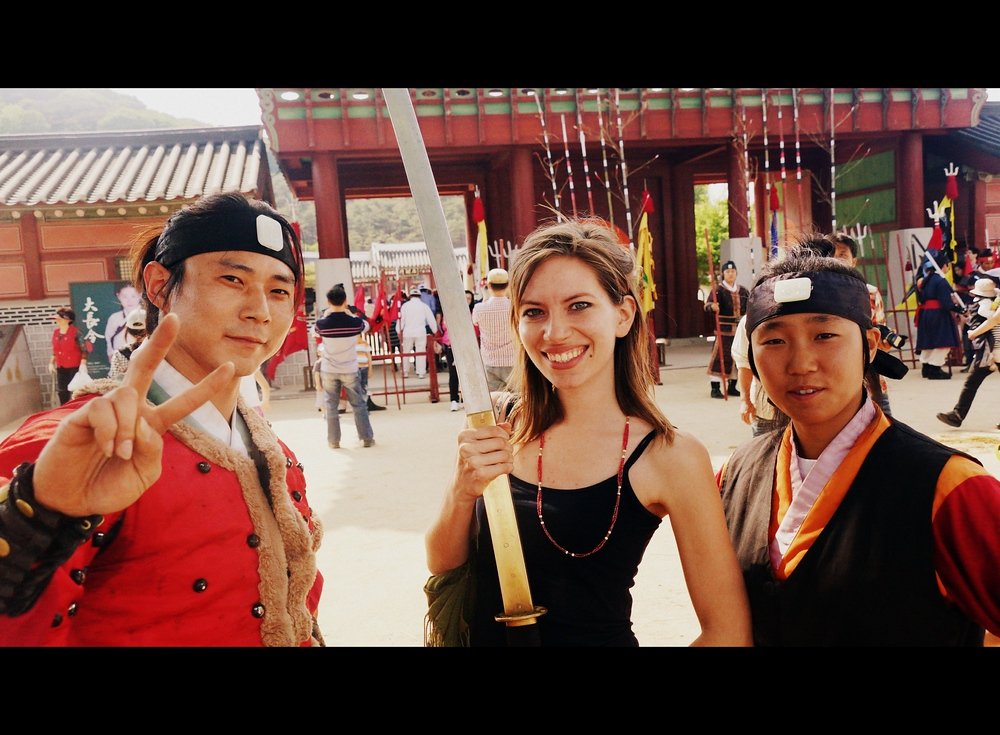
Audrey was born in Canada, raised in Argentina and had already visited plenty of far-flung corners of the world. She was an experienced backpacker, expat and adventurer, but Korea was the first place she had lived in Asia.
I wanted the unfiltered version. Not the tidy answer you give after several years of hindsight. Not a tourism-board description of palaces, kimchi and harmonious cultural exchange.
I wanted to know what she actually thought.

1. What were some of your first impressions of Korea?
Audrey: In an unfiltered stream of thoughts: Noraebang is a blast. Why have I never sung karaoke at the top of my lungs for a room full of strangers? — I’m going to save a fortune by eating dumplings and ramyeon! — Why is the restaurant serving me the fat instead of the meat? — Soju is potent. — What’s with the helicopters and fighter jets flying over my city twice a day? — Did someone just spit inside the building? Yes, they did. That’s what I just stepped on and fell. Welcome to Korea!
That remains a fairly accurate summary of the first few weeks. Exhilaration, confusion, inexpensive noodles and the occasional mystery substance beneath your shoe.

2. Why did you choose Korea over other ESL destinations?
Samuel: There were numerous destinations within Asia alone where you could consider teaching English as a second language. What brought you to Korea?
Audrey: The cha-ching! Korea has one of the best ESL markets. There’s a high demand, most jobs cover your apartment and airfare, it’s easy to save with your salary, and the whole application process was relatively easy.
Money was not the only reason we came to Korea, but pretending it was irrelevant would be ridiculous. Free or subsidized housing changes the arithmetic enormously when you are young, trying to save and hoping to fund future travel.
That said, Audrey was describing the market and contract she encountered at the time. Housing, airfare, vacation, bonuses and other benefits are not guaranteed across every modern Korean teaching position. Recruiters still love presenting the most attractive possible package as though it is carved into national law.
It isn’t.

3. How intense was the culture shock?
Samuel: As an experienced backpacker, how would you rate Korea’s potential culture shock compared with other places you had visited?
Audrey: It all depends on where in Korea you find yourself. The capital of Seoul has it all: culture, history, architecture, bars and restaurants. The only thing that shocked me was the hordes of people moving en masse down the streets. Definitely more crowded than where I’m from!
Audrey: Now, if you find yourself in a more rural location surrounded by farmland and you’re the only English speaker around, I’m sure you’ll be in for a more shocking experience.
This distinction still matters. “Living in Korea” can mean squeezing into a Seoul subway carriage while contemplating whether breathing is strictly necessary. It can also mean living in a quiet provincial town where the restaurant owner remembers your order after one visit and you rapidly discover the limits of pointing at menu photographs.
We spent many weekends exploring the capital and nearby cities, including traditional areas such as Insadong in Seoul.
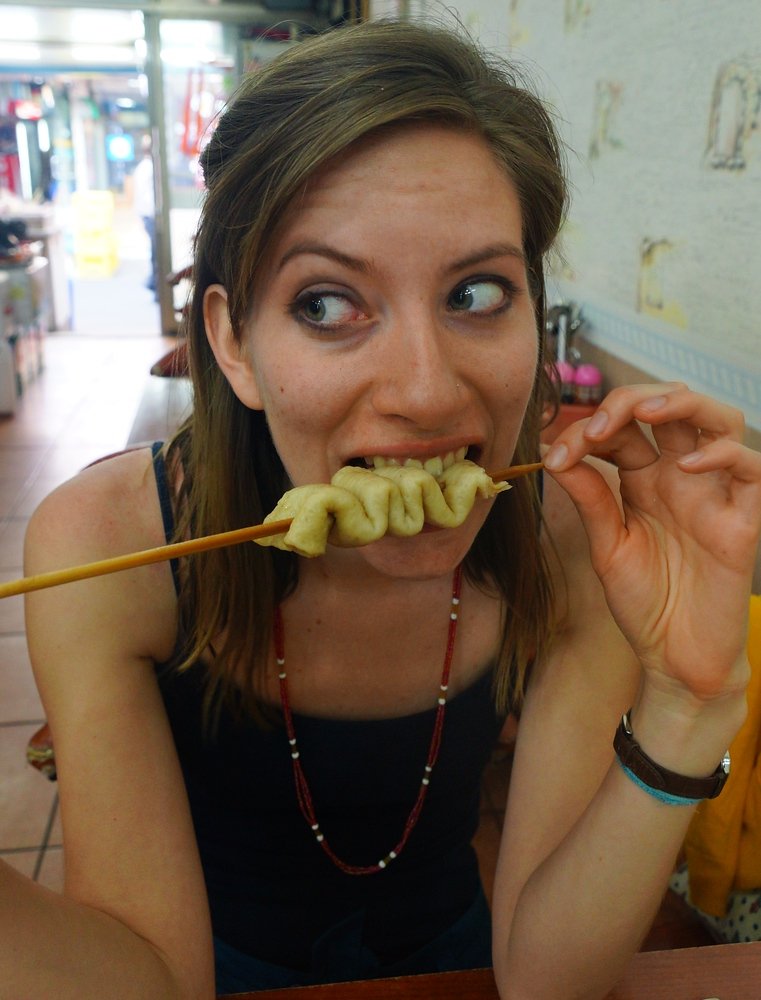
4. What were your favourite places in South Korea?
Samuel: When it came to travelling in Korea, which destinations had been your favourites so far, and where else did you want to go?
Audrey: Travelling by train to the southwestern province of Jeollanam-do was one of the highlights. Picture rice paddies with mountains on the horizon, a man riding his bicycle down a lonely dirt road and traditional homes dotting the fields. It was visual poetry!
Audrey: As for places to visit, I had my eye on Busan, where I hoped to indulge in some fresh hwae—raw fish—and Seoraksan, for what was meant to be one of the most beautiful hikes in Korea.
This was one of the great pleasures of teaching in Korea. Monday to Friday could feel rigid, repetitive and occasionally absurd. Then Saturday arrived and a train carried us into a completely different landscape.
We were not backpackers with unlimited time. We were full-time teachers raiding the weekends.
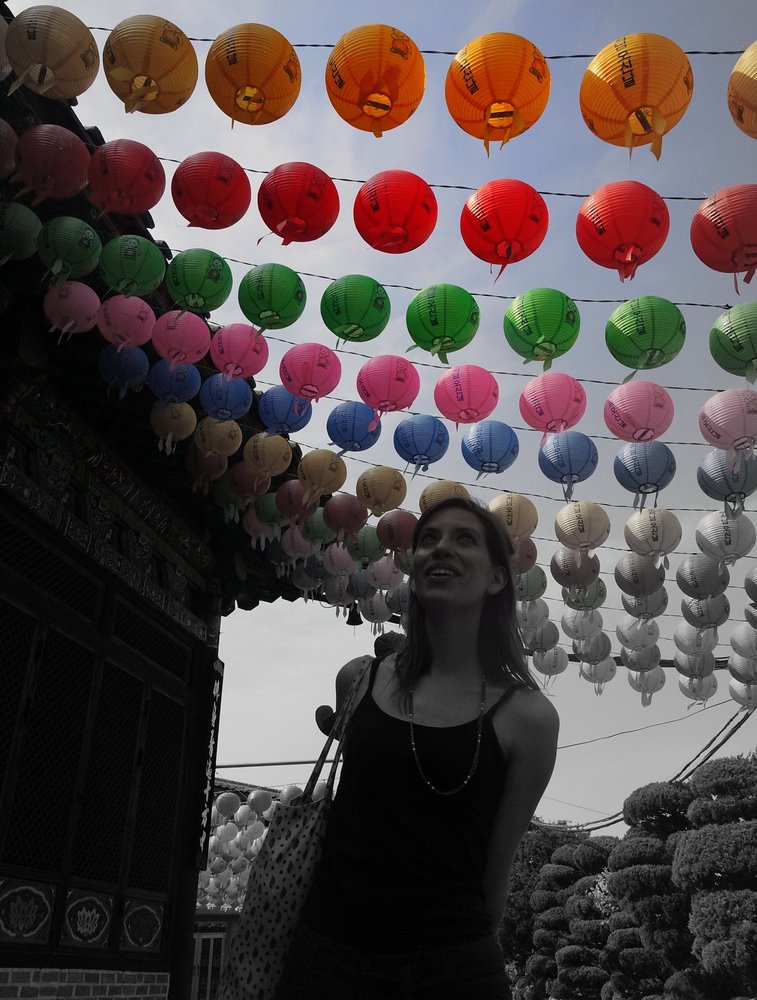
5. Did you have any lost-in-translation moments?
Samuel: Had anything involving the language, culture, food or people completely left you stumped?
Audrey: Most of my lost-in-translation moments happened in the classroom during games of Bingo. The way the game worked was that you asked students to list cities, jobs or animals that began with a certain letter. During a recent game, one of my students was shouting, “C thing—cat,” and what I understood was “shitting cat.”
Audrey: I also told my students to take off their jackets because I thought they were complaining about it being “hot.” They were really telling me the lesson was “hard.”
Teaching English can be humbling. You arrive because you supposedly possess mastery of the language. Then a seven-year-old says three syllables and your brain converts them into complete nonsense.
Authority restored.
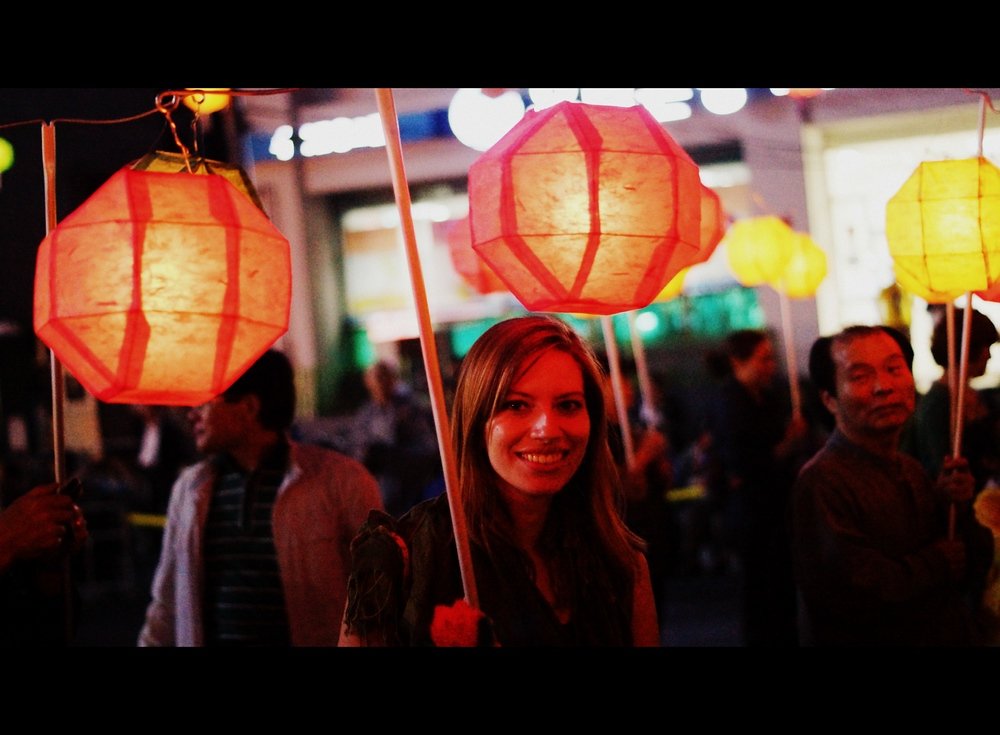
6. What was your favourite Korean food?
Samuel: What Korean food had you sampled since arriving? Did you have any favourites—or anything that belonged firmly in the “one time only” category?
Audrey: My favourite Korean meal thus far was shabu-shabu, mostly because it was such a fun meal to prepare. Who doesn’t want to toss beef, noodles and vegetables into a boiling cauldron? That’s one thing I appreciated about Korean cuisine: the ability to play chef at your own table!
Audrey: As for the strangest thing I had eaten so far—grilled eel. It oozed white goo as I cooked it over the fire. It wasn’t the most visually enticing meal, but it didn’t taste bad either.
Audrey: My students also told me fish eyeballs were tasty, but I didn’t think I would be going near those anytime soon.
Our Korean years did very little to reduce either of our food obsessions. If anything, they encouraged them. Korean dining rewards curiosity, communal eating and a willingness to accept that your dinner may continue sizzling, bubbling or wriggling long after it reaches the table.
Occasionally, it also oozes.

7. What were the most random classroom moments?
Samuel: I think it would be fair to suggest that anybody who has taught English overseas has stories about the strange and humorous things that happen in a classroom. What were some of yours?
Audrey: Oh dear, where do I begin?
Audrey: I’ve had children try to poke me in the arse. Apparently, it’s a game, and the students felt it was totally acceptable to do that to their foreign teacher. I was horrified.

Audrey: I’ve had students pull out X-Acto knives to “play” with one another. I’ve had a student catch a bee and place it in a gum wrapper as a gift for me. I’ve watched my students smell each other’s shoes, pick their noses and burp in my face. But then they brought me treats, and because food is the way to this girl’s heart, all was forgiven.
This is the part recruiters tend to leave out of the glossy presentation.
They mention cultural exchange. They mention professional development. They seldom mention confiscating sharp objects, receiving insects wrapped in chewing-gum packaging or negotiating boundaries around surprise contact with your backside.
Children are strange everywhere. Korea did not invent that.

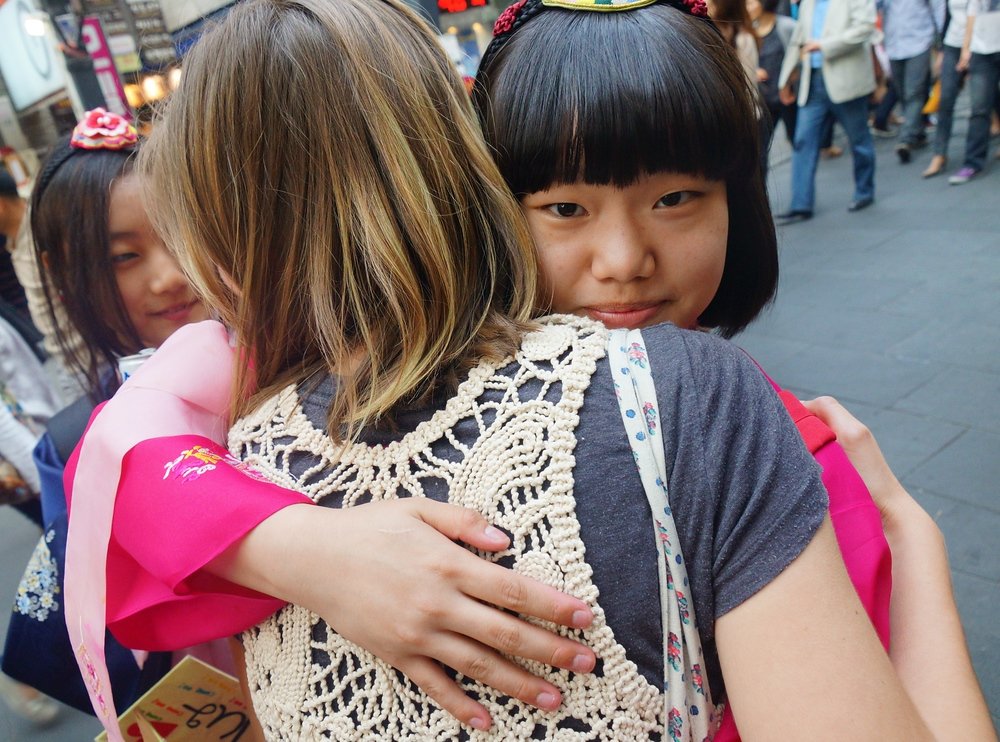
8. Did you miss home while teaching in Korea?
Samuel: Life overseas can be stimulating and exciting, but it also means leaving certain things behind. What did you miss most?
Audrey: Is it bad that I didn’t miss home yet? Honestly, I felt more in my element walking around a city where I didn’t speak the language and everything was foreign.
Audrey: Okay, no, actually I can think of one thing I missed: reasonable prices for fresh produce. The other day, I paid a whopping $9 for six measly brown apples.
This is another useful correction to the standard “Korea is cheap” narrative.
Some things were wonderfully affordable. A simple local meal could cost less than the disappointing sandwich you bought from a convenience store back home. Public transport was excellent value. Housing was often supplied.
Then you tried to buy six mediocre apples and briefly wondered whether they had been imported individually in business class.
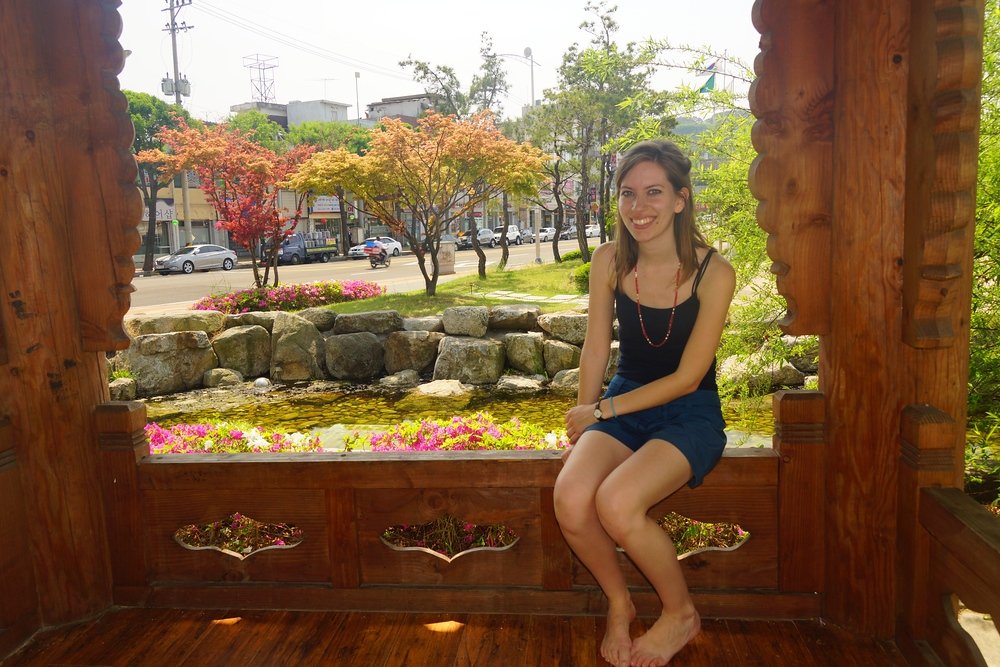
9. Would you recommend teaching English in Korea?
Samuel: Would you recommend Korea to somebody considering teaching overseas for the first time?
Audrey: Absolutely! Korea has perks like no other country, but if you value your vacation time, take a lesson from this girl and go the public-school route instead of private academies. Otherwise, you’ll hardly get a break.
This was Audrey’s verdict based on her own job, priorities and experience. It should not be stretched into a universal commandment.
It was not an empty complaint either. In our joint video, Audrey explained that her hagwon allowed ten vacation days for the year. Her director selected five of them. The remaining five required approval and could not be taken together. In practice, she said she never received more than three consecutive days off even after counting the weekend.
My public-school contract gave me four actual Monday-to-Friday weeks of vacation, plus certain election, school and public holidays that did not apply to Audrey’s private academy. Every time I had one of those bonus days, she went to work.
I handled this grave injustice with tremendous compassion.
Some hagwons are well run. Some public-school placements are frustrating. Some directors are decent humans. Others could turn a birthday party into a labour dispute.
The category matters. The exact employer matters more.

10. What quirky encounters happened outside work?
Samuel: Aside from the classroom stories, what unusual encounters had you experienced during your free time?
Audrey: Since I can be a hazard in the kitchen, I did takeout for most of my meals. As a result, many of the restaurant owners got to know me well. A few weeks earlier, one owner poured me half a pint of beer and started chatting while I waited for my order.
Audrey: Not wanting to decline his hospitality, I chugged it down on an empty stomach and ended up stumbling home slightly tipsy. Korea likes to get you drunk.
These were the moments that made neighbourhoods begin to feel like home. Not grand cultural revelations. A restaurant owner remembering your face. An extra side dish. A conversation in two languages neither person fully controlled.
Or half a pint of beer weaponized against an empty stomach.

Public Schools vs Hagwons: Our Firsthand Video
Audrey and I later sat down together to compare the two teaching jobs we were actually doing.
She was teaching children at a private hagwon, or after-school academy. I was teaching at a public elementary school. We were living in Korea at the same time, dating, travelling together and regularly comparing notes after work. That made this less of a theoretical “pros and cons” exercise and more of a controlled experiment involving two tired Canadians and wildly different amounts of vacation.
The video reflects our workplaces and the Korean teaching market at the time. It is not holy scripture. Neither is anything a recruiter tells you during a cheerful video call while trying to fill a position that begins in three weeks.
What Our Two Teaching Jobs Actually Looked Like
The comparison below is historical and specific to us. It should not be mistaken for a promise about every modern public school or private academy. Its value is that these were not invented schedules or anonymous internet averages. We worked them.
| Issue | Audrey’s Hagwon | Samuel’s Public School |
|---|---|---|
| Daily schedule | Approximately 1:30 p.m. to 9:30 p.m. | Approximately 8:40 a.m. to 4:40 p.m. |
| Why those hours? | Classes began after children finished public school | Standard daytime school and government-office rhythm |
| Vacation | Ten annual days; five selected by the director and five requiring approval | Four full Monday-to-Friday weeks, plus certain additional holidays |
| Class size | Usually between two and twelve students | Often more than thirty students |
| Classroom support | Usually taught alone without a Korean co-teacher | Usually taught with a Korean co-teacher |
| Lesson planning | Mostly followed supplied textbooks with relatively little preparation | Created regular lessons and coordinated some after-school programming |
| Foreign colleagues | Private academies often employed several foreign teachers | Only two foreign teachers worked at my school despite more than a thousand students |
| Historical monthly pay | Approximately ₩2.1 million | Approximately ₩2.4 million with more experience and credentials |
| Between semesters | Regular academy schedule continued | Fewer regular classes, but office attendance and preparation still continued |
The schedule difference shaped daily life more than the bare eight-hour totals suggest.
Audrey could sleep later and handle errands before work, but she finished at 9:30 in the evening. Dinner, social plans and weeknight freedom all started late. I had to drag myself out of bed earlier, but I was normally finished by 4:40 and had the evening ahead of me.
Neither schedule was universally better. A committed night owl might prefer the hagwon rhythm. Somebody who values dinner, errands and a normal evening will probably understand why I liked mine.
Small Solo Classes vs Large Co-Taught Classes
Audrey’s hagwon classes could contain as few as two students and as many as twelve. That was much more intimate and manageable than my classes, which regularly exceeded thirty students.
The trade-off was support.
Audrey normally taught alone. She did not have a Korean co-teacher available to translate a confusing point, calm a disorderly class or explain why a student had suddenly decided to crawl beneath a desk.
I usually had a Korean co-teacher. The good ones were invaluable. They understood the students, handled much of the discipline and could rescue communication when my explanation had clearly entered the wilderness.
That did not absolve me of classroom management. Audrey and I both admitted in the video that students had walked all over us in the past. Smaller classes can become chaotic. Large co-taught classes can become chaotic. Children remain impressively democratic on this point.
Who Had More Lesson Planning?
Audrey’s hagwon supplied textbooks and expected her to follow them. She occasionally introduced a game to change the rhythm, but most lessons required relatively little preparation.
My public-school position demanded more planning. I created lessons for regular elementary classes and also coordinated parts of my after-school programming.
That complicates the idea that public schools are automatically easier. My schedule and vacation were better. Audrey often had smaller classes and less preparation.
Every advantage sends an invoice.
Desk-Warming Was Real
Between school semesters, I sometimes had fewer regular classes but still reported to the building. Some of those office hours were useful for planning. Some were less purposeful.
We called the quieter stretches movie time or desk-warming.
This could feel absurd. You were technically working, physically present and not always burdened by an abundance of actual work. On the other hand, it was paid time in a stable public-school environment rather than an evening of back-to-back academy classes.
I would not romanticize it. I also would not pretend I suffered heroically while sitting at a desk with time to plan, read or watch something.
Why We Favoured Public Schools—but Still Saw Hagwon Advantages
Overall, Audrey and I favoured public-school work.
My environment felt more professional and less commercially pressured because the institution was a school first rather than a private business selling lessons to parents. I had far more usable vacation, daytime hours and a more structured working environment.
That was our experience—not a universal law.
We also identified legitimate hagwon advantages:
- Private academies generally offered more job openings.
- Applicants often had a better chance of choosing a specific city.
- Audrey’s supplied curriculum reduced lesson-planning pressure.
- Her classes were much smaller than mine.
- Hagwons often employed several foreign teachers, making it easier to meet people after arriving.
At my enormous public school, which served more than a thousand students, there were only two foreign teachers. That kind of placement can be professionally rewarding, but it may not provide an instant social circle.
You can also browse our broader YouTube travel video archive, which includes footage from our early years living, teaching, eating and travelling around South Korea.
Is South Korea Still a Good Place to Teach English?
Yes—with a very large asterisk.
I still think South Korea can be an excellent first teaching destination. It offers strong infrastructure, convenient daily life, good public transport, interesting weekend travel and employment packages that can still make financial sense.
But “teaching in Korea” is such a broad phrase that it can conceal almost everything determining whether your year will be rewarding or miserable.
Korea is not your employer.
The country may give you fast trains, mountain trails, late-night restaurants and floor heating so glorious that returning to radiators feels like a civilizational collapse. It cannot rescue a bad contract, an abusive director, unsuitable housing or a schedule bearing little resemblance to what you were promised.
Your experience will be shaped most heavily by five things:
- The school, company or education office that legally employs you
- Your actual teaching and workplace schedule
- Your housing and commute
- Your location and access to transport
- The people responsible for managing and supporting you
The most important decision is not simply Korea versus Japan, China, Vietnam or another destination.
It is this Korean job versus that Korean job.
Public School vs Hagwon: What Actually Changes Now?
Our video provides a valuable firsthand comparison, but it is a historical snapshot of two workplaces. The current public-school-versus-hagwon decision still matters. It just does not matter in the clean, predictable way most comparison charts imply.
Public-school conditions differ between education offices, individual schools, co-teachers and placements. Hagwons range from established academies with contented long-term staff to businesses operating with the managerial philosophy of a shopping cart rolling downhill.
| Issue | Public School or EPIK Placement | Hagwon or Private Academy |
|---|---|---|
| Employer structure | Public education office or school placement | Private business or academy operator |
| Typical daily timing | Usually aligned with the regular school day | Often afternoons and evenings, but schedules vary |
| Instructional structure | Frequently involves a Korean co-teacher | Solo teaching is common, but not universal |
| Students | Elementary, middle or high school; placement may not be known in advance | Age groups depend on the academy and may include kindergarten |
| Class size | Can range from small rural groups to large urban classes | Often smaller groups, though this depends on the academy |
| Curriculum | May involve lesson planning, co-teaching, camps and school materials | May use a prescribed academy curriculum with fixed pacing |
| Vacation | Usually more structured, but school holidays are not automatically personal leave | Entirely contract-specific and often more limited |
| Main risk | Unclear placement, multiple schools, desk-warming or inconsistent co-teaching | Owner-dependent management, split shifts, unpaid preparation or contract disputes |
| Best verification | Read the education-office contract and ask about the exact placement | Speak privately with current and former teachers from that exact academy |
Under the current EPIK duties and contract guidance, teachers sign a one-year contract and generally work eight hours per day, five days per week. Instructional hours normally do not exceed 22 per week without overtime compensation.
Notice the distinction between instructional hours and working hours. This is not pedantry. It is the difference between teaching 22 classes and working only 22 hours, which is a fantasy job recruiters would have no difficulty filling.
EPIK also warns that teachers may be assigned to more than one location and may not know their student grade level until after arriving. During school vacation periods, teachers may still be expected to work, prepare lessons or teach English camps.
A month without normal classes is not automatically a month for backpacking around Southeast Asia. As I experienced myself, it may include office attendance, lesson preparation and substantial desk-warming.
Current EPIK Eligibility Requirements
EPIK is the best-known route into Korean public schools, but its eligibility rules are narrower than “speak English, possess degree, enjoy kimchi.”
According to the current official EPIK eligibility guidance, applicants generally must:
- Be a citizen of Australia, Canada, Ireland, New Zealand, South Africa, the United Kingdom or the United States
- Hold at least a bachelor’s degree from an accredited university
- Meet EPIK’s English-medium education requirements
- Be mentally and physically healthy and able to adapt to life in Korea
- Obtain the appropriate visa before beginning work
Indian citizens have a separate route under the applicable trade agreement, but they must hold a valid teaching certificate in English education. A standard TEFL certificate does not satisfy that particular requirement.
If your bachelor’s degree is not in education, teaching, TESOL or another accepted education-focused field, EPIK generally requires a TEFL, TESOL or CELTA certificate with at least 100 hours.
These are EPIK requirements. Hagwon hiring and visa documentation can differ. Applicants with Korean citizenship, Korean heritage or another residency status may face additional rules.
Consult the official Korea Visa Portal and the Korean diplomatic mission responsible for your place of residence. Do not build your future around a sentence beginning with, “My recruiter said it should probably be fine.”
Documents EPIK Applicants Should Begin Early
The paperwork is tedious. Unfortunately, ignoring tedious paperwork does not make it disappear. It merely transforms ordinary paperwork into urgent paperwork, which is the same misery with added panic.
Current EPIK application materials include several documents that may take considerable time to obtain, legalize and replace if rejected:
- A valid passport and passport-information copy
- An apostilled national-level criminal-record check
- An apostilled copy of your bachelor’s diploma
- Sealed academic transcripts
- Two qualifying original letters of recommendation
- Proof of a teaching licence, education degree or accepted TEFL qualification when required
- Additional documents where nationality, name changes, residency or education history requires them
Criminal-record checks generally need to be recent enough for the relevant intake, and the authority responsible for an apostille differs by country and document.
Download the latest official guide. Do not recycle a checklist from an eight-year-old Reddit thread because the person sounded confident.
What Does EPIK Currently Pay?
The current EPIK salary and benefits table places most published monthly salaries between approximately ₩2.1 million and ₩2.8 million, depending on the education office, qualifications, recognised experience and renewal level. A few province-specific levels extend above that range.
That is gross monthly salary. It is not the amount available for dumplings, train tickets and heroic savings transfers.
Taxes, health insurance, pension where applicable, utilities, maintenance fees, food, transport, phone service and personal spending all take their share afterward.
What We Earned at the Time
When Audrey and I recorded our comparison, she was earning approximately ₩2.1 million per month at her hagwon.
“Two-point-one million, baby,” as she put it.
I was earning approximately ₩2.4 million at my latest public-school job. The difference was not simply public school versus hagwon. I had taught in Korea longer and held additional experience and credentials.
Those figures are historical evidence from our own jobs, not current salary guidance. They are useful because they show how qualifications and experience affected our pay, while the gap between our two sectors was considerably less dramatic than the gap between our vacation allowances.
EPIK’s current published benefits also include provided accommodation, a one-time settlement allowance, severance after successful contract completion and different entrance, completion or renewal payments depending on the region.
The details and timing vary. This is exactly why you should read the actual education-office contract rather than mentally adding every attractive benefit mentioned anywhere on the internet and declaring yourself financially independent by Christmas.
| Headline Benefit | What You Must Verify |
|---|---|
| Housing provided | Apartment condition, location, furnishings, maintenance fees, utilities and commute |
| Entrance or flight allowance | Payment date, amount, regional exceptions and repayment clause if you leave early |
| Vacation | Number of personal leave days, who chooses them and whether camps affect school breaks |
| Severance | Eligibility, contract-completion conditions and how final average wages are calculated |
| Health insurance | Whether you are properly registered and what is deducted from each salary |
| Pension | Whether your nationality is covered and whether a departure refund is actually available |
| Overtime | What counts as an instructional hour, the overtime rate and whether compulsory events are covered |
“Free Housing” Does Not Mean Housing You Will Like
Housing was one of the most attractive benefits when we were teaching in Korea.
It was also where I learned one of my harshest and most useful lessons.
During my first Korean teaching stint, the apartment waiting for me was essentially a makeshift shack on top of a residential roof. The siding was crumbling. Winters were brutally cold. Summers were suffocating. I had crossed an ocean for an English-teaching job and somehow ended up living in what appeared to be an ambitious garden shed.
I later lived in much better studios and high-rise apartments. Korea did not sentence me to lifelong rooftop accommodation. But that first surprise taught me never to sign another overseas contract without trying to see the actual housing first.
You can read the full story in my article about going from a Korean rooftop shack to a modern apartment.
Housing Questions to Ask Before Signing
- Can the school provide recent photographs or a video of the actual apartment?
- Is this the confirmed unit or merely an “example” selected because it contains windows?
- What is the full address and realistic door-to-door commute?
- Which furniture, appliances and kitchen items are included?
- Who pays utilities, internet and monthly building-maintenance fees?
- Who is responsible for the deposit or key money?
- Does the unit have functioning heating and air conditioning?
- Who pays for repairs, mould treatment or a broken appliance?
- What happens if the promised apartment is unavailable when you arrive?
A tiny officetel can be perfectly comfortable. A larger apartment can be filthy, damp and miles from work.
The square footage matters less than whether the accommodation is safe, dry, functional and located somewhere that does not turn every workday into an expedition.
Health Insurance, Pension and Severance
These benefits are regularly bundled together in teaching advertisements as though they form one giant sack of free money.
They do not.
They are governed by different rules, and failing to understand the distinction can wreck your end-of-year savings estimate.
National Health Insurance
Under Korea’s employee-insurance system, health-insurance contributions are generally shared equally between the employee and employer. EPIK also states that the relevant education office pays half of the teacher’s medical-insurance premium.
Do not accept “insurance included” as a complete answer. Confirm that you will be registered through the National Health Insurance Service, ask when coverage begins and compare the deduction with your pay statement.
It is astonishing how quickly vague promises become somebody else’s misunderstanding once money is missing.
National Pension
Pension is where simplistic savings calculations frequently collapse.
Eligibility for a lump-sum departure refund depends on nationality, visa status, insurance history and Korea’s agreement or reciprocity arrangement with the teacher’s home country.
Nationals of countries including Canada, the United States and Australia may qualify under applicable arrangements. Nationals of some other common English-teaching countries face different treatment.
Do not count a pension refund as a guaranteed end-of-year bonus until you have checked your nationality directly with the Korean National Pension Service.
Money that may exist is not the same as money you possess.
Severance
EPIK currently publishes severance of approximately one month’s salary for teachers who successfully complete their contracts.
Private-school eligibility should be verified against the contract and Korean labour law, particularly where working hours, employment status or early termination are involved.
If wages or statutory payments are withheld, Korea’s Ministry of Employment and Labor provides an English information service and an e-petition process for labour complaints.
Knowing a formal route exists is useful.
Avoiding the employer who makes you need it is better.
The Korean Teaching Contract Audit
This is the section I would take most seriously.
A polished job advertisement is not the contract. The contract is not always a complete description of the daily job. And the daily job is not necessarily what the recruiter described while nodding enthusiastically about “great work-life balance.”
You need to force vague language into the open before you cross an ocean.
| Contract Area | Question That Needs a Clear Answer | Warning Sign |
|---|---|---|
| Legal employer | Which company, school or education office appears on the contract and registers the visa? | The recruiter will not identify the legal entity |
| Workplaces | Will you work at one school or travel between several locations? | “Other locations as required” with no limit |
| Workday | What exact time must you arrive and what exact time may you leave? | Only class times are disclosed |
| Teaching load | How many classes, minutes and different lesson preparations are required? | A weekly class number with no definition of a class |
| Split shifts | Are morning and evening blocks separated by unpaid time? | A long daily span hidden behind a modest teaching-hour total |
| Preparation | Is lesson planning, grading, reporting and parent communication included in working hours? | Extensive unpaid work expected from home |
| Overtime | What triggers overtime and what is the hourly rate? | “Reasonable additional duties” without compensation |
| Vacation | How many paid days are yours to use, and who controls the dates? | School closure is advertised as personal vacation |
| Sick leave | How many paid sick days exist and what documentation is required? | Every absence can be deducted without clear rules |
| Housing | Which costs remain yours, and can you inspect the actual accommodation? | No photographs, address or written housing terms |
| Insurance and pension | Will you be enrolled from the start of employment? | The employer offers private substitutes without explanation |
| Severance | What happens after completing twelve months? | The contract describes severance as an optional bonus |
| Termination | How much notice can either party give, and which allowances must be repaid? | The employer can terminate immediately while the teacher owes large penalties |
| Current staff | Can you speak privately with the teacher you are replacing? | The school refuses all contact with current or former foreign staff |
A current teacher is usually your best source of workplace-specific information.
Ask to speak privately, without the recruiter or director listening. You are not merely checking whether the teacher enjoys Korean barbecue and thinks Seoul is exciting.
You need to know:
- Does the salary arrive on time?
- Does the apartment match the promise?
- Is vacation honoured in practice?
- How does management behave when somebody gets sick?
- Why is the previous teacher leaving?
The final question may be the most revealing.
Where You Live Changes the Experience
Audrey was right that Seoul and rural Korea can produce radically different first impressions.
Location affects your social life, commute, spending, weekend travel and how frequently you are forced to function without English.
| Placement | Likely Advantage | Possible Friction |
|---|---|---|
| Seoul or central Gyeonggi | Dense transport, enormous choice and large social networks | Crowds, smaller housing, spending temptation and longer commutes |
| Regional city | Enough services and transport without the full intensity of Seoul | Fewer international communities and less late-night transport |
| Small city or town | Lower-key daily life and stronger pressure to engage locally | Limited English, fewer social options and more planning for trips |
| Rural or multiple-school placement | Landscapes and communities most short-term visitors never encounter | Commuting, isolation and work across several schools |
I would not choose solely according to which city has the most nightlife or which province looks prettiest in photographs.
Think about the life you need on an ordinary Tuesday evening.
Do you want to walk to restaurants and meet other teachers easily? Would you rather have a quieter neighbourhood where people recognize you? Are you comfortable being dependent on infrequent buses? Does spending ninety minutes commuting each way turn you into a bitter husk of your former self?
Weekends were one of the great rewards for us. We could explore Seoul, walk around Suwon, travel south through agricultural landscapes or escape to the coast.
Our older Korea coverage includes a humid summer trip to Daecheon Beach and my initially sceptical but ultimately enthusiastic experience at the Boryeong Mud Festival.
Can You Still Save Money Teaching in Korea?
Possibly.
Sometimes substantially.
But I would not promise a universal monthly figure because that would be dishonest nonsense dressed as financial guidance.
Housing support remains the major advantage of many Korean teaching contracts. Removing market rent from your monthly expenses can create genuine room to save.
What We Believed We Could Save
In our video, Audrey and I said that teachers with supplied housing could potentially save well over half of a paycheque by eating mostly local food, drinking only occasionally and limiting travel largely to domestic trips.
That reflected our salaries, benefits, spending and cost of living at the time. It was not a guarantee then, and it certainly should not be repackaged as a modern universal savings promise.
What the statement does show is why Korea appealed to us. Housing removed the largest monthly expense. Local food and transport could be reasonable. A disciplined teacher could save for travel, student loans or whatever came next without living on oxygen and convenience-store noodles.
The important word is disciplined.
That room disappears quickly if your salary is at the lower end of the scale, your deductions are misunderstood, your building fees are high or every weekend becomes a miniature holiday involving trains, hotels, fried chicken and several rounds of soju you apparently had no intention of ordering.
| Money Coming In | Money Coming Out |
|---|---|
| Gross salary | Income tax and mandatory deductions |
| Housing supplied or housing allowance | Utilities, maintenance, internet and phone |
| Possible entrance or completion allowance | Food, imported groceries and coffee |
| Possible overtime | Transport and commuting |
| Possible severance after qualifying service | Weekend travel, flights and accommodation |
| Possible pension refund where eligible | Nightlife, shopping and everything you forgot to budget |
The useful question is not, “How much do teachers save in Korea?”
It is, “How much would I save under this specific salary, housing arrangement, deduction structure and lifestyle?”
Audrey’s six miserable apples are the perfect reminder that cheap local meals do not make every category inexpensive.
Imported food, out-of-season produce, Western restaurant habits, nightlife and constant café visits can quietly beat your savings plan to death.
What Audrey’s Original Interview Still Gets Right
The employment market has changed since Audrey gave these answers and since we filmed our joint comparison. Visa documentation, pay scales, allowances and public-school placement continue to evolve.
The emotional shape of the experience has changed much less.
- The first weeks can be a barrage of new sounds, smells, rules and misunderstandings.
- Classrooms produce moments no training course could possibly predict.
- Your relationships with co-workers and students matter as much as the lesson plan.
- Food becomes comfort, entertainment and a bridge into local life.
- Your placement determines whether Korea feels like a megacity, a provincial community or something in between.
- A year of full-time teaching is not the same as a year of backpacking, however tempting the weekends may be.
Korea was never merely a collection of employment benefits for us.
It was noraebang, fish cakes, train rides, mountain views, crowded streets, tiny apartments, classroom chaos and restaurant owners who remembered what we liked to eat.
It was also two very different jobs being compared across dinner: Audrey’s small evening classes, my crowded daytime classrooms, her textbook curriculum, my lesson planning, her brutal vacation restrictions and my suspiciously pleasant number of Mondays off.
That mixture of convenience, confusion, generosity and occasional absurdity is why the country still holds such a prominent place in our story.
I have written more broadly about my reasons for loving South Korea, but Audrey’s interview captures something a polished destination guide cannot.
It captures what Korea felt like while almost everything was still new.
Teaching English in Korea FAQ
Do I need a TEFL certificate to teach through EPIK?
Applicants with an accepted education-related degree or teaching credential may not need a separate TEFL certificate. Applicants with a bachelor’s degree in another field generally need an accepted TEFL, TESOL or CELTA qualification of at least 100 hours. Check the current EPIK eligibility rules for your exact qualifications rather than assuming an online weekend certificate solves everything.
Does EPIK let me choose my city?
Applicants can express preferences, but placement is not guaranteed. Positions depend on requests from metropolitan and provincial education offices. Your final school, grade level and possible assignment to multiple workplaces may not be known until late in the process or after arrival. A preference is not a reservation.
Is housing really free?
EPIK currently publishes provided accommodation, but teachers remain responsible for costs such as utilities and maintenance fees. Private-school arrangements vary. Always ask for the address, current photographs, included furnishings and a written explanation of every housing expense. “Free” becomes less exciting when the apartment is damp, distant and charging unexplained monthly fees.
How many hours do EPIK teachers work?
Current EPIK guidance describes eight working hours per day, five days per week, with instructional hours normally capped at 22 per week unless overtime is requested and compensated. Teaching hours are not the same as total workplace hours. Preparation, meetings, camps and administrative duties may occupy the remainder.
Are public schools always better than hagwons?
No. Audrey and I preferred the public-school conditions we experienced, particularly the daytime schedule, vacation and institutional stability. Her hagwon offered much smaller classes, less lesson planning and easier access to other foreign teachers. The decisive evidence is still the exact contract and candid feedback from teachers who have worked for that employer.
Can I save money during a one-year contract?
Housing support can make saving possible, but the result depends on salary, deductions, utilities, food, transport, travel and personal spending. Audrey and I believed substantial savings were possible under our own historical contracts, but modern applicants should build a budget from the actual offer rather than treating our experience as a guaranteed rate.
What is the most important thing to do before accepting a job?
Speak privately with a current or recently departed teacher from the exact school. Ask whether pay arrived on time, whether the housing matched the promise, how vacation worked in practice, how managers handled illness and disputes, and why the previous teacher left. If the school refuses this entirely, do not treat that as a charming cultural mystery.
Official Sources to Check Before Applying
Teaching requirements and benefits change. These official resources should take precedence over old blog posts, recruiter summaries, social-media claims and confident strangers who taught one semester in 2014:
- EPIK eligibility requirements
- EPIK salary and benefits
- EPIK duties and contract guidance
- Korea Visa Portal
- National Health Insurance guidance for foreigners
- National Pension Service refund guidance
- Ministry of Employment and Labor e-petition information
Final Thoughts
When I first interviewed Audrey, we had only been together for a couple of months. We were trying to cram as much of Korea as possible into our weekends before leaving on an extended trip the following year.
Her answers were not polished conclusions about an entire country.
They were immediate reactions from somebody learning how to teach, live and function in a place that was still thoroughly unfamiliar.
Our later sit-down video added something equally valuable. By then, we could compare the machinery behind our two jobs: different hours, different classes, different planning burdens, different vacation policies and slightly different paycheques.
Neither source tells every prospective teacher what will happen to them. Together, however, they show the difference between experiencing Korea and merely repeating what a recruiter says about it.
Teaching English in Korea gave us far more than salaries and apartments. It gave us friendships, stories, classroom disasters, food obsessions and the setting in which we met one another.
The contract details mattered enormously. So did everything that happened after school: train journeys, crowded markets, shared meals and weekends spent figuring out what our life together might look like.
For a prospective teacher, my advice is simple.
Research the exact employer with almost unreasonable care. Arrive prepared to work rather than merely travel. Learn enough Korean to function. Expect the classroom to humble you. Inspect the apartment before believing the word “free.”
Then leave enough room for Korea to surprise you.
It certainly surprised us.
You can follow Audrey’s travels, food adventures and destination guides at That Backpacker.
There are plenty of opportunities and it is actually quite fun. Some people can even visit the area with teaching English as a goal and they are sure to find some decent jobs.
That last photo is really awesome! What a shot.
Hi! I’ve been to korea once and it was love at first sight. Hope to come back and explore more of it…
Hi, I was just wondering how old you were when you went over? I will be 28 when I try to go. Is that going to result in problems in socializing, or getting a job at all? Thanks.
28 is a great age to go in my opinion. You’ll be a lot more mature than an early 20 something.
hey. I’ve accidentally stumbled upon this blog. I’m a Korean expat in usa. It’s amazing how what had seemed so normal & banal to me in korea is so strange & exotic to you! Interesting to get a perspective of korea from foreigner’s view.
Hi ! that is a great interview seems as though you like it there…. out of all of the places in South Korea you have been which cities would you recommend teaching in? I am seriously considering going, the only doubt I have is whether I will meet other foreign teachers as I like to socialise.
Woah, Audrey is way too photogenic for her own good. Great interview and really awesome pics!
Sounds great. I’m going to be travelling around Asia in 2013, if I swing by Korea and decide to stay is it possible to get an teaching job in-person? Is there a market for tutoring English without a contract?
As always, awesome pictures!
Great interview! I loved the first bit about ‘initial thoughts about Korea’. I definitely had similar thoughts (Soju is potent) when I first got there! Man, looks like you two are having a blast. When is Audrey’s contract in Korea up and then where are you heading?
Informative, funny, and great photos. I’m sensing a theme with all those food photos 🙂 After reading this article, I’ll definitely send aspiring ESL teachers to this post.
Thanks Mary! It’s very true – we sure do like to eat 😛
i wish I can visit Korea too! awesome interview! you have a beautiful girlfriend! 🙂
Thank you! If you come we can show you around 🙂
Great interview. Always nice to see another person’s perspective. We are definitely keen to head to Korea or China and teach in a year or so. Hopefully catch you guys then!
Hey Cole,
Definitely keep in touch regarding that 🙂
Awww what a wonderful post! So wonderful to meet Audrey. I love travel love. 🙂
Thanks Abby 🙂 I’m lucky to have met her.
Korea seems to be a lot about eating things, which I quite like! Oh and well done with the photos!
Thanks Jarmo, we do tend to eat a lot together when we meet 😛 Korea certainly has plenty of interesting cuisine to try.
Hello, it seems like your girlfriend Audrey had so much fun in Korea. Korea is very beautiful and as far as I know many people love their culture and also their foods as well.
Hi Marnie,
Thank you!
Korea is quite a scenic country with distinct cuisine. I recommend it highly.
I love how many of the photos in this post are of Audrey eating!! Haha. Fun interview!
LOL, I’ve noticed my wallet has been a little lighter since we’ve started dating 😛 The truth is that I’m actually ‘the pig’ in the relationship. Although she loves to nibble on street food throughout the day, I’m the one that tends to gorge on it 😛
I’ve been reading her blog. Good one!
Glad to hear that Ana 🙂 Thanks!
Fantastic post! Love the photos, especially the last one – spectacular! And those ice-creams… Hmm thinking I might like to follow your footsteps some day… Cheers!
Sounds like a good plan Sarah! It’s quite easy to save up for travel teaching in Korea.
The grilled eel does not sound appetizing, but those ice cream cones look delicious. Glad to see you two seem to be quite happy. Congratulations.
Thanks Ellen,
There are certainly some yummy and not so yummy things to try in Korea…haha
What beautiful pictures, I’m assuming you took all of them? How awesome you met someone who shares your same passions. Loved the interview!
Thanks Andi 🙂 I did take them and I’m quite lucky to have met her 🙂
I want to be in her class!!! First I rob a bank…
LOL
I’m in love with this series of pictures of her, what AWESOME photos. Glad to hear a really honest review of Korea, I was planning to teach English there but wound up in Europe instead, might move one day 🙂
I’m curious about teaching in Europe Izy!
Great interview Sam…as always I look to forward meeting your blogger friends and their adventures…keep them coming 🙂
Thanks, I hope to share more tales 🙂
Aww, she’s beautiful, Samuel! 🙂 What a great interview. I know absolutely nothing about Korea, so this was great fun to read. 🙂
Thanks Krista, not so many people visit Korea. I find most foreigners I meet here are teaching in some capacity.
Lovely interview and photos. Is Korea expensive to live in? How is the pay for teaching?
Hey Bethaney, it can be pricey but as an English teacher you’re quite well taken care of. With a free apartment, low taxes and cheap public transportation money can easily be saved; yet, on the other hand, it can also be spent rather fast if one is heavily into nightlife or shopping – which is definitely not cheap here.
Nice interview! I often wondered how it is like to teach english in Korea especially if your students are kids. That potion part made me laugh and at the same time worried =))
Hey, you guys should pass by the Philippines soon! It’s soooo near!
Thanks Mica, sometimes the kids are really well behaved and other times naughty I suppose. I’ve received some funny assignments as well.
Definitely would love to visit the Philippines soon 🙂
I second the awesomeness of the ‘Invisibility potion’ question. Why didn’t we get questions like that in school? That’s the juice.
Reminds me of a ‘This American Life’ story where Comedian John Hodgman posed the question at cocktail parties “Would you rather have the power of invisibility or flight”
LOL, Indeed, I’d sure like to be given that kind of potion at times 😛