
Teaching English In China is one of the most amazing experiences we’ve ever had. We’ve travelled the world for three years, witnessed amazing cultures, sampled succulent cuisines and indulged in a lifestyle of adventure and excitement. There comes a time in every traveller’s life, however, when new experiences present themselves in ways never before imagined. For us, it was the joy of volunteering to teach English in a rural village in Myanmar that really sparked our interest in this astonishingly rewarding profession. We’ve now been teaching English in China for 6 months and although we will soon pack our bags again and carry on our life’s journey, we have found our experiences here to be as epic as any we’ve ever had on the road.
Teaching English in China: Top 10 Reasons
Teaching will stay with us forever and we will come back to it. It’s the perfect way for travellers to “work” while still enjoying new people, places and perspective. Teaching English has enriched our lives and taught us much about Chinese culture and customs that we would never have learned while passing through. It has had such a profound effect on our life that we have decided to put together this list of 10 Reasons To Start Teaching English In China.

1. The People: The people in China are incredibly friendly and they will always treat you like an honoured guest in their country. If you live in a touristy city like Shanghai or Beijing, you may not receive as warm of a welcome, but almost everywhere else in the country you will be treated like a star. People go out of their way to say hello, smile at you or stop their car to stare at you. They will invite you to their homes for dinner, offer you free vegetables at the market and never rip you off. We’ve lived here for 7 months and we’ve never had a taxi try to over charge, or a shop owner give us the “tourist price” that you see in so many other countries. The people of China are friendly, kind, honest and genuine.

2. The Job: Teaching English in China is the most rewarding job we’ve ever had. Walking into a classroom to see 12 students light up at the sight of you, is an indescribable feeling. Chinese kids work extremely hard in school. By the age of 12 they spend up to 10 hours a day studying, but when they start their English lesson with the foreign teacher who lets them play games in class, they finally get a chance to let loose and have fun. Being a part of that fun is a blessing and they truly love and respect their foreign teachers in China.
3. The Food: Sure you’ve had Chinese food at home, but you really have no idea just how delicious the food here is until you’ve sampled it straight from the source. There is an astounding variety of colors and flavors, and although Chinese people are notorious for eating anything and everything, there are plenty of “normal” dishes on the menu. And who knows, you may be like us and find out that you really like ox tongue and sheep stomach!
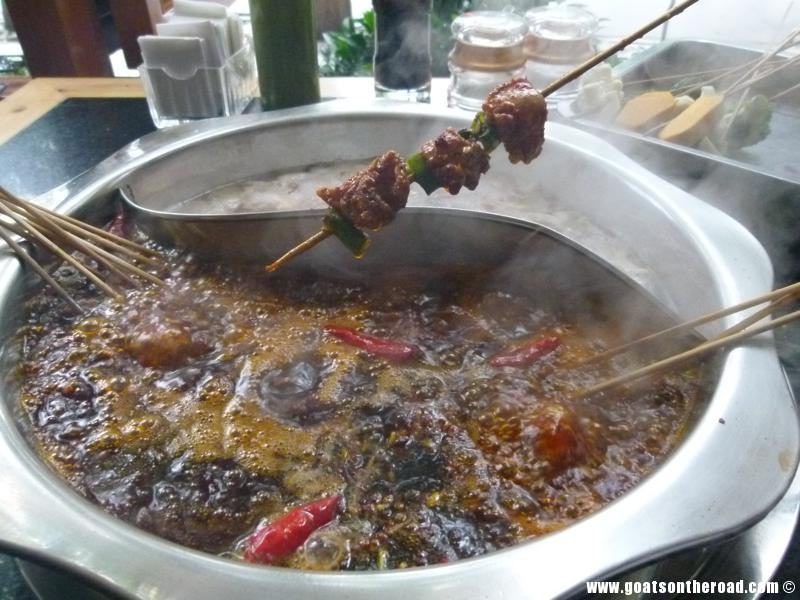
4. The Salary: You may think that $1500 a month would be hard to live off of at home, but here in China where everything is affordable, you really only need half of that to survive. This means that the rest can be saved or spent on an extravagant lifestyle. You can pretty much afford to eat at restaurants every meal, drink as much beer as you want and travel around the country on your holidays. Or you can save that money and travel the world for a few months when your teaching contract is up.
5. The Assistance Programs: Usually when you get a job teaching English in China, you will be assigned a “welfare assistant” who will help you with everything you need … and we mean everything. It’s like having a full-time assistant at your disposal at any time. If you don’t know how to order a dish at a restaurant you can call, if you’re stranded somewhere you can call, if you don’t know how to pay your bills, deposit money or send money home, your welfare assistant can do it all for you. Just be sure that when you’re searching for a job, you look for a school with a good welfare program.

6. The Feeling Of Travelling While You’re Working: One of the best parts of teaching English in China is the feeling of being somewhere new every day. Sure you have a bit of a routine going to work, but every day on your way to work you’ll see something you’re not used to. China is a fabulously different place and every minute you’re here, you know you’re somewhere exotic. So for those of you who crave the spontaneity of travel, China manages to satisfy those needs while you’re living your day-to-day life.
And on your time off, you can explore places most tourists never get to see. For example, Travel in Yunnan will allow you to take in sights like Tiger Leaping Gorge, as well as soaring mountains and scenic rice terraces.
7. The Hours: Most jobs teaching English in China will advertise around 20 hours per week, but we know a lot of foreigners here teaching at many different schools and the truth is that you will often work far less than that. Our schedule is 6 teaching hours on Saturday and Sunday, and then 5 or 6 more hours spread over the rest of our work week (from Wednesday to Friday). How easy is that? There is always some extra time associated with teaching like marking tests and writing lesson plans, but working less than 20 hours a week leaves us plenty of time to do things we love: hanging out with friends, seeing China and working on our website.

8. Tutoring Opportunities: If you’re coming to China to teach English and you want to make more money and work more than 20 hours a week, then you’re in for a treat. It’s extremely easy to find tutoring work here. In fact, within your first couple of months working, you’ll probably be offered a few private jobs. You can make around 200 RMB ($28) / hour tutoring students and you probably only teach one or two kids at a time. Easy money to add to your travel fund!
9. Feeling Like A Rock Star: Being a foreigner in much of China is still a commodity. We’ve been asked to be on TV twice and we were recently paid to be white faces in an advertisement campaign for an energy company here in Yangzhou. We’ve heard of other foreigners being paid to attend business meetings solely for the purpose of having a white face in the meeting to boost the business’ credibility. Sounds strange to us, but many Chinese people associate a foreign face with success, and these moments of fame can pay quite handsomely.

10. China Is Just A Great Place: We love living in China. We love how different it is and yet, how comfortable we can be living here. We love learning new things every day and hearing Chinese people laugh when we try to speak mandarin (it’s extremely difficult). We love the food and the friends, the foreigners and the locals, the parties and the festivals. There is a lot to love about China and teaching English in China was one of the best decisions we’ve ever made.

So what are you waiting for? If you thought it was too hard to get a job, the hours were too long or China was too crazy for you, hopefully this article has helped put those worries to rest. China’s the perfect place to start teaching English and you’ll always look back on it with fond memories and perhaps it will be your first step into a better lifestyle. All you need to do now is learn more about teaching English In China, what to expect and then find a job and go! The best way to do this is to check out these articles:
Teaching English In China, Frequently Asked Questions About The Job
&
Teaching English In China: Getting Started FAQ’s.
Is Teaching English in China Really For You?
Teaching English in China sounds glamorous when you’re looking at the photos: dumplings after class, neon-lit streets, weekend trips to the Great Wall. But the real question is whether this lifestyle actually fits you.
You don’t need to be the loudest person in the room or the world’s most confident public speaker. You do, however, need to be flexible, curious, and okay with being outside your comfort zone almost daily.
You’ll be:
- Standing in front of a classroom full of kids staring at you like you just landed from Mars.
- Navigating grocery stores where you can’t read half the labels.
- Dealing with culture shock, language barriers, and the occasional baffling rule at school.
In return, you get something most jobs never offer: growth. You feel yourself stretching in unexpected directions. You get better at improvising, at reading people, and at laughing when things don’t go according to plan.
If that sounds like a trade you’re willing to make, China is a fantastic place to do it.
Choosing Where To Teach In China
China is huge. Saying you “want to teach in China” is like saying you “want to live in Europe” – you need to get more specific.
Big Cities vs Smaller Cities
Here’s a quick way to think about it:
| Type of City | Examples | Pros | Cons |
|---|---|---|---|
| Mega-City (Tier 1) | Beijing, Shanghai, Shenzhen, Guangzhou | International scene, Western comforts, more expat friends | Higher cost of living, more competition for jobs |
| Mid-Sized (Tier 2) | Hangzhou, Chengdu, Nanjing, Xiamen | Good balance of comfort and “Chineseness” | Still some pollution and traffic, rising prices |
| Smaller Cities | Yangzhou, Wenzhou, Zhuhai, Guilin | Lower costs, more local vibe, feeling of “discovering” | Fewer Western comforts, smaller expat communities |
If you:
- Love nightlife, international food, and big-city energy → Mega-city.
- Want balance and a softer landing but still Chinese culture → Mid-sized.
- Want to immerse, learn more language, and save more → Smaller city.
There’s no right answer, but your choice will determine your day-to-day life more than you think.
Picking Your School Type
Not all teaching jobs in China are created equal. The type of school matters as much as the city.
Public School vs Training Centre vs University vs Kindergarten
| School Type | Schedule & Hours | Students | Main Upsides | Main Downsides |
|---|---|---|---|---|
| Public School | Mon–Fri, mornings + early afternoons | Big classes, 30–50+ | Weekends off, national holidays, job stability | More admin, less flexible, early starts |
| Training Centre | Afternoons, evenings, weekends | Smaller classes, 8–15 | Good pay, lighter hours, interactive classes | Working nights/weekends, split days off |
| University | Weekdays, light schedule | Young adults | Fewer hours, more freedom, long holidays | Lower pay, quieter cities more common |
| Kindergarten | Weekdays, early mornings | Little kids | Fun, energetic, lots of play-based teaching | Very tiring, lots of noise and repetition |
Think about:
- Do you prefer younger kids with games and songs, or teens and adults with deeper conversations?
- Are you okay working weekends if it means having long stretches free during the week?
- Would you trade higher pay for lighter hours?
The more honest you are about your own energy levels and teaching style, the more likely you’ll land somewhere you actually enjoy.
What Daily Life Really Looks Like
On Instagram, teaching abroad looks like dumplings and temple visits. In reality, it’s a rhythm – and that rhythm is what makes the lifestyle sustainable.
A Typical Week at a Training Centre
Imagine something like this:
- Wednesday–Friday:
- Wake up late, slow coffee at home.
- Work on lesson plans or your own projects in a café late morning.
- Grab street noodles for lunch.
- Head to school mid-afternoon.
- Two or three classes between 4–9 p.m.
- Late dinner with coworkers or students.
- Saturday–Sunday:
- Full teaching days, usually blocks of classes with breaks in between.
- Evenings out with friends, hot pot, maybe KTV.
- Monday–Tuesday:
- Your “weekend” – you sleep in, explore new neighbourhoods, take day trips, or just chill.
It’s upside down compared to a traditional nine-to-five, but that’s part of the charm.
A Typical Week at a Public School
- Up early, classes mostly in the mornings and early afternoons.
- Evenings free, weekends off.
- More structured schedule, set holidays, and more time during evenings to study Chinese, pick up tutoring, or just decompress.
Both patterns work. It just depends on whether you’re a morning person or a night owl.
Money Talk: Realistic Budget & Savings
You’ve already seen the high-level salary picture: you don’t need much to live well, and the rest is savings or travel money.
Let’s break it down with very rough monthly numbers (in RMB):
| Category | Approx. Amount (RMB) | Notes |
|---|---|---|
| Salary | 9,000 – 14,000 | Depends on city, experience, hours |
| Rent (if not free) | 1,500 – 3,000 | Cheaper in smaller cities, more in tier 1 |
| Utilities + Phone | 300 – 500 | Internet, electricity, water, SIM |
| Food | 1,000 – 2,000 | Eating out often at local spots |
| Transport | 200 – 400 | Buses, metro, occasional taxi |
| Fun + Extras | 800 – 1,500 | Bars, coffee, shopping, random splurges |
| Travel Fund | 2,000 – 4,000+ | What you can realistically save or use to travel |
If your school:
- Covers your apartment and gives you a flight bonus, you can save aggressively.
- Doesn’t offer housing, you still usually come out ahead compared to many teaching destinations.
Boosting Income With Tutoring
Tutoring is where things get interesting:
- 2–3 students, twice a week each
- 1–1.5 hours per lesson
- 150–250 RMB per hour, depending on your city
Even a modest tutoring schedule can add another 1,200–3,000 RMB per month to your income, which is a decent domestic trip or a serious bump to your savings.
Mapping Out Your Year: Travel + Teaching
One of the best things about using China as a base is how many trips you can squeeze into a one-year contract.
Weekend-Style Trips
These work well from most cities:
- Nearby water towns or historic villages – easy overnight escapes, think canals, old streets, and tea houses.
- Provincial capitals – hop on a high-speed train and explore a new food scene for a couple of days.
- Nature escapes – mountains, national parks, or scenic areas just outside major cities.
You leave Friday night, take a slow day Saturday, explore Sunday, and you’re back in time for Monday classes.
Longer Holidays
China’s official holidays become travel anchors for teachers:
- Spring Festival (Chinese New Year): Often your longest break. Good for bigger trips – think Yunnan, Sichuan, or even a hop over to Southeast Asia.
- National Day “Golden Week”: Crowded but doable if you plan carefully or choose lesser-known spots.
- Summer Contract Gaps / Renewals: Some contracts build in several weeks off between terms.
If you plan ahead and keep a chunk of savings for these windows, you can see a surprising amount of the region in a single year of teaching.
Getting Practical: How To Set Yourself Up Well
There are a few unglamorous details that make a massive difference in how your year goes.
Documents & Qualifications
You’ll usually want:
- A valid passport with plenty of time before expiry.
- A university degree (most legit schools require it).
- A TEFL / TESOL certificate greatly improves your job choices.
- Background check and basic medical check for the visa process.
Doing this properly before you arrive keeps you out of trouble later. Working on the wrong visa might be common in some stories, but it’s also risky and stressful.
What To Look For In A Contract
When you read the offer, zoom in on:
- Teaching hours vs office hours – it’s a different experience teaching 20 hours with minimal office time versus 20 teaching + 20 sitting at a desk.
- Housing – Is it provided? Subsidized? Are you sharing? Who pays deposits and agency fees?
- Holidays – Do you get paid for national holidays? Is there paid leave?
- Flight reimbursement – When do you get it (mid-contract or at the end)?
- Overtime and extra classes – Clear rate and whether you can say no.
Red flags to be wary of:
- Vague promises with nothing written clearly.
- Schools pressuring you to arrive on a tourist visa “and we’ll fix it later.”
- Penalties for small infractions that feel excessive.
A solid contract won’t remove all surprises, but it gives you a fair starting point.
Housing: Finding Your Home Base
Depending on the school, you might:
- Move straight into a school-provided apartment – easy, usually close to campus, sometimes a bit basic.
- Choose your own place with a housing allowance – more freedom, a bit more legwork, but you get to pick neighbourhood vibes.
Things to check:
- Heating and insulation – winters can be cold in some regions without central heating.
- Noise – fireworks, traffic, KTV… maybe not ideal right under your bedroom window.
- Commute – daily bus rides can be fun up to a certain number of minutes; after that, they’re a grind.
Classroom Reality: Teaching Chinese Students
Chinese students are often respectful, shy at first, and surprisingly funny once they warm up.
What Works Well In Class
- Clear routines – greetings, warm-up, main activity, cool-down. They relax when they know what to expect.
- Games with a purpose – competitive team games that reinforce vocabulary and sentence patterns.
- Lots of speaking time – they’re used to listening and copying; giving them chances to produce language feels fresh.
- Visuals and movement – gestures, flashcards, drawing on the board, moving students around the room.
You don’t need to be a natural performer, but you do need to bring more energy than you would in a regular office job. The days you lean in and go big are usually the days you walk home grinning.
Managing Expectations
Parents and schools often see you as:
- The pronunciation model.
- The fun teacher.
- The “Western culture” window.
You’re not expected to fix everything about their English. You are expected to show up on time, be consistent, and keep classes lively. That’s a manageable bar.
Handling Culture Shock, Language, And Life Outside Work
Living in China is a full-body culture experience. Some days you’ll high-five yourself for successfully ordering food in Mandarin; other days, a bank errand will make you want to scream into a pillow.
Learning Basic Mandarin
You don’t need to go full fluency, but a little effort goes a long way:
- Start with pinyin and tones, then build phrases from there.
- Learn key “teacher phrases” – sit down, listen, repeat, good job, line up.
- Use language apps + daily practice with coworkers and students.
The more Mandarin you pick up, the less exhausting daily life becomes – and the warmer the interactions you’ll have with locals.
Dealing With The Tough Days
There will be:
- Days when the pollution is bad and your throat feels it.
- Weeks when every class seems extra wild.
- Moments when you just miss home.
A few strategies that help:
- Build a small circle of fellow teachers or expats you genuinely like.
- Have rituals: a favourite noodle shop, a park walk, a weekend morning café.
- Plan small trips so you always have something to look forward to.
China is intense. That’s part of its magic. But giving yourself small pockets of calm inside the chaos keeps you grounded.
Teaching English in China: Key Questions, Honest Answers & Practical Tips for Future ESL Teachers
Is China still a good place to teach English right now, or has the market dried up?
Mostly yes. China is still a strong market, but it’s not the wild west it used to be. There are more regulations, more emphasis on proper visas, and more competition in the big cities. The upside is that schools have become more professional and selective, so if you’re qualified and flexible on location, you can still find a solid job with decent pay, lightish hours, and plenty of travel potential.
What qualifications do I realistically need to get a legal English teaching job in China?
It depends. At a minimum, most legitimate schools want a bachelor’s degree, a clean background check, and a TEFL/TESOL certificate (often 120 hours or more). Some schools will also ask that you’re from a country where English is the primary language, especially in bigger cities and top-tier schools. If you have prior teaching experience, any kind of education degree, or a strong TEFL, your options improve dramatically.
Can I teach English in China if I’m not a native English speaker?
Yes, but it’s more nuanced. Non-native speakers do get hired in China, especially if they have strong English skills, a degree taught in English, and a recognized TEFL certificate. Smaller cities and some training centres tend to be more flexible than top schools in Beijing or Shanghai. You’ll want to highlight your qualifications, fluency, and any teaching experience, and be extra picky about contracts so you’re not pushed into sketchy visa situations.
How much can I realistically save in a year teaching English in China?
A lot more than at home in many cases. If you’re in a mid-sized or smaller city, have free or subsidized housing, and don’t go wild on Western restaurants every night, saving the equivalent of several thousand US dollars a year is very doable. Add in tutoring or exam prep classes on the side and your savings can jump significantly, especially if you treat travel and big splurges as planned bonuses instead of weekly habits.
Is teaching English in China actually safe, and what should I watch out for?
Generally yes. Day-to-day crime against foreigners in China is relatively low compared to many places, and you’ll often feel safe walking around at night in busy areas. The things to watch out for are more practical: traffic that doesn’t always respect pedestrians, scams in very touristy zones, and schools that aren’t transparent about contracts or visas. If you stay alert in big-city tourist traps, use common sense with money and documents, and choose a reputable school, you’re unlikely to run into serious trouble.
How bad is the air pollution in Chinese cities, really?
It depends heavily on where you go. Some large industrial and northern cities can have periods of pretty rough air quality, especially in winter, while coastal and smaller cities can feel much cleaner. If you’re sensitive to pollution, consider bringing a good mask, using an air purifier at home, and choosing your base carefully rather than just grabbing the first job offer. The good news is that many cities have been improving, but it’s still something to factor into your decision.
Do I need to speak Mandarin before moving to China to teach English?
Nope. You can absolutely land a teaching job and survive your first months on very basic Mandarin plus a lot of gestures and Google Translate. That said, learning a bit of pinyin, a few classroom phrases, and everyday survival language will make your life less exhausting and your interactions way more rewarding. Most teachers pick up enough to order food, navigate, and chat with students over the first few months, even if they arrive with nothing.
How long does it take to go from “I’m interested” to actually teaching in China?
Usually a few months. A realistic timeline is something like: 2–6 weeks to research and apply for jobs, 2–4 weeks to handle interviews and contract negotiations, and then another 4–8 weeks for visa paperwork, documents, and travel arrangements. If you already have your degree legalized, a TEFL in hand, and your documents ready, you can move faster; if you’re starting from zero, expect the process to feel more like a season than a weekend project.
Should I start in a big city like Shanghai or in a smaller city like Yangzhou?
It depends on your priorities. Big cities offer more Western comforts, larger expat communities, and endless nightlife, but they’ll usually have higher costs and slightly more demanding schools. Smaller and mid-sized cities give you a stronger “China” experience, lower living costs, and often friendlier schools, but you sacrifice some international conveniences. If you’re nervous about culture shock, a mid-sized city can be a nice middle ground for your first contract.
What’s a normal workload like, and will I actually have time to travel and explore?
Usually yes. Most teaching jobs in China revolve around 15–25 classroom hours per week, plus some lesson prep and occasional meetings. Training centres often load your weekend but give you slow weekday mornings, while public schools give you more traditional Monday–Friday schedules with evenings and weekends free. Either way, if you manage your energy and don’t overload on tutoring, you’ll have time for local exploring, inner-province trips, and a few bigger getaways during national holidays.
Is private tutoring on top of my main teaching job worth it, or will I burn out?
Absolutely, as long as you’re intentional. A couple of well-paid private students can be a great way to boost your savings or fund regular travel without wrecking your schedule. The danger is saying yes to everyone and suddenly teaching an extra 8–10 hours a week in random apartments after work. The sweet spot is usually picking a small number of regular students, setting clear boundaries around your availability, and dropping any lesson that drains you more than it’s worth financially.
How do I avoid getting stuck with a bad school or a sketchy contract?
Slow down and be picky. Talk to current or former teachers at the school, ask very specific questions about teaching hours versus office hours, see the contract in writing before you book flights, and be wary of anyone pushing you to arrive on a tourist visa “for now.” If a school dodges questions, refuses to connect you with other teachers, or tries to gloss over visa details and penalties, that’s your cue to move on. There are plenty of schools out there; you don’t need to start your China experience in a mess.
Can couples or friends move to China and teach English together?
Yes. Plenty of couples and pairs of friends find jobs in the same city, and often in the same school. You’ll have more options if you’re flexible on exactly which city you land in and open to smaller or mid-sized places, where schools are often thrilled to hire two teachers at once. The main thing is to be clear with recruiters and schools from the start that you’re a package deal, and to check that housing and schedules make sense for both of you.
What’s day-to-day life like outside the classroom for a foreign teacher in China?
Surprisingly normal and completely different at the same time. Your weekdays might be a blend of lesson planning in cafés, grocery runs where you slowly learn to decode labels, evening hot pot with coworkers, strolls through local parks, and the occasional KTV marathon. Weekends and days off swing between lazy dumpling delivery and full-on day trips or overnight escapes. The rhythm can feel upside down compared to a 9–5 back home, but that’s also what makes it memorable.
Will teaching English in China hurt my long-term career, or can it actually help?
It can absolutely help. A year or two in China gives you international experience, cross-cultural communication skills, adaptability, and stories that stand out in interviews. If you frame it as “I moved abroad, learned to teach, managed classrooms, navigated another culture, and saved money while building skills,” it reads much more like growth than a random gap. Whether you stay in education, pivot into remote work, or return to a “regular” career, that experience can be a real asset if you connect the dots for future employers.
Common Mistakes First-Time Teachers Make (And How To Avoid Them)
A few patterns show up again and again:
- Saying yes to the first job offer without comparing locations, hours, or benefits.
- Underestimating culture shock, assuming it’ll be easy because “I’ve travelled a lot.” Living abroad hits different.
- Not saving anything, then being frustrated you can’t travel between contracts.
- Overloading on private tutoring and burning out by month six.
- Avoiding locals and language, and sticking only with expats, which makes the whole experience feel more shallow.
You don’t have to be perfect. You just need to learn fast, course-correct when something feels off, and remember why you came in the first place.
Teaching English in China isn’t just a job; it’s a season of life that reshapes how you see work, travel, and what you actually need to feel fulfilled. If you approach it intentionally – with eyes open to both the challenges and the possibilities – it can be one of the most meaningful chapters you write for yourself.
Nick & Dariece have an inspiring travel blog Goats On The Road which features excellent tips, advice and stories.
I really miss China these days, Sam. Being there for over 3 years was one of the best experiences ever and I sometimes feel like coming back there for another year or two :-).
This article about why teaching English can be beneficial is really good. Getting to have those new experiences, and meet new people is really cool. I would really like that, and it is something that I can see being beneficial.
Hey! I would like to teach in China but I have heard that finding the right program is tricky.. which program did you do or do you know of any good companies that are interested in contacting to find a teaching English position? -Megan
It’s rather nice to see people like Dafydd and Christiane call out this article. Whoever wrote it is absolutely clueless.
Here’s a good example of the kind of tripe they write.
“They will invite you to their homes for dinner, offer you free vegetables at the market and never rip you off. We’ve lived here for 7 months”
Don’t you think it takes a bit more than 7 months before you can write stuff like “never rip you off”?
And then there are number 5 and 8. Not everyone gets a welfare assistant to help them…I’ve had to do everything myself here for one.
And 8 is flat-out illegal…yeah yeah I know, ‘everyone does it’, but it is still illegal and since the government is now cracking down and since 2013 has deported several thousand foreigners, you should not be promoting illegal activities.
Oh one more thing “but when they start their English lesson with the foreign teacher who lets them play games in class, they finally get a chance to let loose and have fun.”
Ever play games in the school classroom back home? I don’t remember too many of those…we were actually taught something rather then just playing games. Yes I know, I know “they work hard” (hahahaha) but this just confirms your Chinese colleagues’ mindset of “Oh great. Another foreigner who has no idea how to teach.” And confirms the kids’ idea of a foreign teacher as a “foreign monkey”. If you really think the kids love and respect you, try dropping the games and see what happens. As long as you are easy-going, you might find it easy sailing. But try and get them to do some real work, and you might find it vastly different
I have taught English in Shenzhen for 3 years.
The pay was very good and people were rather friendly.
Everybody’s experience is different.
I know other ESL teachers who got average salaries and had a lot of work to do.
I would advise anyone out there to keep an open mind and be ready to seize better work opportunities in larger cities.
When you first arrive you feel great and everyone pays attention to you, after a while though you realize it’s a false prestige. The only one’s who really respect you are the kids. The country has it’s negatives and positives. I love the culture even though some of the larger cities are dirty and the government/work-respect-your-elders culture is a bit stupid in China. The main problem with teaching in China and TEFL anywhere is that it’s a dead end job, you are always just a tefl teacher on a slightly higher salary than the year before there is no real career path.
E.g.you might get a 10% wage increase, or 50% in total but you are looking at tripling your wage in any good professional field back home on the standard career path from; worker to manager to consultant or business advisor. So in China you might get 15-20k RMB a month at the end of the line (in a big city) whereas you can expect, 80,000-100,000 back home. The cost of living in China isn’t that cheap, my car, phone were the same price, rent in a decent city is expensive. Sure they can provide you accommodation but it’s usually shared and you aren’t investing that money wisely… no mortgage.
I worked as a professional expat in China and the life was much better than when I was a TEFL teacher, respect and money. It’s a career for the young and the retired, to be honest.
I loved working in China. You feel like a super star there. Yet after 4 years in Shenzhen, I realized that it’s time to move on. You can’t feel the time flow in China. It’s like never-ending party. I guess China is a great place for single men, but women like me do struggle there LOL.
This is very different to my experiences in China. I am originally from Italy and grew up in the UK. I left the dire European job market and moved to teach in Guangdong province in 2012. China was very different to what I expected and after the initial novelty wore off the culture shock set in and I grew to hate it. Because of the terrible air pollution and greasy oily food I always felt ill, and I soon got annoyed with all the constant pointin, staring and circus freak treatment. There was few other westernerd in my town and I got very lonely. I found a lot of the locals to be friendly on the surface but hard to truly bond with. I just wanted a pizza. Eventually after 5 months I could accept it no longer and now teach in Hua Hin, Thailand where I am far happier. Here it feels a lot homely. There are a lot more foreigners and expats here and it is far easier to make friends. The climate is better and theres far more international food. I don’t regret China though because I learned from it to get to where I am today.
As a foreigner that has worked in china for many years, I can honestly say that this article is unrepresentative of the reality of living in China. Indeed, most of what is written here is more inaccurate than correct. Firstly, the Chinese are not a people who are friendly to people they do not know. In fact, they treat strangers like dirt. They might treat foreigners somewhat better in some locations. Students are only hardworking in public schools and universities. Many (often most) of those in private ones are just there to waste their parents’ money and don’t want to learn anything. In my experience, your employers will try and cheat you by making you work more hours than stipulated in your contract without overtime or time off. Some areas of the country, most notably Guangdong Province, and especially Guangzhou, has fabulous food. Most of China, however, falls into the opposite category of some of Asia’s worst and least healthy cuisines. Foreigners have to join the Chinese social insurance scheme these days which amounts to over 10% of your salary. Many teachers eran no more than 5,000RMB gross which is peanuts. Posts paying over 10,000RMB are the exception rather than the rule and those paying 15,000RMB+ are a real rarity. However, bear in mind that the taxman will want 20% of your salary if it goes over 15,000RMB a month. Also, you might not get paid your full salary, or anything at all, in the Chinese New Year and Summer holidays. Also, your flight allowance may be lass than half what you paid for your flight and your contract is not a legally-binding document. It si best to work for foreign educational establishments who are in a joint-venture with a Chinese one. The assertion that the Chinese never rip you off is a nonsense – they nearly always rip you off. Even your employers do so. I can’t cover everything here in response to this article, but this gives you a flavour.
What a load of crap this is! I feel like I’m reading the China Daily. Sure there are some great/good things about China, but could you be a bit more balanced? No talk of pollution, food scandals, disengaged students married to their cellular devices, the salary, English mills, cheating, plagiarism, the government, sanitation, being treated like a dancing monkey in a cage, healthcare, etc. Please. I’ve unfortunately found that the bad far outweighs the good. There is nothing worse than a “cultured” person avoiding topics that matter and pretending that everything everywhere induces rainbows out the arse.
And they never rip you off! Good lord. What China am I currently in?
agree, I’ve travelled all over the world and China sucks unless you want to go there for a short time to experience it, see something different. It is super polluted, things rarely as they are presented, few English speakers, etc…I signed up for a year, saw how gross it was & how things not as presented & cut out after 4 months…
Which company did you wok for? We just got our CELTA’s, but we have heard many bad stories about teaching in China.
Nice look at teaching English in China, Samuel. I’m with you on the ox tongue- not bad at all!
Thank you!
I really enjoyed reading about your experience! 🙂 I’ve been really considering teaching in China and I was wondering how it all began for you. Did you go there with a certain program? Or just on your own hoping to find a job?
Thanks again for sharing!
Hi guys, if anyone is interested in teaching English and want to enjoying relaxing lifestyle in China. I can offer 2 teaching positions in Xi’an City, which is one of the oldest and best city in China. The salary is generous, and the working environment is friendly. Your responsibility is teaching 3 to 6-years-old communication skills in English and show their parents how nice you are. More details please email me, and I will respond it ASAP. By the way, does anyone know where I can find right person for teaching ESL? Which websites most people are using for English teaching jobs abroad?
What this article greatly fails to mention are the severe struggles non-white foreigners will face while living and working in China. Being called a “foreign dog” is the LEAST of your worried there. Of course a couple with white skin that travels for fun will have a more than stellar “rock star” time, as lighter skin is seen in a higher status. The lighter your skin, the more noble you are to a Chinese person. The darker your skin, the more peasant and poor status you are to them. Don’t believe me? Just research the working class history of China in regards to skin tone “relationships”, and yes it is still true to this day. This is the reality unfortunately. It’s “happy go lucky” posts blogs like this that truly set foreigners up with a “blinded reality”. Every single one of my black, brown, and yellow skin toned friends that taught English in China all had absolutely horrible experiences. They all come from completely different open minded personalities with many interesting ways of positive outlook on life. I myself am a white skinned person from NYC in America. Myself in particular come from Italian culture, so I honestly don’t know if I’m even considered a white person by their standards. I don’t like posting things like this, but I also don’t like super positive/slightly oblivious posts that do not talk about the “other side” of reality that occurs in China. It’s our responsibility to tell both sides of the coin when preparing anyone who wishes to visit and/or live in an Asian country. Foreigners in China put their very livelihood at risk when leaving their home country, so it’s the least we can do as human beings. If anyone needs reality advice on China please message me. I have the pros and cons from many “angles” or perspectives, as well as advice from my many friends that have been there. (White and non-white English teachers)
Hi! I’m going to Shanghai in February. Was wondering if you could tell me a little more about those pro’s and con’s. Been seeing very mixed views.
Thanks!
Katie
This is SO refreshing to read. The other side of the coin is never given and I had heard some horror stories about people of color teaching in China as well as good stories of POC’s teaching in China. How can I get a hold of you as I am applying to teach in China this year?
Hahaha, just saw my buddy Jaafar in that last pick and did a double-take. Thanks for the info and tell Jaafar I said hi! 🙂
I wish we could get a little bit more balance when it comes to the reality of teaching and living in China. I lived and taught in Hunan and also Henan for a total of six years. There are definitely good things, but it’s not like you’re constantly doing cartwheels as one would think after reading much of the above info. I and many of my colleagues regularly dealt with heaps of racism and xenophobia. If I wasn’t fluent in Chinese, I would have been unaware that I was constantly being called a “foreign dog,” and maybe could have seen China through rose colored glasses like some folk do. I’m not a China hater though, I’m thinking of going back next school year because the work is so ridiculously easy. I really need to find out if the place has gotten any worse than when I left in 2010. If it hasn’t gotten worse, I can handle it, however, some posters on other sites are reporting that the racism is going through the roof. Those people may be China haters and I don’t want to hear from them any more that I want to hear from the China apologists which the Internet is rife with.
This is making me more and more excited about teaching in China! I start my job in 2 weeks in Rizhao, China, the “sunshine city.” Beyond pumped to leave my tiny rural Thai town to live in a coastal Chinese city for a while.
Kevin,
It sounds like you’ll have an exciting new challenge in China. I’ve always wanted to teach there myself.
Interesting post! I have been thinking about teaching english overseas for a while. Is there a reputable agency that you recommend I research? Are there agencies that I should avoid? Thanks!
For teaching in Korea I would recommend Work N Play.
OMG what a super-positive post! I love it! I love living in China too 🙂
Check out my blog – http://jacqui-low2.weebly.com
I don’t have anything on China yet, but you’ve inspired me!
OMG what a super-positive post! I love it! I love living in China too 🙂
Check out my blog – http://jacqui-low2.weebly.com.
I don’t have anything on China yet, but you’ve inspired me!
You love living in China? Where were you living before…Somalia?
Um….
I’m currently teaching English in rural Thailand and THERE, I feel like a rockstar. When you’re one of only 2 people in a small community who speaks English, you receive the royal treatment pretty much constantly. I teach classes of 45 students, grades 9-10, no A/C. They’re reasonably well behaved, but it sounds like Chinese kids are (discipline-wise) where it’s at. How does teaching in China compare to Thailand? Classes smaller? More well behaved?
That’s such a short amount of teaching hours per week. That would have been incredible in Korea. So much opportunity to travel.
Love your post. We are trying to plan a trip next year to get the kids into a summer language program. I saw that you didn’t so much recommend big cities, do you know of any cities that you like where they give mandarin summer camps for kids?
All the reasons you mentioned above are reasons why we think we should try to expose our kids to different cultures.
Stay safe!
Internet-based TEFL courses can vary in quality, but most are accepted worldwide and particularly in Asia where the largest jobs markets exist in China, Korea and Japan.
I’ll actually be heading to China in August to teach English in the University setting. Thanks for the good insights on the subject. It just makes me more stoked than ever.
Best wishes Cole!
Hey there, hope you can help.
I am heading over to China,Beijing now in a few weeks as an ESL teacher so this article makes me happy/excited etc.
At this stage I am wondering though, how much do you think I will need to bring to sustain me for the first month (my airport transfer and rent is covered) so it would just be any potential initial upfront fees and living expenses etc.
Also, are there any other forms you travelk money that you would advise for China (such as pre-paid visa/travel card etc) ?
Sorry for that all ^^ haha. Any info you can provide would be helpful.
Many thanks.
Joanna
Hi Joanna,
there are a lot of unexpected charges when you first arrive in China. Here in Yangzhou, we had to pay dammage deposit on our apartment plus the first 3 months down, plus a half months rent finders fee to the property agent and there are property management fees as well. Also our internet had to be paid in full for the year! Of course these costs vary from city to city but generally your deposit will be one full months rent. Agent finders fee is half of one months rent. Property management is about 1 RMB / square foot. Internet is about 1200 RMB / Year, Phone is about 50 RMB / month, utilities are 600-1000 RMB / 3 months. If you school is paying for your accomodation (they do for us as well) ask them if they will pay the rent up front if your landlord requires it. If not, it’s a lot of money out of your pocket. Also keep in mind that many apartments are “fully furnished” but don’t include pots, pans or even matresses sometimes! Of course you can find apartments that have all of these ammenities but expect to have to buy some things that you would normally use at home. (cheese grater, strainer, spatula, cutlery, pillows, blankets) they all add up.
All in all I think it’s a good idea to have at least a thousand dollars in your bank when you come here. That’s if your school is going to pay the advance months on your apartment. If not then you’ll have to have double that. Keep in mind you’ll also have to sustain yourself for at least a month before your first pay check (if you’re paid monthly).
We were surprised at how many things added up when we first came here. We also had to buy bedding and a better mattress ( the Chinese matresses are like hay). Just ask the school exactly what they cover and if they’ll advance you the money. Sorry to make it sound like it’s more expensive than you may have hoped but in reality, it can be a bit of a shock just how much this stuff adds up! This is all in reference to our experience in a cheaper city (Yanghzou) keep in mind Beijing is considerably more expensive.
As for your second question. I don’t quite understand what you mean.
Anyway, hopefully this helps! Good luck and have fun in Beijing!
Thanks for sharing this nice post. Some children don’t have any natural ability to learn English Language, So use some English Learning Tips for Kids for effective learning.
Sounds like a great program.
Its good to hear that you enjoyed China tour. Chinese peoples are so lovely and Chinese foods are also very popular around the world. simply amazing post.
I have to agree. I loved the food in China when I was there in 2011.
Awesome post! I’m back in China again and going to start teaching next week for the second time during the past 2 years. Agree with everything you said – people are hospitable, the job is always well paid and rewarding and the food hmmmmmmmm 🙂
Good luck with your next teaching gig Agness!
This is definitely something I see myself doing in the near future. I am leaving Canada tomorrow, but am still very much interested in working and living abroad and China seems ideal.
Go for it John! You’d be amazed how easy, fun and rewarding it is!
Be aware that the climate is similar here to Canada, we’re from Calgary and we still consider it cold here in Yangzhou, near Shanghai!
How do you find jobs being a token white person? Sounds like a great gig.
Those jobs are in most cities here Wil. It’s funny, if you’re one of the few foreigners in a city (very likely outside of Shanghai & Beijing) then you’ll be contacted on numerous occasions! Little bit of extra incomes alright!
Pretty compelling post! It’s nice to hear some salary vs living costs for teaching English.
Would like a follow up post after doing it for six months or a year!
Thanks for the comment Shaun,
We’ll be posting some more articles as well as some videos. Keep your eye out for them.
We’ve been here for 7 months so far and we still love it. It’s important to find a good school and contract. Once you do that, it’s smooth sailing!
Cheers.
This has nothing to do with this particular post.. but, love your new design! 😀
Thanks Seattle! 🙂 I should have had it done a looooong time ago…LOL
I am interested in the foreigners that attended the business meetings just to be there. Did they understand what was on the agenda? Or did they just smile and look pretty?
I so love China, I spent a year in Shanghai and sorely miss it. Teaching English in China might be a good idea to go back for a longer period of time!
That’s so cool Angela! What did you do there?
I studied Chinese! And made so many friends, I would love to go back 🙂
I’ve had many Chinese and Korean co-workers over the years and worked for a Korean company here in the US – always found them to be diligent, friendly and helpful and glad to hear it was the same for you working there. Can’t wait to read and see more of your experiences from this latest teaching tour. Kudos to you both and best wishes as you move forward.
Thanks a lot for the comment Maria!
Yes, we love working with Chinese people. They’re so kind and treat us so well all of the time. It will be sad when we have to say goodbye in 5 months, but that’s the life of travel. We’ll be posting up some more articles and hopefully some videos on our site, and here if Sam has room in his schedule. We’ve received a lot of information from his ESL section here on nomadicsamuel.com and we’ll be using it on the next job hunt.
Thanks for the Kudos!
Cheers.
This was a very interesting read for me! 🙂
Actually I’m an English teacher in Japan. Originally I’m from Germany.
It’s been such an interesting experience that instead of staying the one year as planned I ended up staying here for a much longer time. I’m going into my 6th year now.
There are certainly a few differences I noticed about teaching in China thanks to your article!
I also feel that teaching is very rewarding and that you’ll learn so much about another culture and also can share your own culture and customs with the people there!
The “rockstar feeling” can be a good or a bad thing. I bet there’s a lot of staring going on in China as well? It can be rather annoying.
Being asked to be on TV (or something similar) will only happen in big cities.
I’ve lived in the Japanese countryside all the time and I enjoy it a lot, being one of the very few foreigners around.
You get to know a country so much better living in a rural area!
Thanks for the comment ZoomingJapan.
We have been thinking about teaching in Japan, we know some people here who taught there previously and absolutely loved it.
The staring hasn’t become annoying yet. The kids usually call out “waiguoren” which means foreigner. We just say “junguoren” back which means Chinese person. It always gets a laugh from the parents.
The country side would be nice, we’re in a “small” city of 5mil here and we miss travelling China’s countryside. The next job we take will probably be in a smaller, warmer place. Who knows!
Enjoy Japan!
I’m going to head to Korea this year to teach but China and Japan are places I’d love to work also. Who knows…
Nick & Dariece, thanks for all the great info about China!
Best of luck in Korea Tim!