
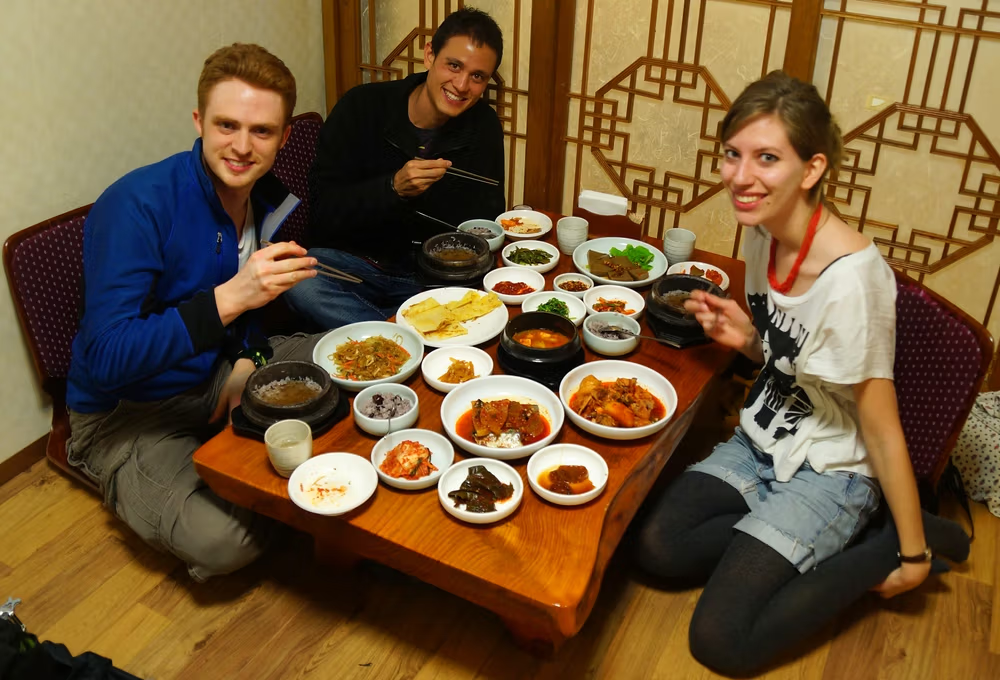
Recently I had the pleasure of meeting up with Mark Wiens in Seoul, South Korea. As an expert in travel and food in Asia, it was Mark’s first time in Korea and I figured nothing short of a traditional feast in Seoul would be sufficient. Mark runs the ever-popular Migrationology travel blog, showcasing his passion for travel and food.
I’m often dreaming of Thailand these days and I couldn’t think of a better person to interview regarding eating Thai cuisine.
That was the original setup for this interview. Simple enough. We met Mark, ate an enormous Korean meal together and then talked about Thai food—which is a perfectly logical sequence when you spend enough of your life organizing travel around whatever is bubbling, grilling or being pulverized with a mortar and pestle.
A lot has changed since then. Mark’s audience and body of work have grown enormously, and he has become one of the most recognizable food-travel creators in the world. His enthusiasm, however, appears to have survived intact. The man still reacts to a plate of spicy food as though somebody has just handed him the winning lottery ticket.
I admire that. I am not pretending I can match it.
Mark possesses the kind of chili tolerance that makes ordinary people reconsider their life choices halfway through lunch. I prefer to remain enthusiastic without requiring medical supervision.
What has aged especially well is the food philosophy behind his answers. Thai cuisine is not something you understand by memorizing a list of famous dishes and frantically ticking them off between temple visits. You begin to understand it by noticing how sour, salty, sweet, spicy, bitter, rich, fresh and fermented flavours push against one another.
It is balance, but not the polite, symmetrical kind. Thai food can be loud. It can be funky. Sometimes it arrives looking innocent and then removes a layer of skin from the inside of your mouth.
That is part of the charm.
The original interview has been preserved below with light corrections to spelling and English transliterations. Thai dish names are Romanized in several different ways, so you may encounter alternate spellings elsewhere. Do not let spelling anxiety stand between you and lunch.
Why Is Thai Food So Popular?
Q1) I’ve often heard individuals mention Thai food as their favourite cuisine. What do you think sets it apart from other cuisines and makes Thailand such a popular food destination for travellers?
I think it’s the range of vibrant flavors that makes Thai cuisine so remarkable and appetizing. Nearly every Thai dish is balanced in flavor—a little sour, spicy and salty, and often a sweet aftertaste. Having all your taste buds alive and aroused with each bite is why so many people love Thai food!
Another reason would be the fresh ingredients: herbs like holy and sweet basil, lemongrass and makrut lime leaves, and other tropical ingredients like fresh coconut milk and wonderful fruit.
Mark’s answer gets to the heart of it. Thai food rarely settles for one blunt flavour when it can give you six competing sensations and a minor identity crisis instead.
The mistake is reducing that complexity to “sweet, sour, salty and spicy” as though Thai cooks are standing over a wok with four labelled switches. Texture matters. Aroma matters. Bitterness matters. Fermentation definitely matters, particularly when it enters the room before the plate does.
Mark Wiens and the Eating Thai Food Website
Q2) Many know you from your flagship travel blog Migrationology, but you’ve also got another fantastic site, Eating Thai Food. What inspired you to make this site and what can readers expect to find?
When I first started blogging, I was travelling all around, but eventually I decided to remain in Thailand—mostly Bangkok—on a long-term basis. After staying in Thailand for a few months, I soon realized I had so many Thai food photos and Thai dining experiences that there was no way to publish it all on my original blog.
A passion for eating paired with so much Thai food content was the reason for beginning a site strictly dedicated to eating all sorts of delicious Thai food. You can expect to find top Thai food lists, restaurant reviews—mostly Bangkok—tips on how and what to order, and lots of food photos to get you excited about exploring Thai cuisine!
There is something almost quaint about this answer now. Mark had accumulated too many food photographs for one travel blog, so he created another website.
A classic early-blogger solution.
Today somebody would probably call it a vertical content brand, design a funnel and hold a webinar about it. Back then, it meant Mark had eaten too much good Thai food to keep it contained in one corner of the internet.
What Thai Street Food Should Visitors Try First?
Q3) One cannot separate Thai cuisine from street food. What are some dishes you recommend to travellers experiencing Thai food on the streets of Bangkok for the first time?
You’re right about that. Thai street food is everywhere you look, and it’s quick, convenient and delicious.
Here are a few of the most popular local Thai dishes you shouldn’t miss in Bangkok:
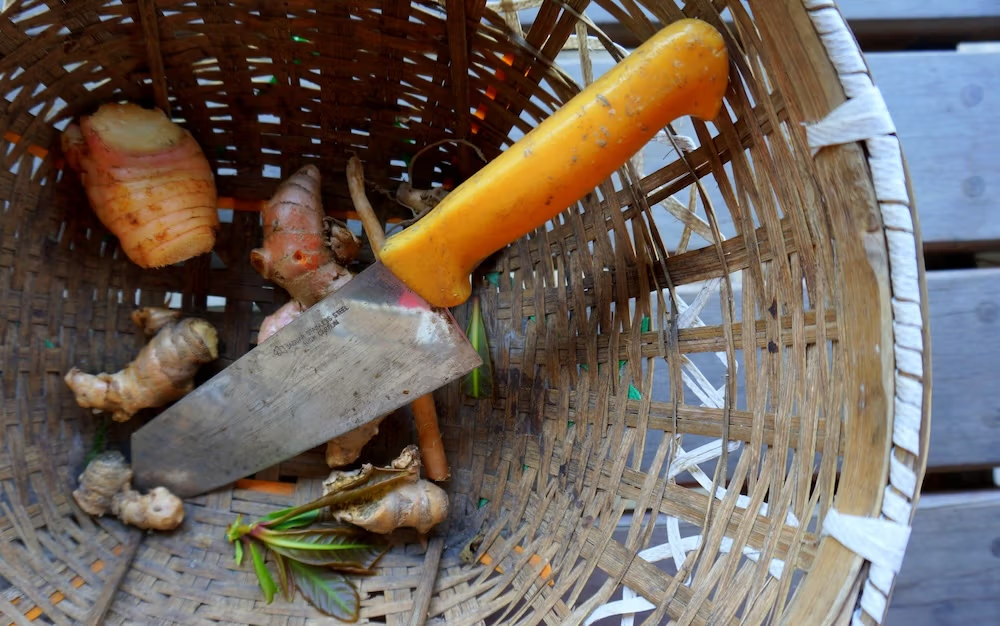
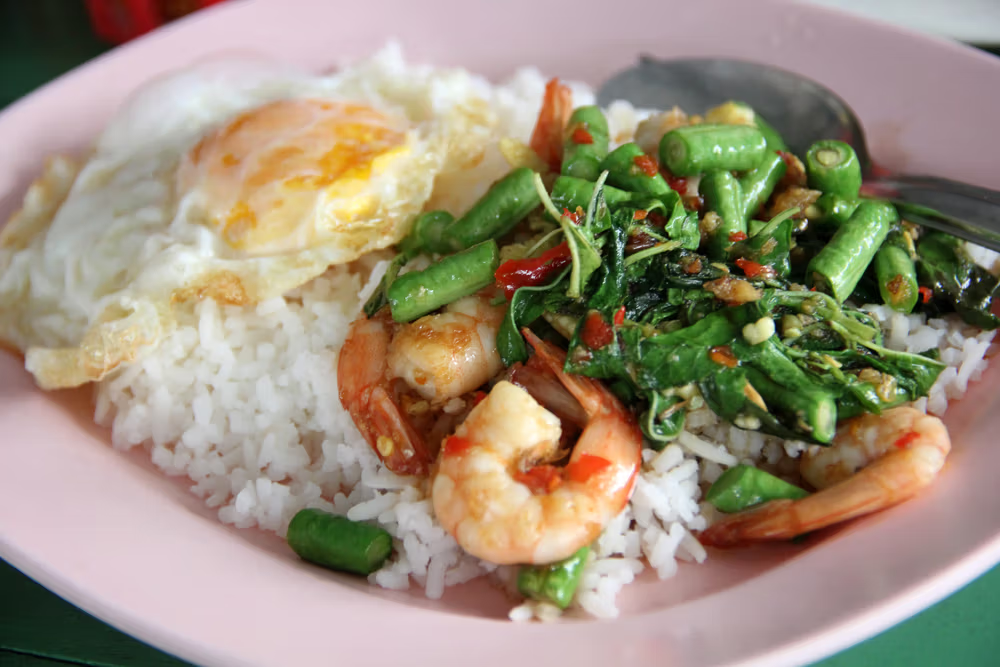
Pad kaphrao gai khai dao (stir-fried chicken with holy basil and a fried egg on top) – This is like the hamburger of Thailand, a tasty dish that’s widely available and easy to eat on the go.
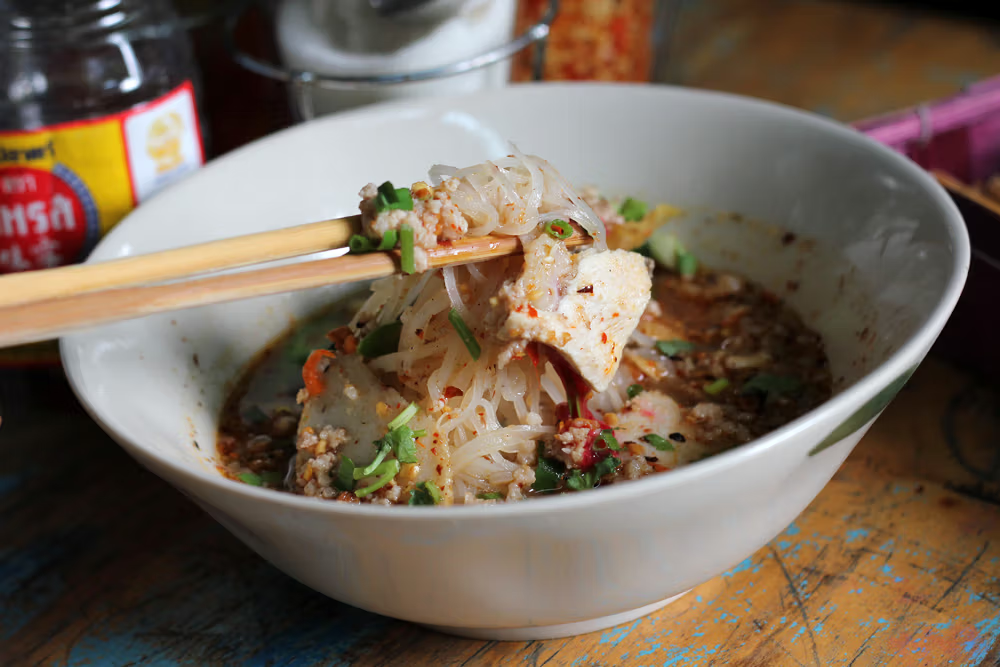
Kuay teow tom yum (noodles in hot and sour soup) – Hot noodle carts can be found on just about every street in Bangkok, serving freshly boiled noodles in flavorful broth. It’s then up to you to add vinegar, chili flakes, fish sauce or even a spoon of sugar to make it taste even better!
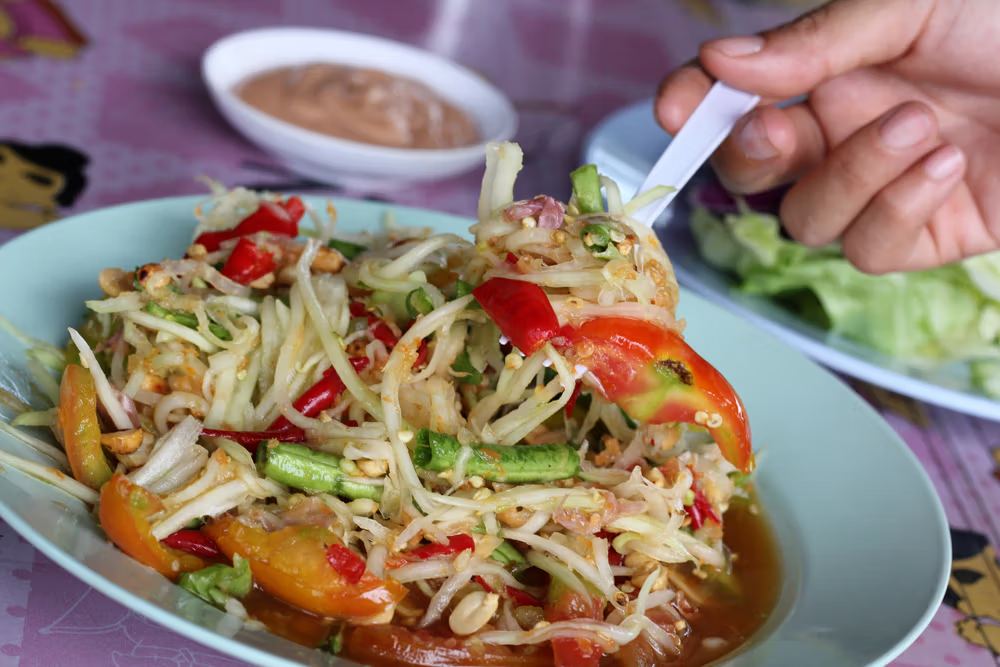
Som tam Thai (green papaya salad) – The texture of the green papaya is crisp, and it is dressed in lime juice and fish sauce and laced with chilies for an extra kick you’ll love!
This is a much better starting trio than the usual tourist strategy of eating pad thai six times and then declaring Thai cuisine conquered.
Pad thai is not a crime. It can be excellent. Making it your entire culinary strategy, however, is like visiting Italy and eating nothing but airport pizza.
Pad kaphrao gives you the comfort of rice, meat and a fried egg, but with garlic, chilies and holy basil punching through the familiarity. Noodle soup introduces the condiment tray and the unnerving freedom of being partly responsible for your own bowl. Som tam shows how one dish can be crisp, sour, salty, sweet and aggressively spicy without collapsing into chaos.
Start there. Then get nosier.
Bold, Spicy and Adventurous Thai Food
Q4) For those who are bold—in terms of their willingness to try unusual or spicy delicacies—what are some dishes you would recommend?
First of all, if you really enjoy eating spicy, you can bump up the heat by ordering everything “phet mak mak,” or very spicy!
Here are a couple of dishes you should try if you’re looking for exotic or hot dishes:
Goong ten – Translated as “dancing shrimp,” that’s exactly what it is: live mini shrimp are mixed with dressing and served still wriggling as you eat them!
Larb neua dip – You may have heard of normal larb, a common minced-pork salad, but there are other versions, like this one made with raw beef and blood.
Som tam pla ra – Som tam, as mentioned above, is Thai green papaya salad. Instead of the limey, fresh dressing used in the other version, this variety includes the famous pla ra, or fermented fish. The flavor is pungent and can be intense.
This is the point where Mark and I begin drifting toward different ends of the culinary bravery spectrum.
Fermented-fish papaya salad? Absolutely worth understanding. Dancing shrimp and raw beef with blood? Those are choices. Very specific choices.
I dislike the idea that travel becomes more authentic every time the food gets hotter, rawer or more likely to move independently across the plate. Curiosity is good. Machismo is exhausting.
Eat what genuinely interests you. Do not order something risky because a travel influencer made a face beside it and the internet has convinced you this is now a personal-growth exercise.
A Hardcore Backpacker Meal Plan in Bangkok
Q5) What do you think is the ultimate meal plan for a hardcore budget backpacker with adventurous taste buds roaming around Bangkok for the day?
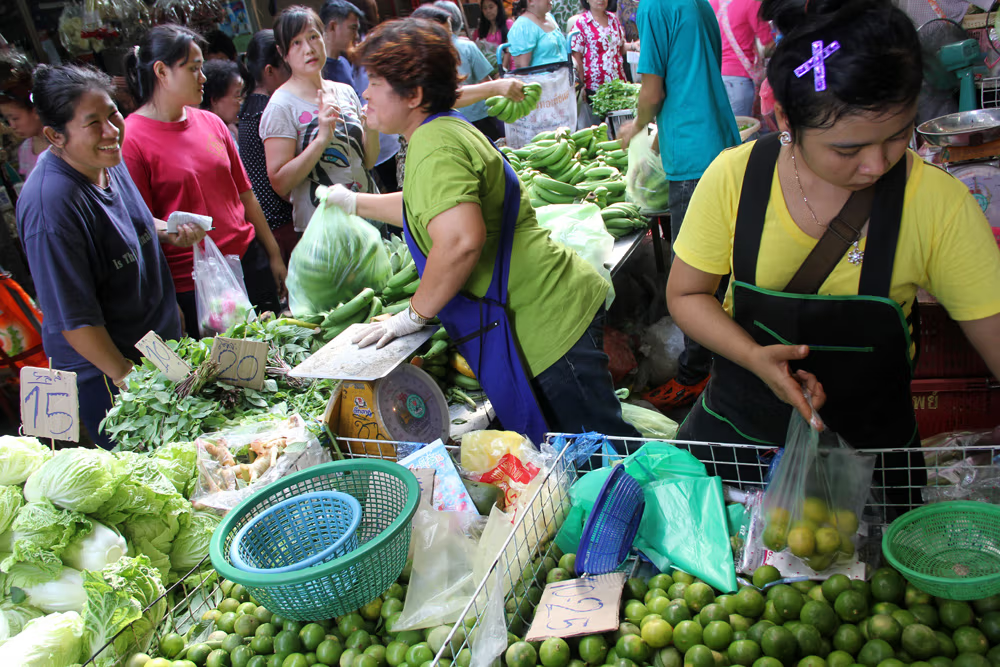
Stick to the streets and get away from the main touristy areas of Bangkok to eat. Head into one of the local fresh markets like Khlong Toei or Pak Khlong Talat, where you can find great local-style food on the cheap. Look for street stalls that are buzzing with lots of action so you know the food is fresh and good.
If you’re really on a budget, you may want to go to a khao rad gaeng stall that serves rice and a variety of pre-made curries. You can get a huge plate of rice and a few different dishes on top for 25 to 35 THB—around $1.
Historical price note: The 25–35 baht estimate above comes from the original interview. It is an interesting snapshot of budget eating at the time, but it should not be treated as a current Bangkok menu price. At this point, it belongs in the same category as old guesthouse rates and claims that you could travel indefinitely by selling handmade bracelets.
The useful part of Mark’s advice is not the price. Prices move. Sometimes they sprint.
The useful part is the format: find a busy rice-and-curry counter, point at two or three dishes, sit down and eat something far more interesting than the emergency sandwich you nearly bought from a convenience store.
Markets are also where Thai food begins making more sense. You see the herbs before they disappear into curry paste. You see twenty varieties of something you previously called “eggplant.” You watch ingredients move from raw produce to snack, sauce or full meal within a few metres.
It is education, except you get lunch.
Thai Desserts for Travellers With a Sweet Tooth
Q6) For those with a sweet tooth, what are some dishes they could sample to fix that craving?
If you enjoy sweets, you’ll have the time of your life in Thailand, as there is such a variety of desserts and sweet snacks. Many Thai desserts are flavored with fruit and rich coconut cream.
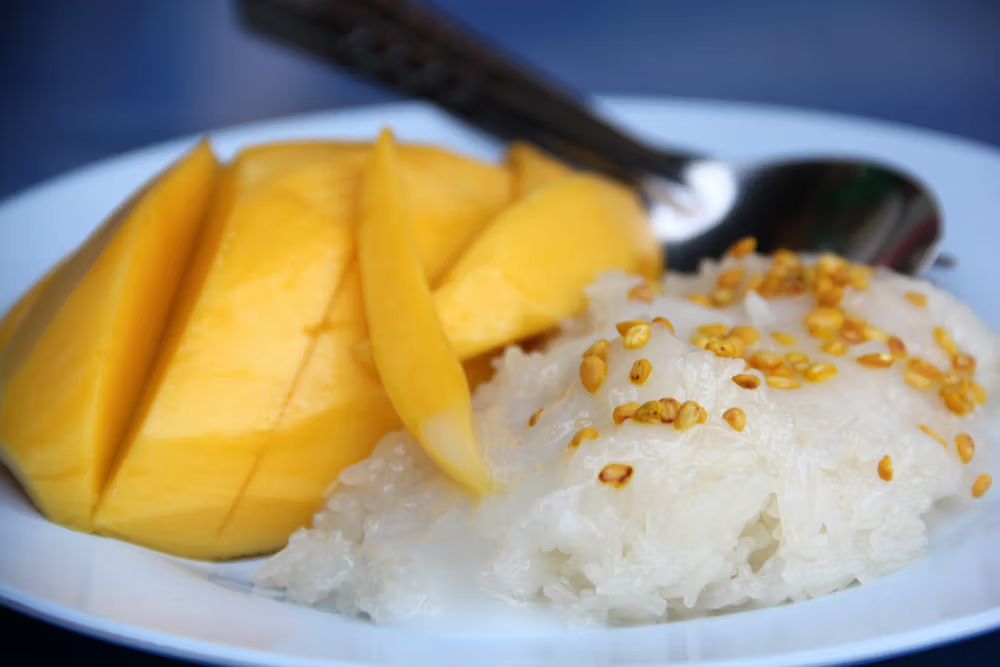
Khao neow mamuang (sticky rice and mango) – One of the most prized Thai desserts is sweet sticky rice paired with ripe yellow mango and doused in coconut cream. I also love khao neow durian, with durian replacing the mango!
Video: Mango Sticky Rice (Khao Neow Mamuang): One of Thailand’s Best Desserts
- Khanom tako – Coconut-cream pudding.
- Fak thong sangkhaya – Pumpkin filled with egg custard.
- Itim gati – Fresh Thai coconut ice cream, sometimes served with sticky rice and roasted peanuts.
Mango sticky rice is famous for a reason. It is also dangerously easy to underestimate.
It looks like fruit beside a modest scoop of rice. Harmless. Then the coconut cream arrives, the sticky rice expands inside you and the dessert begins behaving like a full second dinner.
Still worth it.
Thai desserts are broader and stranger than the usual mango-and-coconut highlight reel suggests. Some are delicate. Others are vividly coloured, bean-filled, egg-heavy, jelly-like or wrapped in banana leaves. Not every sweet will become a lifelong favourite. That is fine. Dessert does not need unanimous approval.
Learning How to Cook Thai Food
Q7) Eating Thai food back home can be pricey at times. Do you have any suggestions for a farang looking to master a few dishes before heading home?
While Thai food and cooking really focus on balancing all flavors, it’s really up to the personal eater—or chef—to determine what’s balanced.
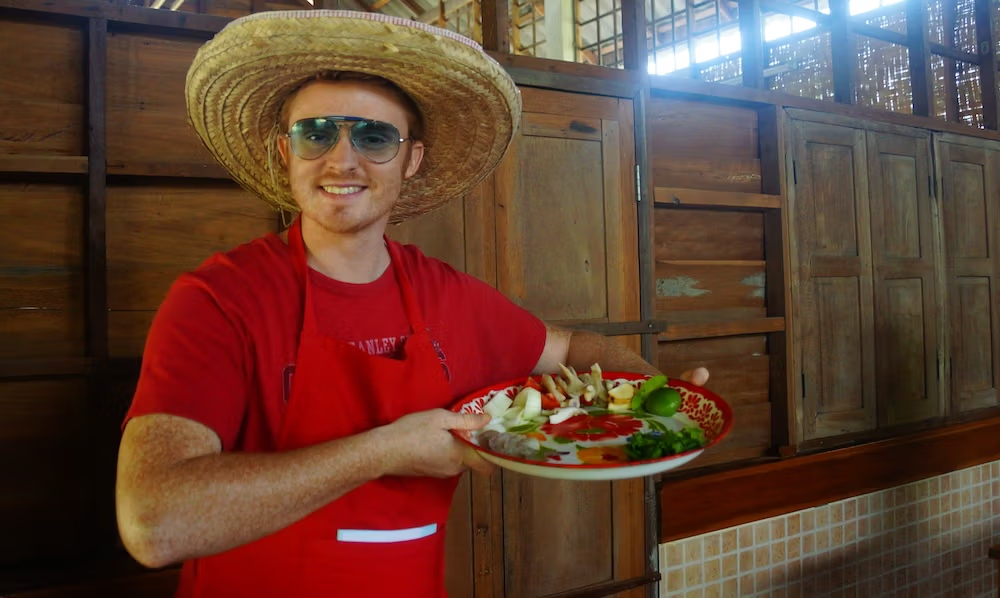
Thais often order their dishes exactly to their liking: extra sour, extra sweet or extra spicy. For this reason, it’s important to get a feel for what Thai food should taste like, and when you cook, it’s necessary to sample until each dish is the way you want it to taste.
Thai cooking is not only about using the right amount of ingredients, but also about using the correct levels of heat and methods of preparation. For instance, grinding chilies and garlic with a mortar and pestle really makes a difference in bringing out the flavor!
Overall, have fun with Thai cooking and make everything so it’s most appealing to yourself or whoever you’re cooking for!
This may be the most useful answer in the entire interview.
Cooking Thai food from a recipe can create a technically correct plate that still tastes strangely flat. I know this because following instructions and producing something underwhelming is one of my more reliable kitchen skills.
The missing step is often tasting. Then tasting again. Then admitting that the sauce needs more lime, fish sauce, sugar or chili instead of stubbornly protecting the recipe as though it were a sacred legal document.
A cooking class helps because somebody can show you what the paste should look like, how hot the wok should be and when the flavours have stopped behaving like separate ingredients.
Mark Wiens’ Ultimate Thai Meal
Q8) Finally, this is an unfair question, but what would be your ultimate full-course Thai meal if you had to make such a decision?
This is a jumbled mixture of different dishes from around the country, so it would be hard to actually eat all these dishes in one single restaurant meal, but here are a few of my favorites!
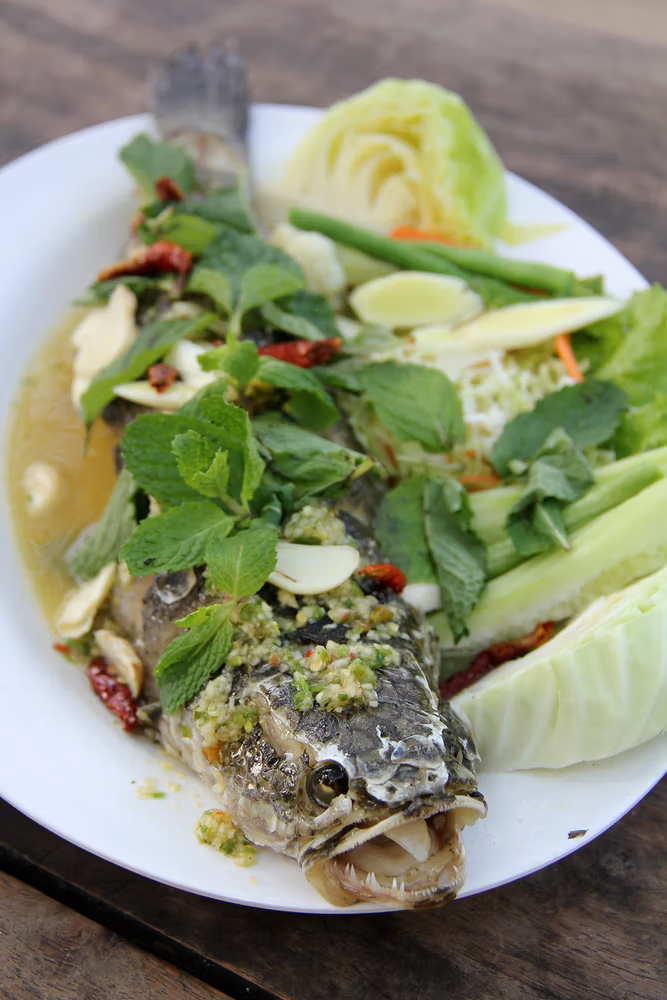
- Pla chon lui suan – Steamed snakehead fish with vegetables and herbs.
- Pad sataw – Stir-fried stink beans.
- Gaeng som – Hot and sour southern Thai soup, and a southern Thai food staple.
- Pad pak krachet – Stir-fried water mimosa.
- Nam prik kapi – Shrimp-paste chili sauce eaten with fresh or steamed vegetables.
I’d end my meal with a mega chunk of fresh durian!
Of course he would.
Most people would conclude a meal involving snakehead fish, stink beans, sour curry, water mimosa and shrimp-paste chili sauce with a lie-down and several hours of silence.
Mark adds durian.
That sentence may explain his entire career better than I ever could.
How to Understand Thai Food Without Memorizing 100 Dishes
The internet loves a giant food list. Fifty dishes you must eat. Seventy-five curries before you die. One hundred snacks that will apparently transform you into a more complete human being.
I enjoy lists too. I also enjoy tables far more than any well-adjusted person should. But the world does not desperately need another article ordering Thai dishes from 1 to 100 as though green curry and grilled chicken are competing in a sporting event.
Mark’s answers point toward something more useful: understanding the system.
Thai cuisine is often discussed in terms of balancing sweet, sour, salty and spicy tastes, but texture, aroma, bitterness, freshness, smoke and fermentation matter too. A crisp papaya salad behaves differently from a rich curry. A fiery chili dip makes more sense with vegetables and rice than it would sitting alone in a bowl, threatening everybody.
Tomyum Kung offers a particularly good example. In 2024, UNESCO added the knowledge and traditions surrounding this prawn soup to its Representative List of the Intangible Cultural Heritage of Humanity. UNESCO’s description focuses on the combination of prawns, lemongrass, galangal, makrut lime leaves, shallots, chilies and local seasonings—and on how the finished soup can carry sour, spicy, savoury, sweet, creamy and slightly bitter notes at once. You can read UNESCO’s Tomyum Kung entry here.
The practical lesson is wonderfully liberating: stop searching for one “best Thai dish.” Learn how different dishes perform different jobs.
Know What Kind of Thai Food Stall or Restaurant You Have Entered
One reason first-time visitors become overwhelmed is that every place selling food can look like part of one endless street-food organism. Smoke. Plastic stools. Metal trays. Soup bubbling in an alarming quantity.
In reality, many stalls and restaurants have a specific format. Recognize the format and half the ordering problem disappears.
| Eating format | How it works | Typical examples | Best for |
|---|---|---|---|
| One-dish specialist | The stall or shop concentrates on one dish or a small family of related dishes. | Chicken rice, pork-leg rice, noodle soup, roast pork rice | A quick meal with very little ordering anxiety |
| Made-to-order wok shop | You choose a stir-fry, protein and often the preferred heat level. It is cooked after you order. | Pad kaphrao, fried rice, stir-fried vegetables, Thai omelette over rice | Solo travellers and straightforward customization |
| Khao rad gaeng counter | Prepared curries, stir-fries and vegetables are displayed in trays. You point to one or more dishes to be served with rice. | Southern curries, braised meats, eggs, vegetables | Seeing before ordering and trying several flavours cheaply |
| Noodle stall | You may choose noodle type, broth, protein and whether the noodles are served dry or in soup. | Kuay teow tom yum, boat noodles, clear pork or fish-ball noodles | A focused meal and learning how condiments change a bowl |
| Shared restaurant meal | Each diner has rice while several central dishes are shared across the table. | Salad, curry, soup, stir-fry, grilled fish, vegetables | Understanding how Thai flavours balance one another |
| Market grazing | You assemble a meal gradually from snacks and small portions. | Fruit, skewers, sausages, sweets, grilled meats, small noodle dishes | Trying more foods without committing to one enormous meal |
The one-dish specialist is often the least intimidating. The vendor makes one thing repeatedly, and your main responsibility is not overcomplicating the transaction.
Rice-and-curry counters are excellent for the indecisive because the evidence is sitting directly in front of you. Point at something appealing. Add another dish. Accept that one of your selections may be far hotter than its appearance suggested.
This is how learning happens.
How to Build a Balanced Thai Meal
Ordering one plate is easy. Ordering a shared Thai meal is where things become interesting.
It is also where an enthusiastic table can accidentally request four dishes that are all painfully hot, sharply sour or swimming in enough coconut milk to lubricate farm machinery.
For two people, rice plus three contrasting dishes is generally enough to create variety. A larger group can expand the spread, but the same logic applies.
| Role in the meal | What it contributes | Examples |
|---|---|---|
| Bright or fiery dish | Sourness, chilies, herbs and freshness | Som tam, larb, nam tok, seafood salad |
| Soup or curry | Broth, richness, aroma or a deeper sour-spicy element | Tom yum, tom kha, green curry, gaeng som |
| Savoury stir-fry or grilled dish | Garlic, wok flavour, meat, seafood or a substantial vegetable | Pad kaphrao, grilled chicken, morning glory, pad sataw |
| Neutral support | Relief from concentrated seasoning and something to carry sauces | Steamed jasmine rice, sticky rice, Thai omelette |
| Dip, relish or condiment | An adjustable burst of salt, heat, fermentation or acidity | Nam prik, seafood sauce, chili vinegar, fish sauce with chilies |
A practical order for two might be som tam, grilled chicken, a mild vegetable stir-fry and sticky rice. Another could be tom yum, pad kaphrao, stir-fried greens and jasmine rice.
There is no compulsory formula. Thai people are not waiting behind a curtain to revoke your dining privileges because you ordered two stir-fries.
But contrast usually produces a better meal than ordering three dishes that all perform the same job and then desperately shovelling rice into your mouth because everything is on fire.
Regional Thai Food: Four Traditions to Start Exploring
“Thai food” is an umbrella term so broad that it occasionally becomes meaningless.
Ingredients, staple carbohydrates, cooking techniques and flavour preferences change across the country. Bangkok is one of the easiest places to sample food from all four major regional traditions, but travelling into the regions reveals far more depth.
| Region | Common characteristics | Dishes to look for | Good starting point |
|---|---|---|---|
| Central Thailand and Bangkok | A broad balance of sweet, sour, salty and spicy flavours; rice and noodle dishes; substantial Thai-Chinese influence | Tom yum goong, green curry, boat noodles, pad kaphrao, Thai omelette | Tom yum with rice and a vegetable stir-fry |
| Northern Thailand | Herbal, savoury and sometimes smoky flavours; chili dips; pork; regional sausages; Burmese and Lanna influences | Khao soi, sai ua, gaeng hang lay, nam prik noom | Khao soi followed by sai ua and a northern chili dip |
| Isaan or Northeast Thailand | Sour, salty, spicy and herb-heavy dishes; grilled meats; fermented fish; roasted rice powder; sticky rice | Som tam, larb, nam tok, gai yang, tom saep | Som tam Thai, grilled chicken and sticky rice |
| Southern Thailand | Assertive chilies, turmeric, seafood, coconut, fermented ingredients and Malay-Muslim influences | Gaeng som, khua kling, gaeng tai pla, pad sataw, seafood curries | A rice-and-curry counter where you can see the dishes before choosing |
Mark has demonstrated that a sufficiently determined eater can sample all four regional traditions in Bangkok in a single day.
Mark can do that.
I would require strategic pacing, loose clothing and possibly a nap.
Central Thai Food and Bangkok
Bangkok’s food scene contains far more than central Thai cuisine, but central dishes provide many of the flavours visitors initially associate with the country: tom yum, green curry, river prawns, noodles, stir-fries and substantial Thai-Chinese influence.
It is the easiest region to enter without realizing you have entered it.
Northern Thai Food
Northern food can feel more savoury, herbal and smoky than the coconut-heavy or intensely sour-spicy image many foreigners carry of Thai cuisine.
Khao soi gets most of the attention, understandably. It is comforting, photogenic and covered with crispy noodles—three strong qualifications for internet fame.
But northern sausages, pork curry and chili dips deserve room too. For northern cuisine, markets and cooking classes, see my guide to why Chiang Mai makes such a useful base in northern Thailand.
Isaan Food
Isaan cuisine is where som tam, sticky rice, larb and grilled chicken begin behaving less like separate dishes and more like members of the same loud, argumentative family.
The food can be intensely spicy, sour and salty. Fermented fish is not a novelty added for shock value. It is a foundational flavour.
Start with som tam Thai and grilled chicken if you are cautious. Move toward pla ra when curiosity overtakes self-preservation.
Southern Thai Food
Southern Thai food is not particularly interested in giving timid eaters a gentle runway.
Chilies, turmeric, seafood, shrimp paste, stink beans and forceful curries arrive with conviction. Even the colour can feel confrontational.
That intensity is exactly what makes it exciting. Just do not assume every curry containing coconut milk will be mild and comforting. Southern Thailand did not sign that agreement.
Why Thai Dish Names Have So Many English Spellings
You search for pad gaprao. The menu says pad krapao. Another article calls it pad kaphrao. At this point, a hungry traveller may begin to suspect that three different basil dishes are conspiring against them.
Usually, they are not.
Thai does not have one universally followed Romanization system across restaurant menus, food blogs, maps and handwritten signs. A dish can therefore look quite different in English without actually being different.
| Spellings you may encounter | What they generally refer to |
|---|---|
| Pad kaphrao, pad krapao, pad gaprao, pad kra pao | A stir-fry made with holy basil, usually served with rice and often a fried egg |
| Larb, laab, laap or larp | A seasoned minced-meat, fish or mushroom salad associated especially with Laos and Isaan |
| Kuay teow, guay tiew, kway teow | Noodles or a noodle dish |
| Gaeng or kaeng | A curry, soup or liquid-based preparation, depending on the dish |
| Som tam or som tum | Pounded green papaya salad and its many variations |
| Pla ra or plaa raa | Fermented fish used as a seasoning, especially in Isaan and Lao food |
Do not become trapped searching for the one correct English spelling while standing hungry in front of a food stall.
Look at the ingredients. Look at the photographs. Look at what everybody else is eating. Use the Thai script when possible.
Then order before the person behind you begins plotting your removal.
Thai Dishes by Comfort and Adventure Level
Spice tolerance is not the only thing that makes a dish challenging. Fermentation, bitterness, offal, raw meat and unfamiliar textures can be more confronting than chilies.
This progression is therefore about familiarity rather than culinary virtue. Eating raw beef does not earn anybody a medal.
| Starting point | Dishes | Why they work |
|---|---|---|
| Gentle introduction | Khao man gai, khao khai jeow, clear noodle soup, pad kaphrao ordered mildly | Recognizable rice, egg, chicken and noodle foundations with manageable seasoning |
| More character | Som tam Thai, tom yum goong, khao soi, larb, sai ua | More herbs, acidity, chilies, aromatics and regional personality |
| Bold and fermented | Som tam pla ra, gaeng som, nam prik kapi, pad sataw, gaeng tai pla | Fermented fish, shrimp paste, bitter or pungent vegetables and stronger curry pastes |
| Raw or live preparations | Goong ten, larb neua dip and other uncooked meat or seafood dishes | Specialist preparations with added food-safety considerations; not sensible starting dishes for everyone |
You are allowed to remain in the gentle-introduction row for more than one meal. There is no countdown clock.
Trying to eat like Mark Wiens on your first day in Thailand is not cultural immersion. It is digestive vandalism.
Ordering Spice Without Creating an International Incident
A few Thai words can help, although pronunciation and tone matter and no phrase guarantees that a dish will arrive exactly as imagined.
- Mai phet – Not spicy.
- Phet nit noi – A little spicy.
- Phet mak mak – Very spicy.
- Aroi mak – Very delicious.
Some dishes can easily be made with fewer fresh chilies. Others contain chili paste or curry paste in their basic preparation, so “not spicy” may require changing the dish substantially—or may not be possible at a specialist stall.
Also remember that “a little spicy” is not an internationally regulated measurement.
Your little and the cook’s little may have grown up in different universes.
Pointing is not a failure. Look at trays, photographs and neighbouring tables. A vendor who cooks the same dish hundreds of times knows far more about it than somebody waving a translated paragraph at the menu while blocking the queue.
Vegetarian, Vegan and Allergy Considerations
Thailand has excellent vegetables, tofu, fruit, rice and meat-free dishes, but a plate that appears vegetarian may still contain fish sauce, oyster sauce, shrimp paste, dried shrimp or an animal-based broth.
This is where vague travel advice becomes dangerous. Saying Thailand is “easy for vegans” may be true if you know where to go, what to ask and how strict you need to be. It is not automatically true at every noodle stall with tofu visible in the window.
Strict vegetarians, vegans and travellers with allergies should not rely only on visible ingredients. A written Thai-language card explaining exactly what must be excluded is more useful than a vague request for “no meat.” Dedicated vegetarian or vegan restaurants are usually easier than trying to redesign every dish at a tiny specialist stall.
Food tours vary considerably in what they can accommodate. Check the operator’s restrictions before booking rather than assuming every stop will spontaneously produce an allergy-safe alternative.
Street Food Safety Without Paranoia or False Guarantees
Street-food advice is often divided between two useless extremes.
One camp behaves as though every ice cube is waiting to assassinate you. The other announces that a long queue makes every stall perfectly safe.
Neither is serious.
A busy stall can indicate strong turnover and local confidence, but a queue is not a food-safety certificate. Sometimes it only means everybody found the same TikTok.
The World Health Organization’s broad food-safety principles provide a more useful framework: keep food and equipment clean, separate raw and cooked ingredients, cook food thoroughly, keep it at safe temperatures and use safe water and raw materials. You can review the WHO Five Keys to Safer Food.
- Prefer food cooked to order and served genuinely hot. A roaring wok or bubbling pot is more reassuring than cooked meat sitting lukewarm for hours.
- Watch how raw and cooked ingredients are handled. Separate utensils and surfaces reduce cross-contamination.
- Notice the water, ice, plates and utensils. The cooking flame is only one part of the operation.
- Approach raw meat and live or raw seafood knowingly. They remove the protection supplied by thorough cooking.
- Carry appropriate travel insurance and seek medical care when necessary. Stubbornness is not a digestive treatment.
Use judgment. Accept that no system removes all risk. Then eat.
Travel becomes miserable when every meal is treated as a biological threat assessment.
Where to Base Yourself in Bangkok for Thai Food
Bangkok is too large, messy and delicious to reduce to one “best food neighbourhood.” Anybody claiming otherwise is probably trying to sell you a neighbourhood.
The better question is what kind of eating you want within easy reach—and how much chaos you want waiting outside the hotel door.
Yaowarat and Chinatown
Yaowarat is the obvious choice for evening street food, Thai-Chinese dishes, noodles, seafood, roast meats, desserts and dense urban energy.
It is exciting rather than restful. Neon, traffic, queues, smoke and people attempting to photograph noodles while standing directly in everybody else’s way.
The famous main road is only one layer of the neighbourhood. The side streets, markets and older commercial lanes are where Chinatown becomes more than a nighttime food backdrop.
Browse accommodation near Yaowarat on Booking.com.
Banglamphu and Bangkok Old Town
Old Bangkok provides access to established shophouses, markets, local sweets and the Banglamphu area where Mark has long written about specialist food stalls.
It also keeps travellers near the river, major temples and the uncompromising backpacker theatre of Khao San Road after dark.
Khao San itself should not be mistaken for the complete Bangkok food scene. That would be like reviewing an entire country’s nightlife after one evening inside an airport bar.
Walk beyond the loudest strip. The surrounding neighbourhood has far more substance than the buckets, bracelets and backpacker pancakes suggest.
Browse Bangkok Old Town accommodation on Booking.com.
Markets and Transit-Connected Bangkok
Markets such as Or Tor Kor, Wang Lang and Khlong Toei offer different versions of Bangkok food life, from polished produce displays to prepared food and deeply local shopping.
A base near the MRT, BTS or river ferries may ultimately be more useful than sleeping directly above one famous food street.
Bangkok traffic has a talent for turning a seemingly short dinner journey into a spiritual trial. Good transport connections matter.
Bangkok Food Tours: Useful Orientation or Expensive Grazing?
You do not need a food tour to eat well in Bangkok.
Let us get that out of the way before every travel article starts behaving as though independent lunch has become impossible.
A good food tour can still be extremely useful. It explains ingredients, ordering habits, neighbourhood history and the difference between dishes that might otherwise blur into one long evening of bowls, skewers and sauces.
It can also stop a nervous first-time visitor from spending three days eating beige fried rice because every other stall looked too confusing.
Mark now collaborates on The Ultimate Bangkok Food Tour, a small-group experience built around Thai food, markets, local communities and regional variety.
Travellers who prefer to compare marketplace-bookable options can consider these two distinct routes:
Bangkok Backstreets Food Tour with 15+ Tastings – A small-group route through the backstreets of Yaowarat with numerous tastings and a strong Thai-Chinese food focus. This particular experience states that it cannot properly accommodate strict vegetarians, vegans, severe allergies or several other dietary restrictions, so read the current conditions carefully before booking.
Bangkok Old Siam Food Tour with 15+ Tastings – An alternative route using a water taxi to reach a less-visited district and explore a broader selection of traditional Bangkok flavours away from the most obvious Chinatown circuit.
Choose Yaowarat if you want Chinatown density, Thai-Chinese influence and nighttime energy. Choose the Old Siam route if you want a wider old-Bangkok orientation and would rather not spend the entire experience threading between the same famous neon signs.
A tour is most valuable near the beginning of a trip. The goal is not merely to consume fifteen samples, photograph seven of them and then require transportation back to bed.
The goal is to leave with enough confidence to order independently for the rest of your stay.
Are Thai Cooking Classes Worth It?
Yes—provided you actually want to learn something and not merely wear an apron for photographs.
Mark’s cooking advice gets to the reason a good class can be more valuable than another restaurant list. Recipes tell you quantities. A teacher can show you what the paste should look like, when a wok is hot enough, how vigorously to pound aromatics and when salty, sour, sweet and spicy flavours have finally stopped fighting one another.
Classes that include a market visit add another layer by introducing herbs, vegetables, curry-paste ingredients and the difference between products that may look nearly identical to an unfamiliar shopper.
Bangkok and Chiang Mai offer slightly different advantages.
Bangkok Hands-on Thai Cooking Class and Market Tour – A practical Bangkok option focused on preparing four Thai dishes, with a fresh-market visit included in the morning session.
Chiang Mai Thai Cooking Class with Market and Farm Visit – A more rural-feeling experience combining a market, organic farm and dishes such as pad thai, tom yum and khao soi.
Bangkok makes sense when time is short and you want to connect the class directly to the street food and markets you are already exploring.
Chiang Mai often provides more breathing room, stronger access to herbs and gardens, and the chance to cook northern dishes where they belong rather than wedging another activity between a temple and rush-hour traffic.
You can also explore our YouTube travel-video archive, which includes Thai cooking, Chiang Mai markets, Bangkok food tours and other Thailand travel videos.
Bringing Thai Cooking Home
The most useful part of Mark’s answer is his insistence on tasting as you cook.
Thai food does not improve because somebody follows an English-language recipe with courtroom precision while refusing to taste the sauce.
Begin with one manageable dish rather than attempting a twelve-plate royal banquet and discovering halfway through that you own one undersized frying pan.
- Pad kaphrao teaches heat control, garlic, chilies, seasoning and the character of holy basil.
- Tom yum teaches the difference between aromatic ingredients that perfume a broth and seasonings that determine its final sour-salty balance.
- Som tam teaches pounding, bruising and tasting instead of merely stirring ingredients together.
- A curry made from a good prepared paste lets a beginner focus on coconut milk, texture, protein and final seasoning before attempting the paste from scratch.
Prepared curry paste is not moral failure. It is an ingredient.
Make the dish. Taste it. Learn what is missing. You can begin pounding every chili and coriander root by hand once your ambition has caught up with your available time.
Mark’s Thai recipe collection includes detailed recipes developed with his wife Ying and her family. It is a natural continuation of the cooking philosophy he described in this interview.
Thai Food Questions Answered
Is all Thai food spicy?
No. Thailand has mild noodle soups, chicken rice, braised dishes, omelettes, grilled meats, sweets and numerous other foods that do not depend on extreme heat. Some curries and salads are naturally chili-heavy, while many made-to-order dishes can be adjusted more easily.
Thai food being spicy is true in the same broad, unhelpful sense that European food contains cheese.
What should a first-time visitor order?
Pad kaphrao with a fried egg is an excellent one-plate introduction. For a shared meal, try som tam Thai, grilled chicken, a vegetable dish and sticky rice. A clear noodle soup or khao man gai works well for anybody beginning cautiously.
Order something familiar enough to anchor the meal and something unfamiliar enough to make it interesting.
What is the difference between som tam Thai and som tam pla ra?
Som tam Thai generally has a brighter sweet-sour profile and commonly includes peanuts. Som tam pla ra uses fermented fish seasoning, producing a saltier, deeper and more pungent character associated especially with Isaan and Lao food traditions.
The difference is not merely “one is smellier.” Pla ra changes the entire personality of the dish.
Is Bangkok street food safe?
No individual stall can be guaranteed safe. Food cooked thoroughly to order, served hot, handled with clean utensils and kept separate from raw ingredients is a more sensible choice than food sitting lukewarm.
Busy turnover is encouraging, but it is one clue—not divine protection.
Can vegetarians and vegans eat well in Thailand?
Yes, but strict diets require communication. Fish sauce, oyster sauce, shrimp paste, dried shrimp and meat broth may be used even when the visible ingredients are vegetables or tofu.
Dedicated vegetarian restaurants and a detailed Thai-language dietary card reduce confusion considerably.
Should I take a food tour or a cooking class?
Choose a food tour to understand neighbourhoods, ordering and regional variety. Choose a cooking class to understand ingredients, technique and flavour adjustment.
Travellers who are serious about Thai cuisine can justify doing both, preferably early enough in the trip to use what they learn.
Where should I travel for regional Thai food?
Bangkok offers the greatest breadth in one city. Chiang Mai and the north provide deeper access to Lanna cooking; Isaan is the home of sticky rice, larb, grilled meats and numerous papaya salads; and southern Thailand reveals a more forceful world of turmeric, seafood, chilies, fermented ingredients and Muslim culinary influences.
You can sample regional food in Bangkok. You understand it better when geography, climate, ingredients and local habits begin lining up around it.
Final Thoughts on Eating Thai Food in Thailand
The most useful advice in this interview is not that everybody must eat dancing shrimp, raw-beef larb or Mark’s preferred quantity of durian.
It is the encouragement to remain curious.
Learn the difference between a noodle specialist and a rice-and-curry counter. Order one dish you recognize and another that you do not. Build contrast into a shared meal. Taste before adding every condiment within reach. Accept that English spellings will vary.
Begin below your maximum spice tolerance rather than using lunch as an avoidable medical experiment.
And stop treating Thai cuisine as a checklist.
The first bowl teaches you the basic flavour. The fifth helps you notice how one vendor, city or region interprets it differently. The tenth may reveal that you were confidently wrong about the dish after bowl number three.
That is the enjoyable part.
I will probably never approach a plate of chilies with Mark Wiens’ expression of unrestricted joy. My face tends to reveal more doubt. Occasionally fear.
But his central argument is difficult to dispute: Thailand rewards eaters who keep exploring.
Try the famous dishes. Then leave room for the odd-looking curry at the end of the counter, the noodle shop without an English menu and the dessert you cannot confidently identify.
Just perhaps not all on the same afternoon.
Keep up with all of Mark’s food and travel adventures by following Migrationology, Eating Thai Food, his Mark Wiens YouTube channel and Migrationology on Instagram.
I love Thai food. These post has lots of great info and amazing pics. Thai food is my favorite food in Southeast Asia cuisine. I list my top 10 in this post: http://thaholiday.com/10-thai-food-dishes-to-experience/. What do you think?
I just love Thai cuisines as cooking of Thai dishes reflects simply on the characteristics of a waterborne lifestyle basically the aquatic animals, plants and herbs were the major ingredients of it…
Great interview. Answer to Q7 would have driven me crazy if I hadn’t just completed a Thai cooking class in Chiang Mai. Before that, however, each time I tried cooking pad thai (using about 50 different recipes) and it was inedible. (Bear in mind, I eat anything.) After learning from proper Thai cooks I’m finally able to ingest and enjoy my Thai cooking. The recipe from the school is on my blog (at the bottom of this link):
http://somewhereorbust.com/thai-succeed-battle-perfect-pad-thai/
Try it out and you’ll be emailing me for the green curry recipe next.
Wow, this post is so full of great info it seems like an encyclopedia of Thai food. A Thai street food restaurant opened near us and it’s one of our favorite places to eat.
Thai is probably one of the best South-East Asian food. So tasty and love the fish. Plus my version Thai-Salmon curry is so good.
Thanks Matt, I would have to agree with you. Thai food stacks up comparably with any other SE cuisine 🙂 The Thai-Salmon curry sounds delicious!
I miss the Asian food, Thai especially!
I think you have probably tried it already Sam, but while we are discussing food I would like to recommend that you try Namtok Moo with sticky rice, it’s usually quite spicy and the taste is hard to describe but it is sort of tangy, bitter and sweet all at the same time. Great with a beer or a whiskey, once you get the taste for it you just want more and more.
The food looks absolutely AMAZING! I loooove thai food and can’t wait to travel to Thailand and try all these tasty looks dishes (except of course for the live squirming shrimp – think I’ll pass on that one). Would love to take some cooking classes in Thailand to master the cooking technique and get my hands on some authentic recipes!
YUM! Those food shots are mouth-watering!
Thanks Abby,
Visiting Mark’s site is dangerous on an empty stomach 😛
I met Mark in Bangkok last year and he really is an awesome guy that knows his food — he had me eating stuff I couldn’t pronounce in a market I never even knew of just around the corner where I was staying. We’re talking ridiculously good food and ridiculously low prices.
That’s great! I’m looking forward to his recommendations when I get a chance to visit him again in Bangkok.
Thai food is soo good, that’s one of the main things I still miss from Asia. I also tried the live shrimps, it was ummm interesting, but actually quite nice 😉
Hahaha, I’ve yet to try those! Definitely will next time.
Because my wife Tamara worked in Korea for three years, and because I know she thinks of her time there very affectionately – I was looking for signs of things to make me feel the same way too as I read this. The photo of the two women smiling across the market stall does that for me. 🙂
One thing Tamara tells me is that it is important to know the Korean for ‘Go easy on the hot sauce’. 😉
LOL, going easy on the hot sauce is definitely something worth knowing in Korea 😛 I’m very fortunate that I do enjoy spicy foods otherwise I’d be in trouble over here.
Wow, another great adventure again! The foods you eat looks good but it looks weird for me. Their foods are really different. Love to try to eat this one.
Thanks Marnie,
Some of it must look quite exotic!
Omg, I’m so hungry!
LOL, so am I 🙂
I like a few of the places in town and in my hometown in the US that claim to be Thai food. I enjoy spicy a lot, which they can usually provide. I have never been to Thailand, but definitely look forward to going.
That’s great Andrew. When you do visit Thailand you’ll be able to enjoy it all for a fraction of the price you pay back home.
I was recently telling a friend about the use of congealed blood as an ingredient in Thailand. He seemed to think I was making that up, since he’d just been there for a quick 1 week vacation and hadn’t seen it (though he’s a restaurant eater, not a street food eater). I’m sending him this post as proof!
HAHA, that’s a great idea! Sometimes the most memorable dishes are the ones found on the streets.
Reading this has made me hungry…..
Indeed, I’ve also got a craving for Thai food now 🙂
This looks beyond delicious! You have made me miss Asian food so much!
I always miss Western food when I’m based in Asia and Asian food when I’m based in North America…haha
I love Mark’s food trip video blogs! Hoping to meet him soon 😀
So do I! He’s been doing some good ones on Korean food lately.
Man, that fish looks awesome. Great use of depth of field. I love Asian food, although I’ve never been to Thailand so never had the “real thing” in terms of Thai.
The fish does look awesome! I like how Mark uses depth of field to bring out the best in his shots of food. I also find the colours very vibrant.
Good food and great company. Sounds like a great day.
It definitely was!
I have never tasted authentic Thai food, just the fast food version which I suspect is nothing like the original. It is hard to find Thai food in Turkey, all seems to be Chinese. It is on my bucket list but I can not see me crossing it off anytime soon. Great interview.
Thanks Natalie,
It can certainly be hard to find authentic regional cuisine overseas at times. If you ever get a chance to visit Thailand you’ll have options galore 🙂
That was a fun meal we all had together!
Mark, these dishes all look so delightfully tasty – I can almost savour them just looking at the pictures! Though I’m not sure I’d stick around for dessert if you were slicing up some durian… 😉
I’ve ate durian on pizza before. It was tasty 🙂