
So I took a cooking course. Initial sentiments likely revolve around whether of not an International Incident occurred, the kitchen burnt down or if anybody was carried out on a stretcher.
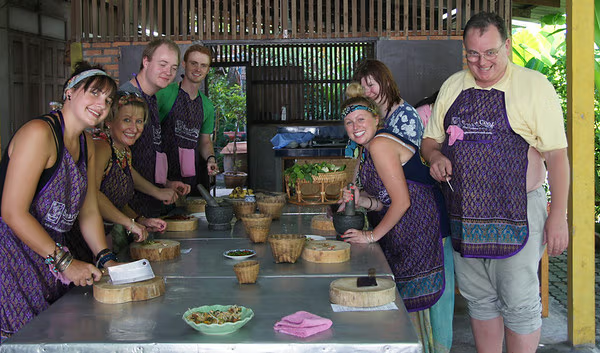
Sorry to disappoint, but none of the above occurred. In fact, the entire process of learning how to cook some of my favorite Thai dishes was truly an ingratiating experience.
All of this coming from an individual who has mastered the art of making a delectable peanut butter and jelly sandwich. Before you laugh consider the following skills necessary to perfect such a craft. The ratio of peanut butter to jelly needs to be exact. It´s an art as much as it is a science. A little too much jam and you´re drowning in a sugary mucilaginous mess. A little heavy on the peanut butter and you´ve got a salty stick in the throat emergency room fiasco. Moreover, selecting the proper kind of bread (rye, sourdough, pumpernickel) is of utmost importance – no generically ´white´ crap is going to cut it here. Anyhow, enough with the self-depreciating humor.
Taking A Thai Cooking Course In Chiang Mai, Thailand
I can make a few things well, namely pizza and cheesecake – both from scratch. However, the truth is that ever since I´ve been living abroad working and traveling in Asia, the necessity to become a whiz in the kitchen has been trumped by the plentiful supply of nickel-and-dime scrumptious local/regional cuisine readily available at my fingertips literally at any hour of the day. In the past few years, I´ve more likely spent time rummaging around in the pantry for a late night snack than I have cooking up any sort of gormandizing dainty delights to enjoy myself or to share with others.
Many a farang/backpacker comes to Thailand to soak up the sun and sand that the southern most parts of the country dish out readily both ponderous in quantity and quality. It´s truly world class in this area and I´m not at all suggesting the experience should be skipped. However, for those who head up to the less popular area in the northwest region, the cultural HUB of Chiang Mai awaits.
A smorgasbord of cultural and adventurous activities are on offer to satisfy the craving of just about any individual.
If you´re into trekking, elephant rides and exotic tropical rain-forests you´ve hit the right spot. On the other hand, if you´re looking to soak up as much culture as possible with visits to hill-tribes, temples, bustling outdoor markets along with mastering the arts of Muay Thai, massage, yoga and cooking you´ll never exhaust the abundant opportunities awaiting. I had dabbled in most of the above but had never taken a cooking course before in my life. I decided to plunge right in and take the ´full´ instead of the half day course. One might think it´s a bit much for such a rookie, but I managed to turn a few heads when it was all said and done.
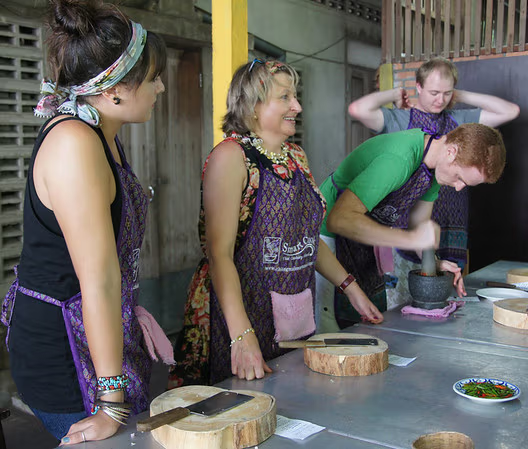
As foreigners we all assembled in a very quaint and cozy cooking school in downtown Chiang Mai for a quick meet & great followed by a trip to the local market where our head chef and cooking instructor for the day carefully explained the ingredients used for Thai cooking along with a host of other useful tips to consider when selecting items or cooking things in general. Upon returning, we decide upon a host of different dishes we´re going to individually make for the day. A soup, spring roll, salad, noodle, main, curry and dessert dish are all offered in three different forms. It was hard to narrow it down to just one of each but I´m glad we had the choice!
The cooking itself was a lot of fun. The instructor carefully walked us through the procedures and dished out a plethora of useful information regarding techniques and general background of Thai food. It was fool proof enough in the sense that a dummy (such as myself) could feel comfortable enough to complete each task; yet, it had enough appeal for even the seasoned chef to gain a few tidbits of useful knowledge. The best part is that we got to devour each of our creations as the crowning achievement.
Overall, the experience was fantastic in the sense that it gave me a lot more confidence to try things in the kitchen. I don´t see myself as ever becoming a world class chef but I certainly can now make some tasty Thai dishes to impress company every once in a while. The best part, at least in my opinion, was the guide/recipe book given out at the end. From front to cover it covers all of the recipes along with introductions to Thai cuisine, ingredients and background information. Anything forgotten on the intensive one day cooking experience is within the cover of the book for future reference.
It´s something I highly recommend for those willing to give it a shot. I truly mean it when I say the following: If I can do it ANYBODY CAN!
Thai Dishes You Can Learn How To Make In Chiang Mai
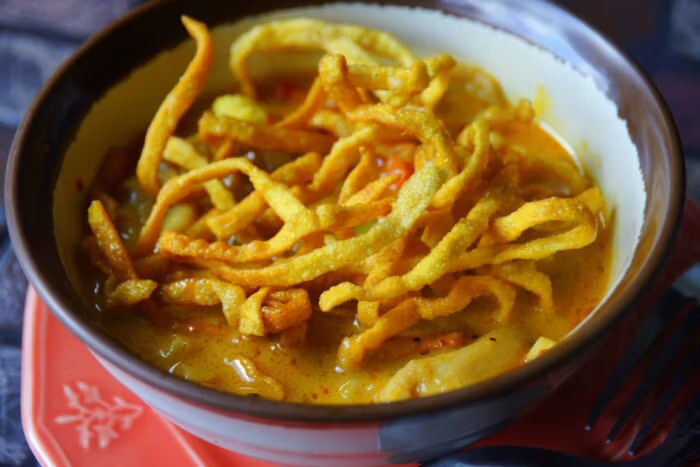
Khao Soi (ข้าวซอย)
Khao Soi is a signature Northern Thai dish that’s a must-learn when in Chiang Mai. This rich, creamy curry soup is made with coconut milk, egg noodles, and tender chicken or beef, topped with crispy noodles, pickled mustard greens, shallots, and lime. The combination of textures and flavors—spicy, tangy, and slightly sweet—makes it a standout dish that represents the culinary heritage of Northern Thailand.
- Regional Specialty: Khao Soi is unique to Northern Thailand, and learning to make it in Chiang Mai gives you an authentic taste of the region’s culinary traditions.
Pad Thai (ผัดไทย)
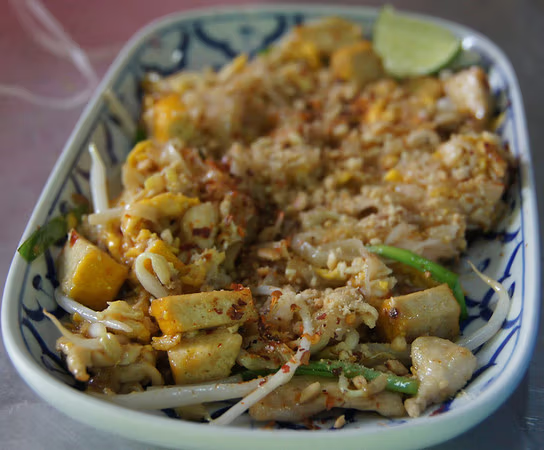
Pad Thai is perhaps the most famous Thai dish globally, and learning to make it in Chiang Mai is a truly rewarding experience. This stir-fried noodle dish combines rice noodles, eggs, tofu, shrimp, and bean sprouts, all tossed in a tamarind-based sauce and garnished with peanuts and lime. It’s a perfect balance of sweet, sour, salty, and spicy flavors.
- Why It’s Unique: Making Pad Thai from scratch allows you to master the art of achieving that perfect balance of flavors. It’s also highly customizable, allowing you to adjust the ingredients to suit your taste.
Sai Ua (ไส้อั่ว)
Sai Ua, or Northern Thai sausage, is another dish that reflects the bold flavors of Chiang Mai. This aromatic sausage is made with minced pork, herbs, and spices, including lemongrass, kaffir lime leaves, and galangal. Grilled to perfection, Sai Ua is often enjoyed with sticky rice and fresh vegetables.
- Flavor Explosion: The fragrant blend of spices used in Sai Ua makes it a flavorful experience, and learning to prepare it yourself gives you insight into the regional use of herbs and spices.
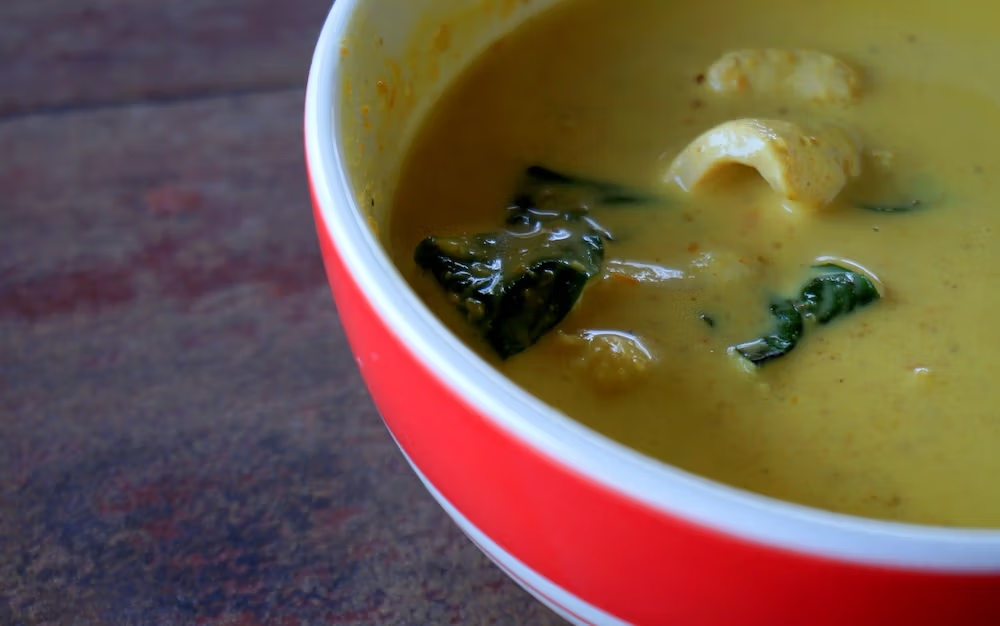
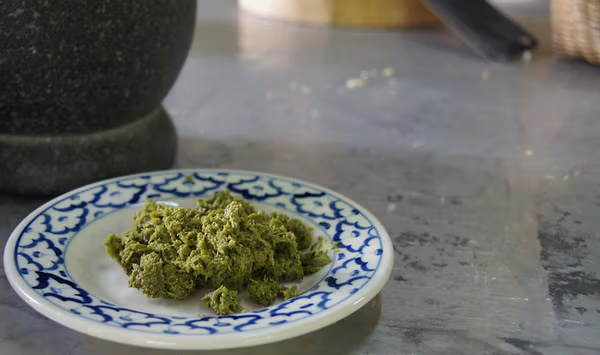
Green Curry (แกงเขียวหวาน)
Green Curry is another classic Thai dish you can learn to make in Chiang Mai. This fragrant, spicy curry is made with green curry paste, coconut milk, chicken or tofu, and a variety of vegetables. It’s usually served with steamed jasmine rice and garnished with fresh basil leaves.
- Cultural Significance: Green Curry is a staple of Thai cuisine, and learning to make it involves understanding the nuances of Thai spices and herbs. It’s a dish that embodies the rich, complex flavors of Thailand.
Tom Yum Goong (ต้มยำกุ้ง)
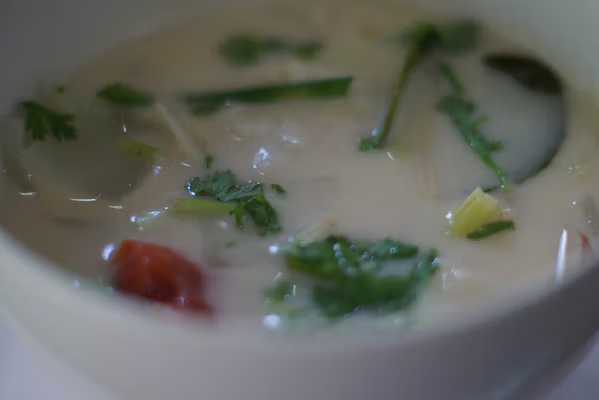
Tom Yum Goong, a hot and sour soup with shrimp, is a favorite among Thai food lovers. The soup is infused with the flavors of lemongrass, kaffir lime leaves, galangal, and chili, creating a dish that’s both refreshing and invigorating.
- Taste of Thailand: Making Tom Yum Goong in a cooking class provides insight into how to balance the bold flavors that make this dish so popular. It’s an excellent introduction to the use of Thai herbs and spices.
Som Tum (ส้มตำ)
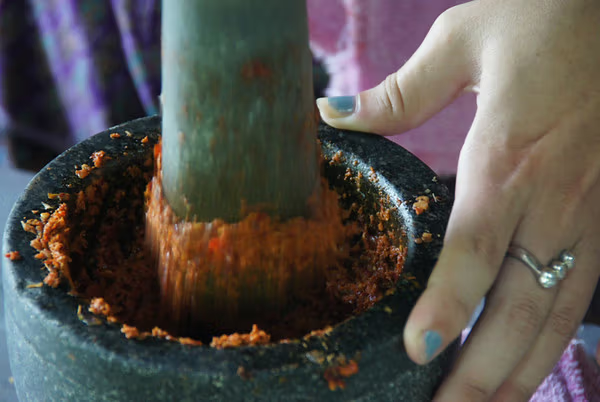
Som Tum, or green papaya salad, is a spicy and tangy dish that’s a staple of Thai street food. It’s made by pounding shredded green papaya with garlic, chilies, tomatoes, and lime juice in a mortar and pestle, creating a refreshing salad with a kick.
- Hands-On Experience: Learning to make Som Tum is a hands-on experience where you’ll master the technique of using a mortar and pestle, which is central to many Thai dishes. It’s a dish that’s all about texture and balance.
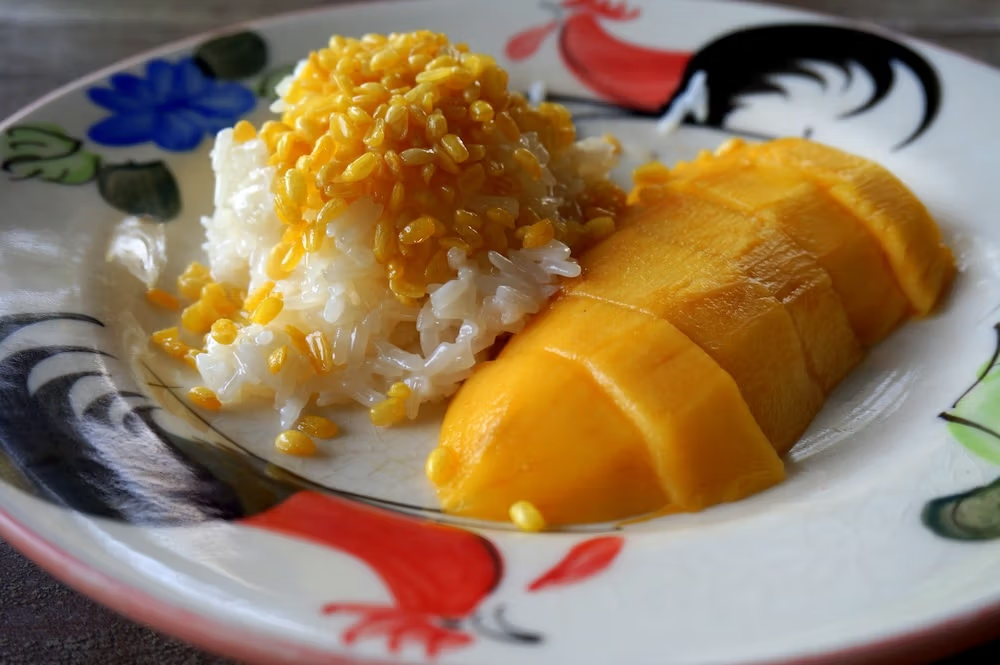
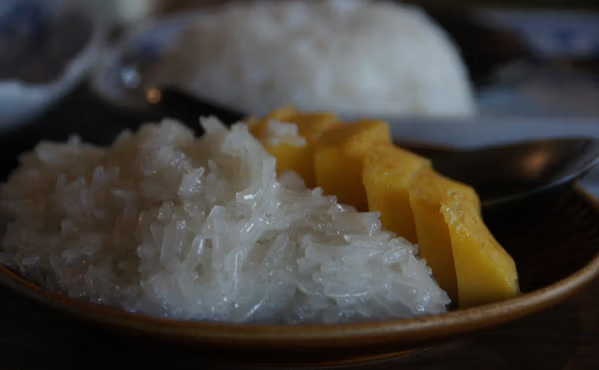
Mango Sticky Rice (ข้าวเหนียวมะม่วง)
Mango Sticky Rice is a beloved Thai dessert made with sweet sticky rice, fresh mango slices, and coconut milk. It’s a simple yet delightful dish that perfectly showcases the natural sweetness of Thai mangoes.
- Sweet Ending: Learning to make Mango Sticky Rice offers a sweet conclusion to any cooking class, and it’s a dish that’s sure to impress when you recreate it at home.
Laab (ลาบ)
Laab, a spicy meat salad, is a staple in Northern Thai cuisine. Typically made with minced pork, chicken, or beef, Laab is seasoned with lime juice, fish sauce, roasted rice powder, and fresh herbs. It’s often served with sticky rice and raw vegetables, creating a dish that’s both refreshing and hearty.
- Cultural Significance: Laab is a dish with roots in the rural traditions of Northern Thailand, and learning to make it connects you to the agricultural history of the region.
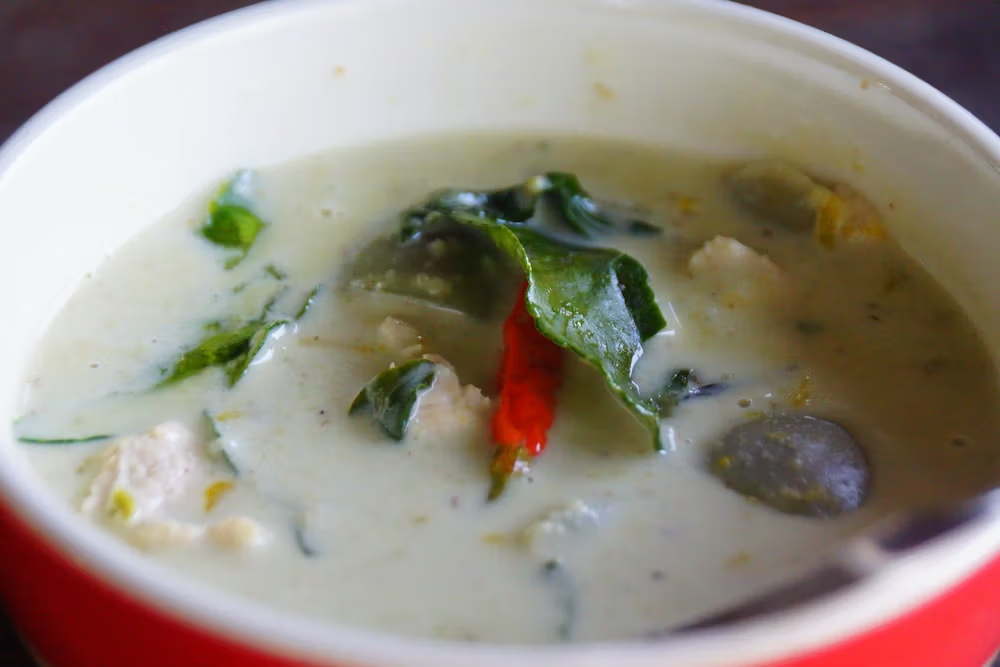
Massaman Curry (แกงมัสมั่น)
Massaman Curry is a rich and hearty dish that blends Thai and Indian influences. Made with a complex mix of spices, coconut milk, and tender meat like beef or chicken, it’s a dish that’s both flavorful and comforting.
- A Fusion of Flavors: Learning to make Massaman Curry is a journey through the fusion of flavors that makes Thai cuisine so diverse. It’s a dish that takes time to prepare, but the results are deeply satisfying.
Gaeng Hang Lay (แกงฮังเล)
Gaeng Hang Lay is a Northern Thai curry that stands out for its deep, rich flavors. Made with pork belly and simmered in a paste of ginger, garlic, and tamarind, this curry is less spicy but packed with a tangy, savory taste. It’s a dish that’s often reserved for special occasions, making it a unique addition to any cooking class in Chiang Mai.
- Special Occasion Dish: Learning to prepare Gaeng Hang Lay gives you a taste of Northern Thai celebration food, making it a special skill to take home.
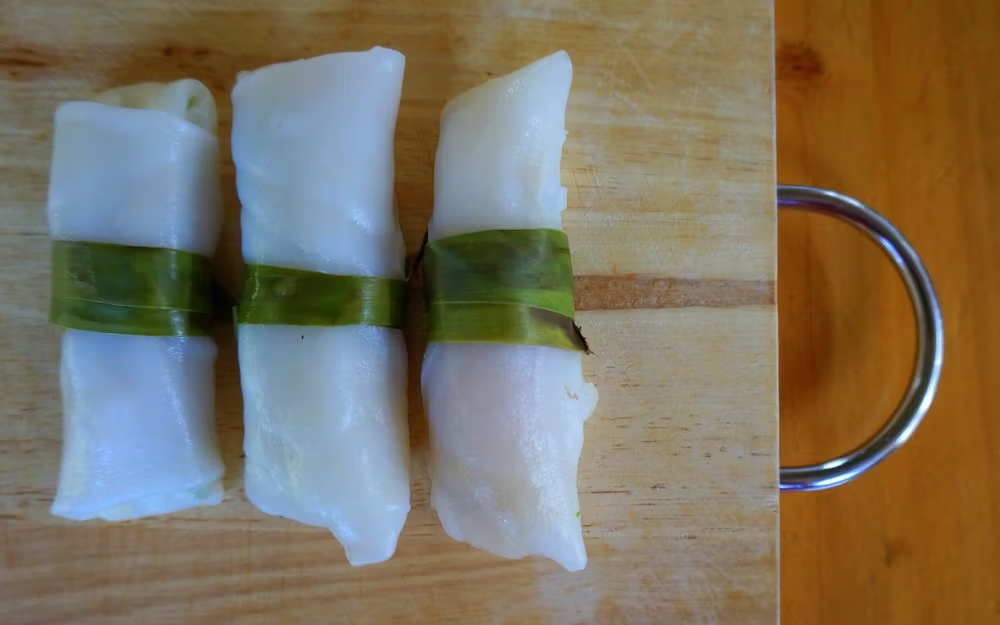
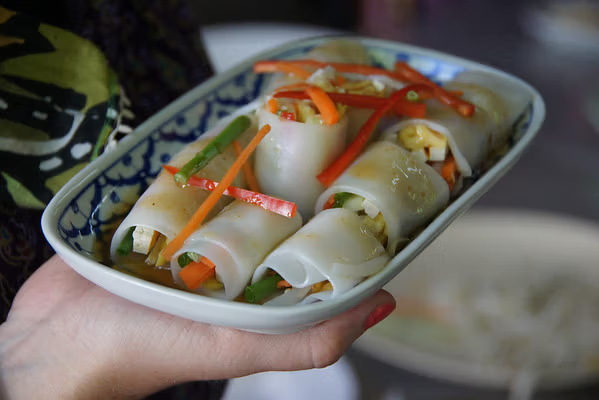
Spring Rolls (ปอเปี๊ยะทอด)
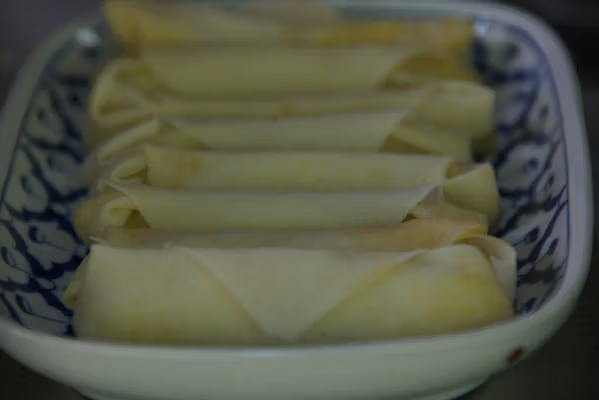
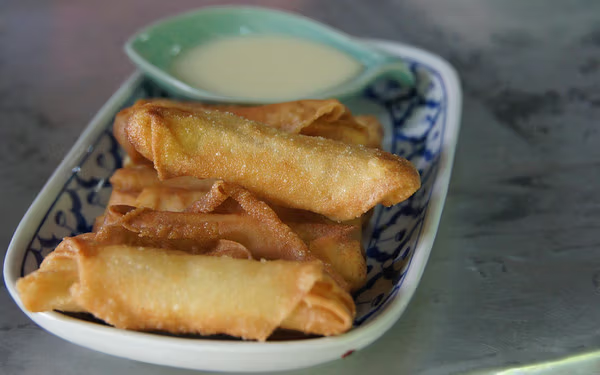
Crispy on the outside and filled with a savory mixture of vegetables and sometimes meat, Thai spring rolls are a popular appetizer. They’re often served with a sweet and tangy dipping sauce, adding a burst of flavor.
- Rolling Technique: In a cooking class, you’ll learn the delicate art of rolling spring rolls and frying them to perfection. It’s a fun and interactive dish to prepare, and the result is always delicious.
Nam Prik Ong (น้ำพริกอ่อง)
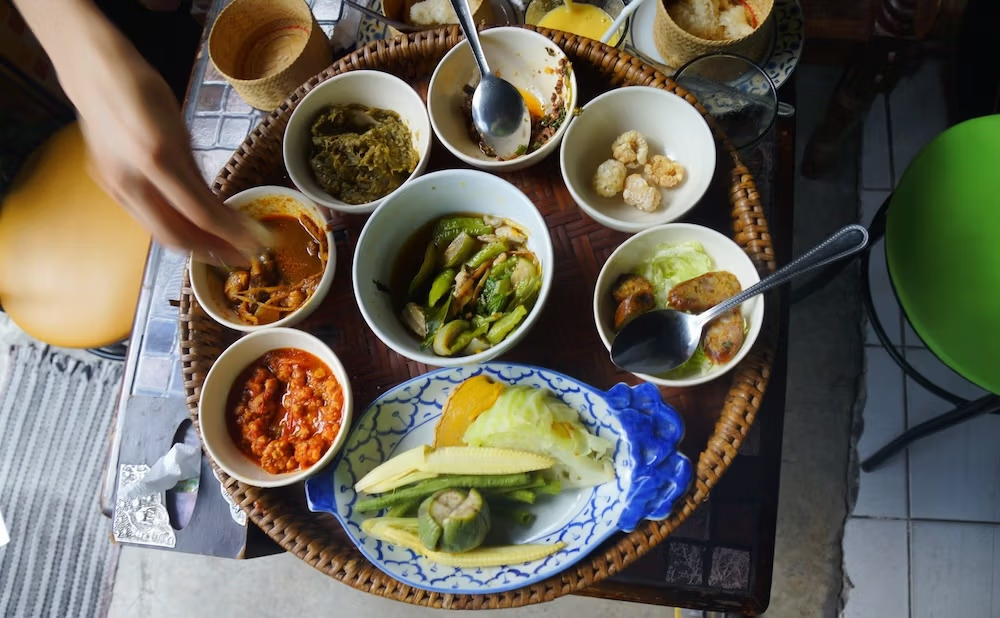
Nam Prik Ong is a Northern Thai chili dip made with ground pork, tomatoes, and red curry paste. It’s typically served with fresh vegetables and sticky rice, offering a flavorful dip that’s both spicy and slightly sweet. This dish is a staple in Northern Thai households and provides a delicious introduction to the region’s dipping sauces.
- Perfect for Sharing: Nam Prik Ong is often enjoyed in a communal setting, making it an ideal dish to learn if you love sharing food with friends and family.
Kaeng Khanun (แกงขนุน)
Kaeng Khanun, or jackfruit curry, is a lesser-known Northern Thai dish that’s both unique and flavorful. This curry is made with young jackfruit, tomatoes, and a mix of Northern Thai spices, resulting in a dish that’s hearty and slightly sweet. It’s often served with sticky rice and is a favorite among vegetarians.
- Vegetarian Delight: Learning to make Kaeng Khanun offers a glimpse into the vegetarian side of Northern Thai cuisine, highlighting the region’s diverse culinary traditions.
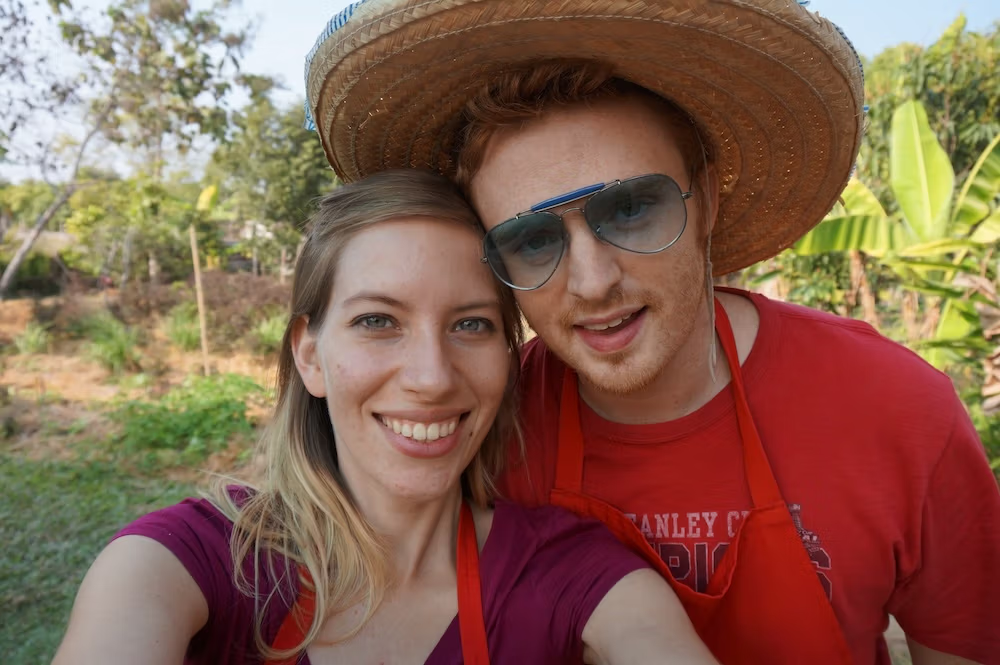
Popular Thai Cooking Classes In Chiang Mai
Chiang Mai is a food lover’s paradise. One of the best ways to immerse yourself in Thai culture is through its food. Popular cooking classes in Chiang Mai offer visitors the chance to learn the secrets behind classic Thai dishes like Pad Thai, Green Curry, and Som Tum (papaya salad). These classes are not just about cooking; they’re about understanding the ingredients, techniques, and cultural significance of Thai cuisine.
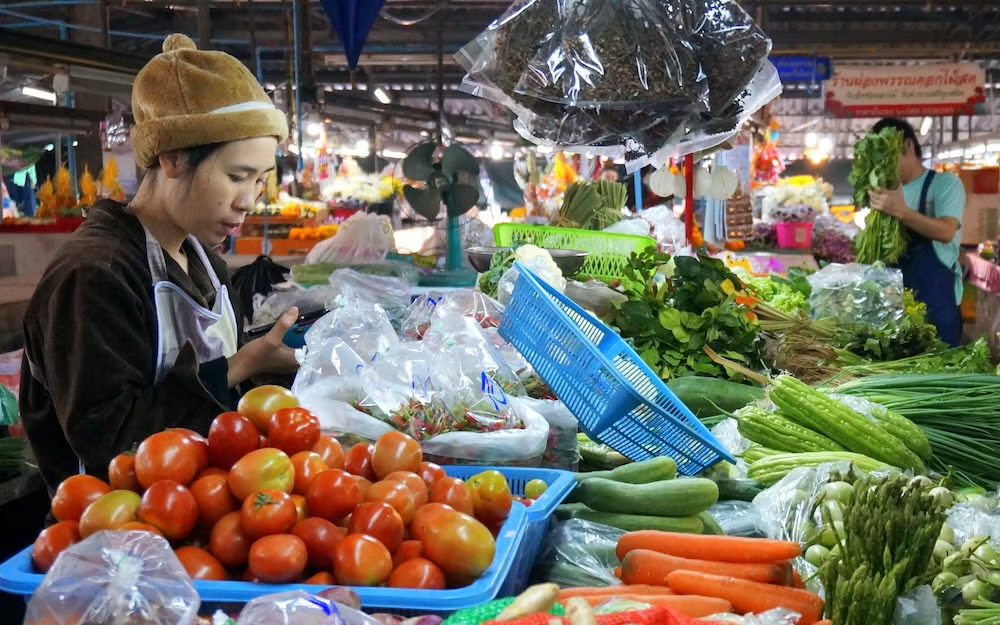
Why Cooking Classes in Chiang Mai Are Unique
What makes cooking classes in Chiang Mai so special is the blend of education and hands-on experience. Most classes begin with a visit to a local market, where you’ll learn about the fresh ingredients essential to Thai cooking. This market tour is an experience in itself, offering insight into the local lifestyle and the vibrant flavors of Northern Thailand. Then, under the guidance of expert chefs, you’ll prepare a full Thai meal, learning the traditional techniques that have been passed down through generations.
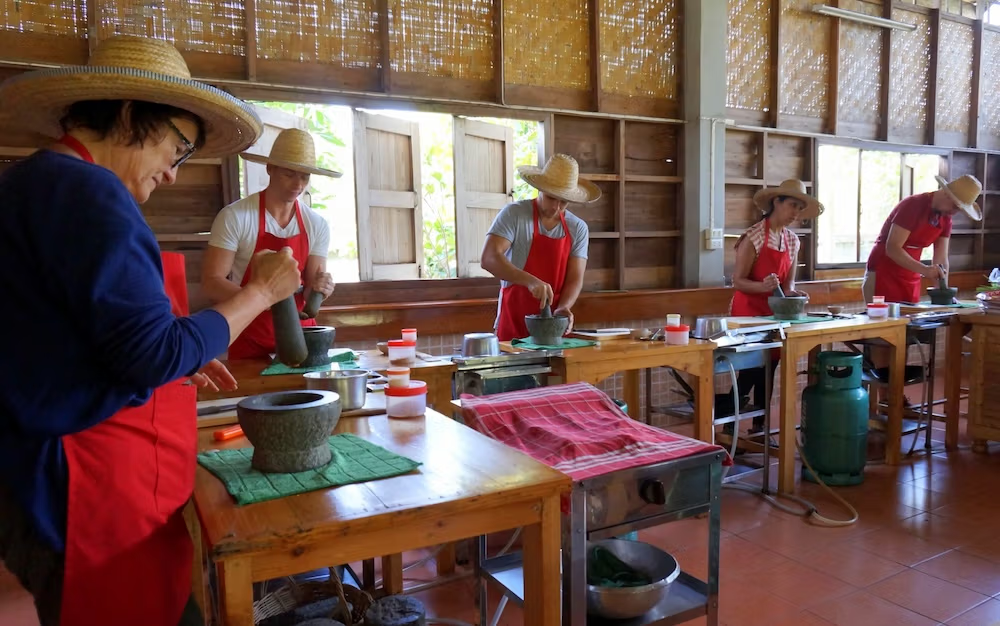
Top Cooking Schools in Chiang Mai
- Thai Farm Cooking School: Located just outside the city, this school offers a farm-to-table experience, allowing you to pick fresh herbs and vegetables from their organic garden before cooking.
- Zabb E Lee Thai Cooking School: Known for its personalized approach, this school offers small class sizes and the chance to tailor the menu to your preferences.
- Asia Scenic Thai Cooking School: This school is popular for its vibrant atmosphere and detailed market tours, providing an in-depth understanding of Thai ingredients.
- Baan Thai Cookery School: One of the oldest cooking schools in Chiang Mai, Baan Thai offers a traditional setting and a wide variety of dishes to choose from.
- Interactive Learning: These classes are highly interactive, allowing you to participate in every step of the cooking process. Whether you’re a beginner or an experienced cook, the hands-on nature of the classes ensures that you’ll leave with new skills and a deeper appreciation for Thai cuisine.
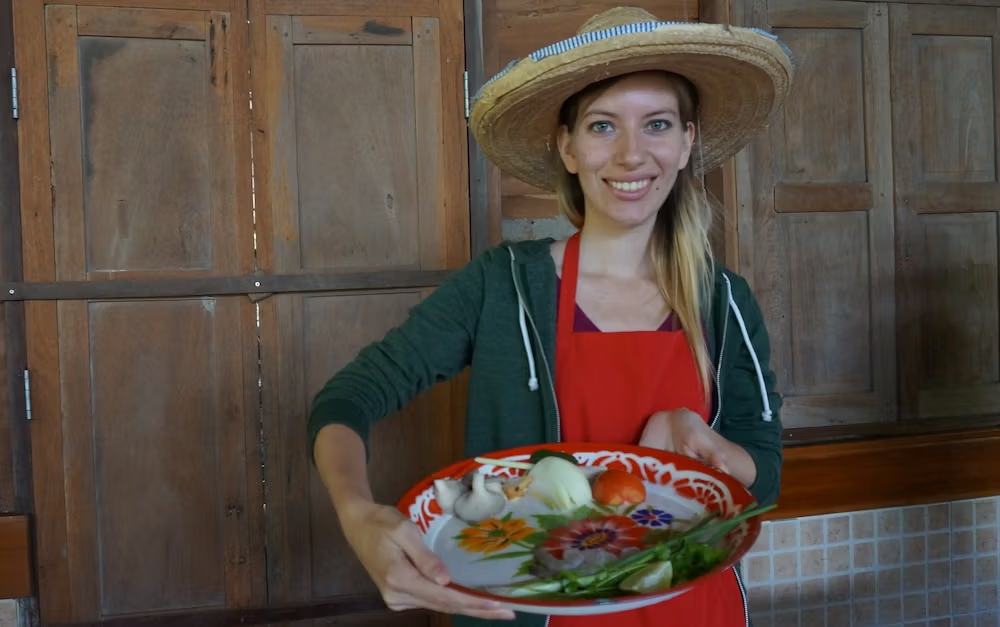
Why Chiang Mai Is the Best Place in Thailand to Take a Cooking Class
If there’s one city in Thailand where cooking classes truly shine, it’s Chiang Mai. There’s something about the combination of fresh produce, laid-back vibes, open-air kitchens, and the way locals treat food as both an art and a daily pleasure. It’s easy, friendly, and unintimidating—even for someone whose “culinary expertise” once peaked at peanut butter and jelly mastery.
Chiang Mai invites you to slow down and actually enjoy the learning process. You’re not rushed. You’re not crammed into a tiny kitchen. And you’re not left wondering what half the ingredients are. Instead, you get space, patient instructors, and the chance to explore a regional cuisine that’s wildly different from Central Thai dishes you may already know.
But the cooking class is just one piece of the bigger experience.
Let’s dive into everything that surrounds it—markets, neighborhoods, food culture, transport logistics, what to eat before and after your class, and how to turn that one-day course into a full Chiang Mai food journey.
Getting Around Chiang Mai Like a Pro (With Cooking Classes in Mind)
Chiang Mai is easy to navigate once you understand its basic layout: a square Old City moat area, the riverside to the east, and lots of vibrant neighborhoods spreading outward. Cooking schools are scattered around the city, but many are conveniently located within or just outside the Old City.
Transportation Decision Matrix: Best Way to Reach a Cooking School
| Transport Option | Cost | Convenience | Best For | Notes |
|---|---|---|---|---|
| Walking | Free | ★★★★☆ | Old City stays | Great if your school is central |
| Songthaew (red trucks) | Low | ★★★☆☆ | Budget travelers | Fun local option; flexible routes |
| Grab | Low–medium | ★★★★★ | Groups, couples | Easiest door-to-door option |
| Scooter rental | Low | ★★★☆☆ | Confident riders | Not for beginners—traffic is easy but still Thai-style |
| Cycling | Free–low | ★★★☆☆ | Old City explorers | Good early; hot midday |
Tip
If your class includes a market tour—and most do—expect a pickup in the morning. Schools are punctual. Be downstairs five minutes early.
Understanding Chiang Mai’s Food Culture (So Your Cooking Class Makes Even More Sense)
Thai cuisine changes dramatically from region to region. The dishes you learn in Chiang Mai often have roots in Lanna culture, Burmese influences, and the local bounty of fragrant herbs. Northern Thai food is balanced differently than Bangkok dishes. It’s less sweet. More herbal. Richer in spices. And often surprisingly earthy.
Northern Thai Flavor Snapshot
| Flavor Element | Northern Thai | Central Thai |
|---|---|---|
| Sweetness | Low | Medium–high |
| Herbal notes | High | Medium |
| Coconut milk usage | Moderate | High |
| Fermented elements | Common | Occasional |
| Heat level | Moderate–high | Moderate |
Understanding this before you chop, pound, stir, and taste your way through a cooking course gives you context for why the dishes are the way they are.
What to Expect from a Full-Day Cooking Class in Chiang Mai
Whether your class is in the city or 20–30 minutes into the countryside, the rhythm is pretty similar.
Typical Full-Day Schedule
- Pickup from hotel
- Visit to local market
- Learn about herbs, pastes, and ingredients
- Choose your dishes (you usually select 4–6)
- Hands-on preparation of each dish
- Eat, eat, eat
- Receive a recipe book for home cooking
- Group photo + optional certificate
- Return to your accommodation
Why the Market Visit Matters
You’ll never look at lemongrass, galangal, or tiny Thai bird’s eye chilies the same way again. The market is where the real education begins.
And Chiang Mai markets are fantastic.
The Markets Behind the Magic: Where Cooking Schools Take You
Most cooking classes take students to one of a few popular, well-stocked local markets. These aren’t tourist shows—they’re busy, friendly, very Chiang Mai.
Here’s what to expect.
Top Markets for Cooking Class Tours
| Market | Atmosphere | Why It’s Good for Learning |
|---|---|---|
| Somphet Market | Quiet, local | Easy to stroll, perfect for ingredient breakdown |
| Warorot Market (Kad Luang) | Bustling, huge | Endless produce, spices, textiles |
| Muang Mai Market | Wholesale vibe | Freshest herbs + great photo ops |
| Ton Lamyai | Undercover riverside | Great for rice, curry pastes, dried ingredients |
What You’ll Learn
- How to pick fresh coconut milk
- How to tell real kaffir lime leaves from the cheap substitutes
- The difference between Thai basil, holy basil, and sweet basil
- Why palm sugar behaves differently than brown sugar
- How to choose the right noodles for each dish
Even if you never cook again, the market tour is pure gold for understanding Thai food.
Where to Stay in Chiang Mai for Easy Access to Cooking Classes
You don’t need to stay inside the Old City walls, but it does make life simpler. Many top cooking schools are located around Tha Pae Gate, the eastern edge of the Old City, or just slightly further out.
Accommodation Comparison Table
| Traveler Type | Best Area to Stay | Why |
|---|---|---|
| First-timers | Old City | Easy walking access, lots of cooking class pickups |
| Digital nomads | Nimman | Coffee shops + modern apartments |
| Budget travelers | Tha Pae Gate | Affordable hostels near markets |
| Food lovers | Chang Moi / Warorot | Endless street food + markets |
| Families | Riverside | Quiet, spacious hotels |
If cooking is your priority, stay near the Old City. It’s the sweet spot for convenience.
Choosing the Right Cooking Class for Your Travel Style
Not all cooking classes are the same. Some focus on farm-to-table. Some emphasize technique. Some cram in lots of dishes. Others let you customize. It’s not about “the best school”—it’s about the best fit.
Cooking Class Decision Matrix
| Priority | Best Type of Class | Why |
|---|---|---|
| Authenticity | Family-run home kitchen | Warm, personal, slow-paced |
| Scenic setting | Organic farm class | Peaceful + hands-on ingredient picking |
| Efficiency | Half-day city class | Great for tight schedules |
| Deep learning | Full-day immersive class | More dishes, more techniques |
| Comfort + ease | Modern facility class | Airy kitchens, professional setup |
Tip
If you’re staying multiple days, go for the full-day course. It’s not as tiring as you think, and you’ll learn more dishes you can actually replicate back home.
The Dishes You’re Most Likely to Learn (And What Makes Each One Special)
Most cooking schools let you choose one dish from each category: stir-fry, soup, curry, noodle dish, appetizer, dessert.
Here’s what you should know before choosing your dishes.
“What Should I Cook?” Cheat Sheet
| Category | Easiest Dish | Most Impressive Dish | Most Northern Dish |
|---|---|---|---|
| Stir Fry | Cashew chicken | Pad Thai | Stir-fried Northern sausage |
| Soup | Tom Kha Gai | Tom Yum Goong | Gaeng Om |
| Noodles | Pad See Ew | Drunken noodles | Khao Soi (if included) |
| Curries | Panang curry | Green curry | Hang Lay |
| Appetizer | Fresh spring rolls | Deep-fried spring rolls | Sai Ua (sausage) |
| Dessert | Mango sticky rice | Banana in coconut milk | Northern-style custard |
Pro Tip
If Khao Soi is an option, choose it. It’s the quintessential Chiang Mai dish and surprisingly manageable once you learn the method.
Understanding Thai Ingredients (So You Can Shop for Them Later)
Part of Thai cooking mastery is knowing your ingredients—what to buy, how to store them, what substitutes work back home.
Ingredient Quick Guide
Lemongrass
- Use only the bottom ⅓
- Tough outer layers must be removed
Galangal vs Ginger
- Not interchangeable
- Galangal = citrusy, firm, essential for Tom Yum
Thai Basil
- Three main kinds: sweet, holy, lemon
- Most schools teach how to identify all three
Palm Sugar
- Melts slowly, deep aroma
- Don’t replace with white sugar—brown sugar is the closest substitute
Fish Sauce
- Salty, funky, magic
- Use with restraint but don’t avoid it—you need it for Thai balance
Chilies
- Prik kee noo = fiery
- Prik chi fa = milder red chilies
- Prik yuak = large, mild green chilies
Knowing this stuff turns you from “I followed a recipe” into “I understand Thai flavor.”
What to Eat in Chiang Mai Before and After Your Cooking Class
Yes, you will eat a lot during your class. But Chiang Mai is a food heavyweight—you still need to explore beyond the cooking school.
Best Pre-Class Breakfast Options
(Go light—you’re about to eat multiple courses.)
- Rice porridge (jok)
- Mango with yogurt
- Grilled sticky rice with egg
- Simple fruit plate
Best Post-Class Dinners in Chiang Mai
(If you somehow still have space.)
- Northern Thai barbecue plates
- Sai Ua sausage
- Grilled fish with herbs
- Sticky rice with dipping sauces (nam prik ong, nam prik num)
- Khao Kha Moo (pork leg rice)
Late-Night Snacks
Because Thailand doesn’t sleep:
- Roti with banana
- Fried chicken skin
- Sticky rice with custard
- Thai iced tea
How Much Cooking Classes Cost in Chiang Mai
Typical Price Breakdown
| Class Type | Price Range |
|---|---|
| Half-day city class | Low–medium |
| Full-day city class | Medium |
| Full-day farm class | Medium |
| Private class | Medium–high |
| Ultra-premium experience | High |
What’s Included
- Pickup/drop-off
- All ingredients
- Market tour
- Recipe book
- Multiple dishes
- Water + sometimes snacks
- Cooking station + apron
Chiang Mai offers excellent value compared to Bangkok or southern Thailand.
Pairing Your Cooking Class with Other Chiang Mai Activities
Chiang Mai is one of the best “slow travel” cities in Asia. A cooking class fits perfectly into a larger itinerary.
Activity Pairing Ideas
Good after a morning cooking class:
- Massage
- Temple walk
- Café hopping
- Riverfront stroll
Good before a cooking class:
- Sunrise at Doi Suthep
- Morning market stroll
- Cycling around the Old City
Not great before a cooking class:
- Big breakfast
- Intense trekking
- Elephant sanctuary visit (it’s too exhausting)
Sample Itineraries for Food Lovers in Chiang Mai
1-Day Cooking + Food Discovery Day
9:00 a.m. – Pickup + market tour
10:30 a.m. – Learn your dishes
12:30 p.m. – Feast on your creations
3:00 p.m. – Coffee at a Nimman café
6:00 p.m. – Light dinner at a night market
8:00 p.m. – Thai massage
2-Day Chiang Mai Food Itinerary
Day 1:
- Cooking class
- Riverside dinner
- Old City night-time walk
Day 2:
- Morning market at Warorot
- Khao Soi lunch
- Doi Suthep sunset
- Explore Nimman’s restaurants
3-Day Deep Food Dive (Highly Recommended)
Day 1: Cooking class + Old City eats
Day 2: Street food tour + riverfront
Day 3: Visit Mae Rim farms + Khao Soi crawl
Essential Questions About Chiang Mai Thai Cooking Classes: Honest Answers & Tasty Tips
Is a Thai cooking class in Chiang Mai worth it if I’ve never cooked Thai food before?
Absolutely. Chiang Mai is one of the easiest places on earth to go from “I barely boil pasta” to “I can crank out a decent green curry.” The teachers are used to total beginners, the recipes are broken down step by step, and you’re cooking in a relaxed, low-pressure environment.
Most classes are very hands-on but guided, so you’re never left staring at a wok wondering what to do next. As long as you’re willing to chop, stir, taste, and ask questions, you’ll walk out with a serious confidence boost and a stack of recipes you can actually use at home.
Should I choose a half-day or full-day cooking class in Chiang Mai?
It depends. If you’re short on time or not sure how much you’ll enjoy cooking, a half-day class is a nice taster: you still hit the market, cook a few dishes, and get a feel for Thai ingredients.
If you have a full day to spare, I’d lean hard toward the full-day experience. You usually get more dishes, more time to practice techniques, and you don’t feel rushed. By the end of a full-day class you’ve gone through soups, curries, stir-fries, noodles, and often dessert, which makes it much easier to recreate a full Thai meal when you’re back home.
How much do Thai cooking classes in Chiang Mai usually cost?
Roughly speaking, expect group classes to run from about 800–1,000 THB for a half-day and around 1,000–1,500 THB for a full-day in or around the city, with farm-based or ultra-premium options trending toward the higher end. Many well-known schools price their full-course group classes at around 1,000 THB per person, including 5–6 dishes.
Private classes or highly customized experiences will cost more, but even then Chiang Mai still offers excellent value compared to big-city cooking schools elsewhere in the world.
Do Chiang Mai cooking schools include a market tour and hotel pickup?
Usually, yes. Most reputable schools include round-trip transport from central Chiang Mai hotels or guesthouses, plus a market tour at the start of the class. Group pickup windows are typically 30–40 minutes before the official start time, and you’ll often visit a local market to learn about herbs, vegetables, rice, and curry pastes before heading to the kitchen.
If you’re staying outside the Old City or Nimman, some schools charge a small extra fee or ask you to meet at a central pickup point. It’s worth double-checking the pickup area when you book so there are no surprises on the morning of your class.
What’s the best time of year to take a cooking class in Chiang Mai?
Good news: you can do a cooking class year-round. But some seasons are more comfortable than others. The coolest, driest months—roughly November to February—are ideal because temperatures are pleasant and wandering around outdoor markets feels great rather than sweaty.
March to May is hot season, which can be intense in the middle of the day, especially if the kitchen is only partially open-air. The rainy season, roughly May to October, can be lovely too: markets are full of lush produce, and rain showers are usually short bursts rather than all-day downpours. If you don’t like heat, aim for an early-morning or evening class during the warmer months.
How far in advance should I book a Chiang Mai cooking class?
Generally, a few days ahead is enough in low or shoulder season, but in peak months (December–February, plus major holidays) I’d try to book at least a week in advance. Popular schools with small class sizes can fill up quickly, especially for full-day farm experiences.
If you’re traveling with a group, have specific dietary requirements, or want a private class, the earlier you book, the better. Last-minute spots do pop up, but you’ll have fewer choices in terms of time of day and school.
Are Chiang Mai cooking classes vegetarian, vegan, or gluten-free friendly?
Yes. Most Chiang Mai cooking schools are very used to vegetarians and vegans, and many can adapt recipes by swapping fish sauce for soy-based alternatives, omitting meat, or using tofu instead. Just make sure you tell them clearly when you book and remind your instructor at the start of class.
Gluten-free can be a bit trickier because of soy sauces and some noodles, but it’s still possible. If you’re gluten-free, ask whether they have gluten-free soy sauce and rice noodles and be clear about how strict you need to be. The more specific you are about what you can and can’t have, the easier it is for them to adjust.
Can kids join a Thai cooking class in Chiang Mai, or is it better for adults?
Usually, kids are welcome. Many schools accept children as long as an adult is participating with them, and some even offer slightly simplified, kid-friendly versions of the recipes.
If you’re bringing younger kids, I’d lean toward a half-day class or a shorter city-based option rather than a full-day farm class, simply because of attention spans and energy levels. It’s also worth checking that the school is comfortable with children around gas burners and knives—some are more family-oriented than others, and they’ll say so in their descriptions.
What should I wear and bring to a Thai cooking class in Chiang Mai?
Comfort first. Wear light, breathable clothes you don’t mind getting splattered with curry or oil, and closed-toe shoes or sturdy sandals so you’re not cooking in flip-flops around hot woks. Most schools provide aprons, but they don’t protect everything.
Bring a small bottle of water (though many schools provide drinking water), your phone or camera, any medications you might need, and a bit of cash for market snacks or extras. If you’re sensitive to smoke or spice, carrying tissues and hand sanitizer isn’t a bad idea. And definitely don’t show up with your fanciest white shirt—Thai turmeric does not forgive.
Will the food be too spicy if I’m not used to Thai heat?
Not necessarily. One of the big perks of a cooking class is that you control the chilies. Instructors usually encourage you to taste as you go and will happily guide you toward “tourist mild,” “Thai medium,” or “full-on fire-breathing dragon” levels depending on your comfort zone.
If you’re nervous, start with fewer chilies than the recipe suggests and add more gradually. You’ll learn a lot about how chilies change the flavor of a dish, which is way more useful than just eating whatever spice level you’re given in a restaurant.
Can I still join a cooking class if I have food allergies or a sensitive stomach?
Yes, but you need to be proactive. When you book, clearly list your allergies—especially if they involve peanuts, shellfish, eggs, or gluten—and ask if the school can safely accommodate you. Many can, but they need to know in advance so they can plan ingredient substitutions and avoid cross-contamination where possible.
If you simply have a sensitive stomach, you might choose gentler dishes (fewer chilies, less deep-frying) and go easy on raw salads or very spicy soups. Bring any medication you usually travel with for tummy troubles, and don’t feel shy about asking the instructor which dishes are the least likely to upset your system.
Are cooking classes in Chiang Mai accessible for travelers with limited mobility?
Accessibility is mixed. Some schools operate out of ground-level spaces with only a step or two to navigate, wide workstations, and chairs or stools available. Others are in traditional houses or upstairs spaces with no lifts, narrow staircases, and uneven floors.
If you have mobility concerns, email the school before booking and ask specific questions: Are there stairs? Can I sit to chop and prep? Is there space for a wheelchair or walker? A lot of Thai hospitality is about trying to make things work, but you’ll have a better experience if you pick a setup that matches your comfort level from the start.
Is it better to do a cooking class in Chiang Mai or Bangkok?
For most travelers, I’d say Chiang Mai. The pace is slower, the atmosphere more relaxed, and you’re often cooking in leafy gardens or open-air kitchens rather than in the middle of big-city chaos. Plus, Northern Thai food has its own character—dishes like khao soi, laab, and hang lay curry are easier to find on Chiang Mai cooking school menus than in Bangkok.
Bangkok does have excellent cooking schools too, especially if you’re curious about central Thai dishes and want a more “urban” food experience. But if you’re already heading north and can only pick one city, Chiang Mai is hard to beat for vibe, produce, and overall value.
Can I realistically recreate these Chiang Mai dishes back home without Thai ingredients?
Surprisingly, yes—at least most of them. The class itself helps you understand which ingredients are non-negotiable (things like fish sauce, kaffir lime leaves, galangal, and palm sugar for certain dishes) and which ones you can swap.
If you live near an Asian supermarket, you’ll be in great shape. If you don’t, your instructor can usually suggest substitutes and shelf-stable items to bring home, like dried chilies, spice mixes, or curry pastes. Take photos of labels, write notes in your recipe book, and don’t panic if your first home version doesn’t taste exactly like Chiang Mai. You’ll get closer each time.
Is going to a cooking school in Chiang Mai safe, and are there any common scams to watch for?
Overall, cooking classes are very safe. The biggest “risk” is eating so much you need to roll back to your guesthouse. Teachers are used to handling hot oil, gas stoves, and beginners, and they’re pretty strict about basic safety.
Scam-wise, the cooking class scene in Chiang Mai isn’t known for shady behavior. The main thing is to book with a reputable school through its official website, a trusted booking platform, or your accommodation. Be wary of anyone on the street aggressively pushing super-cheap classes that sound too good to be true, and always check recent reviews before paying a deposit.
Can I take photos or film during the cooking class?
Yes. Most instructors actively encourage it—group photos with aprons on, close-ups of your curry paste, that moment when your pad Thai actually looks like pad Thai. Just be respectful about not blocking other students or filming people who don’t want to be on camera.
If you’re planning to film for YouTube or social media, it’s polite to mention that when you arrive. Many schools are totally fine with it as long as you don’t get in the way of the lesson, and some will even help you capture a fun “final dish” shot once everything is plated.
Mistakes to Avoid in Chiang Mai Cooking Classes
- Wearing clothes you don’t want stained
- Loading up on breakfast beforehand
- Adding chilies too quickly—Thai chilies are fierce
- Overcrowding your wok
- Forgetting to taste as you cook
- Taking only half-day classes (you’ll regret not doing the full experience)
- Not writing notes in your recipe book
- Trying to substitute too many ingredients back home
Biggest Mistake
Thinking you’ll remember everything without notes. Take pictures. Write tips. Ask questions. There’s so much nuance.
Final Thoughts: Cooking in Chiang Mai as a Travel Memory
A Thai cooking class isn’t just another activity. It becomes one of those travel memories that sticks with you long after the trip—much like that first plate of Khao Soi, that smoky aroma curling through the air, or the moment you nail your curry paste consistency for the first time.
Learning to cook in Chiang Mai adds a personal connection to the city.
You don’t just eat the food—you understand it. You respect it. And you take a piece of Chiang Mai home with you.
Cultural Immersion Through Cooking
Taking a cooking class in Chiang Mai is cultural immersion. The classes often include stories about the history and cultural significance of the dishes, giving you a richer understanding of Thai traditions. Plus, the communal aspect of cooking and dining together fosters a sense of connection with fellow travelers and locals alike.
- Memorable Experience: Beyond the delicious food, the experience of learning to cook Thai dishes in Chiang Mai is one that stays with you. It’s a fun, educational, and culturally enriching activity that adds a unique dimension to your travels.
I got distracted at pizza and cheesecake! It was fun to click back to this older post and see how far you’ve come now, Samuel! Great job. Btw…you forgot one thing about peanut butter and jelly sandwiches. Whether you are going to really gourmet-it-up and grill it! 🙂
Thanks Mike! Maybe even add a few strips of bacon to the grilled pb & j 😉
It sounds to be a great experience and the food looks delicious! Thanks for sharing.
It really was John! I’d do it again 🙂
I took a cooking class in Pai a few months back and have to say it was one of the best experiences (even though I never cook anything)… 🙂
Raymond, I feel the same way! I’m all thumbs in the kitchen but this sure was fun 😛
Some of those look absolutely amazing! I know Chiang Mai is no secret place, but the more I keep reading about it the more I really feel like we need to visit it. Loved the photos, but they made me hungry! =)
Dayna, it certainly is popular – especially with digital nomads – but I feel it is a place that lives up to the hype.
looks delicious! 🙂
I have to admit, it was! 🙂
I love cooking classes! I did a Thai cooking class in Chaing Mai and it was the one that started my love for cooking classes! I now take them in every (non western) country I visit!
Jade, I couldn’t agree with you more. I’ve started taking cooking courses in many countries I visit after this initial great experience 🙂
So much fun! We believe that food is a wonderful way to absorb culture and you hit a bullseye! Thanks for sharing your experience-loved it! David & Veronica
Thanks, I couldn’t agree with you more 🙂
We took cooking classes when we visited Chiang mai several years ago. It was a fabulous experience and one that has stayed with us for a long time. In fact, we are just planning a big thai meal to enjoy on New Years and are using the mad skillz we picked un in Chiang Mai to execute it.
That’s awesome! I’m ashamed to admit I haven’t tried making many things since I took the course. I bet you’re going to have one great meal together though 🙂
I would love to do this! Admittedly, I don’t cook nearly as much as I should, but curry was the very first dish I ever learned how to make (while living in Denmark, oddly enough).
WoW! Learning to make curry in Denmark 🙂 I first learned to make Korean food in Canada.
Whew, left my mouth watering. One thing I’ve really been missing here in Denmark is great Asian food.
Hey Alex, I feel your pain. When I’m away from Asia I rarely eat Asian food – price and quality is a bad match.
Looks fantastic. I love learning to cook new things 🙂
Thanks James, it’s a lot of fun!
Hi Samuel, It’s been 11 years since I took my cooking classes in Chang Mai. I’s like to say that my dishes have improved but you know how it is!
I have added the link to The Travel Bloggers Guide to Thailand I’m developing. I hope you don’t mind? http://www.thedepartureboard.com/the-travel-bloggers-guide/asia/thailand
Kind regards, Si
I’m sure you must be an expert by now! 🙂
Glad to hear that no international incidents occurred as a result of your cooking class! 🙂
All of it looks yummy and makes me want to run to the nearest Thai resto for a good meal.
LOL, I was surprised I was able to keep up 😛 I miss Thai food these days 🙁
We LOVE Thai food, and these dishes look amazing! We’ve only done a cooking source while traveling once, while we were in Curacao, but it was an awful lot of fun. I’ve got a friend in Thailand, so we definitely hope to get there at some point in the next few years.
Bret, when you get there and have an opportunity to try it, I think you’ll love it.
This is something I really wish I had done when I was in Thailand. The dishes look delicious!
Becky, that’s too bad you didn’t get a chance to try it. Next time for sure! 🙂
Looks fun!
We took a similar class in Battambang, Cambodia. It was a great way to meet like minded people and break bread together
Cam, I took a cooking course in Battambang as well. I did mine at Nari’s Kitchen? Do you remember where you did yours? I loved Battambang and actually ended up staying weeks instead of days.
Sounds like a good worthwhile experience, guess it’s “hands on” tourism. See more and more of these cooking schools opening up in Pattaya, I think they are a great alternative to the usual tourist trail, and certainly in good taste, pardon the pun.
A lot of foreigners rank Thai food at (or near) the top of their favourite cuisines. Having the chance to make it with a local expert in a cozy environment is awesome IMO
Oh yum! I love making (and eating) Thai food. Never took a proper course, just self-taught from a cookbook I bought in Thailand but would love to try it someday.
Thanks impressive Andrea. Some of the best Thai food I’ve ate before came from restaurants/places outside of Thailand.
Forget the cooking course, I just want the photos – they look good enough to eat themselves =D
LOL, Thai food really is that tasty.
I did a Thai cooking course on my recent trip to Chiang Mai. Definitely a great experience! I was so full afterwards from eating my awesome food 😉
LOL, Dean, I can relate to what you;re saying. By the time I finished everything it was the equivalent of several helpings from a buffet table.
Something I really wanna do when we revisit Thailand! Though I got a feeling I’d be defeated by this nasty thing called ‘laziness’ and I might just order that cheap street Pad Thai. Haha!
LOL, well you wouldn’t be the only one to succumb to that. I put off going for days on end.
What was the name of the cooking school you did? Looks like a great experience.
Hey Rachel, the website is ChiangMaiSmartCook.com I highly recommend it! Are you thinking of going during winter/summer break?
Hi Samuel,
I’m planning to take a cooking course in Thailand myself to fuel my new found and long lost interest in cooking! 🙂 Would you recommend this particular course you attended and if yes can you please pass in the contact details?
Thanks!
Lavanya, I definitely recommend it! ChiangMaiSmartCook.com
I completely understand, since I suck at cooking but had an amazing experience the first time I took a cooking class in BA. Everything looks delicious!
Thanks Stephanie, I regret not trying a class when I was in BA. I know I’ll be back there again. I’ll have to ask you about the course you checked out sometime when I’m back there.
One of my favourite memories from Thailand was a cooking class in Chiang Mai, I highly recommend it.
Do you remember which school you attended?
I can’t remember at all, but it was a market tour in the morning and then a class in the afternoon. I think it was one of the original classes, it was out of her home.
That’s totally understandable. There’s like a zillion places offering those courses. That’s cool it was one of the original ones though!
I also did the cooking course in Chiang Mai, it was great fun and I learned a lot. Btw. those spring rolls look delicious!
Thanks Jarmo, I love ME the spring rolls 🙂 Even the crappy ones I make 😛
I didn’t get to take a class the first time I was there but fully intend to do it next time. That food looks delicious!
Next time D! I’ve been to Thailand maybe 10 times now and there are many things I’ve yet to do.
We are going to be in Chiang Mai in a couple weeks and I was thinking of taking a cooking class. After your feedback, I think I have made up my mind! It looks like a great time, and a great way to connect with the local culture through food.
Shanna, it’s definitely worth a try IMO. I’m not a cook nor do I have a passion for learning how to make things but I really enjoyed this!
They all look appetizing! 🙂
Thanks Lourry, I easily get hungry looking at close-up shots of Thai food myself.
I don’t even like Thai food all that much but these shots are beautiful! I might just have to give Thai cuisine another try…
I think you should Angie! There is a lot on offer.