
I stepped onto the balcony of our Thai apartment and watched a plane climb over Chiang Mai. It rose above the city, slipped into the clouds and vanished. In a couple of days, we would be doing the same thing—minus the graceful ascent and with considerably more luggage.
Where in the heck had the time gone?
For the past several months, Chiang Mai had been home. Not “home” in the airy travel-blog sense where you spend four nights somewhere, locate an acceptable cappuccino and announce that you could live there forever. We had actually settled in. While travelling in Vietnam, Audrey and I had reached the wall. We were burnt out, irritable and tired of packing our lives into bags. We craved a base, a routine and the deeply unsexy luxury of knowing where we would sleep the following week. After months of backpacking continuously, travel had become tedious. A chore. Worse, it had stopped being fun.
Trying to work online while backpacking sounded romantic when I explained it to other people. In practice, it meant editing from bad chairs, hunting for Wi-Fi and pretending another overnight bus counted as “flexibility.” We had not mastered the balancing act. We were barely balancing. One thing, however, was obvious: we needed to stop moving.
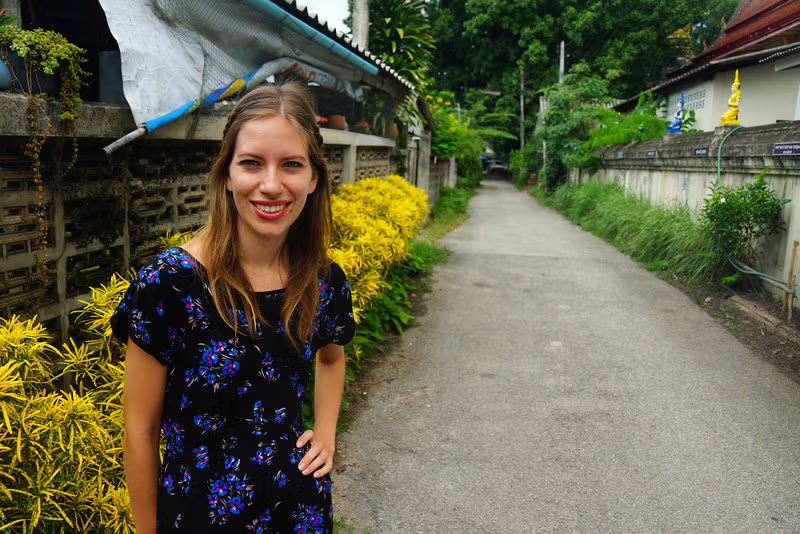
Nomadic Samuel and That Backpacker exploring the Chiang Mai we repeatedly returned to.
In hindsight, I had been living inside one of my more stubborn fantasies. I thought I could maintain the pace of my earlier backpacking adventures while piling remote-work commitments on top. Same speed. More responsibility. No consequences. Brilliant plan, Samuel. We pushed until both our mental and physical health started sliding in the wrong direction.
Chiang Mai was our saviour.
Why Chiang Mai Felt Like Home Before We Had Earned It
Chiang Mai felt comfortable almost immediately. We bought bicycles. We found restaurants we both loved. We stopped waking up with that itchy pressure to see twelve things before lunch and relocate to another country by Thursday. Wandering around our neighbourhood was enough. At that stage, “enough” felt wonderful.
I had heard the Chiang Mai sermon for months. Cheap apartments. Fast internet. Great food. Digital nomads floating around in linen shirts, presumably finishing novels between mango smoothies. I was sceptical. It had to be overrated. Why surrender the stimulation of constant movement just to hunker down with a laptop?
Then I experienced the alternative. A desk waited for me in the morning. We knew where to buy fruit. We had a favourite smoothie. We could make plans with friends more than 24 hours in advance without first checking whether we would be in Laos. None of this sounds thrilling. After months on the road, it felt obscenely luxurious.
More importantly, Chiang Mai did not rescue us once and then disappear into the scrapbook. We kept returning. During one later month-long stay, we came back for the least dramatic reasons imaginable: relax, eat properly, see friends and catch up on work. Smith Residence, just outside the moat near Chiang Mai Gate, became our unofficial rehabilitation centre for two over-travelled Canadians. By the time we filmed an apartment tour, it was our third or fourth stay there.
That repeat history matters. We did not spend a pleasant weekend in Chiang Mai, eat one bowl of khao soi and crown it the greatest city in Asia. We tested it through ordinary life: deadlines, laundry, morning runs, food shopping, camera batteries, traffic fumes, lazy evenings and the occasional Chang beer that tasted suspiciously better because no bus departed at dawn.
Our Chiang Mai Apartment: Not Sexy, Extremely Useful
Food comes first. I am not going to lie about that. Immediately after food, however, I need somewhere comfortable and affordable to hang my hat, scatter my camera gear and sit without my knees touching a suitcase. Chiang Mai delivered.
On one of our earlier stays, we rented a spacious studio with a queen-sized bed, television, refrigerator, desk, air conditioning and a balcony looking across the city toward the mountains. There was even a rooftop pool and gym, which felt outrageously fancy considering what we paid. At the time, the room cost under US$10 per night, plus roughly US$2–3 per day for utilities. Please do not march into Chiang Mai today clutching this paragraph and demanding my ancient price. It belongs to that stay. The value, however, was ridiculous.
On a later return, we deliberately splurged on a larger suite at Smith Residence after compact rooms in Hong Kong and Singapore had reduced our personal space to roughly the dimensions of a carry-on bag. We paid 20,000 baht for the month. The apartment had a separate bedroom, living area, kitchen, two bathrooms, air conditioning, internet, storage and cleaning twice a week. Two bathrooms! For two people! We briefly lived like minor royalty.

The dining table immediately became my office. Audrey worked or read from the sofa. One corner became the camera-and-charging nest, a snarled ecosystem of batteries and cables that looked organized for approximately seven minutes after the cleaner left. We never plugged in the television. We barely cooked because Chiang Mai Gate Market and inexpensive restaurants were close enough to make chopping vegetables feel like a poor use of time. The refrigerator mostly contained water and a jar of peanut butter from Dada Kafe. Minimalism, but with snacks.
It was not glamorous in the carefully staged digital-nomad sense. No linen outfit. No laptop balanced beside an infinity pool. No one pretending to work while staring soulfully at a coconut. It was better than that. It functioned.
The balcony faced toward Doi Suthep and caught the evening sunsets. We could also watch aircraft approaching and departing Chiang Mai International Airport. Plane spotting became one of my small daily hobbies. Audrey would remind me that we were not on any of them. Precisely. That was the whole bloody point.
That is the accommodation lesson I would carry into any longer stay: do not choose a room because the throw pillows photograph well. Choose it for the life you intend to live inside. Where will you work? Where will wet laundry go? Can you sleep through the street noise? Is the “kitchen” an actual kitchen or a kettle standing beside a spoon?
- Test the internet where you will actually work. Run a speed test, upload a file and make a video call before committing.
- Visit at night. A peaceful lane at noon may contain barking dogs, karaoke or traffic after dark.
- Clarify every extra charge. Electricity, water, cleaning, deposits and internet may be billed separately.
- Look for a real work surface. A decorative stool beneath a mirror is not a desk, regardless of what the listing claims.
- Check the air conditioner, water pressure and refrigerator. Small inconveniences become daily irritations during a month-long stay.
- Book a flexible first week. Walk the neighbourhood before locking yourself into a longer agreement.
For the first week, flexibility matters more than squeezing out the absolute lowest nightly rate. Compare Chiang Mai hotels, serviced apartments and short stays on Booking.com, then inspect longer-term options in person once you understand the neighbourhood. Paying slightly more for seven nights is cheaper than spending a month beside a karaoke bar you discovered only after signing.
Choosing a Chiang Mai Neighbourhood Without Ruining Your Month
There is no universally perfect Chiang Mai neighbourhood, regardless of how confidently somebody on YouTube points at a map. The right area depends on whether you value cafés, markets, silence, space, walkability or airport access. Five extra minutes looks harmless on Google Maps. Carry a laptop through 35-degree heat and those minutes begin reproducing.
| Area | What It Feels Like | Best For | Main Compromise |
|---|---|---|---|
| Chiang Mai Gate / Hai Ya | Local markets, food stalls and easy Old City access | Walkers, food lovers and longer stays | Traffic and market noise vary by street |
| Old City | Temples, guesthouses, quiet lanes and tourism | First-time visitors who want to walk | Older rooms and busier tourist corridors |
| Nimman | Modern condos, malls, cafés and airport convenience | Café workers and people wanting easy amenities | Aircraft noise in places and generally higher prices |
| Santitham | Residential, practical and less polished | Budget-conscious long-stayers near Nimman | Less immediately charming than the Old City |
| Wat Ket / Riverside | Leafier, slower and spread along the Ping River | Couples and quieter workers | Less walkable for some daily routines |
| Hang Dong / Outskirts | More space, greenery and suburban life | Families, drivers and people wanting a house | A car or scooter becomes much more useful |
Our strongest connection was with the Chiang Mai Gate and Hai Ya side of town. Smith Residence sat just outside the moat, close to street food, markets, the Old City and Wat Sri Suphan. Audrey could jog at Nong Buak Haad Park in the morning. We could walk to dinner. That last point matters more than it sounds. When every meal requires a transport negotiation, hunger becomes project management.
Nimman makes sense if you want modern condos, malls and enough cafés to rotate locations before any staff member realizes you have purchased one coffee in four hours. The Old City offers more atmosphere. Santitham often gives longer-stayers a practical residential compromise. Ignore the neighbourhood winning the internet popularity contest. Spend several days testing the route between your room, workspace, meals and exercise. Your body will tell you more than a “best areas” list.
Working Online in Chiang Mai Without Becoming a Café Ornament
For a digital nomad, the internet is lifeline, bloodstream and occasionally tormentor. When it dies, so does the illusion that your business floats effortlessly above geography.
Our apartments had reliable internet, and when we wanted a change of scenery we could find cafés with Wi-Fi throughout the central city. Chiang Mai also has dedicated coworking spaces. Punspace, one of the longstanding names in the city, currently operates locations at Wiang Kaew and Tha Phae Gate, with 24-hour access available to members.
The bigger productivity advantage, though, was not raw internet speed. It was the glorious absence of constant logistical nonsense.
We were no longer searching for accommodation every few days, decoding another transport system or dragging bags toward a station while quietly resenting our own lifestyle. We knew where to eat, exercise and buy toothpaste. We knew how long it took to cross town. All that reclaimed mental space went back into work—and, just as importantly, into not being miserable company.
Chiang Mai creates its own occupational hazard: spending more time discussing location independence than doing the work that pays for it. A café full of MacBooks is not automatically productive. Sometimes it is merely a room full of people rearranging browser tabs. I preferred a proper table at home for deep work, cafés for lighter tasks and social time, and coworking when we genuinely needed structure.
Thailand operates on UTC+7. Europe can fit reasonably well into late-afternoon or evening calls. North America may drag meetings into the night or ungodly morning hours. Chiang Mai can solve many problems. It cannot bend the planet, no matter how convincing the khao soi.
Let’s Be Honest: The Food Was Half the Argument

Some people eat to live. I live to eat.
I could not imagine basing myself somewhere that forced food into the category of mere fuel. Chiang Mai offered familiar Thai favourites, Northern Thai dishes and a broad international food scene. Panang curry? Easy. Khao soi? Obviously. A burrito requiring structural engineering and two hands? Also available. This was my kind of city.
That Backpacker and Nomadic Samuel eating our way through Chiang Mai via the Samuel and Audrey video archive.
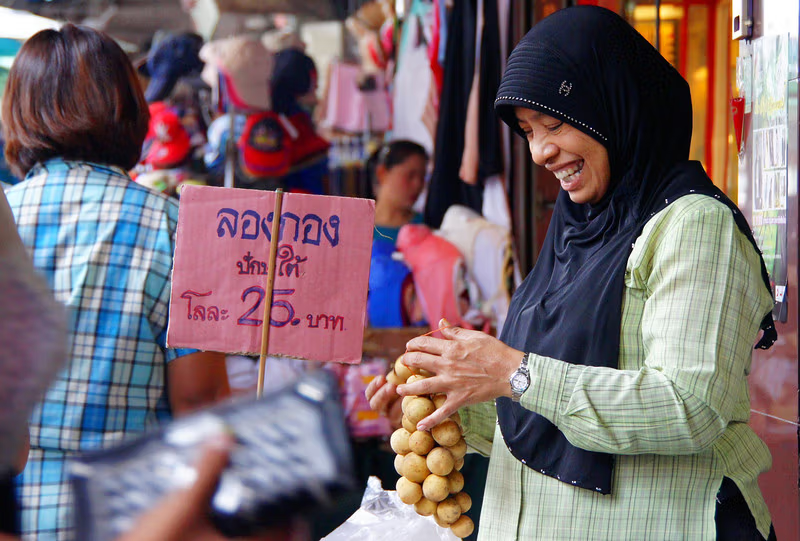
Chiang Mai Gate Market was close enough to become part of normal life rather than a designated “market experience.” We wandered over for banana-and-chocolate roti, mango sticky rice, kanom krok coconut pancakes and various other arguments against cooking at home. Our kitchen remained suspiciously pristine.
During one return visit, we found the same roti vendor we had eaten from three or four years earlier. The pancake was still fried in oil and butter, then drowned in chocolate sauce with the restraint of a five-year-old left alone near a squeeze bottle. It was magnificent. Audrey followed it with mango sticky rice because, apparently, dessert number one had only opened negotiations.
Nomadic Samuel and That Backpacker sampling Chiang Mai food on the Samuel and Audrey channel.
Chang Chalaad: This tiny restaurant near the northeastern side of the walled city served one of our favourite Pad Thai meals. We also went for mango sticky rice and, with a group, a Khantoke set dinner.
Dada Kafe: This became our reliable breakfast and lunch stop. We returned for curry fried rice, towering sandwiches and creamy fruit smoothies. Our favourite was the Energy Me, made with coconut, mango and banana. The apartment refrigerator also acquired Dada’s peanut butter.
El Diablo: When I wanted quesadillas oozing with cheese, crispy nachos and a burrito stuffed beyond saturation point, this was my Mexican-food refuge.
On later visits we also ate at places including Dash, Salad Concept and Baan Bakery. Restaurants change, close, move and occasionally survive only in old blog posts, so verify before crossing town with hunger-induced expectations. The point is not that every name remains frozen forever. It is that Chiang Mai made eating well varied and easy enough to improve our ordinary days—not just our sightseeing days.
Readers who want to do more than eat the evidence can turn a free afternoon into something useful: browse Chiang Mai cooking classes and market visits on GetYourGuide. I have taken a cooking course in Chiang Mai myself, and learning how much pounding, chopping and curry-paste labour sits behind dinner only deepened my respect for ordering it from somebody more competent.
More Chiang Mai food with Nomadic Samuel and That Backpacker.
What We Actually Did When We Weren’t Glued to a Laptop
One reason Chiang Mai worked so well was that an enjoyable day did not require a laminated itinerary and military-grade motivation.
Audrey often started her mornings with a jog at Nong Buak Haad Park, which she called her happy place. Early in the day it was quiet, with only a few runners. By late afternoon the park filled with people exercising, relaxing on mats, eating snacks and enjoying the last hours of sunlight.
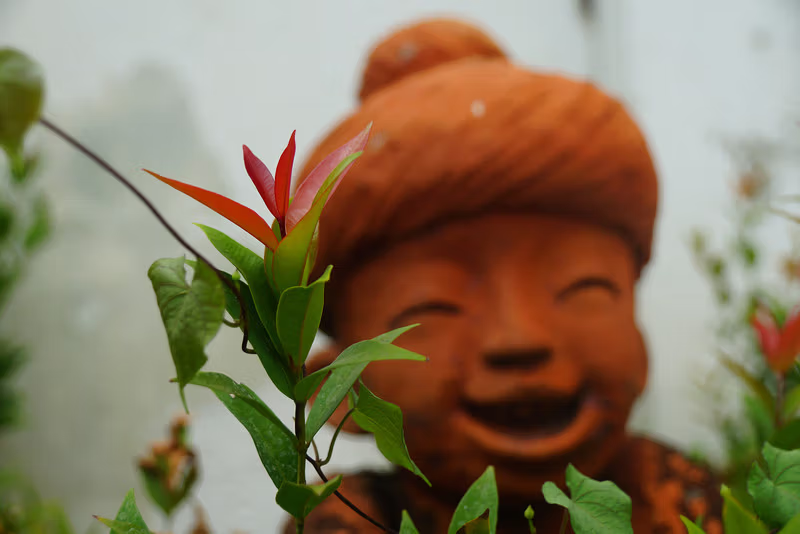
We enjoyed wandering inside the moat without a map. Chiang Mai had expanded, and traffic could be chaotic, but the right soi still revealed quiet cafés, terracotta gardens and nearly empty temples. For a few minutes the city could feel like a village—until a scooter raced past and honked at us to get out of the way. Spell broken.

Wat Sri Suphan, better known as the Silver Temple, became one of my favourite temples in Chiang Mai. It was close to our apartment and, on our visit, we were virtually alone. The ordination hall is covered in intricate metalwork created in the traditional silversmith district. Women are not permitted inside that hall, an access restriction Audrey had to experience from outside.
Wat Chedi Luang was grander and much better known. We visited early when the light was soft against the ruins. Wat Phra Singh produced so much gold and reflected sunlight that my newly purchased gold sunglasses finally appeared to have a purpose.
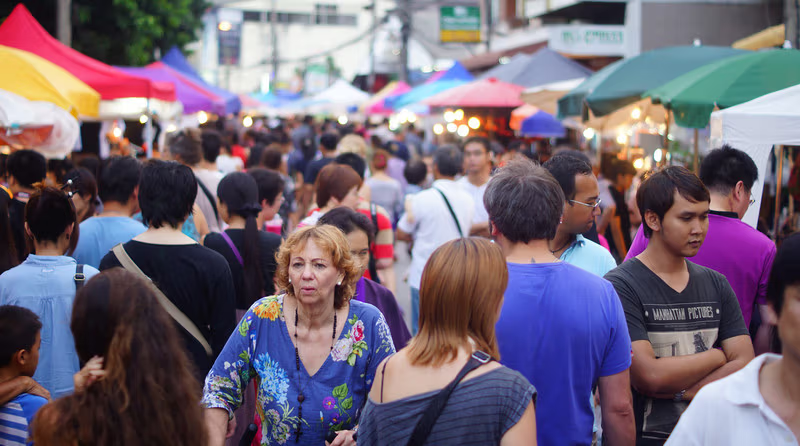
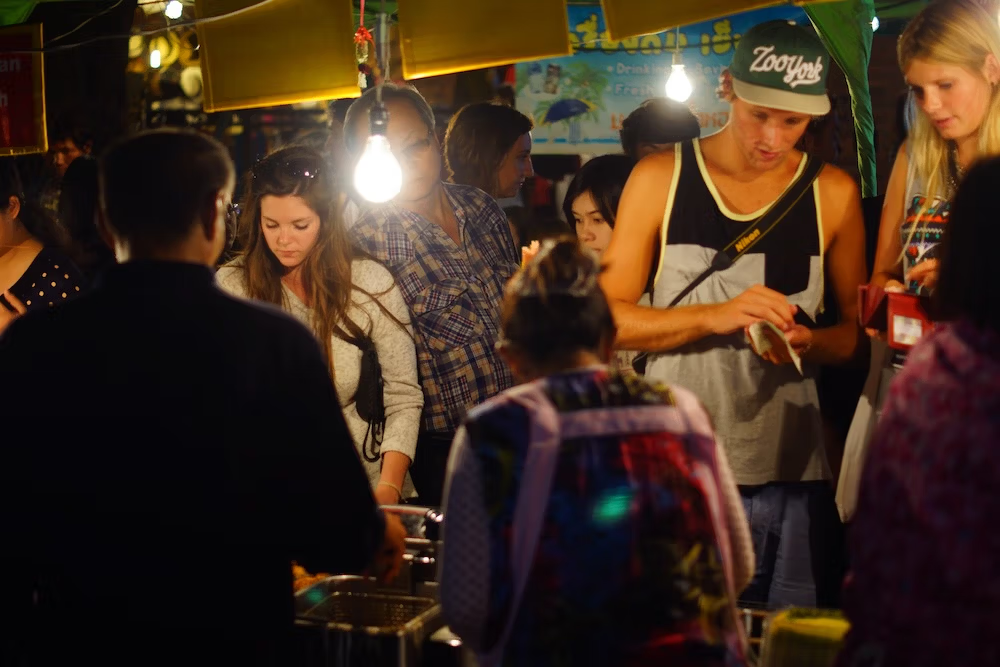
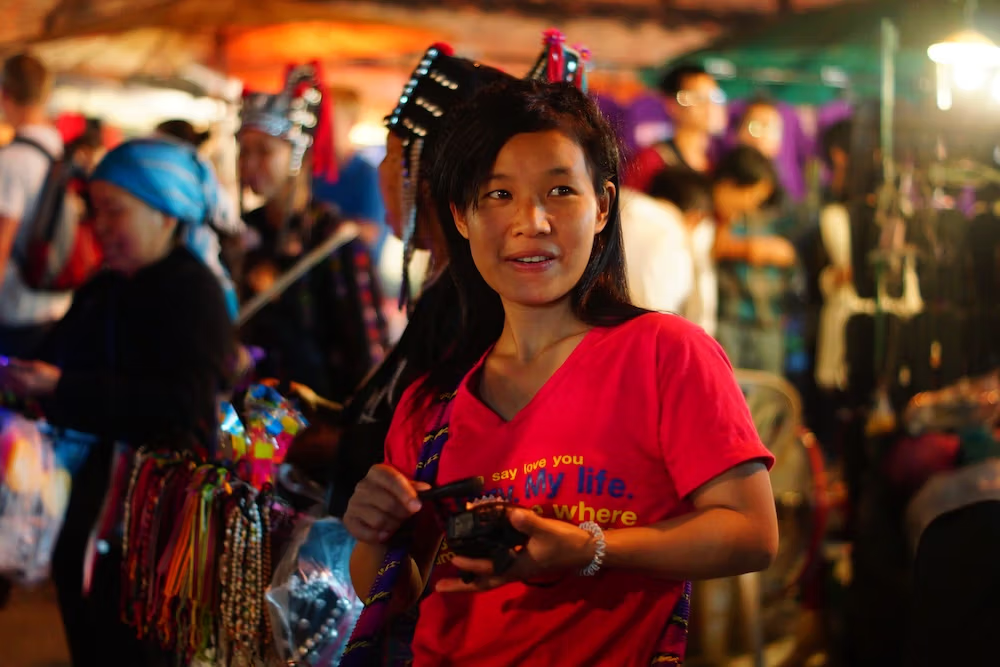
The Saturday Walking Street near Wua Lai Road was less peaceful. It was packed. Progress slowed to a shoulder-to-shoulder shuffle, and my enthusiasm leaked out somewhere between two souvenir stalls. Arrive earlier. Chiang Mai’s markets can be atmospheric, but “atmospheric” loses some lustre when you are advancing at the speed of refrigerated syrup.
We were never serious Chiang Mai nightlife authorities, and I refuse to cosplay as one now. Our version of an evening out was usually a small neighbourhood pub and a cold Chang after walking around the moat. That suited us. We had come to recover and work—not conduct heroic “research” beneath a speaker at 2 a.m.
Community, Routine and Becoming Predictably Boring
A workable base needs some sense of belonging, even if you are naturally happier hiding behind a laptop. Chiang Mai attracted remote workers, teachers, entrepreneurs, retirees and people trying longer stays without announcing a complete spiritual reinvention. Meeting others building unconventional lives gave me people to exchange ideas with and, occasionally, the useful realization that everybody else was improvising too.
Community did not require a networking badge, elevator pitch or somebody cornering me to explain passive income. It came from returning to the same café, recognizing market vendors, meeting friends for dinner and staying long enough for staff to remember us. Constant travel had stripped away that ordinary familiarity. Chiang Mai gave some of it back.
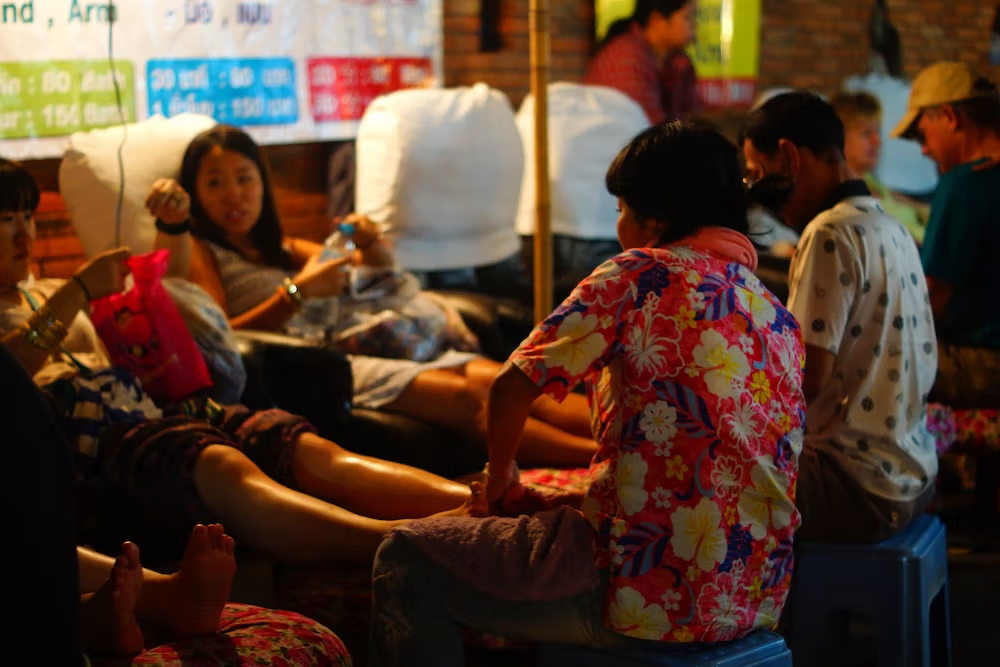
Chiang Mai also made small restorative habits easy: Audrey’s morning run, a walk through the Old City, a Thai massage, fresh fruit or a meal not wrapped in convenience-store plastic. None of this transformed us into glowing wellness prophets. Sometimes a foot massage and an early night are enough. Quite often, actually.

The city has an extensive vegetarian scene, and we ate at Pun Pun and other health-focused restaurants when curry, roti and mango sticky rice had collectively begun winning the argument against moderation.
Getting Around Chiang Mai Without Pretending Traffic Is Charming
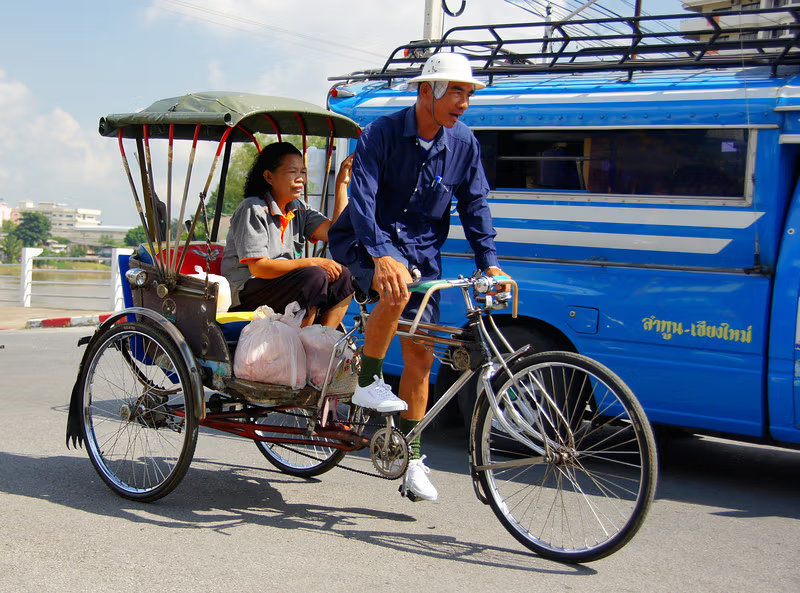
Chiang Mai is compact enough to feel manageable and spread out enough to punish a bad accommodation choice. Where you stay shapes almost everything.
We walked often and used red songthaews almost daily when a destination exceeded our sweat tolerance. Flag one down, tell the driver where you are going and climb into the back if the route works. Fares have changed since our visits, so ask before boarding rather than treating an ancient blog price as constitutional law—including this article’s old 20–30 baht figure.
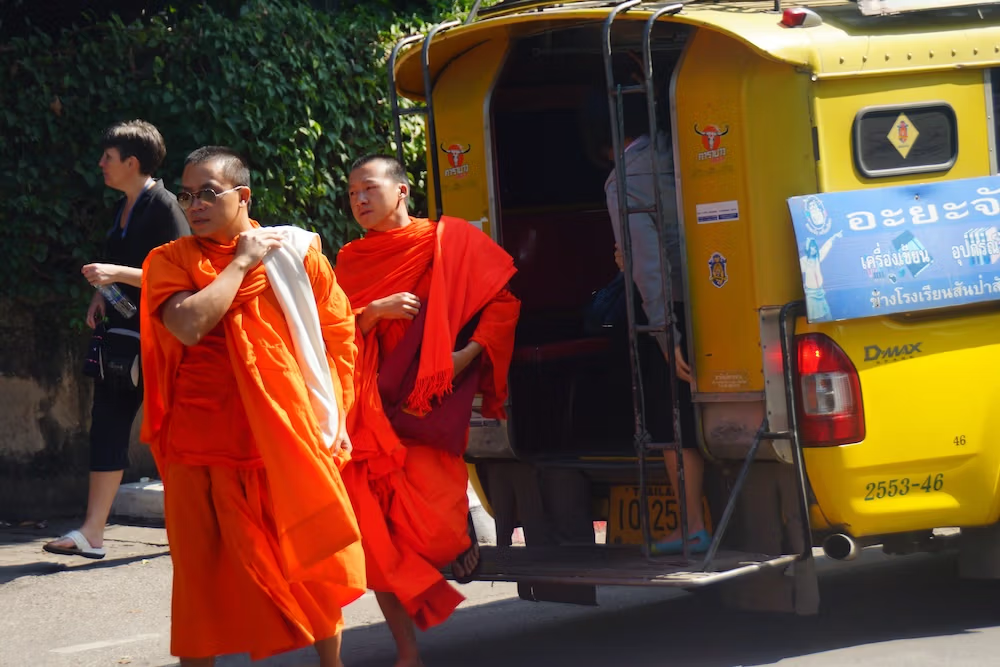
Ride-hailing apps such as Grab simplify point-to-point trips and remove most fare negotiation. Tuk-tuks are readily available but tend to cost more than shared songthaews. Chiang Mai International Airport is close to the city, and the official Airports of Thailand transportation page lists current public bus, shuttle, taxi and car-rental options.
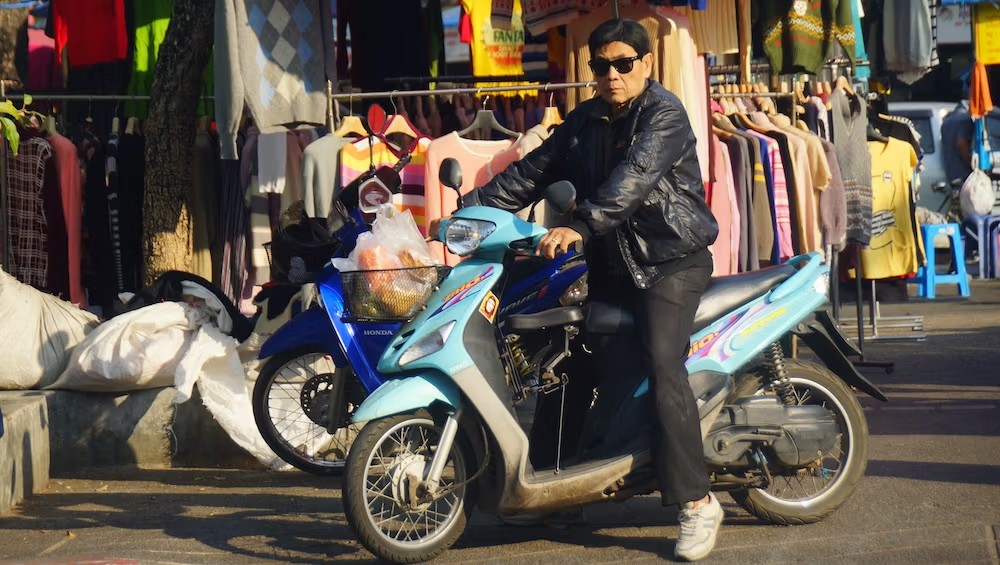
A scooter unlocks Doi Suthep, Huay Tung Tao and the outer neighbourhoods on your own schedule. It also introduces the clearest everyday opportunity to injure yourself. “Everybody does it” is not a licence, insurance policy or force field. Carry the correct motorcycle licence and international driving permit, wear a proper helmet and confirm that your insurance covers the machine beneath you.
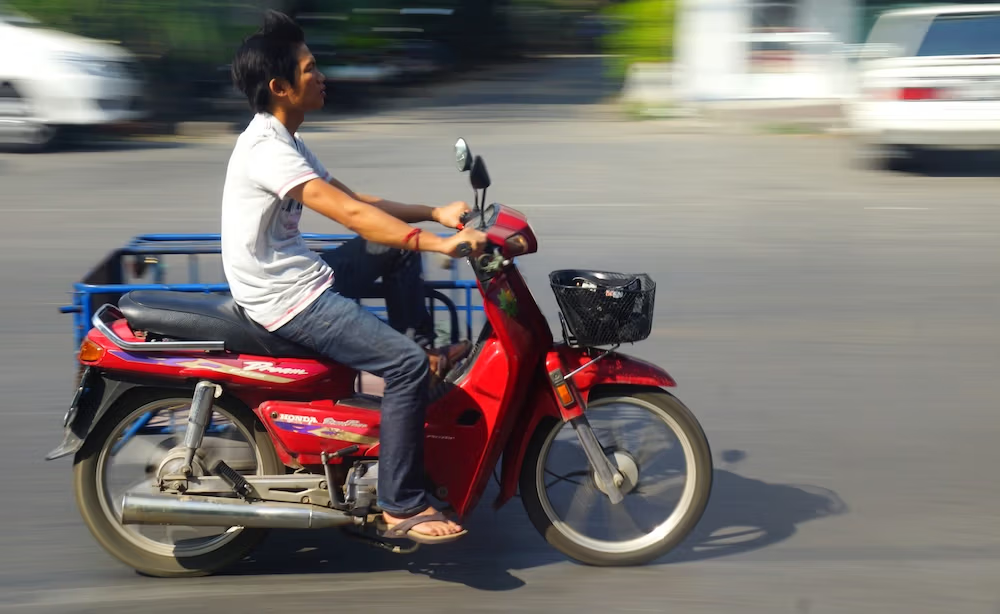
We bought bicycles during an earlier stay and loved the independence they gave us around the neighbourhood. Still, Chiang Mai is not one giant peaceful bike lane. Traffic, heat, broken route logic and air quality all have opinions. Choose a route because it feels safe—not because an app claims it is only twelve cheerful minutes away.
For regional flights, Chiang Mai connects easily with Bangkok and other Thai destinations. Anyone comparing domestic low-cost carriers may also find my historical Nok Air versus AirAsia comparison useful as firsthand context, while checking current baggage rules and fares directly with the airlines.
When Chiang Mai Works Best—and When It Really Doesn’t
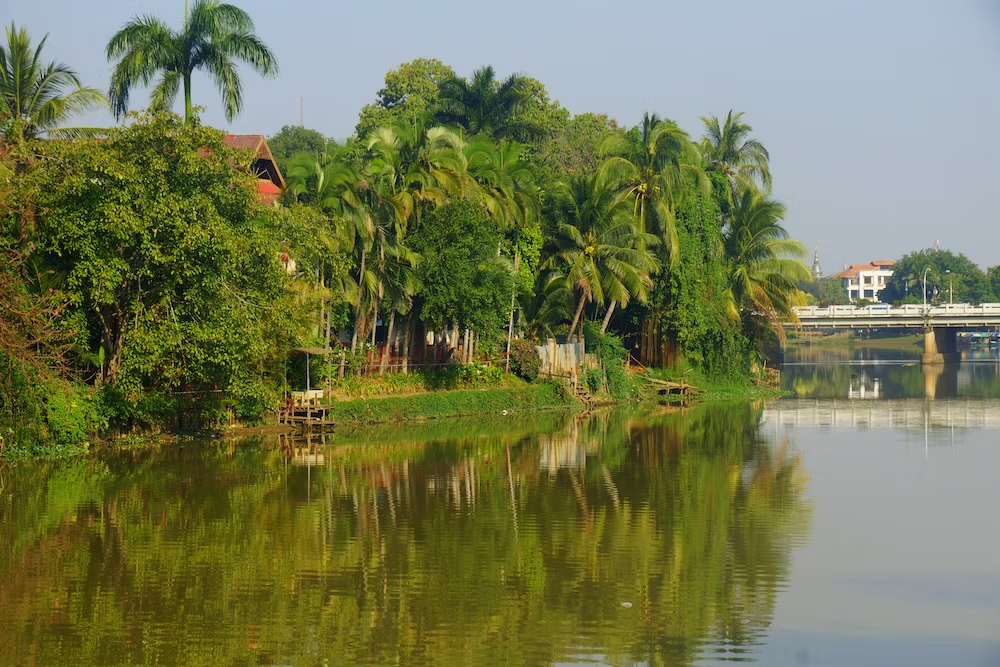
Season matters far more than the old “perfect digital-nomad base” sales pitch admits. Chiang Mai can be delightful, furnace-like, lush, smoky or some irritating combination of the above.
| General Period | What to Expect | Base-Planning Implication |
|---|---|---|
| November to February | Cooler mornings and evenings, generally drier weather and high demand | Most comfortable for walking and outdoor routines; book good monthly accommodation early |
| February to April | Increasing heat and recurring regional haze or PM2.5 episodes | Monitor air quality closely; sensitive travellers may prefer another region |
| May to October | Hotter, wetter and greener, with showers and fewer peak-season visitors | Potentially better value and lush scenery, but plan around rain and humidity |
The haze season is not a cute little caveat to bury beneath fifteen paragraphs about coworking cafés. Northern Thailand experiences recurring smoke and fine-particle pollution, with the worst episodes often falling between February and April. Conditions vary by year and can turn quickly. Anyone with asthma, respiratory problems, young children or a low tolerance for breathing rubbish should treat timing as a primary decision.
Check current PM2.5 readings through Thailand’s Pollution Control Department-supported Air4Thai service. For a longer stay during a risky period, inspect whether the apartment seals reasonably well and whether it provides—or can accommodate—an air purifier. An N95 or equivalent mask is useful, but it does not turn hazardous outdoor air into a pleasant lifestyle.
Rainy season is sometimes described as though Chiang Mai disappears beneath a permanent waterfall. It does not. The city turns greener, accommodation pressure can ease and many days still include long dry stretches. You pay with humidity and sudden downpours timed precisely for the moment you leave your umbrella beside the apartment door.
Visas and Entry Rules: Verify Before You Build a Life Around Them
Thailand’s entry rules change too frequently for me to tattoo a universal number of days into this article and pretend it will age gracefully. Visa exemption depends on nationality, and the framework keeps evolving. Check the current rule for your passport before paying for a long rental. Immigration officers are rarely moved by the argument that “a blogger said so.”
The official Thai e-Visa portal is the correct starting point for tourist visas and longer-stay categories. Thailand now also offers the Destination Thailand Visa for eligible digital nomads, remote workers and freelancers. It is a five-year multiple-entry visa that can permit stays of up to 180 days per entry, but it requires supporting professional documents and financial evidence. It is intended for remote work connected to foreign employment or clients, not ordinary employment for a Thai company.
Visa validity, permitted stay and permission to work are separate questions. Do not construct your legal strategy from a reel filmed beside a pool, and do not assume another traveller’s passport stamp predicts yours.
Most foreign nationals entering Thailand must also complete the Thailand Digital Arrival Card online before arrival. The official system accepts submissions within the three-day window that includes the arrival date. The TDAC is an arrival form, not a visa.
What Chiang Mai Costs Once You Stop Believing Old Blog Posts
Audrey and I once lived in Chiang Mai for less than US$1,000 per month and enjoyed a considerably better quality of life than we had while moving constantly. On another visit, we paid 20,000 baht for a larger suite because we were tired of living elbow-to-elbow with our luggage. Both figures are true. Neither is a magic current budget handed down from the digital-nomad gods.
Your realistic total depends less on a mythical “Chiang Mai cost of living” number and more on six choices you actually control:
| Cost Driver | Lower-Cost Choice | Higher-Cost Choice |
|---|---|---|
| Accommodation | Older studio, longer commitment, local neighbourhood | Modern condo, short booking, central premium area |
| Electricity | Moderate AC use | Running AC heavily through hot months |
| Food | Markets and local restaurants | Imported groceries, cocktails and Western restaurants |
| Workspace | Apartment and occasional café | Full coworking membership or private office |
| Transport | Walking, shared songthaews and occasional Grab | Daily ride-hailing, car rental or frequent private trips |
| Lifestyle | Local routine with occasional day trips | Frequent tours, nightlife, spas and weekend flights |
Price the largest fixed costs live: accommodation, coworking if needed, insurance and visa fees. Then add a proper buffer for electricity, transport, deposits and weekends when your discipline collapses. Monthly apartment ads often exclude utilities, and the seductive price in giant type may require a six- or twelve-month commitment buried in smaller type.
Chiang Mai can still offer excellent value. The old mythology of luxurious living for pocket lint, however, encourages terrible planning. Cheap and comfortable are relative. Build a setup you can sustain, not an online stunt where you eat instant noodles beside a rooftop pool and declare victory at US$412 per month.
Easy Breaks When Your Brain Has Turned to Laptop Porridge
A good work base needs escape valves. Otherwise you are merely living abroad while staring at the same screen. Chiang Mai offers enough nearby variety that taking a proper day off does not require another airport security line.
- Doi Suthep: The mountain and temple provide cooler air, city views and an easy half-day reset.
- Huay Tung Tao: A lake beneath the mountains where bamboo huts, food and unhurried afternoons replace screen time.
- Bua Tong Sticky Waterfalls: Mineral deposits create a grippy surface that allows visitors to climb sections of the falls.
- Doi Inthanon: A longer day trip to Thailand’s highest mountain, waterfalls and cooler highland scenery.
- Chiang Rai: Better as a long day or overnight trip when you want a second northern city rather than another café.
Not everybody wants to rent a scooter, decode songthaew routes or bargain with a driver before caffeine. For a low-friction day out, you can compare Doi Suthep tours on GetYourGuide, browse Doi Inthanon day trips or check a Sticky Waterfall half-day tour with hotel transfers. These solve an actual planning problem: getting out of the city without turning your rest day into a transport thesis.
The trick is allowing a break to remain a break. Not every waterfall needs to become content. Not every meal needs B-roll. Not every weekend needs to be optimized into a 17-stop endurance test that leaves Monday looking restful.
Who Chiang Mai Works For—and Who May Hate It
| Chiang Mai May Suit You If… | It May Frustrate You If… |
|---|---|
| You want a calmer city with strong food and work infrastructure | You need big-city energy, rail transit and constant novelty |
| You value routine more than nightlife | You are searching primarily for beaches and ocean access |
| You can adapt your stay around heat, rain and air quality | You cannot tolerate seasonal smoke or tropical heat |
| You are comfortable walking, using songthaews or ride-hailing | You expect effortless public transport everywhere |
| You want to focus on a project for several weeks or months | You are likely to treat every day as a holiday |
| You enjoy becoming a regular at local cafés, markets and restaurants | You want an instant permanent community in a transient city |
Chiang Mai is praised so enthusiastically that some newcomers arrive expecting a frictionless paradise with fibre internet and ten-baht enlightenment. It is still a real city. Traffic snarls. Pavements vanish. Aircraft rattle some neighbourhoods. Smoke can become a serious health problem. Friends leave. Visa rules remain unmoved by the number of flat whites you have purchased.
For the right person, those compromises sit beside a rare combination: manageable scale, outstanding food, practical accommodation, dependable work infrastructure, nearby mountains and enough texture to keep routine from becoming beige.
Is Chiang Mai Still the Perfect Digital Nomad Base?
“Perfect” is a dangerous word—especially in a title I wrote when I was younger and apparently less frightened of absolutes. Chiang Mai is not perfect in every month, for every passport or for every remote worker.
It was, however, almost perfectly matched to what Audrey and I needed at that point in our lives.
We arrived depleted. We bought bicycles, found an apartment, learned our neighbourhood and returned to favourite restaurants. We began producing work without simultaneously plotting the next border crossing. On later trips, we came back to the same residence for the same reason. Chiang Mai had become our reset button—and unlike most reset buttons, this one came with mango sticky rice.
I was fortunate enough to call Chiang Mai home for several months. I stayed on top of my online work, ate with alarming enthusiasm, lived in comfortable apartments and made new friends. We spent less per month than we had while backpacking and enjoyed a noticeably better quality of life. Move less. Live more. Astonishing concept.
Back on the balcony, another aircraft climbed above the city. For once, watching a plane leave did not produce the familiar itch to be on it.
That may be the clearest explanation of why Chiang Mai worked for us.
Have you visited or lived in Chiang Mai? Could you imagine using it as a temporary base, or does the constant-motion version of travel still appeal more?
Thanks for a great description of Chiang Mai Mary. I love this place and i am glad to join the club of Digital Nomad.
Hello!!
YOur blog is very interesting, I read the lines about you your accomodation, I like the fact that is quite and with mountain views, I was wondering how good your internet connection was there, if you don’t mind, could you provide please the name of this place? Was this good to work there (internet conection and quiet) Did you hire an internet plan or everything was provided by the place??
Greetings 🙂
Romance is tricky when living internationally to work. Thailand is talked about as a place where the guy has the money and the woman has the younger age or is more attractive.
What about people that want to date educated woman (or vise versa if you like) is that realistic?
Hello, could you share which apartment complex you found, neighborhood it is in, and how you learned about it? Did you use an agent, etc. also what lease lengths were available? Thanks so much.
We stayed at the Smith Residence near the South Gate 🙂
That was my blunder, sorry. I didn’t look over the last comments before asking a redundant question. But you still answered. Thanks for being nice 🙂
No worries! Best wishes moving there soon!
Can I ask which apartments you rented? I am about to move there and the one you picked sounds perfect!
Hi Valen,
We stayed at the Smith Residence 🙂
Thanks, Samuel! I’ll check it out….
Awesome! I definitely recommend it 🙂
Nice quick overview of my favorite city. Chiang Mai is the best.
It’s a little funny to hear about Pad Thai because it’s one of the most dull Thai dishes. Most Thai people I know hardly ever order it.
But my favorite are the cheap vegetarian restaurants.
That’s a good point about Pad Thai, Ryan. The more I think about it, I didn’t notice many Thais eating it.
The best thing in this article is the stretching cat photo. You gave me a good laugh 🙂
Thanks! LOL
I’ve only been away from home for a few weeks but I’m already agreeing with you about the difficulty if not impossibility of combining backpacking with working. I’m in Chiang Mai now and the place is really growing on me – its definitely very liveable. I’m just still a bit reluctant to commit to one place when there are so many interesting places to visit and so little time 🙁
Could I asked which apartment block you chose and how you went about meeting people? Not sure I can work in a backpackers long term but I spent a few days in a dorm here and I’m really missing the social contact.
Hey Stephen,
We lived nearby the South Gate which is a great location and also an area where you can find many serviced residence apartments.
There is a vibrant expat scene here with lots of weekly meetups (documentaries, pub quizzes, clubs, etc). You can definitely settle down here and feel like it is home.
Great post Samuel. All the reasons why we love to be here and why we started from here our life as digital nomads. Plus, for vegetarians like we are, Chiang Mai offers plenty of choices. 🙂
Thanks Gianni,
It’s a wonderful place to be based and I agree with you about the vegetarian food and options!
And that, my friends, is an awesome summary of the myriad of reasons that Chiang Mai is the best palace to be! I came here for 2 weeks so my wife could do a Thai massage course. Nearly 18 months later, we’re finally leaving.
http://www.adventuresofagoodman.com/love-living-chiang-mai-thailand-photography-life/
Thanks Greg!
We’ll be back again I’m sure. I’d say in 30 years from now we’ll be like like those expats who just sit outside at the corner shop drinking beer all day 😉
See you there buddy!
Wonderful, wonderful, totally agree! The WiFi thing was such a shock to me – it’s very strange coming from the States and not having reliable WiFi. Sure, every once in a while you have to call Time Warner cable or something, but that’s like one every few months. Major issues with electricity (Nepal! India!) and WiFi (Saudi!) have made work a struggle and pain. Glad you revealed the reliability in Chiang Mai!
Lovely post and it real does sum up Chiang Mai. It has changed a lot since I arrived 13 years ago, but I personally do not feel that it has not it charm. Chiang Mai is still a great place to live!
What was the name of the apartment you described? I’m here in a guesthouse and looking for a good long stay place. A lot is booked up because of the high season, and then there are a lot to explore but I don’t have a lead. Glad you had a good time, and thanks for sharing your experiences!
Glad you enjoy CM! The wifi speeds there are good considering how you can run into issues around the region. Have you been to Davao? I find the culture, pollution, and general day-to-day life there a bit more enjoyable if you prefer small cities (I prefer Manila to Bangkok, too, which puts me in the minority).
Curious that you didn’t feel at home in Vietnam. I hear that a lot, although I think HCMC is a relatively livable city with some nice green areas.
Hi Samuel, Chiang Mai looks fab. I can’t wait to get there next year. I’ve been to Thailand a few times but I never managed to venture “up North” but we’re doing so on this trip.
Can you get the Khantoke set dinner everywhere or just at particular restaurants?
Hello. Congratulations on the article. I am planing to go to Chiang Mai next year and spend at least 3 months. Do you have any website to suggest about houses and apartments for rent over there? I would really appreciate it.
Really enjoyed reading this post – it took me back to our visit there a couple of years ago – I have recommended Chiang Mai as a must visit to anyone who wants to listen to me babble on about it. I remember wandering around on our first evening and feeling a complete sense of calm. And, for those of you reading this, please try the banana crepes with chocolate sauce and condensed milk, which you’ll find at many street vendors – they are oh so wrong, but delicious. Thanks for taking me back once again 🙂
Having travelled in South America the last few months I’ve come to realise how overlooked language is as a factor for travel destinations and expat bases.
Spanish is essential here is as its the only continent I imagine where English isn’t the first bridge language.
Asia in a way has the benefit of being a popular, exotic travel destination where travelers aren’t obliged to learn the language. Though it does create some distance when getting to know the culture.
I love reading about Chiang Mai, I recently had the chance to visit and so many elements of your blog reminded me – Khao Soi!! Yum. It’s hard to capture all of the emotions and sensations, it’s such an invigorating place. I’d love to hear your thoughts on my Chiang Mai story…
http://saraherhodes.com/travel-tales/wat/
Cheers!
I love Thailand and till now Bangkok is my favorite city to live in. The street food, the atmosphere, the beautiful girls. This city is just perfect for me.
When I read your enthusiasm about Chiang Mai it really makes me want to travel to this city. Maybe I like it even more than Bangkok. But I think it’s totally different and you can’t compare it. The next time I travel to Thailand I will definitely visit Chiang Mai.
cheers,
Sebastian
You guys aren’t in Chiang Mai these days, are you?
We just got here and will be around for a month.. I think it’ll be a nice place to call home, even if for a little while.
Soon… soon I will be joining the bloggers and expats in Chiang Mai… I’ve been fantasizing about it for ages!
I have certainly heard this is teh place to be in the digital nomad world! Well if only it was easy to keep backpacking and working!
If you don’t mind me asking where abouts did you stay? $10 a night with pool and gym sounds great.
I am glad you felt at home there (not just because I am headed there in a few weeks lol). Even when I was young and traveling full-time, I always enjoyed the longer periods of staying put, for all of the reasons you mention here.
I must have just missed you Abby 🙁 Hope we can meet up soon somewhere!
I just arrived in Thailand and was debating heading to Chiang Mai to catch up on projects. It is a must now! Thanks for the info.
That’s awesome Stephen!
I think you’ll enjoy the laid back pace of life, great food and low cost of living. Great place to catch up on work.
We just spent two months living in Chiang Mai. I agree that it’s the perfect place to base yourself as a digital nomad. It was great to just slow down after months of constant travel, and that internet connection? It was like love at first sight 😉
Dean, glad to hear about your experience. We enjoyed it so much we’re thinking of heading back for a couple more months next year.
Wow! I was quite skeptical at first, but this sounds like a really lovely place to recharge your batteries. It’s no fun getting old, eh.
We really loved it Natalia! No, it isn’t very fun 😉
Well you certainly sold me on Chiang Mai. It’s sounds like a fantastic place. For years I have avoided Thailand for many reasons. But here everything I feared about this country is laid to rest. It sounds more like a laid back and liveable kind of town, where the locals are happy to mix with the non locals. I love the food videos best; I too live to eat 🙂
Thanks Sherry!
I hope you’ll get a chance to visit soon. We have plenty of more food videos coming soon 🙂
I would’ve like to visit Chiang Mai. We were only in Bangkok for a short time. But, hopefully one of these days.
Hopefully you can visit soon Nicole. It’s a great reason to head back to Thailand.
Gah! You have me so excited for Thailand, and it’s only 42 days away! I’ll be looking for a base to yeah English and soak in the culture for a bit so I may be choosing Chiang Mai!
That’s great Ryan! I’m sure you’ll love Thailand. Chiang Mai would be the perfect place to do that 🙂
I agree with you when you are writing and traveling simultaneously, internet is the stream, river and the basic thing. I find it sometimes difficult in certain parts of India, especially in mountains where either you get slow or no internet.
Pictures are wonderful and writing as usual personalized and simple. After a long time I again visit your blog and I like it.
Thank you!
It’s amazing how much you appreciate a decent internet connection when you’ve been deprived of it for a period of time.
Awesome post. Chiang Mai is one of those backpacker meccas slash on-the-move-entrepreneurs.
I guess for me, the food is the one thing that may send me packing home. I love experiencing new food and all but sometimes, you just want some comfort food that is on the level of that not-really-authentic chinese food stall in your town or say, pizza done NY style or a nice american-style burger.
havent been but looking forward to.
oh and im still currently stalking your korea posts. going in a few weeks
Thanks Eileen,
Best wishes in Korea! I think if you check out Chiang Mai you’ll be pleasantly surprised by the quality of International food 🙂
OMG, I’m in my 40s, have traveled around the world, and this is the first time I heard someone complain about Chaing Mai food. I think I’d rate it #1-2 of the 30 countries, and more cities, I’ve beemn.
We really loved the food there as well – both local and international.
Loved this little write up on Chiang Mai. That city completely destroys any less-informed stereotype of Thailand. Everything you say makes it a great counter-point to the chaos that is Bangkok and I’m so jealous you had a chance to live there! Did you get the opportunity to get out into the nearby countryside? It’s one of the best parts of being in the North. Cheers!
Thanks John, I agree with you about the charming aspects of the nearby countryside. It’s such a nice alternative to expensive/bustling/chaotic Bangkok 🙂
Great post. I like the lay out. As someone who knows how that burn out can drain you this post sounds so lovely. Thanks.
Thanks Tiffany, it’s really tricky dealing with burnout. I always have to fight urges to keep moving on versus the sensible idea of staying put for a while.
Great info. I liked the videos. Ive never actually had real Thai food after watching them 🙂 They are all too americanized or even Guatemalaized, since they try to make their own versions here
Marina,
Sometimes authentic can be over-rated. The best Thai food I ever had was in Canada of all places…LOL
I love reading this post about Chiang Mai. It sounds like you guys have really gotten to know the area by spending a solid amount of time there. I’m traveling to Thailand this winter and this area is at the top of my list. What were your favorite experiences? Did you explore the surrounding areas as well?
Beyang, best wishes with your upcoming trip. One of the nicest features of being based in CM is that you can easily explore the surrounding areas – Pai, Chiang Rai, etc.
I really wish these kinds of articles didn’t exist. We don’t need more clueless “digital nomads” trying to “rub elbows with robed monks” (which is not only rude for men to do but is a grave offense for women to do).
Yeah Jeff, because I totally meant that in a literal sense as opposed to figurative.
Awesome reply! LOL
This was a wonderful post and has me itching to visit Chiang Mai! Descriptions of the food made my mouth water, especially at Dada Cafe. Descriptions of the expat culture had me yearning to visit and stay for a while, and will put it on my list of places for us to investigate living in in the future.
Thanks so much!
EWM
Thanks Emily!
We really miss the food these days – especially the fresh fruit smoothies 🙂
I’m planning to visit Chiang Mai for the first time in January and can’t wait. First stop will probably be Chang Chalaad. I’d search to the ends of the earth for the best Pad Thai.
That’s cool Josh! I feel the same way about Pad Thai.
I am really curious to try this place out. It’s really hard to find a place to call home, even when it is only for a month or a few. I love that kind of food there and I’m sure to be happy. How long can you stay in that country?
Clayton,
Visa lengths vary. In general, most expats would obtain a 2-3 month Visa in a neighboring country. Georgetown, Penang is a popular destination to get it done.
That sounds pretty good. I’d love to just hang out for 3 months in one spot. That would be pretty nice
Really lovely. Chiang Mai is definitely at the top of places I want to visit for the long term.
Thanks Claire,
Hopefully you’ll get a chance to visit soon.
I’ve been 5 years ago to Chiang Mai. Wonder if it’s still the same. I really loved that place and your article kinda encouraged me to think of a return there and stay a while…
Thanks for the inspiration!
Oh and the food just looks too delicious! By that point, you sold me!
Cheers from Istanbul!
Hey Sab,
I first visited roughly five years ago. I don’t think too much has changed over the years. It’s just as inviting now as it was then. We miss the food the most! Have fun in Istanbul 🙂
Some places, maybe somewhere like Rishikesh in India or Torremolinos in Spain, have so many foreigners staying there that the places have become pastiches of life abroad.
Is there a lot of the original Chang Mai to see and experience?
David,
I agree with you. I think Chiang Mai definitely still has retained some original charms.
What a amazing article on this beautiful town! It sounds blissful! Not only is it very affordable and incredibly well-equipped in regard to wifi, fabulous restos and cafes (as well as a pool and exercise equipment!), it has amazing locals and a brilliant expat community to boot! Thank you so much for sharing your experiences abroad!
Thanks Mary,
It really does have it all in many ways 🙂 We’re really looking forward to returning again next year.
That is a great article. It really makes me want to visit.
Thanks Jen, I hope you can visit soon.
Chiang Mai is an amazing place, i have great memories :)) congrats for the article, ciao Andrea
Thanks Andrea, I agree with you – it’s an amazing place.