
Heading back home to Canada for an extended period for the first time in years, I found myself exploring my own backyard with fresh eyes and an almost unreasonable amount of enthusiasm. When Audrey and I sat down to choose the first Canadian city we wanted to visit together, Montreal was a no-brainer.
Montreal matters to us for reasons that go well beyond festivals, old stone buildings and the socially acceptable consumption of gravy before noon.
Audrey was born here. Before moving to Argentina for grade school, she spent part of her early childhood in Montreal. For me, Montreal was the first Canadian city I travelled to independently as a young adult. That initial trip helped ignite my interest in travel long before Nomadic Samuel existed.
Returning together gave us a full week to walk the neighbourhoods, revisit places connected to our separate histories and eat through enough Quebec comfort food to place Mount Royal’s walking trails somewhere between sightseeing and damage control.
Montreal is an easy city to reduce to clichés: European charm, festivals, food and bilingual culture. All true. Also a bit bloodless. The Montreal we remember is more specific. It is spiral staircases, drumming circles, wood-fired bagels, a collapsing smoked-meat sandwich, old Expos memories, Audrey rediscovering the city where she was born and me repeatedly underestimating what cheese curds can do to a human body.
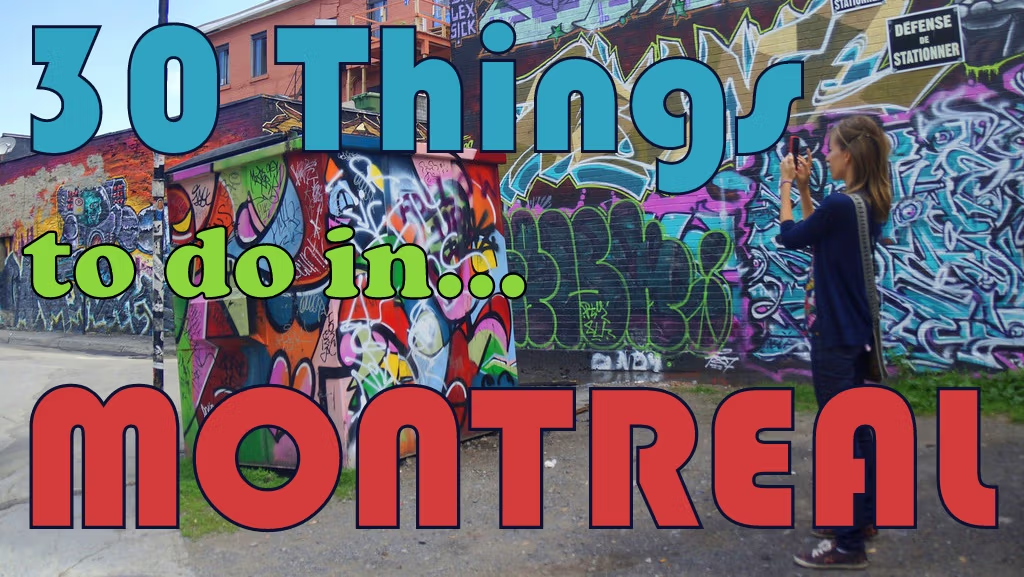
30 Things to Do in Montreal: Our Summer Travel Guide
Our photographs, video and firsthand impressions come from the full week Audrey and I spent exploring Montreal. Practical visitor information has been updated for current travellers. Where we mention a modern experience we did not personally take—such as the official guided tour inside Habitat 67—we say so plainly.
Plan and Book Your Montreal Trip
Montreal rewards spontaneity once you arrive, but accommodation during festival weekends is not something I would leave to the travel gods. Those gods are fickle, vindictive and apparently fond of surge pricing.
- Compare Montreal hotels and current accommodation prices on Booking.com
- Browse hotels in Plateau-Mont-Royal, the neighbourhood where we stayed
- Browse hotels in Old Montreal near the historic centre and waterfront
- Browse Montreal tours, tickets and bookable experiences on GetYourGuide
How to Use This Montreal Guide
The numbering follows our original Montreal video and travel experience, so it does not always place neighbouring attractions side by side. Later in the guide, I regroup everything into a realistic three-day itinerary so you are not bouncing from the Old Port to Olympic Park and back again like an overcaffeinated pinball.
| Trip length | What is realistic | Best approach |
|---|---|---|
| 1 day | Old Montreal, the Old Port and one nearby district | Choose atmosphere over quantity |
| 2 days | Add Mount Royal, the Plateau and Mile End | Group sights geographically |
| 3 days | Cover the major historical, neighbourhood and food experiences | Use the Metro between districts |
| 4–5 days | Add Olympic Park, museums, cycling and slower park time | Leave room for festivals and detours |
| 1 week | Explore without treating Montreal as an obstacle course | Stay in a neighbourhood and live there a little |
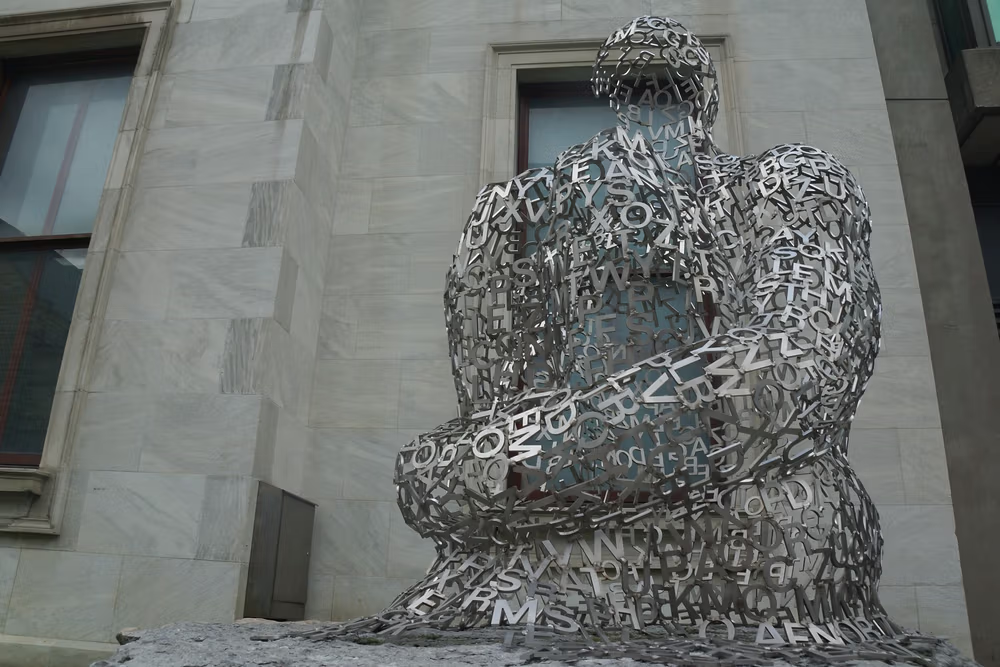
1) Visit the Montreal Museum of Fine Arts
Our first stop was the Montreal Museum of Fine Arts, or Musée des beaux-arts de Montréal, where we wandered through the exhibitions and attempted to project the calm, knowing expressions of people who possess sophisticated artistic opinions.
The museum spreads across five connected pavilions along and around Sherbrooke Street in the Golden Square Mile. Its collections move from Canadian and international art to decorative arts, design, archaeology and world cultures. Nearly 5,000 works are normally displayed, which is still several thousand more objects than my brain can process before demanding coffee.
Unless art museums are the central purpose of your trip, two or three selective hours make more sense than trying to inspect every wall. Check the current temporary exhibition before choosing your day. A major exhibition can justify half an afternoon. Without one, you may prefer a shorter visit followed by McGill, Sherbrooke Street or Mount Royal.
The admission arrangement we encountered during our original visit has changed. Current hours, exhibitions and ticket categories should be confirmed through the official Montreal Museum of Fine Arts visitor page. The interconnected pavilions are wheelchair accessible, and the museum publishes detailed accessibility information.
Best combined with: McGill University, downtown shopping and the Golden Square Mile.
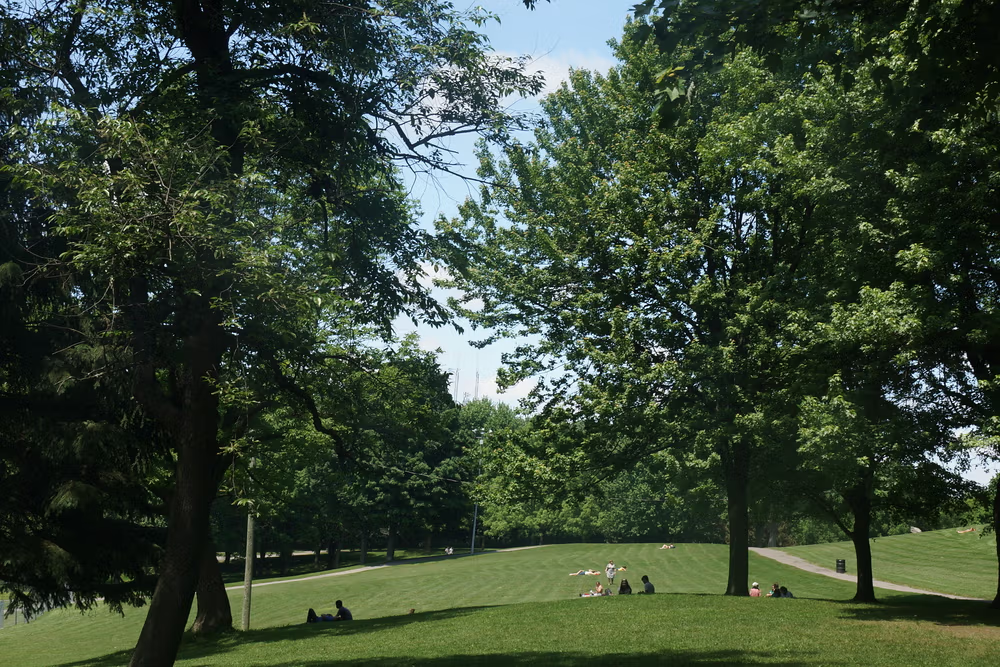
2) Walk Through Mount Royal Park
After falling into an unhealthy routine of devouring poutine almost every day, the opportunity to walk through Mount Royal Park felt less like optional sightseeing and more like a medical intervention.
The park is one of Montreal’s defining green spaces, but it feels more varied than a simple urban park. You move between forested paths, open picnic areas, viewpoints, recreational spaces and sections where Montrealers appear to have temporarily relocated their entire living rooms outdoors.
We even spotted a woodpecker during our walk. That small encounter stuck with me because Mount Royal does not feel sealed off from Montreal. It feels threaded through it. Locals use the park to exercise, meet friends, play music, picnic and disappear into the trees without actually abandoning the city.
You can turn Mount Royal into a proper uphill hike or approach it more gently. The route from around Smith House toward the Kondiaronk lookout is less punishing than climbing from downtown, though it still involves an inclined gravel surface. Current path conditions and temporary works are worth checking through Les Amis de la montagne, especially for visitors with reduced mobility.
Give the park at least two hours. Give it longer when your lunch involved gravy.
Travellers who want guidance, history and a considerably less conventional ride can also consider a bookable Mount Royal excursion:
Check availability for a guided electric fat-bike ride on Mount Royal
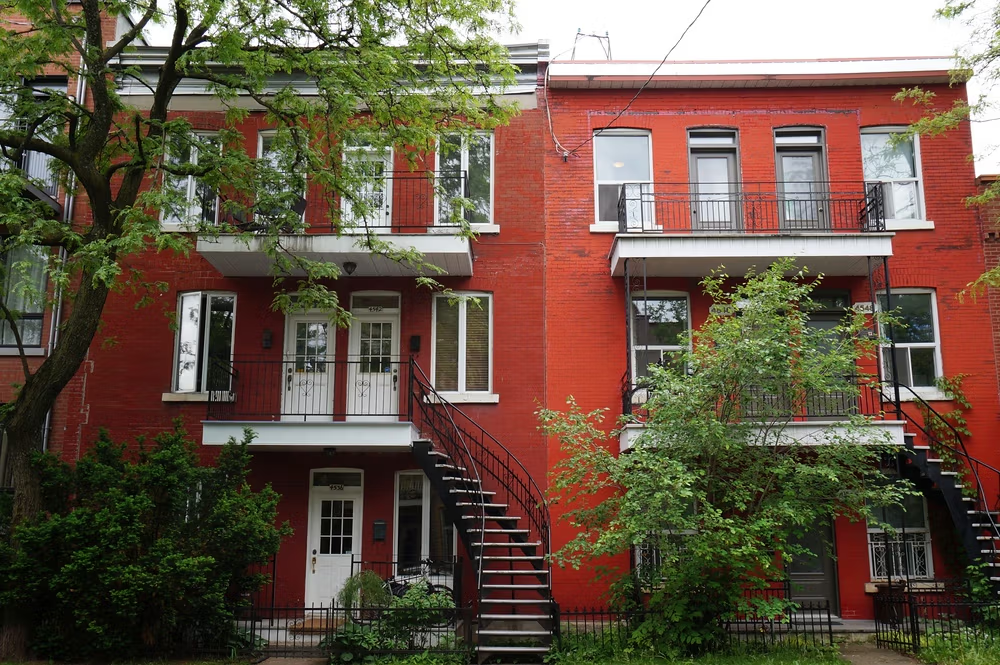
3) Explore Le Plateau-Mont-Royal
We stayed in Le Plateau-Mont-Royal and could hardly have chosen a better base for our week.
The Plateau gave us colourful residential streets, exterior staircases curling up the fronts of old triplexes, independent cafés, neighbourhood parks, restaurants, bars and enough everyday street life that we never felt marooned inside a polished tourist district.
We were also greeted by friendly cats during our morning walks. I have no idea whether this is a recognized municipal tourism initiative, but it improved the neighbourhood’s score considerably.
Formerly associated with working-class and immigrant communities, the Plateau later became one of Montreal’s best-known creative districts. Mile End sits farther northwest and has its own personality, but visitors often combine the two for bagels, cafés, record shops, boutiques, murals and long walks with no particular objective.
In summer, sections of Avenue du Mont-Royal and other commercial streets may become pedestrian-only. Terraces spill outward. Events appear. The street itself becomes part of the day rather than a strip of pavement you cross while staring at a map.
The Plateau worked for us because we wanted a neighbourhood rather than an attraction delivery system. Old Montreal would have shortened a few sightseeing walks, but the Plateau made the week feel more like living in Montreal.
Compare hotels and registered accommodation in Plateau-Mont-Royal
A guided food or neighbourhood tour is especially useful here because many of the good stops do not announce themselves with giant neon “AUTHENTIC MONTREAL EXPERIENCE” signs.
Browse Mile End and Montreal food tours with tastings
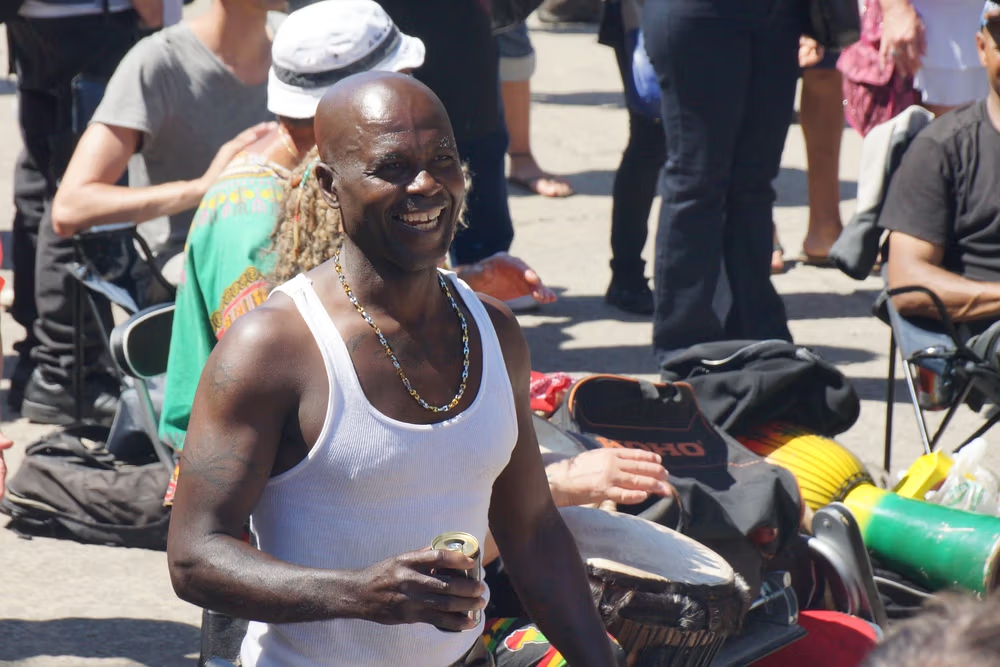
4) Spend Sunday at the Mount Royal Tam-Tams
There is almost always something happening in Montreal, but summer is when the city appears to lose interest in staying indoors.
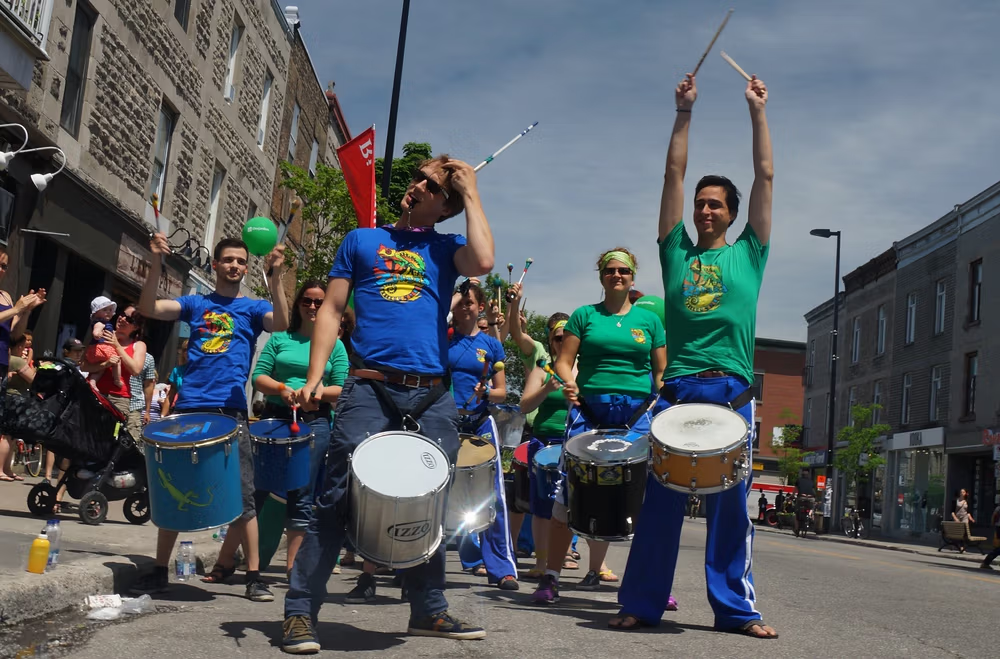
On Sunday afternoons, drummers, dancers, picnickers, vendors and curious visitors gather around the George-Étienne Cartier Monument at the eastern foot of Mount Royal. Les Tam-Tams is not a conventional staged performance with assigned seating, corporate branding and somebody reminding you to pass through the gift shop.
It is informal. Communal. A little unruly. Gloriously loose around the edges.
We found the atmosphere infectious. Some people were deeply involved in the drumming circle. Others danced, lounged on the grass, played games or watched from the fringes. You can stay for twenty minutes or lose an entire afternoon without realizing it.
The gathering is seasonal and associated with fair-weather Sundays, but closures or conflicting events can occasionally affect the schedule. Check your particular Sunday rather than treating the Tam-Tams as an immutable law of nature.
I still cannot think of many better ways to spend a summer Sunday in Montreal.
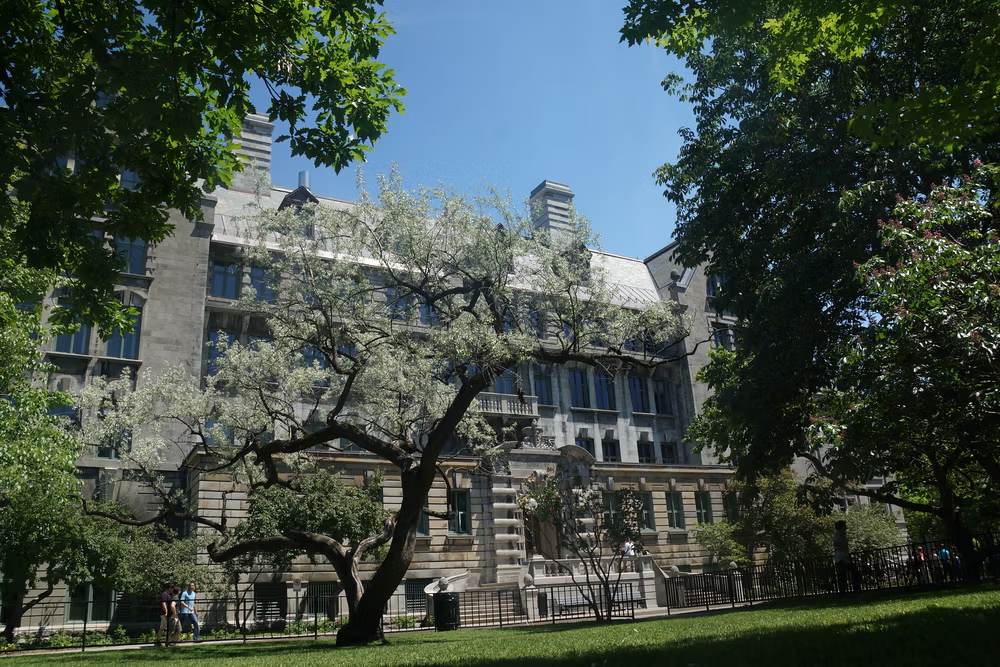
5) Wander Through McGill University
McGill University is one of Canada’s oldest and most internationally recognized universities. On a sunny day, the downtown campus is worth walking through for its mix of historic buildings, lawns, student life and Mount Royal rising immediately behind it.
We wandered around, soaked up the atmosphere, tossed a Frisbee and considered several other wholesome university-lawn activities. I participated in all of them aside from tanning. Some things are best left to people with a less adversarial relationship with direct sunlight.
McGill offers organized tours, but many are designed for prospective students rather than casual visitors. For ordinary sightseeing, a self-guided walk is more appropriate. The campus sits close to the Museum of Fine Arts, downtown shopping and several approaches toward Mount Royal, making it an easy addition rather than an attraction that needs half a day.
Realistic time: 30–60 minutes unless you are visiting a museum, attending an event or seriously considering applying.
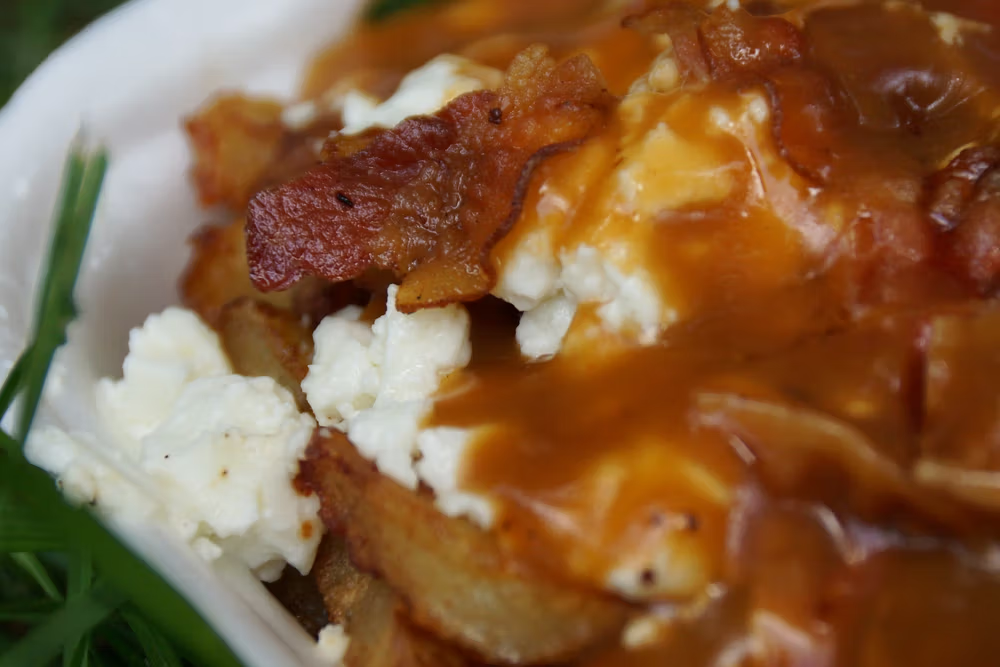
6) Eat Poutine—Preferably More Than Once
There is one dish virtually every first-time visitor feels obligated to try in Montreal, and that is poutine.
The classic version combines french fries, cheese curds and hot gravy. Nutritionally, it is difficult to defend. Visually, it can look like somebody dropped a perfectly respectable plate of fries down a muddy staircase.
Then you eat it.
For one of our poutine videos, we picked up two versions from La Banquise and carried them to a nearby park. One was the classic. The other arrived loaded with bacon and goat cheese.
The traditional poutine delivered the expected tangle of salty fries, gravy and squeaky curds. The cheese stretched across my mouth with all the dignity of industrial adhesive. The goat-cheese version was softer, warmer and considerably richer, with salty bacon ensuring that not a single calorie entered the meal unnoticed.
My favourite was the goat cheese and bacon. It was also the kind of meal that made walking for several hours afterward feel like a contractual obligation.
La Banquise remains open around the clock and offers a massive range of poutines, but it can be busy. It is a famous introduction rather than the sole authority on the dish. Smaller cantines and casse-croûtes across Quebec serve versions that may be less theatrical and every bit as satisfying.
During our week in Montreal, we ate poutine almost daily. We knew this was excessive. We continued anyway.
Travellers who want to sample poutine alongside bagels, smoked meat and less famous neighbourhood foods may find a guided food tour useful—particularly when time is short and stomach capacity is sadly finite.
Compare Montreal food tours and Mile End tasting walks
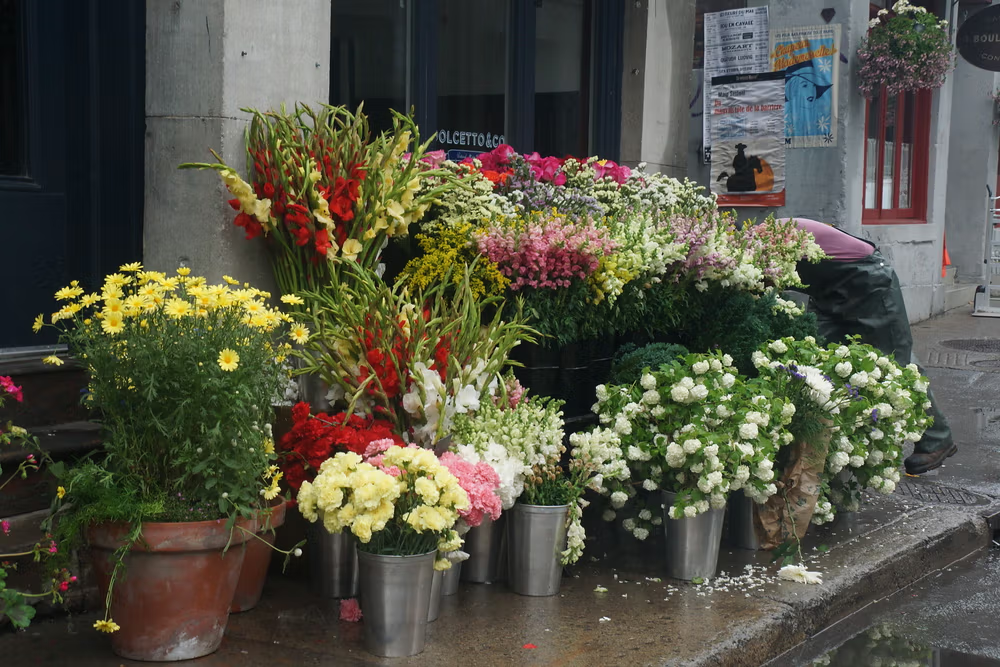
7) Walk the Streets of Old Montreal
For a taste of Old World French atmosphere, wander through the cobbled streets of Vieux-Montréal. The district dates back to the city’s earliest colonial period and contains some of Montreal’s most photographed stone buildings, public squares and religious architecture.
Old Montreal is touristy. That does not make it worthless. It simply means you should admire the architecture without assuming the restaurant closest to the largest crowd must serve the finest meal in Quebec.
There are excellent restaurants here. There are also places charging for the privilege of eating beside picturesque masonry. Window shopping, photography and walking remain free, which is one reason we enjoyed the district without feeling compelled to convert every attractive doorway into a financial transaction.
Begin around Place d’Armes and Notre-Dame Basilica, continue toward Rue Saint-Paul and Place Jacques-Cartier, then work your way toward Bonsecours Market and the waterfront. Early morning is quieter. Evening brings illuminated buildings, more atmosphere and a great many other people who have reached the same conclusion.
Cobblestones can be difficult with wheelchairs, mobility devices, rolling luggage and some strollers. Old Montreal is compact, but its historical surfaces are not always forgiving.
A guided walk earns its keep here because the district contains layers of history that are easy to reduce to “old building, another old building, church, expensive croissant.”
Reserve a small-group guided walking tour of Old Montreal
Browse additional Old Montreal walking, food and history tours
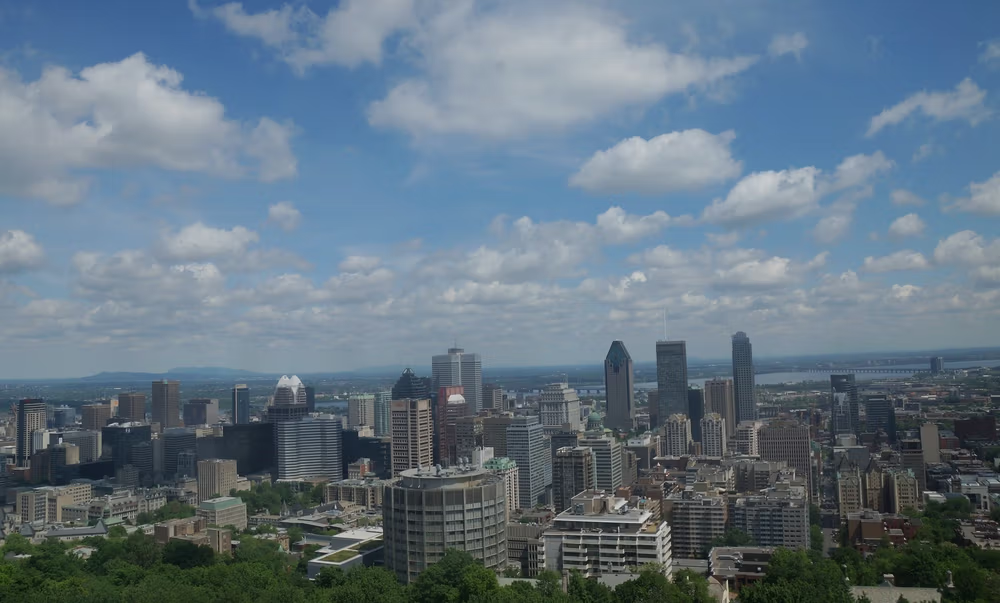
8) See Montreal From Kondiaronk Lookout
One of the rewards for walking through Mount Royal Park is reaching Kondiaronk Belvedere, the broad terrace in front of Chalet du Mont-Royal.
On a clear day, the view stretches over downtown Montreal toward the St. Lawrence River and beyond. It gives you the skyline without requiring an expensive elevator ride to a private observation deck.
Instead, you pay in sweat and questionable breathing noises.
The lookout is open from early morning until late at night, though park conditions and routes can change. Sunrise and early morning bring fewer people. Late afternoon and evening offer softer light, a more dramatic skyline and noticeably less personal space.
The terrace itself is broad, but reaching it requires planning for visitors with limited mobility. A more gradual route approaches from the Smith House area, while the downtown stair approaches are significantly more strenuous.
If time is tight, combine Mount Royal Park, the lookout, McGill and the Plateau in one long day rather than treating them as four unrelated expeditions.
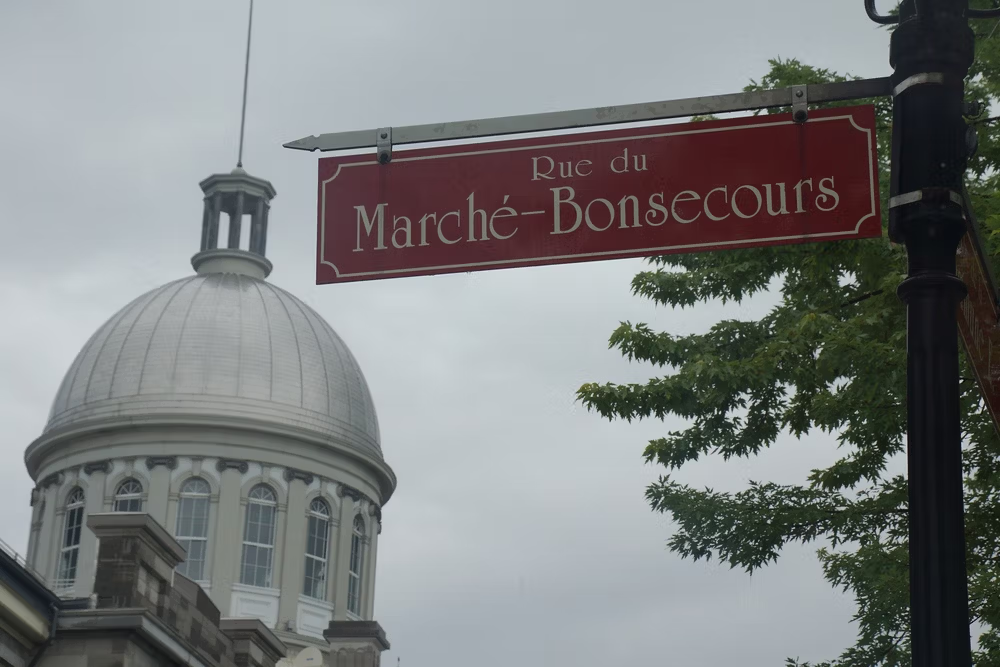
9) Step Inside Bonsecours Market
The domed Marché Bonsecours is one of the most recognizable buildings in Old Montreal. Completed in the 19th century, it has served several civic and commercial roles, including periods as a public market and municipal building.
Today, it is not the kind of sprawling produce market where you should arrive with an empty basket and a detailed cheese strategy. Its boutiques focus more on Quebec-made crafts, jewellery, fashion, design and gifts.
That makes Bonsecours a worthwhile short stop rather than an attraction requiring half a day. Admire the Palladian Revival building, browse when you are interested in locally made items and continue along Rue Saint-Paul or toward the Old Port.
For a proper food-market experience, Jean-Talon and Atwater serve a very different purpose. Do not arrive at Bonsecours expecting pyramids of tomatoes and a fishmonger yelling at you.
10) See Habitat 67 From Afar—or Tour It Properly
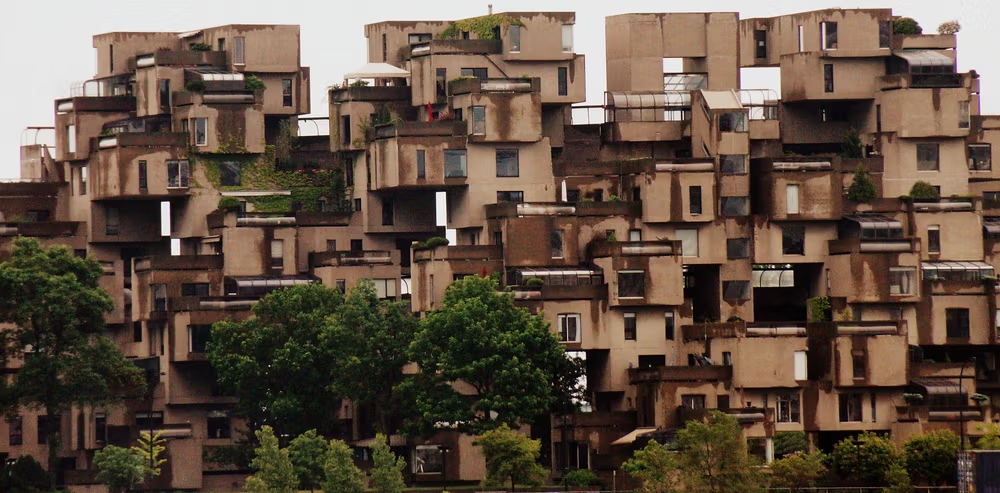
Habitat 67 is one of Montreal’s most distinctive architectural landmarks. Moshe Safdie developed the project from ideas explored in his university thesis, and the complex was completed for Expo 67.
Its prefabricated concrete modules stack, overlap and project outward in a form that looks part housing development, part sculpture and part giant experiment involving children’s building blocks.
Admirers consider it an architectural masterpiece. Critics have placed it on lists of ugly buildings. At least nobody walks past and feels nothing.
We photographed and admired Habitat 67 as part of Montreal’s waterfront skyline. We did not take the modern official tour.
Visitors can now book a roughly 90-minute guided tour that enters the complex, crosses exterior walkways and includes access to a restored residential unit. Tickets are sold in advance rather than casually at the door. The route involves numerous stairs, operates in changing weather and is not suitable for visitors with limited mobility. There is also no visitor parking directly on the property.
Check availability and restrictions through the official Habitat 67 guided-tour page. This is one attraction where advance planning genuinely matters.
11) Plan Your Visit Around a Montreal Summer Festival
Montreal does not merely hold festivals. In summer, it appears to use them as a municipal operating system.
During our visit, street events seemed to appear while we were simply walking toward the Metro. That unpredictability was part of the fun. Major festivals, however, affect accommodation prices, road access, restaurant demand and the number of people attempting to occupy the same square metre of pavement.
The exact dates change every year. These are the main summer events worth watching when choosing your trip:
| Festival | Typical period | Why it may shape your trip |
|---|---|---|
| MURAL Festival | Early to mid-June | Murals, street art, live painting and Boulevard Saint-Laurent activity |
| Francos de Montréal | Mid-June | Francophone music and substantial outdoor programming |
| Montreal International Jazz Festival | Late June to early July | Large downtown footprint with paid and free performances |
| Montréal Complètement Cirque | Early July | Circus performances across indoor and outdoor venues |
| Just for Laughs Montréal | Mid to late July | Major comedy programming and busy central venues |
| Fierté Montréal | Late July to early August | Pride events, community programming and parade activity |
| Osheaga | Late July or early August | Destination music festival with a major effect on visitor demand |
Do not copy those periods into a fixed itinerary and assume they will remain unchanged forever. Use the official Tourisme Montréal events calendar for the year you are travelling.
A festival can be the best reason to visit. It can also be the reason your preferred hotel suddenly costs twice as much and has one remaining room beside the ice machine.
Check Montreal hotel availability before locking in festival dates
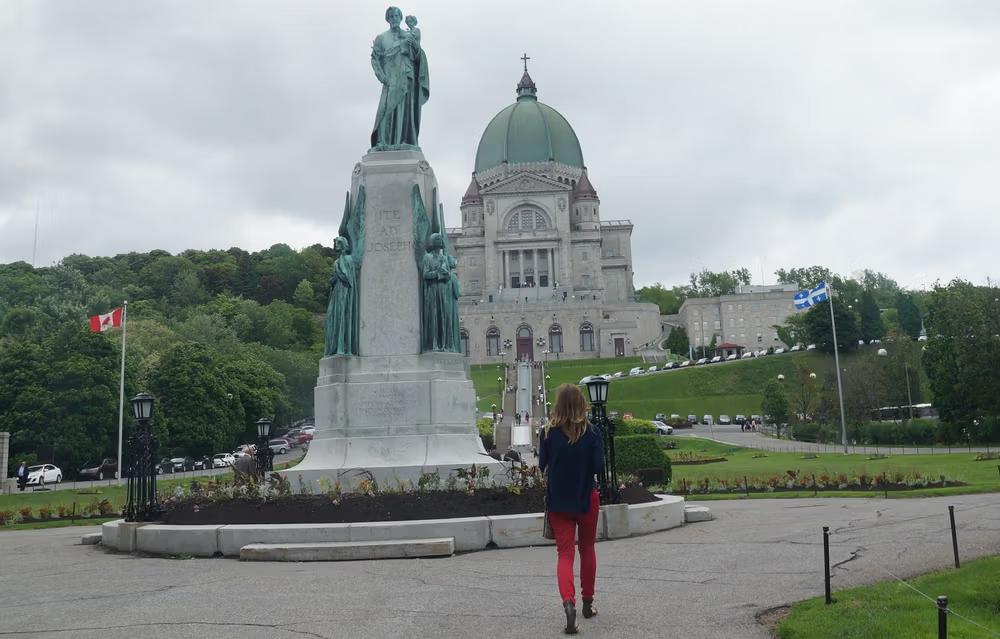
12) Visit Saint Joseph’s Oratory
Saint Joseph’s Oratory sits on the northwestern slope of Mount Royal and is one of Montreal’s most imposing religious landmarks. Its dome rises above the surrounding neighbourhoods and is worth photographing from a distance before moving closer.
The shrine is extensive. Beyond the main basilica, visitors encounter the votive chapel, crypt church, terraces, gardens, devotional spaces and exhibits connected to Saint André Bessette and the Oratory’s history.
The monumental staircase creates the most dramatic approach, but climbing every step is not mandatory. Elevators, escalators and accessible routes connect major sections of the complex. Older travel guides often frame the visit as though everyone must conquer hundreds of steps before being judged spiritually and physically worthy of entry. Thankfully, this is not the case.
General access to the shrine is free, while certain tours, exhibits or activities may charge admission. Construction and development around the dome and museum have changed parts of the visitor experience, so current entrances and accessible routes should be confirmed through the official Saint Joseph’s Oratory website.
Allow at least 90 minutes. Visitors with a serious interest in religious history or architecture can easily spend longer.
13) Move Through Five Ecosystems at the Montreal Biodôme
The Biodôme is one of Montreal’s most popular family attractions and an especially useful option when summer weather turns oppressively hot, wet or both.
The building was originally associated with the 1976 Olympic Games before being transformed into a museum of living environments. Following a major redesign, the Biodôme now presents five ecosystems rather than the four described in older versions of this article:
- Tropical Rainforest of the Americas
- Laurentian Maple Forest
- Gulf of St. Lawrence
- Labrador Coast
- Sub-Antarctic Islands
The route moves through changing temperatures, vegetation and animal habitats. Children are the obvious audience, but adults interested in ecology, wildlife or environmental design should not dismiss it as a glorified indoor zoo.
Book ahead during weekends, school holidays and poor-weather days. The Biodôme combines naturally with the Botanical Garden and Olympic Stadium area, though attempting all three in a rushed morning is optimistic bordering on delusional.
Current admission and opening arrangements are published through Espace pour la vie.
Visitors who prefer a broader city overview rather than navigating each attraction independently can also compare guided Montreal sightseeing options:
Browse half-day and full-day Montreal sightseeing tours
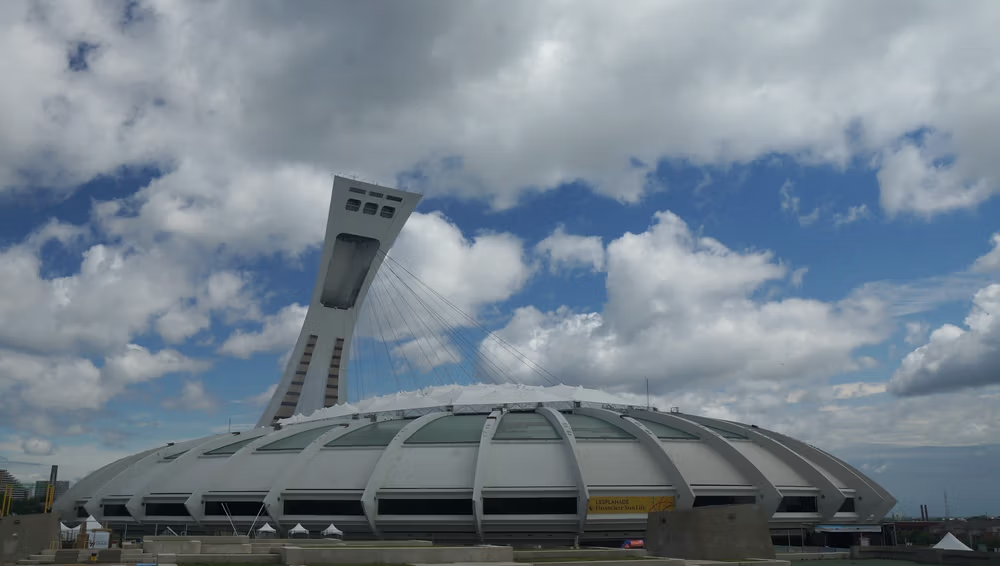
14) Revisit Montreal’s Olympic Stadium and Expos History
Olympic Stadium carries a more personal meaning for me than most concrete megastructures.
As a baseball-obsessed teenager in the 1990s, I was fortunate enough to watch the Montreal Expos play here before the franchise relocated to Washington and became the Nationals. I still associate the building with that lost era of Canadian baseball, when Larry Walker and other Expos players helped make a cavernous Olympic venue feel like sacred ground.
Built for the 1976 Summer Olympics, the stadium became known as “The Big O”—partly because of its shape and partly through less flattering jokes about its extraordinary cost. The architecture remains one of Montreal’s most recognizable experiments in scale, ambition and civic stubbornness.
The current visitor experience differs substantially from the one described in older guides. Montréal Tower and its observation areas are closed during major renovation work, with reopening targeted for spring 2027 subject to the construction schedule.
Olympic Park may still offer scheduled stadium tours, exhibitions and anniversary programming, but visitors should not arrive expecting to ride directly to the top of the Tower. Check the official Olympic Park website before building your day around it.
For baseball fans, the emotional draw is partly what is no longer here. That absence is part of the story.
15) Slow Down at the Montreal Botanical Garden
We did not see the Montreal Botanical Garden at its absolute best. Landscaping work affected parts of the grounds during our visit, so we were unable to explore everything we had hoped to see.
Even with that limitation, the scale became obvious. The garden includes major themed spaces such as the Chinese Garden, Japanese Garden, First Nations Garden and Alpine Garden, along with greenhouses and extensive plant collections.
This is not an attraction to race through between the Biodôme and lunch. The pleasure comes from slowing down, noticing seasonal changes and accepting that gardens do not perform on command merely because you bought a plane ticket.
| Choose the Biodôme when… | Choose the Botanical Garden when… |
|---|---|
| You are travelling with children excited by animals | You prefer plants, landscape design and slower outdoor walking |
| The weather is poor | The weather is comfortable and the gardens are in season |
| You want a structured indoor route | You want space to wander without a fixed sequence |
| You have roughly two hours | You can give the visit half a day |
Seasonal access, greenhouse hours and ticket combinations can change. Confirm them through the official Botanical Garden page.
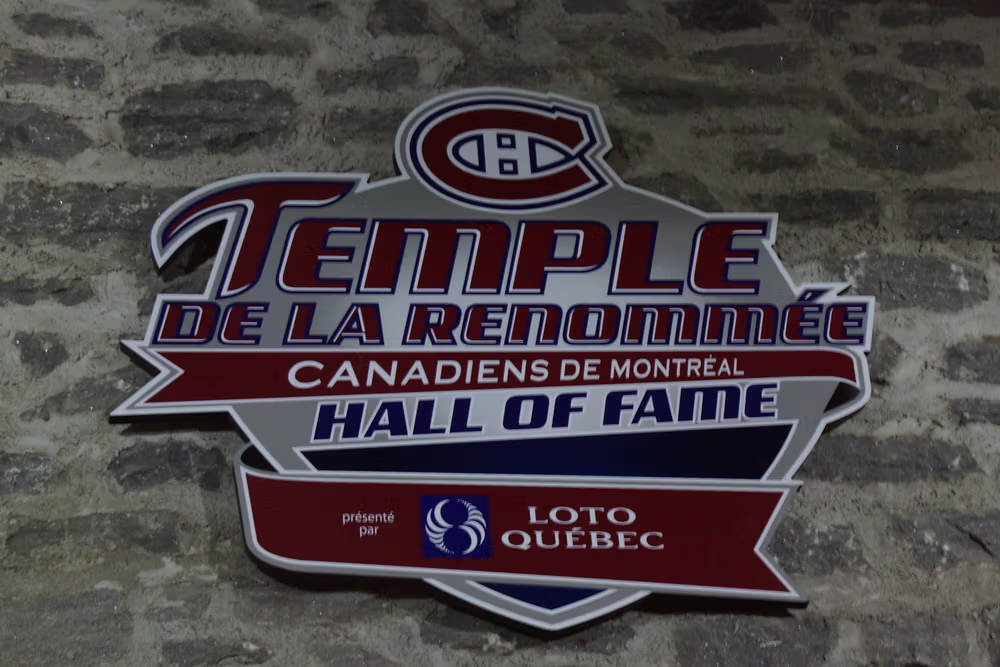
16) Experience Montreal Canadiens Culture at the Bell Centre
Hockey occupies a position in Montreal somewhere between professional sport, civic mythology and an inherited family argument nobody is prepared to abandon.
The Bell Centre is home to the Montreal Canadiens, the NHL’s oldest continuously operating franchise and the winner of more Stanley Cups than any other team. The club has accumulated enough names and nicknames to fill a line change: Canadiens, Habs, Les Habitants, Le CH, Bleu-Blanc-Rouge and La Sainte-Flanelle among them.
At the time of our visit, my Chicago Blackhawks had enjoyed a recent run of success, giving me temporary bragging rights in a city where that kind of confidence should be exercised carefully and from a safe distance.
A regular-season Canadiens game does not fit naturally into a summer guide because the NHL season begins in autumn. Summer visitors can still see the arena, check the concert calendar or reserve a scheduled guided tour when available. Tours provide the more realistic route into Canadiens history when no hockey game is being played.
If attending a game during hockey season, buy tickets well ahead and expect prices to reflect the fact that hockey in Montreal is not a casual little pastime.
Downtown also makes a practical base for Bell Centre events, McGill, the Museum of Fine Arts and fast Metro connections:
Compare hotels in Downtown Montreal near major venues and Metro stations
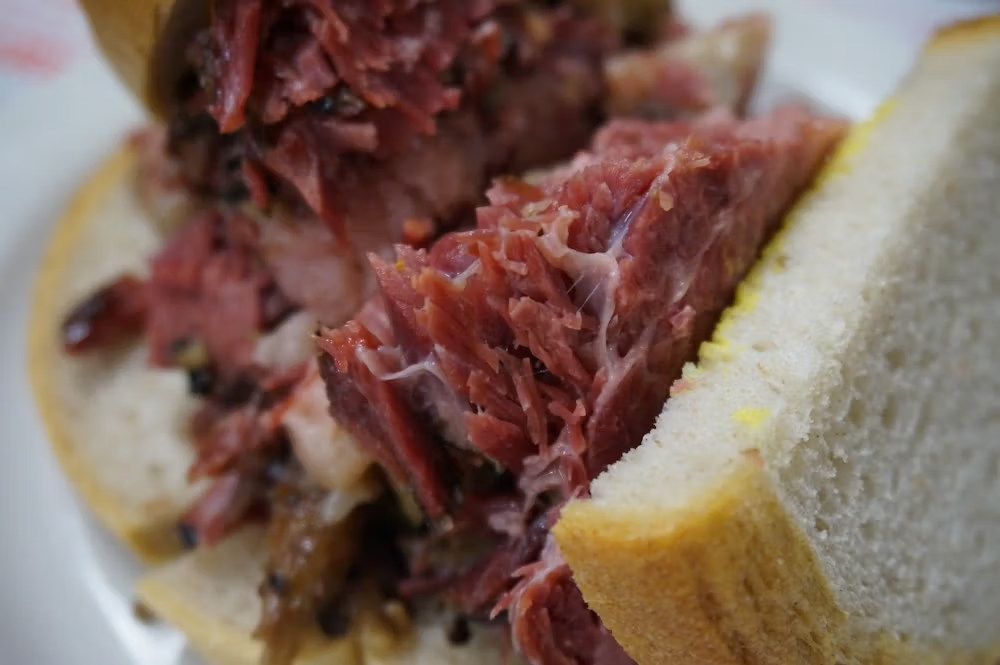
17) Order Montreal Smoked Meat at Schwartz’s
Unless you are vegetarian or vegan, smoked meat belongs near the top of a Montreal food itinerary.
Montreal smoked meat begins with beef brisket cured and seasoned before being smoked and steamed. Schwartz’s says its briskets undergo a lengthy marinating process, are smoked overnight and then steamed throughout the day. The result sits somewhere in the same broad deli universe as pastrami while retaining its own seasoning, preparation and Montreal identity.
At Schwartz’s, the sandwich arrived piled high on rye bread with mustard. It immediately began falling apart.
I needed a napkin roughly the size of a bath towel, which is generally a positive sign when assessing deli food.
The meat was juicy, tender and deeply smoky. The rye and mustard kept the richness from becoming completely overwhelming. It was one of the best sandwiches I had eaten in a long time.
You normally choose the general fattiness of the cut:
| Cut | What to expect |
|---|---|
| Lean | Less fat, but easier to find dry |
| Medium | A balance of fat, tenderness and flavour; our preferred choice |
| Fat | Richer, softer and considerably messier |
| Old-fashioned | Often treated as a cut between medium and fat |
Schwartz’s is an institution and the line forms for a reason. It is not the only place serving excellent smoked meat in Montreal, so do not assume culinary failure when your itinerary takes you elsewhere. But for a first visit, the history, counter seating and glorious sandwich disintegration are difficult to ignore.
Payment practices and operating hours can change, so check the official Schwartz’s website rather than relying on an old claim that may no longer be true.
Find guided Montreal food tours featuring local specialities and neighbourhood stops
18) Enter Notre-Dame Basilica
Notre-Dame Basilica is the visual anchor of Place d’Armes and one of the most recognizable landmarks in Old Montreal.
The comparatively restrained stone exterior does not fully prepare you for the interior: deep blue ceilings, gold ornamentation, carved wood, stained glass and an altar designed to pull every eye in the building toward it.
The basilica’s stained-glass windows are especially interesting because they depict scenes connected to Montreal’s religious history rather than following only familiar biblical narratives.
Modern visitors need to distinguish between two experiences:
- Daytime sightseeing: a visit focused on the architecture, art and religious interior.
- AURA: a ticketed evening light, sound and projection experience inside the basilica.
We visited for the basilica itself rather than the current AURA production. Visitors interested in AURA should reserve a specific performance, while daytime visitors should check sightseeing hours around religious services and private events.
The old five-dollar admission mentioned in the original article no longer applies. Current hours, rates and AURA tickets are available through the official Notre-Dame Basilica website.
For travellers who want the basilica explained in the context of the surrounding neighbourhood rather than floating in isolation:
Compare Old Montreal guided tours that include the historic district and basilica area
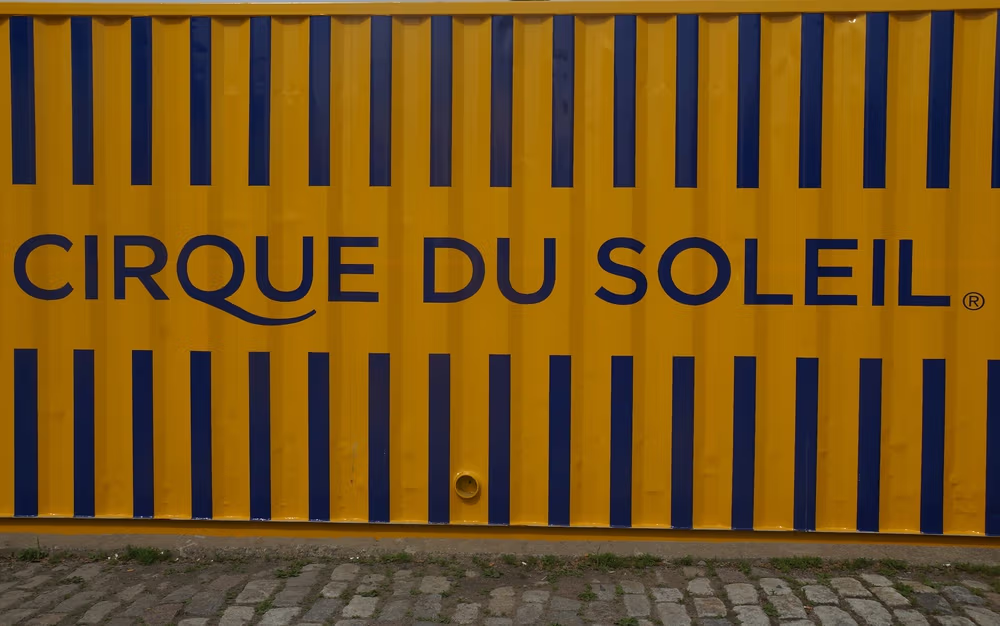
19) Watch Cirque du Soleil in Its Home City
Cirque du Soleil performs around the world, but watching one of its productions in Montreal—the city where the company began—felt different.
We watched KURIOS, and it remains one of the most spectacular live performances I have seen. The coordination, athleticism, music, costumes and stagecraft managed to make a giant travelling production feel precise down to the second.
The tickets were not cheap.
They were also one of the rare expensive purchases that did not leave me conducting a private financial inquest afterward.
The evening carried an additional personal connection. Earlier in Battambang, Cambodia, we had watched a talented Khmer teenager perform at a school serving underprivileged students. We later understood that he had been accepted into a scholarship programme connected with Cirque du Soleil. Seeing the Montreal production brought that memory back.
The show staged in Montreal changes. Future visitors should check the current Big Top production rather than assuming KURIOS or any other show is permanently installed.
Reserve early for popular summer dates and festival weekends. Photography and video recording during performances are normally restricted.
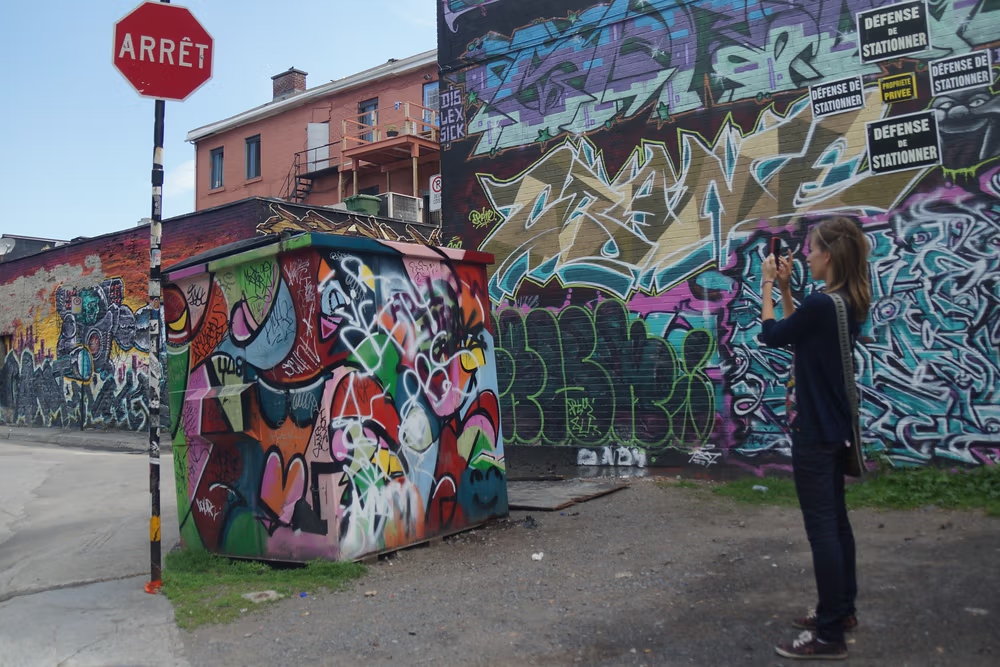
20) Follow Montreal’s Murals and Street Art
If you enjoy murals, graffiti and public art, Montreal rewards wandering without a rigid route.
Audrey and I found colourful work around Sainte-Catherine East and throughout the Plateau. Boulevard Saint-Laurent and parts of Mile End offer an especially useful concentration, with enormous commissioned murals sitting beside smaller pieces, painted doors, alley work and surfaces that may change between visits.
The annual MURAL Festival transforms Boulevard Saint-Laurent through live painting, music, events and new commissioned work. Even outside the festival dates, many previous murals remain visible.
A self-guided walk suits independent travellers because the artwork is spread through functioning neighbourhoods rather than confined to a museum. The disadvantage is that you may admire a mural for twenty minutes and remain completely ignorant about who painted it, why it exists and what you are looking at.
Guided mural tours solve that problem.
Browse Montreal street-art, mural and creative-neighbourhood tours
Photograph the art, but remember that the surrounding alleys, doorways and buildings still belong to residents and businesses. Public art is public. Every nearby window is not.
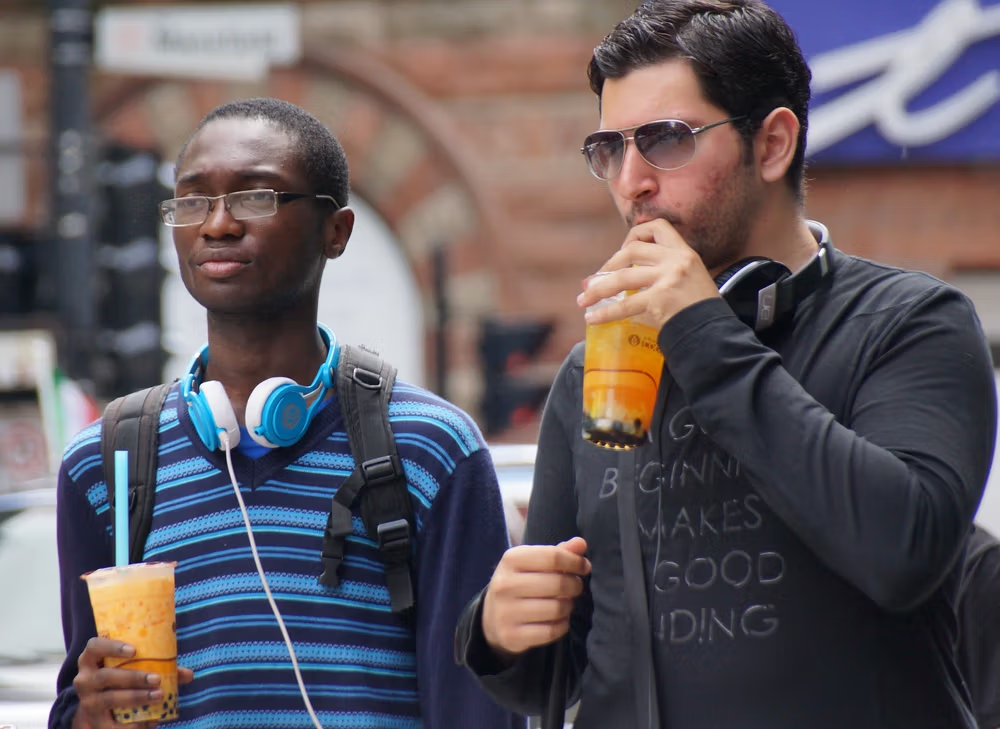
21) Shop—or Simply People-Watch—Along Sainte-Catherine Street
Sainte-Catherine Street is one of Montreal’s principal commercial arteries, running through downtown, the entertainment district and the Village.
Audrey was naturally delighted to tell me that we had reached an excellent shopping street because she knew how passionately I enjoy following somebody through retail stores while carrying an increasingly complex collection of bags.
Shopping aside, Sainte-Catherine is valuable for people-watching and understanding how different pieces of central Montreal connect. Downtown, it links major stores, malls, theatres, universities and Place des Arts. Farther east, summer pedestrianization changes the street’s character around the Village.
Festival closures, construction and pedestrian zones can alter traffic and public-transit access. That variability is a feature of summer Montreal, not necessarily evidence that your map has betrayed you.
For visitors indifferent to shopping, use Sainte-Catherine as a connective route rather than an attraction requiring a dedicated afternoon.
22) Use Montreal’s Underground City as Infrastructure
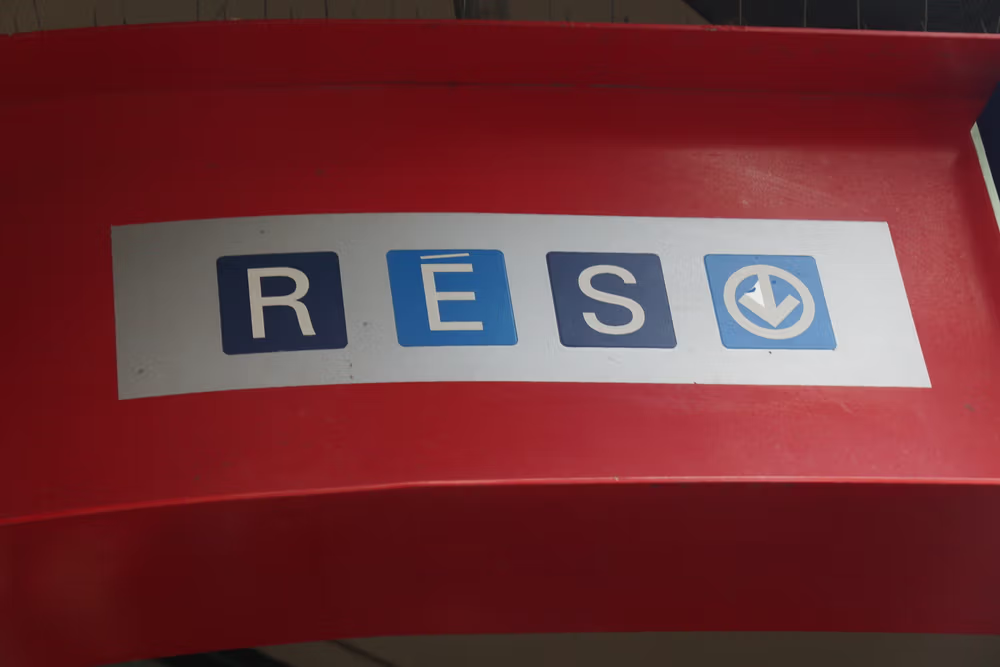
Montreal’s Underground City, commonly associated with the name RÉSO, is often marketed as an attraction in its own right. That description creates unrealistic expectations.
It is better understood as a network connecting Metro stations, office towers, hotels, shopping centres, restaurants, universities and entertainment venues beneath parts of downtown.
Some passages are attractive.
Others feel like corridors because they are corridors.
The system becomes most valuable during winter cold, heavy rain or extreme summer heat. It allows people to move across parts of downtown without repeatedly returning to street level, but navigation can be confusing because the network does not behave like one uninterrupted subterranean boulevard.
Follow the RÉSO signs, identify the major building or Metro station you are trying to reach and accept that you may accidentally emerge inside a shopping centre you never intended to visit.
A guided walk makes considerably more sense here than it might sound on paper. It turns a maze of concourses into a lesson in how Montreal’s downtown actually works.
Reserve a guided walking tour of Montreal’s RÉSO Underground City
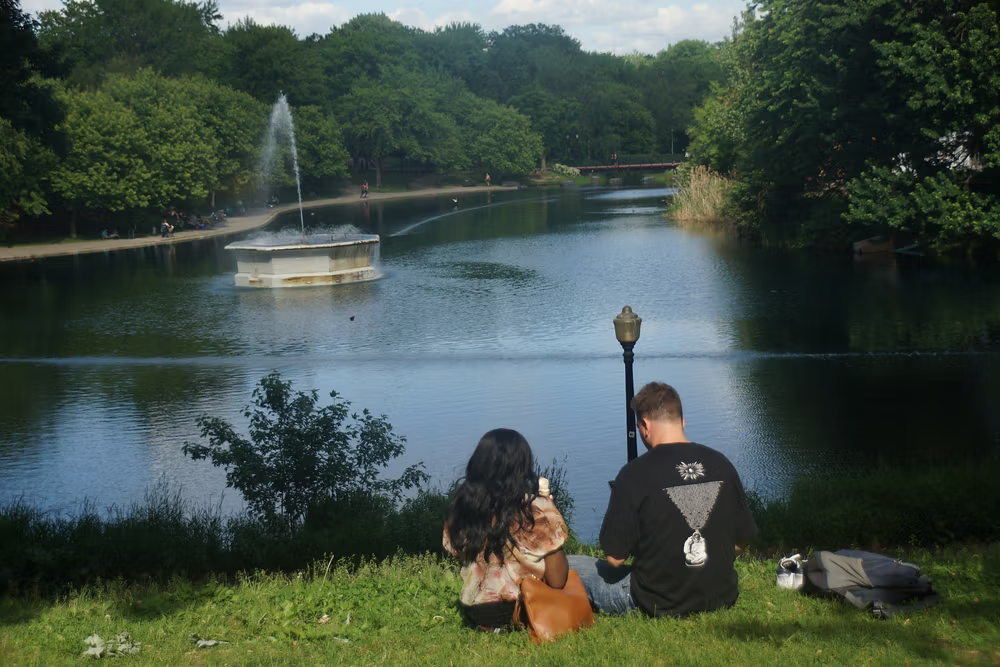
23) Have a Picnic at La Fontaine Park
Parc La Fontaine sits in the Plateau and was the closest major park to our apartment, so we returned repeatedly.
Friends gathered to play sports, picnic beside the water, walk, read and occupy the grass with the confidence of people who had no intention of returning indoors before sunset.
We used it for people-watching and, on at least one occasion, eating poutine in surroundings that made the meal appear marginally healthier.
This was one of the places where Montreal stopped feeling like a sightseeing project. We were not checking off a monument or reading a plaque. We were simply using the neighbourhood park near where we were staying.
The park contains paths, playgrounds, sports areas, performance spaces and seasonal facilities, but maintenance or construction can affect individual sections. Check the city’s current Parc La Fontaine information when a specific facility matters to your visit.
Bring food, find some shade and resist the impulse to optimize every minute. Not everything needs a reservation slot.
24) Walk Through Montreal’s Village
Montreal’s Village stretches along and around Sainte-Catherine East and has long been one of the city’s major LGBTQ+ districts.
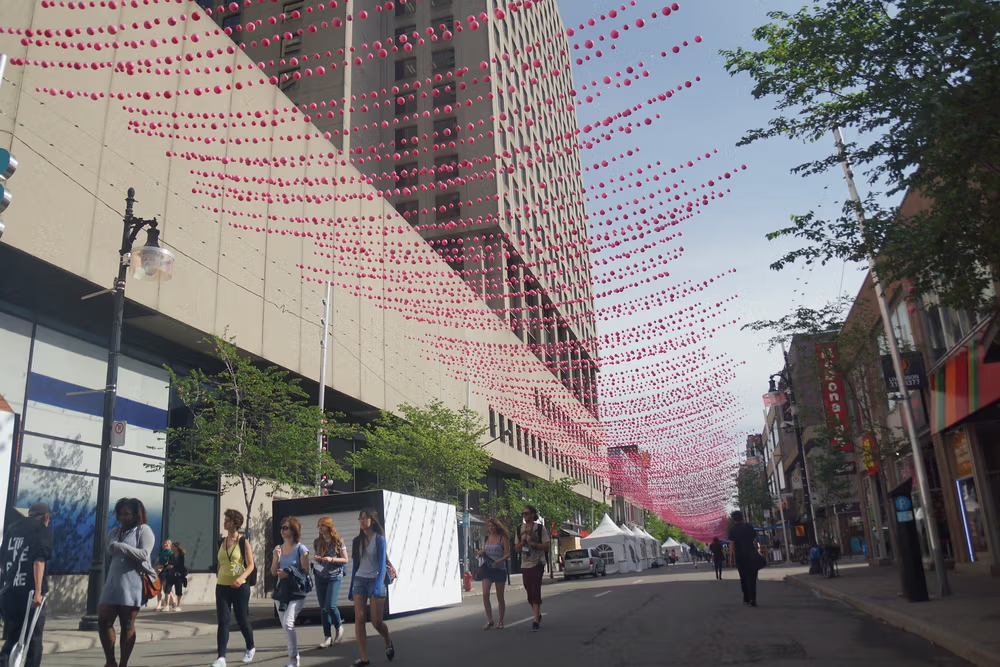
During our visit, the summer pedestrian street was covered by an enormous installation of suspended pink balls. That visual became closely associated with the neighbourhood for years, but it belongs to a particular period in the Village’s history rather than the current streetscape.
Today, the pedestrian corridor is shaped by terraces, public seating, planted areas, art, nightlife and continuing redevelopment. The city is also working through more permanent changes to Sainte-Catherine East, so readers should not expect an old photograph to function as a current architectural blueprint.
The Village becomes liveliest later in the day and evening. It is a natural base for travellers prioritizing LGBTQ+ nightlife, bars, drag performances and Pride events, but some blocks may be noisy for visitors expecting silence and herbal tea by 9:30.
Walk through as a respectful visitor rather than treating a living community as an entertainment installation.
25) Eat a Wood-Fired Bagel at St-Viateur
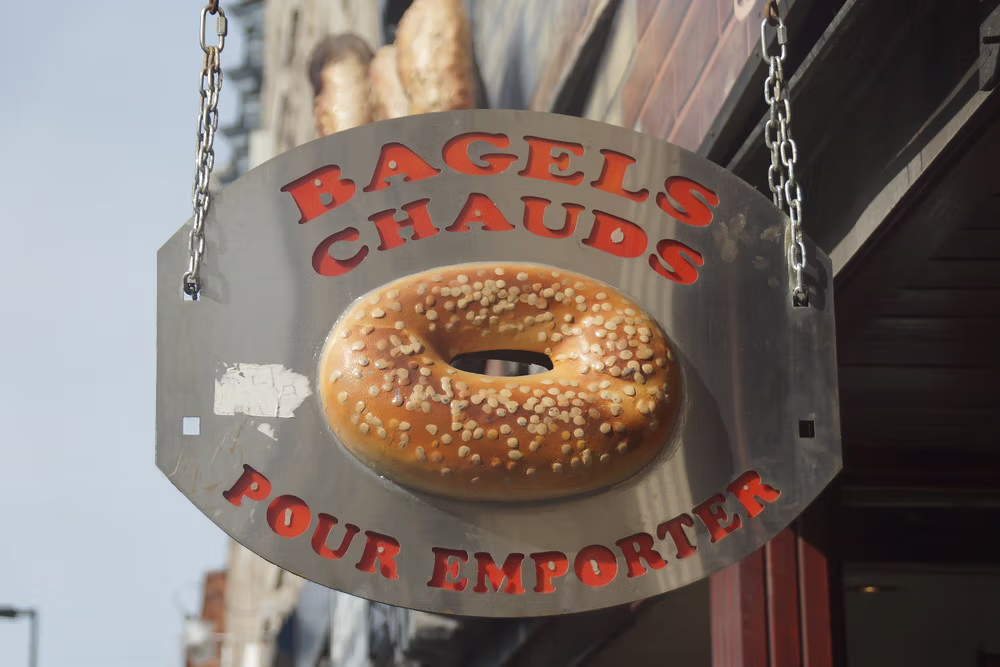
Montreal-style bagels are hand-rolled, boiled in honeyed water and baked in wood-fired ovens. They are generally smaller, thinner, sweeter and denser than the large, doughy bagels commonly associated with New York.
At St-Viateur, the process is visible rather than hidden behind industrial doors. Bagels move from hand shaping to boiling and into the enormous oven before emerging with blistered, crisp exteriors.
Audrey chose a cinnamon-raisin bagel with apple-cinnamon cream cheese. The spread contained little pieces of apple, and her reaction suggested that we had entered what she described as her happy place.
It was less a restrained breakfast than a compact dessert wearing a bagel costume.
My recommendation is to eat at least one bagel while it is still warm. Sesame and poppy seed are the traditional starting points, but there is no legal requirement to resist cinnamon and cream cheese.
The original flagship at 263 St-Viateur West is a working takeout bakery rather than a spacious sit-down café. It currently operates daily from early morning until midnight—not 24 hours. St-Viateur’s Mont-Royal location offers a café for visitors who want seating and a more elaborate meal.
Fairmount Bagel is the historic rival. We did not conduct a formal side-by-side comparison, so I will leave the great Montreal bagel war to people willing to accept the diplomatic consequences.
A Mile End food tour is a natural option for travellers who want bagels with context and enough additional tastings to turn lunch into a multi-hour campaign.
Compare Mile End food tours featuring bagels and local neighbourhood favourites
26) Explore Montreal by Bicycle
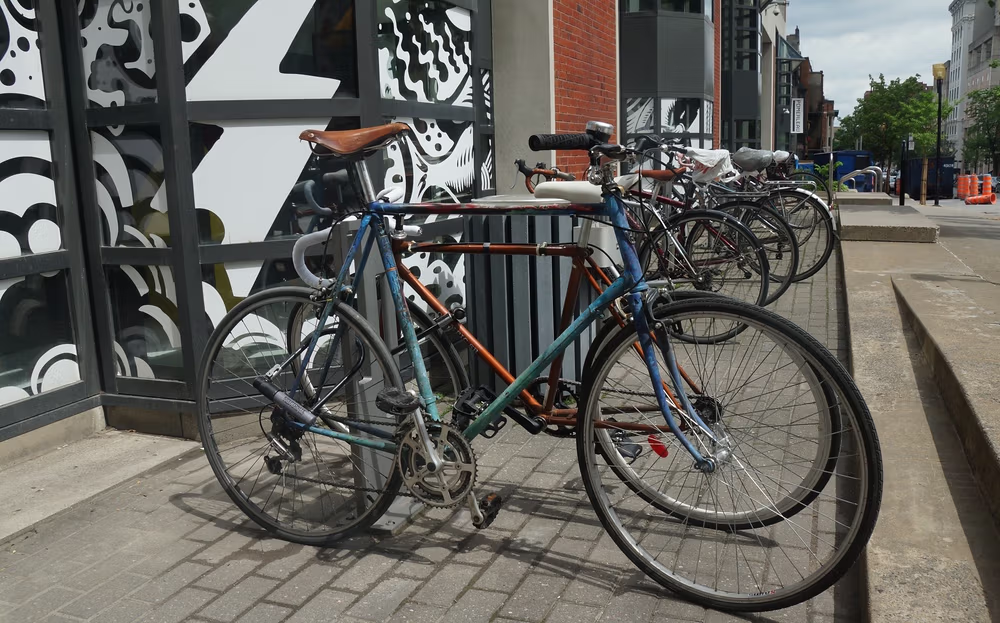
Montreal is one of the easier large North American cities to explore by bicycle, especially along protected routes, park paths and the Lachine Canal.
BIXI, the city’s bike-share system, works best for short point-to-point rides rather than keeping one bicycle beside you for an entire day. Use the live BIXI app to locate stations, check available bicycles and confirm that your destination has an open docking point.
Do not rely on old articles quoting a fixed number of bicycles or stations. The network changes, and the live map is more useful than a historical fleet total that will be wrong before the paragraph finishes aging.
Standard and electric BIXI bicycles may involve different charges. Quebec law requires a helmet when riding an electric bicycle. Helmets are recommended for conventional bicycles as well, even when other cyclists appear determined to test the protective qualities of their hairstyles.
Visitors uncomfortable with urban traffic should begin on the Lachine Canal or another separated path. Confident riders can use the wider network to connect the Old Port, downtown, Plateau, Mile End and riverside districts.
For a continuous half-day ride, a conventional bike rental or organized tour may be simpler than repeatedly managing BIXI time and docking.
Book a guided bicycle tour through Downtown and Old Montreal
Compare additional Montreal bike and e-bike tours
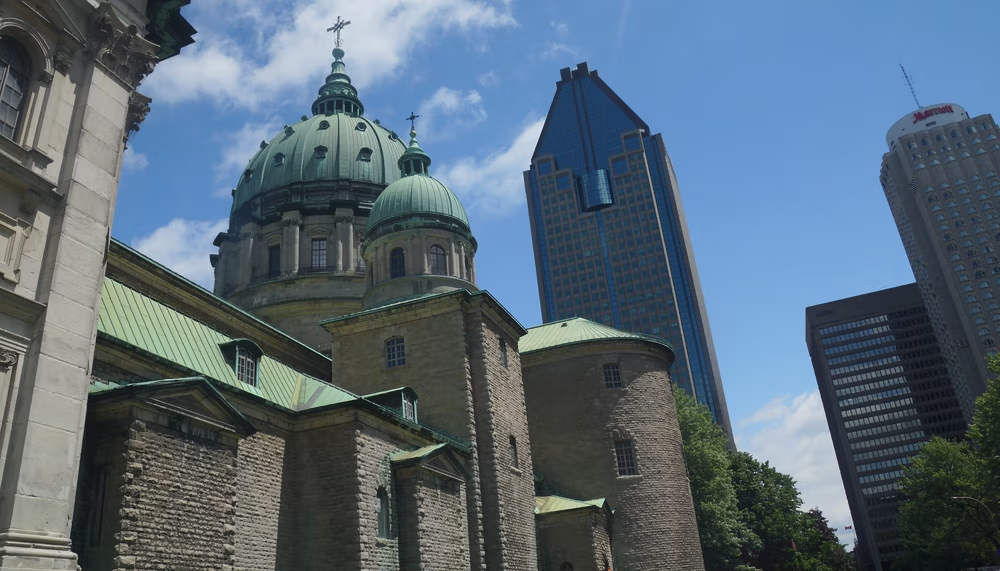
27) Visit Mary, Queen of the World Cathedral
Mary, Queen of the World Cathedral is one of downtown Montreal’s major religious buildings and the seat of the Roman Catholic Archdiocese of Montreal.
Its design was inspired by St. Peter’s Basilica in Rome, though on a smaller scale. The dome, statuary and formal interior create a very different experience from the blue-and-gold theatricality of Notre-Dame Basilica.
The cathedral sits close to René-Lévesque Boulevard, Bonaventure Metro station and the Bell Centre. This makes it an easy downtown stop rather than an attraction requiring a separate expedition, packed lunch and emotional support vehicle.
Entry arrangements can be affected by Mass, ceremonies, concerts and private events. Dress and behave as you would in an active place of worship rather than treating it as an unattended film set.
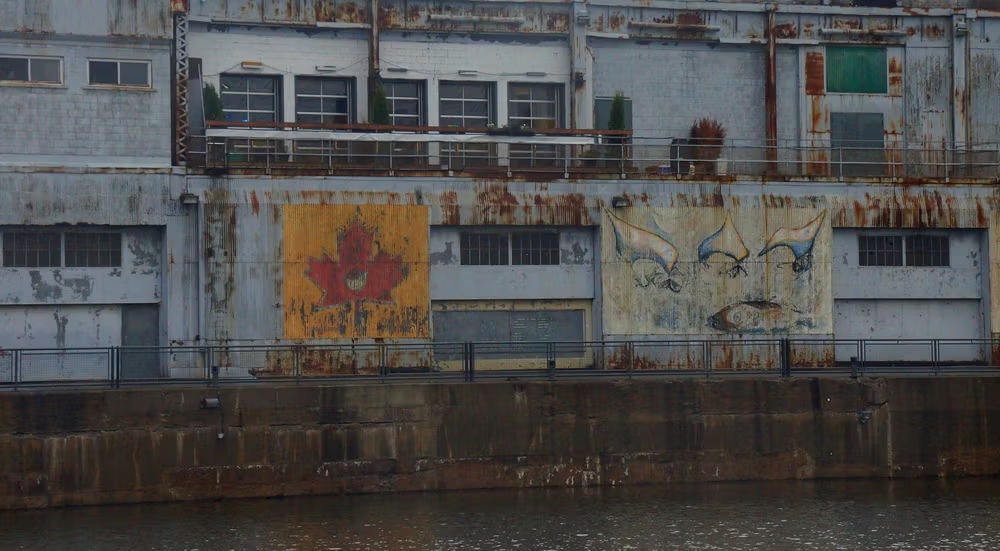
28) Walk Along the Old Port of Montreal
Montreal’s Old Port occupies the waterfront beside Old Montreal and is worth visiting even when you have no intention of purchasing a ticket for anything.
We enjoyed wandering beside the water, stopping in small green spaces and entertaining the possibility of a mid-afternoon nap. The area’s fur-trading and port history now sits beneath a recreational district containing the Science Centre, cruises, the Grande Roue de Montréal, seasonal events, water activities and the Cirque du Soleil Big Top.
The waterfront can become an expensive sequence of add-ons when every attraction is treated as mandatory.
It is not.
Walk first. Decide afterward whether a river cruise, Ferris wheel, jet boat, Science Centre visit or other activity genuinely matches your interests. You do not receive a medal for purchasing all of them.
Old Montreal and the Old Port belong in the same day, but they are not the same attraction. Old Montreal supplies the streets and architecture. The Old Port supplies open water, recreational space and ticketed experiences.
A sightseeing cruise is one of the stronger paid options because the river provides a perspective the cobblestones cannot.
Reserve a guided sightseeing cruise on the St. Lawrence River
Compare Montreal cruises, boat tours and Lachine Rapids experiences
29) Use the Montreal Metro
The Metro is the easiest way to move between Montreal neighbourhoods without introducing a rental car, parking fees and unnecessary emotional distress into your trip.
The system has four colour-coded lines and connects most districts covered in this guide. Once you reach a neighbourhood, walking normally becomes the better way to explore it.
Short-term visitors should compare current products rather than buying individual fares automatically. The STM commonly offers 24-hour, three-day and weekly options. Some multi-day products also include the 747 airport bus, which can make them useful from the moment you leave the terminal.
Many short-duration fares can be issued on a disposable L’Occasionnelle card, so a reloadable OPUS card is not essential for every visitor. Fare products and prices change. Confirm current options through the STM fare page.
The Metro is not universally step-free. Travellers requiring elevators should plan around specific accessible stations rather than assuming every stop will work.
A car becomes useful mainly when you are leaving Montreal repeatedly. Inside the city, it is often luggage with an engine.
30) Cycle, Walk or Skate Along the Lachine Canal
The Lachine Canal is especially popular with cyclists, runners, walkers and inline skaters looking to escape downtown traffic without actually leaving Montreal.
The current official recreational corridor extends approximately 13.5 kilometres from the Old Port area toward Lake Saint-Louis. Older versions of this article gave a 14.5-kilometre figure, but Parks Canada now describes the path as 13.5 kilometres.
You do not need to complete the whole route. A shorter ride between the Old Port, Atwater Market and nearby canal districts gives you water views, industrial heritage and an excellent excuse to assemble a picnic.
Atwater Market makes a natural stop for bread, cheese, fruit, pastries or whatever else can be carried without destroying your balance. The canal also passes converted industrial buildings, parks, locks and neighbourhoods that feel removed from central sightseeing.
Infrastructure work scheduled across 2026 and 2027 may create detours, closures or changes to facilities. Check Parks Canada’s current Lachine Canal work notices before setting out.
Shared paths contain people travelling at very different speeds. Treat them as public space rather than your private Tour de France qualification stage.
Where to Stay in Montreal
Your base changes the feel of the trip more than shaving five minutes from one Metro ride. Montreal neighbourhoods are distinct enough that choosing accommodation entirely by price and distance from the airport can be a false economy.
| Area | Best for | Main advantage | Trade-off | Our connection |
|---|---|---|---|---|
| Plateau / Mile End | Food, parks, cafés and neighbourhood life | Strong atmosphere and easy access to Mount Royal | Not within walking distance of every Old Montreal sight | We stayed in the Plateau for a full week |
| Old Montreal | First-time visitors prioritizing history | Walk to the basilica, Old Port and major architecture | Higher prices and some tourist-oriented dining | Research-based accommodation recommendation |
| Downtown | Events, museums, shopping and transport | Practical Metro connections and major hotels | Less residential character | Research-based accommodation recommendation |
| The Village / Latin Quarter | Nightlife, LGBTQ+ travellers and summer terraces | Lively pedestrian areas and evening entertainment | Noise on busy nights | Research-based accommodation recommendation |
| Verdun / Canal districts | Longer stays, cycling and a more local pace | Waterfront access and residential atmosphere | More transit time to major sights | Research-based accommodation recommendation |
Plateau and Mile End: Our Personal Choice
The Plateau gave us the best balance for a week-long visit. We could walk to parks, poutine, smoked meat, murals, cafés and Mount Royal while returning each evening to streets that felt residential rather than staged for visitors.
Browse Plateau-Mont-Royal hotels and compare current rates
Old Montreal: Best for Historic Atmosphere
A first-time visitor spending only two or three nights may prefer Old Montreal for immediate access to Notre-Dame Basilica, the waterfront and the city’s most famous historical streets. You pay for that position, and you will need to choose restaurants with care, but the setting after dark is hard to dismiss.
Compare hotels in Old Montreal near Place d’Armes and the Old Port
Downtown: Best for Events and Logistics
Downtown is not the neighbourhood I would choose for maximum charm, but it is extremely practical. Bell Centre events, museums, McGill, shopping, the train station and multiple Metro connections are close at hand.
Browse Downtown Montreal hotels near major venues and transit
Book a Legal Place to Stay
Short-term rentals are tightly regulated in Montreal. Listings should display valid registration information, and principal-residence rentals are restricted in many boroughs and periods. Our historical apartment stay should not be interpreted as encouragement to book an unlicensed rental because the photos look charming and the host promises everything is “probably fine.”
Search all Montreal hotels, guesthouses and registered accommodation
Best Montreal Tours and Bookable Experiences
Montreal does not require a tour guide to function. Much of the city is best experienced by walking, eating, getting slightly lost and recovering with coffee.
That said, a good tour earns its place when it supplies history you would otherwise miss, combines distant stops efficiently or prevents you from spending half the day wrestling with logistics.
| Experience | Best for | Why it may be worth booking |
|---|---|---|
| Old Montreal walking tour | History and architecture | Adds meaning to buildings that are easy to photograph but harder to understand |
| Mile End food tour | First-time food lovers | Combines multiple tastings without forcing you to research every stop |
| Montreal bike tour | Active travellers | Covers more ground while using a guide familiar with safe routes |
| St. Lawrence cruise | Waterfront views | Shows the skyline, islands and port from a perspective unavailable on foot |
| Underground City tour | Architecture and urban systems | Turns a confusing network into something understandable |
| Full city tour | Visitors with limited time or mobility | Connects districts that would otherwise require several Metro journeys |
- Small-group Old Montreal walking tour
- Montreal and Mile End food tours
- Downtown and Old Montreal bicycle tour
- Guided St. Lawrence sightseeing cruise
- Guided RÉSO Underground City tour
- Browse all Montreal tours and attraction tickets
A Realistic Three-Day Montreal Summer Itinerary
The following itinerary turns the original 30-item sequence into days that make geographic sense. That sounds obvious. The previous version of this guide nevertheless tried very hard to pretend geography was optional.
Day 1: Old Montreal and the Waterfront
- Morning: Place d’Armes, Notre-Dame Basilica and the streets of Old Montreal.
- Late morning: Rue Saint-Paul, Bonsecours Market and Place Jacques-Cartier.
- Afternoon: Walk the Old Port and choose one paid attraction only when it genuinely interests you.
- Optional: Reserve the official Habitat 67 tour on a separate time slot or admire it from the waterfront.
- Evening: AURA, Cirque du Soleil or an illuminated walk through the historic district.
Browse Old Montreal tours, cruises and evening experiences
Day 2: Mount Royal, Plateau and Mile End
- Morning: Walk through McGill and climb or travel toward Mount Royal.
- Late morning: Kondiaronk lookout and park trails.
- Lunch: Schwartz’s smoked meat or another neighbourhood deli.
- Afternoon: Plateau and Mile End murals, cafés and St-Viateur bagels.
- Sunday variation: Build the afternoon around the Tam-Tams.
- Evening: La Fontaine Park and poutine from La Banquise.
Find guided food tours through Mile End and Montreal’s neighbourhoods
Day 3: Choose Downtown or Olympic Park
Option A: Downtown and culture
- Montreal Museum of Fine Arts
- McGill or Sherbrooke Street
- Sainte-Catherine Street and the Underground City
- Mary, Queen of the World Cathedral
- Bell Centre tour, concert or event
Option B: Olympic Park and gardens
- Biodôme
- Botanical Garden
- Olympic Stadium exterior, exhibition or scheduled tour
- Saint Joseph’s Oratory if time and energy permit
With a fourth day, add the Lachine Canal, Atwater Market, the Village or whichever museum lost the Day 3 argument.
Day Trips From Montreal
You do not need to leave Montreal to fill a four- or five-day trip. The city already contains enough neighbourhoods, museums and food to leave you exhausted and slightly wider.
For longer stays, however, an organized day trip can solve the problem of renting a car and navigating unfamiliar highways.
Quebec City and Montmorency Falls
Quebec City is a long day from Montreal, but a guided excursion can combine transportation, Old Quebec and Montmorency Falls without requiring an overnight stay. I still prefer Quebec City as an overnight destination when time allows. A day trip is the practical compromise for travellers with one free day and an aggressive relationship with scheduling.
Check Quebec City and Montmorency Falls day trips from Montreal
The Laurentians and Mont-Tremblant
The Laurentian Mountains offer forests, lakes and hiking north of Montreal. Mont-Tremblant is the best-known resort centre, though some tours focus more on the wider Laurentian landscape than the pedestrian village itself.
Compare Mont-Tremblant, Laurentians and other day trips from Montreal
Montreal Transport and Accessibility Decisions
| Experience | Planning consideration |
|---|---|
| Montreal Metro | Fast and useful, but not every station has elevator access |
| Mount Royal | Routes vary from steep stairs to a more gradual gravel approach |
| Old Montreal | Cobblestones may be difficult for wheelchairs, strollers and rolling luggage |
| Habitat 67 tour | Numerous stairs; not suitable for visitors with reduced mobility |
| Saint Joseph’s Oratory | Elevators, escalators and accessible routes reduce the need to climb the monumental staircase |
| Montreal Museum of Fine Arts | Connected pavilions are wheelchair accessible |
| BIXI electric bikes | Quebec law requires a helmet |
| Lachine Canal | Generally straightforward, but construction may create temporary detours |
Visitors with specific mobility requirements should verify the exact entrance, Metro station and route for each attraction. A destination being described broadly as accessible does not mean every historical doorway, path or station platform is equally easy to use.
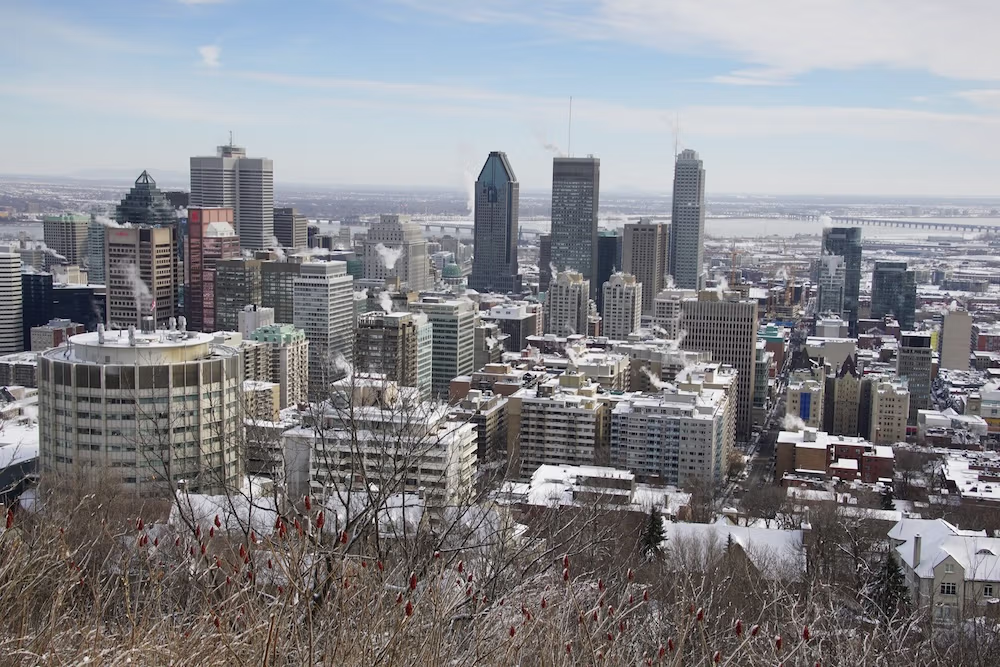
What About Visiting Montreal Outside Summer?
This guide focuses on summer because that is the Montreal we experienced most fully: festivals, bicycles, park picnics, pedestrian streets, Tam-Tams and long days outside.
Winter Montreal is not merely the same trip with a colder coat. Outdoor rhythms change, festivals shift, the Underground City becomes more useful and snow or ice can turn a short walk into a considerably more serious undertaking.
Spring can be wet, slushy and unpredictable. Early autumn brings comfortable walking weather and foliage around Mount Royal. Travellers seeking the fullest version of the experience described here should prioritize June through September while checking major festival dates before booking accommodation.
Montreal Travel FAQ
How many days do you need in Montreal?
Three full days provide a strong first visit covering Old Montreal, Mount Royal, the Plateau, Mile End and either downtown or Olympic Park. Four or five days allow time for museums, the Lachine Canal, festivals and neighbourhood wandering without turning every day into a race.
Do you need a car in Montreal?
No. The Metro, buses, walking and BIXI cover most visitor needs. A car becomes useful for repeated trips outside the city but adds parking costs and inconvenience inside central Montreal.
Where should a first-time visitor stay?
Old Montreal is convenient for historic sights, while the Plateau and Mile End provide stronger neighbourhood atmosphere, parks and food. We stayed in the Plateau and found it ideal for a full week. Downtown is practical for events, museums and transport.
Compare Montreal accommodation by neighbourhood and travel dates
Do you need to speak French?
Visitors can usually manage in English in central Montreal, but beginning with “bonjour” and using basic French courtesies shows respect. Do not assume every conversation must immediately switch languages for your convenience.
Which Montreal attractions should be booked ahead?
Habitat 67 tours, AURA at Notre-Dame Basilica, Cirque du Soleil, popular festival performances and some temporary museum exhibitions are the strongest candidates. Accommodation should also be booked early for major festival, Grand Prix and Pride dates.
Check current Montreal tour and attraction availability
What foods should you try in Montreal?
Poutine, Montreal smoked meat and wood-fired bagels form the obvious first-timer trio. Our personal choices included goat-cheese-and-bacon poutine at La Banquise, medium-cut smoked meat at Schwartz’s and a cinnamon-raisin St-Viateur bagel with apple-cinnamon cream cheese.
Is Montreal good for families?
Yes. The Biodôme, Botanical Garden, Science Centre, Old Port, Mount Royal, La Fontaine Park and Lachine Canal offer a useful balance of structured attractions and open space. Avoid stacking too many museums into one day and build in parks, snacks and Metro rides.
What is the biggest Montreal planning mistake?
Trying to cover the city as one enormous downtown checklist. Montreal makes more sense neighbourhood by neighbourhood. Group Old Montreal with the Old Port, Mount Royal with the Plateau and Mile End, and the Biodôme with Olympic Park rather than zigzagging across the island until you hate public transportation and each other.
Final Thoughts on Visiting Montreal
Montreal is easy to praise in broad language. It has history, food, festivals, architecture, nightlife and all the other ingredients that appear in tourism brochures.
What made the city memorable for us was more specific.
It was Audrey returning to the city where she was born. It was me revisiting a place connected to my first independent travels and an old Montreal Expos game. It was eating poutine in a park, watching a woodpecker on Mount Royal, seeing drummers take over a Sunday afternoon, walking home through the Plateau and discovering that a bagel could apparently become Audrey’s happy place.
The major sights matter. Notre-Dame Basilica is genuinely beautiful. The Mount Royal view deserves the climb. Old Montreal is touristy and still worth walking.
But Montreal becomes more convincing when you stop treating it as thirty isolated attractions and let the neighbourhoods connect them.
We had a full week and still left with reasons to return. That is probably the most useful recommendation I can give Montreal.
Have you been to Montreal?
Let us know what you love about the city in the comments below.
Oh I love Montreal and been there several times but never get to do all the things you have mentioned there. I guess those are for another time and thank you for listing all the things you have done there. I had no idea Montreal had so much to offer.
This guide is absolutely perfect for me. Currently staying in Montreal for 3 months, I now know of even more amazing places to visit during my stay here! Thanks 🙂
I hope to visit montreal someday. Eat poutine – cantines or casse-croûtes looks delicious .
Great round up of must visits in Montreal! Now, I’m missing the great foliage during this time in the city.
Old Montreal is really charming with cobblestone streets and lots of cafes. I stayed in an apartment a few steps away from Marche Bonsecours before and really love the area! 🙂
Thanks Tiffy! It sounds like you were staying in an ideal location.
Montreal is one of my favorite cities and I’m very excited to see that I’ve done most of these activities (hockey and smoked meats will probably never be an interest, no matter where I visit.) I’m ecstatic jut reliving the experiences through your pix, especially tam tams, the graffiti and bike riding. I would add Jean Talon Market because it’s such a Quebecois experience.
I really want to see the Cirque du Soleil… Too far 🙁
Hopefully it will come to a city close to where you live!
Montreal is really, really far for me so I visited it only once but I must admit that it has a very special atmosphere that got me very attached to the city. My personal favourite is Habitat 67, for someone ugly but for me rather unique and unusual and, of course, the parks but well, I still prefer our ”wild” nature (if you’ll be around Vancouver you definitely have to see it! We have a very rare tidal lake around which is not only a sport paradise, it looks like http://jaybanks.ca/vancouver-blog/2014/08/20/kite-boarding-surfing-lessons/” target=”_blank”>this and if you prefer cities, there is also a lot to see in Vancouver, for example the famous building of the Vancouver Public Library which is often used as a film location).
Great to hear about your experiences Petra! Habitat 67 is one of my favorites as well. It looks fascinating from a distance but up close it is even more unique.
Wow I had no idea that poutine was French Canadian or that the Cirque Du Soleil originated in Canada.
Lovely pictures of the street art by the way. I imagine Montreal is an absolute delight to walk around in.
I’m sold, I have to go to Montreal now! It looks like a fantastic city to visit, and the poutine sounds so good. Great photos too Samuel! 🙂
Thanks Christine! I highly recommend going 🙂
I’ve made it to Toronto but not yet Montreal. Planning to get there soon so this list is perfect timing. Thanks.
Wow! What a nice list 🙂 I have not done Canada yet (shame on me when I live so close), but Montreal is definitely high on my list of Canadian places to visit! I am bookmarking this page so I have a list of things to do when I get there and I will definitely make sure that I ride a bike there (weather permitting).
Montreal is just such a fantastic city for so many reasons! I’ve been a couple of times but I’m always eager to get back – there’s just so much to see and do! Wonderful post and photos btw 🙂
Wow, that habitat is wild! When I was in Montreal I loved the graffiti everywhere, but it was pouring the whole time so I’m bummed I couldn’t explore even more! I need to go back. And, though I despise most numerical “things to do” posts, I commend you and Audrey for making them relative to your adventures and uber informative =)
Such gorgeous pictures, Sam. Montreal seems like a really cool city, especially the open spaces and street art.
Can’t wait to explore it
Montreal looks fantastic! I had heard it was a nice city, but I had no idea how cool it was.
Thanks Zoe! It really is a cool place to visit 🙂
Great post here buddy! Riding bicycle is the best while taking the chance to see the beautiful city of Montreal.
Thanks Stephen! I certainly agree with you about that.
Shawartz!!! I have made special trips to Montreal just to go there. I have even had their smoked meat shipped across the country to Vancouver. It really is that good.
Great list but you had me at Shwartz.
Shaun
What the! The Habitat 67.. That is the weirdest and coolest looking thing. I’ll have to look into this a little more! Lol. Thanks a lot Sam.
You’re welcome Ken! It looks even more impressive up close 🙂
Great tips. This took considerable work to put together. Thank you. We have a great reference for a Montreal visit. All we need to do now is go 🙂
Mark
Mark and Cindy
s/v Cream Puff
Thanks Mark! It did take quite a while to put this together but I’d say it was well worth it given how much I love Montreal 🙂
These are all fantastic, Samuel! Of course, eating poutine really caught my eye. But, visiting the Olympic Stadium would be huge on my list having watched the 1976 Games on tv as a kid! 🙂 Even being an American, the baseball purist in me still is bummed the Expos left. I was a huge Andre Dawson fan! 🙂
Thanks Mike! I was a big Dawson fan as well. The Cubs are my favorite baseball team 🙂
Wow, what a list! It seems you could spend a month there and not be done! Thanks for sharing this guide!
Thanks Mary! Considering how spread out the city is you could definitely stay a whole month and still feel like you’ve merely scratched the surface 🙂
Great tips! I am embarrassed to say that I live in Niagara and have yet to visit Montreal. I need to plan a trip there very soon!
Thanks Ashley! If possible you could try to visit this summer 🙂
Hey Samuel – nice coverage, I see you visited most of the city during your stay. I always tell people that the first place to visit in Montreal is the mountain (Mont-Royal). Best views and a good place to orient yourself. But most people don’t know about the most scenic walk in Montreal; when you get to the top of the long flight of stairs (just before going up the path to the chalet at the lookout), you’ll see a path heading right. If you follow that path it skirts the whole mountain right up the 2nd lookout looking east towards Olympic Stadium. Its about a 15 minute walk. From there you can either come back along the path or head down through the forest into the Plateau.
Botanical Gardens and Biodome shouldn’t be missed and Biodome is a MUST for those with kids. Also right there is the Tower Observatory – you can go to the top of the tower of the Olympic Stadium (going up takes about 3 minutes) and get a great view of the whole city. The Botanical Gardens also have the Insectarium which is really popular with kids. You can buy a package ticket to see everything: the Botanical Gardens (including Insectarium), the Biodome and the Tower Observatory for about $38/person (less for kids) and you’ll get about 2 days worth of things to do for that.
Montreal is also the number 1 bike city in North America and you can get to almost all the sites with a bike (which you can rent out at the Old Port). From there you can go to the Plateau, the Botanical Gardens area mentioned above, the Lachine canal that you mention (where its also worth stopping at the Atwater market). ALSO – ride the bike across to Ile Notre Dame and Ile Ste.Helene where you’ll look out to great views of the city. Come back towards downtown on the bike path that runs on the Jacques Cartier Bridge – great views over all of downtown.
A couple other tips: take a ferry ride on the river (not a cruise which is expensive, long and kind of boring). Eating: Montreal isn’t just about bagels, smoked meat and poutine and it gets me irritated that coverage from bloggers seem to only cover that. Montreal has some incredible restaurants in all price ranges, including some great BYOB (bring your own booze) restaurants on the Plateau and on Duluth street. I have a few suggestions on my blog and almost everything Montreal here: http://bbqboy.net/see-montreal-ultimate-resource-page/
Apart from the above, you’ve basically got the whole city covered pretty much perfectly!
Frank (bbqboy)
Thanks Frank!
I really appreciate the added suggestions and details. It is a world class city and I hope to make it my home base (for at least a while) during some point in my life 🙂
Great tips Sam. I must admit that I’ve never been to Montreal but it looks wonderful in the summer. To date I only really know of Toronto as a big Canadian city that I’ve visited.
You make a very valid point in that often we don’t explore and discover our home towns/cities enough. I certainly need to do it more.
Can you get poutine in Toronto?
Thanks! You can get Poutine in Toronto but it would be harder to come by and not nearly as tasty as from Montreal. That’s too bad your only impression of a big Canadian city is Toronto because I think Vancouver and Montreal are much cooler 🙂
Glad you had a nice time in my hometown! I’m quite ashamed to admit that there are a few things in there that I have never done myself!
We had such a wonderful time and it was great to meet up with you 🙂 Don’t be too ashamed about that because it pretty much happens to everyone. When I lived in Edmonton I kept telling myself I’d check out the water-slide at West Edmonton Mall but I never did 😉
Aww, this is made me super homesick for my home away from home. Without a doubt Montreal is up their as one of the best cities in the world (but serious only visit during the summer!). The scorching hot days, the food, the people, the amazing nightlife and always so much to do… I miss it!! Looks like you guys did a lot when you were there. I would definitely add Marché Jean-Talon to this list. Oh, and Parc-Jean Drapeau on Île Sainte-Hélène, either for some time relaxing or for Piknic Electronik. But then again, this list could get pretty long!
Thanks Charlie! I know what you mean about visiting in the summer versus winter! Woah! Thanks for the suggestions of Marché Jean-Talon, Parc-Jean Drapeau and Piknic Electronik! This list could easily extend to 50 or even 100 😉
I was in the city for a whole week, but I only scratched the surface of this amazing metropolis … excellent video guys!
Thanks James! We felt the same way. I have a feeling we’ll be returning again soon 🙂