
Bishkek is not a city that wins you over at first glance. It can feel grey, sleepy and slightly short on obvious attractions. Give it a few days, though, and the place starts working on you: tree-lined boulevards, Soviet monuments, chaotic markets, excellent food, mountain escapes and, in my case, being shoved into freezing water by a naked stranger at a public bathhouse.
Most cities we visit offer an overwhelming number of activities and places to visit. You arrive with a list, discover the list is absurd, and begin sacrificing museums like pieces on a chessboard. Bishkek was different. Here, to-do lists are best tossed out the window.
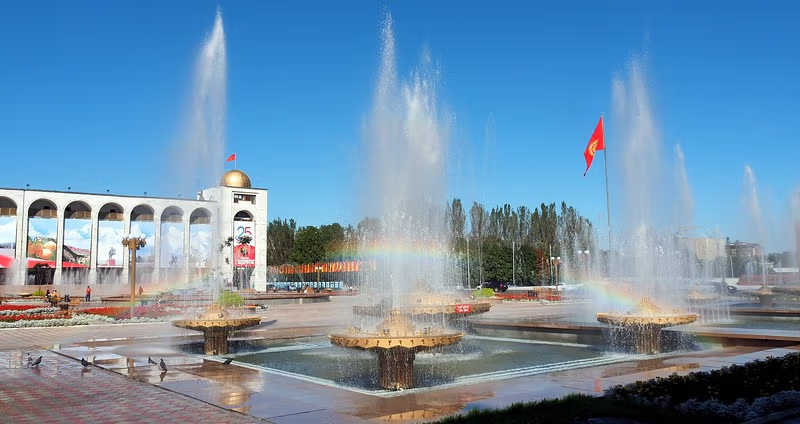
At first glance, the Kyrgyz capital doesn’t appear to offer much in terms of headline attractions. It doesn’t have Samarkand’s monumental Silk Road architecture. There is no giant landmark waiting to slap you across the face the moment you leave your hotel. Bishkek can feel a bit grey, a bit sleepy and—if we’re being brutally honest—a little underwhelming.
Then you slow down.
You walk beneath the trees. You get lost in Osh Bazaar. You start recognizing ice cream stands. You eat an irresponsible amount of lamb. You join a long mountain hike that was advertised as something much shorter. Perhaps a naked stranger shoves you into freezing water.
Suddenly Bishkek makes sense.
We first visited Kyrgyzstan for the World Nomad Games and returned less than a year later for more trekking, horse riding, yurt stays and cultural experiences. Bishkek became both our gateway and our decompression chamber. After long days in the mountains, its parks, cafés, hot showers and slightly peculiar diversions felt rather luxurious.
It was only after lingering, meeting friends and falling into ordinary routines that the city started revealing itself: leafy boulevards, Soviet monuments, busy markets, surprisingly good international food, an old-school bathhouse, retro roller-skating and mountain escapes close enough for a day trip.
That is the Bishkek I want to show you. Not some polished tourism-board fantasy where every pavement sparkles and every fermented drink tastes magnificent. The real city. Concrete, trees, traffic, dumplings, fountains, mountains and all.
Bishkek at a Glance
| Best for | Slow city travel, Soviet history, markets, food and mountain day trips |
| Ideal stay | Two or three city days, plus extra time for the mountains |
| Best first base | Between Ala-Too Square and Erkindik Boulevard |
| Most characteristic experience | Walking the parks and boulevards rather than sprinting between monuments |
| Easiest major escape | Ala-Archa National Park |
| Our most memorable oddity | A public banya involving an unsolicited plunge into freezing water |
| Biggest planning mistake | Treating Bishkek as nothing more than an airport and bus connection |
Useful Booking Shortcuts
- Compare hotels, apartments and guesthouses in Bishkek
- Browse current Bishkek tours and day trips
- Compare bookable yurt camps around Song-Kul
- Browse multi-day Kyrgyzstan tours departing from Bishkek
15 Things to Do in Bishkek
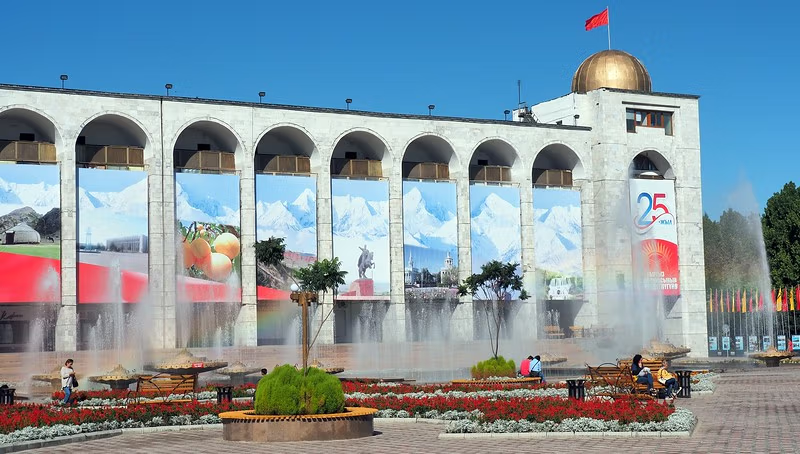
1) Begin at Ala-Too Square (Ала-тоо аянты – Площадь Ала-Тоо)
First up, we visited Ala-Too Square, the central plaza in Bishkek. While there isn’t much to “do” here in the conventional sense, it is one of the city’s major landmarks, with fountains, benches and enough open space to make it a useful orientation point.
The square gives you Bishkek’s official face: government buildings, broad avenues, national symbols and the enormous National History Museum standing on its northern side. The statue of Manas commemorates the hero of Kyrgyzstan’s national epic, while state events and major public celebrations use the square as their central stage.
It is grand without being especially warm. A little severe, even. The kind of place where you naturally straighten your posture despite having done nothing wrong.
For travellers, the square works best as the beginning of a walk rather than the entire attraction. Come in daylight for architecture and mountain views when the air is clear. Return in the evening when the fountains, lighting and local foot traffic soften the edges.
2) Visit the National History Museum—and Find Lenin Behind It
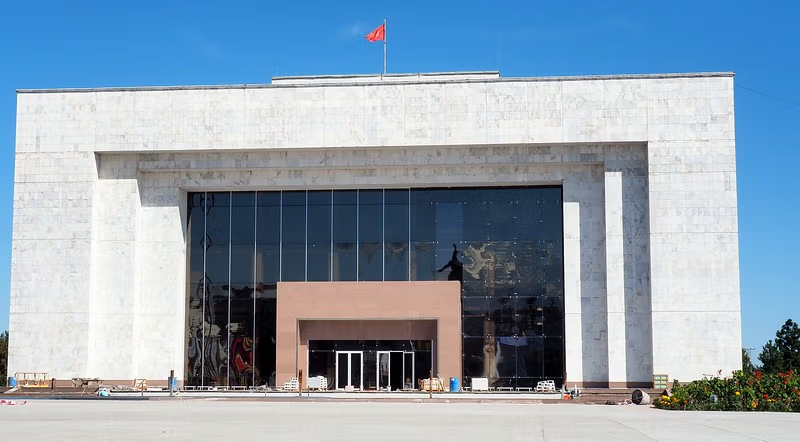
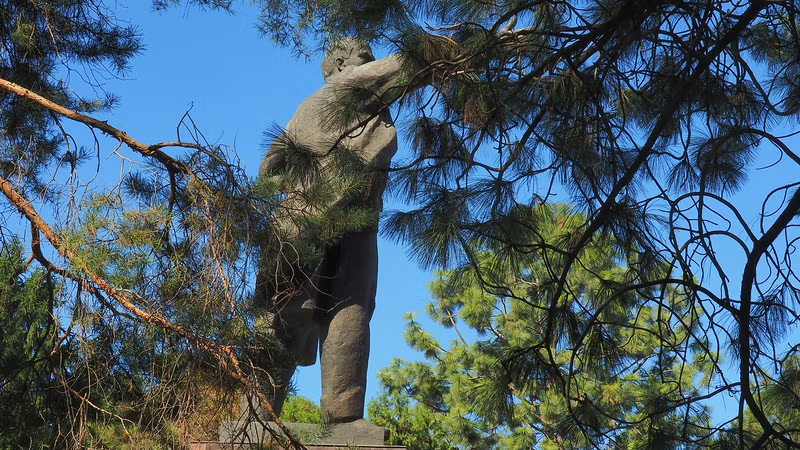
Just across the square you’ll find the National History Museum. Unfortunately, it was closed for renovations when we visited, so our museum experience consisted of staring at the exterior and wandering around the back in search of an imposing Lenin statue.
This was less educational than seeing the collection. On the positive side, it was free.
That historical inconvenience is no longer current. The museum reopened after its long renovation and now presents Kyrgyzstan’s history, ethnography and culture through a collection numbering tens of thousands of objects. Check the official schedule before visiting because museum hours have a habit of changing precisely when you feel most cultured.
Do still walk around the back. Lenin has not vanished from Bishkek; he has merely been moved away from the capital’s most prominent ceremonial position. That placement tells its own story about how Kyrgyzstan has negotiated its Soviet inheritance rather than bulldozing every trace of it.
On an unrelated note, if you’ve never watched the film Good Bye, Lenin!, you should. It is in German, but it is pretty good. I remembered that while visiting the statue, which is the kind of rigorous scholarly connection this guide is prepared to provide.
3) Get Lost in Osh Bazaar (Ош базары)
Another place you’ll want to visit in Bishkek is Osh Bazaar. It may not be the biggest market in Central Asia, but it is a bustling maze where you could easily spend several hours.
Inside you’ll find fresh produce, bread, dried fruit, spices, sweets, clothing, household goods and entire sections dedicated to products you did not realise could sustain an entire commercial ecosystem.
One aisle was filled with dried cheese balls known as kurut. Audrey thought they tasted like intensely salty goat cheese. They were not her favourite, which is polite Canadian language for “I do not require another one.”
Audrey’s find of the day was half a kilogram of dates for 100 som at the time—roughly US$1.50 during our trip. She was delighted by the bargain. I was delighted that they were all for her because I do not particularly like dates either.
We had no problems at the market, but several locals warned us about people posing as police and asking to inspect documents or camera permits. That warning reflects our visit rather than a guarantee of what happens now. The sensible current approach is straightforward: keep valuables secure in crowded aisles, avoid handing documents to unofficial strangers and deal with any genuine issue in a visible public place.
How to Approach Osh Bazaar
| Your priority | What to look for | Useful approach |
|---|---|---|
| Food | Bread, kurut, dried fruit, nuts, spices and prepared snacks | Arrive hungry, but choose busy stalls with steady turnover |
| Photography | Colourful displays, bakery sections and crowded aisles | Ask before making close portraits and keep your gear controlled |
| Souvenirs | Felt goods, textiles, kalpaks and practical local products | Compare quality and prices before buying |
| Everyday Bishkek | Household and clothing sections | Leave the obvious food aisles and wander more widely |
4) Treat the Abandoned Casino as a Story, Not a Current Recommendation
Remember my earlier spiel about Bishkek being quirky? During our visit, we explored an abandoned casino and nightclub near Victory Square. It contained graffiti, smashed objects, broken glass, a foul smell and enough uncertainty about who else was inside to make the outing feel less like sightseeing and more like a poor decision entering its final act.
We initially worried that construction workers or security guards might kick us out. Then we found children playing inside and apparently decided this represented an acceptable structural inspection.
The standards were different in those days.
I am preserving the story because it was part of our real Bishkek experience, but I am no longer presenting entry into a derelict building as responsible current travel advice. Its legal access, structural condition and present status are unclear. If you pass the building, appreciate the urban decay from public space rather than treating rusty metal and broken glass as admission-free entertainment.
5) Understand Victory Square and Its Memorial
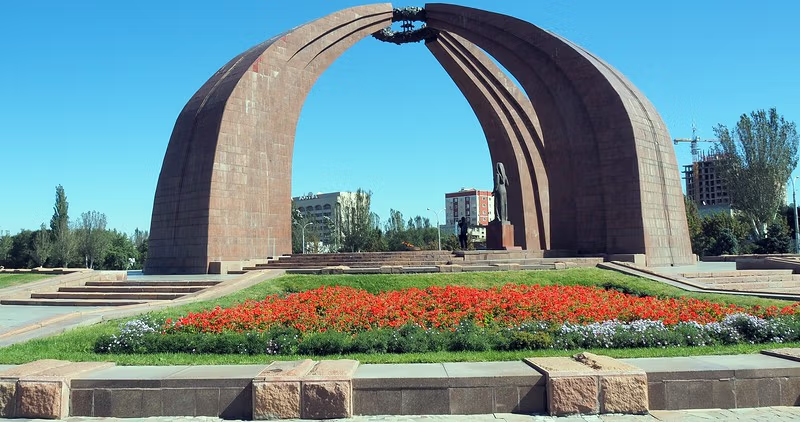
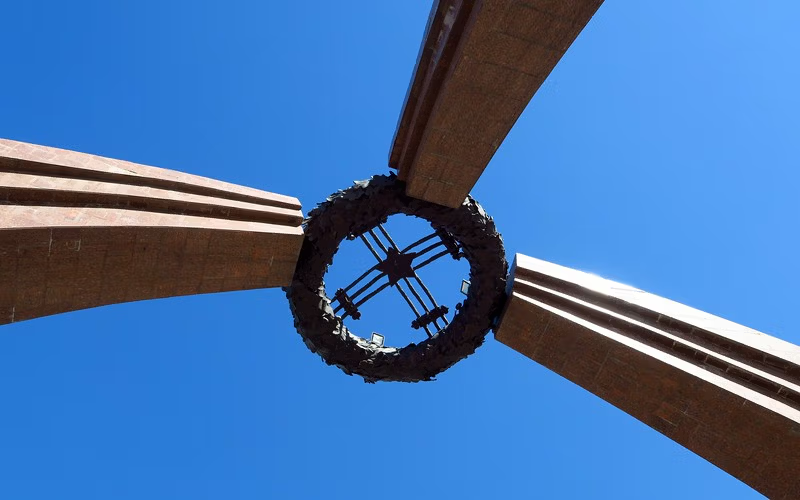
Directly across from the abandoned casino, we found the Victory Monument. The memorial was installed in 1985 to commemorate victory in the Second World War and the enormous human cost paid by the Soviet republics.
The three curved granite arcs represent the framework of a yurt. Beneath them, beside the eternal flame, a woman waits with a bowl raised in her hands. The composition is often understood as a mother or wife waiting for family members who never returned from war.
This is not a place to rush through as another chunk of Soviet concrete. Walk around the entire memorial. Examine the additional sculptures and inscriptions. Notice how the yurt form turns a standard military monument into something specifically Kyrgyz.
It is solemn, heavy and much more affecting once you understand what you are looking at.
6) Walk, Jog and Immediately Undo the Exercise on Erkindik Boulevard
I spent more time on Erkindik Boulevard than anywhere else in Bishkek. Whether I was jogging to burn calories or licking ice cream to gain them back, I couldn’t get enough of the place.
I went running there every day, sometimes twice a day, which meant I saw the boulevard in the morning, afternoon and evening, on quiet weekdays and busier weekends. Its personality shifted with the hour. Early runs felt calm and residential. Later in the day, people appeared with coffee, children, friends and ice cream.
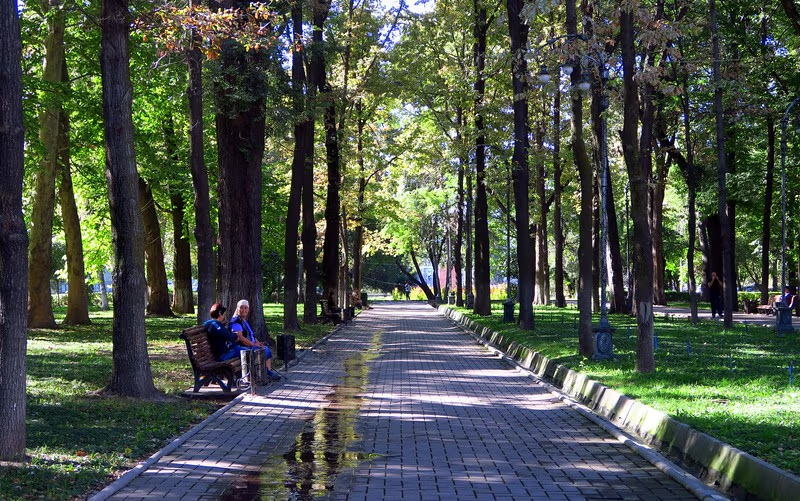
The boulevard is made up of long, parallel, tree-lined pedestrian sections running through the central city. It provides shade in summer and a low-pressure way to understand Bishkek. You are not marching toward one blockbuster sight while elbowing through tour groups. You are watching the city use its own public space.
At one point I found peanut-butter ice cream and a swing. Audrey correctly identified this as my happy place. She knows me too well.
Erkindik also opens the door to understanding why Bishkek is so green. The city is watered by a large network of open irrigation channels, or aryks, fed from sources including the Ala-Archa and Alamedin rivers and the Eastern Great Chui Canal. Those little channels beside the streets are not decorative gutters waiting to ambush your ankles. They help keep the trees, parks and boulevards alive through hot summers.
Ala-Too Square gives you Bishkek’s official face. Erkindik gives you its pulse.
7) Try a Traditional Banya—Preferably Without Being Shoved
I’m a sucker for saunas and public baths. If I touch down in Finland or South Korea, spending ample time heating myself up and then doing something unpleasantly cold is an absolute must. When I found out Bishkek had a popular bathhouse, I went on a solo mission to check it out.
The banya was separated by gender. I stripped down, put on flip-flops and alternated between steam rooms and saunas. The arrangement reminded me of Korean public baths, although the most memorable feature was a hut-like plunge pool filled with freezing water.
As I was tiptoeing down the ladder for my first polar plunge, a burly man came over and shoved me straight into the pool.
No warning. No motivational speech. Just a firm commitment to accelerating my experience.
I gulped water, swung my head back and found him standing above me with his arms crossed. I had just been pushed into freezing water by another grown naked man and did not possess an immediate social response. So I swam to the other side.
Aside from being shoved, I enjoyed the experience. I stayed for one or two hours and paid 300 som during our visit. That price is historical and should not be used for current budgeting unless you also own a time machine.
The exact venue and arrangements should be reconfirmed before you go. Bring sandals, ask what is included and respect the no-photography expectations of a communal bathing space. A banya is one of Bishkek’s most distinctive cold-weather or recovery-day experiences, but it is not a staged spa attraction. You are entering an ordinary local ritual.
8) Enter the Retro Roller-Skating Time Machine
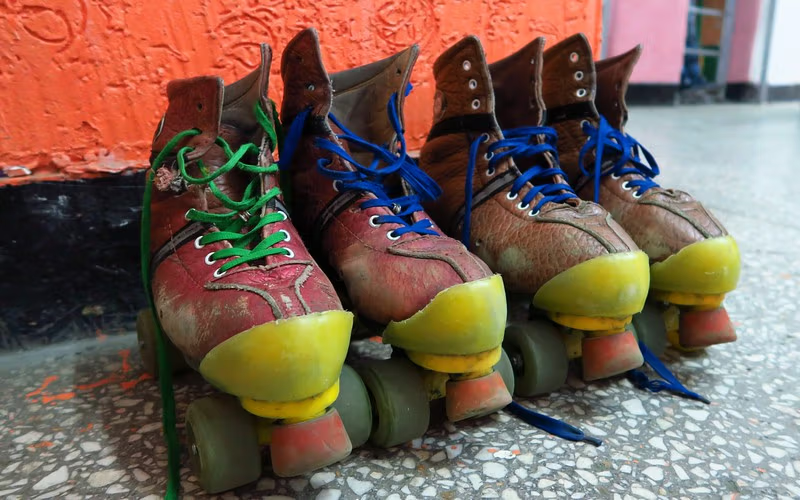
Found a warp tunnel where you can travel back to the 1980s? If not, may I suggest the roller rink we visited in Bishkek?
I thought roller-skating would be a lot like ice skating or inline skating. I was wrong. Audrey could not start or stop. I performed what she described as “Bambi on skates” for the mostly local teenage clientele.
The teenagers glided past us with irritating ease while we concentrated on not converting our travel insurance into a practical investment.
Near the end, I finally started to get the hang of it. I then made the mature decision to quit early because the teenagers were far too agile and I did not want to break any bones.
The precise rink we used has not been reliably matched with a current operating venue, so treat this as a firsthand time capsule rather than a guaranteed attraction. It remains important to the guide because it captures something central about Bishkek: some of our best memories came from experiences no conventional capital-city checklist would have prioritised.
9) Check the Programme at the Kyrgyz National Opera and Ballet Theatre
We missed the start of opera and ballet season by just a few days. That means I cannot review a performance or pretend we sat inside stroking our chins while demonstrating profound cultural sophistication.
We stood outside and experienced the far less glamorous feeling of bad timing.
The theatre itself is an important Bishkek institution. It began as a musical drama theatre in the 1930s, staged the first Kyrgyz opera before the Second World War and continues presenting works in Kyrgyz and Russian. Check the current programme rather than assuming performances run every night or throughout the year.
Even without a ticket, the theatre fits naturally into a central walk between Oak Park, Erkindik Boulevard and Victory Square. With a performance, it offers one of the few Bishkek evenings that feels properly ceremonial.
10) Take Bishkek’s Café Culture Seriously
If you’re interested in chilling like a villain, Bishkek has a collection of worthwhile cafés where you can pass an afternoon. More importantly, café time suits the city. Bishkek becomes clearer once you stop moving long enough to watch its daily rhythms.
Our favourite during that trip was Q Café, which we first visited with friends and then returned to because the coffee and desserts had done their work. We ordered lattes with proper foam art, a strawberry muffin with actual pieces of fruit and something called Dvorak cake.
The cake was crumbly, dusted with icing sugar and almost like a fluffy cheesecake. Audrey declared herself a fan while taking a second bite of my slice. She then moved on to her own muffin, which I considered meaningful progress.
Individual café recommendations age quickly, so verify that Q Café is still the same business before planning an emotional reunion with the cake. The broader lesson has held up better: do not schedule every afternoon. Leave space for coffee, dessert and an hour of achieving absolutely nothing.
11) Hike Issyk-Ata Gorge with the Trekking Union
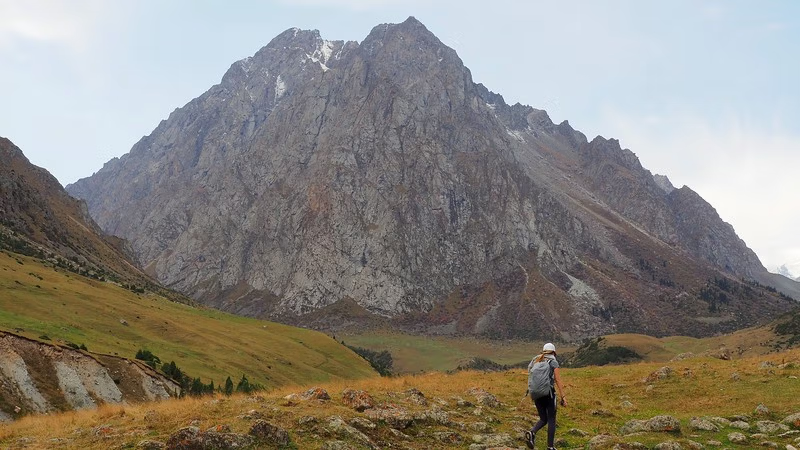
If you’re craving a day trip from Bishkek, you can plan a hike into the nearby mountains with the Trekking Union of Kyrgyzstan. The organisation has operated since 2005 and still runs public trips, longer treks and equipment rental from Bishkek.
Our outing took us to Issyk-Ata Gorge. Before departure, we signed a waiver containing two points that jumped out at us: we had to promise not to run away during the hike and not to drink alcohol.
The first condition nearly destroyed our plans. The second forced me to dispose of the imaginary moonshine in my backpack.
Audrey then soaked her shoe at the beginning of the walk and faced the prospect of hiking roughly 25 kilometres with a soggy foot. This was not a good start. A damp sock has a special ability to transform mild inconvenience into a full psychological campaign.
The old article warned that a 12-kilometre hike could become a 25-kilometre jaunt. I am keeping that warning because it came directly from our experience. Confirm the actual route, distance, ascent and expected return time before joining any group trip. “Day hike” is not a difficulty rating.
Issyk-Ata sits around 60 kilometres from Bishkek and combines a mountain valley with waterfalls, hot springs, a sanatorium and a Buddha Stone. The best-known waterfalls are on opposite sides of the river without a convenient crossing between them, so visiting both can involve backtracking. The gorge may also be dramatically cooler than Bishkek. Bring layers even when the capital feels like an oven with trees.
12) Eat Kyrgyz Food—and Then Explore Bishkek’s International Side
As far as traditional Kyrgyz food is concerned, there is plenty to sample: grilled meat, dumplings, noodles, rice, bread, tea and fermented dairy. Bishkek is the easiest place to try a broad range before travelling deeper into the country.
During one meal, we ordered enough food for five or six people after travelling around Kyrgyzstan for three weeks. Apparently moderation had remained in the mountains.
We wanted to revisit the dishes we had encountered repeatedly: plov, manti, lagman, samsa, bread, shashlik and tea.
We also ordered a litre of kymyz, fermented mare’s milk. One popular explanation links Bishkek’s name to the wooden implement used to churn it, although the city’s historical accounts preserve more than one origin story.
Our verdict on kymyz was diplomatic by necessity. Imagine very salty milk that has been watered down, lightly fermented, made fizzy and given a few mysterious chunks. Audrey thought it tasted like salty cheese. Neither of us warmed to it, and we admitted we probably would not have ordered a litre without the video.
It remains culturally important and worth approaching with curiosity. You do not need to pretend it tastes like a vanilla milkshake to demonstrate respect.
On our final day in Kyrgyzstan, we went to Arzu after locals and our friend Stephen Lioy had recommended it. We had previously ordered manti as takeaway; this time we sat down for a proper meal.
Audrey had developed a food dream involving pumpkin manti and was visibly disappointed when it was unavailable. We recovered with boorsoq, samsa, fried lagman, plov, lamb shashlik, tea and Arpa beer.
The boorsoq immediately reminded us of arriving at yurt camps, where fried pieces of dough appeared beside tea, jam and honey. The lamb shashlik was the late winner. By the end of the meal, I was discussing grilled meat with the solemnity normally reserved for mountain sunsets.
Arzu remains a firsthand recommendation from that trip, but branches and addresses change; check the restaurant’s current official site before choosing a location.
For a full breakdown of the dishes, table customs and regional differences, read my complete guide to traditional Kyrgyz food. This Bishkek guide does not need to swallow an entire national cuisine article like we swallowed that lunch.
International options were also plentiful during our visit. We ate Japanese food, steak and Korean fried chicken. Chicken Star became a favourite; I arrived wearing my Hanwha Eagles baseball hat and treated spicy chicken, rice cakes and beer as a form of cultural preparedness.
13) Sample Bishkek’s Craft-Beer Scene
Save the Ales! I’m always up for a good cause, and if you’re jonesing for a craft IPA, Bishkek proved far more interesting than I expected.
We visited Save the Ales, a pioneering women-founded brewery and taproom that opened in 2016. I sat down with a pale ale and declared that I was saving it one sip at a time.
Heroic work. Somebody had to do it.
The importance of the stop went beyond the beer. A small independent brewery run by women in a market more strongly associated with vodka and mass-produced lager represented a different, contemporary side of Bishkek.
Craft-beer businesses can change quickly, so verify the current taproom and opening details rather than navigating with an old address. Even if individual breweries evolve, the broader point survives: Bishkek after dark is not limited to hotel bars and generic pubs.
14) Connect Oak Park with Bishkek’s Art Museums
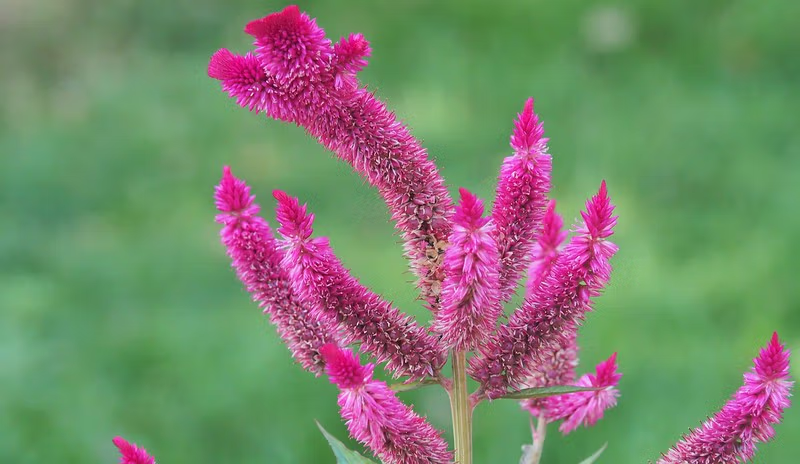
With our time in Bishkek winding down, we visited Oak Park, which is filled with peculiar sculptures and offers another green escape near the centre.
The park makes more sense when you treat it as part of an art cluster rather than a standalone attraction. The nearby Gapar Aitiev National Museum of Fine Arts contains a substantial collection of painting, sculpture, tapestry and decorative art.
Combine the outdoor sculptures, the museum and the Opera and Ballet Theatre. That turns a pleasant but potentially brief park visit into a coherent half-day focused on Kyrgyz visual and performing arts.
Otherwise, Oak Park is still worth visiting for a stroll. Just do not arrive expecting Versailles. It is a city park with art, shade and enough strange sculptures to keep your camera occupied.
15) Finish with the Rides at Panfilov Park (Панфилов паркы)
Lastly, there is Panfilov Park, where carnival rides sit right in the heart of Bishkek. The park is less about polished theme-park spectacle and more about ordinary city recreation: families, children, snacks, noise and rides squeezed into a central green space.
We had eaten an enormous lunch before visiting, which meant the roller coaster was off limits for us. It should not necessarily be off limits for you.
This is the sort of advanced planning insight that arrives only after considerable field research and digestive regret.
Ride operations can be seasonal and weather-dependent, so think of Panfilov as an evening stroll with optional mechanical consequences rather than a destination requiring a full day.
How to Experience Bishkek Instead of Merely Seeing It
Bishkek rewards repetition. Walk Erkindik once in the morning and again after work. Return to the same café. Sit in a park without converting the bench into a five-minute photo stop. Visit a market for food, then come back for household sections and everyday commerce.
The city makes more sense through contrasts: concrete apartment blocks and dense greenery; Soviet memorials and contemporary cafés; noisy avenues and shaded pedestrian corridors; hot summer streets and cold mountain valleys less than two hours away.
Trying to conquer Bishkek through a rigid checklist is like trying to understand a person by reading their passport. Technically informative. Spiritually useless.
| Your mood | Build the day around | Add | Do not overpack |
|---|---|---|---|
| First-day orientation | Ala-Too Square, History Museum and Erkindik | Oak Park or Panfilov | Too many distant neighbourhoods |
| Soviet history | Lenin, Victory Square and Frunze-era architecture | History Museum | A long café list |
| Everyday city life | Erkindik, Osh Bazaar and parks | Coffee or a banya | A monument checklist |
| Food | Osh Bazaar and one serious Kyrgyz meal | Korean food or craft beer | Three giant meals in a row |
| Recovery day | Café, banya and a shaded walk | Opera or art museum | A 25-kilometre hike |
| Mountains | Ala-Archa or Issyk-Ata | An easy dinner back in Bishkek | Major city sightseeing afterward |
Bishkek Photo Essay
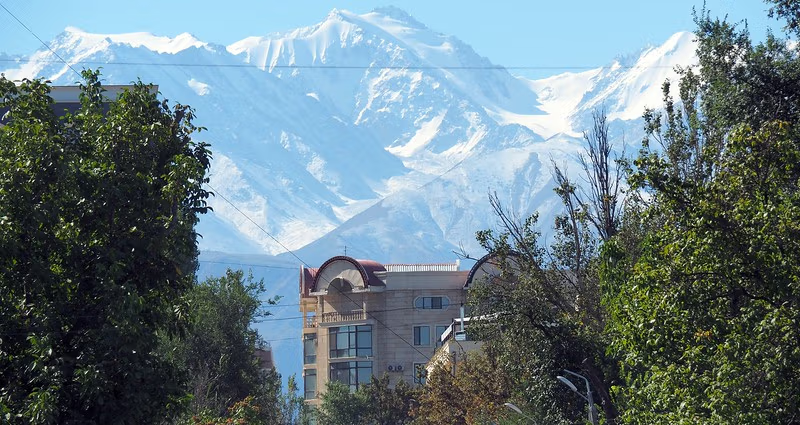
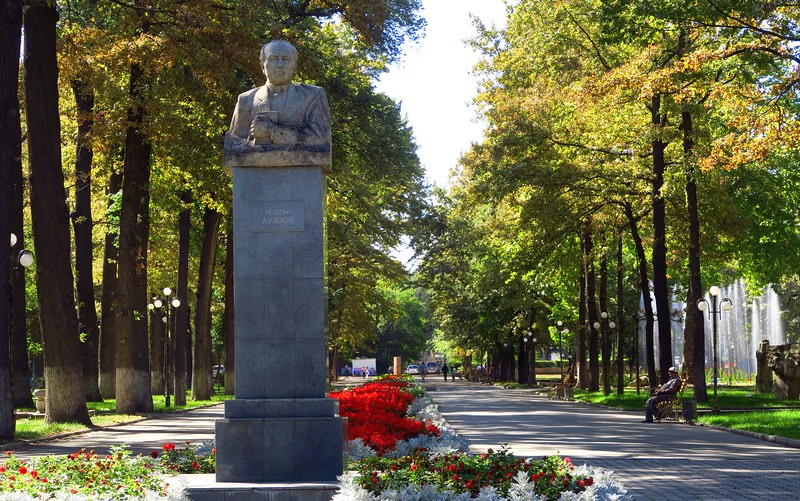
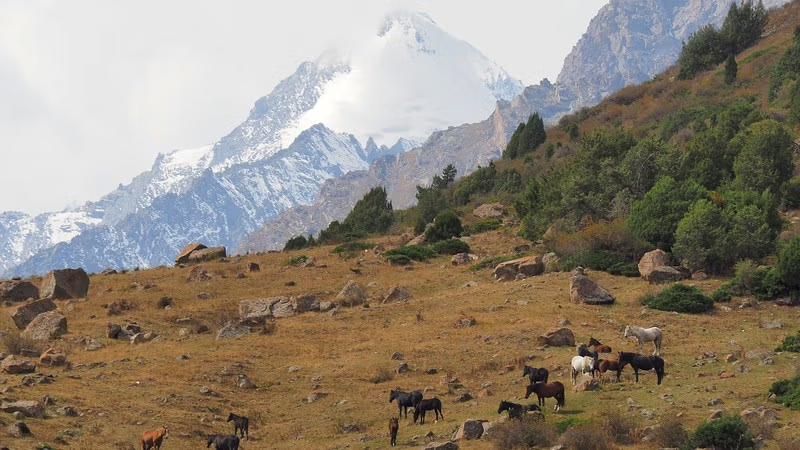
Here is a brief photo essay showing the city we remember: mountains on the horizon, Soviet layers, shaded parks, our apartment block and the landscapes waiting beyond the capital.
Best Day Trips from Bishkek: Which One Should You Choose?
Bishkek’s greatest strategic advantage is the speed with which city streets give way to the northern Tian Shan. One moment you are dodging traffic. Soon afterwards you are standing beside a glacial river wondering why you packed only one thin sweater.
The mistake is assuming every day trip offers the same experience. They do not.
| Day trip | Best for | Physical demand | Main planning issue | Our experience |
|---|---|---|---|---|
| Ala-Archa National Park | First mountain day and flexible hiking | Easy valley walks to serious alpine routes | Return transport, weather and choosing a trail within your ability | Research-based for this guide |
| Issyk-Ata Gorge | Walking, waterfalls, hot springs and Soviet sanatorium atmosphere | Easy to moderate, depending on route | The two waterfalls lie on opposite banks; confirm the real walking distance | Strong firsthand experience |
| Burana Tower and Balasagun | Silk Road history without a major hike | Low | Transport and whether to combine it with other Chuy Valley sites | Research-based for this guide |
| Konorchek Canyons | Red-rock landscapes and light hiking | Moderate | Heat, exposed terrain and a long day when combined with Burana | Research-based for this guide |
| Trekking Union group trip | Social hiking with organised transport | Route-dependent | Read the exact distance, ascent and inclusions | Strong firsthand experience |
Ala-Archa National Park
Ala-Archa is roughly 40 kilometres from Bishkek and offers the easiest introduction to high mountain scenery near the capital. “Visiting Ala-Archa,” however, can mean anything from a relaxed riverside walk to a proper alpine workout that leaves your thighs filing complaints.
Use the official Ala-Archa site for current maps, visitor rules and entrance information. Stay on established trails, carry water and layers, and do not let the proximity to Bishkek convince you that mountain weather has become urban.
Independent travel works best when you are comfortable arranging transport and choosing an appropriate trail. A tour makes more sense when you want hotel pickup, a guide and a defined return journey instead of spending the final hour of your hike wondering how you are getting home.
- Check this highly reviewed Ala-Archa half-day hiking tour from Bishkek
- Compare this small-group Ala-Archa outdoor adventure
- Combine Ala-Archa, Osh Bazaar and central Bishkek in one private day
Burana Tower, Balasagun and Konorchek Canyons
Burana is often reduced to a leaning brick tower in travel photos. It is more useful to understand it as part of Balasagun, one of the important medieval cities of the Chuy Valley and a component of the wider Silk Road landscape.
This is the best Bishkek day trip for travellers who want archaeology, trade-route history and broad valley views without committing to a serious mountain hike.
Konorchek adds red sandstone, open landscapes and a physical component to the day. The combination works well because Burana alone may feel rather brief after the drive. Pairing history with a canyon walk gives the outing more meat on its bones.
- Compare this top-rated Burana Tower and Konorchek Canyons day trip
- See another guided Burana and Konorchek option with private or group departures
Bishkek as the Launchpad for a Bigger Kyrgyzstan Trip
This is where Bishkek’s affiliate and practical value really kicks in.
For many travellers, Bishkek is not the final destination. It is headquarters. You land, recover from the flight, buy a SIM card, exchange money, find camping gas, rent equipment, meet a guide and attempt to understand whether your next vehicle is a bus, marshrutka, shared taxi, horse or Soviet truck.
Then the country opens up: Issyk-Kul, Karakol, Jeti-Ögüz, Altyn Arashan, Song-Kul, Chon-Kemin, Naryn, Kochkor and Osh.
You can organise those pieces independently. That gives you flexibility and often lowers the cost. It also means stitching together transport, guesthouses, yurt camps and local guides in a country where the best experiences do not always come with a frictionless booking funnel.
An organised tour costs more but may solve the ugly logistical bits: long transfers, remote accommodation, horse arrangements, meals, translation and returning to Bishkek with the same number of bags—and ideally limbs—that you started with.
Kyrgyzstan Trip Styles Compared
| Trip style | Best for | What you gain | What you sacrifice | Booking starting point |
|---|---|---|---|---|
| Independent loop | Experienced travellers with flexible time | Freedom, lower costs and spontaneous detours | Convenience and certainty | Book city stays and yurt camps separately |
| Two-day Song-Kul trip | Short visits wanting yurts and horses | A concentrated nomadic-lake experience | Time to linger or adapt | Small-group tour from Bishkek |
| Three-day Issyk-Kul loop | Travellers prioritising lake and gorges | Transport and a planned circuit | Independent pacing | Multi-day lake tour |
| Five-day highlights tour | First-time visitors with limited planning energy | Song-Kul, Issyk-Kul and Altyn Arashan in one package | Money and flexibility | Guided departure from Bishkek |
| Long horse trek | Experienced riders and committed adventurers | Remote access and genuine immersion | Comfort, speed and most of your dignity after several days in the saddle | Specialist riding itinerary |
Song-Kul: Yurt Stays and Horse Riding
Song-Kul is the classic high-altitude yurt-and-horse experience many travellers picture before booking Kyrgyzstan. The lake sits around 3,000 metres above sea level, which means warm sunshine can quickly surrender to a cold night. Pack accordingly. A fashionable linen shirt will not negotiate with altitude.
Independent travellers can book a yurt camp and arrange horses locally, but transport is the awkward part. Roads are seasonal, public connections are limited and the final approach may involve rough mountain passes.
- Compare current Song-Kul yurt camps on Booking.com
- Check this two-day Song-Kul tour with a yurt stay, Burana and horse riding
- Explore this longer small-group horse trek with yurts and community stays
Issyk-Kul and Karakol
Issyk-Kul is enormous. Treating it as one destination is like saying you are visiting “the coast” and refusing to specify which part.
The northern shore around Cholpon-Ata has more resort infrastructure and straightforward lake access. The southern shore is quieter and connects more naturally with canyons, villages, eagle demonstrations and cultural stays. Karakol is the eastern adventure base for trekking, Jeti-Ögüz and Altyn Arashan.
- Compare hotels, hostels and guesthouses in Karakol
- Browse accommodation around Cholpon-Ata on Issyk-Kul’s northern shore
- Check this three-day Issyk-Kul circuit from Bishkek
- Compare this five-day Song-Kul, Issyk-Kul and Altyn Arashan adventure
For more firsthand planning information, continue with my Karakol travel guide.
Kochkor, Naryn and Osh
Kochkor is a common staging point for Song-Kul and community-based stays. Naryn places you deeper into the central mountains. Osh opens the door to southern Kyrgyzstan, the Alay Valley and overland travel toward the Pamirs.
These are not little suburbs of Bishkek. Distances are substantial, mountain roads are slow and a route that looks modest on a map can consume most of a day.
- Browse guesthouses and homestays in Kochkor
- Compare places to stay in Naryn
- Find hotels and guesthouses in Osh
A Practical Bishkek Walking Route
The central sights are best understood as a connected route rather than fifteen isolated pins. This sequence minimises backtracking and can be shortened whenever café fatigue or museum ambition wins.
- Ala-Too Square: begin with the civic centre and mountain backdrop.
- National History Museum: visit the galleries, then find Lenin behind the building.
- Panfilov Park: walk through the rides and family recreation area.
- Oak Park and the Fine Arts Museum: combine outdoor sculptures with Kyrgyz art.
- Opera and Ballet Theatre: check the current programme or admire the building.
- Erkindik Boulevard: turn south through the shaded pedestrian corridor.
- Victory Square: finish at the yurt-shaped memorial and eternal flame.
Osh Bazaar does not fit neatly into this central circuit and deserves a separate outing. The same is true of any banya session. Do not wedge communal bathing between a museum and dinner as though it were a quick monument.
Travellers who want historical context rather than navigating through the city while reading paragraphs from their phone may prefer a guided walk.
Compare current Bishkek walking tours, Soviet-history tours and city experiences
How Many Days Do You Need in Bishkek?
| Time available | What is realistic | What you will miss |
|---|---|---|
| One day | Central walking route, one museum and one strong meal | The slow rhythm that makes Bishkek appealing |
| Two days | Central sights plus Osh Bazaar, café time and an evening activity | A proper mountain day |
| Three days | Two city days plus Ala-Archa, Issyk-Ata or Burana | Very little for a first visit |
| Four or more | Slow city routines, multiple day trips and recovery time | Only the illusion that every day must be productive |
A One-Day Bishkek Itinerary
Start at Ala-Too Square, visit the National History Museum and find Lenin behind it. Continue through Panfilov and Oak parks, eat lunch, walk Erkindik Boulevard and finish at Victory Square. Use the evening for Kyrgyz food, opera if the programme works or a relaxed café.
A Two-Day Bishkek Itinerary
Use the first day for the central walking route. On day two, visit Osh Bazaar in the morning, leave time for a substantial lunch and choose one character experience: banya, art museum, café crawl or a carefully verified roller-skating alternative.
A Three-Day Bishkek Itinerary
Add a day trip. Choose Ala-Archa for flexible mountain scenery, Issyk-Ata for the strongest overlap with our own trip or Burana and Konorchek for Silk Road history mixed with red-rock hiking.
Do not plan a packed city evening after a serious hike. We tried combining long outdoor days with ambitious eating, and only one of those activities improves when exhausted.
Where to Stay in Bishkek
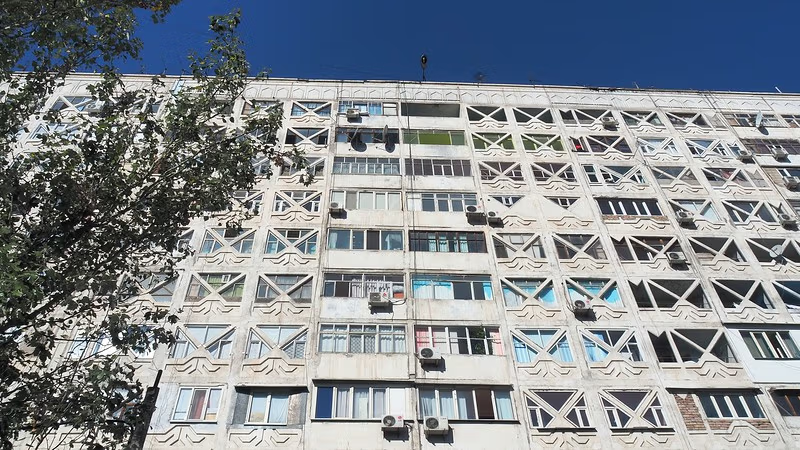
We stayed in a Soviet-era apartment building, which suited a longer visit and gave us more of an ordinary residential experience than a large international hotel would have.
It also gave us an elevator whose reliability inspired prayer.
For current travellers, the best area depends less on luxury category than on what you want outside your door.
| Area | Best for | Advantages | Trade-off |
|---|---|---|---|
| Ala-Too Square | First-time sightseeing | Easy orientation and access to museums and civic landmarks | More formal and less neighbourhood-like |
| Erkindik Boulevard | Walking, cafés and longer stays | Green, central and pleasant at different times of day | Popular central properties may cost more |
| Oak Park and Opera area | Art, culture and evening walks | Good access to central attractions without sitting directly on the square | Less convenient for Osh Bazaar |
| Osh Bazaar side | Markets and budget-minded local atmosphere | Food, transport and everyday commerce nearby | Busier, noisier and less relaxed for some first-time visitors |
| Residential apartment | Longer stays | Kitchen, washing machine and a more lived-in experience | Quality varies; elevators and building access can be inconsistent |
For most first visits, somewhere between Ala-Too Square and Erkindik Boulevard offers the strongest balance. You can walk to much of the central city and still return to a neighbourhood that feels livable rather than purely administrative.
Current Bishkek Hotel Shortlist
The following are researched booking options, not hotels where we personally stayed. Review scores, prices and availability change, so inspect the latest guest feedback before handing over your credit card.
- Bishkek Centrum Hotel — a central mid-range option with a strong location near Victory Square and consistently substantial guest feedback.
- Sheraton Bishkek — a higher-end choice for travellers wanting an international hotel, pool and full-service facilities.
- Ala-Too Central Square Residence — a spacious apartment-style option close to the central square, useful for families, groups or longer stays.
Compare the full range of Bishkek hotels, apartments and guesthouses for your dates
Getting to Bishkek
Arriving at Manas International Airport
Manas International Airport sits outside Bishkek and operates around the clock. Airport construction and route changes are possible, so check current notices rather than treating any decade-old blog post as an eternal transportation covenant.
Municipal airport buses offer the cheapest route into the city when their schedule matches your arrival. An official airport taxi or prearranged driver remains the simplest option for very late flights, heavy luggage or travellers who do not want their first task in Kyrgyzstan to involve interpreting a bus route after being awake for 27 hours.
A practical compromise is staying centrally for your first night, sleeping like the dead and sorting out the adventurous bits the following morning.
Arriving Overland
Bishkek is a natural overland hub for Almaty, Issyk-Kul, Karakol, Osh and the rest of Kyrgyzstan. The exact departure point matters more than the phrase “bus station” because different routes may use different terminals or informal shared-taxi stands.
Before travel, confirm three things: the correct station, whether you are taking a scheduled bus or shared vehicle, and whether the quoted time includes border or mountain-road delays.
Bring snacks. Central Asian transport becomes easier once you stop expecting every timetable to represent a legally binding promise.
Getting Around Bishkek
Central Bishkek is walkable in useful clusters, but not every attraction is conveniently close. Osh Bazaar, outlying restaurants and some accommodation areas are easier by bus or taxi.
Walking
Walk for the central parks, Ala-Too Square, museums, Erkindik and Victory Square. The grid is relatively easy to understand, shade helps in summer and walking reveals small sculptures, irrigation channels and Soviet residential details that disappear through a car window.
Pay attention at road crossings and after dark. Broad avenues, uneven pavement and open aryks can make a route less effortless than it appears on a map. Bishkek is walkable, but it occasionally tests whether you are watching the ground.
Buses and Electronic Payments
The old article referred to trolleybuses, but that information is obsolete. Bishkek suspended trolleybus operations in late 2024 and shifted those routes toward buses.
The city’s payment system has also become more electronic, with transport cards, bank cards and QR options available across municipal services. Exact fares, transfer rules and accepted methods can change. Check current city information after arrival instead of preserving a 2026 fare in amber until 2037.
Taxis
Taxi applications are the easiest solution for late-night trips, luggage and locations beyond the central grid. Pin the destination rather than relying only on pronunciation, check the vehicle and plate, and use the quoted in-app fare when available.
A taxi is also cheaper than turning a simple cross-town trip into an accidental two-hour walking tour because you were too proud to admit the map scale fooled you.
Best Time to Visit Bishkek
| Season | What Bishkek feels like | Best for | Main drawback |
|---|---|---|---|
| Spring | Greening parks, variable rain and improving mountain access | Walking and lower-elevation day trips | Some higher routes may still hold snow |
| Summer | Hot city days, deep shade on boulevards and broad mountain access | Trekking and combining Bishkek with wider Kyrgyzstan | Heat and dust; it reached roughly 35°C during our June visit |
| Autumn | Cooler air, changing leaves and potentially clearer city walking | Photography and mixed city-mountain itineraries | Shortening days and increasingly cold high country |
| Winter | Cold streets, snow possibilities, indoor culture and banyas | Museums, food and a local city break | Serious air-pollution episodes and limited mountain access |
Winter requires an honest warning. Bishkek can experience severe seasonal air pollution, driven by heating, traffic and the city’s geography. Anyone with respiratory or cardiovascular concerns should monitor current air quality rather than romanticising a snowy banya trip and discovering their lungs have filed a formal objection.
For the broadest combination of city walks, yurt camps, horse trips and high mountain access, summer is the practical winner. For cooler urban wandering and changing foliage, early autumn is especially appealing.
Practical Bishkek Travel Advice
Visa and Entry Rules
Do not rely on a broad article claim that every Western passport receives the same visa-free stay. Kyrgyzstan’s rules vary by nationality and have changed. Use the official Kyrgyz Republic eVisa eligibility checker for your passport and reconfirm shortly before departure.
Money
The local currency is the Kyrgyz som. Cards and electronic payments have expanded, particularly in central businesses and municipal transport, but cash remains useful for markets, small purchases, shared transport and any moment when a terminal decides not to cooperate.
Historical prices in this guide—100 som for Audrey’s dates, 300 som for my banya visit and 930 som for our large Arzu meal—describe our trip. They are included because they are real details, not because they remain current.
Language
Kyrgyz and Russian are the two languages travellers encounter most. English is present in tourism businesses and some modern cafés, but it is not universal. Save addresses in Cyrillic, download an offline translation tool and learn a few greetings.
A smile and some hand gestures can accomplish quite a lot. They cannot, however, communicate the subtle difference between “short scenic hike” and “25 kilometres with a wet shoe.” Get that part in writing.
Safety
Use ordinary capital-city precautions: secure valuables in Osh Bazaar, avoid poorly lit shortcuts, verify taxis and do not follow unofficial strangers to a private location. The fake-police warning in this guide came from people we met during our visit; it should be understood as a historical firsthand caution rather than proof of a universal current scam.
For an emergency in Kyrgyzstan, call 112. Mountain trips deserve a separate standard of caution: weather changes, river crossings, altitude and route-finding remain serious even when the trail begins close to Bishkek.
What to Pack
- Comfortable walking shoes: useful for long boulevards, markets and imperfect pavement.
- Mountain layers: nearby gorges can be dramatically cooler than Bishkek, and weather changes quickly.
- Sun protection: particularly for summer walks and exposed mountain routes.
- Sandals or flip-flops: useful for banyas, guesthouses and hot springs.
- Small daypack and reusable water bottle: enough for city days and easy hikes without carrying your entire life.
- Offline maps: useful for buses, trailheads and addresses written differently across languages.
- Patience: weighs nothing and will be used frequently.
What Has Changed Since Our Bishkek Trip?
| During our visit | Current planning reality |
|---|---|
| The National History Museum was closed for renovation | It has reopened and now receives visitors under its published schedule |
| Trolleybuses formed part of the urban transport picture | Operations were suspended in 2024 and replacement bus routes introduced |
| Cash and informal payment habits shaped transport | Municipal transport now supports several electronic payment methods |
| We explored an abandoned casino and nightclub | Its present access and condition are unclear; it is no longer recommended as an activity |
| We used a specific retro roller rink | The exact venue has not been confidently matched with a current operation |
| Trekking Union organised our Issyk-Ata hike | The organisation still operates, publishes routes and rents outdoor equipment |
| Our restaurant and café favourites were current | Verify branches, names, addresses and operating status before planning around them |
This distinction matters. A definitive travel guide should not disguise an old trip as a current one. Our experiences remain real and valuable. Mutable logistics need dates, sources and occasional surgery.
Bishkek Travel Questions
Is Bishkek worth visiting?
Yes, especially if you enjoy cities that reveal themselves slowly. Bishkek is not Kyrgyzstan’s great architectural spectacle. Its strengths are parks, markets, ordinary routines, Soviet history, food and the ability to reach mountain landscapes quickly.
Is one day enough for Bishkek?
One day is enough for the central walking route, but not enough to understand why people linger. Two city days plus one mountain or history day trip is a much better first visit.
What is the best area to stay in Bishkek?
For most first-time visitors, choose a base between Ala-Too Square and Erkindik Boulevard. It keeps museums, parks, cafés and central transport within reasonable reach while giving you a more pleasant everyday environment than staying beside a giant road.
Compare central Bishkek accommodation for your travel dates
What is the best Bishkek day trip?
Ala-Archa is the easiest all-purpose choice. Issyk-Ata is better if waterfalls, hot springs and Soviet sanatorium atmosphere appeal to you. Burana and Konorchek work well for travellers wanting Silk Road history and a canyon walk in the same day.
Compare all currently bookable day trips from Bishkek
Can you visit Bishkek without speaking Russian or Kyrgyz?
Yes, but preparation helps. Save addresses in Cyrillic, use offline translation, learn a few phrases and expect English ability to vary considerably outside hotels, tour operators and modern cafés.
Is Bishkek walkable?
The central sights are walkable in clusters. The entire city is not. Use walking for Ala-Too, Oak Park, Erkindik, the opera and Victory Square, then take a bus or taxi for Osh Bazaar, the airport and more distant neighbourhoods.
Should I book a tour or travel around Kyrgyzstan independently?
Independent travel offers flexibility and can cost less, but it requires more time, transport research and tolerance for ambiguity. A tour is most valuable when the route involves remote yurt camps, horses, multiple long transfers or mountain areas where a guide materially improves safety and logistics.
The answer may also be a hybrid: book Bishkek and Karakol accommodation independently, join a guided mountain or Song-Kul trip, then continue around Issyk-Kul at your own pace.
Browse current multi-day Kyrgyzstan itineraries departing from Bishkek
Bishkek might not scream for attention the way some capitals do, and that is exactly why it works. It is a city you learn by walking, eating, sitting on park benches and accepting that a supposedly simple activity may involve a naked stranger pushing you into freezing water.
Give it a few days. Mix the official monuments with the parks, cafés, markets and mountain escapes. Repeat a route instead of constantly hunting for something new. Use the city to organise the rest of Kyrgyzstan, but do not become so obsessed with leaving that you fail to notice the place beneath your feet.
Bishkek won us over in a matter of days. By the end of our visit, we understood why so many travellers choose to linger—and why others somehow find a way to call it home.
Bishkek Trip Frequently Asked Questions
Is Bishkek worth visiting?
Yes. Bishkek is not Kyrgyzstan’s great architectural spectacle, but its parks, markets, Soviet history, food and easy access to mountain landscapes reward travellers who give the city time.
How many days do you need in Bishkek?
Two city days plus one day trip make a strong first visit. One day covers the central walking route, while three or more days allow time for Osh Bazaar, cafés, a banya and the nearby mountains.
What is the best area to stay in Bishkek?
For most first-time visitors, the area between Ala-Too Square and Erkindik Boulevard offers the best balance of central sights, parks, cafés and practical transport.
Is Bishkek walkable?
The central sights are walkable in useful clusters, including Ala-Too Square, Oak Park, Erkindik Boulevard, the opera and Victory Square. Buses or taxis are more practical for Osh Bazaar, the airport and distant neighbourhoods.
What is the best day trip from Bishkek?
Ala-Archa is the easiest all-purpose mountain trip. Issyk-Ata combines walking, waterfalls, hot springs and Soviet sanatorium atmosphere, while Burana and Konorchek suit travellers who prefer Silk Road history and canyon scenery.
Can you visit Bishkek without speaking Russian or Kyrgyz?
Yes, although preparation helps. Save addresses in Cyrillic, use offline translation, learn a few basic phrases and expect English ability to vary outside hotels, tour operators and modern cafés.
Should you book a Kyrgyzstan tour from Bishkek or travel independently?
Independent travel offers flexibility and can cost less, but it requires more time and transport research. Organised tours are most useful for remote yurt camps, horse trekking, multiple long transfers and mountain routes where a guide improves logistics or safety.
And that’s a wrap for our trip to Bishkek. This city is the kind of place that you experience as opposed to ticking off attractions, so it ended up being a fairly relaxing stop after a few busy weeks of travel around Kyrgyzstan. As always, if you have suggestions for things to do in Bishkek, feel free to share your tips with fellow travellers in the comments section below.
Affiliate disclosure: This guide contains affiliate links to Booking.com and GetYourGuide. If you book through one of these links, I may earn a commission at no additional cost to you. We only include booking options where they solve a genuine planning problem; none of the researched hotels or tours should be mistaken for a personal stay or tour unless I explicitly say we experienced it ourselves.
This Bishkek travel guide does a great job of capturing the unique vibe of the city—laid-back, full of hidden gems, and best experienced without a rigid plan. The list balances major sights like Ala-Too Square and the State Historical Museum with more offbeat spots like the abandoned casino and Zhirgal Banya. The personal tone and local tips (like avoiding fake police at the bazaar or wearing closed shoes in sketchy places) make it both informative and relatable. It’s not just a checklist—it reads more like a conversation with a well-traveled friend who’s genuinely excited about Bishkek.
This guide is fantastic! I had no idea how much there is to see and do in Bishkek. From exploring Ala Archa National Park to visiting the local markets, it looks like there’s something for every type of traveler. I’m especially excited about the hiking options and learning about the rich cultural history of the city. Your recommendations are so helpful, and I’ll definitely keep them in mind when I visit. Thanks for opening my eyes to a place I never thought to explore before! 🌍✨
What a fantastic guide to Bishkek! I never realized how much there is to do in Kyrgyzstan’s capital. Your list of top activities, from exploring Ala Archa National Park to immersing in the local culture at the Osh Bazaar, makes me want to visit right away! I especially appreciate the tips on navigating the city and where to find the best local food. I’ll definitely be using this as a reference when I plan my trip. Thanks for sharing such a well-rounded and informative post!
Abogado Impuestos Sucesorios Virginia Abogado Impuestos Sobre Donaciones
Un abogado de impuestos sucesorios puede hacer cosas asombrosas para protegerlo a usted y a sus hijos. Especialmente cuando se trata de cuestiones como los impuestos sobre donaciones. Llame a las Oficinas Legales de SRIS, P.C. Este Dia
Wow, Bishkek sounds like such a hidden gem! I love how the city mixes quirky sights with cultural experiences. Ala-Too Square and Osh Bazaar seem like perfect places to start, but the real highlight for me has to be hiking in the nearby mountains. The Trekking Union sounds like an amazing way to explore nature with great company. Plus, I’m definitely intrigued by the Kyrgyz traditional food and the fermented mare’s milk!
“Such a comprehensive and helpful guide to Bishkek! I had no idea there were so many amazing things to do in Kyrgyzstan’s capital. From the stunning Ala Archa National Park to the vibrant Osh Bazaar, this list really highlights the best of what the city has to offer. I’m definitely adding Bishkek to my travel bucket list—thanks for the great recommendations!”
This post is fantastic—thank you for sharing such valuable insights! The information is not only clear but also incredibly useful, making it easy to put into action. Really appreciate the effort and detail!
Thank you for sharing this detailed travel guide to Bishkek! Your list of activities captures the city’s unique blend of cultural, historical, and quirky attractions, from Ala-Too Square and Osh Bazaar to hidden gems like the abandoned casino and retro roller rink. The insight on Bishkek’s relaxed vibe and the thrill of discovering local cafes, saunas, and parks makes it feel so inviting. Plus, the mountain hiking options sound perfect for outdoor enthusiasts. Bishkek truly seems like a place where one can both unwind and uncover surprises along the way—your guide brings it all to life beautifully.
“Such a great travel guide! Bishkek sounds like an amazing destination with so much to offer. I love how you highlighted both cultural spots and outdoor adventures. This post is definitely going on my travel bucket list—thanks for the recommendations!”
“Thank you for this insightful post! I truly appreciate the depth of information and practical advice you’ve shared. It’s always great to come across content that not only informs but also inspires action. Keep up the great work!”
Exploring Bishkek, Kyrgyzstan, offers a unique blend of cultural experiences and natural beauty, making it a fantastic travel destination. From visiting Ala Too Square, which is the heart of the city, to exploring the vibrant Osh Bazaar for an authentic local shopping experience, there’s so much to see.As a Softglaze member, sharing insights about these top activities can inspire others to explore the rich culture and stunning scenery of Bishkek, creating unforgettable memories in this vibrant city.
“Thanks for this amazing guide! Bishkek looks like such a hidden gem. Out of all the activities, which one would you say gives the best cultural experience for first-time visitors?”
“Great guide! Bishkek seems like such a vibrant mix of culture, history, and nature. The blend of Soviet architecture with stunning mountain views sounds amazing. Which of the top 15 would you say is an absolute must for first-time visitors?”
“Fantastic guide! Bishkek looks like such a hidden gem with so much to offer. I love how you’ve included a mix of cultural sites, nature spots, and local experiences. Definitely adding this to my travel bucket list—thanks for sharing!”
Nice travel blog.
“Thanks for this awesome guide! Bishkek seems like such an underrated gem with a rich blend of culture and nature. Exploring Ala-Too Square and hiking in the nearby mountains sound like must-do activities. I’m curious—what’s your personal favorite spot in Bishkek that really captures the spirit of the city?”
Fantastic guide! Bishkek has always intrigued me, and this list of top things to do is incredibly helpful. I love the mix of cultural sites, outdoor activities, and local experiences you’ve included. This is definitely going to be my go-to resource for planning my trip. Thanks for the great recommendations!
“This travel guide is fantastic! The list of top things to do in Bishkek is comprehensive and really highlights the best of Kyrgyzstan’s capital. Your recommendations and tips are incredibly helpful for planning a visit. Thanks for putting together such an insightful and detailed guide!”
“Fantastic guide! Bishkek seems like a hidden gem with so much to offer. Your top 15 list is comprehensive and highlights some amazing spots. I especially appreciate the mix of cultural sites, natural beauty, and local experiences. Definitely adding Bishkek to my travel bucket list. Thanks for the detailed recommendations!”
Very Very Nice Blogging
Extremely excellent!! So beautiful and nice pictures.
Such a beautiful pictures..Thanks for sharing.
Thanks for sharing this information with us.
Really awesome place all photography is very good.Thanks for the post
The pictures look so amazing. Thanks for Sharing!
Looks amazing thanks for sharing. I visited these places in the summertime.
The pictures look so amazing.
Interesting adventure… Nice scenery for hiking!
The pictures look so amazing. Would love to visit Bishkek. Thanks for Sharing!
Thanks Abhinav! It is a beautiful city.
The video you added in a blog about 15 things to do in Bishkek is quite interesting & informative too
Thanks Pradish! We’d love to revisit again someday.
Hi, thanks for this post. It is exactly what i was looking for
Thanks! Glad to hear that.
I am glad both Kyrgyzstan and Kazakhstan have lifted visas for foreign travellers. I would love to see issyk kul in Kyrgyzstan. Thanks for the post
Thanks Mutlu! Highly recommend Issyk Kul. The rugged beauty of this country is unrivalled.
Very informative post, full of colorful images and description that makes it a perfect page to read and know about the glory of Kyrgyzstan as a fantastic destination. Worth reading. Thanks & warm regards for this great share.
Thank you very much Shashank!
It looks like there is a wide range of things to do in Bishkek.
I’ve been intrigued by these Central Asian countries for some time now. Hopefully, I will be able to get to one of them in the future.
I knew next to nothing about Bishkek before I read this post. It was nice to see there is quite a bit to do. Victory Monument and the abandoned casino would be right up my street.
The day hike to the gorge looks incredible as well!
Thanks for sharing Samuel, this has whet my appetitie for adventures in Central Asia!
Thank you very much Tom! I hope you get a chance to visit. Our time in Kyrgyzstan has made us realize we want to see much more of Central Asia.
Bishkek seems to be an awesome city to visit, especially with those mountains in the background! Nice photos, regards!
Thank you! The mountains sure provide a beautiful backdrop.
Great Blog. Very Interesting. Thanks for sharing this information with us.
Thanks James!
This is interesting! Sincerely, I clicked on the article because I was so curious to know where exactly Bishkek is. I’m from Eastern Europe, but never heard of it. It looks like a good place to relax and enjoy the silence. 🙂
Thanks Paula! I think it is still very underrated in many ways.
Hey , Thank for this nice guide and Osh Bazaar is full of colors and smell. A nice place to discover some of the Kyrgyz culture.
Thanks Kaminska! That bazaar was a fav of ours.
really awesome place all photography are very good.
Pictures and place both are looking beautiful, i would love to visit Bishkek one day but sadly not soon as i am already planning to visit Canada.
This is wonderful list to do best thing in Bishkek & a special post for those never been at Bishkek! Well there are the lot of thing those attract peoples toward Bishkek.
So Bishkek with amazing thing to do.
Great, that is an awesome place and it have so many good things to enjoy. i really like beauty of these places and so stunning photos you shared of that place.
Wow! i inspired with the list of things to do in Bishkek. I like amazing mountain view wonderful pictures you shared.
Hei Sam! What an amazing trip you had, I bet you had a great time eh? Never have I thought to visit Kyrgyz before, but this, your post might totally change my mind! The view is incredible. Hiking or trekking is pretty tiring, but I think it wouldn’t be as tiring when you have that view along the way! And yes, tasting their traditional food is an important thing to do every time we visit new country or place, right? Well, thank you for writing the list! I’d like to suggest you to visit Southeast Asia, though. Phuket! Beautiful beaches and lots of things to do! Come and stay with us, you can explore or just relax for awhile. Exclusive ocean view and infinity pool, oh yes! Please do visit our website for more information! Thank you.
Just to say I love your blog! I first found you when I was searching for information about Bergen. You have inspired me to start my own blog! 😀 thank you!
Awesome Photography 🙂 Thanks for sharing with us.
Awesome Article: Amazing Photography 🙂 Keep Shearing Such Useful Article!
Hi Sam and Audrey, it’s been ages, but I am so glad you also visited Bishkek and liked it. I spent about 3-4 months here, used as a base for visas too when I backpacked in Central Asia. A truly inspiring city for me and you have also done it justice here. Safe travels. Jonny
Thank you for all the great information. I love hearing about places like this. Another destination to add to the growing list:)
Thanks for sharing info Erkindik Park in Bishkek, Kyrgyzstan is the awesome place great helpful information about this blog. Thanks again.
great pics! thanks for sharing!
this is an amazing place to visit. i would definitely take some time to visit these places.
Great article with good insights. It will help people who are planning to go to BISHKEK.
Amazing photography! It was great Bishkek. Thanks for sharing it.
Wow such a great things to do and amazing pics. Thanks for sharing.
Retro Rollerskating looks like amazing experience , Great photography
Thanks for sharing this blogs
Awesome Pictures its looking pretty cool and lovely in this post. This article will help the traveler what to do in Bishkek.
Hi,
Great post. What other parts of Kyrgyzstan did you visit?
Great post. What other parts of Kyrgyzstan did you visit?
BISHKEK is like a heaven on the earth because last year i visit here with family we enjoy a lot. every thing is looking naturally. especially we enjoy mountain hacking. thanks for sharing a such a beautiful blog.
Thank you, Sam, for this fantastic post. I have never been to Bishkek before. But this place looks super cool to take some vacation. Very nice looking photography. Thanks for sharing. loved it:)
Stunning Photos and useful trip.
I’d be first in line for the retro rollerskating! Looks awesome!
Interesting adventure… Nice scenery for hiking!
Central Asia is so interesting, yet there are few travel bloggers writing about them.
thanks for sharing!! i didn’t know the place! great pics!
So awesome place ad suggested amazing things of that beautiful place. so stunning photos you shared.
Bishkek would be great place to be. Thanks for the awesome share 🙂
Awesome post! Bishkek looks awesome!
Love the old soviet architecure!
Pinning this for later. Looks fabulous and weird.
Wow!!! What a wonderful pictures you shared. Views are amazing. Great information you shared about blog post. Thank you so much for sharing it.
Also plan a tour in South Asian country Nepal and experience diverse customs and traditions.
Great Photography! thanks for sharing.
Wow😍😍😍
Looks amazing thanks for sharing.
I visited this places in summer time. The people are very friendly and hospitality. Don’t worry really safe country. I booked tour with Mega Tour. Very professional guides and drivers
?
Thank you! We felt inspired in Bishkek.
Would like to go back to Nepal again someday.