
Our first mistake in Karakol was treating it as a day trip.
Audrey and I arrived with one of those heroic travel itineraries that looks perfectly reasonable on a screen and immediately falls apart when exposed to roads, meals, traffic and actual human beings.
The plan involved a museum, the Dungan Mosque, the Holy Trinity Cathedral, a market lunch, Jeti-Ögüz, some hiking and several waterfalls. What we actually did was spend a large portion of the day inside a vehicle, race through a handful of excellent places and reach Jeti-Ögüz just as the clock was beginning to laugh at us.
The waterfalls never happened. Neither did the hike.
We returned to our hotel that evening and concluded that Karakol needed at least two or three days. Less than a year later, we came back and finally gave it the time it deserved.
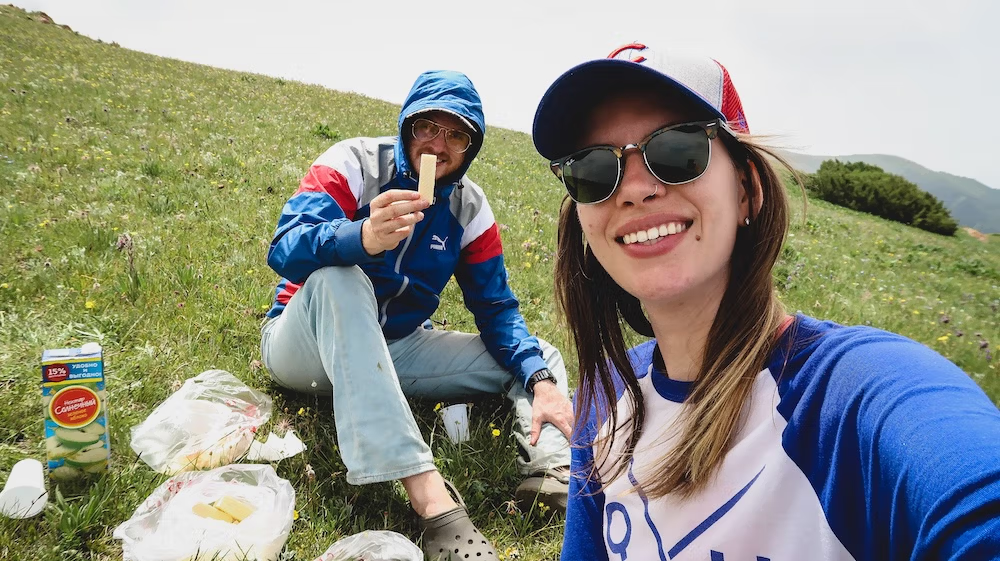
Karakol is usually introduced as the adventure capital of Kyrgyzstan. Fair enough. It is one of the country’s main bases for hiking, horse trekking, alpine lakes, hot springs, skiing, yurt stays and multi-day routes through the Tian Shan.
It is also where travellers arrive carrying far too much gear, spread maps across guesthouse tables, hunt for trekking partners, rent equipment, reorganize bags and try to understand how an innocent-looking line on a map involves three mountain passes and several days without a shower.
But Karakol is not merely a storeroom where hikers buy noodles, rent a tent and vanish into the mountains.
The town has a wooden Russian cathedral, mosques built by different Muslim communities, old merchant houses, Soviet memorials, unusual museums, chaotic markets, community-minded cafés and one of the most interesting food scenes in Kyrgyzstan. Dungan, Uyghur, Kyrgyz, Tatar and Russian histories overlap here in ways you can see on the streets and taste at the table.
This Karakol travel guide combines both of our visits, our original photographs, four dedicated videos and the practical lessons we learned after initially trying to do far too much.
Is Karakol Worth Visiting?
Yes—particularly if you enjoy destinations that do not reveal themselves through one famous landmark and a polished pedestrian zone.
Karakol feels more like a large mountain town than a finished tourist product. The roads can be rough. Attractions are scattered. Rain can derail a market visit. The lake is not sitting directly beside the town centre waiting for you to wander onto a beach with a cocktail.
There is friction.
I like that.
Spend enough time here and Karakol begins to make sense as three destinations layered on top of one another:
- A multicultural town with Russian, Dungan, Kyrgyz, Uyghur and Tatar architecture, food and history.
- A mountain headquarters for everything from easy valley walks to demanding multi-day alpine routes.
- A recovery base where hikers return for showers, laundry, cakes, guesthouse breakfasts and the occasional afternoon during which absolutely nothing ambitious needs to happen.
Food lovers could spend several days here without attempting a serious hike. Hikers could stay for a week and still be arguing over which trail to tackle next. Photographers get religious architecture, carved wooden houses, markets, Soviet monuments, valleys and lake light within a relatively compact region.
If your entire Kyrgyzstan itinerary revolves around resort-style beaches, Karakol may not be the obvious choice. For travellers who like mountains, food, history, mild inconvenience and towns with a few rough edges, it is one of the most rewarding stops in the country.
It is also one of the most useful places to establish a proper base. You can compare hotels, guesthouses and hostels in Karakol on Booking.com, then organize your hikes, horse treks, day trips and gear rental once you understand how much time you actually have.
How Many Days Should You Spend in Karakol?
Our original recommendation was two or three days. After returning and seeing how quickly the possibilities multiply, I would now treat that as the minimum for a balanced first visit.
| Time Available | What You Can Realistically Do | What You Will Sacrifice |
|---|---|---|
| One full day | Town walking route, mosque, cathedral, museum, bazaar and one memorable meal | No proper valley trip, lake cruise or meaningful hike |
| Two nights | One town-and-food day plus Jeti-Ögüz, a day hike or the lake | You must choose between several excellent outings |
| Three to four nights | Town, food experience, valley excursion and either a hike or cruise | Not enough for a serious multi-day trek |
| Five to seven nights | Karakol as a proper base, including rest days, an overnight valley stay or a multi-day route | Very little, unless your trekking ambitions are slightly unhinged |
| One week or longer | Town plus Jyrgalan, Ala-Kul or another major mountain itinerary | Your onward travel schedule may begin glaring at you |
The important point is that Karakol town, Lake Issyk-Kul, Jeti-Ögüz, Barskoon and the high mountains are not one attraction. They require separate chunks of time.
Do not repeat our first trip by loading a museum, two religious sites, lunch, red-rock formations, hiking and waterfalls into one daylight window. The map may encourage such nonsense. The road will correct you.
15 Best Things to Do in Karakol
The following 15 experiences preserve the heart of our original guide, but they are now grouped around what Karakol actually does best: town culture, food and access to the surrounding landscape.
Karakol Town, Architecture and History
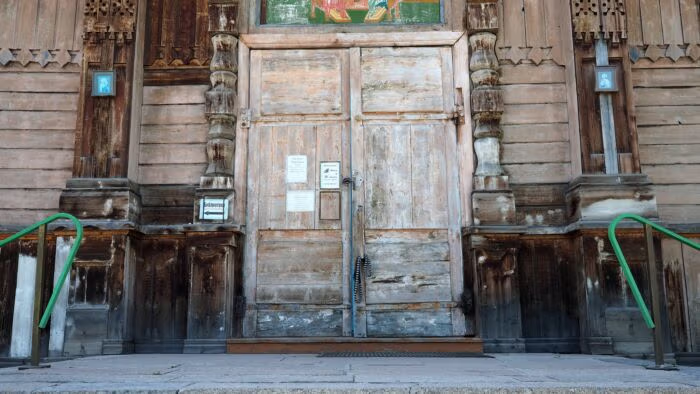
1) Begin with a Karakol Walking Tour
One of the smartest decisions we made on our return visit was beginning with a local walking tour.
At the time, the tourist office offered free, tip-based walks several times per week. We joined one in the morning and then used the afternoon to wander beyond the centre on our own, which is the sort of sensible travel planning we occasionally manage after first demonstrating the wrong approach.
The arrangement has since changed. The current Destination Karakol walking tour is a paid, reservation-based experience lasting roughly 1.5 to 2 hours. Stops normally include the Dungan Mosque, Tatar Mosque, Russian Quarter, Holy Trinity Cathedral, Bugu Bazaar and Ashlyan-fu Alley.
That route matters because Karakol’s history is not conveniently stored in one grand museum with a gift shop at the exit. It is scattered across places of worship, carved wooden houses, Soviet memorials, neighbourhoods and bowls of cold noodles.
Independent travellers can download a town map, use a self-guided audio tour or loosely follow the same route. A guide adds stories and context, but central Karakol is manageable on foot once you understand where everything fits.
A sensible self-guided order: Dungan Mosque → Russian Quarter → Tatar Mosque → Holy Trinity Cathedral → Karakol History Museum → Bugu Bazaar → Ashlyan-fu lunch.
Travellers who want a bookable overview combining the town with nearby scenery can also browse current Karakol tours and activities on GetYourGuide. Inventory changes quickly here, so compare the actual itinerary rather than assuming every “Karakol tour” includes the same places.
2) Visit the Dungan Mosque
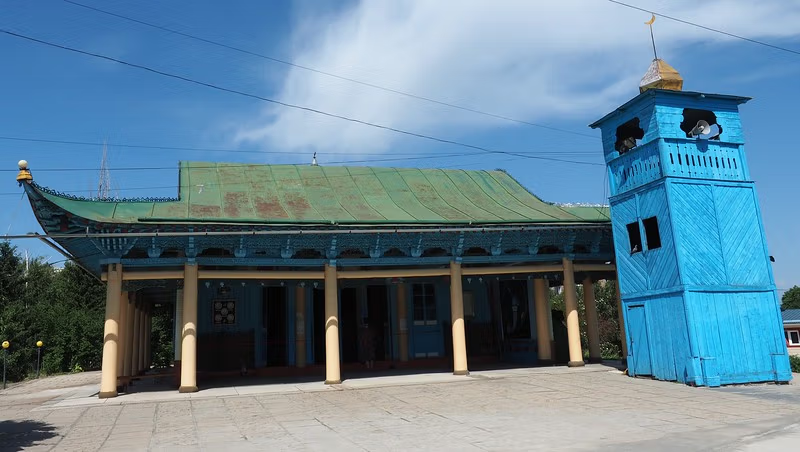
Our first major stop was the Dungan Mosque, one of Karakol’s most distinctive buildings.
Architecturally, it looks closer to a Chinese temple than the mosque many first-time visitors expect. It was constructed for Karakol’s Dungan community—Chinese-speaking Muslims whose migration into Central Asia helped shape the city’s architecture, agriculture and food.
The colourful timber construction, layered roof and decorative details make it an obvious photography stop. The traditional claim is that the original structure was assembled without nails, though our guide admitted that a previous visitor had spotted one.
Modern repairs have apparently introduced a small but inconvenient challenge to the purity of the legend.
The more practical surprise came at the entrance.
Audrey did not merely need a scarf. She was handed a complete hooded covering made from heavy, velvet-like material and briefly vanished inside it. Women should expect to cover their head, arms and legs, and the mosque provides suitable clothing. Visitors remove their shoes and should behave as they would in any active place of worship.
A small entrance fee or donation contributes to the mosque’s upkeep. Check current arrangements if you are visiting outside normal daytime hours.
3) Step Inside Holy Trinity Cathedral
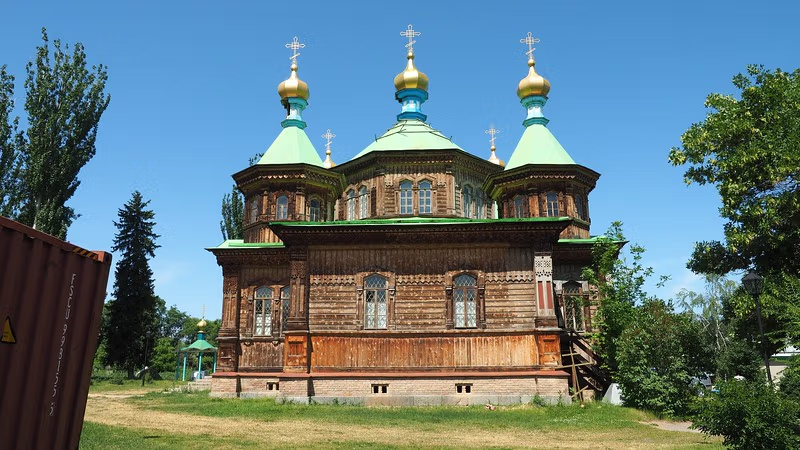
Only a short distance from the mosque stands the Holy Trinity Russian Orthodox Cathedral, a wooden church with onion domes and a history almost as changeable as the town surrounding it.
During the Soviet period, the building was repurposed repeatedly. Accounts describe it serving as a school, sports hall, theatre, dance venue and even a coal shop before eventually returning to religious use.
The cathedral remains active, so dress and behaviour matter. Women are expected to cover their hair, and scarves are normally available at the entrance. Men should remove their hats.
I learned the second rule by briefly failing to follow it.
Nothing dramatic happened. Nobody rang an alarm. I merely enjoyed the warm sensation of realizing I had become the oblivious tourist in the room.
The interior is more restrained than the exterior photography may suggest. Give worshippers space, avoid wandering in front of anyone praying and ask before taking photographs inside.
While walking between the mosque and cathedral, look for Karakol’s Russian Quarter and surviving wooden “gingerbread houses.” Carved façades and ornamental trim reveal the status competition of the town’s former merchants. Apparently, wealthy nineteenth-century residents also enjoyed announcing themselves through decorative home improvements.
The nearby Tatar Mosque provides another architectural contrast. It is considered Karakol’s oldest mosque and was converted into a cinema during the Soviet era.
4) Browse the Antique Shop of Aleksandr Korablev

If you enjoy Soviet-era curiosities, old cameras or souvenirs with more character than a mass-produced refrigerator magnet, Aleksandr Korablev’s antique shop was one of the quirkiest stops on our walk.
The one-room shop was packed with cameras, Olympic pins, porcelain figures, postcards, military items, busts of Lenin and objects whose original purpose was not always immediately apparent.
I collect hats from around the world, which I prefer to describe as a cultural archive rather than an ongoing attack on our luggage allowance.
I eventually bought a Soviet-era border-control hat complete with a hammer and sickle.
It did not fit me.
This was apparently irrelevant because I had already decided it would look excellent on a future wall.
We learned that similar-looking hats in different colours represented different services, including the police, navy and border forces.
Small independent shops can change ownership, opening hours or location, so ask locally whether the antique shop is operating before building your afternoon around it. The Sunday Slavic flea market is another possibility for travellers who enjoy digging through Soviet objects and miscellaneous historical clutter.
5) Visit the Karakol History Museum
Karakol’s History Museum is small but agreeably odd.
The collection includes local historical objects, traditional clothing and an extensive assortment of taxidermy. The stuffed animals are memorable, although Audrey was more interested in the black-and-white photographs by Swiss traveller Ella Maillart.
Maillart travelled through Central Asia in the 1930s and photographed street scenes, landscapes and people before the region was reshaped further by Soviet modernization. What appeared to be a temporary exhibition during our visit is now described as a permanent part of the museum.
This is a good early stop because the photographs and objects give the surrounding streets more context. A free English and French audio guide is also available through Izi.Travel.
On our first day trip, we also stopped at the Nikolai Przhevalsky Museum outside town. It explores the Russian military officer and geographer whose expeditions crossed Central Asia and whose name Karakol carried during two different periods of its history.
The museum and memorial grounds require a separate taxi or marshrutka trip and fit more naturally into a half-day around Przhevalsky Bay than into the central walking route.
6) Walk Through Victory Park and Its Memorials
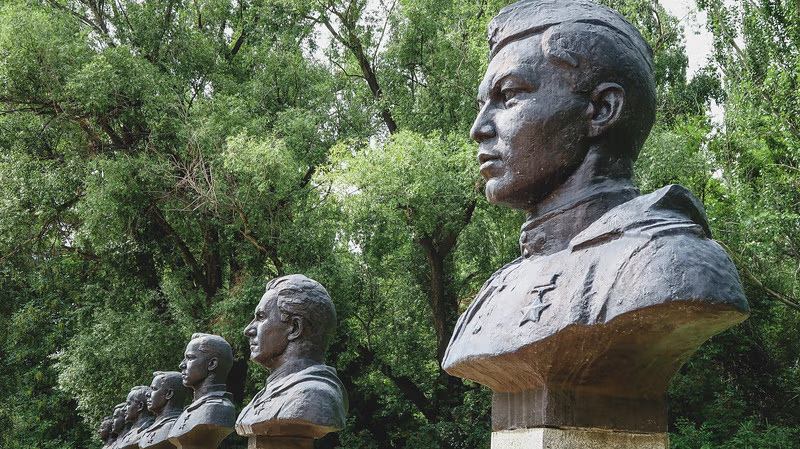
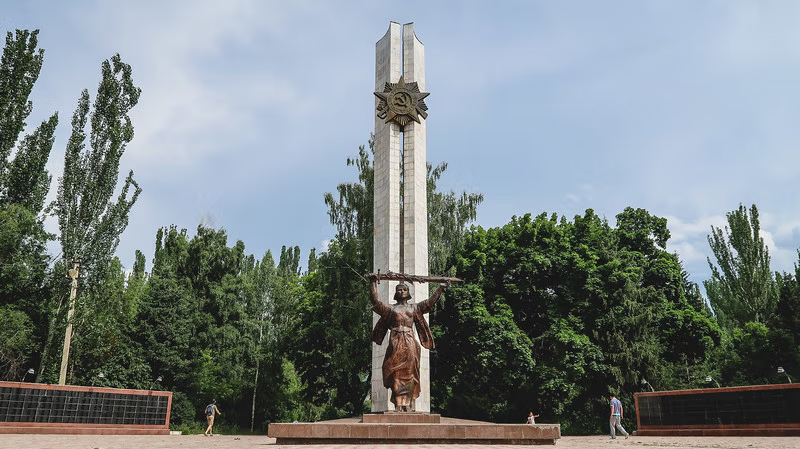
Victory Park is both grand and unexpectedly relaxed.
The busts, memorials and monuments are built on a scale that made me look especially tiny in our photographs. Yet the surrounding spruce trees, paths and green space prevent the park from feeling as severe as the stonework suggests.
It is also more historically complicated than a standard Soviet World War II memorial.
Alongside monuments honouring soldiers who fought in the war, the park contains memorials to victims of Stalinist repression and the Urkun—the mass flight of Kyrgyz people toward China following the 1916 uprising against Tsarist rule. Many died attempting to cross the Tian Shan.
That combination places several uncomfortable layers of memory inside one park: service in the Soviet army, suffering under the Soviet state and trauma rooted in the earlier Russian Empire.
You can simply enjoy Victory Park as a green escape. Reading the memorials more carefully, however, reveals far more about Kyrgyzstan’s history than the generic label “World War II park” suggests.
Markets, Cafés and Karakol Food
Karakol may be Kyrgyzstan’s most interesting food destination.
That does not mean every meal fits neatly into one cultural box. Dungan, Uyghur, Kyrgyz, Tatar and Russian traditions have shared ingredients, markets and kitchens here for generations. The resulting food is tangled, practical and delicious—which is usually more interesting than a perfectly labelled culinary museum.
For a much wider introduction to dishes around the country, read my guide to traditional Kyrgyz food. In Karakol, I would prioritize ashlyan-fu, a Dungan family meal, hand-pulled laghman and at least one strategic cake break.
7) Take a Break at Fat Cat Karakol
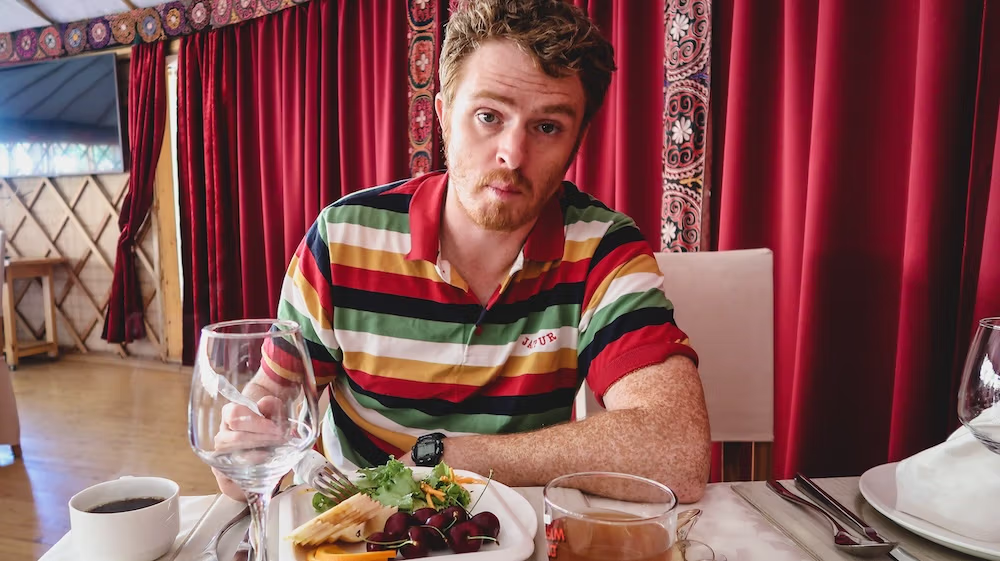
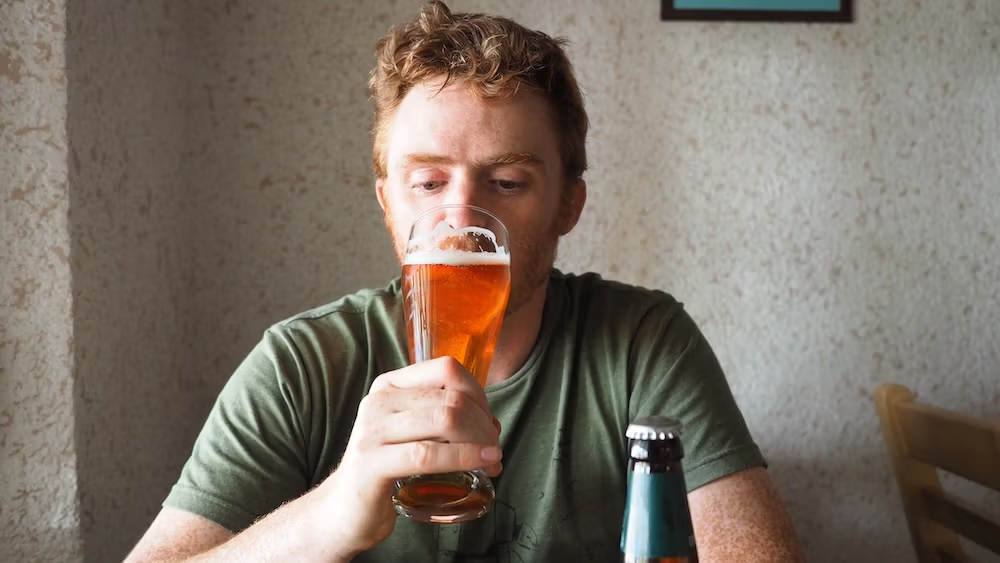
Two Dutch travellers we met at Bel Tam Yurt Camp recommended Fat Cat Karakol. We took their advice and ended up visiting several times.
On one hot afternoon, I drank mint iced tea while staring impatiently at a piece of cheesecake. The drinks were refreshing, the baking was excellent and the café provided a welcome pause after repeated meals built around heroic quantities of meat, potatoes, noodles and bread.
Digestive diplomacy sometimes requires cake.
Fat Cat also stood out because its owner, Zhamila, used the business to support community projects. During our visit, she spoke about initiatives involving school supplies and helping women develop baking skills that could support their own small businesses.
In the evenings, Fat Cat became a social meeting place for travellers, with grilled sandwiches, pizza and craft beer. It was the kind of café where you could ask about a trail, meet someone heading in the same direction or spend an afternoon accomplishing almost nothing.
Businesses change, so confirm the current address, programme and opening hours before visiting.
8) Explore Karakol’s Markets and Ashlyan-Fu Alley
Our market visit began sensibly and ended with us sheltering from heavy rain beside stalls selling an increasingly bizarre mixture of produce, sunglasses, boxing gloves and a miniature punching bag.
We visited on a Saturday afternoon, and many vendors had already packed up despite the official market hours extending later. That taught us a useful lesson: go in the morning if the market matters to you. A published closing time does not mean every seller has signed a legally binding agreement to remain enthusiastic until the final minute.
Karakol has several different market experiences:
- Bugu or Big Bazaar: produce, clothing, household goods, transport connections and everyday town life.
- Small Bazaar and Ashlyan-Fu Alley: food stalls serving Karakol’s signature cold noodle dish.
- Sunday Animal Market: early-morning livestock trading on the outskirts of town.
- Sunday Slavic Market: a flea market where Soviet-era objects, books, tools and assorted oddities may appear.
Audrey became particularly devoted to ashlyan-fu and ate it almost every day while we were in Karakol.
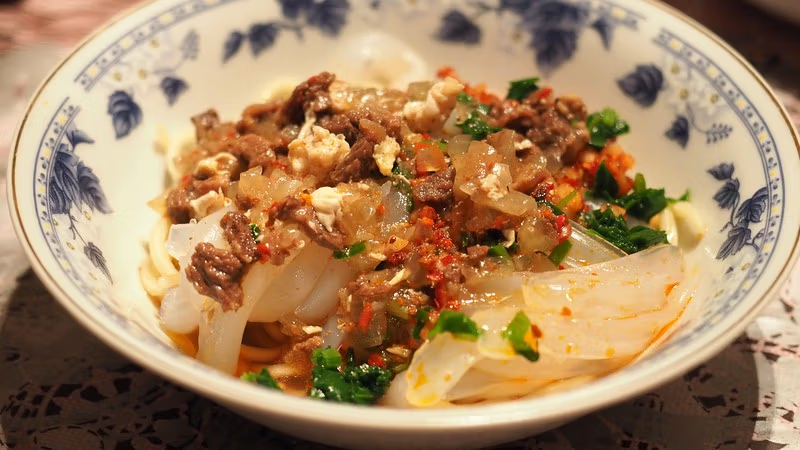
The dish combines wheat noodles with translucent starch noodles in a cold, vinegary broth containing garlic, vegetables, herbs and chilli paste. It sounds mildly questionable when reduced to a list of ingredients. On a hot day, it is spicy, acidic and incredibly refreshing.
Ashlyan-Fu Alley can be difficult to locate inside the bazaar, so ask a vendor rather than wandering in hungry circles while pretending you know exactly what you are doing.
The Sunday Animal Market is a separate experience that we did not visit. It is a working livestock market rather than a tidy cultural attraction assembled around visitor comfort. Go early, wear sturdy shoes, stay clear of moving animals and ask before photographing people at close range.
9) Eat an Eight-Dish Dungan Family Dinner
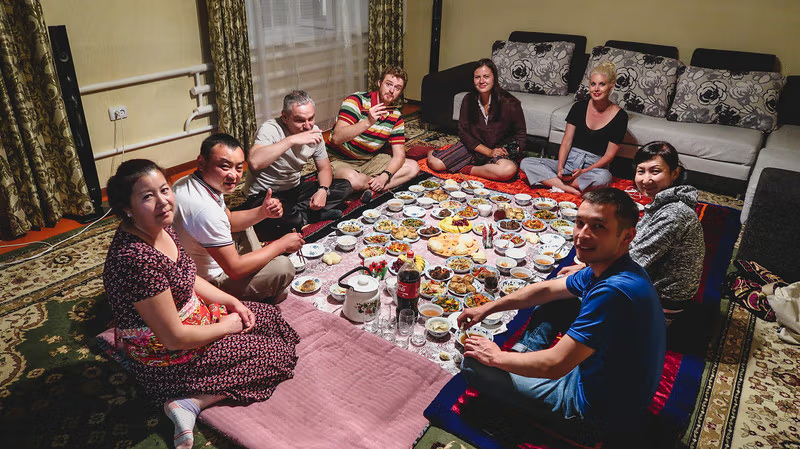
For a meal that gradually turns into an endurance event, arrange dinner with a Dungan family in Yrdyk village.
Before sitting down, we helped prepare ashlyan-fu. The cold soup involved several kinds of noodles, a vinegar-based liquid, garlic, peppers, tomatoes, cilantro and chilli. Our participation was real but limited. Nobody made the catastrophic decision to hand us complete control of the kitchen.
Then the plates began arriving.
According to the tradition explained during our visit, a proper Dungan meal should include no fewer than eight dishes. Our hosts interpreted eight as the entry requirement rather than a sensible stopping point.
The table included rice, noodles, stir-fried vegetables, dumplings, steamed bread, fruit and more dishes than I could reliably identify once every visible surface had disappeared beneath food.
We arrived with sincere intentions to finish everything.
We did not come remotely close.
The value of the experience was not merely the volume. Eating in a family home allowed us to ask questions about Dungan food, history and community life in a casual setting.
The current Dungan village family dinner requires advance booking and normally has a minimum group size. Transport and an English-speaking guide may cost extra, so solo travellers and couples should ask whether they can join another group. Vegetarian meals can be arranged in advance.
10) Learn to Make Uyghur Laghman
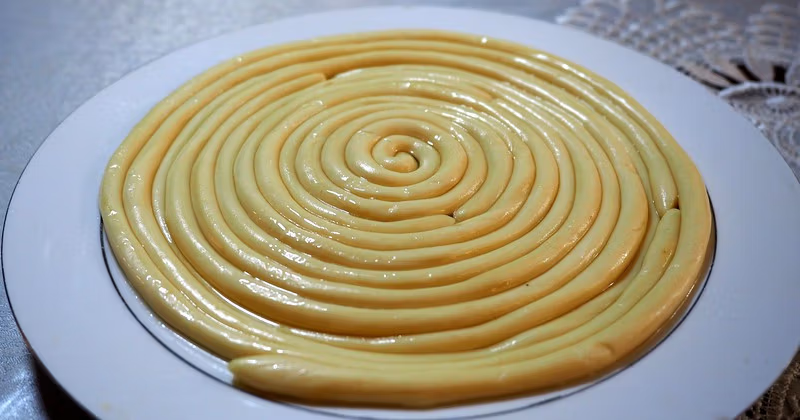
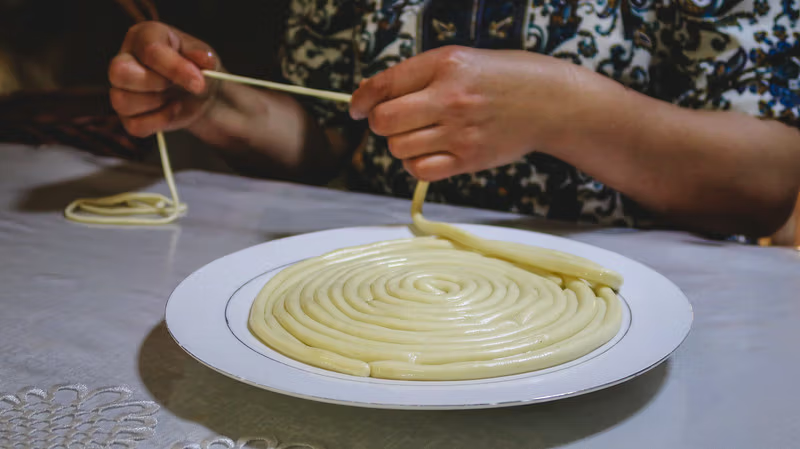
We had eaten laghman repeatedly around Kyrgyzstan before finally learning how it was made.
Our Uyghur host, Gulya, taught us to stretch noodles made from flour, egg and water. This looked graceful when she demonstrated it and considerably less graceful when we took over.
Audrey concentrated on not breaking the dough. I described myself accurately as all thumbs in the kitchen before discovering a secondary talent as a “professional noodle massager.”
Every great chef must find his role.
Once the noodles had survived us, we tried them plain. They were thick, chewy and substantial, although even I had to admit that noodles improve when accompanied by broth, meat, vegetables and seasoning.
The ingredients were fried before broth was added, creating the soupy style of laghman our host preferred. We had eaten restaurant versions before, but this was our first homemade bowl.
The initial serving was milder than both of us expected. Audrey added vinegar and a quantity of chilli paste that suggested she had lost confidence in gradual adjustment. I followed after deciding that more acidity and spice would improve mine too.
I had expected the large pieces of meat to be chewy. They were surprisingly tender.
Dessert was a layered honey cake made with fragrant Kyrgyz honey. The sponge was light and airy, allowing the floral sweetness to come through without turning the dessert into syrup with structural support.
Cooking classes offered in Karakol may focus on Dungan rolled noodles, Uyghur hand-pulled laghman or other dishes. These are related food traditions, but they are not interchangeable labels. Confirm the actual menu before booking.
11) Eat Laghman in a Restaurant or Market
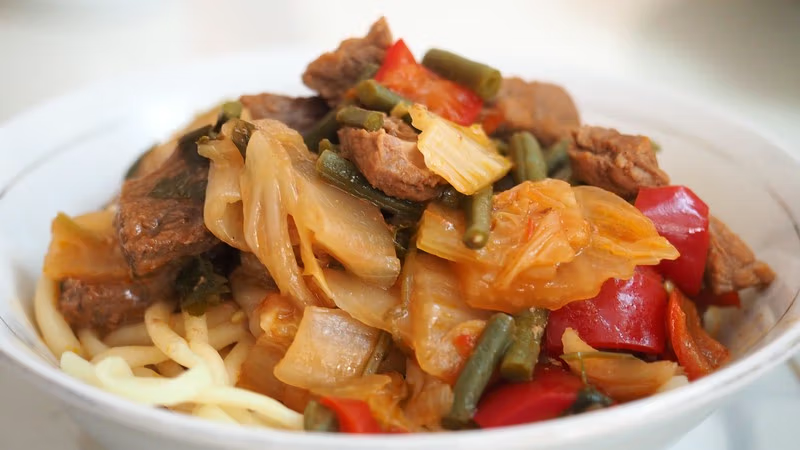
A cooking class is memorable, but you do not need to manufacture your own noodles every time you want a bowl of laghman.
The dish appears across Kyrgyzstan and Central Asia in several forms:
- Soupy laghman: noodles, meat and vegetables served in broth.
- Fried laghman: noodles stir-fried with meat, vegetables and sauce.
- Sauced laghman: a version sitting somewhere between the two.
The noodles are the centre of the dish, not an afterthought. Look for thick, hand-pulled strands with enough chew to survive the broth.
If you enjoy sharper flavours, use the vinegar and chilli provided rather than assuming the kitchen has made a mistake. The base dish may arrive gentler than expected, particularly in places accustomed to foreign visitors whose spice tolerance remains an unresolved international question.
Karakol is also an appropriate place to try kumis, fermented mare’s milk.
Audrey gave it several chances and continued to find it too salty and sour. Cultural curiosity does not require pretending every flavour becomes a personal favourite.
Lake Issyk-Kul, Valleys and Day Trips
12) Take a Sunset Cruise on Lake Issyk-Kul
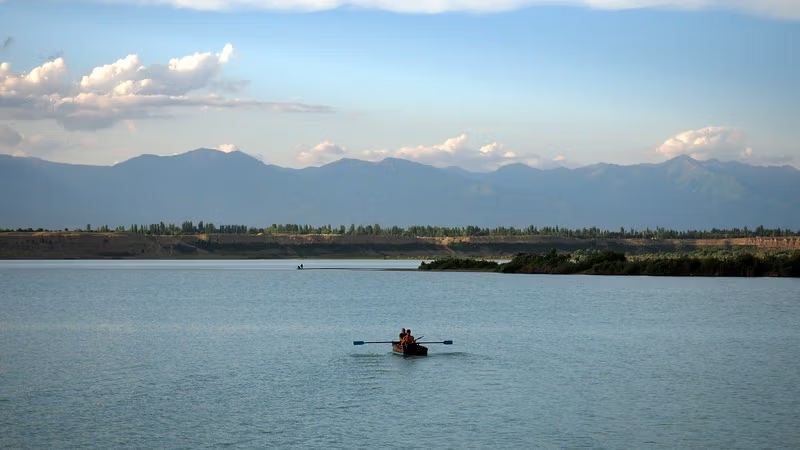
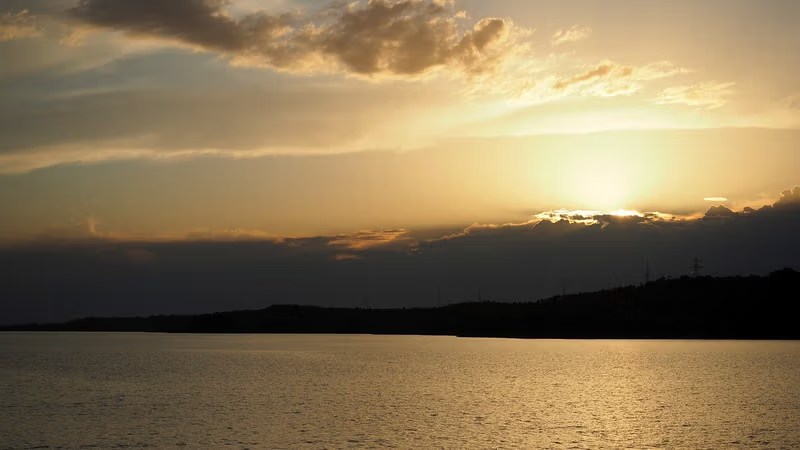
Central Karakol is near Lake Issyk-Kul, but it does not feel like a waterfront resort. You need transport to reach Przhevalsky Bay and the cruise departure area.
Our boat was larger than expected. We boarded shortly before sunset, ordered drinks and watched the light shift across the mountains while the water remained calm.
After several active days, this was an excellent final evening: no climbing, no mud and no need to massage a noodle into existence.
The current sunset cruise from Przhevalsky Bay normally requires advance arrangement. Shared departures may require a minimum group, transport from Karakol is not automatically included and drinks are purchased separately.
Solo travellers should ask whether an existing group can be joined rather than assuming somebody will launch a boat for one hopeful passenger holding a camera.
13) Continue Beyond the Red Rocks at Jeti-Ögüz
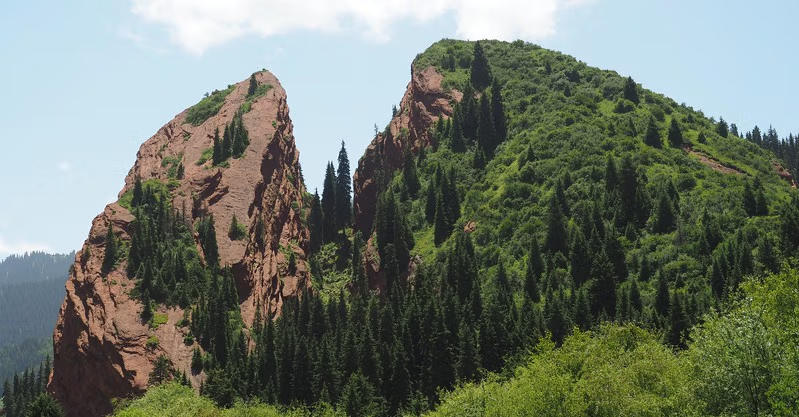
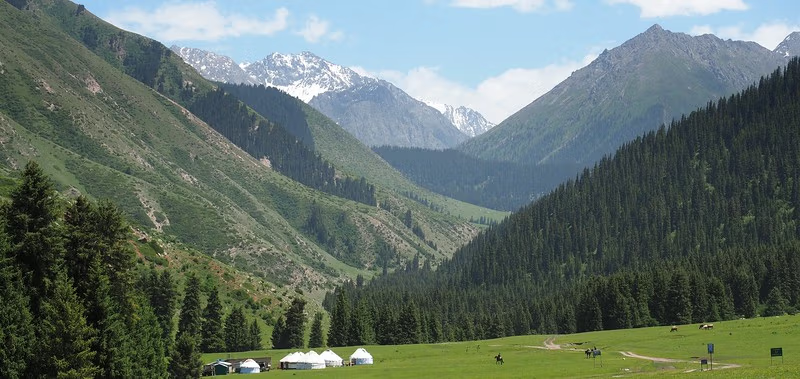
Jeti-Ögüz is the easiest major landscape excursion from Karakol and an obvious first choice for travellers with only one free day.
The name translates to “Seven Bulls,” referring to the line of red sandstone formations near the resort. The nearby Broken Heart rock has its own legends involving love, rivalry and emotional damage expressed through geology.
The cliffs are worth photographing.
The more important advice is to keep going.
Audrey thought the valley beyond the famous rocks was more impressive than the roadside formation itself. Reaching it involved a dirt road and a series of rickety wooden bridges, after which the landscape opened into fields, forests, grazing animals and snow-capped mountains.
We saw yurt camps and horse-trekking services in the valley, but we only visited for the day. Local families had arrived for picnics, which inspired the most practical advice possible: bring food, find a good patch of grass and stop trying to turn every hour into an official attraction.
Independent visitors need to distinguish between Jeti-Ögüz village, Jeti-Ögüz Resort and Kok-Jayik Valley. Some marshrutkas stop at the village rather than continuing to the resort. Confirm your actual destination with the driver.
Travellers who want transport without negotiating the marshrutka puzzle can book a 4×4 transfer from Karakol to Jeti-Ögüz with free time to explore.
For a more structured adventure, there is also a Jeti-Ögüz tour combining 4×4 transport, horseback riding, a yurt visit and waterfall trekking. Read the fitness restrictions and inclusions carefully; this is a much bigger outing than a roadside photograph of the Seven Bulls.
14) Make Barskoon Gorge a Proper Day Out
Barskoon Gorge is often described too casually as another easy excursion near Karakol.
It is roughly 100 kilometres southwest of town. We combined it with Jeti-Ögüz using a driver, but that does not mean the same plan is straightforward by public transport.
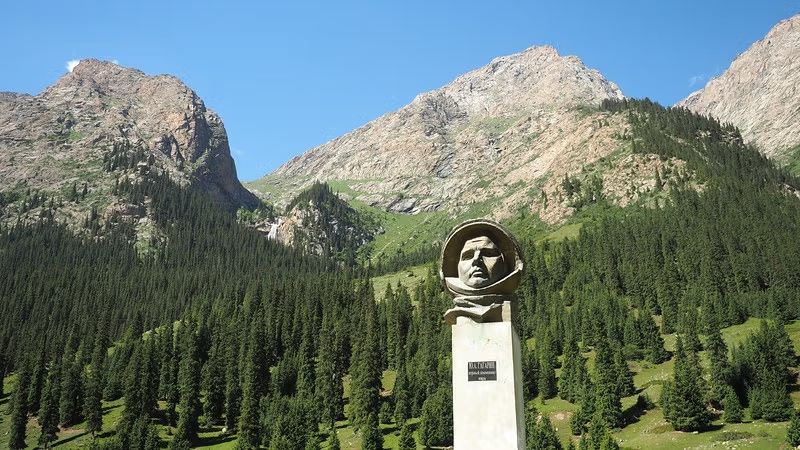
You will know you have reached the gorge area when Yuri Gagarin appears beside the road in monumental form. The first person in space apparently spent time around the south shore of Issyk-Kul, leaving Barskoon with an unexpected connection to Soviet space history.
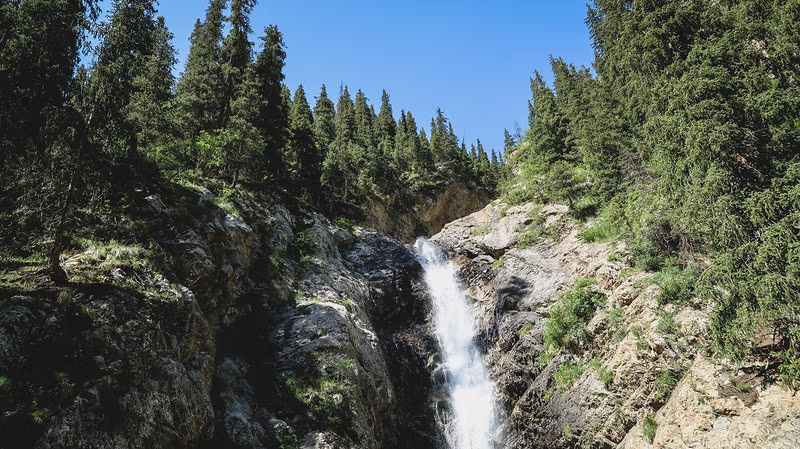
Several trails lead toward waterfalls. The closest can be reached relatively quickly, while the larger falls require a longer climb through the forest.
Audrey and I only reached the nearest waterfall because we were pressed for time. That detail matters. A photograph of one waterfall should not mysteriously evolve into a claim that we completed the entire route.
Public transport reaches Barskoon village, but the waterfall area remains well beyond it. Return transport also becomes difficult later in the day. For most visitors, Barskoon works better with a driver, as part of a south-shore transfer day or with an overnight stop closer to the gorge.
Wear proper footwear, bring lunch and leave enough time to return before local transport thins out. A mountain outing involving several waterfalls is not improved by beginning it at mid-afternoon.
15) Take a Day Hike from Karakol
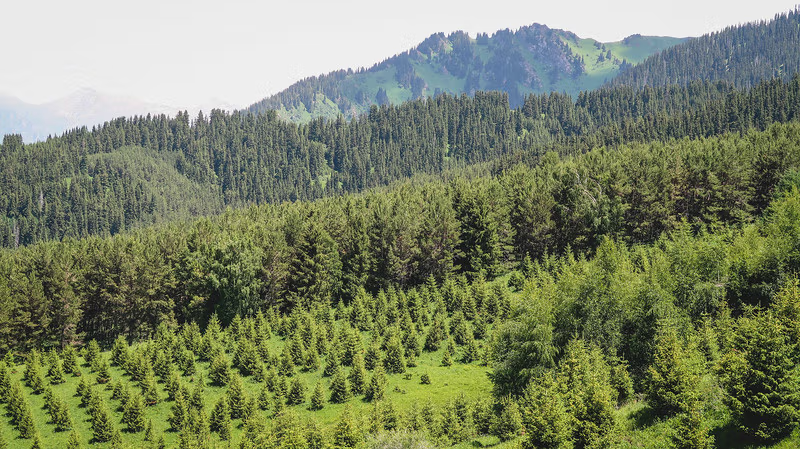
We could not return to Kyrgyzstan’s adventure capital without completing at least one hike.
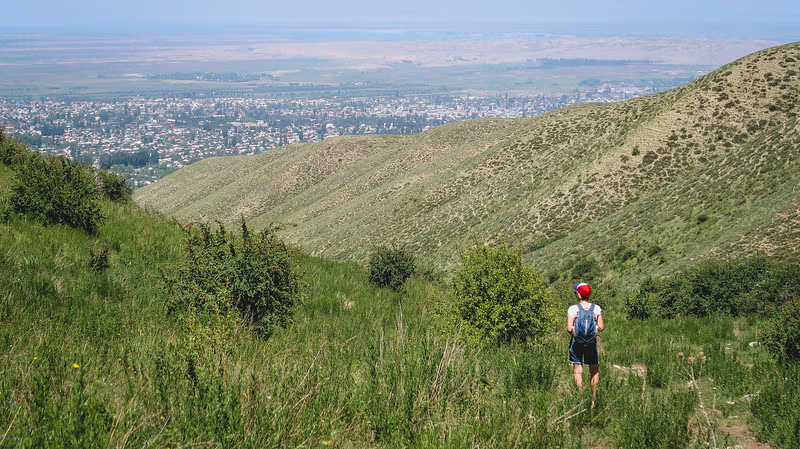
Because we had recently finished a three-day horse trek, we chose what was presented as a shorter outing with a guide from Eco-Trek. The route began outside Jorgolot and was expected to take roughly three and a half hours.
We began the day at breakfast with very different strategies.
I chose fruit and vegetables because previous lunches and dinners had involved biblical quantities of meat, potatoes, noodles and bread. Audrey chose pancakes with honey, cream, cheese, cherries and coffee.
One of us had understood that hiking requires calories.
I packed the camera and drone, which I had started treating as survival equipment. We also applied sunscreen after learning that the Kyrgyz sun can burn fair skin with admirable efficiency.
The opening climb was the hardest part. We gained elevation through exposed terrain, took breaks in whatever shade we could find and stopped repeatedly for photographs and drone footage.
At the high point, the wind picked up and we unpacked a picnic while looking across valleys, forests and distant snowy peaks. A local dog joined us and swallowed the food we shared at a speed suggesting that chewing was an optional urban affectation.
After lunch, Audrey’s energy returned and the route became easier as we headed downhill through wildflowers and forest.
We also discovered that sandals and Crocs were a poor choice once the vegetation reached our knees and the path turned muddy. Hiking shoes or running shoes would have been considerably more intelligent.
Our projected 3.5-hour outing took around five hours. Audrey found the early climb difficult, while I repeatedly stopped to fly the drone. Fortunately, our guide was patient and allowed us to take as many breaks as needed.
We finished exhausted, saw the van and climbed inside immediately. I forgot to record the ending of the video because a large siesta had become more urgent than competent filmmaking.
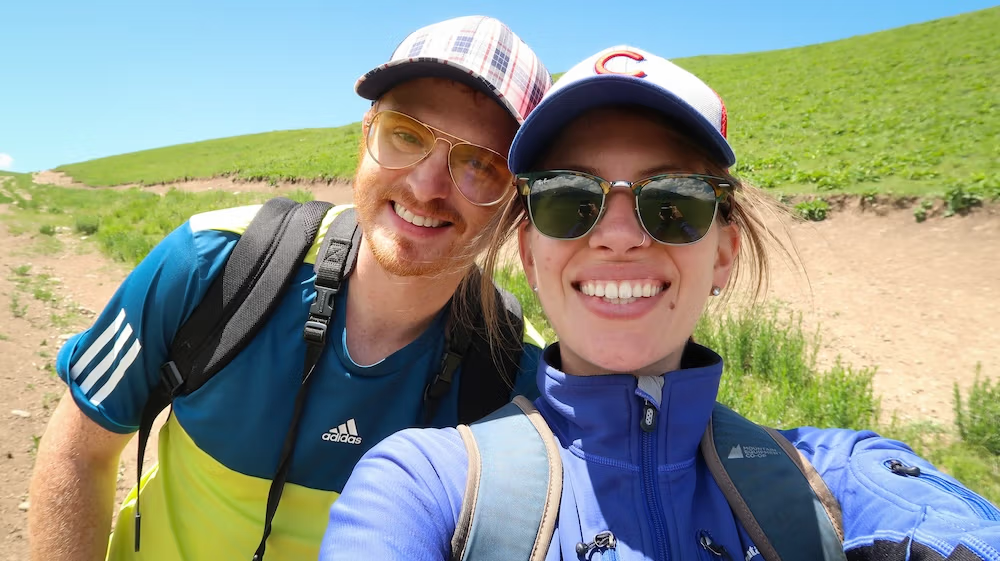
The practical lesson is that quoted hiking times assume a pace. Photography, heat, lunch, route-finding, rest stops and personal fitness all change the result.
For practical thoughts on whether poles deserve space in your pack, see my guide to when trekking poles genuinely help.
More Adventures You Can Book from Karakol
Karakol has unusually strong affiliate potential because it is not merely somewhere travellers sightsee. It is where they make expensive, consequential decisions involving transport, horses, mountain roads, equipment, guides, weather and how many nights they are willing to sleep in a yurt before privately craving plumbing.
Some experiences are easy to organize locally. Others become much simpler when transport, pickup and a guide are locked in before arrival.
| Bookable Experience | Best For | Important Reality Check |
|---|---|---|
| Jeti-Ögüz 4×4 transfer with free time | Independent travellers who mainly need reliable transport | You explore without a full guided itinerary, so decide how far into the valley you want to walk |
| Jeti-Ögüz horse ride, yurt tea and waterfall tour | Travellers wanting one organized mountain day | This is a physically active outing, not a short horse photo session |
| Altyn Arashan 4×4 transfer and hot springs day | Visitors short on time who do not want to trek into the valley | The off-road journey is long and rough; hot-spring admission and meals may cost extra |
| Karakol horseback ride with a yurt visit | Travellers wanting a shorter riding experience | Read the riding duration and included transfer details before booking |
| Three-day guided trek to Ala-Kul and Altyn Arashan | Fit hikers who want a structured version of the classic route | The route is challenging; check meal, transfer, gear and altitude details carefully |
| Tandem paragliding above the Karakol region | Travellers who consider hiking downhill insufficiently alarming | Weather controls everything; flexible scheduling helps |
| Mountain-bike rental with helmet and repair kit | Independent riders exploring lower valleys and tracks | Match the route to your repair skills, fitness and ability to interpret Kyrgyz mountain roads |
Tours change, suppliers change and mountain itineraries are routinely adjusted around weather. Before paying, confirm:
- exact pickup location;
- whether hotel pickup is included;
- whether meals, hot springs or entrance fees cost extra;
- whether the advertised route requires hiking in addition to riding or driving;
- the cancellation policy;
- and whether the activity is appropriate for your fitness, back, knees and general enthusiasm for being bounced around inside a 4×4.
More Things to Do Around Karakol
The following activities can strengthen a longer itinerary, but I am keeping the experience boundary clear: we did not personally complete all of them.
Sunday Animal Market
Karakol’s livestock market operates on Sunday morning outside the centre. Horses, sheep, cattle, goats and donkeys are traded in a working market that has not been designed around visitor comfort.
Go early, wear footwear that can survive mud and manure, keep clear of moving animals and ask before taking close portraits. Travellers uncomfortable with livestock trading or local animal-welfare practices should understand what the experience involves before attending.
Ak-Suu Hot Springs
Ak-Suu hot springs are around 30 minutes from Karakol and can be reached by local marshrutka or taxi. They work particularly well as a recovery-day activity after hiking.
Facilities can close for maintenance, so confirm before travelling—especially outside peak season. Few experiences test the human spirit quite like travelling to a hot spring and discovering that it is temporarily a construction site.
Altyn Arashan
Altyn Arashan is one of the region’s famous alpine valleys, known for hot springs, mountain scenery, guesthouses and its role in the classic Ala-Kul route.
You can hike in, ride a horse or endure the famously rough road in a suitable 4×4. Travellers short on time can reserve a full-day 4×4 trip from Karakol to Altyn Arashan.
Do not mistake “4×4 transfer” for “comfortable scenic drive.” The rough road is part of the experience, whether you appreciate that fact at the time or several days later when your spine forgives you.
Jyrgalan Valley
Jyrgalan is a quieter mountain village east of Karakol with hiking, horse riding, cycling and winter activities.
It can be squeezed into a long day, but the transport time makes an overnight stay more sensible. Travellers with several hiking days should decide whether to remain in Karakol for restaurants, markets and services or move to Jyrgalan for direct access to village-based trails.
Karakol Ski Base
Karakol is a genuine year-round mountain destination. In winter, the ski base outside town attracts skiers and snowboarders, while lower valleys support snowshoeing and other cold-weather activities.
Winter requires a separate planning mindset. Roads may be icy, power cuts happen, daylight is shorter and summer trail assumptions become actively stupid.
Confirm lift operations, transfers, avalanche conditions and equipment availability close to your dates. Ski-focused travellers can compare ski hotels and mountain accommodation around Karakol.
Karakol Day-Trip Decision Guide
| Destination | Best For | Realistic Time | Main Logistical Catch |
|---|---|---|---|
| Jeti-Ögüz | Red cliffs, valley walks, picnics and horse trekking | Half to full day | Confirm whether transport reaches the village or resort |
| Ak-Suu | Hot springs, easy hiking access and recovery | Half day | Facilities may close for maintenance |
| Altyn Arashan | Alpine valley, hot springs and mountain scenery | Full day or overnight | Access involves hiking, horses or a very rough 4×4 road |
| Jyrgalan | Village life, hiking, horse riding and winter activities | Long day or overnight | Better with at least one night |
| Barskoon Gorge | Waterfalls, forest trails and Yuri Gagarin | Full day | Public transport stops far from the waterfalls |
| Skazka Canyon | Colourful rock formations and south-shore scenery | Full day | Long journey and awkward return after sunset |
| Przhevalsky Bay | Museum, lake views and sunset cruise | Half day or evening | Not in central Karakol; arrange transport |
Hiking and Trekking from Karakol
Karakol supports everything from a stroll around the bazaar to a remote eight-day traverse. Treating all of those activities as “hiking around Karakol” is not especially useful and can be dangerous.
| Adventure Level | Example | Main Challenge | Planning Approach |
|---|---|---|---|
| Town walking | Historic centre and markets | Heat, traffic and uneven surfaces | Independent |
| Accessible valley outing | Jeti-Ögüz and Kok-Jayik | Transport and time management | Independent, driver or tour |
| Proper day hike | Ak-Suu Arboretum area | Navigation, sun and realistic pacing | GPS map or guide |
| Demanding alpine day | Kol-Tor Lake | Steep terrain and altitude | Early start and strong fitness |
| Classic multi-day route | Ala-Kul and Altyn Arashan | High pass, weather and remote terrain | Experience-dependent; local advice essential |
| Remote traverse | Ak-Suu Traverse | Multiple passes, navigation and rescue limitations | Specialist planning or reputable operator |
The main high-mountain season usually runs from late June through early September, although snow can remain on passes into summer and return early in autumn.
Do not assume every trail is well marked. Even descriptions of easier routes warn that sections can be unclear. Download offline maps, carry a charged phone and stop treating one thin path disappearing into a meadow as confirmation that everything is going wonderfully.
Karakol has several trekking and camping equipment rental providers. Inspect tents, zippers, stove connections and sleeping bags before leaving town. “Present inside the equipment bag” and “capable of surviving a mountain storm” are not synonyms.
Travellers wanting the classic route without organizing every moving part can book a three-day guided trek from Karakol to Ala-Kul and Altyn Arashan. Check whether transfers, meals, bedding, luggage storage and personal trekking equipment are included.
Mountain conditions can change rapidly. Risks include serious sunburn, summer snow, altitude illness, river crossings, rockfall, landslides and avalanches. Mobile coverage and rescue capacity are limited in remote valleys.
- Tell your accommodation or operator where you are going and when you expect to return.
- Carry layers, waterproof protection, sun protection, water, food and basic first-aid supplies.
- Download maps before leaving town and carry a power bank.
- Use a reputable guide when the route exceeds your navigation or mountain experience.
- Buy insurance that explicitly covers your planned altitude and activities.
Where to Stay in Karakol
Karakol is compact enough that most central guesthouses work well for sightseeing, restaurants and tour organization. The bigger decision is what role you expect the property to play.
Are you looking for a social base where you can meet trekking partners? A comfortable room where you can recover after Ala-Kul? A family-run guesthouse with breakfast? Or a ski property outside town where the slopes matter more than walking to the bazaar?
Search all available Karakol accommodation on Booking.com.
| Accommodation Style | Best For | What to Check |
|---|---|---|
| Central guesthouse | First-time visitors, food and town sightseeing | Breakfast time, luggage storage and early departures |
| Hostel or trekking base | Solo travellers and hikers seeking partners | Gear storage, laundry and social atmosphere |
| Comfortable hotel | Post-trek recovery, couples and families | Heating, hot water, restaurant and transfer help |
| Ski-base lodging | Winter visitors prioritizing the slopes | Distance from Karakol town and road access |
| Village guesthouse or yurt | Jyrgalan, Jeti-Ögüz and slower mountain stays | Meals, transport and seasonal access |
Where We Stayed: Tagaytay Karakol Hotel
We stayed at Tagaytay, a few blocks from central Karakol.
Our room was small but clean and comfortable, the staff were helpful and breakfast offered enough variety to support both my temporary vegetable phase and Audrey’s pancake operation.
It worked well as a practical town base. We could reach the centre, organize activities and return each evening without turning the accommodation itself into a logistical project.
Check current room availability at Tagaytay Karakol Hotel.
Other Karakol Hotels and Guesthouses to Consider
We did not personally stay at the following properties. These are researched alternatives for different trip styles, not disguised memoir.
- Duet Hostel — a strong candidate for budget travellers, solo visitors and hikers who value a more social base.
- Hillside Karakol B&B — a quieter guesthouse-style option with a garden and a more residential feel.
- Karagat Hotel — a more conventional hotel option near central Karakol, useful for travellers prioritizing private facilities and on-site services.
- My Hotel Karakol — a modern option offering family rooms, mountain views, ski storage and shuttle services.
- ToodoResort near Karakol Ski Base — best suited to ski-focused travellers who care more about mountain access than walking into town for ashlyan-fu.
For hiking trips, ask whether your accommodation will store your main luggage while you carry a smaller pack into the mountains. Also confirm how early breakfast can be served.
A magnificent breakfast at 8:30 becomes slightly less magnificent when your driver has been honking outside since seven.
Getting to Karakol from Bishkek
Old Karakol guides frequently direct travellers to Bishkek’s Western Bus Station. That information is obsolete.
The old terminal stopped handling these routes in late 2024. Current marshrutkas, intercity buses and shared taxis for Karakol use Bishkek’s newer bus station. Confirm the current address and procedure through Destination Karakol’s transport guide before travelling.
| Transport | Advantages | Disadvantages |
|---|---|---|
| Marshrutka | Low cost, regular morning departures and local experience | Can be cramped; journey time varies |
| Shared taxi | Usually faster and more comfortable | Leaves when full; price and vehicle quality vary |
| GoBus | Bookable seat, larger vehicle and night service | Popular departures can sell out |
| Private driver | Flexible stops and useful for groups | Most expensive road option |
| Domestic flight | Fastest when a suitable service operates | Limited and changeable schedule |
| Train to Balykchy plus road | Scenic summer journey | Slow; still requires several hours by road |
The normal road journey consumes most of a day once traffic, roadworks, food stops and the mysterious elastic qualities of Central Asian travel time are included.
A night bus can preserve daylight. A private driver becomes more reasonable when several people want to stop along Issyk-Kul. Shared taxis offer a useful middle ground for travellers who would prefer not to fold themselves into a minivan for the entire journey.
Karakol Airport reopened in December 2024 and now receives limited domestic flights. Schedules can change substantially, so search your exact dates rather than building an itinerary around an assumed daily service.
The summer panorama train from Bishkek reaches Balykchy on the western side of Issyk-Kul. It is scenic but not direct: Karakol remains several hours away by road. Choose the train because you want the train—not because you have discovered a secret shortcut.
Getting Around Karakol
Central sights can largely be reached on foot. For luggage, the lake, ski base, trailheads and outer districts, taxis and marshrutkas are more practical.
Yandex Go is commonly used for local taxis, though app availability can vary. Guesthouses can also call a driver, which removes the need to stand beside the road looking uncertain while vehicles pass.
Karakol has several transport hubs, and this is where many visitors become confused:
| Transport Hub | Typical Destinations |
|---|---|
| Main Bus Station | Bishkek, Cholpon-Ata, Naryn and longer-distance routes |
| Southern Bus Station | Barskoon, Tamga, Bokonbaevo and the south shore |
| Big Bazaar / Ak-Tilek area | Jeti-Ögüz, Ak-Suu and Jyrgalan |
Ask your guesthouse to write the station and destination in Cyrillic if you are uncertain. Arrive early for rural routes and do not assume a return vehicle will remain available after dark merely because getting there seemed easy.
Suggested Karakol Itineraries
Two Days in Karakol
Day 1: Town and food
- Walking tour or self-guided historic route.
- Dungan Mosque, Russian Quarter, Tatar Mosque and Holy Trinity Cathedral.
- Karakol History Museum and Ella Maillart photographs.
- Ashlyan-fu in the bazaar.
- Fat Cat or another café break.
- Dungan dinner or laghman in town.
Day 2: Choose one major outing
- Jeti-Ögüz and Kok-Jayik Valley, or
- a guided day hike, or
- Przhevalsky Museum followed by a sunset cruise.
Do not choose all three and claim you will simply wake up early. That was essentially our first plan.
Three Days in Karakol
- Day 1: Town, architecture, museum, market and ashlyan-fu.
- Day 2: Jeti-Ögüz, valley walking and a picnic.
- Day 3: Day hike, cooking class or Ak-Suu recovery outing, followed by a Dungan dinner or sunset cruise.
Five Days or Longer
- Allow one complete town day.
- Add Jeti-Ögüz without combining it with another distant excursion.
- Choose one proper day hike.
- Spend an evening on the lake or at a hosted dinner.
- Use the remaining time for Altyn Arashan, Jyrgalan, Barskoon or a multi-day trek.
Keep at least one flexible block. Mountain weather, transport delays and tired legs do not care about the elegance of your spreadsheet.
Best Time to Visit Karakol
| Travel Priority | Strongest Period | Main Caution |
|---|---|---|
| Town culture and food | Year-round | Some experiences require minimum groups or advance booking |
| Lower valley walks | Late spring through autumn | Mud, rain and variable access |
| High trekking | Late June to early September | Snow can remain on high passes into summer |
| Lake cruises | Warmer months | Wind, weather and group-dependent departures |
| Autumn photography | September and October | Shorter days and cold nights |
| Skiing and snow activities | Winter into early spring | Road, avalanche and operating conditions |
| Hot springs and saunas | Year-round | Confirm renovation closures |
Summer offers the widest range of activities, but it also brings powerful sun and more travellers on famous routes.
September can be excellent for clear light, autumn colour and cooler walking temperatures. High-mountain conditions become less predictable as the season advances.
Winter turns Karakol into a completely different destination built around skiing, snow, hot food and indoor recovery. Do not use a summer itinerary and merely add a thicker coat.
Practical Karakol Travel Tips
- Carry cash: Cards and digital payments are increasingly common, but markets, rural transport, family experiences and small businesses may still require Kyrgyz som.
- Download offline maps: Mobile coverage declines in valleys and remote trekking areas.
- Use stronger sun protection than feels necessary: High elevation and exposed mountain terrain can produce serious burns.
- Dress respectfully: Religious sites may provide coverings, but visitors should arrive prepared to cover shoulders, knees and hair where required.
- Book hosted experiences early: Walking tours, family dinners and cruises may need advance notice or minimum groups.
- Confirm transport stations: Different Karakol routes use different departure points.
- Ask before photographing people: This matters especially in markets, religious spaces and family homes.
- Be conservative with drones: Check current Kyrgyz regulations and avoid airports, government, military, police, border and security facilities.
- Carry proper insurance: Verify altitude limits, trekking, skiing and horse-riding coverage rather than relying on the vague promise of “adventure activities.”
Karakol Travel FAQ
Can Karakol be visited as a day trip?
Technically, yes. Sensibly, only if you want to focus on the town centre. Our first day trip involved too much driving and forced us to skip the hike and waterfalls we had planned. Two nights allow one town day and one excursion. Three or four nights create a much better balance.
Is Karakol directly on Lake Issyk-Kul?
Karakol sits near the eastern end of the lake, but central Karakol is not a waterfront resort. Reaching Przhevalsky Bay, beaches or cruise departures requires local transport.
Do you need a guide for hiking around Karakol?
Not for every route. Experienced hikers may complete established day walks independently with current maps and good weather. Remote multi-day routes, high passes, shoulder-season trips and trails beyond your navigation experience deserve a guide or reputable operator. Some supposedly easy routes are not consistently marked.
What food should you prioritize in Karakol?
Begin with ashlyan-fu, followed by laghman and a hosted Dungan meal if time allows. A cooking class adds more understanding than simply ordering another bowl. Fat Cat or another café provides a useful break from heavier traditional meals.
Is Jeti-Ögüz or Barskoon the better day trip?
Jeti-Ögüz is closer, easier and better for a first outing from Karakol. Barskoon is farther away and works best with a driver or as part of a south-shore itinerary. Choose Jeti-Ögüz for red rocks, valley walking and horse activities; choose Barskoon for waterfalls and a longer road trip.
Can trekking gear be rented in Karakol?
Yes. Several local businesses rent tents, sleeping bags, stoves, clothing and outdoor equipment. Reserve important items during busy periods and inspect everything before leaving town.
Is Karakol worthwhile without hiking?
Absolutely. The mosque, cathedral, Russian Quarter, museum, Victory Park, markets, ashlyan-fu, family dinners, cooking classes, cafés, hot springs and lake cruise can fill several days without a serious trek.
Should you book Karakol tours before arriving?
Book ahead when an experience has limited capacity, requires a specific vehicle, includes horses or depends on forming a group. Dungan dinners, sunset cruises, Altyn Arashan transfers and multi-day treks are the obvious examples. Simple taxi rides and basic town sightseeing can usually be organized after arrival.
To compare currently bookable options, browse GetYourGuide’s latest Karakol activities.
Karakol Travel Guide: Final Thoughts
Karakol taught us the same lesson twice.
During our first visit, it taught us that distances in Kyrgyzstan are deceptive and ambitious day trips collapse quickly once real roads, long meals and human pacing become involved.
During our return, it taught us that the town itself deserved attention.
The hiking and mountain access are exceptional, but the experiences I remember most clearly also include a Soviet hat that did not fit, Audrey disappearing inside a velvet mosque covering, mint iced tea and cheesecake, rain hammering the bazaar roof, noodles breaking in our hands and a Dungan dinner we had no hope of finishing.
Karakol is not one famous attraction. It is the combination of multicultural town life, food, Soviet history, lake evenings and mountain access that makes the destination work.
Give it time.
One town day, one valley day and one experience chosen because you genuinely care about it will produce a far better trip than racing through six places and seeing most of Kyrgyzstan through a windscreen.
Once you have your dates, compare Karakol accommodation and check which Karakol tours are running. Then leave breathing room.
The mountains will probably rearrange part of your plan anyway.
Karakol Trip Frequently Asked Questions
How many days should you spend in Karakol?
Two nights are the minimum for a balanced first visit, giving you one day for the town and food plus one major outing. Three or four nights allow time for a valley trip, hike, cooking experience or lake cruise without racing between them.
Is Karakol worth visiting if you are not hiking?
Absolutely. The Dungan Mosque, Holy Trinity Cathedral, Russian Quarter, history museum, Victory Park, markets, ashlyan-fu, family dinners, cooking classes, cafés, hot springs and lake cruise can fill several days without a serious trek.
Is Karakol directly on Lake Issyk-Kul?
No. Karakol sits near the eastern end of Lake Issyk-Kul, but the town centre is not on the waterfront. You need local transport to reach Przhevalsky Bay, beaches and cruise departures.
Do you need a guide for hiking around Karakol?
Not for every route. Experienced hikers may complete established day walks independently with current maps and suitable conditions, but remote multi-day routes, high passes and poorly marked trails require stronger navigation skills or a reputable guide.
Is Jeti-Ögüz or Barskoon the better first day trip?
Jeti-Ögüz is closer, easier and better suited to a first outing from Karakol. Barskoon is farther away and works best with a driver or as part of a south-shore itinerary focused on waterfalls and the gorge.
Can you rent trekking gear in Karakol?
Yes. Several local providers rent tents, sleeping bags, stoves, clothing and other outdoor equipment. Reserve important items during busy periods and inspect everything before leaving town.
Should you book Karakol tours before arriving?
Reserve in advance when an experience needs a specific vehicle, horse, guide, family host or minimum group. Dungan dinners, sunset cruises, Altyn Arashan transfers and multi-day treks are the clearest examples.
This trip was in partnership with Discover Kyrgyzstan. As always, all opinions expressed here are our own.
This article contains affiliate links. When you book through one of these links, we may earn a commission at no additional cost to you.
More of Our Videos from Kyrgyzstan
World Nomad Games in Kyrgyzstan
Adventure Travel in Kyrgyzstan | Horse Trekking and Hiking Trip
Yurt Tour in Kyrgyzstan by Issyk-Kul Lake
Kyrgyzstan Travel: Horse Trekking and Yurt Stay Adventure to Song Köl
Glamping in Kyrgyzstan | Luxury Yurt Tour
What else would you include in a Karakol itinerary?
Did the town, food or mountains leave the strongest impression on you?
Let us know in the comments below.
Karakol is a hidden gem in Kyrgyzstan, offering a blend of stunning landscapes, rich culture, and diverse cuisine. Whether you’re hiking in the Tien Shan mountains, exploring unique landmarks like the Dungan Mosque and Holy Trinity Church, or enjoying delicious local food, Karakol promises an unforgettable adventure.
“Such an informative guide! Karakol seems like a hidden gem, and I love how you’ve highlighted both outdoor adventures and cultural experiences. The trekking opportunities around the area sound incredible, especially the hike to Ala-Kul Lake! I also never knew about the historical significance of the Russian Orthodox Church and Dungan Mosque—definitely adding those to my list. This post has me seriously considering Karakol for my next adventure. Thanks for sharing all these amazing tips and recommendations!”
Wow, this guide is amazing! Karakol sounds like such a hidden gem in Kyrgyzstan. I love that you included a mix of outdoor adventures like trekking and cultural experiences like visiting the Dungan Mosque. The details about the surrounding nature and local history make it even more appealing. I had no idea there was so much to see and do in Karakol! Definitely adding this to my travel bucket list. Thanks for sharing such an in-depth and inspiring guide!
Karakol, Kyrgyzstan, is an amazing destination that offers a perfect blend of outdoor adventures and cultural experiences! From the stunning views of the Terskey Alatau mountains to the serene shores of Lake Issyk-Kul, there’s no shortage of breathtaking scenery to explore. As a Softglaze member, sharing these top activities can inspire others to discover the hidden gems of Karakol and appreciate the region’s unique blend of adventure and culture.
Great post! Your Karakol travel guide is packed with valuable insights and recommendations. The top 15 things to do in Karakol sound amazing and provide a well-rounded view of what this beautiful destination has to offer. Thanks for sharing such a detailed and inspiring guide!
The post was really wonderful discussing. The 15 subjects of karakol which are all very beautiful and beautifully described I hope everyone will be attracted.
What a comprehensive guide to Karakol! This article provides a fantastic overview of the city’s attractions, culture, and culinary delights. I especially appreciate the recommendations for local experiences like the Dungan 8-course meal and Uyghur cooking class. The photos are also captivating and make me eager to visit Karakol myself someday!
great sir beneficial article thanks for sharing.
Fashion is a constantly evolving form of self-expression through clothing, accessories, and personal style. It reflects cultural, historical, and individual values and trends, with designers, media, and seasonality playing essential roles in shaping the industry. Fashion is a dynamic art of dressing that combines creativity and individuality.
Great travel guide,thanks for sharing this.
This place looks absolutely incredible, would be an amazing backpacking experience. Exploring the former Soviet Union looks like such a different kind of adventure.
This a fantastic post on a much-overlooked part of the world. Kyrgyzstan is such a beautiful country and the entire region is worth exploring.
Thanks for sharing.
Wow thanks for your detailed sharing information. This year I travelled to Kyrgyzstan for 20 days including Karakol area. From here possible to do 1-10 days tours. I book tour with Travel Forever company in Karakol. It was amazing just you should be ready for cold whether and rain. Trek also not so easy. I did Ala Kul lake, Altyn Arashan , and Jyrgalan area
If I do get time, I would definitely love to travel to Karakol. Can you please continue posting about more such places?
Wow, Ashlyanfu looks too yummy! I am going crazy for it… The picture of the Ashlyanfu dish makes my mouth watery…
Hello Samuel,
Was looking up for a post on Karakol for my next trip and came across your article. Love the list and surely going to try these. Thanks for sharing, you should post more often 🙂
Thanks & Regards!
Manu Singh.
Wow thanks for sharing this. This is the only place I have been dreaming to visit in India. Hopefully I get there one day
Great travel guide, Hope to visit once to Karakol .
Great post. Actually I am a big fan of travel. The short description here seems so fascinating to me. I like that so much as a travel lover.
thanks for sharing
Thanks Larry!
First time I heard about this place and this is really beautiful..thanks for sharing this amazing blog
Best place to travel and adventure.
Hiking: A Pleasure For the Adventurous Souls
Dungan Mosque: Take A Free Walking Tour.
Spices: Dig Into A Retreat Of Food Culture.
Przhevalsky Memorial Museum: An Historical Expedition.
Sunset Cruise: Make The Most Of The Sizzling Summer.
The Animal Market: The Place Where You Can Barter
Thanks for sharing the best things to do in Karakol. I have never been to Karakol but after reading your article I’m interested to visit there. I think this article is really helpful to explore the natural and cultural beauties in depth. It will be better if you mentioned the routes also. Keep on sharing!
I really did not think of visiting Karakol. It seems there are so many places to discover.
One can visit to antique shops to buy the items to decorate your houses. Here you will find all the items from the Soviet Era. The old cameras will attract you and what will surprise you is that the camera still work.
I haven’t actually been to Kyrgyzstan, but after I read your post, I actually hope to go there soon.
🙂 Love your blog, hope to visti again soon,
Just arrived in Kyrgyzstan. Glad I found this guide though won’t have much time as I will be heading to the mountains.
Ahh, cherish saunas! Such an incredible method to unwind. When I backpedal home, I generally ensure we employ one for a couple of hours 🙂
Awesome guide folks, would completely love to visit! I figure my Russian dialect abilities would come helpful here 🙂
So astounding to see individuals like Zhamilia who are endeavoring to offer back to the group, extremely motivating!
Looks like an interesting place to visit that I have never heard of. Last year I made a pact with myself that I would travel to one such place every year and I think I have a shortlist for 2018. Reading your article about Karakol seems enough but let me check out more on Google. Thanks, brother.
I have also been to Osh and recommend it. I found it to be more traditional than bishkek and culturally more interesting.
What a great set of photos. Before this, I did not even know there existed a place called Karakol, but now I’m intrigued. The closest I have been to such a place is when I was Indonesia back in 2015 – a jungle (slamor, or something) where it was so green, almost felt like vantagreen. LOL. Thanks for writing this. will check out later.
Was looking up for a post on Karakol for my next trip and came across your article. Love the list and surely going to try these. Thanks for sharing, you should post more often 🙂
Jeti Oguz Valley is beautiful! Thank you for sharing your experience in a new place!
These are beautiful photographs and the scenery is absolutely stunning. This certainly makes me want to visit Kyrgyzstan someday…
Hi Samuel,
That’s an amazing go-to list for anyone planning a visit to Karakol. I would like to suggest one more place of interest which is Ala Kul Lake. Ala Kul Lake’s look is stunning in itself and the experience of its beauty is spellbound.
Thanks
Harsh
Look at that valley! How beautiful! Great post 🙂
This was a great read. I did not know anything about this place, but now I want to go.
Such a nice post! You captured great pictures in your post. I really add this in my list. Great adventure. Thanks for sharing it.