
Last year Audrey and I were fortunate enough to visit Spain for the first time. With limited time, we keyed in on Madrid and Barcelona, ate extremely well, walked ourselves into the ground and left feeling as though we had barely loosened the lid on the country.
So when another opportunity came along—this time to explore Costa Brava—we did not require a lengthy board meeting. We said yes. By then we were starting to admit something our younger backpacking selves would have considered a moral failure: we liked travelling more slowly. Fewer cities. Longer lunches. More nature. Less sprinting between landmarks while chewing a sandwich we could not remember ordering.
Costa Brava—the Catalan “wild coast” in northeastern Spain—gave us exactly that, although our trip did not stay obediently beside the sea. We pushed inland through the wider Girona region, from vineyards in Alt Empordà to the volcanic countryside of La Garrotxa and eventually Girona itself. That matters. This is not just a parade of seafood platters beside blue water. It is a coast-to-countryside food trip, with mud on the shoes, wine on the face and a recurring inability to stop eating when the sensible part of the meal had already ended.
If your idea of a promising trip involves sailing, seafood, immersive food and wine travel, a hot air balloon ride that may expose your cowardice and meals that outlast your digestive confidence, this is our route from Cadaqués to Girona.
VIDEO: Our Costa Brava and Girona Food Adventure
Our Costa Brava and Girona Food Route
Our trip moved from the Mediterranean into the agricultural interior and finished in Girona. The scenery changed quickly. So did the food. Seafood broth and prawns near the coast gave way to grapes, cured meats, beans, lamb and some very serious restaurant theatre inland.
| Stop | What we experienced | What we ate or drank |
|---|---|---|
| Cadaqués and Cap de Creus | Sailing, swimming and coastal scenery | Mussels, fideuà, prawns, white wine and drunken sponge cake |
| La Vinyeta, Alt Empordà | Harvesting grapes, stomping them and visiting the winery | Fresh grape juice, DO Empordà wine, cheeses and cured meats |
| La Vall de Bianya and La Garrotxa | Historic farmhouse stay and our first balloon flight | Cava and cake in the air, followed by a Catalan-style brunch |
| Girona | El Celler de Can Roca, a walking tour and a final rural dinner | Experimental appetizers, a hand-shaped frozen treat, lamb, vegetables, figs with goat cheese, crema catalana and wine from a porró |
The route was brief and busy. I would not recommend copying every hour unless you enjoy being moved around like an overfed chess piece with a camera bag. But the experiences fit together far better than they had any right to, and most can still be planned independently without joining a press trip or developing the metabolism of a Labrador.
Sailing from Cadaqués to Cap de Creus
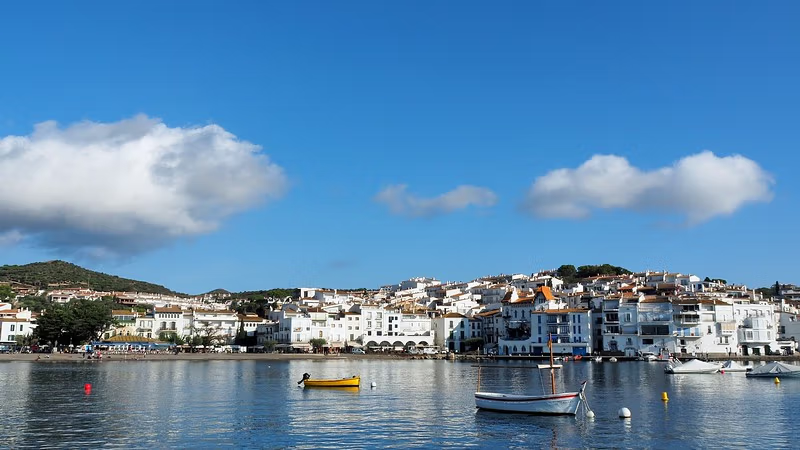
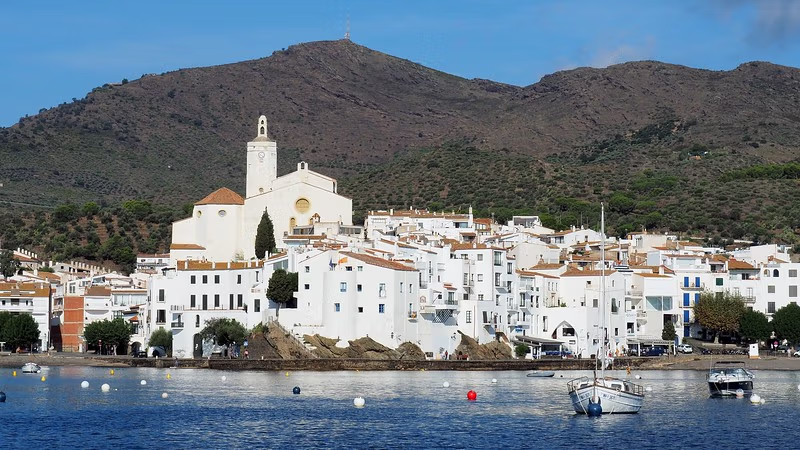
We reached Cadaqués close to midnight after crawling down a serpentine road in the dark. At that hour the town was mostly a collection of shadows, shuttered windows and the strong suspicion that my stomach would not enjoy the same road in reverse. It was not until morning that we saw what we had driven into: whitewashed buildings clustered around a bright blue bay, fishing boats in the harbour and the kind of coastal light that makes even a tired travel blogger reach for the camera before coffee.
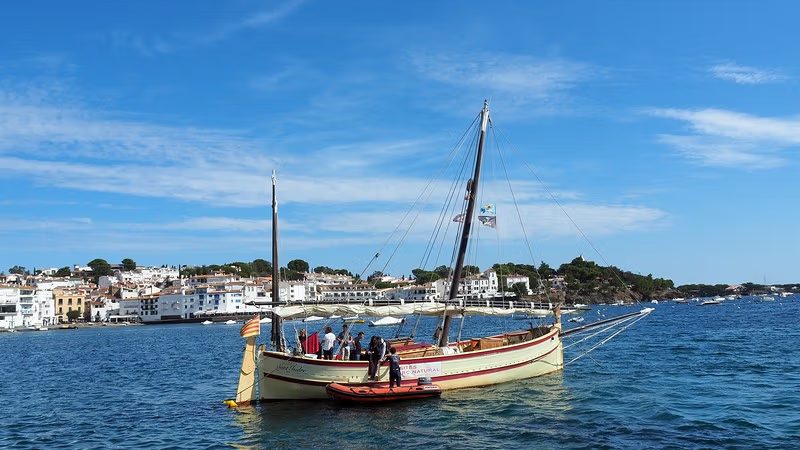
After a slow walk down to the harbour, we boarded the Charter Sant Isidre and sailed toward Cap de Creus Natural Park. The boat moved at exactly the speed I wanted our trip to move: fast enough to go somewhere, slow enough that nobody had to pretend the scenery was a task.
The Sant Isidre was not a decorative yacht polished into harmlessness for tourists. The wooden boat was built in Portocolom, Mallorca, in 1925 for fishing, later passed into the hands of the Navy of the Spanish Republic and served during the Spanish Civil War. It was eventually abandoned during the economic troubles of the 1990s before being rescued and restored by a master boatbuilder. We were sailing on a stubborn survivor, which gave the day more character than a generic white catamaran with a Bluetooth speaker ever could.
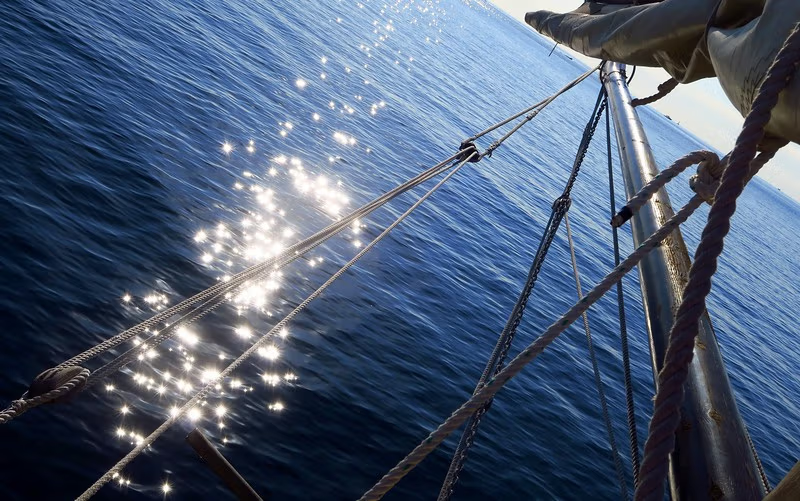
Cap de Creus is properly called a Natural Park, not a national park. From the water, the distinction felt almost beside the point. The landscape was raw and wind-chewed: hard rock, exposed headlands and little coves where the sea suddenly stopped throwing its weight around. Because this is a protected maritime-terrestrial park, navigation, anchoring and commercial excursions are regulated. Use a legitimate operator and check the official Cap de Creus Natural Park information rather than assuming every pretty inlet is yours to anchor in.
Swimming first, fideuà afterwards
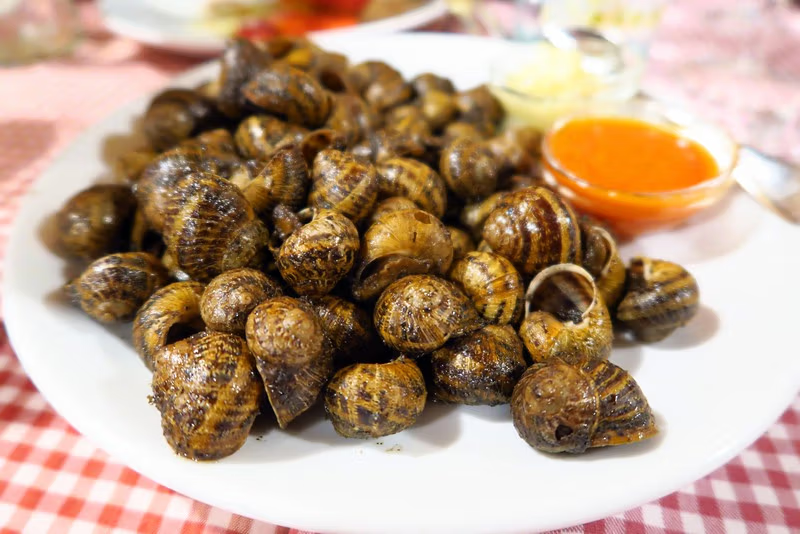
After anchoring, a few of us went swimming. This proved useful because lunch was not a polite sandwich. The crew laid out mussels, fideuà, enormous prawns, white wine and drunken sponge cake. I am a devoted lover of fish and seafood, so the next hour required very little persuasion and even less restraint.
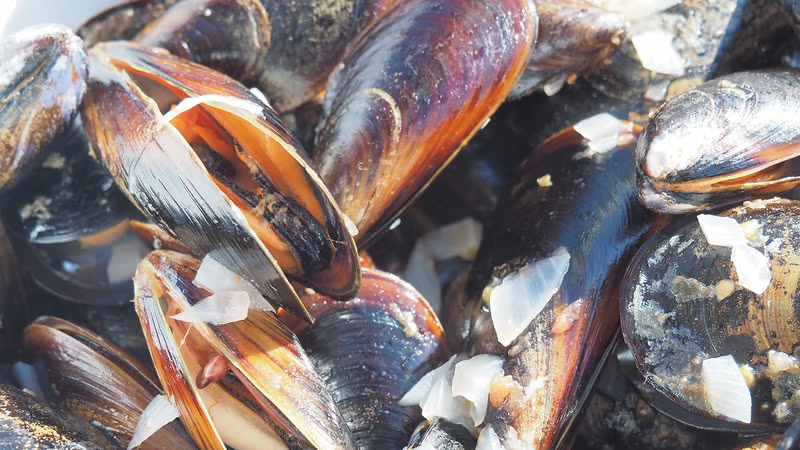
We started with mussels dressed with olive oil, garlic and onions. Audrey called them fresh, juicy and delicious. I nodded thoughtfully, saving my own formidable vocabulary for the main course.
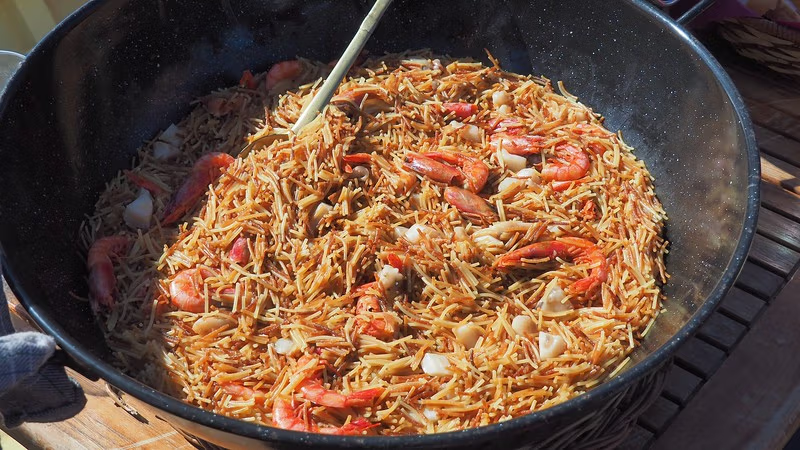
The main course was fideuà: short noodles cooked in a concentrated seafood broth with prawns so large they looked mildly confrontational. I let Audrey taste first. She called me a nice husband, a title I accepted without requesting an independent audit. Then I tried it and delivered my immortal tasting note: “It tastes like seafood.” Years of travel, thousands of meals and there it was—the pinnacle.
Fideuà is often explained to visitors as a noodle relative of paella, but that comparison only gets you part of the way there. The important thing on our boat was the concentrated fish broth, the toasted noodles and the enormous prawns rather than what category an outsider wanted to place it in.
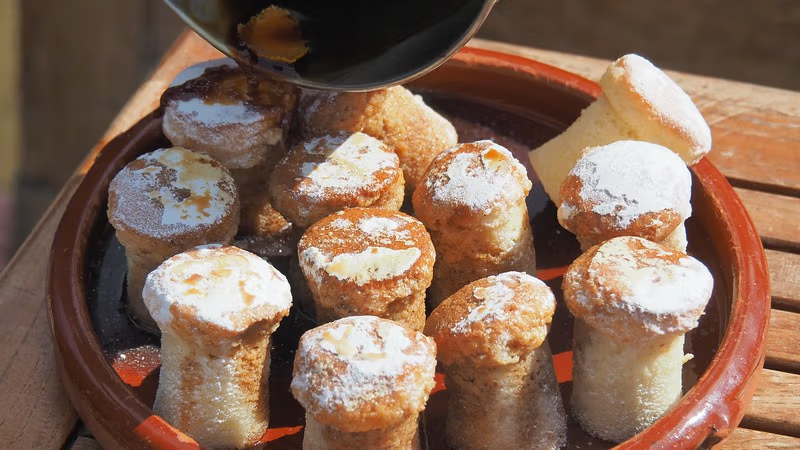
My favourite surprise was the drunken sponge cake, soaked so thoroughly in syrup and liquor that it seemed to have made several poor decisions before reaching the table. It was sticky, aggressively sweet and warm in the throat. I loved it.
Back on shore, Audrey announced that she felt tanned and sun-kissed. Then she looked at me and said I resembled a lobster. Also fair. I had converted a peaceful sailing trip into another contribution to my ever-expanding freckle collection.
Can you recreate our Sant Isidre trip?
The Sant Isidre still operates excursions from Cadaqués, including shorter coastal outings, half-day trips and private charters. Routes, food and swimming stops vary, so read the details rather than booking the first boat with a flattering photograph. For a simpler bookable alternative, you can also check current Cap de Creus boat trips from Cadaqués on GetYourGuide. Do not assume either option automatically reproduces our seafood lunch. Confirm what is actually included.
Harvesting and Stomping Grapes at La Vinyeta
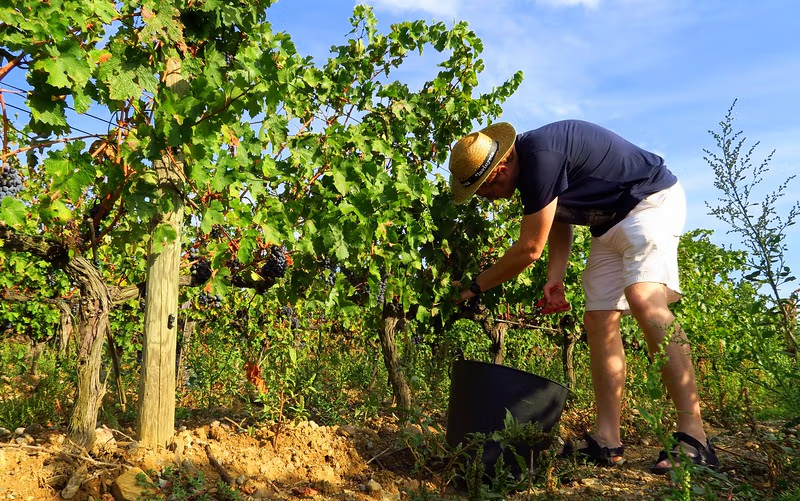
I have endured some painfully dull wine tours—the kind where a guide fires production statistics at you inside a cold cellar while everybody nods as though fermentation volumes have changed their lives. La Vinyeta was the opposite. It remains the most immersive vineyard experience I have had because they did not merely explain the work. They handed us tools and made us do some of it.
We harvested grapes, stomped them barefoot, drank the fresh juice and then attacked a generous spread of cheese and cured meat with the self-satisfaction of people who had completed roughly forty-five minutes of agricultural labour.
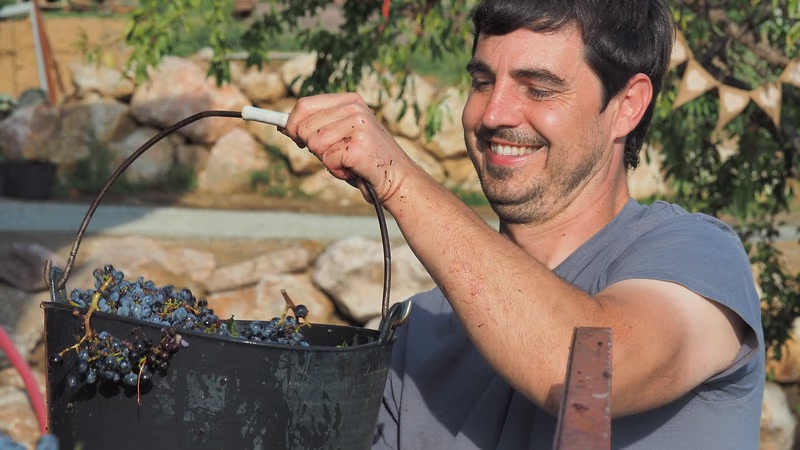
La Vinyeta sits in Mollet de Peralada in the Alt Empordà wine country. Audrey’s notes preserved the story Josep told us about starting the winery with Marta. They were young agricultural-engineering students, not heirs to a centuries-old chateau with portraits of stern ancestors glaring down from the walls. They learned from the vineyard’s previous owner, took a gamble on land other people doubted and built the project anyway. Josep summarized the family pedigree more efficiently: “I’m the son of butchers.”
The current winery tour still tells Josep and Marta’s story, which reassures me that it was not a legend assembled by our group after several glasses of red.
They gave me scissors, which was their first mistake
Our first responsibility was to taste the grapes and judge whether they were sweet enough. This was work I felt dangerously qualified to perform. Then came buckets and scissors, and suddenly the afternoon involved consequences.
I held each cluster in one hand and clipped with the other, focusing less on productivity than on returning to Canada with ten fingers. Audrey adopted a more efficient strategy: eat the inventory. “Don’t tell anyone,” she whispered directly into the camera while surrounded by people filming her.
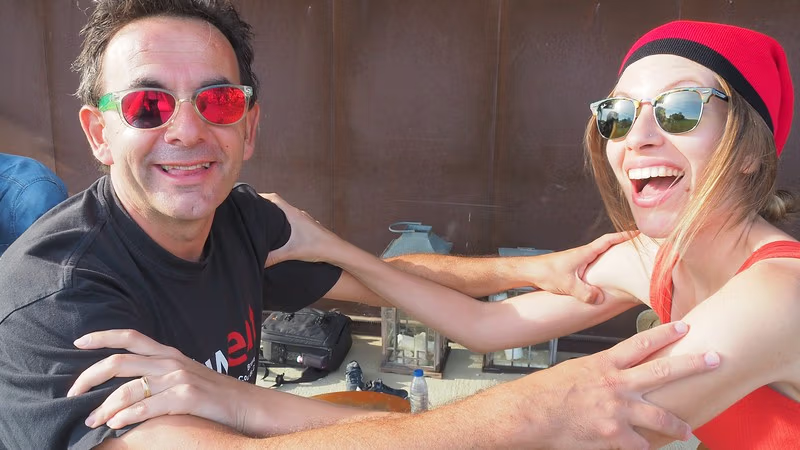
Once the group had filled a larger container, we moved to the part everybody remembers: grape stomping. Shoes came off. We climbed into wooden tubs and were issued red Catalan hats with matching fabric around our waists. Audrey initially called hers a scarf, then issued an emergency correction. Belt. It was a belt. Cultural disaster narrowly avoided.
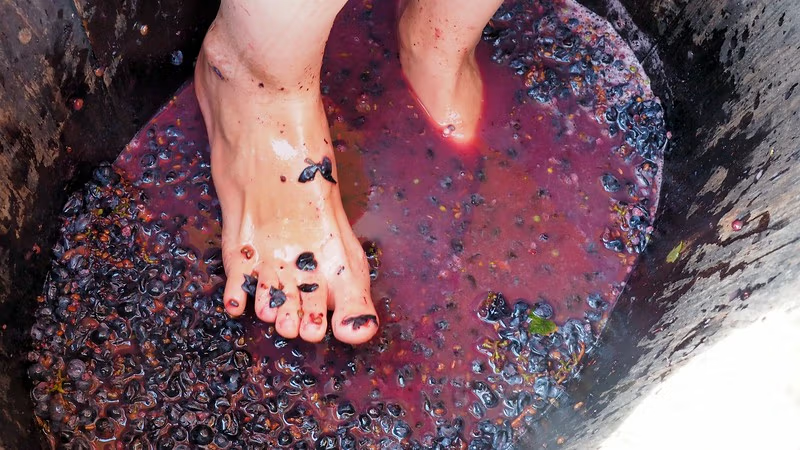
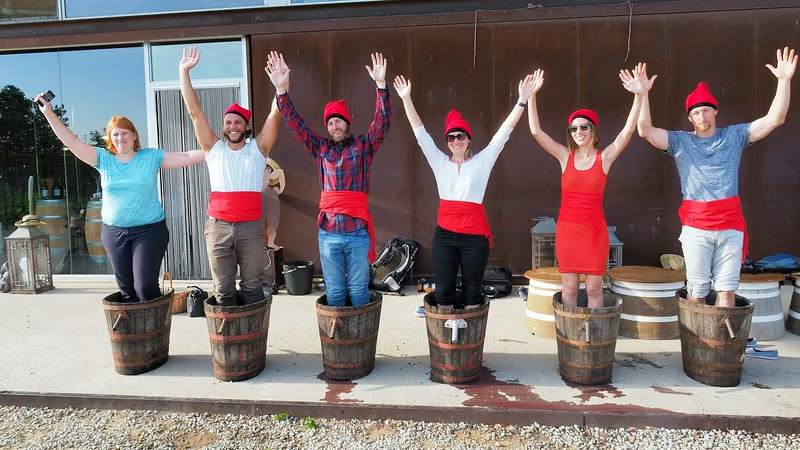
After Audrey had crushed a respectable quantity of fruit with her bare feet, somebody handed me a glass of fresh juice. I noted that nobody was paying or even bribing me to drink it. Then I did. It was intensely sweet and, irritatingly for the joke, delicious.
Why this wine tour worked
That afternoon was the classic example of why I enjoy travel: good company, something I had never tried before and far too much food and wine waiting at the end. Check. Mate. Over 🙂
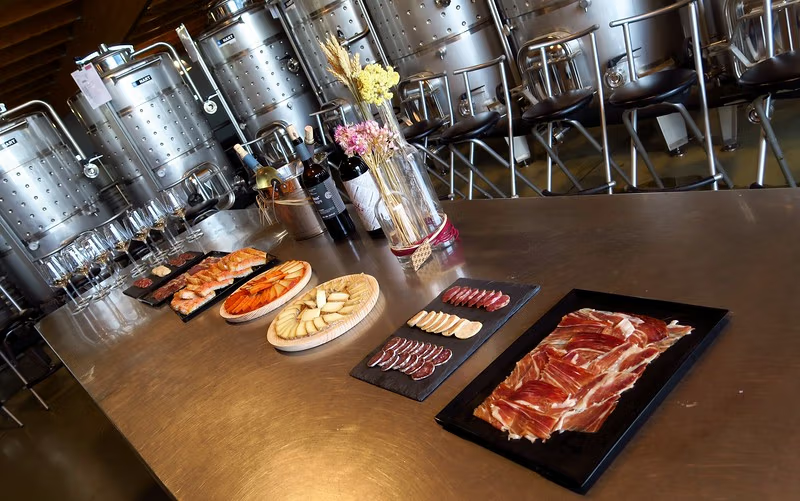
We finished with wine, cheese and cold cuts. After picking and stomping grapes, we felt we had earned the spread far more than we objectively had. But the day also clarified why certain wine tours stick and others evaporate from memory. We tasted the crop, clipped it, crushed it, drank the juice and then sat down together. The facts finally had dirt, flavour and embarrassment attached to them.
I particularly enjoyed a full-bodied red, although nearly anything would have tasted victorious after my brief and perilous career in agriculture.
Visiting La Vinyeta today
La Vinyeta continues to run English-language winery visits with a vineyard and olive-grove walk, winery visit and tasting. The same experience is also bookable through GetYourGuide, which is useful if you prefer flexible cancellation and keeping activities in one booking app.
Important: grape harvesting and stomping were part of our particular visit near the end of harvest. They are not a year-round circus act performed on demand. Grapes ripen when grapes ripen, apparently with no respect for your flights. Ask the winery directly whether any hands-on harvest activity is available on your dates.
A car or arranged driver makes the visit much easier, especially if you want to connect the winery with Cadaqués, Figueres or another rural stop. And yes, the boring adult paragraph is necessary: if you are driving, treat the tasting like a tasting rather than an endurance event.
A Historic Farmhouse, Catalan Gin and La Garrotxa
That evening we stayed at Hotel Mas La Ferreria in La Vall de Bianya. It felt like stepping backwards in time without surrendering plumbing, which is the exact amount of historical authenticity I usually want from a hotel. Audrey remembered the exposed stone, wooden beams and handcrafted shutters; I remember a property that had been modernized without being scrubbed into a beige boutique-hotel personality.
The building is a 14th-century farmhouse beside the church of Santa Margarida de Bianya, and its name traces back to the home and workshop of a blacksmith. It also remains one of the most logical places to sleep before an obscenely early balloon flight. You can check current rates and availability for Hotel Mas La Ferreria on Booking.com.
Audrey also joined a gin-and-tonic workshop during this part of the trip. She had recently become a gin convert on our food and drink tours in Edinburgh, so the timing was suspiciously perfect. The group began sensibly with a classic G&T, then started burning oak shavings and smoking the glasses. By Audrey’s account, it became part cocktail workshop, part magic show and part steady erosion of everybody’s volume control.
Our First Hot Air Balloon Ride over La Garrotxa
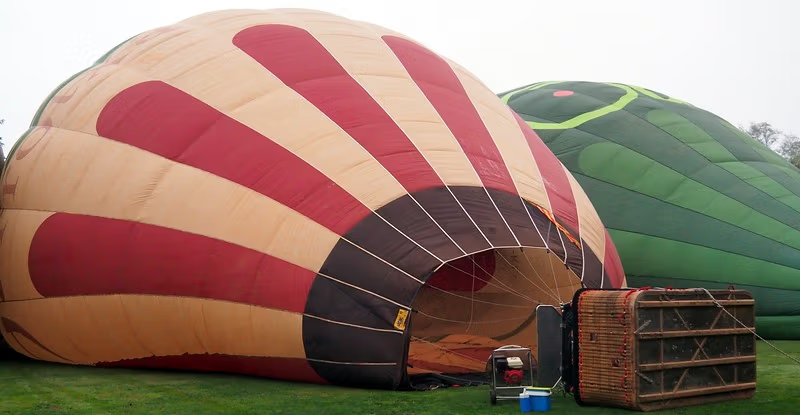
If you had followed this blog for any length of time, you probably knew I was terrified of heights. Naturally, I agreed to climb into a wicker basket and drift toward the clouds because travel has a reliable way of exposing the gap between the person I imagine myself to be and the nervous mammal actually operating the body.
We arrived at Vol de Coloms before sunrise, warmed ourselves with coffee and watched the balloons inflate in the darkness. On the ground, I was still an adventurous travel professional. Then the basket lifted and the branding exercise collapsed.
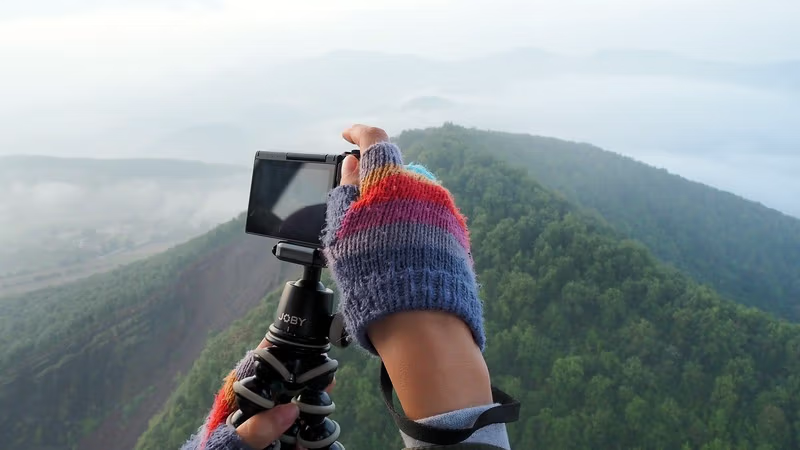
During the ascent I had what the video diplomatically records as “a bit of a freak-out.” Once the balloon levelled, I calmed down enough to speak in complete sentences. Audrey accused me of putting on a brave face for the camera. Correct. Award-winning acting, performed by a man gripping the basket with his soul.
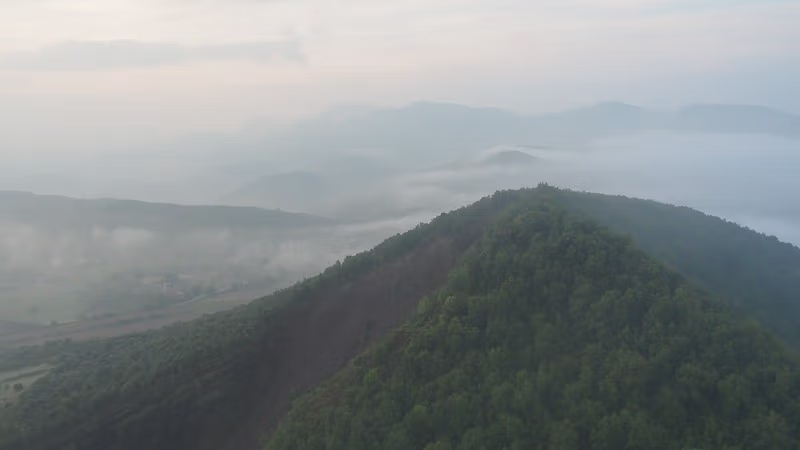
Audrey experienced the flight as peaceful: sleeping villages, soft morning light and long stretches of silence between bursts from the burner. I also admired the views. I simply maintained a more forensic awareness of the distance between my feet and the ground.
La Garrotxa Volcanic Zone Natural Park protects roughly 40 volcanic cones and more than 20 basaltic lava flows. From the basket, those geological facts became a patchwork of farms, forests, villages and morning fog. Nothing looked threatening. My nervous system remained unconvinced.
Cava and cake in the sky
The balloon belongs in a food guide because Vol de Coloms sensibly understood that people suspended in a basket require morale. We toasted with cava and ate cake in the air. After landing came bread rubbed with tomato and olive oil, cured meats, beans and coffee—the kind of brunch that makes almost dying in your imagination feel productive.
Once back on solid ground, I announced that I had never been happier to possess two feet and a planet beneath them. Minutes later, selective memory had already begun its work and I admitted I would probably fly again. Preferably after a gin and tonic.
I wrote a separate account of taking my first hot air balloon ride in Costa Brava for readers who want the full emotional breakdown.
Booking a balloon flight today
Vol de Coloms still flies over the volcanic zone. Current experiences generally begin with coffee and pastry, continue with roughly one to one-and-a-half hours in the air, include cava and local coca during the flight and finish with regional food after landing. The wind chooses the route. This is not a hop-on bus, and no honest operator can guarantee the exact landing point before takeoff.
Flights are weather dependent and obscenely early. Leave some slack in the itinerary instead of creating a non-refundable masterpiece that collapses because the wind has opinions. Vol de Coloms also offers an adapted basket with a wide door and adjustable seating for travellers with reduced mobility—specific, useful accessibility information rather than the usual vague promise that everybody is welcome somehow.
Eating at El Celler de Can Roca in Its No. 2 Year
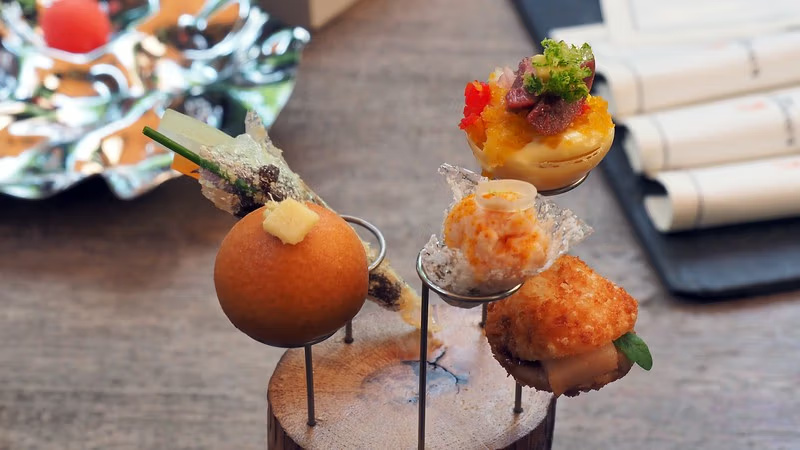
Well, let me start by saying it is not every day you get invited to eat at the second-best restaurant in the world. Most days I am perfectly capable of making a mess with a bowl of cereal.
The “second-best” label belongs to a specific historical moment, not a title frozen in amber. El Celler de Can Roca sat at No. 2 on The World’s 50 Best Restaurants list in 2016 after taking No. 1 in 2013 and 2015. That was the atmosphere surrounding our visit, and it explains why I approached each tiny appetizer as though an examiner might be watching.
Having the opportunity to gormandize on a parade of appetizers was one of the highlights of Girona. Yes, “gormandize” is an absurd word. It was also the correct activity.
A cocktail disguised as chocolate
One of the first bites looked like a delicate chocolate shell. Inside was grapefruit juice and Campari. We had to lift it carefully without cracking the skin, which introduced far more tension than an appetizer should reasonably possess. Then it burst in my mouth: bitter, citrusy and theatrical.
We sampled combinations I would never have ordered from a chalkboard menu, including anchovy ice cream. My favourite, though, was “Around the World,” a collection of Asian-inspired bites that turned the tasting menu into a miniature departure lounge.
It arrived like a wrapped present. We untied the bow, unfolded the package and discovered the bites inside. I had never seen food plated that way. The reveal was not decoration pasted onto the course; it was part of eating it.
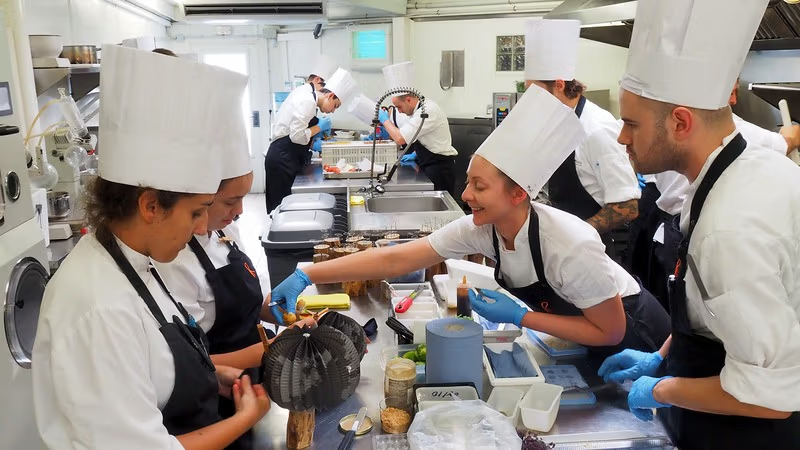
Being allowed into the kitchen gave me a much better appreciation for the machinery behind the elegance. The dining room looked effortless. The kitchen absolutely did not. Every plate represented a small military operation carried out with tweezers.
The restaurant is run by the three Roca brothers: Joan in the kitchen, Josep overseeing wine and hospitality, and Jordi leading the pastry work. “Family memory, Catalan ingredients, technical research and creative freedom” can sound like expensive restaurant poetry until something as odd as a grapefruit-Campari shell lands in front of you and makes the idea edible.
How far ahead should you reserve?
El Celler de Can Roca currently accepts reservations up to 11 months ahead, with a new monthly period opening at midnight local time on the first day of each month. If the table disappears before your cursor reaches it, there is a waiting list. Check the restaurant’s current reservation information before building flights, hotels and your emotional wellbeing around a booking you do not yet possess.
Do not schedule an airport sprint, major drive or mountain hike immediately afterwards. This is a long meal. Give it the day and accept that your most athletic achievement may be standing up from the table.
Walking and Eating through Girona
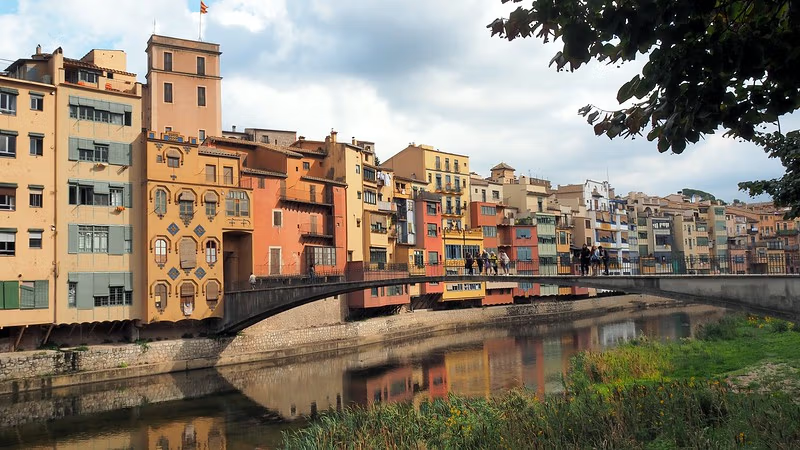
Girona is one of those rare cities that behaves more like a town. You get layers of architecture, narrow lanes, bridges and a serious food scene without the feeling that the city is trying to grind you into paste. Our walk was brief and involved a frozen hand-shaped dessert, but I immediately liked the colourful riverside houses and the slower rhythm.
I would still like to return and film Girona properly: the walls, architecture, narrow pedestrian streets and the kind of wandering that does not come with a group waiting beside a van. On this trip, time was short and our commitment to squeezing in another snack was absolute.
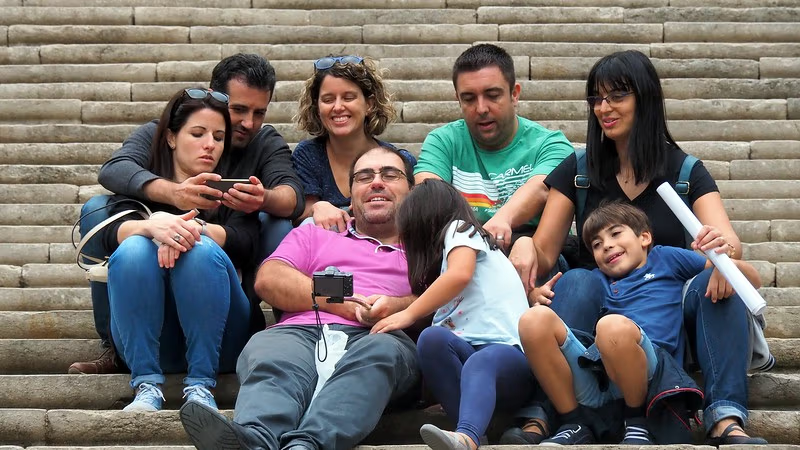
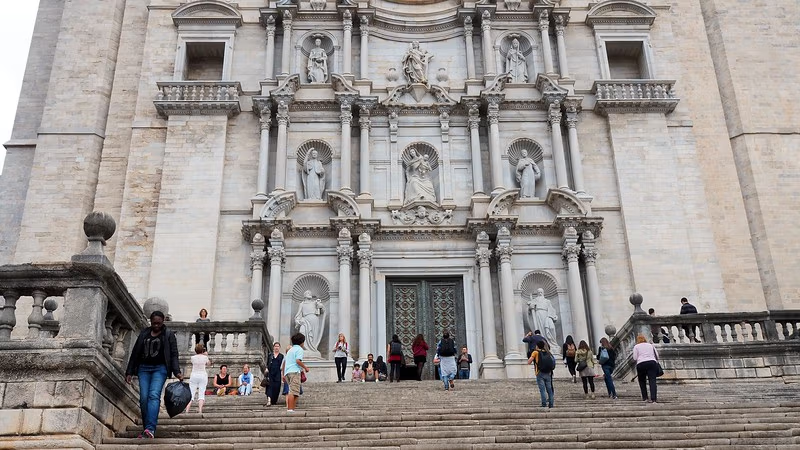
Girona is easy to wander independently, but food is one area where context helps. A guide can explain what is specifically Gironí, what belongs to Catalonia more broadly and why you should not waste limited stomach space on the first laminated menu beside the cathedral. Two practical options are a Girona walking tour with food tastings or the wider selection of Girona food tours on GetYourGuide.
The golden hand
Before walking, we bought a frozen dessert called Mà Daurada, or “golden hand,” apparently tied to a Game of Thrones reference. I did not really watch the show. This did not stop me from discussing the symbolism confidently until asking viewers to explain what on earth I was eating.
It looked enough like a hand that biting off the fingers felt morally questionable. Inside, the orange filling tasted like an orange-and-mango popsicle. The camera then captured me waving the “bloody” fingers around with all the dignity expected from an international food correspondent.
I would treat the golden hand as a strange souvenir from our particular trip rather than a timeless Girona commandment. Products appear and disappear. The city’s more durable pastry calling card is the xuixo, fried, sugar-coated and filled with cream. Look for one in a bakery, but I will not pretend I ate it just because it improves the keyword coverage.
Onyar houses and the Eiffel bridge
The brightly painted houses above the Onyar River form Girona’s signature view. We also crossed the red metal Peixateries Velles bridge, commonly called the Eiffel Bridge because it was built by Gustave Eiffel’s company before the Paris tower. Eiffel did not personally show up with a wrench, despite the more excitable version of history I may have delivered on camera.
Our Final Catalan Feast and the Porró Test
The food and wine throughout the trip were splendid. We did not have a single bad meal, which is impressive given how aggressively we tested the system. The cheeses and cured meats were especially dangerous because they kept appearing before the “real” food.
At every meal I arrived with a sincere plan not to stuff my face. The plan rarely survived contact with the first shared platter.
Audrey’s notes identify our final group dinner as Restaurant Can Xifra in the countryside outside Girona. Finding it after dark became a minor expedition, and at one point we appeared to be making accidental progress toward France. Nothing sharpens forgiveness like arriving late and starving.
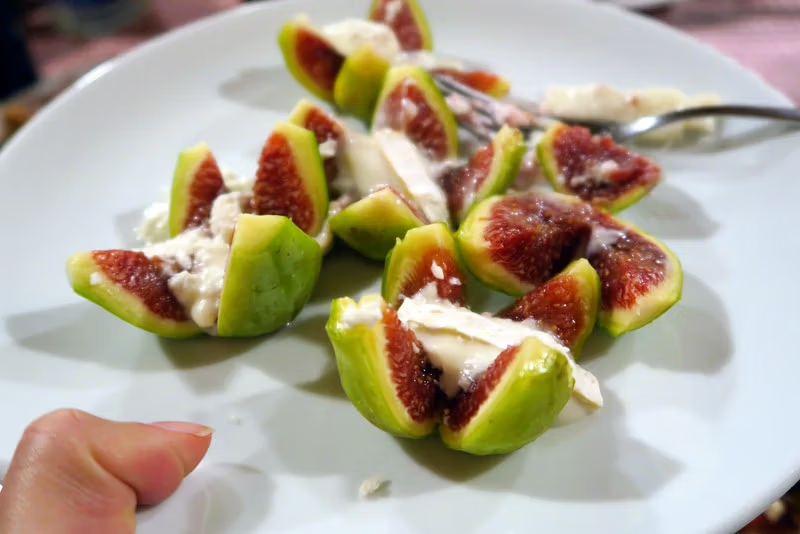
The table filled with bread rubbed with tomato and garlic, roasted peppers, asparagus in olive oil and figs with goat cheese. Audrey considered the figs good enough to serve as dessert. Then she ordered an enormous lamb shoulder with potatoes, proving that the appetizers had merely been administrative paperwork.
We somehow finished with crema catalana, the custard buried beneath a sheet of caramelized sugar that cracked under the spoon. I was full. I ate it anyway. This trip was built on consistency.
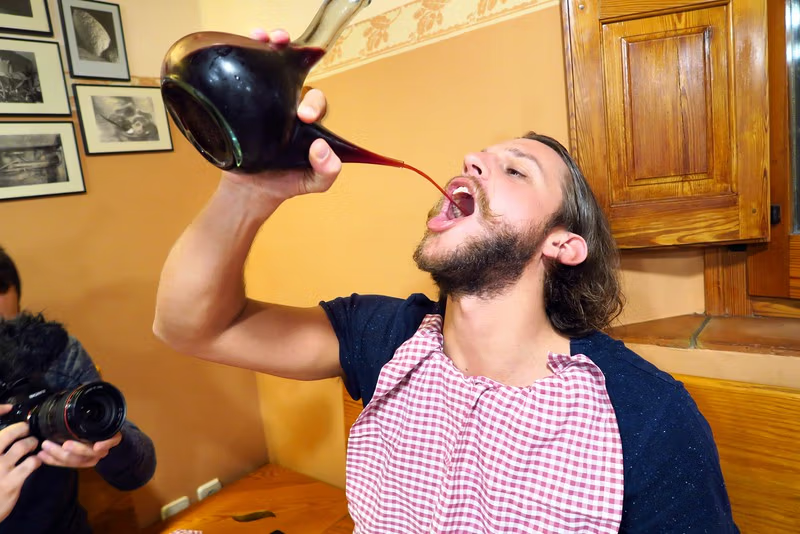
My favourite piece of table theatre was learning to drink from a traditional porró. It looks like a wine bottle that mated with a watering can. You raise the spout away from your face and pour a thin stream directly into your mouth without touching it to your lips. Elegant in theory. Laundry problem in practice.
I enjoyed several seconds of beginner’s luck before spraying wine across my face near the end. Honestly, that remains a stronger performance than I would produce today without a tarp and signed waivers.
Can Xifra still appears in the Girona hospitality association’s restaurant directory, but verify current opening days and reserve before driving into the countryside. Getting lost on the way to a confirmed dinner is a story. Getting lost on the way to a closed restaurant is just poor administration.
What to Eat in Costa Brava and the Girona Region
Our meals mapped the geography better than a brochure could. Near the sea: mussels, prawns, fish broth and noodles. Inland: wine, cheese, cured meats, beans and lamb. Girona somehow held both extremes at once—from a rural porró and oversized shoulder of lamb to one of the most technically ambitious restaurants on earth.
The table below sticks to foods that explain this route. It is not an attempt to catalogue every Catalan dish ever placed on a plate until both reader and writer lose the will to eat.
| Food or drink | Why it matters here | Did we have it? |
|---|---|---|
| Fideuà | Short noodles cooked with seafood broth; a natural order along the coast | Yes, aboard the Sant Isidre |
| Suquet de peix | A traditional fisherman’s stew built around fish, potatoes and a thickened sauce | No; researched regional suggestion |
| Sea-and-mountain rice | Combines seafood, meat and often Pals rice, expressing the region’s coast-to-interior identity | No; researched regional suggestion |
| Anchovies from L’Escala | One of the coast’s best-known preserved seafood products | Not documented on this trip |
| Red prawns from Palamós or Roses | A prized local seafood usually treated simply | We ate large prawns, but cannot identify their exact origin |
| Pa amb tomàquet | Bread rubbed with tomato, olive oil and sometimes garlic; simple and foundational | Yes |
| DO Empordà wine | Connects the windswept vineyards of Alt Empordà with the region’s seafood and inland dishes | Yes, at La Vinyeta |
| Xuixo de Girona | Girona’s cream-filled, sugar-coated pastry | No; researched suggestion |
| Crema catalana | Custard with a crackling caramelized sugar top | Yes |
The Costa Brava and Girona Pyrenees tourism board describes the cuisine as a meeting of fishing traditions, mountain cooking, volcanic farmland and mar i muntanya—sea and mountain on the same plate. Tourism boards do enjoy a polished phrase, but this one earns its keep. Drive inland for an hour and the menu genuinely changes character.
How to Plan a Costa Brava Food Trip
Some hotel and tour links in the planning section are affiliate links. If you book through them, we may earn a commission at no additional cost to you.
Choose two bases rather than changing hotels every night
For a trip built around these experiences, two bases are enough. Moving hotels every night is not “seeing more.” It is mostly repacking damp clothes and arguing with a suitcase.
- Cadaqués or northern Alt Empordà: best for Cap de Creus, sailing and reaching La Vinyeta or Figueres by car.
- Girona or La Garrotxa: best for El Celler de Can Roca, Girona’s historic centre, rural accommodation and ballooning.
Girona is the easiest car-free base. The old centre is walkable and the rail connection from Barcelona is straightforward. A car becomes much more valuable once vineyards, rural restaurants, Cadaqués and La Vall de Bianya enter the plan. For accommodation, compare hotels in Cadaqués on Booking.com, places to stay in Girona and hotels around Olot and La Garrotxa.
Allow at least four days
Four full days allow one coastal day, one Empordà wine day, one La Garrotxa day and one Girona day. Five or six are better. They leave room for weather, a cancelled balloon flight and the radical possibility of digesting lunch before dinner.
Early autumn suited this particular trip
Early autumn gave us warm coastal weather, fewer people than peak summer and the tail end of harvest. It was a lucky overlap for boats and vineyards. Do not confuse “worked for us” with “guaranteed every year.” Harvest shifts, weather misbehaves and coastal businesses reduce schedules outside the main season.
Book the hardest pieces first
- El Celler de Can Roca: secure the restaurant before shaping flights, hotels and dreams around it.
- Balloon flight: reserve early, then leave enough flexibility for the atmosphere to reject your plans.
- La Vinyeta: confirm the language, date and exact experience—especially if your heart is set on harvest activity.
- Cadaqués boat trip: check whether the outing includes swimming, food or simply the coastal route.
Do not schedule two enormous meals on the same day
A leisurely seafood lunch, full wine tasting or long tasting menu can each dominate a day. Stacking them looks impressive in a spreadsheet and feels idiotic by the second appetizer. Choose one major food event per day. Let the other meals be small, even if every fibre of your travel-planning brain insists that unused stomach capacity is wasted potential.
More Frequently Asked Questions
How many days should I allow for a Costa Brava food trip?
Four full days allow time for one coastal day, one Empordà wine day, one La Garrotxa day and one Girona day. Five or six days are more comfortable if you want flexibility for weather, a cancelled balloon flight or slower meals.
Do I need a car for this Costa Brava and Girona route?
Girona is the easiest car-free base because its old centre is walkable and it has rail connections from Barcelona. A car becomes much more useful for vineyards, rural restaurants, Cadaqués and La Vall de Bianya.
Can visitors still harvest and stomp grapes at La Vinyeta?
Grape harvesting and stomping were part of our visit near the end of harvest, but they are not guaranteed year-round activities. Contact La Vinyeta directly to ask what hands-on harvest experiences, if any, are available on your dates.
Are hot air balloon flights over La Garrotxa weather dependent?
Yes. Balloon flights depend on suitable weather, and the wind determines the route and landing point. Leave flexibility in your itinerary rather than scheduling a tightly timed non-refundable activity immediately afterwards.
How far ahead should I reserve El Celler de Can Roca?
The restaurant currently accepts reservations up to 11 months ahead, with a new monthly booking period opening at midnight local time on the first day of each month. A waiting list is available when preferred dates are full.
Where should I base myself for this food trip?
Two bases work well: Cadaqués or northern Alt Empordà for Cap de Creus, sailing and La Vinyeta; then Girona or La Garrotxa for the historic centre, El Celler de Can Roca, rural accommodation and ballooning.
Costa Brava Final Thoughts
The photographs throughout this page do more than decorate it. They prove the trip had texture: scratched wooden boats, grape-stained feet, fog below the balloon, absurdly careful plating and the exact moment a porró began plotting against me.
The biggest lesson from Costa Brava was not that every traveller must hunt down the same checklist of dishes. Food stayed with me because it belonged to something larger: seafood eaten on a historic boat, juice from grapes we had just crushed, cava above volcanic farmland and an appetizer unwrapped like a present.
And if the trip ends with wine sprayed across your face from a porró, you have at least committed to the region with admirable lack of dignity.
That is a wrap from beautiful Costa Brava and Girona. Have you explored this part of Catalonia through its food? Let me know in the comments below.
This post was brought to you as a result of the #EuroFoodTrip campaign, created and managed by iambassador in partnership with Costa Brava & Girona Pyrenees and Emilia Romagna Tourism. As always, all thoughts remain my own.
This article is really amazing, thank you for sharing helpful article. very interesting and amazing details you provide. Thank you for such detailed description of the destination.
Its Nice this is the ideal destination for you to explore! thanks for good blog.
If you have a passion for excellent cuisine and leisurely travel, this is the ideal destination for you to explore! thanks for good blog.
Hi SAMUEL JEFFERY,
Nice blog. This blog gives a complete idea about COSTA BRAVA. I am planning to do my next trip to Costa Brava. From this blog it is clear that COSTA BRAVA is a perfect tourist spot for travelers. Thanks for sharing this information with us.
I know you are a travel blogger. Did you ever visit Kerala, the god’s own country. The houseboat cruise in kerala especially in Kumarakom will bring you an awesome experience.
Great pictures! The Costa Brava has some seriously gorgeous coastline places to visit that actually not too many know about. Might be because of the party towns around however even these have great surroundings.
Great place for food and wine and reasonably cheap still to go to!
Thank you! It sure is a wonderful place for food, wine and relaxation 🙂
This looks amazing! I have always wanted to visit and travel guide food lovers, and these photos make me want to go even more badly! Thank you so much for sharing it.
Thank you very much! If you love good food and slow travel this is the place for you to visit!
Costa Brava is the great place,thank you for sharing your experience,i like your blog so much,dishes looks delicious,
Thank you! We loved visiting and highly recommend going 🙂
I love Spanish food, but you really have to find a good place as often it can also disappoint in terms of quality of the cooking, I now only eat at recommended Spanish places, but that way I am always satisfied,
That is cool to hear! Do you have any favorite restaurants in particular?
Yes I very much like this place http://www.chabadabada.es/en
Unlike so many places ‘on the beach’ in just about any Spanish resort this eatery offers great food and great service and is always busy
Thanks for sharing that Alan!
Last year, got to visit here and I really love the clifftop of El Far that gives the most spectacular panoramic views on the Costa Brava and Palamos prawns impressed me. Really love this place
That is really cool to hear! How long did you visit for?
Madrid and Barcelona both are Wonderful place,your travel blog is always have some unique,food looks so tasty,thanks for sharing your blog..
Thank you! We have guides for those cities in older articles.
Celler de Can Roca is a very Awesome restaurant.
It sure is!
So delicious and yummy food and so good information you shared about that palce.
Thank you! It was a trip we won’t forget anytime soon 🙂
Those figs look amazing! And I would spill wine from that bottle all over my face lol.
Thanks! Hahaha…yeah, plenty of wine spills that evening 😉