
Calling Emilia-Romagna a paradise for food lovers is accurate, but also a little too tidy. Our version involved rain, twelve storeys of suspicious wooden stairs, Audrey wrestling pasta dough before it dried out, me repeatedly volunteering for the crucial job of “holding the camera,” and enough cheese and cured meat to make our jeans file a formal complaint.
If some deeply unreasonable authority forced me to eat only five different cuisines for the rest of my life, Italian food would sit comfortably near the top. That may sound predictable now that I have turned into a bit of a foodie. It would have sounded even more predictable when I was a teenager and my preferred diet consisted of pizza, lasagna, pasta, ribs and cheesecake.
Basically, 75% of what I liked was Italian food prepared Canadian style. Salad? Forget about it. Rice? Yuck.
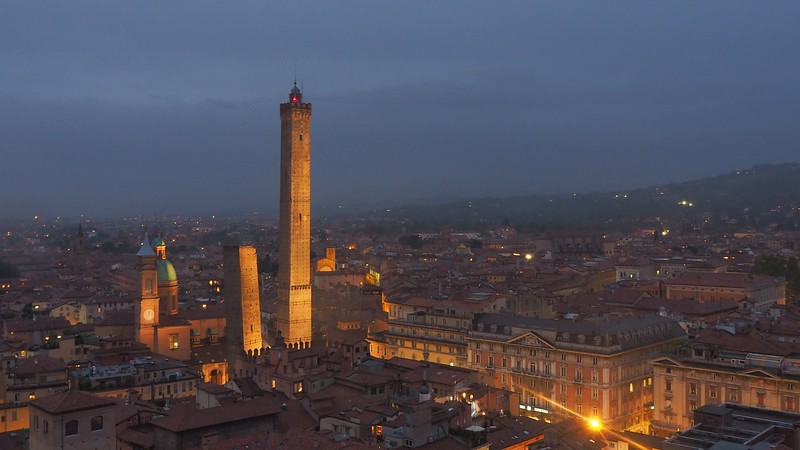
Taste buds are funny things. Mine eventually stopped behaving like frightened villagers whenever a vegetable appeared. These days I cannot imagine visiting a country without chasing down its local food, but the teenage devotion to Italian cuisine never really left. It merely gained better ingredients and a less hostile relationship with salad.
Audrey and I had already visited Italy once before, including Milan, and familiar dishes suddenly tasted as though somebody had removed a heavy blanket from them. Better tomatoes. Better cheese. Pasta cooked with intent rather than boiled into surrender. The Italian food I knew at home began to resemble cardboard. To be fair, much of the pasta had recently emerged from a cardboard box.
In Italy, meals were not administrative tasks to complete before sightseeing resumed. Lunch could swallow an afternoon. Ingredients had biographies. Families had opinions. Everyone seemed considerably less interested in wolfing down food than I had been during my university years. This trip pushed that rhythm so far that Audrey’s waistband became a more reliable travel journal than either of our notebooks.
Our Emilia-Romagna Food Road Trip at a Glance
Our campaign itinerary lasted only three days, which sounds wonderfully efficient until you remember that our transport, appointments and producers had been coordinated in advance. We were not wandering around rural Italy armed with optimism and a regional train pass. We were being moved through a tightly organised food gauntlet. It was glorious. It was also not a sensible template to copy without modification.
| Area | What we experienced | What readers should know |
|---|---|---|
| Bologna | Torre Prendiparte, aperitivo, dinner and the old town after dark | An excellent rail-connected starting point; avoid driving blindly into the historic ZTL |
| Forlimpopoli | Handmade pasta at Casa Artusi | Book the class first and organize the rest of the day around its schedule |
| Romagna hills | Drei Donà wine tasting at Tenuta La Palazza | A rural visit where a car, driver or organised transport helps |
| Faenza countryside | Overnight at La Sabbiona agriturismo | A personally tested rural base surrounded by vines and farmland |
| Modena | Acetaia di Giorgio and Museo Enzo Ferrari | Traditional balsamic and Motor Valley can fit naturally into the same stop |
| Modena countryside | Hombre dairy and the Panini collection | Parmigiano production is best understood on a booked producer visit |
| Parma lowlands | Antica Corte Pallavicina, Culatello cellars and a long lunch | This is outside Parma city and deserves more than a rushed detour |
The practical lesson is brutally simple: trains solve the cities; they do not solve the farms. Bologna, Modena and Parma sit along a useful rail spine, while many of the dairies, vineyards, agriturismi and curing cellars that make the trip special are hiding down country roads where the railway has politely declined to participate.
Travellers who would rather not rent a car can compare transportation-inclusive Parmigiano, prosciutto and balsamic tours from Bologna. We did not take that particular commercial tour, so treat it as a current planning option rather than a firsthand endorsement.
Emilia and Romagna Are Not the Same Culinary Place
The hyphen in Emilia-Romagna is doing real work. This is not one giant culinary blob stretching conveniently across a map. Our route began in Bologna, pushed east into Romagna for Artusi, wine and farm life, then swung west into Emilia for balsamic vinegar, Parmigiano Reggiano, Culatello and enough Italian motor engineering to make my inner twelve-year-old wake from hibernation.
Romagna gave us handmade pasta, vineyard hills, Sangiovese and a quiet agriturismo where a border collie clearly believed we had travelled to Italy for the sole purpose of throwing sticks. Emilia brought the heavier artillery: aged cheese, concentrated balsamic, noble cured meat and Ferrari. The shift gave the journey texture. Otherwise this would simply be a long sequence of me eating things and nodding enthusiastically.
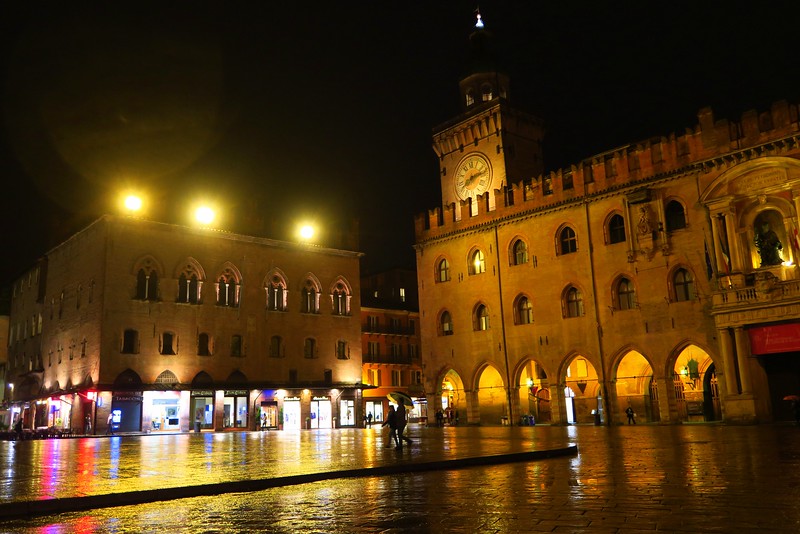
Bologna in the Rain: Climbing Torre Prendiparte
We had only half a day in Bologna, which is a ridiculous amount of time to assign a city this layered. Naturally, we began by climbing Torre Prendiparte, a 12th-century defensive tower that later served as a prison and eventually became a very unusual guesthouse and event space. Nothing settles you into a new city like immediately questioning the structural integrity of its medieval staircase.
It was raining. Of course it was. The twelve storeys of old wooden stairs creaked and flexed just enough to keep the imagination busy. I kept repeating that the view would be worth it, partly for Audrey and mostly for myself. Between this climb and our hot air balloon ride in Costa Brava, I joked that I had nearly exhausted my lifetime supply of courage points. Audrey admitted her hands were clammy too. Romance.
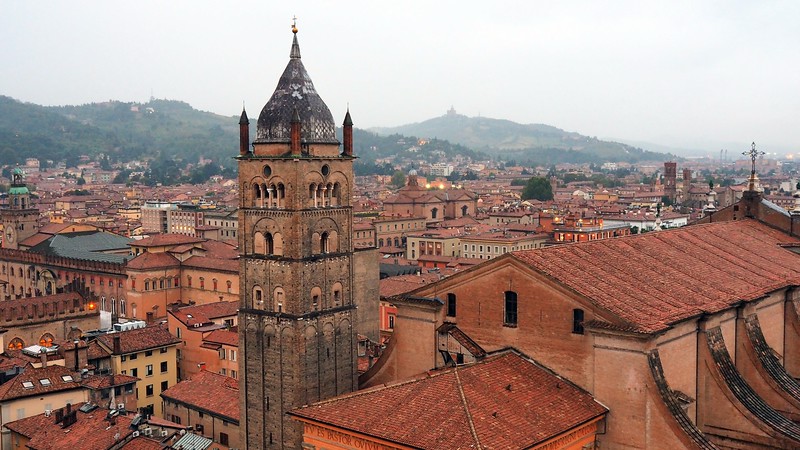
The view did justify it. Bologna spread below us in red roofs, church domes, medieval towers and the kind of dense architectural layering that makes a modern Canadian streetscape feel as though somebody forgot to finish it. The weather was grey, the visibility imperfect and the city still looked magnificent.
After an aperitivo and dinner, we wandered beneath the porticoes at night. I kept telling Audrey we needed to return, which is what travellers say when they have scheduled half a day for a city and then act surprised that it contains more than half a day of material. Bologna had shown us enough to become dangerous. We knew we liked it. We did not know it.
Planning reality: public access to Torre Prendiparte can depend on current events and opening arrangements. Check before marching across Bologna with your climbing shoes and a heroic expression. The staircase is not decorative; travellers with limited mobility should assume this experience is physically demanding unless the operator confirms otherwise.
Making Pasta at Casa Artusi in Forlimpopoli
Audrey and I had already demonstrated advanced ability in the field of eating pasta. Making it was another matter. I immediately identified photography and video as mission-critical responsibilities, thereby protecting myself from flour, egg and the possibility of producing something shaped like a wet sock. Audrey did the actual cooking.
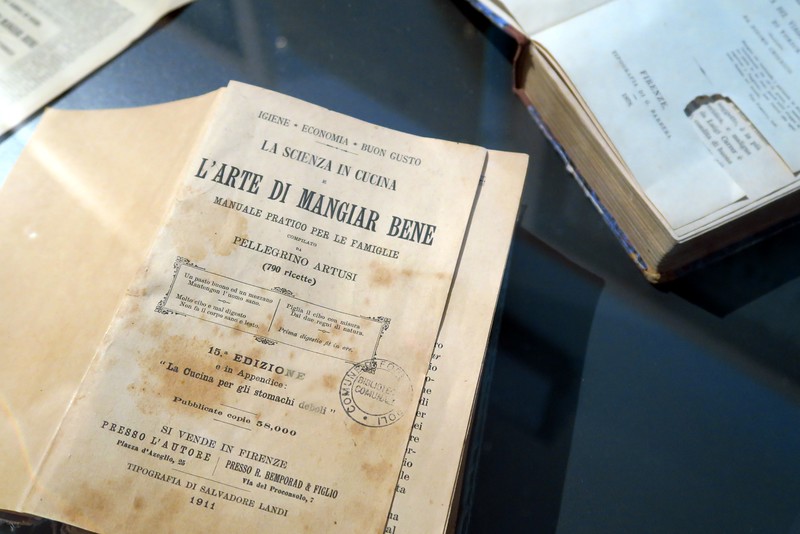
We were at Casa Artusi in Forlimpopoli, the hometown of Pellegrino Artusi. His La scienza in cucina e l’arte di mangiar bene—Science in the Kitchen and the Art of Eating Well—was first published at his own expense in 1891 with 475 recipes. Artusi kept expanding it through correspondence and contributions from households around Italy, turning it into something larger than a conventional cookbook.
That history matters because Casa Artusi celebrates domestic cooking rather than celebrity-chef theatre. Artusi gathered recipes, corrections and ideas from households across Italy, and Marietta Sabatini—his cook and collaborator—was central to the work. The volunteer home cooks known as the Mariette still carry that spirit. This is food history with flour under its fingernails.
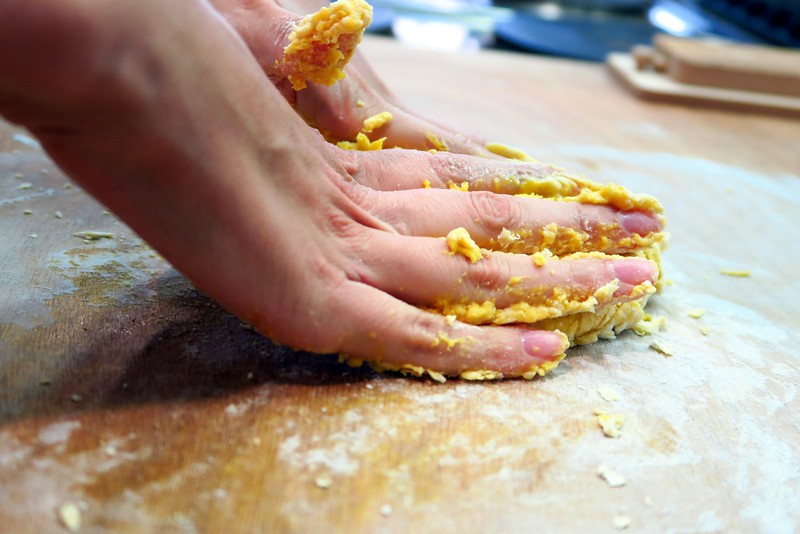
Audrey tied on the apron and announced that she felt like a grandmother. Then came the apparently foolproof formula: roughly one egg per 100 grams of flour. Two ingredients. What could go wrong? Quite a bit, apparently, once the dough began drying while she was still trying to tame it. Audrey started working faster. I continued filming with the serene confidence of a man contributing nothing physical.

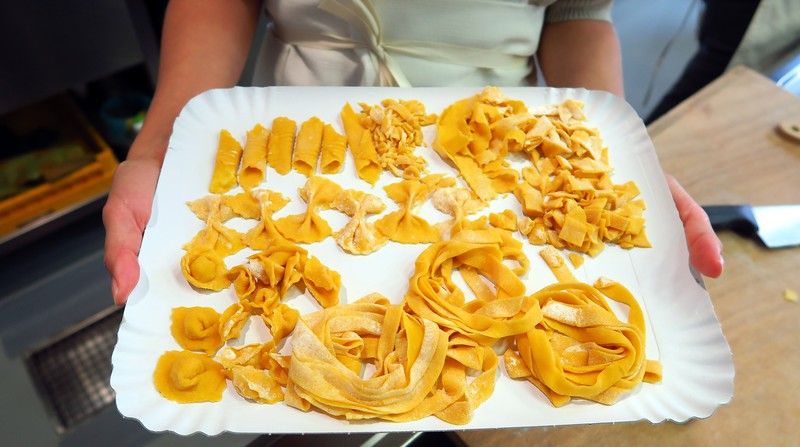
With help from the volunteers, she rolled, pinched and shaped the dough into several forms. Compliments began arriving from every direction. Audrey absorbed them like a houseplant discovering sunlight and immediately accused me of failing to provide adequate praise at home. Apparently this, and not my strategic avoidance of kitchen labour, explained why she did not cook more often.

When Audrey presented the finished tray, she declared it sufficient for one hungry husband and a small army. We sat down to eat the pasta from the class. She suggested that my plate should remain empty because I had done none of the work. Fortunately, Casa Artusi operates according to culinary hospitality rather than strict labour justice.
Planning reality: Casa Artusi offers different classes, demonstrations and cultural visits rather than one permanent tourist package. Pick the class first, confirm the language and meal component, then build the day around it. For travellers staying in Bologna who cannot reach Forlimpopoli, check this current Bologna pasta, ragù, wine and gelato class. It is a practical alternative, not the experience we personally took. For another dough-heavy lesson in humility, see our pierogi-making experience in Warsaw.
Wine Tasting at Drei Donà’s Tenuta La Palazza
After lunch, we continued into the Romagna hills for a wine visit at Drei Donà’s Tenuta La Palazza, between Forlì, Castrocaro and Predappio.
The plan involved a pleasant walk through the vineyard. The sky studied this proposal and rejected it. Rain shut down the outdoor portion, but the bottles were indoors and remained fully operational. We adjusted with remarkable emotional resilience.
What repeatedly impressed me about European vineyards was the depth behind them. These were not tasting rooms with a few decorative barrels rolled into position for tourists. The estate, family history, grapes and surrounding hills belonged to the same story. Drei Donà also reminded us that Romagna has its own wine identity; this was not merely a warm-up before reaching the more famous products farther west.
Planning reality: visits require reservations. Current formats can include the estate, winery and tasting, but rain may reduce the vineyard portion—as we discovered firsthand. Wear sensible shoes anyway. Optimism is not waterproof.
Sleeping at La Sabbiona, a Vineyard Agriturismo near Faenza
That evening we stayed at La Sabbiona, an agriturismo near Faenza. An agriturismo combines accommodation with a working agricultural property. It does not necessarily mean you will be awakened at dawn and conscripted into olive harvesting, although the word can sound mildly threatening to anyone seeking a holiday.
La Sabbiona sat among vineyards and land used for grains, fruit and olives. Dinner included the farm’s own wine, figs and olives, which Audrey remembered particularly well. After the compressed pace of Bologna, pasta school and wine tasting, the countryside felt wonderfully quiet. Our digestive systems were finally given a short administrative break.
Then there was the dog. The family’s border collie treated every stick as an urgent contract requiring immediate renewal. Throw it once and the dog returned. Stop throwing and the dog waited nearby, staring with the quiet moral authority of someone disappointed by your collapsing work ethic. Audrey was delighted. I suspect the dog still believes we left mid-shift.
La Sabbiona remains a working family farm and vineyard with rooms, apartments, breakfast, a pool and food-and-wine activities. It also lists an accessible guest room. More importantly for this article, we actually slept there. This is not a hotel recommendation assembled from star ratings and scented website copy.
Who it suits: travellers with a car who want a quiet Romagna base near Faenza, Forlimpopoli and wine country. It is considerably less elegant as a train-only manoeuvre. Check current rooms and rates at La Sabbiona on Booking.com.

Traditional Balsamic Vinegar at Acetaia di Giorgio
The next morning we visited Acetaia di Giorgio in Modena. I could smell the vinegar before the formal tasting began, which immediately felt more promising than any supermarket salad-dressing aisle I had previously known.
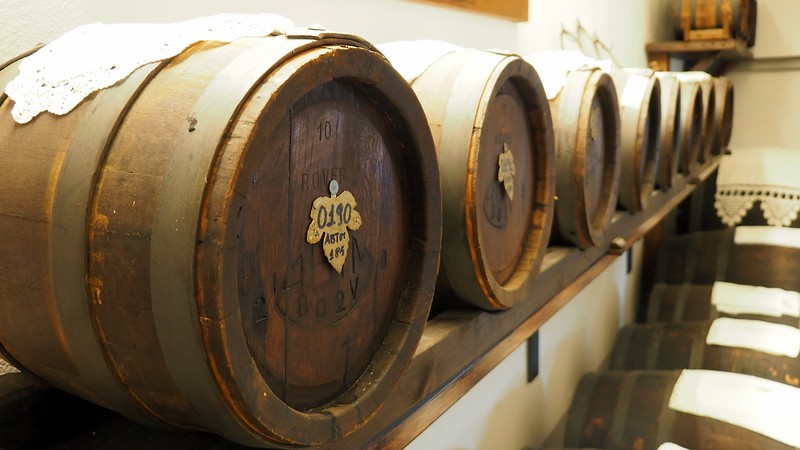
Until then, “balsamic vinegar” meant a thin, inexpensive liquid I poured over salad with the subtlety of a man extinguishing a small fire. The traditional vinegar at Acetaia di Giorgio was thicker, darker, richer and almost absurdly concentrated. Different ages and barrels produced obvious shifts in sweetness, acidity and wood. One sample was introduced as spicy, prompting Audrey to perform an impression of me. The impersonation had more heat than the vinegar.
Traditional PDO versus Modena PGI balsamic
This distinction is one of the most useful things a traveller can learn in Modena:
| Product | What makes it different | How to think about it |
|---|---|---|
| Aceto Balsamico Tradizionale di Modena PDO | Made from cooked grape must and matured in batteries of wooden barrels; Affinato requires at least 12 years and Extravecchio at least 25 | Concentrated and expensive; used in drops rather than glugs |
| Aceto Balsamico di Modena PGI | A separate protected product with different production rules and a broader range of styles | Often the more practical everyday balsamic for dressings, marinades and cooking |
Calling every less expensive balsamic fake is lazy and inaccurate. Traditional PDO balsamic and Modena PGI balsamic are different protected products built for different jobs. The revelation was not that our supermarket bottle had committed fraud. It was that the traditional vinegar in front of us belonged to another category entirely and should be used by the drop rather than deployed like gravy.
Planning reality: Acetaia di Giorgio asks visitors to arrange tours in advance. This is a family acetaia, not a convenience store with twelve years of barrel ageing behind the counter. Email first.
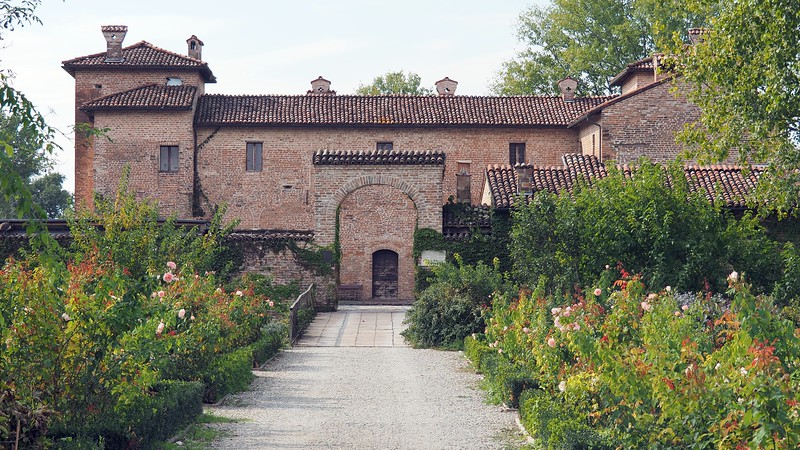
A Tunnel of Culatello at Antica Corte Pallavicina
For lunch we travelled to Antica Corte Pallavicina in Polesine Parmense, down in the Po River lowlands. Describing it casually as “Parma” makes the stop sound much easier to bolt onto a city afternoon than it really is. This is countryside, fog, humidity and old cellars. Exactly the conditions the Culatello needs. Less convenient for luggage.
Before eating, we toured the curing cellars. At one point I announced that we were walking through a tunnel of ham. This was not technically the language of a cured-meat scholar, but it was visually accurate and considerably easier to say while surrounded by hanging pork.
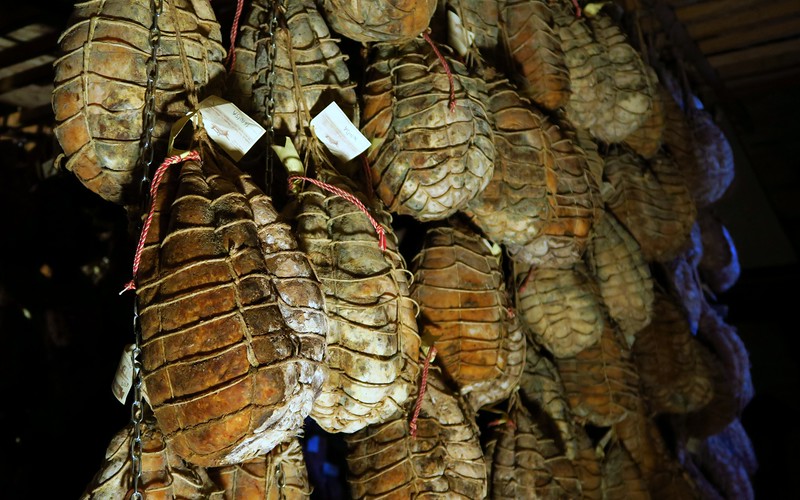
Culatello di Zibello is made from a prized portion of the pig’s thigh, shaped, wrapped and tied before ageing in damp, ventilated cellars for at least ten months. The fog, humidity and seasonal heat of the Po lowlands are not incidental inconveniences; they help create the conditions in which the meat matures and its characteristic moulds develop.
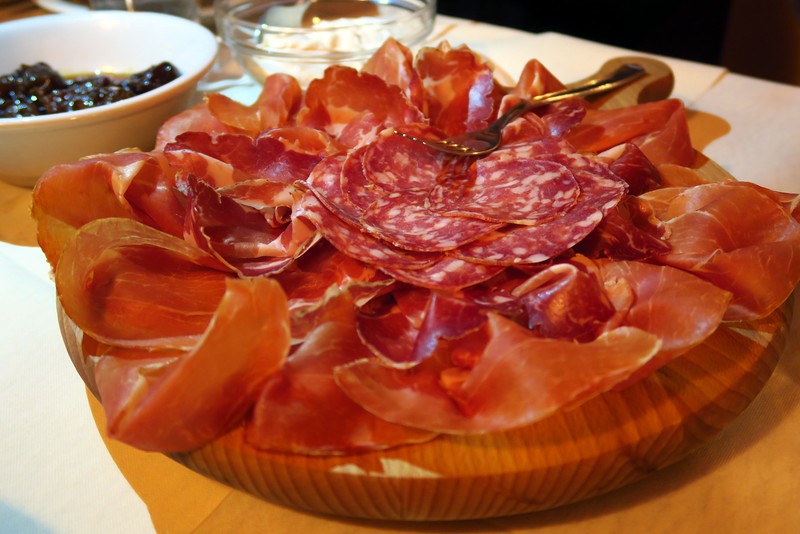
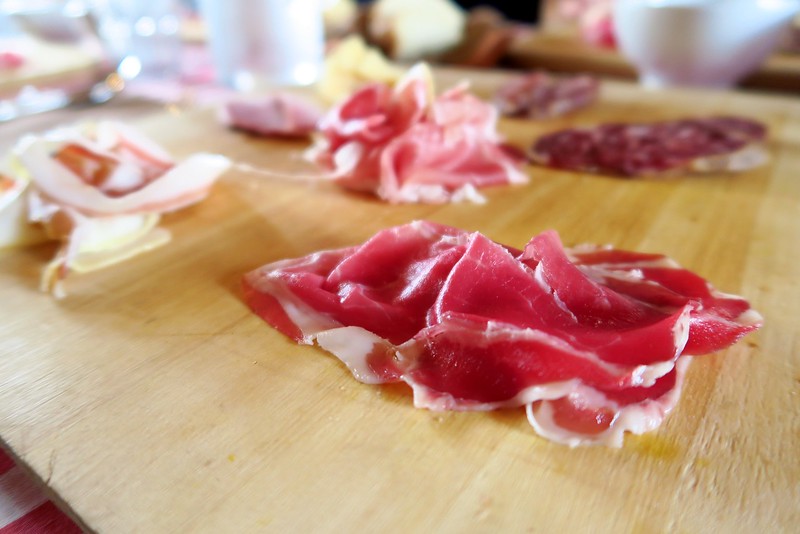
Then lunch arrived. We spotted an enormous board covered with prosciutto, salami, other cured meats and cheese and naturally assumed it was intended for the table. No. One board per person. Somewhere deep inside me, the teenage boy who once rejected salad stood up and applauded.
That was merely the appetizer, because moderation had apparently been detained at the regional border. Parmigiano Reggiano, focaccia, vegetable pasta and homemade desserts followed. Audrey tried a sparkling red wine served in a traditional cup. It was light, fizzy and refreshing—useful qualities when your personal meat board has already arrived with the surface area of a coffee table.
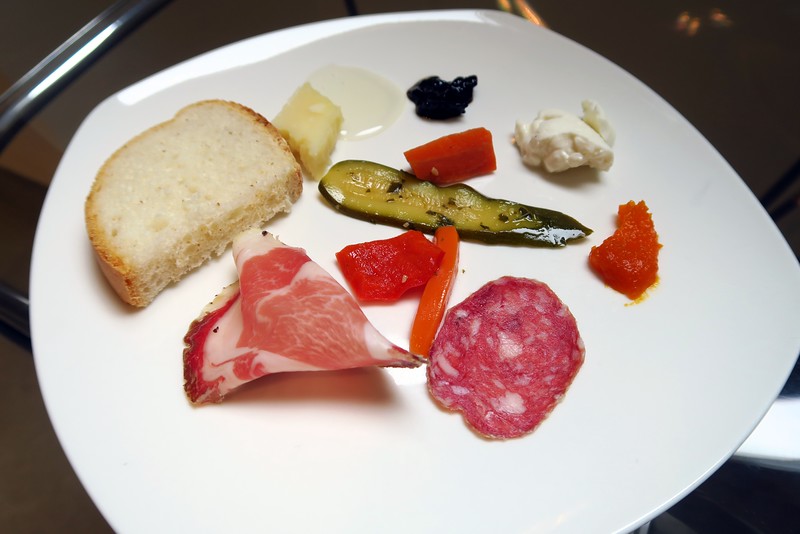
We did not stay overnight at Antica Corte Pallavicina. We toured the cellars and ate there, which was already plenty of experience for one afternoon. The estate now combines its Culatello museum, restaurants and 11-room relais, making an overnight stay tempting for anyone who would prefer not to waddle directly back into a car. Check current availability at Antica Corte Pallavicina Relais on Booking.com. This is an accommodation option based on the property we visited, not a room we personally slept in.
Planning reality: the museum, cellars, tastings, restaurants and rooms are separate booking decisions. Reserve the meal. A room reservation also does not automatically secure a restaurant table, and arriving hungry with historical enthusiasm is not a recognised booking category.
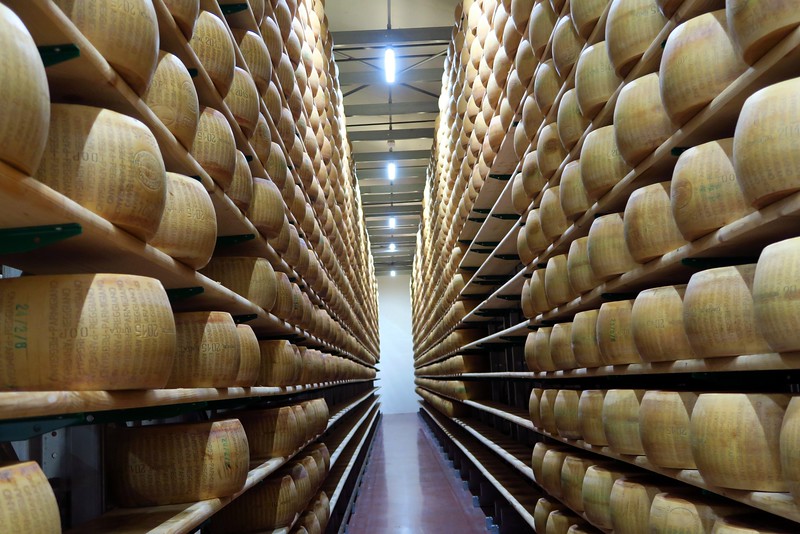
Parmigiano Reggiano at Hombre Farm
Hombre near Modena showed us why visiting a producer can be more memorable than ordering another tasting board. We watched parts of the dairy operation, learned how the cheese was stored and then walked into the ageing room, where my capacity for nuanced commentary collapsed almost immediately.
Look at all this cheese.
That was more or less my complete intellectual response. Wheels of Parmigiano Reggiano rose in rows until the room looked like a bank vault designed by a hungry person. Audrey wrote that being locked inside with thousands of wheels would be a cheese lover’s dream. I would have preferred a key eventually, but not urgently.
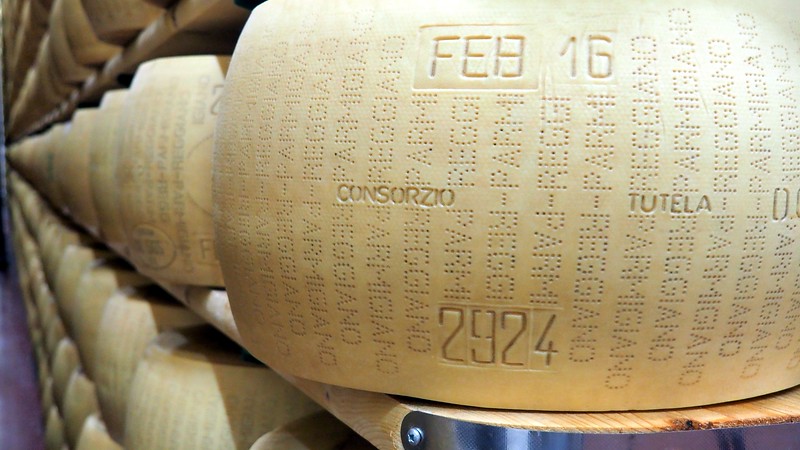
How long is Parmigiano Reggiano aged?
One correction matters here. Parmigiano Reggiano does not require a minimum of two years before it earns the name. The official minimum maturation is 12 months, while average maturation is around 24 months and many wheels continue far beyond that. Every wheel is inspected at 12 months before it can retain the Parmigiano Reggiano marks.
The defined production area covers Parma, Reggio Emilia, Modena and specified portions of Bologna and Mantua. The name is tied to that geography and to regulated production rather than simply describing any hard Italian cheese that looks vaguely similar.
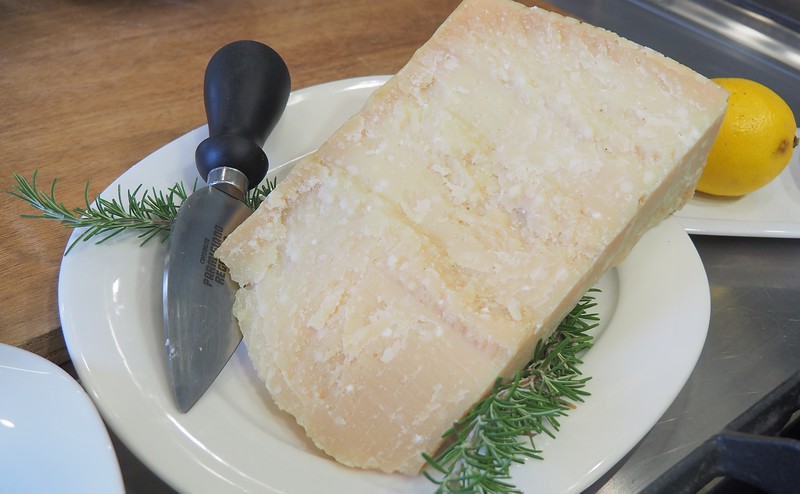
When we sampled it, the cheese arrived in thick, irregular pieces that demanded to be eaten slowly. It bore almost no resemblance to the powdered Parmesan product that had fallen from green containers onto my Canadian pasta. That substance and this cheese may have shared paperwork somewhere, but emotionally they were strangers.
Planning reality: if you want to see milk becoming cheese rather than only ageing wheels, expect an early appointment. The Parmigiano Reggiano Consortium’s official dairy-booking platform is the cleanest place to compare producers and languages. Travellers without a car can also compare this transportation-supported cheese, ham and balsamic tour from the Parma region. We did not take that commercial tour; it simply solves the rural-transport headache rather efficiently.
The Panini collection beside the dairy
The neighbouring vehicle collection has changed since our visit. It is now presented as the Maserati Umberto Panini Collection, centred on the Maseratis Umberto Panini helped save. Renovated galleries opened in 2025. Cheese beside classic Maseratis sounds like an eccentric pairing, but in Modena it begins to feel perfectly reasonable.
Older descriptions—including ours—can make the museum sound like a miscellaneous shed full of Italian dream cars. Maserati is the spine of the collection. Public transport from central Modena also leaves a substantial walk, which is excellent for digestion but less charming with rain, luggage or a tight dairy appointment.
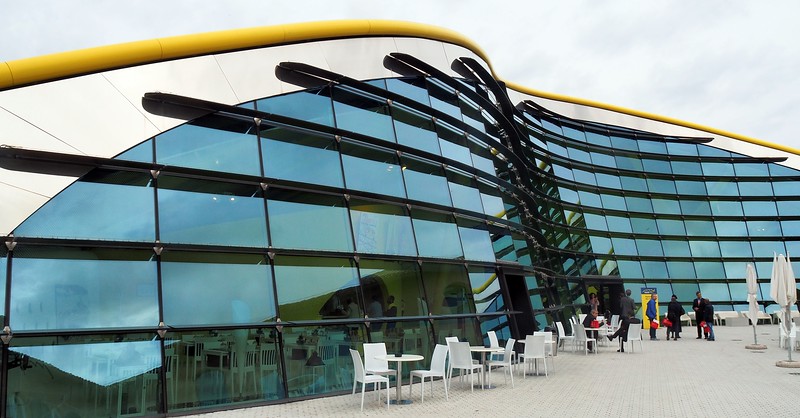
Museo Enzo Ferrari: Engines for Me, Gelato for Audrey
Any kid growing up in the 1980s or 1990s saw a Ferrari somewhere and quietly recalculated the acceptable limits of personal wealth. For me, Ferris Bueller’s Day Off did the damage. Touring the Museo Enzo Ferrari in Modena gave me a deeper appreciation for the engineering, style and thoroughly unnecessary levels of muscle involved.
The engines impressed me most. Not merely because they were powerful, but because they looked sculptural—mechanical objects assembled with the confidence of people who knew nobody had arrived seeking modesty. The curved yellow museum building looked to me like a giant Ferrari engine. That is my interpretation, not an architectural ruling from a man qualified to identify roofs.
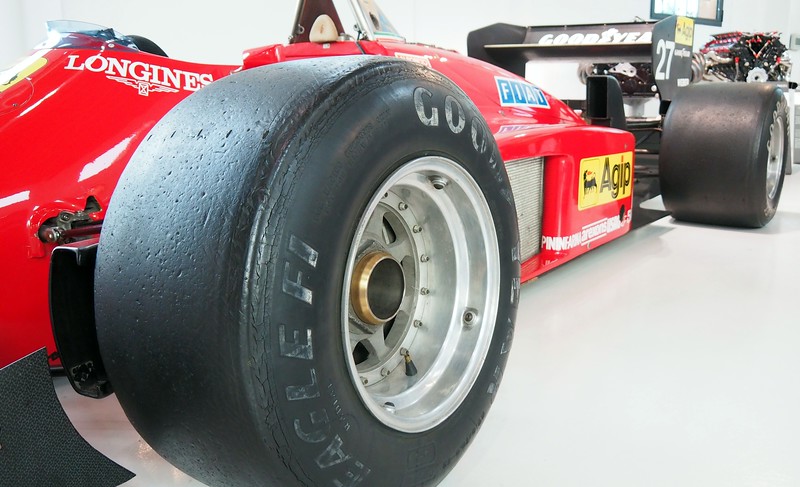
Audrey used a different evaluation framework. While the rest of us admired cars and drank coffee, she ordered gelato. The flavour was called Paradiso and tasted like mango. Her conclusion was swift: who cares about cars when you can enjoy gelato? This was not the officially intended message of the museum, but it was delivered with conviction.
She softened after remembering that we had driven a Ferrari in Las Vegas the previous year. Audrey was not suddenly going to memorize engine specifications, but she conceded that owning one might be tolerable. I considered this a major diplomatic breakthrough.
Planning reality: temporary exhibitions, seasonal hours and ticket packages change. Check the official Ferrari museum page rather than arriving to see one particular vehicle that left six months earlier. Travellers trying to combine Modena’s two obsessions can compare this current Parmigiano, balsamic and Ferrari Museum day tour. It is a bookable alternative to self-driving, not the tour we personally experienced.
How to Plan a Similar Emilia-Romagna Food Trip
How many days should you allow?
We covered the route in three days because somebody else had done the difficult scheduling. Left to our own devices, we would have spent ninety minutes photographing the first cheese room, missed the next appointment and then blamed lunch. Independent travellers should allow more room for human behaviour.
- Three days: choose Bologna plus Romagna, or Modena plus the Parma lowlands. Attempting the whole route creates a culinary hostage situation.
- Four to five days: the sweet spot for recreating the main experiences without checking your watch while chewing.
- Six to seven days: add proper city time and meals that are not demonstrations, tours or appointments. Sometimes you should simply sit down and eat.
Do you need a car?
You do not need a car to connect Bologna, Modena and Parma. In fact, dragging one through historic centres can become an expensive hobby. You do need a plan for the countryside. That might be a rental car, private driver, taxi arrangement or organised tour, depending on how many producers you want to reach and how seriously you intend to investigate the wine.
The cleanest strategy is to explore Bologna without a vehicle, collect one when leaving for the countryside and return it before your final urban stay. Bologna’s camera-controlled ZTL has no sympathy for hungry foreigners who missed a sign while discussing mortadella. Confidence does not cancel automated fines.
What should you book first?
- First: the experience with the narrowest schedule—usually active morning cheesemaking or a particular Casa Artusi class.
- Second: Antica Corte Pallavicina if you want a restaurant sitting, museum visit or room. The food is not improved by discovering everything is full.
- Third: family wineries and acetaie. These are working producers, not attractions waiting in permanent tourist formation.
- Last: flexible city museums and urban meals, unless a temporary exhibition is the entire reason you are travelling.
Where should you stay?
| Base | Best for | Honest limitation |
|---|---|---|
| Bologna hotels on Booking.com | Rail arrivals, markets, restaurants and joining organised tours | Keeping a car in or near the historic centre can turn dinner into a traffic-law seminar |
| La Sabbiona near Faenza | The agriturismo we personally stayed at for the Romagna portion | Best with a car; wonderfully quiet, not conveniently urban |
| Modena hotels on Booking.com | Balsamic vinegar, Ferrari, Hombre and the Panini collection | City accommodation does not eliminate rural transport |
| Antica Corte Pallavicina Relais | An immersive Culatello stay in the Parma lowlands | We ate and toured here but did not personally review the rooms |
A more realistic five-day route
Day 1 — Bologna: arrive, walk the historic centre, climb a viewpoint only if the knees and opening arrangements agree, then commit to a long dinner. No car required. No stopwatch required either.
Day 2 — Forlimpopoli and Romagna wine country: take a Casa Artusi class, continue to a booked winery and sleep near Faenza. Do not schedule dinner as though the pasta class were a light snack.
Day 3 — Modena: visit an acetaia, wander central Modena and choose the Ferrari museum if engines excite you—or if travelling with somebody like me who will otherwise keep mentioning it.
Day 4 — Parmigiano and Maserati: begin early at a dairy, then continue to Hombre and the Panini collection. Leave enough time to buy cheese you had not planned to carry through the rest of Italy.
Day 5 — Parma lowlands: give Antica Corte Pallavicina, the Culatello cellars and lunch the day they deserve. Continue to Parma city or surrender gracefully and sleep in the countryside.
Mistakes That Can Weaken an Emilia-Romagna Food Trip
- Treating every balsamic vinegar as the same product. Traditional PDO and Modena PGI are not identical, but neither does “less expensive” automatically mean fraudulent salad water.
- Booking a dairy too late. If you want active production, morning matters. Cheese does not rearrange its working day around your leisurely cappuccino.
- Assuming trains reach the producers. Trains reach cities. Cows, vines and historic cellars have shown less interest in station-adjacent real estate.
- Driving into Bologna without understanding the ZTL. Automated cameras do not care that you were distracted by lunch.
- Trying to recreate our three-day pace independently. We had coordinated transport. Without it, you will spend the trip sprinting between beautiful places and resenting them.
- Calling the whole region Bologna. Bologna is magnificent. It is not a synonym for every pasta, wine, farm and salume between the Adriatic and the Po.
Emilia-Romagna Food Trip FAQ
Is Bologna the best base for this entire trip?
Bologna is the easiest urban starting point and the best base for a car-free introduction. It is not a magical railway portal to every rural producer. Splitting the trip between Bologna, a Romagna agriturismo and either Modena or the Parma lowlands will save backtracking and low-grade resentment.
Can you visit Parmigiano, balsamic and Culatello producers in one day?
A coordinated tour can combine several products because somebody else has done the route math. Independent travellers should be wary of stacking active Parmigiano production, a balsamic visit and Culatello in one day. The result may be technically successful and spiritually rushed.
Is traditional balsamic vinegar worth the price?
Taste it first. Traditional PDO balsamic is used a few drops at a time, so the small bottle is less ridiculous than it initially appears. Whether it is worth buying depends on your palate and budget. Nobody needs to finance a bottle out of politeness.
What age of Parmigiano Reggiano should you buy?
There is no universally superior age. Younger Parmigiano tends to be softer and milkier; longer ageing brings dryness, crystals and a deeper savoury hit. Compare them side by side. Selecting cheese by internet age chart alone is efficient but joyless.
Is a rainy food trip ruined?
No. Rain blurred Bologna’s view and killed the vineyard walk, yet the tower remained atmospheric and the tasting room continued functioning heroically. Much of this trip happens inside kitchens, dairies, museums and cellars. Food tourism is one of the better forms of weather insurance.
Can travellers with limited mobility follow this route?
Parts of the route are accessible, but not all buildings are equally forgiving. La Sabbiona lists an accessible room, Antica Corte Pallavicina publishes accessibility provisions and Museo Enzo Ferrari provides current visitor information. Torre Prendiparte is a serious stair climb. Old cellars and family producers should be contacted directly rather than assumed accessible from a polished photograph.
More Italian Food Travel
The original page also contained our Florence Central Market video. Florence is not in Emilia-Romagna, no matter how hungry the internal-linking strategy becomes. I have kept the video as a clearly labelled companion for travellers continuing through Italy rather than pretending it belongs to this route.
For another trip where eating and drinking seized control of the itinerary, see our guide to food, whisky and gin tours in Edinburgh. Different weather. Different drinks. Similar lack of restraint.
Final Thoughts on Our Emilia-Romagna Food Trip
Our time in Italy ended at Bologna airport with one final margherita pizza. We were flying back to Asia, and I knew the next pizza would face unfair expectations. So we ordered one more. This was not hunger. It was pre-emptive nostalgia with melted cheese.
What stayed with me was not merely that the food tasted better. Emilia-Romagna showed us how aggressively place and patience shape familiar products. Pasta became a race against drying dough. Balsamic became decades moving through wooden barrels. Culatello belonged to fog and dark cellars beside the Po. Parmigiano became thousands of inspected wheels occupying a room large enough to trigger religious feelings in a cheese enthusiast.
The trip was too fast. There was friction, rain, too much food and not enough Bologna. It was also unforgettable. My teenage diet had been narrow, but the kid had stumbled onto one sound principle: Italian food was worth getting excited about. He simply had no idea how much craft, geography and time were hiding beneath the melted cheese.
Have you travelled through Emilia-Romagna? Which of these food experiences would you build a trip around: handmade pasta, wine, balsamic vinegar, Culatello or Parmigiano Reggiano?
Some Booking.com and GetYourGuide links in this guide are affiliate links. We may earn a commission at no additional cost to you. Personally experienced stays and activities are identified clearly; other bookable options are included as current planning alternatives rather than presented as things we personally did.
This trip was part of the #EuroFoodTrip campaign, created and managed by iambassador in partnership with Costa Brava & Girona Pyrenees and Emilia-Romagna Tourism. The campaign supported our travel, meals, accommodation and activities. The experiences and opinions in this guide are our own; current practical details and recommendations are research-based unless explicitly described as part of our trip.
Thanks for sharing this post! I read it and found it very informative and beneficial for my business.
As a food lover and travel enthusiast, this guide to Emilia-Romagna is an absolute gem! The region’s culinary treasures, from Parma’s cheese to Modena’s balsamic vinegar, are a dream for anyone passionate about authentic Italian cuisine. Your detailed insights make it irresistible to plan a trip soon.
Your Emilia-Romagna travel guide is a delightful read! The way you highlight the region’s rich culinary traditions and hidden gems makes it a must-visit for any food lover. Thank you for sharing such detailed insights!
Wow, Thanks for such a comprehensive and inspiring guide!
Thanks for the fantastic post
Fresh, flavorful and delightfully simple, the sun-kissed Italian cuisine is dolce vita on the plate. But, for finding the best food in a country with such fabulous regional gastronomies, the best advice would be to forget about restaurants that serve “creative, innovative” fare, and just stick to the local, time-honored specialties.
Eating has been one of the greatest joys of travelling in Italy, a vivid insight into each region’s culture and traditions. Their dishes are made with seasonal, unpretentious ingredients, yet they are very unique and delicious.
Get a France visa this summer to enjoy all the delicious dishes and different places to visit in France.
Would love to be able to take one of those pasta making classes in Italy too. Also, that photo of Bologna City views looks beautiful!
beautiful places and great food!!
love this region and the food is so good!
Hello Sam, I’m your fan, you’re the best photographer I’ve ever seen *-*
Thank you the images are so beautiful and HD images and i am very happy the to see the images
Thanks for sharing this, Sam! Emilia-Romagna is one of my favorite regions in Italy. Next time you’re there, you should stop by Ferrara, where you can eat at Al Brindisi, the oldest Osteria in the world!
Thanks Andrew! That is a great suggestion and I hope we can do that next time. We really enjoyed Emilia-Romagna as well 🙂
Wow Great food and Ferrari’s it doesn’t get any better than that
Thank you Alan! It sure doesn’t. We have such fond memories from this trip 🙂
Looks like a fascinating trip. We’ll have to put Bologna and the Enzo Ferrari Museum on a future itinerary — I’m sure David would love it!
Thank you! That is great to hear you’re thinking of visiting soon. Bologna is somewhere we plan to revisit again in the future and the Enzo Ferrari Museum is just awesome!