
Welcome to Yeosu. Forget the generic tourist brochures; this southern coastal port is a working, breathing maritime hub. With over 300 islands breaking the horizon, Yeosu requires a bit of logistical planning but pays off with sheer coastal scale. The city absorbed massive infrastructure investments after hosting the 2012 World Expo, meaning you get highly efficient modern facilities right next to gritty, traditional fish markets. If you want the real hard signal right out of the gate: skip the midday crowds at the main pavilions and hit the coastal markets at dawn. From navigating the complex local ferry schedules to tracking down the best raw croaker, there’s an abundance of things to do in Yeosu for travelers willing to put boots on the ground.
Why Visit Yeosu?
- Coastal Reality: Navigate a jagged archipelago and deep-water ports that require actual coastal landscapes navigation.
- Historical Friction: Stand in the exact harbors where Joseon-era naval fleets held the line at these Korean culture and historical sites.
- Culinary Delights: Eat seafood so fresh you can still smell the sharp brine and sesame oil from the prep tables.
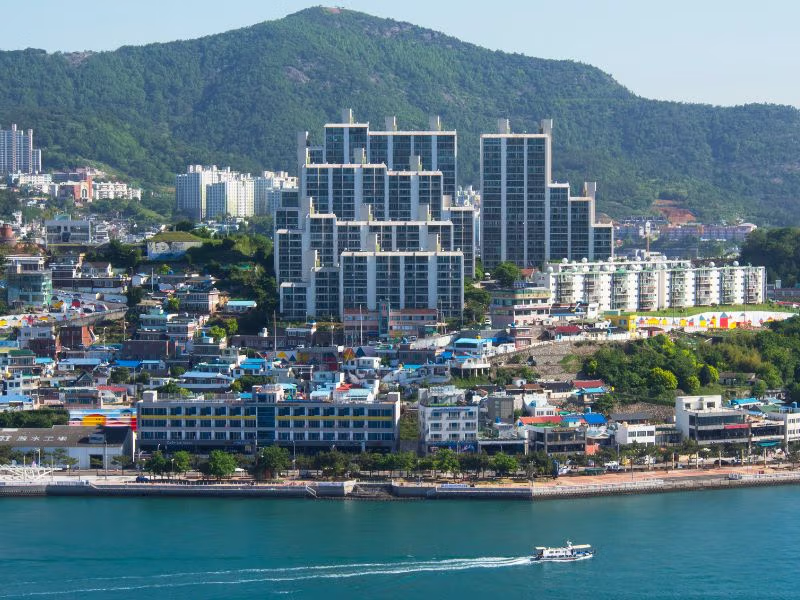
Tip: You’ll want to aim for the shoulder seasons of spring and autumn. The humidity drops, the coastal fog lifts, and you aren’t fighting the punishing summer heat while trekking up steep observatory steps.
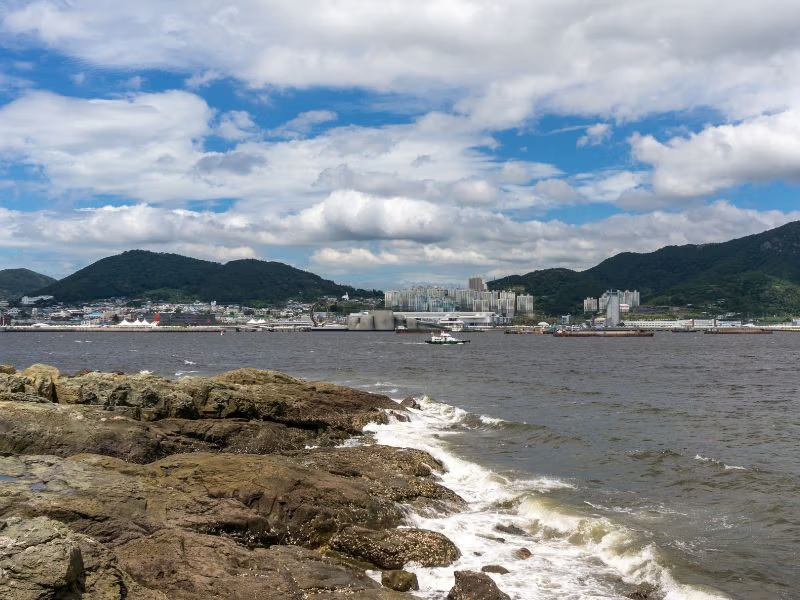
Top 20 Things To Do in Yeosu, Korea For Visitors
1. Ride the Yeosu Cable Car
The Yeosu Cable Car isn’t just a novelty ride; it was the first of its kind in Korea to string cables directly over the ocean. Spanning 1.5 kilometers of open air between Dolsan Park and Jasan Park, it solves a major transit headache while giving you a hard look at the city’s maritime layout. The 13-minute transit offers a clear, top-down perspective of the commercial harbor traffic and the tight cluster of islands breaking the current.
You have a choice at the ticket counter: standard metal-floor cabins currently run about 17,000 KRW, while the crystal cabins will set you back around 24,000 KRW for a round trip. Go for the crystal. As you cross the open water, the wind physically buffets the cabin, and you can feel the slight sway and vibration of the cables underfoot through the reinforced glass. You’ll cross right over the Dolsandaegyo Bridge and get a raw view of the South Sea shipping lanes.
- Bird’s-Eye View: Map out the geography of the downtown grid and harbor before you start walking it.
- Unique Experience: The glass floors in the crystal cabins add a distinct edge when you look down at the deep water swells.
- Convenient Access: It acts as a highly efficient transit link between two major elevated parks.
Tip: The biggest point of friction here is the sunset rush. Lines at the Dolsan terminal get brutal about 45 minutes before the sun drops. Time your crossing just before that bottleneck hits so you can watch the industrial harbor lights kick on without waiting an hour on the concrete platform.
2. Explore Odongdo Island
Odongdo Island is tied to the mainland by a 768-meter concrete breakwater. It’s a dense, 0.12-square-kilometer rock covered in heavy camellia forests and rugged coastal flora. You can walk the breakwater or take the Dongbaek Train shuttle, but we found that walking actually saves you time and frustration.
Here’s the reality check on the transport: The shuttle train costs around 1,000 KRW, which sounds great, but it runs on a stubborn 30-minute schedule and the ticket kiosks are notoriously finicky with foreign credit cards. Walking the flat concrete path takes 15 minutes, gives you a better sense of scale, and lets you feel the sharp, salty sea spray hitting the wall.
Once on the island, the trail network is aggressively steep in parts, cutting through thick bamboo and rocky drop-offs. If you brush against the camellias (which peak from November to April), you’ll notice the distinct, waxy texture of the leaves holding the coastal moisture. The lighthouse at the summit requires a bit of a climb, but it’s a functional piece of maritime infrastructure offering unobstructed sightlines of the incoming weather fronts.
- Nature Walks: Hard-packed dirt and wooden stairs that force a moderate workout under a heavy canopy.
- Scenic Vistas: Unobstructed, high-elevation looks at the deep water shipping lanes from the lighthouse.
- Entertainment: A heavily engineered water and light show to break up the evening near the entrance.
Tip: The sea wind whips across the breakwater aggressively, so zip up your jacket even if the mainland feels warm. The camellias are the draw in early spring.
3. Visit Yi Sun-sin Square
Yi Sun-sin Square anchors the downtown waterfront, dedicated to the naval commander who systematically dismantled Japanese fleets in the late 16th century. A massive 16.5-meter bronze statue dominates the concrete plaza, but the real focal point is the life-size replica of the Turtle Ship (Geobukseon)—his heavily armored, iron-spiked flagship.
Entry into the replica is free, and you can actually walk right down into the hull. When you cross the threshold, you’ll immediately hit the heavy, enclosed smell of treated iron and dark wood, giving you a claustrophobic sense of what it took to row this armored beast into combat. Outside, the square is loud and chaotic, surrounded by heavy vehicle traffic, street vendors hawking grilled snacks, and locals using the plaza as a transit hub.
- Historical Insight: A hard look at the brutal naval engineering that saved the Korean peninsula.
- Interactive Exhibits: Feel the cramped quarters and heavy timber construction of the replica warship.
- Urban Atmosphere: A noisy, high-traffic plaza that sits right on the edge of the commercial waterfront.
Tip: Parking around the square is incredibly tight. Don’t even bother trying to drive here; walk from your hotel or take a cheap taxi to the drop-off zone.
4. Wander Through Yeosu Expo Site
The Yeosu Expo Site is a massive footprint of concrete and steel left over from 2012. Instead of letting it rust, the city repurposed it into a heavy-duty cultural and entertainment complex. It’s vast, requiring a lot of walking across wide, sun-baked plazas.
The most striking piece of repurposed engineering here is the Sky Tower. They took an abandoned cement silo, gutted it, and strapped an observation deck 67 meters in the air. When they fire up the exterior pipe organ, you can literally feel the booming bass vibrate in your chest cavity.
The site constantly rotates large-scale events, industrial exhibitions, and outdoor concerts. It’s less of a quiet park and more of an active, echoing event space built on an industrial scale.
- Sky Tower: Ascend an old industrial silo for a raw, wind-swept view of the harbor grid.
- Cultural Events: A massive, concrete footprint capable of handling thousands of visitors for festivals.
- Scale & Structure: An unfiltered look at what mega-event infrastructure looks like a decade later.
Tip: The concrete reflects a brutal amount of heat in the summer, and the distances between pavilions are deceivingly long. Bring water, because vending machines are oddly sparse in the central walkways.
5. Relax at Manseongri Black Sand Beach
Manseongri Beach ditches the standard white-sand aesthetic for a 540-meter stretch of dark, vanadium-heavy volcanic sand. Locals swear by the mineral properties for joint pain, but practically, it just retains heat incredibly well.
When you sit down, the coarse, hot black sand sticks to your damp skin, providing a radically different texture than typical resort beaches. The water drop-off is gradual, making it functional for swimming. If you need speed, they run loud jet-skis offshore. The real pull, honestly, is the line of raw seafood tents flanking the asphalt road behind the beach, grilling octopus directly over open coals.
At night, string lights kick on, the Sunset Plaza gets loud, and the smell of roasting clams dominates the sea breeze.
- Unique Beach Experience: Bury your legs in the heavy, dark sand for localized heat therapy.
- Water Activities: Deal with the noise of the jet skis or rent a board for the shallow surf.
- Seafood Delights: Eat heavily smoked shellfish right off the grill grates a few feet from the water.
Tip: The black sand gets aggressively hot by 1 PM, and there isn’t much natural shade. Bring a thick mat or a towel you don’t mind getting stained, and wear sandals all the way to the water line.
6. Visit Hyangiram Hermitage
Hyangiram Hermitage is not a casual stroll. Founded in 644 AD, it’s bolted to a sheer cliff face looking out over the water. You have to earn the view here, and the approach is a punishing vertical climb up steep stone stairs and uneven mountain paths. Entry will run you around 2,000 KRW, which is nothing compared to the physical toll the ascent takes on your knees.
Your thighs will burn on the way up. You’ll have to physically squeeze your shoulders through narrow rock crevices—the “Gate of Heaven”—where the damp granite rubs against your jacket. As you finally hit the summit courtyards, the smell of burning incense mixes heavily with the cold sea mist, creating a distinctly thick, aromatic air.
The payoff is the absolute silence and the massive, uninterrupted view of the Namhae Sea crashing against the rocks hundreds of feet below the prayer halls. But the real friction point here isn’t the climb; it’s the parking. The lot at the base is a notorious choke point that backs up for miles on weekends. Save yourself the headache and take local bus 111 or 113 directly to the terminus.
- Spiritual Journey: A highly physical pilgrimage to a working Buddhist sanctuary.
- Scenic Hike: A demanding, steep ascent through tight rock fissures and slick stone stairs.
- Breathtaking Views: Unmatched elevation for watching the horizon line.
Tip: Do not wear flat-soled sneakers. The moisture off the ocean makes the stone steps incredibly slick. Bring water; the climb will dehydrate you quickly.
7. Explore Dolsan Park
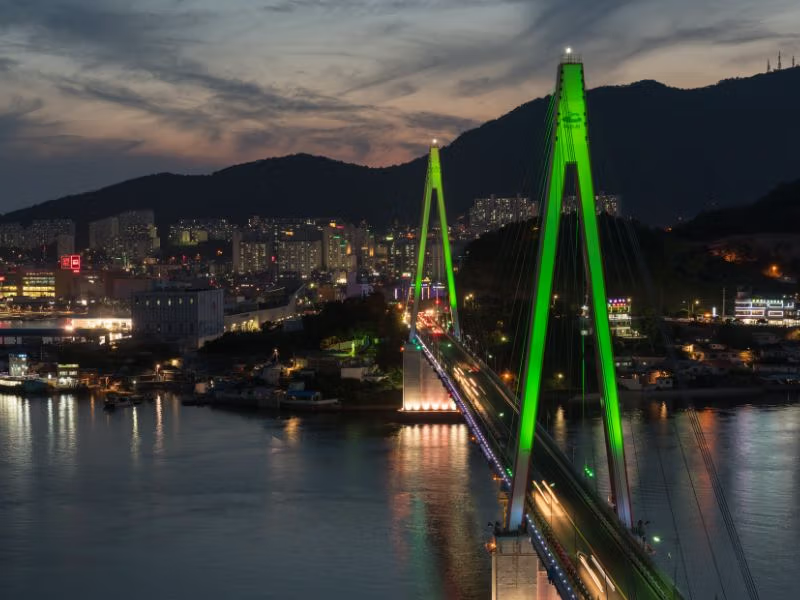
Dolsan Park sits on elevated terrain over on Dolsan Island. It operates as the primary viewing platform for anyone wanting to shoot the most stunning views of the Dolsandaegyo Bridge. You can drive up or take the cable car, dropping you right into the pedestrian zones.
It’s heavily landscaped, prioritizing paved walkways and sturdy viewing decks over wild nature. When you stand at the guardrails after dark, a sharp evening breeze cuts across the observation deck, rattling the metal fixtures. Below, the bridge runs a synchronized LED cycle, and you can track the navigation lights of cargo ships cutting through the dark water.
Tucked in the back is the Geurim Maeul Village, where local artists have painted murals on the retaining walls to break up the concrete infrastructure.
- Scenic Overlooks: The definitive angle for photographing the city’s suspension bridge.
- Leisurely Walks: Flat, well-paved circuits that don’t require heavy exertion.
- Night Setup: The wind picks up heavily here at night, but it offers the best clear-air visibility of the city grid.
Tip: Bring a heavy tripod. The wind sheer off the hill will ruin long-exposure shots of the bridge if your camera isn’t fully locked down.
8. Visit Jasan Park
Jasan Park shares real estate with the Expo Site but provides a necessary buffer from the concrete. Positioned on Mount Jasan, it’s a moderately graded hill offering thick tree cover and a quieter vantage point.
You’ll feel the dry pine needles crunch satisfyingly under your boots as you hike away from the harbor noise. The air here smells heavily of pine resin, cutting through the salt. It hosts another massive statue of Admiral Yi Sun-sin, mounted on a solid stone plinth.
From the timber-framed observation decks, you get a clean sightline of the Yeosu Maritime Cable Car machinery in action and the heavy vessel traffic navigating around Odongdo Island.
- Nature and History: A heavily wooded respite right above the loudest part of the city.
- Panoramic Views: Track the ferry wakes and cable cars from a static, elevated position.
- Rest Areas: Solid wooden benches where you can actually hear the wind instead of the traffic.
Tip: Grab a coffee from the lower pavilions before you walk up. The hike is short, but the grade is steep enough to get your heart rate up.
9. Experience Yeosu Art Land Culture & Resort
Yeosu Art Land is a massive, privately-funded compound bolted onto the cliffside, pushing the limits of coastal engineering. It is a highly curated mix of large-scale sculpture installations and aggressive tourist attractions facing the South Sea.
The Art Land Sculpture Park forces you to navigate a winding, multi-level maze of concrete and steel artwork. But the real physical test is the Skywalk. When they strap you into the harness and you step out onto the cantilevered glass floor, the sudden drop in temperature and the cold, unyielding glass under your shoes will instantly wake you up. You are suspended directly over the rock break.
It’s loud, highly commercialized, and packed with people filming VR setups, but the sheer scale of the cliffside construction demands respect.
- Artistic Exploration: Massive, weather-beaten sculptures anchored into the coastal bedrock.
- Interactive Experiences: High-decibel 4D theaters and chaotic indoor VR rigs.
- Adventure Activities: A legitimate harness-required walk over a sheer cliff drop.
Tip: The wind on the Skywalk is unforgiving. Secure your phone with a physical lanyard, or you’ll lose it to the ocean in a gust.
10. Visit Aqua Planet Yeosu
Aqua Planet Yeosu is a masterclass in aquatic engineering. Housed in a massive, climate-controlled bunker on the Expo Site, this facility maintains incredibly complex life-support systems to keep massive pelagic species alive on land.
But here is a contrarian take for you: almost every guidebook lists this as a “must-see,” but honestly, if you aren’t traveling with kids, skip it. Tickets hover around a steep 34,000 KRW. The facility is often packed, echoing with screaming school groups, and the humidity inside the dome sections can be stifling.
Instead of dropping that cash to look at fish through thick acrylic, take that 34,000 KRW straight to the fish market. For that price, you can buy a massive platter of fresh abalone and sea cucumber and actually engage with the local maritime economy. The real marine life in Yeosu isn’t in a tank; it’s on a charcoal grill.
- Educational Fun: A deep dive into the complex mechanics of keeping deep-sea pelagics alive on land.
- Interactive Programs: Watch the precision diving teams execute massive feeding schedules.
- Facility Scale: Thick acrylic viewing walls holding back thousands of tons of pressurized saltwater.
Tip: If you do go, buy your tickets online in advance to skip the chaotic walk-up lines at the front desk. Dress in layers so you don’t overheat inside.
11. Explore Maritime & Fisheries Science Museum
Down on Dolsan Island, the Maritime & Fisheries Science Museum breaks down the brutal reality of the commercial fishing industry. This isn’t a flashy tourist trap; it’s a detailed archive of maritime survival and extraction.
Walking through the halls, you get the dusty, dry smell of preserved wooden ship models and aged canvas. The exhibits detail heavy-duty trawl nets, deep-water navigation charts, and the grueling evolution of Korean shipbuilding. It’s highly technical, showing exactly how locals pull millions of tons of protein out of the freezing ocean.
The Ocean Science Hall maps out the treacherous local current systems, while the ground-floor aquariums showcase the specific, often ugly, bottom-feeders that drive the local economy.
- Historical Exhibits: Examine the heavy iron hooks and thick ropes used in historical deep-sea drags.
- Marine Life Displays: Unfiltered looks at the specific species that end up in the local fish markets.
- Technical Diagrams: Detailed breakdowns of the local tidal shifts and coastal topography.
Tip: It’s text-heavy and highly informative. If you want to understand why Yeosu’s economy works the way it does, this is your hard data source.
12. Visit Yeosu Street Food Market
The Yeosu Street Food Market (Jongpo Marine Park Market) is absolute chaos in the best way possible. You are dodging delivery scooters, aggressive line-cutters, and carts loaded with propane tanks.
The air here is thick. The spitting grease from the hotteok (sweet pancake) grills hits your clothes, and the sharp, fermented tang of gochujang from boiling vats of tteokbokki hangs heavily in the alleys. If you hit the seafood stalls, you’ll find vendors hacking up fresh octopus and slicing thick blood sausages (sundae) right on the cutting blocks.
It’s a high-friction environment. You eat standing up, elbow-to-elbow, using toothpicks to pull hot, battered twigim out of paper cups.
- Culinary Adventure: Fast, aggressive street food cooked on open griddles inches from the walkway.
- Urban Atmosphere: Navigate a traditional market packed with noise, smoke, and fast transactions.
- Affordable Eats: High-calorie, heavy-flavor snacks that cost a fraction of sit-down meals.
Tip: Wipe down the plastic tables yourself before sitting. Bring cash, point at what looks good, and don’t stand in the middle of the aisle while eating.
13. Take a Sunset Cruise
Getting off the concrete and onto the water changes your entire read of the city. A sunset cruise puts you on a mid-sized commercial ferry navigating the channel between the mainland and the islands.
When you stand on the top deck, the low, mechanical rumble of the diesel engine vibrates straight through the steel deck plates into your shoes. As the boat cuts through the chop past Odongdo Island and under the Dolsandaegyo Bridge, the cold sea wind forces you to zip up your jacket. The light drops fast, and the city’s industrial and bridge lights reflect sharply off the dark water.
It’s loud, often featuring blaring trot music or live bands competing with the engine noise, but it gives you a clean perimeter view of the port’s sheer scale.
- Scenic Views: Watch the coastal geography shift from daylight to heavy industrial night lighting.
- Harbor Navigation: See exactly how the massive cargo lines weave through the tight island channels.
- Entertainment: High-volume Korean music bouncing off the steel bulkheads.
Tip: The upper decks are brutally windy once the boat clears the breakwater. Secure your hat and lean into the railing for stability.
14. Explore the Yeosu Ocean Rail Bike
The Yeosu Ocean Rail Bike repurposes old, abandoned train tracks hugging the rocky coastline. You’re strapped into a heavy steel cart, relying entirely on your own leg power to move it down the 3.5-kilometer line. Current prices sit around 26,000 KRW for a 2-seater and 36,000 KRW for a 4-seater.
You’ll feel the physical resistance in the pedals immediately, especially when the coastal headwind kicks up. The metallic clack of the iron wheels over the rail joints reverberates up through the plastic seats. The route forces you through old rock tunnels rigged with flashing LED arrays, before dropping you back out onto open elevated tracks with straight-down views of the crashing surf.
It’s a 30-minute burn each way, requiring actual exertion if you want to keep momentum. The major friction point here? You are completely at the mercy of the people in front of you. If they pedal slowly, your ride is ruined.
- Physical Execution: A heavy, gear-driven pedal system that demands consistent effort.
- Stunning Scenery: Uninterrupted lines of sight over the rocky shoreline and open water.
- Track Layout: Navigate dark, echo-heavy tunnels and exposed, windy bridge sections.
Tip: Do not tailgate the cart in front of you, but try to space yourself out at the launch. The brakes on these heavy iron carts are stiff, and rear-ending someone on the track is an easy way to ruin the afternoon.
15. Visit Hamel Museum
The Hamel Museum breaks down the survival story of Hendrick Hamel, a Dutch sailor shipwrecked in 1653 who survived 13 years in a highly isolationist Korea before making a break for Japan.
Walking into the museum, the chill of the air-conditioned, climate-controlled exhibit rooms contrasts sharply with the sticky, salty harbor air outside. The space is dead quiet, focusing heavily on text logs, brass navigational tools, and heavy timber replicas of the De Sperwer. It maps out the brutal reality of 17th-century oceanic navigation and the intense cultural friction of being a captive foreigner in Joseon society.
- Historical Insight: Read the actual logs of a shipwrecked crew fighting to survive in an unknown territory.
- Cultural Exhibits: Inspect heavy brass astrolabes and thick, salt-stained ledgers from the era.
- Navigation History: Understand the massive risks of early global shipping lanes.
Tip: Read the English placards detailing the crew’s escape attempts. It reads more like a prison-break manual than a standard historical overview.
16. Climb to the Top of Yeosu Maritime Cable Car Observatory
When you exit the cable car terminal, don’t just head to the street. Take the stairs up to the Maritime Cable Car Observatory. It’s a massive concrete and steel deck offering an unshielded, 360-degree perimeter check of the entire region.
You can lean against the heavy metal railing, feeling the cold steel against your forearms as the wind rips across the flat deck. When you drop a coin into the high-powered binoculars, you’ll hear the heavy, mechanical click of the lenses swinging into focus against your eye socket, letting you pull in extreme close-ups of the container ships miles out in the South Sea.
- Panoramic Views: The highest functional vantage point for mapping the city’s topography.
- Informative Displays: Hard data boards identifying the distant islands and shipping routes.
- Optical Tech: Heavy-duty, fixed binoculars to track deep-water vessel movements.
Tip: The glare off the ocean is blinding by midday. Bring polarized sunglasses if you actually want to see the details on the horizon.
17. Explore Ungcheon Beach Park
Ungcheon Beach Park is a highly manicured, 1.5-kilometer stretch of imported sand and engineered green space. It’s heavily utilized by locals who want to bypass the rugged rocks for an easy, flat shoreline.
The smell of charcoal smoke from the designated public grill areas drifts constantly across the sand, mixing with the saltwater. You’ll hear the thud of basketballs on the asphalt courts right behind the tree line. The water here is artificially shallow and calm, locked behind breakwaters, making it less of a wild swim and more of a massive wading pool.
In the evenings, the vibrant night market sets up, turning the paved pathways into a gauntlet of food trucks and folding tables.
- Outdoor Recreation: Flat, packed sand and calm, engineered water currents.
- Facilities: Concrete barbecue pits and heavily used public sports courts.
- Event Space: Wide, paved avenues that handle heavy foot traffic during summer night markets.
Tip: If you want to use the public grills, you need to stake your claim early. The locals haul in massive coolers and lock down the best spots by 10 AM.
18. Visit Yeosu Fish Market
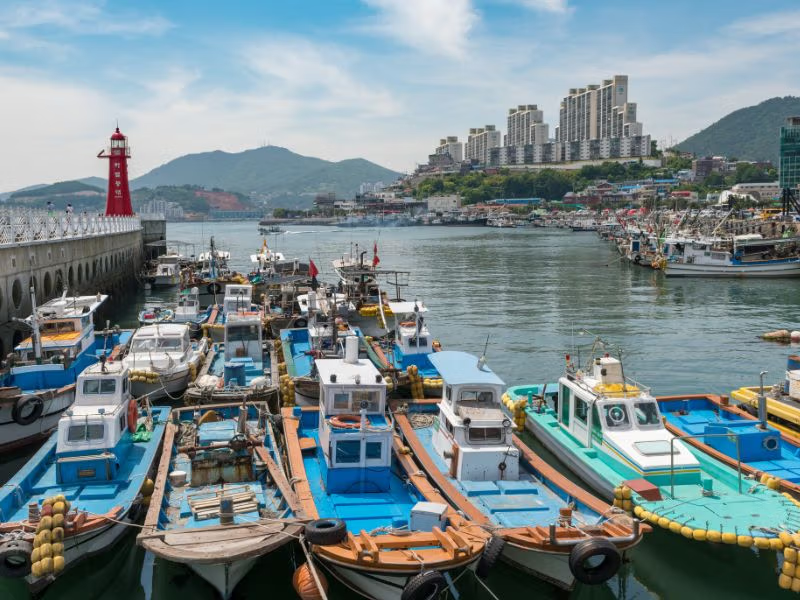
The Yeosu Fish Market (Jonghwa-dong Fish Market) is the mechanical heart of the city. It is wet, loud, and uncompromising. You are stepping into a working distribution center where rubber boots are mandatory for the workers.
Slushy, bloody ice melts over your shoes as you walk down the narrow aisles. The intense, metallic smell of fresh blood, gutted fish, and heavy saltwater hits you instantly. Vendors aggressively chop thick cuts of abalone and alien-looking sea cucumbers, throwing the scraps into plastic buckets. You buy the fish raw out of aerated tanks, and they will butcher it into hoe (sashimi) right in front of you with terrifying knife speed.
Take your bags of raw meat upstairs to the “chojang” restaurants. For a small table setting fee, they will supply the table, the spicy stews, the side dishes, and the alcohol.
- Fresh Seafood: Zero-mile supply chain. The fish goes from the boat to the chopping block in hours.
- Operational Chaos: Slippery tile floors, yelling auctioneers, and overflowing water tanks.
- Culinary Setup: Buy raw on the ground floor, eat upstairs in a loud, communal dining hall.
Tip: Do not wear nice shoes. The floor is constantly hosed down with seawater and fish guts. Be decisive when pointing at what you want to buy.
19. Explore Jinnamgwan Hall
Jinnamgwan Hall is a historical site built strictly for military utility. Erected in 1599, this massive, single-story timber structure served as the naval command post for the Joseon fleet. It is National Treasure No. 304.
When you step under the heavy tile roof, you immediately catch the dry, earthy scent of ancient, interlocking wooden beams that have survived centuries of coastal weather. There are no central pillars; the massive wooden spans create a wide, echoing interior designed to assemble troops and draft naval strategies. You can trace your hands over the thick stone foundations that elevate the hall above the damp soil.
The grounds outside are stark, featuring heavy stone monuments and clear tactical sightlines down to the harbor.
- Architectural Engineering: Massive load-bearing timbers fitted without a single iron nail.
- Naval History: The literal room where counter-offensives against Japanese invasions were mapped out.
- Cultural Heritage: A stark, unornamented structure built for war and survival.
Tip: Look closely at the joinery in the ceiling corners. The sheer weight resting on those wooden friction joints is an engineering marvel.
20. Hike in Yeongchwisan Mountain
For nature enthusiasts and hiking purists, Yeongchwisan Mountain demands some sweat. Peaking at 510 meters, the trail network is a mix of exposed rock scrambles and dense dirt switchbacks.
As you grind up the incline, the damp soil gives way slightly under your hiking boots, and you’ll have to haul yourself over slick tree roots. In early April, the mountain detonates with pink azaleas, but even then, it’s a grueling climb through the thick brush. The Azalea Festival at the base is loud and crowded, but the noise fades quickly once you hit the steep grades.
The summit is exposed and windy, giving you a hard-earned, panoramic read of the industrial complexes and the South Sea islands stretching to the horizon.
- Physical Execution: A steep, root-heavy trail that requires sturdy boots and decent stamina.
- Seasonal Flora: Dense, aggressive azalea blooms that swallow the upper trails in spring.
- Rewarding Views: A punishing ascent rewarded by unblocked, 360-degree coastal sightlines.
Tip: Do not attempt the summit in flat sneakers after a rainstorm. The mud tracks turn into slick slides, and the rock faces offer zero traction.
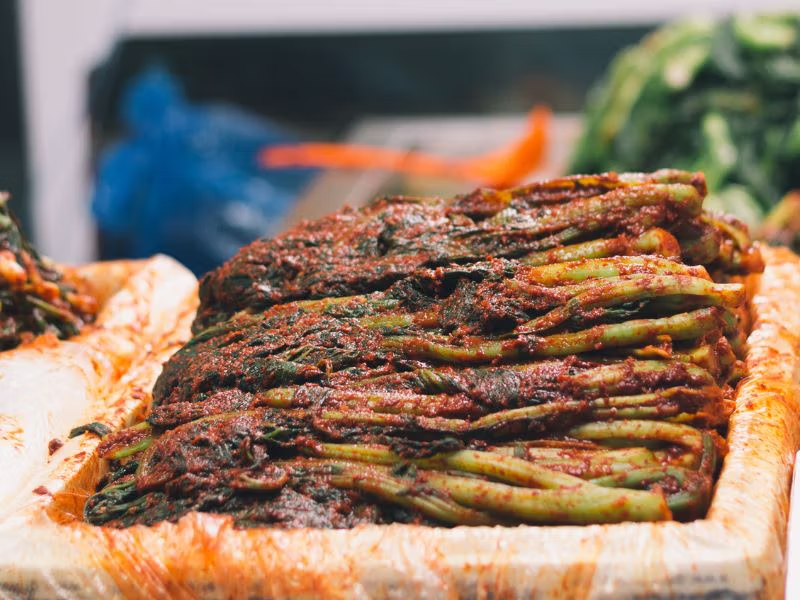
What To Eat and Drink in Yeosu, South Korea
Savor Fresh Seafood Dishes
Yeosu’s culinary scene is built on brutal freshness. The harbor feeds the kitchens directly, meaning you are eating what was pulled from the cold water hours earlier. The undisputed king here is Dolsan gat kimchi (mustard leaf kimchi). When you bite into it, you get a sharp, fibrous crunch followed by an intense mustard burn right in your sinuses that cuts perfectly through the oily richness of grilled mackerel.
You’ll sit on small plastic stools eating seodaehoe (raw croaker fish), tossed in a stainless steel bowl with aggressive amounts of red pepper paste and vinegar. It’s chewy, cold, and spicy.
If you hit the larger restaurants, order haemultang. They drop a massive, boiling iron pot on a butane burner in front of you, filled with crabs and whole octopuses that turn the broth into a thick, heavily spiced reduction.
- Gat Kimchi with Grilled Fish: A harsh, spicy mustard leaf paired with fatty, smoke-charred fish.
- Hoedeopbap: Cold raw fish mixed violently with rice and thick, sweet-spicy gochujang.
- Seafood Stews: Boiling cauldrons of shellfish that leave your clothes smelling like the ocean for hours.
Tip: When they drop the boiling haemultang on your table, let the broth reduce for at least ten minutes before eating. The flavor concentrates heavily as the water boils off.
Indulge in Yeosu’s Street Food
Street food here isn’t a delicate affair; it’s fast, hot, and eaten on your feet while dodging pedestrian traffic. You’ll grab tteokgalbi (minced short rib patties) right off the charcoal, leaving grease on your fingers as you eat it off a wooden stick.
At the tent stalls, the steam coming off the odeng (fish cake) vats hits you in the face. You pull the wooden skewers out of the boiling, peppery broth and drink the liquid out of a tiny paper cup to kill the chill of the sea wind. For dessert, the heavy iron presses stamp out hotteok, leaving you with sticky, scalding brown sugar coating your fingers if you bite into the fried dough too quickly.
- Tteokgalbi: Heavy, charcoal-smoked minced beef dripping with sweet soy marinade.
- Odeng: Dense, chewy fish cakes soaking in a violently boiling, salty broth.
- Bindaetteok: Thick, gritty mung bean batter fried in a half-inch of boiling oil until the edges shatter.
Tip: Do not bite into a fresh hotteok immediately. The melted sugar inside acts like culinary napalm. Give it three minutes.
Enjoy Traditional Korean Beverages
You cannot eat this heavily spiced food without the right liquid to strip the oil off your palate. Makgeolli (fermented rice wine) is served in dented aluminum bowls. It goes down thick and chalky, with a fizzy, fermented bite hitting the back of your throat that perfectly counters the spicy seafood.
Soju is everywhere. The crisp, sharp alcohol burn acts as a chemical reset button after eating fatty pork or raw fish. For the non-drinkers, vendors sell sikhye (sweet rice punch) out of icy plastic jugs—you can feel the frozen grains of rice sliding down the cup.
- Makgeolli: A thick, cloudy brew that settles your stomach after heavily spiced meals.
- Soju: Cheap, efficient, and ruthlessly effective at cutting through seafood oils.
- Herbal Teas: Hot, complex brews like omija cha that hit you with sour, bitter, and sweet notes simultaneously.
Tip: If you order makgeolli, gently invert the bottle a few times before opening. If you shake it violently, the carbonation will blow the cap across the room.
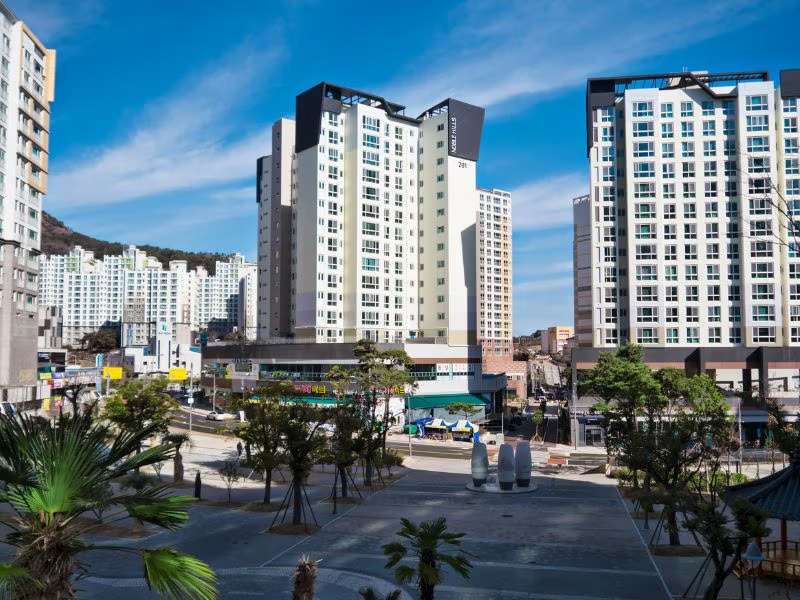
Tours For Visitors To Yeosu, Korea
Join a Guided City Tour
If you don’t want to burn daylight figuring out bus routes, a guided city tour is a highly efficient tactical drop into Yeosu’s history and culture. You load into a climate-controlled van and let someone else navigate the confusing hillside roads.
The guides hustle you through the critical choke points: Odongdo Island, the Yeosu Cable Car lines, and the massive timber frames of Jinnamgwan Hall. You spend less time staring at a map app and more time absorbing the hard data about naval history. You can literally feel the relief of sitting back in the leather seats after humping up the stairs to the various monuments.
- Comprehensive Itinerary: A rigid, timed schedule that guarantees you hit the primary targets.
- Expert Guidance: Fast, localized intelligence on where to eat and what to avoid.
- Convenient Transportation: Door-to-door transit avoiding the steep, winding pedestrian hills.
Tip: Pay attention when the guide points out the alleyway restaurants. The places with faded signs and no English menus are where the port workers actually eat.
Take a Boat Tour of the Islands
The geography demands you get on the water. A boat tour pushes out past the harbor into the deep-water channels, hitting spots like Geumodo Island or the jagged rocks of the Baekdo Islands.
Once you clear the inner harbor, the boat takes a beating from the open-ocean chop. You’ll have to grip the salt-crusted railings to keep your balance as the hull slams into the swells. It’s loud, windy, and gives you a scale of the rugged cliff faces that you absolutely cannot comprehend from the mainland.
- Scenic Views: Look up at sheer rock walls rising straight out of the dark water.
- Outdoor Activities: Drop heavy lead lines over the side for deep-water fishing.
- Maritime Exposure: Experience the heavy rolling of the coastal swells firsthand.
Tip: If you get motion sickness, pop a pill an hour before boarding. The water outside the breakwater is relentlessly choppy, and there is nowhere to hide once you’re underway.
Participate in a Cooking Class
Stop just eating the Korean cuisine and learn the mechanics of how it’s built. A cooking class usually starts with a forced march through the local market to source the raw materials.
Back in the kitchen, you’ll get your hands dirty. You’ll feel the coarse salt grating against the cabbage leaves and the sticky, thick texture of the chili paste as you manually rub down the gat kimchi. Standing over the hot iron pans, the smoke from searing the tteokgalbi will permeate your clothes. It’s a labor-intensive process that shows you the sheer physical effort required to execute these dishes.
- Hands-On Experience: Physically grinding and mixing the heavy pastes required for local marinades.
- Market Logistics: Learning how to select firm, fresh seafood straight from the iced bins.
- Delicious Rewards: Eating the results of your own labor right off the cutting board.
Tip: Wear short sleeves. You will be up to your elbows in red pepper paste and garlic, and you do not want to stain your cuffs.
Yeosu Accommodations Guide: Hotels, Guesthouses, and Hostels
Luxury Hotels for a Comfortable Stay
If you want to strip away the grit of the city at the end of the day, Yeosu’s luxury hotels are heavily engineered for isolation. Built largely during the Expo boom, these are massive, climate-controlled towers of glass and steel.
You step off the humid street into aggressively air-conditioned lobbies that smell faintly of expensive diffusers. The rooms feature heavy, soundproofed glass that completely kills the noise of the harbor traffic below, leaving you with a silent, sweeping view of the shipping lanes.
- Hidden Bay Hotel: Bolted onto the coast, offering massive plate-glass windows and silent, heavy doors.
- Sono Calm Yeosu: High-rise infrastructure towering over the Expo Site, providing rapid elevator access to rooftop pools.
- Yeosu Venezia Hotel & Resort: Expansive, polished stone floors and high-end thermal controls in every suite.
Tip: Request a high floor facing the bridge. The soundproofing handles the wind, and the nighttime LED cycle on the suspension bridge is the best free show in the room.
Experience Local Hospitality in Guesthouses
To drop down to ground level, book a guesthouse or a traditional hanok. You trade the soundproof glass for sliding paper doors and the immediate reality of neighborhood noise.
In winter, you’ll experience the brutal efficiency of ondol heating. You sleep on thin futons on the floor, and the heat radiates up through the hard wooden planks, cooking your back while the air in the room remains freezing cold. It’s a tactile, deeply traditional way to ride out a Korean night.
- Yeosu Inn Guesthouse: Tight quarters but heavily armed with local intel from the hosts.
- Yeosu Guesthouse Yeocheon: Hard wooden floors, intense floor heating, and communal kitchen chaos.
- Backpackers In Yeosu: High-traffic communal spaces where you swap hard data on ferry schedules over cheap beer.
Tip: The floor heating (ondol) will dehydrate you quickly. Keep a bottle of water next to your futon before you go to sleep.
Budget-Friendly Hostels for Travelers
Hostels in Yeosu are functional staging areas. You are paying for a secure locker, a bunk, and a hot shower before getting back out into the port.
The metal frames of the bunk beds rattle when the person above you moves. You’ll smell instant ramen boiling in the cramped communal kitchens at 2 AM, and you’ll have to navigate the damp, steamy communal bathrooms. But it’s highly efficient, placing you right on the bus lines for a fraction of the cost of the towers.
- Big-O Show Guesthouse: Utilitarian bunks located right at the perimeter of the Expo Site.
- House 479: Clean lines, concrete floors, and rapid transit access.
- Yeosu Backpackers Hostel: A dense, loud hub for route planning and gear repair.
Tip: The walls in these converted buildings are paper-thin. Heavy-duty earplugs are mandatory if you want to sleep through the early morning departures.
Day Trips From Yeosu, South Korea
Explore Suncheon Bay Wetland Reserve
You can execute a hard detour an hour out of Yeosu to the Suncheon Bay Wetland Reserve. This is 8,000 hectares of muddy, tidal flat ecosystem. They’ve laid down miles of elevated wooden boardwalks to keep you out of the deep muck.
The wind sweeping across the flat reeds carries a heavy, earthy smell of wet mud and decomposing vegetation. As you walk the boards, you’ll hear the constant, dry rustle of millions of reed stalks grinding against each other. It’s a massive resting point for migratory birds, and the sheer scale of the flat horizon is a jarring contrast to Yeosu’s vertical cliffs.
- Nature Trails: Long, exposed marches on wooden slats over thick, sinking mudflats.
- Avian Logistics: Track massive flocks of hooded cranes executing layovers in the reeds.
- Ecological Engineering: Walk through the adjacent, highly structured Suncheon Bay National Garden.
Tip: There is zero shade on the boardwalks. If you go at midday in summer, the heat radiating off the mud is oppressive. Go late afternoon.
Visit Naganeupseong Folk Village
About an hour’s drive gets you to Naganeupseong Folk Village, a fully operational Joseon Dynasty fortress. Unlike sterile museum replicas, people actually live and work inside these heavy stone walls.
You walk on packed dirt roads, smelling the woodsmoke from the functioning chimneys of the thatched-roof houses. The rough, uneven stones of the fortress perimeter require you to watch your footing. You can hear the dull thud of traditional weaving looms and the clatter of metal tools as residents maintain the 200+ historic structures.
- Living History: Navigate active dirt lanes between functional mud-and-thatch homes.
- Defensive Structures: Walk the perimeter on top of the massive, rough-hewn stone defense walls.
- Physical Crafts: Watch the heavy, manual labor involved in traditional Korean blacksmithing and weaving.
Tip: Skip the tourist-trap cafes at the entrance and eat at the small, dusty stalls inside the walls serving thick pajeon (scallion pancakes) and cloudy makgeolli.
Discover Boseong Green Tea Fields
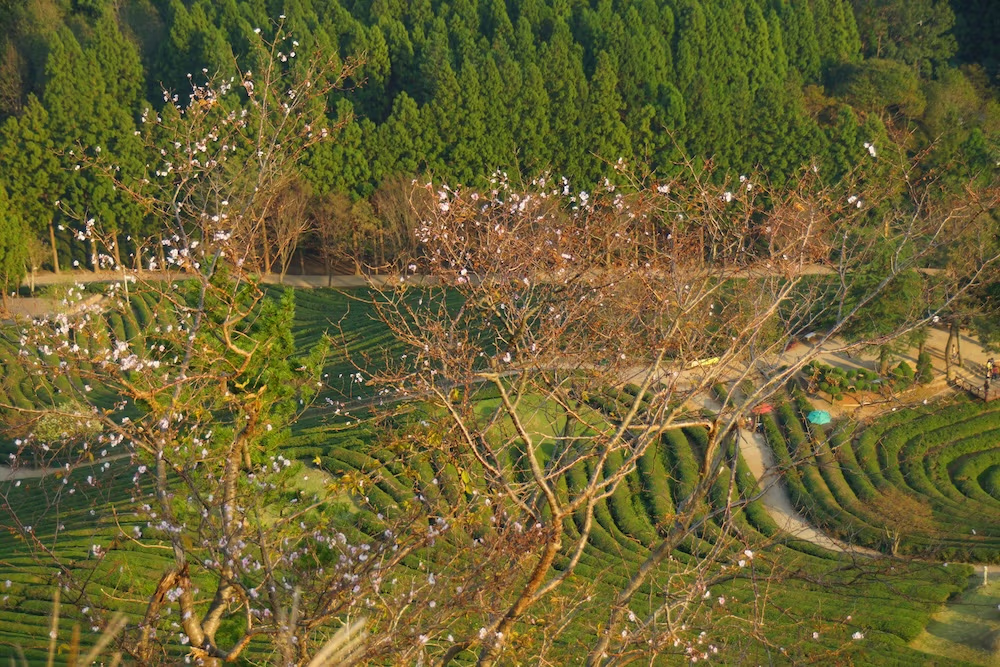
Two hours out puts you at the Boseong Green Tea Fields. The topography here is engineered into massive, curving terraces cut directly into the steep hillsides to catch the mist.
The climb up the terraces is brutal on the calves. As you push through the narrow dirt lanes between the waist-high bushes, the air gets noticeably cooler and carries a sharp, bitter, vegetative scent of raw tea leaves. The thick cedar tree lines act as massive windbreaks, plunging parts of the trail into deep, damp shade.
- Agricultural Topography: Ascend steep, manicured dirt terraces designed for maximum water runoff.
- Tea Processing: Smell the dry, roasting heat inside the tea processing facilities at the base.
- Heavy Canopy: Hike under massive, dark cedar trees that line the approach roads.
Tip: The paths between the tea bushes are packed dirt and get incredibly slick from the morning mist. Wear boots with aggressive tread.
Yeosu Transportation Guide
Getting to Yeosu
Yeosu is the end of the line, geographically speaking, but the infrastructure makes getting to this travelers coming from different parts of South Korea highly efficient.
By Train: The KTX high-speed train is the heavy lifter here. It’s going to run you about 47,000 KRW from Seoul. You board at Yongsan Station, feel the slight G-force as the train hits 300 km/h, and step off onto the concrete platform at Yeosu-Expo Station exactly 3 hours later. It drops you right into the center of the grid.
By Bus: The express buses are a grueling 5-hour haul down the peninsula. You sit in heavy leather recliners, listening to the drone of the highway tires, with a mandatory 15-minute halt at a massive concrete highway rest stop halfway down.
By Air: Yeosu Airport runs fast, loud turboprops and small jets from Gimpo. You hit the tarmac, catch the heavy blast of jet fuel exhaust, and you’re in a taxi heading downtown in 20 minutes.
- By Train: The KTX cuts straight through the mountains; it’s the most stable, vibration-free route.
- By Bus: You are locked into highway traffic, but the premium seats recline almost flat.
- By Air: Fast extraction from Seoul, but you have to deal with airport security queues.
Tip: Don’t mess around with Friday afternoon train tickets from Seoul. The KTX trains sell out days in advance. Local sources strongly advise using the Korail app to lock down your seat early, or you’ll be standing in the aisles between cars.
Navigating Within Yeosu
Yeosu’s layout is dictated by water and hills, making navigation a tactical exercise rather than a straight grid walk.
Public Buses: The heavy city buses grind up the steep inclines, the diesel engines roaring as they shift gears. You scan your T-money card against the plastic reader and brace yourself on the metal overhead bars because the drivers brake hard.
Taxis: The silver and black cabs run constantly. You slam the heavy door, hand the driver your phone with the Korean address on the map app, and let them weave aggressively through the harbor traffic.
Rental Cars and Bikes: Renting a car gives you operational freedom, but parking near the fish markets is a brutal game of inches. Biking is only viable on the flat coastal paths; the inland hills will destroy your legs.
- Public Buses: The cheapest mass-transit option, requiring you to hold on tight during sharp turns.
- Taxis: Fast point-to-point transit. Watch the red LED numbers on the meter tick up.
- Rental Services: Requires an international permit and a high tolerance for aggressive coastal drivers.
Tip: Google Maps is practically dead weight in Korea. You absolutely need to download KakaoMap or Naver Map for accurate bus tracking and walking routes.
Transportation Tips for Tourists
- Use Apps: Papago handles the heavy lifting for translation when dealing with bus drivers.
- Carry Cash: Keep crisp 10,000 won notes in your pocket. Small vendors and old cab meters hate foreign cards.
- Card Logistics: Keep your transit card in an outer pocket so you can tap the plastic reader rapidly while boarding.
Tip: Grab a physical business card from your hotel front desk. When communication totally breaks down, handing the cardboard rectangle to a taxi driver works flawlessly.
Essential Questions About Visiting Yeosu, South Korea: Practical Answers, Seasonal Tips & Easy Planning Wins
How many days should I plan for Yeosu?
Hard answer: 2 days. You can hit the cable car, navigate Odongdo, survive the fish market, and lock down a solid sunset view without running yourself into the ground.
If you stretch it to 3 days, you buy yourself the operational bandwidth to mount a day trip to Suncheon Bay or the Boseong tea fields without turning your itinerary into a forced march.
What’s the best time of year to visit Yeosu?
Spring and autumn. Period. You avoid the punishing, humid heat of August and the freezing coastal winds of January that make holding a camera painful.
If you want the visual payoff: early spring delivers the camellias on Odongdo and the azalea explosion on Yeongchwisan. But strictly from a comfort and logistics standpoint, aim for the shoulder seasons.
Is Yeosu worth visiting if I’m already going to Busan or Jeju?
Yes. Busan is a massive concrete metropolis that happens to have beaches. Jeju is a sprawling volcanic island that requires a rental car. Yeosu is a dense, working port city tightly integrated into an archipelago.
It’s smaller, more navigable, and forces you into closer contact with the actual maritime machinery and deep-water fishing culture than the bigger tourist hubs.
Where’s the best area to stay in Yeosu?
For sheer tactical efficiency, stay near the Yeosu-Expo Station. You step off the KTX train and you are immediately in range of the aquarium, the cable car base, and solid transit lines.
If you want quiet and heavy views, establish a base on Dolsan Island. You’ll be slightly removed from the downtown grid, but you get the bridge views right out your window.
Do I need a car to get around Yeosu?
No. For the main targets, the buses and taxis are highly efficient and cheap. A car is an active liability downtown; the hills are steep, and parking near the markets is a nightmare.
Only rent a car if you plan to launch long-range patrols down the coast to isolated trailheads or neighboring cities where the bus schedules thin out.
What’s the easiest way to get to Yeosu from Seoul?
The KTX train. You board at Yongsan Station, stow your gear, and three hours later you are standing in the center of Yeosu.
It eliminates highway traffic variables and drops you right into the primary tourist grid. Lock your tickets down early, especially on weekends, or you will be standing by the doors for 300 kilometers.
What are the absolute must-dos if I only have one day in Yeosu?
Execute this sequence: Start on the breakwater at Odongdo to get the coastal scale. Fall back to the Expo area for lunch and to hit the Sky Tower. As the sun drops, take the Maritime Cable Car to the Dolsan viewpoints to watch the industrial lights turn on.
This route keeps your transit time minimal while hitting the core elements: nature, infrastructure, and elevation.
Is the Yeosu Maritime Cable Car actually worth it?
Yes. Stripping away the tourist hype, it is a highly functional piece of transit that strings you directly over open water. The wind rocks the cabin, the mechanics are solid, and the visual intelligence you gather from that height is unmatched.
Pay the premium for the crystal cabins. Staring straight down at the wakes of the cargo ships through the floor glass is the way to do it.
What’s special about Odongdo Island?
It’s an easily accessible piece of rugged terrain. You don’t need a ferry; you just walk the concrete breakwater right into the dense camellia forests. You get the smell of the salt spray, the physical burn of the steep wooden stairs, and clean sightlines of the shipping channels without losing half a day in transit.
What should I skip if I’m not a big museum or aquarium person?
Bypass the massive concrete pavilions of the Expo Site. They are impressive pieces of engineering, but if you don’t want to be indoors, skip them.
Reallocate that time to the rail bike, where you actually have to put physical effort into moving down the coastline, or spend an extra hour eating grilled squid at the chaotic fish markets.
What local foods in Yeosu are non-negotiable?
Dolsan gat kimchi. It’s a harsh, spicy mustard leaf that hits the back of your nose like horseradish. It is the defining taste of the city.
Beyond that, you need to eat raw seafood (hoe) right next to the water, and pull hot, greasy tteokgalbi off a wooden stick in the street markets.
Is Yeosu a good destination for families with kids?
Yes. The logistics are easy. You have flat, paved promenades, massive indoor facilities like the aquarium to escape the weather, and shallow, engineered beaches.
Things like the rail bike provide high physical engagement without requiring technical skills. It’s a low-friction environment for moving a group.
How hard is the hike to Hyangiram Hermitage?
It requires effort. You are humping up slick stone steps and squeezing your shoulders through narrow granite crevices. Your heart rate will spike, and your legs will feel the burn.
It’s not technical mountaineering, but if you have bad knees or hate steep inclines, the damp rock stairs will be a miserable experience. The cliffside payoff, however, is immense.
Is Yeosu safe for solo travelers and at night?
Yes. The operational security is high. The waterfront zones, night markets, and bridge viewing areas are heavily trafficked and well-lit.
Apply standard urban situational awareness—keep a hand on your wallet in the crush of the fish markets and watch your step on the dark coastal paths—but you won’t feel threatened navigating the city grid after dark.
The Yeosu Decision Matrix: Logistics & Reality Check
| Activity / Route | Current Cost / Time | The Reality Check | Pro-Tip |
|---|---|---|---|
| Yeosu Cable Car (Crystal Cabin) | Around 24,000 KRW / 13 mins | Worth it. The glass floor over the ocean entirely changes your perspective on the harbor scale. | Ticket lines at the Dolsan terminal get brutal 45 minutes before sunset. Book online to bypass the walk-up line. |
| Odongdo Island Shuttle (Dongbaek Train) | 1,000 KRW / 3 mins ride | Skip it. The train operates on a rigid 30-minute schedule. You can easily walk the breakwater faster. | The automated ticket kiosks often reject foreign cards anyway. Just walk the 15 minutes and enjoy the sea spray. |
| Hyangiram Hermitage Hike | Approx. 2,000 KRW / 45+ mins climbing | A punishing physical climb that rewards you with the best coastal cliff views in the region. | Parking at the base is a weekend nightmare. Take local bus 111 or 113 directly to the terminus. |
| Yeosu Aqua Planet | Roughly 34,000 KRW / 2 hours | Skip unless you have kids. It’s crowded, loud, and you can spend that money on actual seafood instead. | If you absolutely must go, dress in layers. The indoor humidity in the dome sections is stifling. |
| Yeosu Ocean Rail Bike | Around 26,000 KRW (2-seater) / 30 mins | Great coastal exposure, but requires actual pedaling effort to keep the heavy cart moving. | Do not tailgate. Give the cart in front of you a massive head start so their slow pace doesn’t ruin your momentum. |
| KTX Train (Seoul to Yeosu-Expo) | Approx. 47,000 KRW / 3 hours | The absolute best way to enter the city. Drops you directly into the central grid with zero highway traffic. | Friday afternoon departures from Seoul sell out days in advance. Book early using the Korail app. |
Yeosu Travel Guide: Final Thoughts
Yeosu isn’t a manicured resort town; it’s an active, heavy-duty port that happens to sit on a stunning piece of geography. From the mechanical hum of the cable cars to the chaotic crush of the fish markets, there’s a serious things to do in Yeosu list for anyone willing to engage with the environment. It requires some logistical footwork, but it is a must-visit destination for travelers who want the unvarnished reality of South Korea’s coastal machinery.
- Heavy Infrastructure: Massive bridges, cable cars, and industrial scale intersecting with nature.
- Tactical Gastronomy: Eat raw, brutally fresh seafood straight off the boat.
- Operational Execution: A charming coastal city that rewards those who get out early and hit the ground hard.
Tip: Stop looking at your phone and pay attention to the harbor traffic. The real pulse of Yeosu is out on the water.
Project 23 Argentina: This guide is also available in Spanish. [Lea la versión en castellano: Guía de viaje de Yeosu: Qué hacer en Yeosu, Corea del Sur – Las 20 mejores atracciones]