
Are you the type of traveller who would rather walk a neighbourhood than queue for one more observation deck? Same here. Sham Shui Po is one of the best places in Hong Kong to put the map away occasionally, follow your nose and see what happens.
Hong Kong is one of those cities that keeps pulling you back. The first trip tends to be all skyline, Victoria Peak, harbour views and the understandable urge to photograph every tram that rattles past. But on a second or third visit, the question changes: where do you go when you want to explore Hong Kong a little deeper? For us, one answer was Sham Shui Po.
Located in Kowloon, Sham Shui Po is a working neighbourhood stitched together by wet markets, noodle shops, temples, fabric merchants, electronics stalls and a newer layer of independent creative businesses. There is no single blockbuster attraction waiting to justify the MTR ride. Good. The neighbourhood works better as a collection of small discoveries: one strange cable, one bowl of noodles, one temple doorway, one shop you had absolutely no intention of entering until five seconds ago.
Sham Shui Po Walking Tour at a Glance
| Best starting point | Sham Shui Po MTR, Exit B2 for the most direct start near Pei Ho Street; use Exit B1 for the street-level lift |
|---|---|
| Core route | Pei Ho Street → Apliu Street → Golden Computer Centre → Fuk Wing Street → textile streets → temples → Tai Nan Street |
| Time needed | About 3–4 hours for the core walk; 6–8 hours with several meals, independent shops and a heritage extension |
| Walking conditions | Mostly flat, but often crowded, narrow and obstructed around market streets |
| Best time to begin | Morning for the wet market; later morning or afternoon if electronics and independent shops matter more |
| What to bring | Comfortable shoes, an Octopus card, some Hong Kong dollars, water and rain protection |
| Biggest mistake | Trying to eat at every famous restaurant and visit every listed shop in one pass |
This is a modular route, not a test of character. The market-and-technology core is compact. Sham Shui Po Park, Mei Ho House, the Jockey Club Creative Arts Centre and the Ex-Sham Shui Po Service Reservoir are extensions. Pick what suits your interests, appetite and tolerance for humidity. Nobody hands out medals for completing every stop while slowly dissolving into their shirt.
How to Walk This Route Without Turning It into a Military Operation
The route below follows the neighbourhood rather than a spreadsheet. Start with the wet market, move through the electronics cluster, choose one proper meal, cross the specialist textile streets, visit the temples and finish around Tai Nan Street. Food, shopping and heritage overlap in real life. The walk should too.
Small independent shops move, change hours and sometimes disappear entirely. That is annoying when writing a guide, but it is also reality. Treat the streets, markets and cultural sites as the backbone. When one boutique matters enough that its closure would ruin your day, check its own website or social account that morning.
Stop 1: Pei Ho Street Market and Kung Wo Beancurd Factory
Begin near Pei Ho Street, home to a wet market where residents shop for produce, meat, seafood and everyday ingredients. There are food stalls scattered through the area as well. A queue is often encouraging, but inspect what is being sold before joining it blindly. Hong Kong has enough excellent food that you do not need to spend twenty minutes waiting for something you never wanted.
The market is at its best when it is functioning as a market, not posing for visitors. Mornings bring more activity and more chances to be in somebody’s way. Move with the pedestrian flow. Step aside before opening Google Maps. And remember that the person pushing a loaded trolley at surprising speed is working; you are the one wandering around trying to photograph vegetables.
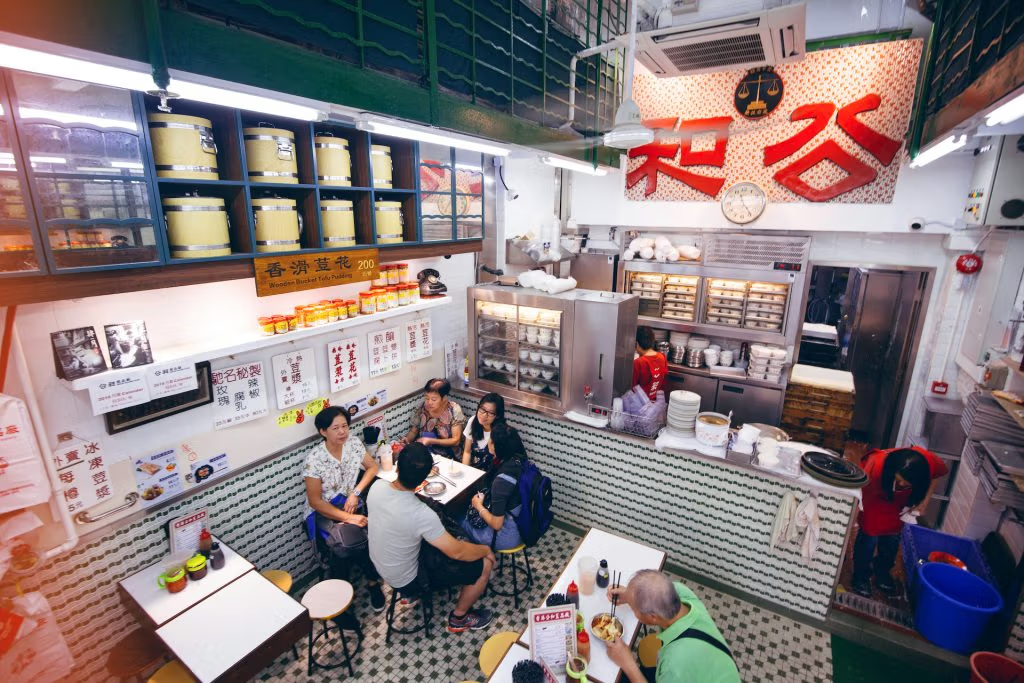
Kung Wo Beancurd Factory
For something sweet, head to Kung Wo Beancurd Factory. The tofu pudding is silky, delicate and far more satisfying than a beige bowl of soybean curd has any visual right to be. Order soy milk alongside it—warm or cold—if you want to lean fully into the theme.
Kung Wo has been part of Sham Shui Po since around 1960, though the business traces its roots further back. It also serves savoury tofu dishes, but the pudding is the easiest opening move. Starting the morning with a giant noodle bowl is possible. It is not always wise.
Stop 2: Apliu Street and Golden Computer Centre
Apliu Street
If you enjoy electronics—or drawers full of cables whose purpose you have forgotten—Apliu Street is dangerous territory. The stalls sell mobile accessories, adapters, audio gear, cameras, radios, tools, batteries, second-hand equipment and enough miscellaneous bric-a-brac to convince you that a mystery component might somehow improve your life.
Apliu Street is enjoyable even when you are buying nothing. The specialization alone is fascinating. But actual shopping rewards preparation rather than bravado: save model numbers, compare several sellers and ask whether used equipment can be tested before handing over cash. A bargain stops being a bargain once you discover it is incompatible with everything you own.
- Check compatibility: Confirm voltage, plug type, storage capacity and regional restrictions.
- Ask about warranty coverage: A low price is less exciting when the warranty only applies locally—or does not exist.
- Compare before bargaining: Knowing the normal price is more useful than haggling blindly.
- Be cautious with suspicious bargains: Batteries, memory cards and branded accessories are not products where mystery quality is especially charming.
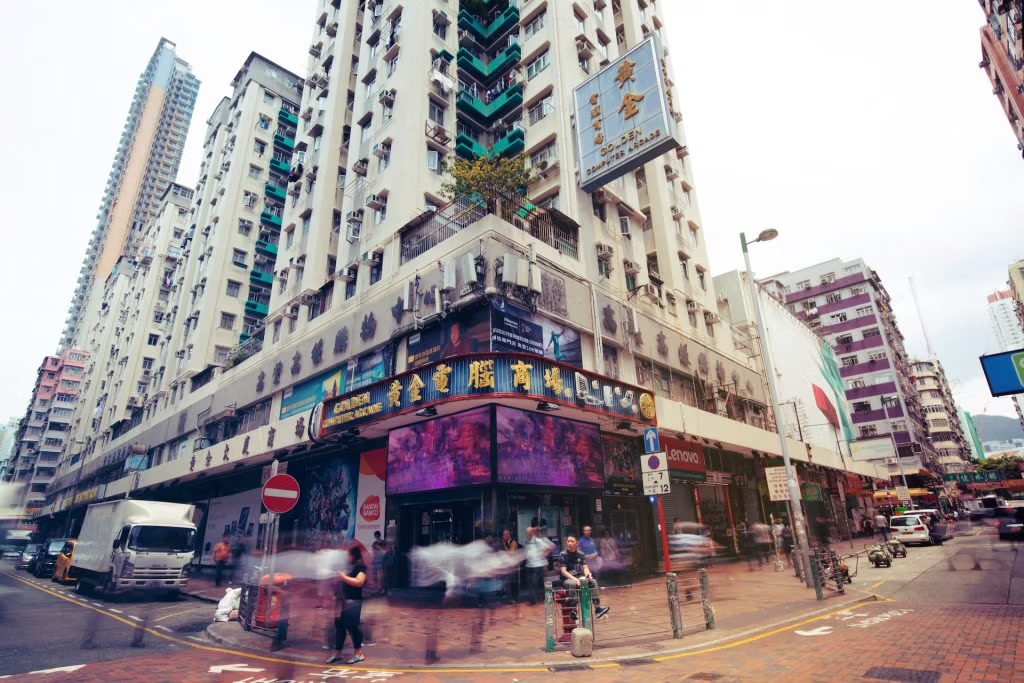
Golden Computer Centre and Arcade
From Apliu Street, continue to the Golden Computer Centre and Arcade. The complex is packed with computers, components, gaming hardware, consoles, peripherals and the tiny parts required to build a machine—or ruin a perfectly functional one because you watched three enthusiastic YouTube tutorials.
One clarification matters: “Arcade” is part of the shopping complex’s name. This is not primarily a hall of vintage game cabinets and virtual-reality attractions. It is a dense, fluorescent, mildly disorienting retail maze. The fun comes from browsing an absurd concentration of hardware and seeing the same component offered six metres apart at six different prices.
If technology leaves you cold, one circuit is plenty. PC builders, gamers and bargain hunters may disappear inside for hours and emerge pale, triumphant and carrying a graphics card.
Stop 3: Fuk Wing Street—Toys, Food and a Traditional Craft Shop
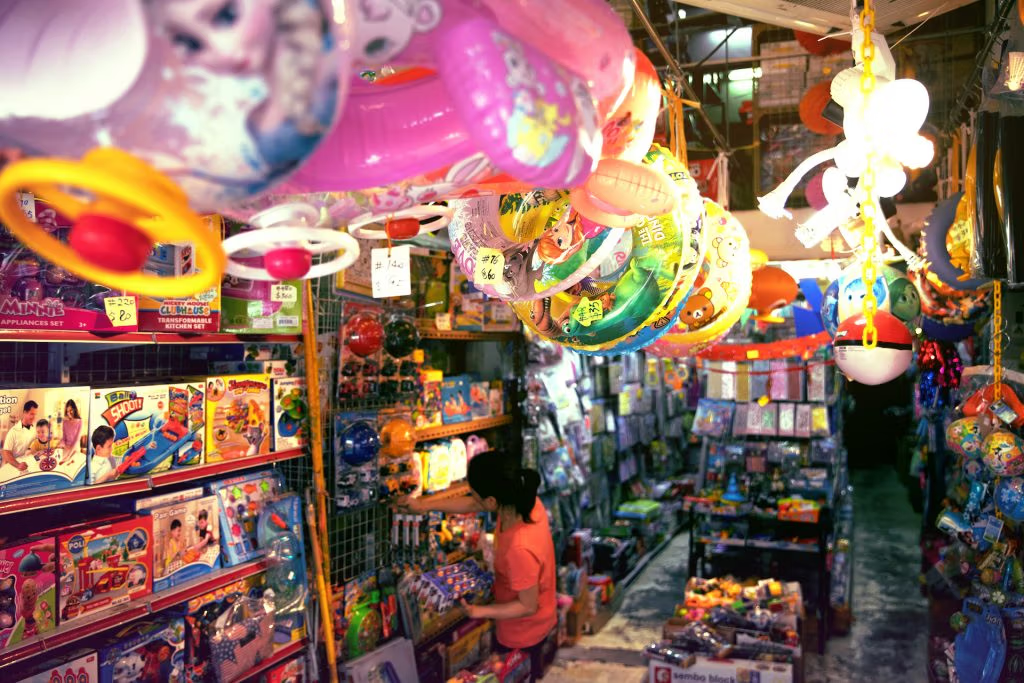
After that much circuitry, Fuk Wing Street feels like somebody changed channels. It is best known for toys and party supplies: decorations, costumes, goodie bags, balloons and plastic objects whose purpose becomes less clear the longer you stare at them. Most travellers do not urgently need any of this. The street is still great fun to browse.
Stock changes with school terms, celebrations and festivals. Some businesses cater to bulk buyers; others tolerate curious visitors more easily. Pavements are narrow, so resist the natural urge to stop dead because you have discovered an entire wall of balloons. Somebody behind you is almost certainly carrying a box larger than they are.
Bo Wah Effigies
Bo Wah Effigies makes paper offerings traditionally burned to honour the deceased. Alongside clothing and houses, the shop creates modern objects such as smartphones and pop-culture items. It is visually fascinating, but the objects are not novelty props. They belong to a living ritual tradition.
Bo Wah has operated since 1963 and remains a working business, not a museum with an obliging gift shop. Ask before taking close photographs. Give customers space. Curiosity is welcome; treating ceremonial objects like a collection of amusing Instagram props is not.
What to Eat in Sham Shui Po Without Attempting Five Lunches
Sham Shui Po makes restraint difficult, especially when you arrive hungry and have spent the previous hour inhaling restaurant smells. My advice is to choose one main noodle or dim sum meal, then add tofu pudding, a snack or coffee. Eating full portions at every famous address turns a walking tour into four lunches connected by increasingly regretful waddling.
| Stop | Why choose it | Best role in the day |
|---|---|---|
| Man Kee Cart Noodles | Highly customizable noodles with a large topping selection | Main lunch for adventurous ordering |
| Lau Sum Kee | Traditional bamboo-pressed noodles and shrimp roe | Main lunch for noodle technique and texture |
| Tim Ho Wan | Accessible dim sum and dishes Audrey and I genuinely enjoyed | Shared brunch or lunch |
| Kung Wo Beancurd Factory | Tofu pudding, soy milk and savoury tofu | Breakfast-sized stop, snack or dessert |
Man Kee Cart Noodles
If you want noodles with maximum control and minimum hand-holding, try Man Kee Cart Noodles. Choose the noodles, broth and toppings from what is displayed in front of you. Pig liver is available when you are feeling adventurous—or when somebody at the table has dared you.
The huge number of combinations is the appeal and the trap. Pick a noodle type and two or three toppings before the queue begins silently judging your life choices. The Michelin Guide currently highlights the chive dumplings, chicken wings and house-made chilli sauce.
Tim Ho Wan
When it comes to our guide to eating dim sum, Tim Ho Wan was never going to be left out. Audrey and I have eaten there repeatedly and our self-control around the baked pork buns remains theoretical. The brand has spread internationally, but the Sham Shui Po branch fits naturally into this walk.
Our favourites include prawn dumplings, baked BBQ pork buns and glutinous rice in a lotus leaf. Those are dishes we actually ate and would happily order again. Michelin currently lists the Sham Shui Po branch as a Bib Gourmand rather than a starred restaurant, which is less glamorous wording but a more accurate description of its present status.
Arriving outside the main lunch rush may reduce the wait. May. Do not build a precision itinerary around restaurant queues in Hong Kong. They have a reliable way of humiliating anyone who writes “12:15 lunch” with too much confidence.
Lau Sum Kee Noodles
Lau Sum Kee specializes in egg noodles, including wonton soup and shrimp roe preparations. The noodles are traditionally pressed with a bamboo pole, a labour-intensive technique that gives them their springy texture. English may be limited. Pointing, saved photographs and a willingness to look mildly confused will get you surprisingly far.
Lau Sum Kee on Fuk Wing Street is currently a Michelin Bib Gourmand. Shrimp roe noodles are the signature; wonton noodles and beef brisket are gentler introductions. Choose Lau Sum Kee when the noodle-making tradition interests you more than building a bowl from a sprawling topping display.
Stop 4: Cheung Sha Wan Road and the Textile Streets
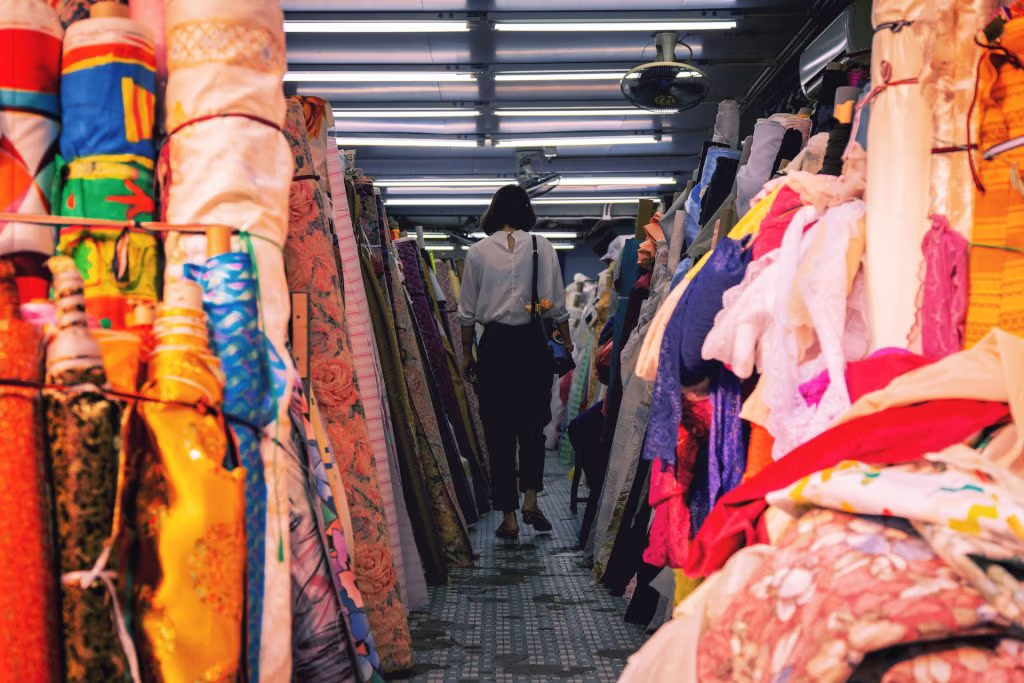
If fashion, fabric or craft supplies make your pupils dilate, continue toward Cheung Sha Wan Road. Designers come for wholesale clothing and raw materials; bargain hunters come prepared to excavate racks. It can look chaotic because it is chaotic. Patience helps. So does accepting that the perfect item may be hiding behind forty things you would not wear during a power outage.
This is not one neat “fabric market” with a souvenir sign at the entrance. The surrounding streets developed their own specializations, which is what makes the area useful rather than merely colourful.
| Street or area | What it is known for | Who will enjoy it most |
|---|---|---|
| Cheung Sha Wan Road | Wholesale fashion, clothing samples and garment businesses | Fashion shoppers willing to browse carefully |
| Yu Chau Street | Beads, jewellery-making pieces and craft supplies | Jewellery makers and detail obsessives |
| Nam Cheong Street | Ribbons, trims and sewing supplies | Sewers, costume makers and textile hobbyists |
| Tai Nan Street | Leather suppliers, workshops, cafés and design businesses | Craft travellers and independent-shop browsers |
Some businesses cater mainly to trade buyers. Ask before assuming every rack is normal retail stock or that somebody wants to sell you three buttons and eleven centimetres of ribbon. Carry a reusable bag. Small craft purchases reproduce quickly the moment you stop insisting you are “only browsing.”
Stop 5: Kwan Tai Temple and the Sam Tai Tsz–Pak Tai Temple Complex
The shift from commerce to worship is one of the reasons this route works. A few blocks take you from graphics cards and fabric trim into temples that have served the surrounding community for more than a century. Hong Kong changes gears quickly.
Kwan Tai Temple
Kwan Tai was a warrior from the Three Kingdoms period who came to be revered as a god associated with war, loyalty and righteousness. The temple also houses other deities. It is compact, atmospheric and easy to rush through—which is precisely why slowing down for a few minutes matters.
Kwan Tai Temple was built in 1891 and is the only temple dedicated to Kwan Tai in Kowloon. The Grade II historic building retains Lingnan architectural details and objects connected to its early history. That is more interesting than photographing the entrance, nodding solemnly and leaving after ninety seconds.
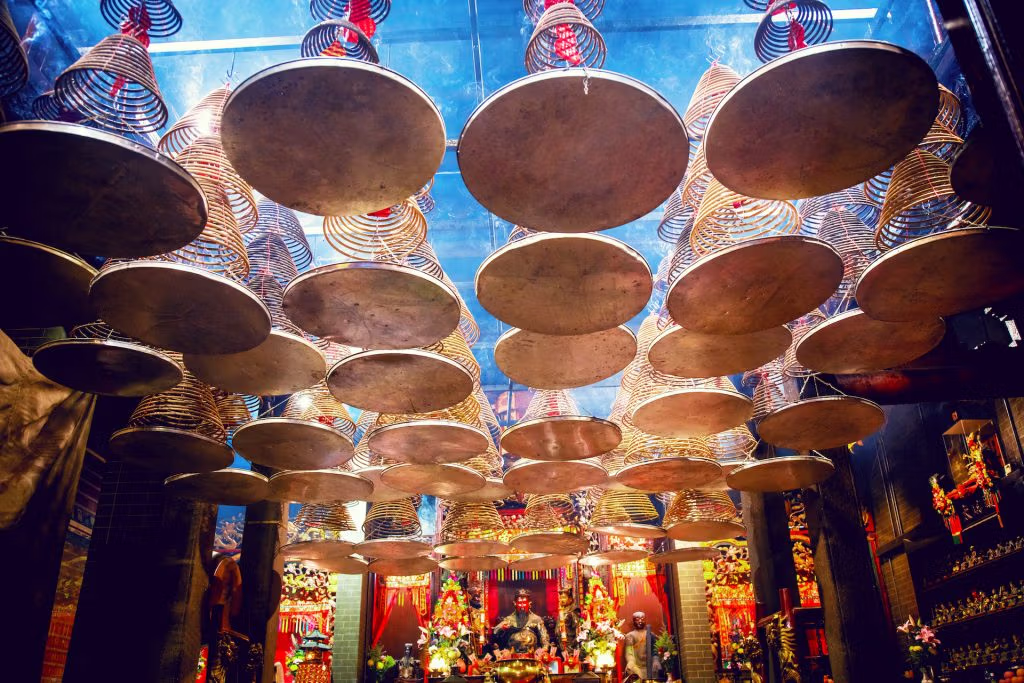
Sam Tai Tsz and Pak Tai Temple
This small complex contains two distinct temples. Sam Tai Tsz Temple was built by Hakka immigrants in 1898 and holds relics from the late Qing dynasty. Neighbouring Pak Tai Temple was built by fishermen in 1920. They sit together, but they are not the same site repeated twice for SEO convenience.
The buildings at 196–198 Yu Chau Street also carry different heritage grades: Sam Tai Tsz is Grade II and Pak Tai is Grade III. The distinction helps explain why this is a two-part historical stop rather than one generic temple complex.
Temple etiquette
- Speak quietly and keep doorways clear.
- Do not walk directly in front of somebody who is praying when it can reasonably be avoided.
- Avoid flash photography and ask before photographing worshippers or staff at close range.
- Festival days can be fascinating but much busier; dates follow the lunar calendar and change annually.
Stop 6: Tai Nan Street and Sham Shui Po’s Independent-Shop Layer
Tai Nan Street adds another layer: leather suppliers, small studios, cafés and design-minded retail mixed among older businesses. It is also the least stable part of the guide. Independent shops relocate, reinvent themselves and occasionally vanish between one browser tab and the next. Check any place you consider essential.
Café Sausalito
By this point, caffeine may have moved from pleasant idea to medical necessity. Café Sausalito is a specialty coffee shop and micro-roastery founded in Sham Shui Po in 2014, named after the Californian city across from San Francisco.
Do not turn coffee into another attraction to conquer. Sit down. Cool off. Reassess the state of your feet. Sham Shui Po will still be there after fifteen minutes, and your arches may stop filing formal complaints.
Midway Shop
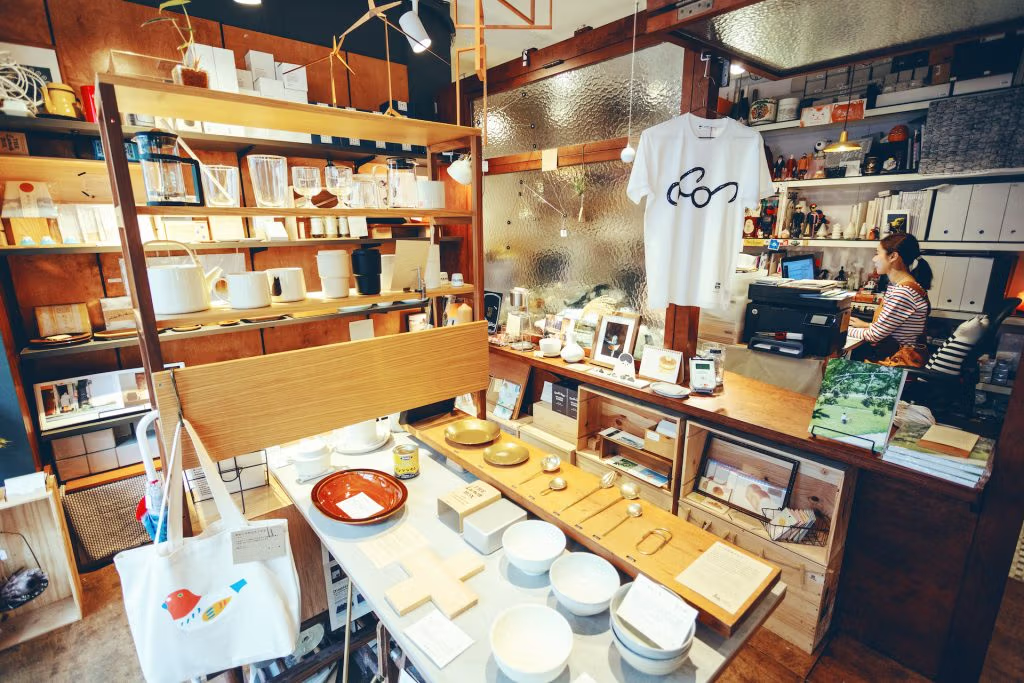
Midway Shop is a travel-themed store built around people, products and places encountered on the road. Inside are photographs, kitchenware, totes, clothing and objects chosen because they carry a story—not because an algorithm declared them this season’s essential beige accessory.
The shop currently operates on Ki Lung Street, slightly beyond the tightest core of the walk. Go because you like design and Japanese-made goods. Do not make a sweaty detour simply because this article assigned the place a heading.
Other shops from our original walk
The following places were part of our original walk. Some are now harder to verify as dependable visitor stops, so I am preserving what we actually encountered without pretending every independent business has remained frozen in amber for our convenience.
Doughnut
Doughnut is a Hong Kong backpack and luggage brand founded by local designers in 2010. When we visited, the shop felt like a welcome alternative to the anonymous luggage chains found in every large mall—the kind where all backpacks appear engineered for the same imaginary Scandinavian commuter.
Brothers Leathercraft
Brothers Leathercraft was another stop on our original route. The workshop sold wallets, handbags, belts and shoes, plus leather and tools for people ambitious enough to make their own. It is the kind of shop that can convince a complete beginner that one crooked card holder and a minor injury would still count as a productive afternoon.
Toolss
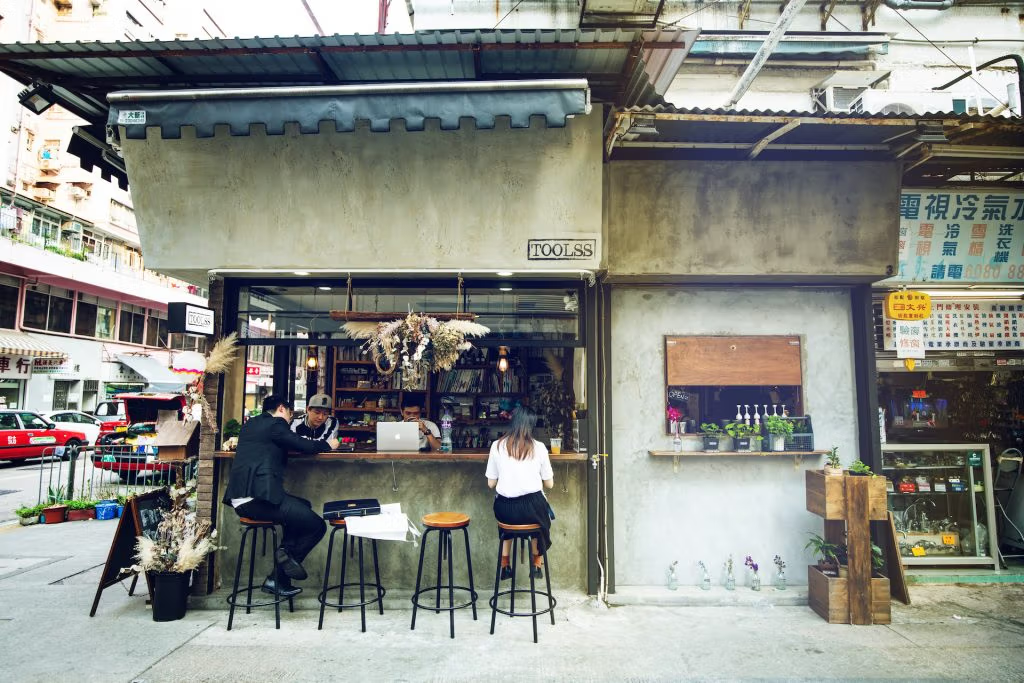
Toolss was a journal and stationery shop filled with carefully chosen products from around the world. It also housed a coffee counter serving hand-drip coffee, which is a brutally effective combination for anyone who already owns too many notebooks and keeps insisting the next one will finally organize their life.
Form Society
Form Society was a community-minded space for exhibitions, collaborative projects, pop-ups, talks and workshops. Its value depended on what was happening that day, which is a good reason to check the current programme instead of arriving and staring hopefully at a closed door.
For all four businesses, verify the current address and opening pattern before building your day around them. A real past visit remains real even when a shop later moves or closes. We do not need to bully the present into matching an old blog post.
Optional Detour: Man Fung Building and the HKWALLS Fox Mural
Listing an ordinary residential block as a detour sounds odd until you see the scale of the mural. Madrid-based artist Okuda San Miguel transformed Man Fung Building during the 2017 HKWALLS festival, covering one side with a colourful geometric fox.
The mural works because of its setting: monumental art wrapped around an otherwise ordinary home. And it is a home. Keep the noise down, avoid aiming lenses into windows and check recent photographs before crossing the district specifically for it. Outdoor murals age, fade and occasionally lose arguments with property maintenance.
Optional Heritage Extensions
The core route already fills a half day without any heroic behaviour. Add one of the following when public history, architecture or art matters more to you than squeezing in another market street.
Sham Shui Po Park and the Former POW Camp
Sham Shui Po Park is an important historical site because the area housed the main prisoner-of-war camp during the Japanese occupation of Hong Kong. As you walk through what is now a peaceful public park, look for memorials commemorating those who were imprisoned and died there.
The site deserves more than a quick paragraph about greenery and a bench. Yes, the park offers shade. More importantly, it preserves the memory of a brutal chapter in Hong Kong’s wartime history. Visit with that context in mind.
Mei Ho House and the Jockey Club Creative Arts Centre
Mei Ho House was completed in the 1950s following the Shek Kip Mei fire and now interprets the history of Hong Kong public housing. Nearby, the Jockey Club Creative Arts Centre occupies a converted factory building with artist studios, exhibitions and cultural events.
These stops pair well when heritage and creative reuse interest you more than another hour of shopping. Check exhibition access first. An arts centre with nothing publicly open is mostly a handsome building and a lesson in planning.
Ex-Sham Shui Po Service Reservoir and Garden Hill
The Ex-Sham Shui Po Service Reservoir is a Grade I historic structure known for its brick arches and granite piers. Current access arrangements are managed by Hong Kong’s Water Supplies Department and can change, so consult the official page rather than relying on an old booking instruction copied across the internet.
The reservoir and nearby Garden Hill add climbing to an otherwise mostly flat day. Make the detour deliberately. Do not tack it onto the end after several noodle bowls and then act betrayed when Hong Kong introduces you to stairs.
Half-Day and Full-Day Route Options
A focused 3–4 hour walk
- Start at Pei Ho Street and sample tofu pudding at Kung Wo.
- Walk through Apliu Street and make one circuit of Golden Computer Centre.
- Browse Fuk Wing Street and choose one main meal: Man Kee, Lau Sum Kee or Tim Ho Wan.
- Continue through one textile street that suits your interests.
- Finish at Kwan Tai Temple or the Sam Tai Tsz–Pak Tai complex before returning to the MTR.
A slower full day
- Follow the same morning market and electronics route.
- Allow time for a proper lunch rather than eating while marching.
- Explore Cheung Sha Wan Road, Yu Chau Street, Nam Cheong Street or Tai Nan Street according to your interests.
- Visit both temple sites and Bo Wah Effigies.
- Take a coffee break and browse one or two current independent shops.
- Add either Sham Shui Po Park, Mei Ho House and JCCAC, or the service reservoir—never all of them by default.
- Return for dessert or an evening meal if your appetite has recovered.
Practical Advice That Actually Matters
Carry an Octopus card and some cash
Sham Shui Po is not trapped in a cash-only time capsule. An Octopus card handles transport and many purchases, while cards and mobile payments are increasingly common. Small stalls and traditional eateries may still prefer cash. Carry some Hong Kong dollars and avoid the modern traveller’s favourite ritual: waving three unusable payment methods at a patient cashier.
Use the correct MTR exit for your needs
Exit B2 is convenient for beginning near Pei Ho Street and Kung Wo. Travellers requiring step-free street access should use the lift at Exit B1 and adjust the first few minutes of the route. Exit A1 has a stair lift, but that is not the same as a conventional street-level lift.
Do not assume the station solves your toilet problem
Use facilities when you encounter them in restaurants, larger commercial buildings, markets or parks. Do not wait until the situation becomes a crisis and then assume every MTR station contains a conveniently placed public toilet. That is not a research strategy. It is optimism with consequences.
Adapt the route in heat and heavy rain
Hong Kong’s wetter months can produce rain that makes a tiny travel umbrella look like a decorative protest. Severe rainstorm and tropical-cyclone warnings can derail an outdoor walking day, so check the Hong Kong Observatory before leaving.
- In strong heat: visit Pei Ho Street early, use Golden Computer Centre and restaurants as indoor breaks, and shorten the route rather than proving a point.
- In light rain: carry proper rain protection and expect covered pavements to become more congested.
- During serious warnings: postpone the walk and follow official advice. Wet-market sightseeing is not worth competing with flooding, transport disruption or dangerous winds.
Families, strollers and limited mobility
The core area is flat, but “flat” and “easy” are not synonyms. Pavements can be narrow, uneven and occupied by merchandise, queues or delivery trolleys. With a stroller, avoid peak market periods, plan indoor breaks and skip the tightest lanes. The service-reservoir extension involves climbing and belongs in a separate category of ambition.
Photograph the neighbourhood without treating it as a stage set
- Step fully out of the pedestrian flow before framing a photograph.
- Ask before photographing an artisan or shopkeeper at close range.
- Avoid intrusive photographs of worshippers and wet-market workers.
- Remember that Man Fung Building and the surrounding blocks are residential buildings, not open-air film sets.
Self-Guided Walk or Guided Sham Shui Po Tour?
Walk independently when you enjoy getting mildly lost, feel comfortable ordering with limited English and want control over how long you spend eating or browsing. The route costs little beyond transport, food and whatever object Apliu Street persuades you was essential.
A guide becomes useful when you want somebody to explain ingredients, market trades, temple customs and the neighbourhood’s history rather than piecing everything together between mouthfuls. Guided food walks can also provide several smaller tastings instead of forcing you to buy full portions. The trade-off is obvious: less freedom to linger, wander off or surrender when Hong Kong starts cooking you from the outside.
One current option begins in Sham Shui Po before continuing through Mong Kok and Yau Ma Tei: compare the Kowloon Michelin street-food and culture walk on GetYourGuide. For a wider selection, browse Hong Kong street-food tours on GetYourGuide. These are alternatives to the free route above, not prerequisites for enjoying the neighbourhood.
Where to Stay for Exploring Sham Shui Po
You do not need to sleep in Sham Shui Po to walk this route. Mong Kok and Tsim Sha Tsui offer more hotel choice and make straightforward bases for a first visit. Staying inside the district makes more sense when neighbourhood food, markets and early-morning wandering matter more than harbour views and polished hotel lobbies.
I have not stayed at the properties below, so these are planning options rather than personal hotel recommendations:
- Check rates at YHA Mei Ho House Youth Hostel on Booking.com for private rooms and dorms inside a historic public-housing building with its own heritage connection.
- Check current availability at Ehotel on Booking.com for a hotel option directly on Pei Ho Street, close to the beginning of this route.
- Compare all Sham Shui Po accommodation on Booking.com when dates and price matter more than choosing a specific property in advance.
For most first-time visitors, I would still compare Sham Shui Po with Mong Kok or Tsim Sha Tsui before booking. The MTR makes the neighbourhood easy to visit; there is no prize for choosing the most “local” hotel base and then spending the rest of the trip commuting to everything else you wanted to see.
Sham Shui Po Walking Tour FAQ
How long do I need in Sham Shui Po?
Three to four hours covers Pei Ho Street, the electronics district, one meal, one textile street and a temple without frantic power-walking. Six to eight hours allows slower shopping, more food and one heritage or creative extension.
Is Sham Shui Po worthwhile on a first trip to Hong Kong?
Yes. Still see the harbour and skyline on a first trip—Hong Kong earned those clichés—but Sham Shui Po adds specialist streets, local food and ordinary commercial life that a Central-and-Tsim-Sha-Tsui itinerary can miss.
What is the best time of day for the walk?
Morning is best for Pei Ho Street and cooler walking conditions. Later morning into afternoon suits the electronics complexes and independent shops. Evening adds illuminated street scenes and food, but some specialist retail businesses may already be closing.
Do I need to speak Cantonese?
No, but English coverage varies. Save Chinese names and addresses, use a translation app and point when necessary. Patience matters more than expecting every noodle shop to produce an English menu, a tasting flight and a staff member ready to discuss your dietary philosophy.
Are the shops and markets open every day?
The neighbourhood stays busy throughout the week, but individual businesses keep their own schedules and may close on unexpected weekdays. Check any must-visit shop directly. The route survives one locked door; your entire day should not depend on a stationery boutique opening exactly when an old blog post claimed it would.
Can I complete the route with children?
Yes, but a shorter version is more realistic. Fuk Wing Street’s toys, the computer centre and food stops may appeal to older children, while peak wet-market crowds and narrow pavements can be frustrating with a stroller. Build in a park, café or indoor break before everybody mutinies.
More Walking, Market and Food Guides
For more self-guided urban wandering, see our self-guided walk through downtown Fernie and our Helsinki travel guide. Market lovers may also enjoy our guide to Mauerpark Flea Market in Berlin.
For trips built around appetite, browse our experiences with food and drink tours in Edinburgh, our Costa Brava guide for food lovers and our broader Hong Kong guide to eating dim sum.
Final Thoughts on Walking Through Sham Shui Po
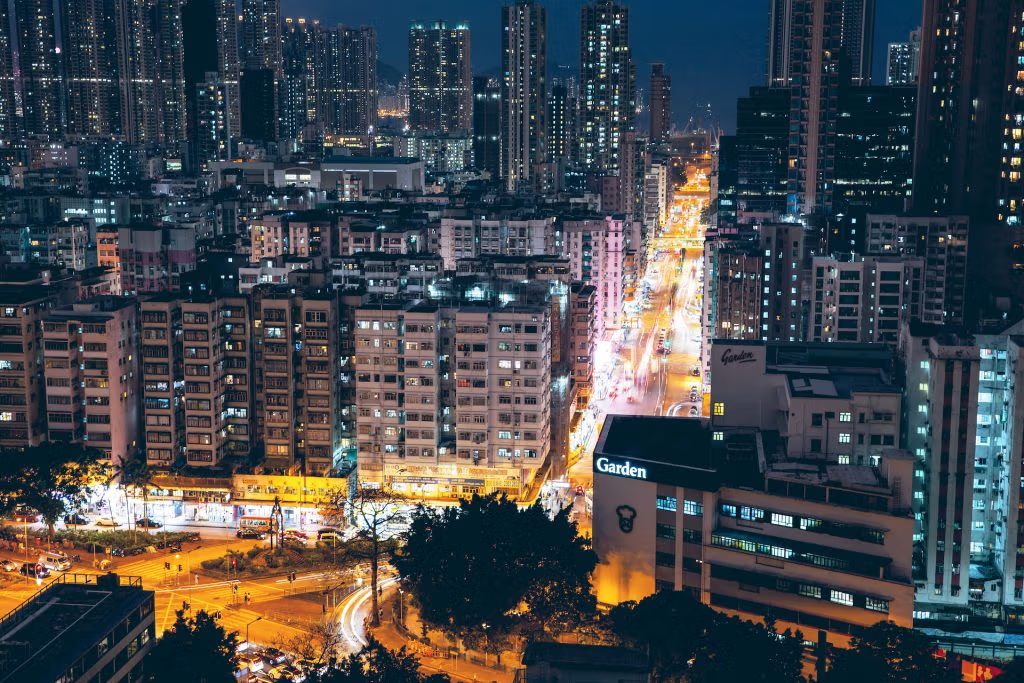
Sham Shui Po rewards curiosity and punishes completionism. You do not need to visit every shop, photograph every stall or consume three lunches for the day to count. Pick a few streets that suit you, choose the meal you genuinely want and leave room for the neighbourhood to hijack the plan.
The polished skyline is Hong Kong. So are computer components under fluorescent lights, ribbons sold by specialists, bamboo-pressed noodles, incense drifting through a temple doorway and tofu pudding served in a room nobody designed for Instagram. Sham Shui Po puts all of it within walking distance.
Build the route around your own obsessions. This guide naturally leans toward food, markets and objects nobody strictly needs; yours may be temples, fabric, gaming hardware or street photography. Either way, Sham Shui Po deserves a place in a Hong Kong itinerary once you are ready to look beyond the city’s most polished attractions.
This campaign was created in partnership with the Hong Kong Tourism Board and iambassador. Images provided by HKTB.
Great post! Traveling smart is all about finding the best deals and planning efficiently. If you’re looking to compare cheap flight tickets for your next trip, Travarc is a reliable platform. It helps you discover the best fares for domestic and international flights, including options for one-way, round-trip, and last-minute flight deals. Definitely worth checking out before you book!
Great Advice!
Great post! The insights here are very relevant and beneficial to my business. I appreciate your expertise!
Sham Shui Po looks like an incredible place to explore on foot! I love discovering neighborhoods with rich history, authentic food, and hidden gems, and this guide captures it all perfectly. Definitely adding this to my must-visit list for my next trip to Hong Kong—thanks for the great insights!
“Such a great idea for exploring Sham Shui Po at your own pace! It’s one of the most vibrant neighborhoods in Hong Kong, full of hidden gems. Looking forward to discovering unique spots through this walking tour. Any tips on must-try street food along the way? 🍜🇭🇰”
“This walking tour of Sham Shui Po sounds incredible! 🏙️ The mix of culture, street food, and history must make it a truly unique experience. Are there any hidden gems or local dishes you’d recommend trying while exploring the area?”
“This walking tour sounds amazing! 🏙️ Sham Shui Po has such rich culture and history. I can’t wait to explore the local markets and street food. Thanks for putting this together—definitely adding it to my travel plans!”
What a fantastic guide! Sham Shui Po is such a vibrant area rich in culture and history. I love the idea of a self-guided walking tour—it allows for exploring at your own pace and truly soaking in the local atmosphere. The tips on food spots and hidden gems are especially helpful. Can’t wait to check it out on my next visit to Hong Kong! Thank you for sharing this wonderful resource!
“This sounds like such an amazing adventure! Sham Shui Po seems full of character and hidden gems, perfect for exploring at your own pace. I love the idea of a self-guided tour—letting you truly take in the sights and culture. Thanks for the guide, can’t wait to try this on my next visit to Hong Kong!”
Love this walking tour of Sham Shui Po! The emphasis on local culture and unique attractions is exactly what I look for in a self-guided tour. The insights on food and shopping are particularly useful.
Sham Shui Po looks really chilled for a visit tbh although I think I’d prefer a guided tour lol. Wouldn’t wanna miss out any part lol
Your self-guided walking tour of Sham Shui Po in Hong Kong is a hidden gem. I followed your recommendations, and it was an authentic and enriching experience. Thanks for sharing this local insight!
I did not have time to undertake a walk when I visited Hong Kong. It was a very crisp trip. Seeing your post, I think I should have taken out time to do the walk. I’m hoping I do get to walk, the next time when I visit Hong Kong.
Very informative article. I love the pictures. Wow, Hong Kong is such a beautiful place. Definitely putting it on my bucket list 🙂
This article is a fantastic guide to exploring the bustling district of Sham Shui Po. The article is well-written, with detailed descriptions and beautiful photos that perfectly capture the essence of the area. The author provides useful information about the history, culture, and landmarks of the district, making it an excellent resource for travelers interested in learning more about Hong Kong’s rich heritage. Overall, this article is an outstanding resource for anyone looking to explore Sham Shui Po, and it is a testament to the author’s passion for travel and cultural exploration.
Sham Shui Po Street Market – This is a must-visit for anyone interested in local Hong Kong culture. The market is full of vendors selling everything from fresh produce to clothing and electronics. Be sure to bargain and haggle for the best prices.
The attractions are really enticing. Hope one day I would be able to visit Sham Shui.
I’ve been to Hong Kong, but never Sham Shui. Didn’t know it existed at that time.
Great blog, hope to be back 🙂
My favorite part of my travel experience in Sham Shui Po, Hong Kong was exploring the city by bike. It was such a fun way to see the city and I really enjoyed the freedom that it gave me. I also really enjoyed meeting the people who I met while on my tour. They were all so interesting and I enjoyed learning about their culture.
Great post! We are visiting friends who live in HK when we can start travelling again, so we have taken notes. This looks like an interesting way to explore this area. Thanks
There is no doubt that purchasing the property for sale in Faridabad is an important and essential process, and the best real estate company is a crucial part of the process. You must have heard a statement that “all the real estate agents or companies are the sellers’ agents.” Well, don’t consider this as fact. An excellent real estate company can assist buyers in getting a fantastic property deal.
Thanks for sharing such a great article.
SSP is actually my favourite area of markets in HK. I’ve only been to the markets but it clearly has so much more to offer. I definitely need to visit again to check out all of these spots!
I’ve been to Hongkong before but this is my first time hearing about Golden Computer Center and Arcade. Oh! I wanna go back!!
You have made a very fascinating guide to Hong Kong with a couple of unusual things! NIce work!
Nice post. Thanks a lot for sharing it
Muito bom este artigo. Meus parabéns!!!!
This is great advice!
very honest and practical.
The benefits of journeying aren’t only a one-time factor: travelling changes you physically and psychologically. Having little time or cash isn’t a legitimate excuse. You may fly for reasonably-priced very easily. If you have a full-time job and a circle of relatives, you can still tour on the weekends or vacations, in spite of a child.
Thanks for sharing with us!!! Keep it up!!
Hi Sam,
Just stumbled upon your article. Great content and photographs.
Keep on the good work.
Cheers:)
Hong is a amazing country. Noodles wow. Very nice article. I think you enjoy you trip very much. Thank you for sharing this article.
Hong Kong é tudo de bom ta no meu top 10 de cidades favoritas =)
Ainda vou rodar o Mundo *-*
Hey Sam
I really enjoyed your post. pics are also very nice.Thanks for this amazing post.keep it up.
A good blog on the book publishing
Sham Shui Po looks Interesting. Thanks for sharing
Great guide, loved the pictures. Sham Shui is a great place to visit. Keep sharing.
I dream of traveling to hong kong one day, thanks for the tips
Aaaah, Hong Kong, a dream destination for me! I wanna go there, now!
Thanks a lot for this post with these cool advices. And the photos are just awsome.
Nicely explained through images. It was good reading your article. Thank you for sharing.
It looks like a really fascinating city. You can do so in Hong Kong. I think I’d like to stay here for at least a week.
Nice Post. Thanks for Sharing with us……
Very nice. Thanks a lot for sharing it
Such an ideal piece of blog. It’s quite interesting to read content like this. I appreciate your efforts.
Keep it up!!!
Over all nice post but i wanna see capsule flats where people live. I have heard that they are quite beautiful.
Wow, that’s what I was exploring for, what a piece of information! present here at this webpage, thanks admin of this website.
Highly energetic post, I enjoyed that a lot.
I am regular reader, how are you, everybody? This post posted at this web site is actually fantastic.
Thanks for thr info, will come i handy on my next HongKong trip!
Hello…
Thanks for the advice!
nice pic!
Will a 3 day stay let me do all of these?
Very informative article. I love the pictures. Wow, Hong Kong is such a beautiful place. Definitely putting it on my bucket list 🙂
Awesome,great pics
Thank you very much for this post. It was a great advice!! And the pics are very beautiful.
thanks for the advice!! great pics, congrats
hi
I’ve been to hongkong before but this is my first time hearing about Golden Computer Center and Arcade. Oh! I wanna go back!!
How much do the noodles from Man Kei Kart Noodles cost? Thanks for the post!