
Osaka hits you like a freight train. Located on the southern coast of Honshu, Japan’s main island, it’s a chaotic, food-obsessed powerhouse. Forget the polite reserve of Tokyo. Osaka is loud. It’s gritty. It smells like grilled octopus and sweet okonomiyaki sauce hitting the humid night air, and it’s arguably the best city in the country for travelers who actually want to live a little. From its towering skyscrapers and relentless nightlife to its serene temples and historic landmarks, Osaka caters specifically to travelers seeking raw experience. The city’s warm and friendly atmosphere (compared to other large Japanese cities) makes it a welcoming destination for both first-time visitors and seasoned explorers. Listen up. If you take one piece of advice from this guide, make it this: Do not waste your daylight hours in Dotonbori. Go at 10 PM. The neon buzzes harder, the street food lines move faster, and you get the actual pulse of the city. Daylight ruins it.
- Culinary heavyweights: Home to iconic dishes like takoyaki and okonomiyaki that demand your attention.
- Cultural landmarks: Navigate historic sites such as Osaka Castle and Shitennoji Temple when you need a break from the concrete.
- Electric nightlife: Survive the sticky-floored chaos of districts like Dotonbori and Namba.
Tip: Don’t miss trying local specialties—grab blistering hot takoyaki from a street cart and pull up a stool for a heavy bowl of ramen at a neighborhood joint.
Top 25 Things To Do in Osaka, Japan For Visitors
Let’s cut the fluff and dive into the absolute essentials you need to hit when navigating Osaka.
1. Shitennoji Temple (四天王寺) + Gokuraku-jodo Gardens (極楽浄土) / ¥300+300
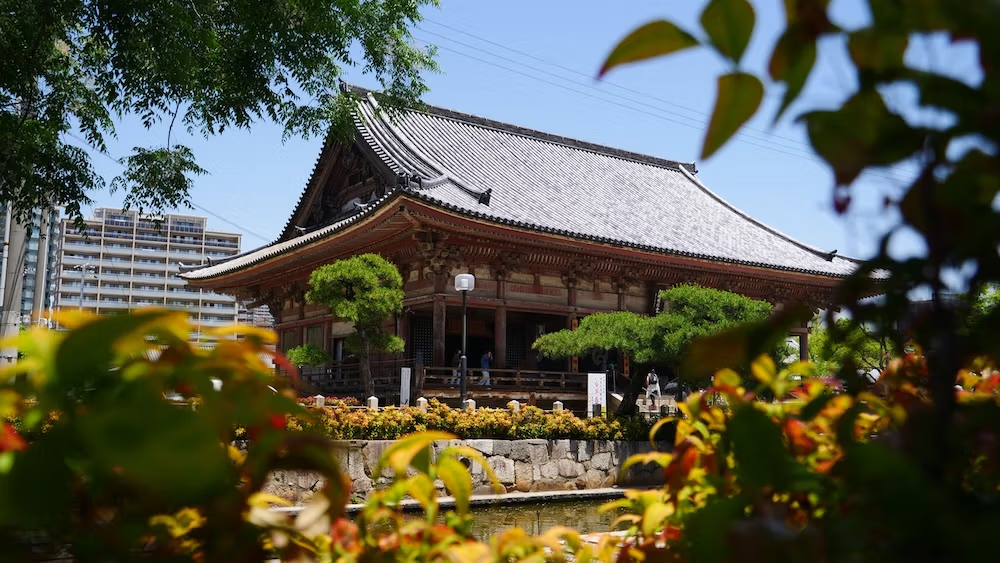
Begin your Osaka exploration with a visit to Shitennoji Temple, one of Japan’s oldest Buddhist sites, established back in 593. Adjacent to the concrete courtyards, the Gokuraku-jodo Gardens offer a necessary buffer from the city traffic. Entrance fees are practically a steal, currently running about ¥300 for the inner temple and another ¥300 for the gardens. Walk through the temple grounds and feel the satisfying crunch of coarse gravel under your boots. This combination provides a solid hour of downtime before you throw yourself back into the urban grid. Photography enthusiasts should bring a wide-angle lens to capture the five-story pagoda against the sky. Whether you’re burning incense or just killing time before lunch, Shitennoji delivers without the massive crowds of Kyoto. Just keep an eye on the clock; local sources suggest the inner Chushin Garan complex aggressively shuts its doors by 4:00 PM, so don’t make the mistake of leaving this for a late afternoon stroll.
- Historical significance: Walk the grounds of a 6th-century institution.
- Garden escape: Swap concrete for meticulously maintained gravel and water features.
- Cultural insight: Watch locals feed the turtles in the central pond.
Tip: Get here by 8:30 AM. You beat the tour buses, the lighting is better, and the monks are doing their morning routines.
2. Tennoji Park (天王寺公園) / Free
Step out of the exhaust fumes and into Tennoji Park, a massive patch of green flanked by high-rises. This expansive park serves as the lungs for the southern wards, featuring open lawns and shaded walkways. Admission is free, which is rare for green space this central. Within the park, you can visit the Osaka Municipal Museum of Art, if you want to swap the heat for some air-conditioned culture. Children will burn off energy at the Tennoji Zoo, though honestly, the enclosures can feel a bit dated compared to modern wildlife parks. The real draw is the sudden drop in temperature and the smell of damp earth as you walk under the canopy. Whether you’re looking to unwind, explore cultural sites, or just sit on a bench with a canned coffee, Tennoji works. We found that grabbing a spot on the grass here is the easiest way to reset your brain after a loud morning in the city.
- Diverse footprint: Museums, a zoo, and vast lawns all in one block.
- Shaded relief: Great place to escape the brutal midday sun.
- Family-friendly: Huge open areas to let the kids run wild.
Tip: Hit the convenience store first. Grab an onigiri and a cold green tea before securing a bench near the Keitakuen side.
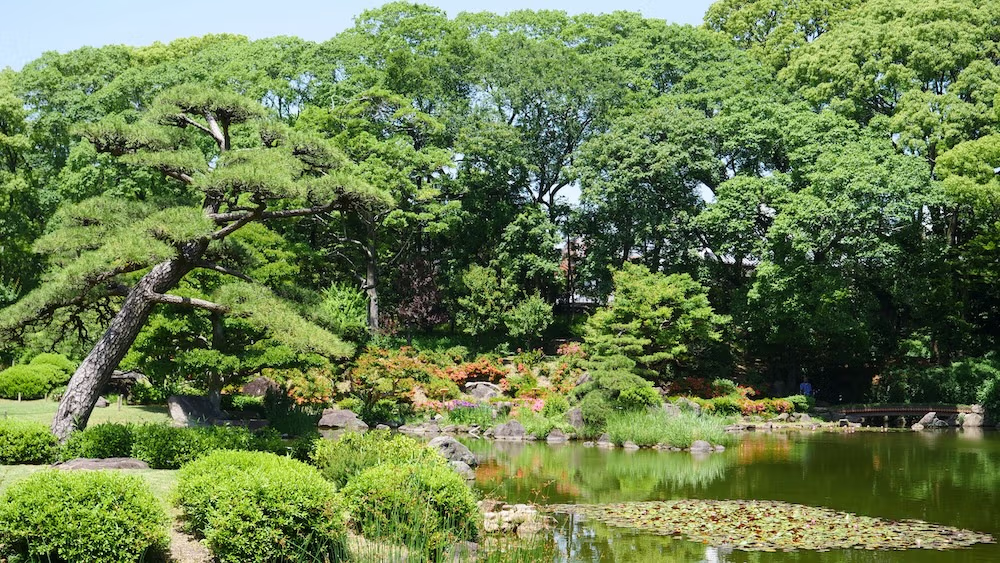
3. Keitakuen Garden (慶沢園) / ¥150
Drop your pace at Keitakuen Garden, a strictly traditional Chisen-kaiyushiki (strolling) garden tucked right near the park. For just ¥150, you bypass the crowds and buy yourself an hour of absolute quiet. The garden forces you to slow down, utilizing stepping stones and narrow bridges over koi ponds. Take a leisurely walk and notice the thick, earthy smell of the ancient moss lining the water’s edge. Keitakuen is a masterclass in landscape engineering, designed to block out the surrounding city noise entirely. Its proximity to the museum makes it an easy add-on to your morning route. If your feet are aching from pavement pounding, the soft dirt trails here are a welcome relief. It’s highly structured nature, meaning every rock is placed to control your sightline, which is a fascinating contrast to Osaka’s chaotic streets.
- Affordable entry: ¥150 is the best ROI for peace and quiet in Osaka.
- Calculated design: Every tree and rock is intentionally placed to control your sightlines.
- Convenient location: Attached directly to the Tennoji Park complex.
Tip: Watch your step on the stone paths. They get incredibly slick after a brief summer rain.
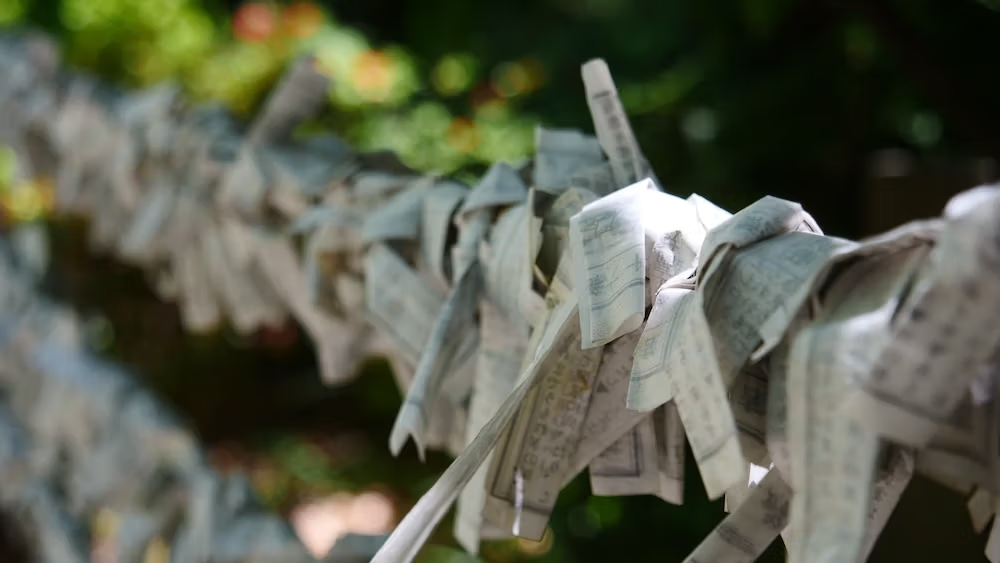
4. Horikoshi Shrine (堀越寺) / Free
Dig into the local neighborhood to find Horikoshi Shrine, a modest Shinto shrine that most tourists walk right past. Admission is free, and there are rarely lines to ring the main bell. The shrine is deeply respected by locals, flanked by old-growth trees and weathered stone foxes. Take your time here. Grip the cold, smooth wood of the purification ladle at the chozuya before approaching the altar. You can purchase an omamori (protective charm), specifically the one known to grant a single, desperate wish. Horikoshi gets loud during seasonal festivals, but on a random Tuesday, you’ll likely have the gravel courtyard to yourself. It’s a zero-friction cultural stop that grounds you in the everyday life of the ward. We found the locals here are extremely patient, so it’s a great place to respectfully observe how daily prayers actually work.
- Local importance: See how a working neighborhood shrine operates daily.
- Classic structures: Inspect the heavy timber joinery of the main hall.
- Quiet courtyard: A solid spot to organize your backpack without being bumped.
Tip: Bring small change. A ¥5 coin (go-en) is the traditional offering because it sounds like “good luck” in Japanese.

5. Try Matcha Ice Cream (抹茶アイスクリーム) / ¥350
Cool down with real-deal matcha ice cream, which is nothing like the overly sweet green stuff you get back home. For approximately ¥350, you get a cone loaded with dense, bitter-sweet dairy. This ice cream hits your palate with a distinct, slightly powdery bitterness that melts instantly on your tongue. You’ll find vendors aggressively hawking this outside major subway exits and tourist corridors. If you have a serious sweet tooth, opt for the version swirled with vanilla to cut the grassy flavor. It’s mandatory eating when the concrete radiates heat at 2 PM. Eat it fast. The summer humidity in Osaka turns these cones into soup in about three minutes. It’s a small logistical challenge keeping it off your shoes, but the flavor is entirely worth the sticky fingers.
- Earthy profile: Tastes like actual tea leaves, not artificial syrup.
- High contrast: The deep green makes for an easy photo prop against the neon signs.
- High availability: You are never more than 500 meters from a soft-serve machine.
Tip: Grab extra napkins. It drips fast and matcha stains are notoriously stubborn on white t-shirts.
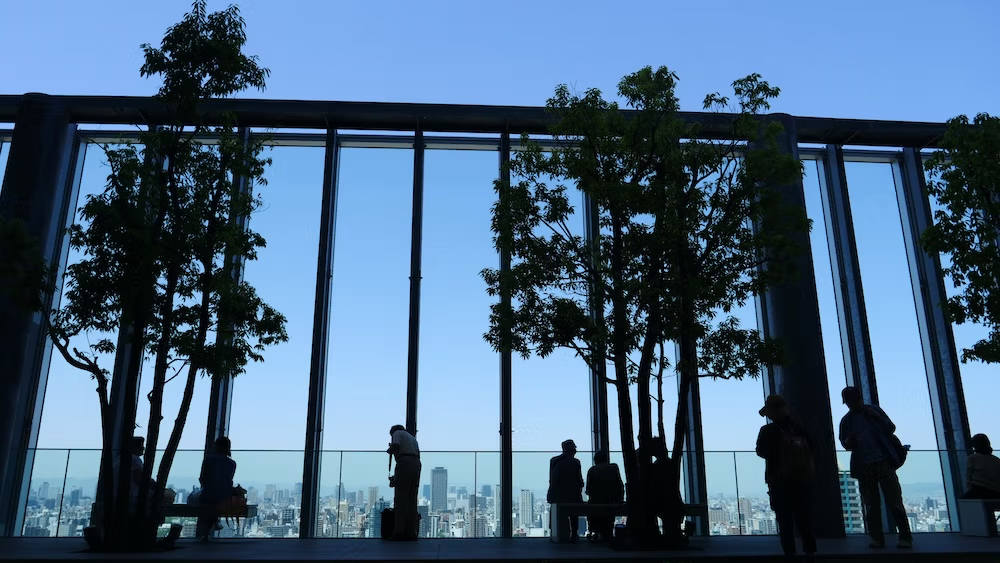
6. Abeno Harukas Garden 16th Floor (あべのハルカス) / Free
Ride the high-speed elevator up Abeno Harukas, Japan’s towering commercial monolith, to the 16th-floor terrace. Entry to this specific garden level is totally free, letting you scope the grid without paying the steep fee for the top observation deck. Feel the subtle ear-pop as the elevator rockets you up away from the street noise. The terrace is exposed to the wind, offering aggressive, sweeping views of the urban sprawl stretching to the mountains. Grab a coffee from the lobby cafe and sit on the wooden steps while you map out your afternoon. Abeno Harukas is a vertical city, with a massive department store and art museum sitting directly below you. It’s the smartest hack in the city for getting high-altitude photos while keeping your wallet closed. Honestly, the view from 16 floors up is more than enough to understand the sheer density of Osaka.
- Zero-cost elevation: Massive views for absolutely nothing.
- Open air: Real wind and natural light, no dirty glass blocking your camera lens.
- Basecamp amenities: Clean bathrooms, fast wifi, and good coffee right on the deck.
Tip: Lock this in for dusk. You get the daylight scale, the sunset, and the grid lighting up all in one hour.
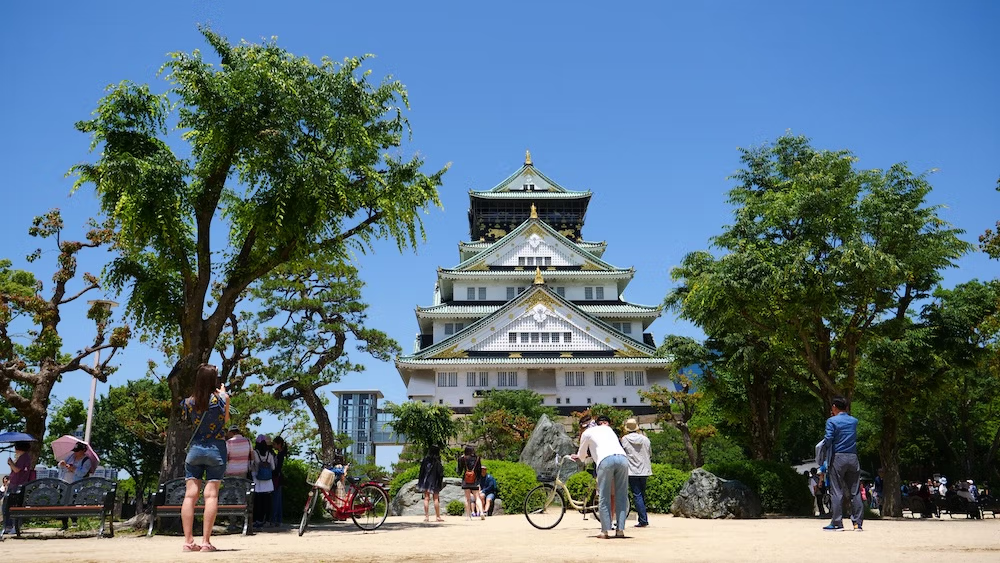
7. Osaka Castle Park (大阪城公園) / Free
Brace yourself for the sheer scale of Osaka Castle Park, the massive defensive footprint right in the middle of the city. Entrance to the outer park grounds is free, and it will take you a good hour just to walk the perimeter. The park revolves around the imposing moat and the towering stone walls built to repel sieges. Walk the wide asphalt paths and catch the distinct smell of roasted sweet potatoes and burnt soy sauce from the vendor carts near the main gate. This isn’t a quiet nature reserve; it’s a highly active hub full of joggers, buskers, and massive tour groups. During cherry blossom season, the grass disappears under thousands of blue tarps as locals drink heavily under the trees. It’s a massive logistical operation keeping this park clean, and it’s a brilliant place to sit back and people-watch.
- Massive scale: Get up close to the colossal, multi-ton granite blocks making up the moat walls.
- Active environment: Street food, music, and constant movement.
- Wide paths: Easy navigation, even with a stroller or a severe hangover.
Tip: Enter through the Otemon Gate. It gives you the best angle to grasp how intimidating this fortress was meant to be.
8. Osaka Castle Observation Deck 8th Floor / ~¥1,200
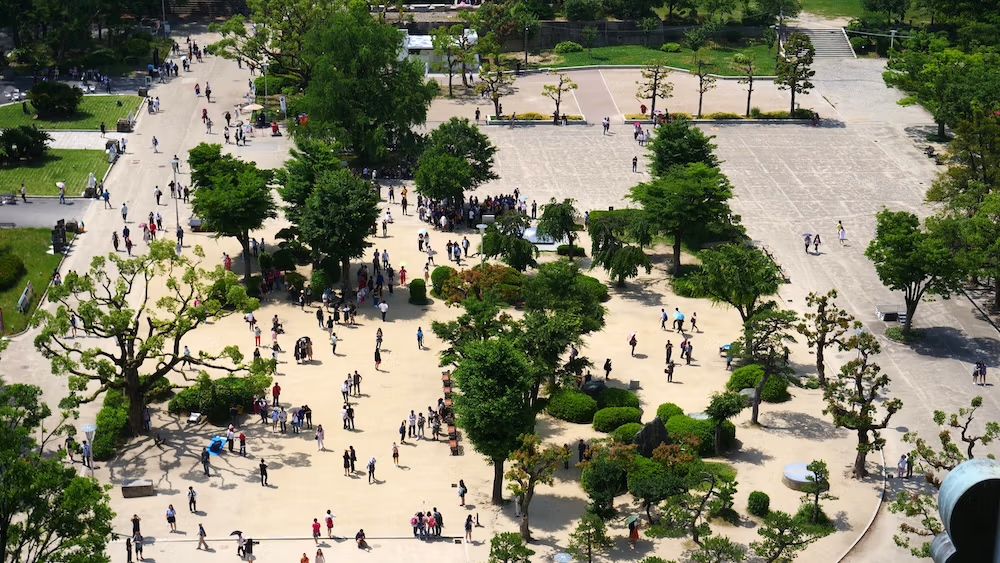
Commit to the climb and hit the 8th-floor Observation Deck of Osaka Castle, which is actually a modern concrete reconstruction inside. We found that the entry fee recently jumped to around ¥1,200, so you’re committing real cash now to join the herd moving up the stairwells. Lean against the cold, heavy steel of the viewing railing and look out over the golden fish gargoyles (shachihoko). The interior is basically a heavily air-conditioned museum detailing the bloody unification of Japan under Toyotomi Hideyoshi. It’s a steep walk up if the elevator line is too long, so be ready to sweat. Honestly, here is a contrarian take for you: the concrete interior of the keep is a bit of a letdown if you’re expecting ancient timber. If you hate massive crowds and steep stairwells, skip the ticket line entirely. Shoot your photos from the outer moat for free, and spend that ¥1,200 on better street food later. But if you do pay the toll, the deck offers a 360-degree tactical view of how the city evolved around the central fortress.
- Elevated sightlines: Look straight down the imposing defensive moats.
- Museum core: Artifacts, armor, and holographic displays narrate the history.
- Crowd management: Expect bottlenecks on the stairs during peak hours.
Tip: Take the elevator up, walk down. You save your knees and can hit the museum exhibits in descending order without fighting gravity.
9. Namba Yasaka Shrine (難波八阪神社) / Free
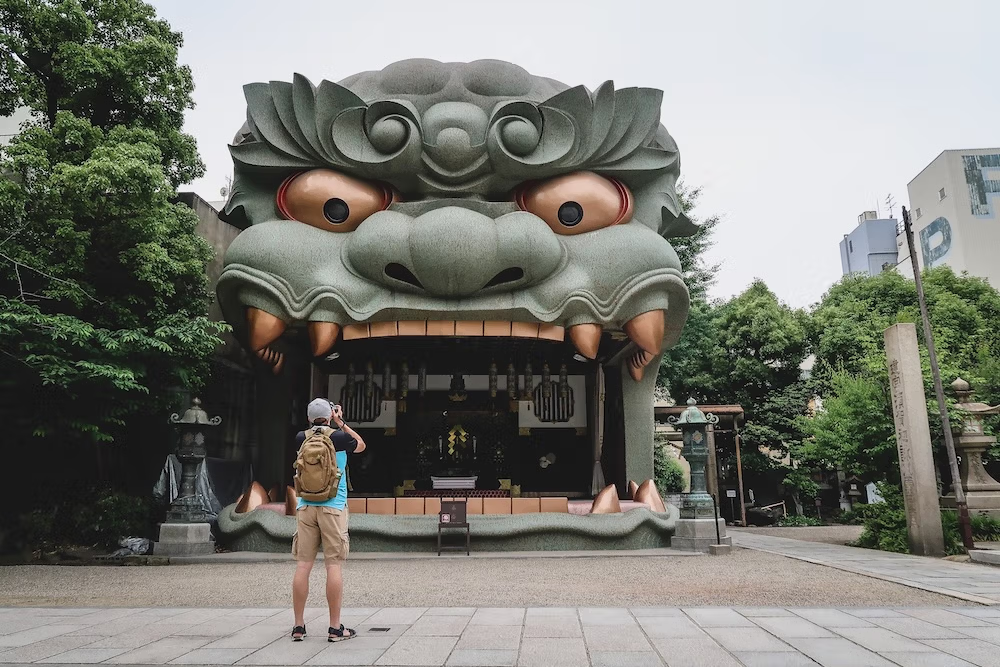
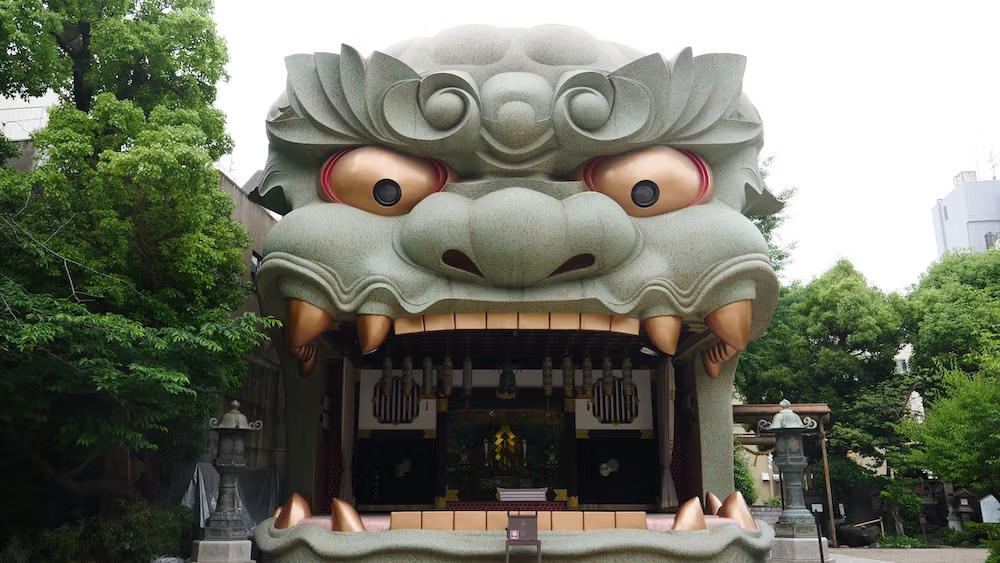
Walk a few blocks off the main drag to find Namba Yasaka Shrine, dominated by a wildly aggressive, three-story-tall lion’s head. Admission is free, which is great because you’ll only need about 15 minutes here. The lion’s massive gaping mouth is said to swallow evil spirits and bring success in business. Breathe in the heavy, thick scent of burning incense that clings to the humid air near the main offering box. It’s a sharp contrast to the standard, subdued Shinto shrines you see elsewhere; this one screams Osaka. The area gets packed with photographers trying to get the perfect wide-angle shot of the teeth. Get in, snap the photo, drop a coin, and move on to your next meal. It’s bizarre, slightly intimidating, and entirely memorable.
- Aggressive design: A 12-meter high, 11-meter wide lion head stage.
- Fast stop: High visual impact requiring very little time commitment.
- Business luck: Popular with locals looking for an edge in their commercial dealings.
Tip: Stand to the far left of the courtyard. It gives you the best angle to get the entire lion face without cropping out the ears.
10. Dotonbori (道頓堀) / Free
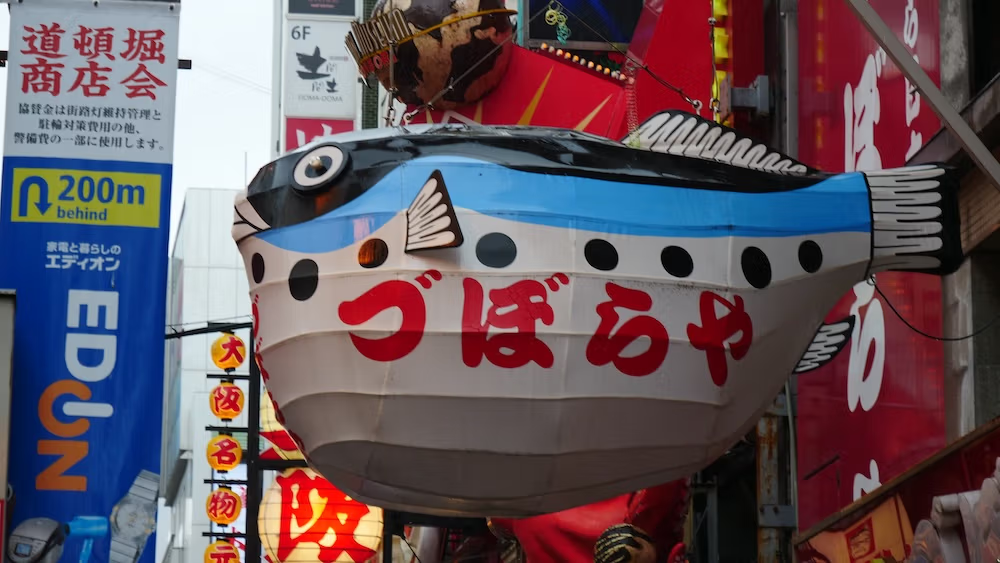
Throw yourself into the meat grinder of Dotonbori, the undisputed epicenter of Osaka’s sensory overload. Walking the canal strip costs nothing, but you will definitely spend money on food. This is the land of giant mechanical crabs, moving dragons, and the famous Glico Man billboard. You will physically feel the dizzying, vibrating hum of thousands of neon tubes and LED screens firing off at once. Navigate through shoulder-to-shoulder crowds, sidestepping aggressive touts and massive queues for popular crab restaurants. It’s loud, it’s brash, and it smells like a mixture of stale beer, fried batter, and river water. Do not leave Osaka without walking this strip at 11 PM. It is a mandatory rite of passage. We found that letting yourself get a little lost in the side streets off the main canal is where you find the best energy.
- Sensory assault: The highest concentration of mechanical signage in the country.
- Heavy foot traffic: Prepare to walk slowly and be bumped constantly.
- Late-night hub: This street doesn’t even wake up until the sun goes down.
Tip: Get off the main pedestrian street. The alleys running parallel (like Hozenji Yokocho) hold the actual good bars and skip the tourist traps.
11. Osaka Street Food / ¥150-500
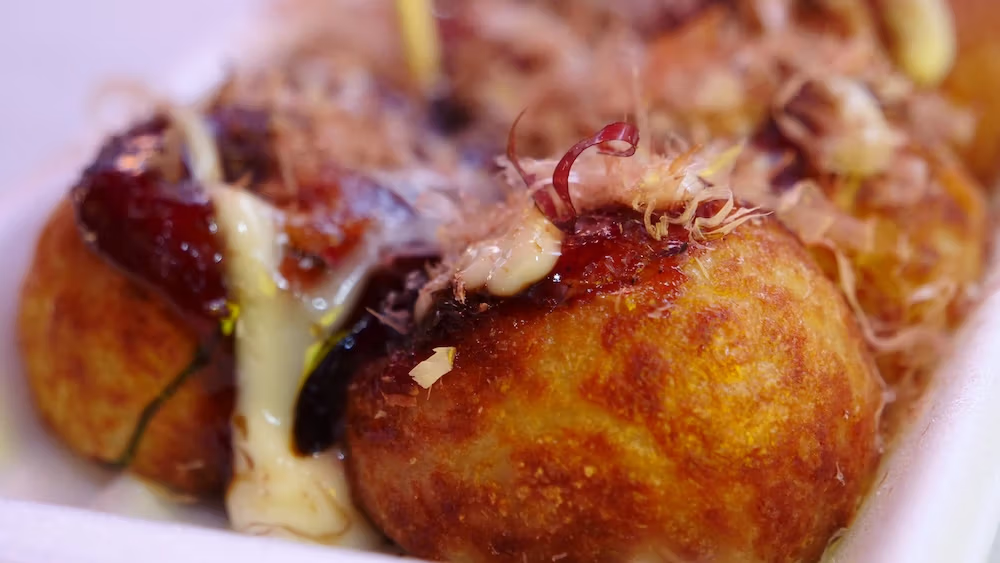
Embrace the “kuidaore” (eat until you drop) philosophy with Osaka’s relentless street food scene. You are trading sit-down comfort for cheap, high-calorie efficiency. Vendors are churning out thousands of orders of takoyaki (octopus balls) and taiyaki (stuffed pastries) per hour. Brace yourself for the blistering, roof-of-your-mouth heat when you bite into a fresh takoyaki ball too quickly. You order, you pay in coins, and you eat standing up out of the way of foot traffic. Look for the stalls with the longest lines of locals; they are waiting for a reason. For under ¥1,000, you can string together a heavy, chaotic dinner spread across three different alleys. It’s easily the most authentic way to feed yourself while pounding the pavement.
- High turnover: Food is made fast, hot, and right in front of your face.
- Cash dominant: Keep a pocket full of ¥100 and ¥500 coins.
- Standing only: Do not walk while eating; it’s considered rude. Stand near the stall.
Tip: Pierce the takoyaki first. Let the steam vent for a solid minute before you put it in your mouth, or you will regret it.
12. Kuromon Ichiba Market (黒門市場) / Free Entry
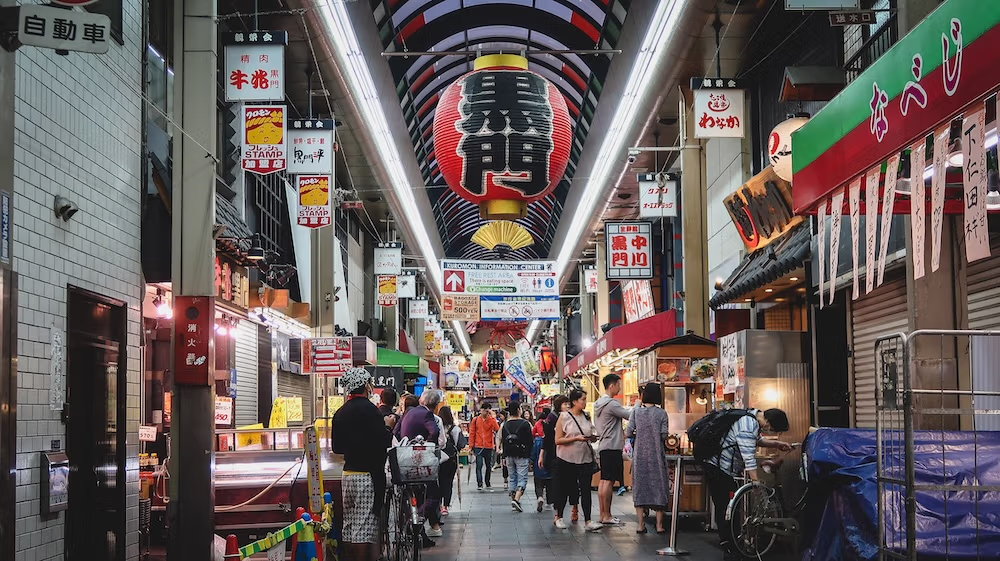
Wade into the organized chaos of Kuromon Ichiba Market, a 600-meter covered arcade packed with over 150 stalls. Entrance is free, but the ground-truth here is that prices have crept up recently, and it’s heavily geared toward tourist wallets now. This is where restaurant chefs used to shop before it pivoted to high-margin street food. Hit a seafood stall and take in the sharp, briny smell of a sea urchin cracked open right on the ice in front of you. You point at a skewer of fatty tuna or a Wagyu beef block, they torch it, and hand it over on a paper plate. Is it a bit of a tourist trap? Honestly, yes, but the convenience is hard to beat when you want to try ten things in twenty minutes. It’s crowded, it’s noisy, and bicycle delivery guys will aggressively ring their bells to get past you. Come hungry, bring wet wipes, and eat your way down the corridor, but expect to drop premium cash for the experience.
- Raw and grilled: Everything from premium otoro sashimi to grilled scallop skewers.
- Covered roof: Perfect logistics for a rainy afternoon.
- Premium pricing: It’s not the cheapest spot in town anymore, but the quality is high.
Tip: Check the back of the stalls. Many have tiny, hidden seating areas so you don’t have to eat standing in the thoroughfare.
13. Ramen (ラーメン) / ¥800-1000
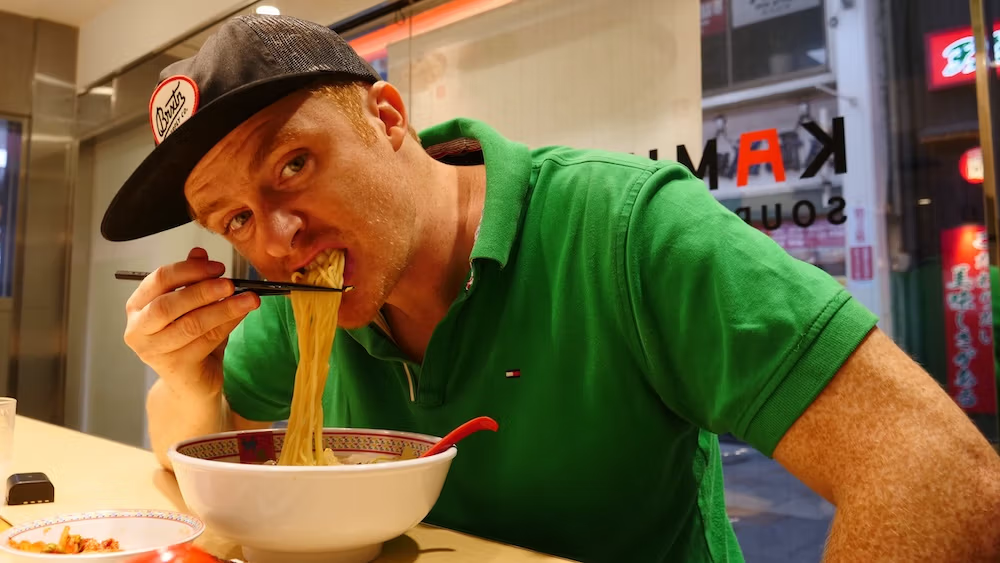
Claim a stool at a narrow counter for a heavy bowl of Osaka ramen, a mandatory late-night ritual. You punch your order into a vending machine, hand the ticket to the chef, and wait. Whether you want thick, pork-bone tonkotsu or a salty shoyu broth, the city delivers. Lean over the bowl and feel the rich, fatty steam immediately fog up your glasses. This isn’t a place to linger; you eat fast, slurp loud to cool the noodles, and get out so the next person can sit. Pair the bowl with a side of pan-fried gyoza and a draft beer to cut through the heavy grease. If you’re out drinking in Namba until 2 AM, this is exactly how you prevent tomorrow’s hangover. We found that the tiny shops tucked under railway tracks usually serve the most robust broths.
- Vending machine ordering: Fast, efficient, and requires zero Japanese.
- Heavy calorie load: Thick broths designed to coat your stomach.
- Rapid turnover: Do not sit and chat after your bowl is empty.
Tip: Order your noodles “katame” (firm). They soften as they sit in the hot broth, so starting firm gives you the best texture.
14. Okonomiyaki (お好み焼き) / ¥1250
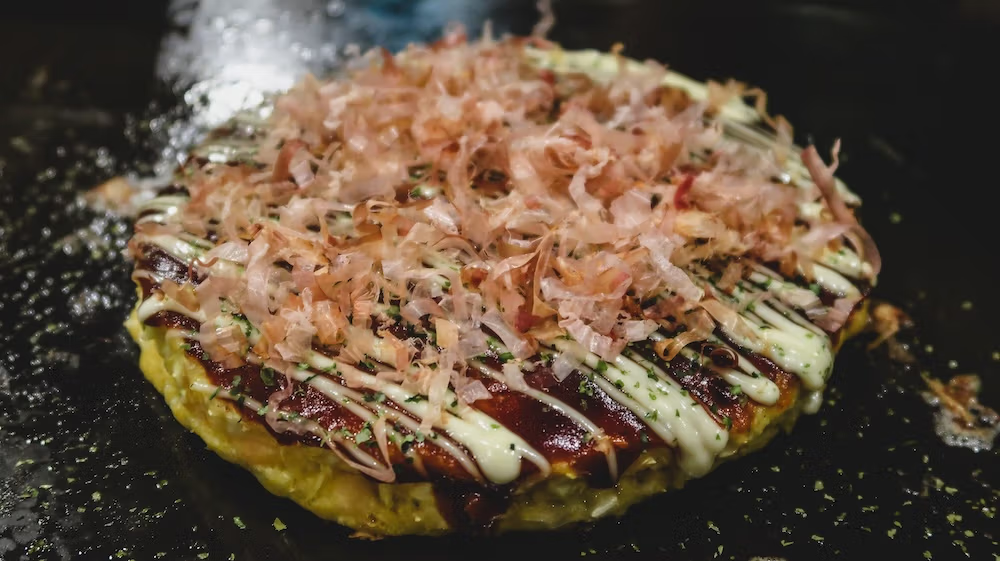
Commit to a heavy dinner of okonomiyaki, the savory, cabbage-stuffed pancake that defines Osaka. For around ¥1,250, you get a massive disc of batter, pork belly, and seafood. You usually sit at a table with a built-in iron griddle where the staff cooks it right in front of you. Listen to the aggressive, satisfying sizzle as the thick batter hits the greased iron plate. They smother the whole thing in thick, sweet brown sauce, zig-zags of mayonnaise, and dried bonito flakes that dance from the heat. You cut it yourself using a small metal spatula (kote) and eat it straight off the grill. It’s messy, it’s incredibly filling, and you will smell like fried oil for the rest of the night. Honestly, it’s the ultimate comfort food after a long day of hiking up castle stairs.
- Heavy iron grills: Your table is basically a 400-degree stove. Be careful.
- Thick layers: Cabbage, meat, batter, and excessive sauce.
- Interactive eating: Use the spatula to chop and scoop your own portions.
Tip: Add mochi and cheese to the batter. It sounds weird, but the melted texture completely changes the dish for the better.
15. Umeda Sky Building (梅田スカイビル) – ~¥2,000
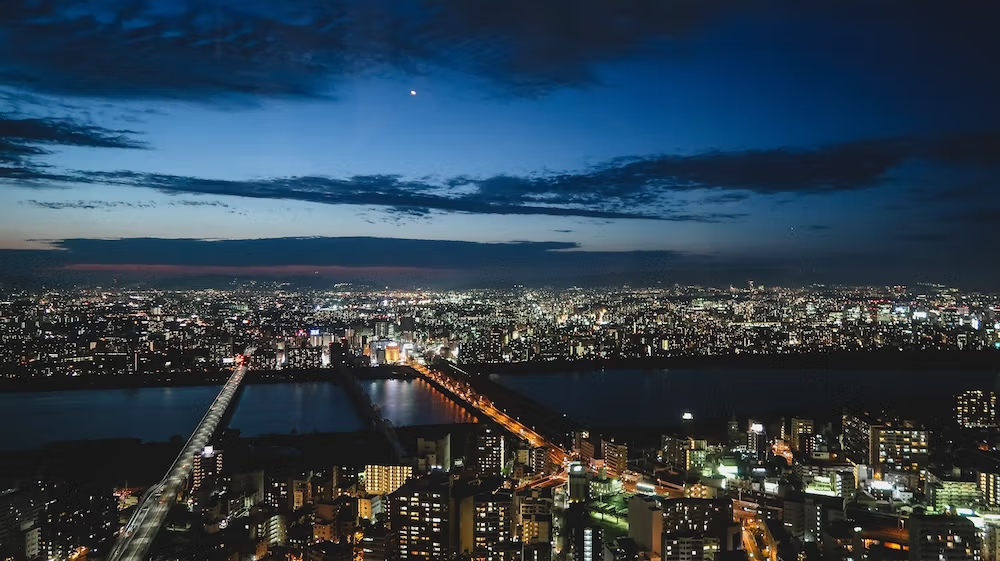
Navigate the massive transit hub of Osaka Station to find the Umeda Sky Building, a bizarre, retro-futuristic double tower. For around ¥2,000 (prices recently ticked up), you ride a glass-enclosed escalator suspended in mid-air up to the 39th floor. The architecture looks like a 1990s sci-fi movie set, complete with a circular “Floating Garden” roof deck. Step outside onto the roof and get hit by the aggressive rush of wind at 173 meters up. There is no glass at the very top, giving you unobstructed, terrifyingly steep views of the concrete grid below. The sunset time slots regularly sell out, so book a digital ticket in advance or you’ll be stuck in the lobby. The basement of the building houses a replica Showa-era restaurant street, which is a great place to grab a beer after the descent. It’s a solid piece of structural engineering and worth the entry fee to get the sheer scale of the city.
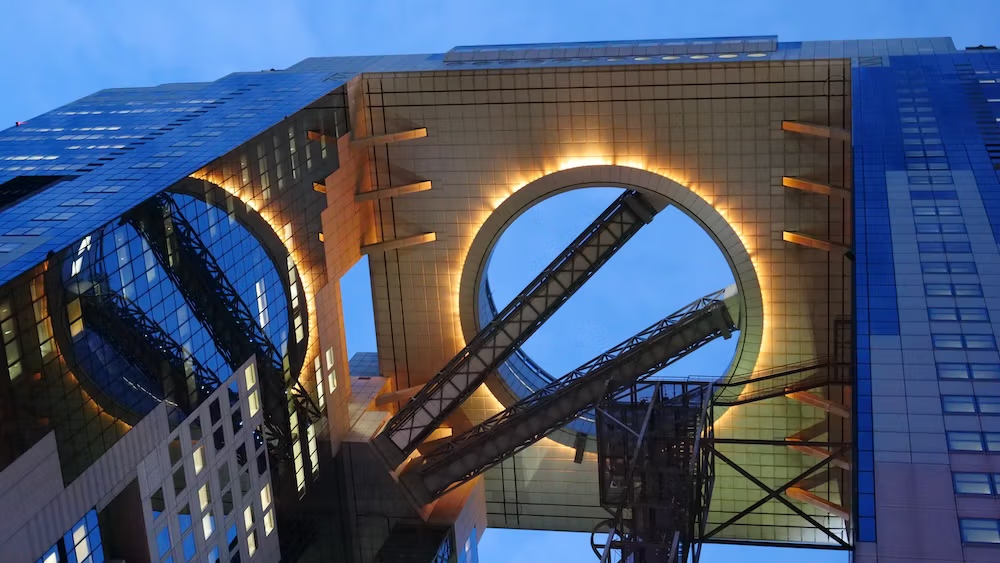
- Open-air deck: Shoot photos without fighting window glare or dirty glass.
- Suspended escalators: If you are afraid of heights, do not look down while riding the tube.
- Basement dining: Hit the Takimi Koji restaurant alley in the basement when you finish.
Tip: Check the weather first. They close the open-air roof deck immediately if there are high winds or lightning warnings.
16. Japanese Breakfast / ¥500-600
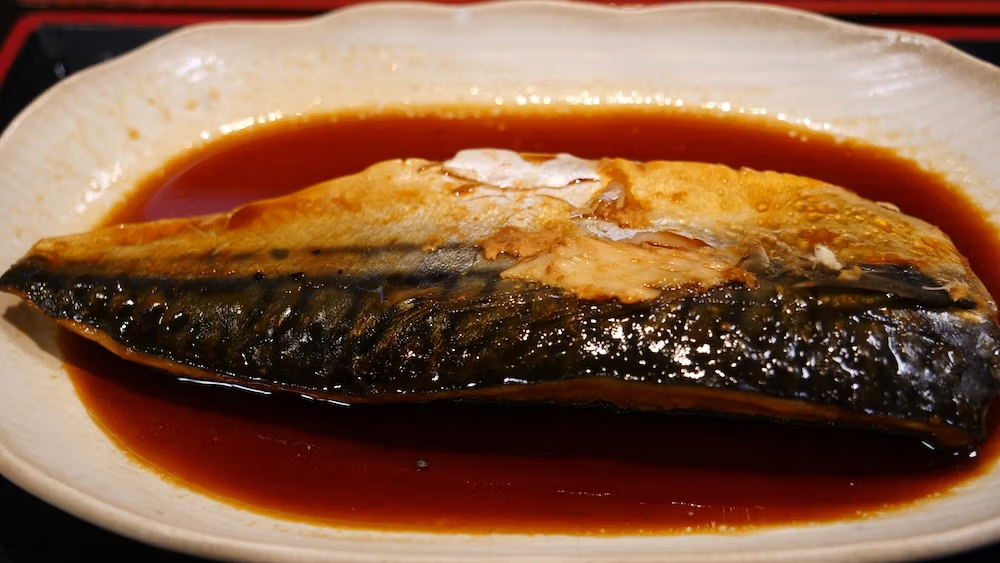
Skip the hotel buffet pastries and go track down a traditional Japanese breakfast to start your day heavily fueled. For ¥500-600, you get a highly structured tray: a bowl of white rice, miso soup, a slab of grilled salmon, and pickles. You can find these cheap, efficient sets at fast-casual chains like Matsuya or Sukiya. Wake up your palate with the sharp, salty, fermented tang of warm miso soup right out of the gate. It’s a high-protein, high-carb load that will keep you running until a late lunch. You order from a machine, grab your ticket, and the tray slides in front of you two minutes later. It’s the most efficient, utilitarian meal in the country, and I highly recommend adopting it over grabbing an overpriced muffin.
- High efficiency: Fast-food speeds but with real, whole-food ingredients.
- Macro-balanced: Protein, carbs, and fermented probiotics on one tray.
- Zero language barrier: Vending machines have pictures and English toggles.
Tip: Crack the raw egg over your hot rice. It’s called tamago kake gohan, and you mix it with a splash of soy sauce. Trust the process.
17. Osaka Museum of Housing and Living / ¥600
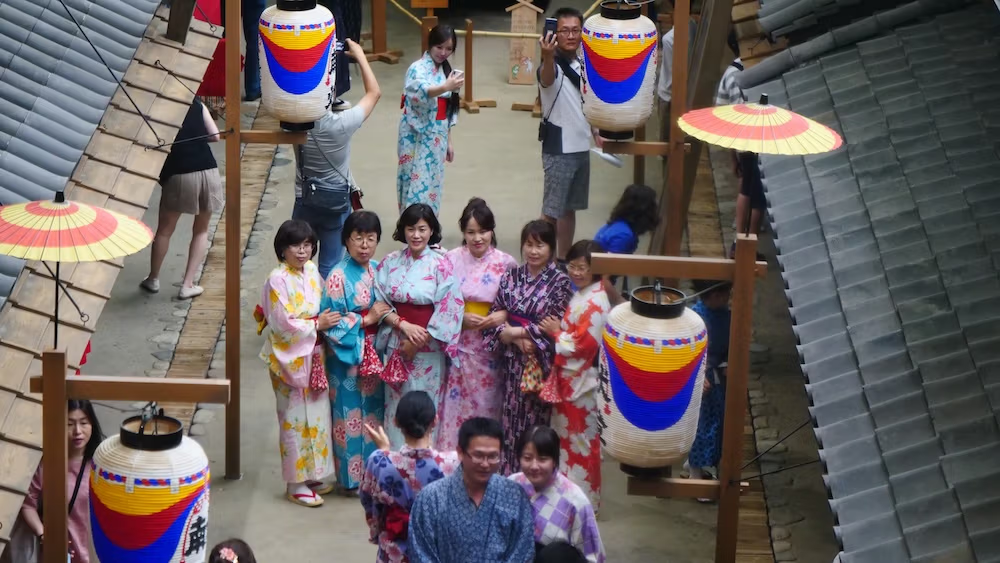
Take an elevator up an unassuming office building to find the Osaka Museum of Housing and Living, a full-scale replica of an 1830s Edo-period street. For ¥600, you step off the modern grid and into a life-sized diorama of old Osaka. The museum controls the lighting, cycling through a simulated day, complete with sunset, nightfall, and thunderstorms. Walk through the narrow wooden merchant houses and catch the distinct, dry smell of old tatami straw mats. You are allowed to touch almost everything, opening sliding doors and inspecting the replica kitchens. It’s a brilliant use of space and arguably the best indoor activity in the city when it rains. It takes about an hour to thoroughly comb through the details of the houses, and the execution is shockingly good.
- Full-scale immersion: Walk inside the houses, not just look at them through glass.
- Weather proof: The entire Edo street is indoors and climate-controlled.
- Detailed replicas: Inspect the tools, toys, and trade goods of 19th-century merchants.
Tip: Rent the kimono for an extra ¥500. It gets you into the spirit of the space and makes for much better photos in the alleyways.
18. Conveyor Belt Sushi (回転寿司) / ¥100
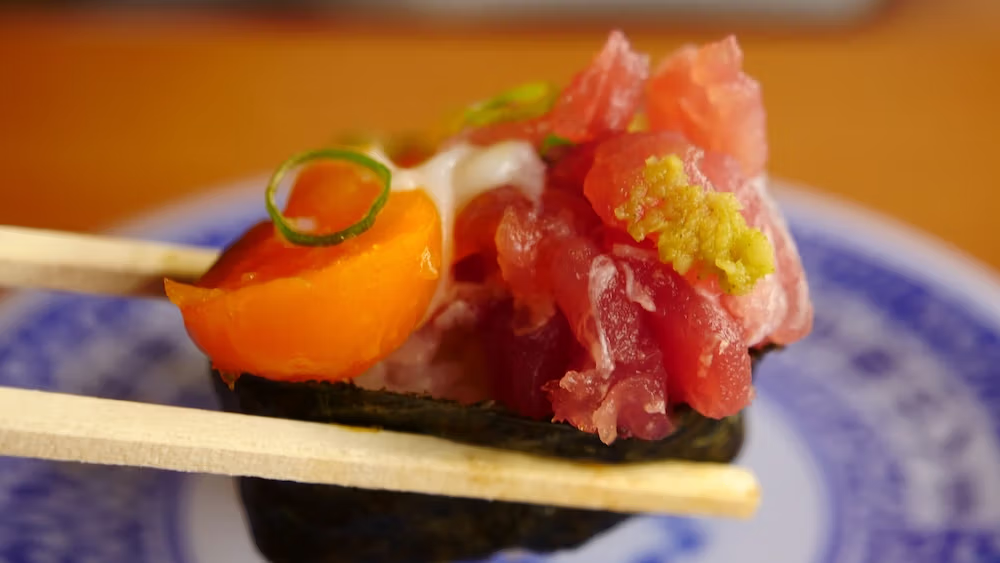
Optimize your lunch strategy by hitting a kaiten-zushi (conveyor belt sushi) joint. For as low as ¥100 a plate, you stack up salmon, tuna, and heavy mayonnaise-covered shrimp without speaking a word. You sit at the counter, pull a hot tea cup from the shelf above, and mix your own matcha powder and hot water from the tap at your seat. Listen to the constant, mechanical clatter of plastic plates sliding past your booth on the chain-driven belt. If you don’t see what you want, you order on a touchscreen and a high-speed secondary belt shoots it directly to your table. It is a masterclass in restaurant logistics and high-volume feeding. When you’re done, the staff scans your towering stack of plates with an RFID reader and you pay at the front. It’s fast, incredibly cheap, and removes all the friction of a formal sit-down sushi spot.
- Total control: You eat exactly as much or as little as you want, on your timeline.
- High-tech delivery: Touchscreens and automated rail tracks handle the custom orders.
- Cheap protein: It’s the most cost-effective way to gorge on seafood in the city.
Tip: Do not grab the plate and leave the lid on the belt. Take the whole unit off the belt, then take the lid off.
19. Den Den Town (日本橋) / Free
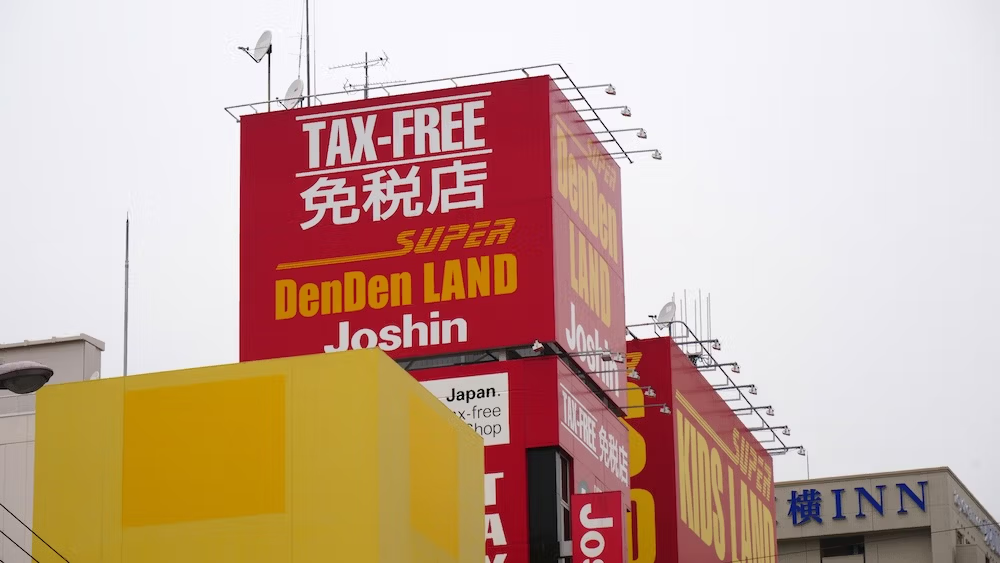
Walk south from Namba and cross into Den Den Town, Osaka’s loud, unapologetic nerd district. It costs nothing to walk the street, but you’ll be tempted by towers of vintage video games and plastic models. This is Osaka’s answer to Tokyo’s Akihabara, packed with multistory electronics shops, maid cafes, and anime merchandise. Brace yourself for the chaotic, overlapping blasts of high-pitched J-pop music and aggressive sales pitches spilling from the open storefronts. The further off the main avenue (Sakaisuji) you go, the weirder and more specialized the shops get, selling loose cables and obscure computer parts. It’s sensory overload, but it’s an absolute goldmine if you’re hunting for a used Gameboy or a specific camera lens. Dedicate at least two hours if you plan on actually digging through the inventory bins, because the sheer volume of stuff is staggering.
- Specialized retail: Floor after floor of action figures, manga, and retro tech.
- Maid cafe zone: You will see heavily costumed promoters lining the sidewalks.
- Tax-free shopping: Bring your passport; most major electronics stores offer tax-free purchases over ¥5,000.
Tip: Check the basement levels. That’s usually where the cheapest, deeply discounted used goods are hidden.
20. Taito Station (太東駅) / ¥100
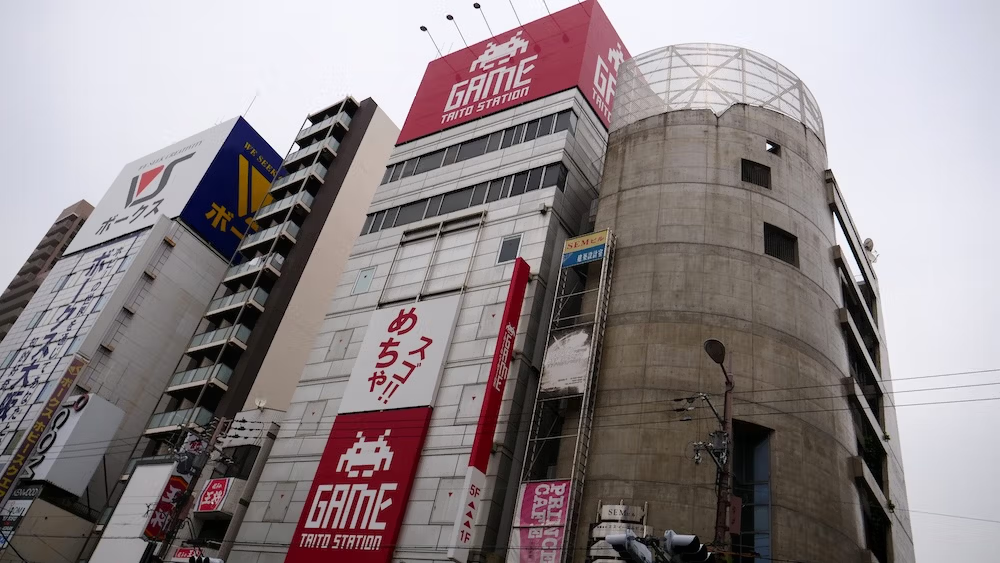
Burn a few hundred yen at Taito Station, a massive, multi-level arcade building recognizable by the giant red Space Invader logo. The ground floors are entirely crane games (UFO catchers), while the upper floors hold the hardcore rhythm and fighting games. Walk in and get hit by a literal wall of sound: the deafening smash of button mashing and the blinding flash of hundreds of LED screens. The cigarette smoke used to be brutal here, but recent bans have made the upper floors much more tolerable. Grab an IC card, load it with yen, and tap it on the machines so you don’t have to carry a pound of heavy ¥100 coins. It’s an intense, aggressive gaming environment where you’ll watch locals execute flawless, high-speed combos on Taiko drum games. Play a round of Mario Kart, lose badly, and head back out to the street; it’s an incredibly fun way to kill an hour.
- Categorized floors: Prizes on the bottom, rhythm games in the middle, fighting games on top.
- IC Card ready: Tap your Pasmo or Suica card directly on most machines.
- Loud environment: You will literally have to shout to the person standing next to you.
Tip: Do not waste money on the large plushie crane games unless you know the specific drop mechanics. The claws are rigged to slip until a payout threshold is hit.
21. Shinsekai (新世界) / Free
Push south to Shinsekai (New World), an area developed in 1912 that now feels delightfully stuck in the gritty 1980s. You can walk under the shadow of the steel Tsutenkaku Tower for free, surrounded by aggressive, oversized 3D restaurant signage. This neighborhood is a bit rougher around the edges, heavily populated by older locals drinking cheap beer at 10 AM. Walk past the open-air joints and take in the heavy, greasy smell of deep-fried kushikatsu batter venting into the street. It’s the absolute best place in the city to sit on a plastic crate, eat fried lotus root on a stick, and throw back a highball. Shinsekai has successfully resisted modernization, making it a fantastic, unpolished photo walk. Just don’t double-dip your cabbage in the communal sauce tins. They take that rule very seriously. Honestly, the peeling paint and chaotic signs make this visually cooler than modern Dotonbori.
- Retro aesthetic: Unapologetic Showa-era grit and peeling neon paint.
- Kushikatsu capital: Row after row of deep-fried skewer restaurants.
- Daytime drinking: The cheapest standing bars (tachinomi) in the city.
Tip: Shoot your photos down Janjan Yokocho alley. It’s a narrow, covered arcade packed with tiny retro diners and shogi (Japanese chess) parlors.
22. Retro Gaming Arcade / ¥100
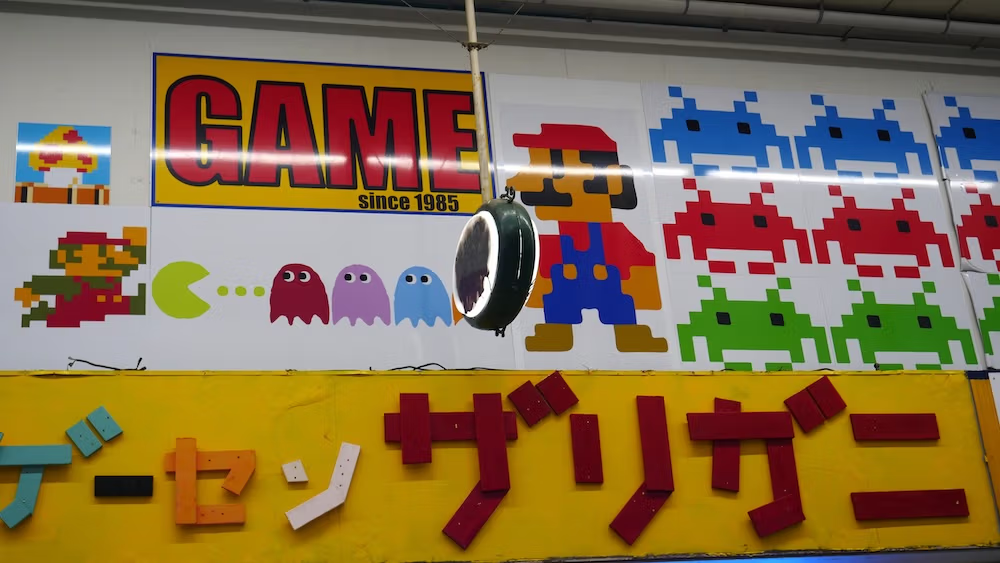
Dig into the backstreets of Shinsekai to find a cramped retro gaming arcade. For ¥50 or ¥100 a coin, you are buying a direct ticket back to 1992. These aren’t the bright, modern VR setups; these are row after row of yellowing Astro City candy cabinets playing Street Fighter II and Metal Slug. Grab the worn, smooth plastic of the joystick, drop your coin, and listen to the CRT monitor hum. The floors are usually scuffed linoleum, and the ashtrays are overflowing. You will likely get challenged by a 50-year-old salaryman smoking a Seven Stars cigarette who will absolutely destroy you in King of Fighters. It’s a cheap, sweaty, and perfectly preserved slice of gaming history that is slowly disappearing from the city. We found the nostalgia factor here easily outweighs the grime.
- CRT Monitors: The real, heavy glass screens you grew up with.
- Cheap plays: Many machines here are half the price of the big arcades in Namba.
- Authentic grit: Dim lighting, loud attract-screens, and intense local players.
Tip: Bring actual coins. Many of these older cabinets are not wired to accept modern IC cards, and the change machines are notoriously temperamental.
23. Japanese Baseball Hanshin Tigers (阪神タイガース) / ¥1900-4500
Take the train out to Koshien Stadium and witness the absolute fanaticism of a Hanshin Tigers baseball game. Tickets run from ¥1,900 for the bleachers to ¥4,500 for the infield, but the real show is in the cheap seats. Japanese baseball is a highly organized, relentless party; there is no quiet downtime between innings. You will hear the thunderous, synchronized cracking of thousands of plastic cheering bats and brass bands playing specific fight songs for every single batter. Buy a cold draft beer from the vendor who hikes up and down the steep concrete stairs with a pressurized keg strapped to her back. The stadium itself is historic, covered in ivy and completely outdoors, so dress for the humidity. Even if you don’t care about baseball, the crowd psychology alone is worth the price of admission. It’s a pure shot of adrenaline compared to the laid-back vibe of American baseball.
- Organized cheering: Every player has a specific chant. You will learn them by the 3rd inning.
- Keg backpacks: Beer is poured directly at your seat from a pressurized tank.
- Historic venue: Koshien is the oldest ballpark in Japan, built in 1924.
Tip: Buy the long balloons. During the 7th inning stretch, the entire stadium inflates them and releases them into the sky at the exact same second.
24. Korea Town / Free
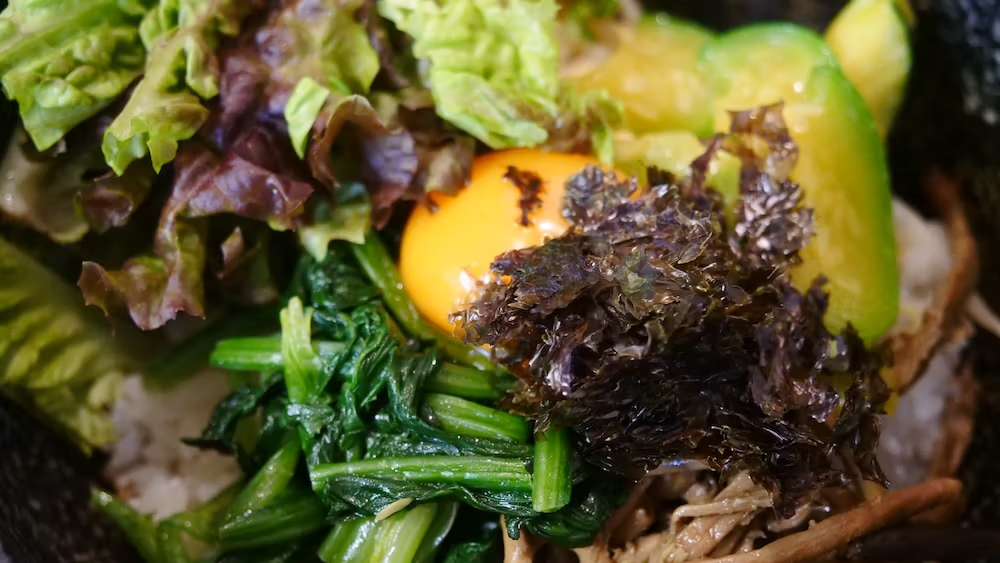
Walk through Tsuruhashi to experience Osaka’s sprawling Korea Town, a dense maze of narrow alleys and grilling meat. You can wander the market corridors for free, but you’ll definitely stop for lunch. This is the largest Korean community in Japan, and the retail reflects it: K-pop merch, counterfeit clothing, and endless food stalls. Navigate the crowded, covered alleys and brace for the sharp, garlicky sting of fresh kimchi and chili paste hitting the back of your throat. Sit down at a yakiniku (grilled meat) joint, order a plate of short ribs, and cook it over the recessed gas burner at your table. The train station itself constantly smells like roasted meat because the restaurant exhaust vents dump right onto the platforms. It’s loud, aggressive, and a massive departure from standard Japanese orderliness. Just a heads up: The Google Maps pin for some of the best BBQ spots can be wildly off in these narrow alleys, so trust your nose over your screen.
- Heavy smoke: You are going to smell like BBQ smoke. Do not wear your best jacket.
- Street snacks: Grab a hot, cheese-filled corn dog (hotteok) while you walk.
- Market maze: The alleys are narrow and confusing. Just keep walking until you hit a main road.
Tip: Hit the side streets for cheaper cuts. The main strip gets tourist pricing, but the alleys hide the rough-and-tumble spots the locals actually eat at.
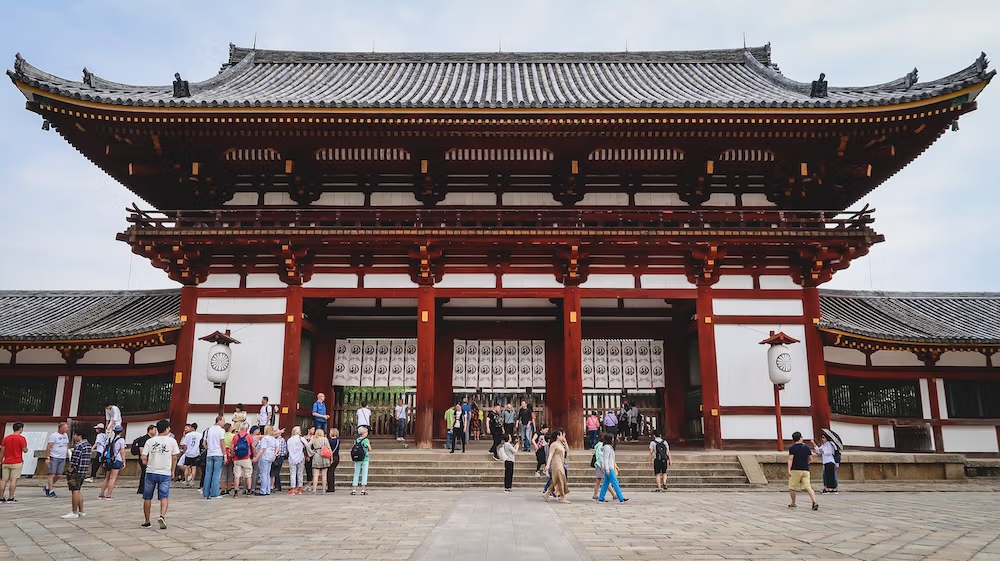
25. Nara Day Trip (奈良市)
Pull yourself out of the concrete and take the 45-minute train ride to Nara, the ancient capital built long before Kyoto. You are here to see the colossal Great Buddha at Tōdai-ji Temple, which sits inside the largest wooden building in the world. The logistical draw here is Nara Park, an expansive green space where 1,200 semi-wild sika deer roam freely. Buy a stack of senbei (crackers) for about ¥200 and brace yourself: feel the wet, rough tongue of a deer snatching the cracker right out of your palm. Be warned, they will aggressively headbutt your pockets if they think you are holding out on them. Walk away from the central park toward Kasuga Taisha Shrine to escape the worst of the bus tours. Nara requires a lot of walking, mostly uphill on gravel paths, so lace up your boots tightly. Hide your paper train tickets because we found out the hard way that they will literally eat them right out of your hand.
- Massive scale: The Tōdai-ji Buddha is 15 meters tall and weighs 500 tons.
- Aggressive wildlife: The deer are considered sacred, but they are absolutely fearless.
- Extensive walking: The shrines are spread out over several kilometers of parkland.
Tip: Hold your hands up, palms open. This is the universal signal to the deer that you are out of food, and they will usually leave you alone.
Tours For Visitors To Osaka, Japan
If you want to bypass the logistical friction, hand the navigation over to a local guide for the day.
1. Osaka Historical Walking Tour
Grind out a few miles on the pavement with a local historian to decode the city’s past. You hit the heavy hitters: Osaka Castle, Shitennoji Temple, and the remnants of the merchant districts. A good guide bypasses the generic textbook facts and gets into the brutal sieges and economic hustles that built the city. Run your hand over the rough, pitted texture of the massive granite blocks making up the castle walls. You cover a lot of ground quickly, utilizing the subway network to jump between wards. It’s a high-density download of context that makes the rest of your trip make sense. We found that hearing the bloody details of the Shogunate battles beats reading a brass plaque any day.
- Fact-dense: Get the actual history, not just the sanitized brochure version.
- Subway navigation: You learn how to use the transit grid while touring.
- Heavy mileage: Expect to log 10,000 to 15,000 steps easily.
Tip: Ask your guide about the “hidden” history. The official plaques leave out a lot of the bloodier details regarding the Tokugawa shogunate.
2. Osaka Food Tour
Pay an expert to drag you through the back alleys of Dotonbori and Kuromon to eat the things you wouldn’t order yourself. You bypass the tourist traps with the giant plastic crabs and hit the tiny, six-seat counters. Push aside the heavy noren (fabric curtain) and step into the sticky humidity of a packed izakaya that hasn’t changed its menu in 40 years. Your guide handles the ordering, the translations, and the bill splitting, allowing you to focus entirely on chewing. You will consume an aggressive amount of deep-fried pork, octopus, and draft beer over three hours. It’s a masterclass in gluttony, and worth every yen to avoid eating bad food. Honestly, paying someone else to navigate the menus takes all the stress out of eating here.
- Quality control: Eat where the chefs eat, not where the bus tours stop.
- Zero stress: No fumbling with Google Translate trying to decipher handwritten menus.
- High calorie intake: Do not eat a heavy lunch before showing up to this.
Tip: Pace yourself. The first stop is always heavy, but you have three more restaurants to get through.
3. Osaka Nightlife Tour
Navigate the chaotic, neon-drenched districts of Namba and Shinsaibashi with someone who knows exactly which doors to open. Osaka at night is loud, aggressive, and incredibly fun, but the best spots are hidden on the 4th floor of unmarked buildings. Feel your boots stick to the spilled-beer tackiness of the floor in a standing-only dive bar. A guide keeps you out of the shady host clubs and gets you into the cramped tachinomi (standing bars) where the locals are throwing back highballs. You will drink heavily, shout over the noise, and probably end up eating ramen at 2 AM. It’s a highly efficient way to do a bar crawl without getting ripped off or lost. We found this is the best way to interact with locals if you don’t speak a word of Japanese.
- Avoid the touts: Your guide will walk you right past the guys trying to drag you into expensive traps.
- Vertical drinking: Learn to look up. The best bars are rarely on the ground floor.
- Social lubricant: The easiest way to meet other travelers and talk to locals.
Tip: Keep your IC card loaded. You will need it to ride the last train home, or you’ll be paying a steep late-night taxi fare.
4. Osaka Castle and Park Tour
Break down the massive footprint of Osaka Castle with a structured route that hits the best angles without backtracking. The grounds are confusing, and wandering aimlessly usually results in dead ends at steep moats. Your guide explains the defensive choke points and the engineering behind the massive stone walls. Walk through the massive wooden Otemon Gate and listen to the heavy creak of the old wooden floorboards in the surrounding turrets. You bypass the meandering crowds and head straight for the key historical markers, including the Nishinomaru Garden. It’s a tactical strike on a massive landmark that ensures you don’t waste an hour just trying to find the entrance. Having someone explain the geometry of the moats turns a pretty park into a military fortress in your mind.
- Route optimization: Save your legs by taking the most efficient path through the fortress.
- Architectural breakdown: Understand how the moats and walls functioned during a siege.
- Museum bypass: Some tours offer skip-the-line access to the inner keep.
Tip: Focus on the stonework. Ask your guide to point out the specific crests carved into the granite blocks by the different lords who built the walls.
Osaka Accommodations Guide: Hotels, Guesthouses and Hostels
Where you sleep dictates how hard you can push during the day. Let’s break down the logistics of your basecamp.
Hotels: Modern Comfort and Convenience
Booking a business hotel in Umeda or Namba is the most efficient, frictionless way to execute a trip to Osaka. You are paying for proximity to the rail grid and aggressive air conditioning. The rooms are notoriously compact; you will likely have to unpack your suitcase on the bed because there is no floor space. Pull back the heavy blackout curtains and slide into the crisp, overly starched feel of hotel sheets after a 20,000-step day. These towers are purely functional: fast wifi, a reliable trouser press in the hallway, and a 7-Eleven right in the lobby. If you need more space, you have to upgrade to an international chain, which will triple your nightly burn rate. Honestly, since you only use the room to sleep and shower, the small footprint is an easy compromise.
- Proximity to transit: You can usually walk from your bed to a subway platform in under five minutes.
- Compact efficiency: Small footprints, but incredibly clean and highly functional bathrooms.
- Consistent quality: You know exactly what you are getting, with zero surprises.
Tip: Check the bathroom for the amenity bar. Many business hotels no longer put toothbrushes and razors in the room; you grab what you need from the lobby on your way up.
Guesthouses: Embrace Authentic Japanese Hospitality
Drop your bags at a family-run minshuku (guesthouse) if you want to see how Osaka residents actually live. You are trading the sterility of a hotel for thin walls and shared bathrooms. You will kick off your shoes at the door, slide into provided slippers, and sleep on the firm support of a thin futon directly on the tatami floor. The infrastructure is older, meaning you might have to navigate steep, narrow wooden stairs to reach your room. The massive upside is the intel: the owners will aggressively redirect you away from tourist traps and point you to the best cheap ramen in the neighborhood. It’s a highly localized experience that forces you to adapt to their rules. We found that the hospitality of a guesthouse owner can completely change the tone of a stressful trip.
- Tatami floors: Do not step on the straw mats with your slippers. Socks or bare feet only.
- Curfew rules: Some older guesthouses lock the front doors at midnight. Verify this before booking.
- Communal living: Expect to hear your neighbors. Pack earplugs.
Tip: Take the slippers off before entering the bathroom. There is a specific, separate pair of plastic slippers waiting inside the bathroom door just for that room.
Hostels: Budget-Friendly and Social
Osaka has a massive inventory of hyper-clean, high-efficiency hostels clustered around Namba and Tennoji. You are buying a plywood capsule or a steel bunk bed for roughly ¥3000 a night. These are not the grimy backpacker dives of the past; many look like boutique cafes on the ground floor. Wake up to the clunky sound of a metal locker slamming shut as the guy below you packs out at 6 AM. The communal kitchens and lounge areas are heavily utilized, making it incredibly easy to squad up for a bar crawl. You strip your own sheets, you sort your own trash, and you save a massive amount of capital for food. It’s the absolute best way to stretch your budget if you don’t mind sacrificing privacy.
- Aggressive pricing: The best way to stretch your yen, period.
- Pod privacy: Most bunks have heavy blackout curtains and reading lights, effectively giving you a private micro-room.
- High-end showers: Water pressure in Japanese hostels is universally excellent.
Tip: Pack a small carabiner and an eye mask. Use the carabiner to hang your towel on the bunk rail, and the mask blocks out the inevitable late-night flashlight beam.
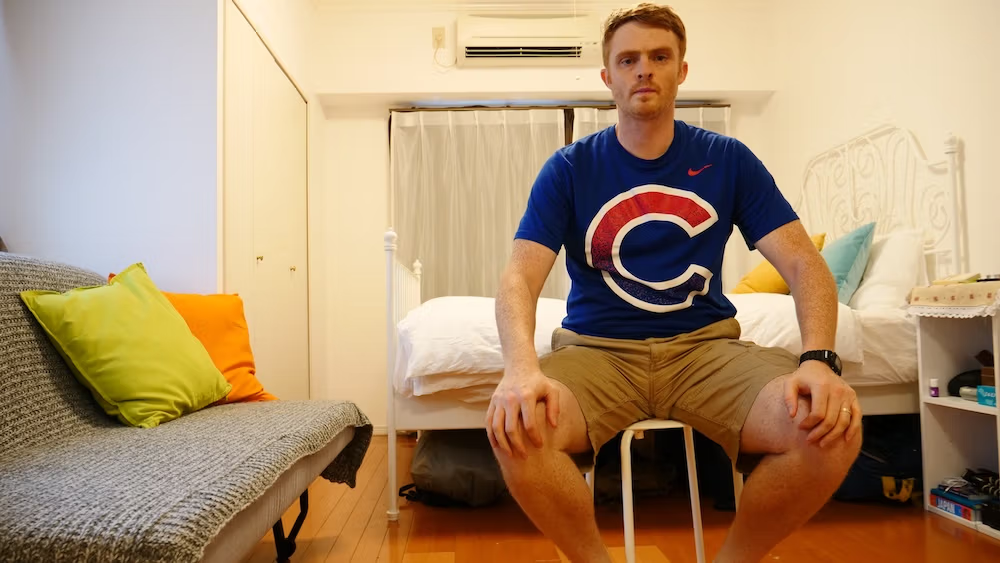
Ryokan: Experience Traditional Japanese Inns
Deploy some serious capital and book a night in a ryokan (traditional inn) for a highly structured, luxurious reset. This is not just a room; it is a full-service hospitality operation that includes a multi-course kaiseki dinner served in your room. You strip down, scrub clean, and lower yourself into the scalding, sulfur-scented heat of the communal onsen bath. You wear a provided yukata (cotton robe) for the duration of your stay, even down to the dining room. The staff operates with terrifying precision, laying out your futon while you eat and making it vanish while you are at breakfast. It’s a high-cost, low-friction experience that forces you to completely decompress. We found that a single night in a ryokan can cure almost any amount of jet lag.
- Kaiseki dining: A dozen small, meticulously prepared seasonal dishes.
- Onsen etiquette: Tattoos are often banned in the communal baths. Check before you book or reserve a private bath.
- Strict scheduling: Dinner is served at a specific time. Do not be late.
Tip: Fold the left side of your yukata over the right side. Right over left is exclusively how they dress the dead for funerals.
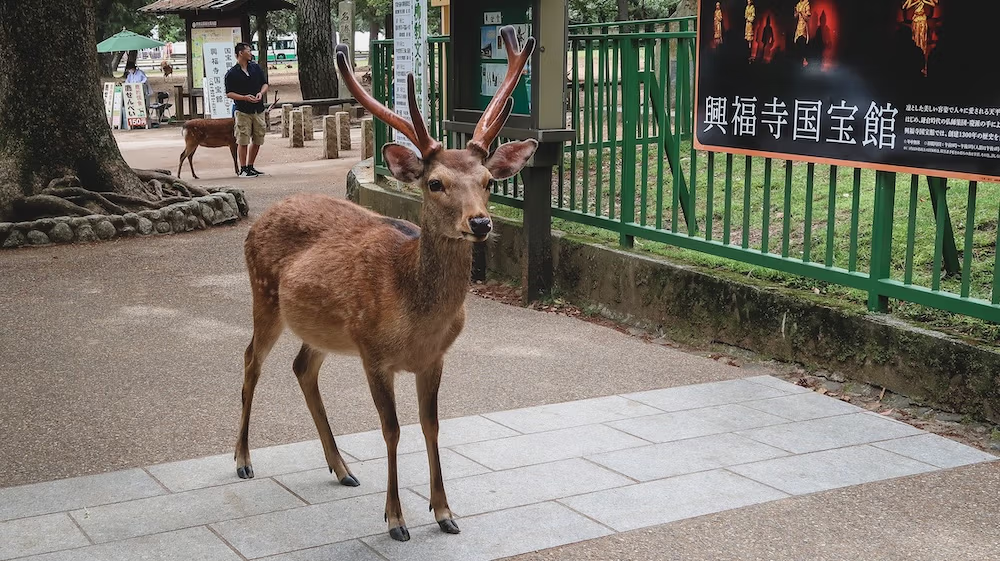
Day Trips From Osaka, Japan
Osaka is the strategic basecamp for the entire Kansai region. Here is how you execute the surrounding grid.
1. Kyoto: A Journey into Japan’s Cultural Heart
Jump on the rapid train from Umeda and you hit Kyoto in under 45 minutes. You are trading Osaka’s neon grit for heavily manicured zen gardens and over 1,600 temples. The tourist density here is brutal, so you have to execute your route with military precision to avoid the bus tours. Walk into the Arashiyama Bamboo Grove at 6 AM and listen to the hollow, percussive knocking sound of the massive stalks bumping together in the wind. Hit Kinkaku-ji (Golden Pavilion) right when the gates open, take your photo, and immediately retreat to the quieter temples in the eastern hills. Kyoto shuts down early; eat your dinner and get back on the train to Osaka for the nightlife. Honestly, trying to see more than three temples a day here will just lead to exhaustion, so pace yourself.
- High temple density: Prioritize three major sites per day. Do not try to see ten.
- Bus gridlock: Kyoto relies heavily on buses, which get stuck in traffic. Use the subways and walk.
- Gion district: Walk the preserved wooden streets at dusk, but do not harass the geisha.
Tip: Rent a bicycle near Kyoto Station. It’s the fastest, most efficient way to bypass the clogged bus routes and hit the temples on your own schedule.
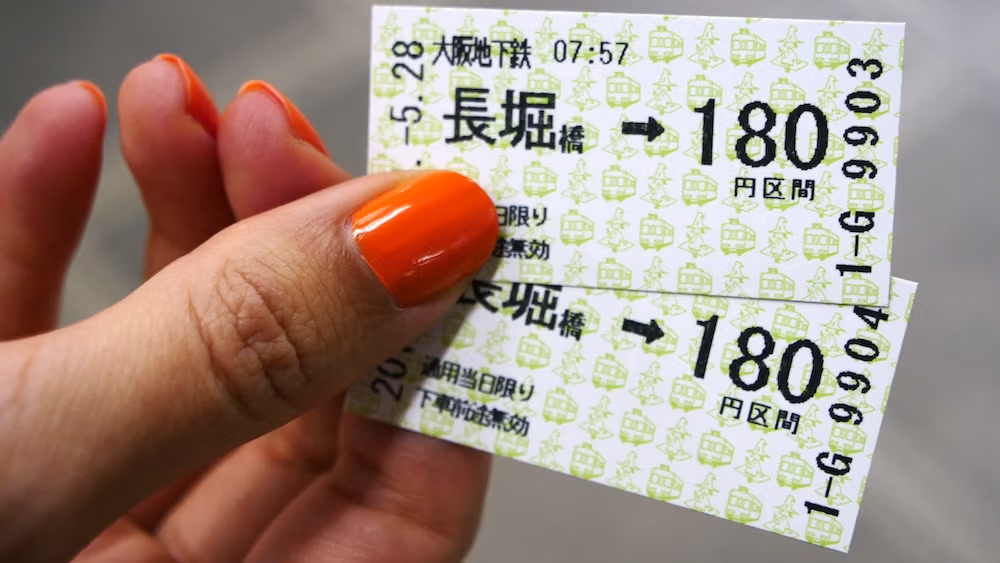
2. Nara: Interact with Friendly Deer and Historic Temples
Ride the Kintetsu line out of Namba directly into Nara, effectively jumping back to the 8th century. The central park is a sprawling complex of ancient timber architecture and aggressive wildlife. You will log a serious amount of mileage walking the gravel paths between the Great Buddha and the Kasuga Taisha Shrine. Stop by a stone lantern and smell the damp, ancient moss that clings to the carvings. Nara’s layout is straightforward: you walk up the hill, see the sights, and walk back down to the train station. It’s a massive, open-air museum that requires comfortable boots and a lot of water. We found the best way to handle Nara is to front-load the heavy hiking in the morning before the sun really hits.
- Centralized targets: Almost everything you want to see is contained within the massive Nara Park.
- Deer protocol: Keep your maps and train tickets in your pockets; the deer will eat paper.
- Early close: Most temples shut their doors by 5 PM.
Tip: Walk up to Nigatsu-do Hall. It’s a steep climb behind the main Buddha, but it offers a massive, sweeping view of the Nara basin with zero crowds.
3. Kobe: Discover the Charm of Japan’s Cosmopolitan Port City
Take the JR Special Rapid train west for 30 minutes and you hit Kobe, a port city hemmed in between the mountains and the sea. It’s noticeably cleaner, quieter, and more Western-influenced than Osaka. You are here to walk the waterfront at Meriken Park and drop a ridiculous amount of money on a single lunch. Sit at an iron grill and watch the chef sear a slab of Kobe beef until it reaches that buttery melt that barely requires chewing. Burn off the calories by hiking up the steep, European-style streets of the Kitano-cho district. Kobe’s blend of maritime infrastructure and heavy culinary hitters makes it a low-stress, high-yield day trip. The reality is that a Kobe beef lunch is heavily overpriced, but it’s a bucket-list texture you won’t forget.
- Steep geography: You will be walking uphill away from the port. Use the ropeway to reach the herb gardens.
- Premium protein: Real Kobe beef is not cheap. Expect to pay at least ¥10,000 for a proper lunch set.
- Chinatown (Nankinmachi): A dense, loud grid of steamed pork buns and street food.
Tip: Eat Kobe beef for lunch, not dinner. The lunch sets are often 30-40% cheaper for the exact same cuts of meat.
4. Himeji: Marvel at the Stunning Himeji Castle
Push an hour west on the Shinkansen (or the cheaper local rapid) to assault Himeji Castle. This is the real deal: an original, surviving timber fortress that avoided the firebombs of WWII. The “White Heron” castle is a massive, complex maze of defensive walls designed specifically to confuse attackers. Take your shoes off at the entrance and feel the steep, calf-burning climb up the slick wooden stairs to the top floor. The interior is completely bare—no museum exhibits, no holograms, just massive timber pillars and weapon racks. It’s a stark, imposing structure that takes a solid two hours to properly explore. We found that skipping the history placards and just admiring the raw wooden joinery is the best way to experience it.
- Original construction: You are walking on 400-year-old floorboards.
- Steep ascents: The stairs inside the keep are closer to ladders. Wear socks with grip.
- Adjacent garden: The Koko-en Garden next door is heavily structured and worth the combo ticket.
Tip: Get there right when the gates open. The interior gets incredibly claustrophobic by midday, and they occasionally halt entry when it hits capacity.
5. Wakayama: Embrace Nature and Spirituality
Take the train south down the coast to Wakayama for a heavy dose of shrine hiking and coastal weather. This is where you go when you are sick of concrete and need to see some actual topography. You can hit Wakayama Castle, but the real objective is pushing further down to the Kumano Kodo trails or the massive Nachi Falls. Stand at the base of the falls and feel the cold, heavy mist spraying off the 133-meter drop. It requires more logistical effort to reach the deep shrines, involving local buses and steep stone staircases. It’s a physical day trip that rewards you with raw nature and zero crowds. Honestly, the transit time is a bit grueling, but the payoff of standing next to that waterfall is undeniable.
- Heavy transit time: Getting to the deep waterfalls requires trains and buses. Start early.
- Physical exertion: You will be climbing hundreds of irregular stone steps through old-growth forests.
- Coastal views: The train ride down offers solid views of the Pacific Ocean.
Tip: Pack your own rations. Once you get on the hiking trails or near the waterfalls, the vending machines and convenience stores disappear entirely.
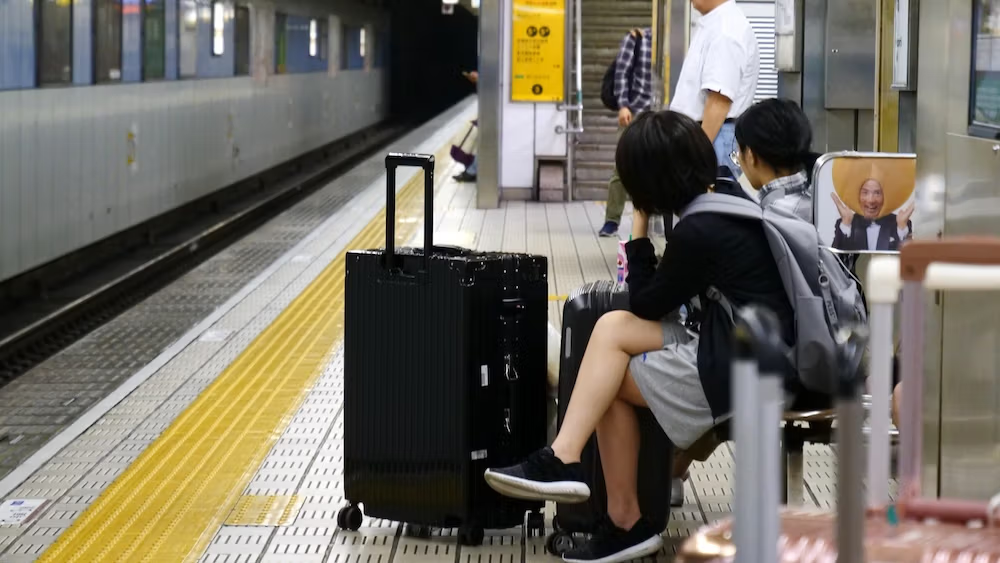
Osaka Transportation Guide
Osaka’s transit grid is a massive, highly efficient machine. Here is how you use it without losing your mind.
Public Transportation: Trains and Subways
The Osaka Metro and JR Loop Line are the heavy lifters that will move you across the grid. The network is flawless: trains run exactly on schedule, stopping precisely at the painted markers on the platform. Stand on the platform and listen to the rhythmic, high-speed clack-clack of the train cars arriving every three minutes. You do not need to buy individual paper tickets; you need an IC card (ICOCA or Suica) immediately upon arrival. You tap your card on the turnstile reader, the gates stay open, and the fare is deducted automatically when you exit. The Midosuji Line (Red Line) is the main artery, connecting Shin-Osaka, Umeda, Shinsaibashi, Namba, and Tennoji in one straight shot. We found that mastering the Midosuji Line basically unlocks the entire city.
- The Loop Line: JR’s circular route that rings the central city, similar to Tokyo’s Yamanote line.
- Color-coded navigation: Every subway line has a specific color and every station has a number. You cannot get lost.
- Rush hour crush: Avoid the Midosuji line between 8:00 AM and 9:00 AM unless you enjoy physical compression.
Tip: Stand on the right, walk on the left. In Osaka, you stand on the right side of the escalator. In Tokyo, you stand on the left. Do not mess this up.
Buses: Convenient and Efficient
You only deploy the city bus network when the subway fails to get you close enough to your target. Buses fill in the gaps, specifically around the port areas or the deep residential wards. You board through the rear door, grab a paper ticket from the dispenser (if paying cash), and exit through the front door, paying the driver. Listen to the sharp hiss of the pneumatic doors opening as the bus kneels to the curb. The routes are heavily trafficked and the electronic boards display the next stop in English. It’s slower than the train, but you actually get to look out the window and see the city at street level. Honestly, skip the buses if you are in a rush, but use them if your feet are completely shot.
- Flat fare system: Most central Osaka city buses charge a flat ¥210 regardless of distance.
- IC Card ready: Tap your card when you get on, and tap it again when you get off.
- Traffic dependent: Factor in delays during rush hour.
Tip: Press the stop button early. The buttons are located on the handrails. Hit it as soon as your stop is announced, or the driver will blow right past it.
Taxis: Comfortable and Accessible
Taxis in Osaka are a high-cost luxury used primarily for covering short distances when you have heavy bags, or when the trains stop running at midnight. The cars are spotless, usually Toyota Crowns, driven by professionals wearing white gloves. Slide into the back seat and lean against the immaculate white lace covers strapped to the headrests. Do not try to open or close the door yourself; the driver controls it with a lever from the front seat. The meter starts around ¥600 and jumps quickly, making it a brutal option for long hauls. Have your destination pulled up on Google Maps in Japanese, as English fluency among drivers is very rare. We found the peace of mind of a taxi ride at 1 AM is usually worth the brutal meter price.
- Automatic doors: Stand back. The door swings open automatically when they pull up.
- Midnight surge: Fares increase by 20% between 10 PM and 5 AM.
- Impeccable service: No tipping required or expected. Pay the exact meter amount.
Tip: If you’re thinking about renting a car to get around Osaka, just don’t. The parking friction here is legendary. Central spots are microscopic, confusing to navigate, and will bleed your wallet dry. Stick to the trains; they are your absolute lifeline. Use the GO app or Uber for taxis instead.
Bicycles: Explore at Your Own Pace
Osaka is aggressively flat, making it a highly efficient city to navigate on a rented “mamachari” (city bike). Renting a bike allows you to cut diagonally through neighborhoods, completely ignoring the rigid subway grid. Grip the handlebars and feel the heavy rattle of the bike frame as you bounce over the uneven, tactile paving tiles on the sidewalk. You ride on the sidewalks here, weaving through pedestrian traffic and dodging illegally parked delivery trucks. Lock your bike in designated zones only; the city will impound it if you chain it to a random guardrail. It’s the best way to cover the massive perimeter of Osaka Castle or ride down the Yodo River pathways. Riding a bike here gives you a sense of local freedom that the subway simply cannot match.
- Sidewalk riding: It is legal and expected. Ring your bell to move pedestrians.
- Rental networks: Look for HUBchari or Docomo bike-share ports scattered around the city.
- Impound threat: Pay the ¥150 to park in a proper underground bike lot, or risk a ¥2,500 retrieval fee.
Tip: Watch out for the umbrellas. Locals ride holding open umbrellas during the rain, making them wider and completely blind to their peripherals.
Walking: Discover Hidden Gems
The reality of Osaka is that you will be walking until your legs give out. Even with the flawless subway system, navigating the massive underground stations requires kilometers of walking per day. Push through the pain in your arches after 20,000 steps, because walking is the only way to find the narrow alleys and hidden shrines. The surface streets in Namba and Umeda are dense mazes of covered arcades (shotengai) that go on for miles. You will stumble onto tiny six-seat bars and obscure coffee shops that don’t exist on any English maps. Invest in serious footwear, because the concrete grid is unforgiving. We found that letting yourself get completely lost in the shotengai arcades is the best way to accidentally find dinner.
- Underground cities: Umeda has a massive subterranean network. You can walk for miles without seeing the sky.
- Covered arcades: The shotengai streets block the rain and the sun, making walking highly efficient in any weather.
- Hydration: Vending machines are every 50 meters. Use them.
Tip: Look for the yellow tactile paving. It marks the safest, clearest walking paths on the sidewalks and guides you directly to the train platforms.
Special Transport Options: Osaka Amazing Pass and More
If you plan to run a high-intensity, attraction-heavy route, you need to calculate the ROI on a transit pass. The Osaka Amazing Pass, currently sitting around ¥3,500 to ¥3,800 for a single day, gives you unlimited subway rides and free entry to over 40 sites. The ground-truth reality of the pass now is that it has heavily shifted to a digital QR system via your phone. Swipe your screen at the turnstile and listen to the satisfying beep that means you aren’t paying per ride. Here is the critical friction point: you need a charged phone and a stable data connection to use it. If your battery dies, you are stranded and paying out of pocket. You only buy this if you plan to hit at least three paid attractions (like the Umeda Sky deck and the Castle) in a single sprint. If you are crossing regional borders, look at the Kansai Thru Pass, which covers non-JR lines into Kyoto and Kobe. Do the math before you buy; if you just plan to eat street food and walk, an IC card is significantly cheaper.
- The Amazing Pass: Perfect for first-timers who want to blitz the major viewpoints and museums.
- ICOCA IC Card: The standard, reloadable card. Best for flexible, low-intensity days.
- JR Pass: Generally a bad investment if you are only staying in the Kansai region. It’s built for long-haul bullet trains.
Tip: The Amazing Pass runs on a calendar day, not 24 hours. If you activate it at 4 PM, it expires at midnight. Start early.
The Osaka Reality Check: Decision Matrix
| Activity / Route | Current Cost / Time | The Reality Check | Pro-Tip |
|---|---|---|---|
| Shitennoji Temple & Gardens | Free outer, ~¥300 inner | Worth it for a quiet morning; skip if you want neon. | Inner complex closes early (often 4 PM). Don’t arrive late. |
| Osaka Castle (Inner Keep) | Spiked to ~¥1,200 | Best for history buffs; honestly, skip if you hate crowds. | Elevator queues are massive. Walk up, take the elevator down. |
| Dotonbori Street Food | ¥500 – ¥1,500 per item | Absolutely mandatory for first-timers. | Do not eat while walking. Stand near the stall to avoid glares. |
| Umeda Sky Building | ~¥2,000 | Incredible open-air views, but it gets freezing windy up there. | Sunset slots sell out fast. Buy a digital ticket in advance. |
| Kuromon Ichiba Market | High (¥1,000+ per skewer) | Convenient, but heavily geared toward tourist wallets now. | Bring cash. Look for tiny seating areas hidden in the back. |
| Nara Day Trip | ~45 mins train | Amazing wildlife; exhausting amount of uphill walking. | Deer crackers cost ~¥200. Hide your paper maps or they will eat them. |

Osaka Travel Guide: Final Thoughts
Embracing the Vibrant Energy of Osaka
When you finally pack out of Osaka, you’ll realize it ruined you for other cities. Osaka’s concrete grid is a relentless machine of commerce and calorie consumption, leaving an absolute mark on your stamina. It doesn’t have the quiet refinement of Kyoto, and it doesn’t want it. The city forces a balance between high-speed train logistics and sitting on a plastic crate drinking beer. The blunt, unapologetic friendliness of the locals is what actually makes the city work. Whether you burned through your yen on heavy wagyu beef, walked until your knees gave out, or spent hours lost in the Umeda underground, Osaka delivers exactly what it promises: no fluff, just raw impact.
- Relentless pace: The city moves fast, and you have to keep up.
- Utilitarian layout: It’s not always pretty, but it functions flawlessly.
- Direct locals: They talk louder, walk faster, and cut through the standard Japanese formalities.
Tip: Your last meal should be at the airport. Kansai International has fantastic okonomiyaki places. Eat one more round before you clear security.
Osaka travel questions answered: first-time tips, itineraries, passes & local advice
How many days do you really need in Osaka for a first visit?
Here’s the hard truth: If you’re executing a rapid deployment, you can blitz the core targets in two full days (Dotonbori at night, the Castle, Umeda Sky, and a heavy food crawl), but your feet will bleed. For a sustainable first run where you actually digest the food and map out a few side streets, lock in 3–4 full days. If you are using Osaka as a logistical hub to strike Kyoto, Nara, and Kobe, you need 5–7 days minimum so you aren’t living on the train. I strictly enforce a 3-night minimum for Osaka itself. Anything less is just a layover.
When is the best time of year to visit Osaka?
Spring and autumn. That’s the only acceptable answer. Late March to early April is the Sakura window, where the concrete is broken up by pink blossoms and the temperature sits in the manageable high teens. Mid-October to late November drops the humidity and gives you sharp, clear days. Do not come in July or August unless you enjoy walking through hot soup. Summer is brutal—33°C with heavy, sticky humidity, and September brings the typhoons. Winter is tolerable (5–10°C) if you layer up, but you lose the outdoor drinking culture that makes the city great.
Is it better to base myself in Osaka or Kyoto for exploring Kansai?
Osaka, hands down. It’s the superior logistical hub. Osaka offers a massive density of cheap late-night food, aggressive nightlife, and cheaper hotel inventory. Kyoto shuts down at 8 PM, leaving you with quiet temples and expensive dinners. From Umeda, you strike Kyoto in 30–45 minutes, Nara in 45, and Kobe in 30. Base in Osaka to maintain a high-energy evening, run your day trips outward, and sleep where the food is.
Which Osaka neighborhood is best to stay in (Namba, Umeda, Shinsekai, etc.)?
You have two realistic options: Namba or Umeda. If you want to step out of your lobby directly into a neon meat-grinder of street food and loud bars, book Namba. It’s chaotic and perfect for first-timers. If you value transit efficiency and want to execute day trips without transferring subway lines first, book Umeda. It’s heavily polished, packed with department stores, and sits directly on the main rail hubs. Shinsekai is great for a heavy afternoon of drinking and photos, but the infrastructure is too old to serve as a reliable basecamp.
How do you get from Kansai International Airport (KIX) to central Osaka?
Do not overthink this. Take the train. If your base is Namba, ride the Nankai Rapi:t—it looks like a blue retro-future bullet and drops you directly in the south hub in 35 minutes. If your base is Umeda or Shin-Osaka, jump on the JR Haruka Limited Express. The airport limousine buses make sense only if you have massive pelican cases of gear and your hotel is a direct stop. Taxis from KIX will burn a massive hole in your wallet (¥15,000+) and take just as long as the train. Train to the hub, walk to the hotel.
Do you actually need an Osaka Amazing Pass or Kansai rail pass, or is an IC card enough?
Run the numbers. 80% of travelers only need an ICOCA (IC) card. You tap in, tap out, and pay per ride. It is zero friction. The Osaka Amazing Pass only yields a positive ROI if you treat your day like a military exercise—stacking the Umeda Sky Building, the castle, the river cruise, and five subway runs into a 12-hour window. If you like to sit and drink coffee for two hours, the pass will lose you money. Regional JR passes are almost always a financial loss unless you are riding the Shinkansen out of the region entirely. Stick to the IC card and maintain your flexibility.
How much should I budget per day for a trip to Osaka?
Here are the raw numbers. A highly efficient mid-range run requires ¥14,000–¥20,000 per person, per day. That secures a functional business hotel, three heavy meals (mixing street stalls and a counter dinner), subway fare, and an entry ticket. If you sleep in a plywood hostel pod, walk everywhere, and live on 7-Eleven chicken and takoyaki, you can grind it out on ¥8,000. If you want square footage in your room, sit-down Wagyu beef, and taxis, expect to burn ¥25,000+ daily. Osaka scales to your wallet, but the cheap food is often the best food anyway.
Is Osaka safe at night and are there any areas or scams I should watch out for?
Osaka is statistically safer than almost any Western city you live in. You will see businessmen passed out on the sidewalk with their wallets exposed, and nobody touches them. That said, do not be an idiot. In Dotonbori and Namba, ignore the aggressive touts standing on the street trying to pull you into bars with “all-you-can-drink” specials. They will march you to a basement, hit you with a massive cover charge, and march you to an ATM. Keep walking. The Nishinari ward in the south has a gritty reputation due to a high concentration of day laborers and cheap hostels, but it’s more depressing than dangerous. Maintain situational awareness, and you will be fine.
Is Osaka a good destination for families with kids or older travelers?
Yes, but you have to manage the logistics. For kids, it’s a goldmine: Universal Studios, the massive aquarium, arcade floors, and fried food on sticks. For older travelers, the subway stairs are the real enemy. Not every exit has an elevator, and the underground walking distances in Umeda are brutal. If mobility is a factor, throw money at the problem: book a hotel directly above a main station and use taxis to bridge the gaps. Osaka is flat and highly accessible, but the sheer volume of daily walking requires honest pacing.
Do you need to speak Japanese in Osaka, or can you get by with English?
You can survive on zero Japanese. The train ticket machines toggle to English, the major transit signs are dual-language, and restaurants in Namba have laminated photo menus. When you push into the deep local alleys, the English vanishes immediately. Have Google Translate downloaded for offline use, specifically the camera function to read the kanji on menus. The locals in Osaka are aggressively friendly; they will use hand gestures, calculators, and broken English to make sure you get fed. Learn “Sumimasen” (excuse me) and “Arigatou gozaimasu” (thank you), and lean into the friction.
What foods are absolutely unmissable in Osaka, and where should I focus my eating time?
Do not leave the city limits without consuming these three things: Takoyaki (molten octopus spheres), Okonomiyaki (a dense iron-griddle cabbage pancake), and Kushikatsu (deep-fried meat and vegetables on sticks). Burn your first night doing a standing street-food crawl through Dotonbori to check the boxes. The next day, push into the Kuromon Ichiba Market for raw scallops and fatty tuna grilled with a blowtorch. For dinner, find a narrow, smoke-filled alley in Shinsekai, sit on a beer crate, and order the kushikatsu with a cold draft beer. Eat heavily, eat often.
Can you still enjoy Osaka if you don’t like nightlife or big crowds?
Yes, but you have to actively avoid the gravity of the center. If you hate crowds, Dotonbori at 8 PM will trigger a panic attack. Shift your schedule: hit the major targets like Osaka Castle or Shitennoji Temple at 8 AM when the light is sharp and the paths are empty. Retreat to the outer residential wards like Nakazakicho, which is a maze of old wooden houses converted into quiet coffee shops. Eat dinner at 5:30 PM to beat the salaryman rush. You can completely bypass the neon chaos and still pull a highly satisfying, quiet trip out of the grid.
What should I pack for Osaka in spring, summer, autumn, and winter?
Pack for utility, not style. Spring and Autumn demand layers: a highly compressible jacket you can stuff in a daypack when the midday sun hits. Summer requires moisture-wicking synthetics, a dedicated sweat towel, and a pocket umbrella because the afternoon thunderstorms are violent and sudden. Winter requires a solid windbreaker, as the air coming off the bay cuts right through cotton. Regardless of the season, bring a high-capacity power bank—Google Maps will drain your phone by 2 PM—and the best, most broken-in walking shoes you own. If your footwear fails in Osaka, the trip is over.
How easy is it to do day trips from Osaka to Kyoto, Nara, Kobe, and Himeji?
It requires almost zero effort. Osaka is the central cog. Jump on a rapid train from Umeda or Namba, and you are standing in Kyoto (30–45 mins), Nara (45 mins), or Kobe (30 mins). Himeji takes an hour if you skip the bullet train. You do not need to book these trains in advance; they run like a conveyor belt all day. Group your targets: do not try to run Kyoto and Nara in the same 12-hour window unless you like being exhausted. Pick one city per day, strike hard, and ride back to Osaka for dinner.
What basic etiquette should visitors know in Osaka (temples, trains, onsen, etc.)?
Follow the rules. On the subway, put your phone on silent and shut up. Do not eat or drink while walking down the street; stand next to the vending machine, finish your drink, and throw the can in the attached recycling bin. At shrines, wash your hands at the fountain before approaching the main hall, and stay out of the center path (it’s reserved for the gods). In the onsen, scrub yourself with soap and rinse entirely before stepping into the hot water, and never let your towel touch the bathwater. Osaka locals are generally louder and more relaxed than Tokyoites, but basic respect for the infrastructure is mandatory.
Is Osaka still worth visiting if I’ve already been to Tokyo and Kyoto?
Absolutely. Tokyo is an intimidating, polished megacity. Kyoto is a highly curated museum. Osaka is the back alley where everyone goes to take their tie off and actually eat. It lacks the aesthetic perfection of the other two, replacing it with raw volume and deep fryers. You go to Tokyo to see the future, you go to Kyoto to see the past, and you go to Osaka to eat until your stomach hurts and drink with locals under a bridge. Do not skip it.
This guide is also available in Spanish. [Lea la versión en castellano: Guía de viaje de Osaka: Las 25 mejores cosas que hacer en Osaka, Japón]