
You don’t truly understand the healing power of an Argentine pizza until you’ve stumbled off a delayed, 15-hour overnight bus into the biting winds of Chubut, operating in pure “zombie mode.”
When Audrey and I rolled into Puerto Madryn from Mar del Plata—a journey we chronicled on the YouTube channel where the exhaustion is highly visible in my eyes—our stomachs were completely empty. The only sustenance we had consumed for the last half-day was a sad, plastic-wrapped ration box handed out by the bus steward at midnight. It contained a dry muffin, some quince pasta frola, and a tiny, depressing piece of bread topped with something legally defined as “pizza cheese.”
We desperately needed a shower. But more than a shower, we needed calories.
Most travelers arrive in Patagonia with a singular culinary mission: tear into a massive slab of slow-roasted lamb (cordero patagónico) or devour an entire King Crab (centolla). And while those are worthy pursuits, they entirely overshadow the unsung hero of the Argentine Atlantic coast. We are talking about Patagonian Pizza de Mariscos.
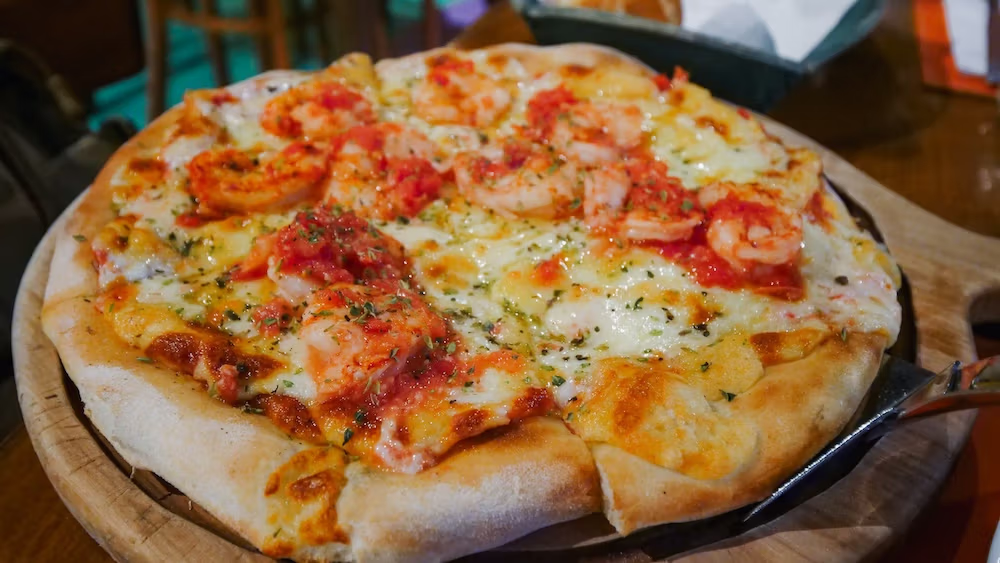
This isn’t the thick, cheese-drowning, deep-dish al molde pizza you find in the famous pizzerias of Buenos Aires. Down here, where the wind violently whips the sea against the gravel beaches, the pizza is a totally different beast. It is a vehicle for the daily catch of the South Atlantic. It is thin, blistered, drenched in olive oil, loaded with heavy-handed amounts of raw garlic, and piled high with local gulf scallops and day-boat prawns.
If you are planning a trip down Route 3, you are going to eat a lot of pizza. It is the ultimate survival food at the end of the world. Here is exactly how, where, and when to find the best coastal seafood pizza in Patagonia without falling into the classic tourist traps.
The Coastal Blueprint: Deconstructing the Pizza de Mariscos
| The Component | The Standard Argentine Baseline | The Patagonian Coastal Reality | The Sensory Vibe (Samuel’s Take) |
| The Oven & Fire | Commercial gas ovens used to churn out high-volume orders. | Hornos de Barro & Lenga Wood: Baked in traditional clay ovens fired exclusively by native Lenga or Ñire hardwoods. | The ultimate game-changer. The native wood burns incredibly hot, infusing the seafood with a sweet-smoky profile before you even taste the ocean. |
| The Dough Structure | Al Molde: The famous Buenos Aires style. Deep-dish, thick, spongey, and meant to hold a literal pound of cheese. | A La Piedra: Thin, blistered, rustic, and baked directly on the stone. The best spots feature a uniquely buttery finish. | A structural necessity. If the crust were thick, it would completely mask the delicate, salty flavors of the fresh gulf scallops. |
| The Protein Catch | Usually limited to cheap cured meats or canned tuna if you ask for fish. | Day-Boat Catch: Loaded with local langostinos (coastal shrimp), vieiras (scallops), mejillones (mussels), and occasionally rabas (squid rings). | Hauled out of the Golfo Nuevo that very morning. The shrimp are massive, sweet, and piled high without being overcooked. |
| The Aromatics | A gentle dusting of dried oregano and maybe a few mild olives. | Aggressive Raw Aromatics: Heavy-handed minced raw garlic, heavily salted anchovies, pungent green olives, and rich olive oil. | Unapologetic. You will smell like an Italian kitchen for three days. Embrace the “vampire” jokes; the raw garlic cuts through the heavy cheese perfectly. |
The Anatomy of a True Patagonian Coastal Pie
Before we dive into the specific restaurants and the painful transit realities of reaching them, we need to establish exactly what you are ordering. If you walk into a spot in Playa Unión and expect a delicate, Neapolitan-style margherita, you are going to be deeply confused.
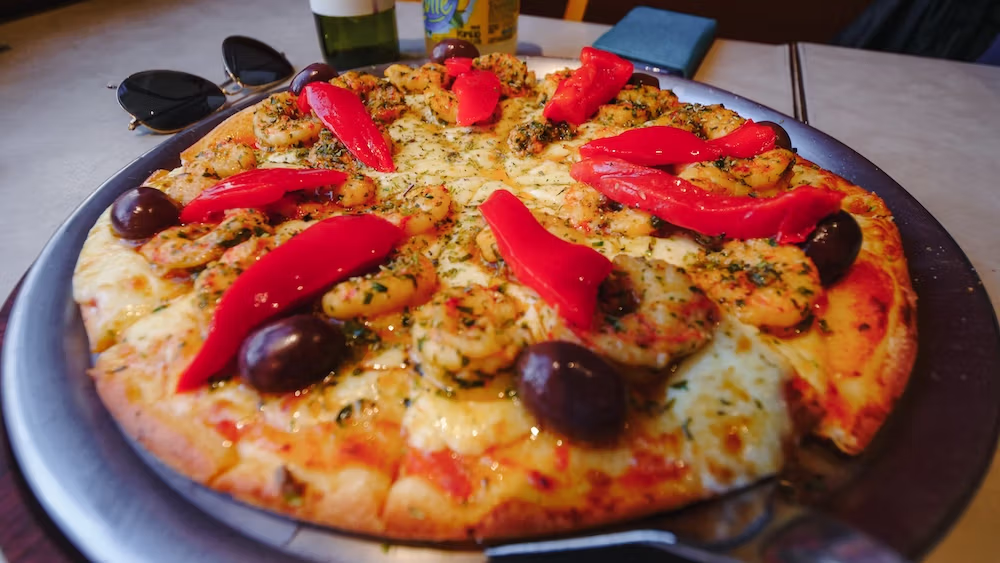
A genuine Patagonian seafood pizza is built on a foundation of structural necessity. The dough is almost always baked a la piedra (on the stone). It has to be a thin, blistered, rustic crust—and in the best spots, slightly buttery. If the pizzerias used the thick, spongey dough favored in the capital, it would completely mask the delicate, salty flavors of the scallops (vieiras), local coastal shrimp (langostinos), and mussels (mejillones).
The Lenga Wood Advantage
Generic guidebooks will tell you that Patagonian pizza is just seafood tossed onto dough. They are missing the most critical flavor variable in the entire region: the fire.
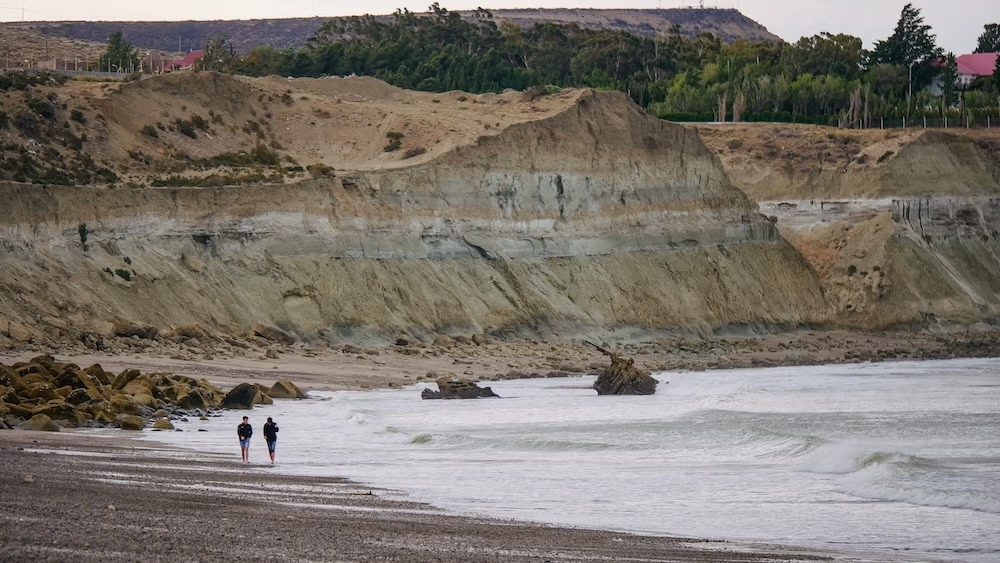
True Patagonian coastal pizzerias do not use standard commercial gas ovens. They bake in hornos de barro (clay ovens) fired specifically by native Lenga or Ñire wood. These native hardwoods burn at an exceptionally high heat and infuse the calamari and shrimp with a sweet-smoky profile that is physically impossible to replicate in a gas oven. When you take a bite, you taste the smoke before you taste the sea.
The Flavor Profile: Unapologetic Garlic and the “Vampire” Banter
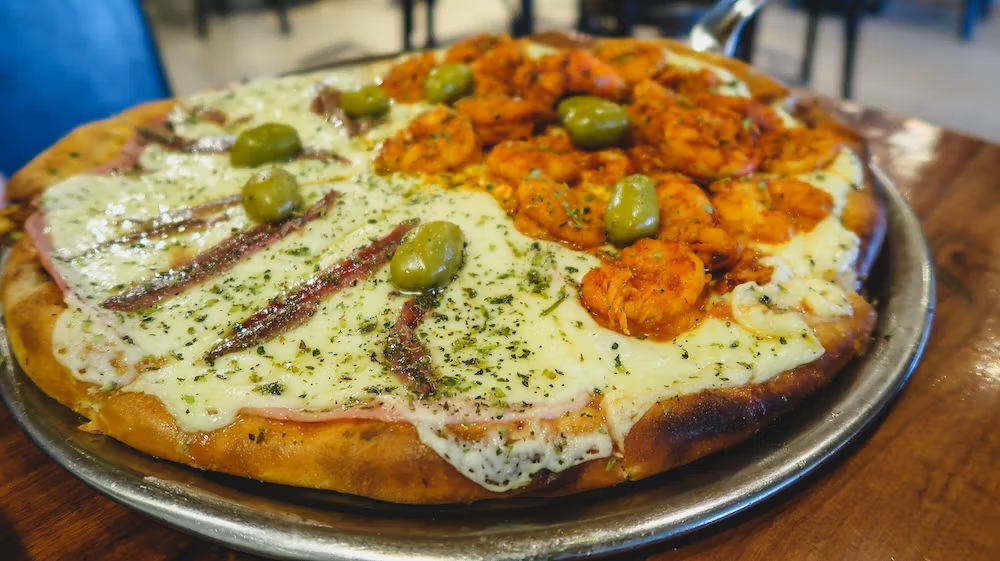
When Audrey and I finally found a spot in Puerto Madryn, we went all in on a massive half-and-half pie. The right side was entirely dedicated to the gulf’s shrimp. The left side was my specific domain: heavily salted anchovies, pungent green olives, and unapologetic, aggressive amounts of raw garlic.
I have a deep, slightly concerning obsession with raw garlic, to the point where Audrey regularly accuses me of being a vampire. But in Argentina, they do not skimp. The garlic isn’t gently roasted; it is often minced raw and showered over the cheese alongside heavy dashes of oregano right as it comes out of the oven. You will smell like an Italian kitchen for three days. It is entirely worth it.
[Samuel’s Hydration Sidebar]
While Buenos Aires locals famously pair their thick pizza with a sweet glass of Moscato wine or a liter of Quilmes beer, do not do this with seafood pizza. The heavy cheese, the oily anchovies, and the intense garlic demand something sharp. Pair your Pizza de Mariscos with a local Patagonian craft Pale Ale (microbreweries are everywhere down here) or a crisp, chilled white wine from the nearby Río Negro/Neuquén regions to cut through the fat.
Which Patagonian Pizza Experience Is Right for You?
Not all “Patagonian pizza” is chasing the same goal. On the coast, it’s about freshness, smoke, and seafood. In the mountains, it becomes a heavy, post-hike calorie bomb.
| Traveler Type | Best Pizza Style | Why |
|---|---|---|
| First-time visitor to Puerto Madryn | Coastal seafood pizza | It’s the most regionally distinctive version and the one most tied to local geography |
| Seafood lover | Pizza de Mariscos or Pizza de Langostinos | This is the specialty worth building your meal around |
| Budget-conscious traveler | Large shared pizza + house wine | Often better value than buying groceries in Patagonia |
| Garlic fanatic | Anchovy, olive, and raw garlic half | Patagonia does not do subtle garlic when it commits |
| Post-hike eater in the Andes | Mountain-style heavy pizza | Bacon, eggs, ham, and thick dough make more sense after exertion |
| Traveler arriving bus-lagged and starving | 4:00 PM Puerto Madryn happy hour pizza | This is the article’s best tactical food move |
| Celiac traveler | Dedicated Sin TACC spot only | Shared clay ovens make casual gluten-free ordering risky |
Puerto Madryn: The Coastal Epicenter and the 4:00 PM Hack
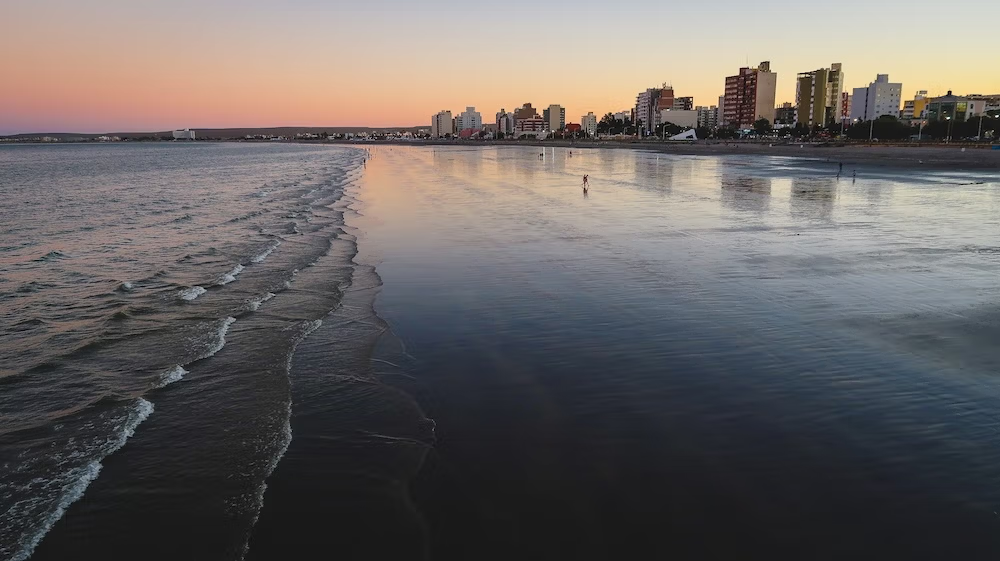
Puerto Madryn is ground zero for this dish. Because it sits on the edge of the Golfo Nuevo, the seafood is hauled out of the water practically within sight of the boardwalk. However, Madryn is also a massive cruise ship hub, which introduces several severe logistical traps.
Anyone who has traveled in Argentina knows the golden rule of dining: restaurants do not serve dinner before 8:30 PM. The kitchens are dark, the ovens are cold, and the staff are eating their own meals. Foreign tourists routinely show up to pizzerias at 6:30 PM, aggressively rattle the locked doors, and leave furious.
But when we arrived in Madryn, bus-lagged and operating on fumes, desperation bred discovery.
While wandering the beachfront, we stumbled upon a massive, beautiful glitch in the Argentine dining matrix: The 4:00 PM to 8:00 PM Happy Hour Hack.
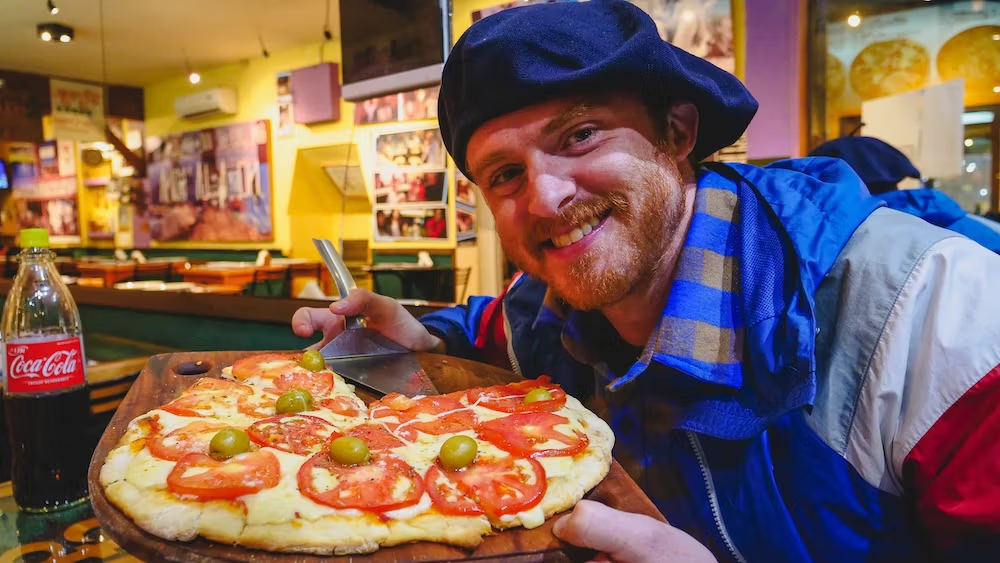
Several prime waterfront establishments, specifically catering to the strange schedules of arriving tourists and departing buses, run aggressive late-afternoon specials. We found a spot offering a staggering 50% off all pizzas specifically within this window. While the rest of the town was napping, we were sitting in the glorious late-afternoon sun, drinking a heavy glass bottle of Coca-Cola (the old-school kind that weighs a ton and makes a highly satisfying clink on the table), and devouring a mountain of mozzarella and prawns for half the standard price.
Navigating the Puerto Madryn Pizzerias
| Venue / Location | Current Price | The “Must-Order” Item | Operational Friction Points |
| Náutico Bistró de Mar (Bv. Almte Brown 860) | ~28,000 ARS ($19.80 USD) | Pizza con Mariscos del Golfo Nuevo. Loaded with local gulf scallops. | The kitchen doesn’t fire for full lunch until 12:00 PM. Highly congested by 8:30 PM on weekends. |
| El Hornito (Off the main strip) | ~22,000 ARS ($15.50 USD) | Pizza de Langostinos. | Smaller, more local. Less likely to have the 4 PM discounts, but cheaper base prices. |
| Beachfront Strip (General) | ~25,000 – 32,000 ARS | Half-and-Half (Mitad y Mitad). | Beware the cruise ship rush (12:30 PM – 2:30 PM). See warning below. |
The Cruise Ship Freshness Fallacy
Because Madryn is a deep-water port, massive international cruise ships dock here regularly. You might assume a busy restaurant means fresh food. The opposite is often true. Local Chubut food guides consistently note that on heavy cruise-ship days, some beachfront spots physically cannot keep up with the volume. To turn tables faster, they resort to using frozen, overcooked seafood bags on their pizzas. The result is rubbery calamari and gritty mussels.
The Fix: If you see a colossal white cruise ship dominating the horizon, do not eat a seafood pizza on the main tourist strip between 12:30 PM and 2:30 PM. Use our hack. Wait until 4:00 PM when the cruisers have retreated to their buffets, or walk five blocks inland to the local-run establishments.
The Economics of Patagonian Pizza: The Grocery Illusion
Let’s talk about money, because Argentina’s economy remains ever volatile, wildly shifting landscape. Currently, a premium seafood pizza in Patagonia will run you anywhere from 25,000 to 35,000+ ARS (roughly $17.50 to $24.75 USD via the Blue Rate).
When we left Madryn and traveled down to the Welsh-settled town of Trelew, we decided we needed to rein in our budget. We had been eating nothing but heavy pizzas and massive parrilla (barbecue) meats. We walked into a Trelew supermarket with the noble, highly responsible intention of buying fresh vegetables and cooking our own meals at the apartment to save cash and eat healthier.
We filled our basket, paid the cashier, and looked at the receipt.
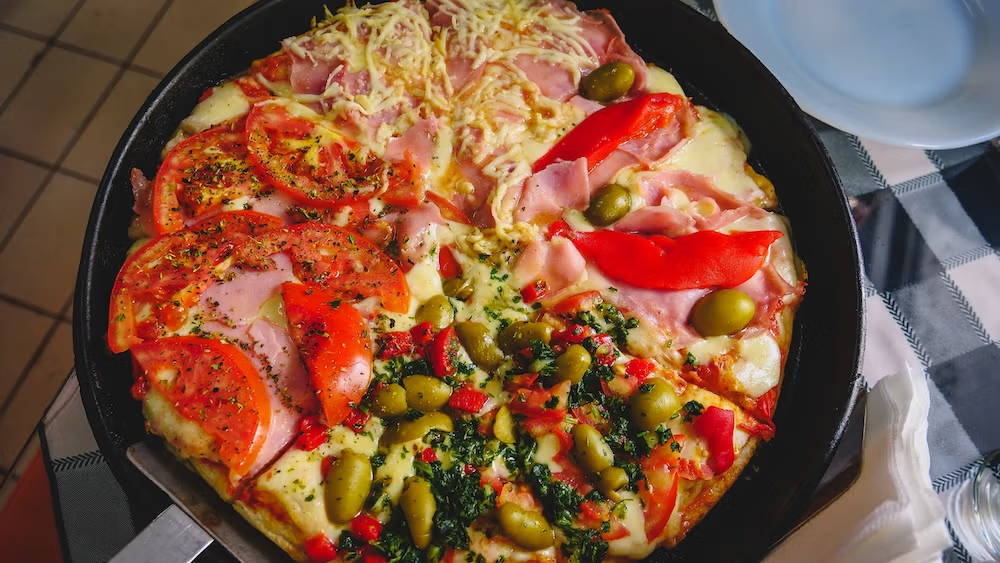
Then, we walked to a local pizzeria later that night. We ordered a massive, eight-slice Quattro Stagioni (Four Seasons) pizza, a full bottle of house red wine, and a large sparkling soda water. When the bill came, we started laughing.
The restaurant feast cost the exact same amount as our meager basket of groceries.
This is the great economic paradox of Patagonian travel. Because ingredients have to be shipped immense distances across the desert, supermarket prices for basic goods are shockingly high. Meanwhile, local pizzerias buy massive bulk quantities of flour, cheese, and local catch, allowing them to keep menu prices relatively stable. Unless you are cooking plain pasta every single night, eating out in Patagonia—specifically splitting a large pizza and a cheap house wine—often provides vastly better value (and joy) than trying to cook in a cramped hostel kitchen.
[Samuel’s Cash-in-Hand Warning & The “Cubierto” Shock]
When budgeting for that $20 pizza, generic guides just list the menu price. They fail to warn you about the “Cubierto.” This is a mandatory table, bread, and cutlery fee charged per person before you even place an order. Now, expect to pay around 2,900 to 3,500 ARS extra per person just to sit down at a nice beachfront spot like Náutico Bistró de Mar. Furthermore, while card machines exist, the legendary Patagonian wind frequently knocks out the local Wi-Fi, turning credit card terminals into useless bricks. Always carry at least 40,000 ARS in physical cash per person to cover the meal, the cubierto, and the inevitable network failure.
The Great Divide: Coastal Elegance vs. Mountain “Caveman” Pizza
As you travel west across the desert steppe, leaving the Atlantic coast for the jagged peaks of the Andes, the definition of Patagonian pizza aggressively changes. We discovered this firsthand in the hippie-haven mountain town of El Bolsón.
On the coast, Patagonian pizza is an elegant, smoky affair of Lenga-fired shrimp and delicate scallops. It is a tribute to the ocean.
Deep in the mountains, “Patagonian Pizza” means something entirely different. It is a caloric weapon designed to revive exhausted hikers.
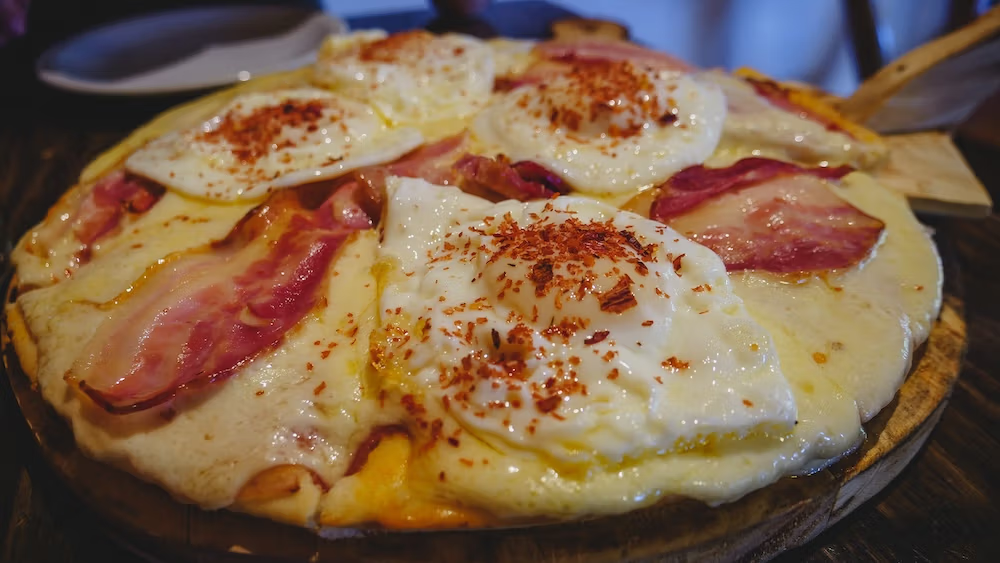
We stopped at a local bakery-turned-restaurant expecting a standard pie. What arrived at our table was a monstrous, thick slab of dough crowned with melted mozzarella, vast quantities of cooked ham, thick strips of regional bacon, and—I am entirely serious—literal fried eggs resting on top of the cheese.
It was a total deviation from everything we had eaten on the coast. I completely abandoned my cutlery. I picked up a massive, heavy slice with my bare hands like an absolute caveman, letting the egg yolk run down the crust, and tore into it. After a long morning of hiking in the cold mountain air, it was the greatest thing I had ever tasted.
The Coast vs. Mountain Pizza Matrix
| Metric | Atlantic Coast (Puerto Madryn / Playa Unión) | Andean Mountains (El Bolsón / Bariloche) |
| Dough Style | A la piedra (Thin, blistered, baked on stone) | Al molde or thicker crust to support heavy weight |
| Signature Toppings | Langostinos, Mussels, Scallops, Anchovies | Bacon, Cooked Ham, Wild Boar, Fried Eggs |
| Flavor Profile | Salty, oceanic, garlic-heavy, light olive oil | Smoky meats, incredibly heavy, high-fat density |
| Best Eaten… | Mid-afternoon in the sun with a crisp white wine | Post-hike, wearing fleece, paired with an IPA |
| Utensils Required | Fork and knife (too much heavy seafood to fold) | Bare hands (Embrace the caveman reality) |
The “Surprisingly Cold” Weather Reality
The contrast between the coast and the mountains isn’t just in the food; it’s in the environment. During our swing through Esquel (another mountain town famous for its Old Patagonian Express train), we ordered a massive Pizza Napoletana. It was the peak of summer, yet I was sitting inside the pizzeria wearing a thick, woolen Gaucho hat I had just purchased at a local market.
Why? Because Patagonia is “surprisingly cold,” even in January. The wind cuts through thin jackets, and the temperatures drop rapidly as soon as the sun goes behind a cloud. Eating a piping hot, cheese-heavy pizza in Esquel while shivering slightly in a warm hat, listening to the clink of glass Coke bottles, is a core sensory memory of the region. Do not pack only shorts for this trip.
Patagonian Seafood Pizza Decision Matrix
| Priority | Best Move | Why |
|---|---|---|
| Maximum freshness | Go to Playa Unión / Rawson | Closer to the fishing fleet, less cruise-ship distortion |
| Easiest logistics | Stay in Puerto Madryn | Best base, easiest access, most options |
| Lowest tourist pressure | Eat inland or at local-run spots | Main waterfront strip gets distorted by cruise timing |
| Best timing for hungry travelers | Eat between 4:00 PM and 8:00 PM | You avoid closed kitchens and often catch discounts |
| Best value | Split a large pizza and wine | Patagonia supermarkets can cost shockingly close to restaurant meals |
| Most iconic flavor profile | Thin coastal pie with langostinos, scallops, garlic, and olive oil | This is the clearest expression of the regional style |
| Most filling option | Mountain pizza in El Bolsón or Bariloche | It’s less elegant, but unbeatable after hiking |
The Final Slice: Why This Meal Defines the Coast
It is easy to categorize Patagonian travel by its massive glaciers, jagged granite peaks, and endless expanses of arid steppe. But the human element—the actual day-to-day survival of navigating this massive, windy, beautiful region—is best understood at a slightly sticky table in a coastal pizzeria.
It’s in the realization that buying groceries costs the same as a restaurant feast. It’s in the triumph of finding a 4:00 PM discount when you are bus-lagged and starving. It’s in the heavy, smoky flavor of Lenga wood, the bite of raw garlic, and the satisfying weight of a glass Coke bottle.
The next time you find yourself shivering on the Chubut coast, battered by the Atlantic wind and operating in zombie mode, bypass the steakhouse. Find a clay oven, order the Pizza de Mariscos, ask them to go heavy on the garlic, and eat it with your hands. It is the best 30,000 Pesos you will spend at the edge of the world.
FAQ: All About Patagonian Seafood Pizza!
Can I find Patagonian seafood pizza in Buenos Aires?
Nope. Buenos Aires is all about the thick, cheese-heavy al molde style. True coastal seafood pizza requires native Lenga wood and day-boat catch. You have to go south to places like Puerto Madryn or Playa Unión for the real deal.
Is the “cubierto” fee a tip for the waiter?
Absolutely not. It is a mandatory table, bread, and cutlery fee charged directly by the restaurant (usually sitting around 2,900+ ARS per person). You still need to tip your server separately for good service—usually about 10% in cash.
Do I need to book tables in advance in Puerto Madryn?
Depends. If you are utilizing our 4:00 PM happy hour hack, you can walk right in and have the patio to yourself. But if you try to hit popular waterfront spots like Náutico Bistró de Mar during peak weekend hours (after 9:00 PM), expect to wait in the wind.
What if I don’t eat seafood? Are there other pizza options on the coast?
100%. Every pizzeria on the coast serves standard Argentine staples like classic mozzarella, fugazzeta (a heavy onion and cheese pie), or ham and bell peppers. You won’t go hungry, though you will be missing out on the regional specialty.
Can I get a gluten-free seafood pizza down there?
Rarely. Most rustic Patagonian pizzerias use shared clay ovens, meaning flour cross-contamination on the baking stone is virtually guaranteed. If you are celiac, you need to head down to Comodoro Rivadavia to specifically visit Isabella Resto Bar, which maintains dedicated Sin TACC prep spaces.
Is Las Grutas worth visiting for seafood pizza year-round?
Never. It is a complete ghost town outside of the peak summer months (December to March). If you arrive in May or August, the top-tier seafood restaurants are completely boarded up. Stick to year-round industrial hubs like Puerto Madryn if you are traveling in the off-season.
Will my international credit card work at these coastal pizzerias?
Sometimes. Card machines definitely exist, but the relentless Patagonian wind frequently knocks out the local Wi-Fi. Always carry at least 40,000 ARS in physical cash per person to cover your meal just in case the terminal suddenly becomes a paperweight.
Is the mountain “Patagonian Pizza” the same as the coastal one?
Not even close. On the coast, it is an elegant, garlic-heavy seafood affair. In mountain towns like El Bolsón or Bariloche, a “Patagonian Pizza” is a massive, heavy slab of dough loaded with bacon, cooked ham, and literal fried eggs. It is built for post-hike survival, not coastal elegance.
Project 23 Argentina: This guide is also available in Spanish. [Lea la versión en castellano: Pizza de mariscos patagónica: Una especialidad costera que vale la pena probar]