
If you want to know how strong the Patagonian wind really is, let me tell you about the ten blocks Audrey and I tried to walk in the mountain town of Esquel with an umbrella. We had just stepped out of our rental, the rain was coming down in icy, sideways sheets, and I confidently deployed a cheap convenience-store umbrella. It lasted exactly thirty seconds. A sudden gust roared down the street, caught the canopy, and violently bent the metal frame backward into a jagged, useless modern art sculpture. I spent the next nine blocks getting completely soaked, dragging my rolling suitcase over cracked pavement that was actively destroying the wheels.
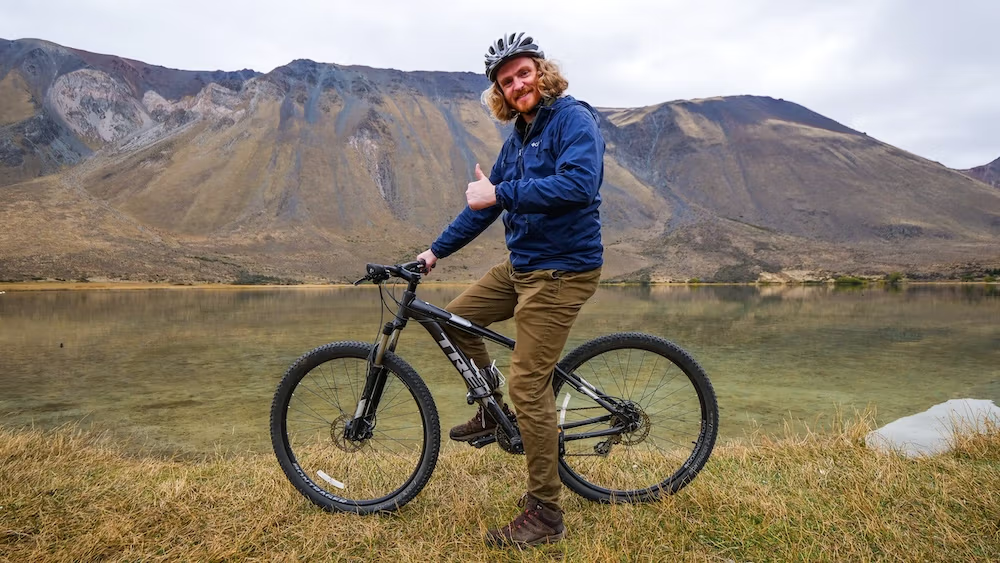
That right there is the reality of Patagonia. The glossy brochures show you pristine, glassy lakes reflecting the fiery granite peaks of Mount Fitz Roy, perfectly still and bathed in golden light. They don’t show you the 75 mph (120 km/h) gusts that will physically rip a car door out of your hand at the Perito Moreno Glacier parking lot, or the fact that a “short” bus ride across a provincial line might force you to completely change buses.
After spending extensive time down here—navigating the absurdly long transit routes, eating some of the most garlic-heavy, life-changing steaks on the planet, and filming a massive series for our YouTube channel—I can tell you that understanding Patagonia’s weather and logistics isn’t just about packing a jacket. It’s about survival, budgeting, and preserving your sanity.
This isn’t a generic listicle. This is the un-sugarcoated, hyper-specific, month-by-month breakdown of what Patagonia actually feels like, how the weather dictates the logistics, and the invisible traps you need to dodge.
The Patagonia Month Matchmaker: Pick the Season That Actually Fits Your Travel Style
Not every traveler wants the same version of Patagonia. Some people want huge daylight and bucket-list hikes. Some want quieter trails and fire-colored forests. Some want whales, penguins, or ski days. The mistake is assuming there is one universal “best month” for everyone.
| Travel Style | Best Season | Why It Works | Trade-Off |
|---|---|---|---|
| First-time bucket-list hiker | January to early March | Long daylight, full infrastructure, best access to major routes | Crowds, wind, high prices |
| Photographer | Late March to April | Fiery lenga forests, calmer conditions, better light, fewer people | Colder nights and some seasonal closures |
| Wildlife traveler | October | Whales, penguins, active fauna, reopening season energy | Mud, unpredictability, variable weather |
| Budget traveler | September or late April | Shoulder-season pricing, thinner crowds | More weather friction, less stable operations |
| Ski traveler | July to August | Best access to Bariloche’s winter side | Much of southern trekking Patagonia is shut down |
| Adventure purist | November | Raw, active, authentic, before full peak crush | Wind returns hard, trails can still be rough |
| Comfort-first traveler | Late March | Best compromise of weather, food, access, and sanity | Shorter daylight than summer |
The Invisible Machinery: Why Patagonia’s Weather is Trying to Kill You (A Scientific Breakdown)
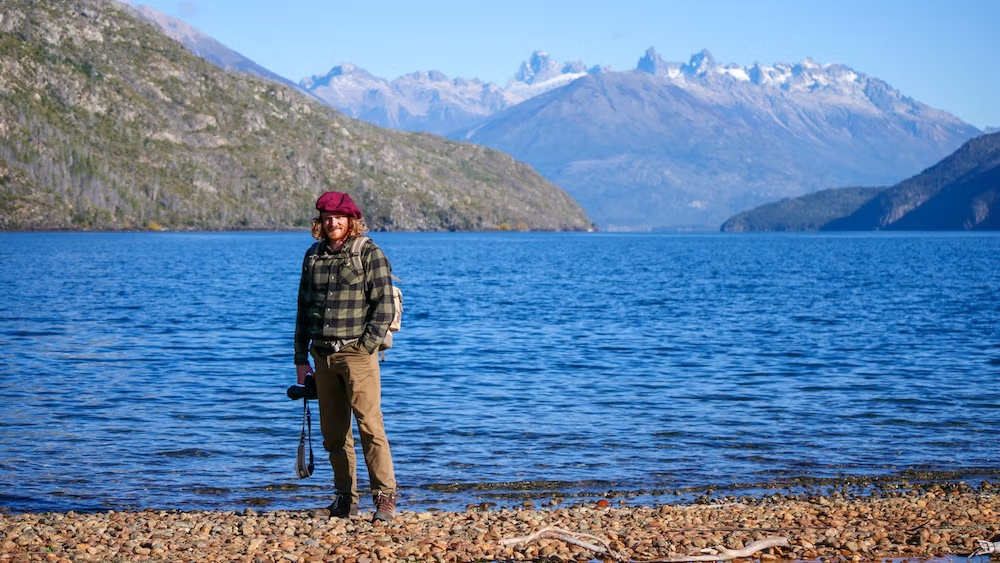
We were standing on the shores of Lake Puelo, just south of El Bolsón, when the temperature suddenly spiked. I had started the morning shivering in a heavy winter jacket, but by early afternoon, I was violently stripping off layers down to a t-shirt and frantically digging through my backpack for SPF 50. It wasn’t just that the air had warmed up; it was that the sunlight physically stung my skin in a way I had never experienced before. As a redhead, I possess a sort of biological warning system for ultraviolet light, and my internal alarms were absolutely screaming.
Patagonia doesn’t just have “bad weather”—it is caught in the crosshairs of three massive, invisible geographic and atmospheric engines that dictate everything from your packing list to your survival on the trail. Understanding the science behind the weather makes you realize why checking a standard weather app in El Calafate is essentially useless.
First, you have to respect the latitude. Patagonia sits squarely in the path of the “Roaring Forties” and the “Furious Fifties” (between 40 and 60 degrees south latitude). In the Northern Hemisphere, wind systems are constantly broken up by massive continents (North America, Eurasia). But in the deep Southern Hemisphere, there is almost no landmass to interrupt the atmospheric flow. These prevailing westerly winds whip around Antarctica over vast, unbroken oceans, gaining terrifying momentum until they violently smash into the very tip of South America. That is why a 75 mph gust can seemingly appear out of nowhere and flatten your tent.
[Samuel’s Ozone Reality Check]
When you are hiking in the summer, the wind-chill will deceive you. You might feel a crisp, cool 15°C (59°F) breeze, tricking you into thinking you don’t need sun protection. Do not fall for it. The southern territories of Argentina and Chile come under the direct influence of the Antarctic Ozone Hole, particularly in the spring and summer. The lack of atmospheric filtration means you are being bombarded by severely enhanced UV-B radiation. You will incur second-degree burns on an overcast, freezing day if you do not reapply sunscreen every two hours.
The second engine driving the chaos is the Andean Rain Shadow Effect. The Andes Mountains act as a massive, impenetrable wall running north to south. As those saturated, furious westerly winds blow in from the South Pacific, they are forced aggressively upward by the mountains. The air cools, condenses, and dumps massive amounts of heavy rain and snow on the Chilean side. This is why Chilean Patagonia (like the fjords and the western side of Torres del Paine) is an emerald-green, precipitation-heavy rainforest.
Once that air crests the peaks and descends onto the Argentine side, it has been completely stripped of its moisture. The air compresses and warms, sweeping across the landscape and creating the vast, arid Patagonian Steppe. It is the reason you can drive just two hours east of the towering, ice-capped Mount Fitz Roy and suddenly find yourself in a bone-dry, brown desert.
The Patagonian Micro-Climate Matrix (The Science vs. Your Logistics)
| The Scientific Phenomenon | What is Actually Happening | The Logistical Reality on the Ground |
| The Roaring Forties | Uninterrupted westerly winds hitting the continent at peak velocity. | Standard rain-gear is useless. Ponchos turn into parachutes. You must pack a heavy-duty, form-fitting Gore-Tex shell. |
| The Rain Shadow Effect | The Andes block Pacific moisture, dumping rain in Chile and drying out Argentina. | You will pack fundamentally different gear for the wet Chilean W-Trek vs. the dusty, arid Argentine Route 40 road trip. |
| The Antarctic Ozone Hole | Depleted ozone layer allows extreme levels of UV-B radiation to reach the surface. | High-altitude glacier trekking requires Category 4 polarized sunglasses. Without them, you risk temporary snow blindness within hours. |
| Thermal Glacier Winds | Massive ice fields (like Perito Moreno) super-cool the air above them, causing it to aggressively sink and rush outward. | Afternoon winds are not a “chance of weather”—they are a guaranteed thermal reaction. Always book your boat tours for the earliest morning slot. |
The Summer Pressure Cooker: December, January, & February
Audrey and I stepped off the bus in Puerto Madryn in what I can only describe as full “zombie mode.” We had just endured a 19-hour overnight transit from Mar del Plata. We were stiff, disoriented, and lugging our battered gear through town, only to arrive at our accommodation and discover a harsh reality of the Patagonian summer: if you don’t pre-book securely, you don’t sleep. Our room had been given away, forcing us into a frantic “homeless scramble” across town to find a last-minute studio apartment.
Summer is when Patagonia is fully awake. But it is also an absolute logistical pressure cooker.
During January, the average high in the main tourist corridor (El Calafate / Torres del Paine) hovers around a deceptive 22°C (72°F). I say deceptive because there is an ozone hole directly above this region. You will start the morning shivering in a fleece beanie, and by 1:00 PM, you will be violently stripping off layers and desperately slathering on SPF 50 to avoid getting roasted alive.
But the defining feature of summer isn’t the heat. It’s the wind. November and December are statistically the windiest months of the year, with sustained base speeds of 28 mph and aggressive afternoon gales.
[Samuel’s Catamaran Reality Check]
Everyone wants to get up close to the fractured face of the Grey Glacier in Chile. The Catamaran Grey costs roughly $110,000 to $120,000 CLP (about $115–$125 USD) for a round-trip navigation. In peak summer, tours run at 10:00, 13:00, and 16:00. Do not book the 4:00 PM slot. The thermal winds peak aggressively in the afternoon, and the boat operators frequently cancel the later sailings due to dangerous swells—and yes, they often keep a 5% administrative fee even for weather cancellations. Wake up early, take the 10:00 AM slot, and secure your photos before the gales kick in.
Summer is also when the borders are most congested. The 95-mile transit from Puerto Natales (Chile) to El Calafate (Argentina) looks like a quick two-hour jaunt on Google Maps. In reality, it is a grueling 5.5 to 6.5-hour ordeal costing $36 to $53 USD (via operators like Bus Sur or Marga Taqsa). You have to completely unload your luggage, stand in line for exit stamps, reload the bus, drive a few kilometers to the next country’s checkpoint, and unload everything again for x-ray screening.
During this x-ray process at the Cerro Castillo border, Chilean and Argentine SAG (agricultural) agents are ruthless. Any fresh fruit, local honey, or unsealed meats/cheeses left over from your hike will be confiscated and thrown in the trash. Eat your perishables before the border; only travel with commercially sealed energy bars.
The Summer Logistics Matrix
| Essential Summer Transit & Entry | Exact Current Price | The Physical/Logistical Reality | Operating Hours / Booking Lead Time |
| Torres del Paine Entry (via pasesparques.cl) | ~$14,000 – $35,000 CLP (varies by days/residency) | MAJOR CHANGE MAY: Moving to a strict “Route-Based Ticket.” You must declare your exact path in advance. No deviations allowed. | Digital QR required. Cell service drops at gate. Book 6 months out. |
| Perito Moreno “Minitrekking” (Hielo y Aventura) | $180 – $240 USD (varies with ARS MEP rate) | 8:00 AM park access. Crampon hiking on glacial ice. Wind-chill makes it feel 30°F (6°C) colder. | Sells out 2-3 months in advance for Jan/Feb. Bring your own gloves or be denied entry. |
| Bus: El Calafate to El Chaltén | ~$52 – $56 USD / ~54,000 ARS (Chalten Travel) | 2h 40m direct route. 19 buses daily. High competition for window seats on the left side (mountain views). | Earliest: 3:00 AM. Peak bottleneck: 8:00 AM departures. |
The Golden Sweet Spot: March & April (Autumn)
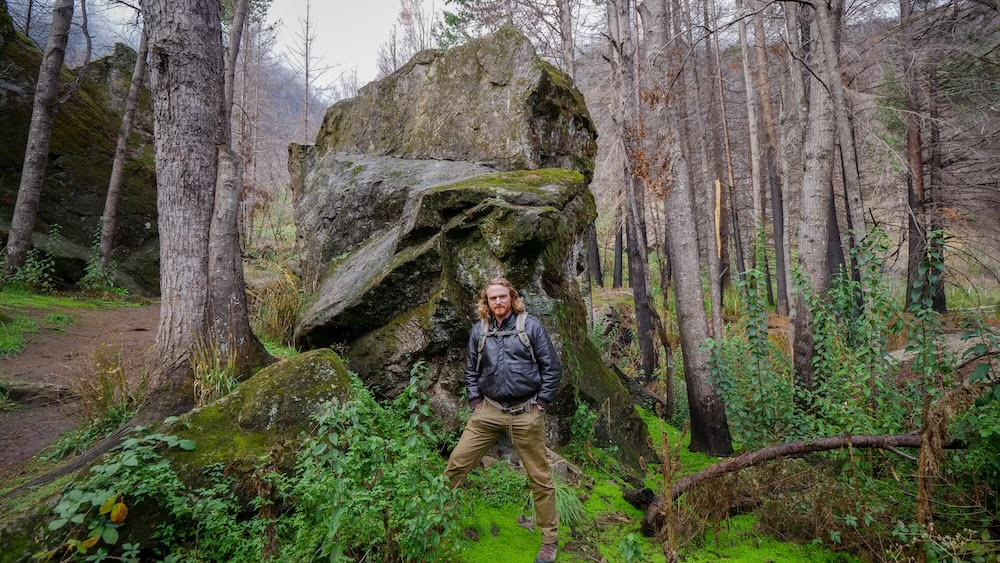
If I were to plan a return trip right now, I would aim squarely for late March. The sheer hostility of the summer winds finally begins to break. The sustained gusts drop from 28 mph down to a much more manageable 22 mph, and the endless daylight shortens to about 12 hours. The landscape fundamentally shifts as the native lenga forests erupt into fiery reds, oranges, and golds.
This is also when you can finally breathe—and eat—without battling hordes of backpackers for a table. Speaking of eating, we need to talk about the food, because it is half the reason we travel. In Argentina, the current exchange realities make dining out an incredible value, provided you understand the system.
For years, travelers smuggled stacks of crisp, hundred-dollar bills into Argentina to exchange on the street for the “Blue Rate.” Now, you don’t need to do that for everything. Foreign Visa and Mastercards now automatically process near the “Tourist MEP Rate,” which is highly favorable.
Because of this, we were able to sit down at a local parrilla (a recommendation from our Airbnb host) and order an absolute feast. For just under $30 USD total for two people, we received a massive basket of fresh bread, a bottle of local Malbec, heavily seasoned pumpkin mash, and massive cuts of Patagonian beef that were drowning in a next-level, garlic-heavy chimichurri. It was the kind of meal that makes you want to cancel your afternoon hike and just slip into a food coma.
[The El Chaltén Cash Blackout Warning]
While the MEP rate is great in major hubs like Bariloche and El Calafate, do not trust the grid in El Chaltén. Despite recent infrastructure upgrades, severe autumn storms frequently knock out the town’s internet. When the Wi-Fi dies, the credit card POS systems die with it. Furthermore, the town’s handful of ATMs are notoriously empty by Friday afternoon. You must physically withdraw all the Argentine Pesos you will need for your entire El Chaltén stay while you are still in El Calafate. Do not arrive empty-handed.
As April progresses, the temperatures drop closer to freezing at night (average lows of 0°C / 32°F). Precipitation shifts from rain to sleet, and the famous W-Trek trails turn incredibly muddy. You will need aggressive treads on your hiking boots—leave the flat-soled sneakers at home, or the final one-kilometer vertical boulder scramble up to Laguna de los Tres (Mount Fitz Roy) will absolutely destroy you.
Deep Winter Hibernation: May to August
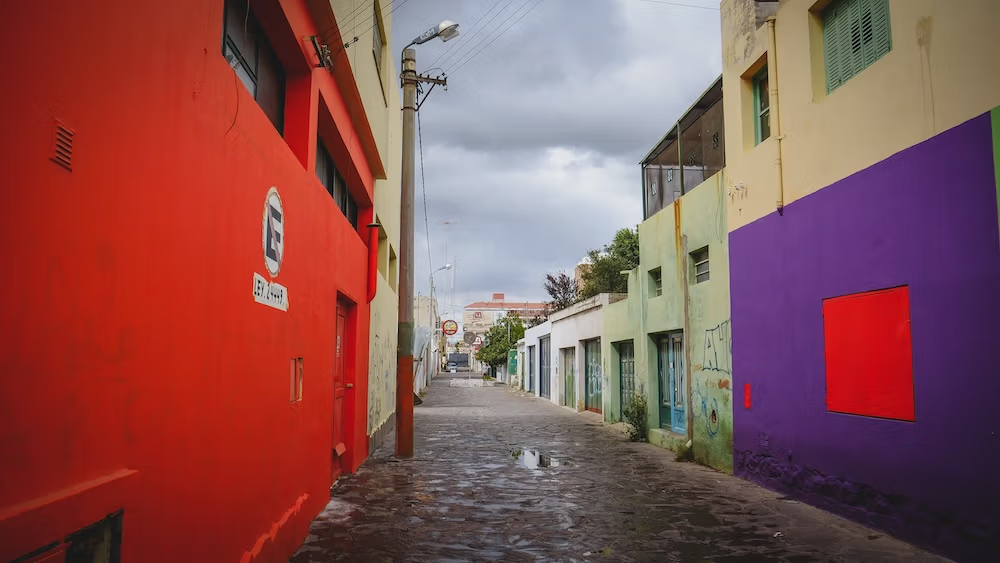
The guidebooks will tell you to visit the historic Welsh towns of Chubut, like Trelew and Dolavon, to soak in the culture. The guidebooks won’t tell you that if you show up on a Monday during winter, the entire town goes into hibernation.
During our deep-dive into the Welsh corridor, we arrived ready to explore, only to hit a brick wall. Most restaurants were closed because it was a Monday. We decided to wait for the local museums to open, only to realize that from roughly 1:00 PM to 5:00 PM, the entire region shuts down for siesta. With the freezing winter wind whipping through the desolate streets, we had nowhere to go. Audrey and I quite literally spent our afternoon sitting inside a brightly lit gas station convenience store, drinking soda and laughing at our own spectacular failure to understand the local rhythm.
Winter in Patagonia (June, July, August) is not for the faint of heart. Daylight shrinks to a meager 8 hours. The average high struggles to reach 6°C (43°F), with nighttime lows plunging to -5°C (23°F) and below.
Logistically, the region contracts. Los Glaciares National Park shifts to strict winter operating hours (9:00 AM to 4:00 PM). The massive O-Circuit in Torres del Paine completely shuts down due to avalanche risk, and the W-Trek transitions to a highly regulated, often guided-only experience requiring mandatory winter gear (crampons, four-season sleeping bags). The Lago Grey ferries run on a skeleton schedule.
However, winter unlocks completely different regions. While southern Patagonia freezes over, northern Patagonian hubs like Bariloche become world-class skiing destinations. If you are road-tripping through the Lake District during this time, be hyper-aware of rental car contracts.
The Winter Road Trip & Friction Matrix
| Logistical Friction Point | The Actual Problem on the Ground | The Exact Fix / Workaround |
| The “Tasa de Retorno” (Drop Fee) | Renting a car in Neuquén/Bariloche and dropping it off in El Calafate incurs a hidden one-way fee often exceeding $200 USD. | Build a loop itinerary, or price out domestic flights (Aerolíneas Argentinas) vs. the massive drop fee. |
| Cross-Border Driving Permits | Taking an Argentine rental car into Chilean Torres del Paine requires a Permiso para Cruce a Chile. | Must be requested 7-10 days in advance. If undeclared, rental desks charge a forced $50-$200 USD penalty at the counter. |
| The PDI Slip Trap (Chile) | At the border, you are given a tiny paper receipt (Tourist Visa). If you lose it on the trail, you cannot exit the country via bus without paying a fine at a major office. | Photograph it immediately. Keep the physical slip inside a waterproof Ziploc bag tucked into your passport sleeve. |
The Wildcard Spring: September, October, & November
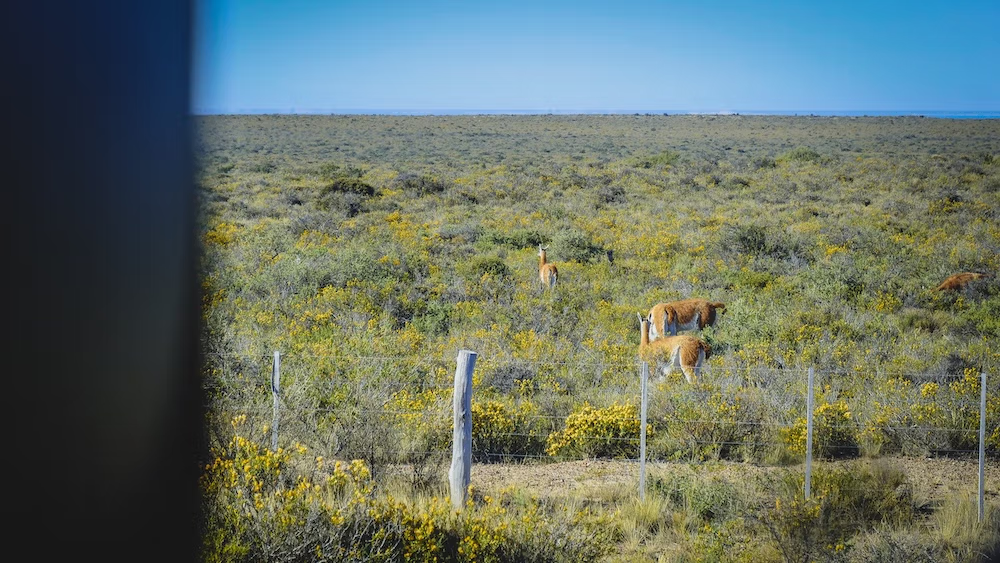
Spring is when Patagonia begins to thaw out, but it is deeply unpredictable. September is often the cheapest time to travel, but you pay for those discounts in mud. The massive snowmelt from the Andes turns the lower-elevation trails into slippery, waterlogged obstacle courses.
October marks the official reopening of the major infrastructure. The refugios in Torres del Paine throw their doors open, and wildlife becomes incredibly active. If you head to the Valdes Peninsula on the Atlantic coast, the Southern Right Whales and Magellanic Penguins arrive in massive numbers. (Pro-tip: Penguins always have the right of way. You are legally required to keep a 3-meter distance, but they will frequently waddle right across your boots).
By November, the spring flowers are blooming vibrantly, but the notorious Patagonian wind returns with a vengeance. We learned this the hard way while attempting a hike up Cerro de la Cruz in Esquel. The trail markers in Argentina can be notoriously vague. We took a wrong turn, found ourselves on an insanely steep, unmarked path, and got absolutely blasted by a sudden squall. My lungs were burning, my cheap umbrella from a few days prior was already resting in a dumpster, and we had to abandon the summit.
But here is the beauty of Patagonia’s unpredictability: because we went the wrong way, we stumbled onto a completely hidden, elevated ridge that offered an unbelievable panoramic view of the distant mountain range—a view we never would have seen if we had stayed on the official path.
[The Transit Province Swap Reality]
Traveling off the beaten path in Spring requires extreme patience. When taking a local bus from El Bolsón (Río Negro province) to Lake Puelo (Chubut province), we experienced the most absurd logistical quirk of the trip. At the provincial border, the bus completely stopped. Every passenger had to grab their bags, disembark, cross an invisible line, and board a completely different bus… that was owned and operated by the exact same company. It makes no sense, but it’s the law. Expect friction, embrace the absurdity.
If you want to experience the rawest, most authentic version of the region before the December summer crowds arrive, November is incredible—just make sure you pack a heavy-duty Gore-Tex windbreaker, not a plastic poncho.
The Month-by-Month Cheat Sheet: When Should You Actually Go?
| Month / Season | Vibe & Visuals | Average Wind Speed | Best For… | The Brutal Reality |
| Jan – Feb (Summer) | Emerald lakes, 17 hours of daylight, massive crowds. | 24 – 28 mph | Extensive hiking, reliable bus schedules, fjord cruising. | Everything must be booked 6 months out. UV rays are punishing. |
| Mar – Apr (Autumn) | Fiery lenga forests, crisp air, golden hour lighting. | 22 – 23 mph | Photographers, budget travelers, avoiding the brutal gales. | Late April sees refugios starting to board up for winter. |
| May – Aug (Winter) | Snow-blanketed peaks, crystal clear night skies. | 21 – 23 mph | Skiing in Bariloche, isolated stargazing. | Severe trail closures. Transport operates on skeleton schedules. |
| Sep – Nov (Spring) | Blooming wildflowers, roaring waterfalls from snowmelt. | 23 – 27 mph | Wildlife spotting (whales/penguins), shoulder-season pricing. | Trails are muddy. November winds will literally knock you over. |
The High-Performance Trekking Protocol (Fueling the Hike)
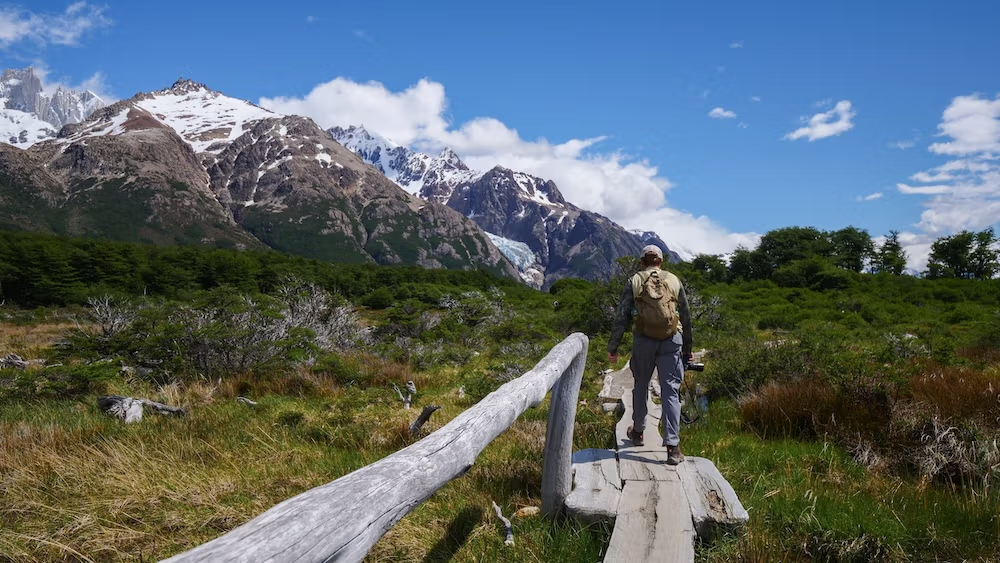
Somewhere around kilometer 15 on the way up to Laguna de los Tres, my legs just stopped communicating with my brain. We were staring down the final, infamous one-kilometer vertical boulder scramble—part of an exhausting 850-meter (2,800-foot) total elevation gain for the day—and the icy Patagonian wind was relentlessly sapping my core temperature. I reached into my pack for the cheap muesli bar I had bought at a kiosk in El Chaltén, chewed it, and instantly realized a harsh truth: a 150-calorie sugar spike is completely useless when your body is burning upwards of 4,000 calories just to survive the cold and the climb.
If you’re attempting the W-Trek in Torres del Paine or stringing together massive day hikes in Los Glaciares, you have to completely overhaul your approach to trail nutrition. You aren’t just walking; you are operating a metabolic furnace in sub-zero winds while carrying a heavy 40-liter pack.
As someone deeply invested in fitness and longevity (and who systematically tracks my workouts even on the road), I can tell you that treating Patagonia like a casual Sunday stroll is a fast track to physical collapse. You have to fuel strategically, and that strategy has to begin before you ever leave your home country, because Patagonian supply chains are ruthless.
[Samuel’s Supply Chain Warning]
Do not expect to roll into Puerto Natales or El Calafate and easily stock up on high-end, ultralight trekking food. Dedicated freeze-dried meals (like Mountain House) are almost non-existent down here, and when you do find them at a local outfitter, you will pay a massive “End of the World” premium. If you want specialized dehydrated meals, you must bring them from home in your checked luggage. If you forget them, you will be hauling heavy supermarket pasta across the mountains.
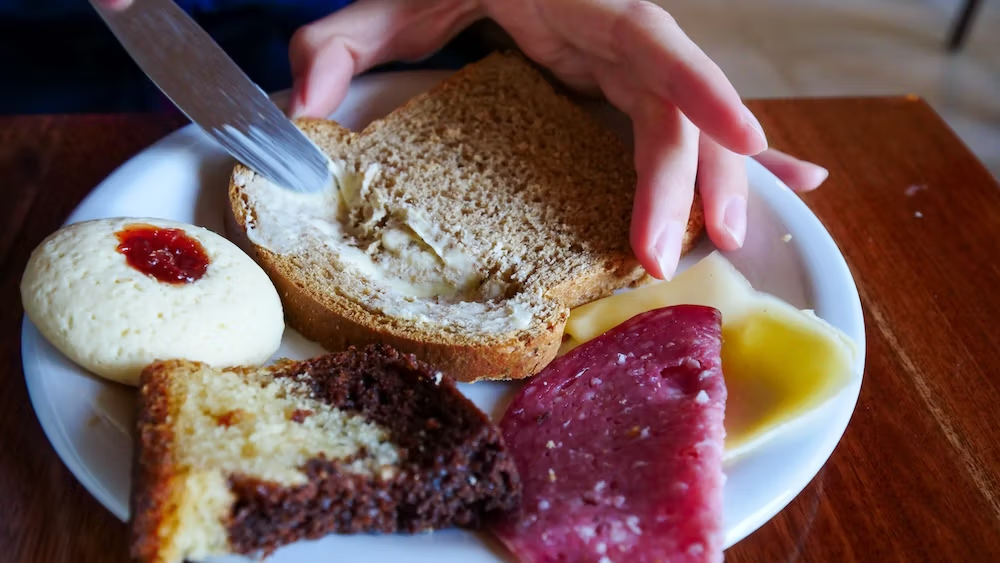
Because sourcing lightweight freeze-dried meals locally is a logistical nightmare, most backpackers are forced to rely on heavy local carbs. If you are prepping in Puerto Natales for the W-Trek, the local supermarkets (like Unimarc) will be your battleground. You’ll be stocking up on dense, heavy staples like oatmeal, local cheeses, salami, and massive bags of rice. To offset hauling this extra weight and keep your joints healthy for the duration of a multi-day trek, you have to meticulously dial in your supplements and hydration.
When you are sweating heavily through your base layers but the freezing wind evaporates that sweat instantly, you won’t actually feel thirsty. That is a dangerous trap. You need to forcefully schedule your water intake and aggressively replace the massive amounts of sodium you are losing on the trail to prevent your muscles from locking up.
The Trail Fuel Matrix (What It Actually Takes)
| Trail Requirement | The Frugal Local Option (Heavy) | The High-Performance Option (Imported) | The Reality Check (Why It Matters) |
| Breakfast (Pre-Hike Ignition) | Local Argentine/Chilean oats mixed with powdered milk. | Pre-packed high-protein meal replacement powders. | You need 600+ calories before 8:00 AM just to deal with the morning chill and start the engine. |
| On-Trail Fuel (Mid-Day) | Dense local alfajores (dulce de leche cookies) and hard cheese. | Electrolyte gels and imported nut-butter packets. | Alfajores are cheap and delicious, but the massive sugar crash an hour later is brutal on steep Patagonian inclines. |
| Dinner (Recovery Protocol) | Supermarket pasta and heavy packets of powdered soup. | Checked-baggage freeze-dried meals (e.g., Mountain House). | After 10 hours of hiking, simply boiling water for a freeze-dried pouch saves you 30 minutes of exhausting cleanup in the dark. |
| Hydration & Supplements | Basic pain relievers and hoping for the best. | Packed Magnesium, joint-support supplements, and hydration salts. | Your knees take a massive beating on the rocky descents. Magnesium prevents agonizing nighttime cramping in a freezing tent. |
The “End of the World” Reality: Tierra del Fuego & Ushuaia
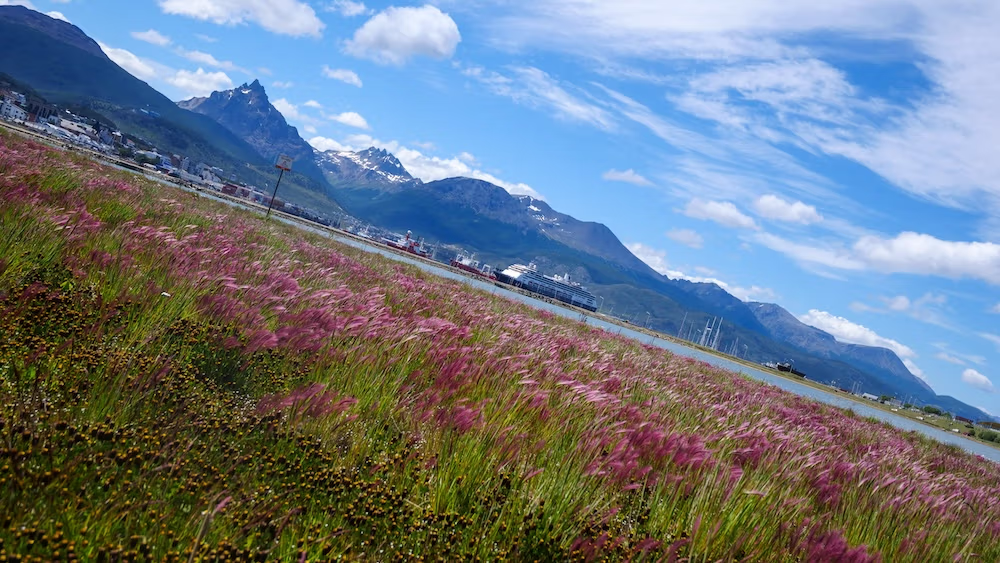
If you want to test your physical and mental endurance, try taking the bus from Punta Arenas down to Ushuaia. The guidebooks usually gloss over this transit, but in reality, it is a grinding 11.5-hour journey that involves a ferry ride across the Strait of Magellan and a tedious, multi-step border crossing into Argentina. By the time we finally rolled into the southernmost city in the world, we were completely exhausted, but we had carved out a massive 12-night stay to properly explore the region.
Ushuaia operates on its own micro-climate, and the weather here is famously bipolar. You can experience two days of absolute, wind-whipped Armageddon, followed immediately by brilliant, still sunshine. When the sun finally broke through, we immediately headed down to the tourist pier to navigate the Beagle Channel.
[Samuel’s Beagle Channel Breakdown]
When you walk down to the pier, you will be bombarded by different booths selling boat tours. We bypassed the massive catamarans and went with a company called Canoero (look for the lime-green booth). We paid exactly $67 USD per person for the specific “Lobos, Faro, y Pingüinera” route, which takes you past the sea lions, the Les Éclaireurs Lighthouse, and the penguin colonies. Just be warned: your ticket does not cover the port tax. You must pay a separate port fee in cash right before stepping onto the dock, so do not show up with empty pockets.
While in Tierra del Fuego National Park, you have to visit the “Southernmost Post Office in the World” sitting right on the water’s edge. You can actually hand over your passport to the postmaster and get a custom End of the World stamp featuring a little Patagonian penguin. I ended up skipping the stamp because my passport pages were filling up way too quickly, but it is an absolute must-do if you have the spare pages.
Our journey didn’t stop in Ushuaia. We decided to head further inland to a tiny town called Tolhuin. When we told locals in Ushuaia about our plan, they literally asked us, “But why? There is nothing to do there.” They were wrong. Tolhuin sits on the edge of the massive Lake Fagnano (known as Lake Kami on the Chilean side), which is so enormous that the wind kicks up ocean-like waves that come violently crashing onto the shore. We spent our time hiking the surrounding woods, observing the tragic environmental damage caused by introduced Canadian beavers (apologies on behalf of my home country), and, most importantly, eating.
If you are taking any bus through Tierra del Fuego, it will inevitably stop in Tolhuin for 15 to 20 minutes. The entire bus will immediately sprint toward Panadería La Unión. This bakery is an absolute institution in the region. We grabbed massive cups of coffee, incredibly fresh empanadas, and a box of chocolates before hitting the road again.
End of the World Micro-Logistics Matrix
| Destination / Venue | Exact Price / Effort | The Physical Reality | Peak Times & Quirks |
| Punta Arenas to Ushuaia Bus | ~11.5 hours total transit. | A grueling travel day involving a ferry crossing and slow immigration lines. | Pack heavy snacks and toilet paper; the border facilities are stark. |
| Beagle Channel Tour (Canoero) | $67 USD + Port Tax. | Smaller boats offer a better view of the sea lions and the Les Éclaireurs Lighthouse. | Book the morning departure to avoid the worst of the afternoon channel swells. |
| End of the World Post Office | Free to visit; small fee for stamps. | A tiny, scenic shack right on the water inside Tierra del Fuego National Park. | Bring your physical passport if you want the official penguin stamp on your visa pages. |
| Panadería La Unión (Tolhuin) | Highly affordable facturas & coffee. | The ultimate tourist bottleneck. Every bus drops its passengers here simultaneously. | You only have 15-20 minutes during a bus break, so know your order (empanadas and chocolates) before you reach the counter. |
The Patagonia Rule Nobody Tells You: Choose a Season, Then Build Your Ego Around It
The worst way to plan Patagonia is to decide what you want first and then expect the season to cooperate. The better way is the opposite: pick the month, accept its rules, and build your itinerary around what that version of Patagonia actually wants to give you. If you come in January, accept the crowds and the wind. If you come in April, accept the cold nights and partial shutdowns. If you come in winter, accept that half the region is hibernating while the other half is finally open for skiing.
That mental shift makes the whole trip better. You stop fighting the destination and start reading it properly.
Best Season by Travel Goal
| Goal | Best Time | Why |
|---|---|---|
| Fitz Roy / major day hikes | Jan–Mar | Long light, strongest trail access |
| Avoiding the worst winds | Late Mar–Apr | Still active, but less aggressive than early summer |
| Whale and penguin season | October | Wildlife peaks as infrastructure reopens |
| Cheapest Patagonia | September | Lower prices, but with real trade-offs |
| Skiing | Jul–Aug | Northern Patagonia flips into winter-sports mode |
| Food and wine with fewer crowds | April | Cooler weather, better table access, gorgeous scenery |
| Remote end-of-world transport drama | Ushuaia in shoulder season | Most vivid micro-climate contrast, fewer crowds than peak summer |
What Patagonia Ruins First: The Seasonal Breakdown
Patagonia has a way of exposing weak assumptions fast. Different seasons punish different kinds of traveler mistakes.
| Season | What Breaks First | Why |
|---|---|---|
| Summer | Your itinerary | Crowds, sold-out tours, border delays, wind cancellations |
| Autumn | Your card-payment confidence | Storms and outages hit towns like El Chaltén harder than you expect |
| Winter | Your spontaneity | Skeleton schedules and closed trails punish loose planning |
| Spring | Your footing | Mud, runoff, and unstable trail conditions turn shoulder-season bargains into work |
Final Thoughts from the Road
Patagonia is not a vacation; it is an expedition. It will break your luggage wheels on its cobblestones, it will cancel your expensive boat tours with a sudden 70 mph gust of wind, and it will force you to sit in a gas station drinking soda while the town sleeps through a Tuesday siesta.
But it will also reward you with a $30 steak dinner that ruins you for all other beef. It will give you a spontaneous invitation to a local gaucho party where people pitch tents to eat slow-roasted lamb for three days straight. It will present you with glaciers so massive they generate their own weather systems.
Pack a high-quality travel backpack (leave the hard-shell roller at home), carry crisp USD but pay with your Visa for the MEP rate, double-check your bus departure times, and never, ever bring an umbrella.
Have you experienced the Patagonian wind firsthand, or are you currently battling the pasesparques.cl booking system? Let us know your biggest logistical nightmare in the comments below, and make sure to check out our full Patagonia video series on our YouTube channel for the on-the-ground footage of everything we just covered!
FAQ: Patagonian Weather
Is it possible to see the highlights of Patagonia in just one week?
Nope. Patagonia is roughly the size of Texas and California combined, and the transit “tax” is real. If you only have seven days, you’ll spend four of them in bus terminals or airports. To actually see the Big Three—Torres del Paine, El Chaltén, and Perito Moreno—without suffering a physical breakdown, you need a minimum of 10 to 14 days. If you’re restricted to a week, pick one hub (like El Calafate/Chaltén) and go deep instead of trying to “conquer” the continent.
Do I really need to carry a physical passport on the trails?
Absolutely. While you don’t need it to hike the actual mountains, you need it for almost everything else. In Chile, you need your physical passport and that PDI slip I mentioned to check into hotels and prove your tourist status for tax exemptions. In Argentina, you’ll need it for bus boardings and occasional park ranger checks. Plus, if you want that “End of the World” stamp in Ushuaia or the checkpoint stamps in Torres del Paine, you’ll want the physical book.
Can I drink the water straight from the streams while hiking?
Generally, yes. In the major national parks like Torres del Paine and Los Glaciares, the water running off the glaciers is some of the purest on Earth. I’ve filled my bottle directly from streams many times without issue. However, use your head: if there’s a massive campsite or a cluster of pack horses upstream, move further up. If you have a sensitive stomach, bringing a lightweight filter like a Sawyer Squeeze is a zero-downside insurance policy.
Is Patagonia a safe destination for solo female travelers?
100%. Patagonia is widely considered one of the safest regions in South America. The “backpacker trail” is well-established, and the culture in towns like El Chaltén and Puerto Natales is incredibly communal and respectful. Your biggest “dangers” down here aren’t people; they are the weather, the terrain, and the possibility of getting stranded by a bus strike. Exercise standard common sense, but don’t let safety concerns keep you from the trail.
Should I rent a car or just rely on the buses?
Depends. If you are sticking to the main hubs (Natales, Calafate, Chaltén), the bus system is excellent, reliable, and way more social. However, if you want to explore the “wild” side—like the Carretera Austral or remote spots in Tierra del Fuego—a rental car is a game changer. Just remember my warning about the Tasa de Retorno (one-way drop fees); they can be a $200+ surprise that ruins your budget if you don’t plan a loop.
Are there any “must-have” apps I should download before I go?
Definitely. Download Windy.com immediately. Standard weather apps are useless here, but Windy gives you the granular visual data on those 50mph gusts so you can plan your hikes. You’ll also want Maps.me with the offline Patagonia maps downloaded, as GPS often fails where cell signals die. Finally, grab WhatsApp; it is the universal language for booking everything from shuttles to dinner reservations in both Chile and Argentina.
What is the tipping culture like in Patagonian restaurants?
Standard. In Argentina and Chile, a 10% tip (known as propina) is the “unwritten rule” for sit-down service. It’s rarely included in the bill automatically. While you can pay for your meal with a credit card to get that sweet MEP rate, try to leave the tip in physical cash (Pesos or small USD bills). The servers appreciate it more, and it ensures the money actually reaches them rather than getting lost in the digital ether.
Is it worth visiting in the “shoulder season” of October or April?
Totally. In fact, these are my favorite times to go. You trade a bit of warmth for significantly fewer crowds and much lower prices. April gives you those insane “fire” colors in the trees, and October gives you the best wildlife sightings. You’ll need to be more disciplined with your layering—expect more rain and mud—but having a world-class view to yourself instead of sharing it with 500 other people is a massive win.
Project 23 Argentina: This guide is also available in Spanish. [Lea la versión en castellano: Clima en la Patagonia por temporada — Cómo se siente realmente mes a mes]