
There I was, huddled against a rusted metal signpost in the howling Patagonian wind, eating mayonnaise-soaked rice out of a jagged plastic shard. A few hours earlier, I had paid $10 USD for a pristine, pre-packed hiker’s lunchbox in El Chaltén. The brochure in my mind had promised a glamorous alpine picnic at the base of Mount Fitz Roy. Reality, however, delivered a gust of wind so violent it physically blew my backpack into a rock, shattering the plastic container inside.
Welcome to the real Patagonia. It is a region of staggering, tear-inducing beauty, but it is also a logistical obstacle course that actively wants to humble you.
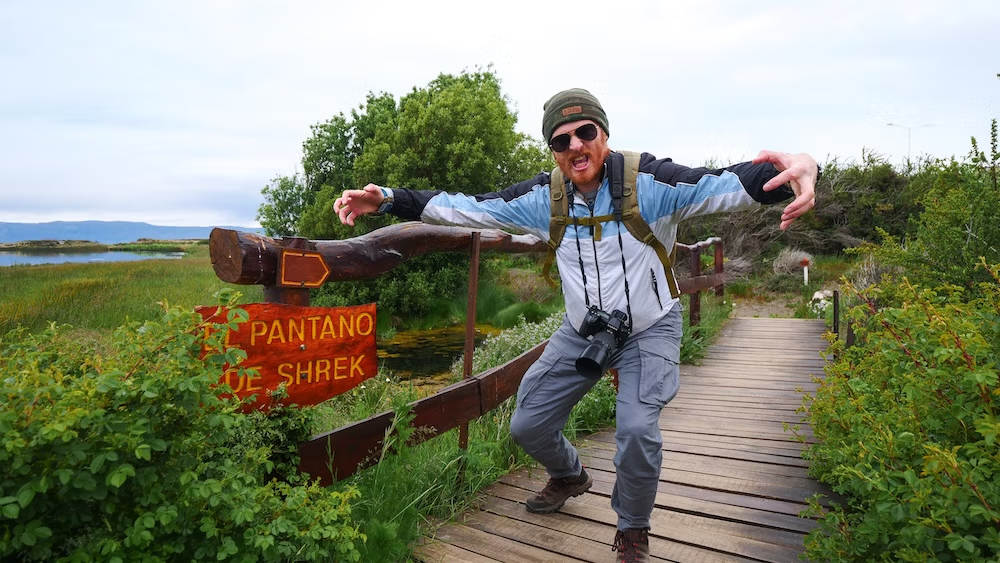
If you’ve watched our YouTube channel, you know Audrey and I are no strangers to long-haul travel. We’ve navigated convoluted transit systems all over the globe. But Patagonia? Patagonia operates on its own frequency. The maps lie about distances, the weather apps are works of sheer fiction, and the rules of the game change entirely depending on which invisible line you just crossed.
This isn’t just about crossing the international boundary between Argentina and Chile. The quirks start at the provincial level, seep into the coffee cups, dictate the bus seating hierarchy, and ambush your wallet at the dinner table. If you are planning a trip to the end of the earth, forget the glossy influencer guides. Let’s dive into the microscopic, unfiltered, and deeply un-sugarcoated realities of moving through Patagonia.
The Patagonia Survival Matrix: What the Brochures Don’t Tell You
| The Patagonia Reality | The Hidden Friction Point | The Exact Metric | The Nomadic Samuel Survival Fix |
| The Bio-Security Wall (Chile) | The SAG border patrol uses X-rays and beagles to hunt for organic matter. Forgetting a leftover apple will cost you dearly. | $250 – $400 USD Fine | Declare everything. If you are unsure about a sealed bag of trail mix, check “YES” on the form. |
| The Digital Border Trap | Chile now emails your PDI entry receipt. If your phone dies at the rugged exit border, guards can’t verify you. | Hours of manual delay | Screenshot the PDI email instantly, “favorite” it, or better yet—print a physical copy at your hostel. |
| The Transit Gauntlet | 14-hour Argentine bus rides feature freezing night temperatures and zero terminal toilet paper. | 14+ Hours / $45-$85 USD | Never book “Semi-Cama” for overnights. Pay the premium for “Cama” (fully reclining) and BYO toilet paper. |
| Terminal Ambushes | El Calafate requires a mandatory municipal tasa de embarque to pass the turnstiles. The card machines never work. | $3,000 ARS (Cash Only) | Do not spend your last pesos on empanadas. Keep a 5,000 ARS stash hidden in your passport specifically for terminal taxes. |
| The “No Man’s Land” Gap | Border checkpoints are rarely side-by-side. The Villa O’Higgins to El Chaltén crossing separates the two countries by rugged trail. | 22 km (13.7 miles) | Do not assume you are “done” when you stamp out of Chile. Mentally prepare for a 6-hour hike between nations. |
| The Culinary Traps | Argentine instant coffee is pre-roasted with sugar (café torrado), and pasta restaurants charge separate fees for noodles and sauce. | Sauce = 100% markup | Smuggle your own black instant coffee from home. Read pasta menus twice before ordering. |
| The Siesta Brick Wall | Small towns (like the Welsh enclave of Dolavon) completely shut down early in the week and every single afternoon. | 1:00 PM – 5:00 PM | Monday and Tuesday are dead zones. Plan major sightseeing Wednesday to Sunday, or prepare to eat gas station snacks. |
The Long-Haul Hierarchy: Surviving the Asphalt Oceans
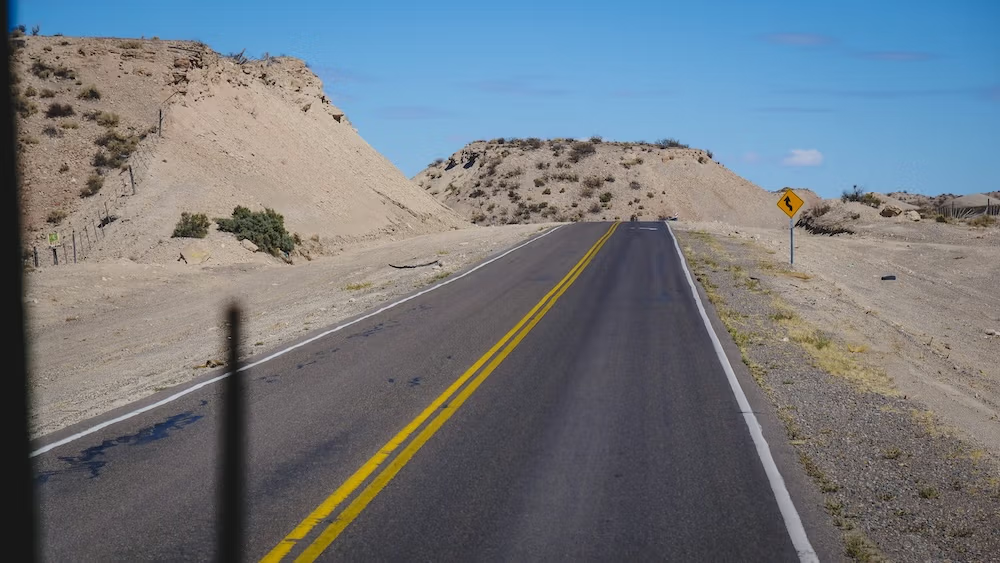
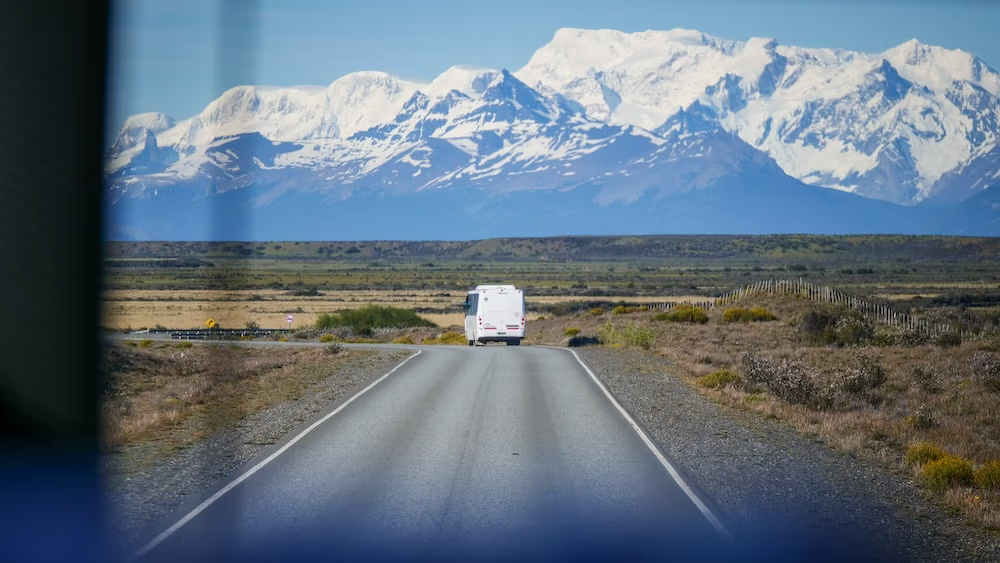
Before you even worry about international customs, you have to survive the sheer, unfathomable scale of the Argentine steppe. If you wanted to drive from El Calafate down to Ushuaia, you’re looking at a minimum of 11 hours, a ferry crossing, and a double border crossing. If you are taking the bus, add another four hours and a test of your sheer willpower.
We learned very quickly that not all bus seats are created equal, and in Argentina, the ticketing class you choose will make or break your trip. I spent an agonizing 14-hour overnight stretch completely regretting our budget-conscious decision to book “semi-cama.”
[Samuel’s Transit Survival Warning]
My biggest tip for anyone traveling long distances in Argentina: Book far enough in advance so you can get the “Cama” (fully reclining) seats. The Semi-Cama seats recline to about 140 degrees, which sounds fine until the bus temperature plunges to near-freezing at 3:00 AM. Also, you must carry your own roll of toilet paper in your daypack. The buses run out by hour four, and when you finally stumble into the bus terminal at dawn, the terminal bathrooms will be empty too.
The Provincial Bus-Shuffle
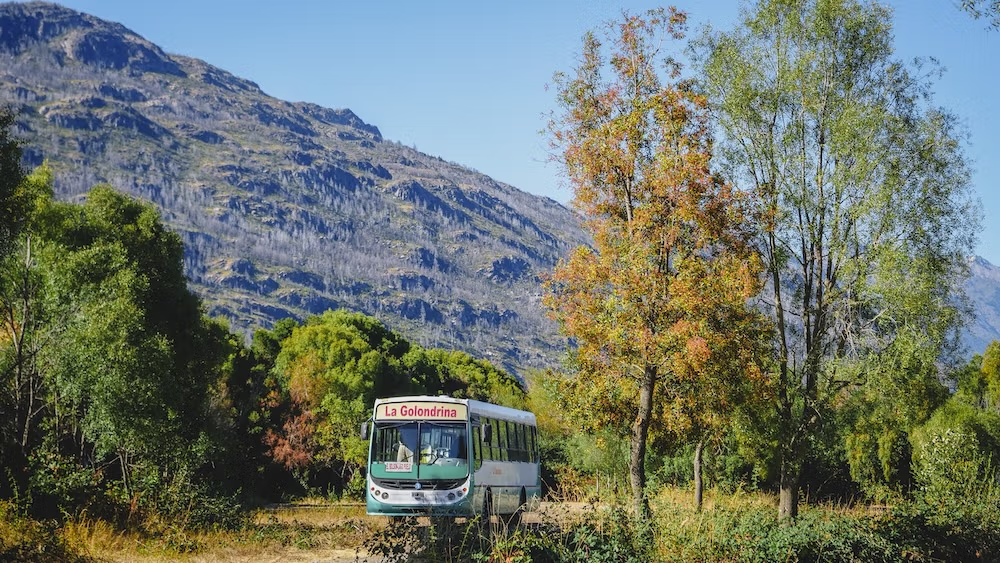
You expect friction at an international border, but Patagonia throws curveballs at the provincial lines too. While traveling north through the steppe, we crossed from the province of Río Negro into Chubut. We were riding with a major, reputable bus company, settling in for the long haul.
Suddenly, the bus pulled over at a desolate provincial checkpoint. Everyone was ordered off. We didn’t just have to show our IDs; we had to physically remove all our luggage from underneath the bus, stand in the freezing wind, and wait for a completely different bus—operated by the exact same company—to pull up and take us the rest of the way. Apparently, driver jurisdictions and union rules sometimes end hard at the provincial line. It added 90 minutes to our journey.
The Argentine Long-Distance Seating Matrix
To save your spine, memorize this hierarchy before you book on platforms like Busbud or directly at the terminal:
| Service Class | The Reality Check (What You Actually Get) | Approx Cost (12hr route) | Post-Ride Triage Priority |
| Común | Standard rigid seats. Minimal legroom. No amenities. | $25 – $35 USD | Immediate chiropractic intervention. |
| Semi-Cama | 140-degree recline. Footrest. Often freezing cold at night. | $45 – $55 USD | Hot shower and a strong coffee. |
| Cama / VIP | 160 to 180-degree recline (bed). Wider seats, blankets provided. | $70 – $85 USD | Ready to hike by noon. |
| Ejecutivo | 180-degree flatbed. Sometimes hot meals, wine, individual screens. | $95 – $120 USD | You will actually sleep. |
The Bureaucratic Gauntlet: Leaving the Steppe for the Fjords
Eventually, you will leave the wide-open, steak-heavy Argentine pampas and cross the Andes into the labyrinthine fjords of Chilean Patagonia. The most common overland artery is the route from El Calafate (Argentina) to Puerto Natales (Chile). We booked our tickets with Bus-Sur, paying roughly $42,000 CLP ($44 USD) for the semi-cama seats departing at 8:00 AM.
But getting on the bus is just the first hurdle.
El Calafate’s bus terminal sits on a steep hill above the main town. Walking up it with a heavy backpack is a severe quad-burner that takes about 20 minutes. Save yourself the sweat and pay $5 USD for a remise (local taxi). Once inside, you face the first hidden friction point.
Many travelers, knowing they are leaving Argentina, joyfully spend their last volatile Argentine Pesos on empanadas the night before. This is a massive mistake. To physically pass through the turnstiles to reach your bus in El Calafate, you must pay a mandatory municipal tasa de embarque (terminal tax).
[The Cash-in-Hand Rule]
The terminal fee is exactly $3,000 ARS (roughly $3.00 USD). It is cash only. The credit card machines are perpetually “offline,” and the ATM in the terminal is often out of cash. Keep a stash of 5,000 ARS tucked in your passport specifically to buy your freedom from the bus terminal.
Navigating the “No Man’s Land” Gap
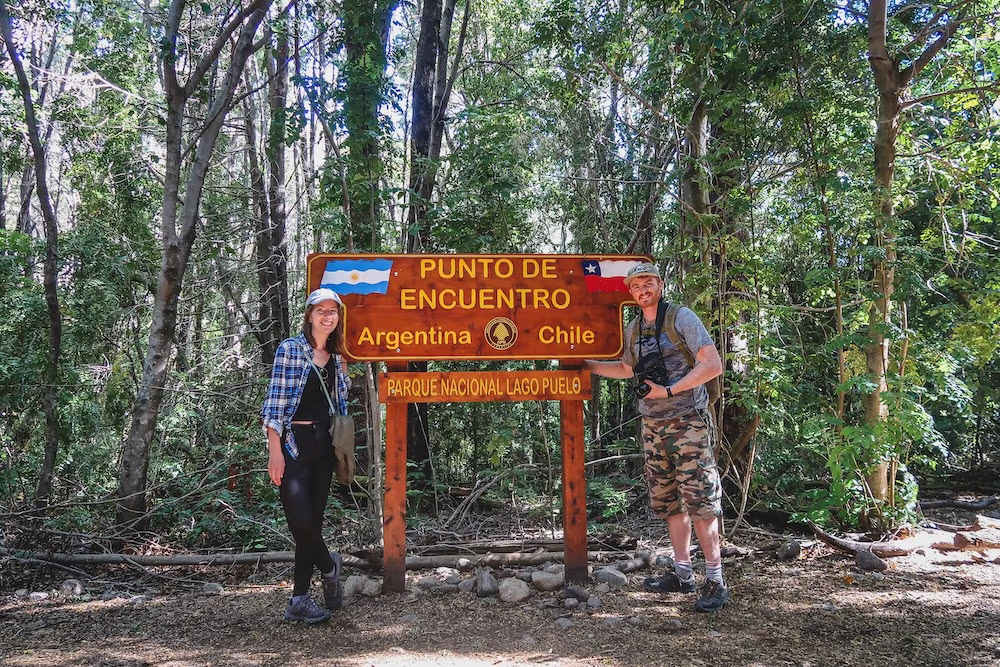
When you hit the Paso Río Don Guillermo border, you don’t just clear one building. There is a massive 7-kilometer (4.3-mile) “No Man’s Land” separating the Argentine exit post from the Chilean entry post.
You are offloaded, processed out of Argentina, reloaded onto the bus, driven for 10 minutes through a desolate stretch of dirt, and then offloaded again for the Chilean process. This double-shuffle reliably adds 90 to 120 minutes to the 5-hour journey.
If you think 7 kilometers is bad, count yourself lucky you aren’t doing the deep-south backpacker crossing from Villa O’Higgins (Chile) to El Chaltén (Argentina). At that border, the physical gap between the two countries’ checkpoints is 22 kilometers (13.7 miles) of rugged, muddy hiking trail. Many hikers stamp out of Chile, assume they are done, and then realize they have a grueling 6-hour trek with their full packs before they officially exist in Argentina.
The Digital PDI Trap
Chile recently modernized its immigration system, phasing out the old paper “ticket-stub” PDI (Policía de Investigaciones) receipts in favor of a digital version emailed to you upon entry. This sounds great until you realize you are in Patagonia.
When you leave Chile a week later at a remote border post, the guards need to see that PDI receipt. If your phone battery has died from the cold, or if you simply don’t have a cellular signal to pull up your email—which you absolutely won’t at Paso Río Don Guillermo—you are ghosted in the system. The guards cannot easily verify your entry, leading to hours of manual delays while the rest of your bus glares at you.
The Fix: The second you get that email in a Wi-Fi zone, screenshot it. Better yet, ask your hostel to print a physical copy.
The Bio-Security Wall: Respect the SAG
Chile protects its unique agricultural ecosystem with a ferocity that borders on paranoia. They operate what is essentially a Bio-Security Wall managed by the SAG (Servicio Agrícola y Ganadero).
When you cross into Chile, all luggage is removed and run through X-ray machines or sniffed by trained beagles. They are looking for organic matter.
Strictly Prohibited Items:
- ALL fresh fruit and vegetables.
- Meat (cooked, raw, or cured—say goodbye to your leftover salami).
- Honey and unpasteurized dairy.
- Seeds, nuts (if unroasted/unsealed).
If you forget a stray apple at the bottom of your daypack, or if you bought an artisanal jar of honey in Bariloche as a souvenir, they will find it. And they will not just confiscate it; they will fine you. Failure to declare an apple currently carries an immediate fine ranging from $250 to $400 USD.
When filling out the SAG declaration form, if you are even slightly unsure about a factory-sealed bag of trail mix, check “YES” to declaring food. If it’s illegal, they just throw it away. If you check “NO” and they find it, you pay the fine.
The Border Friction & Fee Matrix (Updates)
| Logistical Hurdle | Location / Route | Current Cost / Metric | The Reality & The Fix |
| Terminal Exit Tax | El Calafate (Rodoviario) | $3,000 ARS (Cash) | Must be paid at a glass booth before the turnstiles. Keep ARS on hand. |
| SAG Bio-Security Fine | Any entry point into Chile | $250 – $400 USD | Immediate fine for undeclared fruit, meat, or honey. Declare everything. |
| Rental Car Border Permit | Agency pickups (Punta Arenas/Calafate) | ~$100 – $140 USD | Requires 14 to 21 days lead time for notarization. You cannot book same-day. |
| Laminated Documents | Argentine Entry Posts | Denied Entry | Argentina rejects laminated birth certificates for minors as “altered.” |
| No Man’s Land Transit | Villa O’Higgins ↔ El Chaltén | 22 km (13.7 miles) | A 6-hour hike with full gear between border posts. No vehicle access. |
The Culinary Culture Shock: From Asado to Curanto
Once you cross the border, the topography changes from flat, yellow steppes to towering, green fjords. But the biggest shock is on the plate.
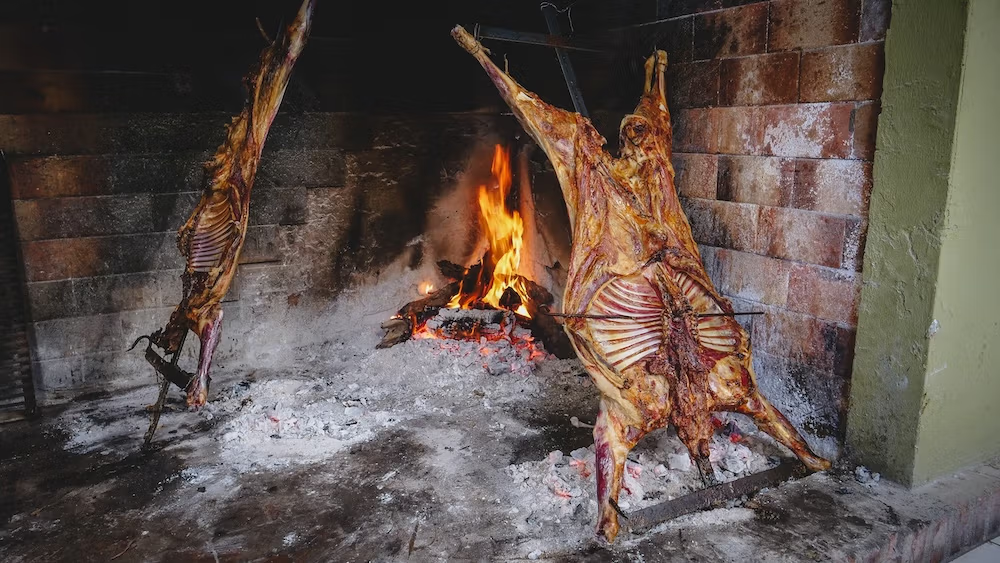
In Argentine Patagonia, the culinary king is the Asado (barbecue) and the Cordero Patagónico (spit-roasted lamb). Portions are aggressively massive. You will routinely find cuts of beef that hang over the edges of the plate. But the Argentine dining scene holds a few deeply hidden quirks that nearly broke our budget.
The “A La Carte” Pasta Trap
Argentina has a massive Italian heritage, and the artisanal pasta is incredible. But the pricing structure is a trap for the uninitiated.
We sat down at a highly recommended spot, thrilled to find fresh ravioli listed for a highly reasonable price. When the bill came, it was nearly double what we expected. Why? Because in many traditional Argentine pasta restaurants, you pay one fee for the physical noodles, and an entirely separate, equally expensive fee for the sauce (salsa). A plate of gnocchi might be $8, but the Bolognese to put on top of it is another $7.
The Pre-Sugared Coffee Smuggler
Our mornings in Argentina started with a brutal realization. I am a black coffee drinker. I went to a local supermarket in El Chaltén to buy cheap instant coffee for our early hiking starts. I made a cup, took a sip, and almost gagged. It was sickeningly sweet.
Welcome to the reality of Café Torrado. In Argentina, a vast majority of the affordable, everyday coffee is roasted with sugar glazed directly onto the beans to mask lower quality and extend shelf life. If you buy standard instant coffee or order a cheap café at a local diner, it will be pre-sweetened. Finding pure, unadulterated black coffee requires seeking out specialty cafes or paying a massive premium for imported brands. Next time, I am smuggling my own instant coffee from Canada.
Crossing into the Seafood Kingdom
The moment you clear the Chilean border, the beef disappears. Welcome to the kingdom of the sea. In towns like Puerto Natales, the menus pivot violently to Centolla (King Crab), Merluza (Hake), and Curanto (a traditional meat and seafood stew cooked over hot stones in the ground).
If you are transiting through the famous Cruce Andino—the $325 USD boat-and-bus relay race through the lakes from Bariloche to Puerto Varas—you will stop in the tiny Chilean outpost of Peulla for lunch. Expect to pay around $20,000 CLP (~$21 USD) for a plate of traditional salmon or Curanto. It is pricey, but after switching vehicles six times in one day, you will be hungry enough to eat the hot stones.
The Patagonian Caloric Index
| The Item / Venue | Location | Current Price | The Nomadic Samuel Verdict |
| Cordero Patagónico | Cholila / Calafate (ARG) | ~$20 – $30 USD (varies by blue rate) | Life-changing. The portions are massive; split one order between two people. |
| The Pasta + Sauce Combo | Regional Argentina | Pasta: $8 / Sauce: $7 | Read the menu carefully. Factor in the double-charge before ordering. |
| Café Torrado (Instant) | Grocery Stores (ARG) | $3 – $5 USD | Pre-roasted with sugar. A nightmare for black coffee purists. |
| Centolla (King Crab) | Puerto Natales (CHL) | $25,000 CLP (~$26 USD) | Rich, buttery, and worth every peso. Usually served with Pisco Sours. |
| The $1 Apple | El Chaltén (ARG) | $1.00 USD (per apple) | The reality of supply chains at the end of the road. Fresh produce is gold. |
The Welsh Anomaly: Cultural Whiplash in the Desert
While the Andes hold the fame, the eastern coast of Argentine Patagonia holds one of the strangest cultural anomalies on earth: Welsh Patagonia.
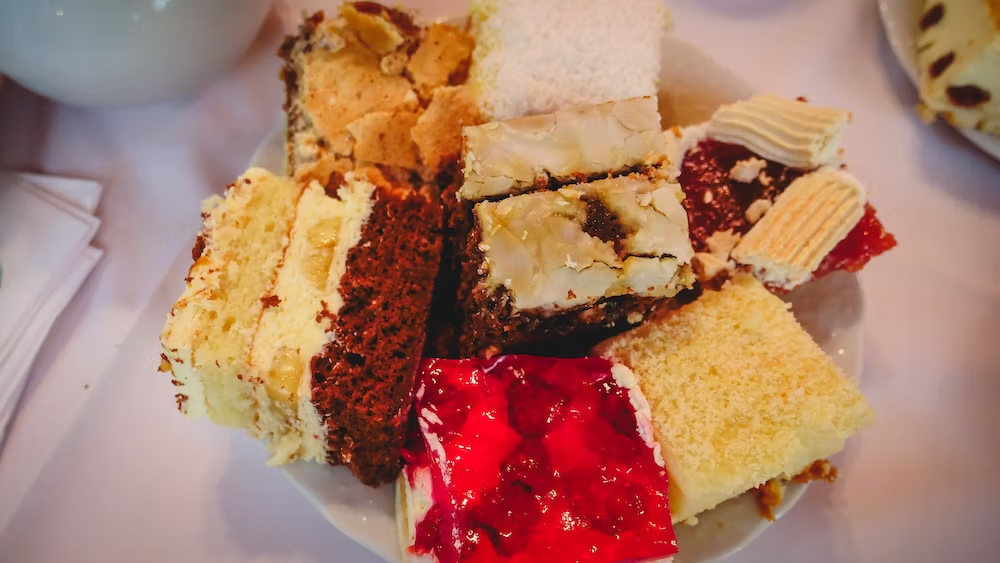
In the late 1800s, Welsh settlers arrived in the arid province of Chubut to preserve their language and culture. Today, towns like Gaiman, Trelew, and Trevelin feel like a glitch in the matrix. You are surrounded by red desert and guanacos, but the signs are in Welsh, dragons are painted on the walls, and the local specialty is Torta Negra (black cake).
Sartorial Panic at Princess Diana’s Tea House
We decided to walk through the dusty outskirts of Gaiman to visit Ty Te Caerdyd, the most famous Welsh tea house in the region. Princess Diana actually had her afternoon tea here when she visited Argentina in 1995.
I don’t know what I was expecting—maybe a rustic pioneer cabin. Instead, we walked through the gates into an incredibly posh, meticulously manicured English garden. The tables were set with fine china and tiered cake stands. And there we were: dripping in sweat, covered in Patagonian trail dust, wearing hiking boots and flannels. Nothing humbles you faster than experiencing massive imposter syndrome in the middle of the Argentine desert because you aren’t dressed appropriately for a royal tea service.
The Dolavon Gas Station Oasis (Hitting the Siesta Wall)
Our Welsh exploration also taught us a harsh lesson about regional timing. We drove out to the tiny neighboring town of Dolavon, excited to see the historic flour mills and canals.
We arrived on a Monday afternoon. The town was entirely dead. Every museum, every restaurant, and every mill was bolted shut. We had hit the impenetrable wall of the provincial Siesta combined with early-week closures.
[The Timing Reality Check]
In smaller Patagonian towns, Monday and Tuesday are terrible days for tourism. Furthermore, from 1:00 PM to 5:00 PM, everything shuts down for siesta. We spent our afternoon in Dolavon sitting on plastic chairs at the only open business—a local gas station—drinking Paso de los Toros soda and eating packaged alfajores. If you are planning an itinerary, Wednesday to Sunday are your high-value operational days.
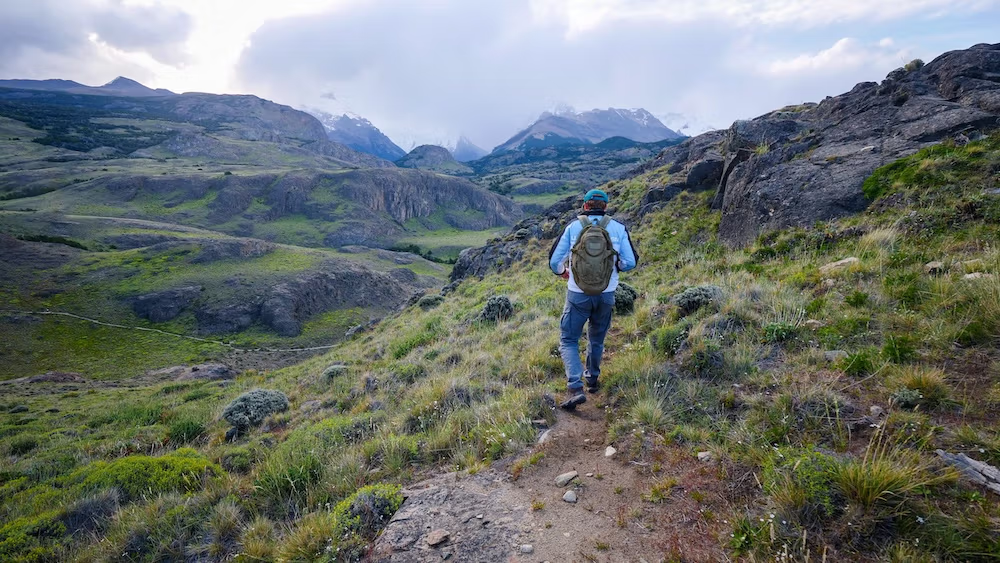
The Physical Toll: The Terrain Reality Check
Let’s strip away the romance of the hiking blogs for a second. The physical reality of moving through Patagonia will test your gear and your joints.
It isn’t just the trails; it’s the towns themselves. When you arrive at the Puerto Natales bus terminal (the Rodoviario), it is about 1 kilometer from the town center. The terrain is entirely flat, but the sidewalks are made of deeply cracked concrete and coarse, jagged gravel. If you bring four-wheeled “spinner” luggage to Patagonia, the Natales gravel will snap the wheels off within three blocks. You must bring a true travel backpack or haul your suitcase by the handle.
The Sedan Chair Fantasy at Kilometer 16
If you are heading to El Chaltén to hike the famous Laguna de los Tres trail (the base of Fitz Roy), prepare for the descent. It is a 22-kilometer round trip. The final ascent is a brutal 400-meter vertical scramble over loose scree.
But the real friction point isn’t going up; it’s coming down. By kilometer 16, the adrenaline has worn off. On our descent, I hit what I call the “Camera Surrender” point. My patellar tendons were screaming, the wind was sandblasting my face, and I actively packed my expensive camera away because the scenery no longer mattered to me. I spent the last six kilometers actively fantasizing about calling an emergency number to be carried out on a velvet-lined sedan chair.
Terrain & Transit Reality Matrix
| The Location / Route | The Brochure Promise | The Gritty Reality | Effort vs Reward |
| Laguna de los Tres (El Chaltén) | Majestic alpine lake views of Fitz Roy. | 22km round trip. The last 1km is a vertical scree nightmare. Knees will fail on descent. | 10/10. The ultimate payoff, but requires 3 days of recovery. |
| Puerto Natales Streets | Charming gateway to Torres del Paine. | Cracked pavement and luggage-destroying coarse gravel. Ferocious wind tunnels off the water. | 7/10. Utilitarian hub. Take a taxi from the terminal. |
| The Cruce Andino (Lake Crossing) | A relaxing scenic cruise through the Andes. | 6 vehicle changes (Bus-Boat-Bus-Boat-Bus-Boat). Constant luggage shuffling. Cold on the water. | 8/10. Stunning, but it’s a 13-hour logistical marathon, not a cruise. |
Embracing the Grit
Patagonia is not a vacation; it is an expedition. You will pay $1 USD for a single bruised apple in El Chaltén because the supply chains are stretched to the breaking point. You will watch a $15 umbrella get violently inverted and destroyed by the wind within three minutes of stepping out of the Esquel bus terminal. You will fight Wi-Fi black holes just to pay for your hostel.
But when you finally reach the end of the trail, pull off your boots, and dive into a massive plate of Cordero Patagónico—or a towering slice of Welsh Torta Negra—every ounce of logistical friction fades away. You crossed the borders, you survived the semi-cama freeze, and you paid the pasta tax. You earned the view.
If you are gearing up for your own expedition, be sure to dive into our full Patagonia video series on the Nomadic Samuel YouTube channel, where you can watch us navigate these exact provincial quirks in real-time. Pack your windbreaker, stash 3,000 ARS in your pocket, and whatever you do, don’t forget the toilet paper.
Patagonia Provincial Quirks: The Frequently Asked Questions
Can I bring my own snacks across the border into Chile?
Depends. If your snacks are factory-sealed, processed, and labeled (like a bag of Oreos or roasted almonds), you’re usually fine. However, if you have a single loose apple, a ham sandwich from the bus terminal, or a jar of artisanal honey from Bariloche, the Chilean SAG officers will confiscate it and potentially hit you with a $250+ fine. When in doubt, declare it on the form. It’s much better to have a guard throw away your sandwich than to have them throw away your travel budget.
Do I really need to carry cash for the bus terminals?
100%. While you can book your main long-distance tickets online with a credit card, the actual bus terminals in places like El Calafate often charge a “departure tax” or turnstile fee that is strictly cash-only. These fees are small—usually around $3,000 ARS—but the card machines are perpetually “offline” and the terminal ATMs are notorious for running out of bills. Keep a small stash of Argentine Pesos specifically for these “terminal ambushes.”
Is the tap water safe to drink in Patagonia?
Absolutely. In both Argentine and Chilean Patagonia, the tap water is generally some of the cleanest and crispest in the world, often sourced directly from glacial run-off. You’ll save a fortune—and a lot of plastic—by bringing a reusable bottle. Just be aware that in very remote trekking areas, you should still use a filter if pulling directly from streams to avoid livestock-related bacteria, but in towns like El Chaltén or Puerto Natales, drink up.
Is “Semi-Cama” comfortable enough for an overnight bus?
Nope. Unless you have the ability to sleep standing up in a wind tunnel, avoid Semi-Cama for anything over six hours. The 140-degree recline sounds decent, but on a 14-hour haul through the freezing steppe, you’ll feel every bump. Spend the extra $20 for a “Cama” or “Ejecutivo” seat. You get a nearly flat bed, usually a blanket that actually smells clean, and a much better chance of arriving at your destination without needing a chiropractor.
Will my phone work in “No Man’s Land” between borders?
Never. There is a massive connectivity black hole between the Argentine and Chilean checkpoints—sometimes spanning over 20 kilometers. This is exactly why you cannot rely on “cloud” documents. If you need to show your digital PDI receipt or your onward bus ticket to a guard, have a screenshot saved to your photo gallery. Don’t be the person holding up a bus of forty hungry travelers because you’re chasing a 3G signal that doesn’t exist.
Are the Welsh tea houses in Gaiman open every day?
Hardly. If you’re planning a “Princess Diana” tea experience in Gaiman or Dolavon, do not show up on a Monday or Tuesday. Most of these traditional Welsh establishments—and the local museums—shut down early in the week. Also, remember the “Siesta Wall.” Between 1:00 PM and 5:00 PM, these towns essentially go into hibernation. Aim for a Wednesday through Sunday visit to ensure you actually get your tea and Torta Negra.
Can I drive a rental car across the border?
Yes, but. You cannot simply rent a car and drive across the border on a whim. You must notify the rental agency at least 14 to 21 days in advance so they can process a notarized “Permiso de Salida del País” and international insurance. This paperwork usually costs between $100 and $140 USD. If you show up at the border without this specific document, the guards will turn you around faster than a Patagonian whirlwind.
Should I bring an umbrella for the Patagonian rain?
Pointless. In Patagonia, rain rarely falls straight down; it moves horizontally at 60 miles per hour. A standard umbrella will be inverted and snapped in half within your first ten blocks of walking in a town like Puerto Madryn or Ushuaia. Invest in a high-quality, seam-sealed rain shell with a hood that cinches tight. If you want to keep your gear dry, use a waterproof pack cover or dry bags inside your bag. Leave the umbrella at home.
This guide is also available in Spanish. [Lea la versión en castellano: Las mañas provinciales de la Patagonia — Qué cambia al cruzar la frontera]