
Llao Llao is one of the easiest places in Bariloche to misunderstand from a map.
Puerto Pañuelo appears almost on top of the hotel. Circuito Chico curls around the surrounding lakes and forest. Cerro Campanario is just back along Avenida Bustillo. Trails disappear into Parque Municipal Llao Llao. Boats leave for islands, waterfalls and remote corners of Nahuel Huapi National Park.
Everything looks close.
Geographically, much of it is. Logistically, that is another story.
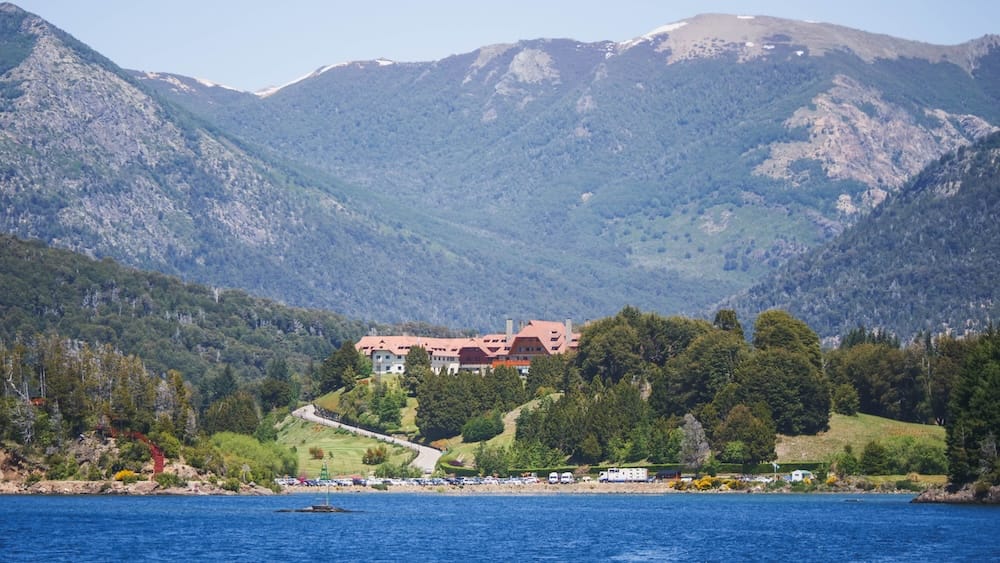
A forest walk near the hotel can be shortened when the weather turns. Circuito Chico might take three hours or most of the day depending on how often you stop. A lake excursion has a boarding time, separate fees, a fixed route and a boat that will leave without you while you are still admiring Punto Panorámico.
Audrey and I have explored this western end of Bariloche across several trips. We have stayed at Llao Llao Hotel with our daughter Aurelia, taken the boat from Puerto Pañuelo to Isla Victoria and the Arrayanes Forest, sailed west to Puerto Blest and Lago Frías, visited Colonia Suiza by local bus, eaten along Circuito Chico and walked to Punto Panorámico. We also knew Bariloche before travelling with a child, which changes how you judge chairlifts, hills and the optimistic phrase “short walk.”
The main planning rule is straightforward: choose one substantial outing and give it room. Add a nearby walk, meal or viewpoint only when it fits naturally.
Trying to complete Circuito Chico, squeeze in a lake cruise and stop at every scenic turnout is possible in the same way eating an entire breakfast buffet is possible. You may technically succeed. Whether you enjoy the final third is another question.
Llao Llao is already inside Bariloche’s western excursion zone
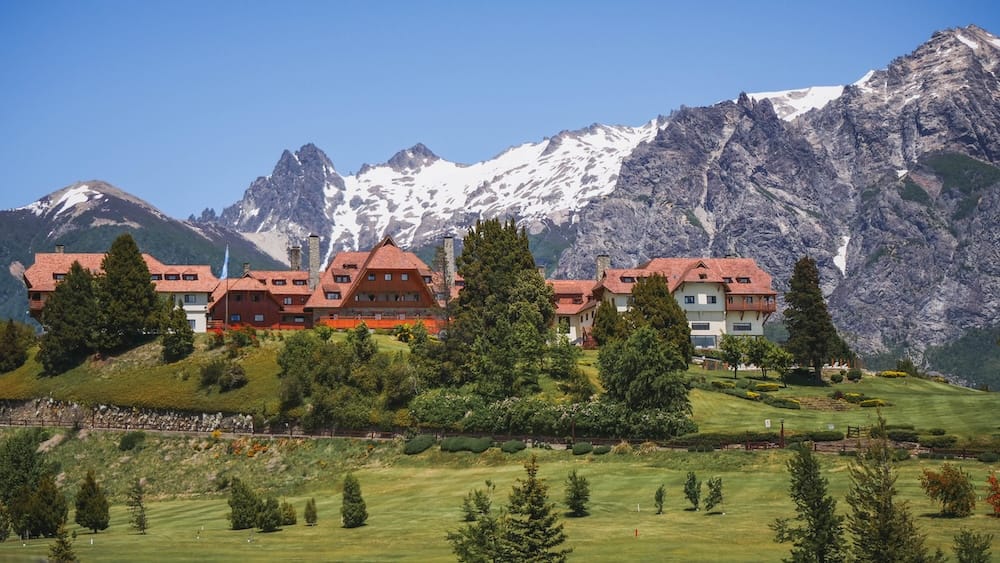
Llao Llao Hotel sits roughly 23 kilometres west of central Bariloche along Avenida Bustillo. Puerto Pañuelo is just beyond it, around kilometre 25, and the roads and trails of Circuito Chico spread through the surrounding peninsula.
That location is a genuine advantage.
Travellers staying in central Bariloche need to cover the long approach along Avenida Bustillo before reaching the western attractions. If you are already at Llao Llao, you begin beside the port, the municipal park and one of the most scenic sections of the circuit.
What you save is repositioning time. You do not automatically save the rest of the day.
Puerto Pañuelo may be beside the hotel, but its excursions still require check-in and consume several hours. Circuito Chico passes the property, but the individual stops are distributed around the loop. The nearest public forest trail begins about 1.3 kilometres from the hotel and port area, while Cerro Campanario and Colonia Suiza require travel in different directions.
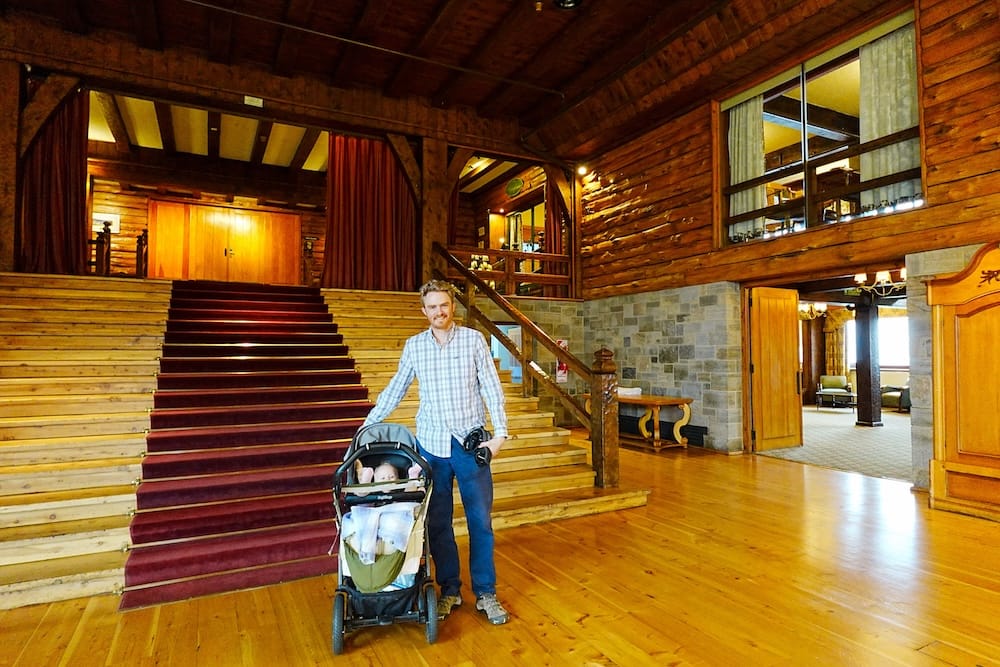
If this western location is the reason you are considering the resort, you can check current availability at Llao Llao Resort on Booking.com. We stayed there ourselves, and being beside Puerto Pañuelo and Circuito Chico is one of the clearest practical arguments for using it as a base.
It helps to separate the surroundings into three types of outing:
- Public trails around Parque Municipal Llao Llao, which offer the most flexibility.
- Circuito Chico, which is a road route assembled from viewpoints, beaches, walks, food stops and optional detours.
- Puerto Pañuelo lake trips, which leave at fixed times and usually become the main event of the day.
Once those categories are separated, the area becomes much easier to plan.
Why Circuito Chico can be 25 kilometres and 60 kilometres at the same time
Before getting into the activities, it is worth clearing up one recurring piece of Bariloche confusion.
Circuito Chico is often described as approximately 60 kilometres long. It is also regularly described as a loop of roughly 23 to 27 kilometres.
Both measurements can make sense.
The longer figure generally describes the complete outing from central Bariloche: travelling west along Avenida Bustillo, entering the peninsula loop and returning toward the city. The shorter figure usually isolates the inner western circuit.
Llao Llao sits inside that western zone, so hotel guests have already removed much of the city approach.
This does not turn Circuito Chico into a quick lap. The remaining route still contains enough viewpoints, beaches, forest paths, breweries and detours to occupy most of a day when explored properly.
The distance is rarely what slows people down anyway.
The stops do.
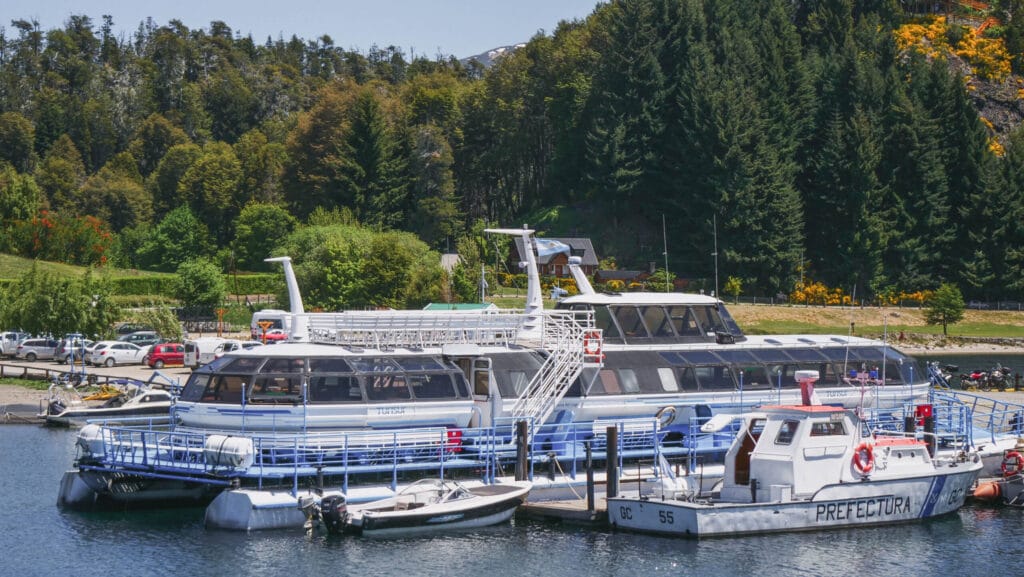
Puerto Pañuelo is close enough to see, but the boat still owns the schedule
We have departed from Puerto Pañuelo on two very different journeys.
The first was our Isla Victoria and Arrayanes Forest day trip. We reached the port on public bus number 20. The second was the beginning of Cruce Andino, when we travelled from Bariloche to Puerto Pañuelo by bus before sailing west to Puerto Blest and continuing across Lago Frías.
On the Isla Victoria day, the ride followed Avenida Bustillo west from Bariloche. Near the end of the route, Llao Llao appeared beside us, followed almost immediately by the port. The hotel worked as a giant visual cue that it was time to stop daydreaming and prepare to get off the bus.
We arrived around 45 minutes before departure, which gave us enough time to look around the waterfront without immediately joining the boarding shuffle.
That buffer remains sensible.
Line 20 still connects Bariloche’s terminal and centre with the Llao Llao area. Current payment options include SUBE and compatible contactless methods, but timetables change. Check the live Mi Bus schedule rather than relying on an old frequency quoted in a travel article—including this one.
Boat operators generally ask passengers to present themselves at Puerto Pañuelo roughly 40 minutes before sailing. Some schedules build in an even larger gap between the stated presentation time and departure.
Staying at Llao Llao eliminates the long journey from downtown. It does not eliminate check-in.
I would not plan to catch the final possible bus and arrive with seven heroic minutes to spare. That strategy feels efficient until the bus slows down, the terminal line grows or somebody discovers that a required fee must be paid separately.
The ticket price may not be the total price
Our Isla Victoria excursion involved three separate charges:
- The navigation ticket.
- Nahuel Huapi National Park admission.
- The Puerto Pañuelo embarkation fee.
Audrey kept adding the figures together as we went.
“There’s three different fees, guys. Wow.”
We encountered the embarkation charge again when beginning Cruce Andino. This is not merely an old Argentine travel quirk. Current lake excursions still commonly separate the cruise fare from park admission and the port charge. Transfers from Bariloche, food and premium seating may also cost extra.
Different rates can apply to foreign visitors, Argentine residents, children, retirees and residents of certain provinces. Identification may be required for discounts.
Some compulsory charges at the port may need to be paid in cash. That is worth checking before arrival, especially if you have become accustomed to tapping a card everywhere and carrying approximately seventeen pesos in your wallet.
Exact prices move too quickly to treat any amount as permanent. Check the operator’s current tariff for your date and calculate the full cost, not only the large number displayed on the initial booking page.
Parking arrangements at Puerto Pañuelo are less consistently documented. Drivers should confirm the current situation with their operator and arrive with enough time to deal with it.
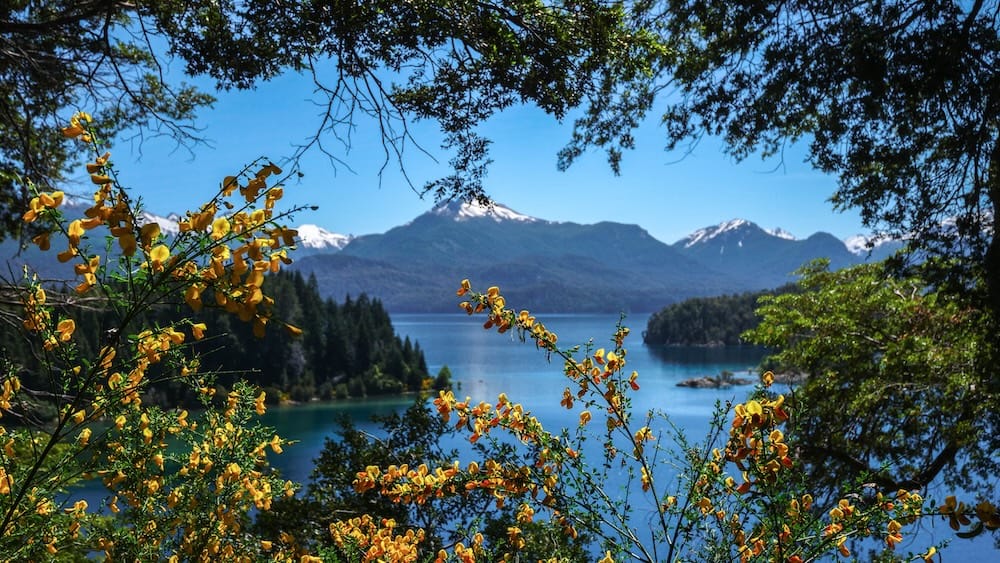
Our Isla Victoria and Arrayanes Forest boat trip
We booked the combined Isla Victoria and Arrayanes Forest excursion online and added the premium catering package.
That upgrade gave us a separate upper-deck seating area with food and drinks during the sailing portions. Audrey and I are both highly motivated by scenery, but food remains one of our more reliable sources of discipline. We may forget a trail name. We rarely forget when lunch is served.
The upgraded package cost more, but we enjoyed it and thought it was worthwhile.
That does not make it essential. Travellers who care mainly about the destinations can buy the regular ticket. For us, having somewhere quieter to sit while eating and drinking made the navigation feel like part of the experience rather than transportation between two land stops.
Twenty minutes, then boom
The initial sailing to Isla Victoria was surprisingly quick.
We had barely settled into the journey when it was time to disembark.
As Audrey put it, “It was just like 20 minutes on the boat and boom, we’re there.”
The first few minutes on the island felt hectic. Hundreds of passengers stepped off at roughly the same time, creating one large crowd around the landing.
Audrey was not thrilled.
“I probably sound very anti-social,” she said, before explaining that she enjoyed nature more when fewer people were around.
That is fair. A forest can absorb a surprising number of visitors, but not when all of them are standing on the same patch of dock.
Fortunately, the crowd did not remain together.
Some passengers joined Spanish-language guides. Others followed English-speaking groups. People selected different trails, difficulty levels and viewpoints. Within a short time, the large arrival group had broken apart across the island.
We confirmed when we needed to return and went off independently.
Isla Victoria rewards the longer departure
We followed signs toward the beach and then climbed through the forest to a higher viewpoint.
The route involved stairs and a noticeable uphill section. One spoken measurement in our original footage is too uncertain to repeat as an exact elevation figure, but this was more than a flat stroll beside the dock.
From above, we had views over turquoise water, forested shoreline and snow-capped mountains. Yellow flowers brightened the edges of the trail. After the congested landing, the quiet made the scene feel even better.
For a while, we had that section of the island almost to ourselves.
The amount of time you receive on Isla Victoria now varies dramatically by departure. Current schedules can provide roughly one hour on a shorter option and around two and a half hours on a longer one. During part of the winter season, some departures allow approximately three and a half hours on the island.
That difference changes the trip.
One hour supports a quick walk and a look around. Two and a half or three and a half hours gives you room to reach a viewpoint, spend time by the water and explore without constantly calculating how quickly you can return to the boat.
Audrey said during our outing that she would prefer the longer departure, and I agree. Isla Victoria deserves time.
Someone looking for a compact afternoon may be happy with the shorter schedule. Independent walkers should choose the product with the longest island allocation they can reasonably fit into their itinerary.
Do not assume every operator offers the same experience because the headline destinations match. Sailing times, guidance, catering, transfers and time ashore can all differ. Travellers ready to compare the formats can check current Isla Victoria and Arrayanes Forest tour availability on GetYourGuide and inspect the departure time and inclusions before paying.
The Arrayanes Forest was the compromise
After Isla Victoria, we reboarded and continued to the Arrayanes Forest.
We had previously visited the forest from Villa La Angostura, where it had been one of our favourite hikes from that trip. That earlier experience made the contrast obvious.
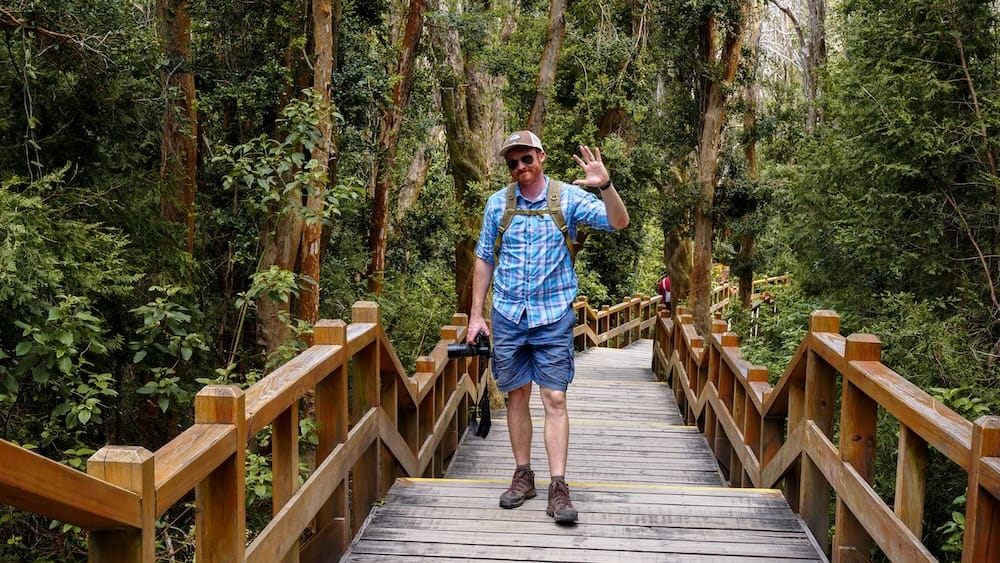
From Puerto Pañuelo, the forest was one stop within a combined excursion. We had enough time to follow the boardwalk and see the cinnamon-coloured arrayán trunks, but the visit felt compressed.
Most passengers began walking in one direction. We went clockwise while they moved counterclockwise, which briefly gave us a quieter section of the circuit.
It was a useful crowd tactic.
It did nothing for the clock.
Current combined excursions still commonly allow around 45 minutes in the Arrayanes Forest, even when the amount of time on Isla Victoria increases. That is enough for an introduction. It is not an unhurried forest day.
Audrey called it “a little pit stop basically.”
That is the trade-off in one sentence.
The combined cruise gives you variety: sailing, Isla Victoria and the Arrayanes Forest in a single outing. Travellers primarily interested in the forest should investigate approaching it from Villa La Angostura, where the day can be built around the peninsula rather than treating the trees as the second half of a package.
What Puerto Blest felt like on our Cruce Andino journey
Our second Puerto Pañuelo departure was completely different.
We were beginning Cruce Andino, the multi-stage lake-and-bus journey between Bariloche and Puerto Varas. The full crossing continued into Chile, but the opening section gave us direct experience of Puerto Blest and Lago Frías inside Nahuel Huapi National Park.
After checking in and tagging our luggage in central Bariloche, we travelled by bus to Puerto Pañuelo, paid the embarkation fee and boarded the first catamaran.
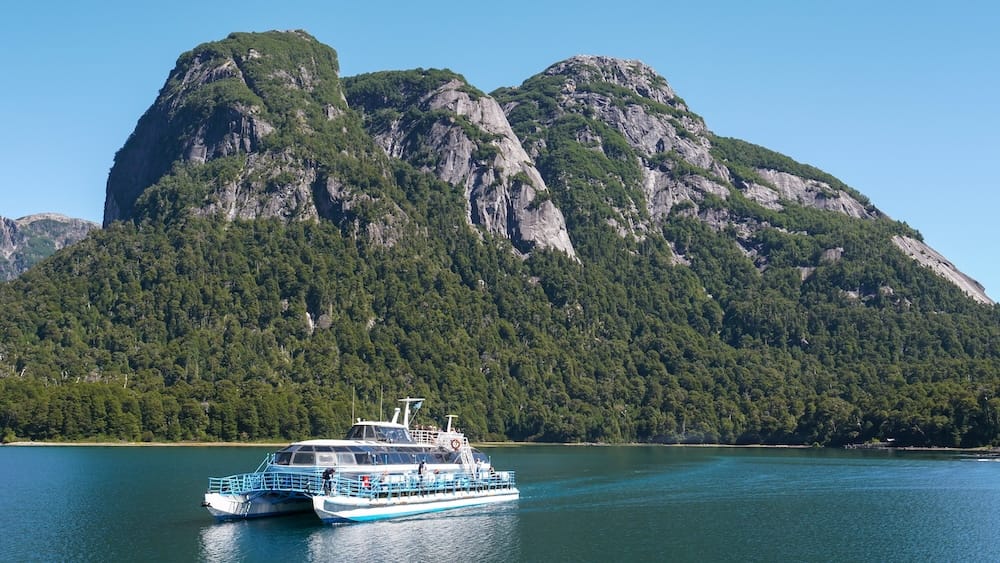
The navigation to Puerto Blest took about an hour through the Blest arm of Nahuel Huapi Lake. It felt less like a quick transfer between two visitor sites and more like travelling steadily into the national park.
The wind was lively enough that recording outside became a minor audio experiment, but the clear weather gave us a superb view of the changing water, mountains and forest.
When we reached Puerto Blest, our first priority was lunch. Nobody who has followed us for more than four minutes will find this surprising.
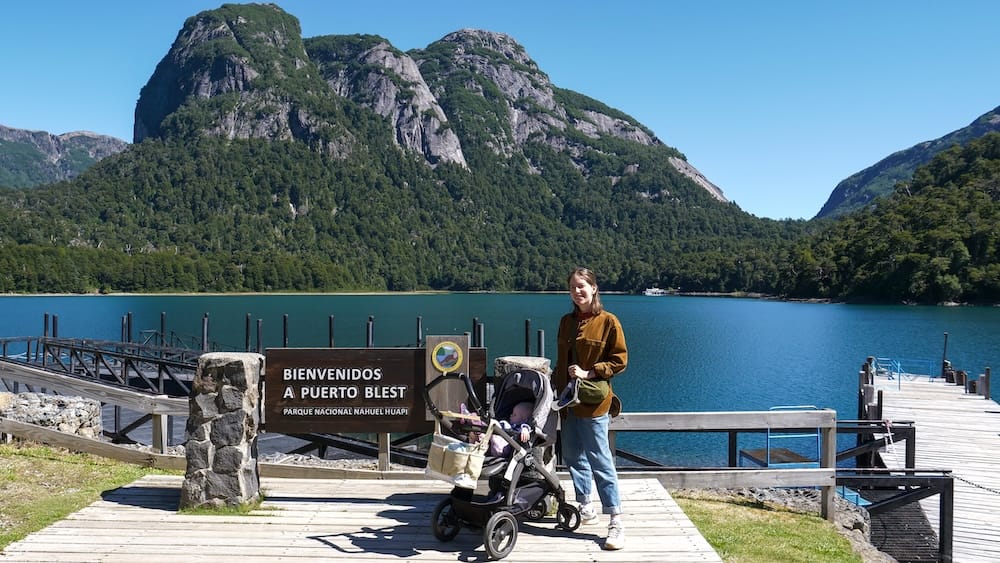
We ate in the hotel restaurant with Aurelia, who was equally enthusiastic about the meat on our plates. Travellers trying to reduce the cost could bring their own food and use the picnic tables outside instead.
After lunch, we photographed the Puerto Blest sign and walked along the peninsula where the Frías River meets the Blest arm of Nahuel Huapi. The stop was short, but it did not feel like the Arrayanes Forest visit. Puerto Blest was part of a journey pushing farther west, and the landscape kept unfolding beyond it.
Lago Frías felt far more remote
From Puerto Blest, we boarded a bus for the short land transfer to Puerto Alegre and then stepped onto another catamaran to cross Lago Frías.
The crossing itself lasted only around 15 minutes.
It was one of those maddeningly short journeys where the scenery makes you want to be in six places on the boat at once. I kept moving around trying to film while Audrey stayed inside with a sleeping Aurelia.
Lago Frías had a milky green colour from the sediment in the water. The boat was smaller, the setting felt quieter and the surrounding mountains seemed to close around the lake.
I said at the time that it almost felt like private access to the national park. That was the character of the place: brief, remote and unusually intimate after the larger Nahuel Huapi crossing.
This does not mean we took the conventional Puerto Blest and Cascada de los Cántaros day excursion. We reached Puerto Blest as the first stage of Cruce Andino and then continued across Lago Frías. We therefore cannot review the standard waterfall itinerary as if it were the exact product we booked.
What we can say is that Puerto Blest offers a different type of lake day from Isla Victoria. The Isla Victoria excursion combines two famous destinations and more conventional visitor circuits. Puerto Blest draws you progressively deeper into the western forest and lake system.
Travellers who want to visit Puerto Blest without continuing toward Chile can check the current Puerto Blest and Los Cántaros day excursion on GetYourGuide. That is a different product from the crossing we took, so compare the route, walking component, optional additions and total duration carefully.
Which Puerto Pañuelo lake trip should you choose?
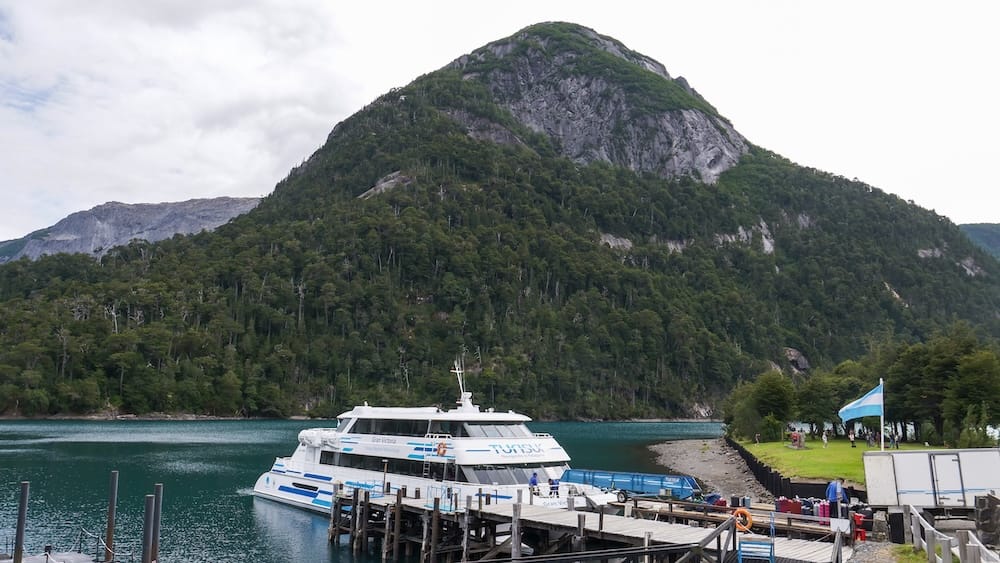
Puerto Pañuelo serves several different excursion styles. They should not be ranked only by which destination name sounds most famous.
The better question is what you want the day to contain once the boat reaches land.
Isla Victoria and the Arrayanes Forest
Choose this for variety.
You get navigation across Nahuel Huapi Lake, time on Isla Victoria and a shorter visit to the Arrayanes Forest. Depending on the operator and departure, the total outing can run from a compressed afternoon to most of the day.
Its strength is the combination. Its weakness is that the forest portion remains brief.
We took this excursion ourselves and would prioritize the departure with the longest Isla Victoria allocation.
Puerto Blest and Cascada de los Cántaros
Choose Puerto Blest when you want a longer day built around navigation, dense forest and waterfalls.
We personally sailed to Puerto Blest and continued across Lago Frías as part of Cruce Andino. The standard day trip follows a different structure and may include the Cascada de los Cántaros route and an optional Lago Frías extension.
Its strength is the feeling of travelling deeper into the national park. Its drawback is that it controls most of the day and may involve several separately priced components.
Brazo Tristeza and the Arroyo Frey waterfall
Brazo Tristeza combines lake navigation with a guided forest hike to the Arroyo Frey waterfall.
Current versions run for roughly five and a half hours and may use smaller boats, with a bilingual guide and food included depending on the product.
This is a researched alternative rather than something we personally did.
It makes the most sense for travellers who want the outing to feel active and prefer a boat-and-hike combination over the larger classic excursions. The current Brazo Tristeza boat tour and forest hike on GetYourGuide is one real option to examine for dates, language and inclusions.
Weather can change the day without cancelling it
Lake trips often continue through rain, snow and wind. Grey skies do not automatically stop the boats.
Conditions can still alter routes, visibility, comfort and land access. Operators and park authorities may modify or cancel excursions when necessary.
Bring layers even when the morning looks calm. Nahuel Huapi has no obligation to preserve the weather you saw while eating breakfast.
We have explored Circuito Chico in pieces, not as a single checklist
Our firsthand relationship with Circuito Chico is not one heroic day where we drove the full route, stopped everywhere and emerged with a laminated verdict.
We have explored sections across multiple visits.
We have eaten along the circuit, visited the Gilbert area, walked to Punto Panorámico, travelled independently to Colonia Suiza and carried memories of Cerro Campanario from earlier Bariloche trips. That is useful evidence, but it should not be stretched into a claim that we tested every beach, trail and transport method around the complete loop.
Circuito Chico is often described as one attraction. In practice, it is a road linking several independent decisions.
The danger is treating every named stop as compulsory.
Punto Panorámico is better when you let it become a real stop
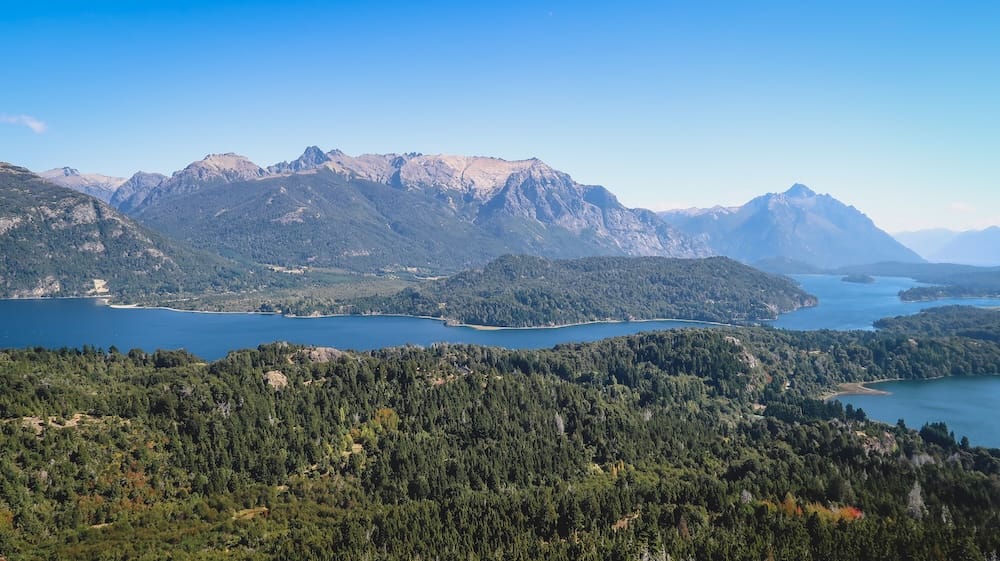
On one of our earlier Bariloche trips, we ate at Gilbert, a small restaurant along the scenic circuit, and then walked approximately half a kilometre to Punto Panorámico.
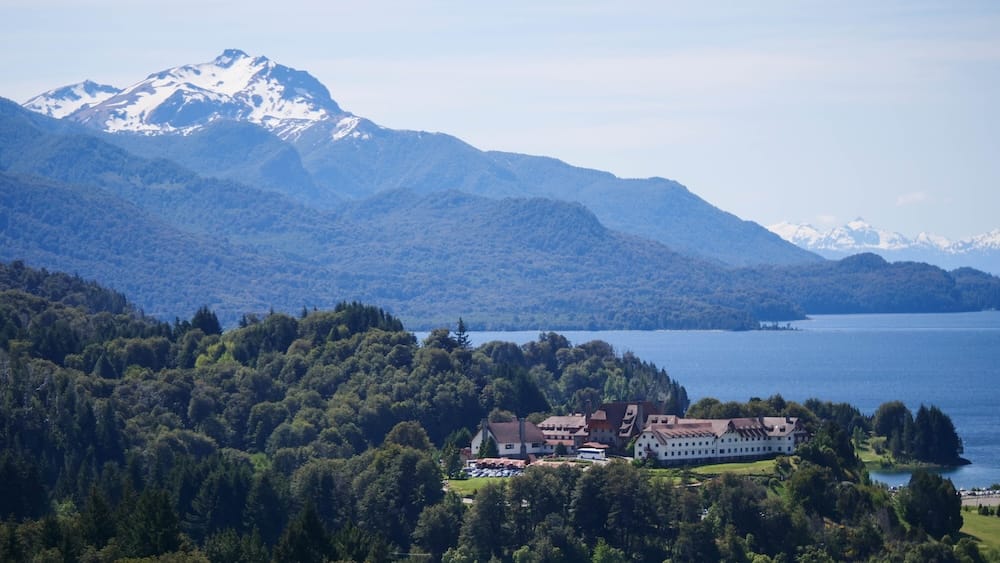
From there we could see snow-capped mountains, forest, the lakes and Llao Llao Hotel in the distance.
We did not treat it as a roadside photograph and leave. We sat down with carrot cake, looked across the landscape and allowed the stop to consume some time.
That is what Circuito Chico does when it is working properly. A point that appears to require five minutes can easily become an hour once food, walking and a good view are involved.
This is also why I would rather choose a few distinct stops than visit eight places long enough to prove that each one contains a lake.
Cerro Campanario stood out from our earlier trips
Cerro Campanario was one of the Bariloche activities that remained in Audrey’s mind from our visits before having a child.
The chairlift leads to a high viewpoint over the lakes and surrounding mountains. On a later trip with one-year-old Aurelia, we skipped it because Audrey was not comfortable carrying her on the open lift.
“I’d be holding on so tight,” she said.
That is not a declaration that the chairlift is unsuitable for every family. It is an honest example of how the same attraction can move from an obvious choice to a firm no once you are travelling with a small child.
Campanario makes sense when the elevated panorama is a priority. Allow time for the lift or walk, the viewpoint and whatever queue is waiting when you arrive. Do not treat it as a ten-minute decorative stop simply because it sits beside the road.
Colonia Suiza can be lively or half asleep
We reached Colonia Suiza independently using a couple of local buses.
During that trip, the connections were straightforward enough, and once we arrived the village was easy to explore on foot. It is small, pedestrian-friendly and suited to wandering between restaurants, craft shops and the surrounding forest.
Predictably, our first serious decision involved lunch.

Audrey ordered rösti with onions and bacon. I had goulash with hand-rolled noodles. Her meal came with apple cake, which was an excellent surprise and a reminder that Central European culinary influence in Patagonia is at its most convincing when dessert appears unannounced.
We had arrived on a Monday. During that visit, we learned that the busier fair and curanto days were held at other points in the week during high season.
Curanto is prepared by heating stones in a pit and cooking meat, vegetables and other ingredients underground. It attracts visitors specifically for the meal and gives Colonia Suiza a much livelier atmosphere.
We missed it.
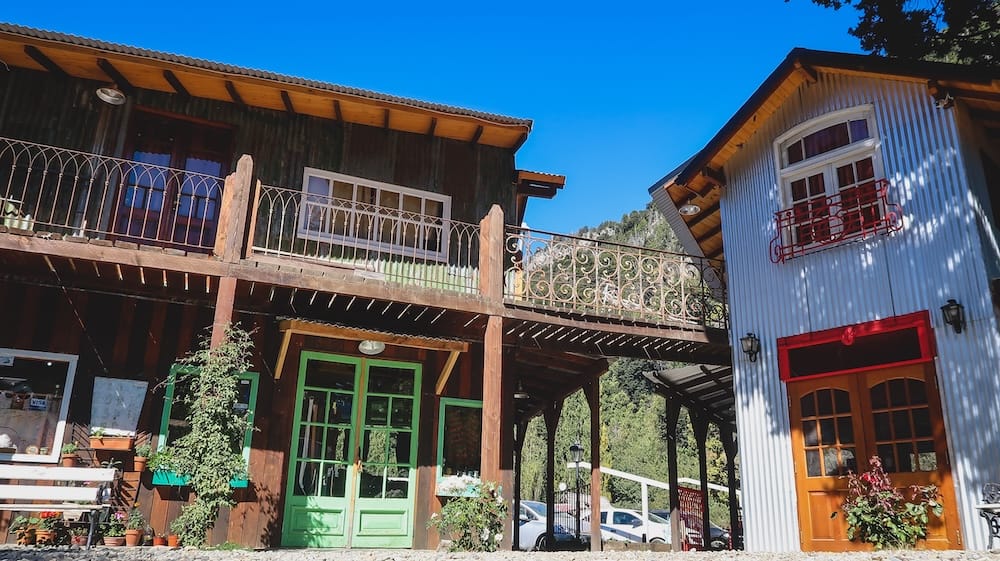
Many businesses were closed on our non-fair day, but the village was peaceful. We walked along the main road, visited artisanal shops, went down toward the lake and ended up inside the Bosque de Duendes.
The “elf forest” was stranger and more entertaining than expected. A guide led us among trees and mushrooms while introducing an entire population of elves, trolls, witches, leprechauns and other forest creatures.
The stories were told in Spanish, which is worth knowing if the attraction is part of your plan. Without the language, you still have the forest and figures, but you lose much of the performance.
Later we stopped for burgers, potatoes and craft beer before leaving. Colonia Suiza had comfortably filled much of the day even without the market or curanto.
The practical choice is not simply whether to visit. It is which version you want.
- Choose a current fair or curanto day for food, stalls and a busier village atmosphere.
- Choose a quieter day for slower wandering, while accepting that many businesses may be closed.
Schedules and operating days change, so verify the current market and curanto calendar rather than relying on the days from our historical visit.
Travellers who do not want to coordinate local buses can check a current guided Colonia Suiza option on GetYourGuide. We visited independently, so this is an alternative booking path rather than the tour we personally used.
Which Circuito Chico stops deserve your time?
A compressed organized tour usually takes around three and a half to four hours. Driving independently can consume most of a day once you include Campanario, a forest walk, photographs, food and time beside the water.
The strongest stops perform different jobs:
- Cerro Campanario provides the high panoramic view.
- Punto Panorámico delivers a quick view that can become a slower food-and-scenery stop.
- Lago Escondido offers a short forest walk.
- Villa Tacul or Bahía López gives you shoreline time.
- Colonia Suiza earns a longer detour when food, markets and village atmosphere matter.
Llao Llao guests have already removed much of the drive from central Bariloche. Spend that saved time at the places you selected.
Do not use it to add six more stops.
Car, tour, bicycle or bus?
Drive when you want control
A car makes Circuito Chico easiest to customize.
You can stop when the views improve, leave when a place becomes crowded and change the plan when the weather starts misbehaving. It is also easier to combine a viewpoint with a public trail or turn Colonia Suiza into a longer detour.
The road is predominantly paved, but parking varies by stop and season. Somebody also needs to drive and keep the outing moving.
That person may discover that every passenger has developed a sudden passion for “one last viewpoint.”
For travellers who want this stop-by-stop freedom, it is worth using the trip dates to compare current Bariloche car rentals on Booking.com. A rental earns its place here because it solves the dispersed-route problem. It is not necessary for the Puerto Pañuelo cruise itself.
Take a tour when you want the route simplified
An organized Circuito Chico tour removes the transport and navigation decisions.
The operator chooses the pace, the stops and the amount of time at each one. Cerro Campanario’s chairlift ticket is often separate.
Tours work well for travellers who want a broad overview in a few hours. They are less appealing for photographers, hikers or anybody who wants to spend a long time over lunch while everyone else waits on the bus.
If avoiding driving and parking matters more than controlling every stop, you can review a current guided Circuito Chico tour on GetYourGuide and check whether Campanario, pickup and admission charges are included.
Cycle when the road itself is the activity
Cycling Circuito Chico can mean very different things depending on the starting point.
A return ride from central Bariloche can exceed 60 kilometres. Beginning near the inner western loop reduces the distance substantially, but hills, wind, traffic and weather remain part of the experience.
An e-bike lowers the physical effort. It does not remove the road.
Choose a bicycle because you want to cycle through the landscape. It is not merely a clever transport shortcut between attractions.
Use public transport for one or two destinations
We used public buses successfully for Puerto Pañuelo and Colonia Suiza on different trips.
That proves buses can be useful for point-to-point outings. It does not turn them into a practical hop-on, hop-off version of Circuito Chico.
Line 20 serves the Avenida Bustillo corridor and Llao Llao, while other routes and connections reach selected places such as Colonia Suiza. Timetables and route variations need to be checked for the actual day.
Trying to stitch together the complete loop with regular city buses may save money. It will not save time, and it may consume your remaining affection for timetables.
The best flexible outings are around Parque Municipal Llao Llao
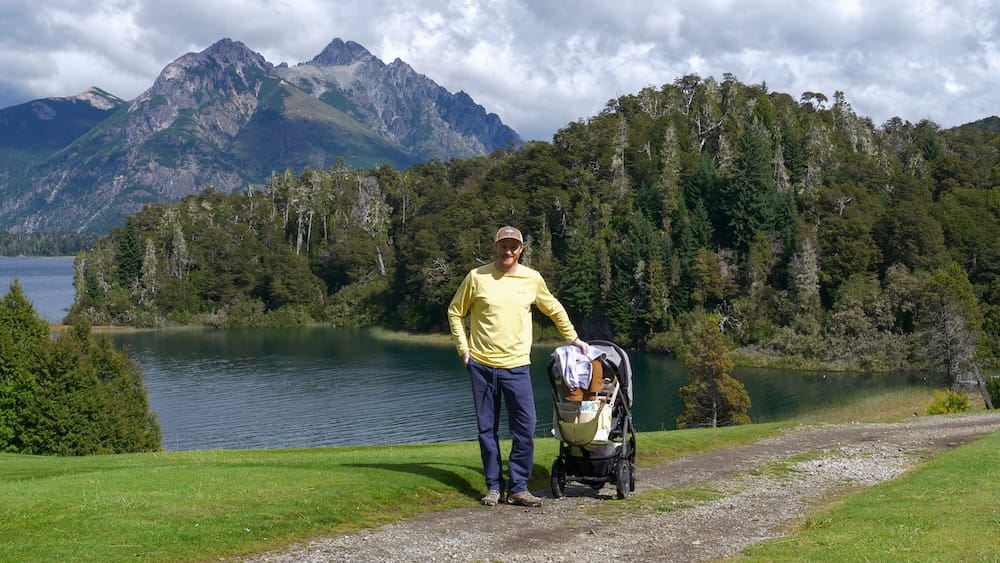
During our stay at Llao Llao Hotel, we had several days of wind and rain before the sky finally began to clear.
We did not know how long the break would last, so we moved our outdoor plans forward and walked downhill through the hotel grounds toward Puerto Spiegel.
Aurelia practised walking and running along the way. Eventually she fell asleep in the stroller, leaving Audrey and me to continue with a temporarily unconscious travel companion.
The walk gave us lake views, mountain photographs and outdoor time without locking us into a departure schedule.
We completed that route as hotel guests. Public access through the private resort grounds to Puerto Spiegel is not clearly established, so non-guests should not assume they can reproduce the same walk by appearing at the entrance.
The surrounding municipal park offers better-documented public alternatives.
Cerrito Llao Llao and Villa Tacul
The trailhead lies about 1.3 kilometres from the hotel and Puerto Pañuelo area.
From there, walkers can climb toward Cerrito Llao Llao or continue toward Villa Tacul. The routes are classified as low difficulty, although some slopes may still be challenging for older travellers or anyone with limited mobility.
Walking times vary from approximately 50 minutes to one hour and 20 minutes depending on the selected endpoint. Remember to add the approach to the trailhead.
This is the strongest nearby option when you want a proper walk without turning the entire day into Circuito Chico.
Lago Escondido
Lago Escondido works as a shorter forest stop.
The walk from the parking area takes approximately 20 minutes each way and can be connected with nearby features such as Puente Romano and Bahía de los Troncos.
This fits more naturally before an afternoon commitment than a large Circuito Chico itinerary.
The trail’s low-difficulty classification does not guarantee that it is suitable for every stroller, wheelchair or mobility level. Check current conditions when accessibility matters.
Bahía López
Bahía López supports a longer low-difficulty walk of around an hour and a half.
It sits between the quick Lago Escondido stop and the more substantial Cerrito Llao Llao outing.
Choose it because you want the shoreline and walk. Skip it when it has become another obligation on an already crowded loop.
Can you combine Circuito Chico with a lake cruise?
A complete Circuito Chico outing and a substantial Puerto Pañuelo cruise generally make poor partners on the same day.
Current Isla Victoria schedules may require passengers to report from mid-morning through early afternoon and can return between roughly 5:30 and 6:40 p.m. Puerto Blest may occupy even more of the day.
Circuito Chico takes three and a half to four hours even in compressed tour form. An independent version with proper stops can take much longer.
You can combine a cruise with one selective attraction.
With a car or reliable private transfer, Cerro Campanario, Punto Panorámico or a short walk at Lago Escondido may fit before a later departure. Build in a generous buffer before port check-in.
Missing a viewpoint is mildly disappointing. Missing the boat is an achievement with financial consequences.
I would not attempt the complete circuit before sailing, and I would not rely on multiple bus connections for a tightly timed plan.
After the cruise, dinner or a short walk near the hotel is realistic. Restarting Circuito Chico in fading light because two remaining map pins are causing emotional distress is not.
Which outing fits your day?
| Outing | Realistic time | Best reason to choose it | Main drawback | Our firsthand experience |
|---|---|---|---|---|
| Public trail near Llao Llao | About 1–3 hours | Flexible forest time close to the hotel | Terrain and access vary | Puerto Spiegel as hotel guests; public park trails researched |
| Selected Circuito Chico stops | About 1–4 hours | Choose a viewpoint, meal, beach or short walk | Requires deciding what to skip | Punto Panorámico, Gilbert area and Colonia Suiza; earlier Campanario context |
| Full Circuito Chico | Around 3.5–4 hours on a tour; potentially most of a day independently | Varied scenery and route freedom | Very easy to overfill | We have explored sections, not documented one complete loop |
| Isla Victoria and Arrayanes Forest | Roughly 4.5 hours to most of a day | Two famous destinations in one outing | Separate charges and a short forest stop | Yes, complete firsthand excursion |
| Puerto Blest and Lago Frías | Most of a day or part of a longer crossing | Deeper forest, remote lake scenery and progressive travel west | Controls the day and products differ | Yes, as part of Cruce Andino rather than the standard waterfall day tour |
| Brazo Tristeza and Arroyo Frey | Around 5.5 hours for current products | Smaller-scale navigation with hiking | More physical and fewer departure choices | No, researched only |
| Colonia Suiza | Half day to full day | Food, village atmosphere, shops and nearby forest | Non-fair days can be very quiet | Yes, independently by local buses |
How I would plan two days around Llao Llao
With two full days, I would divide them cleanly.
The first would be a Puerto Pañuelo lake excursion.
Choose Isla Victoria and the Arrayanes Forest when you want two famous destinations and some independent island walking. Select the departure with the longest Isla Victoria allocation.
Choose Puerto Blest when you want the journey to keep moving deeper into the national park and do not mind giving most of the day to boats, forest and transfers.
When the Arrayanes Forest itself is the priority, I would consider approaching from Villa La Angostura instead.
The second day would be Circuito Chico, but selectively.
I would choose Cerro Campanario or Punto Panorámico for the big view, add one public forest walk and then decide whether food and village atmosphere justify the Colonia Suiza detour.
I would not attempt to visit every labelled attraction. We have enjoyed this part of Bariloche most when the day had room to expand: a longer island walk, lunch at Puerto Blest, carrot cake overlooking Llao Llao or an unplanned wander through an elf forest.
A shorter trail around Parque Municipal Llao Llao can remain available for arrival day, a weather break or the hours surrounding another plan.
That is the real advantage of staying in this part of Bariloche. You are already beside Puerto Pañuelo, the municipal park and the western circuit. You spend less time travelling out to the scenery.
Do not repay that gift by rebuilding the wasted time yourself.
Choose one main outing. Let it breathe. Keep the rest optional.
Frequently Asked Questions
Is Puerto Pañuelo within walking distance of Llao Llao Hotel?
Puerto Pañuelo is very close to the hotel area, but the article does not assume that every traveller can simply walk between them. Confirm the exact pedestrian access, road crossing and luggage suitability with the hotel or your boat operator.
How early should I arrive at Puerto Pañuelo for a lake excursion?
Plan to report roughly 40 minutes before sailing, while checking the exact presentation time supplied by your operator. Staying at Llao Llao reduces the transfer from central Bariloche, but it does not remove check-in or boarding.
Can I do Circuito Chico and a Puerto Pañuelo lake cruise on the same day?
A complete circuit and a substantial cruise generally make a rushed combination. One selective stop such as Cerro Campanario, Punto Panorámico or Lago Escondido may fit before a later departure when you control the transport and preserve a generous port buffer.
Which Puerto Pañuelo boat trip should I choose?
Choose Isla Victoria and the Arrayanes Forest for two famous destinations and island walking. Puerto Blest suits a longer forest-and-lake day, while Brazo Tristeza is the more active boat-and-hike option described in the article.
Why is Circuito Chico described as both 25 and 60 kilometres?
The shorter figure usually refers to the inner western loop, while the longer figure includes the approach from central Bariloche and the return toward the city. From Llao Llao, much of that urban approach has already been removed.
Can non-guests walk to Puerto Spiegel through Llao Llao Hotel?
We completed that walk while staying at the hotel. Unrestricted public access through the private resort grounds is not clearly established, so non-guests should use the documented public trails in Parque Municipal Llao Llao instead.
Is Colonia Suiza worth visiting outside fair or curanto days?
Yes, but expect a different village. A quieter day allows slower wandering and may feel peaceful, while many businesses can be closed. Fair or curanto days bring more food, stalls and activity, so check the current calendar before going.
Project 23 Argentina: This guide is also available in Spanish. [Leé la versión en castellano: Qué hacer cerca del Hotel Llao Llao: Circuito Chico, Puerto Pañuelo y excursiones lacustres]
This article contains affiliate links. If you book through one of these links, I may earn a commission at no extra cost to you.