
Choosing where to stay in Patagonia sounds easy until you look at the map.
El Calafate is famous. El Chaltén is famous. Bariloche is famous. Ushuaia has done such a good job of branding itself as the end of the world that ignoring it can feel like a personal failure.
Then Puerto Madryn, Puerto Pirámides, Esquel, El Bolsón, Villa La Angostura and San Martín de los Andes enter the conversation. Your simple hotel search mutates into a minor geography degree.
The problem is that Patagonia does not have one obvious central base. It has specialist towns, regional gateways and slower places that only make sense for certain kinds of trips.
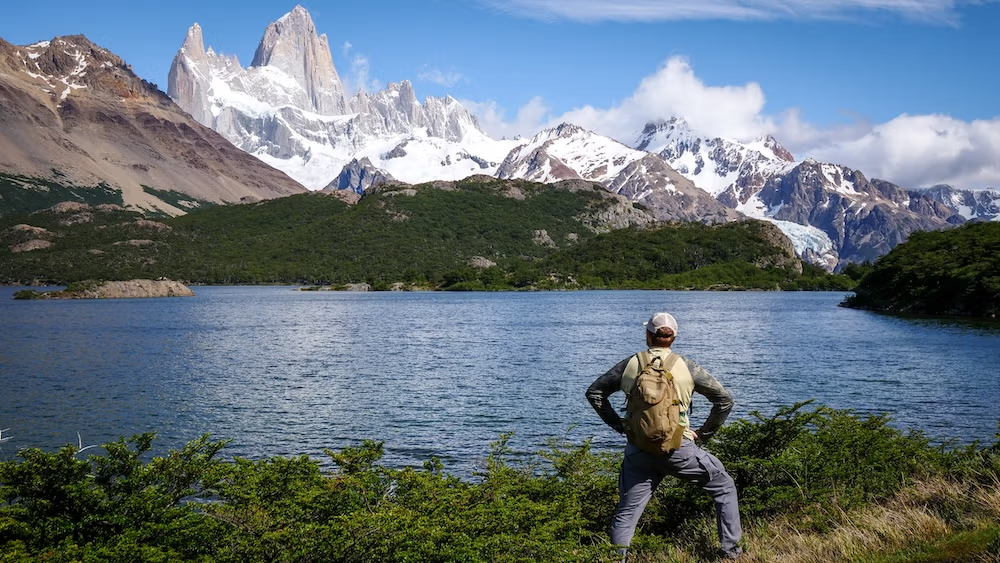
Audrey and I learned this by moving through Argentine Patagonia over several journeys. We stayed in wildlife gateways, trekking towns, lake districts, mountain bases and cities at the far southern edge of the country. Some places worked exactly as expected. Others surprised us. A few were wonderful places to stay but inefficient bases for what we actually wanted to do.
That distinction matters.
A famous town can still be the wrong base. A remote cabin can improve the entire trip—or quietly turn every meal and excursion into a transport problem. The prettiest room on a booking site may be nowhere near the part of Patagonia you came to experience.
The useful question is not, “What is the best place to stay in Patagonia?”
It is this:
What do I want most from this part of the trip, and which base makes that experience practical without creating a larger logistical headache?
Choose the Experience Before You Choose the Town
Patagonia is too large and too fragmented for one base to perform every job.
For wildlife, the real choice is between Puerto Madryn’s services and Puerto Pirámides’ immersion inside Península Valdés.
For glaciers, El Calafate handles the excursions and transfers.
For serious hiking, El Chaltén puts major trails around the town.
For lakes, restaurants and a broader menu of outdoor activities, Bariloche becomes much more compelling—but where you stay in the Bariloche area matters almost as much as choosing it.
This is why I would not begin by opening an accommodation site and scanning every property labelled “Patagonia.” That is how you end up booking the nicest-looking room in the wrong operational location.
I would filter every possible base through five questions:
- What is the primary experience?
- How many usable nights remain after arrival and departure?
- Can I reach the main experience on foot, by public transport, through a pickup, or only with a car?
- Does the accommodation sit where I will actually spend my days?
- Does the base move the itinerary forward, or force me to backtrack?
Once a town survives those questions, then it makes sense to compare accommodation there. Searching every corner of Patagonia before deciding what the base needs to accomplish is backwards.
The final question is easy to underestimate. Patagonia punishes unnecessary backtracking with long travel days, awkward departure times and the occasional arrival when all you want is a shower and a horizontal surface.
We reached Puerto Madryn after roughly 18 or 19 hours on an overnight bus. The journey had run late, and we stumbled into town feeling thirsty, disoriented and vaguely undead. Puerto Madryn was a useful base partly because it gave us somewhere to recover, eat, organize tours and regain our ability to form complete sentences.
A base is not merely where you sleep. It determines how much energy remains for the reason you travelled there.
For Wildlife, Choose Between Puerto Madryn’s Logistics and Puerto Pirámides’ Immersion
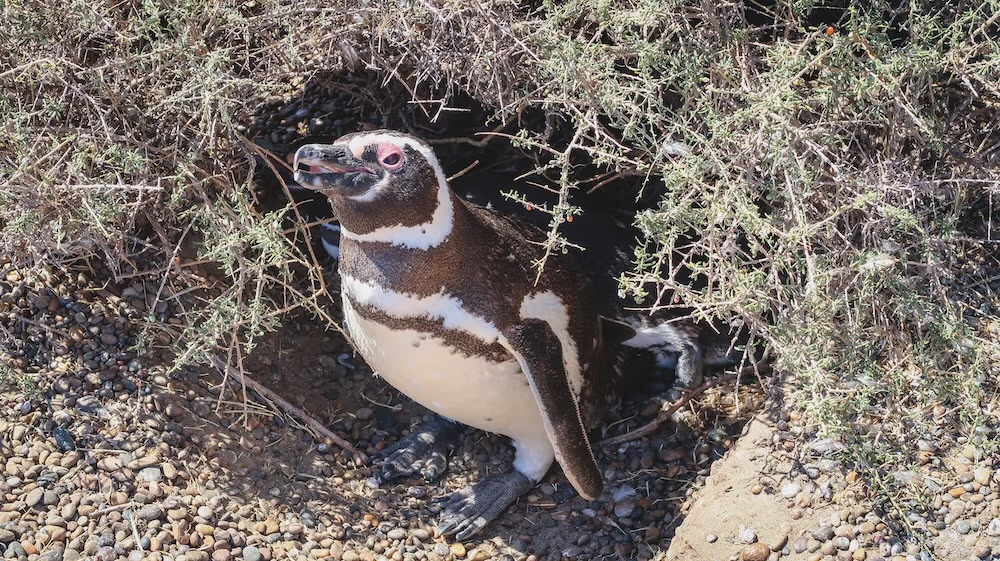
Puerto Madryn and Puerto Pirámides both work for exploring Península Valdés, but they create different trips.
Puerto Madryn is the easier logistical gateway. Puerto Pirámides puts you inside the peninsula and closer to its atmosphere.
The mistake is assuming that one is simply better.
Puerto Madryn Is the Easier Wildlife Base
Puerto Madryn worked for us because it had the practical infrastructure surrounding the wildlife experience.
We could arrive by long-distance bus, check into accommodation, eat a proper meal, walk along the waterfront and arrange several days of excursions. Our tour vehicle collected us from the hotel in the morning. When we returned from the peninsula, we had restaurants, museums, apartments and enough ordinary city life to make the stay comfortable.
Puerto Madryn is not merely a waiting room for Península Valdés. We enjoyed the city itself.
The beach and long waterfront gave us somewhere to walk between excursions. We found excellent seafood and Patagonian lamb. Two museums surprised us with how much they added to the stay. The pace was relaxed enough that we did not feel every hour needed to be filled with a major attraction.
That matters after a wildlife tour involving an early departure and hours on the road.
Puerto Madryn also provides more accommodation flexibility than the smaller settlements on the peninsula. That does not mean you can ignore peak-season demand. We learned that ourselves.
After returning from Puerto Pirámides, we went back to a hotel where we had previously stayed. They could accommodate us for one night but were full after that. We had not reserved the whole stretch in advance, so we had to move to a studio apartment in another part of the city.
It was hardly a disaster. The apartment was cheaper, had a useful desk and gave us better internet than the hotel. But moving luggage in the middle of a short stay is exactly the kind of avoidable faffing around that makes Patagonia feel more tiring than it needs to be.
Puerto Madryn is the stronger choice when you want easier arrival and departure, a broader range of restaurants and services, guided wildlife outings with transport arranged, and a comfortable place to recover between long tour days.
Once that decision is made, you can compare current accommodation in Puerto Madryn on Booking.com. Keep the map open and look at the relationship between the property, waterfront, restaurants and any tour pickup arrangements rather than judging the stay by room photos alone.
Travellers who do not want to handle the peninsula’s long driving distances independently can also compare wildlife tours departing from Puerto Madryn on GetYourGuide. Check the season, total duration, pickup location and exact wildlife area before booking; “Península Valdés tour” can cover a very long day and several different routes.
The trade-off is distance. You are using a city outside the heart of the peninsula as your operational base. Wildlife days can involve long drives, and returning to town each evening reduces the feeling of sleeping inside the landscape you came to experience.
Puerto Pirámides Gives You a More Immersive Stay
Puerto Pirámides changes the atmosphere immediately.
It is the only town inside Península Valdés, set beside the water with low buildings, sandy surroundings and the feeling that the peninsula begins almost outside your door.
We stayed for two nights in a beachfront property. Our room faced the sand and ocean, and we had a kitchenette with breakfast supplies waiting in the refrigerator. Fresh bread arrived in the morning, but we could eat whenever we wanted rather than working around formal breakfast hours.
That flexibility was ideal in a small destination.
One morning, Audrey nearly stayed in bed rather than getting up for sunrise. She made it out, somewhat reluctantly at first, and was glad she did. We climbed the nearby cliffs as the light gradually revealed more of the coastline. The higher we walked, the more the landscape opened up, including a quieter stretch of beach beyond the main public area.
That is the advantage Puerto Pirámides gives you. You are not only entering the peninsula for a scheduled tour and leaving afterward. You can walk outside before breakfast, see the cliffs in changing light and experience the town after the daytime visitors thin out.
Staying inside Península Valdés does not make every wildlife area easy to reach.
Scheduled buses connect Puerto Pirámides with Puerto Madryn and Trelew, so reaching town does not automatically require a rental car. Travelling around the wider reserve is a separate problem. The principal wildlife areas are far apart, and public transport does not circulate between them.
Without a car, you still need organized excursions for broader exploration.
Independent plans within Puerto Pirámides can also be less predictable than they look on a map. We set out on foot toward a wildlife viewing area after receiving conflicting estimates of whether the walk was five or seven kilometres. It was intensely hot. We accepted a ride for part of the way, missed the correct return path and ended up walking along the highway under the scorching sun.
Later, we planned to rent kayaks in the afternoon. By the time we reached the beach, the stands were closing or packing up. Cafés and other businesses followed local siesta rhythms, which reduced the range of spontaneous options during parts of the day.
You win some, you lose some.
Puerto Pirámides is the better choice when sleeping inside Península Valdés is part of the experience, you value a small and quiet base, and you have already solved the transport question for the more distant wildlife areas.
Travellers choosing that version of the trip can compare current places to stay in Puerto Pirámides on Booking.com. A kitchenette, walkable food options and the property’s exact position relative to the beach can matter more here than a long list of hotel facilities.
If boat-based wildlife or an organized peninsula outing is part of the plan, compare current Puerto Pirámides tours on GetYourGuide and check the operating season, meeting point, weather conditions and route. Staying in town does not automatically include transport to the peninsula’s distant viewing areas.
For most first-time visitors, Puerto Madryn is the safer operational choice. I would lean toward Puerto Pirámides when the traveller has at least two nights and actively wants the more immersive stay.
The decision is logistical ease versus being closer to the place itself.
For Glaciers, El Calafate Is the Base—But It Does Not Replace El Chaltén
El Calafate and El Chaltén are often bundled together in Patagonia itineraries. They belong together geographically and combine well, but they perform different jobs.
El Calafate is the glacier-excursion base.
El Chaltén is the trekking base.
Trying to make one replace the other weakens both parts of the trip.
El Calafate Organizes the Glacier Experience
El Calafate is where you stay when you want straightforward access to the major glacier experiences of southern Los Glaciares National Park.
The town does not sit beside Perito Moreno Glacier. The glacier corridor is roughly 80 kilometres away, and Puerto Bandera—used for lake navigation—is outside town in another direction. These are proper outings involving transport, departure times and park access.
That is precisely why El Calafate works.
It concentrates accommodation, restaurants, transport and excursion organization in one town. You sleep there, leave early for the glacier, return after a long day and have somewhere easy to eat without planning another expedition.
We stayed in a compact A-frame cottage where the Patagonian wind rattled and howled around the exterior. Inside, it felt cosy. Outside, the weather offered a useful reminder that even a well-organized glacier day remains exposed to conditions.
We used El Calafate in two different ways.
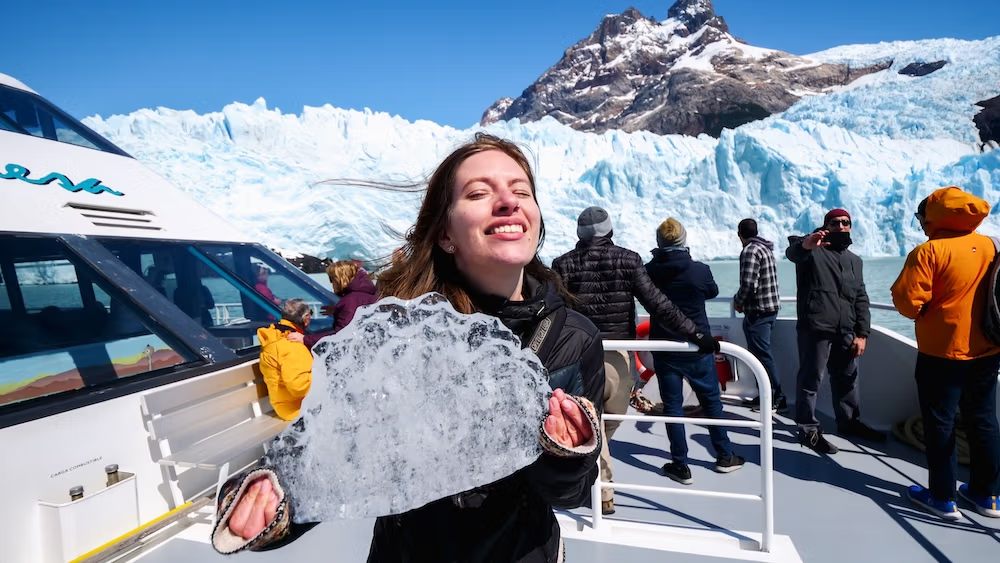
For one excursion, transport collected us for a full-day glacier navigation. We travelled by boat among several glacier landscapes, which gave us scale, variety and changing perspectives across the lake.
For Perito Moreno, we arranged return transport and explored the walkway system independently. That gave us time to slow down, watch the glacier and wait for pieces of ice to break away rather than experiencing it as one short stop.
Neither approach made the other unnecessary.
The navigation provided breadth. The walkways allowed sustained observation.
This is not the place to compare every glacier cruise, walkway ticket or ice-trekking product, but the base decision is straightforward: if seeing the major glaciers is the priority, El Calafate is where the logistics make sense.
Two or three nights is often a practical starting point. That provides room for one main glacier day plus arrival, departure or a second experience. Weather, flight timing and the number of glacier outings can justify longer.
When you are ready to choose the base, compare current accommodation in El Calafate on Booking.com. A location that works for evening meals and your transfer arrangements is usually more useful than chasing an imaginary room beside the glacier.
You can then compare current glacier tours from El Calafate on GetYourGuide. Pay close attention to pickup, total duration, park admission, boat or walkway time and what is actually included. Audrey and I experienced glacier navigation and the Perito Moreno walkways, but that should not be read as a personal verdict on every current product listed there.
The property does not need to be beside a glacier.
It needs to support the day required to reach one.
El Chaltén Solves a Different Problem
El Chaltén sits about 220 kilometres from El Calafate. Regular buses connect the two, which makes combining them logical, but they are not close enough for one to serve conveniently as the other’s daily base.
El Chaltén is built around trail access.
We arrived by bus and stayed near the terminal, which made handling our bags easy. That convenience faded slightly when we discovered our hotel sat on the opposite side of town from one of the trailheads we needed.
We set out without the map we should have carried, took a wrong turn and spent roughly 45 minutes finding the start of the route. By the end of the day, we had walked around 24 kilometres.
El Chaltén is compact, but compact does not make accommodation location irrelevant. If one major trail is the priority, check where it begins before booking the room with the prettiest mountain photo.
This is one of the strongest reasons to compare El Chaltén accommodation on Booking.com with the map open. The bus terminal, restaurants and different trailheads do not all sit in one identical spot.
The larger planning issue is time.
The major hikes commonly consume most of a day. They are not activities to squeeze between breakfast and an afternoon bus. Weather matters. Recovery matters. Your knees may also submit their own itinerary after a long descent.
We delayed one intended hike after a harder trekking day because we were tired. Poor weather then changed the sequence again. Waiting for a clearer window improved the experience, but it only worked because we had enough days in town.
For travellers who want both glaciers and trekking, I would not choose between El Calafate and El Chaltén. I would split the stay.
Use El Calafate for the glacier logistics. Move to El Chaltén for the trails. Give each town enough time to do the job it is good at.
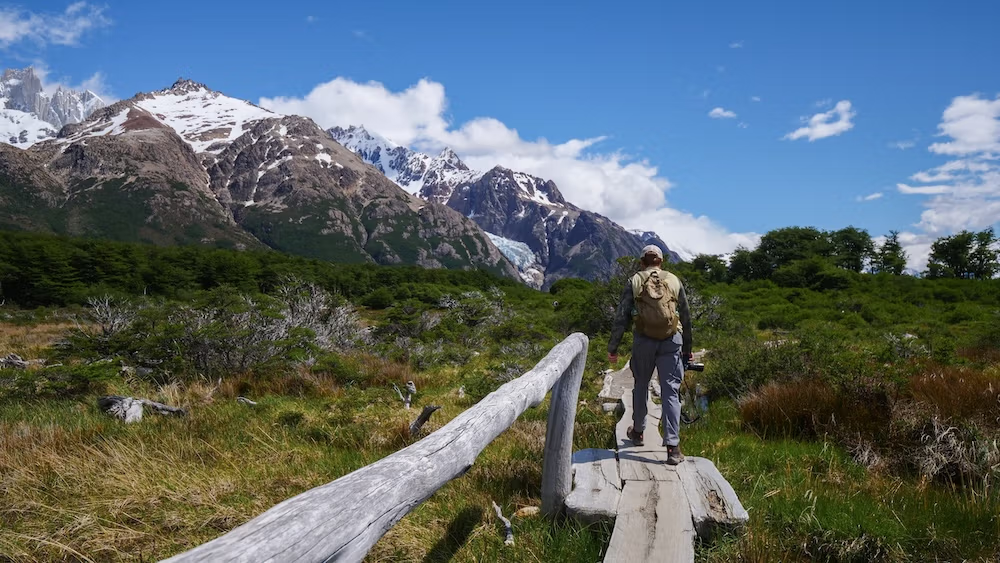
For Hiking, Decide Between El Chaltén’s Concentration and Chubut’s Variety
El Chaltén is the obvious answer when someone asks for Patagonia’s strongest dedicated hiking base.
That does not make it the correct answer for every traveller who enjoys walking in the mountains.
Esquel and El Bolsón offer different versions of an active stay. Neither matches El Chaltén’s concentration of famous full-day trails, but both combine hiking with a broader or slower experience.
Choose El Chaltén When Hiking Is the Main Event
El Chaltén works best when trekking is not one item on the itinerary. It is the itinerary.
The town’s advantage is concentration. Major routes begin in or around the settlement, and you can complete substantial hikes without joining an organized tour. That removes one layer of transport planning and lets the weather determine the day more naturally.
The trade-off is that the trails demand real time and physical energy.
A seven- to nine-hour hiking day cannot be treated like a museum visit. Even if you move quickly, stops for food, photography, weather and general staring at mountains expand the day. A short stay can unravel after one poor-weather morning or one hike that leaves you needing recovery.
Three nights may work for a focused traveller with one priority hike and favourable conditions. Four or five nights gives the base room to function properly, especially if two major treks are involved.
I would choose El Chaltén when hiking is the dominant purpose of the trip, you want major trails accessible without daily tour transport, and a small-town evening is enough between trail days.
I would not choose it merely because it appears on every classic Patagonia route. Travellers with little interest in long hikes may find that the town’s greatest strength does not match their trip.
Choose Esquel When Hiking Is Part of a Broader Stay
Esquel was not originally one of our dream Patagonia stops.
We ended up there partly because it fit our route across Chubut. We had travelled along the coast and needed to move west toward the mountains. Esquel sat in the right place on the map.
Then it became one of our favourite surprises.
We stayed for eight nights, which is longer than most travellers need. Audrey and I were working while travelling, so we generally completed one main activity per day and used the remaining time to edit, upload and recover. For a faster trip, three or four nights is a more realistic starting point.
Esquel worked because it provided variety.
We could hike near town, ride La Trochita, visit Los Alerces National Park, travel to Piedra Parada, eat extremely well and use the town for day trips into the surrounding Welsh-Patagonian region.
The hiking experience was not concentrated in the same way as El Chaltén.
Some trails and viewpoints could be approached from town. Others required transport. The principal Los Alerces areas sit outside Esquel, and reaching the park can turn the outing into a long day before the main activity even begins.
During our visit, the public-transport arrangement was limited enough that securing the return journey mattered. Those exact conditions can change, so transport needs to be checked for the intended season. The broader lesson remains useful: calling Esquel a Los Alerces gateway does not mean the park’s main landscapes are sitting just outside town.
Piedra Parada showed the opposite model. We joined an organized outing that collected us from our accommodation, handled the remote drive, provided food and returned us to town. The distance did not disappear, but the logistical burden did.
Esquel suits travellers who want hiking without committing every day to hiking.
It also provides a more substantial everyday base than El Chaltén. There are ordinary streets, supermarkets, restaurants, local walks and enough room to slow down between regional outings.
That broader rhythm was part of why we liked it.
If that mixture fits your trip, compare current accommodation in Esquel on Booking.com. Central convenience is useful for restaurants and the terminal, while quieter outskirts only make sense after the access plan for Los Alerces and other regional outings is clear.
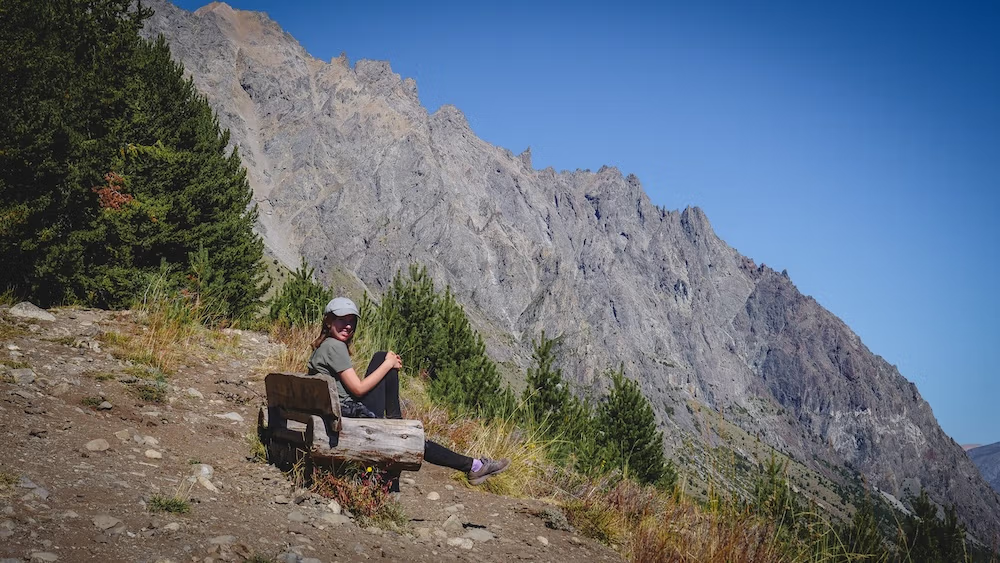
Choose El Bolsón When You Want a Slower Nature Stay
El Bolsón is harder for me to separate from the way we experienced it.
We stayed in a wooden cottage about a 15-minute walk from the centre. It had a garden, trees and the feeling of being slightly removed from town without being entirely isolated. The accommodation was not simply a bed. It shaped the trip.
Our host Valentin became a friend. He drove us around the area and introduced us to places we would not have reached as easily on our own. We extended the stay twice and later returned for another week.
That is real personal enthusiasm, but it comes with an important qualification: our experience was unusually easy because local help became part of it.
A traveller booking an outlying cabin should not assume the host will become a friend, chauffeur and unofficial tour planner.
El Bolsón offers hiking, nearby waterfalls, forest paths, mountain refugios and access toward Lago Puelo. It is a strong base for travellers who want days to unfold slowly rather than attacking a checklist. The town, accommodation and surrounding nature blend together more than they do in a specialist trekking base.
The trade-off is efficiency.
Some outings are accessible through walking or regional transport. Others become much easier with a taxi, transfer, organized trip, helpful host or car. A quiet cabin can feel perfect in the morning and inconvenient when you need groceries, dinner or an early departure.
I would choose El Bolsón when the accommodation setting is part of the reason for travelling, you want a mixture of hiking and lake access, and you have at least four nights rather than one rushed stop.
This is exactly the kind of base where the map matters more than the accommodation label. You can compare cabins, apartments and other stays in El Bolsón on Booking.com, but check the walking distance to the centre and how you will reach the outings you care about before falling in love with a secluded garden.
The hiking-base decision therefore has three legitimate answers.
Choose El Chaltén for concentration.
Choose Esquel for variety.
Choose El Bolsón for time, atmosphere and a slower relationship with the landscape.
None is a consolation prize. They are different trips.
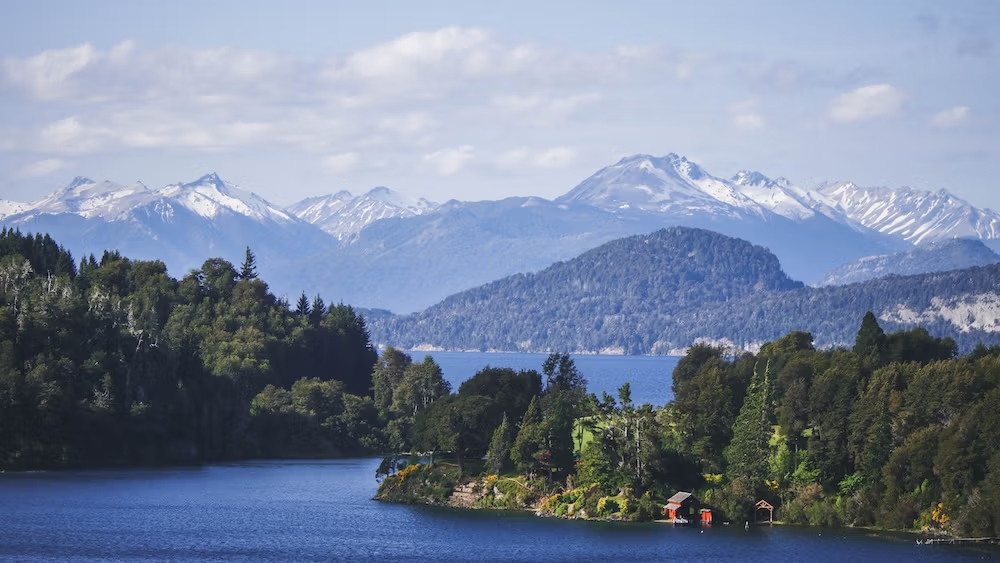
For Lakes, Bariloche Is the Broadest Base—But Not the Only One
Bariloche is the easiest recommendation when someone wants lakes, mountain scenery, restaurants and enough activity choices to fill several days.
It is also one of the easiest places to book badly.
The Bariloche area stretches far beyond the compact centre that appears in most city photographs. Accommodation can sit downtown, along the western lake corridor, near Puerto Pañuelo, around Lago Gutiérrez or farther into quieter outlying areas.
All of those properties may carry “Bariloche” in the address. They do not create the same daily experience.
Bariloche Works Because It Gives You Options
We have experienced Bariloche from more than one angle.
On one trip, we stayed outside the centre in a quiet lakeside property. The setting was the point. We were not looking for an urban hotel surrounded by restaurants and shops.
On another visit, we stayed near Lago Gutiérrez at an activity-oriented property where riding, hiking and outdoor experiences were built into the stay. Tour pickup also reduced the disadvantage of being outside town.
We have also used public transport through the Bariloche area, including travelling toward Puerto Pañuelo for a boat excursion on Nahuel Huapi.
That combination explains Bariloche’s strength. It can support several different trips.
You can stay centrally and prioritize restaurants, chocolate shops, breweries, agencies and easier evening walking. You can move west toward the lakes and Puerto Pañuelo. You can choose a quieter property where the scenery and activities replace the need to visit the centre every day.
Bariloche also has a public-transport network, which makes it more workable without a car than many dispersed Patagonia destinations. That does not mean every lake, trail or attraction becomes effortless. Routes, frequencies and connections still need to be checked, and the distances across the area are real.
Circuito Chico alone covers a substantial loop. Once you add viewpoints, walks, lunch and stops, it can consume most of a day.
Bariloche’s advantage is not that everything sits together.
Its advantage is that the region gives you more ways to build the trip.
I would normally allow four to six nights if Bariloche is meant to perform as a proper lake-and-outdoor base. A shorter stay can work, but it forces harder choices between the city, the western lakes, boating, hiking and outlying activities.
Before booking, decide which version of Bariloche you actually want, then compare current Bariloche accommodation on Booking.com. Central convenience, western lake access and a quiet outlying stay are three different booking decisions hiding under one destination name.
Travellers still deciding what they want to do can compare current Bariloche tours and activities on GetYourGuide. Use the meeting point, pickup area and duration to test whether the activity fits the accommodation zone rather than assuming every tour conveniently collects from every property.
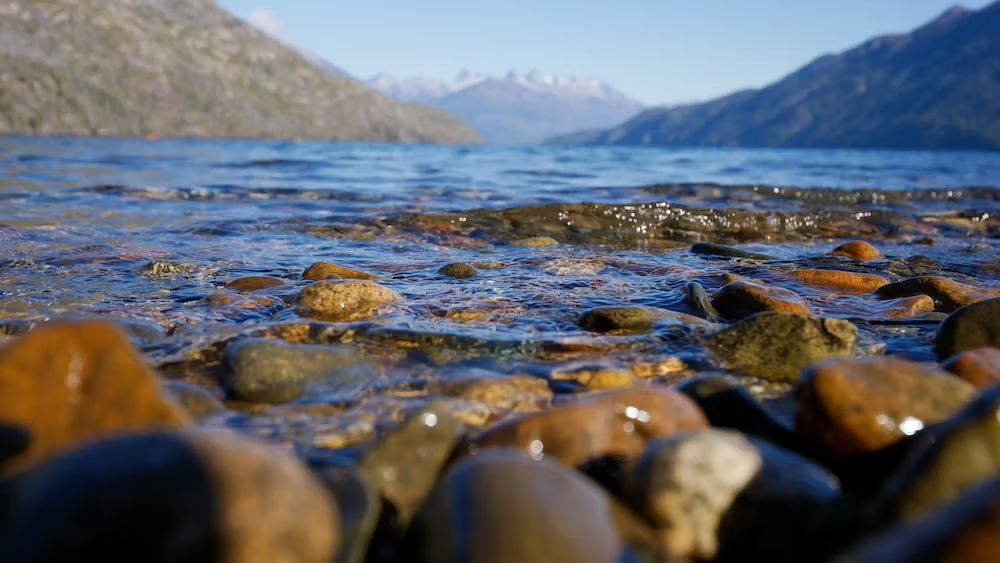
El Bolsón and Lago Puelo Offer a Slower Lake Experience
El Bolsón belongs in the lake conversation because Lago Puelo is close enough to form part of the stay.
We travelled there by bus and spent the day hiking, walking through the forest and joining a boat outing. The lake was spectacular, and the trip added another layer to El Bolsón’s appeal.
Still, I would not describe El Bolsón as a direct replacement for Bariloche.
Bariloche offers more infrastructure, more accommodation choice, more organized activities and a stronger network for first-time visitors. El Bolsón offers a quieter rhythm, cabins, gardens, local walks and easier permission to do less.
That distinction becomes useful when choosing accommodation.
A central El Bolsón stay makes shops, food and transport simpler. An outlying cabin can produce the atmosphere many travellers imagine when they picture Patagonia, but only when the daily movement has been considered in advance.
El Bolsón is the better lake-and-hiking base for someone who values time and atmosphere over variety.
Bariloche is the better lake base for someone who wants options.
Villa La Angostura and San Martín de los Andes Are Worth Considering
Villa La Angostura and San Martín de los Andes are both legitimate Lake District bases.
We stayed in each and enjoyed lake-oriented outings, scenery and the more intimate scale of the towns. They can make excellent choices for travellers already drawn to a quieter or more linear Lake District trip.
I would keep them as alternatives rather than allowing this article to turn into a ranking of every town surrounding every attractive body of water in northern Patagonia.
Villa La Angostura can appeal to travellers who want a smaller base within the wider Nahuel Huapi landscape. San Martín de los Andes offers another attractive town-and-lake combination farther north.
Neither needs to defeat Bariloche to be worthwhile.
For a first trip with limited time, Bariloche remains the broadest and easiest lake recommendation. For a slower road journey or a traveller who already knows the particular town they prefer, the smaller alternatives may fit better.
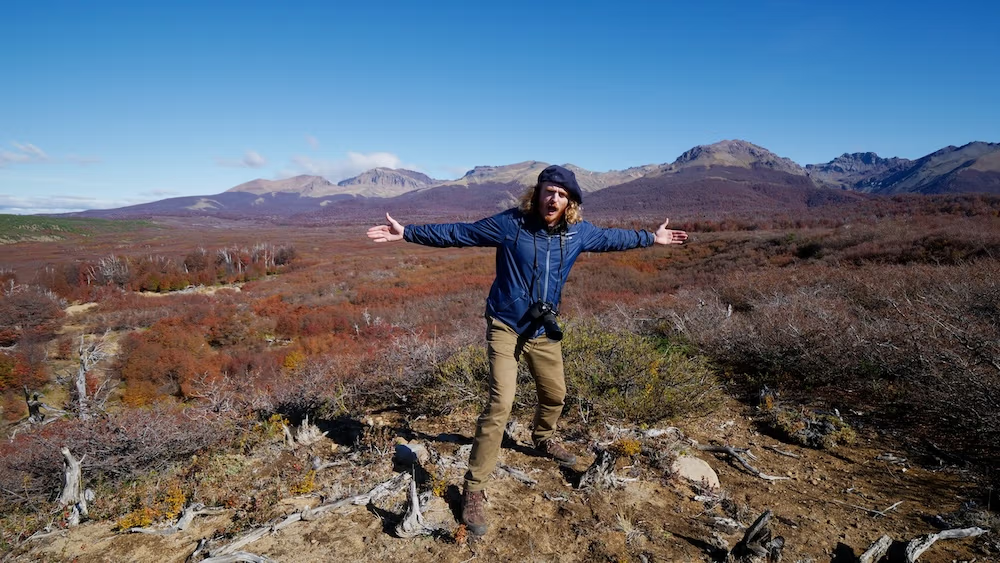
When You Want a Mixed Base Rather Than One Specialist Experience
Some travellers do not want to optimize the trip around one activity.
They want lakes and hiking. Or wildlife and museums. Or boat trips, food, scenery and a couple of easier outdoor days without building the whole journey around one enormous trek.
That is where mixed bases become useful.
Bariloche Is the Strongest Northern All-Rounder
Bariloche offers the broadest northern combination.
It has lakes, boat excursions, hiking, riding, food, urban services and enough bad-weather alternatives to keep the trip from collapsing when one outdoor plan fails.
The cost of that variety is spread.
A central hotel makes restaurants and agencies easy but places you farther from some western lake activities. A lakeside property can improve the scenery while adding transport to the centre. An outlying lodge may work beautifully if the property or pickups solve the movement problem.
Bariloche deserves its fame. It simply requires a more precise accommodation decision than the city name suggests.
Esquel Is the Understated Chubut Choice
Esquel offers less instant name recognition and more regional friction.
Its strongest experiences are not all concentrated in town. Los Alerces, Piedra Parada and the surrounding valleys require transport and time.
What Esquel gives back is variety without the same level of tourism intensity.
We could hike, ride a historic train, eat very well, make regional day trips and live in a normal town between activities. It never felt like a one-purpose destination.
I would choose Esquel as a mixed base when Chubut is already central to the route and the traveller is prepared to arrange excursions carefully.
I would not add it as a casual detour simply because it is underrated. Patagonia has enough long transfers without inventing new ones for sport.
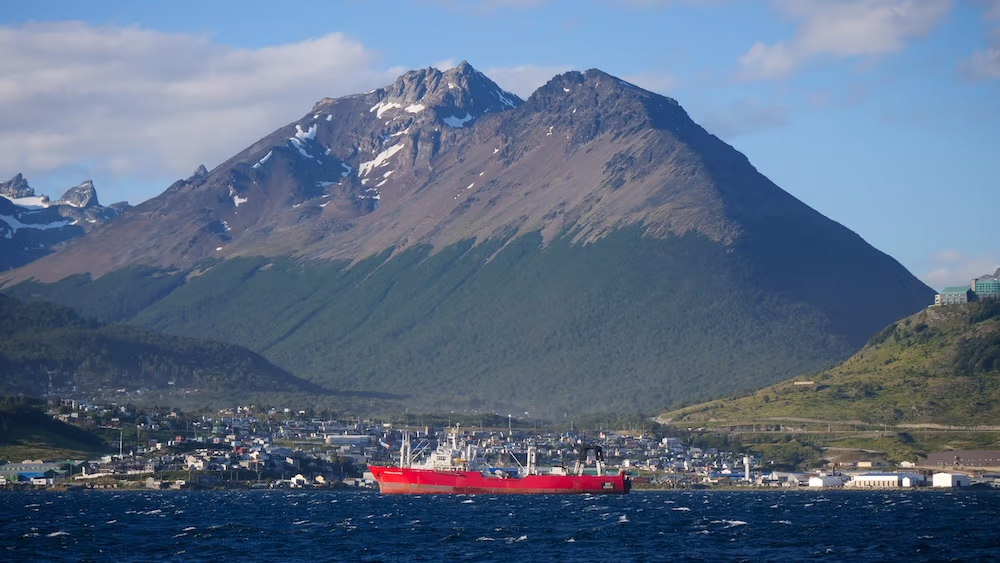
Ushuaia Is a Strong Base After You Commit to the Far South
Ushuaia offers an impressive amount once you get there.
We used the city for Beagle Channel boating, Tierra del Fuego National Park, the end-of-the-world train, museums, restaurants, waterfront walking and an outing toward Tolhuin.
The city centre and harbour concentrate many services and excursion departures. Central accommodation can therefore simplify the stay significantly.
We did not book early enough to secure the location we would have preferred. Our apartment sat outside downtown, adding a walk of roughly 30 to 40 minutes when we wanted to reach the central area.
That distance was manageable. It was also repetitive.
After a full day outside in Tierra del Fuego, an additional walk can feel less charming than it did while examining the map from home.
Ushuaia has local buses, taxis, organized tours and scheduled transport toward the national park. A rental car is not the only way to make the base function. The exact property still matters because the usefulness of those options depends on where you sleep and where the day begins.
For that reason, compare current Ushuaia accommodation on Booking.com with the harbour, centre and intended departure points visible on the map. Paying less outside downtown may be worthwhile, but the saving needs to survive the repeated movement it creates.
Travellers who want boating, park access and other organized outings can compare current Ushuaia tours on GetYourGuide. Check whether each option includes pickup or uses a central meeting point, especially before choosing an outlying property.
The larger issue is geographic commitment.
Our overland journey into Ushuaia involved a long day, a ferry and border formalities. Flying changes the experience, but Ushuaia remains far from the other major Argentine Patagonia bases.
I would choose it for a traveller who actively wants Tierra del Fuego, not for someone trying to bolt one more famous name onto an already crowded itinerary.
Once you commit to the far south, Ushuaia can support three or four substantial days.
Before that commitment, it is an expensive detour in both time and geography.
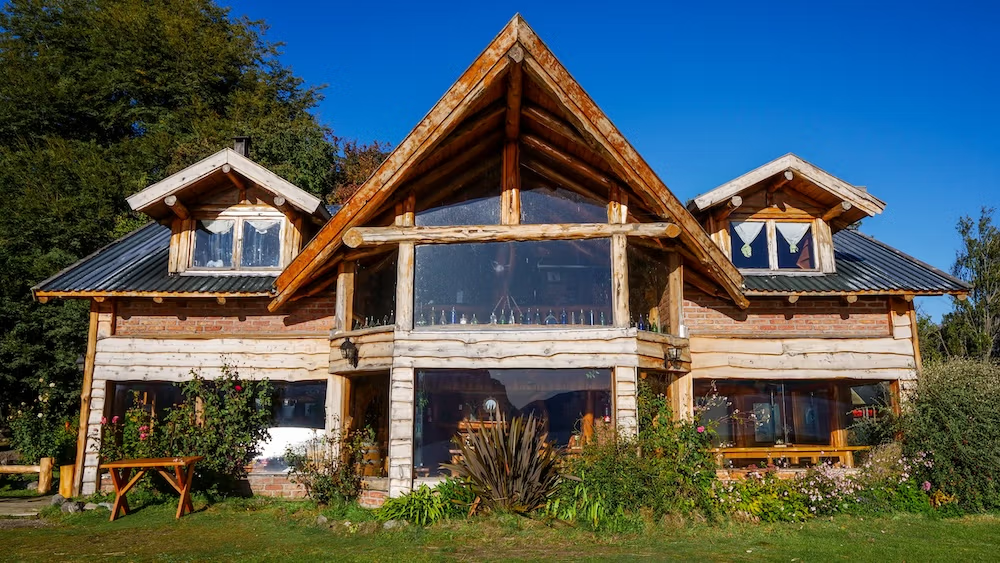
The Famous Base Can Still Be the Wrong Base
A base can have the right name and still be wrong for the trip.
The most common problem is accommodation location.
A hotel near the El Chaltén terminal can make arrival easy while adding distance to a priority trailhead.
A Bariloche property can have a beautiful lake view while sitting far from restaurants and the activity corridor you intend to use.
A quiet Ushuaia apartment can cost less while adding the same long walk every morning and evening.
A cabin outside El Bolsón can feel like the dream until you need groceries, dinner and three separate transfers.
None of those properties is necessarily bad. The problem appears when the accommodation and the itinerary are doing different jobs.
Arrival timing also changes the calculation.
After a long overnight bus, early check-in and easy food can matter more than architectural charm. After a major hike, walking an extra 40 minutes to dinner may feel less romantic than advertised.
Then there is the transport trap: a place marketed as the gateway to a park may still sit an hour or more from the section you want to explore.
Esquel is a gateway to Los Alerces. El Calafate is a gateway to Perito Moreno. Puerto Madryn is a gateway to Península Valdés.
Gateway does not mean doorstep.
Before booking, I would check the property against the actual day:
- Where does the bus arrive?
- Where does the trail begin?
- Where do tours collect passengers?
- How late will I return?
- Can I eat or buy groceries nearby?
- Does the property compensate for being remote?
- Will I repeat the same inconvenient journey every day?
A remote stay earns its place when the remoteness is the experience.
It becomes a bad booking when it is merely cheaper or prettier in the photographs.
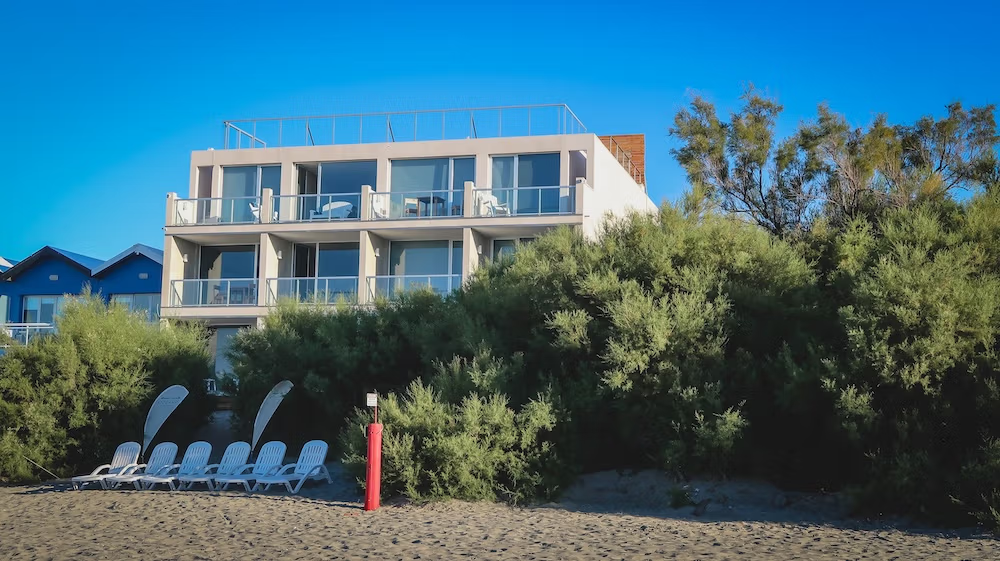
Choose Your Patagonia Base
The following table is the cleanest way I know to reduce the decision.
| Main priority | Strongest base | Best alternative | Working stay | Transport reality | Main trade-off |
|---|---|---|---|---|---|
| Wildlife with easier logistics | Puerto Madryn | Puerto Pirámides | 3+ nights | Guided outings simplify the peninsula | More driving, less immersion |
| Wildlife immersion | Puerto Pirámides | Puerto Madryn | 2+ nights | Town is bus-accessible; wider reserve still needs tours or a car | Fewer services and less spontaneity |
| Major glacier excursions | El Calafate | Add El Chaltén for hiking | 2–3 nights | Transfers required for glacier days | Excursions rather than direct town access |
| Concentrated trekking | El Chaltén | Esquel | 3–5 nights | Major trails begin around town | Weather and physical recovery |
| Hiking plus regional variety | Esquel | El Bolsón | 3–4 nights | Biggest outings require transfers | Less concentrated than El Chaltén |
| Slow nature, hiking and lake time | El Bolsón | Bariloche | 4+ nights | Access varies by outing and accommodation | Lower efficiency |
| Lakes and broad northern variety | Bariloche | El Bolsón | 4–6 nights | Public transport helps, but the area is spread out | Accommodation location is crucial |
| Southern mixed trip | Ushuaia | None that truly replaces it | 3–4 nights | Tours and local transport help once there | Reaching Tierra del Fuego |
These are planning ranges, not laws engraved into a glacier.
A strong hiker can accomplish more in three nights than a traveller who wants late breakfasts and long lunches. Poor weather can erase the apparent efficiency of a short stay. Arrival and departure times may consume more of the trip than the night count suggests.
The point is to match the base with the experience.
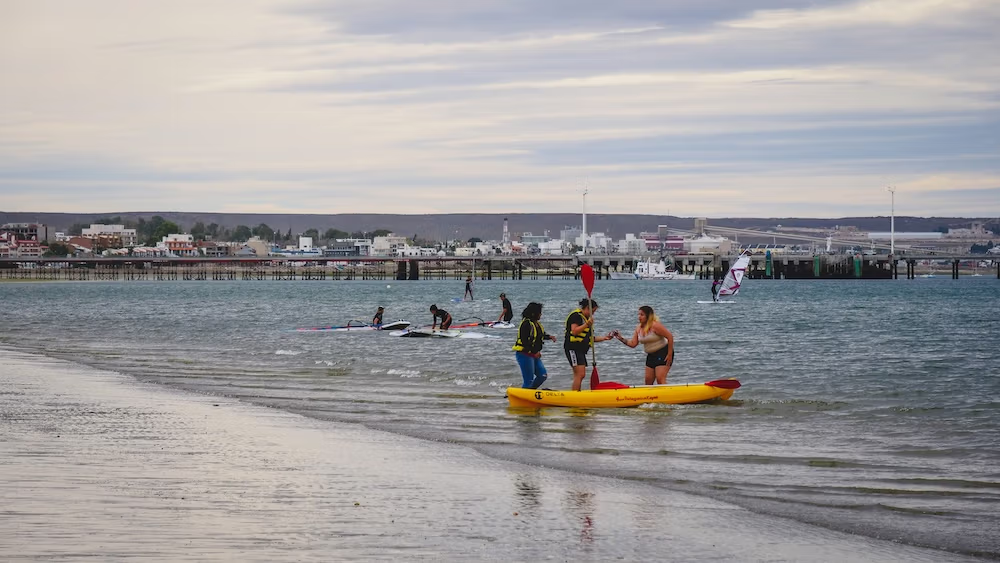
Compare Accommodation Only After the Base Survives the Test
Once the base has survived the experience, transport and stay-length questions, then it makes sense to compare accommodation.
This order protects you from solving the wrong problem.
In Puerto Madryn, central convenience may matter because tours, restaurants and recovery days are part of the stay.
In Puerto Pirámides, a beachfront or self-catering property can deepen the immersion and make limited opening hours easier to handle.
In El Calafate, a practical location helps with departures and evening meals.
In El Chaltén, check the relationship between the property, bus terminal and intended trailheads.
In Bariloche, decide first whether you want the city, the western lake corridor or an outlying activity stay.
In El Bolsón, determine whether the quiet cabin is worth the movement it creates.
In Ushuaia, central accommodation can save repeated time and energy on a tour-heavy trip.
Self-catering also deserves more attention than it receives in glamorous hotel roundups. It can be particularly useful when departures are early, meal hours are limited, the stay is long, or the town has fewer spontaneous food options.
We appreciated it in Puerto Pirámides because breakfast did not control our morning. In Esquel and El Bolsón, having space to eat and work helped us settle into longer stays.
The best accommodation is not always the most luxurious or the closest to the centre.
It is the one that supports the reason you chose the base.
Where I Would Stay for Each Kind of Patagonia Trip
For wildlife, I would use Puerto Madryn unless I deliberately wanted to sleep inside Península Valdés and had already solved the wider transport.
For glaciers, I would choose El Calafate.
For serious hiking, El Chaltén.
For lakes and the greatest northern variety, Bariloche.
For a broader Chubut stay, Esquel.
For slower nature, cabins and enough time to let plans wander, El Bolsón.
For Tierra del Fuego, Ushuaia—but only when the far south is one of the trip’s main commitments.
I would not attempt to include all of them unless I had an unusually long itinerary and a deep personal affection for sitting on buses.
The strongest Patagonia trip is rarely the one with the most bases. It is the one where each base has a clear job.
Choose the experience. Check the transport. Count the usable nights. Look at the exact accommodation location.
Then book the room.
Frequently Asked Questions
What is the best base in Patagonia?
There is no single best base in Patagonia. Puerto Madryn suits wildlife trips with easier logistics, El Calafate handles glacier excursions, El Chaltén is strongest for concentrated hiking, and Bariloche offers the broadest lake-and-outdoor mix.
Should I stay in Puerto Madryn or Puerto Pirámides?
Choose Puerto Madryn for easier transport, restaurants, services and guided wildlife outings. Choose Puerto Pirámides when sleeping inside Península Valdés matters more and you have already arranged transport or tours for the reserve’s distant wildlife areas.
Should I stay in El Calafate or El Chaltén?
Stay in El Calafate for Perito Moreno Glacier, lake navigation and organized glacier logistics. Stay in El Chaltén for major day hikes. Travellers wanting both experiences should split their nights rather than use one town as a daily base for the other.
What is the best hiking base in Patagonia?
El Chaltén is the strongest dedicated hiking base because major trails begin in or around town. Esquel is better when hiking belongs to a broader Chubut stay, while El Bolsón suits a slower trip combining nature, cabins and lake access.
What is the best base for lakes in Patagonia?
Bariloche is the broadest lake base for most first-time travellers because it combines accommodation choice, public transport, boat outings, hiking, food and urban services. El Bolsón and Lago Puelo offer a quieter, slower alternative with less overall variety.
How many nights should I stay in each Patagonia base?
The article uses flexible planning ranges: roughly two to three nights in El Calafate, three to five in El Chaltén, three to four in Esquel or Ushuaia, four or more in El Bolsón, and four to six in Bariloche. Weather and arrival times can justify longer stays.
Does accommodation location matter in Patagonia?
Yes. A central property can simplify restaurants, terminals and tour departures, while an outlying cabin or lakeside stay only works when its scenery, activities or transport justify the extra movement. The correct town can still contain the wrong accommodation location.
Project 23 Argentina: This guide is also available in Spanish. [Leé la versión en castellano: Dónde alojarse en la Patagonia: las mejores bases para glaciares, fauna, lagos y trekking]
This article contains affiliate links. If you book through one of these links, I may earn a commission at no extra cost to you.