
Patagonia has a strange ability to make perfectly sensible travellers build ridiculous itineraries.
On a map, Bariloche, Península Valdés, El Calafate, El Chaltén and Ushuaia all sit beneath the same reassuring label. Patagonia. One region. One trip. Keep adding pins until the route looks impressive.
Then you arrive and discover that the pins are separated by full travel days, overnight buses, domestic flights, border crossings, ferry rides, gravel roads and weather systems that appear to have personal grievances.
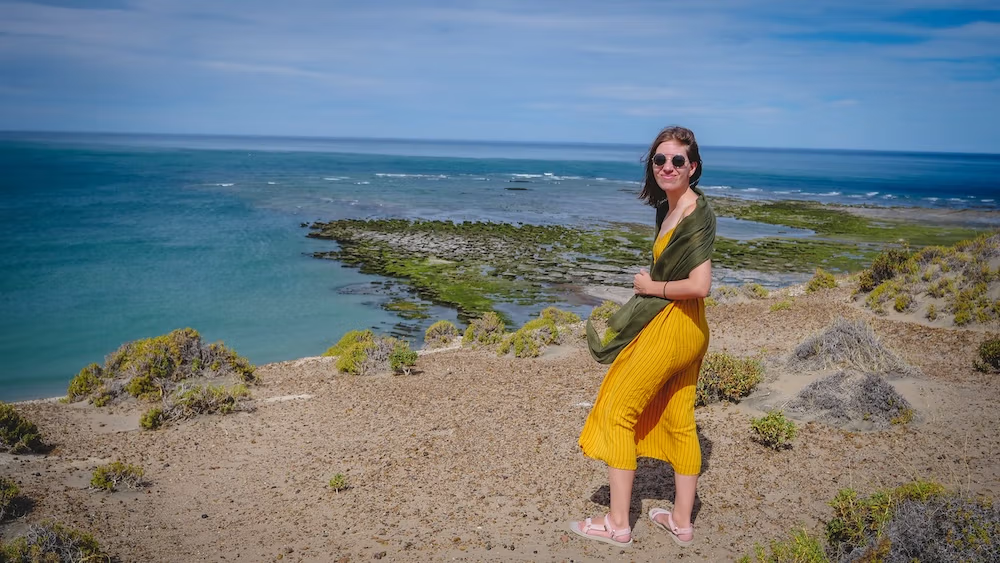
We have travelled through Argentine Patagonia on several trips, crossing from the Atlantic coast to the Andes and continuing south through Santa Cruz and Tierra del Fuego. Along the way, we have spent close to 19 hours on one bus, arrived in mountain towns dressed for an entirely different season, missed a glacier trek because we had not booked early enough, lost activity windows, fought with weak internet and slept downstairs because the wind made our A-frame cabin sound as though it was preparing for takeoff.
Patagonia has been one of the most rewarding regions we have travelled through. It has also been one of the easiest to underestimate.
The biggest lesson is not that you need a better jacket, although that certainly helps. It is that Patagonia punishes compressed itineraries. Distances take more out of you than a route planner admits. Wildlife follows its own schedule. Weather can erase an outdoor day. Services may thin out beyond the main season, while the best-known excursions and distinctive places to stay can sell out during it.
A good first trip needs less geography and more breathing room.
This guide focuses primarily on Argentine Patagonia. Chile enters the picture where the geography makes it unavoidable, especially on cross-border routes and the overland journey to Tierra del Fuego. The aim is not to cover every destination between the Río Colorado and Cape Horn. It is to help you avoid the planning mistakes that can quietly consume half a trip.
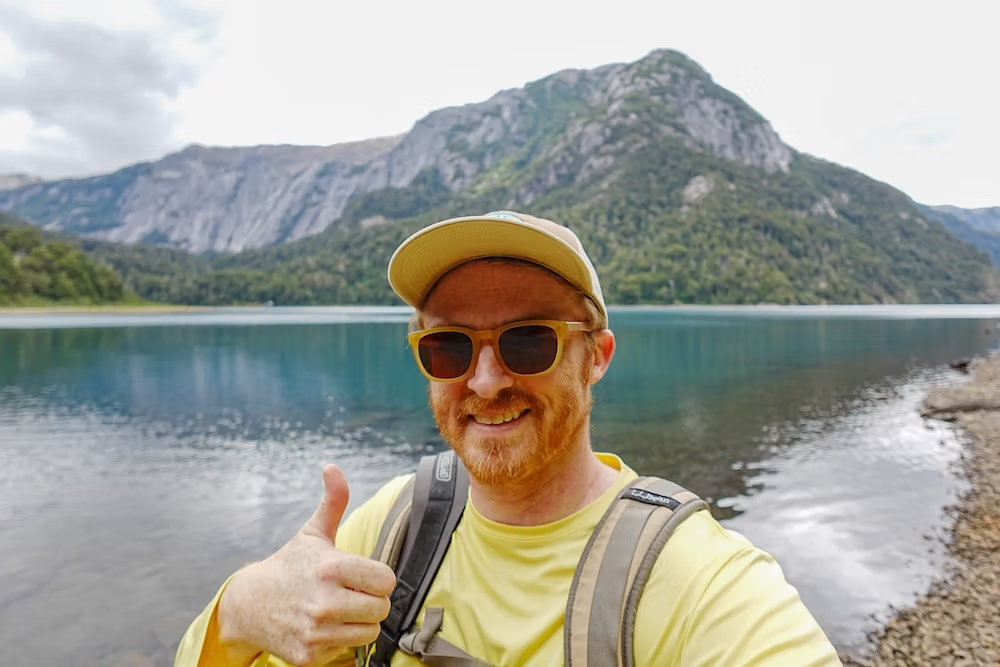
Your First Patagonia Trip Begins With Subtraction
The first decision is not where to stay. It is what to leave out.
Patagonia is not one practical destination. Even on the Argentine side, the places most travellers want to visit fall into regional clusters with different gateways, landscapes, transport needs and seasonal rhythms.
For a first trip, I would divide Argentine Patagonia into four broad planning lanes.
| Region | Best suited to | Main gateway | The catch |
|---|---|---|---|
| Northern Andes and lakes | Forests, lakes, mountain towns, scenic drives and varied day trips | Bariloche or Esquel | There are enough appealing subregions here to overfill an entire trip |
| Southern glacier corridor | Perito Moreno Glacier, major trekking and dramatic Andean scenery | El Calafate | Weather and limited-capacity activities can wreck a tight schedule |
| Atlantic wildlife coast | Marine wildlife, steppe, beaches and Península Valdés | Puerto Madryn or Trelew | Wildlife timing and long road circuits control the experience |
| Tierra del Fuego | Ushuaia, the Beagle Channel and far-southern landscapes | Ushuaia | It is a separate logistical commitment, not a quick extension of El Calafate |
These are planning categories rather than official borders. Their purpose is to stop you from treating every famous place as though it were a neighbouring town.
Once you know which lane you are choosing, compare accommodation in the actual gateway rather than searching for “Patagonia hotels” as though the entire region shared one main street. You can compare current stays in Bariloche, check accommodation in El Calafate, browse places to stay in Puerto Madryn or compare Ushuaia accommodation once the regional decision is made.
Northern Patagonia contains several different trips
Bariloche is the obvious northern gateway, and there is enough around the city to fill a visit without going far: Circuito Chico, mountain viewpoints, lake excursions and scenic drives.
Travellers who do not want to rent a car can check current Circuito Chico tours with transport from Bariloche. The tour is not necessary for everyone, but it solves the access problem for visitors who would rather look at the lakes than negotiate the road.
Then you look south.
El Bolsón appears. Lago Puelo is nearby. Esquel, Trevelin and Los Alerces National Park begin whispering from farther down the map. Suddenly the “Bariloche portion” of the itinerary has become a multi-base expedition.
We loved these places, but that is precisely why they should not be treated as disposable add-ons.
El Bolsón had been on our minds for years before we finally visited. We enjoyed its slower pace, the surrounding trails, the rivers and the feeling of being in a mountain town that did not revolve around one famous attraction. Travellers building it into a northern route can compare current accommodation in El Bolsón rather than attempting it as a hurried out-and-back from Bariloche.
Trevelin offered something different again: Welsh-Patagonian history, tea houses, good food, wineries and access toward Los Alerces. It worked naturally with Esquel because we were already spending time in that part of Chubut. Had we tried to squeeze it into a short Bariloche stay, most of the experience would have been replaced by transport.
Northern Patagonia rewards depth, but it constantly tempts you to widen the route.
El Calafate and El Chaltén belong together—up to a point
The southern glacier corridor forms a more obvious pairing.
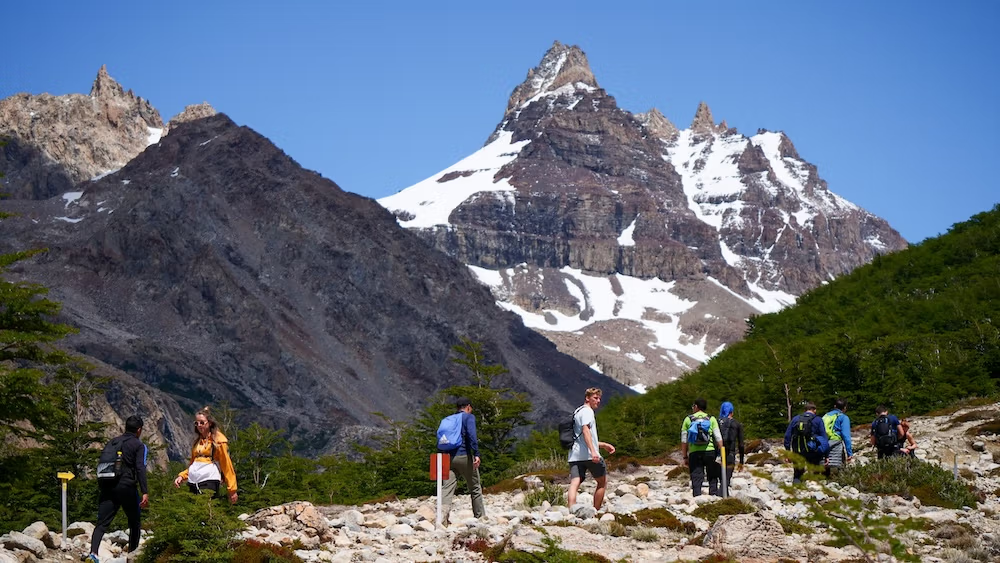
El Calafate is the main base for Perito Moreno Glacier and several lake and glacier excursions. El Chaltén is the trekking hub. Regular buses connect the two, so combining them makes sense.
That does not make the corridor compact.
Perito Moreno Glacier sits roughly 80 kilometres from El Calafate. El Chaltén is about 220 kilometres away in another direction. A visitor staying two nights in each town may technically see both names on the itinerary, but the margin for weather, fatigue or a missed booking is almost nonexistent.
If trekking is important, El Chaltén needs enough time for the mountain weather to disagree with you at least once. Because it functions as a separate base rather than a neighbourhood of El Calafate, it is worth checking current El Chaltén accommodation early. Travellers who want guided hiking or a transport-supported day can also compare current El Chaltén tours and excursions without pretending every trail requires a guide.
The Atlantic coast follows the animals
Coastal Patagonia feels completely different from the Andes. The landscape is flatter, drier and more exposed. The reward is wildlife: whales, penguins, sea lions, elephant seals and orcas depending on the month and location.
Puerto Madryn is the major gateway, while Puerto Pirámides is the only village inside Península Valdés. We stayed in both and appreciated the contrast.
Puerto Madryn gives you more urban services and a practical base for arranging excursions. Puerto Pirámides puts you directly inside the reserve, beside the beach, with wildlife and raw coastal scenery much closer to daily life. Travellers who prefer waking up inside the peninsula can compare current stays in Puerto Pirámides, while those using the city as their base can compare Península Valdés and wildlife tours from Puerto Madryn.
The coast is not a generic wildlife buffet, though. Different animals follow different seasonal windows. You need to choose dates based on the species or experience that matters most.
Ushuaia is not around the corner from El Calafate
This catches a lot of first-time visitors.
El Calafate and Ushuaia are both in southern Patagonia, but travelling between them is not like taking a short regional bus. Flying is the simplest option when schedules and prices cooperate.
The overland route is more involved. Tierra del Fuego is separated from continental Argentina, so a road journey requires crossing into Chile, taking a ferry over the Strait of Magellan and entering Argentina again.
We travelled through this border-and-ferry sequence by bus. It was fascinating and scenic, but it was a proper travel day with paperwork, waiting and multiple stages. It was not something I would place between two demanding hikes and hope for the best.
Ushuaia deserves to be treated as its own destination cluster. For many first-time visitors, a Beagle Channel outing is one of the most natural bookable experiences in the city, and it is worth comparing current Beagle Channel cruises and departure options once the Ushuaia dates are fixed.
For a one-week Patagonia trip, choose one of these regional lanes. With ten days or two weeks, combine places that fit together naturally. Every time you jump into a new region, you are not merely adding a hotel. You are changing transport systems, weather patterns and the basic rhythm of the trip.
A Travel Day Is Bigger Than the Number on the Ticket
Patagonia’s size is normally explained with distances.
Kilometres help, but the more useful question is how much usable day a transfer destroys.
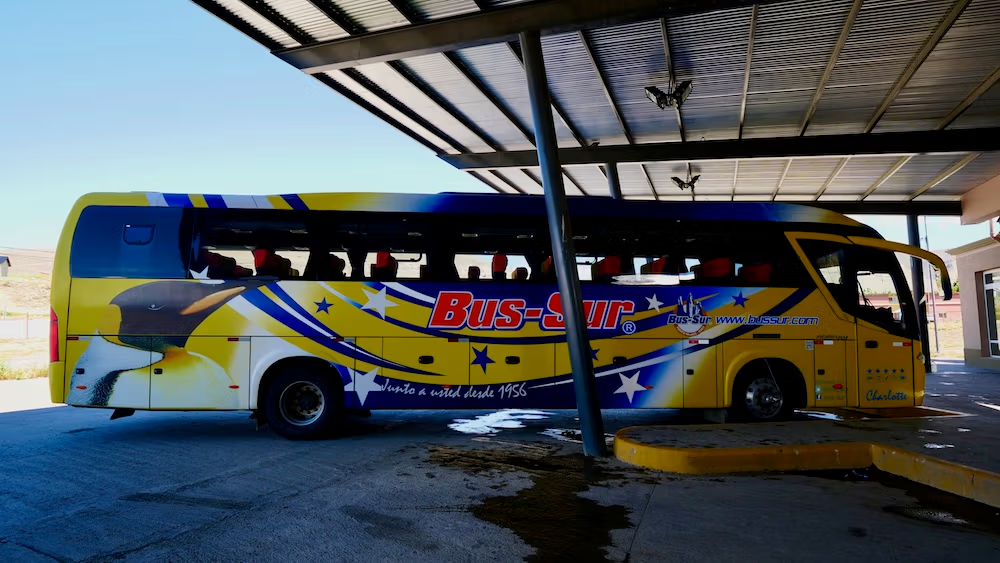
We once took an overnight bus from Mar del Plata to Puerto Madryn. The journey was supposed to last around 16 or 17 hours. With delays, we spent closer to 18 or 19 hours on board.
By the time we arrived, we were hungry, disoriented and in urgent need of showers. We ate at the terminal, hauled our luggage to the accommodation, organized upcoming tours and tried to recover from the sensation that the bus was still moving beneath us.
On paper, we had arrived early enough to “use the afternoon.”
In reality, that afternoon was gone.
Another overnight bus took us from Trelew to Esquel. We arrived around dawn after a poor night of sleep and had to wait before checking in. Samuel described himself as being in zombie mode. That was accurate, except the average zombie probably has fewer bags.
A transfer includes far more than movement:
- packing and checking out;
- getting to the airport or bus terminal;
- waiting and delays;
- the scheduled trip;
- border or ferry procedures;
- collecting a rental car or finding local transport;
- reaching the accommodation;
- checking in and finding food;
- and recovering enough to enjoy what comes next.
An overnight bus can save accommodation money and sometimes works beautifully. It does not guarantee a productive arrival day.
Flying also has hidden edges. A short domestic flight may still require an early hotel departure, airport transfer, check-in, baggage collection and another transfer at the destination. In Patagonia, the airport is not always beside the place you came to see.
The same logic applies to day trips. Perito Moreno Glacier is not located in central El Calafate. Península Valdés wildlife sites are scattered across long road circuits. Los Alerces requires additional transport from Esquel or Trevelin.
A town may be compact while the experiences around it consume the whole day.
I would avoid placing the trip’s least replaceable activity immediately after a major transfer. Flights get delayed. Buses arrive late. Border crossings take longer than expected. Sometimes nothing goes wrong and you are simply exhausted from sitting in one position for half a day.
Leave the arrival day light. Find the supermarket, confirm the next excursion, walk around town and eat properly. Patagonia will provide plenty of more glamorous ways to tire yourself out.
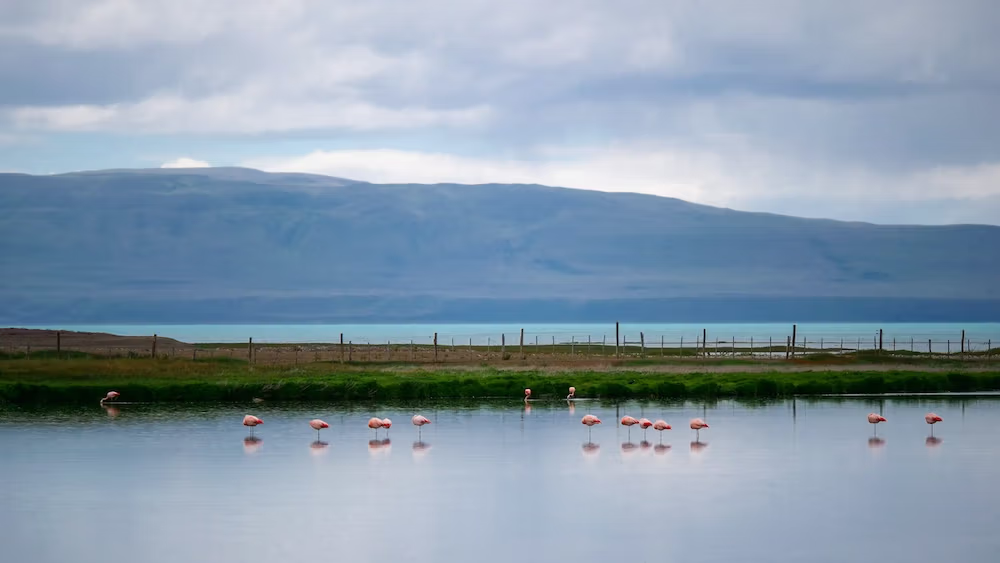
Patagonia Has Three Calendars, Not One
“What is the best month to visit Patagonia?” sounds like a simple question.
It is actually three questions wearing one coat.
A successful trip depends on the operating calendar, the wildlife or activity calendar, and the weather and daylight calendar. They overlap, but they do not always agree.
The operating calendar
This determines whether hotels, restaurants, transport, visitor centres and tours are running normally, running less often or closed.
Many famous parks remain open year-round. That does not mean the experience remains identical.
Bus frequencies may drop. Visitor-centre hours shorten. Snow restricts trails. Boat services stop. Some restaurants and hotels take seasonal breaks. A destination can remain technically open while offering a much smaller range of choices.
We experienced this near the end of the active season in Las Grutas. Hotels, shops and restaurants had already started closing, and our options were far more limited than expected.
Dolavon delivered a similar practical result for a completely different reason.
We arrived on a Monday. Most of the restaurants we had researched were closed. The small museum shut for siesta. Suggested cafés were also closed. Online opening information was thin or nonexistent.
We walked across town repeatedly, following one hopeful lead after another, until the gas station became our main attraction. At least it had cold drinks and alfajores.
That day was not evidence that Dolavon closes for the season. It was evidence that weekday schedules, siesta and poor online information can matter as much as the month.
The wildlife and activity calendar
Península Valdés does not have one wildlife season.
Whales, elephant seals, penguins and orcas follow different patterns. The best viewing location also changes with the species and time of year.
We visited one elephant-seal area near the end of its main period and found only a handful still on the beach. It was still a good outing, but it was not the scene someone might imagine after seeing photographs from peak season.
Activities have calendars too.
Glacier trekking, lake navigation, seasonal buses, mountain refugios and certain boat excursions may operate only during defined periods or at reduced frequency. The destination may be open while the experience that motivated your trip is not.
This is especially important when one activity is non-negotiable. Do not choose dates because someone said “summer is best.” Check the actual operating period of the thing you want to do.
The weather and daylight calendar
The third calendar controls what is comfortable and realistically possible.
Tierra del Fuego can be visited all year, but long summer daylight creates a very different trip from winter snow and reduced access. Los Glaciares may remain open outside the warmest months, while some trails and excursions become more complicated. Northern Patagonia can produce hot lake days and cold mountain mornings during the same season.
Shoulder season is not automatically a clever travel hack. It can be fantastic, with fewer visitors and beautiful conditions. It can also come with reduced transport, shorter operating hours and fewer excursion dates.
Peak season offers the widest selection, but you pay for that with demand.
Before settling on a month, ask:
- Will the destination be operating at the level I need?
- Will the wildlife or activity I care about be available?
- Will weather and daylight support the way I want to experience it?
Those questions are far more useful than searching for one universal “best time to visit Patagonia.”
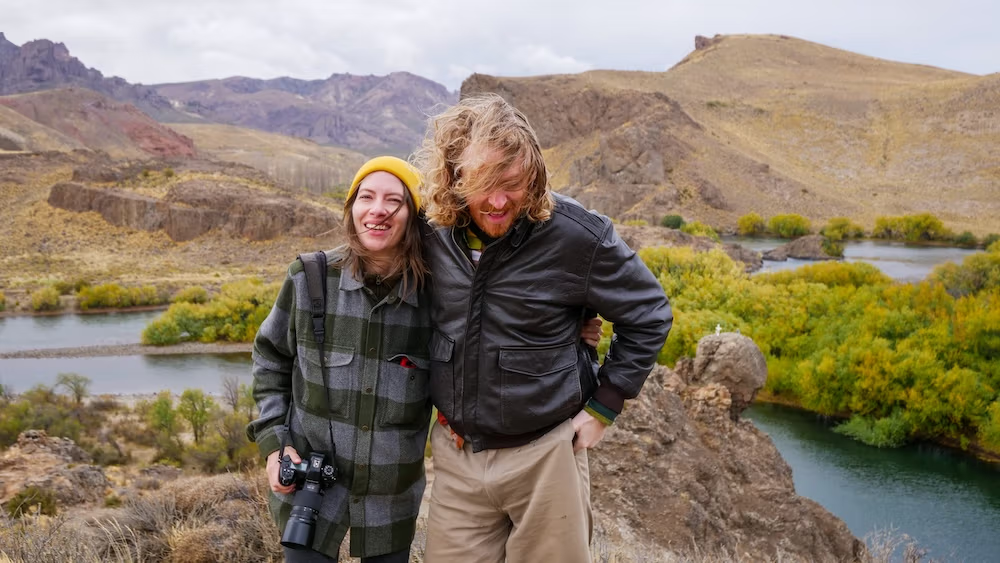
The Wind Will Eventually Get Your Attention
Before our first Patagonia trips, we understood intellectually that the region could be windy.
Then we stayed in an A-frame cabin in El Calafate.
On our first night, the wind hit the structure so violently that the whole building rattled. The bedroom was upstairs beneath the steep roof, and it sounded as though the roof had started a side business as a percussion instrument.
At some point we decided sleeping downstairs on the sofa-bed was the sensible move.
The cabin was still intact the next morning. We felt slightly dramatic. But the experience permanently changed what “windy” meant to us.
On strong days, Patagonia’s wind affects conversation, balance, hiking, driving, boats and sleep. We have been outside in conditions where shouting to someone nearby felt surprisingly ineffective. During a hike near Esquel, increasing wind contributed to our decision to turn around before the summit.
The Roaring Forties are the prevailing westerlies found between roughly 40 and 50 degrees south. They help explain Patagonia’s reputation, but they should not become a lazy explanation for every local gust. Mountain terrain, coastlines and passing weather systems all shape conditions.
Nor is every day insane. We have had calm, warm, glorious days throughout Patagonia.
The point is that wind needs to enter the planning conversation. It is not just something that makes the photographs look dramatic.
Check the weather forecast, then check the latest park or operator notice. Hiking trails can become dangerous during extreme winds because unstable trees and branches are more likely to fall. Boats may be delayed or cancelled. Exposed roads can become unpleasant.
Give the weather permission to change the plan before it forces you to.
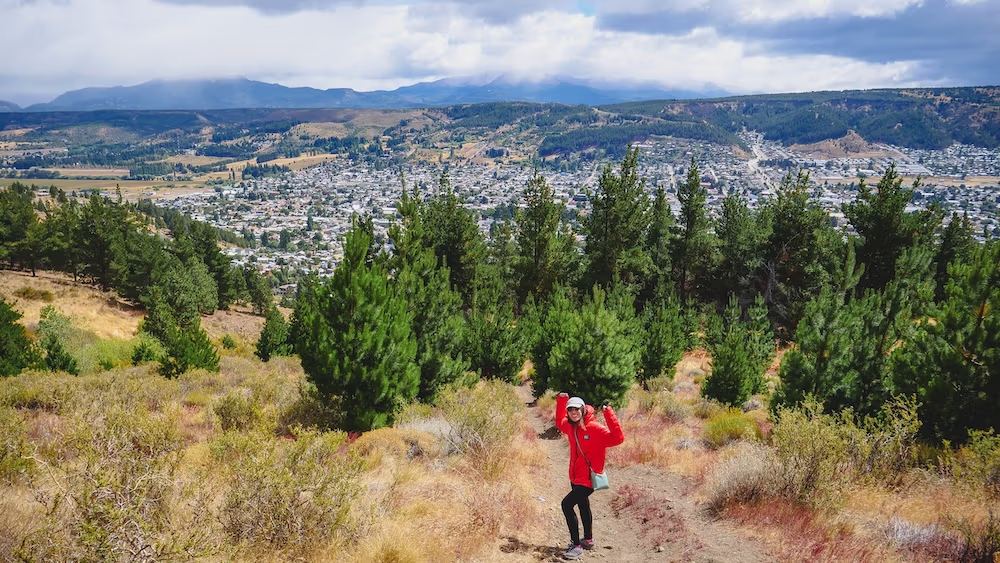
“Summer in Argentina” Is Not a Packing Strategy
Audrey learned this in Esquel.
We had been thinking about Argentina in summer, which sounded simple enough. Then the temperature dropped, the wind arrived and she ended up borrowing Samuel’s jacket. We later went shopping for warmer clothes.
Meanwhile, a few locals wandered around in T-shirts, presumably because they had reached a higher stage of Patagonian evolution.
On the Atlantic coast, we experienced the opposite.
Puerto Pirámides became intensely hot. During one morning walk, we carried water, wore sunscreen and tried to stay covered. Then we missed the trail back into town and ended up walking beside the highway under the scorching sun.
Same broad season. Entirely different physical problem.
For most first-time Patagonia trips, I would pack by function rather than by month:
- a comfortable base layer;
- a fleece or other insulating mid-layer;
- a waterproof and wind-resistant shell;
- footwear suited to the actual activities;
- sunglasses, sunscreen and lip protection;
- and a hat that will not immediately abandon you.
If hiking is a major part of the trip, quick-drying clothing and waterproof footwear become more important. If the plan is mostly towns, viewpoints and boat excursions, there is no reason to dress like you are attempting Cerro Torre.
The sun deserves particular attention. Cold air and wind can make exposure feel harmless even when it is not. Cover up, carry water and reapply sunscreen during longer outdoor days.
A cheap umbrella is generally less useful in Patagonia than it appears in the shop. We watched one of ours lose an argument with the wind. A proper shell leaves your hands free and has fewer ambitions.
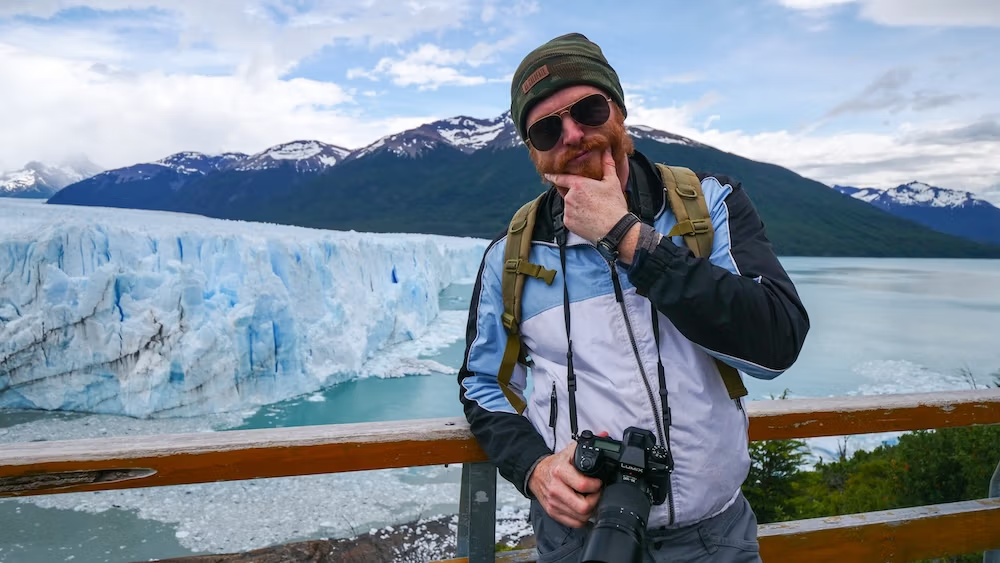
Decide What Must Be Booked—and What Must Remain Loose
Patagonia presents travellers with an annoying contradiction.
Popular experiences can sell out. Weather-sensitive plans can collapse. Book everything and the itinerary becomes brittle. Book nothing and the one excursion you crossed the continent for may be unavailable.
We learned the second lesson in El Calafate.
After arriving, we asked about trekking on Perito Moreno Glacier. The next availability was roughly three days later. Our schedule had no room to wait, so we missed it.
The glacier did not care that we had travelled a long way. The booking system did not produce two emergency spaces because we seemed nice.
We had simply left it too late.
Travellers who already know that Perito Moreno Glacier is one of the trip’s immovable anchors can check current availability for a guided Perito Moreno Glacier day from El Calafate. We did not take this particular tour, so treat it as a current planning option rather than a personal recommendation.
On another trip, we returned from Península Valdés and found our previous hotel in Puerto Madryn fully booked. At Los Alerces, we secured return bus tickets because capacity was limited. In Puerto Pirámides, we delayed renting kayaks until later in the day and reached the beach while the operators were packing them away.
These were different problems, but they all involved timing.
I now sort plans into four groups.
Book when the dates are firm
This includes anything with fixed capacity and few substitutes:
- a must-do glacier or boat excursion;
- distinctive accommodation;
- a critical domestic flight;
- a rental car when you need a specific transmission or vehicle category;
- and any experience that would materially change the value of the trip if missed.
Book with room to move
Weather-dependent activities are easier to manage when they are scheduled early in the stay or can be changed without a financial disaster.
A boat trip, exposed hike or outdoor excursion booked on the final available day leaves no recovery option.
Leave the ordinary pieces open
You do not need to reserve every meal, café visit, town walk or minor viewpoint months in advance.
Leaving some unstructured time gives you somewhere to move a weather-delayed activity. It also creates space for the place you did not know existed before arriving.
Recheck the live conditions
Roads, trails, ferries, park access and wind-dependent activities can change quickly.
A booking confirmation tells you that you paid for something. It does not guarantee that Patagonia will permit it to happen.
There is no useful region-wide rule saying you must book everything six months ahead. Demand changes by destination, week and product. Christmas and New Year are different from an ordinary weekday. A famous dome hotel has a different inventory problem from a regular apartment.
Reserve what would be painful to lose. Keep enough of the surrounding itinerary loose that the reservation still has somewhere to move.
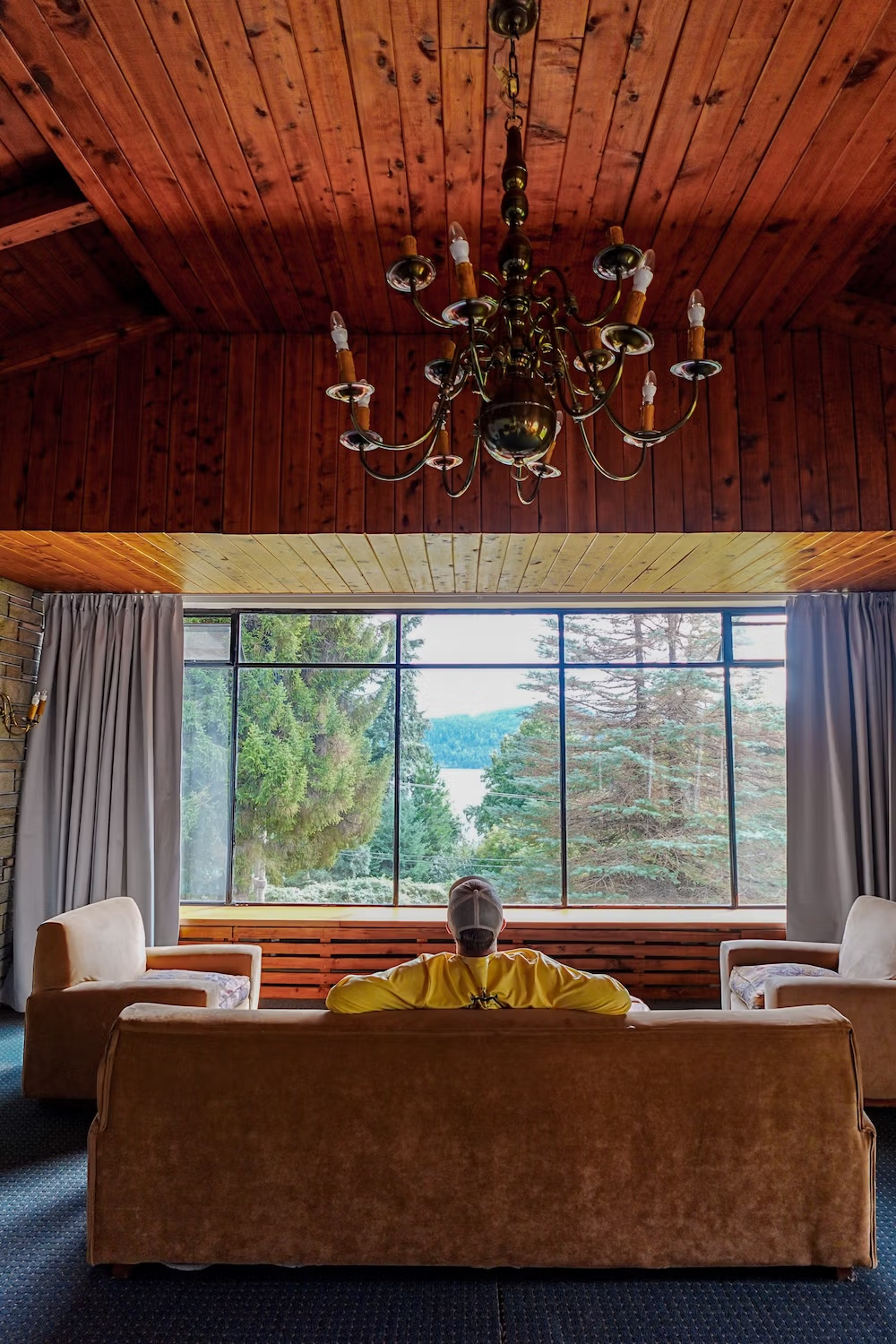
Three Nights Is the Floor, Not the Formula
We often recommend at least three nights per Patagonia destination.
This does not mean every place can be experienced properly in three nights. It means anything shorter begins to resemble competitive luggage handling.
Three nights normally create two potential full days. That assumes a reasonably timed arrival and departure. Arrive late and leave early, and you may have one usable day.
Three nights can work when the destination has one major excursion, the transfer is straightforward and you accept that weather may remove a secondary plan.
Stay longer when:
- you have two important outdoor days;
- wildlife or boat trips are central;
- the town is a base for several dispersed excursions;
- you are arriving after a long journey;
- hiking recovery matters;
- or losing one day would wreck the visit.
We spent eight nights in Esquel, which is longer than the average visitor requires. We were also working while travelling and moving slowly.
That longer stay revealed how much was spread around the area: Los Alerces, La Trochita, Trevelin, Piedra Parada and local hikes. Had we allowed only two nights, we would have spent most of the visit choosing what not to do while pretending the town itself had disappointed us.
Count usable days, not accommodation nights.
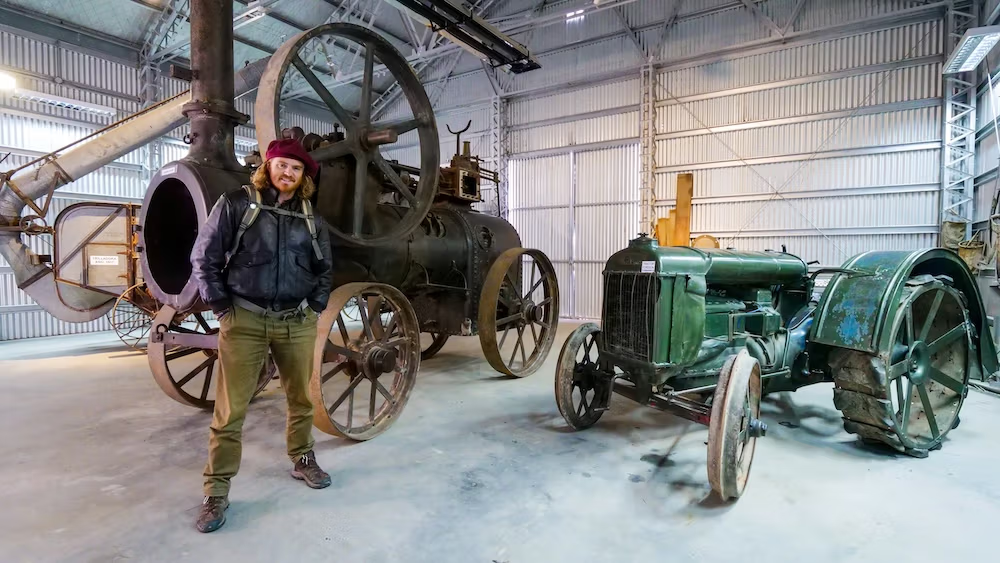
Smaller Places Are Not Bonus Rounds
A first Patagonia itinerary often becomes a chain of famous names.
Bariloche. El Calafate. El Chaltén. Ushuaia.
Then the traveller discovers smaller places and adds those too.
This is how a sensible trip becomes a hostage situation.
Smaller destinations work best when they deepen a region you have already chosen.
Trevelin made sense because we were based in Esquel. It gave us a different view of Chubut through Welsh-Patagonian history, tea houses, regional food and a quieter town atmosphere. It complemented Los Alerces rather than dragging us into another part of the country. Travellers deciding which base suits them can compare accommodation in Esquel alongside current stays in Trevelin before splitting the nights.
El Bolsón fits naturally into a northern Andean trip. The town offered a slower rhythm than Bariloche, with access to trails, rivers and Lago Puelo. We had looked forward to visiting for years, and it became one of our favourite stops because we stayed long enough to settle into it.
Puerto Pirámides changed the coastal trip in another way. It placed us inside Península Valdés rather than commuting from Puerto Madryn for every wildlife experience. The village is not an undiscovered secret. It has established tourism infrastructure. But its scale, beach setting and isolation create a very different stay from the larger city.
Before adding a smaller place, ask whether it:
- belongs naturally inside the chosen region;
- adds a different landscape, culture or experience;
- can receive enough time to be more than a lunch stop;
- and replaces another destination rather than merely extending the list.
That final point matters.
A small town is not automatically slow travel when you arrive at noon, take six photographs and leave at three.
Eat the Patagonia You Are Actually In
Argentina is famous for beef, and you will have no trouble finding it in Patagonia.
The more interesting approach is to notice how the food changes with the landscape.
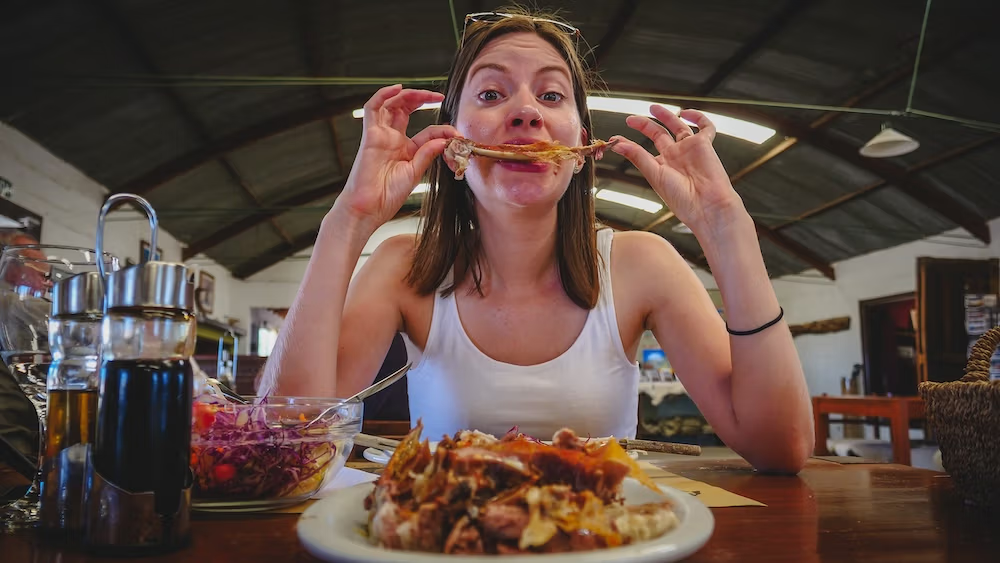
Patagonian lamb appears throughout the south and steppe regions. We ate it grilled, stewed, turned into burgers and folded into pasta dishes. Some versions were rustic and direct; others arrived wrapped in bacon with sauces and elaborate presentation.
On Península Valdés, lamb often shared the table with seafood from the Atlantic.
In Tierra del Fuego, centolla—southern king crab—is the regional prize. We ate seafood repeatedly in Ushuaia, and centolla cooked al disco was one of the standout preparations. The meat is tender and slightly sweet, somewhere in the broad neighbourhood of lobster without being identical to it.
Around El Calafate, calafate berries appear in jams, sauces, ice cream and desserts. The local legend says anyone who eats calafate will return to Patagonia.
We have returned several times, so I am reluctant to call the legend nonsense.
Food should not become a separate scavenger hunt that sends you across the region. It should help you understand the place you already chose.
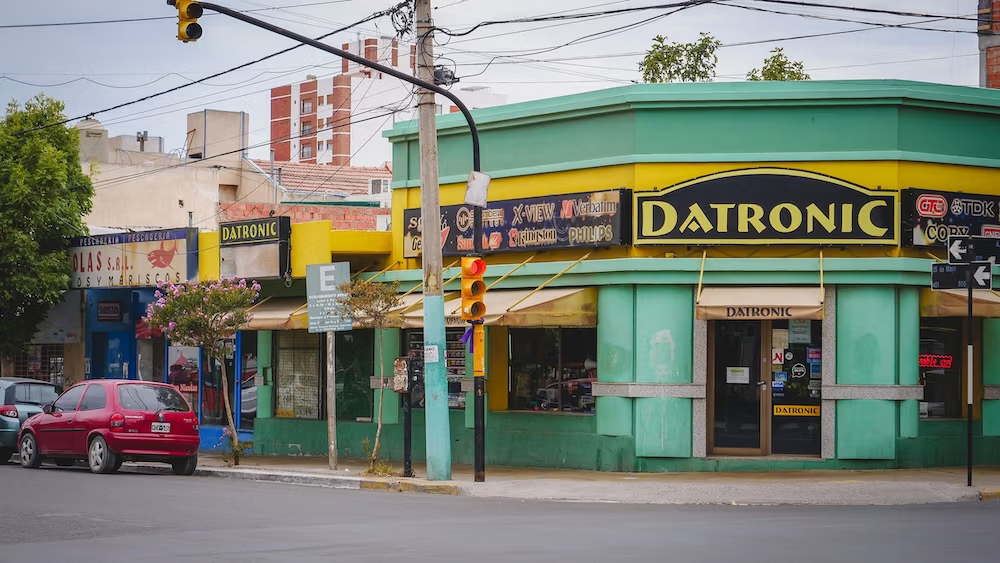
Prepare for the Boring Failures
Not every Patagonia problem arrives with cinematic weather.
Some arrive as a card terminal that refuses to process the payment while everyone stares at it.
In El Chaltén, our mobile data stopped working and the Wi-Fi was unreliable. When we checked into a hotel, the card payment failed repeatedly. The receptionist eventually let us try again later.
In Trelew, a video upload ran for roughly fourteen hours without finishing before we had to leave.
Connectivity has improved in many places, and several national parks now accept online ticket purchases and major cards. That does not mean the system will work at the exact moment you need it.
Before leaving reliable service, save:
- the accommodation address and check-in instructions;
- booking confirmations and tickets;
- offline road and town maps;
- official trail maps;
- current park alerts;
- emergency contacts;
- copies of important travel documents;
- and the location of the next transport or fuel stop.
Carry more than one payment method. Cash remains useful as backup, but Patagonia should not be described as universally cash-only. The better rule is redundancy.
Card and cash. Online ticket and saved copy. Mobile map and downloaded map.
That sounds overly cautious until you are standing in a national park with no signal, a dying phone and no memory of the road back.
For current park access, alerts and ticket information, check the official Argentina National Parks website shortly before each visit.
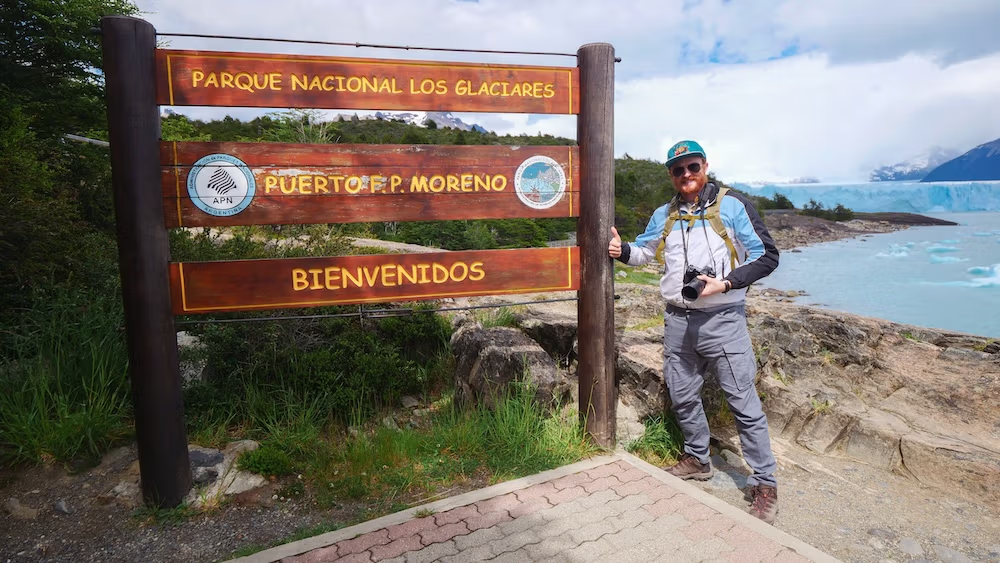
There Are More Perito Morenos Than You Think
Perito Moreno Glacier is reached from El Calafate inside Los Glaciares National Park.
Perito Moreno is also the name of a town in northwestern Santa Cruz, used as a gateway toward Cueva de las Manos.
Then there is Parque Nacional Perito Moreno, a separate and extremely remote protected area.
These places are not neighbouring versions of the same attraction.
We did not personally book the wrong Perito Moreno, but I can easily understand how it happens. Search results often strip away geographic context, and the repeated name creates false familiarity.
Before paying for accommodation, a transfer or an excursion, check the full map location and estimated journey. This is a small step that can prevent a spectacularly inconvenient mistake.
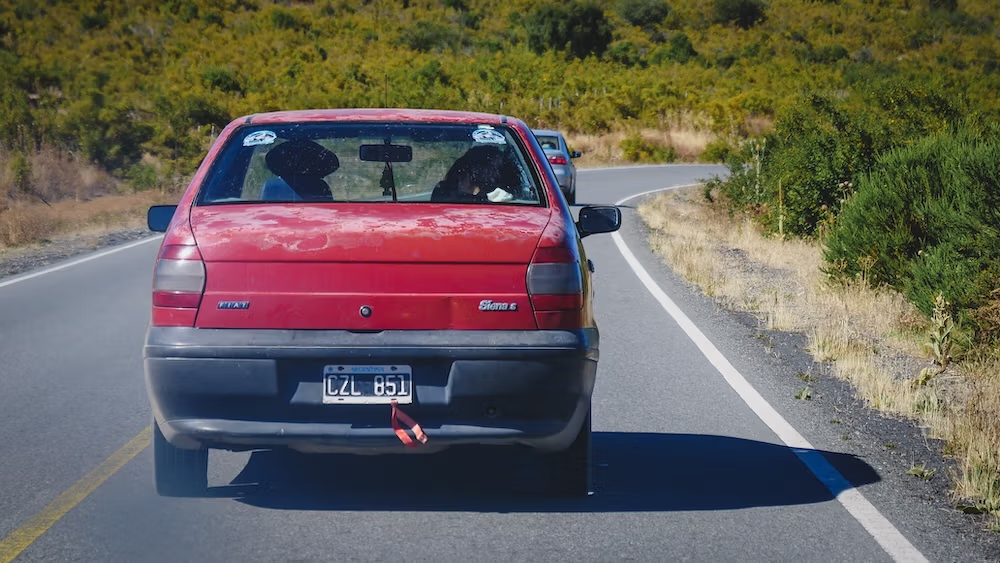
A Rental Car Is Not Automatic Freedom
A rental car can make a Patagonia trip dramatically easier.
It can also become an expensive object you are contractually forbidden to drive on the road you planned to take.
Whether you need a car depends on the region.
A vehicle is often useful around the northern lakes, especially when the trip includes rural accommodation, scenic roads or trailheads beyond regular transport. It can also provide more freedom on Península Valdés, where wildlife sites are spread across long distances.
A car is less essential for the main El Calafate–El Chaltén corridor. Buses connect the towns, and organized excursions cover many first-time priorities. Ushuaia also has transfers into Tierra del Fuego National Park.
Before redesigning the route around a vehicle, compare live inventory where the car would actually be collected. Booking.com currently has dedicated comparison pages for car rentals in Bariloche, rental cars in Puerto Madryn, El Calafate car rentals and vehicle options in Ushuaia. Availability alone does not mean the contract permits your intended road, ferry or border crossing.
Before renting, consider:
- where public transport reaches;
- how many rural day trips you actually have;
- whether the roads are paved or ripio;
- whether the rental contract permits those roads;
- fuel and tyre services;
- border crossings;
- one-way return restrictions;
- the required transmission;
- and whether you are comfortable driving in wind and loose gravel.
Ripio describes the surface, not the condition
Ripio means gravel, but it tells you very little about the quality of the road on a given day.
A gravel road may be smooth and easy at a sensible speed. It may also be corrugated, loose, muddy or damaged after weather. Flying stones can chip windscreens, and braking distances increase on loose surfaces.
Slow down and check current conditions through Vialidad Nacional before setting out on a long or remote route.
Wildlife and livestock also appear on roads. The risk changes by region, but it is another reason not to treat a long empty stretch of steppe as a personal speed trial.
Fuel concerns should remain route-specific. Major tourism corridors have services. Remote steppe routes and isolated parks may not. Some places genuinely lack fuel, tyre repair and provisions, which places them in an entirely different category from a scenic drive repair and provisions, which places them in an entirely different category from a scenic drive outside Bariloche.
Read the contract before designing the road trip
This sounds painfully dull. It is also one of the most useful Patagonia driving tips.
A road may be open and physically manageable while your rental contract prohibits the vehicle from using it. Some companies restrict standard passenger cars from gravel or dirt roads. Policies differ by company and vehicle category.
Do not assume that renting a car in Patagonia means you have permission to drive every road in Patagonia.
Confirm:
- allowed surfaces and routes;
- tyre and windscreen coverage;
- roadside-assistance limits;
- ferry use;
- and whether your intended vehicle category matches the trip.
Get the important answers in writing.
Crossing into Chile requires advance permission
Patagonia spans two countries. Rental contracts do not automatically span them with equal enthusiasm.
Taking an Argentine rental vehicle into Chile normally requires company authorization, additional documentation and insurance arrangements. Fees, lead times and eligible vehicle categories vary.
Some companies request several business days of notice. Others restrict where certain cars may travel or whether cross-border assistance is provided.
Do not arrive at the border with an ordinary contract and hope your confidence carries you through.
Contact the rental company before finalizing the route. Confirm the vehicle is eligible, request the permit, check the insurance and carry the required documents.
We have travelled through border and ferry routes in Patagonia, but the rental-permit details here are researched guidance. We are not claiming that we personally drove a hire car across that border.
The decision is simple: rent a car when it unlocks the region you chose. Do not rent one because Patagonia looks good through a windscreen.
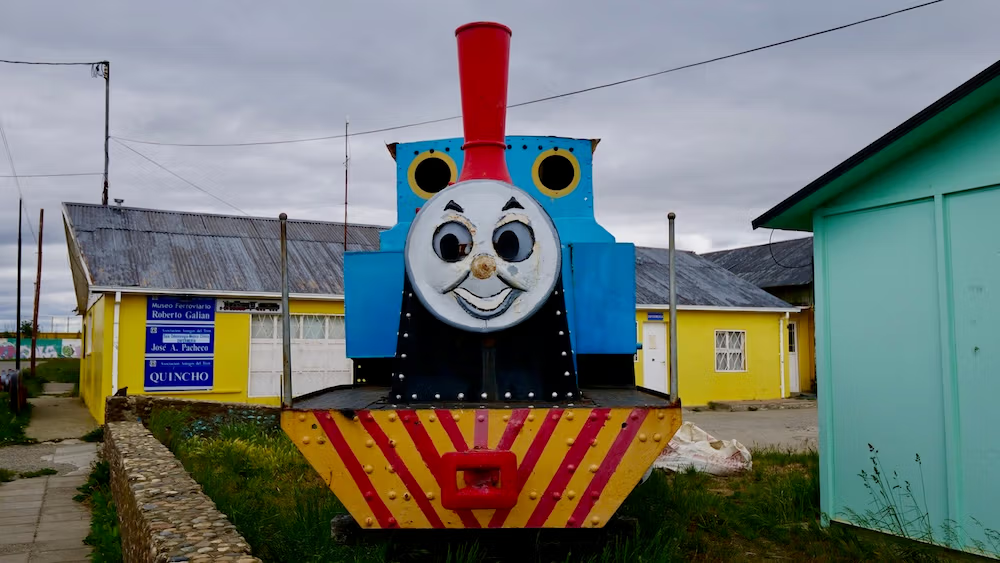
Leave Patagonia Unfinished
Our early Patagonia trips were full of small miscalculations.
We moved too quickly. We packed for the month rather than the exposure. We left important bookings until arrival. We occasionally built itineraries with so little spare room that one delay or closure could remove the experience entirely.
What I would do differently now is not plan every hour more aggressively.
I would remove destinations.
Choose one primary region. Treat major transfers as itinerary days. Reserve the experiences you would be genuinely upset to miss. Leave weather-sensitive plans movable. Carry backups for navigation, communication and payment. Give each base enough time that arrival, recovery and one bad-weather day do not consume the whole stay.
Then accept that large pieces of Patagonia will remain unseen.
That is not a failed first trip.
It is the reason the parts you did choose had enough room to become memorable.
Frequently Asked Questions
How much of Patagonia should first-time visitors try to cover?
For a one-week trip, choose one regional lane. With ten days or two weeks, combine places that fit naturally together rather than jumping between the northern lakes, Atlantic coast, southern glaciers and Tierra del Fuego.
How many nights should I spend in each Patagonia destination?
Three nights is a useful floor because it usually creates two possible full days. Stay longer when weather, wildlife, boat trips, hiking recovery or several dispersed excursions are central to the visit.
What should I book in advance for Patagonia?
Reserve fixed-capacity experiences, distinctive accommodation, critical flights and any required rental-car category once your dates are firm. Keep weather-sensitive activities movable when possible and leave ordinary meals and town time open.
What is the best time to visit Patagonia?
There is no single best month. Check three calendars: whether services are operating, whether your preferred wildlife or activity is available, and whether weather and daylight suit the trip you want.
Do I need a rental car in Patagonia?
It depends on the region. A car can help around the northern lakes and Península Valdés, while buses and organized excursions cover many first-time priorities between El Calafate and El Chaltén and around Ushuaia.
What should I pack for a first trip to Patagonia?
Pack by function rather than month: a base layer, insulation, a waterproof and wind-resistant shell, activity-appropriate footwear, sun protection and a hat that can handle strong wind.
Why are there several places called Perito Moreno?
Perito Moreno Glacier near El Calafate, the town of Perito Moreno in northwestern Santa Cruz and Parque Nacional Perito Moreno are separate places. Check the full map location before booking accommodation, transport or an excursion.
Project 23 Argentina: This guide is also available in Spanish. [Leé la versión en castellano: Consejos para viajar por la Patagonia: lo que debés saber en tu primer viaje]
This article contains affiliate links. If you book through one of thse links, I may earn a commission at no extra cost to you.