
Patagonia is one word. That’s the first problem.
Say it out loud and most people picture one place — some combination of mountains, a glacier, maybe a penguin if they’ve seen the right nature documentary. What they don’t picture is a region that spans two countries, stretches roughly 2,500 kilometers from north to south, and reaches 800 kilometers across at its widest point. We’ve made multiple trips down there since 2019, working our way through the lake district, the glacier country, the Atlantic coast, and the end of the world, and the biggest thing we’ve learned isn’t about any single destination. It’s that trying to see all of Patagonia in one trip is how you end up seeing none of it properly.
This isn’t a list of everything Patagonia has to offer. You can find that anywhere, and it won’t help you. What you actually need, once you start planning, is a way to cut your options down to something that fits your time — and a clear sense of what you’re giving up when you don’t.
Why Patagonia Breaks Most People’s Trip Planning
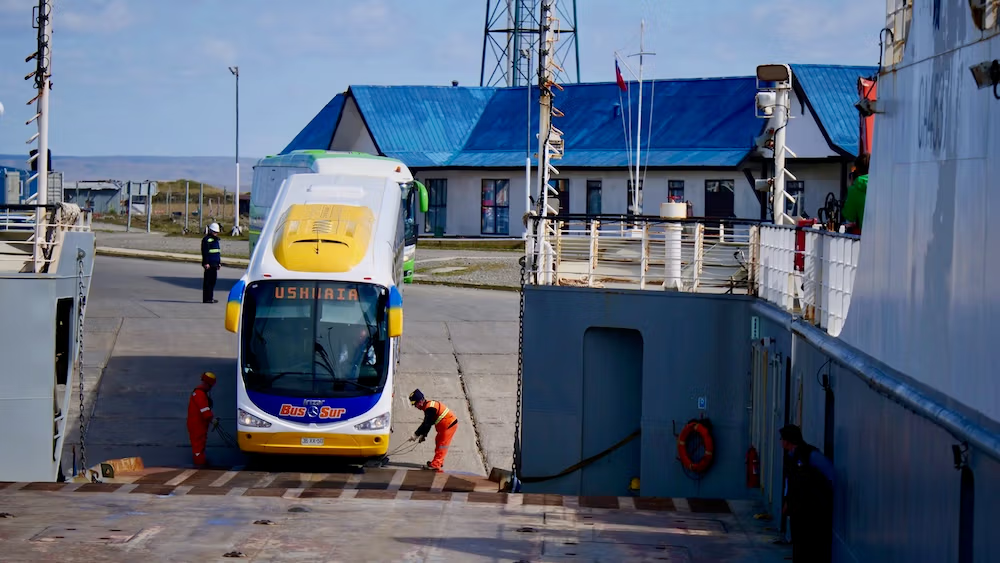
Audrey and I learned this the slow way, because we travel the slow way — mostly by bus, mostly overland, watching the actual distance between places unfold in real time instead of skipping over it in a plane. If you want a number that makes the scale click, try this one: driving from Bariloche, in the northern lake district, down to El Calafate, in glacier country, covers close to 1,500 kilometers and takes somewhere around 17 to 19 hours behind the wheel. Flying covers the same route in under two hours. That gap — 19 hours versus two — is the whole argument for choosing your region deliberately instead of assuming you can string a few together and drive between them.
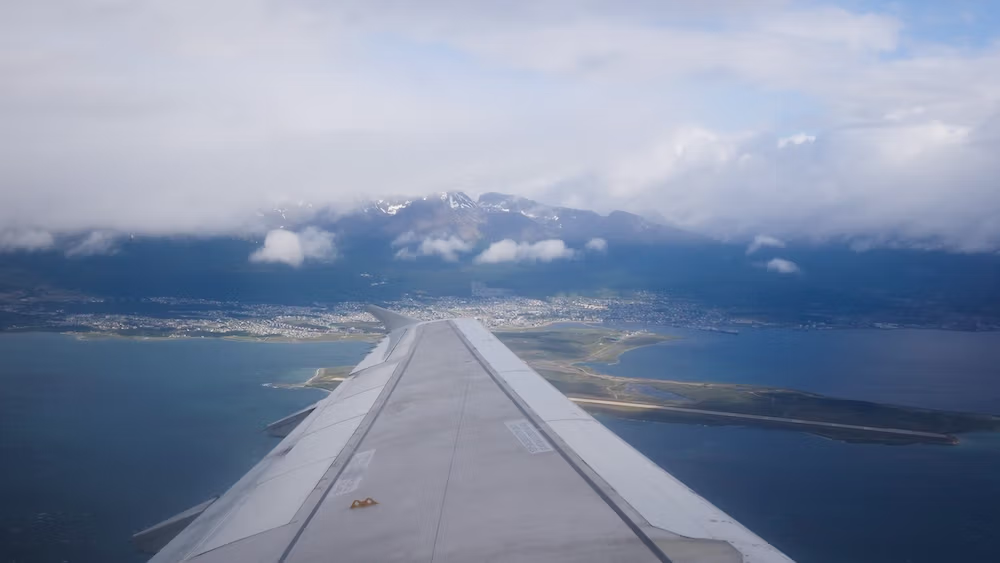
Head further south and the math gets worse before it gets better. Getting from El Calafate down to Ushuaia isn’t even a straight shot through Argentina — there’s no direct road that avoids Chile. You cross the border, take a ferry over the Strait of Magellan, and cross back into Argentina before you reach town. By car, with the ferry, that’s roughly 11 to 13 hours. By bus, with the connections most travelers end up making, it stretches to 17 or 20. Flying again shrinks it to under two hours. If you’re renting a car and planning to cross into Chile at any point, the rental company has to authorize that in advance — this isn’t something you sort out at the checkpoint. Skip that step and you’ll find out about it the hard way, at the border, with nowhere to go.
We know what it looks like to get the pacing wrong even within one region, because we did it ourselves. On our first real stretch through northern Patagonia, we spent eight nights in Esquel. We loved it — the town is genuinely underrated, quieter than Bariloche or San Martín de los Andes, with enough day trips nearby to fill a week without trying. But eight nights was too many for what an average traveler needs there, and we said so on camera before we’d even left. Three to four nights, doing a couple of activities a day, covers it. The lesson wasn’t “don’t go to Esquel.” It was that even when you love a place, open-ended time in one spot quietly eats the days you meant to spend somewhere else.
The Four Patagonias (and Who Each One Actually Suits)
Once you stop thinking of Patagonia as one destination, it splits fairly cleanly into four, and each one rewards a different kind of traveler.
The Northern Lake District
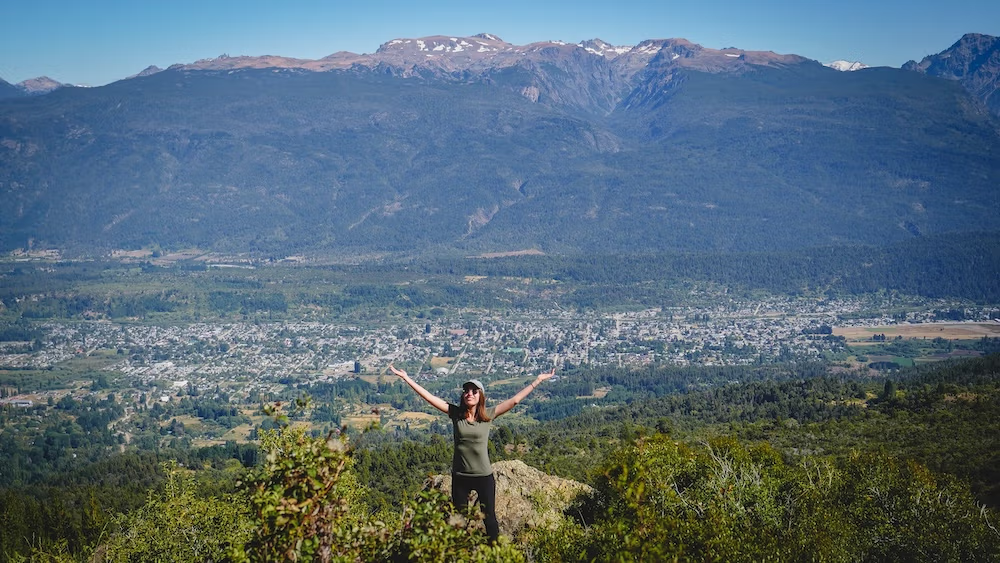
This is the Patagonia of lakes, forests, and mountain towns with a genuinely laid-back pace — Bariloche, Villa La Angostura, San Martín de los Andes, El Bolsón, and Esquel, all connected by some of the country’s most scenic bus routes. It’s where you go for hiking, breweries, chocolate, and the kind of unwinding that doesn’t need a bucket-list itinerary to justify itself.
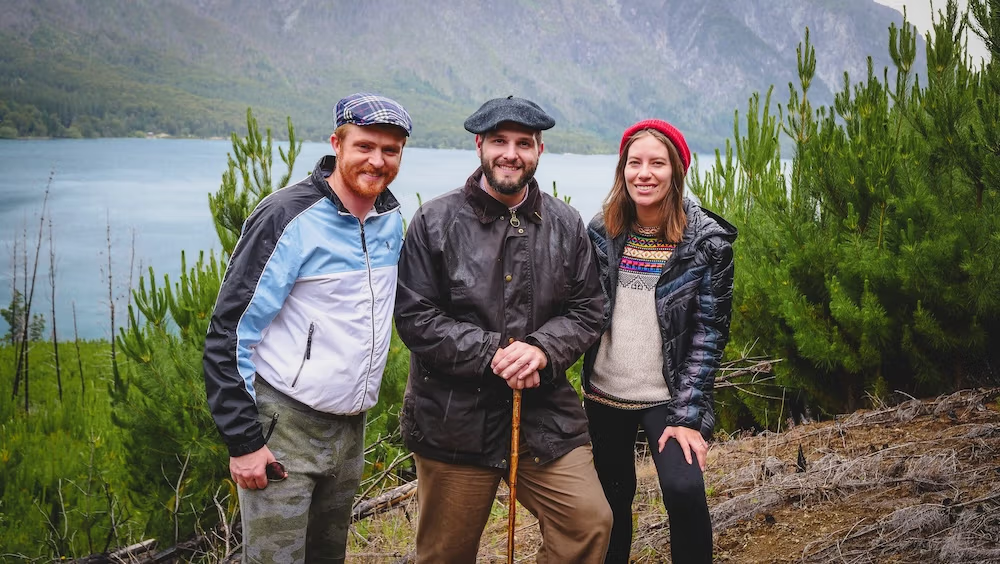
El Bolsón is our favorite town in all of Patagonia, and we don’t say that lightly — we’ve been back twice, a year apart, and both times it held up. Part of that is the setting: good hiking straight out of town, rivers, waterfalls, a slower rhythm than anywhere else we’ve stayed in the region. Part of it is stubbornly specific. There’s a dog that belongs to nobody in particular — we started feeding him steak off a cabin porch on our first trip, and by the time we came back a year later he still remembered us, girlfriend dog in tow. Our host that first stay, a young guy named Valentín, ended up driving us out to nearby towns we never would have found on our own and became enough of a friend that “we’ll be back” wasn’t just something you say to be polite. Add a garden with a gazebo and a pond, a cat from down the street who wanders in for pets, and sunsets that turn the surrounding mountains orange, and you understand why we keep going back to a town that most first-time visitors have never heard of. If you want your own version of that cabin, it’s worth comparing places to stay in El Bolsón before you land — the good ones, especially anything with a garden, go first in high season.
Esquel and nearby Trevelin sit a notch further off the typical circuit and get overlooked for it, which is exactly why we’d point people toward them. Trevelin in particular is a town we visited once on a rushed day trip and felt like we’d barely scratched the surface — so a few years later we went back properly, for vineyards, a hydroelectric dam, and a corner of Los Alerces National Park we hadn’t seen the first time around.
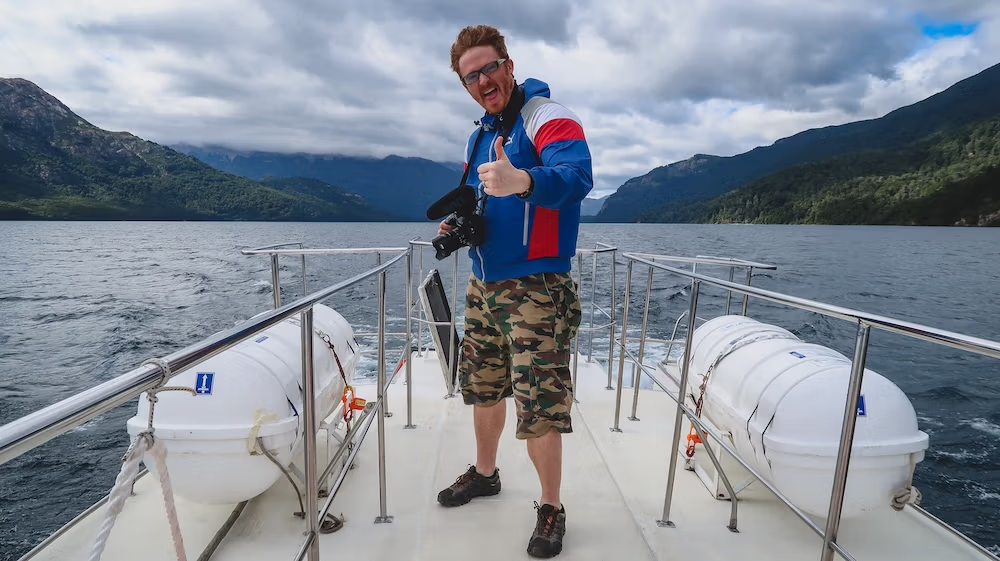
Los Alerces, for what it’s worth, is the most beautiful place we’ve seen in Patagonia, and it earns that without a single glacier in the frame. Most of the park is genuinely open to independent travel — you can hike, camp, and drive Route 71 through it on your own — but the specific grove where the oldest trees stand, including one estimated at over 2,600 years old, is only reachable by boat, on a guided excursion across Lago Menéndez, followed by a short hike where your guide hands you a walking stick cut from the local cane. It’s worth the structure. Standing next to something that’s been alive for two and a half millennia has a way of putting your own itinerary in perspective, and the boat ride there and back — turquoise water, glacier views from the deck, everyone’s cameras out the entire time — isn’t exactly a hardship.
If you’re touring between San Martín de los Andes and Villa La Angostura, the Seven Lakes Route is the other superlative we’ll hand out in this region — the most beautiful drive we’ve done in the country, cutting through two national parks and past seven distinct lakes in a single day, for around forty dollars a person with no extra fees beyond your own lunch. It’s not essential the way Los Alerces is. One of us was against doing it at all, on the grounds that we’d already covered the same road once by public bus and didn’t need to see it twice — and came around by the end of the day, conceding it was worth doing anyway. The lakes genuinely don’t repeat themselves; each one had different light, different weather, its own personality. If you’d rather let someone else handle the driving, you can book the same Seven Lakes route we did, starting from San Martín de los Andes. We finished the day back at our favorite restaurant in town, ordering the same venison dish we’d been thinking about since our first visit, which tells you as much about how we choose where to eat as it does about the tour.
Southern Glacier and Trekking Country
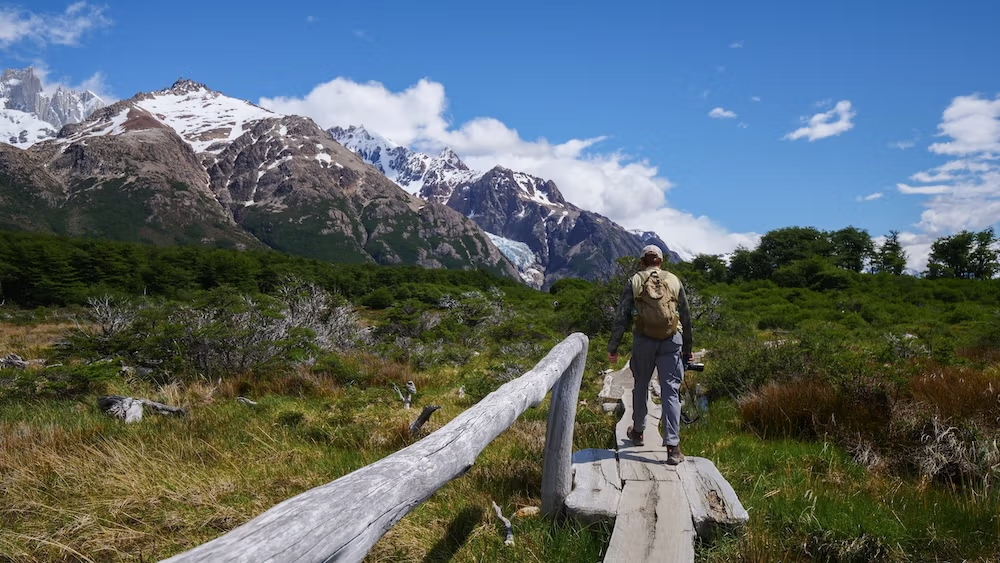
This is the Patagonia most people are actually picturing when they say the word: El Calafate and El Chaltén, home to Perito Moreno Glacier and Mount Fitz Roy. It’s also the region we care about enough to have built our own guided tour around — when we had to pick just two places to anchor a trip we were putting our name on, we picked these two, and nothing else.
El Calafate is built around getting close to the ice — by boardwalk, by boat, or by walking directly on the glacier in crampons. That last option comes in two versions, a shorter Minitrekking and the longer, more demanding Big Ice tour, and both are worth knowing the booking rhythm for. In high season, December through February, Big Ice typically needs to be booked two to three weeks out, and even the shorter Minitrekking wants 48 to 72 hours of lead time at minimum. We learned this the inconvenient way, walking into town and asking about ice trekking only to find nothing available for three more days. Don’t do what we did — check current availability for Perito Moreno ice trekking before you land, not after.
It’s not just the ice, either. The fancier hotels, the estancia stays, and the glamping domes people build entire trips around sell out months ahead in peak season too, and if you can only drive an automatic transmission, you’ll want to sort your car out early — Patagonia runs heavily on manual, and the automatics go first. It’s worth taking five minutes to compare rental car availability in El Calafate before you land, for exactly this reason.
El Chaltén, roughly an hour further by bus, is built entirely around trekking, and unlike its Chilean counterpart across the border, the town itself sits inside the national park — trailheads start at the edge of the sidewalk, not at the end of a shuttle ride. That convenience comes with a seasonal catch worth planning around: high season runs roughly October through March, and from around April or May through August or September, much of the town quietly shuts down. Trails become genuinely difficult without mountaineering experience and cold-weather gear, and a lot of the restaurants and tour operators that make a summer visit easy simply aren’t open. Visit in the shoulder or off months and that’s not automatically a dealbreaker — you’ll get quieter trails and better rates — but you should know it before you arrive expecting a full town.
The Atlantic Coast
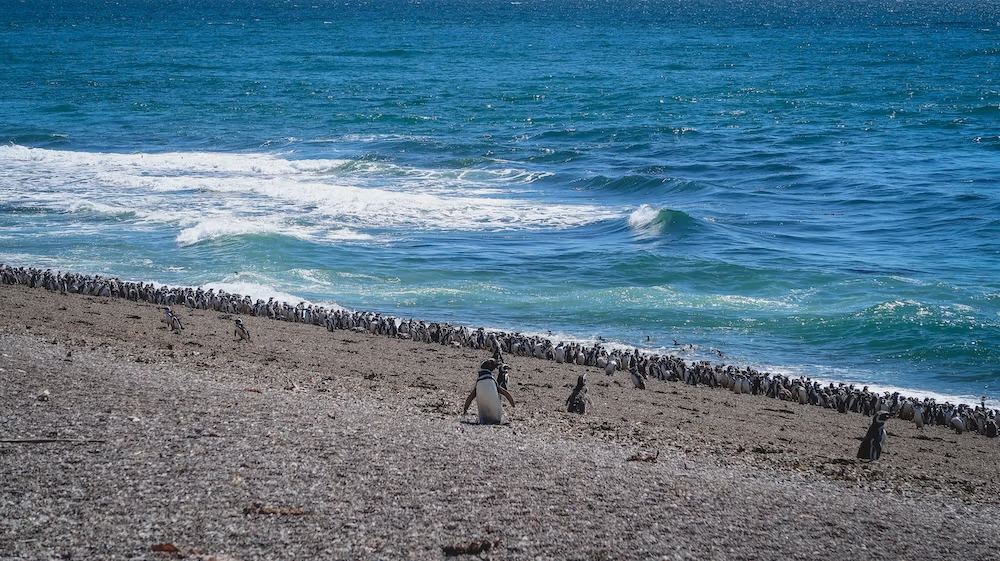
This is the Patagonia nobody pictures until they’ve been, and it has almost nothing to do with mountains. Puerto Madryn and the Península Valdés are built around marine wildlife — penguins, sea lions, elephant seals, and southern right whales — with a supporting cast of small Welsh-settled towns further inland that feel like they’ve been quietly transplanted from Wales and left to season in the Patagonian sun.
If wildlife is the draw, timing matters more here than almost anywhere else in Patagonia. Whale season runs from early June through mid-December, and the best viewing spot shifts partway through it: from June to around September, whales come close to shore near Puerto Madryn and the beach at El Doradillo, sometimes just meters from dry land; from September into December, the action moves around the peninsula and Puerto Pirámides becomes the better base for boat tours. Visit outside that window entirely and the marine wildlife that makes this coast worth the detour simply isn’t there. Whichever half of the season you land in, it’s worth lining up your dates before you go — you can compare current whale-watching tours from Puerto Madryn and pick one that matches whichever base you end up in.
We also picked up a seasonality lesson here that colors how we think about coastal Patagonia generally. We arrived in the small seaside town of Las Grutas right at the tail end of its season and found hotels, restaurants, and shops shutting their doors around us, with sharply limited options for the rest of our stay. It’s a smaller-scale version of the same pattern El Chaltén shows on a bigger stage: Patagonian towns, coastal and mountain alike, tend to be seasonal businesses first and tourist destinations second, and showing up at the wrong end of the calendar can leave you with a town instead of a trip.
The Far South
Ushuaia sits at the bottom of Tierra del Fuego, and it earns its “end of the world” branding honestly — reaching it, whichever direction you’re coming from, feels like an accomplishment in its own right, not just another stop on a list. It was the final destination on our own longest stretch through Patagonia, and that felt appropriate. It’s not a place you casually add to an itinerary; it’s a place you commit to reaching.
There’s a genuine cross-border extension worth knowing about here: Puerto Natales and Torres del Paine National Park sit just across the Chilean border from El Calafate, roughly five hours away by land. The access model is different from El Chaltén’s walk-out-your-door convenience — from Puerto Natales, most visitors either rent a car or join a full-day guided tour of Torres del Paine, since the town doesn’t sit inside the park the way El Chaltén does. We opted for the guided day visit rather than the multi-day W or O treks, mostly because our legs were already spent from El Chaltén, and even in a single day we got the point: a walk out to a beach where you can watch icebergs drift past, weather that shifted from sun to wind to hard rain and back inside a couple of hours, exactly as our guide had warned it would that morning. We’d planned to go back the following day. Patagonian weather had other ideas — heavy wind and rain moved in and made a second day of trekking pointless, so we didn’t. That’s really the whole argument for building slack into any itinerary that includes outdoor time down here: the day you plan around isn’t always the day you get.
Worth a brief mention, if only so this doesn’t read like an oversight: there’s a Chilean lake district too — Puerto Montt, Valdivia, Chiloé — loosely mirroring the Argentine northern lake district on the other side of the Andes. We haven’t been, so we won’t pretend to guide you through it. If someone tells you it belongs on your list, that’s a fifth branch worth researching on its own, not something we can speak to firsthand.
What Actually Costs You Time (and What Doesn’t)
Distance is the obvious cost. The less obvious ones are what actually derail a trip.
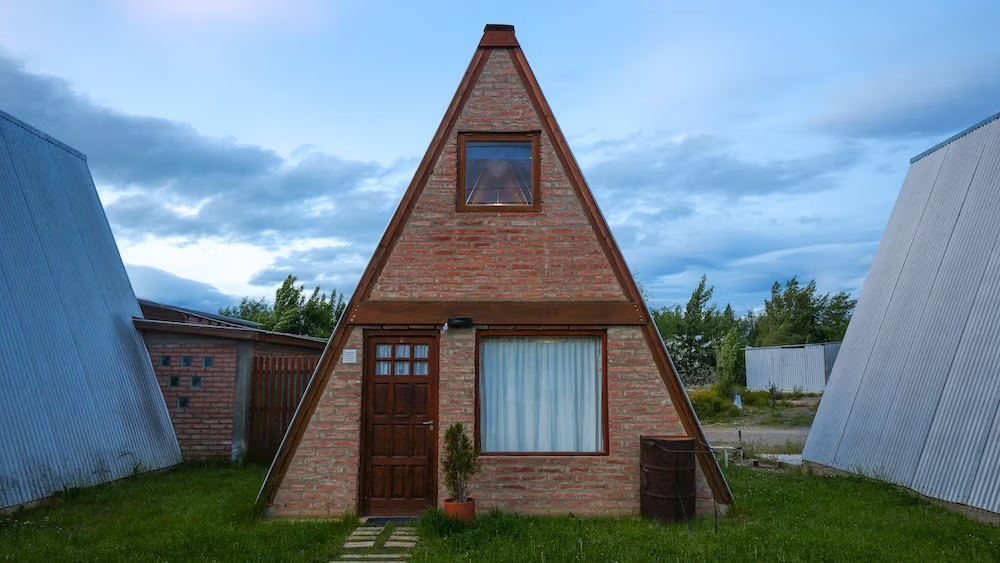
Wind is the big one, and it’s not scenery — it’s a planning variable. Our first night in El Calafate, the wind was strong enough that we abandoned the upstairs bedroom of the A-frame cabin we’d rented and slept on the ground floor sofa instead, half-convinced the roof was going to go. That wasn’t an isolated bad night. Patagonia’s westerly winds, the ones locals call the Roaring Forties, are strong enough that you can genuinely lean your whole body into them and have them hold you up — and strong enough that you can be shouting at a friend standing right in front of you and have the wind carry your voice away before it reaches them. It yanks car doors out of your hand if you’re not careful opening them, which is also a real driving consideration alongside the gravel roads, or ripio, that make up a lot of Patagonia’s rural routes: go slower than you’re used to, expect flying stones, and watch for cattle wandering onto the road. An app like Windguru becomes genuinely useful for timing anything outdoors down here, not a novelty. Build slack into any itinerary that includes outdoor activities in southern or coastal Patagonia, because a howling day can and will cancel your plans for you.
Connectivity is the other thing nobody warns you about. Across both rural and urban stretches of Patagonia, we ran into spotty internet and payment systems going down — mid-checkout at hotels, mid-entry at national park gates. Carry cash, especially for park admission fees, and download offline maps before you need them. It’s a minor annoyance until it isn’t.
And then there’s the trap with a name attached to it: don’t confuse the two Perito Morenos. One is the glacier, accessed through El Calafate, in the southern part of Santa Cruz province. The other is an unrelated town of the same name in the province’s north, notable mainly as the gateway to the Cueva de las Manos cave paintings. They share nothing but a name and a province, and booking the wrong transportation because of the mix-up is an easy, costly mistake.
None of this is meant to make Patagonia sound like a minefield. It’s meant to make the case that “which region” and “which season” aren’t two separate decisions — they’re the same decision, and getting them out of sync is what turns a good region choice into a frustrating trip.
A Decision Framework for Choosing Your Region(s)
Here’s the part that actually helps you decide. Once you know what each region is built around, matching it to your own trip comes down to time and interest more than anything else.
| Region | Best For | Minimum Days | Standout Draw | Biggest Trade-off |
|---|---|---|---|---|
| Northern Lake District | Hiking, laid-back pace, underrated towns | 3–4 per town | Los Alerces and the ancient alerce groves | Less globally iconic scenery than the south |
| Southern Glacier & Trekking Country | Bucket-list glaciers and mountain trekking | 6–7 combined | Walking on Perito Moreno; Fitz Roy from town | Highest cost, heaviest booking pressure in high season |
| Atlantic Coast | Wildlife, family trips, a different kind of Patagonia | 3–4 | Whales, penguins, sea lions in one stretch | Fewer mountains, fewer hikes |
| The Far South | Saying you reached the end of the world | 3–4 | Ushuaia itself; the journey there | Heaviest travel-time commitment of any region |
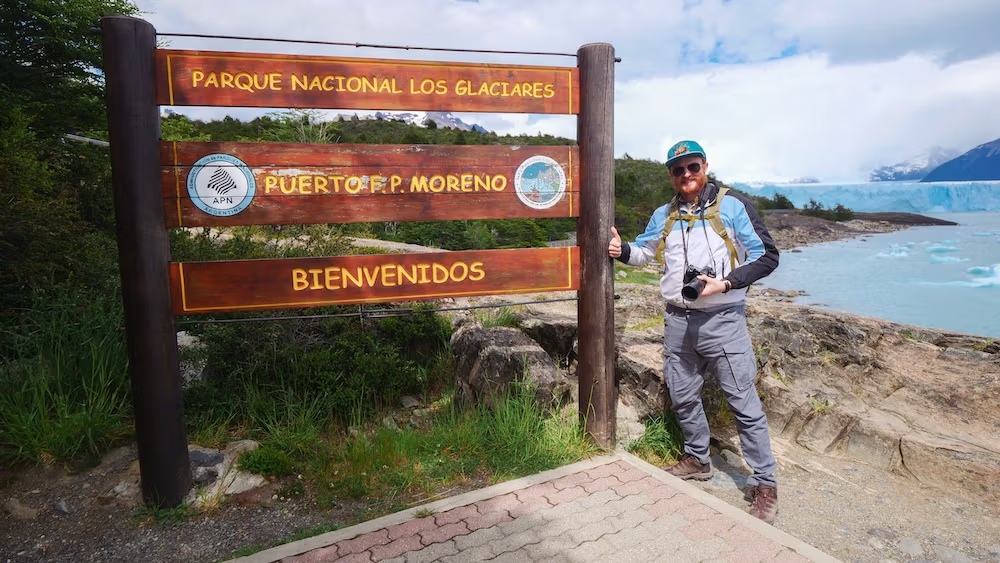
A few honest notes on how to use this. If you have a week or less, pick one region and stay inside it — the northern lake district and the Atlantic coast both reward that kind of focused, unhurried trip better than the south does. If you have closer to ten days and your interest leans toward hiking and glaciers, El Calafate and El Chaltén pair naturally: the connection between them is short, well-served, and doesn’t eat into your trip the way most Patagonian region-pairings do. That’s not a guess — it’s the exact pairing we chose when we had to build a single trip around only two destinations and put our own name behind it.
What doesn’t pair naturally, at least not without sacrificing days you’ll wish you had elsewhere, is the northern lake district with the south. Bariloche to El Calafate is a genuine multi-day commitment by land, and even flying it costs you an airport transfer and a chunk of a day on both ends. If you’re determined to see both, treat them as two separate trips, or fly between them and accept that you’re paying in money what you’re saving in time. The far south pairs most sensibly as an extension of the southern glacier region, not as a bolt-on to anywhere else — reaching Ushuaia from El Calafate is itself most of a day’s commitment, so it makes far more sense as the second half of a southern Patagonia trip than as a solo addition tacked onto a different region entirely.
If You Can Only Pick One (or Two)
If someone asked us, today, to pick one region for a first trip to Patagonia, we wouldn’t send them straight to the postcard shot of Fitz Roy, tempting as that is. We’d ask what they actually want out of the trip first — because the honest answer is that the right region depends entirely on that, and pretending otherwise is how people end up disappointed by a perfectly good destination that just wasn’t the one they needed.
If it’s genuine unwinding — hiking without a countdown clock, towns that don’t feel like they’re performing for tourists — we’d send them north, to El Bolsón, with a stop in Esquel if they have the extra days and the patience for underrated places. If it’s the bucket-list version of Patagonia, the one that shows up on postcards and Instagram feeds, we’d send them south, to El Calafate and El Chaltén together, with lodging in El Chaltén reserved well ahead of arrival, and Ushuaia added only if the extra travel days are genuinely available. If they want something nobody else in their friend group has done, we’d point them at the coast, timed to whale season, and let the wildlife make the case for itself.
What we wouldn’t do is let them try to see all three in one trip. We’ve had the extra time, over multiple visits across several years, to eventually cover most of Patagonia — and even we needed multiple trips to do it without burning out. A single visit doesn’t have that luxury. Pick the region that matches what you actually want from the trip, give it the days it deserves, and let the rest of Patagonia wait for next time. It will still be there. It’s not going anywhere, and neither, honestly, are you if you try to see it all at once — you’ll just be tired the whole time.
Frequently Asked Questions
How long should a first trip to Patagonia be?
It depends on which region you choose, but as a baseline we found that three to four nights per stop is usually enough to see a place properly without wasting days you’ll wish you had elsewhere. Trying to stretch that pattern across every region in one trip is exactly the mistake that turns Patagonia into a rushed, frustrating itinerary instead of a good one.
Can I see all of Patagonia in one trip?
Not comfortably. Patagonia stretches roughly 2,500 kilometers north to south, and moving between its regions by road can eat entire days — driving from Bariloche to El Calafate alone takes 17 to 19 hours. It took us multiple separate trips over several years to cover most of the region, and even then we never tried to do it all at once.
Which Patagonia region is best for hiking without a strict itinerary?
The northern lake district, especially towns like El Bolsón and Esquel, rewards that kind of unhurried pace. Both offer good hiking straight out of town without needing to book activities weeks in advance the way glacier country often does.
Can El Calafate and El Chaltén be combined in one trip?
Yes, and it’s the pairing we’d recommend if glaciers and mountain trekking are the priority. The connection between the two towns is short and well-served, unlike pairing the northern lake district with the south, which is a genuine multi-day commitment by land.
When is the best time to see whales on the Atlantic coast?
Whale season at Península Valdés runs from early June through mid-December. The best viewing base shifts partway through: shore-based sightings near Puerto Madryn and El Doradillo dominate from June to around September, while Puerto Pirámides becomes the better base for boat tours from September into December.
How do you get from El Calafate to Ushuaia?
There’s no direct road that stays inside Argentina — you cross into Chile, take a ferry over the Strait of Magellan, then cross back into Argentina before reaching Ushuaia. By car with the ferry that’s roughly 11 to 13 hours; by bus with typical connections it can stretch to 17 or 20.
Does El Chaltén stay open year-round?
Not fully. High season runs roughly October through March. From around April or May through August or September, much of the town quietly shuts down, and the main treks become genuinely difficult without mountaineering experience and cold-weather gear.
What’s the biggest planning mistake people make in Patagonia?
Trying to stack too many regions into one trip instead of choosing one and giving it the days it deserves. Even a place we loved, like Esquel, taught us this lesson — we stayed eight nights there on our first visit, which we later admitted on camera was more than an average traveler actually needs.
A quick note: this article includes a few links to Booking.com and GetYourGuide for hotels, car rentals, and tours we mention below. If you book through them, we may earn a small commission at no extra cost to you.
Project 23 Argentina: This article is also available in Spanish. [Leé la versión en castellano: Cómo elegir entre tantas opciones de viaje en la Patagonia]