
For a long time, my Argentine wine strategy was brutally simple.
Find Malbec. Order Malbec. Drink Malbec. Declare it delicious. Repeat at the next restaurant.
It was not a sophisticated system, but it rarely let me down.
Even while Audrey and I travelled across Patagonia, Mendoza still seemed to follow us everywhere. Restaurant wine lists leaned toward Mendoza. Supermarket shelves leaned toward Mendoza. When a bottle was clearly labelled as Patagonian, we usually tried it because it felt local, slightly unusual and more connected to the trip.
Then I would notice a Malbec and fall back into old habits.
During one meal, Audrey suggested that white wine might be the more sensible choice with trout. She was probably right. I had already seen the red.
“I just couldn’t help myself,” I admitted. “The Malbec is just too delicious.”
This is the problem with discussing Patagonian wine beyond Malbec: Malbec is not some imaginary stereotype created by lazy travel writers. It really is the region’s largest wine grape. In the latest comparable regional figures, based on 2022 vineyard data, Malbec occupied roughly one-third of the area planted to wine grapes.
One-third is substantial.
It also leaves two-thirds of Patagonia’s wine-grape area planted with something else.
Merlot accounted for another 14%. Pinot Noir and Cabernet Sauvignon each represented about 11%. Chardonnay, Sauvignon Blanc and smaller plantings of Semillón, Riesling, Gewürztraminer, Cabernet Franc and other varieties pushed the picture much farther away from a one-grape region.
We experienced that shift most clearly in Chubut.
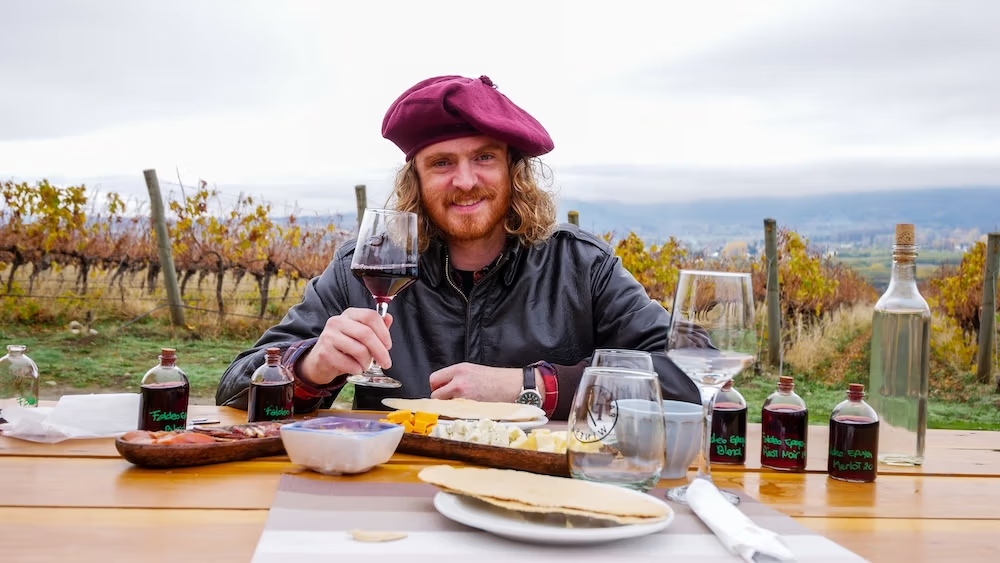
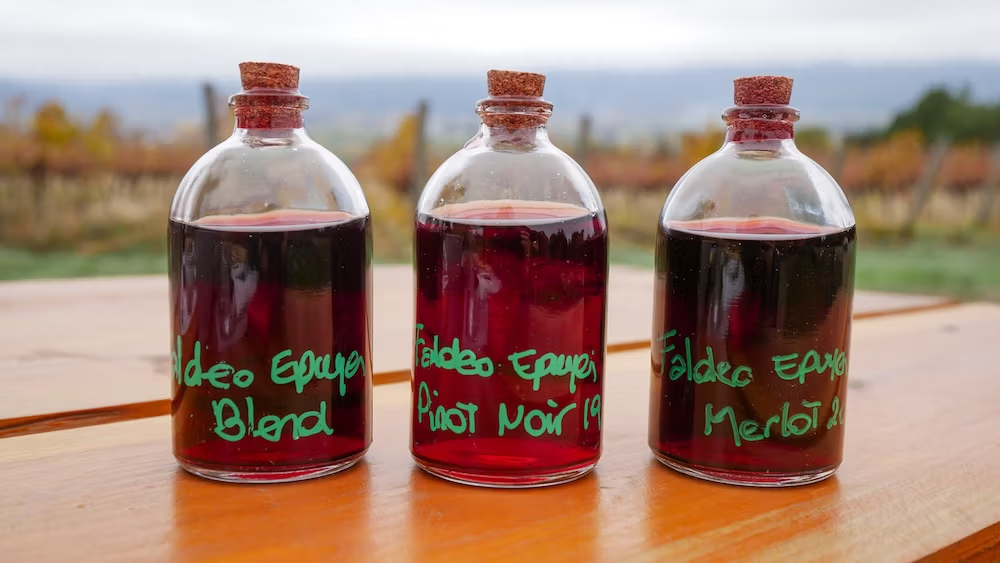
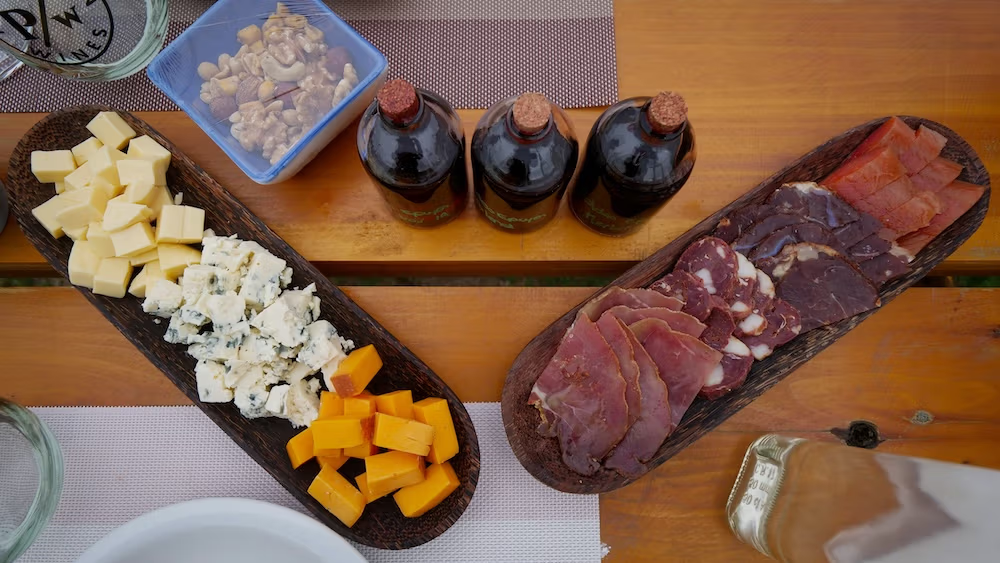
At Patagonian Wines vineyard near El Hoyo, Audrey and I sat outside in jackets with a picnic spread in front of us and three tiny wine bottles each. They looked less like a formal tasting flight and more like a set of potions.
“Here comes the potion,” became the pouring ritual.
The samples included Merlot, Pinot Noir and a blend. Malbec was nowhere near the centre of the experience.
I had not suddenly become a wine expert. I still liked Malbec. What changed was my understanding of Patagonia.
Patagonia produces more than Malbec because Patagonia is not one uniform wine zone. The established river valleys of Río Negro, the concentrated modern vineyards of Neuquén and the much smaller southern projects in Chubut operate with different combinations of temperature, wind, water, frost and growing-season length.
The most useful question is not simply whether a wine comes from Patagonia.
It is where in Patagonia the grapes were grown.
My Malbec Problem Was Real, but So Was the Rest of the Vineyard
There is no reason to knock Malbec off its pedestal just to make the rest of Patagonian wine sound interesting.
Malbec leads the region. It deserves to be part of the story.
Patagonia also remains overwhelmingly red-wine territory by planted area. In the 2022 regional figures, red wine grapes accounted for just over 77% of the wine-grape area. White varieties represented around 20%, with a small remainder classified as rosé grapes.
So Patagonia is not secretly a white-wine kingdom that has been tragically misunderstood while everyone orders the wrong bottle.
The more accurate version is that Malbec leads a broad and regionally uneven group.
Its dominance changes depending on the province. In Neuquén, Malbec represented around 37% of vineyard area in the 2023 provincial figures. In Río Negro’s 2022 report, it was closer to 24%.
That gap tells you more than another paragraph praising Patagonian freshness.
A regional average can show which grape is largest. It cannot tell you what every part of Patagonia grows, which grapes are gaining ground or why a bottle from Neuquén may have a different identity from one produced near Trevelin.
Our own wine choices changed in a much less scientific manner.
At first, ordering a Patagonian Malbec felt adventurous enough. We were choosing the familiar Argentine grape from an unfamiliar Argentine region. Then Pinot Noir began showing up. Merlot appeared. We drank blends. We found producers building sparkling wines around Chardonnay and Pinot Noir.
The more regional bottles we encountered, the harder it became to treat Patagonia as Mendoza with a longer drive and colder scenery.
“Patagonian Wine” Covers a Huge Amount of Ground
Argentina’s official Patagonian wine region includes Neuquén, Río Negro, La Pampa, Chubut and Santa Cruz.
That definition is broader than the wine map most travellers carry around in their heads. Most discussions concentrate on Río Negro and Neuquén, then bring in Chubut when someone wants to talk about extreme southern vineyards.
There is a practical reason for that imbalance.
In the 2022 regional data, Neuquén accounted for roughly 47.5% of Patagonia’s vineyard area. Río Negro represented another 41.5%. La Pampa contributed around 8.5%, Chubut 2.5%, and Santa Cruz only a trace.
Neuquén, Río Negro and Chubut together supplied more than 91% of the regional vineyard area, but even those three should not be blended into one neat “cool climate” paragraph.
They perform different jobs.
Río Negro: the older and more varied river-valley story
Río Negro has the deeper historical vineyard tradition and the broader varietal spread.
Its 2022 provincial report recorded 1,549 hectares of vineyards and 88 grape varieties. That does not mean 88 grapes deserve equal attention. Some occupy substantial areas; others survive as tiny plantings.
Still, the number reveals how varied the province is.
Río Negro’s vineyards were approximately 67% red varieties, 28% white and 5% rosé. That gives white grapes a larger proportional role than they have in Neuquén.
Malbec remained the largest named grape, though it shared the landscape with Merlot, Pinot Noir and several established whites. Merlot has a particularly important historical association with Río Negro, even though its vineyard area has declined rather than rising in one tidy comeback story.
The valleys and irrigation systems matter just as much as grape names. Much of the province’s wine production is tied to river-fed agricultural corridors. In this dry part of Argentina, water is part of the identity rather than an invisible technical detail.
Audrey and I drank a local three-grape Patagonian red blend while eating seafood in Las Grutas. The transcript clearly preserves Pinot Noir. The other two grape names were mangled beyond anything I would confidently print.
I could guess.
That would make the article more complete and less truthful, which is a terrible trade.
What the bottle does establish is that Pinot Noir and blends were already entering our Patagonian wine choices before we ever sat down for a formal vineyard picnic.
Neuquén: modern, concentrated and strongly red
Neuquén’s wine industry is newer, more concentrated and heavily tilted toward red grapes.
The province recorded 1,792 vineyard hectares in 2023, with grape production overwhelmingly centred in Añelo Department. Malbec occupied around 37% of provincial vineyard area, followed by Cabernet Sauvignon, Pinot Noir and Merlot.
Chardonnay and Sauvignon Blanc were meaningful, though clearly secondary to the reds.
Neuquén is a good place to understand why saying “Patagonia produces more than Malbec” should not turn into pretending Malbec barely matters.
It matters enormously.
It simply shares a substantial production centre with several other grapes.
We did not tour vineyards in Neuquén, so I am not going to write as though we walked through rows of vines discussing canopy management with a winemaker. Our experience came through bottles while travelling.
One was identified in the footage as Postales del Fin del Mundo Roble. While drinking it, I remarked that most people familiar with Argentine wine know Mendoza and perhaps San Juan, while comparatively few encounter Patagonian bottles.
By that point we had tried several regional wines and liked them.
That was our honest reaction. It was not a controlled comparison between Neuquén, Río Negro and Chubut. We were drinking wine on a trip, not defending a thesis.
Chubut: tiny by area and impossible to dismiss
Chubut represented only around 2.5% of Patagonia’s vineyard area in the 2022 regional report.
That figure is important because it keeps the romance under control.
Chubut is not about to replace Neuquén or Río Negro as Patagonia’s production centre. It does not need inflated language about frontiers and extremes to justify its place in the article.
Its real value is that it shows how far the regional model can stretch.
Chubut itself contains several different wine environments. The Andean vineyards near El Hoyo do not face the same conditions as Trevelin. Trevelin does not operate like the colder interior developments around Sarmiento.
El Hoyo lies in a greener, mountain-influenced corridor. Trevelin has its own legally recognised geographic indication and a short growing season constrained by frost and limited accumulated heat. Sarmiento represents another colder and wind-exposed interior zone where Pinot Noir and Chardonnay have become especially relevant.
Calling all of this “southern Patagonian wine” saves words and loses the point.
Why the Same Grape Does Not Behave the Same Way Across Patagonia
Wine explanations have a habit of making agriculture sound suspiciously easy.
Patagonia is cold, dry and windy. The grapes ripen slowly. The wines become fresh and elegant. Everyone goes home happy.
There are pieces of truth in that summary, but it is far too smooth.
The established northern vineyards are often located in lower-elevation valleys connected to river systems and irrigation. Many of the main soils are alluvial or colluvial, with medium-to-coarse textures. Days can be bright and warm while nights cool down sharply.
That day-to-night temperature swing can slow the rush toward ripeness and help grapes retain acidity as sugars develop.
Useful, yes.
Automatic quality machine, no.
You cannot insert “cool night” into a vineyard and receive elegance from the other end.
The growing season is a deadline
The practical difference between northern Patagonia and the colder southern sites often comes down to how much heat a grape receives before frost shuts the season down.
In Neuquén or Río Negro, a variety may have enough time to reach maturity comfortably. In Trevelin, the same grape may face a much tighter window.
This helps explain why earlier-ripening grapes and shorter growth cycles become increasingly important as the climate margin narrows.
Pinot Noir fits that discussion particularly well. It ripens earlier than many robust red varieties and can work in still red, rosé and sparkling production. Chardonnay also appears repeatedly in cooler sites and sparkling projects.
None of this means every southern vineyard should plant the same grapes. Site, water, exposure, frost protection, vintage conditions and winemaking decisions still matter.
Patagonia contains patterns. It does not operate under one recipe.
The wind does not care about your romantic vineyard fantasy
Patagonian wind is one of the few regional clichés that requires no research to appreciate.
Step outside.
You will receive the briefing immediately.
In a vineyard, wind can help keep the canopy dry and reduce fungal-disease pressure. It can also increase water demand, damage young shoots and make vineyard management far more difficult.
That is the part glossy descriptions often skip.
The same environmental pressure can help in one way and punish in another. Harsh weather does not automatically create superior wine. It creates a problem the grower has to solve.
Frost works in much the same fashion, only with less patience. Early and late frosts are major risks across Patagonia, particularly for grapes requiring a longer season.
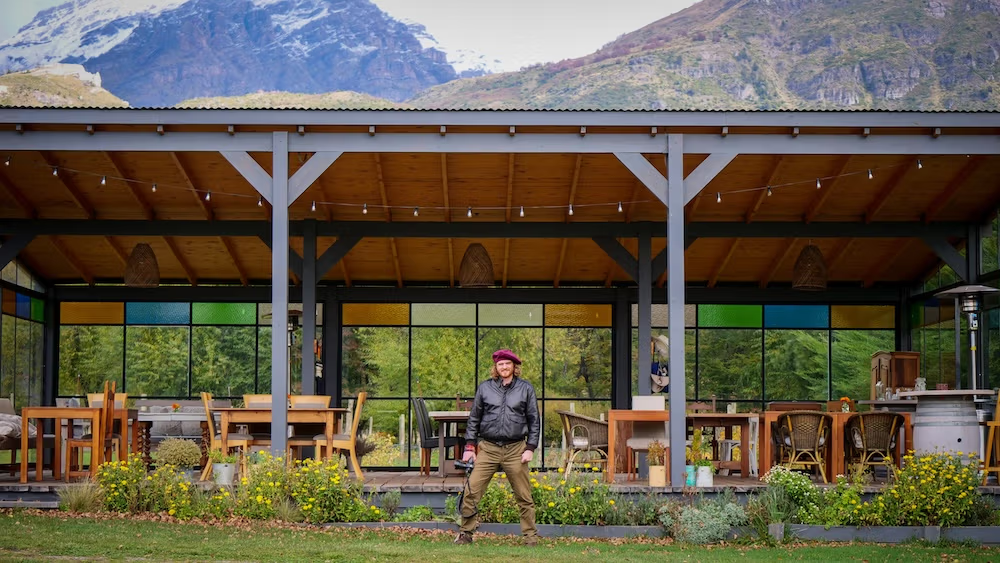
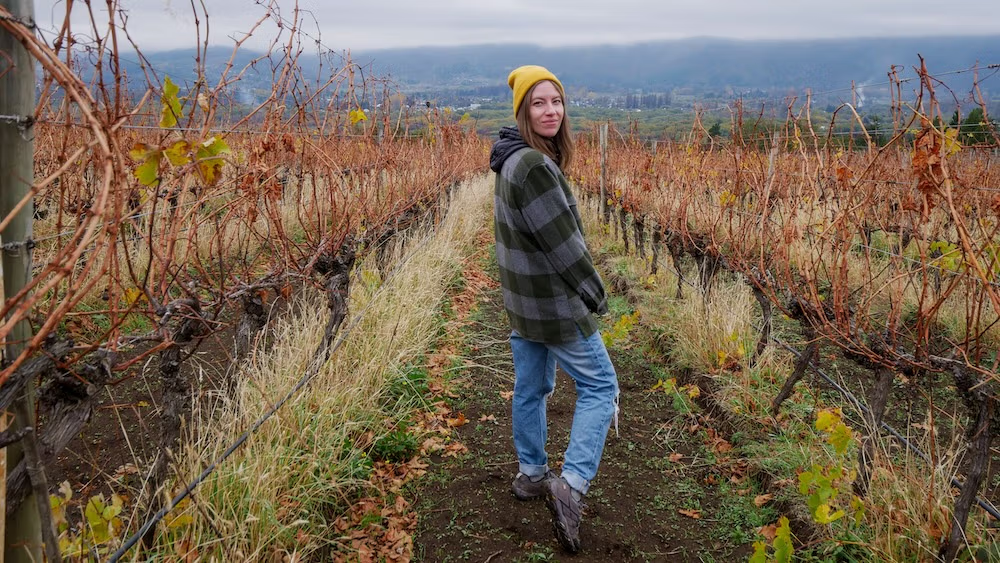
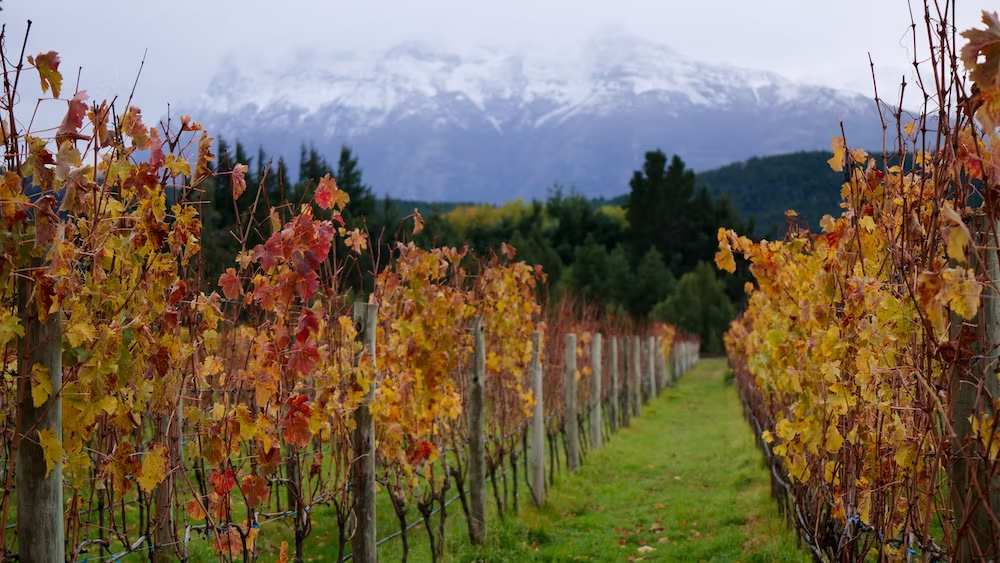
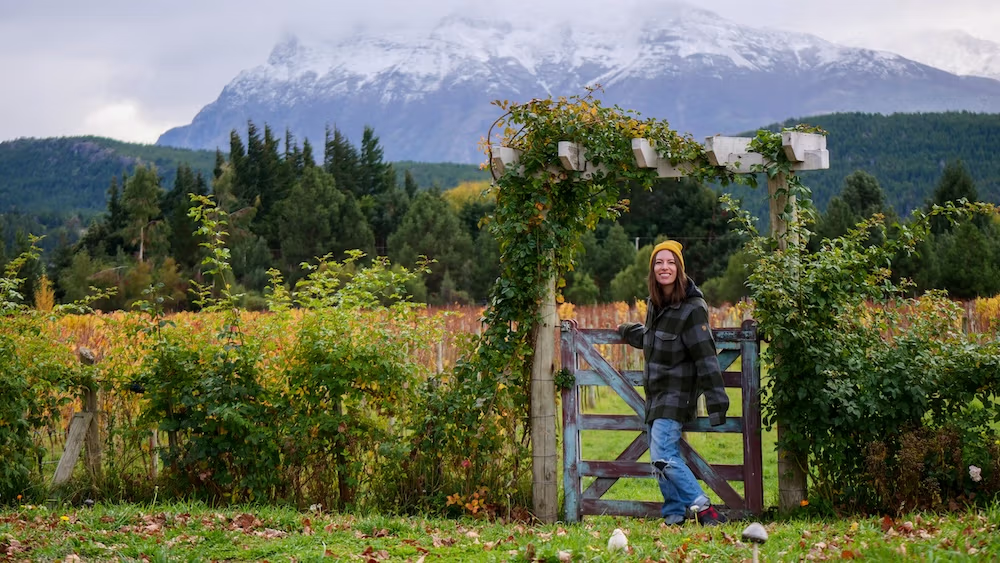
During our Trevelin visit, we were outside in jackets surrounded by autumn colours with snow-covered mountains in view. That scene did not qualify us to explain the local climate from personal observation.
It did, however, make the narrow agricultural margin easier to imagine.
This did not feel like the hot and dusty Argentine vineyard stereotype many travellers picture before arriving.
Water is the quiet part of the story
Patagonia’s dryness is often presented as an uncomplicated benefit because lower humidity can reduce disease pressure.
Dry vineyards still need water.
In the northern valleys, irrigation connected to major river systems helped create the conditions for large-scale agriculture. Around the Andean edge, rainfall, water sources and exposure operate differently. Interior Chubut adds another set of constraints.
This is why “cool climate” is only the beginning of the explanation.
The better questions are practical:
How much heat does the site accumulate? When does frost arrive? Where does the irrigation water come from? How exposed are the vines? How much time does the grape have to finish ripening?
The answers change across Patagonia, and that changing margin is where the regional grape diversity begins.
The Grapes Doing the Heavy Lifting Beyond Malbec
Once Malbec’s one-third share is put into perspective, the rest of Patagonia’s vineyard stops looking like a collection of curiosities.
Merlot, Pinot Noir and Cabernet Sauvignon are major regional grapes. Chardonnay and Sauvignon Blanc form a meaningful white-wine minority. Smaller varieties add experimentation without carrying the whole story.
The hierarchy matters.
Listing every grape planted somewhere in Patagonia makes the region sound diverse while explaining almost nothing.
Merlot has more weight than its reputation suggests
Merlot accounted for approximately 14% of Patagonia’s wine-grape area in 2022, making it the second-largest named variety in the regional figures.
That gives Audrey’s choice at our El Hoyo tasting a little more context.
She wanted red wine and chose the Merlot first. I was happy with this plan.
“Mr Merlot” arrived in one of the miniature bottles.
The tasting was one producer’s flight, not a statistical survey of Patagonia. Still, Merlot was not being included as a cute alternative for visitors tired of Malbec. It belongs to a grape with a serious regional footprint.
Its role is especially tangled in Río Negro, where Merlot remains historically and stylistically important even as its planted area has declined.
Wine regions rarely provide the tidy story writers want.
A grape can lose hectares and remain central to local identity. It can work as a varietal wine, a blend component and even in sparkling production. It can matter deeply without becoming the next fashionable Argentine export.
Pinot Noir is the grape that keeps reappearing
Pinot Noir occupied around 11% of Patagonia’s wine-grape area in 2022, equal to Cabernet Sauvignon.
Its provincial role varies. It represented a larger share of Neuquén’s vineyard area than Río Negro’s and has become an important part of several colder Chubut projects.
Pinot Noir’s earlier ripening gives it a useful role in shorter growing seasons. Its ability to move between still red, rosé and sparkling wine also makes it more versatile than the standard red-wine discussion suggests.
At El Hoyo, it was one of the three samples in our flight. In Las Grutas, it was the only grape we could clearly identify in the local red blend we drank with seafood.
Those two experiences did not turn me into a Patagonian Pinot Noir authority.
What they did was put the grape on my radar. The vineyard data later showed that it was not randomly following us around.
White wine is a minority with several serious roles
Chardonnay represented around 6% and Sauvignon Blanc about 4% of the regional wine-grape area in 2022.
Those figures are nowhere near Malbec’s. They are also far too large to dismiss as experimental side projects.
Río Negro’s larger proportional white-grape area gives it an important role. Neuquén has established Chardonnay and Sauvignon Blanc plantings. Farther south, short-cycle whites and sparkling wines become increasingly relevant.
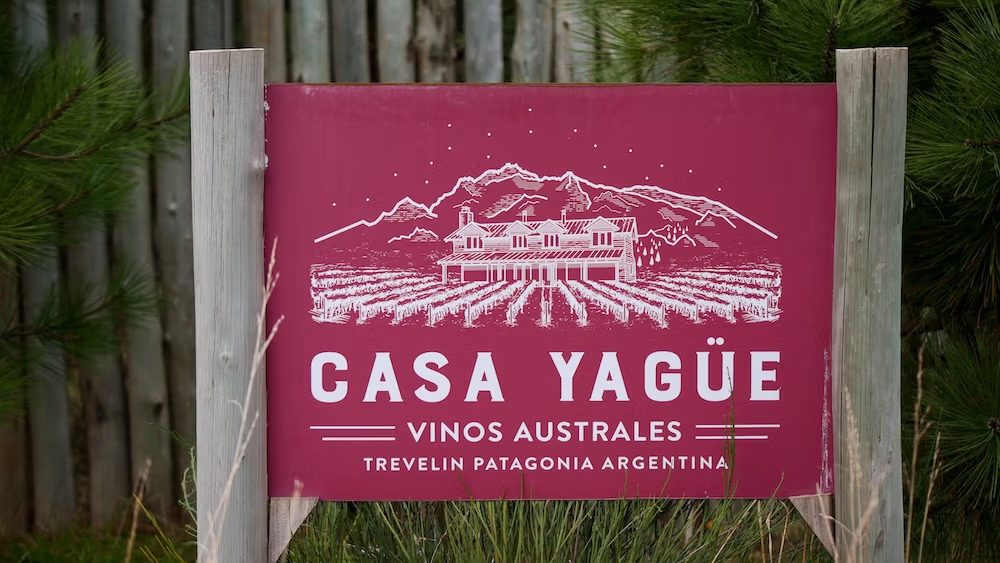
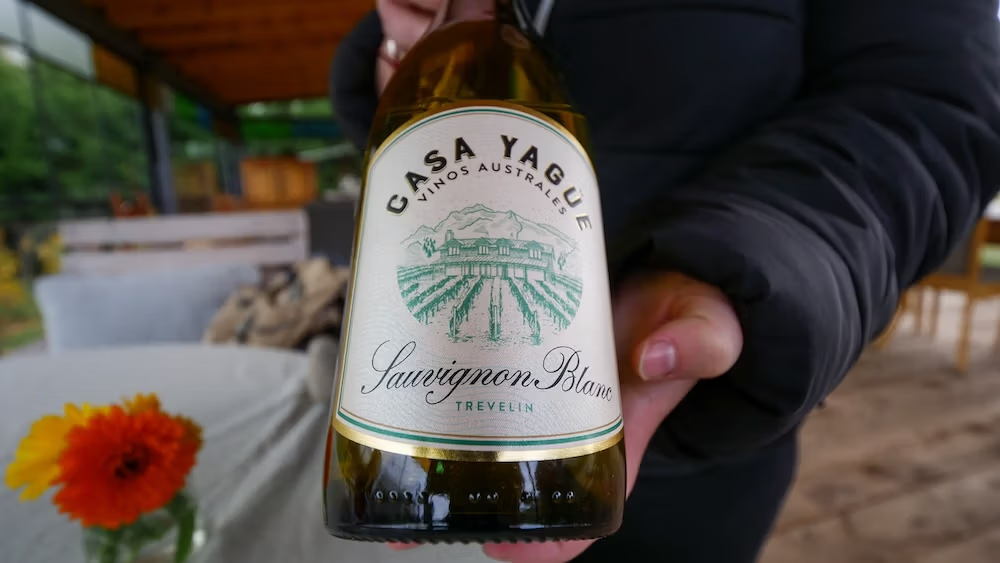
Casa Yagüe in Trevelin currently lists Chardonnay, Sauvignon Blanc and Semillón alongside Pinot Noir and Cabernet Franc.
Audrey and I did not taste that full lineup during our visit. We ate lunch and toured the vineyard. I am mentioning the current grape list because it helps explain what Trevelin grows, not because I have a buried memory of evaluating five wines there.
Smaller plantings of Riesling and Gewürztraminer add another layer. Riesling exists in Neuquén, Río Negro and parts of Chubut, though the national vineyard area remains tiny.
These grapes are useful examples of diversity.
Cabernet Sauvignon and Cabernet Franc keep the red story broad
Cabernet Sauvignon also represented about 11% of Patagonia’s wine-grape area and nearly 15% of Neuquén’s vineyard area in 2023.
That makes it another major red hidden by the Malbec-versus-Pinot-Noir storyline.
Cabernet Franc is smaller, though it appears increasingly in producer portfolios, including southern vineyards such as Casa Yagüe.
Blends pull many of these grapes together. Patagonian Wines currently produces Merlot, Pinot Noir, Pinot Noir–Merlot blends and sparkling wines based on Chardonnay and Pinot Noir or Merlot.
The Chubut Visits That Changed How We Saw Patagonian Wine
Our Chubut visits made it personal.
Before El Hoyo and Trevelin, Patagonian wine was mostly something we ordered because it matched the region where we happened to be eating. Afterwards, the vineyards became part of how we understood the landscape.
That shift matters more to me than pretending I can identify a wine’s latitude through one heroic sniff.
A cold picnic and three potions near El Hoyo
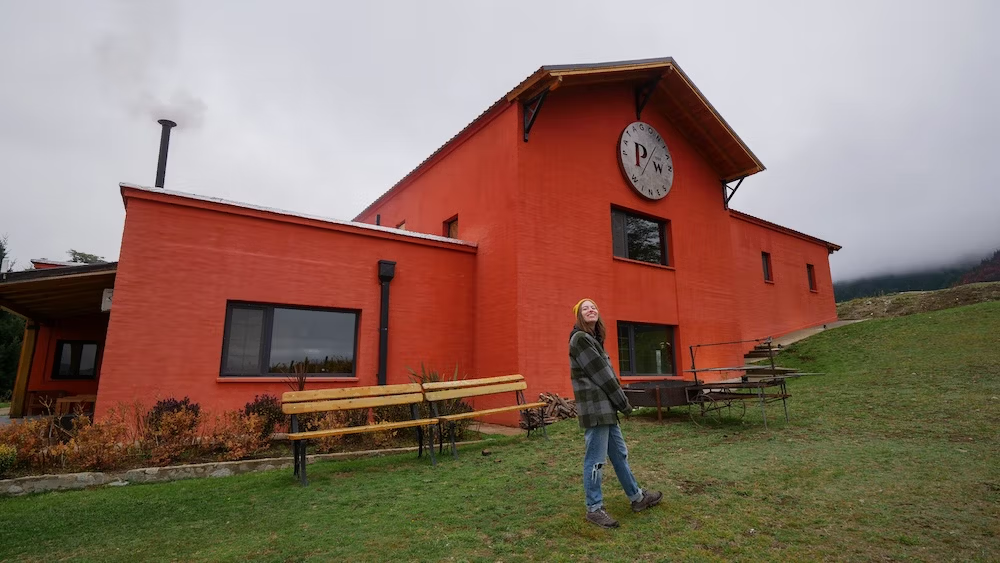
Patagonian Wines sits near El Hoyo on Route 40.
We booked a vineyard picnic and tasting. When we arrived, we could sit indoors near the fireplace or outside with a view over the vines.
We chose outside.
This decision required jackets and commitment.
The picnic board included cheeses, deli meats, olives, nuts, smoked fish and other regional foods. Then came the three miniature bottles for each of us: Merlot, Pinot Noir and a blend.
They genuinely looked like potions.
Audrey started with the Merlot because she was craving red. We poured the samples, picked through the picnic and admired the fact that we were the only people sitting there.
The mountain setting was a huge part of why the experience worked. Wine tourism in Patagonia had never been central to our previous trips. Suddenly we were looking across a vineyard, drinking three different reds and wondering why more travellers did not realise this existed.
Overall, it was “phenomenal” and “velvety smooth.”
A bee also became interested in my mouth.
“No, bee, don’t go in my mouth.”
This is the less glamorous side of drinking outside, and frankly it belongs in the record.
Patagonian Wines still advertises tastings, blending activities and a mountain picnic, with reservations handled directly. The current packages may differ from what we experienced in 2023, so it makes sense to check the current Patagonian Wines experiences before planning a visit.
Do not assume our old picnic menu, timing or tasting flight is a permanent contract.
This is a rural vineyard stop rather than a tasting room you casually wander into from a downtown hotel. Travellers building a few days around the El Hoyo area can compare current places to stay in El Hoyo instead of squeezing the picnic into a rushed cross-region day.

Lunch first, vineyard second at Casa Yagüe
Our other major Chubut wine experience took place at Casa Yagüe outside Trevelin.
The property sits near Route 259, roughly 12 kilometres from the Chilean border. Its vines were planted in 2014, the first harvest followed in 2017 and it has operated officially as a winery since 2018.
We had lunch and then toured the vineyard.
This was the correct order because I am useless on a food-related tour while waiting to eat.
If the walk comes first, I spend the entire educational portion thinking about lunch.
“You’ve got food and drink on your mind,” was my explanation.
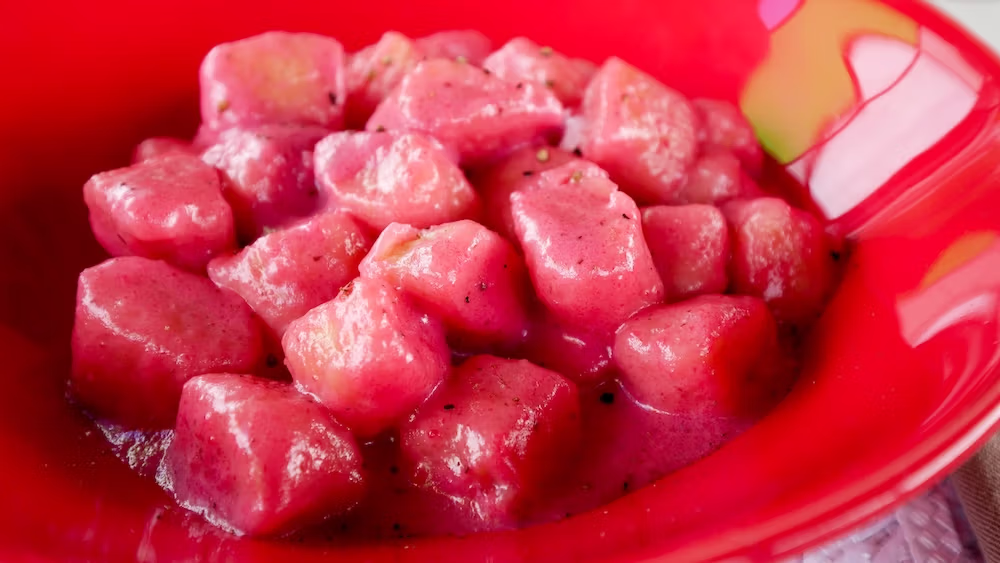
The meal included a cheese platter, beetroot dip, walnuts, garden salad, vegetable soup, beetroot gnocchi and a pancake with dulce de leche and cream.
Then the animals joined.
A cat climbed toward the table, licked sauce, bit my finger and eventually put its tail into Audrey’s pancake.
“I am not impressed, cat,” Audrey said.

The setting remained magnificent despite the feline sabotage. Autumn colours surrounded the property, the air was cool and snow-covered mountains appeared in several directions.
After lunch, we walked through the vineyard.
Casa Yagüe currently has around seven planted hectares, with Chardonnay, Sauvignon Blanc, Semillón, Cabernet Franc and Pinot Noir among its listed varieties. Current visits can include vineyard and winery tours, tastings, gastronomy and sunset experiences, but advance reservations are required.
Readers planning a visit should check the current Casa Yagüe details through Trevelin’s tourism site.
Trevelin is the practical base for this visit rather than an incidental stop between distant parts of Chubut. Travellers spending a night or two in the area can compare accommodation in Trevelin and build the reservation into a wider stay.
If your route begins in Esquel and you want the flexibility to reach Trevelin and rural properties on your own schedule, you can compare rental cars in Esquel. Just decide before the tasting who is driving; vineyard enthusiasm is not a transport plan.
Claims made during our visit about annual bottle production and the property’s place in a ranking of the world’s southernmost vineyards were not clear enough or current enough to keep.
The interesting part is not whether Casa Yagüe can win a geographical superlative.
Trevelin has an officially recognised wine identity, a short growing season and producers working with grapes that suit a narrow climatic margin.
That tells the reader far more than “second southernmost” ever could.
How to Choose a Patagonian Wine Without Retreating Straight to Malbec
Patagonia is too large for one bottle recommendation.
A useful approach starts with the origin, then moves to the grape.
| Area | What shapes the wine identity | Malbec’s role | Other grapes worth noticing | Wine-tourism context | Our firsthand experience |
|---|---|---|---|---|---|
| Neuquén | Concentrated modern production, especially around Añelo, with a strongly red vineyard mix | The leading grape and a major part of the provincial identity | Cabernet Sauvignon, Pinot Noir, Merlot, Chardonnay and Sauvignon Blanc | Established production centre with developed winery tourism | We drank Patagonian wine while travelling in Neuquén but did not tour its vineyards |
| Río Negro | Older river-valley tradition, broad varietal base and a larger proportional white-grape component | Largest named grape, though less dominant than in Neuquén | Merlot, Pinot Noir, Chardonnay, Sauvignon Blanc and other established whites | More dispersed valley geography | We drank regional wine in Río Negro but did not tour vineyards there |
| El Hoyo and Andean Chubut | Small mountain-influenced vineyards and a greener Andean setting | Present, though it does not control the local story | Merlot, Pinot Noir, blends and sparkling wines | Reservation-based tastings, picnics and small-scale visits | We visited Patagonian Wines and tasted Merlot, Pinot Noir and a blend |
| Trevelin | Official geographic indication, short growing season and significant frost pressure | Part of the wider picture rather than the central local identity | Chardonnay, Sauvignon Blanc, Semillón, Pinot Noir and Cabernet Franc | Vineyard visits, tastings and gastronomy usually require reservations | We ate lunch and toured Casa Yagüe; the footage does not establish a formal tasting |
| Sarmiento and interior Chubut | Colder, wind-exposed conditions distinct from the Andean vineyards | Not the controlling story | Pinot Noir and Chardonnay are central to current development | Smaller and more specialised | Research only |
La Pampa also contributes a measurable share of Patagonia’s vineyard area, while Santa Cruz remains extremely small. They belong to the official viticultural region, though neither needs to hijack this particular article.
The table is not a quality ranking.
A Neuquén Malbec and a Trevelin Pinot Noir are responding to different growing environments. A Río Negro white and an El Hoyo blend do not become interchangeable simply because both carry Patagonian origin.
Look for specific origin language such as Patagonia Argentina, the province, the valley or a recognised indication such as Trevelin. That information tells you far more than a mountain illustration pasted onto a label.
Origin does not guarantee quality. An unusual latitude does not guarantee quality either. Producers still make good decisions, mediocre decisions and occasionally decisions that probably looked more convincing in the meeting.
The map simply gives you a better place to begin.
Malbec Can Stay. It Just Has to Share the Table.
I am not giving up Malbec.
That would be performative nonsense, and I would probably order one again before the article was published.
What changed is that I no longer treat Patagonian wine as a familiar Argentine grape grown farther south beneath colder-looking mountains.
Río Negro’s river valleys, Neuquén’s concentrated red-wine production and Chubut’s scattered southern vineyards are working with different agricultural limits. Those differences create room for Merlot, Pinot Noir, Cabernet Sauvignon, Chardonnay, Sauvignon Blanc, blends and sparkling wines to matter for different reasons.
Our trips gave that idea a face.
It looked like Audrey choosing Merlot from a miniature bottle near El Hoyo. It looked like three wine potions beside a cold picnic. It looked like autumn leaves around Casa Yagüe while I waited impatiently for lunch. It looked like a cat putting its tail into Audrey’s pancake.
None of those moments made us wine specialists.
They made us pay attention.
So order the Malbec when you want it. I certainly will.
Then read the rest of the label.
Find the province. Find the valley. Notice the grape. Think about what that part of Patagonia allows the grower to attempt.
Malbec opens the bottle.
The map explains what else is inside.
Frequently Asked Questions
Is Malbec the main wine grape in Patagonia?
Yes. Malbec occupied roughly one-third of Patagonia’s wine-grape area in the 2022 regional figures, making it the largest variety without accounting for the whole region.
Which grapes matter in Patagonia besides Malbec?
Merlot, Pinot Noir and Cabernet Sauvignon hold substantial regional shares, while Chardonnay and Sauvignon Blanc lead a meaningful white-wine minority. Smaller plantings add further variety.
Which Argentine provinces belong to the Patagonian wine region?
The official viticultural region includes Neuquén, Río Negro, La Pampa, Chubut and Santa Cruz. Most vineyard area is concentrated in Neuquén and Río Negro.
Why do Patagonian wine styles vary so much by location?
Temperature, wind, irrigation, frost exposure and growing-season length change across the region. A grape grown in Neuquén may face a very different ripening window from one planted near Trevelin.
Can travellers visit the vineyards in El Hoyo and Trevelin?
Yes, but these are rural, reservation-based experiences rather than casual downtown tasting rooms. Current packages, meals and tasting formats should be confirmed directly before visiting.
Did Samuel and Audrey taste wine at Casa Yagüe?
Indeed. Lunch followed by a vineyard tour. We didn’t do a formal tasting of Casa Yagüe’s current grape lineup.
Project 23 Argentina: This article is also available in Spanish. [Leé la versión en castellano: Vinos patagónicos: por qué la región produce mucho más que Malbec]
This article contains affiliate links. If you book through one of these links, I may earn a commission at no extra cost to you.