
I once slept for two hours in a hotel lobby in Comodoro Rivadavia after taking one of the better overnight buses of our Patagonia trip.
The cama seats had done their job. Audrey and I had both slept reasonably well during the journey from Esquel. We arrived around 7:00 in the morning tired, but not completely broken.
Then we learned that our room would not be ready until noon.
So we ate breakfast, sat around with our luggage and slowly deteriorated. At some point, I stretched out in the lobby and passed out. The bus journey had technically ended, but my body had not received the memo.
That is the part most overnight-bus advice misses.
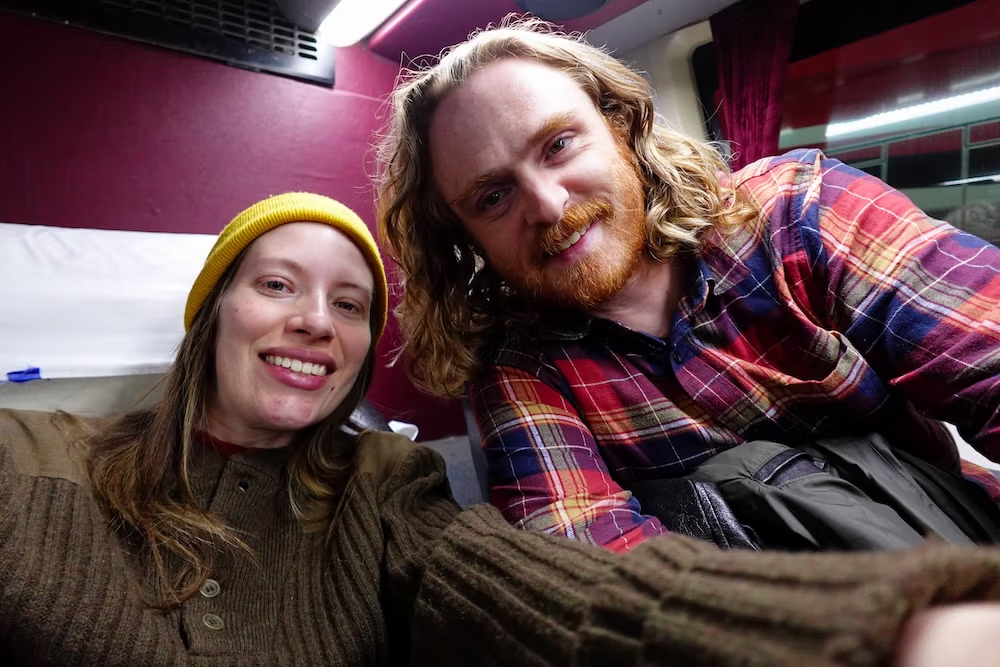
The journey is not simply the period between departure and arrival. It begins with the last proper meal before boarding. It includes the seat you choose, the temperature inside the coach, whatever food the company does or does not provide, the amount of sleep you scrape together and the hours after arrival when you may still have nowhere to go.
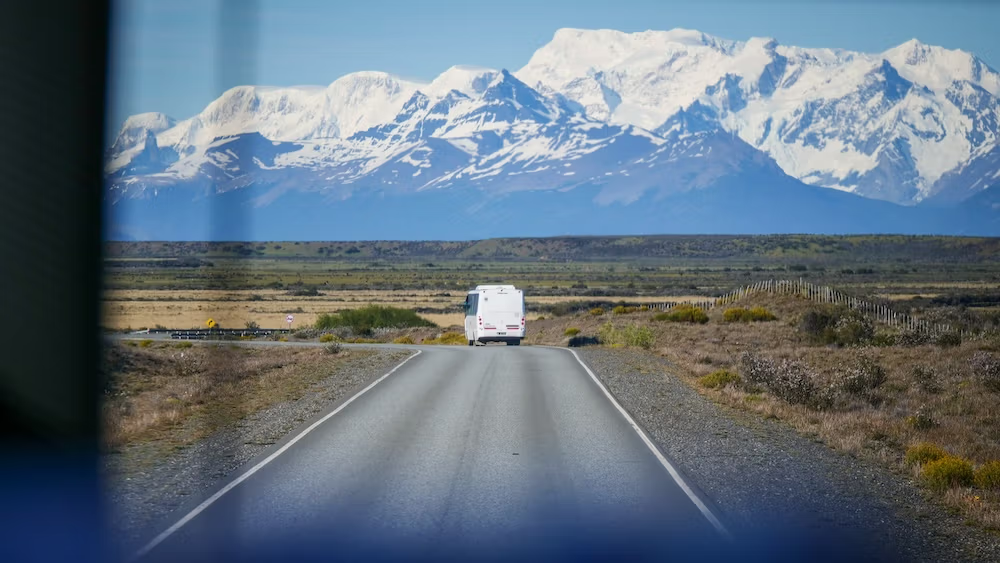
Patagonia is full of distances that appear manageable on a map and become mildly absurd once you look at the timetable. A nine-hour journey is ordinary. Twelve hours is entirely plausible. Some routes can keep you aboard for most of a day.
The overnight bus can be an excellent solution. It can also save you one hotel night while destroying the following day, which is not quite the bargain it first appears to be.
After several long journeys across Argentine Patagonia, Audrey and I learned that surviving the bus comes down to three things: choosing the right journey, paying for a seat that gives you a realistic chance of sleeping and planning the morning after as carefully as the night onboard.
The Bus Journey Is Longer Than the Timetable
Our first bus into Patagonia ran from Mar del Plata to Puerto Madryn.
The plan sounded decent enough. We would leave at night, sleep onboard and arrive around lunchtime the following day. The scheduled journey was already somewhere in the sixteen- or seventeen-hour range, which should have warned me that we were not exactly popping down the road.
Then the bus ran late.
By the time we finally reached Puerto Madryn, we had spent roughly eighteen or nineteen hours onboard. We had slept, but we still stepped off exhausted, thirsty and disoriented.
I remember wanting three things: lunch, a shower and the return of my normal brain function.
Instead, we still had to collect our luggage, find something to eat, reach the accommodation and organize the next part of the trip. We had arrived in Patagonia for the first time, something we had been excited about for ages, and yet our initial condition was less “majestic adventure” and more “two people wandering around in zombie mode.”
Eventually, food helped. So did walking in the sun. Later, pizza and wine completed the recovery process with considerably more efficiency than the tiny snack box we had received on the bus.
This is why I no longer judge an overnight journey by the number printed beside “duration.”
A bus may be scheduled for ten hours, but your travel day also includes reaching the terminal, waiting to board and dealing with a possible delay. At the other end, you may arrive before breakfast, before local transport is running properly and long before your hotel room exists in a usable state.
A seventeen-hour bus can easily become a twenty-four-hour interruption to the trip.
That does not mean you should avoid it. It means you should calculate the full damage before celebrating the hotel night you supposedly saved. When Puerto Madryn is the destination, I would compare current accommodation in Puerto Madryn before choosing the bus, then contact the property about luggage storage and the earliest realistic room access. The booking decision and the bus decision belong together.
Decide Whether This Journey Deserves an Overnight Bus
There is a strange heroic streak in long-distance travel.
People talk about surviving a twenty-hour bus as though the suffering itself validates the route. You crossed Patagonia by land. You travelled like a hardened adventurer. Your knees will eventually forgive you.
I have become less sentimental about this.
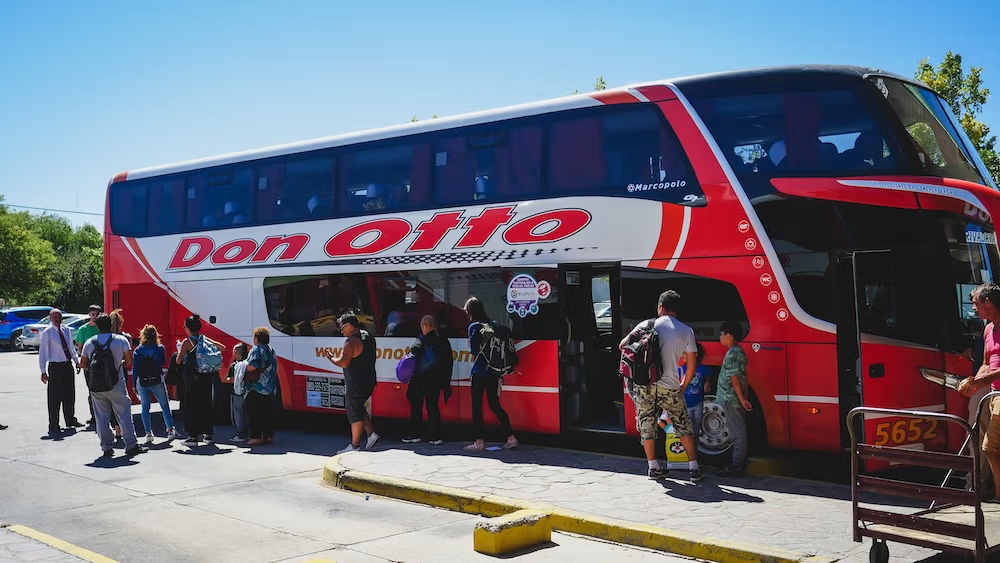
The best overnight bus is one that takes hours you would otherwise spend sleeping and converts them into useful distance. A direct coach leaving in the evening and arriving at a sensible hour can work beautifully.
A bus leaving in the middle of the afternoon is different. It may consume the rest of that day, the whole night and part of the following morning. You are not travelling while you sleep. You are spending two calendar days on one connection and hoping the middle portion contains unconsciousness.
Overnight Bus, Daytime Bus, Flight or a Break in the Route?
One of the hardest long journeys we experienced in Patagonia was not overnight.
We travelled from Punta Arenas to Ushuaia during the day, combining a long bus journey with a ferry crossing and border formalities. The trip lasted about eleven and a half hours.
By the time we arrived, we were hungry, groggy and stiff. My feet had swollen. Audrey and I both felt scrambled enough that speaking coherently on camera required more effort than it should have.
That journey made us realize that a very long daytime bus can feel worse than an overnight one. At least during a night journey, your body expects to sleep for part of it. During the day, you remain awake while the road steadily eats the hours.
But the answer is not always “take the overnight bus.”
Sometimes flying protects more of the trip. Sometimes dividing the route gives you a useful stop and a proper night’s sleep. Sometimes the bus is direct while the flight requires backtracking through Buenos Aires, making the supposedly faster option far less elegant.
For a journey into Tierra del Fuego, it is worth taking a moment to compare current flights to Ushuaia before committing to a day-long overland route. I would compare the full airport journey against the bus rather than looking only at the time spent in the air.
Compare the entire journey:
- How many waking hours will it consume?
- Does most of the route overlap with your normal sleeping time?
- Is the service direct?
- What time do you arrive?
- Can you access your accommodation or leave your luggage?
- How important are your plans the following day?
- Is the better seat class available?
- Would breaking the route create a worthwhile stop?
Audrey and I gradually became much more willing to divide Patagonia into smaller pieces. Slow travel sounds romantic, but in this case it also had a practical benefit: fewer mornings spent wondering whether a bus had permanently rearranged our spine.
Pay for the Sleep You Might Actually Get
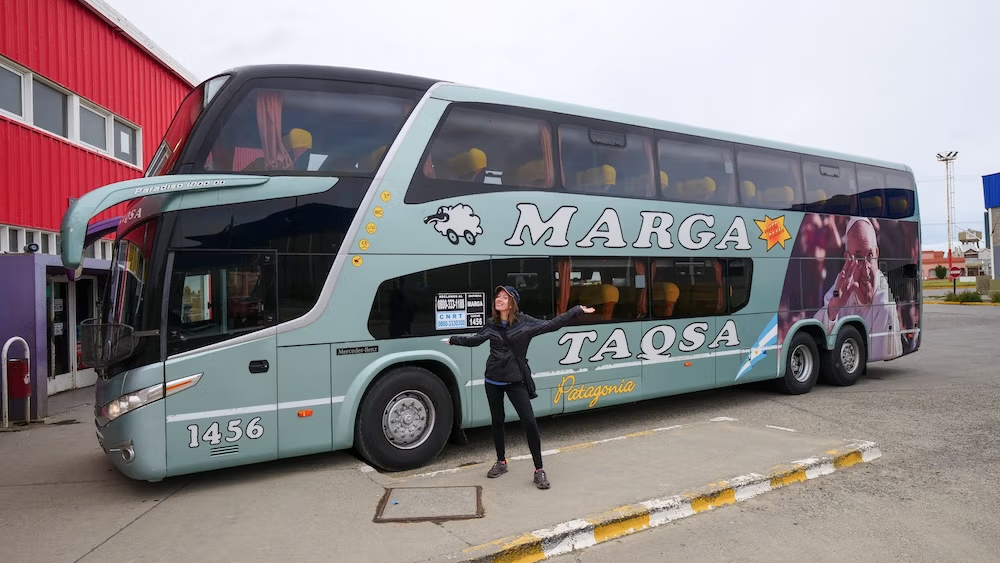
My clearest lesson from our rougher overnight journeys was simple: book early enough to secure cama when the route is long enough for sleep to matter.
The upgrade can look unnecessary when you compare the tickets. The seats are on the same bus. They leave at the same time and arrive together. Paying more does not make the driver go faster.
You are buying a better chance of sleeping.
That can be worth considerably more than the difference in fare if it saves your first day in the destination.
Cama Is a Category, Not a Universal Seat
Argentine long-distance buses commonly sell some combination of ordinary seats, semi-cama, cama and occasionally a more premium cama category.
The difficulty is that these labels do not produce one identical seat across every company and vehicle.
Semi-cama generally reclines farther than a normal coach seat and usually includes a footrest. Cama normally offers a deeper recline and may provide wider seating or more substantial leg support. But the exact angles, layouts and amenities vary.
Even one company may use different vehicles with different specifications.
Do not book purely because the ticket says cama. Look at the actual departure.
Check the recline, footrest, row configuration, deck and seat map. See whether the company shows photographs of the coach or describes the particular service you are buying.
Most importantly, do not assume that cama means a completely flat bed.
On our Esquel-to-Comodoro Rivadavia journey, cama worked well for us. Audrey and I both slept far better than we had on the Trelew-to-Esquel bus, where we estimated that we managed only two or three useful hours of sleep.
We were still tired after the cama journey, but it was ordinary early-morning tiredness rather than the feeling that the night had been stolen from us.
That was the real value of the upgrade.
The Best View May Be the Worst Place to Sleep
Seat position matters too.
We have deliberately booked the front row because it offered wide views through the windscreen and made filming the road easier. On one journey, it was excellent.
On another, the bulkhead in front of us restricted the space available for our legs.
The premium view came with economy knees.
Look at where the seat sits in relation to the front wall, stairs, toilet, doors and engine area. If you have long legs, a bulkhead may matter more than the number printed on the ticket. If you expect to use the bathroom frequently, the aisle may be more practical. If you need something to lean against, a window may help you sleep.
Sitting near the toilet gives you easy access, but it also means people moving past you throughout the night. The upper deck may offer a better view, while a lower seat may involve less movement for some passengers.
There is no universal best seat. Choose based on your body, your priorities and the actual layout.
Seat number one merely means you are first in one particular numbering system. It does not mean the bus company has awarded you a throne.
Prepare for a Basic Bus and Enjoy Anything Better
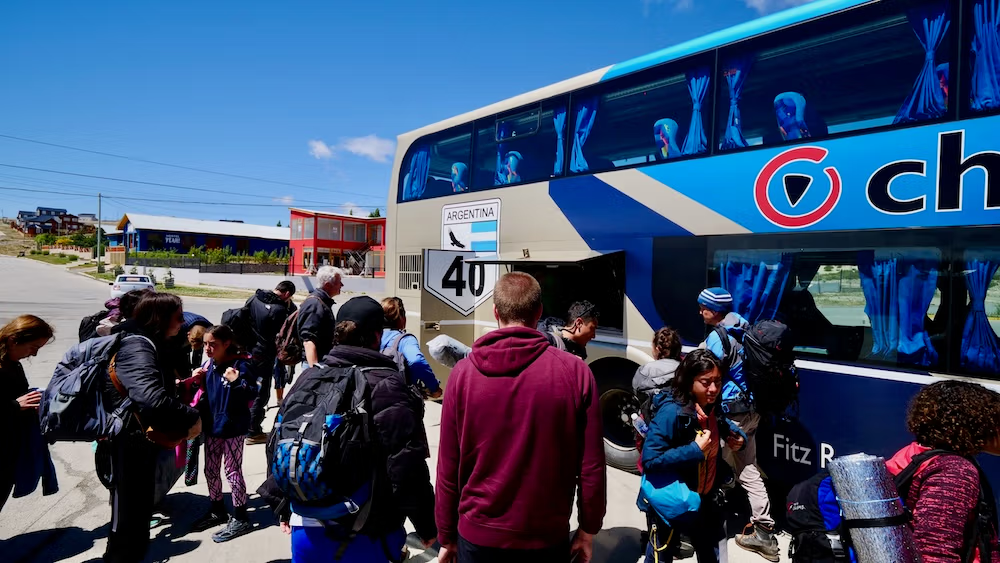
Some Argentine long-distance buses can be surprisingly comfortable.
Over the years, we encountered curtains, pillows, blankets, entertainment, charging access and generous food service. On earlier trips, we were even served hot meals, wine and whiskey.
Apparently, I have now reached the age where I can say, “Bus service was better in the old days,” and mean it sincerely.
On a later cama journey, the meal was a small snack tray with a sandwich, pastry and soft drink. The seat was still worthwhile, but the food was not enough to anchor a long night of travel.
Service varies by operator, vehicle and route. Wi-Fi may be listed but unavailable. An outlet may exist without working. A blanket may be included on one departure and absent on the next.
Anything supplied by the bus should be treated as a bonus until the exact service confirms otherwise.
Book Early, Then Recheck What You Booked
Advance booking protects the things that disappear first: better seat classes, useful departure times and desirable positions on the bus.
It also gives you plenty of time to forget the details.
Before one journey, Audrey and I found ourselves discussing what time we might arrive because neither of us could remember. We had booked so far ahead that the ticket had vanished into the archaeological layers of our inbox.
Future Audrey and I had been left to clean up the administrative mess created by our more optimistic past selves.
Before leaving for the terminal, confirm the operator, departure point, date, time, seat number, service class and estimated arrival.
Carry the same identification used to make the booking. Keep the ticket downloaded on your phone rather than assuming you will have reliable internet at the terminal. A screenshot is not a sophisticated travel tool, but it has saved me from more problems than several pieces of expensive gear.
Also check the rules before assuming your ticket is flexible.
We once changed our boarding point from El Bolsón to Esquel because the same bus passed through both places. We visited the terminal early, explained the situation and the company allowed us to make the change.
That was a fortunate outcome, not a national guarantee.
Different operators and fares have different conditions for refunds, modifications and route changes. Sort it out before departure day rather than arriving with a charming explanation and hoping someone takes pity on you.
Keep the Overnight Bag With You
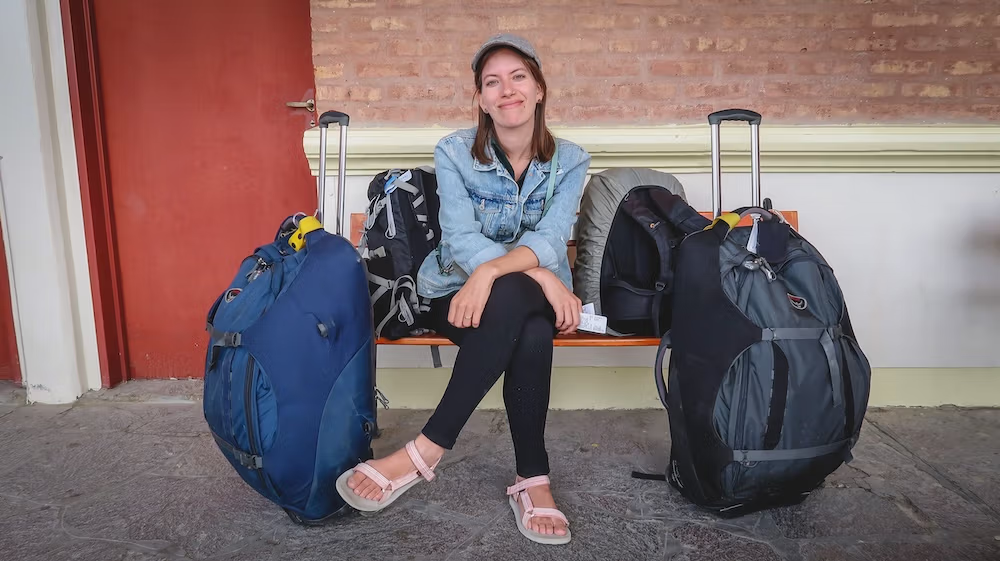
Once your main bag is loaded beneath the bus, plan as though you will not see it again until arrival.
Your cabin bag should contain everything you may need during the journey:
- identification and travel documents;
- money and valuables;
- medication;
- phone, camera and other electronics;
- a charging cable or power bank;
- water;
- food;
- a warm layer;
- toilet paper;
- hand sanitizer;
- toothbrush;
- eye mask;
- and earplugs.
Baggage allowances vary by operator, so check the ticket conditions rather than relying on one universal limit.
Keep the baggage receipt when your suitcase is tagged. Documents, money, medication, cameras and fragile electronics belong with you, not underneath the coach.
This is not because your bag is certain to disappear. It is because discovering that your medication, sweater or phone charger is inaccessible for the next eleven hours is an entirely preventable problem.
I prefer my suffering to be caused by Patagonia’s distances, not my own packing decisions.
Eat a Real Meal Before You Board
Before our overnight bus from Mar del Plata to Puerto Madryn, we treated our terminal meal as the main event.
We ordered a substantial plate of milanesa napolitana and shared lemon pie while waiting for departure. We also carried fruit for the morning.
That turned out to be wise. The food supplied onboard was more snack than meal, and the trip lasted far longer than planned.
When possible, eat properly before boarding. Then bring enough simple food to carry you through the night and early morning.
We have packed sandwiches, fruit, crackers, muffins and improvised bus picnics. Choose food that does not need refrigeration, spill easily or make everyone nearby hate you.
Do not assume that the bus will provide dinner. Do not assume a scheduled stop will have an open café. Do not assume the words “food service” mean something substantial enough for a journey lasting half a day.
If a proper meal appears, wonderful. You now have breakfast.
Audrey’s Two Best Pieces of Advice
Audrey’s practical bus advice was less concerned with seat diagrams and more concerned with the two problems capable of making an uncomfortable night much worse.
Bring warm clothes.
And bring your own toilet paper.
Bus interiors can become cold regardless of the temperature outside. The driver is controlling the climate for dozens of passengers, and your individual opinion is unlikely to win the debate. Keep a light fleece, jacket or other layer in the cabin bag.
The toilet-paper warning came from experience. Audrey encountered situations where supplies were missing onboard and again at the terminal after arrival.
That does not mean every Patagonian bus toilet is a wasteland. It means a tiny roll of paper takes up almost no space and solves a problem you do not want to negotiate at 5:30 in the morning.
I would apply the same attitude to charging and entertainment. Download anything you want before departure. Charge your devices fully. Treat USB ports and Wi-Fi as pleasant surprises.
The fewer promises you need the bus to keep, the easier the journey becomes.
Sleeping on the Bus: Aim for Damage Control
There is a particular optimism involved in boarding an overnight bus and thinking, “Great, I will get eight hours of sleep.”
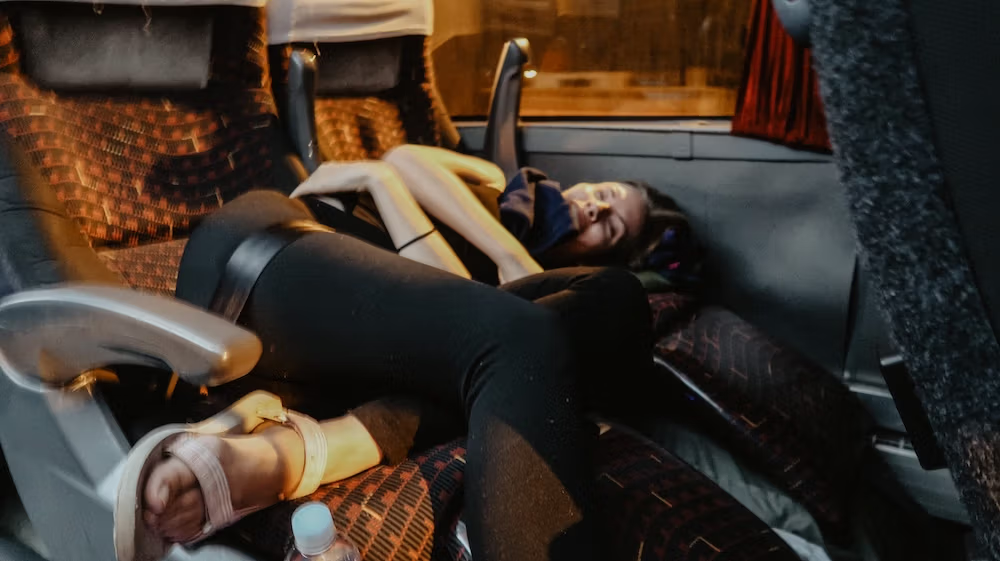
You may sleep for forty minutes, wake at a stop, drift off again, become aware that your neck has entered a new geometric category and spend the next hour adjusting the footrest.
This still counts as progress.
On our Trelew-to-Esquel journey, we slept poorly and arrived shortly after 6:00 in the morning. I described myself as being in zombie mode, which may have been the most accurate statement I made that day.
The cama ride to Comodoro was significantly better. We both slept, and that changed the entire feel of the arrival. Yet even then, neither of us stepped off ready to conquer the city.
A bus seat remains a bus seat.
Wear loose, comfortable clothing. Set up your eye mask, earplugs, water and layers before the cabin goes dark. Work out the recline and footrest while everyone is still awake rather than conducting a mechanical experiment beside sleeping passengers.
Long periods of sitting can also leave you stiff. Move your feet and legs periodically. Flex your calves. Walk or stretch at safe stops when the opportunity appears.
Anyone with specific circulation, mobility or health concerns should get personal medical advice rather than trusting a travel blogger whose principal qualification is having spent too many nights sleeping above a luggage compartment.
The honest goal is not perfect sleep. It is enough rest to prevent the following day from becoming collateral damage.
The Morning After Is Part of the Route
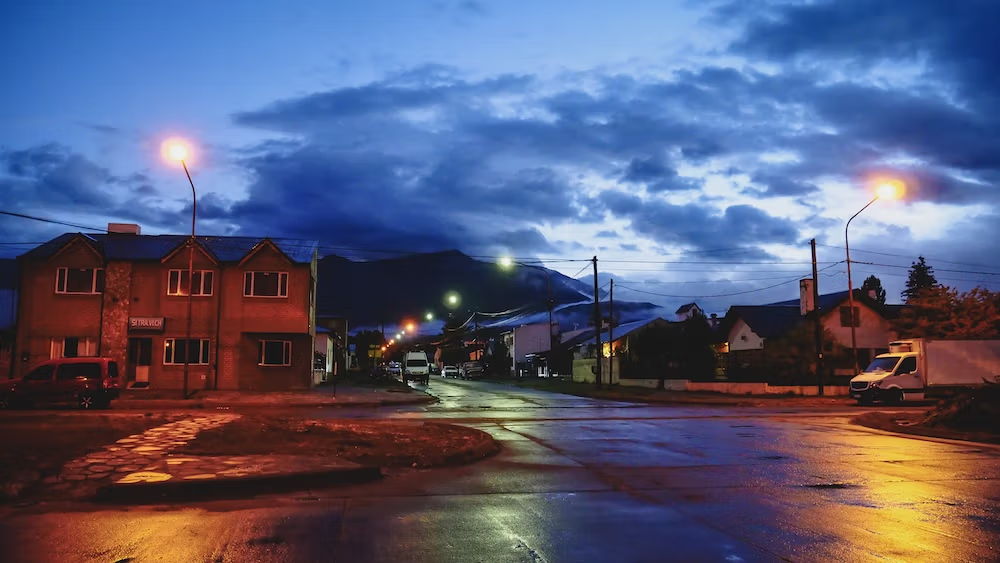
This is where many overnight-bus plans collapse.
The ticket says you arrive at 6:30 a.m. You imagine stepping into the destination with a full day ahead.
Then you discover that check-in begins at 3:00 p.m.
After our Trelew-to-Esquel bus, we arrived shortly after 6:00 and still had to wait until around 9:00 for accommodation access. We had arranged an early check-in, but “early” and “immediately after the bus arrives” turned out to be different concepts.
Fortunately, the terminal café was open. We could sit indoors, eat breakfast and wait.
If your bus reaches Esquel around dawn, compare available accommodation in Esquel before confirming the journey. Once you have a shortlist, ask each property about reception hours, luggage storage and whether early room access is guaranteed, chargeable or simply subject to availability.
Comodoro Rivadavia was harder. Our bus arrived at about 7:00, while the room was unavailable until noon. We ate, waited and eventually I fell asleep in the lobby.
I had paid for cama to sleep on the bus and then finished the journey by sleeping on hotel furniture.
Travel has a sense of humour.
For that arrival, the room-access question mattered more than whether the property had a sea view or a particularly artistic breakfast buffet. Travellers using the same corridor can compare current places to stay in Comodoro Rivadavia, but the useful follow-up is contacting the accommodation directly about what happens during those hours before standard check-in.
Confirm More Than the Check-In Time
Before booking an early-arrival bus, contact the accommodation and ask specific questions.
Can you leave your luggage in the morning? Is the reception open? Can you wait in the lobby? Is early room access confirmed, offered for a fee or merely requested?
Those are separate things.
You should also check the arrival terminal. Will the building be open? Are the bathrooms available? Is there food? Does it have staffed luggage storage? Will taxis or local buses be operating?
One Patagonian terminal may have early food service and around-the-clock security while another offers little beyond a bench and a locked café. Facilities change, and counters inside the same terminal can keep different hours.
Verify the exact place and arrival time.
An early bus is much easier to tolerate when you know there will be coffee, bathrooms and somewhere warm to sit. Those details sound boring while planning. At dawn, they become the entire trip.
Do Not Sacrifice the Day You Were Trying to Save
After reaching Puerto Madryn, we needed food, water, a walk, a shower and time.
After Trelew-to-Esquel, we needed sleep.
After the better cama journey to Comodoro, we were capable of functioning but still lost hours waiting for the room.
This is why I avoid scheduling expensive or rigid plans immediately after a serious overnight journey.
A casual breakfast and unstructured afternoon can absorb a delay. A non-refundable tour, flight or fixed rental pickup may not.
There is no universal number of recovery hours. Some people can sleep through roadworks, border stops and a marching band. Others will spend the night listening to the engine and monitoring every change in road texture.
Judge the buffer by the consequence of getting it wrong.
The bus arrival time is an estimate. It is not a protected connection, and it certainly does not guarantee that you will arrive in a state fit for decision-making.
An overnight bus saves a day only when you can still use the day.
My Overnight Bus Decision Rule
I no longer ask whether overnight buses are good.
I ask whether this particular bus makes sense.
| Variable | The Overnight Bus Makes Sense When… | I Would Reconsider It When… |
|---|---|---|
| Departure and arrival | Most of the ride overlaps normal sleep and the arrival hour is usable | The bus consumes the afternoon, night and an unusable morning |
| Exact seat | Recline, leg support and layout are clearly described | The booking page offers only a vague class label |
| Route | A direct bus removes an awkward transfer | Splitting the journey creates a worthwhile stop or far better timing |
| Arrival logistics | Food, luggage handling and accommodation access are confirmed | I may spend several hours with nowhere useful to go |
| Following day | Plans are flexible and low consequence | A flight, tour or expensive reservation depends on punctuality |
| Sleep tolerance | I have a reasonable chance of resting in a reclining seat | Similar journeys have produced almost no sleep |
| Alternatives | The bus genuinely saves useful time or money | A flight or divided route preserves more of the trip |
For me, the seat and the morning after carry the most weight.
Give me a clearly described cama seat, a departure that overlaps with normal sleeping hours and somewhere sensible to go after arrival, and I will seriously consider the bus.
Give me a vague seat category, a mid-afternoon departure and a 6:00 a.m. arrival with no room access, and the cheap ticket begins to look considerably more expensive.
Audrey would insist on a warm layer and toilet paper.
I would add a proper meal, backup snacks and enough flexibility to spend part of the following day recovering without resenting the destination.
The art of the overnight bus in Patagonia is not learning to endure every monstrous journey with a heroic smile. It is choosing the routes where sleeping onboard actually improves the itinerary—and recognizing the ones that will quietly steal the day you thought you were saving.
Frequently Asked Questions
Are overnight buses in Patagonia worth taking?
They can be when most of the journey overlaps normal sleeping hours, the exact seat offers a realistic chance of rest, and the arrival plan is workable. I would reconsider a service that consumes the afternoon, arrives before dawn and leaves me without accommodation access.
Is cama worth paying for on a long Patagonian bus journey?
For me, yes when sleep will determine whether the following day remains usable. Cama normally reclines farther than semi-cama, but the label is not standardized, so I check the exact seat, footrest and layout before booking.
What should I keep with me on an overnight bus?
Keep identification, money, medication, electronics, water, food, a warm layer, toilet paper, hand sanitizer, a toothbrush, an eye mask and earplugs in the cabin bag. Once the main luggage goes below, assume it will remain inaccessible until arrival.
Can I rely on meals, Wi-Fi, blankets and charging onboard?
Service varies by operator, vehicle and route. I eat a proper meal before boarding, carry backup food, charge my devices and treat Wi-Fi, outlets, blankets and onboard food as useful extras rather than guarantees.
What should I check before a dawn arrival in Patagonia?
Confirm whether the terminal is open, food and bathrooms are available, local transport is operating, and the accommodation will accept luggage. Ask whether early room access is guaranteed, chargeable or merely requested.
Should I schedule a tour or flight immediately after an overnight bus?
I avoid expensive or rigid commitments immediately after a serious overnight journey. Delays, poor sleep and several hours without room access can erase the day the bus was supposed to save, so the buffer should reflect the cost of getting the next connection wrong.
Project 23 Argentina: This guide is also available in Spanish. [Leé la versión en castellano: El arte de viajar en micro nocturno por la Patagonia: cómo sobrevivir a los trayectos largos]
This article contains affiliate links. If you book through one of these links, I may earn a commission at no extra cost to you.