
The first time Audrey and I entered Patagonia, we did it the hard way.
We boarded an overnight bus in Mar del Plata bound for Puerto Madryn. The journey was supposed to take 16 or 17 hours. It ended up being closer to 18 or 19.
By the time we arrived, we were disoriented, hungry, badly in need of showers and somehow still expected to check into our hotel, organize wildlife excursions and behave like functioning adults.
We were not functioning adults.
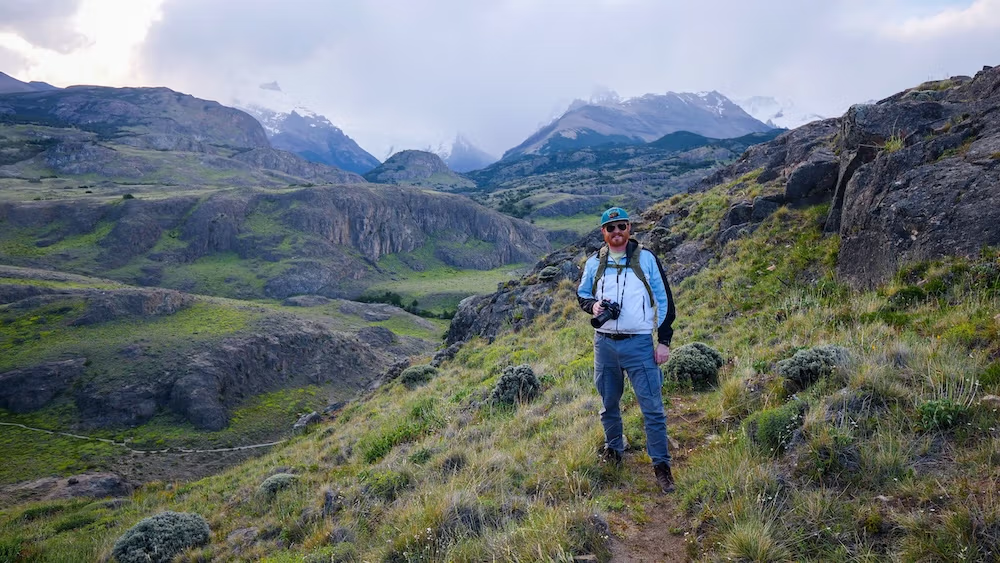
That first trip taught me more about planning Patagonia than staring at any route map ever has. Distances look clean on a screen. Travel days are messier. They involve delays, early arrivals, closed cafés, luggage, border controls, accommodation that will not let you in yet and the slow realization that your carefully protected “sightseeing afternoon” has become a search for food and a horizontal surface.
Patagonia magnifies all of this because it is enormous.
Bariloche, Puerto Madryn, El Calafate, El Chaltén and Ushuaia may all appear on somebody’s list of Patagonia highlights, but they do not sit neatly beside one another. They belong to different travel corridors, with different gateway airports, landscapes, seasons and transport problems.
So where should you start?
My answer is not one city.
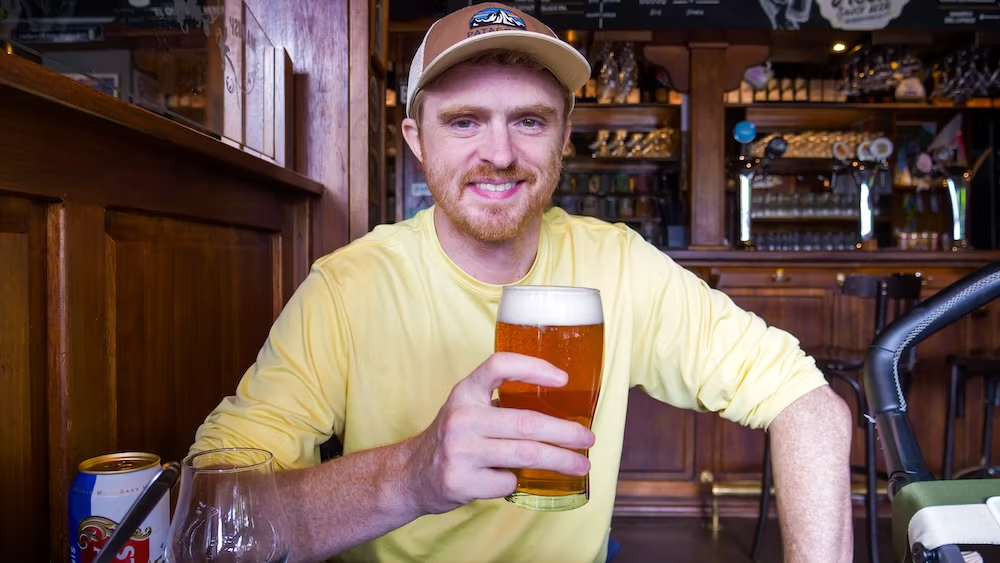
Start in Bariloche when the Lake District is the centre of your trip or you have enough time to travel gradually south. Start through El Calafate when your priorities are Perito Moreno Glacier and hiking in El Chaltén. Start through Puerto Madryn or Trelew when wildlife and coastal Chubut are the reason you are coming. Start in Ushuaia when Tierra del Fuego is the main event or the flights make a south-to-north route genuinely stronger.
The best Patagonia order is usually the one that keeps you moving mainly in one direction through one compatible region.
The worst order is the one created by opening ten browser tabs, selecting every famous place and then asking transport to perform a miracle.
Patagonia is not one trip
The word “Patagonia” creates a false sense of unity.
A first-time visitor may picture mountains, glaciers, penguins, lakes, whales and Ushuaia as though they are all part of one large scenic circuit. Technically, they are all in Patagonia. Logistically, they can behave like separate holidays.
Before choosing an airport, decide which Patagonia experience you most want.

Northern Patagonia and the Lake District
Northern Patagonia is the world of Bariloche, Villa La Angostura, San Martín de los Andes, El Bolsón and, with more time, Esquel.
This is where you find lakes, forested mountains, scenic roads, breweries, chocolate shops, ski-town infrastructure and several destinations that can be connected without sacrificing an entire day every time you move.
It is also my favourite part of Patagonia.
Bariloche works well as an introduction because it has an airport, a proper bus terminal, plenty of accommodation and enough services that arriving does not immediately feel like an expedition. You can land, get settled, eat something and begin exploring without first crossing a border or spending three hours waiting for a shared transfer.
If Bariloche is the anchor for your route, it is worth comparing current places to stay in Bariloche before locking the onward legs. A central base is useful when you are relying on tours and buses; a stay farther along the lake makes more sense when the accommodation and scenery are part of the reason for being there.
From Bariloche, you can build two broad routes.
One moves toward Villa La Angostura and San Martín de los Andes through the Lake District. The other heads south toward El Bolsón and Esquel.
Audrey and I have travelled through both areas. The shorter regional movements were a relief after some of our overnight bus marathons. We could arrive somewhere and still have enough energy to walk around, find dinner and remember why we had come.
That sounds like a low bar.
After enough Patagonia travel days, it becomes a luxury.
Travellers who would rather let somebody else handle the regional driving can compare Bariloche tours and day trips. Those wanting control over departure times and stops can instead compare rental cars in Bariloche.
Southern Patagonia: glaciers and trekking
El Calafate and El Chaltén form the cleanest classic Patagonia pairing.
El Calafate is the main air gateway and the base for visiting Perito Moreno Glacier. El Chaltén has no airport, so most visitors arrive through the El Calafate area and continue by road.
The journey between them is roughly three hours. That is long enough to count, but short enough that the two towns still function as one travel corridor.
This is the Patagonia many first-time visitors have in mind: enormous glaciers, granite peaks, exposed hiking trails and wind capable of reorganizing your face.
A traveller with one week can build an excellent trip around El Calafate and El Chaltén without involving another distant region. In fact, that focused week will usually be better than trying to add Bariloche or Ushuaia simply because the names feel compulsory.
Accommodation can help decide the internal order. You can compare places to stay in El Calafate and check El Chaltén accommodation before fixing which town receives the first and final nights.
Coastal Patagonia
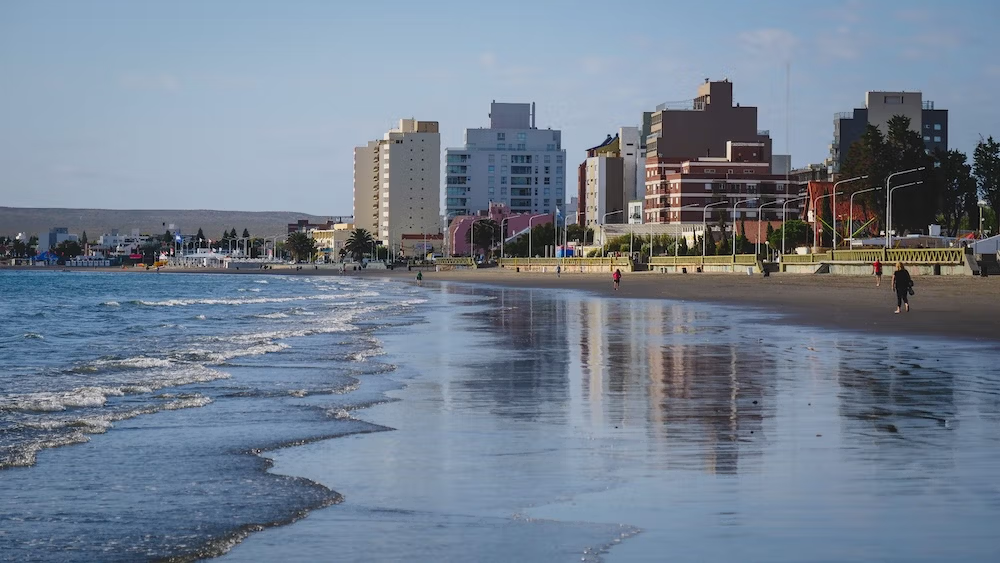
Puerto Madryn, Peninsula Valdés, Trelew and the Welsh communities of Chubut form a completely different journey.
This is coastal Patagonia: whales, penguins, elephant seals, sea lions, Atlantic beaches, open steppe and wildlife excursions that may depend heavily on the month.
There is no single “best wildlife season” covering every species. Whale timing is not penguin timing. Orca timing is not whale timing. If one particular animal is the reason for the trip, that should influence the month before anything else.
Puerto Madryn was our first Patagonia base. We used it to explore Peninsula Valdés, stayed in Puerto Pirámides, continued through Trelew and Welsh Chubut, and later crossed the province toward Esquel.
It was a fantastic journey.
It was not a convenient little detour between Bariloche and El Calafate.
That is the trap.
Coastal Patagonia deserves to be the centre of a trip, especially for wildlife lovers. It should not be attached casually to a short mountain itinerary because somebody noticed Puerto Madryn on a map and thought, “We could probably squeeze that in.”
You probably can.
The question is what you will have to remove from the rest of the trip to recover from doing it.
Puerto Madryn is the most practical accommodation base for many coastal itineraries, so this is a useful point to compare current Puerto Madryn hotels and apartments. Wildlife plans are more date-sensitive than hotel prose tends to admit, so choose the week around the animals you most want to see rather than a vague idea of peak season.
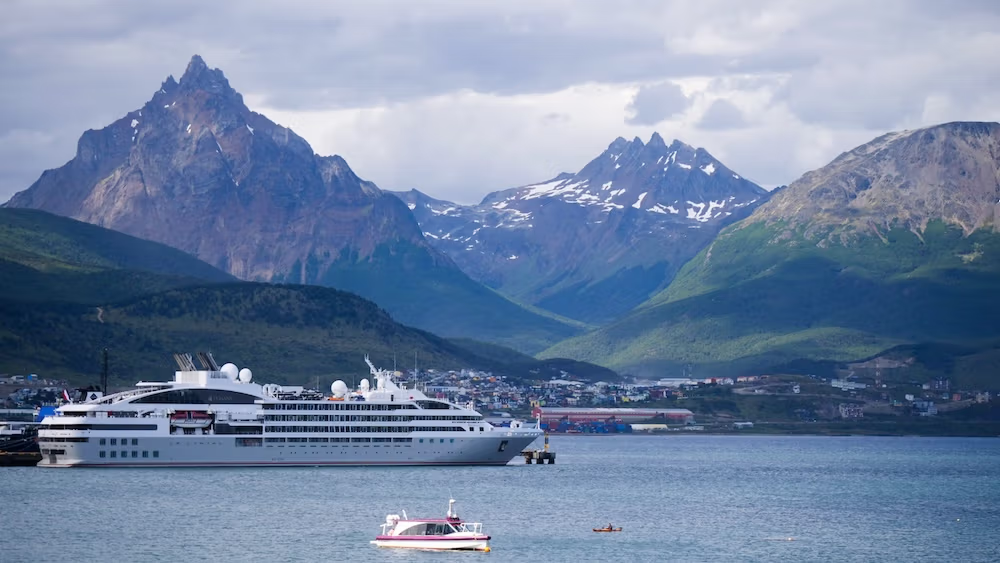
Ushuaia and Tierra del Fuego
Ushuaia sits at the bottom of a transport system that is partly separated from mainland Argentina by Chile and the Strait of Magellan.
Flying there is straightforward when the route operates conveniently.
Travelling overland is a different matter.
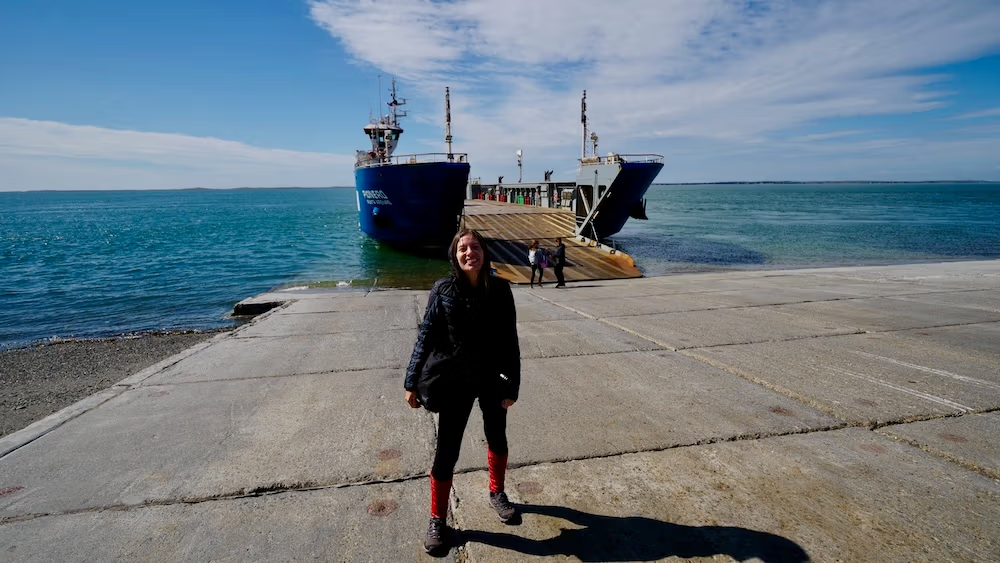
Audrey and I reached Ushuaia by bus from Punta Arenas. The journey involved Chilean and Argentine immigration, a ferry crossing and most of a day on the road.
It was one of those travel days that feels like a real accomplishment when it is over. You watch the landscape change, cross the strait, re-enter Argentina and eventually arrive among the mountains surrounding Ushuaia.
It was memorable.
It was also not a casual domestic transfer.
Ushuaia deserves to sit deliberately at one end of the itinerary. It can be the beginning. It can be the finale. What it should not be is an afterthought.
When Tierra del Fuego is the anchor, compare accommodation in Ushuaia before building the rest of the route around a flight or overland connection.
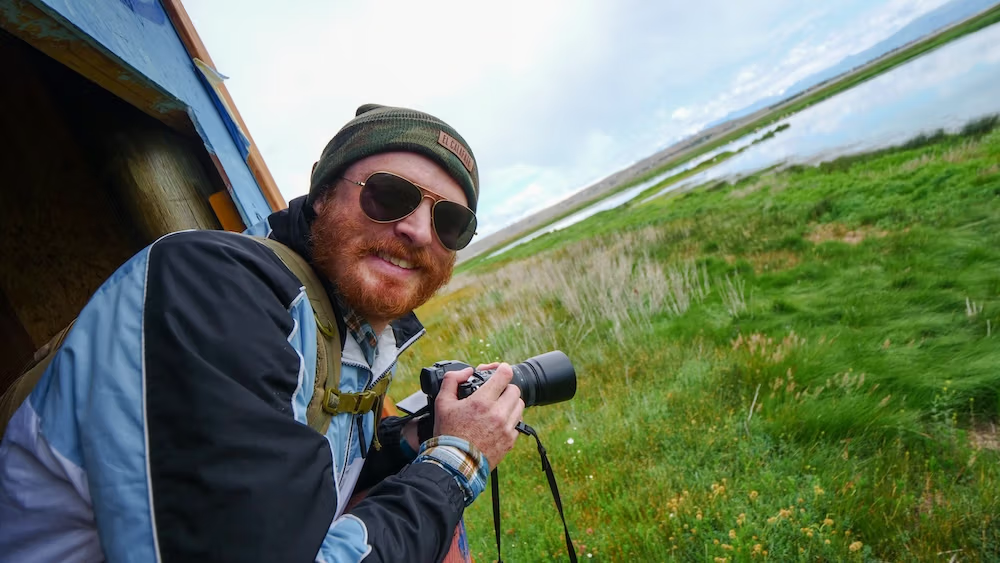
Why Patagonia itineraries fall apart on the map
A map is excellent at showing where places are.
It is less interested in how tired you will be when you reach them.
That gap causes a lot of bad Patagonia planning.
A traveller begins with a list: Bariloche, Puerto Madryn, El Calafate, El Chaltén and Ushuaia. All of them are worth visiting. All of them are in Patagonia. The itinerary looks ambitious but possible.
Then reality arrives.
Bariloche and El Chaltén are separated by roughly 1,400 kilometres of road. The Atlantic coast sits far east of the Andean corridor. Reaching Ushuaia overland requires travelling through Chile. Internal flights can solve some of these problems, but routes may be seasonal or operate only on selected dates.
The tidy loop begins growing tentacles.
Travel time is not usable time
A two-hour flight does not remove only two hours from the trip.
You have to reach the airport, arrive early, check luggage, wait, fly, collect your belongings, transfer into town and check in. A morning departure can preserve part of the afternoon. A badly timed flight can swallow the entire day.
Buses create a different illusion.
Our overnight bus from Trelew to Esquel took around nine hours. On paper, this looked efficient. We would sleep while travelling, save a hotel night and wake up in the Andes.
In reality, I slept for perhaps two or three hours and arrived around 6:30 in the morning in “zombie mode.”
We could not move directly into a normal day. We needed breakfast, somewhere to wait and eventually sleep. The bus had completed its journey. My brain was still somewhere east of town.
That does not mean the overnight bus was a bad choice. It means it did not magically convert nine hours of movement into zero hours of fatigue.
Overnight arrivals come with a second bill
We had a similar situation after travelling overnight from the Esquel area to Comodoro Rivadavia.
We arrived around 7:00 in the morning. Our room was not available until noon.
This creates a very specific form of travel limbo. You are technically at the destination but cannot unpack, shower or sleep. You have all your luggage. You are too tired to explore properly and too early for most of the things you planned to do.
You end up sitting in a café for a heroic length of time.
Overnight buses can save money and daylight. We have taken many of them, and sometimes they are the best option.
But I no longer count the following morning as free.
Crossing Patagonia east to west
Travelling from the Atlantic coast into the Andes can be rewarding when the route itself is part of the trip.
Our journey from Trelew to Esquel eventually led to one of our favourite discoveries. Esquel entered our plans partly because we needed a logical way to cross Chubut from east to west.
Once we arrived and spent time there, we loved it.
It became more than a transport stop.
That is one of the great rewards of slower travel. A town selected for practical reasons can surprise you more than the famous place you had been anticipating for months.
The opposite is also possible.
A traveller with ten days may reach Esquel after an overnight bus, remain for one night and immediately continue toward Bariloche. In that situation, the same route becomes an exhausting connection rather than a discovery.
The difference is not the place.
It is the amount of time available to let the place matter.
Starting in Bariloche
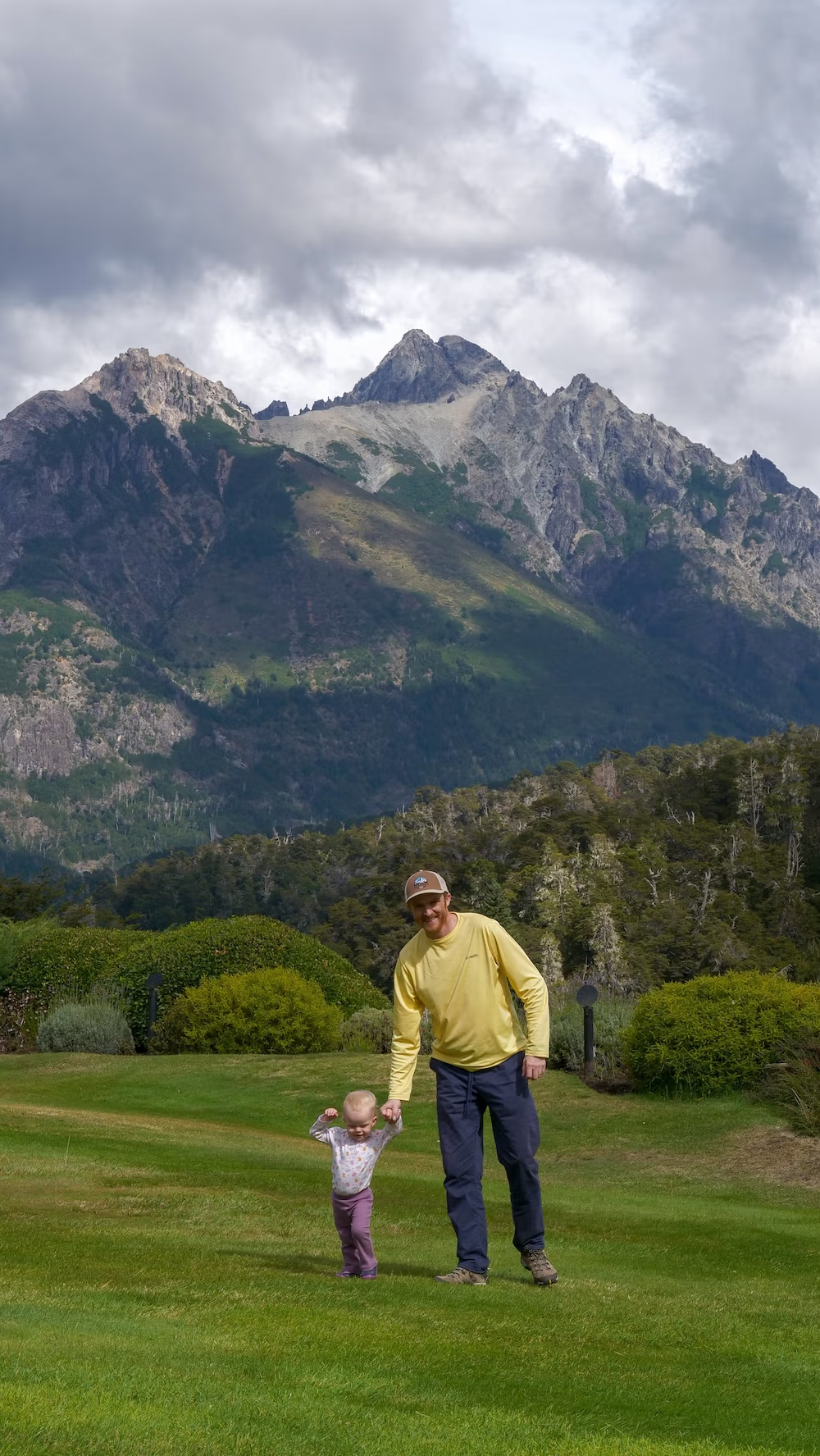
Bariloche is my preferred starting point for a longer first journey through Patagonia.
It is also the strongest gateway when northern Patagonia is the main destination.
Audrey and I deliberately flew there from Buenos Aires at the beginning of one of our longest southbound trips. We wanted time in the Lake District before moving farther through Patagonia.
We later returned to Bariloche for another northern-focused journey.
That repeated choice says more than a generic recommendation ever could. Bariloche works. It gives you a relatively gentle landing, enough infrastructure to recover from the flight and several onward options that do not immediately require heroic transport.
You can spend a few days around Bariloche itself, then head toward Villa La Angostura and San Martín de los Andes or travel south through El Bolsón toward Esquel.
Choose one northern direction on a shorter trip
Bariloche is a hub, but that does not mean every nearby destination belongs in one itinerary.
Villa La Angostura and San Martín de los Andes lie in one direction. El Bolsón and Esquel pull the route south.
A short trip should choose.
If you want the Seven Lakes corridor and the mountain-town progression toward San Martín de los Andes, build around that.
If El Bolsón and Esquel appeal more, head south.
Trying to include both can lead to unnecessary backtracking through Bariloche unless the trip is long enough or the transport has been arranged carefully.
When Bariloche is the right start
Begin in Bariloche when:
- The Lake District is the main reason for the trip.
- You want lakes, forests and mountain towns more than glaciers or wildlife.
- You have enough time to move gradually south.
- You prefer beginning in a larger tourism centre with plenty of services.
- Villa La Angostura, San Martín de los Andes, El Bolsón or Esquel are genuine priorities.
Bariloche also works beautifully as the first chapter of a longer north-to-south itinerary.
The landscapes become progressively more remote and severe as you travel. Finishing in the far south then feels like an actual progression rather than a collection of disconnected flights.
When Bariloche is the wrong start
Bariloche is inefficient when nearly all your priorities are around El Calafate and El Chaltén.
This is where personal preference needs to get out of the way.
I love Bariloche. I would happily invent reasons to return. But if a traveller has seven or eight days and wants Perito Moreno Glacier and Fitz Roy, beginning in Bariloche creates a major repositioning before the real trip starts.
The best gateway is not always the place you like most.
Sometimes it is simply the airport closest to the experiences receiving most of your nights.
Starting in El Calafate
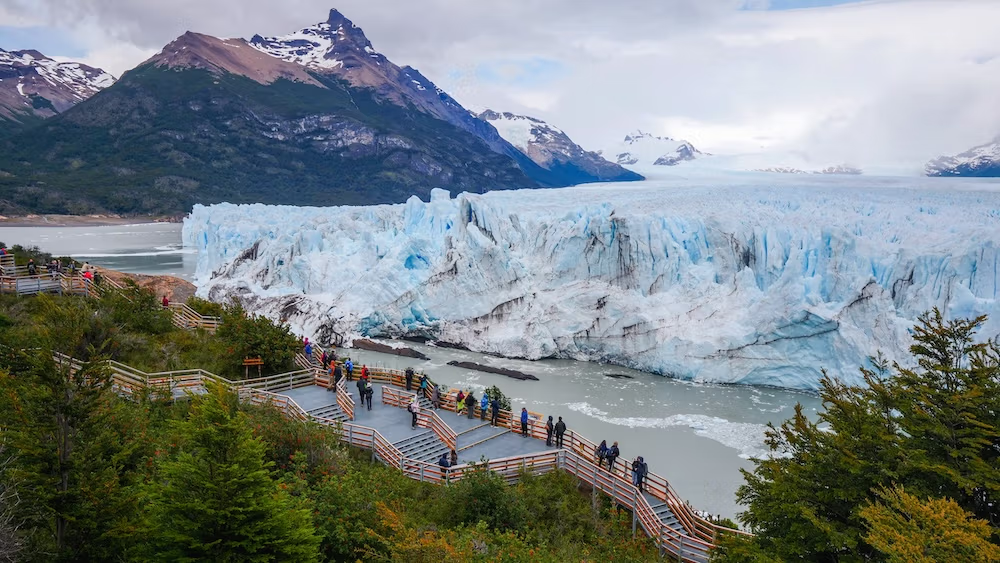
For a shorter first trip focused on southern Patagonia, El Calafate is the practical choice.
You arrive near Perito Moreno Glacier and within one manageable road transfer of El Chaltén. There is no need to involve northern Patagonia, the Atlantic coast or Tierra del Fuego unless the trip is long enough to support them.
Travellers who want transport and glacier logistics handled together can compare El Calafate tours and Perito Moreno Glacier excursions. This is particularly useful when you are not renting a car or do not want a fixed glacier day to become another puzzle.
The interesting question is not whether El Calafate belongs.
It is whether El Calafate or El Chaltén should come first.
El Calafate first
This was our order.
We travelled from Río Gallegos to El Calafate, used the town as our base for glacier experiences and then continued to El Chaltén.
El Calafate first makes sense when the flight arrives too late to continue comfortably, when a glacier excursion is already booked or when the traveller wants a gentler arrival before beginning the hiking portion.
El Calafate is easier to settle into. You can check in, eat, organize yourself and begin adapting to the local weather without immediately committing to a major trail.
This matters more than it sounds.
We have made the mistake of treating arrival days as though our bodies have no opinion. Our bodies eventually submit a formal complaint.
El Chaltén first
El Chaltén can also be the first overnight stop.
Direct transfers operate from the El Calafate airport area, so a traveller whose flight lines up with the transport may continue directly to the trekking town.
We did not personally follow that order, so I would not frame it as something we tested. Logistically, however, it can be a smart choice.
Beginning in El Chaltén gives the hiking portion more room. If the weather is poor on the first day, there are more opportunities to shift a major walk later rather than reaching the town near the end of the trip with no flexibility left.
Travellers who want a guided hike, rafting trip or organized day in the trekking capital can compare current El Chaltén tours and activities. Many visitors will not need a tour for every day, but the option is there when a guide or arranged transport solves a specific problem.
El Chaltén first works particularly well when:
- The flight arrives early enough for the transfer.
- Trekking is the main priority.
- The traveller wants several possible hiking days.
- Perito Moreno Glacier is easier to schedule near the end.
- The return flight still leaves enough time to travel back through El Calafate.
The better order depends on arrival time, transport and fixed bookings.
The two towns form one corridor. The internal sequence is adjustable.
How far should you continue?
El Calafate and El Chaltén fit together naturally.
Puerto Natales can be added with enough time and a workable border schedule. Continuing through Punta Arenas toward Ushuaia expands the journey again.
We travelled from the El Chaltén area through El Calafate to Puerto Natales and eventually onward to Ushuaia. During that stretch we dealt with sideways rain, waits between buses, border controls and a suitcase wheel that finally gave up.
Honestly, the suitcase had a point.
That route made sense during our long trip because Chilean Patagonia had become part of the experience. It would be overkill for someone trying to fit El Calafate, El Chaltén and Ushuaia into one rushed week.
If you are keeping the driving within Argentina, you can compare rental cars in El Calafate. Do not assume the same rental can cross into Chile; that requires permission and paperwork arranged in advance.
If you have limited time, protect the glacier-and-trekking corridor.
Do not dilute it by attaching places that require more transport than the itinerary can absorb.
Starting in Puerto Madryn or Trelew
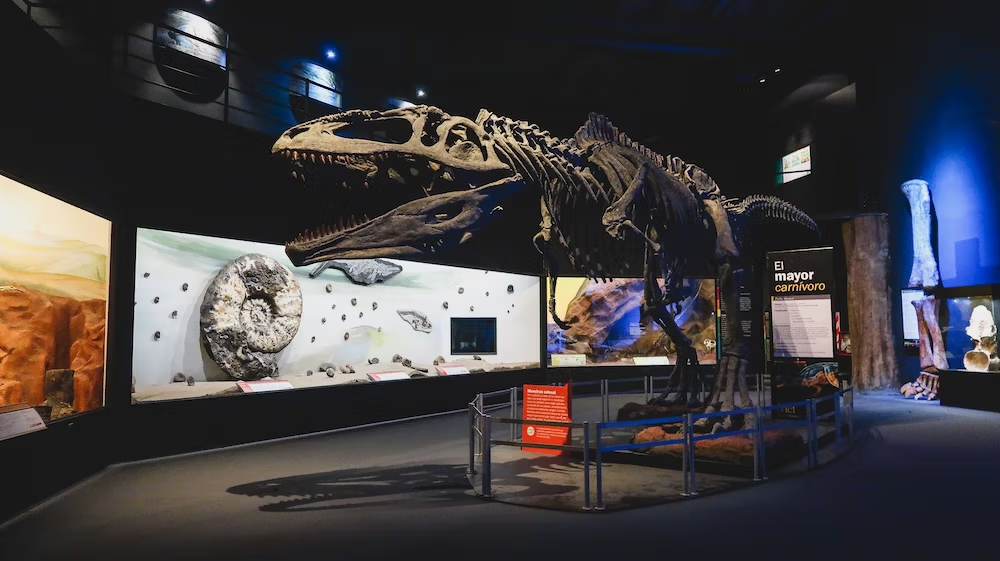
Coastal Patagonia should begin through Puerto Madryn or Trelew.
Which one is better depends on the flights available for your actual dates.
Puerto Madryn’s airport sits much closer to the city. Trelew’s airport is farther away but may offer a more convenient schedule or fare. It is also better positioned for Trelew itself and the Welsh communities nearby.
Search both airports.
The closest airport is not the most convenient when the flight arrives on the wrong day or costs dramatically more.
Let the wildlife choose the calendar
The strongest reason to begin on the coast is wildlife.
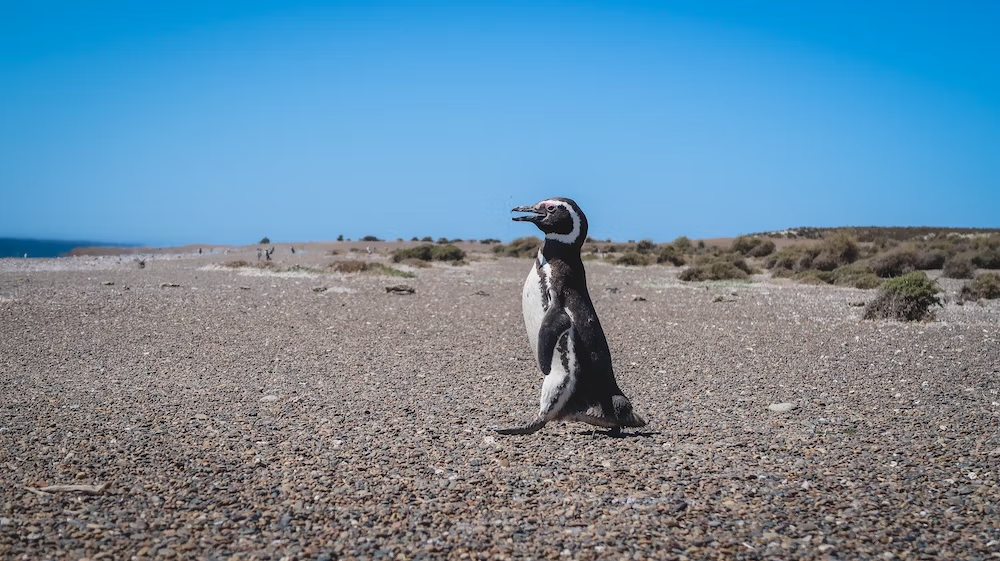
If you are travelling specifically for whales, penguins or orcas, the target species should influence the timing of the whole trip. These animals have different seasonal patterns, so a vague plan to “see Patagonia wildlife” is not enough.
The official Peninsula Valdés fauna calendar is worth checking before booking anything else.
The coast can then sit at the beginning or end of a wider itinerary depending on the season and onward transport.
Once the dates line up, travellers can compare Peninsula Valdés wildlife tours from Puerto Madryn. This is one of the clearest cases where an organized excursion can remove real friction, particularly when the wildlife site is distant and the day would otherwise require a car and a lot of route planning.
When the coast deserves its own trip
Start in Puerto Madryn or Trelew when:
- Peninsula Valdés is a major priority.
- Wildlife determines the month.
- You want Atlantic landscapes rather than only Andean scenery.
- Welsh Chubut genuinely interests you.
- You have enough time to continue across the province without rushing.
Our first trip followed this pattern.
Puerto Madryn led to Peninsula Valdés, Puerto Pirámides, Trelew and eventually Esquel. It became a coherent journey because we allowed the coast and Chubut to carry the trip.
Had we attempted to add the same route to a short El Calafate holiday, it would have felt like a logistical accident.
Combining the coast with Esquel and Bariloche
The coast and Esquel can work together when the crossing is intentional.
Esquel should not be included merely because it breaks the journey. It deserves enough time to become a destination.
That was the surprise for us. We arrived partly because it made sense geographically, then found one of the places we liked most.
For a slower journey, coastal Chubut followed by Esquel and perhaps Bariloche can be excellent.
For a short first trip, it is usually better to choose either coastal wildlife or the famous southern glacier corridor.
Trying to do both can leave you with a lot of bus footage and not much Patagonia.

Should you start in Ushuaia?
You can start in Ushuaia.
I still prefer finishing there.
For us, Ushuaia sat at the end of a long southbound journey. We had travelled through northern Patagonia, Chubut, Santa Cruz and Chilean Patagonia before crossing Tierra del Fuego.
The approach felt like a finale.
The landscape changed as we travelled. The road became more dramatic. Mountains and lakes appeared. Wind-shaped trees leaned across the terrain. By the time we reached Ushuaia, it felt earned.
That feeling is one of my strongest arguments for travelling north to south.
It is not a logistical law.
When Ushuaia works as the beginning
Starting in Ushuaia makes sense when:
- Tierra del Fuego is the main purpose of the trip.
- A cruise or expedition begins there.
- The best international or domestic connection arrives there.
- A flight onward to El Calafate works on the required dates.
- A south-to-north route avoids backtracking.
- You want to spend several days in Ushuaia rather than use it as a symbolic overnight stop.
A traveller beginning or ending an Antarctica cruise may have little reason to force Ushuaia into the finale position. The fixed booking controls the trip.
Flights can also make Ushuaia-first perfectly sensible.
The important thing is to check the actual date. Cross-Patagonia routes may operate seasonally or only on selected days. An itinerary should not be built around a flight that existed in somebody else’s article two years ago.
Once the dates are settled, you can compare Ushuaia tours and Tierra del Fuego activities. This is particularly useful for travellers trying to fit the national park, Beagle Channel or penguin excursions around a fixed flight or cruise departure.
The reality of going overland
There is an overland road journey to Ushuaia.
There is not an all-Argentina mainland road route.
You pass through Chile, complete border formalities, cross the Strait of Magellan by ferry, travel through Chilean Tierra del Fuego, re-enter Argentina and continue to Ushuaia.
That is a full journey. Treat it as one.
Weather and operating conditions can affect the ferry and border. A rental car also needs permission, insurance and customs paperwork before entering Chile. You cannot simply arrive at the border and announce that the vehicle has a free spirit.
Travelling overland is worthwhile when the crossing itself interests you or forms part of a longer Chilean–Argentine route.
Flying is usually the more honest answer when the aim is merely to connect Ushuaia with El Calafate during a shorter holiday.
The best Patagonia order by trip length
The easiest way to ruin a Patagonia itinerary is to keep the same destination list while reducing the number of days.
One week does not mean the four-week route should be completed faster.
It means the route should become smaller.
| Time available | Best scale | Strong route examples | What usually goes wrong |
|---|---|---|---|
| About one week | One corridor | El Calafate and El Chaltén; Bariloche plus one northern branch; Puerto Madryn and Peninsula Valdés; Ushuaia and Tierra del Fuego | Adding multiple distant gateways because flights appear possible |
| About two weeks | One full corridor or two joined by one useful flight | Northern Patagonia; El Calafate–El Chaltén plus Puerto Natales; Bariloche plus southern Patagonia by air; Ushuaia plus El Calafate by air | Assuming internal flights operate every day or every season |
| Three to four weeks | A directional multi-region trip | Bariloche south toward El Calafate; southern Patagonia through Chile to Ushuaia; coastal Chubut into the Andes before flying south | Treating every transfer as a half-day |
| A month or more | Slow overland travel | A longer journey where Esquel, Río Gallegos or Punta Arenas become real stops | Including secondary towns without giving them enough time |
One week: choose one corridor
For a classic first trip, I would choose El Calafate and El Chaltén.
That gives you Perito Moreno Glacier, mountain scenery and several trekking possibilities without wasting days repositioning across Patagonia.
A northern week can begin in Bariloche and include one direction: perhaps Villa La Angostura and the Seven Lakes corridor, or El Bolsón.
A wildlife week can focus on Puerto Madryn and Peninsula Valdés.
Ushuaia can also fill a week when Tierra del Fuego is the point of the trip.
Bariloche, El Calafate and Ushuaia in seven days is technically possible with flights.
It is also an excellent way to become deeply familiar with Argentine airports.
Two weeks: add one connection, not three
Two weeks can support a full northern Patagonia route or a strong southern circuit.
El Calafate and El Chaltén can be combined with Puerto Natales or Torres del Paine when the border transport works.
Bariloche can be paired with the southern glacier corridor by air.
Ushuaia can be linked with El Calafate by air when the route operates on the right date.
Coastal Chubut can also be combined with Esquel if the wildlife, Welsh history and lesser-visited mountain towns are all part of the purpose.
The mistake is using two weeks to collect four gateway airports.
One meaningful flight can save the route. Several flights can become the route.
Three to four weeks: a real Patagonia journey
At three or four weeks, a multi-region itinerary starts to breathe.
You could begin in Bariloche, explore northern Patagonia and then make one major movement south toward El Calafate and El Chaltén.
Another route could begin in the glacier corridor, pass through Chilean Patagonia and finish in Ushuaia.
Coastal Chubut could be combined with Esquel or Bariloche before flying south.
The route should still move mainly in one direction. Repeated returns to Buenos Aires or backtracking between gateway cities use time that could be spent somewhere better.
One month or more: let the road become part of the trip
Our long route included Bariloche, El Bolsón, Esquel, Comodoro Rivadavia, Río Gallegos, El Calafate, El Chaltén, Puerto Natales, Punta Arenas and Ushuaia.
That sounds ridiculous for a short holiday because it would be ridiculous for a short holiday.
With enough time, however, the secondary places stop feeling like obstacles between famous attractions. They provide changes in landscape, food, pace and atmosphere. You begin to understand Patagonia as a region rather than a greatest-hits compilation.
This is when slow travel starts paying dividends.
Esquel can become a favourite rather than a bus terminal.
Río Gallegos can become part of the route rather than an unwanted pause.
The long distances become the substance of the journey instead of a planning failure.
North to south or south to north?
I prefer north to south.
Bariloche gives the trip a gentle beginning. The Lake District is beautiful without immediately feeling severe. As you continue south, the distances, weather and landscapes become progressively more dramatic.
Finishing in Ushuaia then provides a natural sense of completion.
That is my emotional and editorial preference.
The logistics may disagree.
There is no universal weather rule proving that north-to-south is always better. Patagonia is too large and varied for that. Conditions depend more on the destination, season, elevation and week than on a simple directional slogan.
South-to-north can be the smarter route when:
- A cruise begins or ends in Ushuaia.
- The most convenient flight arrives in Ushuaia.
- An onward flight to El Calafate operates on the right date.
- Wildlife timing controls a later coastal section.
- The return flight is easier from Bariloche or Buenos Aires.
- Accommodation or fixed excursions force the route in that direction.
Choose the direction that produces the cleanest arrival and departure.
A beautiful north-to-south narrative is not worth two extra days of backtracking.
A few rules that save Patagonia itineraries
Patagonia plans rarely collapse because one attraction is disappointing.
They collapse through accumulated friction.
A delayed bus here. A flight operating only twice a week there. A border crossing placed before an international departure. An overnight journey followed by an ambitious hike. A rental car that cannot legally enter Chile.
These details are boring until they destroy the expensive part of the trip.
Treat major travel days as travel days
Do not schedule a major trek because your flight lands at noon.
The plane may land at noon. You may reach the accommodation at 3:00, eat at 4:00 and spend the evening discovering which bag contains your rain jacket.
Anything accomplished after a major transfer is a bonus.
This is especially true after overnight buses or border crossings.
Do not assume an overnight bus gives you a free day
We have taken many overnight buses in Argentina.
Some were comfortable. Some allowed us to sleep. Others left us wandering around shortly after sunrise with our luggage and the emotional range of a fence post.
Before choosing one, check the arrival time, luggage-storage options, accommodation policy and what you expect to do afterward.
An overnight bus saves time only when the next day remains usable.
Protect fixed bookings
Do not place an international flight immediately after a ferry or border-heavy bus journey.
Do not schedule an expensive glacier excursion a few hours after arriving from another region.
The more difficult a booking is to replace, the more buffer it deserves.
This may feel cautious when everything operates perfectly.
It feels brilliant when it does not.
Confirm cross-border rental paperwork before paying
A rental car from Argentina does not automatically have permission to enter Chile.
The rental company must allow the crossing and provide the correct authorization, insurance and customs documentation.
Confirm this before booking.
The border is not the right place to discover that your flexible road trip is flexible only within one country.
Leave room for wind, weather and recovery
We experienced major temperature swings, sideways rain and powerful wind during our Patagonia travels.
At one A-frame accommodation in El Calafate, the wind became strong enough that we worried about the upper level and slept downstairs.
A spare day will not guarantee good conditions. It gives you another chance.
This matters most in hiking destinations such as El Chaltén, where one cloudy or stormy day can hide the landscape you travelled so far to see.
A buffer day is not empty.
It protects the reason you came.
So, where should you start in Patagonia?
Start in Bariloche when northern Patagonia is the main journey, when you want a relatively comfortable introduction or when you have enough time to move gradually south.
Start through El Calafate when Perito Moreno Glacier and El Chaltén are the priorities. El Calafate is the gateway, but the first overnight stop can be either town.
Start through Puerto Madryn or Trelew when wildlife and coastal Chubut control the trip. Compare both airports and plan around the species you most want to see.
Start in Ushuaia when Tierra del Fuego is the central purpose, a cruise begins there or the flights clearly favour travelling south to north.
Finish in Ushuaia when you want the strongest sense of geographical progression.
For a long first journey, I would still begin in Bariloche and work south. I love northern Patagonia, the arrival is forgiving and Ushuaia feels like a proper ending.
For a shorter first visit, I would be more ruthless. I would fly into El Calafate, focus on El Calafate and El Chaltén, and save Bariloche, the coast and Ushuaia for later.
Patagonia rewards ambition.
It punishes greed.
The best route is not the one that contains the most famous destinations. It is the one that leaves you with the most real days in the places you crossed half a continent to experience.
Frequently Asked Questions
Where is the best place to start a Patagonia trip?
Start in Bariloche when northern Patagonia and the Lake District are the priority. Start through El Calafate for Perito Moreno Glacier and El Chaltén, through Puerto Madryn or Trelew for coastal wildlife, and in Ushuaia when Tierra del Fuego is the main purpose.
Should I start in Bariloche or El Calafate?
Bariloche is the stronger gateway for a northern Patagonia trip or a longer journey moving gradually south. El Calafate is more efficient for a shorter trip focused on Perito Moreno Glacier and hiking in El Chaltén.
Can I visit El Chaltén before staying in El Calafate?
Yes. Direct transfers can connect the El Calafate airport area with El Chaltén when flight and transport times align. El Calafate first may be easier after a late arrival or when a glacier excursion is already fixed.
Is Ushuaia better at the beginning or end of a Patagonia itinerary?
Either can work. Ushuaia makes sense at the beginning when Tierra del Fuego, a cruise or the available flights control the route. I prefer it as the finale because a north-to-south journey creates a strong sense of progression.
How much of Patagonia can I visit in one week?
One week is best used for one corridor: El Calafate and El Chaltén, Bariloche with one northern branch, Puerto Madryn and Península Valdés, or Ushuaia and Tierra del Fuego. Combining several distant gateways leaves too much time in transit.
Is Puerto Madryn an easy addition to Bariloche or El Calafate?
Not usually on a short trip. Puerto Madryn and Península Valdés form a separate coastal wildlife route, and crossing between the Atlantic coast and the Andes requires substantial travel time.
Do overnight buses save time in Patagonia?
They can save a hotel night and preserve daylight, but the following morning may be lost to poor sleep, early arrival and unavailable accommodation. Count the next day as usable only when the timing and your energy genuinely support it.
Project 23 Argentina: This guide is also available in Spanish. [Leé la versión en castellano: Dónde empezar en la Patagonia: el mejor orden de viaje explicado]
This article contains affiliate links. If you book through one of these links, I may earn a commission at no extra cost to you.