
Somewhere between the second glass of malbec and my third helping of lamb at Estancia Nibepo Aike, I asked myself something I hadn’t really asked on any of our other Patagonia trips: did we actually need to stay the night here, or was this one afternoon already giving us most of it?
That question turned out to matter more than I expected. Across several trips through Argentine Patagonia, Audrey and I have dropped into an estancia for a single afternoon and settled in for multiple nights at three very different kinds of ranch properties — a remote working sheep station built around fly fishing, a family-run fishing lodge with decades of history, and a countryside hotel that borrows the word “estancia” without running an actual farm. Between those five visits, a pattern emerged that wasn’t quite the one I expected going in: which overnight stay you pick matters more than whether you stay overnight at all, because “overnight ranch stay” turns out to mean wildly different things depending on the property.
This isn’t a list of the best estancias in Patagonia — plenty of those already exist, and none of them tell you what actually changes between an afternoon at one and a few nights at another. That’s what this is for.
Two Ways to Experience a Patagonian Estancia
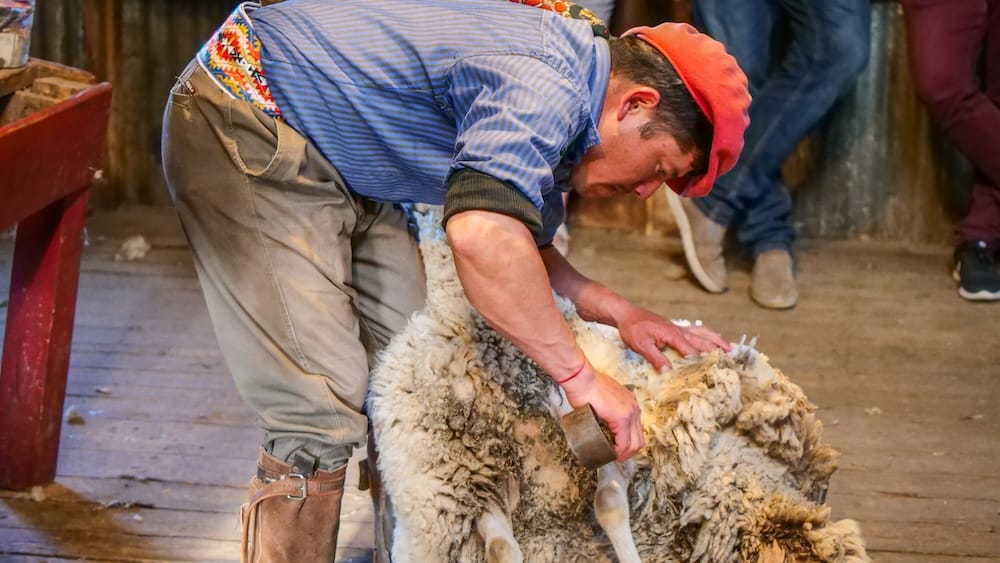
By the end of our afternoon at Nibepo Aike, full of lamb and slightly windburned, I turned to Audrey and admitted we’d gotten a real taste of estancia life — sheep shearing, a countryside tour, a full asado — without staying a single night. Not everything an overnight guest gets. A condensed version, compressed into a few hours instead of a few days.
Turns out that’s not just our own read on things. Nibepo Aike itself now takes overnight guests in ten or eleven rooms alongside the day excursions it’s long been known for, so the same property that gave us our condensed afternoon also offers the fuller version of itself — you can check current room availability at Nibepo Aike directly if a longer stay appeals more than an afternoon. Estancia Cristina, deeper into Los Glaciares National Park and reachable only by boat, works the same way — full-day visits for people who want a taste, multi-night stays for people who want the whole thing. At more than one estancia, day-or-overnight isn’t a workaround travelers cobble together. It’s how the property is actually built to run.
The Day-Trip Estancia Excursion — What You Actually Get
A Dedicated Half-Day Excursion at Estancia Nibepo Aike
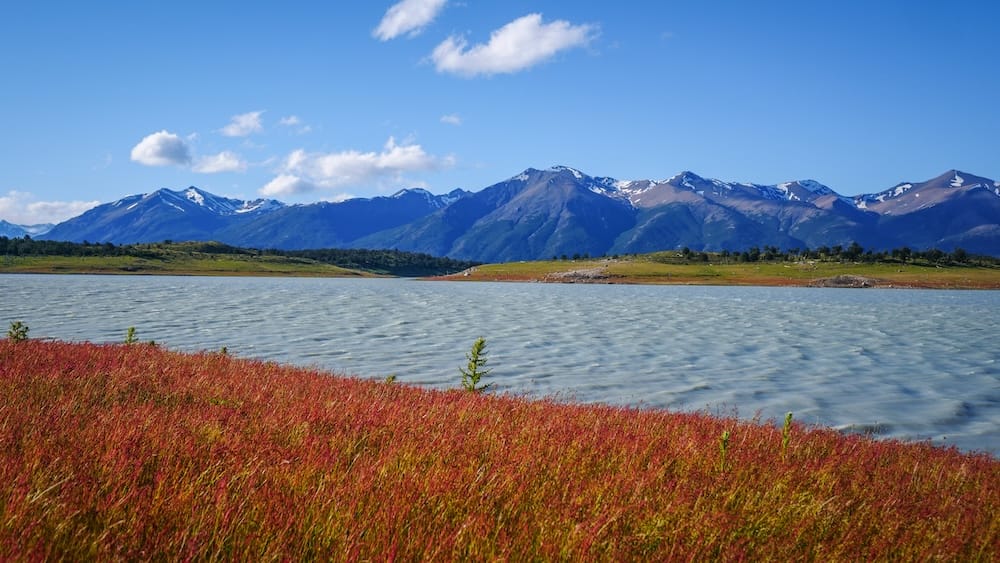
We booked our visit to Nibepo Aike directly through an operator in El Calafate, and the estancia’s own vehicle picked us up from our cabin for the drive out — about ninety minutes, most of it gravel road cutting through Los Glaciares National Park. You can choose a morning or afternoon excursion; we took the afternoon, which meant staying through sunset.
The visit opened with an afternoon merienda — mate, tea, coffee, a plate of little cakes and torta frita — while our group gathered before the guided portion began. From there came the estancia’s backstory: founded by a Croatian immigrant named Santiago Peso in the early 1900s, originally called La Jerónima, renamed after his death by his wife, who combined the nicknames of their three daughters. We watched a sheep-shearing demonstration, hiked down toward a stretch of turquoise water, and ate a calafate berry off the bush the town is named for — legend says eating one guarantees you’ll return to Patagonia.
Dinner was the real centerpiece: a full asado working through chimichurri, lamb, chorizo, and ribs, capped by one last, thoroughly unnecessary helping of meat. By the time we finished, the sun was setting over the countryside, and I didn’t feel like I’d missed much by skipping the overnight.
Day excursions like this currently run somewhere around $110–130 per person, with horseback riding usually available as a roughly $20 add-on. You can check current tour dates and pricing for Nibepo Aike before you build a shoulder-season afternoon around it, since some operators pause the excursion entirely over winter.
An Estancia as a Waypoint: Estancia San Lorenzo, Peninsula Valdés
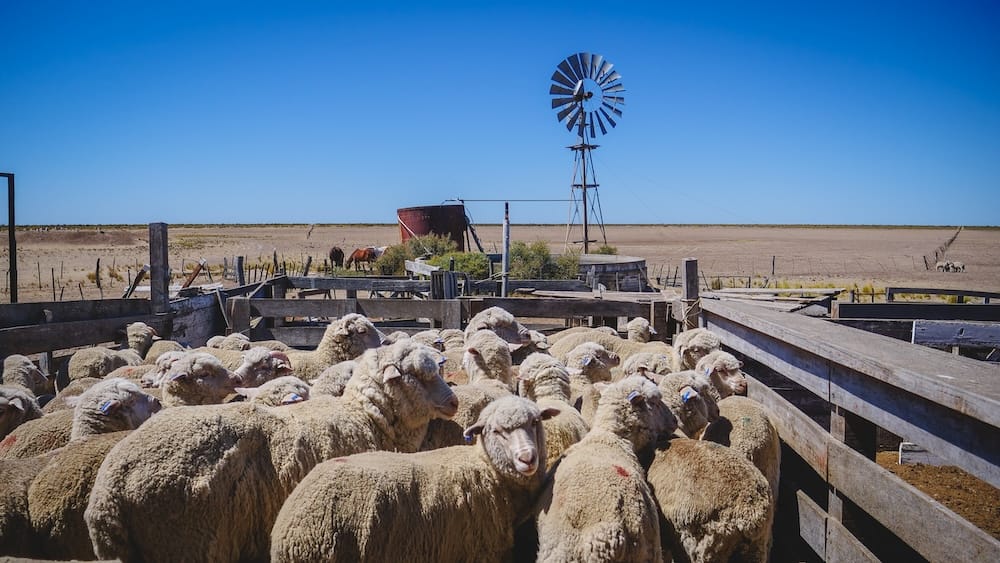
Our other day visit looked completely different, because the estancia wasn’t really the point of the day — wildlife was. We’d booked a full-day tour of Peninsula Valdés that took us to Punta Norte for sea lions and elephant seals, and Estancia San Lorenzo was where we stopped for lunch en route to the day’s actual draw: the largest Magellanic penguin colony in the world, estimated at around 600,000 birds during the season.
Lunch was a “menu de campo” — a country menu — built around Patagonian lamb, with bread, empanadas, a shared bottle of house wine, and a flan with dulce de leche to finish. Our guide told us the peninsula’s salty vegetation is what gives the local lamb its distinctive flavor; I can’t vouch for that independently, but it made a good story over the meal. Afterward we walked the marked trail through the colony itself, penguins waddling right beside the path, closer than felt possible.
Two things have changed since we went: lunch at San Lorenzo is now commonly billed separately from the tour price rather than bundled in, and the peninsula’s entrance fee — also charged apart from whatever tour you book — moves often enough with inflation that I’d rather point you to check it at booking time than hand you a number that’s stale before you land. It’s worth taking a look at how operators currently compare current Peninsula Valdés and Estancia San Lorenzo tour options before you book. The penguin-viewing season itself runs mid-September through the end of March.
The contrast with Nibepo Aike is the useful part. At Nibepo Aike, the estancia was the entire reason for the day. At San Lorenzo, it was an excellent lunch stop on the way to something else. Both are legitimate ways to spend a day at an estancia — they just deliver different experiences entirely.
The Overnight Ranch Stay — Three Different Experiences Under One Word
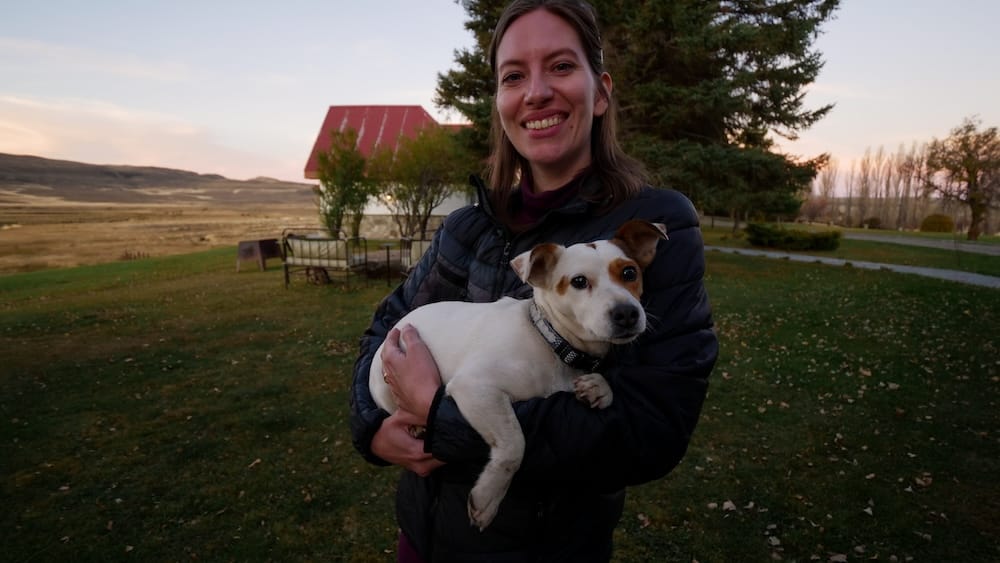
If the day visits taught us that an afternoon goes further than expected, the overnight stays taught us something I didn’t expect at all: “overnight ranch stay” isn’t one product. We’ve now done three, and they had almost nothing in common beyond a shared name.
The Working Ranch: Estancia Tecka Lodge
Tecka is the real thing — a working sheep ranch dating to 1910, when its original owners imported Merino wool sheep from Australia, spread across 435,000 acres near Esquel. It still runs 80,000 sheep, and half the operation doubles as a fly-fishing lodge built on top of that working ranch.
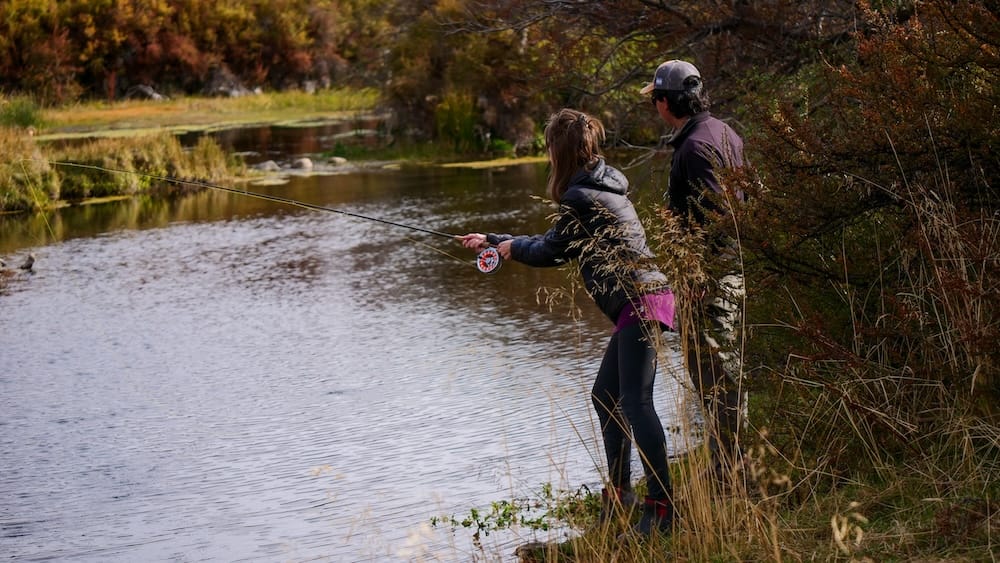
Getting there took some doing: a flight into Esquel, then roughly two hours by car, the final stretch on dirt road, before even reaching the property gates — and another half hour inside the ranch to reach our specific lodge. We arrived to a picada of warm bread, prosciutto, avocado dip, and cheese, and were out trying fly fishing for the first time in our lives that same afternoon, guided by Juan, one of the estancia’s guides. Neither of us caught anything that first evening, but we came startlingly close within minutes of our first cast the next day.
Evenings were communal — dinner with the other guests by the fireplace, pre-dinner cocktails, everyone trading stories about the day’s near-misses. Days blurred into waterfalls, canyon drives, a riverside picnic, sheep everywhere, and one memorable standoff with a curious beaver. By the third night it felt like we’d been folded into the rhythm of a working ranch, not just visiting one.
Tecka is built for anglers first, so skip it if fishing isn’t the point of your trip — there isn’t much of a program otherwise. Pricing runs on a multi-night, all-inclusive package rather than a nightly rate and sits in a premium bracket, somewhere in the neighborhood of $650 to $1,000 per person per night depending on season and package length. This one isn’t bookable through a standard hotel site — it runs through specialist fly-fishing outfitters, so I’d contact the lodge or one of those agencies directly for a current rate rather than trust a figure this volatile.
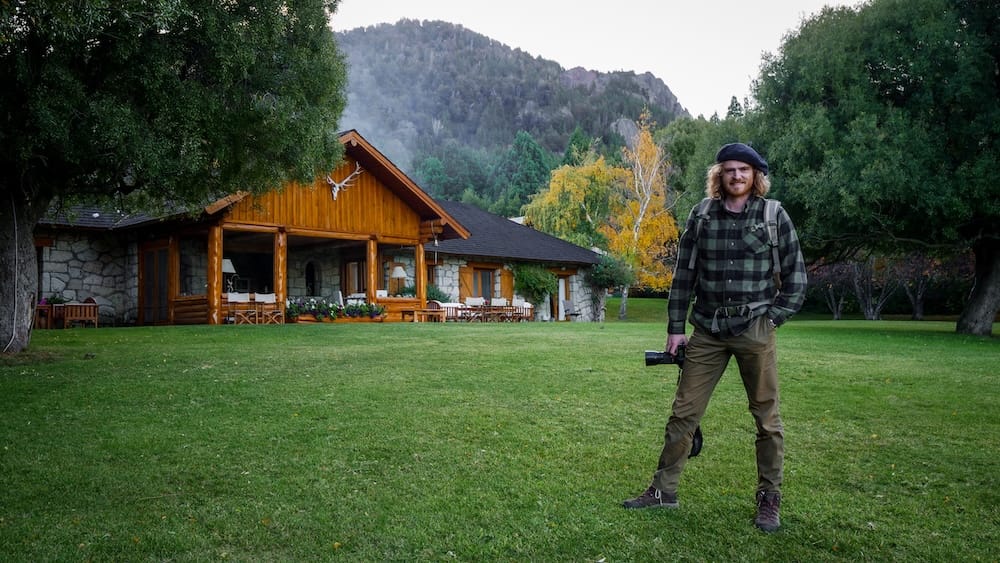
The Family Fishing Lodge: Estancia Arroyo Verde
Arroyo Verde, about ninety minutes north of Bariloche inside Nahuel Huapi National Park, is a different kind of overnight stay again — a family-owned fishing lodge on the Río Traful, run by the same family that bought it in the 1930s after falling in love with the place on a visit of their own.
We arrived on what might be the most Patagonian day possible: wind strong enough to turn the lake into something resembling an ocean, every planned activity for the day canceled outright. So our first evening became an unplanned one — settling into the main lodge (there’s also a cabin option, better suited to groups or families wanting more privacy), getting adopted by an enthusiastic pack of resident dogs and cats, and eating a wonderful dinner while the weather did its thing outside. The second day delivered everything the first one owed us: a hike along the Río Traful, and a tranquil sunset horse trek the local dogs insisted on joining.
What stuck with me most wasn’t any single activity — it was sitting with the family over dinner, hearing the estancia’s history from the people who’ve actually run it for generations, and talking with the staff about life in rural Patagonia. That kind of access comes from a small, family-run property; it’s hard to imagine at a bigger operation.
Current pricing runs around $1,250 per person per night, double occupancy — the steepest of the three overnight stays we’ve done. One heads-up if you’re researching this one: at least one specialist fly-fishing agency has recently stopped booking guests here and dropped its endorsement, while other current listings still show it running as normal. I couldn’t pin down why, and it isn’t listed through standard hotel booking sites either. Call ahead and confirm directly before you commit, rather than either avoiding it outright or assuming everything’s business as usual.
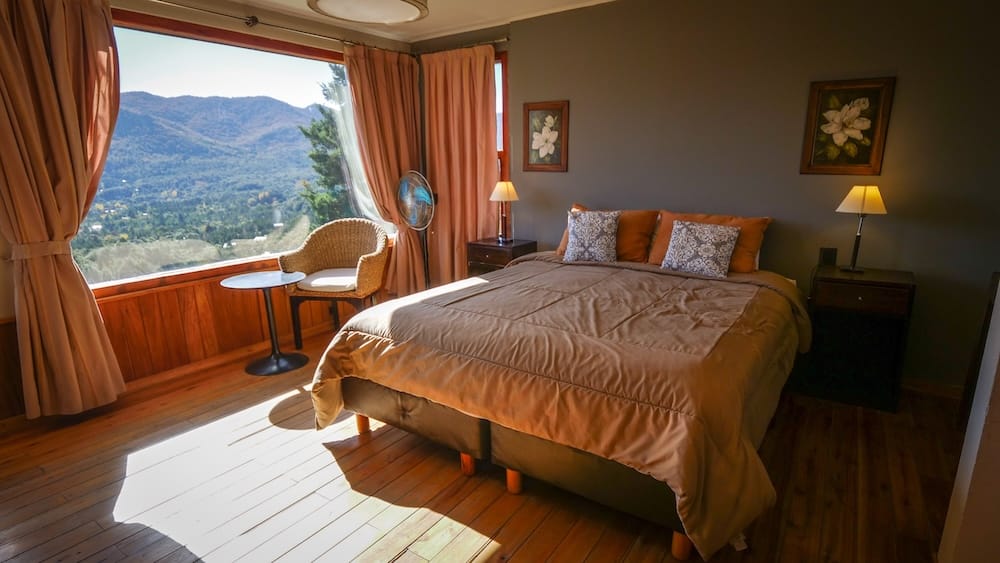
The Countryside Hotel Wearing the Estancia Name: Estancia Del Carmen
Our third overnight stay was the odd one out, and useful precisely because of that. On our third visit to Bariloche, we deliberately chose to stay outside the city, right on Lake Gutierrez, wanting to feel a bit further removed from things — and Estancia Del Carmen fit that brief. What we found on arrival, though, was less a ranch and more a countryside hotel: an on-site restaurant specializing in Patagonian dishes, comfortable rooms, and nothing resembling farm operations anywhere on the property.
Check-in landed in the late afternoon, and dinner didn’t start until 8pm — standard Argentine timing, though five hours is a long wait once you’ve missed both lunch and merienda. We used the time to plan our stay: a trekking excursion to Laguna Verde with a countryside lunch included, and a horseback excursion around Lake Gutierrez with a barbecue lunch of its own — both booked not through the hotel but through an outside operator whose brochure we found at check-in.
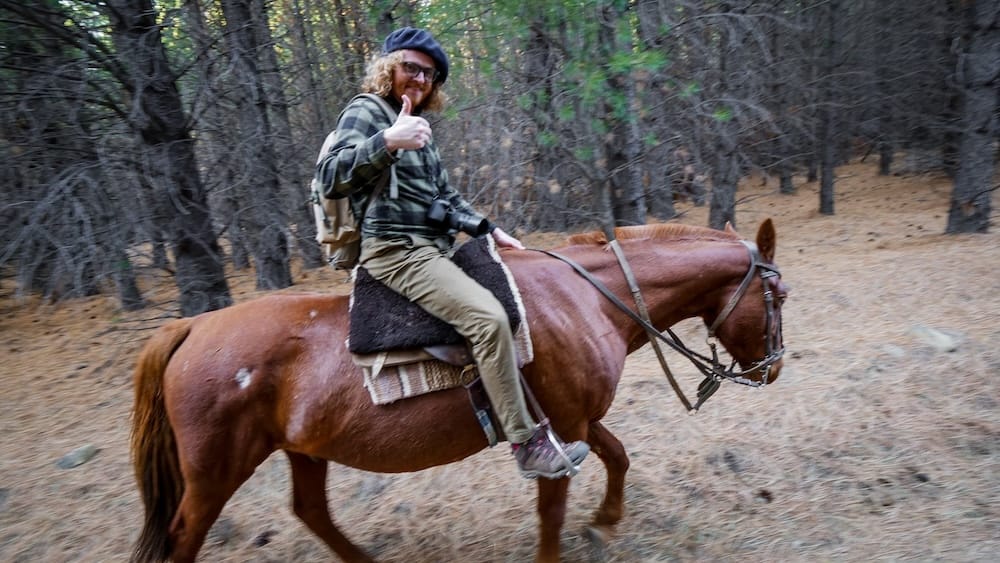
The horse trek was an easy, beginner-friendly loop along the lake’s edge — waiver form, helmets, hot drinks and cake before we set off, barbecue lunch back at the trekking lodge afterward. If you’d rather line something up in advance than rely on a lucky brochure at check-in, you can browse current Lake Gutiérrez horseback tours and book directly. A world away from the technical mountain rides we’ve done elsewhere, and better for it that day; we weren’t looking for adventure sport, just an easy afternoon on horseback.
I did learn one useful thing booking this stay: the same room listed at over $100 a night on a major booking site cost $66 direct through the property. I can’t promise that gap holds everywhere, but try the hotel’s own site before assuming the third-party price is the real one. These days Del Carmen markets itself explicitly as a mountain resort — pool, gym, sauna, a play area for kids, close enough to Cerro Catedral for a ski trip. You can compare current rates for Estancia Del Carmen directly, but expect somewhere in the $55–115 a night range depending on room and season — a fraction of what either fishing lodge costs.
Day Visit vs Overnight Stay: Comparing What Matters
Line the five experiences up together and a pattern emerges: the real decision isn’t day-visit-versus-overnight so much as how much of your trip you’re willing to hand over, and for what.
| Day Visit | Overnight — Resort-Style | Overnight — Working Ranch / Fishing Lodge | |
|---|---|---|---|
| Typical cost | ~$110–130/person (Nibepo Aike); San Lorenzo folded into an $80–255 wildlife-tour package | ~$55–115/night | ~$650–1,250/person/night |
| Time needed | A single afternoon or day | 2+ nights | 3–7 nights, often a set minimum |
| Getting there | Vehicle pickup from town, same-day round trip | ~20 minutes from a city like Bariloche | 1.5–2 hours from the nearest airport, often on dirt roads |
| What’s included | Guided tour, one meal, a taste of ranch activities | Room, restaurant, hotel-style amenities; excursions usually booked separately | Full board, guided activities, often exclusive access to fishing or riding on the property |
| Best suited to | Travelers with one day to spare who want a real taste of estancia life | Travelers who want a comfortable countryside base, not farm immersion | Anglers, riders, and anyone with the time and budget for full immersion |
The overnight column splits itself in two before you’ve finished reading the cost row. A resort-style stay like Del Carmen costs less per night than plenty of city hotels and asks almost nothing of your schedule — you book excursions à la carte, the way you would from any hotel, and “estancia” mostly describes the setting rather than the operation. A working ranch or fishing lodge like Tecka or Arroyo Verde asks for your whole trip: a multi-night minimum, real effort to get there, and a price that reflects exclusive access rather than a nice view.
The day visit sits apart from both, and I wouldn’t rank it below either. It isn’t a discount version of an overnight stay — it’s its own kind of trip, with its own ceiling and its own reward. What it can’t give you is the golden hour after the day-trippers leave, or the ease of a few unhurried mornings in the same place. What it gives you instead is nearly everything else, for a fraction of the time and cost.
One honest limitation: these numbers come from five specific properties we’ve actually visited, not a survey of every estancia in Patagonia. Treat the ranges as realistic, not as a guarantee of what any particular property will charge you.
Which One Should You Choose?
Choose a Day Visit If…
- You have one day in a region and want a real taste of estancia life without reshaping your itinerary around it
- You’re on a tighter budget and would rather spend three or four days elsewhere than three or four nights on one property
- You’re already staying nearby and just want to add a half-day of countryside and asado to the mix
Choose an Overnight Stay If…
- Fishing or riding is the actual point of your trip, not a side activity — a working ranch or dedicated fishing lodge earns its price here
- You want unhurried time with people who’ve run the same property for generations, the kind of access that only comes from staying long enough to talk
- You’d rather have a comfortable countryside base for a few days than a city hotel, even if the “estancia” part is mostly atmosphere — that’s what a resort-style stay like Del Carmen is for
- Weather or bad luck on one day won’t wreck your trip, because you’ve got enough nights booked to recover and still get what you came for
The Trip I’d Plan Next Time
Knowing what I know now, I’d treat “estancia” as two separate decisions, not one: day or overnight first, and if overnight, which of the three kinds. Getting the second question right matters more. Booking a fishing lodge when what you actually wanted was a relaxed countryside hotel — or the reverse — is a bigger mistake than choosing a day visit when you had time for more.
The smaller working ranches and family-run lodges tend to have limited rooms and fill up well ahead of the season; Tecka and Arroyo Verde both run on set weekly or multi-night packages rather than open nightly availability, so that’s not a booking to leave until the week before. Day excursions are more forgiving, though some still pause seasonally — confirm before you build an afternoon around one.
We’ve now done both ends of this, more than once, in more than one part of Patagonia. And if that afternoon at Nibepo Aike taught me anything, sitting there with an empty plate and a full sunset, it’s that neither choice is the compromise. They’re just different trips.
Frequently Asked Questions
What’s the difference between a day visit and an overnight stay at a Patagonian estancia?
A day visit is a guided excursion lasting an afternoon or a full day, usually including a meal and a taste of ranch activities like sheep shearing or a short horseback ride, then you head back to town. An overnight stay means committing to at least a couple of nights on the property itself, with full board and much deeper access to whatever the estancia specializes in, whether that’s fishing, riding, or just slowing down in the countryside.
How much does a day excursion to Estancia Nibepo Aike cost?
When I checked, day excursions to Nibepo Aike ran somewhere around $110 to $130 per person, with horseback riding usually available as a roughly $20 add-on. Prices shift by operator and season, and some tours pause entirely over winter, so I’d confirm current pricing and dates before building a day around it.
Is a stop at Estancia San Lorenzo worth it if I’m mainly there for the penguins?
Yes, though it’s worth knowing going in that the estancia itself is a lunch stop on the way to the real draw, the Magellanic penguin colony a few kilometers away. It’s a genuinely good lunch, but if you want a day that’s actually built around the estancia rather than wildlife, Nibepo Aike is the better example of that.
Do I need fishing experience to stay at a working ranch like Estancia Tecka Lodge?
No. Audrey and I had never fly fished before our stay there, and we were both out casting on our first afternoon with a guide showing us the basics. That said, Tecka is built around fishing first, so anyone in the group who isn’t fishing will find the activity list pretty thin.
Why is there such a big price difference between overnight estancia stays?
Because “overnight ranch stay” covers genuinely different products. A resort-style property like Estancia Del Carmen runs closer to $55 to $115 a night and functions like a comfortable countryside hotel. A working ranch or dedicated fishing lodge like Tecka or Arroyo Verde runs on a multi-night, all-inclusive package that can land anywhere from about $650 to $1,250 per person per night, because you’re paying for exclusive access and full immersion, not just a room.
Is Estancia Del Carmen a real working ranch?
Not in the way Tecka or Arroyo Verde are. When we stayed, we found an on-site restaurant, comfortable rooms, and resort-style amenities, but nothing resembling actual farm operations. It’s a countryside hotel that uses the estancia name, which is fine if that’s what you’re looking for, but it’s a different experience than a working ranch.
How far in advance should I book an overnight estancia stay?
For the smaller working ranches and family-run lodges, earlier than you’d think. Tecka and Arroyo Verde both run on set weekly or multi-night packages rather than open nightly availability, and rooms are limited, so I wouldn’t leave that booking until the week before a trip. Day excursions are more forgiving, though it’s still worth confirming a specific date is running, especially in shoulder season.
Project 23 Argentina: This guide is also available in Spanish. [Leé la versión en castellano: Estancias en la Patagonia: visitas de un día vs. estadías en el campo]
This article contains affiliate links. If you book through one of these links, I may earn a commission at no extra cost to you.