
The closest Audrey and I came to a wildlife disaster in Patagonia did not involve an angry animal.
It involved us trying to walk from Puerto Pirámides to a sea-lion viewpoint after receiving several suspiciously different estimates of the distance. Five kilometres. Maybe seven. Apparently nobody had measured it recently, and we decided this was good enough information to begin marching through the Patagonian steppe.
By 9:00 in the morning, the sun was already hammering us. We packed water, hats, sunscreen and scarves, then spent the next few hours hunting for scraps of shade and questioning our decision-making. A kind stranger eventually gave us a lift for part of the journey. On the way back, we missed the hiking trail completely and ended up walking beside the highway.
We saw the sea lions.
Technically, the plan worked.
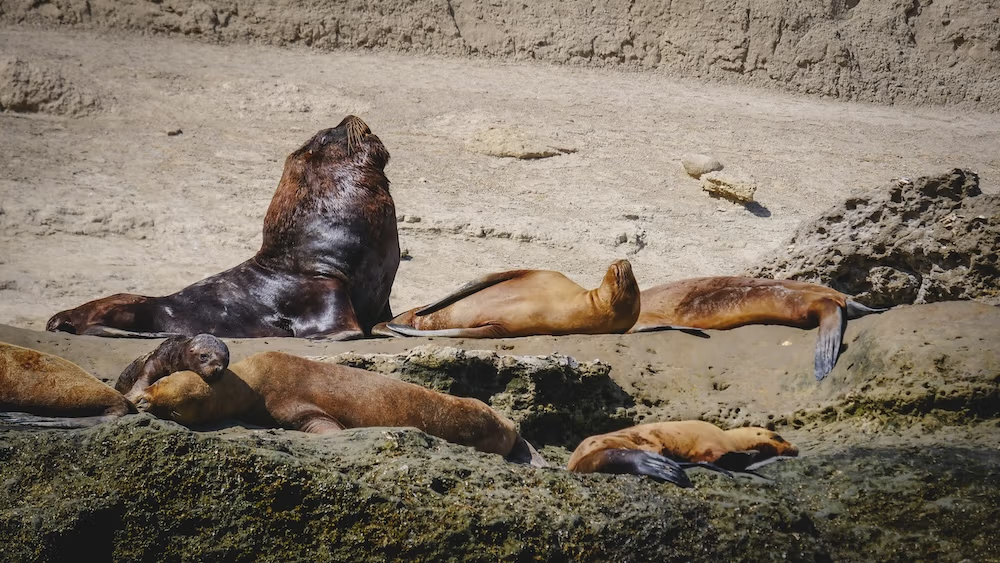
That day taught me something useful about Patagonia wildlife tours: the animal named in the brochure tells you very little about the actual experience. The same sea lions looked completely different when we saw them from a protected cliff, approached them on a small boat and later encountered another colony during a Beagle Channel cruise.
Penguin tours vary even more. You can walk through a sprawling colony at Estancia San Lorenzo, remain aboard a larger boat near Isla Martillo or spend most of a day combining roads, a Zodiac crossing and a controlled island landing.
Whale watching brings its own complications. The boat trip may last less than two hours, yet reaching Puerto Pirámides from Puerto Madryn can turn it into a much larger day.
Audrey and I travelled through both coastal Chubut and Tierra del Fuego, joining full-day wildlife circuits, colony walks, small-boat outings and a Beagle Channel cruise. We did not take a whale-watching boat, and I am not going to borrow someone else’s experience and pretend that we did.
The right wildlife tour depends on the species you care about most, the month you are travelling, where you plan to stay and how you want to see the animals.
Start with the Animal, Then Check the Month
Patagonia does not have one magical wildlife month when whales, penguins, elephant seals, sea lions and every photogenic bird gather in the same convenient bay.
Wildlife has never shown much respect for annual leave.
The broad planning windows in Argentine Patagonia look like this:
| Wildlife priority | Useful planning window | Best base | Main experience | Biggest trade-off |
|---|---|---|---|---|
| Southern right whales | June to December | Puerto Pirámides or Puerto Madryn | Regulated boat trip or independent shore viewing | Weather and open-water sightings remain unpredictable |
| Magellanic penguins in Chubut | September to March or April | Puerto Madryn or Puerto Pirámides | Guided colony walk within a full-day circuit | Substantial road time |
| Sea lions on Península Valdés | Possible year-round | Puerto Pirámides or Puerto Madryn | Cliff viewpoint or seasonal small boat | Land views may be distant; boats add wind and motion |
| Elephant seals | Safest planning window is September to April | Puerto Madryn or Puerto Pirámides | Coastal land viewpoint | Numbers change dramatically through the season |
| Mixed coastal wildlife | Route varies by month | Puerto Madryn | Full-day vehicle circuit | Ten to twelve hours with a lot of driving |
| Penguins, sea lions and seabirds near Ushuaia | Mainly October to April for penguins | Ushuaia | Beagle Channel cruise or controlled landing | Boat-only and landing tours are entirely different days |
Once you have narrowed the decision by species and month, you can compare current Península Valdés wildlife tours or see the different Isla Martillo penguin-tour formats. Looking at inventory this early is useful because it reveals which experiences actually operate on your dates, but the product ranking should not make the decision for you.
These windows indicate when animals are normally present or when tours generally operate. They do not guarantee a specific sighting, behaviour or distance.
A tour can take you to the correct colony in the correct season and still deliver a quiet day. Whales move. Elephant seals leave the beach. Wind closes harbours. Penguins have the irritating habit of facing whichever direction is least useful for your photograph.
Pick your non-negotiable animal first. Eliminate the wrong months. Decide which base fits the rest of your Patagonia itinerary. Only then start comparing products.
Otherwise, it is surprisingly easy to book a wildlife tour containing five animal names and discover that the one you really care about is not part of the seasonal route.
Whale Watching from Puerto Pirámides
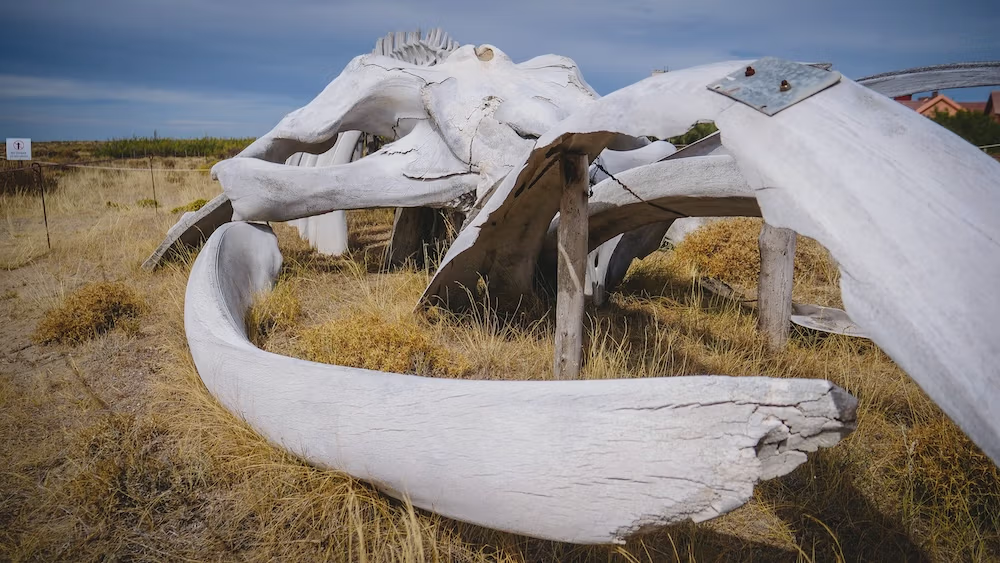
Southern right whales are the animal most likely to justify reorganizing an itinerary around the wildlife season.
The main regulated whale-watching boats depart from Puerto Pirámides inside Península Valdés. Puerto Madryn remains the larger and more convenient city base, but the whales do not move their departure point simply because your hotel has a better breakfast buffet.
Standalone boat excursions generally last around 90 minutes to two hours. Puerto Pirámides lies roughly 100 kilometres from Puerto Madryn, so the short cruise can become a much larger outing once road transport, check-in and waiting time are added.
One current example is this standalone Puerto Pirámides whale-watching boat. It is useful for travellers already staying inside the peninsula, but transport from Puerto Madryn is not the problem the boat itself solves.
This is the first detail I would check when comparing whale tours.
Some products sell only the boat trip and leave you responsible for reaching Puerto Pirámides. Others collect passengers in Puerto Madryn as part of a longer Península Valdés day and offer the whale boat as an included or optional component.
The animal may be the same. The logistics are not.
Boat tour or whale watching from shore?
A regulated boat offers the classic whale-watching experience: a guided departure into the gulf with operators working under rules that control vessel behaviour, passenger numbers and which whale groups may be approached.
That regulatory framework matters. Promotional phrases such as “close encounter” or “once in a lifetime” do not tell you whether a company handles the animals responsibly.
El Doradillo, north of Puerto Madryn, provides a shore-based alternative during the useful whale season. Southern right whales can sometimes appear remarkably close to the beach, particularly when tides and conditions align.
Sometimes.
Shore viewing gives you freedom and avoids a boat, but there is no timetable. You cannot reserve a breach for 10:30, take three photographs and return to town for lunch.
I would look at the options this way:
- Book a Puerto Pirámides boat when whales are the main purpose of the trip and you want a regulated guided encounter.
- Visit El Doradillo when you prefer to remain ashore, are already based in Puerto Madryn or want a second independent chance after the boat.
- Take a full-day Península Valdés circuit when whales are one important part of a broader wildlife day.
If you are still deciding between those formats, compare current whale-watching tours from Puerto Madryn and Puerto Pirámides and check whether each option includes the road transfer, the boat or both.
Strong wind can close the Puerto Pirámides port, while heavy rain or severe wind can also affect roads around the peninsula. Refund, rebooking and no-sighting policies vary between products, so read the terms attached to the tour you actually reserve.
It is dull advice until you reach a closed harbour and discover you booked the only rigid day in your itinerary.
Would I travel to Patagonia specifically for whales?
Yes, during the correct season.
We visited coastal Chubut without taking a whale-watching excursion. By the time we left Puerto Madryn, Audrey and I were already discussing a future return during whale season.
That is the limit of my personal verdict. Península Valdés convinced us that whale watching deserved another trip; it did not magically supply us with a memory of taking one.
Península Valdés Full-Day Wildlife Tours
A full-day Península Valdés tour is a road trip with outstanding wildlife scattered across it.
The peninsula looks manageable when reduced to a map on a booking page. On the ground, the useful wildlife sectors lie far apart. Representative circuits can cover roughly 400 kilometres and last ten to twelve hours.
Our first tour began with a hotel pickup in Puerto Madryn. We drove across the dry steppe, watched guanacos bounding over fences and stopped at an interpretation centre before reaching the coast.
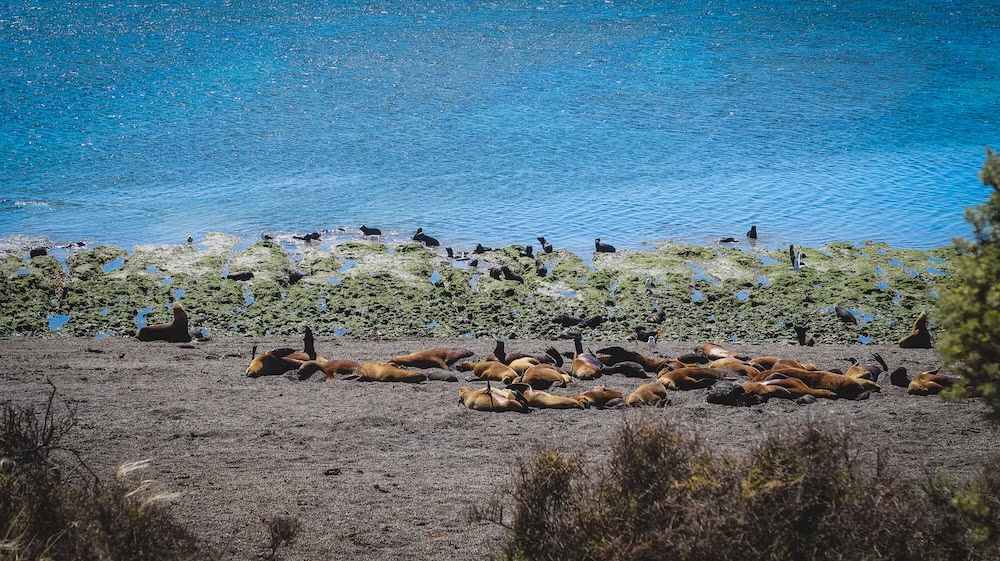
At Punta Norte, sea lions and elephant seals rested far below a protected cliff. We could hear them easily. They sounded strangely like sheep. Seeing individual animals was another matter, and my telephoto lens became more useful than my naked eyes.
Later we continued to Estancia San Lorenzo for lunch and the penguin colony. By the time we climbed back into the van, we were guzzling water. The temperature had pushed well into the 30s Celsius, and the Patagonian steppe felt less like a windswept wilderness than a large, shrub-covered frying pan.
This is why I distrust difficulty labels based only on walking distance.
A tour can involve short, technically easy paths and still leave you flattened after twelve hours of driving, heat, sun, wind, dust and repeated stops.
What does a full-day circuit include?
The route changes with the month, road conditions and the product selected. A circuit may combine:
- Guanacos and other steppe wildlife during the drive.
- Sea-lion or elephant-seal viewpoints.
- A penguin colony in season.
- Puerto Pirámides.
- An interpretation-centre stop.
- An estancia visit or lunch.
- An optional whale or sea-lion boat.
The problem is that product titles often collect every possible animal into one beautiful headline even when the route changes throughout the year.
A tour advertised with whales, penguins, sea lions and elephant seals does not necessarily deliver all four on your date.
Check the named stops. If penguins are the priority, confirm which colony is visited. If whales matter, find out whether the boat is included, optional or absent. If elephant seals are the target, make sure the seasonal route reaches a useful viewpoint.
The easiest way to see how current itineraries differ is to compare Península Valdés tour routes and inclusions before choosing by price.
The road time is part of the price
The strength of a Península Valdés circuit is variety. The cost of that variety is time spent travelling between colonies.
You may spend longer in the vehicle than beside any one species. That is not automatically poor value. It is the geography of the peninsula.
A guided circuit also solves several problems at once. Somebody else handles the driving, current road conditions, seasonal routing and the deeply unglamorous task of getting everyone back to Puerto Madryn after a long day in the sun.
Our independent walk from Puerto Pirámides proved the value of this rather well.
The wildlife viewpoint was reachable without a tour, but vague directions, extreme heat and a missed trail turned a simple outing into a small survival exercise. We spent part of the morning declaring our love for every patch of shade we found.
The guided version would have been less adventurous.
It also would have involved considerably less roasting.
Fees and facilities
The Península Valdés protected-area entrance fee is normally separate, and estancia access, meals or nautical activities may add more. These costs change frequently enough that I would check the live inclusions rather than quoting a number that may be stale before the article finishes indexing.
The main visitor sectors have bathrooms, staff or basic food services, although facilities are widely spaced and individual operations can change.
Carry water anyway. Bring sun protection. Pack an extra layer even when the morning feels warm. Patagonia is perfectly capable of giving you heatstroke and windburn on the same holiday.
Penguin Tours: San Lorenzo or Isla Martillo?
A penguin tour can mean two very different things.
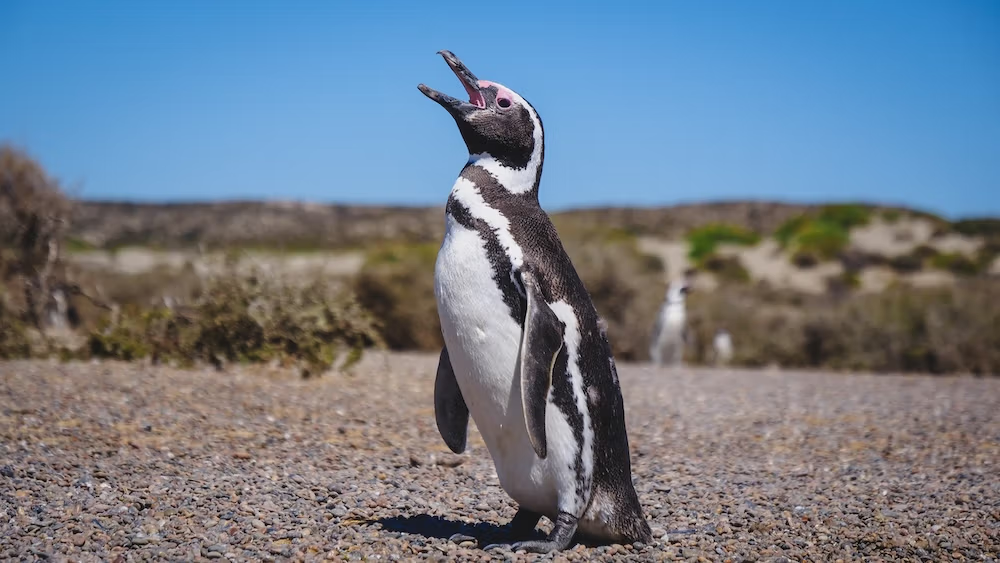
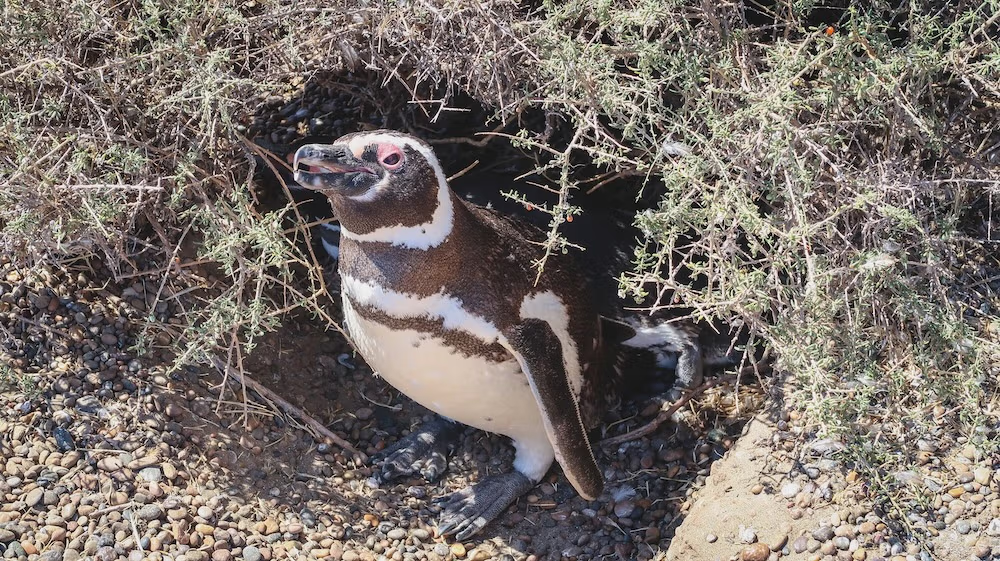
At Estancia San Lorenzo, we walked through the colony landscape while penguins nested beneath bushes and marched between the dry steppe and the beach.
Near Isla Martillo, we remained aboard a boat and observed the penguins from the water.
Both were genuine wildlife encounters. They did not feel remotely the same.
Estancia San Lorenzo
San Lorenzo was the standout experience from our first Península Valdés circuit.
The colony spreads through dusty scrubland rather than sitting in one neat cluster near the shore. Penguins emerge from burrows, shelter beneath low vegetation and cross the walking route whenever they please.
Visitors follow a marked trail and the guide’s current distance rules. When a penguin crosses, it has the right of way.
This creates a slow, slightly chaotic rhythm. You walk a few metres, stop for a penguin, move again, then discover another bird has appeared from beneath a bush.
We also visited a smaller penguin site elsewhere on the peninsula. It was still worthwhile, but the difference in scale was obvious.
I would ignore arguments over whether San Lorenzo has exactly 500,000 or 600,000 penguins, or whether it deserves the latest “largest in the world” label. Wildlife populations change, counting methods differ and tour companies have never met a superlative they did not want to adopt.
The useful truth is that it is an enormous colony.
Make sure it is actually named in the itinerary. A general Península Valdés tour does not automatically include San Lorenzo, and access usually operates during the penguin season from September into March or April.
If this colony is the reason you are booking the day, use a product that names it explicitly. This current Península Valdés tour with Estancia San Lorenzo is one representative option, although its live fees, inclusions and total duration should be checked carefully before payment.
The colony visit also belongs to a long circuit. You are not nipping out of Puerto Madryn for a quick penguin stroll before brunch.
Boat-only Isla Martillo tours
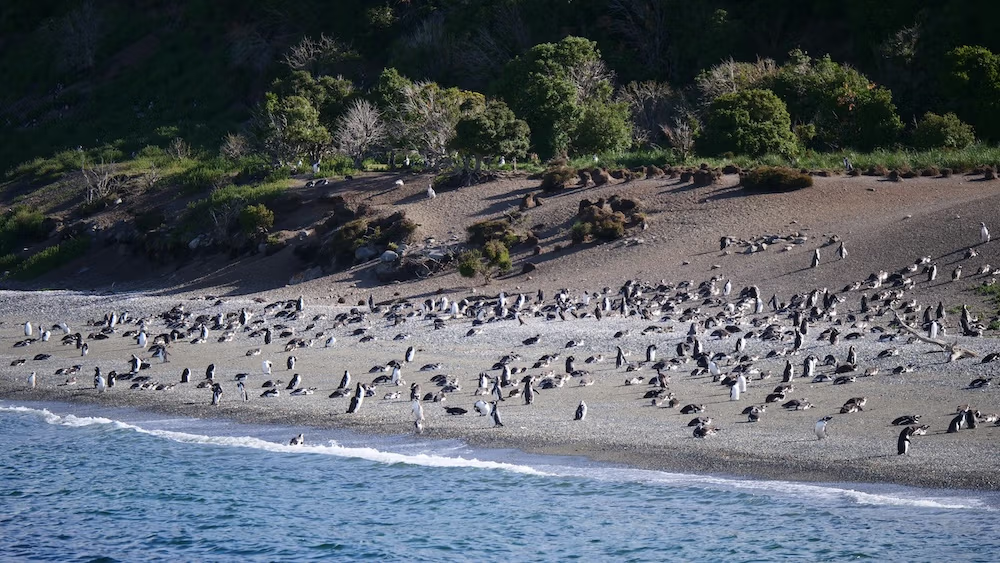
Boat-only penguin cruises leave from Ushuaia’s tourist harbour and commonly last around five hours. The route can include seabird colonies, sea lions, Les Eclaireurs Lighthouse and the penguins near Isla Martillo.
This is the simpler Ushuaia option.
You board near the city, remain on the vessel and combine several wildlife stops with Beagle Channel scenery. Some larger boats may also offer better accessibility than the smaller landing products, but that must be confirmed with the exact vessel.
A current example is this boat-only Beagle Channel and Isla Martillo cruise, which combines the penguin colony with the channel’s sea-lion and seabird stops.
Audrey and I took the boat-only format. Penguins were our main target, yet the earlier stops were not filler. Cormorants crowded the rocks in extraordinary numbers, sea lions sprawled across another island and the channel provided mountain views for most of the journey.
When we reached Isla Martillo, we observed the penguins from the boat.
It was satisfying. It was also less immersive than San Lorenzo because we remained separated from the colony by the water and the rail of the vessel.
Controlled Isla Martillo landings
A controlled landing demands far more time and effort than the phrase “walk with penguins” suggests.
Representative products involve an overland journey east from Ushuaia, a short crossing in a semi-rigid Zodiac and roughly one hour walking on the island. Some versions also add a Beagle Channel cruise, stretching the full experience to seven or even nine and a half hours.
Meals may be excluded. Local harbour or estancia fees may be paid separately. Weather can alter the order of the day or prevent part of the itinerary from operating.
Physical restrictions are tighter too. Landing products may exclude wheelchair users, pregnant travellers, strollers, large bags or passengers who struggle badly with seasickness. A tour described as low difficulty can still involve Zodiac boarding, exposed conditions and uneven ground.
This current Beagle Channel cruise and controlled penguin-landing combination shows how different the day becomes once the island walk is added. Check the live meeting point, local charges, restrictions and operating order rather than assuming it is simply the boat cruise with an extra hour attached.
The landing is not automatically superior because it gets you ashore.
It offers something specific: controlled time walking near the penguins. In return, you accept more transport, more restrictions, a longer day and greater sensitivity to operating conditions.
Pay for the landing because that hour matters to you—not because “exclusive” appears three times in the sales copy.
Which penguin tour would I choose?
San Lorenzo is my choice within a Chubut itinerary. I loved the scale of the colony and the way the trail passed through the penguins’ landscape.
A boat-only Isla Martillo cruise makes more sense when Ushuaia is already on the route and you want a manageable wildlife outing combining penguins, sea lions and seabirds.
The controlled landing is for travellers who specifically want time ashore and are comfortable with the extra logistics.
I would happily consider it on another visit, but I cannot rank an experience I have not taken above one I genuinely loved.
Sea Lions from Land, Small Boat or Beagle Channel Cruise
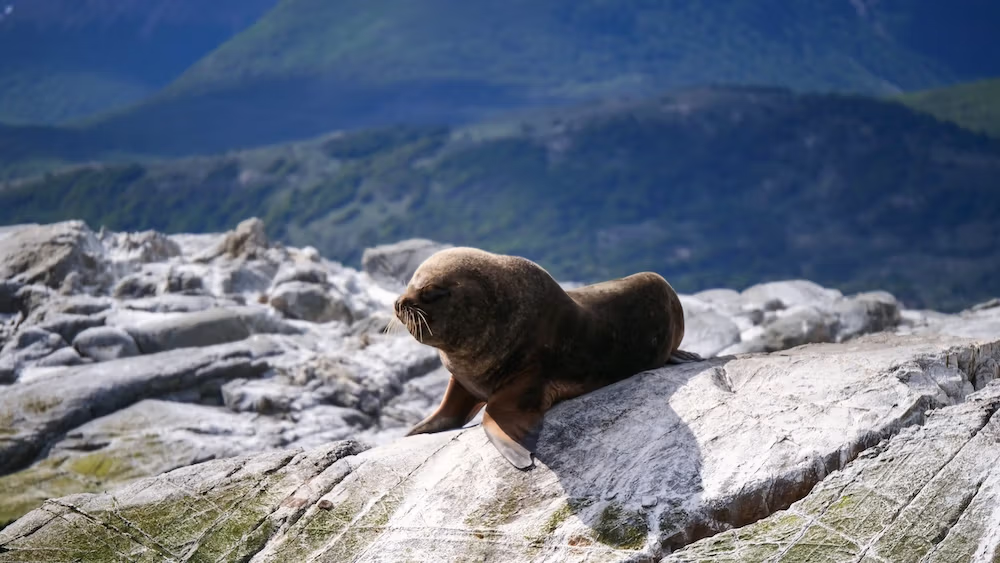
Our best direct wildlife comparison involved seeing sea lions from two angles on Península Valdés.
From the cliff, the colony sat far below us. We could hear the animals and see the beach covered with bodies, but the protected distance shaped the encounter. Binoculars or a telephoto lens made a significant difference.
The following day, we added a small-boat excursion.
The lower viewpoint transformed the coastline. We passed hundreds of cormorants, entered a shallow coastal cave and looked back towards cliffs that had appeared flat and distant from above.
The sea lions felt more immediate from water level, though the point was not to chase them or crowd the colony.
Audrey and I both considered the boat one of the best additions to our Península Valdés tours.
That recommendation belongs to the outing we took. Vessel size, route, animal distance and operating standards can change.
When does each format make sense?
A land viewpoint works well as part of a broader vehicle circuit. It demands little extra organisation, although the animals may be distant.
A seasonal small boat from Puerto Pirámides suits travellers who want sea lions to be the main event. During summer, some nautical operators switch from whale watching to sea-lion and cormorant outings.
The Beagle Channel offers the broadest version. Sea lions usually form one stop alongside seabirds, the lighthouse, scenery and sometimes penguins.
This means you spend less concentrated time with the colony, but the overall cruise may fit the itinerary more easily.
The current Puerto Madryn sea-lion tour selection mixes land viewpoints, boat trips, broader wildlife circuits and snorkelling, so read the format rather than assuming every result resembles our small-boat outing.
The question is not which format gets closest.
It is whether you want a focused sea-lion encounter or a broader day on the water.
Elephant Seals, Guanacos, Seabirds and the Hope of Orcas
The animals outside the main headline categories often decide whether a long wildlife day feels rich or strangely empty.
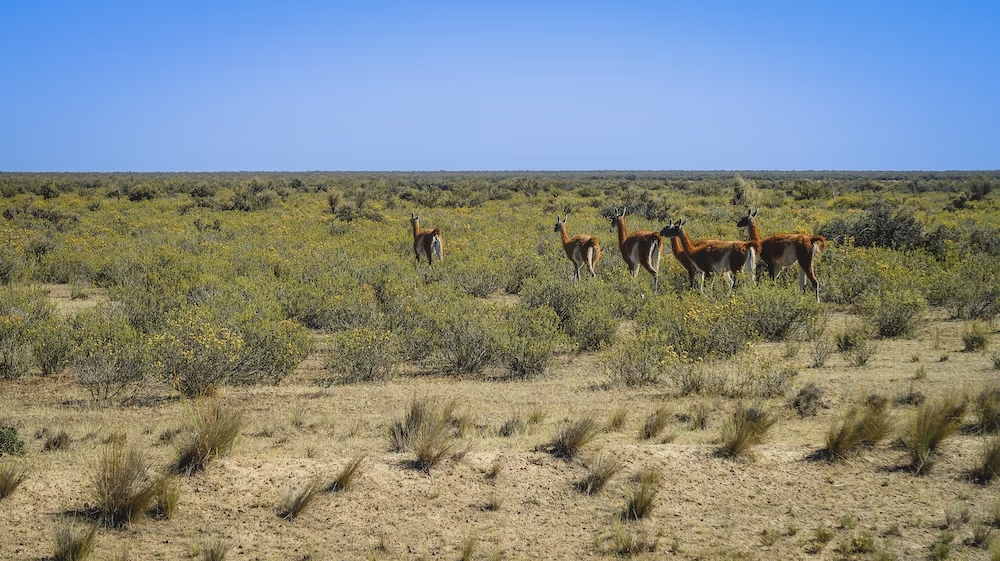
Guanacos broke up the drives across Península Valdés, appearing beside the road and leaping fences with considerably more grace than I display getting out of a tour van.
Cormorants became major characters on both our small-boat outing and the Beagle Channel cruise. They had not influenced our booking decision at all, yet the sheer numbers made them impossible to treat as background decoration.
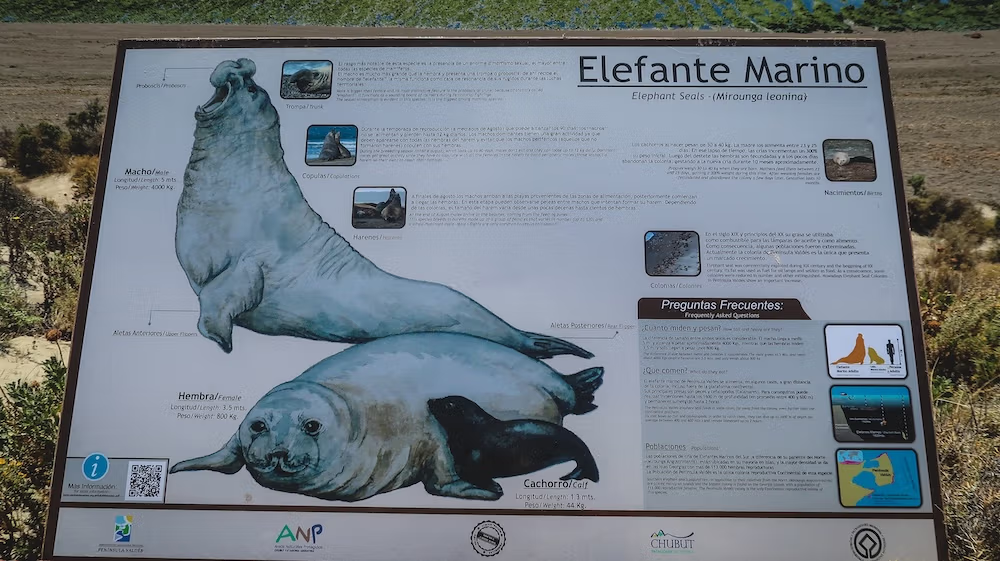
Elephant seals require more careful timing.
We visited one important viewpoint near the end of the useful season. Most of the animals had already left. Only a handful remained on the beach, including one that slowly dragged itself towards the water.
They do not move with much urgency on land. We compared them to ourselves after a large Patagonian lunch.
The safest planning period is broadly September through April, although current regional information is not perfectly consistent about occasional presence outside that window. If elephant seals matter, check the seasonal route and current conditions rather than assuming every famous viewpoint will be packed.
Orcas are even less predictable. They may appear in certain Península Valdés sectors during limited periods, but presence and hunting behaviour cannot be booked like a theatre performance.
A documentary sequence is not a tour inclusion.
Consider orcas an extraordinary possibility, never the foundation of a tightly scheduled trip.
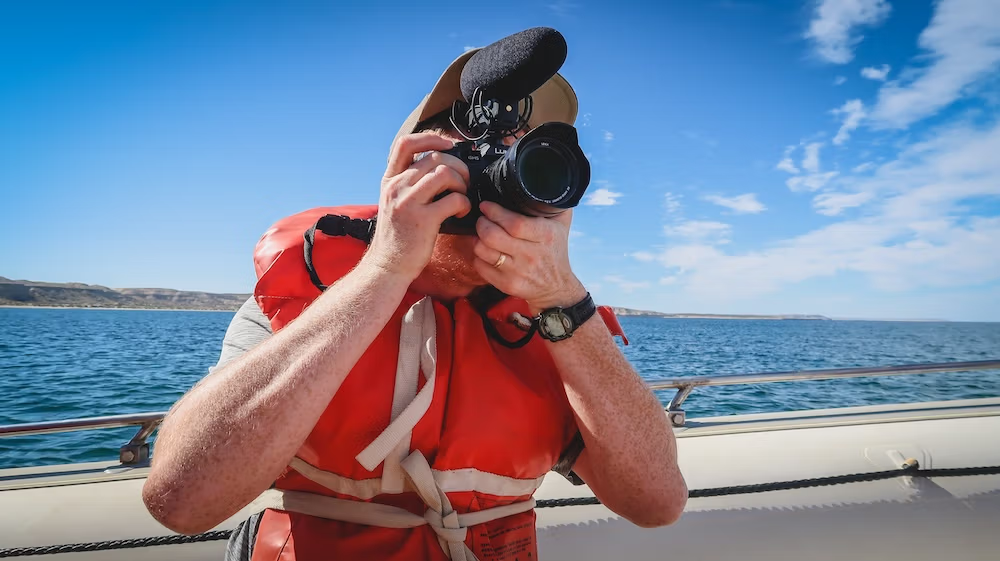
Puerto Madryn, Puerto Pirámides or Ushuaia?
The correct base can save hours and remove unnecessary transport. It can also quietly limit which wildlife experiences remain practical.
Puerto Madryn
Puerto Madryn offers the widest selection of accommodation, restaurants, services and organised Península Valdés tours.
Many full-day circuits collect passengers directly from the city. It is the most forgiving base for travellers who want several options and do not mind beginning the wildlife day with a drive.
The disadvantage is distance. Puerto Pirámides lies roughly 100 kilometres away, and the remote colony sectors require even more road time.
Stay in Puerto Madryn when convenience and tour choice matter most. You can compare current Puerto Madryn accommodation across hotels, apartments and budget options without forcing the wildlife plan around one specific property.
Puerto Pirámides
Puerto Pirámides puts you close to the whale-watching harbour and lets you experience the peninsula without returning to the city every evening.
We stayed for two nights and enjoyed the quieter setting, although our independent wildlife walk proved that being inside Península Valdés does not place every colony within sensible walking distance.
Services and accommodation choices are more limited. San Lorenzo, Punta Norte and Caleta Valdés still require driving.
Stay in Puerto Pirámides when whale watching or the peninsula itself is the centre of the trip. Because the town has fewer places to stay, it is worth checking Puerto Pirámides accommodation for your exact dates before building the rest of the route around it.
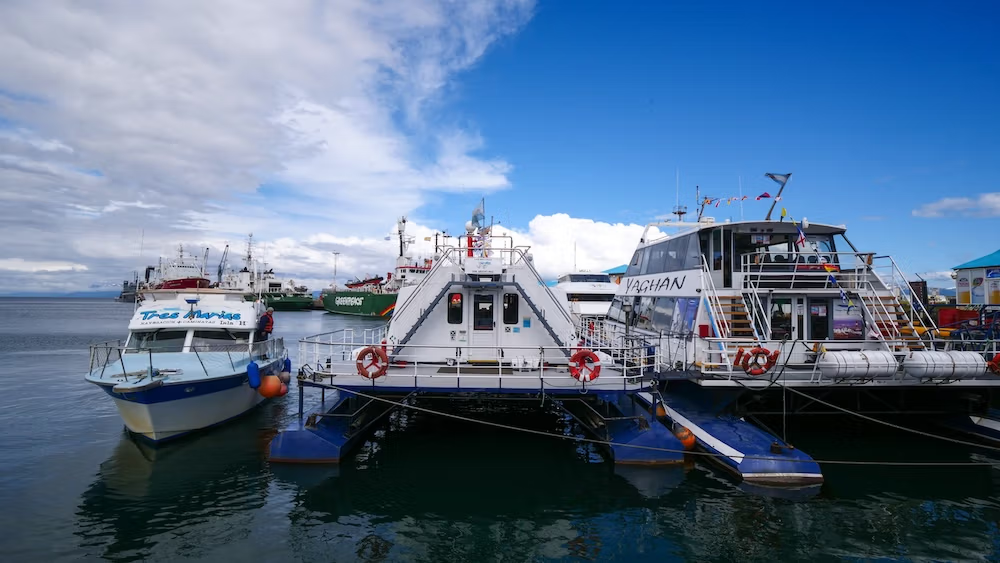
Ushuaia
Ushuaia is the easiest base for a conventional Beagle Channel cruise. Boat-only products leave from or near the tourist harbour, making them straightforward to add to a city stay.
A controlled penguin landing is less compact. The road journey, Zodiac crossing and island walk can occupy most of the day.
Stay in Ushuaia because Tierra del Fuego already belongs in the itinerary—not because you saw one penguin photograph and decided Argentina was suddenly a small country. Travellers comparing different budgets and locations can browse current Ushuaia accommodation before choosing a harbour cruise or longer overland penguin product.
What Wildlife Tour Listings Tend to Hide
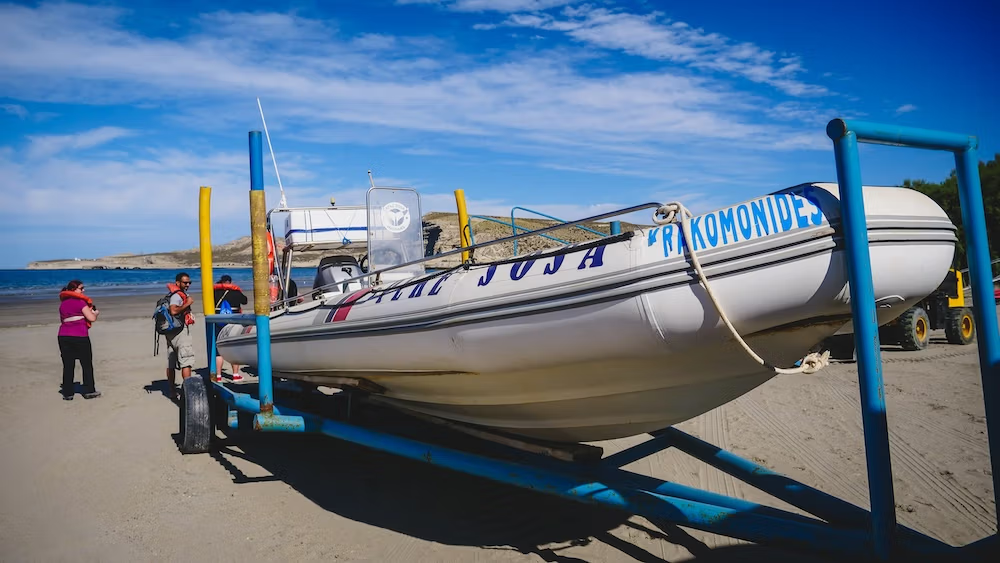
Tour pages are extremely good at displaying animals. They are less excited about the three hours in a van, the excluded lunch, the cash-only local charge or the fact that “penguin experience” means you never leave the boat.
Before booking, look past the headline duration.
A 90-minute whale trip may involve a 200-kilometre return road journey from Puerto Madryn.
A five-hour Martillo cruise is much shorter than a landing product, but you still need to arrive at the harbour early.
A full Península Valdés circuit can occupy twelve hours.
A combined Beagle cruise and island landing should not be scheduled beside a same-day flight simply because the booking page says pickup is in the morning.
Check the physical conditions as carefully as the itinerary. Boats introduce spray, wind, motion and boarding. Vehicle circuits bring long sitting, heat and dust. Colony routes can involve sand, steps or uneven ground.
Accessibility is product-specific. A large boat may accept wheelchairs or strollers while a Zodiac landing excludes them entirely.
Then examine the exclusions:
- Protected-area admission.
- Estancia entrance.
- Harbour fees.
- Meals and drinking water.
- Hotel pickup.
- Transport to Puerto Pirámides.
- Optional nautical activities.
- Local charges payable in cash.
These are not minor details when they alter the cost or structure of the day.
Finally, leave room for failure. Strong wind can close a port. Rain can affect roads. Wildlife can simply decline to appear.
A spare coastal day is worth more than a beautifully optimized itinerary with no room for Patagonia to misbehave.
Which Patagonia Wildlife Tour Is Best?
There is no one winner, but the choices become much clearer once the priorities are honest.
- For whales, compare Puerto Madryn and Puerto Pirámides whale-watching tours and choose a regulated boat between June and December, ideally with enough flexibility to survive a weather cancellation.
- For the broadest wildlife mix, compare full-day Península Valdés circuits and accept that variety comes with a long road day.
- For penguins in Chubut, check a circuit that explicitly includes Estancia San Lorenzo.
- For penguins from Ushuaia without sacrificing the entire day, consider a boat-only Isla Martillo cruise.
- For a controlled island walk, examine the full Martillo landing itinerary and restrictions before deciding whether the extra transport is worthwhile.
- For sea lions as the main event, compare the current land, boat and water-based options rather than assuming they offer the same encounter.
Were I rebuilding our trip, I would not try to collect every species in one heroic itinerary.
I would choose the one animal I would be genuinely upset to miss, travel during its useful season and select the viewing format that suits the rest of the trip. Everything else would be a bonus.
That approach is less dramatic than booking the tour with the longest animal list.
It is also far more likely to work.
Frequently Asked Questions
What is the best wildlife tour in Patagonia?
There is no single winner. Choose the animal you care about most, check the useful season, pick the right base and then decide whether you want a boat, colony walk, land circuit or mixed-wildlife cruise.
When is whale watching season in Península Valdés?
The broad planning window for southern right whales runs from June to December. Boats depart from Puerto Pirámides, while El Doradillo offers a shore-based alternative north of Puerto Madryn.
Should I stay in Puerto Madryn or Puerto Pirámides for wildlife tours?
Puerto Madryn offers more accommodation, restaurants and organized tours, while Puerto Pirámides places you closer to the whale-watching harbour. Remote colony sites still require substantial driving from either base.
Is Estancia San Lorenzo or Isla Martillo better for penguins?
I would choose San Lorenzo within a Chubut itinerary because I loved walking through the enormous colony landscape. Isla Martillo makes more sense from Ushuaia, especially when you want a boat-based trip combining penguins, sea lions and seabirds.
How long does a full-day Península Valdés wildlife tour take?
Representative circuits can last ten to twelve hours and cover roughly 400 kilometres. The walking may be technically easy, but road time, heat, wind, dust and repeated stops can make it a tiring day.
What is the difference between a boat-only Isla Martillo tour and a controlled landing?
A boat-only cruise normally keeps passengers aboard and combines penguins with other Beagle Channel wildlife. A controlled landing adds road transport, a Zodiac crossing, more restrictions and a much longer day for time ashore.
Project 23 Argentina: This guide is also available in Spanish. [Leé la versión en castellano: Mejores excursiones de fauna en Patagonia: ballenas, pingüinos, lobos marinos y más]
This article contains affiliate links. If you book through one of these links, I may earn a commission at no extra cost to you.