
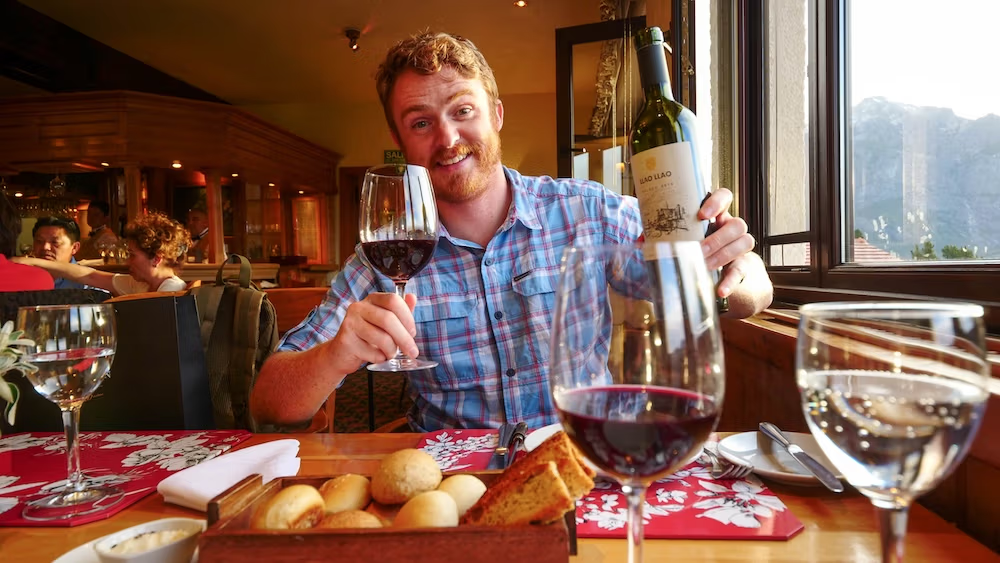
Search “Patagonia for couples” and you’ll find the same handful of hotels recycled across a dozen lists, all described in the same breathless language: unforgettable, romantic, a slice of paradise. What you won’t find is anyone telling you that the most memorable night we ever had in Patagonia was fondue and a bottle of Malbec at a hotel we couldn’t actually afford to sleep in, while one of the more humbling ones was spent on a pull-out mattress downstairs because the wind upstairs made an entire rental cottage sound like it was about to come apart.
Audrey and I have been coming back to Patagonia for years, and across those trips we’ve had afternoon tea at an iconic five-star resort without ever booking a room, lost a full day to wind at a remote estancia, learned to fly fish together for the first time, splurged on a glacier cruise neither of us has stopped talking about, and discovered — the hard way — that a cabin advertised as rustic and a cabin that’s genuinely underbuilt for Patagonian wind are not the same thing. None of that sorts neatly into “romantic hotels.” What it actually taught us is that Patagonia doesn’t become romantic because a property is expensive or a view is famous. It becomes romantic, or doesn’t, depending on whether the pace, the isolation, and the physical demands of what you’ve booked suit the two people doing it.
That’s the real decision hiding under every “best romantic hotel” list: not which property has the nicest bed, but which combination of base, accommodation, and shared experience fits how you and your partner actually travel.
Five Ways to Build a Couple’s Trip Through Patagonia
Our own trips have sorted themselves into a handful of recognizable shapes over the years: a splurge afternoon or evening built around one iconic property, an immersive stay where isolation itself is the point, a shorter taste of ranch life for couples who don’t want to commit a full stay, a day organized around water instead of land, and the slower food-and-wine version of Patagonia that almost nobody mentions. There’s also the self-catering, budget-flexible version, which has been wonderful for us at least once and genuinely miserable at least once.
None of these is the correct way to do a couple’s trip here. Each one asks something different of two people traveling together — how much privacy you need, how active you want to be, how much isolation you can absorb before it stops feeling romantic and starts feeling like an endurance test. What follows is what each version actually looked like for us.
Llao Llao and the Difference Between Visiting and Staying
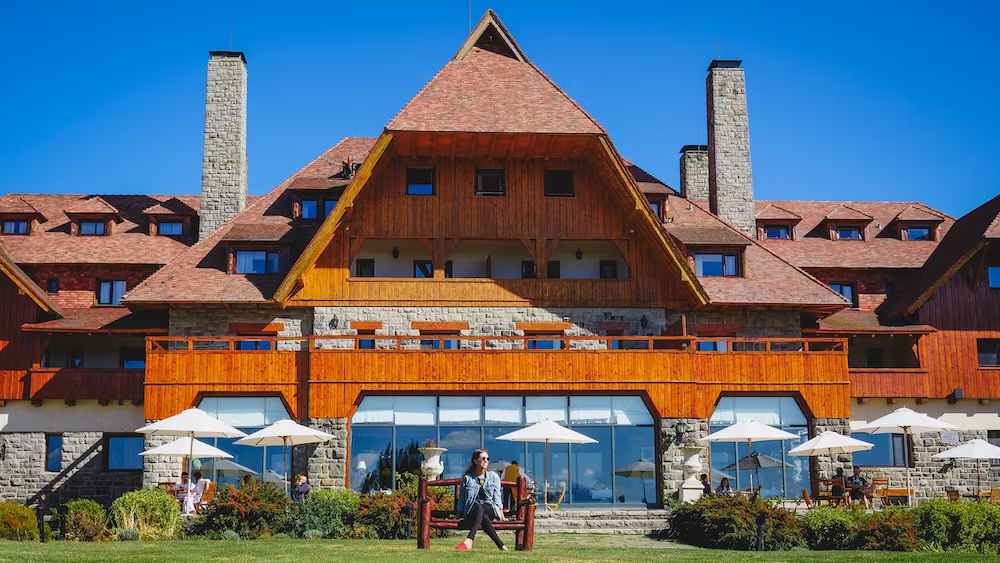
The Llao Llao Hotel, on a hill above Bariloche between Lago Moreno and Nahuel Huapi, is the property every “romantic Patagonia” list leads with. It’s earned that: a Canadian-style timber-and-stone building from the late 1930s, framed by Cerro López and Tronador, with a lobby that makes you lower your voice without meaning to. What most of those lists skip is that you don’t need a room to have a real Llao Llao experience, and that the two are genuinely different trips.
We’ve been there twice, both times without staying the night. The first was afternoon tea in the Winter Garden — a buffet of sandwiches, scones, and enough cake that we deliberately skipped lunch to make room for it, capped off with a glass of bubbly neither of us was expecting. Two of us, two rounds of tea and coffee, and the total came to about $52. The second time, after a boat trip out to Isla Victoria, we couldn’t resist walking back in for dinner: fondue for two at the hotel’s Café Patagonia, a bottle of Malbec I picked out of their cellar, and a bill that landed around $75 — the priciest meal of any trip we’ve taken, and still the one we talk about most.
Actually staying is a different investment. Current rates run anywhere from roughly $170 a night in shoulder season up past $400 for a lake-view room in peak months, on top of a nightly municipal tourist tax that five-star Bariloche hotels are required to add. Both the tea and the dinner need a reservation — walk-ins are a gamble — and non-guests are politely kept out of certain sections of the property. Twice now, we’ve decided that visiting is the better fit for us. If the isolation and the pampering are meant to be the point of your trip rather than an accent on it, check current rates and book the room instead.
When the Estancia Becomes the Point
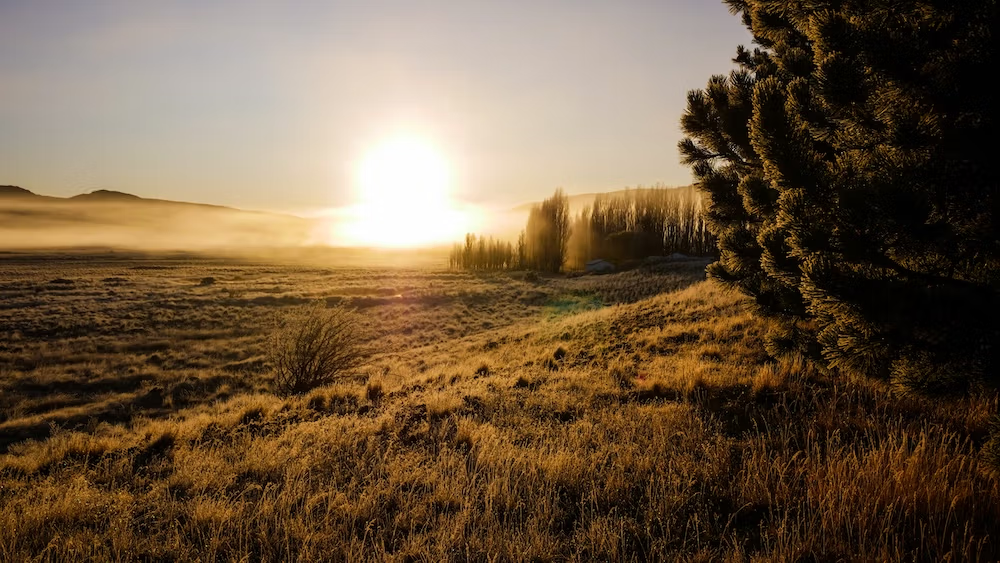
If Llao Llao is Patagonia’s most photographed splurge, the overnight estancia is its best-kept secret for couples who genuinely want to disappear together for a few days. We’ve done this twice, at two very different properties, and both times the isolation cut both ways.
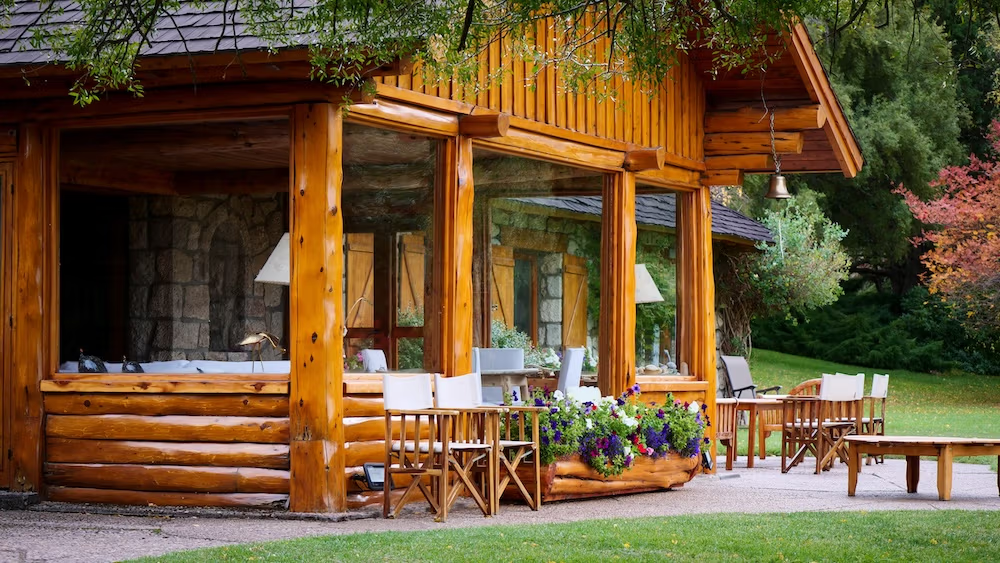
Getting to Estancia Arroyo Verde means ninety minutes out of Bariloche on a road that turns from pavement into a real private track. We arrived on what was, by any measure, the most Patagonian day imaginable — wind strong enough that the lake looked like an ocean, and strong enough that every activity planned for that afternoon was simply cancelled. So we spent the day making friends with the lodge’s dogs and cats instead, which turned out to be its own kind of lovely. The next morning came clear and still, and we filled it with a hike along the Río Traful and a sunset horse trek we deliberately kept to the easier trails rather than the steeper mountain routes on offer. What actually made the stay, though, was the nightly ritual of pre-dinner cocktails at the lodge’s sun lounge — pisco sours, mostly — trading stories with the other guests and the family who’ve run the place for generations. Audrey still calls that the real highlight of her stay, ahead of the horseback ride.
At Estancia Tecka Lodge, further south near Esquel, we learned to fly fish together for the first time — badly, at first. We cast for an entire evening without a bite, then spent the next morning drilling technique before Audrey, not me, landed our first trout of the trip. Dinners were shared with the other guests by the fireplace, three courses a night, cooked by a chef whose spit-roast videos are actually how we first heard about the property. Both estancias are working ranches as much as they are lodges, and both are properly remote: getting to Tecka involves a drive that keeps going well past the point where any map suggests you’ve arrived.
Neither is the kind of property you book through a mainstream travel site — both work through specialist fly-fishing outfitters, and pricing at that level runs into four figures a night rather than three. If that scale of commitment doesn’t fit your trip but the idea of a remote estancia still does, Estancia Cristina, deep inside Los Glaciares National Park near El Calafate, is a gentler entry point into the same experience: reachable only by a daily boat from Puerto Punta Bandera, with an overnight in El Calafate required on either side of your stay, and consistently rated by other couples as an ideal setting for exactly this kind of two-person getaway. We haven’t stayed there ourselves, but it’s the property we’d point you toward if you want the isolation without the fly rod.
The honest trade-off, either way: an overnight estancia rewards a couple who’s genuinely comfortable alone together with not much else around, and it punishes a couple who needs a backup plan when the weather doesn’t cooperate. Ours didn’t, for a full day. It’s still one of the best stretches of any Patagonia trip we’ve taken.
The Estancia Day Trip: A Taste, Not the Whole Meal
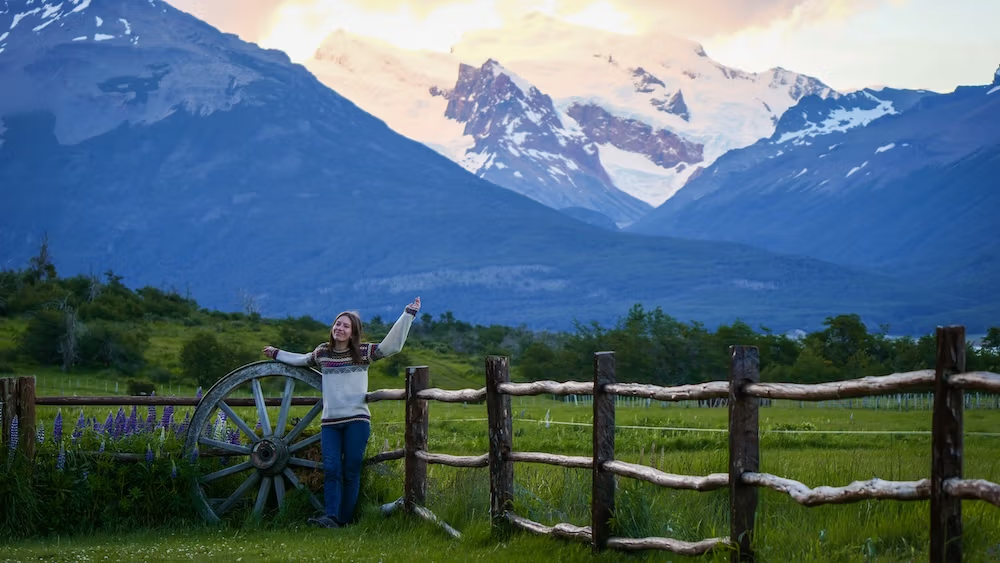
Not every couple wants to commit a night, or a fly-fishing budget, to ranch life, which is what makes the estancia day trip its own category rather than a lesser version of the real thing.
We did ours at Estancia Nibepo Aike, inside Los Glaciares National Park and an hour and a half from El Calafate on a mostly dirt road, choosing the afternoon session over the morning one. That meant arriving to a countryside merienda — hot tea, coffee, a slice of homemade cake — before a guide walked our group through the estancia’s history, a sheep-shearing demonstration, and a short hike down toward the water. The day ended the way a good estancia visit should: lamb, chorizo, and ribs off the grill, plenty of Patagonian wine, and a legend about the calafate berry we tested rather too enthusiastically — eat one, apparently, and you’re guaranteed to come back.
We’d wanted to do an estancia stay for over a decade before we finally managed it, and by our own admission afterward, Nibepo Aike gave us a condensed taste of everything an overnight stay offers rather than a substitute for it. Fair trade for anyone short on time. The same excursion is still bookable today, run as a small-group outing with other travelers rather than a private one, so go in expecting company rather than exclusivity. The estancia takes overnight guests too, if the day trip leaves you wanting more — a comparison for its own conversation.
On the Water: From an Easy Afternoon to the Real Splurge
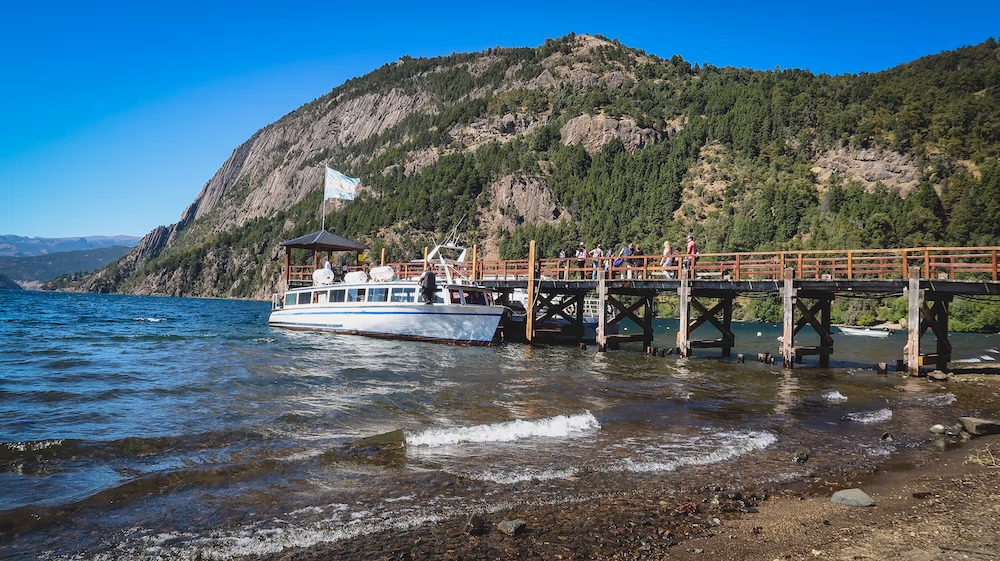
Some of our best days together had nothing to do with where we slept. San Martín de los Andes gave us a full-day boat trip on Lago Lacar built around a pace I still think is the right one for a couple: a short cruise, a stop for lunch, a stretch of beach, a modest hike to a waterfall, afternoon tea at a lakeside hostería, a final stop on a small island with a 90-year-old arrayán tree and a tiny chapel, dinner in town to close it out. The whole day ran about $43 a person, plus a separate national park fee. A little bite, a little hike, another little bite — that’s the rhythm I’d choose again.
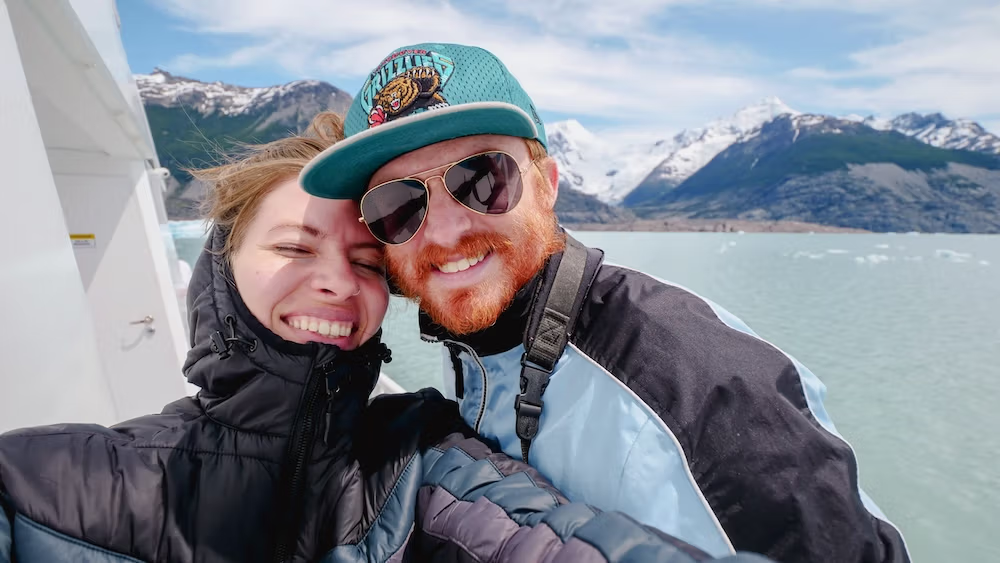
Then there’s the splurge, which for us was the glacier cruise out of El Calafate: a full day past three named glaciers, including Perito Moreno, gourmet lunch and wine included. We knew going in it cost more than we’d normally spend — around $130 a person — and we still turned down the option to pay another $80 or so for a private room and a fancier multi-course meal. We didn’t need it. What we got was, without exaggeration, one of the best excursions either of us has ever done, anywhere.
Both cruises are weather-dependent and can be cancelled outright if the wind picks up, so build a buffer day into your itinerary rather than scheduling either on your last possible afternoon. And if you’re pricing out the Bariloche boat trip to Isla Victoria specifically, don’t be surprised if the quote you get doesn’t match what a friend paid a season earlier — we’ve seen the same excursion priced wildly differently depending on when and how it was booked.
Wine, Cheese, and an Afternoon We Hadn’t Planned For
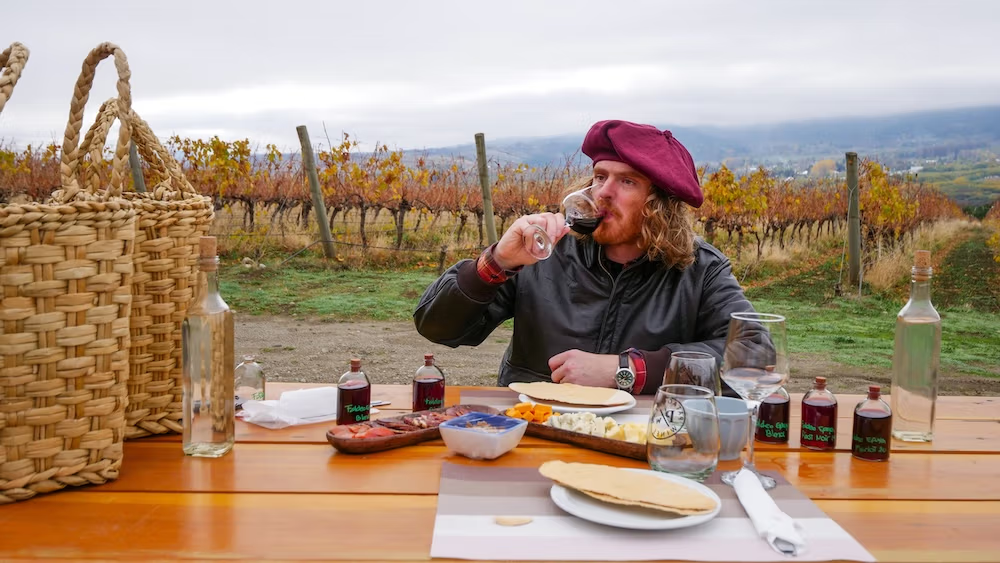
Almost nobody puts wine tourism on a Patagonia itinerary. El Hoyo, a small town south of El Bolsón, is home to Patagonian Wines, the region’s original vineyard, and we spent an afternoon there we hadn’t built into any plan. Given the choice of tasting indoors by a fireplace or outside at a picnic table overlooking the vines, we took the picnic table, bundled up against the cold. Each of us got three small bottles to work through — a Merlot, a blend, a Pinot Noir — alongside a board of cheeses, cured meats, smoked trout, and more olives and nuts than we finished. Neither of us had realized Patagonia made wine worth planning a stop around.
The weather did what Patagonian weather does: driving rain that morning with no hint of blue sky, cleared by early afternoon into full sun without warning. Build slack into a food-and-wine day here — the forecast is a suggestion, not a promise. El Hoyo isn’t the only pocket of Patagonian wine country, either. Smaller vineyard scenes exist further north around Neuquén and in nearby Trevelin, for couples whose route doesn’t pass through El Bolsón. These days, a guided wine-pairing day trip through this same region is bookable in advance, if you’d rather not track the vineyards down yourselves the way we did.
Cabins, Cottages, and the Night the Wind Won
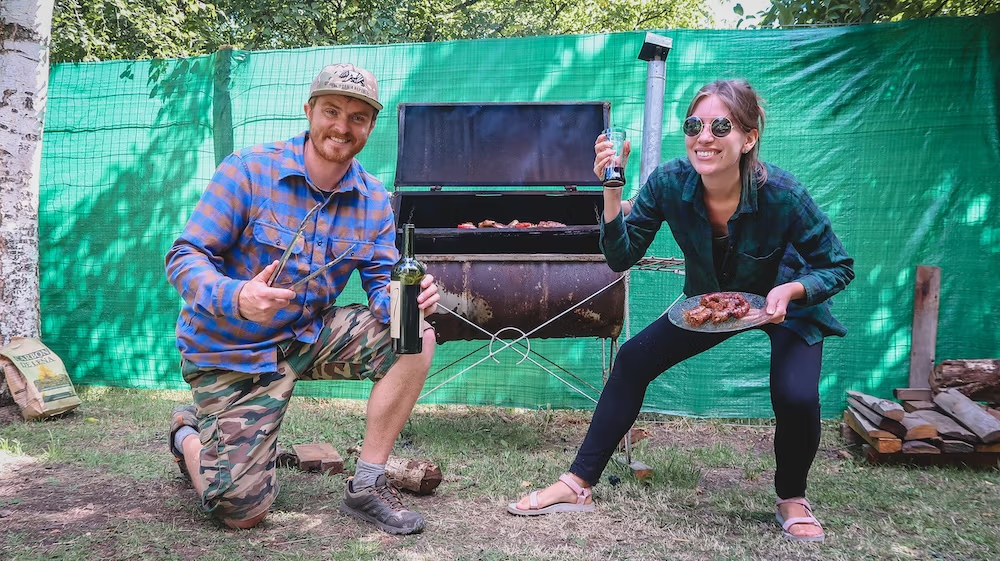
Self-catering is the trip style everyone assumes is the safe, budget-friendly fallback. Most of the time, it is. Ours in El Bolsón was: a wood cabin with a garden, a pond, a barbecue where we attempted our first Argentine asado, and an Airbnb host, Valentín, who ended up driving us around the surrounding countryside like an old friend rather than a landlord checking boxes. We liked it enough to extend our stay twice. If you want to try this style yourselves, El Bolsón alone has a wide range of self-catering cabins and lodges worth comparing.
Then there was the A-frame we rented in El Calafate, which taught us the limits of the category. By design, it was about one step up from camping — thin plywood walls, a tin roof, just enough insulation to make you optimistic until the wind actually arrived. On our first night there, it got loud enough that sleeping upstairs stopped being an option; we ended up dragging blankets down to a pull-out mattress in the living room because the whole loft rattled like it might lift off. It had everything technically necessary — wifi, a hairdryer, even a bidet — and none of the peace we actually wanted at the end of a long day. Self-catering rewards a couple who’s happy to look after themselves in exchange for privacy and a lower bill. It punishes a couple who hasn’t budgeted for the possibility that “rustic” and “underbuilt for Patagonian wind” can turn out to be the same thing.
If your version of a couple’s trip includes the freedom of a rental car rather than a fixed base, the stretch of Ruta 40 known as the Seven Lakes Route, between Villa La Angostura and San Martín de los Andes, is the classic self-drive answer — part paved, part gravel, and something we’ve always covered by bus rather than behind our own wheel, for anyone who wants the option to stop wherever the view demands it.
Horses, Ice, and the Days That Ask More of You
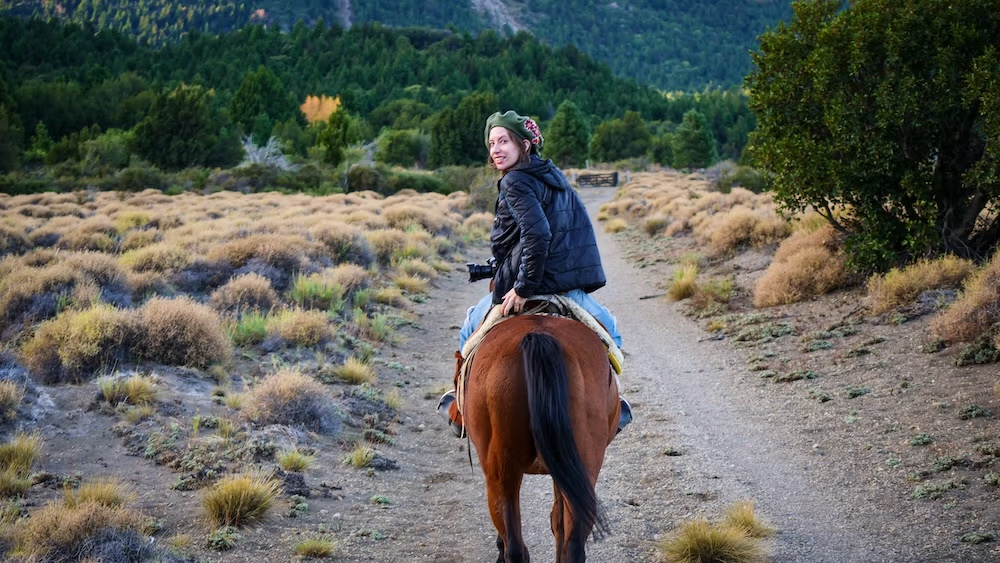
Not every couple wants a Patagonia trip built entirely around slowing down. The closest we’ve come to a dedicated active day together was the sunset horse trek at Estancia Arroyo Verde, which we kept deliberately to the easier trails rather than the steeper mountain routes, riding through forest and along the shoreline with the estancia dogs trailing us the whole way. Gentle, by Patagonian standards. Still a genuinely good way to close out a day. If you want that same kind of ride without committing to a full estancia stay, shorter horseback outings built for couples are bookable out of Bariloche.
We never made it onto the ice ourselves — a full day got away from us in favor of the estancia visit and the boat trip instead, which is its own small lesson in not overbooking a single stay. Glacier trekking near El Calafate is a different proposition entirely: guided walks in crampons across Perito Moreno, moderate in difficulty but genuinely physical, and explicitly not offered to pregnant travelers or anyone with certain health conditions. Worth an honest conversation with your partner about fitness before booking it as a couple’s activity rather than assuming it. Between the two, the horse trek is the gentle shared adventure; ice trekking is the one that asks more of both of you.
Matching Your Trip to the Way You Actually Travel
| Trip style | Best for | Typical cost (for two) | Main trade-off |
|---|---|---|---|
| Iconic hotel, visit not stay | A taste of luxury without the room rate | $50–80 for tea or a splurge dinner | No room, no pool, no isolation |
| Overnight estancia | Couples happy alone together, weather or not | Four figures a night at a specialist lodge; gentler at a mainstream property | A lost day to wind is a real possibility |
| Estancia day trip | Short on time or budget, still want ranch life | Roughly $100–400 total | A taste, not a substitute for staying |
| Water days | Scenery without much walking | ~$85 for a modest day; $260+ for a splurge cruise | Entirely weather-dependent |
| Self-catering / cabins | Privacy and a lower bill over polish | Wide range | Quality varies enormously by property |
None of these cancels out the others; our own trips have mixed two or three into a single visit. The question worth asking before you book anything isn’t which sounds most romantic on paper. It’s which one your relationship, at its most tired and most honest, would actually hold up under.
Building the Patagonia Trip That’s Actually Yours
If I had to give one piece of advice, it wouldn’t be about which hotel to pick. It would be to sit down with your partner and be honest about which nights you both want luxury, which you’re genuinely fine roughing, and which you’d rather not risk at all. Get that mix wrong and even the best scenery in the world won’t save the trip. Get it right, and a $52 afternoon tea can sit comfortably next to a $130 splurge cruise and one very loud night in a rental cottage — and all three end up on the list of things you’d do again. Patagonia will hand you the scenery either way. Whether the trip feels romantic is entirely up to the two of you, and to choices made long before you land.
Frequently Asked Questions
Do you need to stay at the Llao Llao Hotel to experience it?
No. We visited twice without booking a room — once for afternoon tea in the Winter Garden and once for a fondue dinner at Café Patagonia. Both require a reservation, and actually staying costs considerably more than either visit.
What’s the difference between a day-trip estancia and an overnight estancia stay?
A day trip, like the one we did at Estancia Nibepo Aike, gives you a condensed taste of ranch life in an afternoon — a countryside tea, a guided tour, and an asado — without the cost or commitment of staying the night. An overnight estancia, like Arroyo Verde or Tecka Lodge, immerses you fully, including the risk that weather cancels a planned activity.
How much does a splurge-level Patagonia cruise cost?
The glacier cruise we took out of El Calafate ran about $130 per person for a full day past three glaciers with gourmet lunch and wine included. A more modest boat day, like our Lago Lacar cruise near San Martín de los Andes, cost closer to $43 per person.
Are Patagonia’s boat and cruise excursions weather-dependent?
Yes. Both the lake cruises and the glacier cruise can be cancelled outright if the wind picks up, so it’s worth building a buffer day into your itinerary rather than scheduling one on your last possible afternoon.
Is Patagonia a wine destination?
It’s a small but real one. We spent an afternoon at Patagonian Wines in El Hoyo, south of El Bolsón, with a vineyard picnic and tasting flights neither of us expected to find in the region. Smaller wine areas also exist further north around Neuquén and in Trevelin.
What should couples know about self-catering cabins in Patagonia?
Quality varies enormously. Our cabin in El Bolsón was a genuine highlight, but a self-catering cottage we rented in El Calafate was thin enough that Patagonian wind made sleeping upstairs impossible on our first night. Self-catering rewards privacy and a lower bill, but it’s worth going in with realistic expectations about build quality.
Can couples fly fish together in Patagonia without experience?
Yes — we learned together at Estancia Tecka Lodge with no prior experience, casting for a full evening before either of us caught anything. Both estancias where we fished or toured work through specialist fly-fishing outfitters rather than mainstream booking sites.
Is glacier ice trekking a good activity for couples?
It can be, but it’s more physically demanding than a horseback ride and isn’t offered to pregnant travelers or those with certain health conditions, so it’s worth discussing fitness levels honestly before booking it together.
This article contains affiliate links. If you book through one of these links, I may earn a commission at no extra cost to you.