
Patagonia is very good at making sensible people book the wrong activity.
Show someone a horse beneath a mountain, a kayak floating near blue ice or a trout being released into a clear river, and the practical questions quietly disappear. Nobody in the photograph has sore knees. Nobody has spent the previous hour untangling fishing line from a bush. The wind is behaving itself. The transfer has somehow vanished.
Then the actual day arrives.
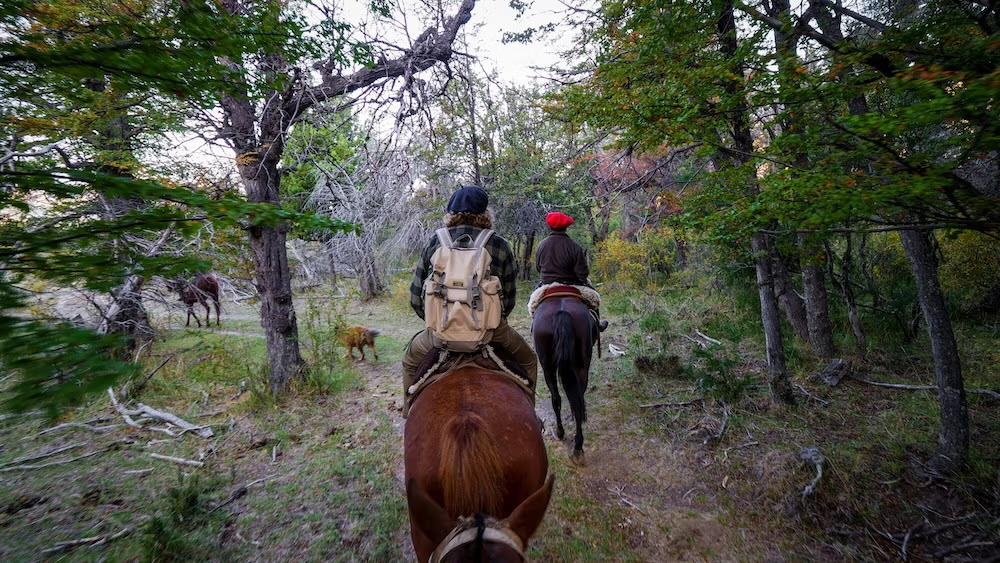
Audrey and I have done several horseback rides in Argentine Patagonia, ranging from a relaxed lakeside outing to a longer route with hills, forests, river crossings and a short hike thrown in for good measure. We also learned to fly fish at Estancia Tecka, where we spent much of the first day casting like malfunctioning robots and discovering that fish are under no obligation to reward enthusiasm.
Our kayaking record is less glorious. One plan died because the rental stands were already packing their boats away. Another was abandoned after we looked at the waves, cold water and wind and decided the lake could keep them. We have not rafted in Patagonia, so I am not going to pretend otherwise.
What I can do is compare the four activities honestly.
Horseback riding, fishing, kayaking and rafting all provide access to landscapes you may not experience in quite the same way on foot. Beyond that, they demand very different things from you. One asks how long you can sit in a saddle. Another tests whether you can enjoy an afternoon without catching anything. Kayaking gives you more control but makes the wind your business. Rafting places more of the decision-making in the hands of the guide, the group and the river.
The best adventure is rarely the most extreme one.
It is the activity whose annoying parts you are still willing to accept.
The activity name tells you surprisingly little
There is no single horseback-riding experience in Patagonia.
One current operator in Santa Cruz offers everything from a gentle two-hour ride for beginners to expeditions lasting a week or more. Those trips share horses and scenery, but almost nothing else about the commitment is comparable.
Rafting has the same problem. A current outing from El Chaltén takes roughly three hours from start to finish. A full-day Manso River excursion from Bariloche lasts about ten hours. Both include around two hours on the water.
That difference is enormous when you are planning an itinerary, yet both booking pages can be reduced to the same two words: Patagonia rafting.
Kayaking can mean a guided paddle on a relatively sheltered lake, using double kayaks and stopping for a picnic. It can also mean cold-water clothing, boots, a drysuit and a tightly controlled route near a glacier.
Fishing may be a guided half-day from a town base or a multi-day lodge stay where accommodation, meals, equipment, river access and transport are all bundled into the experience.
This is why I would make the decision in two stages.
First, choose the activity whose basic rhythm suits you.
Then study the exact version being sold.
That second decision is where the real trip lives.
If you already know which activity family you want, you can compare current outdoor tours and activities across Argentine Patagonia before narrowing the options by route, duration and physical demand.
Horseback riding: the route matters more than the brochure photograph
Horseback riding often gets presented as the gentlest adventure option. Sometimes it is.
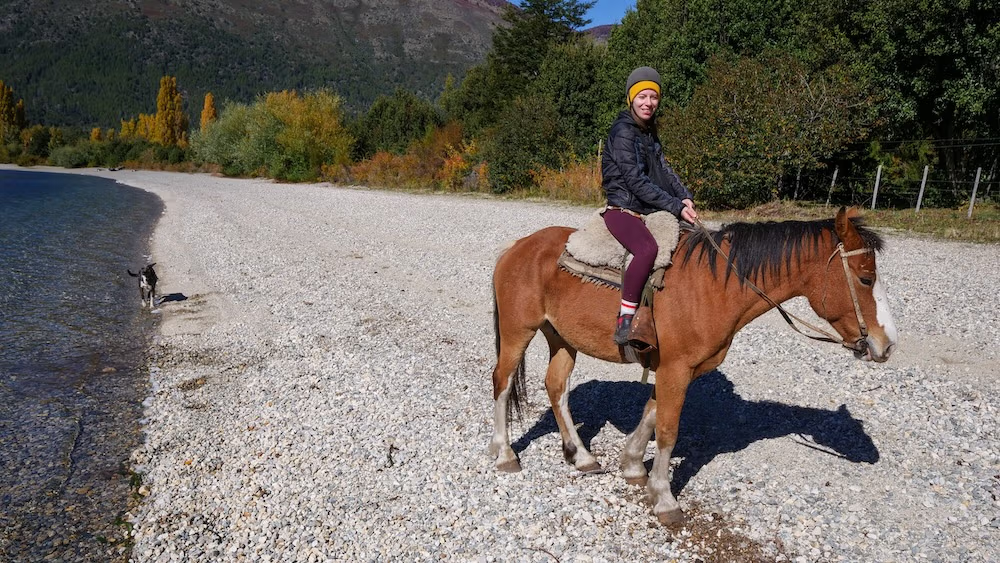
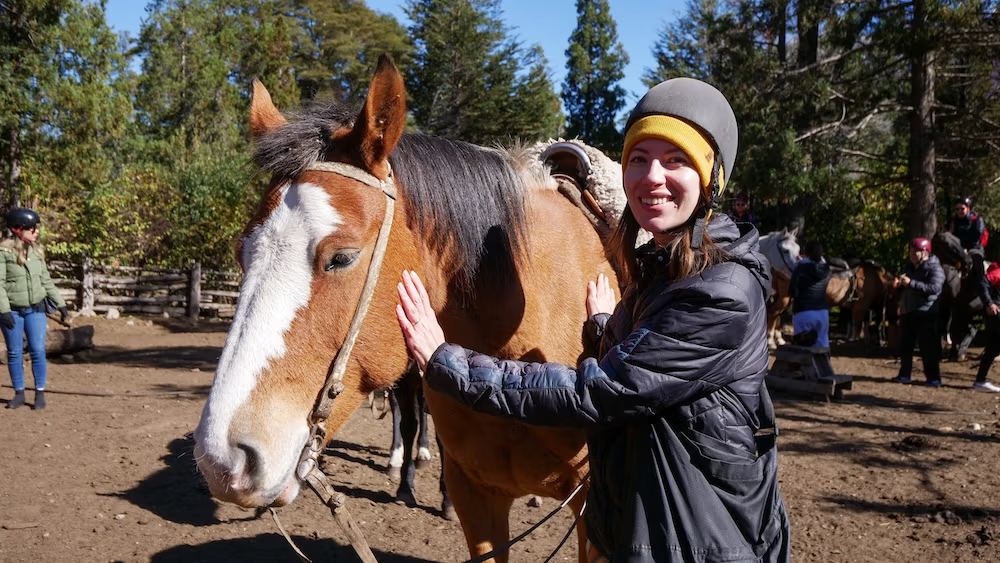
One of our easiest rides took place near Lago Gutiérrez outside Bariloche. We were collected, driven to a lodge, given helmets and asked to sign a waiver before the horses were prepared.
I joked that we had signed our lives away, which was slightly undermined by the route that followed.
My horse was named Temblor—Tremor—which also sounded ominous. He turned out to be sweet, calm and far less concerned about the experience than I was.
We moved through forest, open ground and along the edge of the lake. The trail was flat, the pace was relaxed and the ride was designed for beginners. I could actually look around instead of staring at the ground and calculating the likelihood of an undignified exit from the saddle.
I loved it.
There is a strange tendency to treat an easy adventure as a watered-down version of the real thing. That ride did not feel watered down. We covered a good amount of terrain, enjoyed the scenery and finished the outing without requiring a complicated relationship with an ice pack.
A similar lesson followed us to Estancia Arroyo Verde.
Our first day there was pure Patagonia. The wind turned the lake into something resembling an ocean and every outdoor activity was cancelled. Once the weather improved, we chose an easier sunset ride rather than climbing towards the more demanding cliff route.
The trail crossed gentle slopes, forest, riverbank and open steppe while the estancia dogs came along for the outing. We gave up the higher viewpoint, but I never felt as though we had chosen the lesser experience.
We chose the ride that suited the day.
A horse does not remove the physical work
The fact that the animal is doing the walking can create some false confidence.
You are still balancing. Your legs and core are constantly making small corrections. The longer the ride, the more those muscles introduce themselves.
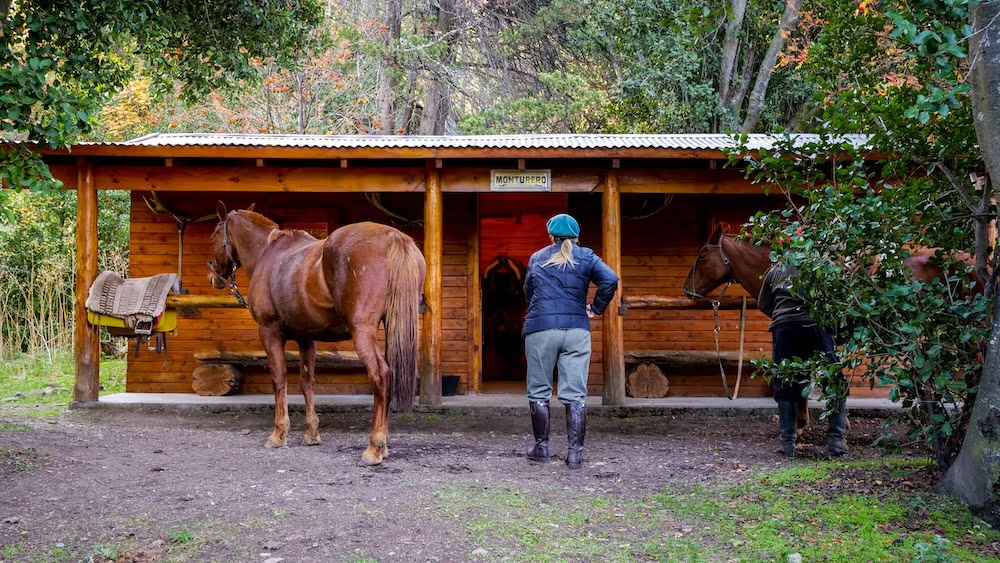
Near Esquel, one of our rides started on a fairly obvious path before becoming rougher and wilder. We travelled through autumn forest, crossed volcanic ground and reached a remote mountain lookout.
The soft light, cool air and sound of hooves moving through the fallen leaves made it one of Audrey’s favourite rides of the trip.
It was also more demanding than Lago Gutiérrez.
Our longest contrast came around El Bolsón. That route went up and down hills, passed through forest and crossed two rivers. At one point we dismounted and continued on foot before getting back on the horses.
When Audrey climbed down again, her knees were wobbling.
That is a better measure of difficulty than the word “moderate.”
A tour does not need galloping, advanced technique or a terrifying mountain ledge to leave an inexperienced rider tired. Several hours in a saddle can be enough. Add steep ground, loose surfaces, river crossings or hiking and the experience changes again.
Before booking, ask how many hours you will actually spend riding. Do not settle for the total excursion time.
A five-hour tour may involve only two hours in the saddle once transfers, preparation and lunch are included. That can be perfect for a beginner. A five-hour ride is another matter entirely.
A current option in the same Lago Gutiérrez setting combines roughly two hours of riding with transfers and lunch. Travellers looking for that calmer day-trip format can check the current Lago Gutiérrez horseback tour details and availability. It is a present-day booking option rather than the exact historical product Audrey and I used.
I would also ask about:
- The steepest terrain.
- River crossings or exposed sections.
- Whether you need to dismount and walk.
- Helmet provision.
- Rider age, weight, mobility or health restrictions.
- The wet-weather policy.
- How much experience the route genuinely assumes.
“Suitable for beginners” is useful only when the rest of the description supports it.
Day ride or estancia stay?
A straightforward day ride is easier to fit into a busy Patagonia itinerary. You meet the operator or get collected, ride for a defined period and return to town.
An estancia stay changes the scale of the decision.
The ride becomes one part of a longer experience that may include meals, accommodation and other outdoor activities. You may gain more flexibility when the weather turns bad, as we did at Arroyo Verde, but you are also building more of your trip around one property.
Neither format is automatically better.
A short day ride is ideal when you are curious, inexperienced or already moving between too many Patagonia bases. An estancia works better when you want the rural setting and slower pace as much as the activity itself.
For most first-time riders, I would start conservatively. Book the route whose description sounds almost too manageable.
You can always graduate to the one involving mountain passes and heroic saddle time after discovering how your knees feel.
Fishing: the quiet activity with the longest learning curve
Fly fishing looks wonderfully peaceful from a distance.
The river moves past. The mountains sit in the background. The angler makes one elegant cast and a trout rises on cue.
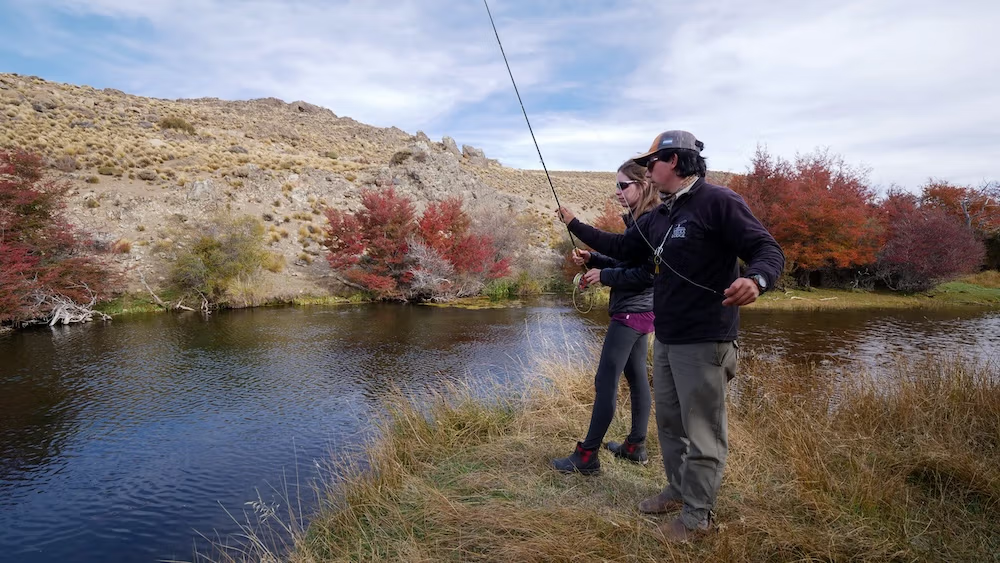
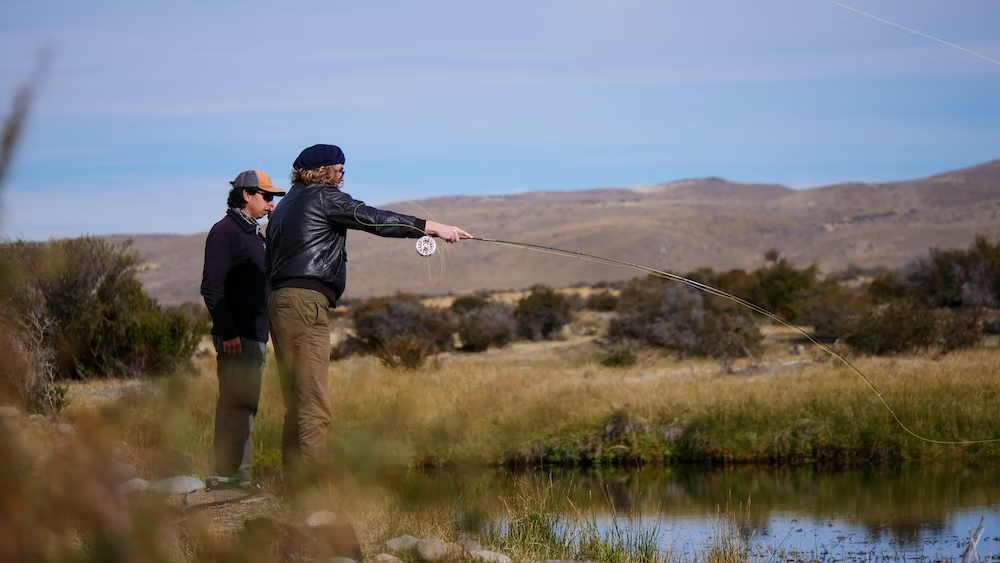
Juan, our guide at Estancia Tecka, could make it look like that.
Audrey and I could not.
We arrived as complete beginners. Juan showed us the equipment and walked us through the casting motion. His line moved smoothly through the air. Ours behaved like an extension cord thrown during an argument.
Fishing requires timing. The line has to travel correctly, the fly needs to land somewhere useful and you have to respond when a fish bites.
We failed at every stage before improving.
Lines became caught in bushes. Fish appeared and disappeared. We reacted too slowly or too awkwardly. Audrey wore protective glasses that made her look ready for a low-budget sequel to The Matrix, but at least her eyeballs were protected from our casting technique.
She was also the more openly persistent of the two of us.
You cannot give up, she kept saying.
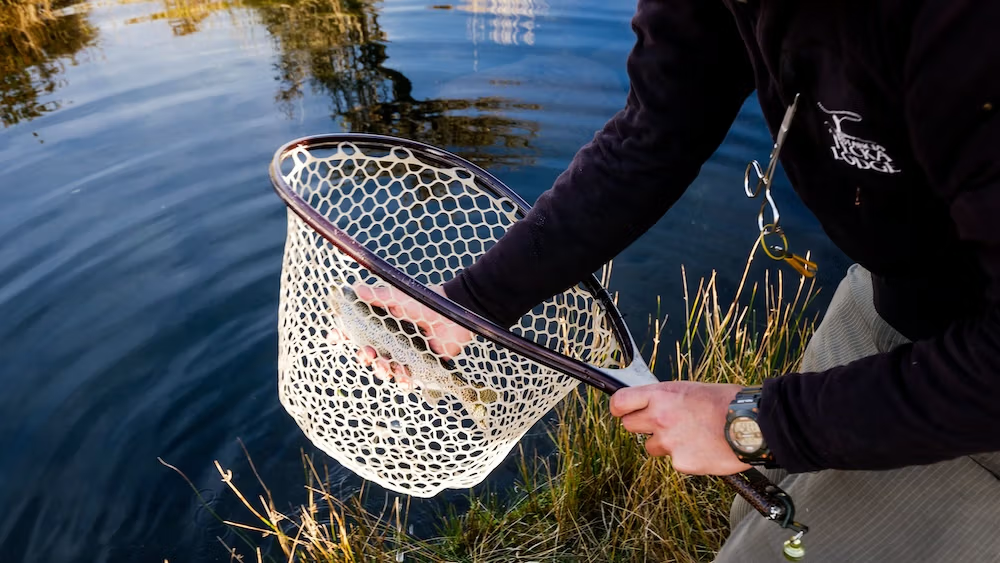
Eventually, Audrey landed the first confirmed trout. I caught one later, and we finished with three rainbow trout caught and released between us.
It was exciting precisely because the result had taken so long.
A guide cannot guarantee fish
Juan was central to the experience.
He corrected our casting, moved us when the fish became wary and helped us handle and release each catch. I remember thinking that if he could get the two of us catching fish, he could teach almost anyone.
Almost anyone still has to accept that fish do not read the itinerary.
A paid day with a skilled guide may produce excellent instruction, equipment and access to productive water. It cannot guarantee the final result.
That makes fishing different from the other activities in this article. Once a horse ride departs, you are almost certainly going horse riding. Once a raft enters the river, rafting will occur.
You can spend an entire fishing day fishing very seriously without catching a thing.
That is not necessarily failure. It depends on what you think you are paying for.
Someone who enjoys learning the cast, reading the water and making small improvements may have a great day regardless. Someone focused entirely on holding a large trout for the camera is entering dangerous emotional territory.
The access can be a large part of the cost
Estancia Tecka was far more remote than it appeared on a casual look at the map.
We reached the settlement of Tecka beside Route 40, then continued over gravel roads towards the estancia gates. From there, the property seemed to keep going. And going.
The journey made sense once we saw the scale of the place, but it also demonstrated why specialist fishing experiences can cost more. You are not only paying for a person holding a net beside a river.
The package may involve:
- Private or small-group guiding.
- Specialist equipment.
- Vehicle access across a large property.
- Several fishing locations.
- Meals.
- Accommodation.
- Repeated sessions over more than one day.
Estancia Tecka hosted our stay, so I cannot offer an independent verdict on its current retail value. I can say that the multi-day structure helped us enormously as beginners.
We had time to be bad.
A half-day excursion might have ended around the point when we were finally starting to understand the cast. Repeated sessions allowed us to struggle, stop, return and improve.
That does not mean everyone needs a fishing lodge.
A curious beginner may prefer one guided day from Bariloche, El Calafate or Ushuaia. It costs less than building several nights around fishing and gives you enough exposure to learn whether this is a new passion or a pleasant activity you never need to repeat.
Current platform inventory is thinner for fishing than for the other categories, but travellers who want to test the day-trip format can compare current guided fishing tours in Argentine Patagonia before committing to a specialist lodge.
A specialist lodge makes more sense when fishing is one of the main reasons for the trip.
The permit is not decorative paperwork
Fishing also requires more legal preparation than the other three activities.
Continental Patagonia uses a regional sportfishing permit system, while provinces, national parks and individual waters can add their own rules. The permit is personal, and you need to carry identification.
The regulations may specify:
- The open season.
- Daylight-only fishing.
- Permitted lures.
- Hook requirements.
- Mandatory catch and release.
- Equipment-disinfection measures.
- Restrictions for particular rivers and lakes.
Do not assume that last season’s dates, fees or rules still apply.
The complete 2026/2027 regulations had not been published when I last checked, so verify the current Continental Patagonian Sportfishing Regulations and the annex for the exact body of water before booking.
Also confirm whether the guide includes the permit. A product may include rods, waders, transport and lunch while leaving the legal paperwork to you.
Fishing suits a particular kind of traveller
Fishing is the calmest-looking activity here and perhaps the least suitable for someone who needs visible progress.
A horse carries you somewhere. A kayak moves when you paddle. A raft eventually reaches a rapid.
Fishing can involve long periods when almost nothing changes.
For some people, that is the whole point. The rhythm slows down. Attention narrows. Tiny improvements become satisfying.
For others, it is an expensive afternoon spent staring at a river while trout conduct their private business elsewhere.
I would choose fishing when the process itself sounds appealing. The catch should be the bonus, not the only acceptable ending.
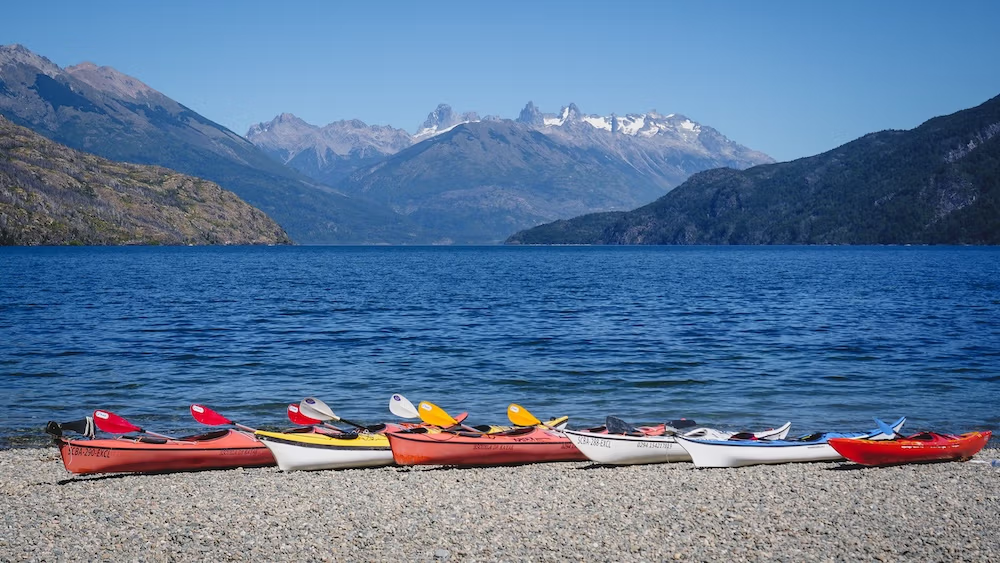
Kayaking: Patagonia’s wind gets a vote
Our kayaking attempts in Patagonia never advanced beyond the planning stage.
In Puerto Pirámides, we wanted to rent kayaks after the worst heat of the afternoon had passed. By the time we returned to the beach, the stands were closing and the boats were being packed away.
That was that.
Near Tolhuin, we considered paddling on Lago Fagnano. Then we saw the waves, felt the wind and looked at the cold water.
The lake won the argument.
Neither experience tells me what paddling there would have felt like. They did teach me that kayaking is unusually dependent on the relationship between timing, weather and the exact body of water.
A rental and a guided tour are different products
A casual rental sounds wonderfully flexible. You arrive, take a kayak and paddle wherever seems pleasant.
That assumes a fair bit.
You need to judge the conditions, understand the launch area, operate the boat and know where you should and should not go. You also need the rental stand to be open, which was apparently beyond our capabilities in Puerto Pirámides.
A guided outing removes some uncertainty. You receive equipment, instruction and a planned route. The guide can also change the route when the wind makes the original plan a poor idea.
One current guided tour on Lake Gutiérrez includes a technique and safety briefing, round-trip pickup and the essential paddling gear. It is the kind of researched beginner option I would compare with an informal rental rather than presenting as something Audrey and I personally tested.
Travellers using Bariloche as a base can check the current Lake Gutiérrez guided kayaking tour for the latest duration, restrictions and departure details.
That is not fine print. It is the structure of the experience.
A glacier-area paddle is another category again. Specialized cold-water trips may supply drysuits, thermal clothing, boots and life jackets. The preparation can take a meaningful part of the total tour time.
Two people can both say they went kayaking in Patagonia while having almost nothing in common beyond the paddle.
Personal control is the appeal—and the work
Kayaking gives you more direct responsibility than rafting.
You create the movement. You help control direction. Even in a tandem kayak, you remain involved in almost every metre travelled.
That can feel intimate and satisfying. You sit close to the water, move quietly and can enjoy a very different rhythm from a larger boat excursion.
The same independence means more continuous effort.
Your shoulders, arms and core are working. Wind that would be an inconvenience on land becomes part of the physical equation. Cold water matters even when you have no intention of entering it.
For a beginner, I would choose a guided paddle on relatively calm water over an informal rental. Learn the basic stroke. Let someone else assess the route. Discover whether you enjoy the physical rhythm before adding rougher conditions or specialized cold-water equipment.
Kayaking is a strong choice when you want an active experience but do not want the group dependence of rafting.
It is a weaker choice when you need a fixed meeting point, a guaranteed route or minimal upper-body effort.
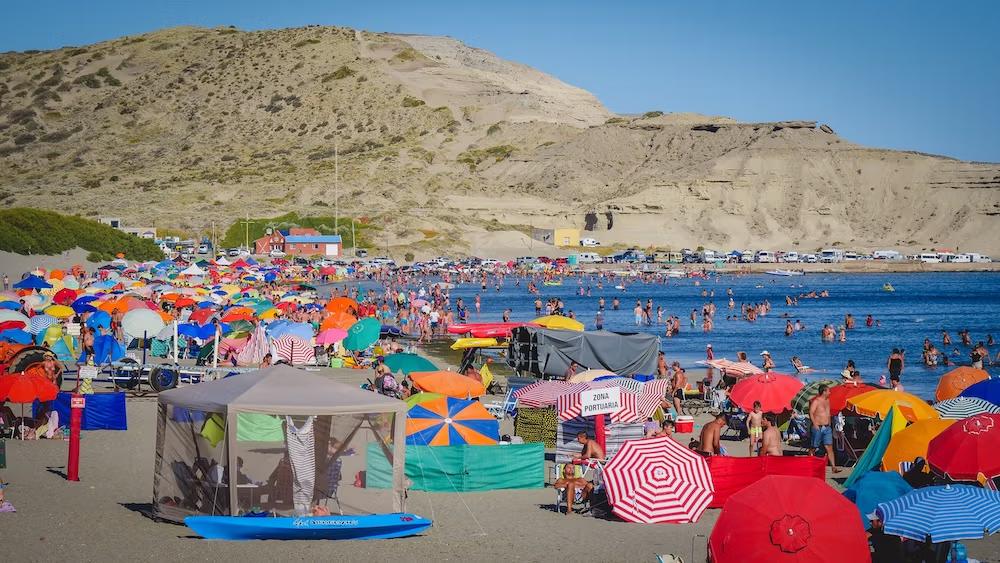
Rafting: the group and river run the day
We have not rafted in Patagonia, so this is the category where I have to stay firmly on the researched side of the fence.
What becomes obvious from comparing current products is that “rafting” is not a useful description of difficulty or time.
One current Río de las Vueltas rafting outing from El Chaltén starts with a calmer section where participants practise before entering a canyon with Class III to III+ rapids. The full experience takes around three hours.
A full-day Manso River rafting trip from Bariloche lasts roughly ten hours, includes transfers and meals, and still contains approximately two hours of rafting.
Same activity. Completely different day.
River grades are not promises
A rafting grade helps describe technical difficulty, but it does not settle whether a trip is suitable for you.
Water levels change. Cold, weather, obstacles and remoteness matter. Regional interpretations can differ. One difficult rapid does not describe every consequence of the route around it.
Treat the grade as the beginning of the conversation.
Ask about:
- The exact river section.
- Seasonal water changes.
- Minimum and maximum ages.
- Swimming expectations.
- Health and mobility restrictions.
- What happens if conditions change.
- How long you are actually on the water.
- The amount of road travel before and after.
Current rafting products in Argentine Patagonia publish noticeably different age and health restrictions. That is a good reminder that no universal “rafting is suitable for children over X” rule should be trusted without checking the exact operator.
You are part of a boat, not the captain of a tiny kingdom
Rafting involves less individual control than kayaking.
The guide calls instructions. The group responds. The river decides the pace.
You cannot stop alone because you spotted a nice photograph. You cannot quietly choose another line. Your experience depends partly on how the whole boat works together.
That is either a major advantage or a reason to book something else.
Rafting suits travellers who enjoy group energy and want a highly guided experience. You contribute physically, but the guide makes the larger route decisions.
Kayaking is quieter and more personally controlled. Rafting is more collective and externally structured.
Neither is automatically harder.
A sheltered lake kayak tour may be calmer than a Class III river. A cold-water kayak trip may require more specialist gear and personal effort than a compact rafting outing. A full-day rafting excursion may consume far more itinerary time than either.
Look past the wet faces in the photograph and study the actual river day.
Which Patagonia adventure fits you?
The comparison becomes much easier once you stop trying to identify a universal winner.
| Activity | Best fit | Main demand | Biggest planning trap | Current booking path |
|---|---|---|---|---|
| Horseback riding | Travellers wanting scenic access without a large technical learning curve | Balance, saddle tolerance and route-dependent physical strain | Assuming every beginner ride is flat, short and easy | Compare current horseback-riding tours |
| Fishing | Patient travellers who enjoy instruction and uncertain outcomes | Repetition, concentration, regulation and often higher cost | Paying for a catch rather than the process | Compare current fishing tours |
| Kayaking | Active travellers wanting more personal control on the water | Continuous paddling, weather awareness and comfort around water | Treating a rental, lake tour and cold-water paddle as equivalent | Compare current kayak tours |
| Rafting | Social travellers wanting a guide-led group experience | Coordinated paddling, eligibility requirements and less personal control | Looking only at the rapid grade instead of the full trip | Compare current rafting tours |
Horseback riding is the easiest place to start when you want scenery, movement and relatively little technical instruction. Just be honest about saddle time and terrain.
Fishing works when patience is part of the attraction. It is probably the poorest match when you need guaranteed action or a guaranteed result.
Kayaking gives you the most direct control of the water activities. That control comes with sustained physical participation and greater sensitivity to wind.
Rafting is the most structured group experience. You surrender some independence, but the guide handles the larger decisions and the boat shares the work.
The awkward truth is that the exact product can overturn the category verdict.
A seven-day horse expedition is not the low-commitment option. A calm lake paddle may be gentler than a steep horseback route. A remote fishing lodge may require more time and money than every other activity combined. A ten-hour rafting day can dominate an itinerary even when the river portion lasts two hours.
Use the category to narrow the field.
Use the route and format to make the final decision.
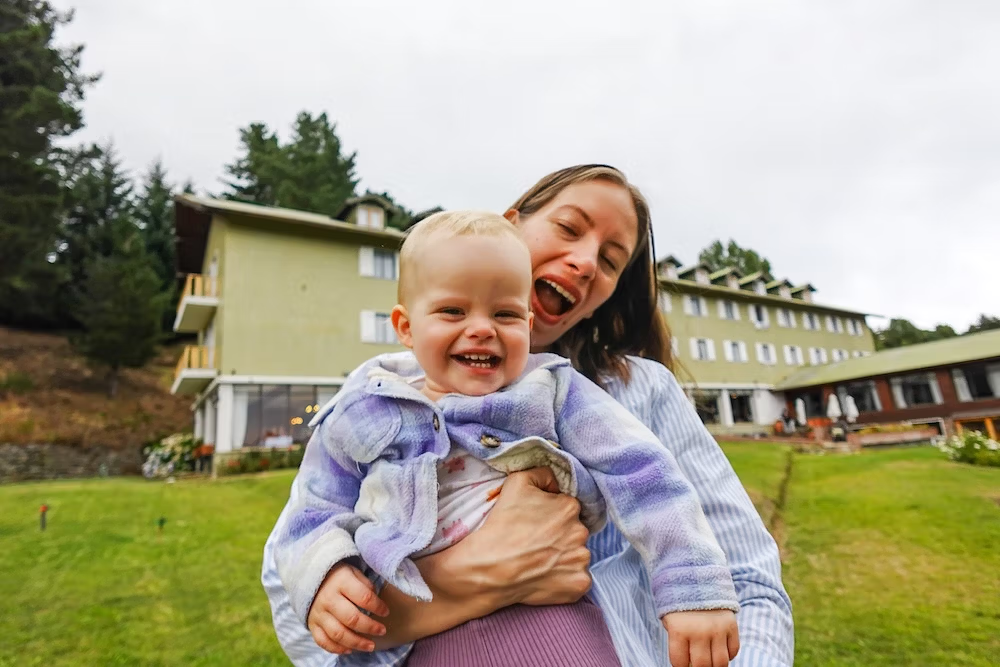
Choose the base before the tour
The right accommodation base does not make the activity easier, but it can remove a surprising amount of wasted travel.
Bariloche gives you the broadest mix of the four categories in one area, including Lago Gutiérrez riding and kayaking, guided fishing and Manso River rafting. If you want to compare several activities before committing, compare current places to stay in Bariloche and then check each operator’s actual pickup radius. A hotel described as being in Bariloche can still sit well outside the centre or beyond a tour’s collection zone.
El Chaltén works differently. The compact Río de las Vueltas rafting product begins from an operating base in town rather than swallowing an entire day in road transfers. Travellers building the activity around that convenience can compare accommodation in El Chaltén and check the walking or taxi distance to the meeting point.
El Calafate is the natural base for many glacier-area kayak products and some guided fishing outings. Before assuming a tour includes the long road journey towards the national park, compare current stays in El Calafate and read the pickup language closely.
Ushuaia also has current fishing and paddling inventory, but it belongs to a separate Tierra del Fuego itinerary rather than a casual extension of Bariloche or El Calafate. If that is your chosen region, compare accommodation in Ushuaia before deciding whether the tour location works with the rest of your plans.
I would choose the activity first and the base second. Booking a hotel because it looks vaguely close to mountains or water is how a ten-minute map glance turns into a very early alarm and a long roadside pickup.
Reconstruct the real day before booking
Tour titles are excellent at compressing logistics.
“Horseback riding with lunch” sounds like a ride and a meal. It may also contain hotel pickup, rural transfers, safety preparation, waiting for the horses and a substantial return journey.
“Full-day rafting” may include more road than river.
“Glacier kayaking” may involve equipment fitting and transport that take longer than the paddling itself.
Before paying, find out:
- The true activity time.
- The total door-to-door time.
- Whether pickup is included and from where.
- Whether the meeting point can change.
- What clothing and equipment are supplied.
- Which fees, meals, permits and insurance are excluded.
- Whether the price is per person or per group.
- The exact age, weight, swimming, mobility and health restrictions.
- The cancellation and route-change policy.
- Whether accommodation at a lodge or estancia is required.
Read the full listing rather than trusting the summary box.
If one part says hotel pickup is included and another says it is not, ask for confirmation in writing. Do the same when minimum ages or permit inclusions conflict.
Patagonia already provides enough surprises. There is no need to purchase additional ones.
The best adventure may be the least heroic-looking one
Some of our most enjoyable horse rides were the easier ones.
We could look around, talk, notice the forest and let the scenery carry the experience. Nobody needed to prove anything.
The longer routes were rewarding for different reasons. They also involved river crossings, hiking and Audrey’s temporarily unreliable knees.
Fly fishing eventually gave us the photograph with the trout. The better story was everything that happened before it: tangled line, missed bites, robotic casting and Juan somehow keeping faith in us until we finally caught something.
That is how I would choose among these tours.
Ignore the photograph for a minute and picture the actual discomfort.
The saddle. The waiting. The cold water. The group instructions. The long transfer. The weather changing the route.
Which of those still sounds worthwhile?
That is probably your adventure.
Frequently Asked Questions
Which Patagonia adventure tour is best for beginners?
A shorter horseback ride on gentle terrain is often the easiest starting point because it requires less technical learning than fishing or kayaking. The route still matters, so check the actual saddle time, terrain and rider restrictions before booking.
Is kayaking or rafting better in Patagonia?
Kayaking offers more personal control and continuous paddling, while rafting is a more structured group experience led by a guide. The better choice depends on whether you prefer individual responsibility or coordinated group action.
Is fly fishing in Patagonia suitable for complete beginners?
Yes, provided you are comfortable learning slowly and accepting that catching a fish is never guaranteed. Audrey and I began as complete beginners, and repeated instruction mattered far more than simply receiving equipment.
How physically demanding is horseback riding in Patagonia?
The difficulty can vary enormously. A calm two-hour lakeside ride may feel accessible, while longer routes with hills, river crossings and walking sections can leave inexperienced riders genuinely tired.
How much time do Patagonia adventure tours take?
The advertised duration can include transfers, equipment fitting, meals and briefings as well as the activity itself. A five-hour horse tour or ten-hour rafting day may contain only about two hours of actual riding or rafting.
Can Patagonia weather change or cancel an adventure tour?
Yes. Wind and water conditions can alter kayaking routes, while rain, river levels and trail conditions may affect rafting or horseback riding. Check the exact operator’s route-change and cancellation policy rather than assuming one rule applies everywhere.
Project 23 Argentina: This guide is also available in Spanish. [Leé la versión en castellano: Mejores excursiones de aventura en la Patagonia: kayak, rafting, pesca y cabalgatas]
This article contains affiliate links. If you book through one of these links, I may earn a commission at no extra cost to you.