
Three weeks in Patagonia sounds like a luxurious amount of time until you open a map and start getting greedy.
Bariloche looks close enough to El Calafate. Ushuaia is sitting down there at the end of the world, quietly daring you to add it. Puerto Madryn has penguins. Torres del Paine is just across the border. Before long, your slow three-week itinerary has seven accommodation changes, two countries and enough bus time to become emotionally attached to a petrol station.
Audrey and I have travelled through Patagonia slowly, quickly and in several messy combinations of the two. We have arrived after an overnight bus that stretched to roughly 18 or 19 hours, too tired to do much beyond eat and find a shower. We once changed accommodation three times in a week and felt genuine relief when we reached a larger apartment in Trelew and knew we could stay put. Another travel day went sideways when we realised our bus was leaving four hours earlier than we thought, instantly turning a calm morning into frantic packing.
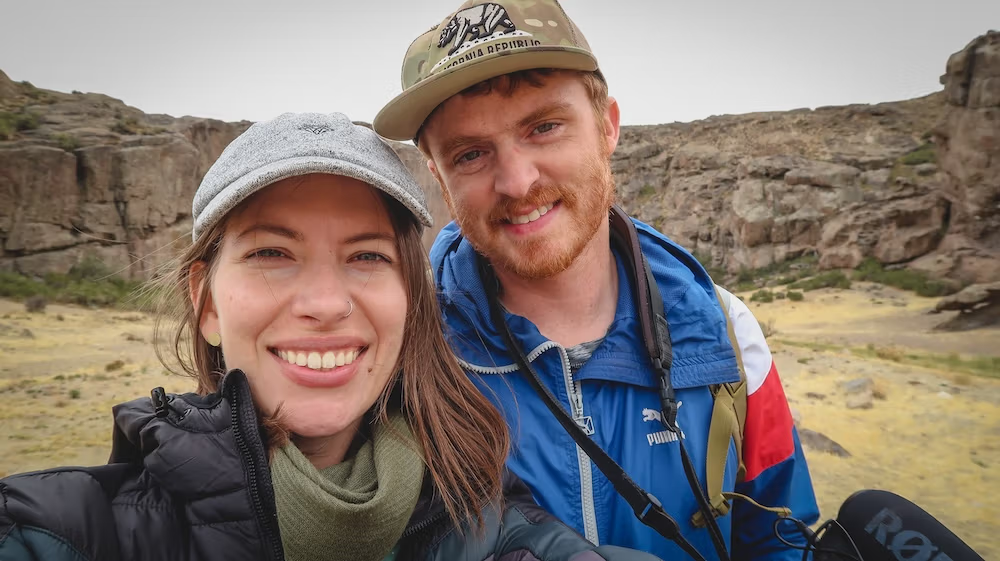
Longer stays gave us a very different version of Patagonia. Eight nights in Esquel let us ride La Trochita, visit Los Alerces, travel to Piedra Parada, hike near town, work, buy groceries and lose time to bad weather without the whole stay collapsing. Six nights in El Chaltén allowed us to put our longest trek on the best forecast day rather than forcing it because an itinerary said it was time.
That is the idea behind this route.
This is a complete 21-day itinerary through Argentine Patagonia built around four bases: optional Esquel, Bariloche, El Calafate and El Chaltén. There is one major flight south, two partly open days and a final return to El Calafate before departure.
It deliberately leaves out Ushuaia, coastal Chubut, Chilean Patagonia and several other places I love. Three weeks is enough time to travel well. It is not enough time to swallow Patagonia whole.
What the Third Week Should Actually Change
The extra week should change the rhythm of the trip.
It should give you enough time to settle into Bariloche, protect a glacier day in El Calafate and let the weather help determine your hiking order in El Chaltén. It can also support one regional extension that adds depth rather than another famous name.
It should create room for the unglamorous parts of travel that still take time:
- buying food;
- doing laundry;
- drying wet gear;
- recovering after a long trek;
- dealing with a delayed arrival;
- changing plans when the forecast turns;
- and occasionally sitting down for lunch without checking a bus timetable between bites.
The route still covers a large distance. I am not pretending Bariloche and El Calafate are neighbouring villages. The difference is that it makes one major north–south move and then stays long enough in each region to justify it.
My limit here is four distinct bases. Returning to El Calafate for the final night creates a fifth accommodation block, but you are not adding another destination. You are protecting the flight home.
Each base also has a different job.
Esquel is the optional Chubut extension. It gives the third week a quieter and less obvious purpose.
Bariloche is the northern anchor, with enough variety to support five nights without manufacturing activities.
El Calafate is the glacier and tour base, where weather and booking logistics matter.
El Chaltén is the long hiking block, where the order of the days should remain flexible.
The itinerary is easiest during the main hiking season, broadly from October through April. Outside that period, flight frequency, bus schedules, daylight, trail registration and activity access can change enough that the same route needs more careful checking.
The Complete 21-Day Patagonia Itinerary
| Day | Overnight base | Plan |
|---|---|---|
| 1 | Esquel | Arrive, check in and keep the day easy |
| 2 | Esquel | Full regional outing |
| 3 | Esquel | La Trochita, local hiking or town time |
| 4 | Esquel | Second full outing or flexible day |
| 5 | Bariloche | Bus from Esquel and a quiet evening |
| 6 | Bariloche | Active lake or regional day |
| 7 | Bariloche | Second full outing |
| 8 | Bariloche | Independent day, laundry, work or self-catering |
| 9 | Bariloche | Northern weather and flexibility buffer |
| 10 | El Calafate | Fly south and check in |
| 11 | El Calafate | Main Perito Moreno Glacier day |
| 12 | El Calafate | Navigation, second glacier experience or another major outing |
| 13 | El Calafate | Movable weather, recovery or low-commitment day |
| 14 | El Chaltén | Bus from El Calafate and an easy arrival day |
| 15 | El Chaltén | Forecast-led trekking block |
| 16 | El Chaltén | Forecast-led trekking block |
| 17 | El Chaltén | Trekking or recovery day |
| 18 | El Chaltén | Second major hiking opportunity |
| 19 | El Chaltén | Final flexible day |
| 20 | El Calafate | Return from El Chaltén and sleep near the airport gateway |
| 21 | — | Fly out of El Calafate |
That is 20 nights and 21 calendar days.
The transfer days are shown honestly. Day 10 is not a full Bariloche morning, a flight and a complete El Calafate afternoon squeezed into one miraculous square. Day 20 is not another eight-hour trek followed by a bus, repacking and a carefree early flight.
Esquel is optional. If reaching it is awkward on your dates, begin in Bariloche. You could add two nights to Bariloche, one to El Calafate and one to El Chaltén, or use part of that time as a softer arrival buffer.
What I would not do is remove Esquel and immediately replace it with Ushuaia, Puerto Madryn or another distant region. The point of dropping a stop is to gain time, not to create a vacancy that must be filled.
The Bariloche–El Calafate flight is the hinge of the route. Direct service generally operates, but frequency changes with the season. Compare current Bariloche–El Calafate flights on Booking.com before fixing the exact start date, then build the northern section backwards from that departure.

Esquel: The Optional Extension
We did not arrive in Esquel because it had been sitting at the top of a lifelong wish list.
We were crossing Chubut from east to west, the bus went there, and the place sounded interesting enough to investigate. Then we booked eight nights.
That was a long stay. We were working as we travelled and often completed one main activity per day, so I would not automatically tell a regular holiday traveller to copy us. By the time we left, Audrey and I felt that around four nights would work much better for most people.
The appeal of Esquel was the variety around one manageable base. We rode the old Patagonian train, visited Los Alerces National Park, travelled into the steppe to Piedra Parada, spent time in Trevelin and hiked near town. We also worked, bought groceries, dealt with cold weather and lived in the apartment instead of treating it as a nightly storage unit for our bags.
That is why Esquel can earn a place in a three-week route. It adds depth without requiring coastal Patagonia or another border crossing.
How I Would Use Four Nights
Use Day 1 for arrival and settling in.
An apartment, cabin or roomy hostería can work well here because heating, a kitchen, laundry and a proper table become useful during a four-night stay. Our accommodation gave us room to recover after arriving on very little sleep. Even with a smoother arrival, there is no reason to begin the trip by throwing down your bags and racing towards the first excursion.
No single property from our stay is being presented as the current answer for everybody. The useful move is to compare Esquel hotels, apartments, cabins and hosterías on Booking.com, paying particular attention to heating, kitchen facilities, laundry, location and early-arrival practicality.
Give Los Alerces one full day. Depending on the current season and the part of the park you choose, the outing can involve a long road journey, a boat trip, walking and separate park admission. It is not a quick scenic detour.
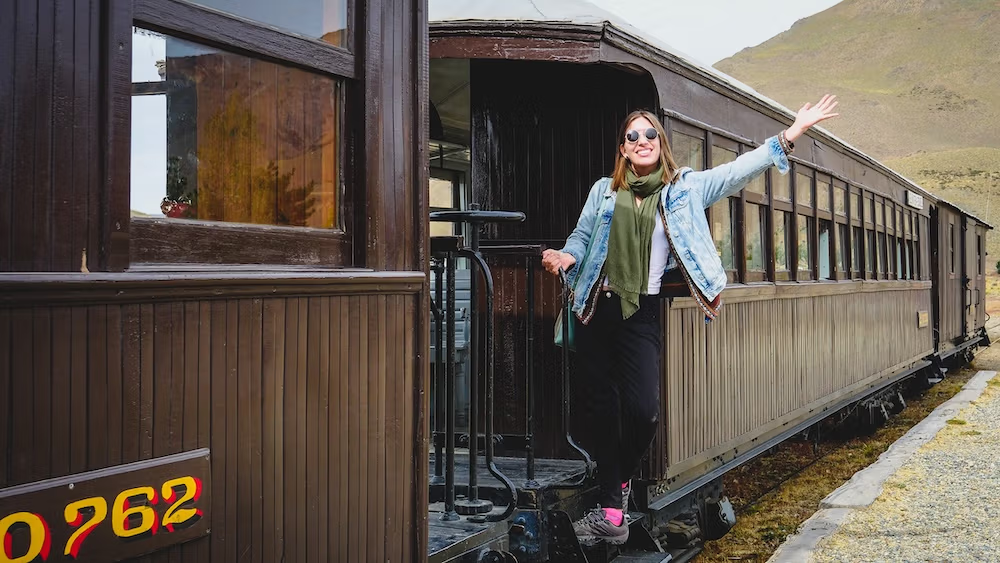
La Trochita fits into a shorter day. The historic train experience generally occupies around half a day, leaving time for lunch, a town walk or a slower afternoon.
For the remaining full day, choose between Piedra Parada and Trevelin.
Piedra Parada is the bigger commitment. The protected area is roughly 150 kilometres from Esquel and reaches a dry, volcanic landscape completely different from the lakes and forests around town. We joined an organised outing with transport, lunch and a canyon hike. It was one of the most surprising days of our stay, but it involved several hours on the road.
Trevelin is closer and gentler. It suits travellers interested in Welsh-Patagonian history, museums, local food and a smaller-town day.
Trying to fit La Trochita, Los Alerces, Piedra Parada and Trevelin into two days would defeat the reason for adding Esquel.
Reasons to Leave It Out
Skip Esquel when the connection does not suit your dates, when southern trekking is clearly your priority or when another four- to five-hour bus already feels like one transfer too many.
The direct journey to Bariloche is manageable, but it still consumes a large part of Day 5 after checkout, terminal time and arrival.
I would also leave Esquel out if none of its main experiences excites you. It does not belong in the itinerary because it is underrated. “Underrated” is one of those travel words that can bully people into visiting places they never wanted to see.
Include it because you want historic rail travel, Los Alerces, the Chubut steppe or a less hurried regional base.
Otherwise, start in Bariloche without guilt.

Bariloche: The Main Northern Base
Bariloche can absorb five nights far more easily than most travellers expect.
It is often treated as a quick combination of one scenic drive, chocolate and a photograph beside a lake. A longer stay opens a broader mix of regional outings, food, town time, weather flexibility and ordinary life.
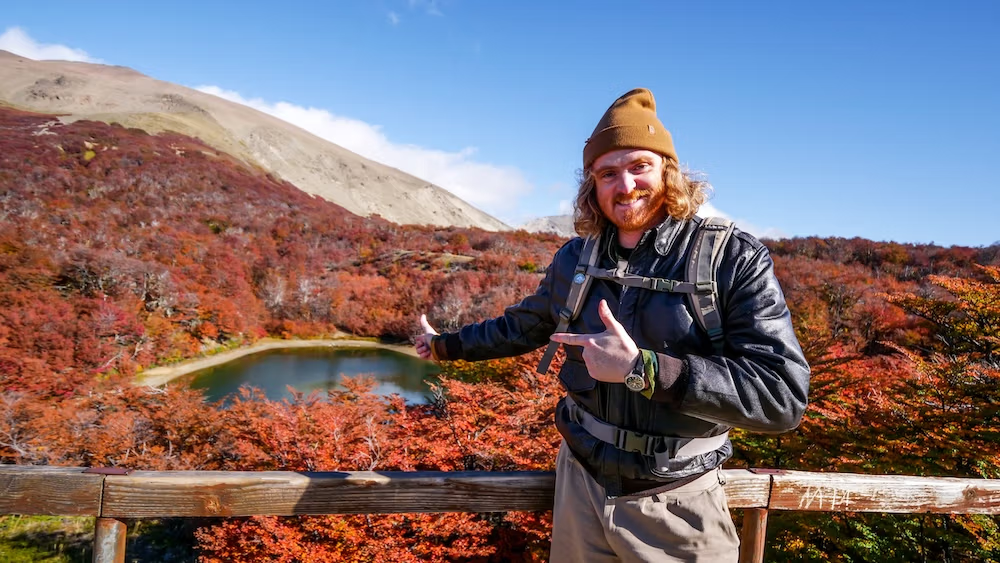
Audrey and I once stayed in a quiet cottage outside central Bariloche after a particularly busy stretch of travel. We cooked, worked and enjoyed having nowhere urgent to be. It was exactly what we needed.
Then there was the first night.
We arrived late with no groceries. The nearby restaurant required reservations and had no space. Our host eventually brought us pasta and breakfast supplies, which was incredibly kind and saved the evening.
It also taught us something useful about scenic accommodation. A beautiful cottage does not become convenient simply because the view is good.
Why Five Nights Work
With five nights, Bariloche days can have different levels of effort.
You can use two days for larger regional outings. Keep one day closer to town or largely independent. Let another become a slower accommodation day, especially if you are staying somewhere with a kitchen, laundry or a view you actually want time to enjoy.
Day 9 is the northern buffer. It can move with the weather or absorb something that slipped earlier in the stay.
You might use it for:
- a delayed excursion;
- a short walk;
- laundry;
- grocery shopping;
- a longer meal;
- work;
- or doing very little.
That last option becomes surprisingly appealing after several days of early departures.
I used to feel slightly guilty about quiet travel days. There are only so many hours in a trip, and Patagonia has a way of making every window look as though you should be outside conquering something.
Now I think a longer itinerary should be able to survive an afternoon when nobody wants to conquer anything.
Hotel or Apartment?
A five-night stay makes the accommodation decision more important.
An apartment or cottage gives you a kitchen, extra room and somewhere comfortable to spend a weather day. Laundry can become useful by this point in the trip, especially if Esquel came first.
A hotel can remove other annoyances. Breakfast helps before early excursions. Reception can assist with luggage, transport and check-in. A central location makes restaurants and shops easier when you return tired.
The main question is location.
Choose central accommodation when you expect to rely on restaurants, public transport and excursion pickups. Look farther out when you deliberately want privacy, plan to self-cater and understand how you will move around.
Do not choose an isolated property because you like the sunset photograph and then spend five days complaining about taxi fares. The accommodation has to match the trip you are actually taking.
Once you know whether you want central convenience or a quieter self-catering base, compare current Bariloche accommodation on Booking.com rather than choosing by scenery alone.
Do Not Overbook Bariloche
There are enough tours and activities around Bariloche to fill every day. That does not mean they deserve to.
Book the experiences whose capacity, transport or season makes advance planning useful. Leave at least one day open enough to adjust after arrival.
Travellers who do not want to organise every regional outing independently can compare current Bariloche tours and day trips on GetYourGuide. Use the page to compare access and timing, not as an excuse to reserve five consecutive dawn pickups.
The most important booking for the overall itinerary is the flight to El Calafate. That connection is what allows you to move from the northern lakes to southern glacier country without retreating through Buenos Aires or beginning a brutal overland sequence.
Secure the flight first. Then book the five Bariloche nights around it.
Stay in one property for the full block. Moving from a hotel to a cabin midway through might create variety, but it also creates packing, checkout, transport and another half-day shaped by keys.
Bariloche should feel like a base by the time you leave, not a collection of reservations you successfully survived.
Flying From Bariloche to El Calafate
The flight south keeps the whole route intact.
Without it, combining the northern lakes with El Calafate and El Chaltén becomes much harder to justify inside three weeks. You either spend far too long travelling overland or use Buenos Aires as an inconvenient hinge.
Direct flights generally operate between Bariloche and El Calafate, though frequency varies. Do not assume there will be a convenient departure on your preferred date. Check live Bariloche–El Calafate flight options on Booking.com and shape the northern accommodation blocks around the result.
Day 10 remains a travel day.
Even a short flight includes checkout, airport transport, check-in, security, waiting, baggage and another transfer after landing. I would not book a major El Calafate excursion that afternoon.
Audrey and I have repeatedly overestimated how much useful time remains around a transfer. The most memorable example was discovering in Río Gallegos that our bus was leaving four hours earlier than we thought. Our quiet morning for packing and work vanished immediately.
We made the bus, but the day became a scramble.
Fly south, check in, eat and prepare for the glacier days. Anything more is a pleasant surprise.
El Calafate: Glaciers Without Packing Every Day
El Calafate is sometimes treated as a one-night staging post for Perito Moreno Glacier.
That works for a rushed trip. It does not suit this one.
Four initial nights give you room for one principal glacier day, one second major experience and one day that can respond to weather or energy levels. You will also return for a final night before departure.
Day 11: The Main Glacier Experience
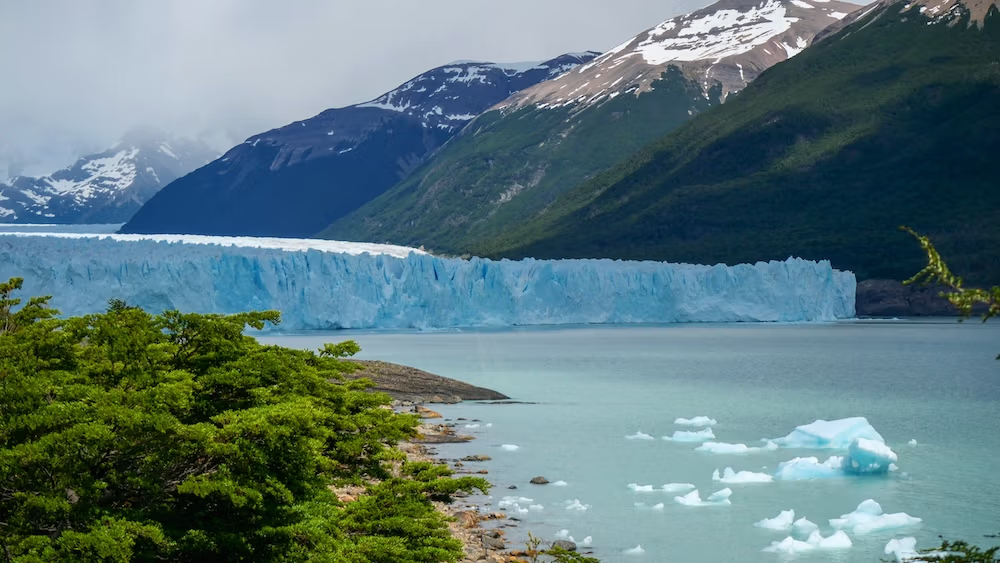
Perito Moreno Glacier lies roughly 80 kilometres from El Calafate. Reaching it takes time, and “visiting Perito Moreno” can mean several different things.
The simplest version combines road transport with the walkway system. There are several kilometres of paths and viewpoints, along with food, toilets, parking and some accessible areas.
Other options add a boat trip or an ice activity. These change the length, physical demands and cost of the day. Ice experiences may also have age, fitness and operating restrictions.
Choose the format before booking. Check whether national park admission is included, because it is commonly separate from the tour price.
To compare the current mix of walkway excursions, navigations and more active glacier options, see El Calafate tours and activities on GetYourGuide. I have experienced the glacier region, but the current provider listings should be judged by their own duration, pickup, admission and physical requirements.
Whatever version you select, give it the full day. The glacier does not need another activity attached to it to become worthwhile.

Day 12: A Second Major Outing
Day 12 can hold another substantial experience.
That may be a longer navigation, another glacier-focused excursion, an estancia day or something else that serves your interests. The important point is that it should be meaningfully different from Day 11.
Do not book two activities simply because they both contain the words “Perito Moreno.” A road-and-walkway visit, a navigation and an ice trek may all involve the same glacier while creating completely different days.
Day 13: Keep It Movable
When we travelled through El Calafate, the conditions changed repeatedly between wetter and clearer days. Spending longer did not guarantee beautiful weather. It gave us more chances to arrange our time around what actually arrived.
That is what Day 13 is for.
It can absorb a weather change, delayed tour or tired body. It can also become a productive lighter day: laundry, town time, food shopping, a short outing or preparing for El Chaltén.
Avoid the temptation to book a backup excursion for every possible outcome. If Day 13 already contains three reservations, it is not flexible.
Where to Stay in El Calafate
Choose accommodation according to your transport and tour plans.
A central hotel can make restaurants, shops, the bus terminal and excursion pickups easier. Breakfast is valuable before a long day. Luggage storage matters both during the first stay and when you return on Day 20.
An apartment can work well if you value space, a kitchen and laundry, but the calculation is different from Bariloche. In El Calafate, excursion logistics may matter more than spending time at the property.
Look closely at:
- pickup arrangements;
- distance from the centre;
- breakfast timing;
- luggage storage;
- bus-terminal access;
- and late-arrival practicality.
A peaceful property outside town may suit travellers with a car or private transfers. It is less appealing when every early morning begins with another transport problem.
After deciding whether your priority is central tour logistics, an apartment kitchen or a quieter peripheral stay, compare current El Calafate accommodation on Booking.com.
El Chaltén: Let the Forecast Decide the Order
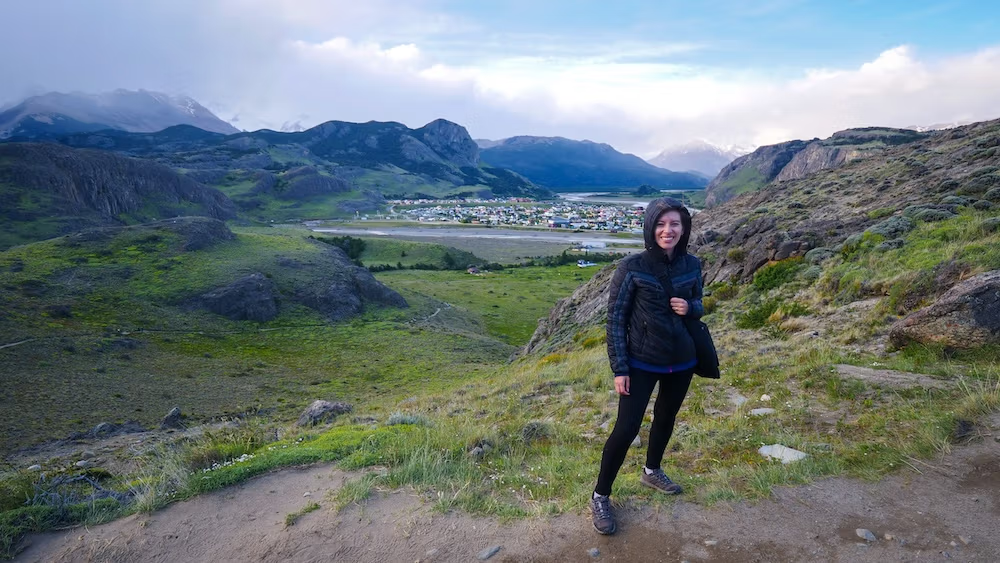
The road journey from El Calafate to El Chaltén takes roughly three hours.
Use Day 14 for the transfer, checking in, buying food and understanding the current conditions. Take a shorter walk if the weather and daylight allow. Do not schedule one of the major treks just because you arrive before lunch.
We stayed six nights in El Chaltén and were thrilled to have the time. Once we checked the forecast, we saw that the following day looked strongest, so we assigned our longest hike to it.
That is how I would use this block.
Reserve the six accommodation nights. Leave the internal hiking order loose.
Why the Longest Hike Should Move
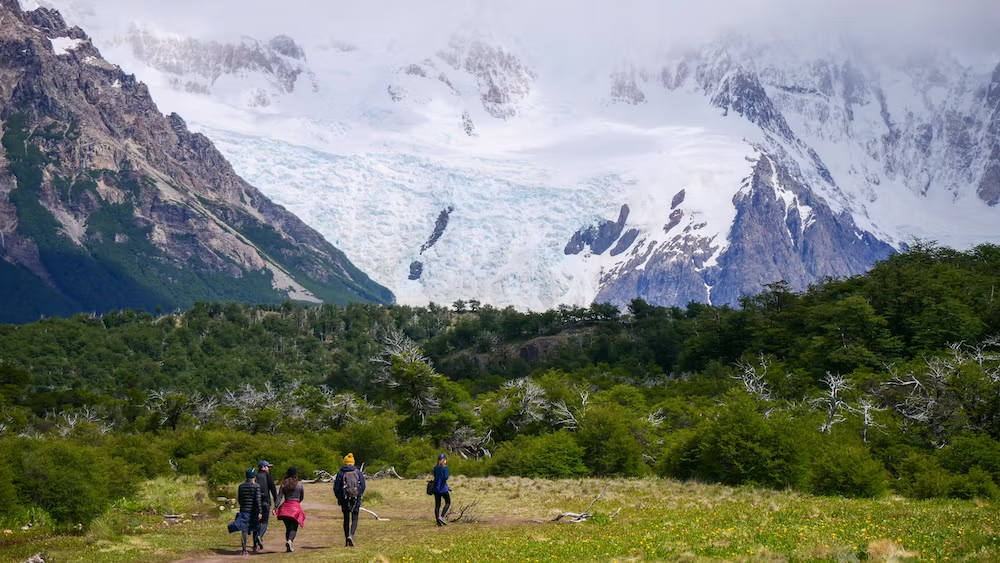
Laguna de los Tres is a major day. The route is roughly 25 kilometres and generally takes eight or nine hours. The final climb is steep enough to settle any debate about whether you have reached the difficult part.
Cerro Torre is another substantial outing, though many hikers find it less punishing. Shorter viewpoints and walks around town can fill a partial day or make good use of uncertain weather.
Across Days 15 to 19, plan for:
- one long trekking day;
- one moderate trekking day;
- one shorter or recovery day;
- a second major opportunity if the weather and your legs cooperate;
- and one final movable day.
Do not decide the exact sequence months in advance.
Check current park access, registration requirements and trail conditions before heading out. During colder months, registration requirements and services change. Even in the main season, wind and weather can reorganise the week quickly.
Travellers who want interpretation, additional support or an organised alternative to the classic independent trails can compare current El Chaltén tours and activities on GetYourGuide. A commercial booking is not automatically required for ordinary town-based hiking.
Recovery Is Part of the Hiking Block
A recovery day does not have to mean staying in bed all day.
It can involve a short walk, a long meal, gear drying or a quiet afternoon. It might also be the day when the weather removes the decision entirely.
After a long hike, small accommodation details start feeling enormous. Breakfast matters. Food access matters. Somewhere to hang wet clothing matters. An extra 20-minute walk to dinner can feel far less charming after eight hours on a trail.
Avoid placing the two hardest hikes back-to-back unless you already know that pace suits you. Being technically capable of walking again is not the same as enjoying the day.
Choosing Accommodation in El Chaltén
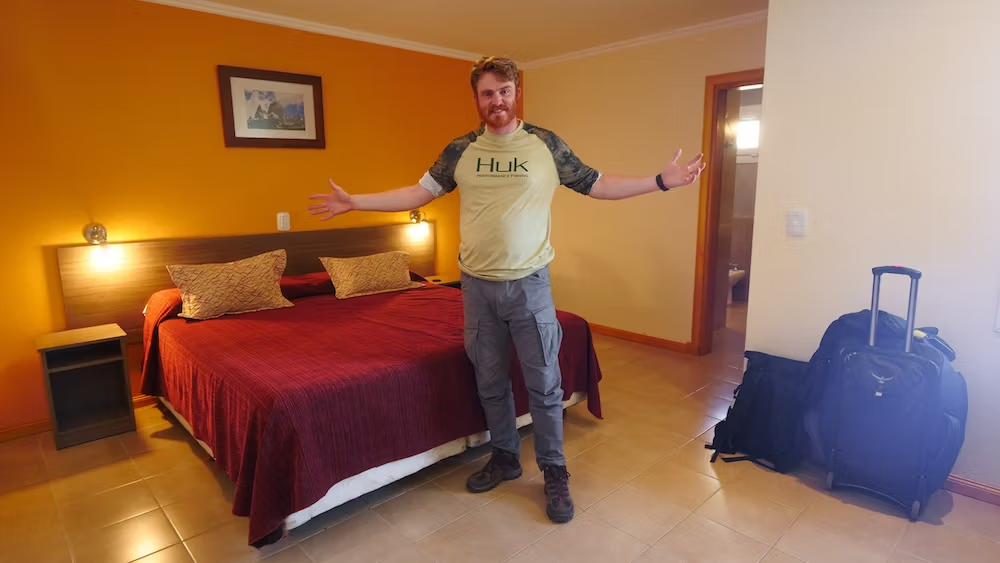
A kitchen is useful for early breakfasts, packed lunches and simple dinners. Extra space helps when boots, jackets and food begin spreading across the room.
A hotel or lodge can offer breakfast, reception and luggage support. We appreciated staying near the terminal and having breakfast available.
Prioritise:
- trail access;
- breakfast or cooking facilities;
- luggage storage;
- somewhere to manage wet gear;
- and easy access to food after hiking.
Once you know whether you want a kitchen, included breakfast or the easiest terminal and trail access, compare current El Chaltén accommodation on Booking.com.
Many classic trails begin around town and can be walked independently when conditions and park rules permit. Guided activities make sense for travellers seeking interpretation, additional support or something beyond the standard routes. They should not be treated as mandatory for ordinary town-based hiking.
The Two Days I Would Protect
Day 9 in Bariloche and Day 13 in El Calafate should remain partly open.
El Chaltén also needs flexibility, but its entire five-day activity block already moves according to the forecast.
We once received an unexpected extra day in Puerto Madryn and used it to visit an attraction that had been closed earlier. On another trip, we travelled to Dolavon on a Monday and discovered that most of the restaurants, museums and places we had researched were closed or observing long siesta hours.
We wandered around town, struggled to find food and eventually ended up sitting at a petrol station.
It was not a great piece of itinerary execution.
Because we had several nights in the region, however, it became one strange day rather than the defining memory of the whole stay.
That is the real value of flexible time. It keeps delays, rain, fatigue and bad planning in proportion.
A day going wrong should not cost you half of a destination. A late arrival should not force you to choose between dinner and the activity you crossed Patagonia to do. A rainy morning should not leave the entire trip hanging from one reservation.
Leave the space. You will find a use for it.

Return to El Calafate on Day 20
Buses link El Chaltén with El Calafate and its airport, and the road journey normally takes around three hours.
On some dates, a same-day connection with a flight will be possible.
I still would not build the standard itinerary around it.
Return to El Calafate on Day 20 and sleep there. Fly on Day 21.
That creates one more checkout, but it removes a ground transfer from the same day as an important flight. You are no longer depending on one bus departure, road conditions, luggage loading and airline timing all cooperating.
The final night does not need to be scenic or elaborate. Choose somewhere practical for luggage and onward transport. If your first El Calafate property also suits a simple final night, returning there reduces another decision; otherwise, look for practical El Calafate accommodation on Booking.com with departure convenience in mind.
Eat, repack and sleep.
The urge to squeeze one last hike into Day 20 will be strong. Patagonia always leaves another trail, lake or glacier just beyond the edge of the itinerary.
Let it remain there.
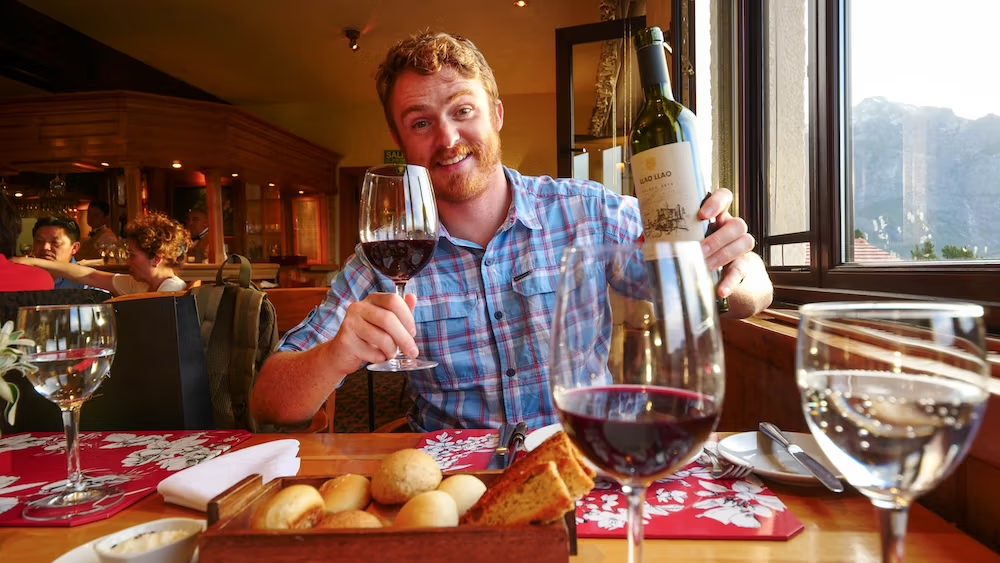
The strength of this three-week route is not the number of places it captures. It is that there is enough room for travel to behave like travel: weather changes, bodies get tired, transport runs late, clothes need washing and sometimes lunch takes longer because the wine arrived.
The third week should buy you more than extra dots on a map.
It should buy you time inside the places you came all this way to experience.
Frequently Asked Questions
Is three weeks enough for this Patagonia itinerary?
Yes. The route uses 20 nights and 21 calendar days, with four distinct bases, one major flight south and transfer days counted honestly instead of being treated as full sightseeing days.
Which places are included in the three-week route?
The itinerary uses optional Esquel, Bariloche, El Calafate and El Chaltén. It stays in Argentine Patagonia and deliberately leaves out Ushuaia, coastal Chubut and Chilean Patagonia.
Is Esquel essential to the itinerary?
No. Esquel is the removable four-night extension. Skip it when the connections are awkward or southern trekking matters more, then redistribute the nights among Bariloche, El Calafate, El Chaltén or an arrival buffer.
When should I book the Bariloche–El Calafate flight?
Check the flight before fixing the itinerary’s exact start date. Direct service generally operates, but frequency varies with the season, so the northern accommodation blocks should be built around a suitable departure.
How many nights should I spend in El Chaltén?
The itinerary gives El Chaltén six nights. Reserve the accommodation block, then leave the order of the longer hikes flexible so weather, wind and recovery can shape the final sequence.
Why does the itinerary return to El Calafate on Day 20?
Returning on Day 20 removes the El Chaltén road transfer from the same day as an important flight. It adds one checkout, but gives the final departure a much safer margin.
What is the easiest season for this route?
The itinerary is easiest during the main hiking season, broadly from October through April. Outside that period, flight frequency, bus schedules, daylight, registration and activity access need more careful checking.
Project 23 Argentina: This guide is also available in Spanish. [Leé la versión en castellano: Itinerario de 3 semanas por la Patagonia: estadías más largas, mejores bases y menos traslados]
This article contains affiliate links. If you book through one of these links, I may earn a commission at no extra cost to you.