
I’ve lost count of how many times someone has told me they’re skipping Patagonia because they’re “not really a hiker.” I get where it comes from. Every photo you’ve ever seen of the place shows someone standing at the foot of Fitz Roy after an eight-hour slog, or grinning their way to the end of the W in Torres del Paine looking gloriously wrecked. The marketing isn’t lying — a huge amount of what people do down here really does involve serious trekking. But that’s not the whole region, and “just avoid El Chaltén” is not a complete plan.
Over several long trips through Argentine Patagonia, Audrey and I have based ourselves in towns built almost entirely around multi-day treks, and we’ve based ourselves in towns where the best day involved a boat, a steam train, or a very large plate of cake. Those two experiences don’t overlap nearly as much as people assume. Here’s where I’d actually send a non-hiker, and why some of the choices aren’t the ones you’d expect.
The Real Question Isn’t Which Towns to Avoid
The instinct is to steer clear of anywhere marketed as a trekking capital and assume the rest of Patagonia is safe by default. That instinct is only half right, and it can steer you somewhere worse.
Take El Bolsón. On paper it sounds exactly like the kind of mellow lake town a non-hiker should love — hippie markets, craft beer, fruit orchards, a pace of life everyone raves about. We loved it too, enough to keep extending our stay every time we visited. But El Bolsón doesn’t hide what it actually is: a trekking town first. It sits at the foot of Cerro Piltriquitrón, and its own tourism office will happily tell you it’s home to one of the largest networks of interconnected mountain refuges in South America. The best afternoon we had there involved a shuttle partway up that mountain and a short, genuinely steep climb to a forest of sculptures carved from burnt tree trunks. Lovely day. Not a non-hiker’s day.
Then there’s El Calafate, sitting right next to El Chaltén — the actual trekking capital of Argentina, the town everyone correctly tells you to avoid if hiking isn’t your thing. And yet El Calafate turned out to be one of the best non-hiking bases we’ve found anywhere in the country. Not despite that neighbour. Almost because of it. I’ll get into exactly why further down, but the short version is that proximity to a hiking capital tells you nothing useful on its own. What matters is what a given base has actually built for you, on foot, by boat, and by road — which is the only filter I’ve used for everything below.
Puerto Madryn and the Welsh Towns: Wildlife and Culture Without Trekking
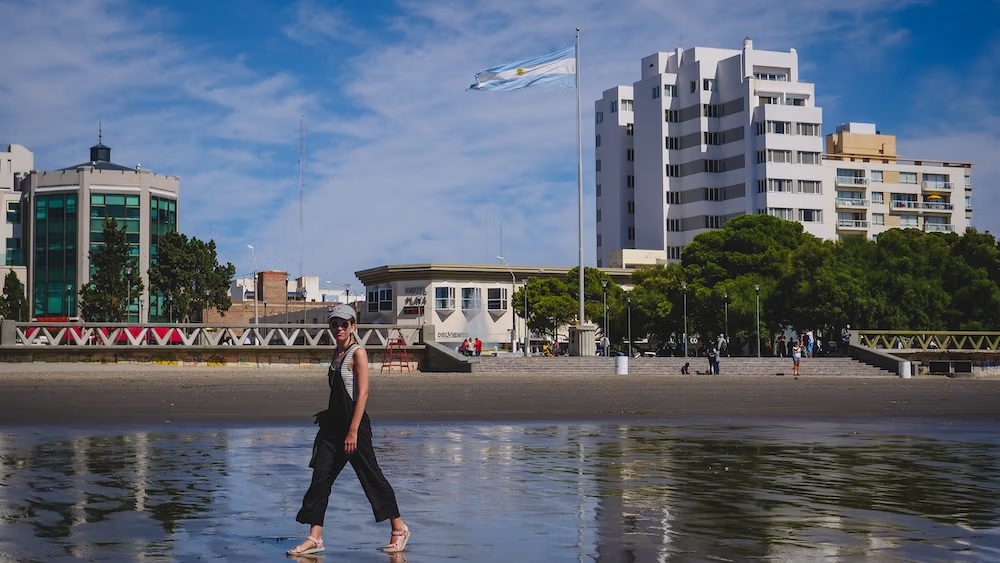
Puerto Madryn is the base most non-hikers land in without quite meaning to, because it’s the gateway to Península Valdés, and Península Valdés is about wildlife, not trekking. We ended up staying several days longer than planned and never once regretted it.
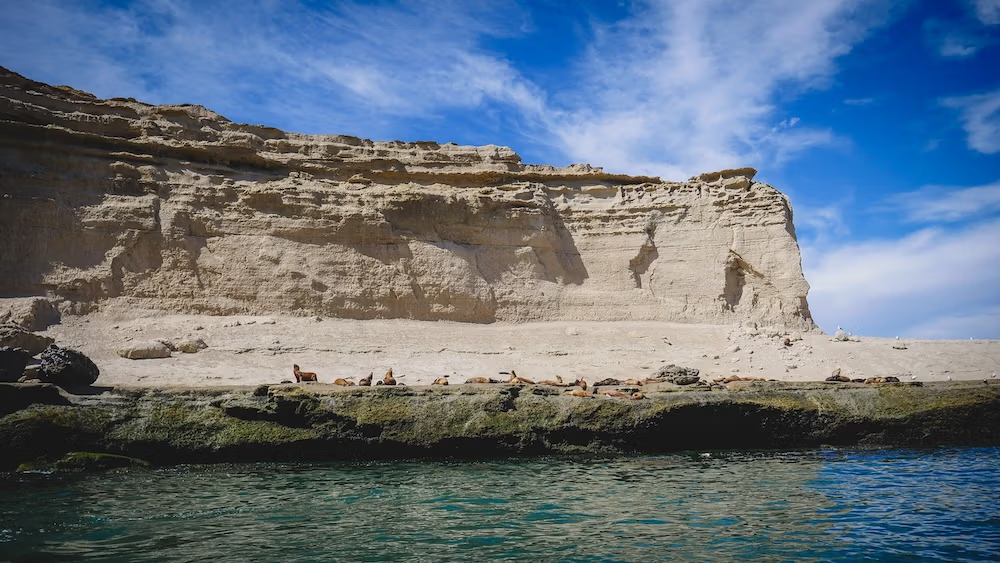
The wildlife day trip sets the tone for the whole area. You’re driven out to the peninsula, stopping at an interpretation center for a quick education in the local flora and fauna, then on to the coves and beaches where the elephant seals, sea lions, guanacos, and — depending on the season — penguins and even orcas actually are. Some of the classic viewpoints do involve a walk out along a cliff to a lookout, and on our first visit that turned into a much longer, much hotter walk than either of us bargained for, complete with getting mildly lost coming back. If that’s exactly the kind of thing you were trying to avoid, take the boat instead: several operators run a small-boat add-on that gets you right up next to the same sea lion colonies without the long approach on foot. We tacked it on almost as an afterthought and it ended up being the best hour of the day. You can check current departures for the same full-day wildlife tour before you land on dates. Whale-watching, when it’s in season, runs as its own separate boat trip out of the little port town of Puerto Pirámides — book it deliberately rather than assuming it’s bundled into the wildlife tour, because it usually isn’t.
Puerto Madryn rewards the days you’re not out on the peninsula, too. There’s a free museum built into a hundred-year-old house right on the waterfront that’s worth an hour by itself, a long boardwalk and beach you can walk with no agenda at all, and some of the best seafood we ate anywhere in the country. Give yourself a few spare days here and it stops feeling like a stopover — worth comparing current places to stay in Puerto Madryn before deciding how many nights to give it.
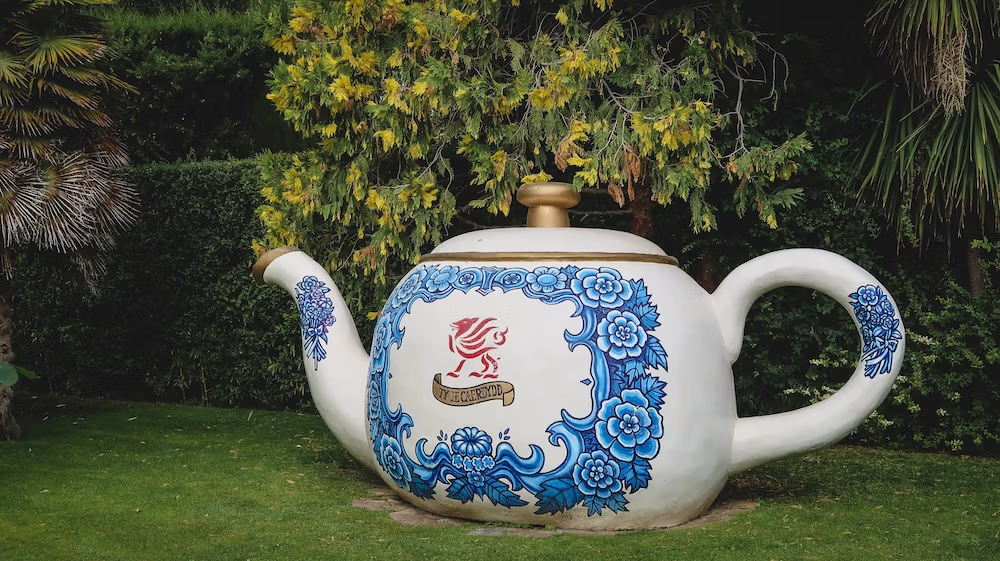
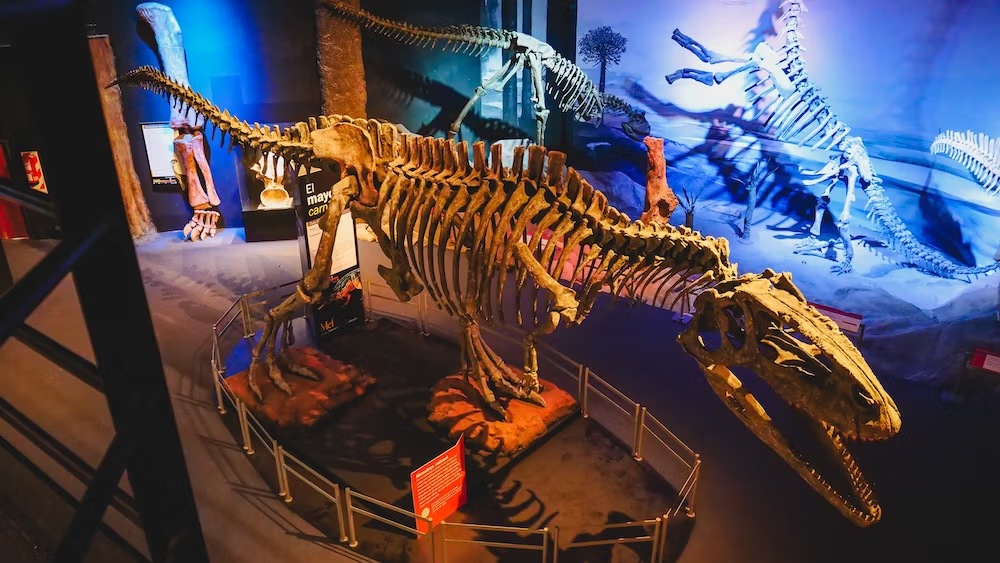
The other reason to base yourself on this stretch of coast is Welsh Patagonia, which nobody mentions until they’re already there and then won’t stop talking about. Trelew, an hour or so inland, turned out to be one of the most underrated bases on this whole coastline — walkable, quiet, home to a genuinely excellent paleontology museum, and considerably cheaper than staying by the beach. It’s easy to see what’s currently available in Trelew if you want to weigh it against staying on the water. From Trelew, or from Puerto Madryn directly, you can day-trip into a string of small Welsh settlement towns — Gaiman, Trevelin, and the more remote Dolavon — for tea houses serving absurdly enormous Welsh afternoon teas, small regional museums, and a slower pace than almost anywhere else in the country. One honest warning: these are small towns, and several of them close down completely for a day or two midweek. We arrived in Dolavon on precisely the wrong day and spent an afternoon wandering a town where almost nothing was open. It taught us to check ahead rather than assume a Welsh tea house keeps normal hours.

Bariloche: Where the Choice Depends on Exactly Where You Stay
Bariloche is the base most people already picture when they imagine a low-key Patagonia trip, and there’s good reason for that — but it only holds up if you’re precise about which part of the wider area you actually mean.
Bariloche proper, and the lake shore running out toward Llao Llao, is genuinely built for someone who doesn’t want to hike. The single best afternoon we spent there cost us the price of a public bus ticket: we rode out to the Llao Llao Hotel, one of the most photographed buildings in Argentina, for afternoon tea in its winter garden overlooking Nahuel Huapi Lake. You don’t need to be a guest to eat there, but it isn’t a casual walk-in anymore either — book the specific sitting you want, tea or the evening fondue, well ahead, because turning up and hoping doesn’t work the way it once might have.
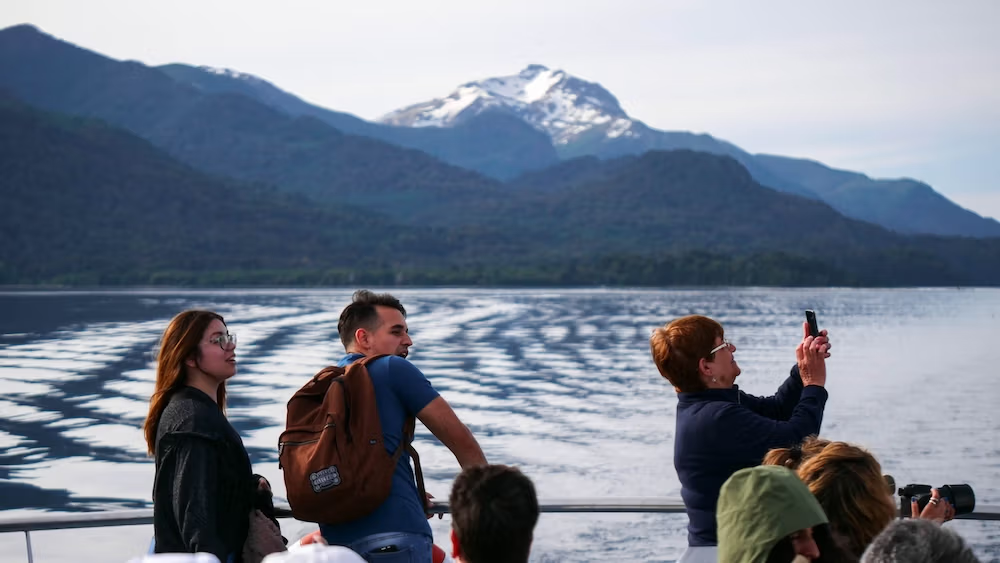
From that same stretch of coastline, a boat crosses Nahuel Huapi Lake to Isla Victoria and the Arrayanes forest, home to reddish, cinnamon-barked myrtle trees that are worth seeing up close. It’s a boat trip first, with a short guided walk of well under an hour through the forest itself, and a choice of longer or shorter trails on Victoria Island depending on how much energy is left in your legs. Neither of us would call it a hike. It’s a stroll with unusually good scenery on either side. You can look at the current boat schedule for the Isla Victoria crossing to see how it fits around everything else.
Then there’s Colonia Suiza, a half-day trip in the opposite direction that we nearly skipped and were glad we didn’t. It’s a tiny Swiss-founded village small enough to cross entirely on foot in about ten minutes — dirt lanes, a craft fair, slow-cooked curanto on the days it’s served. A local bus gets you there without any fuss, or if you’d rather not puzzle out the timetable, you can book a guided half-day version instead.
Here’s the part worth actually hearing rather than skimming past: “Bariloche” gets used loosely to describe the whole Lake District, including towns like El Bolsón further south, and that’s exactly where the recommendation stops holding. Stay in Bariloche itself and stick to the Llao Llao corridor, and this is one of the strongest non-hiking bases in the country — compare hotels along that corridor rather than just booking the first Bariloche listing you see. Wander the label any further and you can end up somewhere that was never built with you in mind.
El Calafate: The Surprise Glacier Base for Non-Hikers
If I had to send one committed non-hiker to exactly one town in Patagonia, this is it — and I expect it to raise the most eyebrows, since El Calafate sits right next door to El Chaltén. That neighbour is exactly why it works.
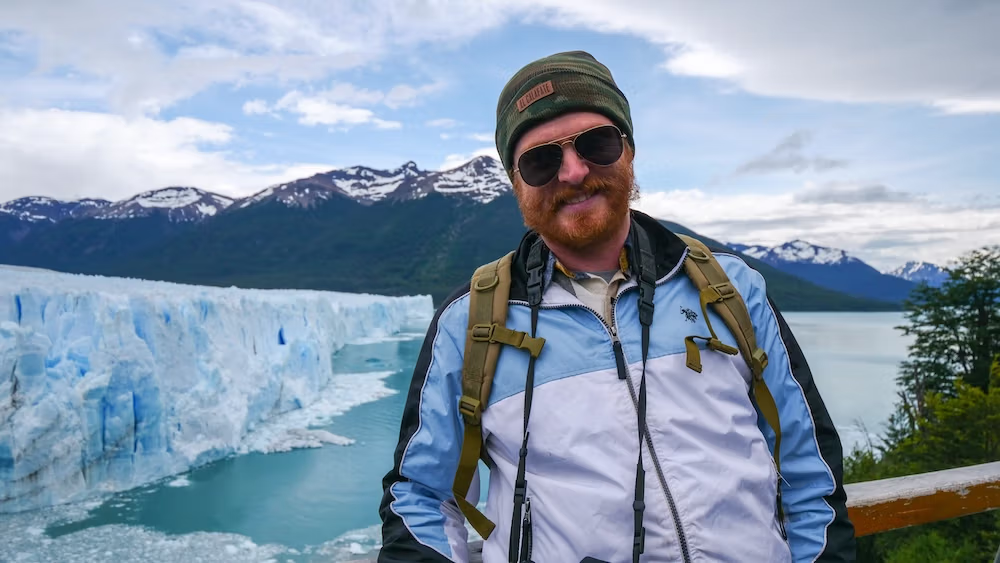
The Perito Moreno Glacier is the reason almost everyone comes here, and the way you actually see it doesn’t require a trek. The park has built an extensive network of boardwalks facing the ice directly — several separate circuits, each taking somewhere between half an hour and ninety minutes, connected by an upper walkway reached by elevator and long ramps rather than stairs. I’d rather be precise here than oversell it: this is a partially accessible system, not a fully accessible one. The upper circuit works well for anyone using a wheelchair or who simply doesn’t want stairs. Several of the lower circuits, which get you closer to the ice, do involve steps. But the fact that a real choice exists at all, a few dozen kilometres from the country’s hardest trekking, tells you most of what you need to know about this town.
Add a boat trip and the case only gets stronger. We took a full-day excursion combining walkway time with about an hour on the water directly in front of the glacier’s ice wall, close enough to watch whole chunks calve away into the lake — genuinely one of the best things either of us has done in Argentina, hiking or otherwise. If that particular version is more splurge than you had in mind, a shorter, cheaper boat trip up to the same ice face is bookable on arrival at the park, no advance planning required. If you’d rather sort it out before you land, you can check current availability for the boardwalk-and-boat combination in advance.
El Calafate also does something Puerto Madryn and Bariloche don’t quite manage: it gives you a proper rest day that still counts as sightseeing. Laguna Nimes, a bird reserve a short walk from town, is flat, easy, and stocked with flamingos when the light cooperates — genuinely one of the easiest outings we did anywhere in Patagonia, and worth building in specifically for the day after you’ve been on your feet at the glacier, or after real trekking in El Chaltén. The town itself adds a small paleontology museum built around a wonderfully oversized ground sloth skeleton, an ice bar and glacier museum with a free shuttle, and enough good restaurants that we never felt like we were settling for convenience. It’s worth comparing current stays in El Calafate against a map — somewhere within easy reach of both the bus terminal and Laguna Nimes covers most of what you’ll actually be doing on foot.
For a countryside day that still doesn’t ask much of your legs, an afternoon at Estancia Nibepo Aike — a working ranch inside the national park — gets you a sheep-shearing demonstration, a walk around the property, and a proper asado lunch, without committing to the multi-hour horseback version some tours build the day around. Ask for the shorter, walking itinerary specifically; it’s the one I’m describing here, and you can see the current version of that shorter, walking-focused itinerary before you book.
Ushuaia: The End of the World Without a Single Summit
Ushuaia sells itself on being the end of the world, and it’s easy to assume that means the end of easy travel too. It doesn’t.
The Train to the End of the World is the obvious starting point — a narrow-gauge steam railway originally built to haul prisoners and timber, now running a short, scenic loop into Tierra del Fuego National Park. It’s slow, it’s touristy, and neither of us cared, because the views along the valley are genuinely lovely and the whole outing sits comfortably inside a morning. Pair it with a Beagle Channel cruise and you’ve covered most of Ushuaia’s signature sights without setting foot on a trail: sea lions basking on rocks, cormorants by the thousand, the red-and-white lighthouse everyone photographs, and penguins if the season’s right, all seen from the deck of a boat. One current option combines the train with a Beagle Channel cruise in a single day, which is the version I’d book first. A few variants of that cruise add a short landing and mini-walk on one of the islands partway through — fine if you fancy stretching your legs, but not required to see any of it, so look for the boat-only version of that cruise specifically if you’d rather stay seated the whole way.
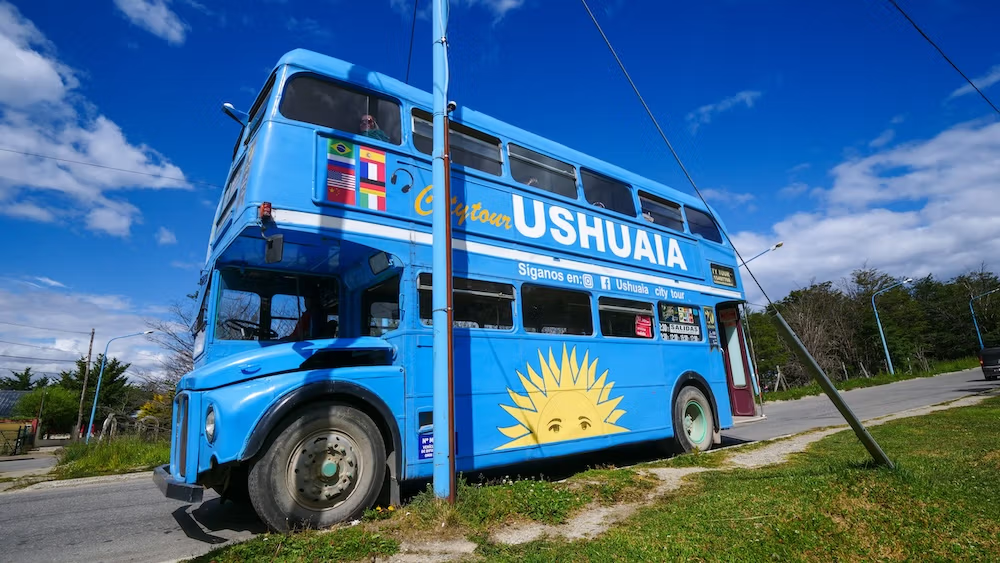
Back in town, a double-decker bus tour covers the city’s history in a couple of hours, and the old prison — Ushuaia literally began as a penal colony — has been turned into a genuinely absorbing museum complex, several exhibitions under one roof, with enough variety that we spent longer there than expected. The post office at the end of the world, a tiny corrugated-metal building on a pier inside the national park, is worth the trip for the passport stamp alone; Audrey collects them and still talks about that one specifically.
The one place I’ll be careful with is the park’s coastal trail, the Senda Costera, because it’s genuinely easier than almost anything we did — flat, well under the elevation gain of the treks we’d just come from in El Chaltén, the kind of path where you settle into a steady pace instead of watching your footing — but it’s still a real hiking trail, not a boardwalk. If eight kilometres one-way sounds like too much, the park also has a handful of much shorter trails near Bahía Lapataia, some as short as a few hundred metres, that give you the same coastline without the commitment.
If you’ve got a spare day and want somewhere genuinely quiet to decompress, Tolhuin, about ninety minutes away by a lakeside road, is worth knowing about — though I’ll be honest about what we found there. When we told people in Ushuaia we were headed to Tolhuin, more than one person asked us, with real confusion, why. It turns out to be exactly as sleepy as advertised: a big lake, a famous bakery, and very little else. We went anyway, right at the tail end of a long trip, and it was the correct decision for where we were at — but I wouldn’t build a Patagonia itinerary around it. Treat it as an optional wind-down, not a destination in its own right. Whatever you decide, it’s worth comparing current hotels in central Ushuaia first, since almost everything above starts from town.
Esquel: A Smaller, More Caveated Option
Esquel doesn’t belong on this list with quite the same confidence as the other four, and I’d rather say that outright than oversell it.
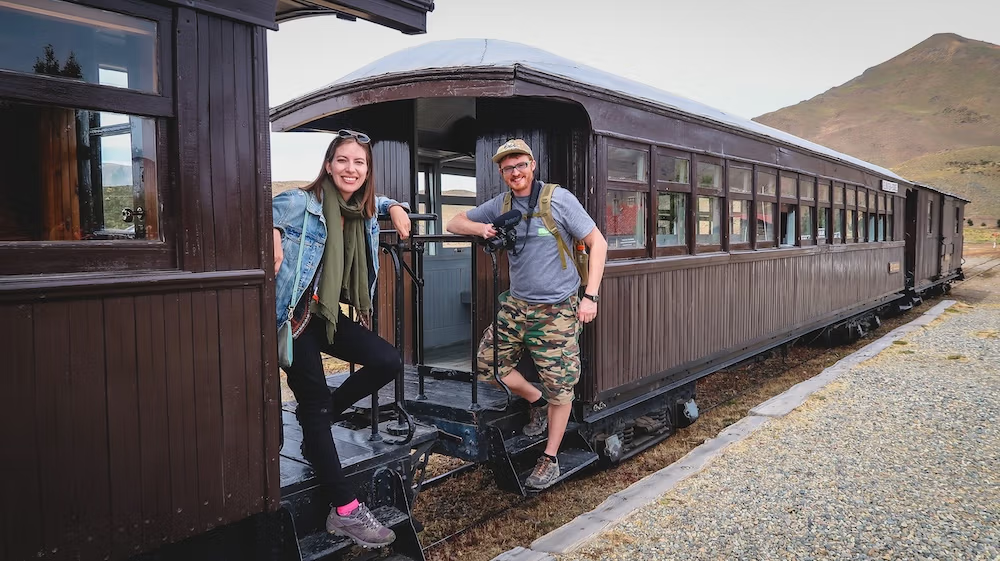
What earns it a place is the Old Patagonian Express — La Trochita, the same narrow-gauge steam train Paul Theroux wrote about — which still runs its short round trip out to Nahuel Pan and back, with a stop partway through long enough to poke around a small museum and a crafts market while the locomotive is turned around for the return leg. It’s touristy, it’s a little pricey for what it is, and I’d do it again without hesitation; it was genuinely one of my favourite things we did in Patagonia. Book ahead if you’re travelling in the high season, since it fills up. A short drive away in Cholila sits the crumbling ranch where Butch Cassidy hid out for a few years after fleeing the United States — an odd, quiet, roadside curiosity that takes barely an hour and usually has nobody else there. And Esquel makes an easy base for day trips into Trevelin, one of the loveliest Welsh towns we found anywhere, with its own vineyard lunches, tea houses, and — I promise I’m not making this up — a mechanical dragon that breathes fire over the town square most evenings.
The honest caveat: Esquel also markets itself hard as a hiking base, with trailheads for genuine day hikes starting right at the edge of town. That’s not a knock against staying there — it just means you’re choosing a town that serves both crowds, rather than one built exclusively around the version of a day I’m describing here. If it still fits what you’re after, it’s worth comparing current stays in Esquel against the other four bases before deciding.
Choosing Between Them
| Base | Signature low-effort experience | How much walking it actually asks | Good backup for a bad-weather day | Best suited to | Main trade-off |
|---|---|---|---|---|---|
| Puerto Madryn / Trelew | Wildlife day trip with a boat add-on | Minimal if you take the boat option | Free waterfront museum, town museums in Trelew | Wildlife-first trips, Welsh culture | Small Welsh towns close mid-week without much warning |
| Bariloche | Llao Llao tea + Nahuel Huapi boat to Isla Victoria | A short guided forest walk, nothing more | Chocolate shops, restaurants along the lake | Iconic scenery without technical difficulty | Easy to drift into the wider Lake District, which isn’t built the same way |
| El Calafate | Perito Moreno boardwalks + glacier boat trip | Boardwalk stairs on the lower circuits only; upper circuit is ramp-and-elevator | Town museums, the ice bar | Anyone who wants the glacier without El Chaltén’s trekking | Right next door to the actual trekking capital — confirm which town you’ve booked |
| Ushuaia | Beagle Channel cruise + End of the World train | None, on a boat-only itinerary | The old prison’s museum complex | Bragging rights on reaching the end of the world without a summit | Its “easy” trail is still a real trail, longer than it sounds |
| Esquel | La Trochita steam train + Welsh day trips | Minimal for the train and tea houses | Restaurants, the mid-ride museum stop | Shorter stays, train enthusiasts, a lighter Welsh-culture add-on | The town also sells itself as a genuine hiking base |
Once you’ve settled on which of these actually fits your trip, the simplest next move is checking what’s currently on the calendar for your dates, since availability and pricing shift with the seasons far more in Patagonia than in most places. That means going back to whichever town’s stays you were weighing above rather than booking blind off this list.
None of this makes “skip El Chaltén” bad advice. It really is built for people who want to spend the better part of a day getting to Laguna de los Tres, and if that’s not your trip, you’re right to stay away. But it’s an incomplete plan on its own, because it tells you nothing about the four or five towns you’ll actually be choosing between instead. Pick your base the way we eventually learned to: by what’s specifically waiting for you there — a boat, a boardwalk, a steam train, a tea house — not by how far it happens to sit from the nearest famous trailhead. That’s the only question that ever mattered.
Frequently Asked Questions
Do I need to be a hotel guest to have afternoon tea at the Llao Llao Hotel?
No, non-guests can book afternoon tea or the evening fondue at Llao Llao, though I’d reserve the specific sitting in advance rather than walking in and hoping for a table.
Is the Perito Moreno Glacier accessible without hiking?
Yes, largely. The park’s boardwalk network lets you see the glacier’s ice wall up close without trekking, and the upper circuit is reachable by elevator and ramps rather than stairs, though the lower circuits do involve some steps.
Which Patagonian town is best for wildlife without long walks?
Puerto Madryn is the strongest option, since the day trip to Península Valdés includes an optional small-boat add-on that gets you close to sea lion colonies without the longer cliff-top walk some viewpoints require.
Is El Bolsón a good base for someone who doesn’t want to hike?
Not really. El Bolsón markets itself as a trekking destination first, with one of South America’s largest networks of mountain refuges, so its best-known activities lean toward genuine hiking rather than low-effort sightseeing.
Can I see the Beagle Channel in Ushuaia without doing a hike?
Yes. A boat-only cruise covers the channel’s sea lions, cormorants, and lighthouse entirely from the deck; just confirm you’re booking a version without the optional island mini-walk if you want to stay fully seated.
Is Esquel a good base for non-hikers?
It’s a reasonable smaller option built around the La Trochita steam train and nearby Welsh towns, but Esquel also markets itself as a genuine hiking base, so it doesn’t fit the brief as cleanly as the other four towns.
How much walking does the Nahuel Huapi boat trip to Isla Victoria involve?
Very little. It’s mostly a boat crossing, with a guided walk through the Arrayanes forest that takes well under an hour, plus the option of a longer or shorter trail on Isla Victoria itself.
Should I avoid El Chaltén completely if I don’t hike?
If you have no interest in multi-day trekking, yes, El Chaltén isn’t built for you — but that alone doesn’t tell you where to stay instead, which is the actual question this article answers.
Project 23 Argentina: This guide is also available in Spanish. [Leé la versión en castellano: Los mejores lugares para alojarse en la Patagonia si no hacés trekking]
This article contains affiliate links. If you book through one of these links, I may earn a commission at no extra cost to you.