
The accommodation mistakes that have cost us the most energy in Patagonia have rarely started with a terrible room. They usually started with a perfectly decent room that did the wrong job.
A hotel looked expensive until it saved us from hunting for breakfast before a long day. An apartment looked practical until the internet stalled, the shower fought back and we discovered that a kitchen also comes with shopping, dishes and leftover food. A cabin felt wonderfully Patagonian until the wind started treating it like a percussion instrument. An estancia looked like accommodation on the booking screen, then quietly took over our meals, transport and daily schedule.
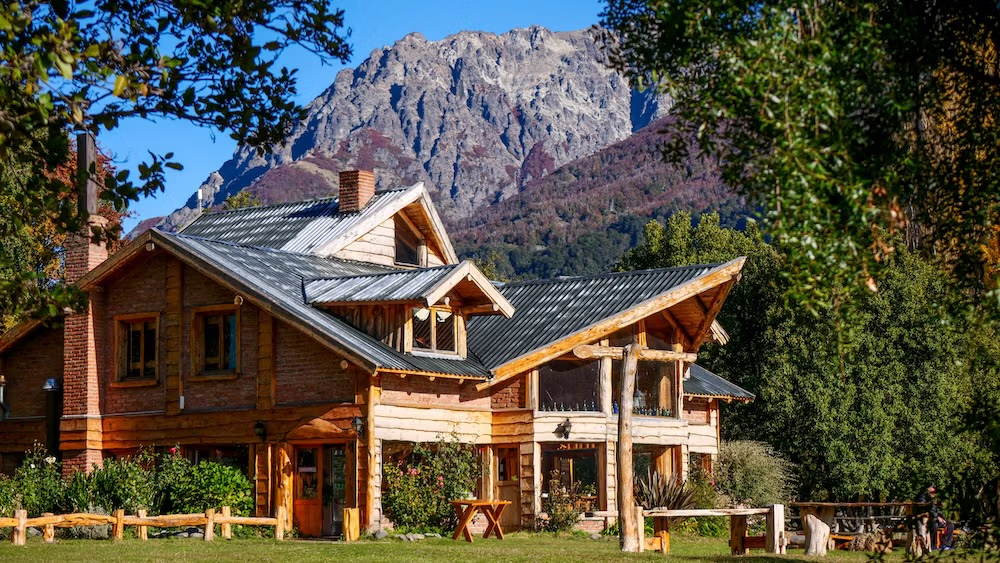
Audrey and I have stayed in all four formats across Argentine Patagonia, along with a few awkward hybrids that refused to behave according to their labels. I tend to notice whether the Wi-Fi works, whether there is a proper table and how difficult it will be to arrive with luggage. Audrey notices breakfast systems, room layouts and bathrooms—often before the bathroom has a chance to injure one of us.
Between us, we have worked from dining tables, hand-washed clothes in hotel rooms, changed properties because a hotel was full, waited through heroic upload estimates, slept downstairs during heavy wind and learned that “sleeps five” can mean “contains five places where a human body might technically fit.”
That is why this is not a list of the best hotels in Patagonia. It is a guide to choosing the right accommodation format for the trip you are actually planning.
The useful question is not simply where to stay. It is this: which parts of the day do you want the accommodation to handle, and which parts are you willing to handle yourself?
The Label Is Usually the Least Useful Part
Patagonia accommodation categories blur quickly once you open the individual listings.
A lodge may be a small hostería in town. Another lodge may sit far from the nearest settlement and organize every meal and activity. A cabaña may be a freestanding wooden cottage, a row of units in a complex or an apartment with a more rustic wardrobe. An eco-hotel may behave partly like a serviced apartment. Some estancias sell a room and breakfast. Others sell an entire ranch-based programme.
Even the booking platforms overlap. Properties can appear beneath more than one category, which is useful for discovery and useless as a final definition.
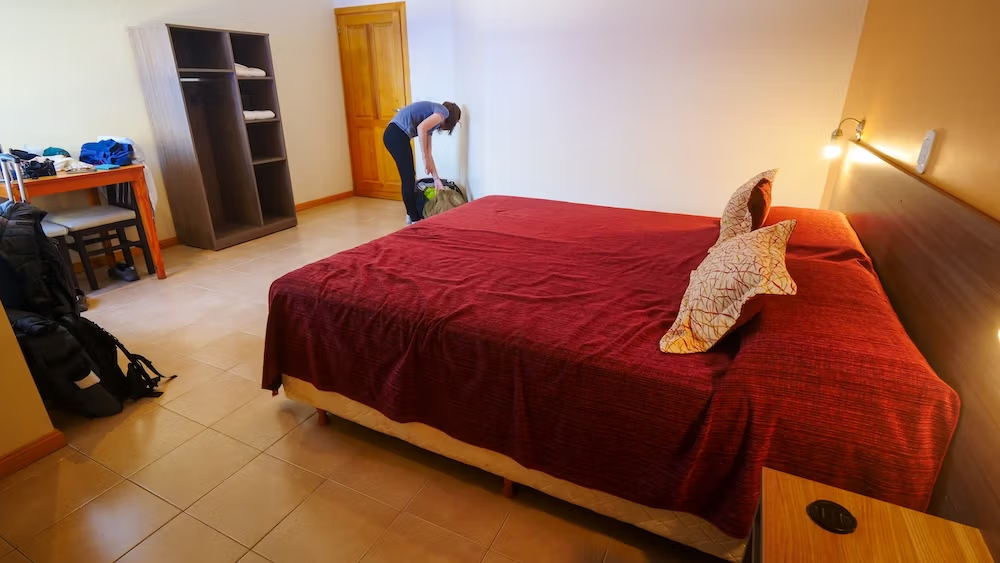
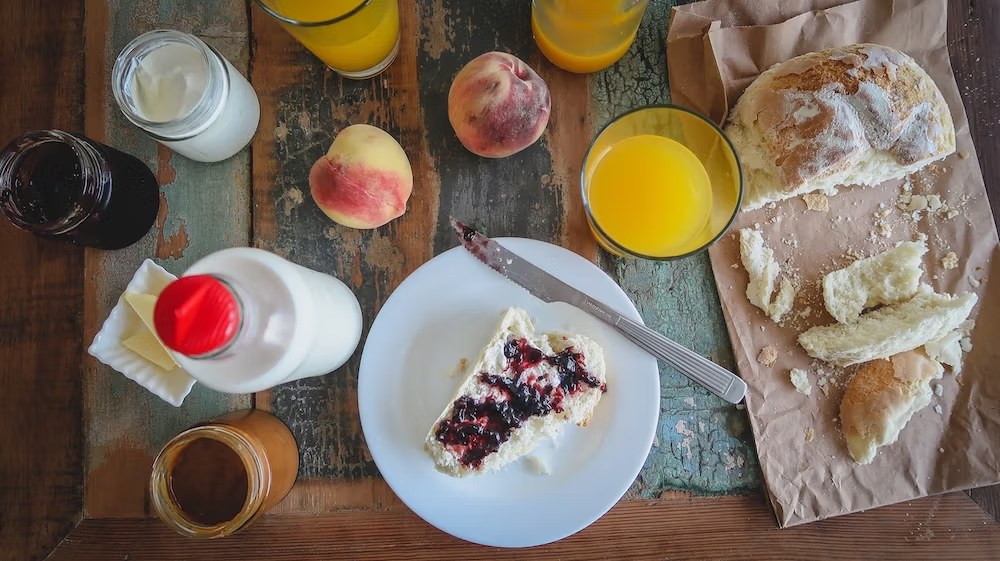
We experienced this at Oceano Patagonia in Puerto Pirámides. When we stayed there, it had the parts of a hotel we valued—staff, a beachfront setting and fresh bread in the morning—but our room also had a kitchenette and a refrigerator stocked with breakfast supplies. We could wake up, eat when we wanted and use the dining nook as a small office. Audrey was genuinely sad to leave.
Vertical Lodge in El Chaltén sat at another point on the spectrum. Despite the lodge name, our stay felt closer to a town hotel or hostería: a large room, breakfast, a desk and a location close enough to walk from the bus terminal. The property supported our hiking plans. It did not become the plan.
Estancia Arroyo Verde and Estancia Tecka were different again. Meals, staff, guides, animals, weather, transfers and time with other guests shaped the entire stay. We were not returning to a room after a day elsewhere. The property itself determined a large part of the day.
So before I compare prices or fall for photographs, I now want to know what the place actually does.
Does someone serve breakfast, or am I buying groceries? Is there a real kitchen, a hot plate or merely a kettle sitting beside two cups? Can I store luggage? Is there someone to call when the shower produces either glacier water or lava? Can I walk into town? Will I need a transfer every time I want to leave? Is the accommodation there to support my itinerary, or is it the main experience I am booking?
Those answers matter more than whether the listing calls itself a lodge, hotel, cabin or residence. Once you understand the overlap, you can compare current Patagonia lodge options on Booking.com without assuming every result offers the same style of stay.
Hotels: Pay for the Jobs They Remove
The strongest argument for a hotel in Patagonia is not luxury. It is the possibility of handing over a few repetitive jobs when your trip is already doing enough damage to your energy.
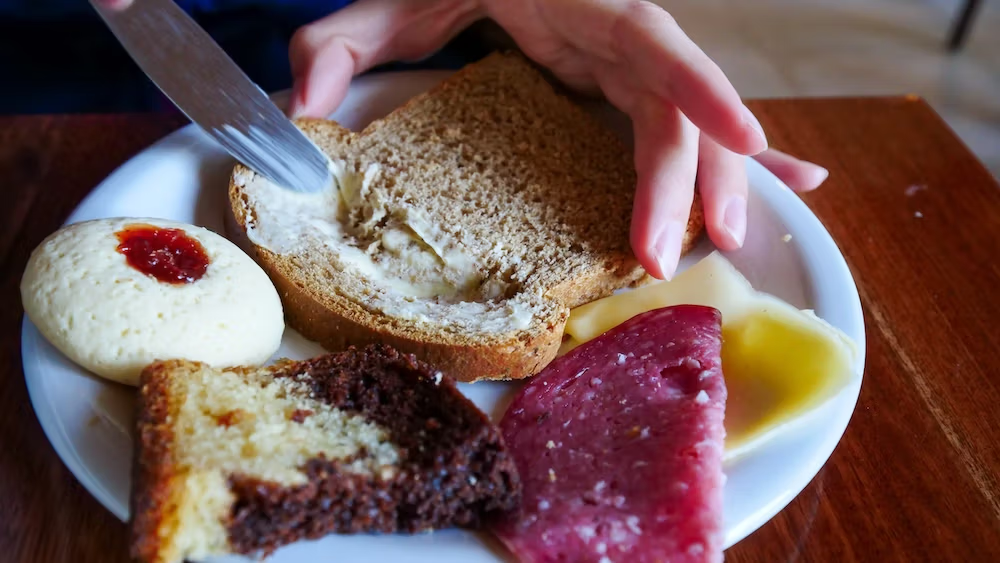
Breakfast can protect an early start
At Vertical Lodge in El Chaltén, breakfast mattered because it removed one task from a hiking morning. We did not need to shop the previous night, assemble something in the room or search for a café that opened early enough. We ate, organized our gear and headed out.
That sounds small. Patagonia is full of small tasks that become surprisingly large after a long bus ride or before a full day outside.
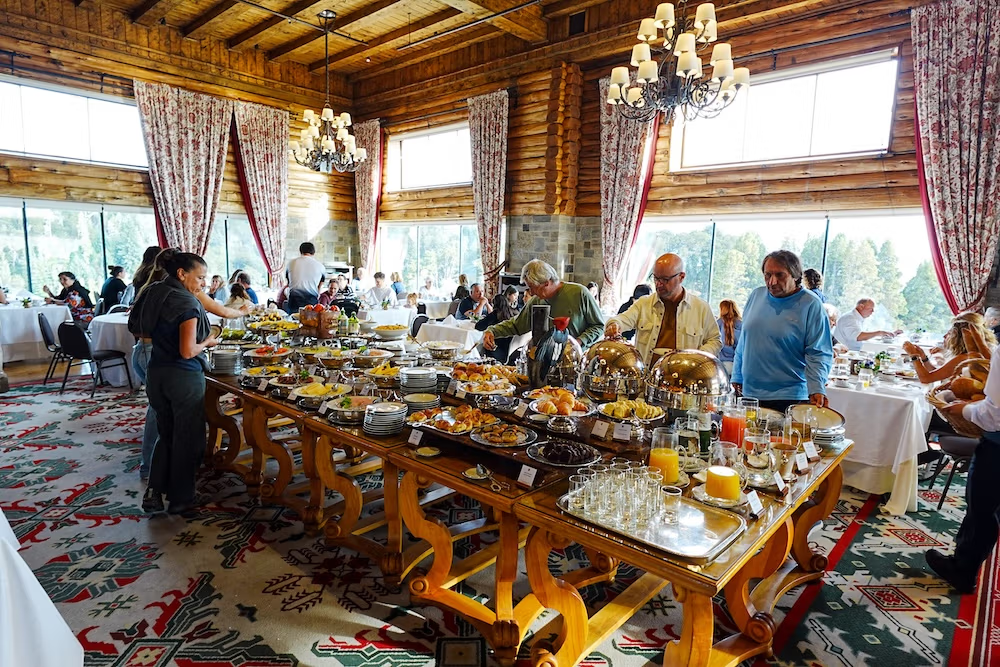
Breakfast only helps when it fits your schedule. A generous spread beginning at 8:00 is no use when a transfer leaves at 7:15. Someone with dietary restrictions may be better served by a kitchen. A traveller who enjoys a slow morning might care about variety. I mostly care that food appears before I become unpleasant.
The lesson is not that hotel breakfast is always better. It is that included breakfast can remove friction when the timing and menu suit the trip.
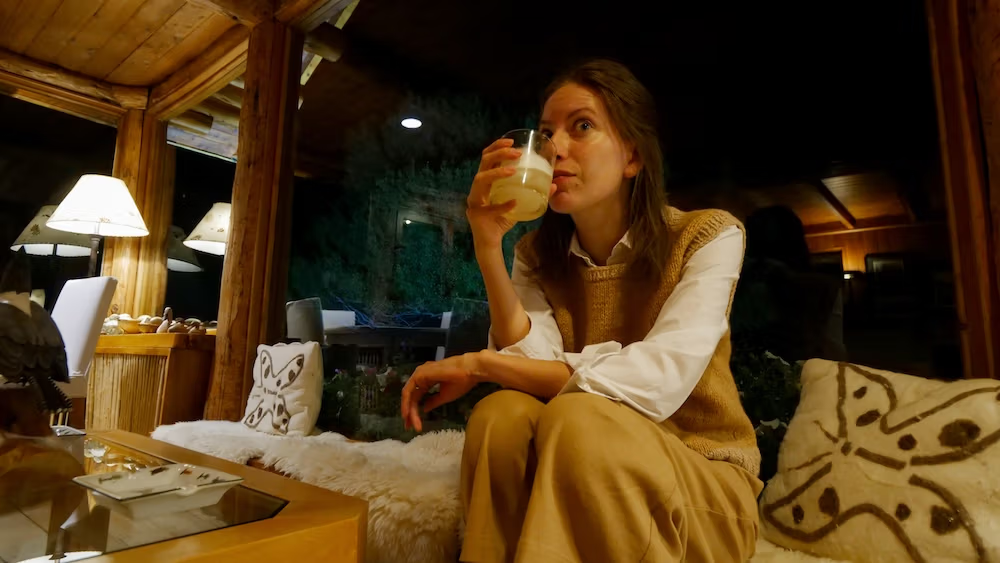
Reception earns its keep on ugly travel days
Patagonia arrivals are not always civilized. Buses pull in early. Flights can leave large gaps around check-in. You may have several bags, nowhere to sit and the haunted expression of someone who has spent the night trying to sleep at a forty-degree angle.
A staffed hotel can soften that transition. In Río Gallegos, we were able to leave our luggage and use a hotel lounge while waiting to continue the journey. That lounge was not the reason we booked, but it became one of the most useful spaces in the building.
Hotels can also make activity logistics easier. In Puerto Madryn, a wildlife excursion collected us outside our hotel in the morning. That was one historical arrangement with one operator, not a universal hotel benefit, but it saved us from reaching a separate meeting point before a long day.
This is why I often value location and reception more than extra floor space on a short stay. A small central room can outperform a beautiful apartment that creates two taxi rides every day.
Check the details, though. Reception may close overnight. Luggage storage may be informal or unavailable. “Early check-in requested” does not mean the room will be ready. A small hostería can operate very differently from a large hotel.
A hotel does not solve everything
Vertical Lodge gave us breakfast, space and a useful location. It also gave us unreliable Wi-Fi during our stay. Mobile data was not working for us either, and at one point even processing payment became difficult. We hand-washed clothing in the room.
That is a good summary of the hotel trade-off. The property can remove breakfast and arrival work while leaving you without a kitchen, washing machine or dependable connection.
“Wi-Fi available” means a network exists. It does not mean I can upload a large video before the next ice age. “Desk” may mean an actual workspace or a narrow surface already occupied by a lamp, telephone and tray of glasses.
For a two-night stay built around hiking, these limitations may be irrelevant. For a week of working and travelling, they can dominate the experience.
Travellers interested in the same El Chaltén hostería we used can check current rooms and conditions at Vertical Lodge. Our breakfast, room and internet experience belongs to that particular stay, so verify the present inclusions before booking.
A hotel makes the most sense when you will use the services you are paying for: breakfast, reception, housekeeping, luggage support or a transport-friendly location. If none of those solves a real problem, the hotel advantage starts shrinking quickly.
Once those needs are clear, you can compare current Patagonia hotel options on Booking.com by location, breakfast conditions and the services that actually matter to your itinerary.
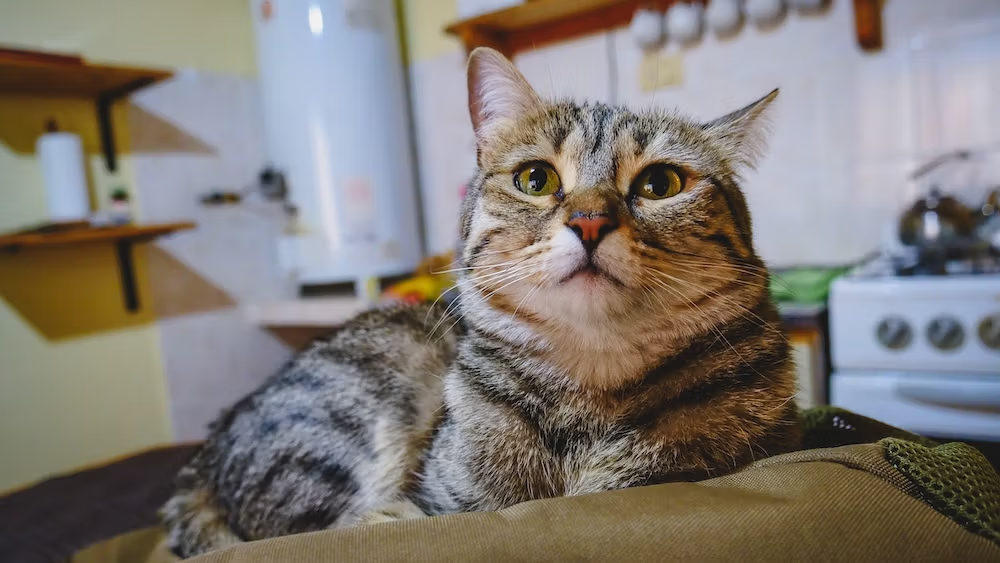
Apartments: Freedom Comes With Washing Up
Apartments have probably suited Audrey and me more consistently than any other format. We often travel slowly enough to need groceries, a table, space for our luggage and some version of a normal routine.
They give us control. They also give us chores, key collection, rubbish, dishes and the occasional plumbing adventure.
A kitchen changes the day even when you barely cook
We have stayed in apartments with proper kitchens and hardly touched the stove. That does not mean the kitchen was wasted.
Breakfast at home, tea, fruit, sandwiches, cold drinks and reheated food can be enough to change the trip. You stop needing a restaurant every time you are hungry. You can eat before an early departure. You can come back exhausted and avoid negotiating a menu when your brain has already resigned for the day.
Our Puerto Madryn studio was a good example. We ended up there because the hotel we had previously used could only take us for one night after we returned from Península Valdés. The replacement apartment was compact, but it had a desk, a kitchen and faster internet than the hotel. It was also cheaper at the time.
That was a successful last-minute switch. It does not prove that apartments always save money.
An apartment only saves on food if you actually use the kitchen. Cleaning charges, minimum stays and transport can erase the nightly-rate advantage. Groceries also have a habit of becoming a parallel travel collection: half a packet of pasta, three lonely onions and a bottle of sauce you carry to the next town because throwing it away feels immoral.
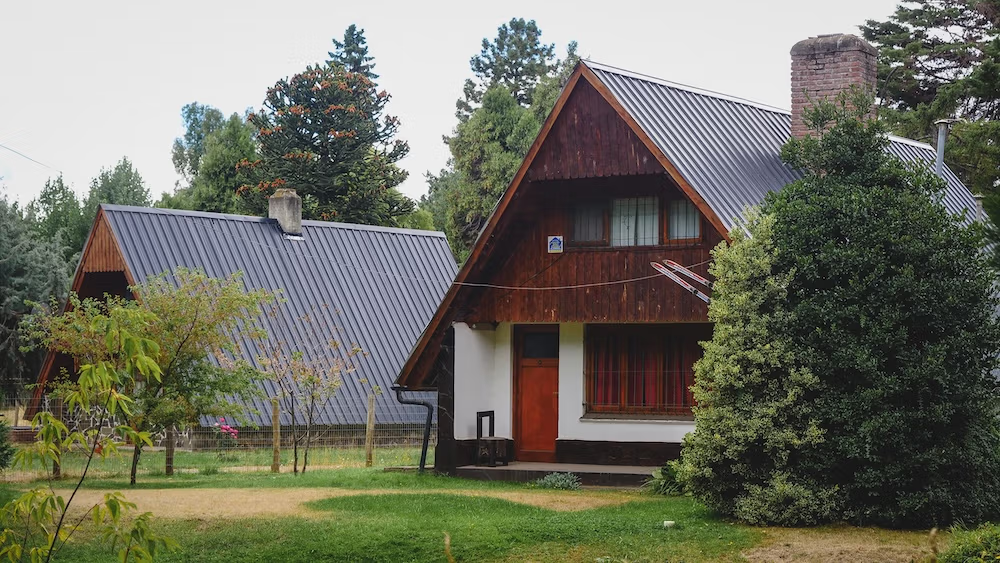
Read the kitchen description carefully. A kitchenette may contain a microwave, kettle and hot plate rather than a conventional stove. In our basic A-frame cottage in El Calafate, we had enough equipment for simple food but no reason to imagine ourselves operating a serious restaurant.
Check for usable pans, a knife, refrigerator space and the kind of cooker you expect. The tiny kitchen symbol on a listing has hidden many disappointments.
Space matters when the room becomes an office
Apartments pull ahead when the accommodation needs to function as more than a bedroom.
In Trelew, a two-bedroom apartment cost barely more than the smaller choice available to us at the time. That extra room changed the stay. Audrey and I could spread out, sleep separately when useful and work at a large table. The neighbourhood was quiet, the location remained practical and the property gave us room to slow down.
Then we attempted to upload a video.
The upload ran for roughly fourteen hours and still failed. We had the table, chairs and separate rooms required to work. The internet had other ambitions.
That experience taught me to separate space from functionality. A dining table can work as a desk. It can also destroy your back. Wi-Fi can handle email and fail completely when asked to move a large file. If work is essential, ask a direct question and carry a backup rather than trusting a photograph of an open laptop beside a tasteful coffee cup.
Our Esquel cottage worked better as a longer base. We stayed eight nights, ate breakfast and dinner at home, used the table for work and enjoyed being near the centre without sitting in the busiest traffic. The kitchen, heating and hot water supported ordinary life between day trips.
The loft supported my head.
I hit a low beam hard enough to lose my balance and fall. I was lucky not to do more serious damage. The property had several extra beds upstairs, but that did not mean every centimetre of the layout was friendly to a tall adult moving around at night.
This is where advertised capacity becomes slippery. “Sleeps five” may mean one enclosed bedroom, a sofa bed and several mattresses beneath a sloped roof. Count the bathrooms, closed doors and places where people can stand upright—not only the beds.
Independence becomes less charming when something breaks
A hotel usually gives you someone downstairs. An apartment may give you a phone number, a key box and faith.
Our Villa La Angostura loft had a superb central location and helpful hosts. It also had a slippery shower. Audrey fell badly enough that we bought a bath mat and left it there for whoever arrived next.
In Ushuaia, we liked our apartment’s living space, kitchen and bed. The bathroom was the weak point. The shower alternated between water too cold to enjoy and water hot enough to punish hesitation, while the curtain tried to attach itself to us.
These were individual units. They do not establish anything about apartments across Villa La Angostura or Ushuaia. They do show why the exact room matters more than the category.
Before booking an apartment, I check how the keys are collected, whether help exists after hours, where luggage can go, what the kitchen actually contains, how the property is heated and whether the advertised workspace belongs to the exact unit.
Apartments are strongest when you will use the independence: cooking some meals, working, staying long enough to need space or simply wanting control over the daily rhythm. When the trip is short and every day is packed with activities, the chores and access logistics can outweigh the extra room.
Once that independence is genuinely useful, compare current Patagonia apartments on Booking.com and inspect the exact kitchen, heating, access and laundry facilities before choosing a unit.
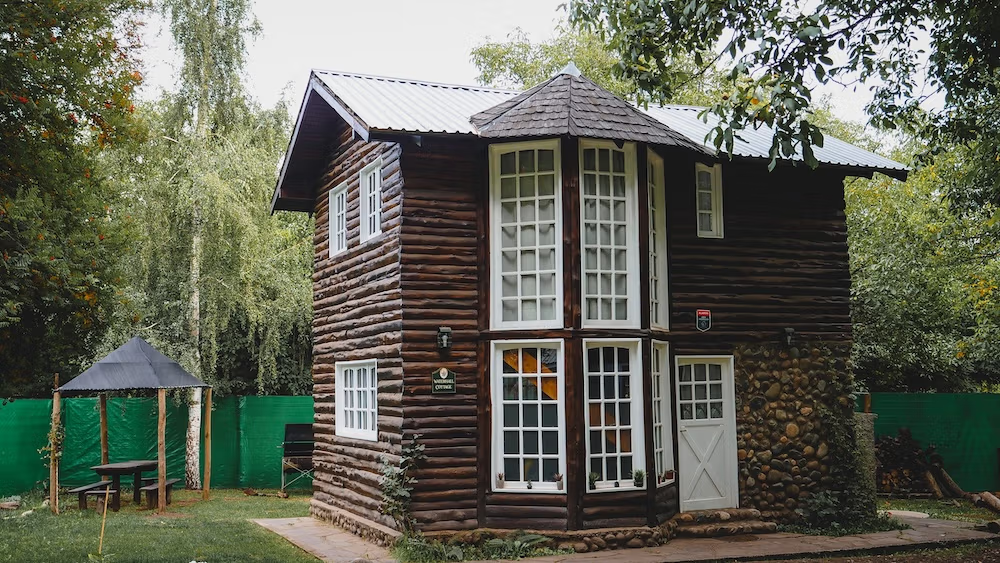
Cabins and Cabañas: Patagonia Is Still Outside the Walls
Cabins feel like the natural accommodation choice in Patagonia. Wood, trees, mountains, a little garden, perhaps a barbecue. The photographs practically smell of pine.
Then the wind arrives and reminds you that the building is also made of wood.
The town-edge cabin can be a sweet spot
Our cottage in El Bolsón represented the best version of the format for us. It felt quiet and removed from the busiest streets, yet we could walk into town. We had a kitchen, several sleeping spaces, a strong heater, outdoor areas and enough room to live rather than merely unpack.
We extended our stay twice, and the cottage contributed to that decision.
Our host, Valentín, contributed even more. He left us bread and tea, offered useful suggestions, became a friend and helped us reach places we might otherwise have missed. Accommodation can shape a trip through human contact as much as square metres.
I would never book another cabin assuming the owner will become our local guide, driver and friend. Valentín was exceptional. The broader lesson is that a small property with an involved host can sometimes provide more useful support than a larger hotel while preserving privacy.
A town-edge cabin can occupy a very useful middle ground: more atmosphere and outdoor space than a conventional apartment, more independence than a hotel and enough access that a car does not become compulsory.
That is a completely different product from an isolated cabin reached by a long gravel road, even if both appear beneath the same cabaña filter.
Heating and wind matter more than rustic charm
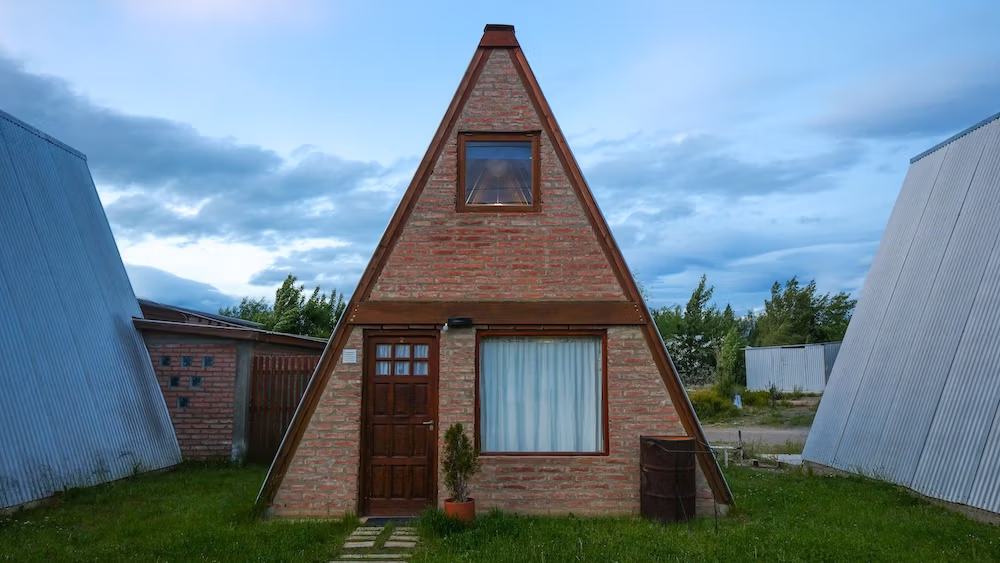
Our A-frame in El Calafate sat at the rougher end of the cabin spectrum. It had an electric heater, internet, a table and equipment for simple food. I described it as roughly one step up from camping.
Then came the first windy night.
The structure rattled so heavily that we gave up on the upstairs sleeping area and moved downstairs. The three little pigs had a wolf. We had Patagonia.
The cottage still did the basic job. We slept there, worked there and used it as a base while spending most days elsewhere. It also taught us to look beyond timber walls and interesting architecture.
Ask what kind of heating exists and which rooms it reaches. Check whether the sleeping loft sits directly beneath the roof. Look at road access and distance to groceries. Find out whether the “kitchen” is a stove or a collection of portable appliances.
Bad-weather recovery space deserves attention too. A tiny cabin can feel cosy for an evening and very small after two days of wind. If the itinerary depends on outdoor plans, the living room may end up doing more work than expected.
Capacity is not comfort
Cabins often create extra sleeping capacity through lofts, bunks and sofa beds. This can be excellent value for a group. It can also produce five people sharing one bathroom and ducking beneath the same ceiling beam.
Our Esquel loft demonstrated the height issue directly. At Arroyo Verde, we toured a separate cabin with bunks, lake views and more seclusion than the main lodge. We did not sleep there, so I cannot tell you how it felt overnight. Seeing a room is not the same as living in it.
When a cabin advertises a large capacity, check how many bedrooms are enclosed, where the bathroom sits, how steep the stairs are and whether the dining area still functions after every sofa has become a bed.
The cabin category on Booking.com is useful once you have decided you want this trade-off, but the results can include chalets, lodges, hosterías, bungalows and units that behave like apartments. Open the individual listing and judge the actual building.
I would choose a cabin when the setting and space are part of how I want to spend the trip. If I am leaving before breakfast and returning after dark, paying for a garden, barbecue and living room I never use becomes difficult to justify.
Travellers who want the setting and extra space can browse current Patagonia cabins and cabañas on Booking.com, keeping in mind that the category includes several overlapping property styles.
Estancias: You Are Booking a Rhythm, Not Just a Room
Estancias are the hardest format to compare by price because the room can be the least important part of the purchase.
Some rural properties offer ordinary accommodation in a ranch setting. Others bundle meals, activities, transfers, guiding and a shared programme. In the second model, the estancia is not supporting the itinerary. It is replacing a section of it.
Meals and staff become part of the experience
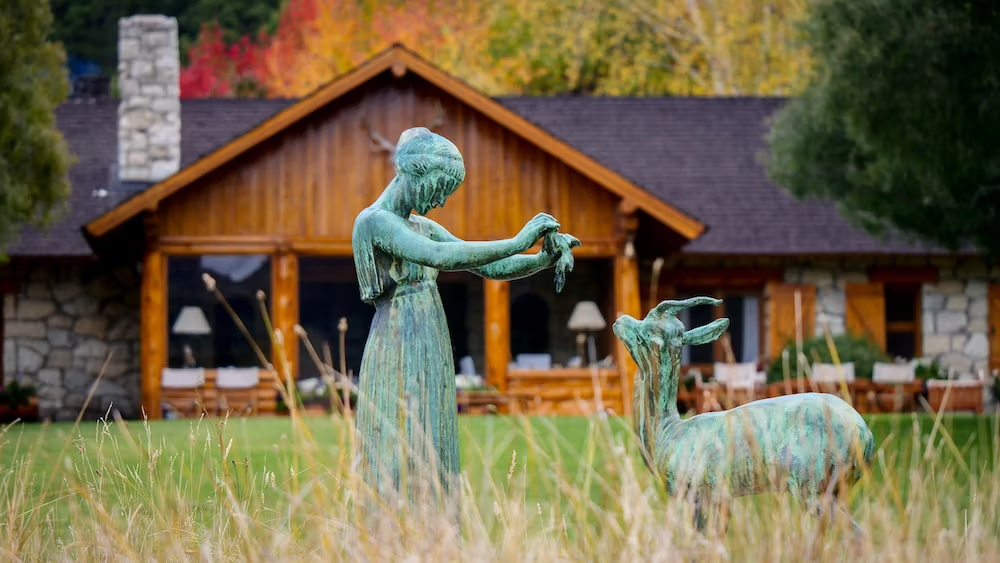
Audrey and I stayed for two nights in a private room in the main lodge at Estancia Arroyo Verde. The property felt warm and homey, with shared meals, drinks before dinner, animals around the grounds and regular interaction with family members, staff and other guests.
The meals did more than feed us. They created a social rhythm we would never have had in an apartment.
The first day also brought serious wind and cancelled activities. Instead of following the original programme, we stayed closer to the lodge, explored the property and spent time with the animals. The accommodation had to carry the day.
That is an important estancia question: what happens when the signature activity cannot operate? A remote property needs either an alternative programme or enough indoor and social life that a cancelled day does not feel like detention.
Some travellers will love communal meals and a shared timetable. Others will want privacy after a long day. Neither preference makes the trip more or less authentic.
Transfers can simplify the stay after complicating the arrival
Estancia Tecka made the access problem obvious. We reached the town of Tecka and discovered the guest lodge was still far down a dirt road. Our ordinary taxi was not simply going to drop us at reception. The estancia sent a driver to collect us.
Once we arrived, that remoteness became easier. Staff, meals, guiding and transport organized the days. We went fishing with a guide, ate communally and had a riverside picnic. The working ranch and the distances within it determined what happened next.
Our stay was hosted, so I cannot honestly use it as an independent verdict on the current price. It did show me why an estancia package cannot be compared with a room-only hotel by looking at one number.
One estancia may include airport or town transfers, meals, guiding, internal transport, licences, activities, drinks or laundry. Another may include a room and breakfast. The real product is the complete list of responsibilities transferred from you to the property.
Ask how you arrive, whether the transfer is included, whether arrival days are fixed and how much freedom you have to leave once there. A remote estancia can eliminate daily transport decisions while making the first and last day more rigid.
The schedule is either a relief or a restriction
An estancia programme can remove decision fatigue. Breakfast appears. The activity begins. Lunch follows. Someone knows where the gear is and how long the drive will take. Dinner gives the day a natural ending.
That can be wonderful after weeks of arranging buses, groceries and check-ins.
It also means surrendering spontaneity. You may eat with the group, follow activity times and accept that weather or logistics determine the options. Travellers who want to change restaurants nightly, wander independently and make plans at noon may find the structure frustrating.
Booking.com does not have one perfect category for overnight Patagonia estancias. Rural stays appear among country houses, lodges, cabañas and other accommodation. You can compare current rural and country-house stays in Patagonia or browse Patagonia lodge inventory, but the individual listing still needs to explain the meals, access and activities.
Before booking, I want answers to four questions: What meals are included? Which activities are included? How do I reach the property? How much control do I retain over the day?
I would choose an estancia when staying on the property is one of the main reasons for the trip. Horses and an attractive dining room are not enough.
The Unsexy Checks That Save the Stay
Once I know the broad format, I stop comparing categories and start hunting for the detail most likely to annoy me for several consecutive days.
This is not as enjoyable as looking at mountain views. It is much more useful.
Meals
Is breakfast included, stocked in the room or served at a fixed time? Are lunch and dinner optional, included or compulsory? Is the nearest grocery store walkable? If the property is remote, can you buy anything after arrival?
A meal plan reduces work and increases dependence. A kitchen increases control and creates shopping, cooking and cleaning. Neither arrangement wins automatically.
Laundry and work
A washing machine is never safe to assume. Neither is hotel laundry. At Arroyo Verde, laundry has not historically been part of the standard offering, while some experience-led estancia packages elsewhere may include it. Check the individual stay.
For internet, decide what “working” actually means. Email and maps are one requirement. Video calls and large uploads are another. We have stayed in spacious, comfortable properties where the connection turned work into a long-running psychological experiment.
Arrival and luggage
If a bus arrives at 6:00 in the morning, where will you go? If check-out is at 10:00 and the next bus leaves at night, who watches the bags? How is the key collected? Does reception close?
Before our overnight bus to Esquel, we arranged an early check-in with the hosts. We still waited for a while, but we had a plan and a known destination. That alone reduced the misery.
Heating, bathrooms and stairs
Heating should be checked room by room, especially in a cabin or loft. One heater downstairs may not do much for an upstairs bed.
Bathrooms deserve more attention than they receive in listings. Water pressure, shower size, floor grip and reliable hot water can matter more than decorative tiles. Audrey’s fall in Villa La Angostura, our battle with the Ushuaia shower and my collision with the Esquel beam were all property-specific incidents. They still taught us to study layouts with less romance and more suspicion.
Transport
Map the property against the places you will actually visit, not only the town centre.
Our El Bolsón cottage sat away from the busiest streets but remained walkable. The Ushuaia apartment offered more space while adding a substantial walk into the centre. Tecka removed most daily transport decisions after arrival but required a coordinated transfer to reach the lodge.
Remote is not automatically inconvenient. Central is not automatically practical. The relationship between the accommodation and the itinerary decides it.
Patagonia Accommodation Formats Compared
These are tendencies, not guarantees. The individual property always wins the argument against the category label.
| Format | What it usually handles | What remains with you | Transport and daily rhythm | Real cost structure | Best fit | Main weakness |
|---|---|---|---|---|---|---|
| Hotel | Reception, housekeeping and sometimes breakfast or luggage support. | Most other meals, laundry unless offered, and any need for a kitchen or larger living space. | Often easier for short stays, arrivals and central access. Your schedule remains mostly independent. | Room rate plus meals and activities; a good location may reduce taxis and wasted time. | Short stays, early excursions and travellers who value support. | Paying for services you do not use while still lacking space or self-catering. |
| Apartment | Usually very little, although some buildings have reception or hotel-style support. | Groceries, dishes, rubbish, access arrangements and most problem-solving. | High control over meals and schedule; location can be excellent or inconvenient. | Can reduce restaurant spending when the kitchen is used, but fees and transport can erase the advantage. | Longer stays, work, separate rooms and independent routines. | The freedom comes with chores and inconsistent support. |
| Cabin or cabaña | Varies from fully independent to a staffed complex. | Often cooking, transport, heating management and most daily logistics. | Can be central, town-edge or isolated; weather and road access matter. | Space can work well for groups, while car use, heating and minimum stays increase the real cost. | Travellers who will use the privacy, setting and living space. | Rustic charm can hide distance, stairs, wind and limited facilities. |
| Estancia | May handle meals, transfers, guiding, activities and a shared schedule. | Less daily planning, but you must accept the property’s access and programme. | Most structured and potentially most isolated. The property may become the itinerary. | Compare the full package rather than the room rate. | Travellers who actively want a ranch or lodge experience. | Higher commitment, less spontaneity and difficult direct price comparisons. |
| Lodge or eco-hotel hybrid | Anything from town-hotel service to a full remote programme. | Impossible to know from the label. | Could be completely independent or highly scheduled. | Depends on whether it sells a room, serviced unit or integrated experience. | Travellers willing to inspect the actual inclusions. | The name creates confidence without providing much information. |
No row is the winner. The right one changes with the problem you most need to solve.
Six Distinctive Patagonia Stays
These six stays are not ranked from best to worst. Each one represents a different version of the hotel, apartment, cabin or estancia decision described above.
Audrey and I personally stayed at Vertical Lodge. The other properties are current bookable examples rather than places I am pretending to have personally tested. Compare the latest room type, meal conditions, access arrangements and inclusions before choosing one.
| Property and destination | Accommodation style | Choose it when… | What makes it distinctive | Main trade-off to consider | Check availability |
|---|---|---|---|---|---|
| Vertical Lodge El Chaltén | Hotel / hostería | You want a practical town base for short hiking stays, breakfast and an easier arrival from the bus terminal. | We personally stayed here. During our visit, the large room, breakfast, desk and walkable location made it a useful hiking base rather than an experience-led lodge. | You do not get apartment-style independence, and the internet was unreliable during our historical stay. Verify the current room, breakfast and connectivity conditions. | Check Vertical Lodge availability |
| Casa Cima Ushuaia | Apartment / aparthotel | You want an independent Ushuaia routine with a proper kitchen rather than relying on restaurants for every meal. | The current aparthotel-style units include private bathrooms and fully equipped kitchens, making this a clearer self-catering choice than a hotel room with a kettle. | You still inherit the shopping, dishes and daily organization. Confirm which facilities belong to the exact unit you are booking. | See current Casa Cima apartments |
| Huinid Pioneros Hotel & Aparts Bariloche | Hotel–apartment hybrid | You want a kitchen and additional living independence without giving up access to hotel-style facilities. | The apartment option combines a kitchen and daily cleaning with access to breakfast, parking, Wi-Fi and a heated swimming pool. It demonstrates why hybrid properties can be more useful than their category label suggests. | The property sits outside central Bariloche, so compare the extra space and facilities against the transport your plans will require. | Compare Huinid Pioneros rooms and apartments |
| Cabañas Puerto Pireo Bariloche | Lakeside cabin complex | You want the atmosphere and living space of a cabin while retaining more facilities than a basic isolated cottage normally provides. | The cabins sit on the shore of Nahuel Huapi Lake and currently combine timber construction with private fireplaces and hydromassage tubs. | The lakefront location is well outside central Bariloche. The setting may justify that distance, but transport should be part of the booking decision rather than an afterthought. | Check Cabañas Puerto Pireo availability |
| Estancia Bonanza Patagonian Lodge Experience Near El Chaltén | Estancia / private cabin lodge | You want to step outside the normal El Chaltén town routine and make the rural property part of the experience. | The estancia currently offers a small collection of private cabins with bathrooms and views toward the Fitz Roy area, alongside on-property dining and activity possibilities. | This is not the same decision as booking a central El Chaltén hotel. Confirm transfers, meals, activity charges and how much time you intend to spend away from town. | View current Estancia Bonanza stays |
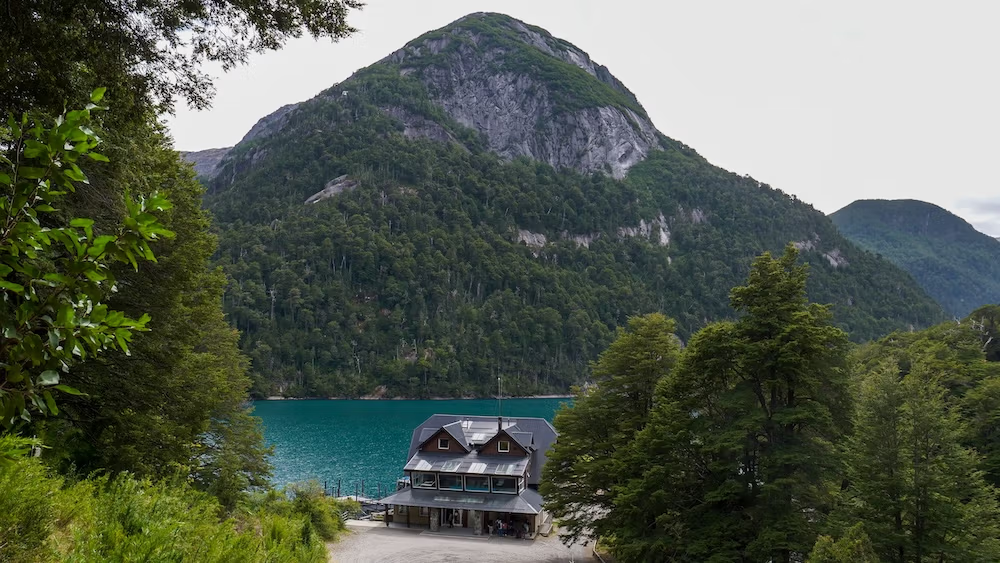
| Estancia Cristina Lodge Los Glaciares region near El Calafate | Remote estancia lodge | You want the property, surrounding wilderness and organized access to become a major part of the Patagonia itinerary. | The lodge has heated private rooms distributed among several cabin-style buildings in a remote valley setting. Reaching it is part of the experience rather than a quick taxi ride from El Calafate. | Access is by boat, making arrival and departure far more structured than an ordinary hotel stay. Compare the complete lodging, transport, meal and activity package rather than focusing on the room price alone. | Check Estancia Cristina Lodge dates |
The point of this shortlist is not that one of these properties will suit everyone. Vertical Lodge solves a town-hotel problem. Casa Cima and Huinid Pioneros support more independent routines. Puerto Pireo makes the cabin setting part of the stay. Bonanza and Cristina move progressively farther toward the estancia model, where access, meals and activities matter as much as the room.
Choose the property whose trade-off matches your trip—not simply the one whose photographs produce the fastest emotional reaction.
Choose the Format Before You Fall for the Property
My final rule is simple because I have ignored it often enough.
Before opening dozens of listings, I write down the fixed parts of the trip. How are we arriving? How many nights are we staying? Are we working? Will we cook? Do we need laundry? Are we relying on tours, a car or public transport? Do we want the accommodation to support the trip, or do we want the accommodation to become part of the trip?
Then I choose the format.
For breakfast, reception and an easier arrival, I start with hotels. For space, groceries and control over the day, I look at apartments. For privacy, outdoor space and a setting we will actually use, I consider cabins. For meals, activities and an experience centred on the property, I investigate estancias and full-service lodges.
Only after that do I compare individual properties. I check the exact room or unit, the real kitchen, the heating, luggage, laundry, transport and cancellation conditions. I compare the same dates and occupancy. I do not assume the category filter has already answered those questions for me.
That order prevents the classic mistake: falling in love with a property and then forcing the itinerary to accommodate it.
Patagonia can make almost any lodging format work. It can also punish a mismatch with long walks, bad sleep, missed breakfasts, useless kitchens and Wi-Fi progress bars that stop moving before your spirit does.
The best accommodation is not automatically the prettiest or the cheapest. It is the one that quietly removes the friction most likely to wear you down while leaving you with the kind of freedom you came for.
Frequently Asked Questions
What type of accommodation is best in Patagonia?
The best choice depends on which friction you need the property to remove. Hotels suit travellers who value breakfast, reception and easier arrivals; apartments favour independence; cabins add space and setting; estancias can make the property itself part of the itinerary.
Are apartments always cheaper than hotels in Patagonia?
No. An apartment can reduce restaurant spending when you genuinely use the kitchen, but cleaning charges, minimum stays and extra transport can erase the difference. Compare equivalent dates, occupancy and meal conditions rather than the headline nightly rate.
When is a hotel the better choice in Patagonia?
A hotel becomes especially useful for a short stay, an awkward arrival, an early excursion or a trip where breakfast, luggage storage and reception support save meaningful time. Check the actual service hours because the hotel label alone guarantees very little.
What should I check before booking a cabin or cabaña?
Look beyond the timber walls and mountain views. Check the heating system, road access, distance from groceries, kitchen equipment, stairs, loft height, enclosed bedrooms and whether the living space remains usable at full advertised capacity.
How is an estancia different from an ordinary hotel?
An estancia may bundle meals, transfers, guiding, activities and a shared schedule, making the property part of the trip rather than merely a room. Confirm exactly what is included and how much control you retain over each day.
Can I rely on advertised Wi-Fi for remote work?
A listing that offers Wi-Fi does not establish speed or stability. We have had failed uploads in otherwise spacious and comfortable properties, so I would confirm demanding work requirements directly and keep a backup plan.
How should I compare the real cost of Patagonia accommodation?
Compare the complete stay: room rate, meals, transport, cleaning, minimum stays, laundry and included activities. A central hotel may reduce taxis, while a remote estancia can cost more but replace several separate parts of the itinerary.
Project 23 Argentina: This guide is also available in Spanish. [Leé la versión en castellano: Guía de alojamiento en la Patagonia: hoteles, cabañas, departamentos y estancias]
This article contains affiliate links. If you book through one of these links, I may earn a commission at no extra cost to you.