
Glacier tours in Patagonia look deceptively similar when you are staring at booking pages.
There is usually a large wall of blue ice, a boat somewhere in the photo and a tour name filled with words like adventure, premium or full day. Then you notice that one excursion is mainly a bus ride and several hours on boardwalks, another is a one-hour cruise beneath Perito Moreno, and the expensive one leaves from a completely different port to spend most of the day navigating between multiple glaciers.
Ice trekking complicates the decision further. It sounds like the obvious upgrade until you discover the age limits, medical restrictions, fixed group pace and the fact that a ten-hour excursion does not mean ten hours stomping around on a glacier like an overexcited polar explorer.
Audrey and I experienced two of the main formats from El Calafate. We spent one day on a full navigation through the glacier-filled arms of Lago Argentino and returned to Los Glaciares National Park on another day to explore the Perito Moreno walkways.
I am extremely glad we did both.
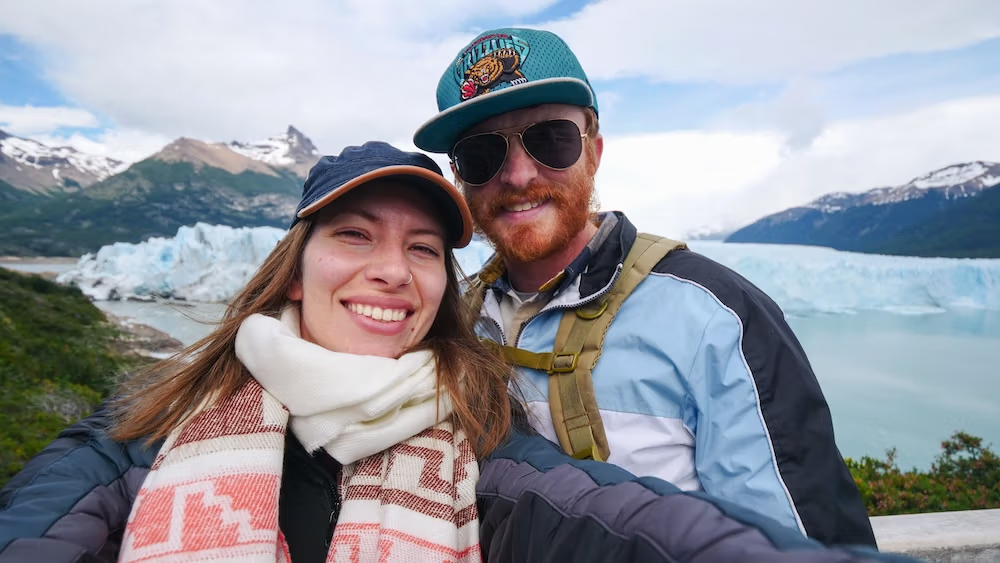
The boat trip was one of those rare travel days where the scale kept escalating. Every time we thought we had reached the highlight, another glacier, iceberg or mountain wall appeared. The walkways did almost the opposite. They slowed us down, let us choose our own angles and gave us enough time to understand how Perito Moreno fits into the larger landscape.
We also wanted to try an ice trek. Audrey asked about availability after we had arrived in El Calafate, but the next openings did not fit our remaining schedule. We missed it.
So I can compare the walkways and full-day navigation from experience. I can explain why we loved both, where they differed and what I would change about our planning. The ice-trekking comparison is based on the current structure and restrictions of those excursions, not on me pretending I remember the crunch of crampons beneath my feet.
This article focuses on the glacier experiences available from El Calafate in Argentine Patagonia. That is where walkways, short boat trips, full navigations and several levels of ice trekking can be compared without lumping together unrelated glacier excursions from across a region spanning two countries and an absurd amount of geography.
The best option depends on what you want from the ice.
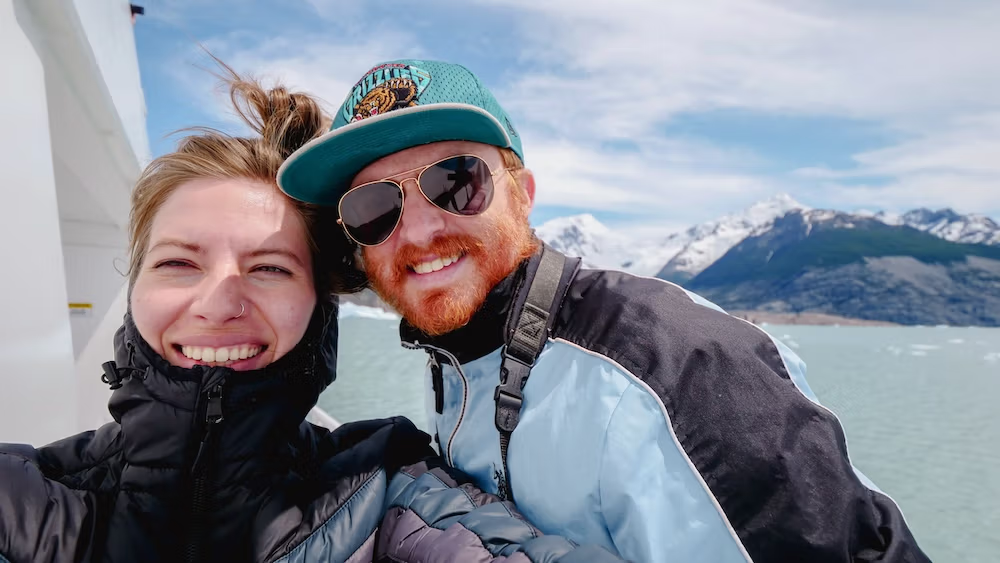
Four ways to experience the glaciers around El Calafate
The main mistake is treating these excursions as different-sized versions of the same day.
They are not.
The Perito Moreno walkways are about time and perspective. You move between elevated viewpoints, choose how much climbing you want to do and watch the glacier without being carried past it.
A short boat trip adds proximity. It lowers you from the panoramic walkways to the surface of the lake, where the glacier rises above the vessel as a wall rather than spreading beneath you as part of a landscape.
A full-day navigation replaces control with range. Instead of concentrating on one glacier, you move through Lago Argentino towards several sectors, with the scenery constantly changing around you.
An ice trek gives you the one thing the other formats cannot: the physical experience of walking on the glacier. That comes with the strictest rules, the most structured schedule and a full day whose headline activity occupies only part of the total excursion.
Then there are combined tours, a phrase vague enough to mean almost anything. One may devote most of the day to the walkways and add a short cruise. Another may spend eight hours navigating and offer the platforms near the end. Ice-trekking tours already combine transport, boat crossings, forest approaches and walkway time before you even start counting the ice.
The words on the tour page matter less than the allocation of the day.
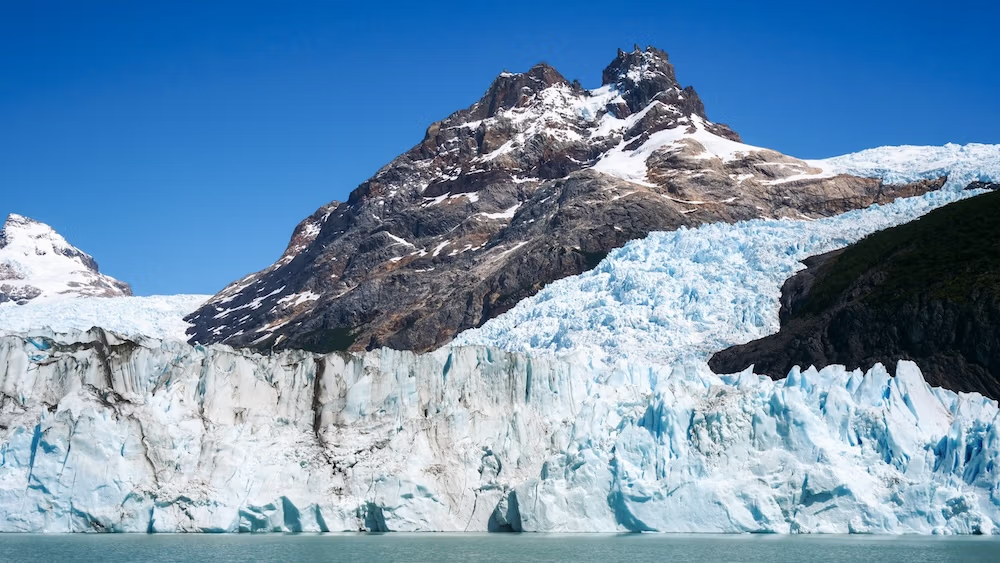
Glacier-tour formats at a glance
| Format | What it does best | Usual commitment | Physical demand | Freedom to set your pace | Main compromise |
|---|---|---|---|---|---|
| Walkways only | Shows Perito Moreno’s overall scale from multiple elevations | Half to full day from El Calafate | Adjustable, though some circuits have many stairs | High | No water-level view or direct contact with the ice |
| Walkways plus short boat | Combines panoramic and close water-level views | Full day | Low to moderate | Moderate | The boat portion is brief |
| Full-day navigation | Covers a larger glacier landscape | Full day | Low continuous walking, but a long fixed schedule | Low | Less time lingering in one place |
| Minitrekking | Adds a guided walk on Perito Moreno | Roughly 9–10 hours | Moderate | Low | Formal age, health and fitness rules |
| Minitrekking 2 | Extends the trekking distance and effort | Full day | Medium to high | Low | Narrower season and tighter eligibility |
| Big Ice | Makes the extended glacier trek the main ambition | Roughly 12 hours | High | Low | Strict eligibility and a major physical commitment |
One number deserves particular suspicion: total duration.
A ten-hour excursion may include hotel pickups, two long drives, a boat crossing, equipment fitting, a forest approach and time on the walkways. That may still be an excellent day, but it does not mean you receive ten hours of the activity pictured on the booking page.
Ask how much time is spent doing the thing you are actually excited about. Travellers who already know they want an organized excursion can compare current Perito Moreno glacier tours from El Calafate, but it is worth understanding the differences below before choosing one.
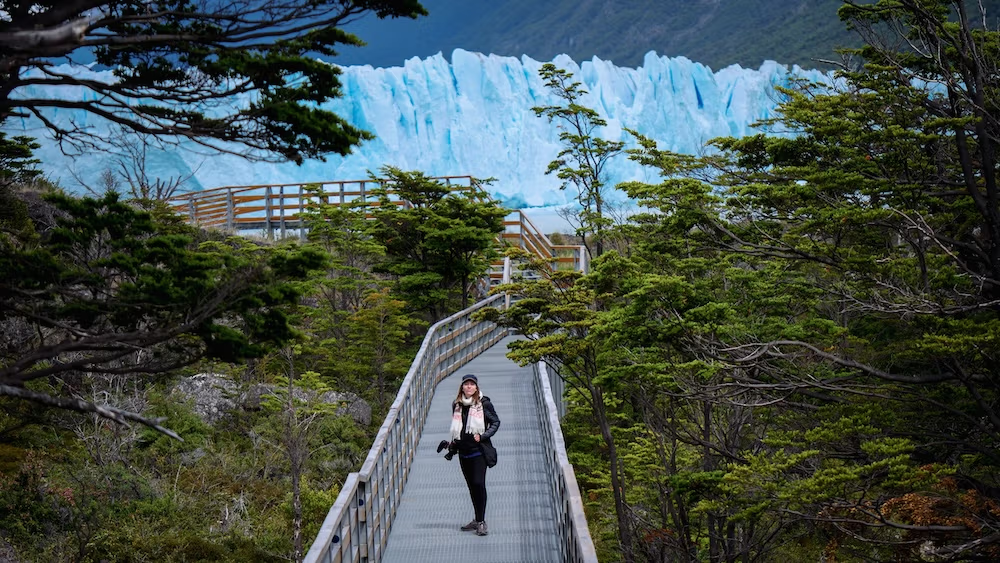
The Perito Moreno walkways are not the consolation prize
The walkways are sometimes described as the basic Perito Moreno experience. You turn up, look at the glacier and leave the ambitious travellers to boats and crampons.
That description misses most of what makes the place work.
Audrey and I had already completed our full glacier navigation before visiting the walkways. If the platforms had merely reproduced the same views from higher ground, the second day could have felt redundant.
It never did.
The glacier gets larger as you climb
From the water, the front of a glacier dominates everything. It rises from the lake like a jagged blue wall, and your attention naturally fixes on the face directly in front of you.
The elevated platforms reveal something different.
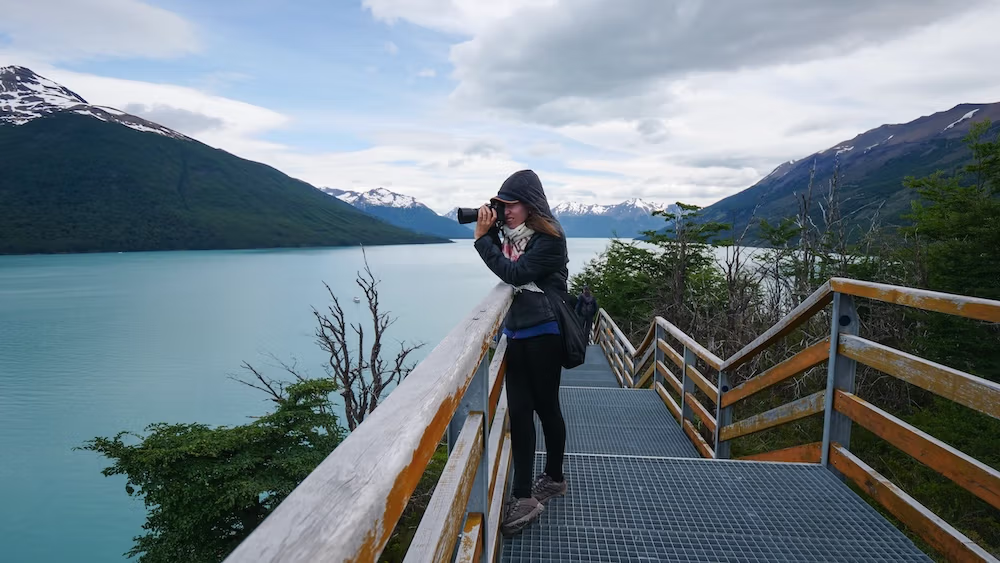
As we climbed, Perito Moreno began stretching backwards through the landscape. We could see more of the glacier running towards the mountains and started to understand that the famous ice wall was only its dramatic front edge.
The higher we went, the bigger it became.
That was the most useful difference between the boat and the walkways. The boat put us inside the glacier landscape. The walkways helped us read it.
We also had the freedom to remain with a view.
When a large group arrived, we could move on or simply wait. When the light changed, we could go back. If we wanted to sit down, eat or swap lenses, nobody was waving us towards the next stop.
Eventually, we did something unusual for us on a filming day. We put the cameras away.
We had already accumulated more photographs and video than any sane couple needed. Sitting there without trying to capture every crack and shadow turned out to be one of the strongest moments of the visit.
A glacier rewards patience. The walkways give you some.
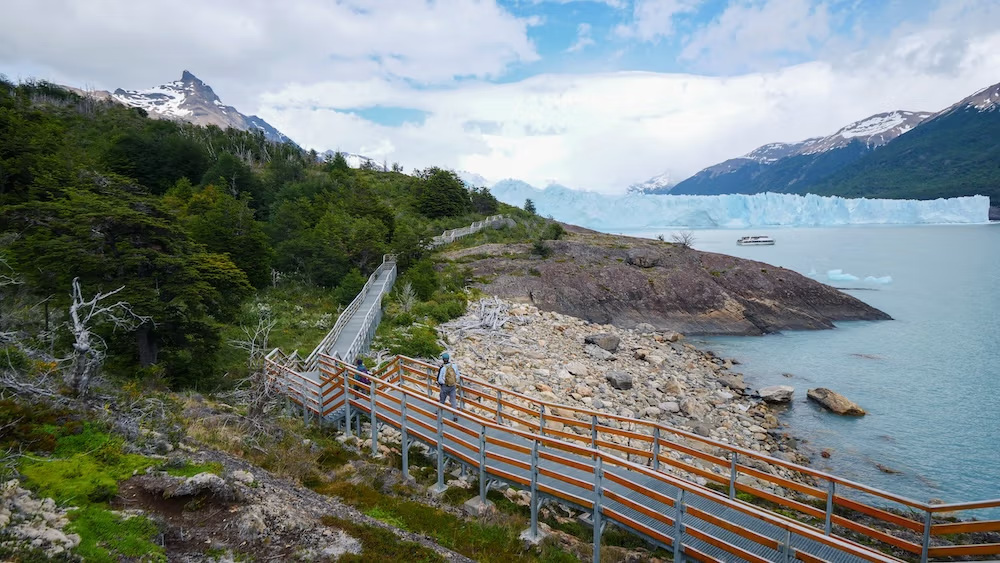
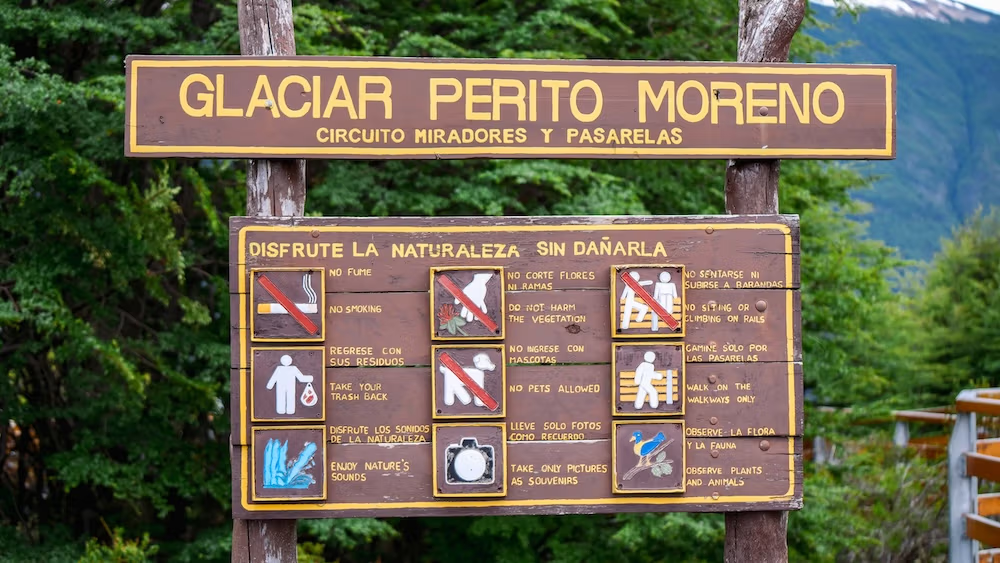
There are more stairs than “walkways” suggests
The word walkways has a soothing, horizontal quality.
Reality contains considerably more climbing.
Some sections are gentle, and the park has an officially accessible ramped route. Other circuits involve repeated staircases and enough elevation to expose whatever fitness level you actually brought with you.
Ours had been fortified by a brownie before we started.
This did not prove to be a high-performance nutritional strategy.
We found ourselves breathing harder on the upper sections, but the effort never felt compulsory. There were benches, flatter alternatives and enough route choice to decide how far we wanted to push the day.
That distinction matters. The walkways are adjustable rather than universally easy.
Travellers with plenty of energy can connect longer circuits and keep climbing. Those with reduced mobility can concentrate on the accessible route and principal viewpoints. Families or mixed groups can divide their effort without everyone being locked into one pace.
The park currently provides an accessible ramped trail, adapted bathrooms, wheelchairs near the entrance and an adapted chair that requires someone to accompany the user. That does not make the entire network step-free. Anyone travelling with specific mobility needs should review the current park accessibility and visitor services before choosing transport or tour arrangements.
Wind, crowds and the value of being able to move
Our visit included cold wind and pockets of people around the most obvious viewing areas.
Neither ruined the day.
The forested sections offered more shelter, and walking a little farther usually reduced the crowding. A viewpoint could feel busy for ten minutes and almost empty after a group moved on.
That is another advantage of controlling your own pace. You do not need to fight for one photograph and declare the entire park overcrowded.
You can wait.
We arranged our own return bus from El Calafate, approximately 80 kilometres away. That gave us fixed arrival and departure times, but the hours inside the park were ours.
Driving provides even more control. Travellers who want to manage their own arrival, departure and stops can compare current car-rental options in El Calafate. An organized transfer removes the transport work and may include a guide or optional short boat trip.
There is no universally correct choice.
Independent transport makes sense when freedom inside the park matters most. A tour becomes more appealing when you do not have a rental car, want hotel pickup or prefer someone else to manage the return journey. In that situation, you can check a guided Perito Moreno tour with hotel pickup and an optional boat cruise.
What I would not do is treat the walkways as a quick photo stop. We initially wondered how we would fill the available time. By the end, we had used all of it.
Choose the walkways when Perito Moreno itself is the priority and you want the clearest sense of its scale.
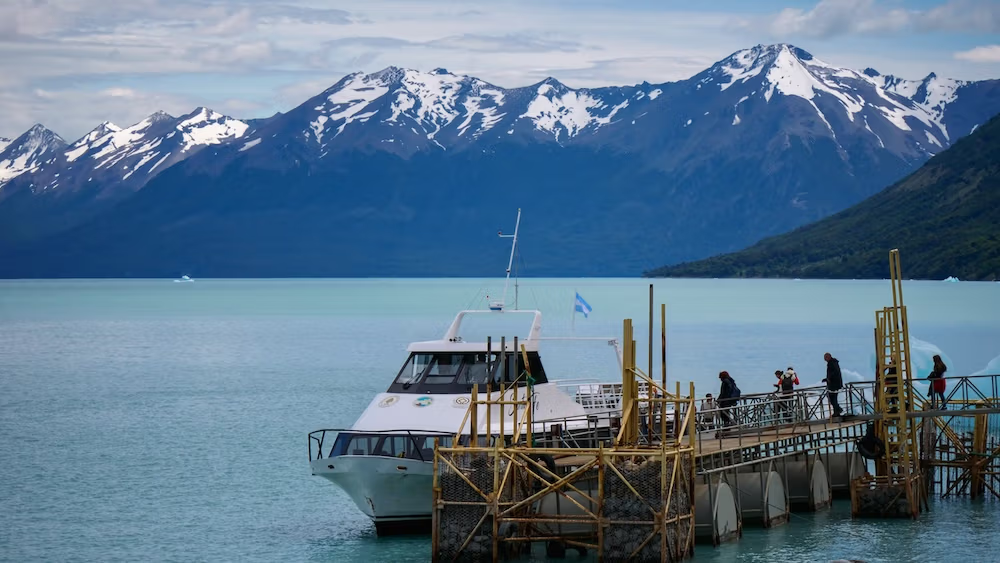
A short boat trip and a full navigation solve different problems
Calling both of these a glacier cruise is a bit like calling a city bus and a cross-country train public transport. Technically true. Practically unhelpful.
A short navigation around Perito Moreno is an addition to the glacier day. A full navigation through Lago Argentino is the glacier day.
Add a short boat when Perito Moreno remains the main event
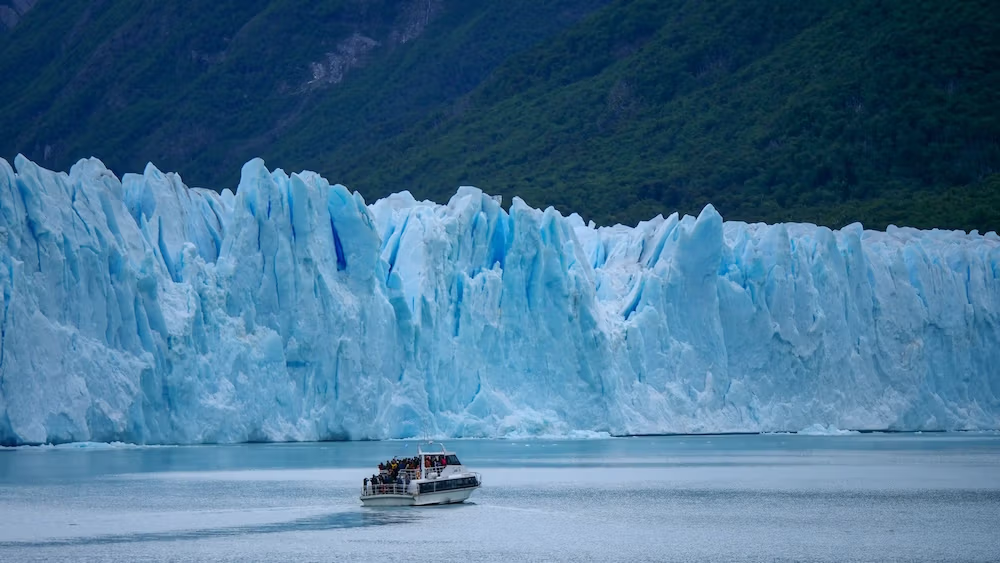
Short boats operating near the glacier provide the perspective missing from the platforms.
From above, Perito Moreno spreads through the valley. From the lake, the front wall rises over you.
That lower angle adds drama without forcing the entire day onto a boat. Current combined tours often leave several hours for the walkways and add roughly an hour on the water.
For many first-time visitors with one day, that is probably the strongest all-round choice.
You still have time to understand the glacier from the platforms. You also get close enough from the water to appreciate the height and texture of its face.
The short boat does not reproduce a full navigation. It is not supposed to.
Its job is to deepen a Perito Moreno visit.
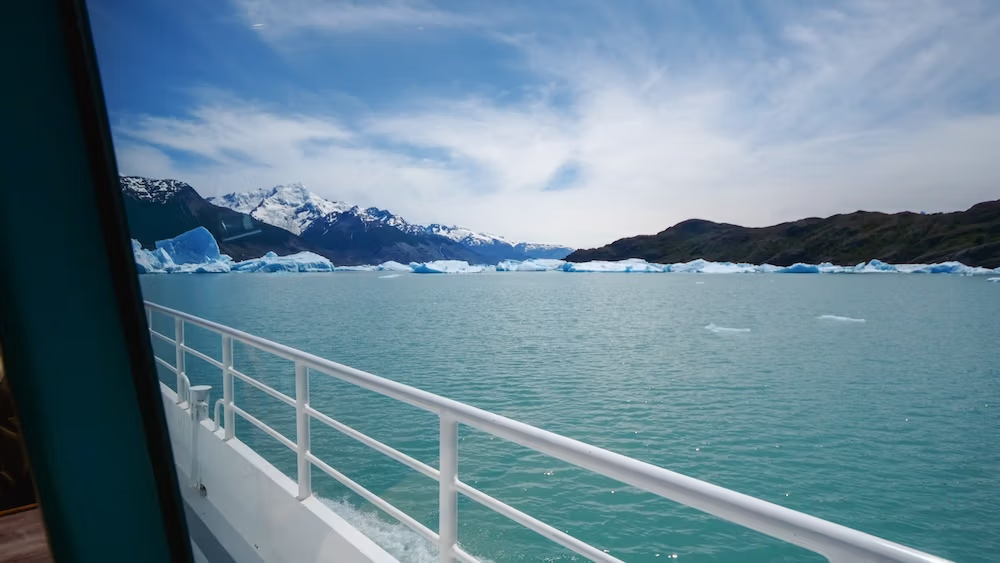
The full navigation kept getting bigger
Our navigation was a completely different beast.
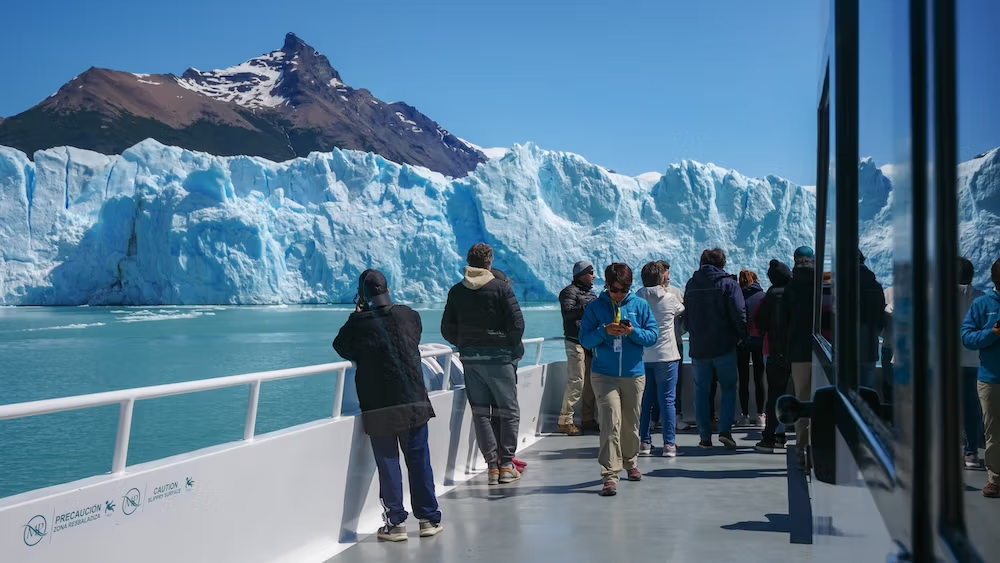
We left El Calafate early, travelled to the port and boarded a comfortable multi-deck vessel for most of the day. There was indoor seating, food, exterior viewing areas and a guided shore stop.
The comfort was welcome because the scenery kept dragging us back outside.
A glacier would appear ahead of us. Then another would emerge around a bend. We passed icebergs floating in colours that looked slightly ridiculous even while we were looking directly at them. There were waterfalls, hanging ice and mountain walls surrounding the lake.
At one point, I described the day as grander than I had imagined. That feeling never really left.
We had expected Perito Moreno to be the centrepiece. Instead, the strength of the excursion was accumulation.
One glacier after another.
One changing section of lake after another.
It felt less like approaching a single attraction and more like moving through an entire frozen region.
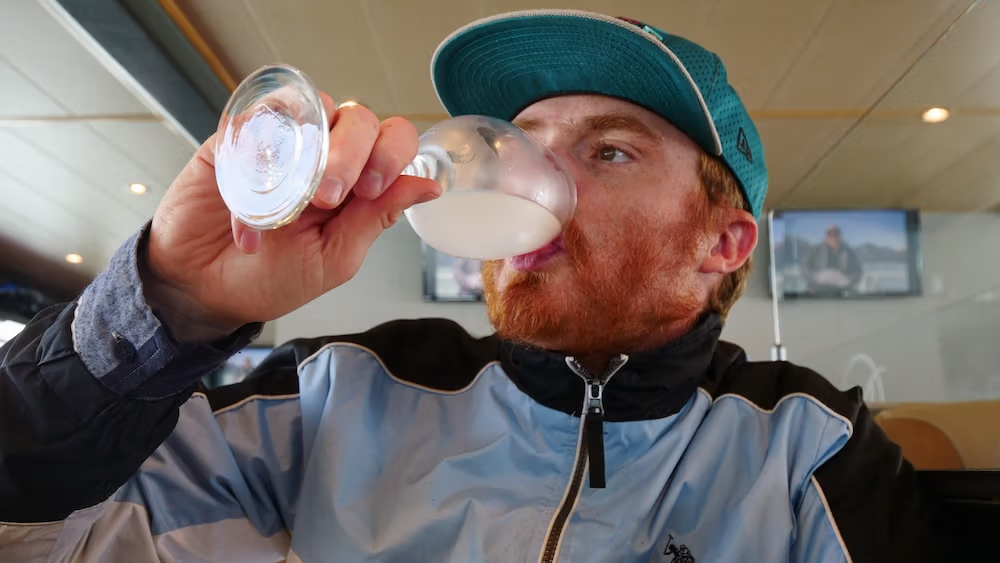
The crew even collected glacier ice for drinks. I would have preferred whiskey, but I ended up with ancient ice in grapefruit juice, which is surely one of the more respectable ways I have consumed a soft drink.
You gain range and surrender control
A full navigation cannot give you the freedom of the walkways.
You do not decide where the vessel stops. You cannot wait for a cloud to move. Your best angle may be on the opposite side of the boat from wherever you happen to be standing.
For photography, this creates a straightforward choice.
The walkways provide control. The navigation provides variety.
The boat is also less physically demanding in the obvious sense. There are no endless staircases, and much of the day can be spent seated indoors.
Still, I would not call it restful.
It is a long excursion. The best views pull you onto the decks, where wind and cold can find whatever gap you left in your clothing. You move around the vessel, watch for changing scenery and remain tied to a fixed schedule from pickup until the return to town.
Travellers sensitive to boat motion should also remember that a long navigation means spending most of the day on a moving vessel, even when the lake appears calm in promotional photographs.
Our weather was almost suspiciously good
We had clear skies, low wind and excellent visibility.
That made an enormous difference.
We could remain outside for long stretches and see deeply into the surrounding landscape. Audrey and I both loved the excursion, and years later she still singled it out when friends asked what they should book from El Calafate.
I share the enthusiasm, but our conditions belong to our day.
A glacier cruise in Patagonia can involve cloud, cold, wind and altered routes. Current operators may also separate transfers, park entry, lunch or later walkway access from the base fare, even when an older version of the excursion included them.
Check what you are actually buying. The closest current match to the format we experienced is the Glaciers Gourmet full-day cruise, though its present-day options and inclusions should be read separately from our historical trip. Travellers who want to compare routes can also browse current El Calafate cruises and boat tours.
Choose the short boat when you want to enrich a Perito Moreno day. Choose the full navigation when you would rather travel through a broader glacier landscape.
Ice trekking: the glacier experience we left too late
Ice trekking has one unbeatable quality.
You are on the glacier.
For travellers who have dreamed about wearing crampons and walking between blue formations, that may end the debate before it begins.
It also has the most rigid conditions.
Audrey asked about ice-trek availability after we had arrived in El Calafate. The next openings were several days away, and we could not fit them into our remaining schedule.
We had been flexible with our other plans. We watched the weather, adjusted the navigation day and arranged the walkways locally.
That approach failed with the least flexible excursion.
I still regret missing it.
What I will not do is turn that regret into a personal review of an activity we never completed.
Most of the day is not spent on the ice
A typical ice-trekking day includes far more than the trek.
There is transport from El Calafate, a boat crossing, a forest or rocky approach, equipment fitting, safety instruction, the glacier walk and often time on the panoramic platforms.
Standard Minitrekking may occupy roughly nine or ten hours in total while providing approximately two hours on the ice. Big Ice can extend the glacier portion to around three hours within a day closer to twelve.
That ratio is important.
If stepping onto the glacier is the main ambition of your Patagonia trip, two or three hours may be worth every transfer and minute of preparation.
If you mainly want to see Perito Moreno from several angles, the walkways and a short boat may offer better use of the same day.
Minitrekking, Minitrekking 2 and Big Ice
The current choice is broader than the old Mini-versus-Big comparison.
Minitrekking is the entry-level option. Entry-level does not mean trivial. It remains a long excursion with approaches, crampons and a guided group, but it has the broadest current age range, generally from eight to 65, subject to the operator’s physical and medical conditions.
Travellers who fit those conditions can check the current Minitrekking itinerary and availability. We did not take this tour, so my recommendation is about the format and who it suits, not a personal review of the guides or current operation.
Minitrekking 2 fills the middle ground. It covers more distance over rock, dirt and ice and demands more sustained effort. The age range is narrower, and it currently operates during a shorter part of the season.
Big Ice is the major commitment. The day can reach roughly twelve hours, with a substantial forest approach and several hours on the glacier. Current participation is generally restricted to adults from 18 to 50, with additional health and fitness conditions.
Travellers who are specifically chasing the longest and most demanding glacier day can compare current Big Ice departures and inclusions before committing to it.
These are levels of commitment, not levels of worth.
A longer trek is useful only when you want a longer trek.
There is no shame in deciding that two hours on the ice, plus a boat crossing and panoramic walkways, is enough adventure for one day. There is also nothing excessive about choosing Big Ice when the glacier walk is the entire reason you travelled to El Calafate.
Read the exclusions before falling in love with the photographs
Ice trekking is the one format where preference may not control the decision.
Current tours impose age ranges and exclude certain medical, physical and mobility conditions. Pregnancy is excluded. The operator’s full current terms should be checked before booking because a partial summary will never cover every condition.
Group structure matters too.
You cannot wander off in search of a better photograph. You cannot decide halfway through that you would like to sit on a bench while Audrey continues for another hour. The guide sets the route and pace.
That is part of entering a glacier environment safely.
Choose an ice trek when direct contact with the ice is the memory you care about most, and only after confirming that everyone in the group qualifies.
“Combined tour” does not tell you enough
Combined glacier tours are attractive because they appear to solve the problem of limited time.
They can also bury the experience you actually wanted beneath a long list of inclusions.
A walkway-dominant tour may devote several hours to Perito Moreno and add a short navigation. That is a sensible combination for someone who wants both elevated and water-level views in one day. One current example bundles the walkways, a one-hour boat trip and return transport from El Calafate; travellers can check the current Perito Moreno walkways-and-boat itinerary.
A navigation-dominant tour may spend most of the day moving through Lago Argentino and offer a shorter walkway visit near the end. That suits a traveller whose priority is the cruise.
An ice-trekking itinerary is already combined by nature. The day may include buses, boats, forest walking, glacier time and panoramic platforms.
So before paying for a package because it includes everything, find out what receives the time.
- How long you actually have on the walkways.
- Whether the boat is included or optional.
- How much time is spent on the glacier.
- Whether meals, transfers and park admission cost extra.
- What time you return to El Calafate.
- Which component imposes the age and health restrictions.
The dominant component should match your main reason for booking.
A collection of short activities is not automatically better than one properly developed experience.
Which glacier experience should you choose?
The cleanest way to decide is to start with your non-negotiable constraint and then choose the perspective you want.
You have only one day
For a first visit centred on Perito Moreno, I would choose the walkways plus a short boat.
That combination gives you the glacier’s overall scale and the close water-level view without allowing either component to consume the entire day.
Choose the full navigation instead when multiple glaciers and changing scenery matter more than spending several hours at Perito Moreno.
Choose an ice trek when walking on the glacier is the one experience you would be genuinely upset to miss.
You want control over your day
Choose the walkways.
You can change routes, wait for crowds, stop for food, select your viewpoints and adjust the physical effort.
Self-drive provides the most independence. A regular bus retains freedom inside the park but fixes your arrival and departure. An organized tour handles the transport and gives up some flexibility in exchange.
You want the least strenuous option
This depends on what your body dislikes.
The walkways let you regulate distance and use the accessible route, but many circuits contain stairs.
A full navigation avoids sustained climbing but places you on a long fixed excursion with repeated deck movement and weather exposure.
Neither is universally easy. One may simply fit you better.
Photography is the priority
The walkways are strongest for control.
You can wait for light, choose your lens, return to a platform and frame the glacier from multiple elevations.
The full navigation is strongest for variety.
You lose control over timing but gain icebergs, several glacier sectors and constantly changing landscapes.
My ideal photography plan would still be both on separate days.
You are travelling with children or mixed abilities
The walkways offer the broadest flexibility.
A family can choose shorter routes, take breaks and add a short boat without committing everyone to the same physical pace.
Standard Minitrekking begins at a defined minimum age and carries additional health conditions. Minitrekking 2 and Big Ice use narrower adult ranges.
Sometimes the sensible answer is splitting the group rather than making everyone book the compromise option.
Budget controls the decision
An independent walkway day will usually provide the lowest-cost substantial glacier experience once transport and park admission are included.
A short boat adds cost while keeping Perito Moreno at the centre.
Full-day cruises and ice treks move into higher price tiers. Their value depends on whether you care about the experience they uniquely provide.
Our full navigation was expensive for our budget. We still considered it worth the splurge because no cheaper alternative would have reproduced that moving glacier landscape.
That is the standard I would use.
Pay more only when the extra money changes the experience in a way you genuinely want.
Book the least flexible glacier day first
Our planning sequence should have been obvious.
It was not.
We booked flexible activities while leaving the most restricted one for later. By the time Audrey asked about the ice trek, the available date no longer worked.
A better order is:
- Check the age, health and fitness rules.
- Confirm that the activity operates during your dates.
- Reserve the ice trek or limited-frequency navigation first.
- Check whether transfers, park admission, meals and equipment are included.
- Protect the whole day rather than stacking another fixed commitment around it.
- Arrange the walkways or short boat around the remaining space.
- Choose accommodation after confirming pickup or meeting-point logistics.
There is no honest universal rule saying every tour must be booked a specific number of weeks ahead.
Availability depends on season, product capacity and travel dates.
The useful rule is simpler: book the experience with the fewest substitutes first.
The walkways will still be Perito Moreno if you visit them a day later. A sold-out ice trek cannot be replaced by a longer lunch and positive thinking.
El Calafate is the practical base for all of these southern-sector glacier days. Once you know whether your excursion includes hotel pickup or requires an early trip to a port or meeting point, you can compare current accommodation in El Calafate rather than choosing a property before understanding the logistics.
Many tours also exclude national-park admission even when transport is included. Check the official national-park ticket system before departure instead of assuming the headline tour price covers everything.
What I would book now
With one day, I would book the Perito Moreno walkways and add a short boat trip.
With two glacier days, I would keep the walkways and full navigation separate. That is what we did, and giving each format room was the correct decision.
The walkways let us slow down, climb, wait and understand the glacier’s scale. The navigation gave us movement, variety and one of the most spectacular boating days of our travels.
With a third day—and the benefit of learning from our own mistake—I would reserve the ice trek before arriving in El Calafate.
That is the practical answer.
Choose the walkways for control and perspective.
Choose the short boat for proximity.
Choose the full navigation for breadth.
Choose the ice trek for physical contact.
And choose a combined tour only after you have worked out which part of the combination is actually running the day.
Frequently Asked Questions
Which Patagonia glacier tour is best if I have only one day?
For a first visit centred on Perito Moreno, I would choose the walkways plus a short boat trip. The walkways show the glacier’s overall scale, while the boat adds the close water-level perspective.
What is the difference between a short boat trip and a full-day glacier navigation?
A short boat trip deepens a Perito Moreno visit and usually leaves substantial time for the walkways. A full-day navigation gives up that control in exchange for movement through a broader glacier landscape.
Are the Perito Moreno walkways easy?
The effort is adjustable rather than universally easy. One officially accessible ramped route exists, but other circuits include repeated stairs, so travellers with specific mobility needs should check current park information.
How much time do ice-trekking tours spend on the glacier?
Standard Minitrekking may provide approximately two hours on the ice within a nine- or ten-hour excursion. Big Ice can extend the glacier portion to around three hours within a day closer to twelve hours.
Did you personally complete an ice trek at Perito Moreno?
No. Audrey asked about availability after we arrived in El Calafate, but the next openings did not fit our remaining schedule. My ice-trek comparisons are therefore practical rather than firsthand reviews.
Which glacier experience should I book first?
Book the experience with the fewest substitutes first. After checking age, health, fitness and seasonal rules, that will usually mean reserving the ice trek or limited-frequency navigation before arranging the more flexible walkways.
This article contains affiliate links. If you book through one of these links, I may earn a commission at no extra cost to you.
Project 23 Argentina: This article is also available in Spanish. [Leé la versión en castellano: Tours de glaciares en la Patagonia comparados: barcos, pasarelas y trekking sobre hielo]