
Patagonia has a habit of punishing vague transport plans with several hundred kiles.
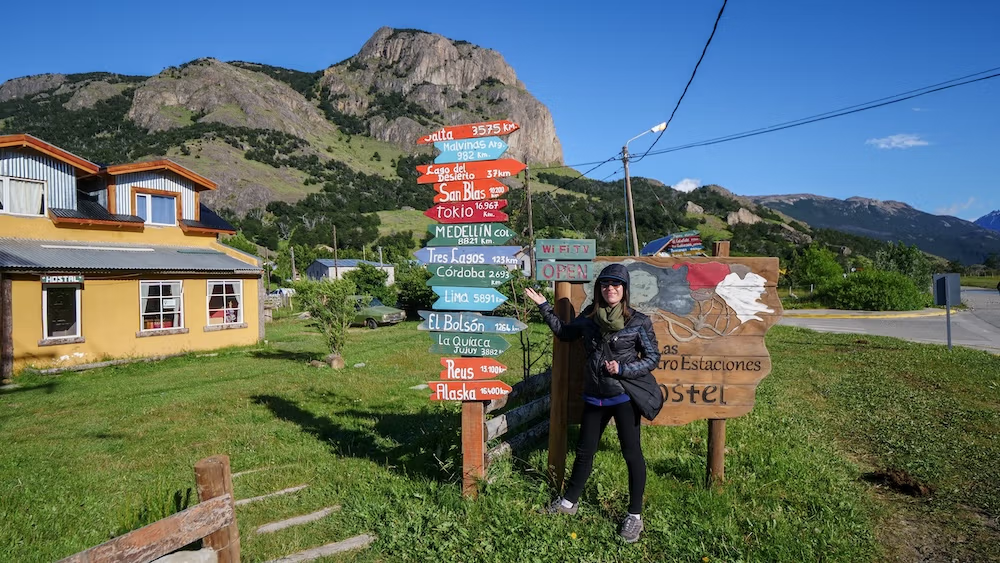
Audrey and I travelled across large parts of Argentine Patagonia without renting a car. We used overnight coaches, local buses, taxis, hotel pickups, shared transfers and guided excursions. Sometimes the pieces clicked together so neatly that we barely thought about transport. We stepped off the bus in El Chaltén, walked to our lodge and spent the next few days reaching trails on foot.
At other times, the missing car made itself known.
A taxi we had arranged never appeared. A wildlife walk outside Puerto Pirámides turned into a wrong trail, an accepted lift and a long return beside the highway. We reached Los Alerces National Park by public transport, then spent part of the day thinking about the single return connection that stood between us and an unplanned night in the park.
None of those experiences convinced me that Patagonia requires a rental car. They taught me that “Patagonia without a car” is too broad to be useful on its own.
The trip succeeds or fails base by base.
A good base lets you arrive without drama, handle ordinary life once you are there and reach the landscapes that justified the journey. El Chaltén solves much of that through walking. Bariloche has a useful public-bus network. El Calafate and Puerto Madryn lean heavily on transfers and guided excursions. Ushuaia works far better from the centre than from a distant apartment. Esquel rewards travellers who plan around seasonal and low-frequency connections instead of assuming another bus will appear.
The hotel matters just as much as the town. So does the exact type of tour you book. A guided outing with accommodation pickup can replace a car for the day. An activity beginning at a remote meeting point merely hands the transport problem back to you with a confirmation email attached.
This is how I would choose the best bases, hotels and guided tours for a satisfying Patagonia trip without driving.
The Three Things Every Car-Free Base Has to Solve
Finding a bus to a town is the easy part of planning. The trouble usually begins after the route appears on the screen and gives you a false sense that the entire problem has been handled.
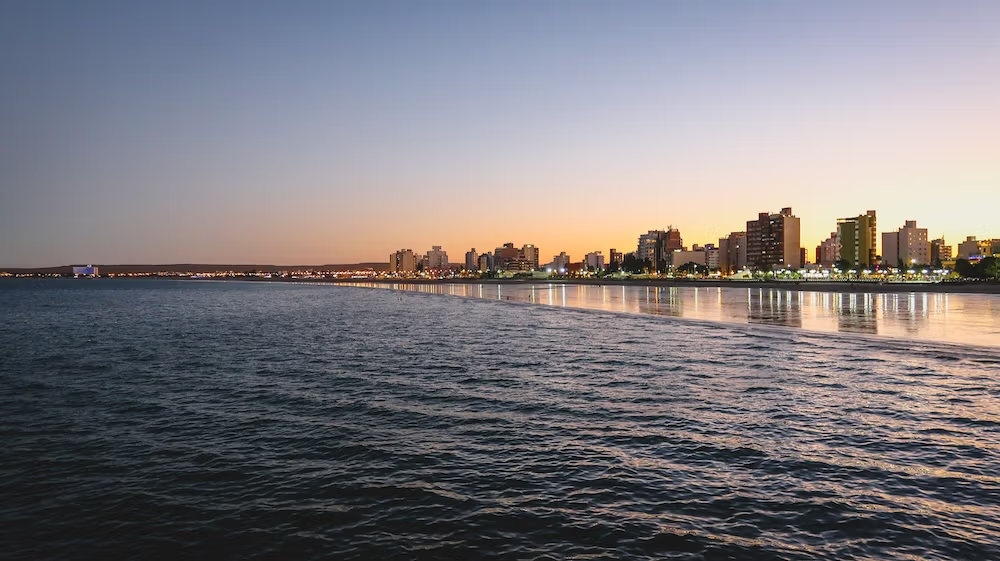
Our overnight journey to Puerto Madryn stretched to roughly 18 or 19 hours after delays. Audrey can sleep almost anywhere. There is nowhere Audrey will not sleep. I managed some rest too, but we still arrived in zombie mode, disoriented and far more interested in showers than productivity.
Technically, we had a full day in Puerto Madryn.
Physically, the day had other plans.
That experience changed the way I look at car-free bases. I now test three separate links rather than asking whether a place is reachable.
Can You Arrive Without Wrecking the Next Day?
The first link includes far more than the intercity journey. Where does the bus stop? How far is the airport from town? Will you arrive before check-in? Is the final transfer still running at that hour? Can you walk to the accommodation with luggage?
An early-morning arrival can work beautifully when the hotel stores your bags or arranges an early room. Our Esquel accommodation did exactly that, and the kindness was worth more to us than any decorative hotel feature could have been at six in the morning.
The opposite is a long journey followed by another improvised journey. A distant airport, late arrival, absent taxi and remote hotel can turn one transport day into two compromised days.
Can You Function Between Excursions?
The second link is ordinary life: food, groceries, laundry, pharmacies, restaurants and the ability to get back to your room without opening a taxi app every time you want a snack.
This is where scenic accommodation can become awkward. A lakefront guesthouse six kilometres from town may be perfect when it has meals and you want to stay put. The same property makes a terrible general base when every coffee, dinner and departure requires another ride.
The map rarely shows this burden clearly. It might say the apartment is a 15-minute walk from the centre. Your luggage, the wind and Audrey may all produce a different estimate.
Can You Reach “Insert Blank” Outside Town?
The third link is the most important. Patagonia’s settlements may be compact, but its landscapes are not.
Puerto Madryn has an urban centre where a traveller can eat, shop and sleep. Península Valdés covers an entirely different scale. El Calafate is functional on foot; Perito Moreno Glacier is not. Ushuaia’s harbour is central, while Tierra del Fuego National Park and the End of the World Train require another layer of transport.
That final link may come from a trail beginning in town, a municipal bus, a fixed return transfer, a harbour departure or a guided excursion with hotel pickup.
A base remains viable when one link is slightly inconvenient. Once two links are weak, the trip starts leaking time and money. Remote accommodation plus scarce transport is the classic bad pairing. Add a short stay and an early departure, and you are now travelling on hope.
The Best Bases in Patagonia Without a Car
There is no honest first-to-sixth ranking here because each base is good at a different job.
El Chaltén gives hikers unusual independence after arrival. El Calafate is built around organized access to distant attractions. Puerto Madryn is a practical wildlife base when a tour supplies the vehicle. Esquel combines several rewarding outings with less forgiving transport. Bariloche has the strongest conventional public-transport network of the group. Ushuaia works through a central core of departures, taxis, minibuses and tours.
The right one depends on how you want to move.
El Chaltén: The Easiest Base Once You Arrive
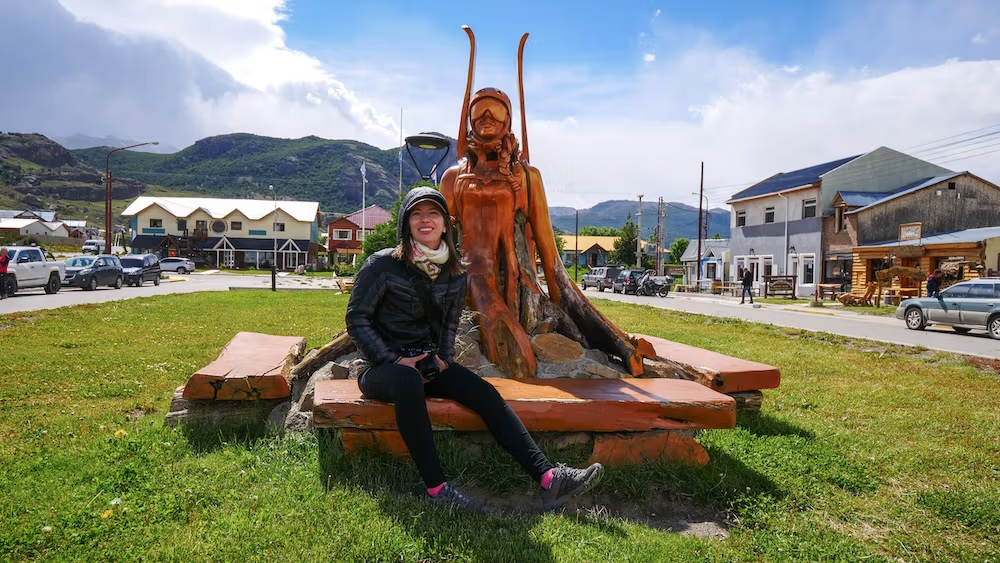
El Chaltén is where travelling without a car felt least like a compromise.
Audrey and I arrived by bus from El Calafate. Hostería Vertical Lodge was down the street from the terminal, so we walked there with our bags instead of negotiating another transfer. Breakfast was included, restaurants were nearby and several major trails could be reached directly from town.
That combination is rare in Patagonia. The arrival point, useful accommodation and main reason for visiting overlap within a compact area.
Once we had checked in, we stopped thinking about vehicles for a while. We could wake up, eat and start walking. There was no tour pickup to confirm and no return bus hanging over the day.
El Chaltén still has a transport cost. It does not have its own airport, and most travellers arrive through El Calafate or its airport. The road journey takes several hours, and departures should be checked carefully for the relevant date and season. The current El Chaltén bus page is worth checking before locking in an arrival day.
Some trailheads also sit outside the town-origin network. A transfer may be worthwhile when visiting more remote starting points or arranging a one-way hiking route.
Those limitations sit mainly at the beginning and edges of the stay. The centre of the experience remains unusually independent.
I would choose El Chaltén for a car-free trip when hiking is the priority and everyone in the group is comfortable walking around town and onto the trails. I would not choose it as the sole answer for travellers seeking a wide variety of low-effort sightseeing. The freedom it offers is real, but it is tied closely to walking and hiking.
Best hotel strategy: Stay close to the central streets, terminal and town-origin trail access. A dramatic view at the far edge of town is less useful when every meal and departure begins with an extra walk. Travellers who want more choice can compare current El Chaltén accommodation on Booking.com.
Personal hotel example: Vertical Lodge worked well for us because it reduced arrival friction and included breakfast. Our stay was historical, so I would still check its current room options and services before booking.
El Calafate: The Best Hub for Transfers and Guided Excursions
El Calafate solves the car-free problem through organization rather than proximity.
The town itself is straightforward enough when you stay in a useful central area. Audrey and I arrived by bus and could walk into the centre to arrange activities. The famous landscapes, however, remained far beyond town.
Transport filled the gap.
For our visit to Nibepo Aike, we were collected from our accommodation. For Perito Moreno Glacier, we used a fixed return service that brought us to the park and gave us time to explore the walkways independently.
I like that second model because it separates transport from guiding. Sometimes I want the interpretation, structure and additional stops of a full excursion. On other days, I only need somebody else to drive.
El Calafate supports both styles. There are organized glacier days, estancia visits and transport-focused options for travellers who prefer to explore at their own pace after arrival. You can compare current El Calafate transfers and road-based excursions on GetYourGuide before deciding how much guiding you actually need.
The airport sits outside town, so flying in requires a taxi, remis or arranged transfer. The bus terminal is more closely integrated with the urban area. Either way, I would avoid treating arrival day as free space for a tightly timed excursion unless the connection leaves a generous margin.
Accommodation location matters because pickup does not always mean pickup from every address. Operators often work within a defined urban zone. Rural cabins and distant properties may require an assigned meeting point or an additional taxi.
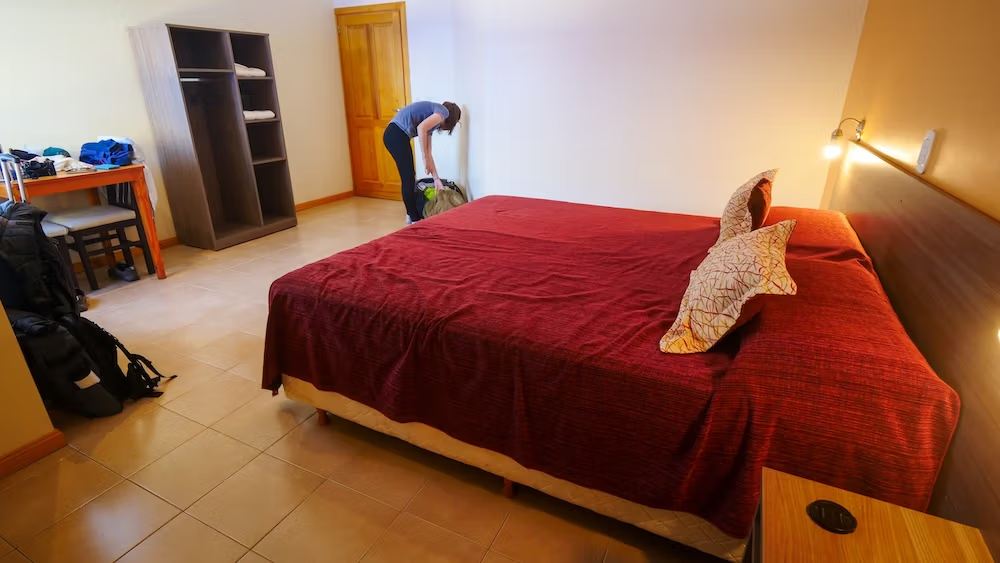
That does not make an outlying stay a bad decision. Our A-frame cabin had plenty of character, although one particularly violent bout of wind had us downstairs wondering whether the roof planned to continue its relationship with the building. A remote place can be memorable. It simply needs a transport plan to match.
El Calafate is the strongest choice here for travellers comfortable prebooking access to the landscape. The town provides the base; transfers and excursions provide the reach.
Best hotel strategy: Stay near the centre or terminal and confirm that the address falls inside the pickup area for the experiences you intend to book. It is worth using the map while you compare El Calafate hotels and apartments on Booking.com.
Best tour strategy: Decide whether you need a fully guided day or only transport. A shared transfer from El Calafate to the Perito Moreno walkways is a current example of the second model, with hotel pickup and independent time at the glacier. Check the current admission treatment, pickup details and schedule before booking.
Puerto Madryn: The Best Wildlife Base When Tours Provide the Vehicle
Puerto Madryn works because it combines the services of a real city with organized access to a wildlife reserve that is much too large to explore casually.
We were collected from our hotel for a Península Valdés excursion. That vehicle carried us across the peninsula and also helped us relocate to Puerto Pirámides. One booking solved a wildlife day and a movement problem at the same time.
This is exactly what a useful car-replacing tour should do.
The central parts of Puerto Madryn make daily life manageable. Restaurants, accommodation and ordinary services are easier to reach than they are in smaller wildlife settlements. Arriving by long-distance bus places you within the city, while air travellers still need to solve the final ground transfer. El Tehuelche Airport is outside the centre, and Trelew Airport is much farther away.
Our later return to Puerto Madryn showed how quickly the city’s advantages can disappear when the hotel is wrong.
We had only managed to secure our original property for one night. After that, we moved to a studio farther from the centre. It was not disastrous, but ordinary movement became more awkward and taxis became more important.
“That’s what happens when you don’t book in advance,” I admitted.
It was not a profound philosophical statement. It was, unfortunately, accurate.
Puerto Madryn remains the better all-round base for a wildlife trip without a car because it gives you urban services before and after the tour. The peninsula itself still requires vehicle-scale transport, and that is where guided excursions earn their place.
Best hotel strategy: Choose central accommodation within a confirmed wildlife-tour pickup zone. Do not assume every address inside the city receives the same pickup service. You can compare Puerto Madryn accommodation by location on Booking.com.
Best tour strategy: Book a Península Valdés excursion that clearly includes transport from Puerto Madryn or a defined central meeting point. This Península Valdés day trip with Puerto Madryn pickup is one current option. Wildlife stops and optional boat components vary by season, so check the exact itinerary rather than booking from the title alone.
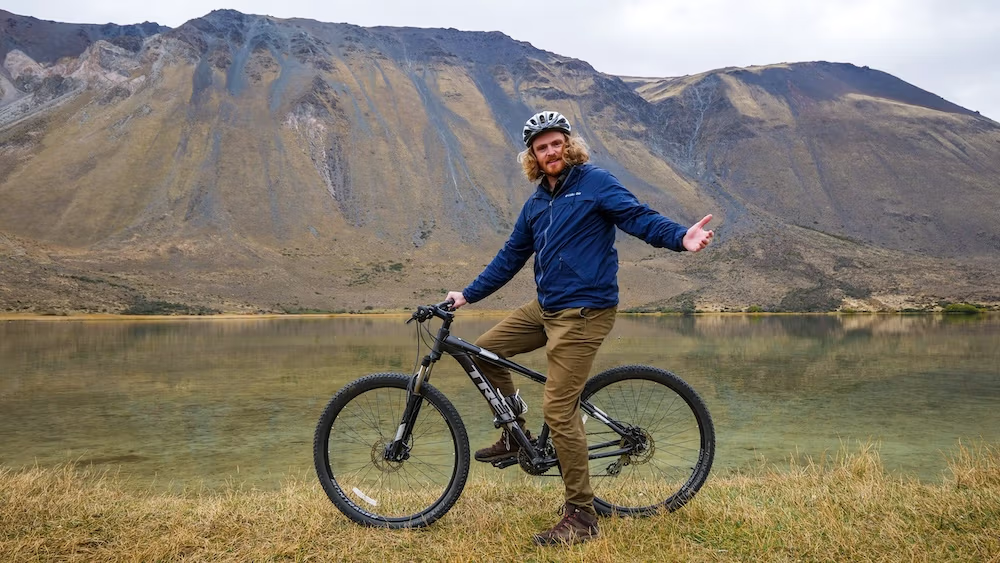
Esquel: The Best Variety if You Can Handle Fixed Schedules
Esquel was one of the nicest surprises of our Patagonia travels. I expected a useful regional base and found a place I genuinely enjoyed staying in.
Our accommodation was central, and an early check-in softened our dawn arrival. From Esquel we could reach La Trochita, Los Alerces National Park and Piedra Parada. Those experiences felt completely different from one another, which gave the base more depth than I had anticipated.
They also revealed three versions of car-free travel.
La Trochita sat close enough to town to fit naturally into the stay. Piedra Parada was remote, but hotel pickup, a guide and a vehicle removed the difficulty. Los Alerces occupied the awkward middle.
We reached the park by bus. The journey itself was long, followed by a walk toward the port and a substantial wait. More importantly, the return depended on a service we could not treat casually.
The park was not inaccessible. It was fragile.
Public transport to Los Alerces is much stronger in January and February and drops to only a few days per week during much of the rest of the year. That makes the live schedule part of the day, not a detail to glance at after booking accommodation. Check the current Los Alerces access information before relying on an independent park day.
My advice remains the same: do not wing Los Alerces unless you are genuinely prepared for the possibility that the return does not work the way you imagined. The campsites are lovely, but an accidental overnight is a poor substitute for planning.
Piedra Parada presented the opposite situation. The destination was far more remote, yet the day felt easier because the entire transport chain had been solved. We were collected, driven along the long approach and guided through the experience.
Esquel suits travellers who enjoy variety and can plan around a few fixed days. It is less forgiving for somebody who wants to make every decision after breakfast.
Best hotel strategy: Stay centrally, with manageable access to the bus terminal, La Trochita and the departure points used by local excursion providers. Compare current Esquel accommodation on Booking.com with the map open rather than choosing from the room photos alone.
Best tour strategy: Use organized transport for very remote outings such as Piedra Parada. For Los Alerces, compare the current public-service pattern with available local tours or transfers before deciding how independent you want the day to be.
Bariloche: The Best Public Transport, Provided Your Hotel Is in the Right Place
Bariloche offers the strongest municipal public-transport network among these bases. That is the good news.
The bad news is that Bariloche is geographically enormous, and the hotel search results do a poor job of reminding you.
Audrey and I used local buses to reach Llao Llao, Puerto Pañuelo and Colonia Suiza. Those services gave us genuine flexibility. We could connect accommodation, lake departures and day trips without booking a private vehicle for every movement.
The network also connects the airport, long-distance terminal, centre and several important visitor corridors. Current payment options are broader than they once were, but they can change, so checking the city’s live public-transport information before arrival is still worthwhile.
The dangerous phrase is “a hotel in Bariloche.”
That could mean a central property near restaurants and urban pickup points. It could mean a hotel along Avenida Bustillo with useful lake access and a nearby bus route. It could also mean a beautiful property far enough out that reaching the centre requires multiple vehicles and a willingness to study timetables while everyone else is having dinner.
We stayed in an outlying lake area that required two buses. It worked, but every simple movement became a sequence.
A similar argument occurred in San Martín de los Andes. I described our apartment as four or five blocks from the centre. Audrey corrected me immediately. Her estimate was a 15- or 20-minute walk.
We might both have been technically defending different measurements. Audrey’s version was far more useful once luggage entered the story.
Then the taxi we had arranged failed to appear.
“Our taxi has left us high and dry,” I said, which was a more polite response than the situation deserved.
One failed taxi does not condemn taxis across a destination. It shows what happens when a fixed departure depends on a single pickup with no margin.
Bariloche gives a car-free traveller more independent options than El Calafate or Puerto Madryn. It can also become one of the least convenient bases when the hotel is chosen for scenery without checking the exact bus corridor and tour pickup zone.
Best hotel strategy: Decide first whether you want the centre, Avenida Bustillo corridor or a contained lakeside stay. Then verify the nearest useful bus stop and whether planned tours collect from that address. Compare Bariloche accommodation across the different areas on Booking.com before committing to the view.
Best tour strategy: Guided outings make the most sense when they connect several dispersed points or provide central hotel pickup. A half-day Circuito Chico tour with selected central-hotel pickup is one current example. If your hotel falls outside the pickup area, expect an assigned meeting point instead.
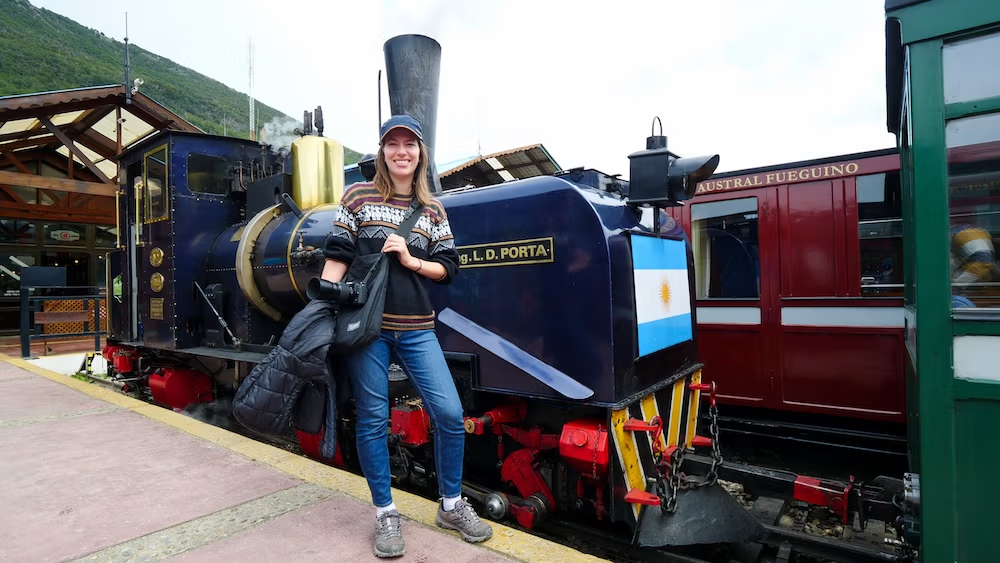
Ushuaia: The Best Central Excursion Base with the Worst Location Penalty
Ushuaia was proof that a city can be compact in theory and tiring in practice.
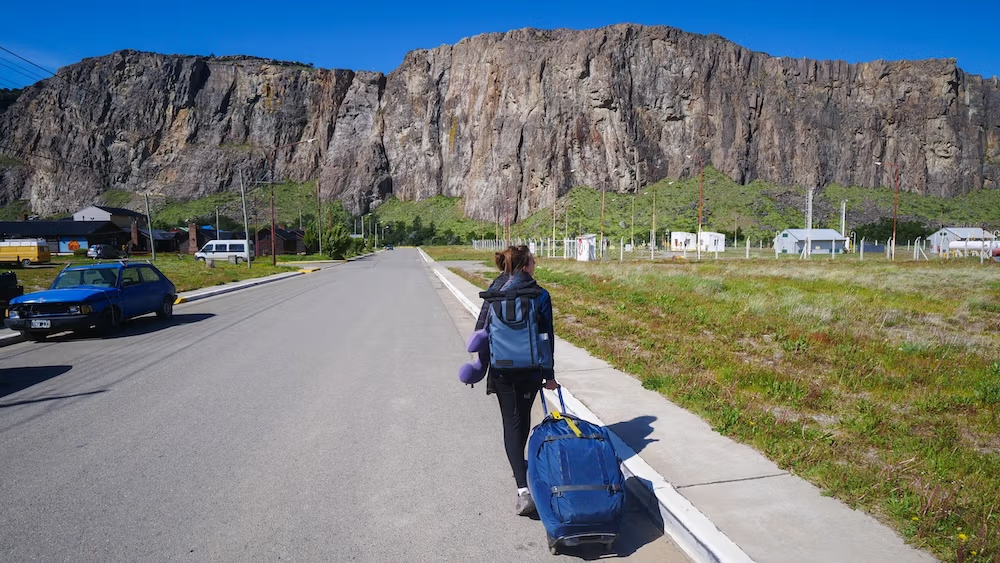
We booked an apartment roughly 30 to 40 minutes from the centre on foot. The walk was manageable. Repeating it made the location expensive in time, taxis and motivation.
That became especially obvious after our long journey into Tierra del Fuego. We arrived groggy, with swollen feet and little desire to add an urban hike to the end of the trip.
Central Ushuaia is much easier. The waterfront concentrates harbour departures, restaurants and several visitor services. Tierra del Fuego National Park can be reached by minibus, taxi, remis or organized excursion. The End of the World Train station sits outside the centre too, so that day still requires transport even when the hotel is well located.
The key distinction is that Ushuaia has a useful core. You want to sleep inside or close to it.
Hills, wind and winter surfaces also change what “walkable” means. A short map distance can feel very different when the pavement is icy, the street rises sharply or you are dragging luggage. I would never use the city’s compact appearance as a universal accessibility claim.
Our late booking pushed us farther out than I would choose now. The apartment itself was not the problem. We had simply placed ourselves on the wrong side of the daily movement equation.
Best hotel strategy: Prioritize the centre and waterfront unless an outlying property includes transport or is intended as a self-contained stay. Use the map while you compare current Ushuaia hotels and apartments on Booking.com.
Best tour strategy: Park-and-train excursions with accommodation pickup can solve the most awkward land-access day. This Tierra del Fuego National Park tour with an optional train ride currently includes accommodation pickup, but the train ticket depends on the option selected and large bags are not accepted.
The Bases That Work Only for a More Specific Trip
Some places can be visited without a car but do not deserve equal billing as broad operational bases.
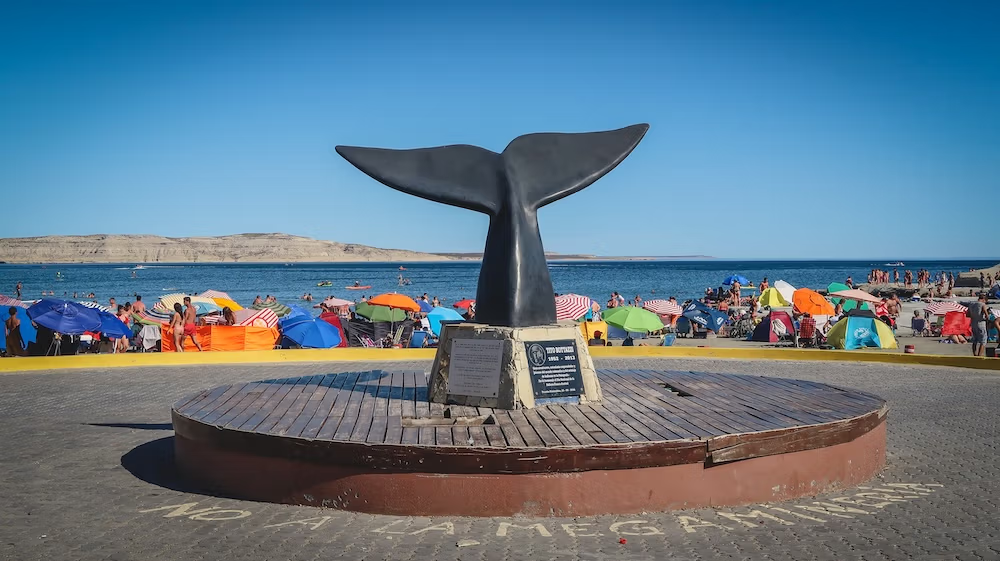
Puerto Pirámides
Puerto Pirámides was effortless inside the settlement and surprisingly complicated once we tried to move beyond it.
Our beachfront accommodation, now operating as Rayentray Océano, had kitchen facilities and placed us close to the small centre. For a contained stay, it was excellent.
Then we decided to walk several kilometres toward a wildlife area.
We accepted a lift, followed the wrong route and eventually found ourselves walking beside the highway under a brutal sun. The kayak operation we had hoped to use was closed. It was one of those days when each reasonable assumption shook hands with the next one and formed a committee dedicated to wasting our time.
“You win some, you lose some,” I said afterward. “This wasn’t our best day in terms of things going to plan, but that’s just travel for you.”
Puerto Pirámides is a compelling specialist stay for travellers who want to sleep on the peninsula and are prepared to book the necessary outings. It is not a place where the compact settlement magically grants independent access across Península Valdés.
Trelew
Trelew worked well for us as a support node.
Our apartment was central enough for the stay, the staff held our luggage and they called a cab when we needed one. Those small services made the difference.
For most wildlife-focused travellers, I would still favour Puerto Madryn as the more satisfying base. Trelew makes more sense when flight timing, onward transport or a short overnight creates a practical reason to stay there.
El Bolsón and Lago Puelo
We travelled from Esquel to El Bolsón and used local transport toward Lago Puelo. The trip included a vehicle change around the provincial boundary.
I would not present that old sequence as a current instruction because the exact service can change. The durable lesson is that regional routes may involve more moving parts than the map suggests.
El Bolsón can work without a car, particularly when accommodation and planned activities align with the current local network. It deserves its own detailed transport treatment rather than a rushed promise inside a broad Patagonia article.
Tolhuin
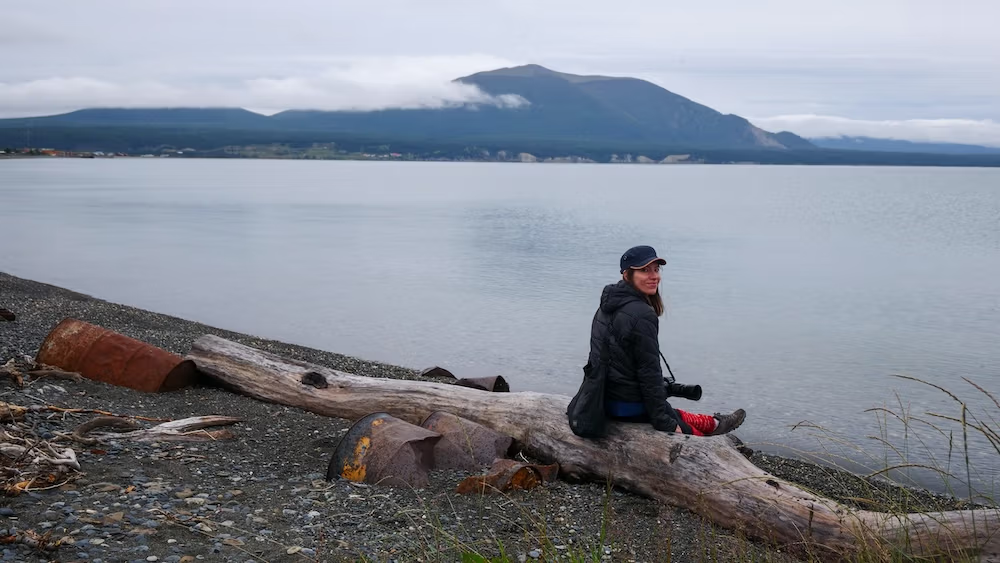
Tolhuin gave us one of the clearest examples of a remote property working precisely because it did not pretend to be a town base.
Our guesthouse sat beside the lake, roughly six kilometres from the settlement, and had its own restaurant. The setting was the point. We could eat there and enjoy the property without constantly trying to commute into town.
That is a contained stay. It works when you want to remain there.
The mistake would be booking the same location while expecting spontaneous access to everything around Tolhuin.
Where to Stay Without a Car: Location Has to Do Some of the Driving
Hotel categories matter less on a car-free trip than the relationship between the front door and the rest of your plans.
A boutique room does not compensate for missing the pickup zone. A lake view does not carry your suitcase from the terminal. A cheap apartment stops feeling cheap after enough taxis.
I would look for overlap between three areas:
- the terminal or arrival route;
- the restaurants, groceries and ordinary services;
- the tour pickup zone, harbour or useful bus corridor.
No property will always hit all three perfectly. The goal is to solve the hardest movement rather than choosing the hotel in isolation.
When Terminal Proximity Matters Most
Staying near the terminal is particularly valuable in El Chaltén, where the same central area can also place you near food and trail access.
It can help in El Calafate and Esquel too, especially after an overnight journey or before an early departure. The benefit disappears when the terminal district sits far from the part of town where you will spend the rest of the stay, so the map still needs a second look.
When the Centre Is Worth Paying For
Central accommodation usually earns its premium in Puerto Madryn and Ushuaia.
In Puerto Madryn, it gives you easier daily life and a better chance of falling within wildlife-tour pickup zones. In Ushuaia, it reduces the repeated walk or taxi burden and places harbour departures closer at hand.
A central address does not need to be directly on the busiest street. A few quiet blocks away may be better. The important thing is avoiding a location that requires a transport plan for every ordinary task.
When a Remote Hotel Still Makes Sense
Remote accommodation works when the property solves the problems created by its location.
Useful features include:
- meals on site;
- scheduled shuttles;
- confirmed excursion pickup;
- a kitchenette;
- luggage assistance;
- and enough to do at the property that you are happy staying there.
Our Tolhuin guesthouse passed that test because we could eat there and the lakefront setting was the purpose of the stay.
A distant apartment with no food, shuttle or pickup arrangement does not pass the same test simply because the view is lovely.
The Unglamorous Hotel Features I Now Value More
Some of the most useful accommodation features barely register when I travel with a vehicle. Without one, they become important.
Luggage storage rescues the awkward hours around check-in and check-out.
Early check-in can save an arrival day after an overnight coach.
Breakfast removes a morning errand before a hike or pickup.
A kitchenette gives you independence in small destinations with limited restaurant hours.
Reception assistance helps with taxis, local operators and last-minute transport problems.
An on-site restaurant can turn an isolated hotel from a burden into a complete stay.
Verify these details directly. Early check-in is rarely guaranteed. Luggage storage may depend on reception hours. A listed shuttle may run on a fixed schedule rather than on demand.
The useful question is not, “Does the hotel have this feature?” It is, “Will the feature be available when my transport plan depends on it?”
Guided Tours That Truly Replace a Rental Car
A guided tour deserves a place in this article when its transport component solves a problem.
That sounds obvious, yet many activities begin at a port, railway station, office or trailhead that the traveller must reach independently. The booking includes an experience. It may not include access.
I divide useful car-free tours into four types.
Hotel Pickup for a Remote Day
This is the most obvious replacement for a car.
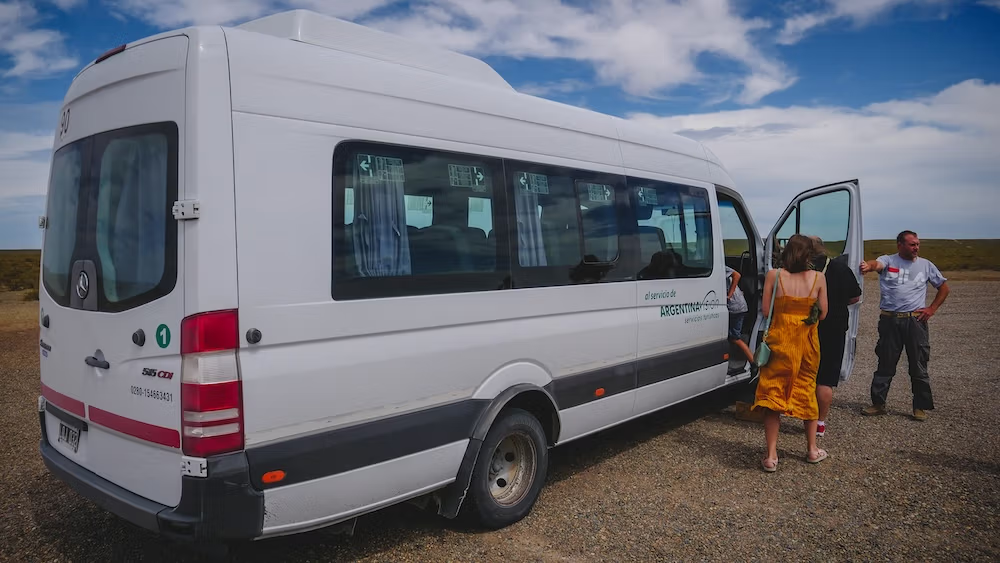
Our Península Valdés, Piedra Parada and Nibepo Aike days all used this model. A vehicle collected us from our accommodation and took us somewhere that would have been difficult to reach independently.
The crucial detail is the pickup boundary.
An operator may collect from central hotels but not distant cabins. Apartments may receive a nearby meeting point. A Bariloche product may cover downtown addresses without travelling far along the lake. El Calafate pickups may apply to the urban area rather than rural properties.
Confirm the exact address before paying for both the hotel and the tour. Otherwise, two individually reasonable bookings can combine into one awkward morning taxi.
Return Transport Without a Full Guided Day
A shared return transfer is ideal when the road is the problem and the attraction is easy to explore independently.
That was our Perito Moreno model. We were driven to the walkways, given time to move at our own pace and collected later.
A full guided excursion may still be worthwhile for interpretation or additional stops. The important thing is knowing what you are buying.
Check how much independent time is included, whether admission is separate and whether pickup begins at the hotel or a central meeting point. A transport-only product should be judged by timing and access rather than by how many tour features it lacks.
A Central Meeting Point You Can Reach Easily
Hotel pickup is not essential when the departure point is well connected.
We reached Puerto Pañuelo by local bus from Bariloche. That made the port a workable gateway to lake activities without a private transfer.
Ushuaia’s harbour serves a similar function for central accommodation. The tour may not begin at the hotel, but the gap is small enough to manage on foot or with a short ride.
Always check the exact meeting address. “Bariloche departure” covers far too much geography to be reassuring. “Ushuaia harbour” is more specific, but boarding times and check-in requirements still matter.
Organized Transport When the Public Option Is Too Fragile
This is where the choice becomes personal.
Public transport can offer more independence and a lower cost. Organized access usually gives up some freedom in exchange for a secure return.
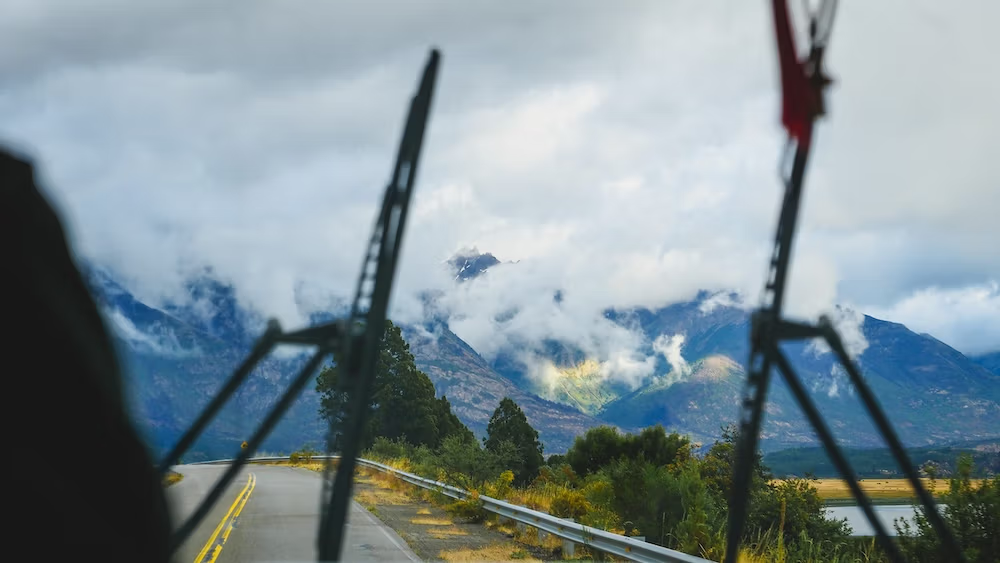
At Piedra Parada, the tour vehicle removed the difficult access question. At Los Alerces, public transport left us watching the time more closely.
I am comfortable using a frequent bus casually. I do not treat a once-daily or few-times-weekly service with the same relaxed spirit. When missing the connection could disrupt the next hotel or flight, I either build in a large margin or pay for a more secure arrangement.
The tour is not merely buying information at that point.
It is buying the trip home.
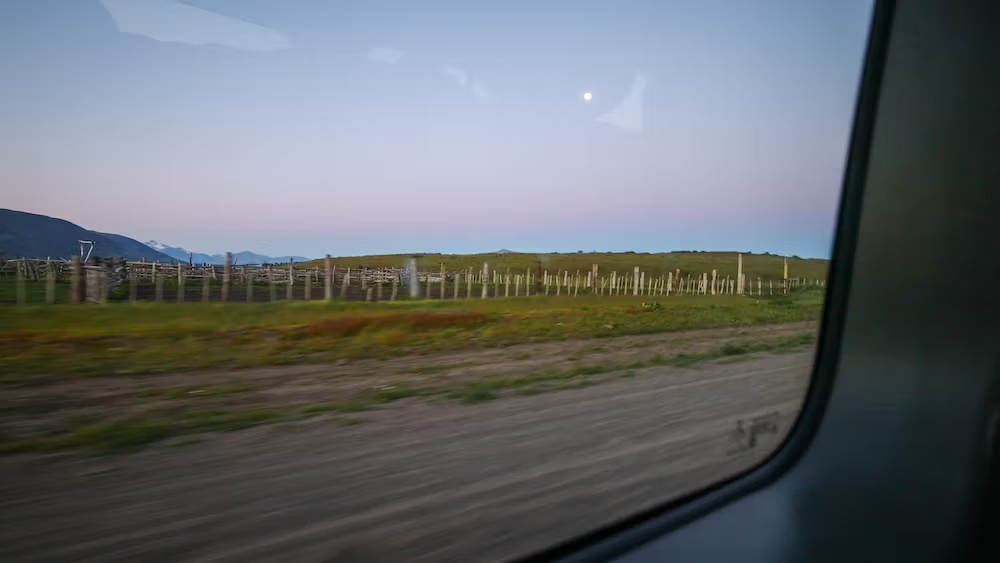
How a Car-Free Patagonia Plan Starts to Fall Apart
A no-car trip rarely fails because of one dramatic error. More often, several minor weaknesses gather in the same place.
The dangerous combination is:
- a short stay;
- remote accommodation;
- and a fixed connection with no easy replacement.
Add an early arrival or late departure, and you have built a small logistical trap.
Our San Martín taxi no-show mattered because we had a terminal to reach. Our Puerto Pirámides walk became ridiculous because the destination sat beyond the easy range of the settlement. Los Alerces felt tense because the return service was scarce. The Ushuaia apartment charged us the same location penalty day after day.
None of those events proves that the destination is bad without a car. Each reveals where the plan was vulnerable.
Weather magnifies the weakness. Patagonia’s wind can turn an ordinary walk into work. Winter adds darkness, ice and reduced service. Shoulder-season transport can operate on fewer days. A restaurant or hotel shuttle may have a schedule that fits summer better than your visit.
Luggage magnifies it too. I am much more generous when describing distances after putting my backpack down. Audrey’s estimates tend to remain connected to physical reality.
The simplest protection is time.
Longer stays reduce the number of check-outs, luggage gaps, terminals and fixed connections. They allow a delayed bus to be annoying rather than catastrophic. They make room for weather and give you another chance when an excursion shifts.
A car-free route built from one-night stops may be technically possible. That does not make it a good trip.
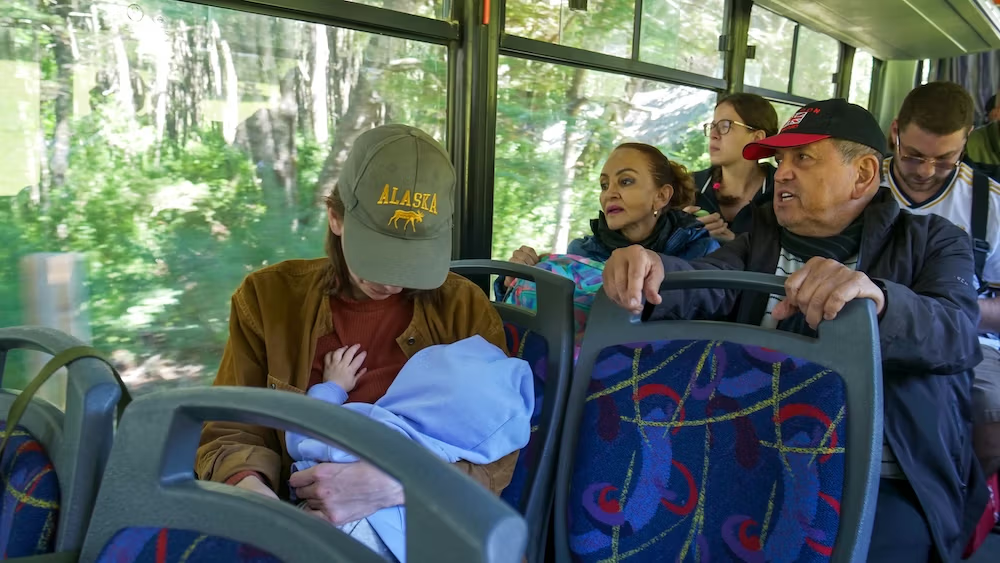
How I Would Build the Route
I would resist the urge to connect every famous Patagonia destination into one giant line.
The six primary bases belong to different route families.
El Calafate and El Chaltén make the clearest pairing. El Calafate handles the airport, glacier access and organized excursions. El Chaltén gives you independent hiking after the transfer.
Bariloche deserves enough time to use its public transport and lake-region network rather than serving as another rushed overnight.
Puerto Madryn anchors an Atlantic wildlife trip. Combining it with western Andean bases can involve a substantial coach journey or flight decision.
Esquel works as the centre of a western Chubut stay involving Los Alerces, Piedra Parada, La Trochita and regional connections.
Ushuaia is a southern endpoint. Reaching it takes enough effort that I would not bolt it onto a route without giving the city and surrounding excursions proper time.
I would choose one or two of these route families and stay longer in the strongest bases. That approach may look less impressive on a map. It produces far more usable days.
I would also leave the day after an exhausting overnight journey relatively open. Audrey may emerge from a coach ride ready to nap somewhere else. I usually require food, coffee and an unreasonable amount of time to understand what is happening.
Transport days are still travel days. They are simply bad days for pretending your body is a spreadsheet.
Car-Free Patagonia Base Comparison
| Base | Main car-free advantage | Best hotel approach | How to reach the landscape | Main weakness | Best fit |
|---|---|---|---|---|---|
| El Chaltén | Exceptional independence after arrival | Stay near the terminal, centre and town-origin trails | Walk to major hikes; transfer to selected remote trailheads | No local airport and a hiking-focused activity mix | Independent hikers |
| El Calafate | Strong transfer and excursion infrastructure | Choose a central or terminal-adjacent property inside useful pickup zones | Glacier buses, shared transfers and organized excursions | Main attractions sit far outside town | Glacier and estancia trips |
| Puerto Madryn | A functional city paired with organized wildlife access | Stay centrally and confirm Península Valdés pickup | Full-day wildlife excursions and transfers | The peninsula remains vehicle-scale | Wildlife travellers who do not want to drive |
| Esquel | Diverse outings from an underrated base | Stay central for the terminal and excursion departures | Local attractions, seasonal buses and organized remote trips | Low-frequency access outside peak periods | Travellers willing to plan fixed days |
| Bariloche | The strongest public-transport network in this group | Choose the exact corridor before choosing the property | Municipal buses, ports, transfers and tours | Dispersed accommodation can erase the advantage | Travellers mixing independent days and tours |
| Ushuaia | Concentrated central excursion infrastructure | Prioritize the centre and waterfront | Minibuses, harbour departures and organized park access | Hills, weather and distant hotels add daily friction | Park, train and boat excursions from one base |
The table is not a league standing.
El Chaltén is best when walking is the goal. El Calafate is strongest when paid transport unlocks the region. Puerto Madryn works when wildlife tours provide the vehicle. Esquel rewards planning. Bariloche rewards careful hotel selection. Ushuaia rewards centrality.
Is Patagonia Without a Car Worth It?
Yes, for the right route.
Travelling without a car can remove parking, long-distance driving and the need for one person to remain alert while everyone else watches the landscape. It can also force better decisions. You stay longer. You choose accommodation more carefully. You stop pretending that six remote destinations belong in a ten-day trip.
The trade-off is that the transport has to be solved before it becomes urgent.
Our best days were the ones where movement disappeared into the background. A vehicle arrived at the hotel. A trail started near town. A local bus matched the port departure. The lodge sat beside the terminal.
Our weakest days usually began with a small dose of optimism.
The taxi would come.
The walk would be fine.
Another bus would surely appear.
The apartment was not that far away.
Patagonia is very good at correcting optimistic estimates with wind, distance and a road that continues long after you have stopped enjoying it.
Choose the base before building the itinerary. Choose the hotel for the movements it eliminates. Pay for organized transport when it genuinely replaces a vehicle, and do not confuse the existence of a bus with a flexible transport system.
When too many links depend on luck, change the route.
Do that, and travelling through Patagonia without a car stops feeling like a limitation you are trying to overcome. It becomes the structure of a slower, more deliberate and often far better trip.
Frequently Asked Questions
Can you travel through Patagonia without renting a car?
Yes, if you choose bases where arrival, daily life and access to the surrounding landscape all work together. The strongest options use walking, public transport, fixed transfers or guided excursions in different combinations.
Which Patagonia base is easiest without a car?
El Chaltén was the easiest for us once we arrived because the bus terminal, central accommodation, restaurants and several major trail starts were concentrated within the village.
Is El Calafate practical without a rental car?
El Calafate works well when you stay in a useful central area and prebook transport for attractions outside town. Glacier transfers, estancia pickups and guided excursions provide the mobility that walking cannot.
Where should I stay in Patagonia if I am not driving?
Choose accommodation by its relationship to the terminal, daily services and tour pickup zone. A scenic remote property can still work when it includes meals, shuttles or pickup, but location usually matters more than hotel category.
Do guided tours in Patagonia always include hotel pickup?
No. Some collect from accommodation within a defined urban zone, while others assign a central meeting point or begin at a port, station or trailhead. Check the exact address and pickup conditions before booking.
Is Bariloche good for travellers without a car?
Bariloche has the strongest municipal public-transport network among the bases compared here, but the advantage depends on where you stay. A distant hotel can turn a useful bus network into a sequence of transfers.
Why can Los Alerces be difficult without a car?
Public transport can reach Los Alerces, but frequency varies by season and the return connection may be limited. I would confirm the live schedule and build the day around the return rather than improvising.
Project 23 Argentina: This guide is also available in Spanish. [Leé la versión en castellano: Patagonia sin auto: las mejores bases, hoteles y excursiones guiadas]
This article contains affiliate links. If you book through one of these links, I may earn a commission at no extra cost to you.