
Patagonia has a loophole in the phrase no hiking required.
I have boarded a boat tour and ended up on a 2.2-kilometre forest hike. I have joined a wildlife drive that later sent us slipping down a sandy cliff. I have also spent an entire day cruising past glaciers with a comfortable seat, lunch, toilets and very little walking at all.
All three experiences could be advertised to someone who does not want a serious trek. They are still wildly different days.
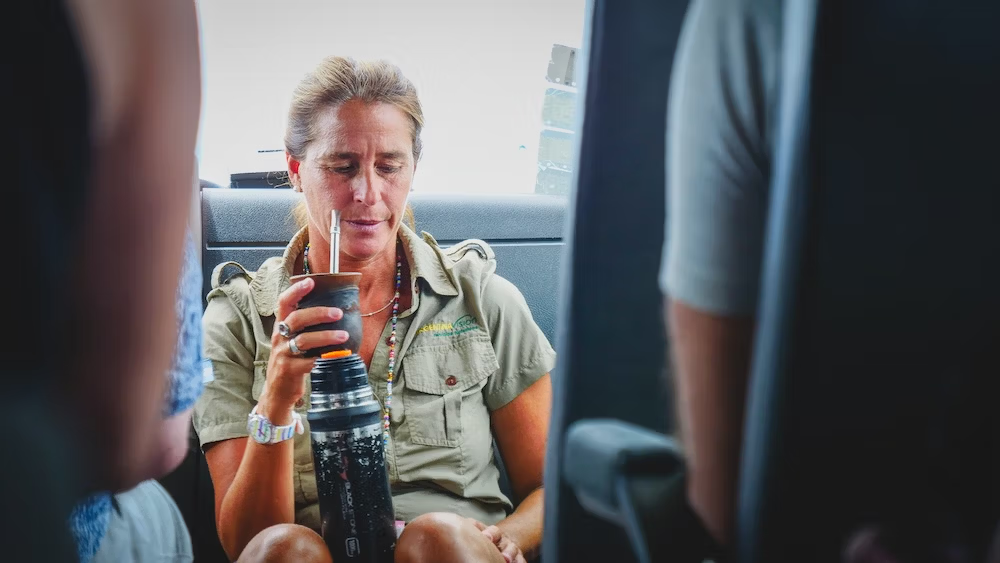
Audrey and I have travelled through Argentine Patagonia by bus, boat, train and tour van, and we have learned that the activity name rarely tells you where the effort is hiding. Sometimes it is in the legs. Sometimes it is ten or eleven hours in a vehicle. Sometimes it is boat motion, awkward boarding, cold wind or the pressure of keeping up with a group when you would rather sit down and admire the view.
That is why I would never choose a Patagonia tour for a non-hiker by looking only at the walking distance. The better question is: what kind of effort can you comfortably tolerate in exchange for the experience you want?
This guide compares the best scenic drives, boat tours, wildlife excursions, heritage trains and self-paced glacier visits in Argentine Patagonia. I will also point out the tours that look passive on paper but quietly contain a substantial walk once you are too far from town to change your mind.
The Hidden Work Inside an “Easy” Patagonia Tour
Non-hiker is a useful description, but it is not a medical category and it does not mean the same thing for everyone.
You may be perfectly happy walking on a firm boardwalk as long as there are benches. You may dislike slopes but tolerate a full day on a boat. You may have no issue standing at viewpoints while finding long van rides murder on your back. Another traveller may have the exact opposite problem.
Before comparing tours, I separate the effort into four buckets.
Walking surface matters more than a flattering adjective
A short distance on loose sand can be harder than a longer boardwalk with handrails and places to rest.
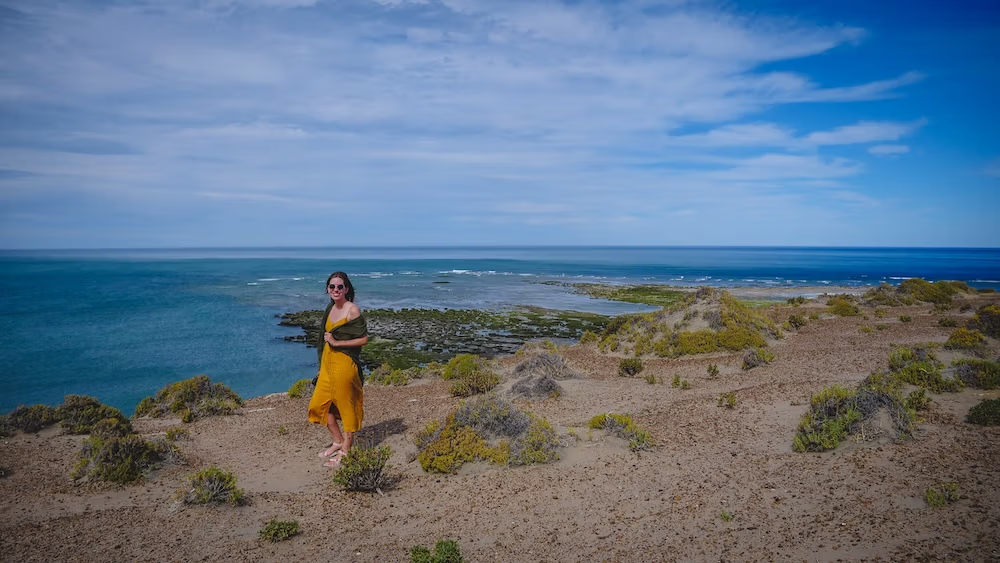
We learned that at Península Valdés. One stop involved descending toward elephant seals on a sandy, windy slope. We were slipping in places, and of course whatever goes down must eventually haul itself back up. Nobody would confuse it with a major hike, but it was not the gentle roadside viewpoint somebody might imagine from the tour title.
Perito Moreno was the reverse. Audrey and I climbed plenty of stairs because we kept following the boardwalks to lower balconies, but we controlled the route. We could sit, stop, turn around or choose another branch. A longer attraction can be more manageable when you are not being marched through it.
Low walking can mean a very long time sitting
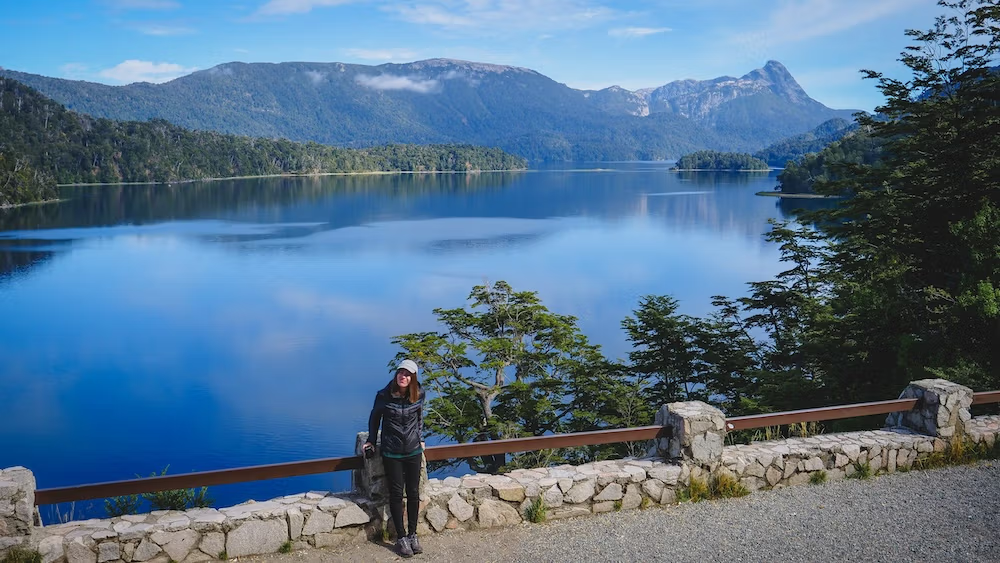
The Seven Lakes road is one of Patagonia’s great scenic drives, but a full-day excursion can take ten or eleven hours.
That is excellent news if long sitting is easier for you than sustained walking. It is less exciting if winding roads make you queasy or your knees seize up after two hours in a van.
Audrey can fall asleep in almost any moving object. She slept on part of our Seven Lakes return, on trains and on boats. This was not boredom. It was her body announcing that an easy day still counts as a day.
Boarding is part of the tour
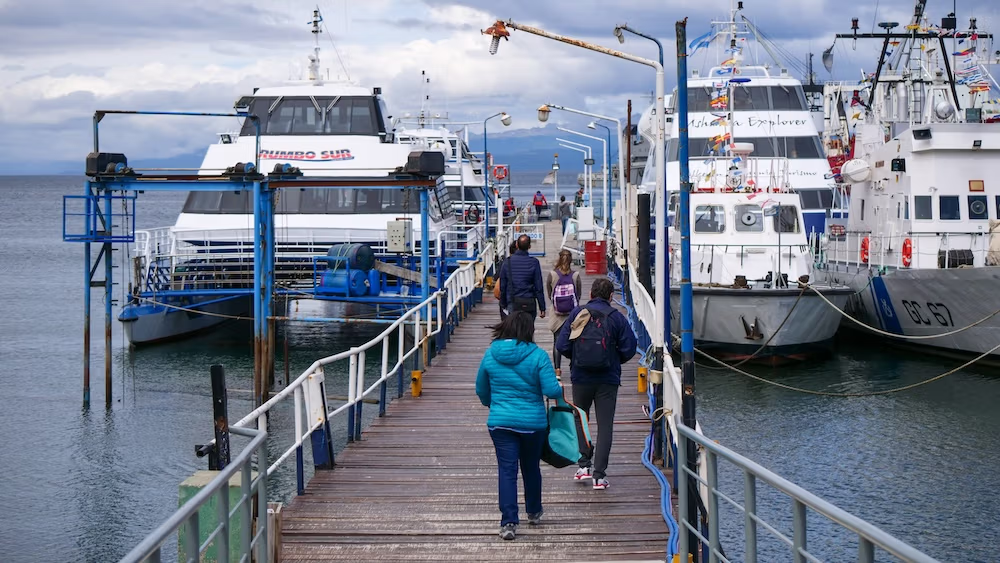
A large glacier vessel with indoor seats and proper toilets is a different proposition from a zodiac approaching a sea-lion colony. So is walking down a pier compared with crossing a beach or negotiating a steep gangway.
The boat may be gentle once you are aboard. Getting aboard may be the awkward part.
Pace control can beat a shorter itinerary
A 500-metre self-paced boardwalk with benches may suit you better than a 300-metre guided trail where everyone must remain together.
Our Los Alerces outing made this clear. After the navigation, the group completed a forest hike and we were told not to linger behind. We enjoyed it, but the day would have been a poor choice for anyone who needed to stop frequently or skip the walk.
This is also why limited walking and accessible cannot be used as synonyms. One ramp, one adapted coach or one accessible viewpoint does not prove that the hotel transfer, toilets, vessel, complete route and return journey will work for every person. Ask for concrete details. Labels are cheap.
Scenic Drives: Brilliant When You Can Handle the Road Time
A guided drive is one of the easiest ways to see Patagonia’s scale without making a trail the centre of the day. The compromise is simple: you save your legs and spend a great deal of time sitting on your backside.
Our Seven Lakes tour ran between San Martín de los Andes and Villa La Angostura through forests, mountain scenery and a chain of absurdly photogenic lakes. We had already travelled much of the same road by bus, which created a minor marital disagreement before we booked it.
I wanted to do the tour. Audrey thought paying to repeat the exact route there and back sounded ridiculous.
Her argument was solid. A normal bus had already shown us the scenery through the window. Why buy another ticket for the same asphalt?
The answer appeared once we began stopping.
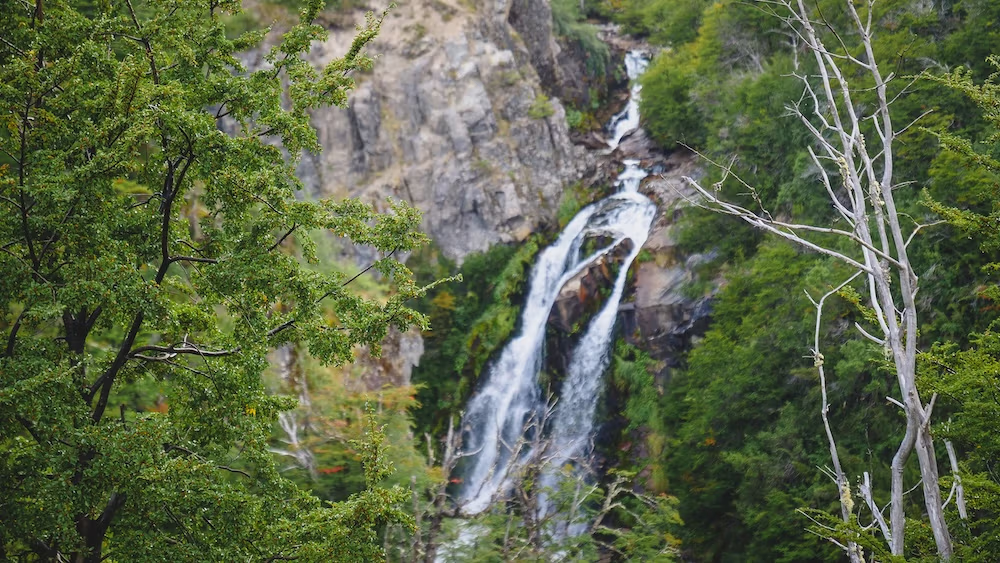
We got out at lakes, lookouts and a waterfall, spent time in Villa La Angostura and watched the weather keep changing the route in front of us. We started in sharp morning cold, drove through thick cloud and fog, and later reached clearer viewpoints. An intercity bus carries you through that landscape. A worthwhile scenic tour lets you examine it.
By the end of the day, Audrey agreed that the stops had made the repeat worthwhile. I was even more enthusiastic and said I would happily do it again. She drew the line at once, which was probably the more reasonable verdict.
When the tour earns its price
I would pay for a scenic drive when the road itself is one of the reasons I came to Patagonia and the itinerary offers meaningful stops that public transport cannot provide.
The Seven Lakes route fits that description. A generic transfer with a commentary track does not.
Current full-day excursions can last ten or eleven hours and may collect only from selected central hotels. Travellers outside the pickup zone can be assigned a meeting point. Winter road conditions can also change or cancel the route, so this is not a product I would book on the assumption that every departure operates exactly as written.
Travellers ready to commit to the full road day can check the current Seven Lakes circuit from Bariloche. Read the pickup details before paying, especially if your accommodation is outside the centre.
If central collection would make the day easier, you can also compare places to stay in Bariloche before choosing the tour.
The less glamorous questions matter:
- How many hours are spent driving?
- How often are toilets available?
- What is the ground like at the viewpoints?
- Can you remain in the vehicle for a stop that looks awkward?
- Is lunch included, scheduled or left to you?
If prolonged sitting is comfortable and you enjoy a succession of brief outdoor stops, Seven Lakes is one of the strongest non-hiking scenic tours in Argentine Patagonia. If the road itself is likely to become the problem, the lakes will not magically make your spine forget where it has been all day.
Boat Tours: Find Out What Happens After You Dock
Boat tours offer some of Patagonia’s best scenery-to-walking ratios. They are also the easiest category to misunderstand.
I divide them into three groups:
- tours where the main experience happens aboard;
- tours with a short or adaptable landing;
- tours where the boat is mainly transportation to a walk.
You need to know which one you are buying.
Full-day glacier cruises deliver the biggest scenery with the least continuous walking
Our Lago Argentino glacier cruise from El Calafate remains one of the best excursions we have done anywhere.
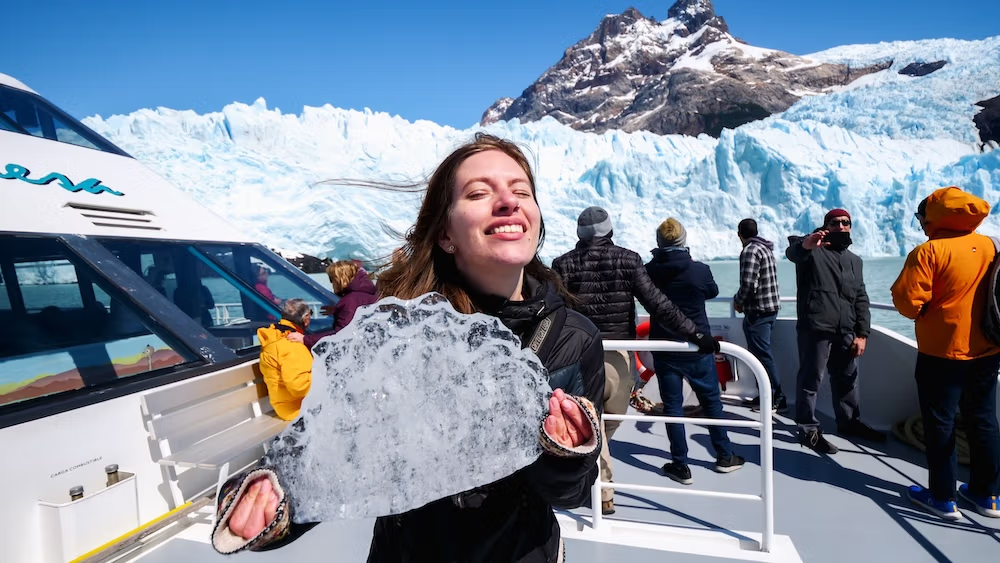
The boat was spacious, we had proper seats, there were multiple outdoor decks and the day kept producing glacier after glacier. I expected Perito Moreno to be the obvious star. Instead, the whole route felt much grander than I had imagined, with hanging glaciers, waterfalls streaming down the mountains and icebergs drifting through the channels.
At one point I was genuinely speechless, which is not my natural operating condition.
We had a lunchbox, drank Malbec, put glacier ice in our cups and periodically abandoned the cameras because we had taken an idiotic number of photographs. Audrey and I both felt the cruise had delivered far more than expected. I said I would go back the next day. I meant it.
From a non-hiker’s perspective, the structure was excellent. Most of the day was spent seated, eating, standing on deck or moving around the vessel. Our itinerary included a short guided landing, but the glaciers themselves were the core event and we received that from the boat.
Current glacier products vary. Some leave from Punta Bandera, roughly 47 kilometres from El Calafate, so the day includes a road transfer before the sailing even begins. Some land near Refugio Spegazzini. The current Todo Glaciares product specifically describes ramps, an elevator and adapted toilets within its operation, but that does not automatically cover every transfer vehicle or every glacier cruise on Lago Argentino.
Travellers weighing different vessels, landings and transfer arrangements can compare current Los Glaciares boat tours. Look beyond the glacier names and check what happens at every stop.
This is still my strongest overall option for travellers who want huge Patagonia scenery without a sustained walk. Just confirm the boarding, transfer and landing rather than assuming the word cruise has solved everything.
Beagle Channel cruises can provide wildlife without a colony walk
Ushuaia has several penguin excursions that sound similar while delivering physically different days.
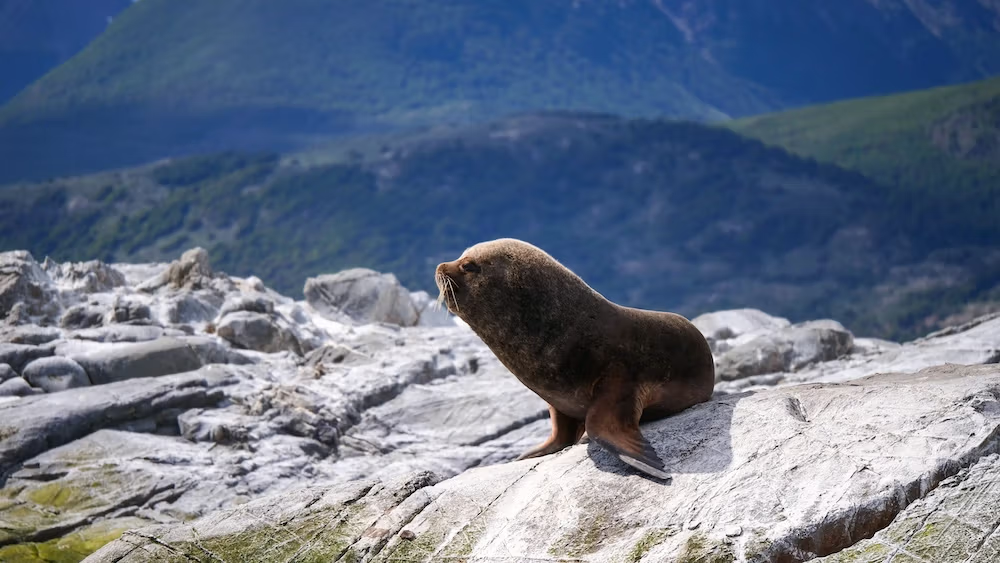
Audrey and I chose a four-hour Beagle Channel cruise that passed sea lions, seabirds and Les Éclaireurs Lighthouse before viewing penguins from the boat. We did not disembark at the colony.
That gave us a more distant wildlife encounter, but it removed the uneven land access and group walk. For somebody comfortable aboard a vessel, it can be a smart trade.
Other current products disembark for an island walk, and longer combinations can connect the cruise with an estancia and a land-based penguin visit. Do not ask only whether the tour “goes to the penguins.” Ask what your feet are expected to do when you arrive.
Before choosing, compare current Beagle Channel cruises and separate boat-only viewing from products with island or colony walks.
Some departures require passengers to reach the tourist pier independently. If that matters to your planning, you can compare places to stay in Ushuaia before locking in the cruise.
A boat-only Beagle excursion is one of the cleanest wildlife choices for a non-hiker whose main concern is terrain. It is a poor choice for somebody prone to seasickness or nervous about boarding. Wildlife also refuses to sign performance contracts, so no species or close view should be treated as guaranteed.
Some boat trips are hikes wearing life jackets
Los Alerces is the cautionary tale.
We left Esquel early, travelled roughly two and a half hours by bus and then walked about twenty minutes from the drop-off point to the port. The navigation itself was beautiful. We spent around an hour and a half on the water with turquoise lakes, mountains and the Torrecillas Glacier in the distance.
Then the group disembarked for a 2.2-kilometre forest hike. The first section gained roughly seventy metres over seven hundred metres, and everyone had to remain with the guide.
We loved the ancient forest. I would not remove that walk from our day. I also would not recommend the excursion to someone specifically trying to avoid hiking.
Nahuel Huapi cruises around Bariloche and Villa La Angostura can sit somewhere in the middle. On Victoria Island, our departure offered different walking choices. Audrey and I chose a route with stairs and around 150 metres of ascent, but that was our decision rather than an unavoidable requirement.
At Bosque de Arrayanes, the bigger issue was time. Our stop was so brief that the boat schedule controlled the experience. Short walking distances are not especially comforting when the whole group must hurry back to the dock.
Whenever a cruise lands, ask:
- Is the walk compulsory?
- What is the actual distance and surface?
- Are there stairs or steep sections?
- Can I stay aboard or wait near the dock?
- How much time do I have before the boat leaves?
The answers tell you more than the destination name.
Wildlife Tours: Península Valdés Is a Road Marathon with Wild Rewards
Península Valdés looks ideal for non-hikers because so much of the day happens in a vehicle. You cross the Patagonian steppe between coastal viewpoints, wildlife colonies, estancias and the small settlement of Puerto Pirámides.
All true. It is also an enormous day.
Current full-day products commonly take ten or eleven hours, and one representative circuit covers roughly 400 kilometres. Routes change with the season and wildlife activity, so two tours carrying similar names may not visit the same places.
Because those routes vary, it makes more sense to compare current Península Valdés tours than to assume every full-day circuit contains the same wildlife stops, boat options or walking.
Our first excursion began with pickup outside our hotel in Puerto Madryn. We drove across flat, dry steppe, stopped at an interpretation centre, watched elephant seals and sea lions from a cliff and continued to Estancia San Lorenzo for lunch.
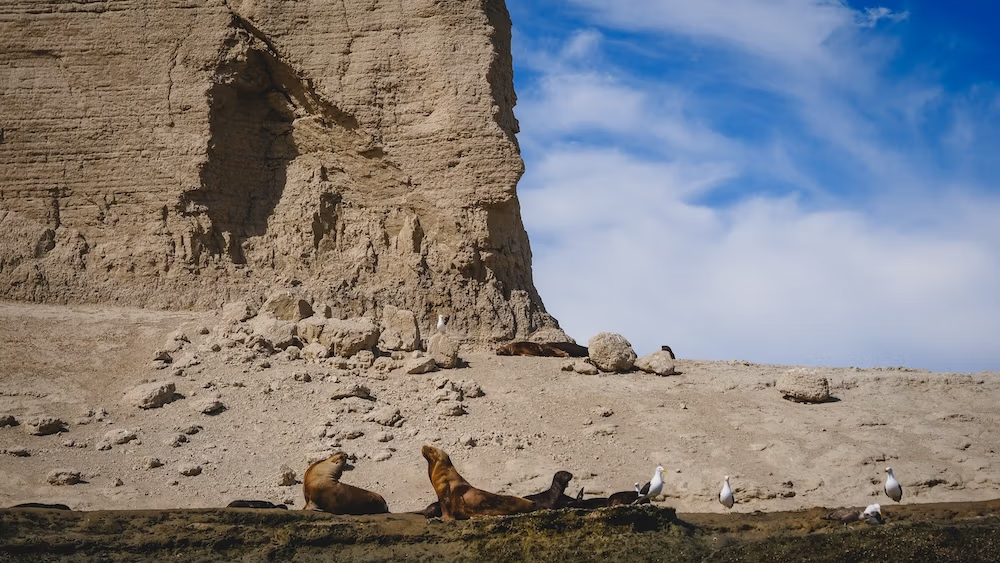
The sea lions sounded oddly like sheep from up there. That remains one of my strongest memories of the viewpoint: impressive wildlife below us, Patagonian wind in our faces and a soundtrack that could have come from a farm.
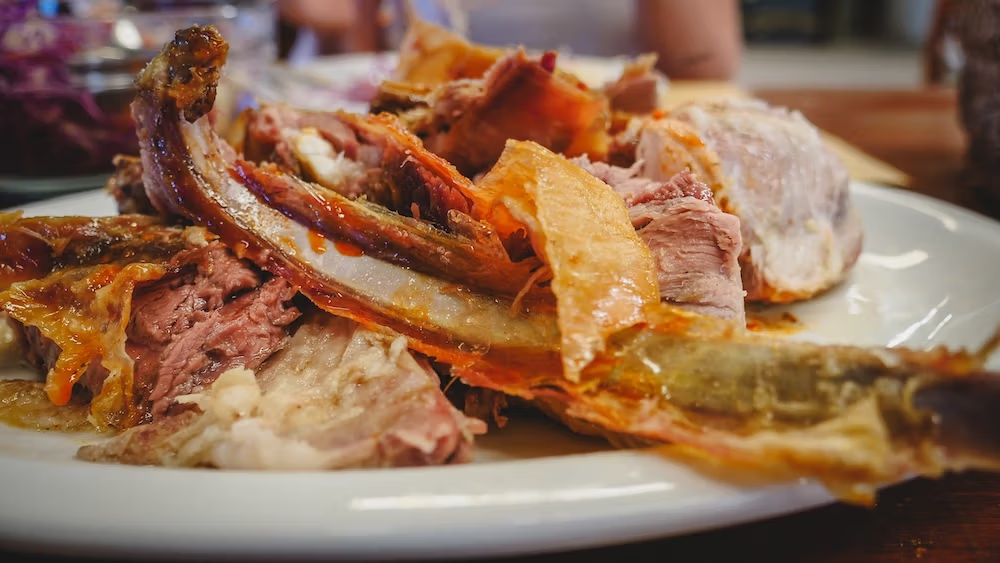
Lunch was Patagonian lamb, empanadas and wine in ferocious heat. The temperature reached around 36°C, and an industrial-strength fan was doing heroic work inside the dining room. It was closer to 38.5°C by the time we reached Puerto Pirámides later that day.
After lunch we walked through the penguin colony. Penguins wandered around the marked route, marched between nests and claimed right of way whenever our paths crossed. It was fantastic. We returned to the vehicle guzzling water.
Nobody had led us on a serious hike. Heat, exposure, walking and the length of the day still added up.
The optional zodiac gave us the better wildlife view
On our second Península Valdés circuit, we added a zodiac excursion to approach a sea-lion colony from the water.
From the land viewpoint, we had seen the animals at a distance. The zodiac brought us closer, took us along the coastline and even into a small cave where the guide pointed out marine fossils in the rock.
It was one of the day’s highlights, and I thought the extra excursion was well worth adding. That judgment comes with an obvious condition: I was comfortable with the boarding, life jacket, open water and motion.
A traveller worried about loose ground may prefer the zodiac. Somebody who becomes ill on small boats may be much happier with binoculars or a long camera lens from the cliff. The better view is not automatically the better choice.
Colony access is the detail most tour pages fail to explain
Our second day also included a sandy descent toward elephant seals. We slipped on the way down, and the wind gave the whole operation more personality than it needed.
That experience is why I would never describe Península Valdés as one single effort level. A roadside lookout, marked penguin path, sandy cliff and zodiac ride all ask different things from the traveller.
Current tours may collect from participating downtown hotels while assigning a separate meeting point to other guests. Some products exclude cruise-port pickup. Exact walking distances, shade, toilet intervals and surfaces are not always stated clearly.
If pickup convenience is a priority, compare places to stay in Puerto Madryn and then confirm that the property falls inside the chosen operator’s collection area.
Ask about the precise route rather than the destination in general.
Península Valdés is one of the best wildlife tours in Patagonia for travellers who can tolerate a long road day, repeated vehicle exits and at least some outdoor walking. It delivers extraordinary variety: steppe, coast, estancias and several kinds of wildlife environment in one circuit.
For the least land-based terrain, a boat-only Beagle Channel cruise is simpler. For the fullest land-and-wildlife day, Península Valdés wins—provided its hidden effort fits you.
Heritage Trains: Low Walking Does Not Mean Zero Friction
Heritage trains are natural candidates for non-hikers. You board, sit down and watch Patagonia pass the window.
The catch is that old trains were not designed by a committee studying modern comfort. The ride may be gentle on your legs while the benches, steps and station logistics create their own problems.
La Trochita is the most distinctive half-day option
Riding La Trochita from Esquel was one of our favourite experiences in Patagonia.
The current excursion lasts about three hours, travels nineteen kilometres and pauses at Nahuelpan for roughly forty-five minutes. That is a sweet spot. The outing feels substantial without swallowing the whole day.
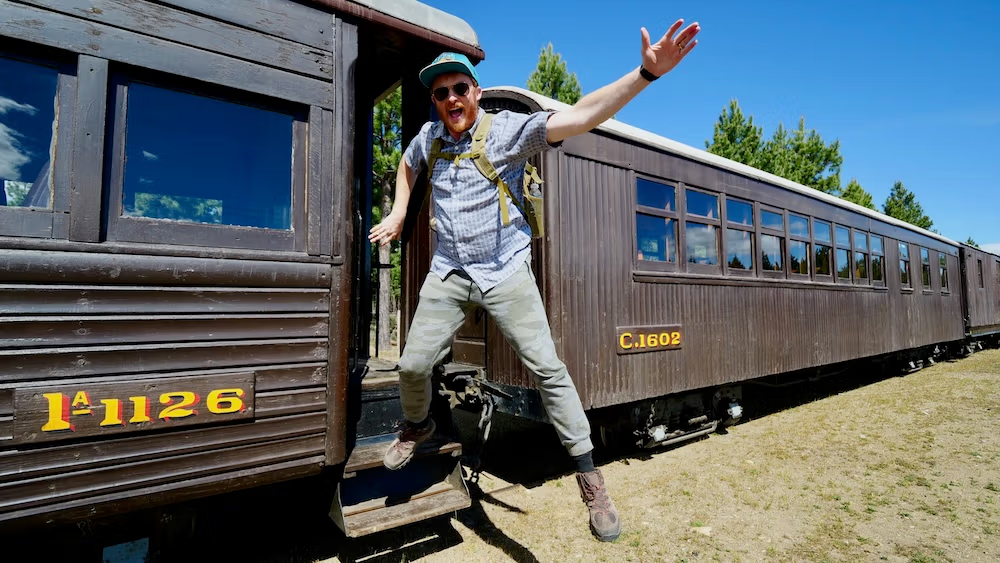
Our carriage had hard wooden benches, numbered seats and the sort of low interior clearance that punished me for being tall. I bumped my head while moving between sections, which Audrey naturally found more entertaining than I did.
For an hour in each direction, the bench was fine. A traveller with back or hip pain may arrive at a less cheerful verdict.
The Nahuelpan stop included food stalls and a small museum. We bought choripán straight from the grill, alfajores and fried dough, then left the museum until the last minute and had to rush. That was our own poor time management rather than a fault in the excursion, but a forty-five-minute stop disappears quickly once everyone wants food and a toilet.
The railway currently has one coach with a wheelchair-access ramp and asks travellers who need it to contact the station while buying. Braille information is also available. Those are specific provisions, not permission to assume that every carriage and every facility at Nahuelpan is step-free.
For a non-hiker who enjoys trains and can tolerate heritage seating, La Trochita is hard to beat. It is scenic, wonderfully specific to Chubut and compact enough to pair with a relaxed afternoon in Esquel.
The End of the World Train changes when the park is added
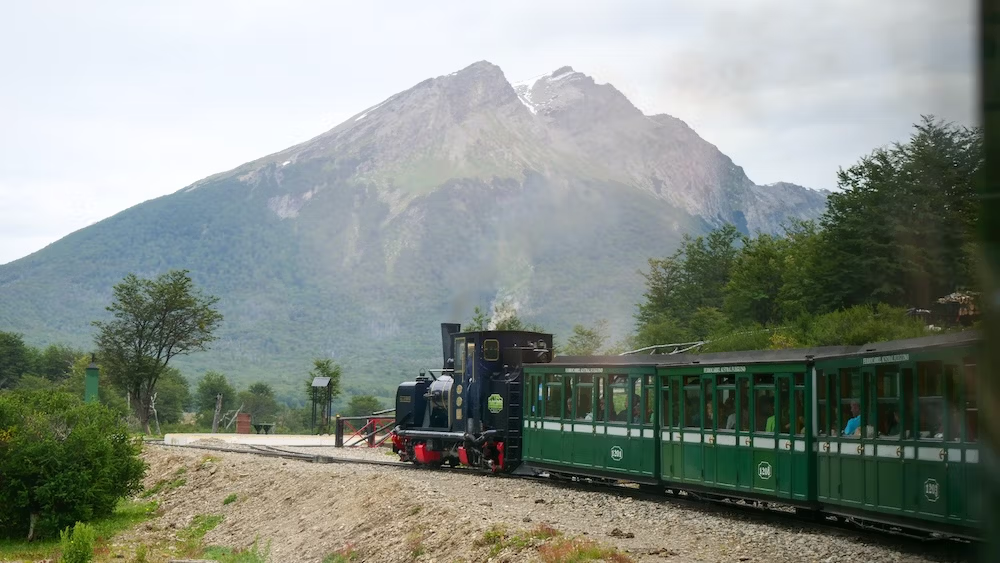
Ushuaia’s Train at the End of the World starts around eight kilometres outside the city. The standalone return ride currently takes a little under two hours and includes a stop at Macarena Station, where passengers can get off for a panoramic point and short walk.
Audrey and I walked toward the waterfall during our trip. The train itself was comfortable enough for her to fall asleep near the end, aided by the gentle swaying and her supernatural ability to nap on transport.
The important booking distinction is what surrounds the railway.
A train-only return is a short seated experience with a brief outdoor stop. Current train-and-national-park packages can add hotel pickup, Lapataia Bay, footbridges and several stops inside Tierra del Fuego National Park. That may be the better sightseeing day, but it is no longer the same low-walking product.
Current packaged options can be reviewed by comparing Patagonia rail tours on GetYourGuide. Check whether the listed activity is the train alone or a wider park excursion before deciding whether it fits.
Read the full programme. Patagonia loves attaching a perfectly innocent train ride to half a day of other activity.
Perito Moreno: More Walking, but Far Better Control
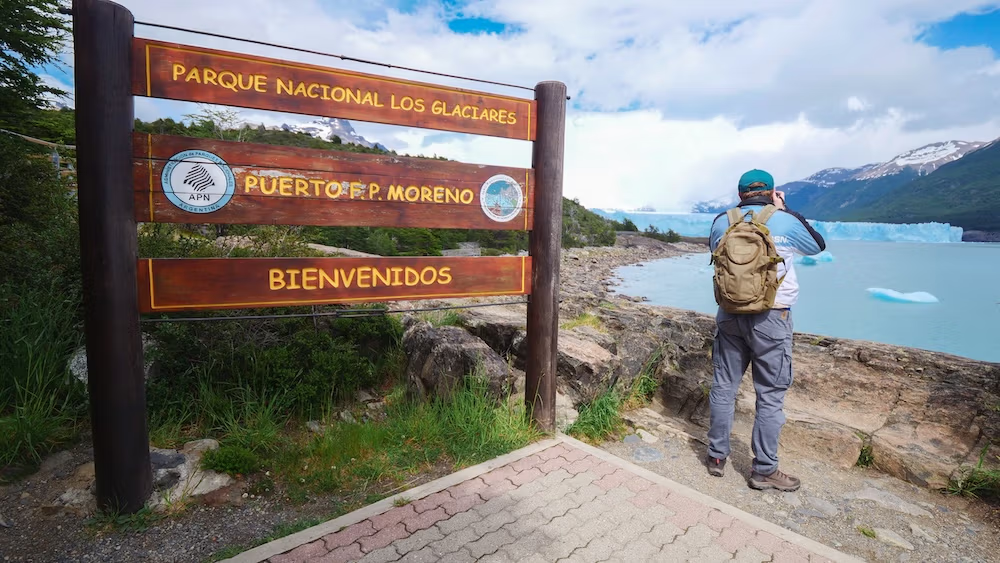
Perito Moreno is the awkward one because it can involve far more walking than a scenic drive or train. It may still be the most manageable option for somebody who needs to control their pace.
Audrey and I travelled from El Calafate and explored the boardwalks independently. We ate first, collected our bearings second and proceeded to wing our route through the colour-coded circuits. This is our standard operating model more often than I care to admit.
We climbed a lot of stairs. We descended toward lower balconies, changed paths and kept following the promise of another glacier angle. Anyone copying our exact route would have a substantial walking day.
There was no reason to copy us.
The boardwalk network has branches, benches and viewpoints where you can stop for a long time. We sat and watched the glacier rather than treating every metre of railing as a challenge to complete. There was no guide disappearing around the bend and no group waiting for us to finish taking photographs.
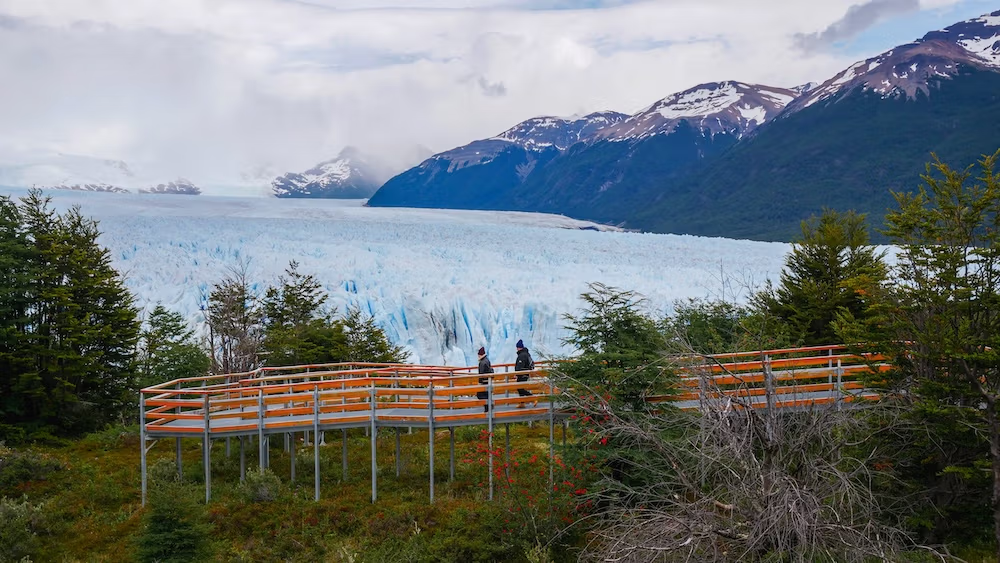
Current park information confirms a ramped accessible trail in the visitor area, wheelchair availability and ramped toilet and food facilities. Accompaniment is required for the accessible route. That is reassuring and usefully specific, but it does not turn the entire boardwalk network or every transfer from El Calafate into one accessible journey.
Perito Moreno works especially well for a traveller who can walk some distance yet needs benches, route choice and the freedom to stop. A transfer that provides several hours of independent time may be more useful than a tightly guided itinerary.
To separate independent-time transfers from guided visits and boat combinations, compare current Perito Moreno tours and transfers and check how much free boardwalk time each option actually provides.
Many tours collect from accommodation in El Calafate, so travellers prioritizing pickup convenience can compare places to stay in El Calafate before booking the excursion.
The weather adds its own challenge. It was much colder and windier at the glacier than in El Calafate. The same route can feel completely different once the wind begins throwing itself at you.
Do not choose Perito Moreno because somebody casually called the boardwalks easy. Choose it because the visitor area gives you options.
Passive-Looking Tours That Still Expect You to Get Active
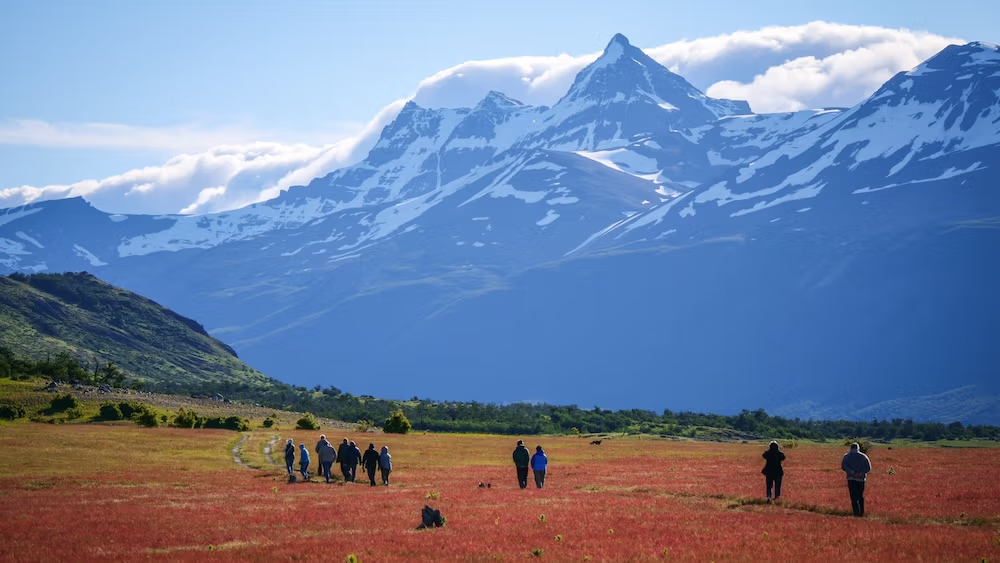
Estancia days often sound ideal for non-hikers: scenery, ranch culture, demonstrations and a heroic quantity of Patagonian lamb.
Our visit to Estancia Nibepo Aike began with accommodation pickup and roughly ninety minutes of driving, much of it on dirt road. At the estancia we had refreshments, toured the property, walked toward the water, watched demonstrations and eventually attacked lunch with the enthusiasm of people who had spent the morning outside in the wind.
We enjoyed the day. I would not automatically put it on a non-hiker shortlist.
A current version of the excursion offers either horseback riding or a long walk as part of the programme and describes the product as unsuitable for people with mobility impairments. That does not make it a bad tour. It means the ranch meal and cultural framing should not disguise the active core.
The same warning applies to boat-and-forest excursions, train-and-park packages and wildlife tours where the colony is reached on foot.
An activity is only genuinely optional when the tour still works without it. If the whole group vanishes for two hours while you wait beside the dining room, the itinerary has not offered a meaningful alternative.
The Best Patagonia Tour Depends on Which Effort You Tolerate
A single winner would be wonderfully tidy and mostly useless. These tours move the physical demand around rather than eliminating it.
| Tour format | Main payoff | Where the effort hides | Best fit | Poor fit when… |
|---|---|---|---|---|
| Full-day Lago Argentino glacier cruise | Immense glacier scenery | Port transfer, boarding, boat motion and a long day aboard | Boats are easier for you than trails | Motion or boarding is the main barrier |
| Seven Lakes scenic drive | Lakes, forests and mountain viewpoints | Ten or eleven hours of road time and repeated vehicle exits | Long sitting is manageable | Winding roads or prolonged sitting cause discomfort |
| Boat-only Beagle Channel wildlife cruise | Sea lions, seabirds, lighthouse and penguin viewing | Several hours on the water and port access | You want wildlife without colony terrain | You are highly motion-sensitive |
| Península Valdés full-day circuit | The broadest wildlife and coastal variety | A very long drive, exposed stops and route-dependent walking | You tolerate road time and some uneven ground | Heat, sand or uncertain toilet intervals are major issues |
| La Trochita | Heritage rail and Chubut steppe scenery | Heritage seating, boarding and a timed station stop | You want a compact, distinctive half-day | Hard benches or carriage access are difficult |
| Train at the End of the World | Railway history and Tierra del Fuego scenery | Station transfer and whatever the package adds | You separate the ride from the park tour | You assume every train ticket has the same itinerary |
| Perito Moreno with independent time | Glacier viewpoints and calving observation | Variable walking, stairs, cold and wind | You need benches and control over pace | Any outdoor walking is unsuitable |
| Boat-plus-forest or active estancia tour | Remote landscapes or ranch culture | The active component is central rather than incidental | You enjoy light hiking or riding | You need the activity to be truly skippable |
My strongest overall choice for huge scenery with minimal continuous walking is a well-matched full-day Lago Argentino glacier cruise. I would choose a boat-only Beagle Channel product for wildlife with the least land-based terrain, La Trochita for the best compact heritage outing and Perito Moreno for somebody who values pace control over the absolute shortest walking distance.
The Seven Lakes road and Península Valdés are both excellent, but they are endurance events of a different sort. One asks you to sit for most of the day. The other combines long road time with exposed wildlife stops.
Questions Worth Asking Before You Pay
Do not ask an operator whether the tour is easy. Ask questions that force the itinerary to reveal itself.
How far must I walk? Request a distance for every compulsory section, not only the named trail.
What is underfoot? Boardwalk, stairs, gravel, beach, loose sand and wet rocks should never be lumped together as a short walk.
Can I skip the active part? Find out whether you may remain aboard, in the vehicle, beside the dock or at the visitor centre—and whether the main experience still reaches you there.
How many hours are spent sitting? Thirty minutes of walking can be attached to ten hours in a van.
Where are the toilets? This matters on Península Valdés, remote road circuits and transfers to ports or railway stations.
What does hotel pickup mean? Some operators collect from selected central properties and send everyone else to a meeting point. Cruise-terminal pickup may be excluded.
How do I board? Ask about steps, gangways, zodiacs, beaches and the distance between the vehicle and vessel.
Who controls the pace? A self-guided boardwalk and a short group trail can feel nothing alike.
What changes in bad weather? Wind can cancel boats, snow can close roads and rain can turn a harmless natural surface into something less charming.
Can I receive the main payoff without completing the walk? This is the question that matters most. If the glacier, forest, penguins or viewpoint only appear at the end of the active section, the tour is not a low-walking experience for somebody unable to reach it.
Choose the Difficult Part You Can Live With
Patagonia does not require you to become a serious hiker. It does require you to be honest about what wears you out.
For me, a long glacier cruise is an easy trade because the scenery keeps paying dividends all day. Audrey can tolerate long transport partly because she treats moving vehicles as mobile bedrooms. Another traveller may prefer the benches and route choices at Perito Moreno, even though the visit involves more walking on paper.
I would not search for the Patagonia tour with the fewest advertised steps. I would decide whether I can better handle road time, boat motion, stairs, uneven ground, cold wind or a fixed group pace.
Once you know that, the choice stops being vague.
Pick the tour whose hardest part is the part you mind least.
Frequently Asked Questions
Is Patagonia suitable for travellers who do not hike?
Yes. Scenic drives, glacier cruises, wildlife boats, heritage trains and self-paced viewpoints can deliver major Patagonia experiences without a serious trek. The important part is checking the remaining road time, terrain, boarding, weather exposure and group pace.
Which Patagonia tour involves the least continuous walking?
A full-day Lago Argentino glacier cruise is my strongest overall choice for huge scenery with minimal continuous walking. The transfer to the port, boat boarding, motion and any landing still need to suit the individual traveller.
Are Patagonia boat tours automatically easy for non-hikers?
No. Some cruises deliver the main experience from the vessel, while others land for a short walk or use the boat mainly to reach a trail. Check whether walking is compulsory, what the surface is like and whether remaining aboard is allowed.
Is Península Valdés a good wildlife tour for non-hikers?
It can be, provided a very long road day, repeated vehicle exits and some outdoor walking are manageable. Routes vary, and colony paths, exposed viewpoints, loose sand, heat and optional boat trips can change the effort considerably.
Can non-hikers visit Perito Moreno Glacier?
Perito Moreno can work particularly well for travellers who can walk some distance but need benches, route choice and control over pace. The boardwalk network includes stairs as well as a ramped accessible trail, so the exact route matters.
Is the Seven Lakes Route worth booking as a guided scenic drive?
I thought the guided stops justified repeating a road we had already travelled by bus, and Audrey ultimately agreed. The trade-off is a full day of sitting, repeated vehicle exits and weather-dependent road conditions.
What should I ask before booking an easy Patagonia tour?
Ask for the compulsory walking distance, terrain, steps, boarding method, time seated, toilet access, pickup location and whether the active section can be skipped without losing the main experience.
Project 23 Argentina: This guide is also available in Spanish. [Leé la versión en castellano: Las mejores excursiones por Patagonia para quienes no hacen trekking: recorridos panorámicos, barcos y fauna]
This article contains affiliate links. If you book through one of these links, I may earn a commission at no extra cost to you.