
Comparing Calgary and Edmonton as food cities sounds easy until I try to answer the obvious question.
Which one eats better?
I genuinely can’t pick.
That answer would bother me if it came from somebody trying to avoid offending half of Alberta, but that isn’t what’s happening here. Edmonton has an almost unfair advantage with me. I lived there when I was younger, went to the University of Alberta and spent years developing my palate in the city. Thai, Korean, Indian and Japanese food all entered my life in a meaningful way during that period. I had favourite restaurants, student routines and dishes I ate so often that I can still summon them from memory decades later.
Calgary didn’t have any of that working in its favour. Audrey and I arrived for our first proper exploration of the city and had only a short visit to eat our way around. Yet within a few days we had gone through two dim sum meals, ginger beef, bubble tea, a ridiculous brunch, a Caesar, creative sushi, Korean food, Alberta beef, loaded fries and ice cream.
Calgary basically walked into a fight against my Edmonton nostalgia with one hand tied behind its back and still forced a draw.
That tells you something.
I consider both cities phenomenal places for foodies. Their international food scenes are tremendous, neither one needs to hide behind steak-and-potatoes Alberta stereotypes, and both are dangerous places to visit if your dining strategy consists of pointing at menus and saying, “Well, we should probably try that too.”
Bring an appetite.
And comfortable walking shoes.
What Does “Eating Better” Even Mean?
I could turn this into a scorecard and award Calgary 8.6 points for local specialties, Edmonton 9.2 for nostalgia and somebody a bonus half-point for producing a particularly aggressive plate of fries.
That would look wonderfully systematic.
It would also be nonsense.
Audrey and I didn’t conduct identical food experiments in the two cities. We didn’t eat the same number of meals, spend the same amount of money or visit matching restaurant categories. My relationship with Edmonton stretches back to university; my relationship with Calgary was formed during a concentrated visitor trip.
So I’m less interested in counting restaurants than in asking what each city actually gives a food-focused traveller.
Are there foods with a meaningful connection to the place? Can you eat internationally without treating one token restaurant as proof of diversity? Are there neighbourhoods where food becomes part of exploring the city? Can you spend several days eating casually and still keep finding things you want? And, perhaps most importantly, do you leave with unfinished business?
Both Calgary and Edmonton clear that bar easily.
They just get there in different ways.
Calgary Makes Its Food Identity Easy to Find
Calgary has a useful advantage for a first-time visitor: you can arrive knowing almost nothing about the city’s food and quickly find a few things with a genuine Calgary story attached to them.
Ginger beef is the obvious one for me.
Ironically, the dish immediately took me back to Edmonton.
When I attended the University of Alberta, I ate a ridiculous amount of ginger beef. There were stretches when I was probably having it twice a month. Crispy beef covered in a sticky sweet-and-tangy sauce was simply part of my student comfort-food universe. I wasn’t sitting there pondering Chinese-Canadian culinary history. I was hungry.
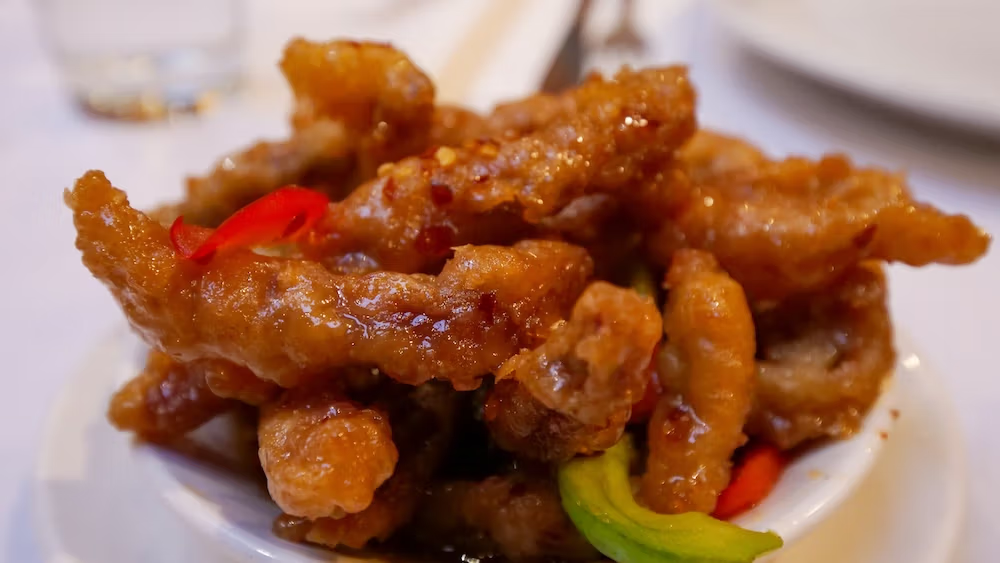
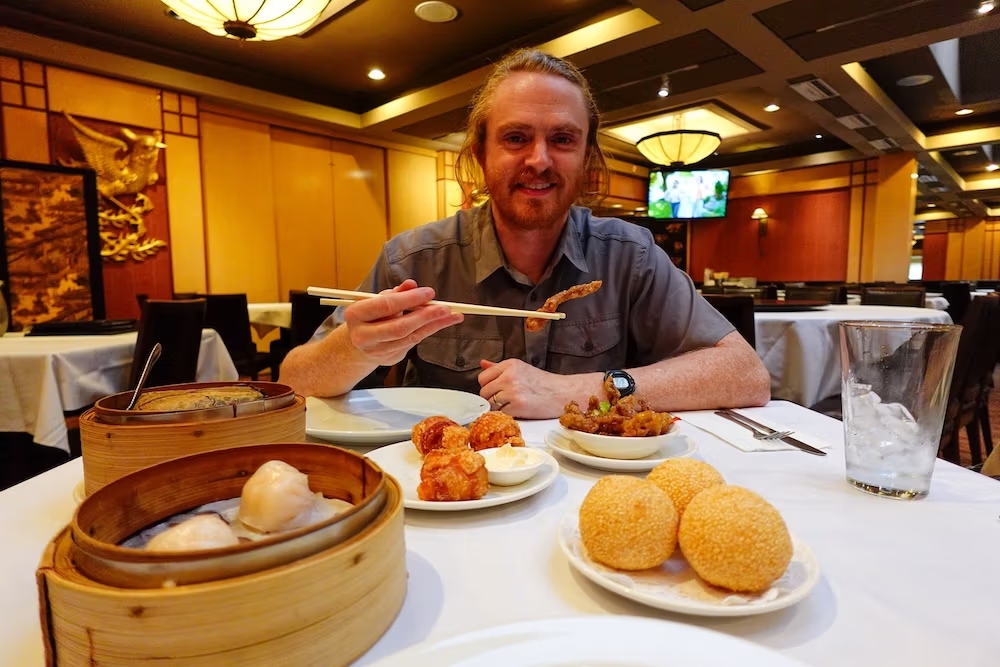
Years later, Audrey and I sat down at Silver Dragon in Calgary’s Chinatown and ordered ginger beef alongside our dim sum. This time the Calgary connection was part of the reason I wanted it.
The style of ginger beef most Canadians recognize is widely traced back to Calgary’s Silver Inn and chef George Wong in the 1970s. It became a Chinese-Canadian adaptation in its own right, and I love that the story is more interesting than simply claiming Calgary invented some dish untouched by everything that came before it.
What mattered most at the table was whether I still liked it.
I did.
The beef was tender inside and crisp outside, with exactly the sweet, tangy coating I remembered. My immediate reaction was that it was just as good as I remembered ginger beef being.
Calgary also has the Caesar.
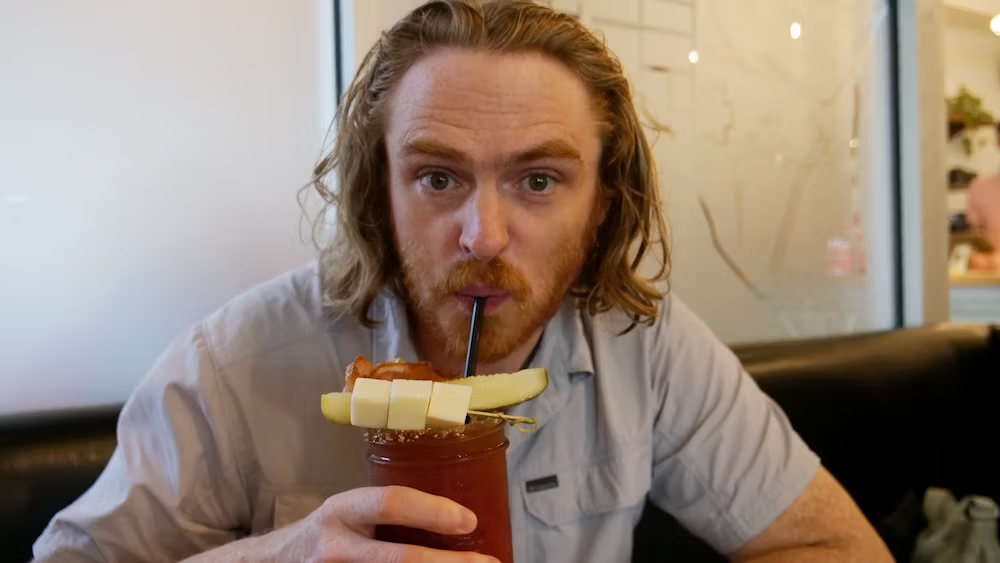
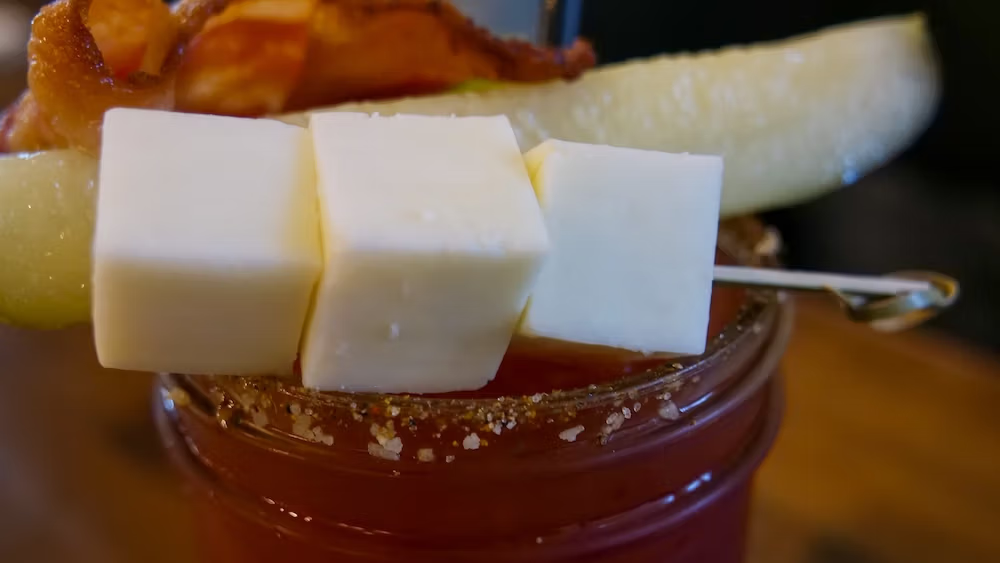
Walter Chell created the drink at the Calgary Inn in 1969, in the building that is now The Westin Calgary. Audrey and I had ours at The Beltliner during brunch, where it arrived as the sort of savoury alcoholic production that makes a normal glass of orange juice look embarrassingly underdressed.
I’m not usually reaching for alcohol first thing in the morning, but this was Calgary. It had to be done at least once.
The drink had tang, spice and enough punch that my main reaction was how effectively it woke me up. Maybe that isn’t the formal tasting language anybody was hoping for, but there it is.
Ginger beef and the Caesar give Calgary two unusually straightforward local food stories for visitors. You can understand why they matter, try them relatively easily and then move on to the much bigger food scene around them.
That last part is important, because Calgary would be badly undersold if the food conversation stopped at two famous inventions and a slab of Alberta beef.
Chinatown Was One of the Best Parts of Eating in Calgary
We ate dim sum twice in Calgary’s Chinatown, which tells you roughly how much restraint Audrey and I were exercising.
Our first meal at Silver Dragon involved five orders.
Five sounded reasonable.
Five was not reasonable.
We had har gow, bacon-wrapped shrimp, sticky rice wrapped in lotus leaf, sesame balls and ginger beef. The har gow was exactly the sort of thing we tend to order repeatedly whenever dim sum is involved, while the bacon-wrapped shrimp was new to us and delivered this great contrast between soft shrimp and a much crispier exterior.
The sticky rice was one of our favourites too, although calling it another little dim sum dish badly understates its ability to occupy your stomach.
By the time we got to the sesame balls, I was very happy and extremely full.
The problem with dim sum is that every individual order looks innocent. One more bamboo basket? Sure. A rice dish? Absolutely. Ginger beef? Obviously. Something sweet to finish?
Then the table fills up and your earlier confidence begins to look like a character flaw.
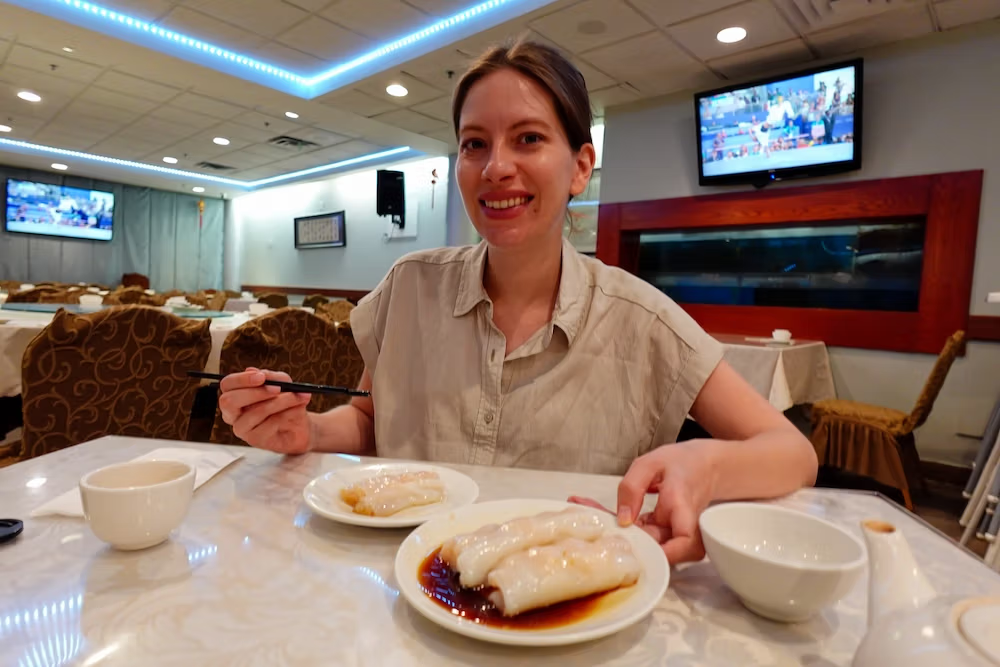
We had another dim sum meal the next morning at Chinese Cultural Centre Cuisine and arrived with the wisdom that only comes from having recently overeaten.
This time we ordered four dishes and deliberately chose different things.
We had a shrimp rice roll, another rice roll wrapped around crispy fried dough, barbecue pork pastry and egg tarts. The fried-dough roll was especially memorable because the outside was soft while the middle stayed crisp, and the pastries and egg tarts arrived warm and fresh enough that we were very pleased we hadn’t simply repeated our favourite dishes from the previous meal.
Four orders still represented a proper breakfast.
We had not suddenly discovered moderation.
But it was enough to let us keep exploring Calgary afterward without requiring a recovery ward.
That distinction matters if you’re actually travelling rather than organizing a competitive eating event around Chinatown.
Our Calgary food experience there went beyond those restaurants too. We stopped at CoCo for bubble tea, and the neighbourhood today supports a much broader mix of Asian eating than a visitor might assume from the phrase “Calgary Chinatown” alone.
What I liked was how naturally all of this folded into exploring the city. We were already walking around Chinatown, visiting the Chinese Cultural Centre and seeing the surrounding downtown area. Food wasn’t a separate mission that dragged us across Calgary. It was woven into the day.
Calgary Kept Going After Chinatown
The Beltliner gave us a completely different Calgary meal.
Audrey went savoury.
I went after the French toast.
This division of labour has served us well over the years because it avoids the terrible hardship of choosing one type of breakfast. We order differently, then quietly assume the other’s plate is available for sampling.
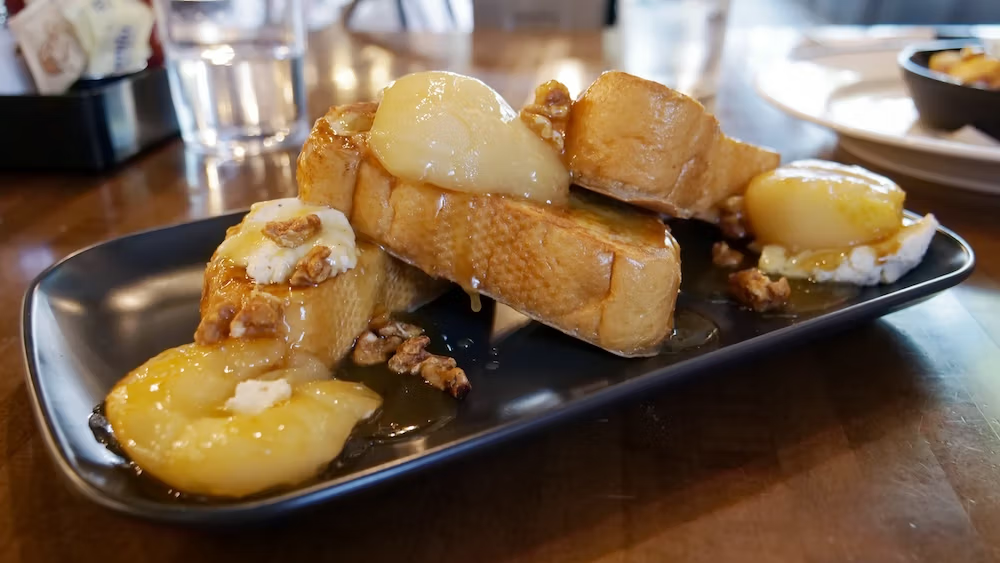
My French toast was enormous, elaborate and thoroughly committed to the sweet side of breakfast. I called it decadent and delicious at the time, and I see no reason to revise that assessment.
This was also where we had the Caesar, which made an already substantial brunch even less likely to be followed by strenuous intellectual activity.
Point Sushi took us somewhere different again. We placed our orders on a tablet and the food arrived on little bullet-train-style carriers. I enjoy a restaurant gimmick as much as anybody when the gimmick doesn’t have to apologize for the food.
Here it didn’t.
The rolls were creative enough that we kept commenting on them rather than merely filming the tiny train.
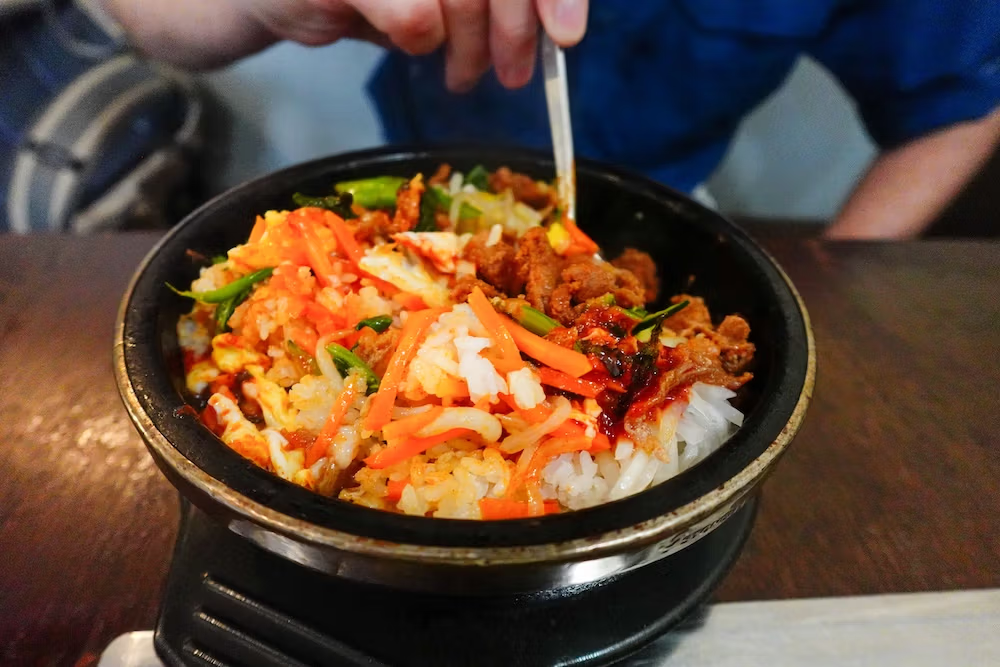
We also ate stone-pot bibimbap at Moon Korean Cuisine and had more casual food while visiting Heritage Park. By the end of the trip, the thing that had surprised me wasn’t that Calgary had a few good restaurants.
It was how strong the international food scene felt.
That impression has only become more important as I think back on the trip because our own eating barely touched the whole city. Calgary’s restaurant life spreads well beyond Chinatown into areas such as 17th Avenue, International Avenue, Bridgeland, Inglewood and Mission, with cuisines from across Asia, Africa, Latin America and the Middle East represented around the city.
So if your mental Calgary menu is steak, ginger beef, Caesar, cowboy hat, end of story, you’re leaving an awful lot of food on the table.
Possibly literally.
If you’d rather have somebody organize a tasting route instead of building every stop yourself, one current option we did not take is the Iconic Eats of Calgary Food Tour. It runs for about 2.5 hours over roughly 1.5 kilometres, with four food-and-beverage tasting stops around downtown and Stephen Avenue. You can check current availability for the Iconic Eats of Calgary Food Tour. I would treat it as a separate guided introduction to central Calgary rather than a replacement for eating your way through Chinatown.
Edmonton Is Where My Palate Grew Up
Edmonton has something Calgary can never reproduce for me: history.
I went to university there. I worked there. I had routines there that belonged to a much younger version of myself.
And food was a surprisingly important part of that period.
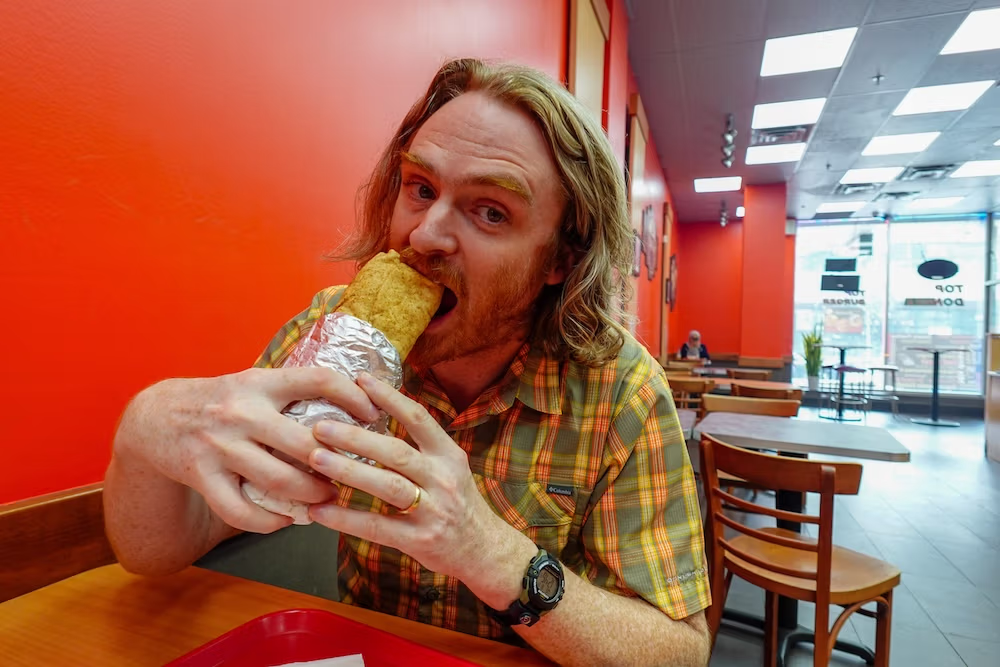
Edmonton was where I started trying Thai, Korean, Indian and Japanese food for the first time. Those cuisines are completely normal parts of my life now, especially after years of travelling, but they weren’t normal to me then.
That’s easy to forget.
There was a point when sushi was new.
There was a point when Korean food was new.
There was a point when walking into an Indian restaurant meant encountering flavours I had almost no frame of reference for.
Edmonton played a real role in opening that door for me.
So when Audrey and I returned years later, food carried more baggage than hunger. I wanted to eat around the city again, but I also wanted to know whether some of my memories survived contact with the present.
Thankfully, Edmonton did not collapse under the pressure.
Edmonton’s International Food Scene Is the Real Deal
Our return trip covered an absurd range of food.
We began one of our eating days at West Edmonton Mall, where Audrey and I immediately became interested in finding something to eat.
A shocking development.
Nobody could possibly have seen it coming.
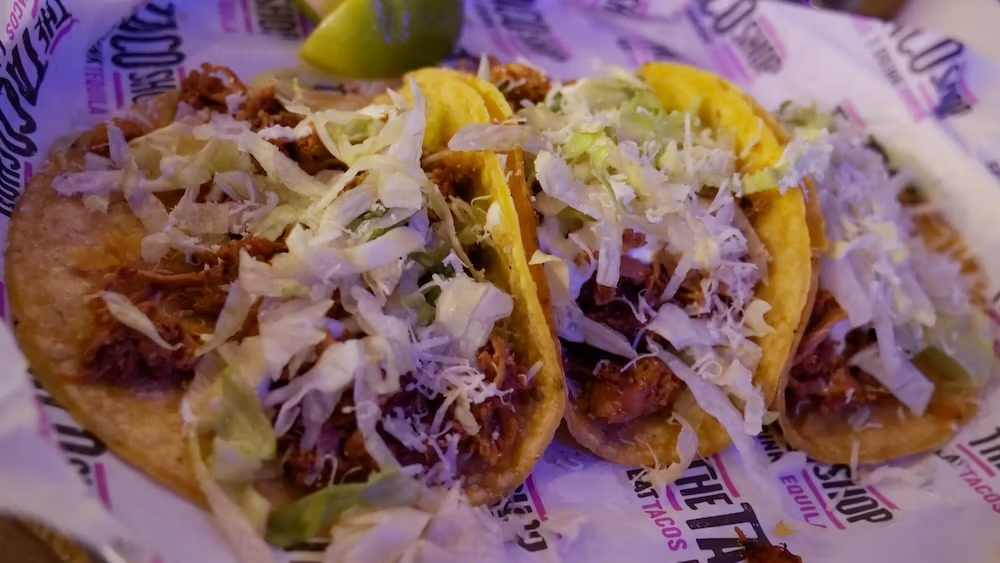
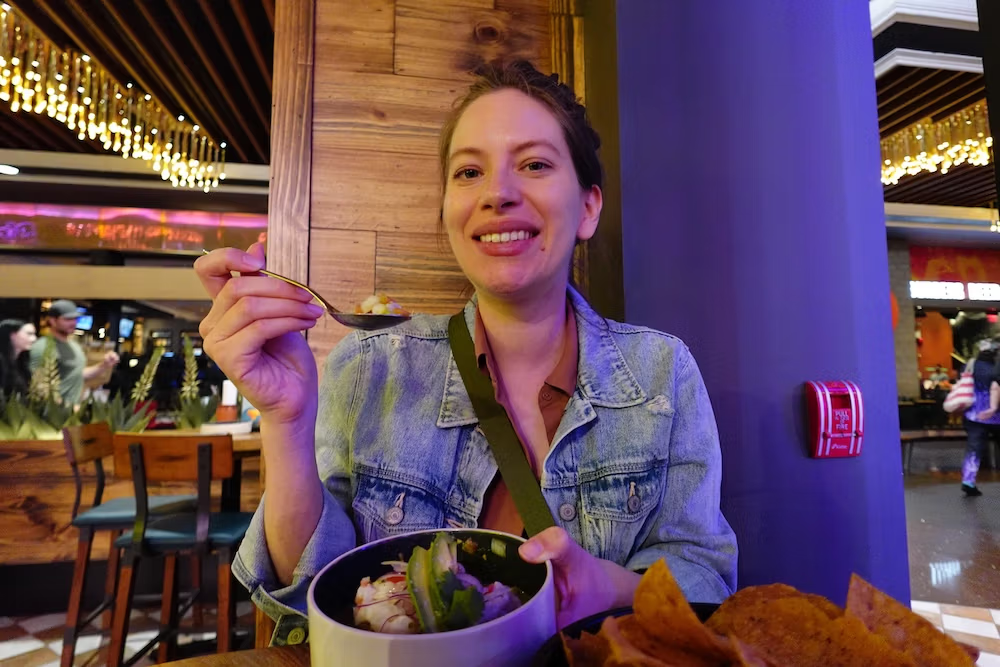
At The Taco Shop we had fresh guacamole, tacos and ceviche. Audrey has eaten considerably more ceviche than I have, particularly in Peru, so she had a serious benchmark rather than simply declaring the first version placed in front of her magnificent.
She liked the combination of fish, citrus, red onion, cilantro, avocado and tomato, while still making the entirely reasonable distinction that ceviche eaten on the Peruvian coast is another experience altogether.
Elsewhere in Edmonton we went through donair, poutine, Cajun and Creole food, burgers, Central European dishes and brunch.
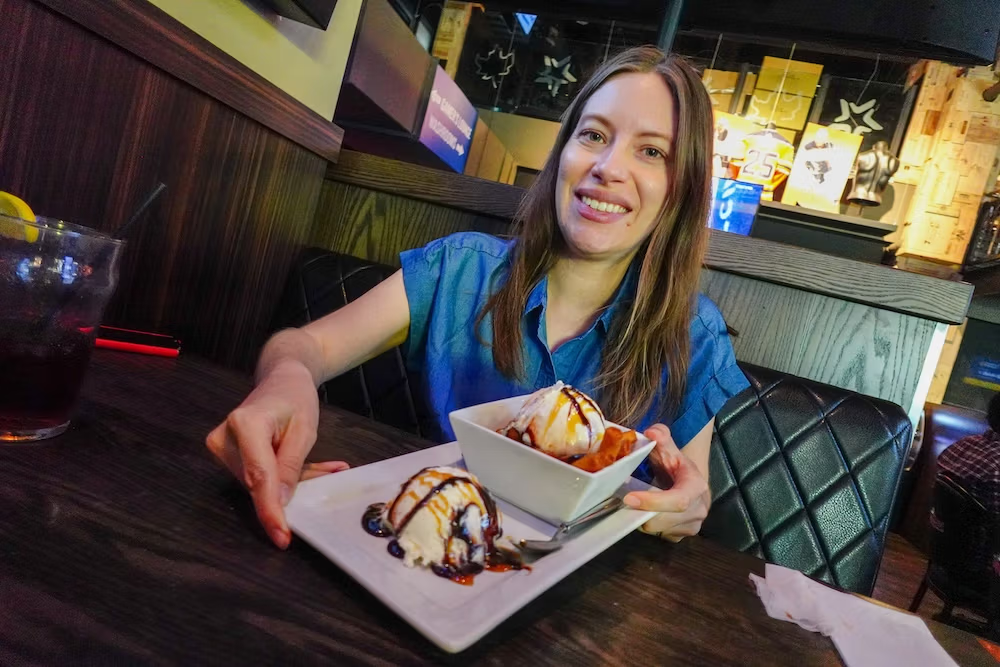
That variety matched what I remembered from living there.
I have always thought Edmonton was a tremendous city for international cuisine, and returning did nothing to change my mind. The city still supports deep Chinese, Korean, Japanese, Middle Eastern, North African, Ethiopian, Latin American and European food scenes rather than merely producing one showcase restaurant for each cuisine.
That distinction matters to me.
Almost any large Canadian city can assemble a superficially diverse restaurant list. What gets more interesting is when international food becomes ordinary city food—something spread through neighbourhoods, something people grow up with, something students stumble into and then keep eating for years.
That is what Edmonton was for me.
Going Back to DaDeO Was Personal
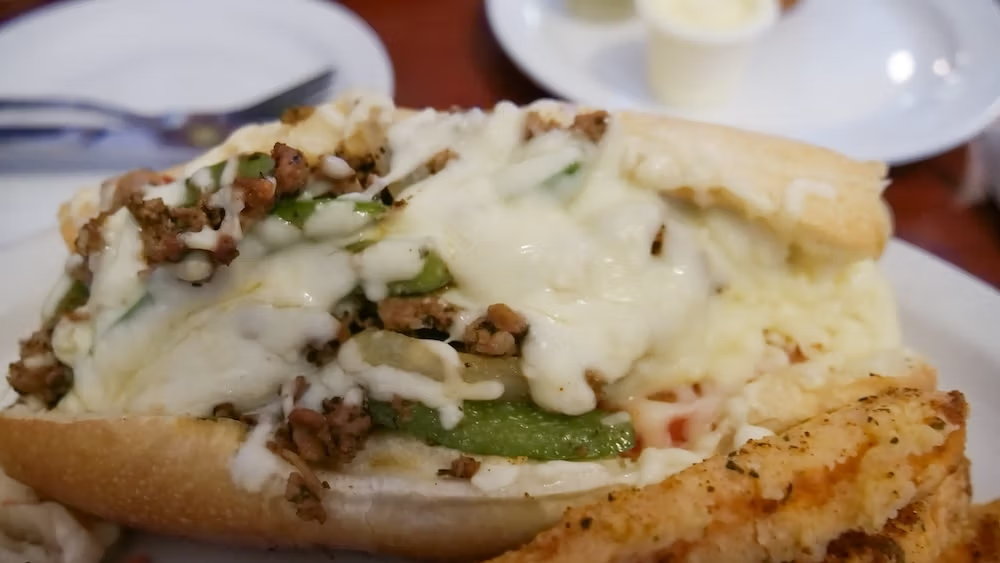
No Edmonton meal carried more emotional baggage for me than DaDeO.
I used to eat there when I was a student. I worked at a Safeway only a few blocks away, and DaDeO became one of those places I returned to repeatedly.
Years later I brought Audrey there.
That could have been a terrible idea.
Nostalgia is one of the least reliable restaurant critics imaginable. Sometimes you’re convinced you miss a meal when what you actually miss is being twenty-one, having fewer responsibilities and possessing a digestive system that treated consequences as somebody else’s problem.
I ordered a po’boy and sweet potato fries.
The fries hit immediately.
I called them absolutely legendary, and the bigger surprise was that the whole experience still held up. I wasn’t forcing myself to love it because I had dragged Audrey to one of my old student haunts.
I genuinely enjoyed being back.
Audrey had gumbo, and for me the meal ended up being half food and half time machine. I could show her a place connected to my Edmonton years while also discovering that it still worked as a restaurant rather than merely as a memory.
That gives Edmonton an advantage Calgary can’t possibly touch.
But it isn’t a fair food-quality advantage.
Edmonton wins the category of “city where I used to live” in a landslide.
Congratulations, Edmonton.
What matters more is whether the current city still gives me reasons to eat there after I strip away the nostalgia.
It absolutely does.
Calgary Has Ginger Beef and the Caesar. Edmonton Has Green Onion Cakes.
If I were comparing these cities purely by famous food stories, Calgary would probably win the opening round.
Ginger beef is strongly associated with the city.
The Caesar was created there.
Both are easy for a visitor to understand, and Audrey and I actually tried both during our trip.
Edmonton has a different kind of local food story.
Green onion cakes have become so closely associated with the city that they are commonly treated as an unofficial Edmonton food. Their local history is tied to Siu To, who arrived in Edmonton in the late 1970s and helped popularize his version of the northern Chinese dish through restaurants and festivals.
We did not eat green onion cakes during this particular Edmonton trip, so I’m not going to magically turn them into one of our experiences after the fact.
But they matter to this comparison because they expose something interesting about local food identity.
A city doesn’t need to invent a dish from nothing in order to make it part of itself.
Calgary’s ginger beef is itself a Chinese-Canadian adaptation story. Edmonton’s green onion cake tradition comes from a Chinese dish that took on an unusually strong life in one Canadian city.
Both stories are much more interesting to me than the idea that “local food” must mean something produced in complete isolation from immigration, adaptation and cultural exchange.
In Alberta’s two biggest cities, some of the foods that feel most local are also international stories.
That seems entirely appropriate.
International Food Is a Dead Heat
If there is one category where I refuse even to lean toward a winner, it’s international food.
Edmonton has the sentimental advantage. That is where I began exploring many cuisines in the first place. Those early meals genuinely changed the way I ate and, eventually, the way I travelled.
Calgary still didn’t give me any reason to rank it below Edmonton.
We ate Cantonese dim sum twice. We had Chinese-Canadian ginger beef, Korean food, sushi and bubble tea. And the current restaurant scene extends much farther than the central neighbourhoods we happened to eat through.
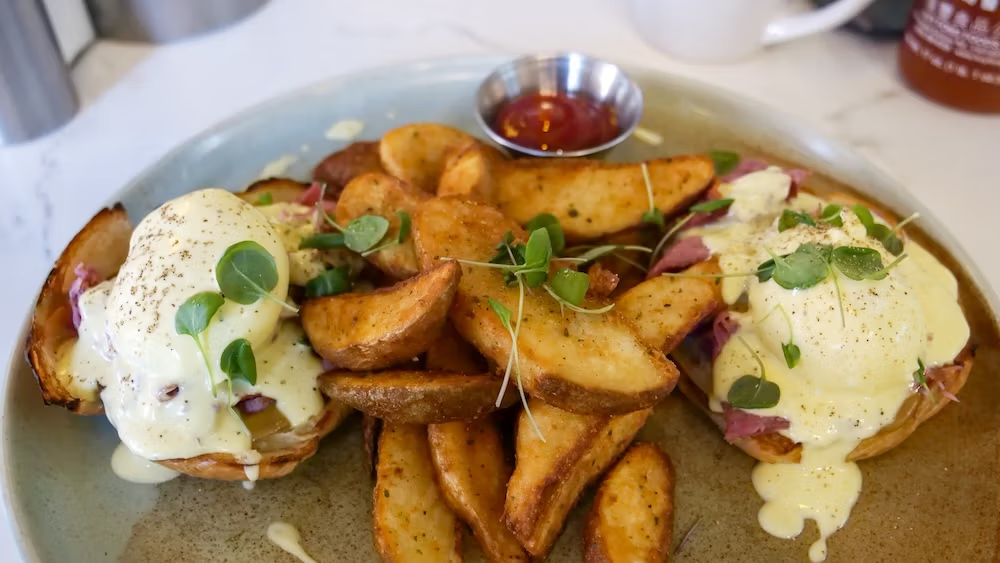
Edmonton is equally difficult to reduce. Our own trip moved from Mexican food and ceviche to donair, Cajun and Creole cooking, Czech and Central European comfort dishes, burgers and brunch. Behind those individual meals sits the much larger international food scene I remember from living there.
What I don’t want to do is use “diverse” as one of those meaningless travel-writing compliments.
Put a sushi place, an Indian restaurant and tacos on the same street and suddenly every city brochure in existence discovers diversity.
I’m talking about something deeper.
In Calgary and Edmonton, international food feels like normal everyday city food. There is enough breadth that you could organize an entire eating trip around it without feeling as though you were avoiding the “real” local cuisine.
Because it is part of the real local cuisine.
For me, this category is a genuine draw.
Comfort Food Is Where Good Intentions Go to Die
Our eating style in these cities was not especially delicate.
Calgary gave us ginger beef, five dim sum orders, sticky rice, giant French toast, a Caesar, sushi, burgers, loaded fries and ice cream.
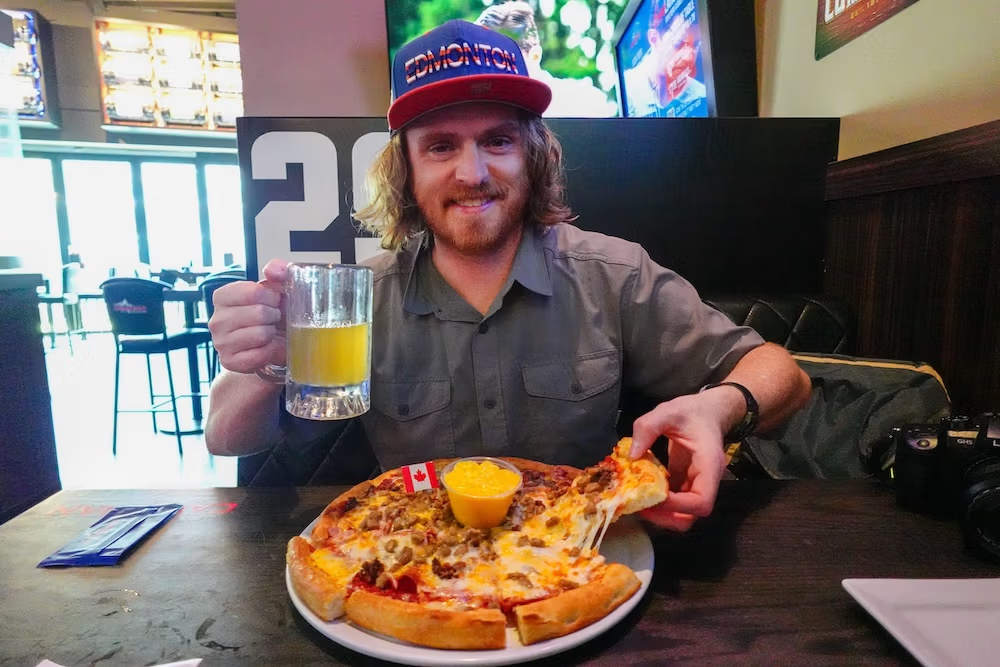
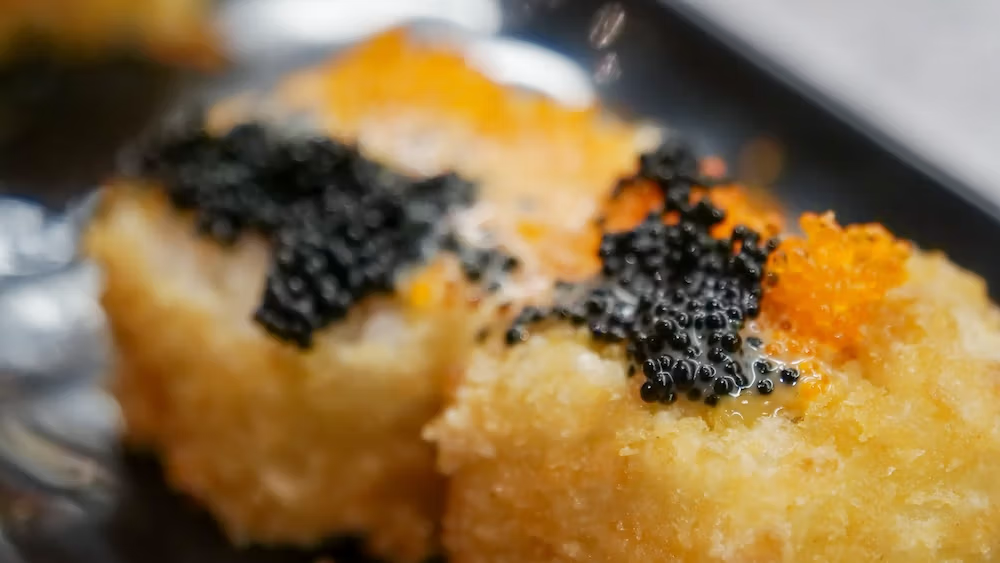
Edmonton answered with donair, poutine, a heavily loaded pizza, po’boys, sweet potato fries, burgers, cheesy fries, milkshakes, fried cheesecake, goulash, schnitzel and brunch.
At no point did anybody need to worry that Audrey and I were wasting away.
Calgary’s first dim sum meal eventually had me admitting I was full while food continued occupying the table. By the next morning we’d learned just enough to drop from five dishes to four because we didn’t want to spend the rest of the day in a food coma instead of exploring the city.
Edmonton produced the same problem in a different form. After our meat-heavy pizza near Rogers Place, we were stuffed beyond belief.
This is where my most practical advice for food-focused trips to either city comes from: don’t treat every restaurant as though Alberta is about to ban eating tomorrow.
You don’t need everything today.
I know this.
I repeatedly fail to act upon it.
If you’re trying several restaurants, give yourself room between them. Walk. Explore a neighbourhood. Have a smaller meal occasionally. And remember that adding a plate of sticky rice to four other dim sum orders is not quite the same thing as adding “one little dish.”
Both cities are extremely good at casual, hearty food.
Your appetite is the limiting factor.
Both Cities Reward Eating by Neighbourhood
Our actual trips initially made Calgary and Edmonton seem more different geographically than they really are.
Much of our Calgary eating fit naturally into the central sightseeing we were already doing. Chinatown was particularly convenient because we could visit the Chinese Cultural Centre, wander the neighbourhood and eat without turning lunch into a cross-city operation.
Edmonton involved more movement.
We ate at West Edmonton Mall, around the Rogers Place/ICE District area, near Jasper Avenue and downtown, and then over on Whyte Avenue in Old Strathcona.
Whyte Avenue mattered especially because Audrey’s perception of Edmonton changed once we got there. Downtown had given her one impression; Whyte introduced another side of the city entirely.
That remains a useful lesson.
But I wouldn’t turn our particular itineraries into a claim that Calgary is one compact restaurant paradise while Edmonton requires provisions and a compass.
Calgary has major food areas beyond downtown and Chinatown. Edmonton has multiple food districts too.
If I were planning either city mainly around eating, I’d approach it by neighbourhood instead of compiling a giant list of supposedly essential restaurants scattered all over the map.
Choose an area. Have one place you’re excited about. Walk around. Leave space for something you didn’t plan.
That is a much more enjoyable way to eat through a city than spending half your day crossing town because an internet ranking convinced you the burger twelve kilometres away is fractionally superior to the burger beside you.
If Whyte Avenue is the part of Edmonton you’re most curious about, there is also a current guided food walk that we did not take. The Edmonton Whyte Ave Food Walk is listed at about 3 hours and 15 minutes and visits six eateries while exploring Old Strathcona. You can see current availability for the Edmonton Whyte Ave Food Walk Tour. It fits nicely with my broader advice to use food as a reason to get beyond downtown, but it isn’t something I can personally review.
What Would I Actually Go Back and Eat?
Once I stop thinking about entire food scenes and ask what I personally want again, the comparison gets even harder.
In Calgary, I’d absolutely have ginger beef again. Part of the pleasure is that weird cross-city loop it creates for me: I’m eating a Calgary-associated dish that reminds me of being a student in Edmonton.
I’d happily return for dim sum too. Two meals in quick succession weren’t enough to make us tired of it. If anything, deliberately ordering different dishes the second time showed how much room there was to keep going.
And The Beltliner still appeals to me, especially if Audrey and I can repeat our sweet-versus-savoury strategy and continue pretending that ordering separate plates somehow means both meals belong to both people.
Edmonton has DaDeO.
That one isn’t going anywhere in my brain.
The fact that I could return after all those years and still enjoy the po’boy and sweet potato fries makes it more meaningful than if I’d simply preserved an untouchable student memory.
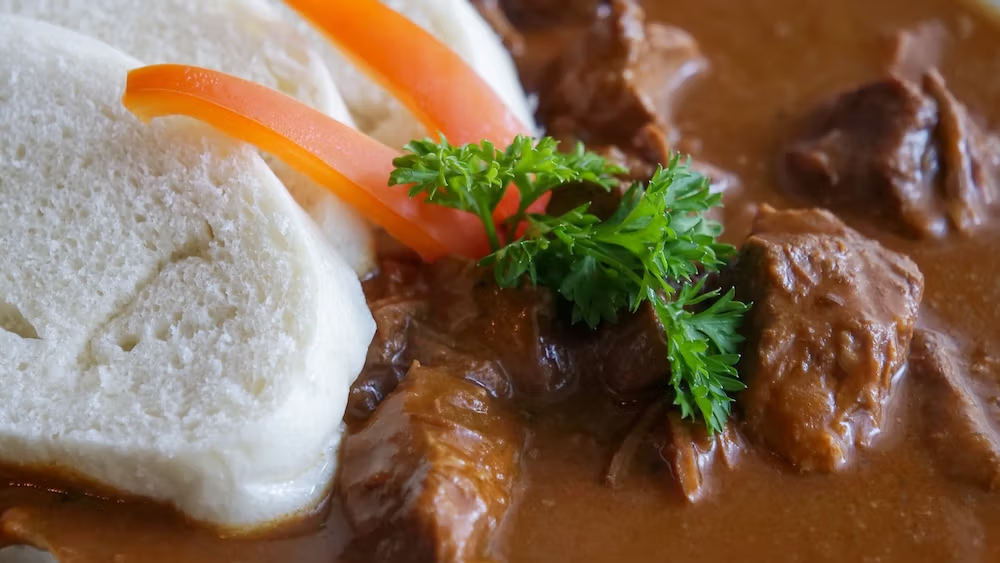
I’d go back to Bistro Praha as well. Goulash, dumplings and schnitzel occupy a completely different comfort-food lane, and I liked how the meal connected with foods we’d encountered while travelling through Central Europe without needing to become an imitation of eating them there.
Edmonton also gave us plenty of brunch and casual-food reasons to return.
When I think through all those meals, I don’t see a winning city.
I see a backlog.
Calgary vs Edmonton for Foodies: Where Each City Has an Edge
The overall result is a draw, but that doesn’t mean the cities are interchangeable.
| What you’re looking for | My take |
|---|---|
| Famous locally associated food stories | Calgary — ginger beef and the Caesar give visitors two immediately recognizable starting points |
| International food | Draw — a genuine strength in both cities |
| Chinatown eating from our own firsthand experience | Calgary — we ate much more deeply in Calgary’s Chinatown on these trips |
| My personal food history | Edmonton — I lived and studied there, so this one isn’t remotely fair |
| A distinctive Edmonton food tradition | Edmonton — green onion cakes are deeply woven into the city’s food identity, although we didn’t eat them on this trip |
| Neighbourhood food exploration | Both — each city rewards getting beyond one central restaurant strip |
| Casual and comfort food | Draw — both repeatedly overwhelmed our better judgment and available stomach capacity |
| Overall food city | Draw |
I want to underline the Chinatown distinction because it would be easy to misuse it.
I have much stronger firsthand Chinatown food experience from Calgary. That does not magically prove Calgary’s Chinatown is objectively better than Edmonton’s.
Likewise, Edmonton’s huge advantage in my personal memories is caused partly by the fact that I lived there. Calgary never received an equal opportunity to become the city where I discovered Japanese food for the first time as a university student.
Those are differences in my experience, and they’re worth stating rather than disguising.
For a short Calgary food trip, I’d make sure ginger beef, the Caesar and at least one serious Chinatown meal were in the plan, then branch outward.
In Edmonton, I’d be more inclined to build around neighbourhoods and cuisines: get over to Whyte Avenue, revisit an institution if you have one, and deliberately try something you haven’t eaten before.
Neither itinerary sounds like the consolation prize.
So Which Alberta City Eats Better?
After all that food, I still can’t split them.
Calgary versus Edmonton for food is a draw.
And I’m comfortable saying that plainly.
Edmonton has an outrageous home-field advantage with me. It helped turn me into a more adventurous eater. Thai, Korean, Indian and Japanese food all became part of my life there when I was young. I still have restaurants tied to very specific periods of my life, and returning to DaDeO proved at least one of those memories could survive being revisited.
If nostalgia counted double, Calgary would be in trouble.
But Calgary had none of that history and still matched Edmonton for me.
I loved eating through Chinatown. The ginger beef lived up to years of memories. The Caesar gave us another distinctly Calgary food story. The Beltliner nearly defeated me with French toast. Point Sushi sent our food toward us on tiny trains. We ordered too much dim sum, realized we’d ordered too much dim sum, and then returned for dim sum again the next morning with only marginally improved restraint.
That is not the performance of a weak food city.
So I’m not inventing a winner because the headline contains the word “which.”
Both cities are world-class foodie destinations in my book. I would happily return to either one with food as a major reason for the trip, and I still have far more restaurants and cuisines I’d like to explore in both.
The only decisive advice I can give is much simpler.
Come hungry.
And plan on doing some walking.
Frequently Asked Questions
Which city has better food, Calgary or Edmonton?
I call it a draw. Edmonton has far more personal history for me, but Calgary impressed me enough on a much shorter visit that I still cannot honestly rank one above the other.
Which city is better for international food?
For me, neither has the edge. Edmonton helped introduce me to Thai, Korean, Indian and Japanese food when I was a university student, while Calgary later impressed me with dim sum, Korean food, sushi, bubble tea and a much broader international scene than the usual Alberta stereotypes suggest.
What foods have strong connections to Calgary?
Ginger beef and the Caesar are the clearest examples in this article. I ate ginger beef in Calgary’s Chinatown and had a Caesar at The Beltliner, while our wider Calgary trip also included dim sum, sushi, bibimbap, bubble tea and brunch.
What food tradition stands out in Edmonton?
Green onion cakes are closely associated with Edmonton and are commonly treated as an unofficial city food. We did not eat them on this particular trip, so my firsthand Edmonton story is much more about international food, comfort food and returning to old favourites such as DaDeO.
Is Calgary Chinatown better than Edmonton Chinatown for food?
I would not make that claim. I simply have much deeper firsthand eating experience in Calgary’s Chinatown from these trips, including two dim sum meals and ginger beef, so Calgary has the stronger Chinatown case inside this particular comparison.
How should I plan a food-focused trip to Calgary or Edmonton?
I would plan by neighbourhood rather than chasing isolated restaurants all over either city. Leave room between meals, walk when you can and avoid ordering as though every restaurant is your final chance to eat in Alberta.
This article is also available in Spanish. [Leé la versión en castellano: Calgary vs Edmonton: ¿en qué ciudad de Alberta se come mejor?]
This article contains affiliate links. If you book through one of these links, I may earn a commission at no extra cost to you.