
I don’t normally begin breakfast by ordering alcohol, but Calgary gave me a fairly convincing excuse.
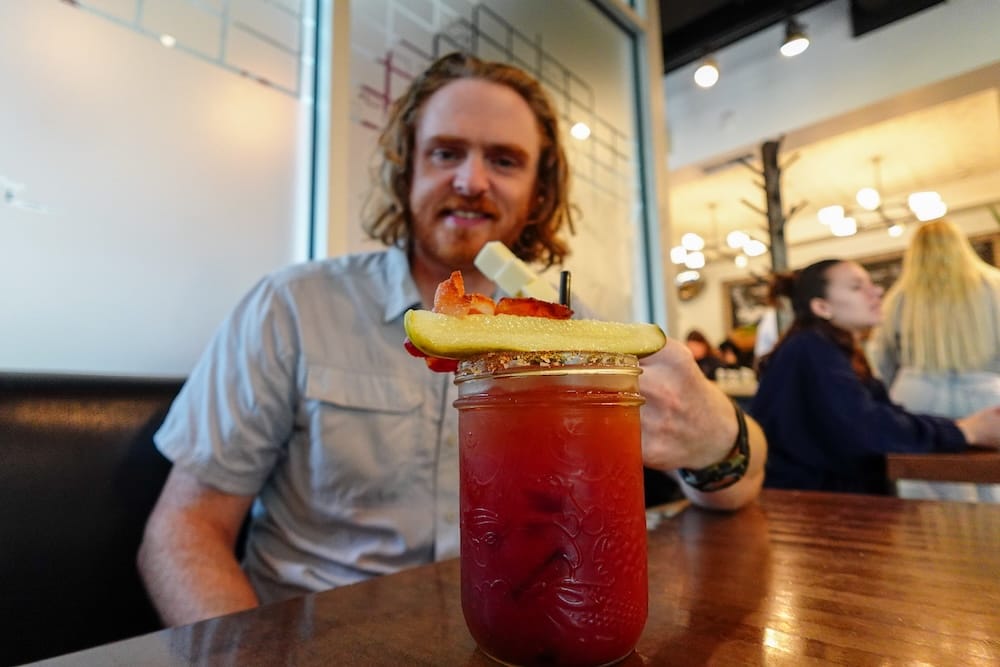
Audrey and I were having brunch at The Beltliner when I ordered a Caesar. Part of the appeal was simply being in the city where the drink became famous. If there was ever a morning when I could justify a savoury cocktail before noon, this was probably it.
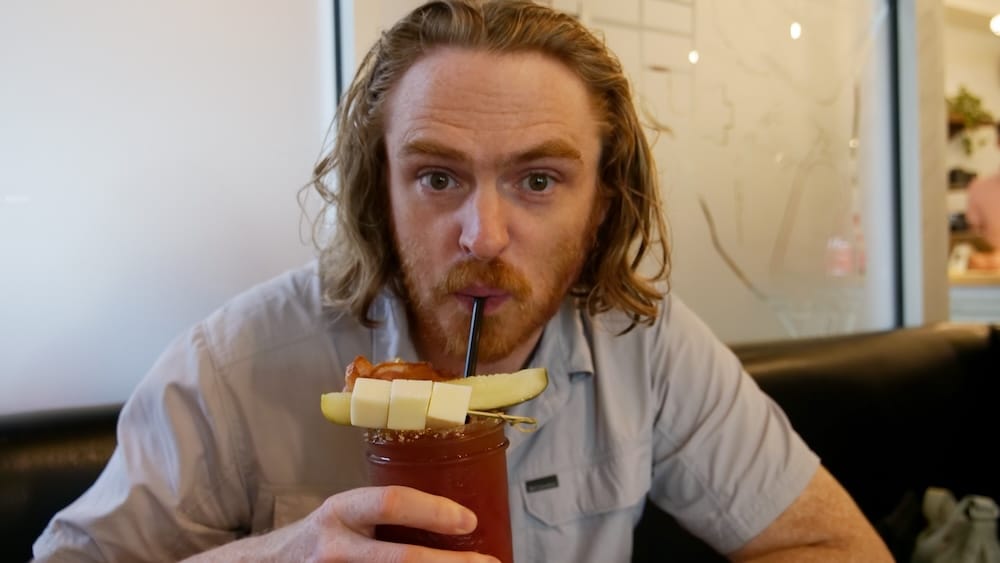
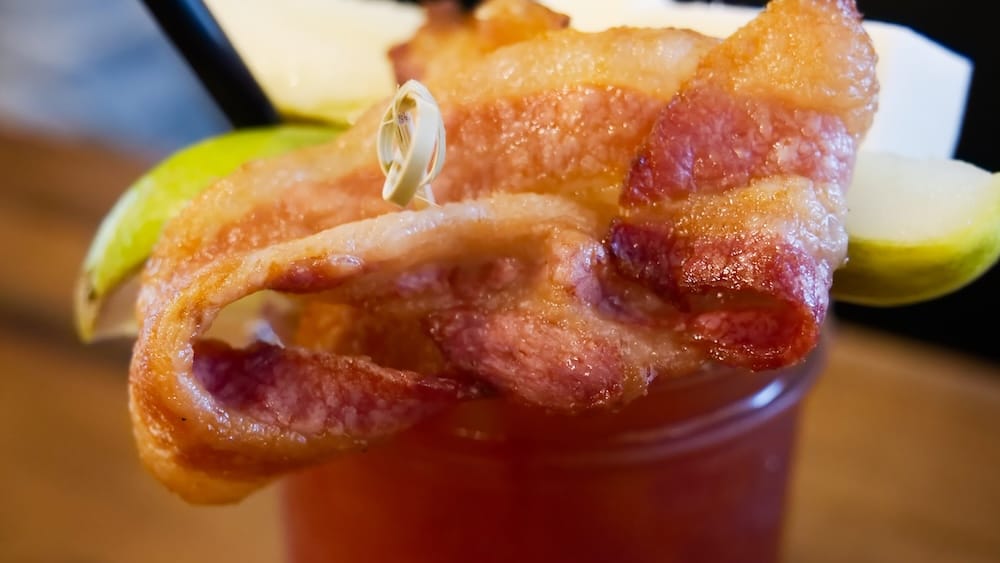
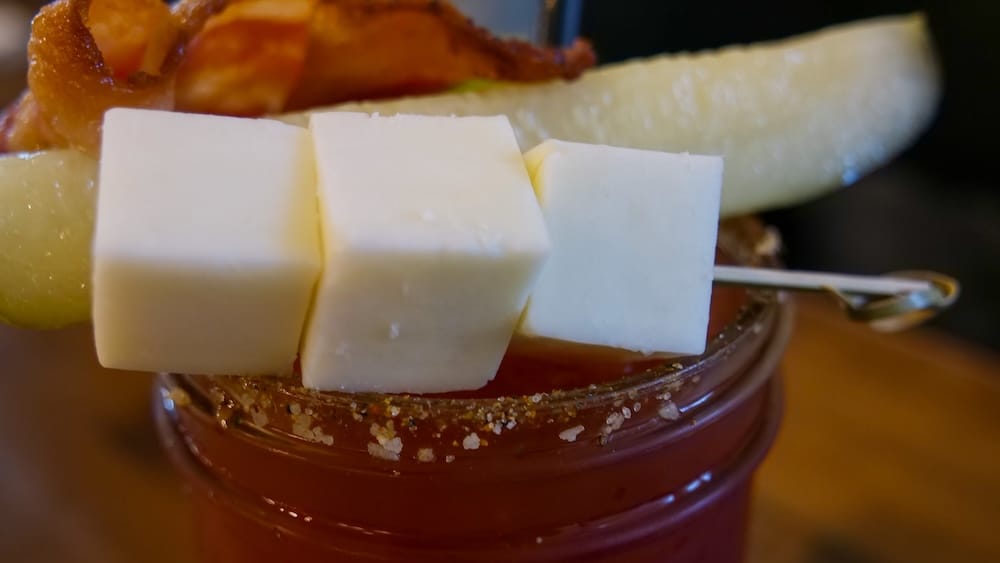
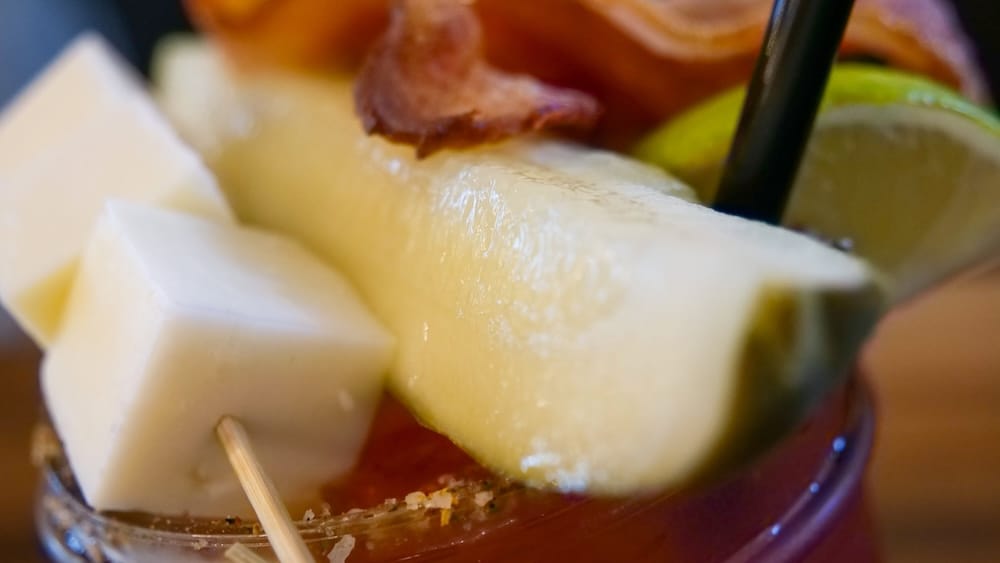
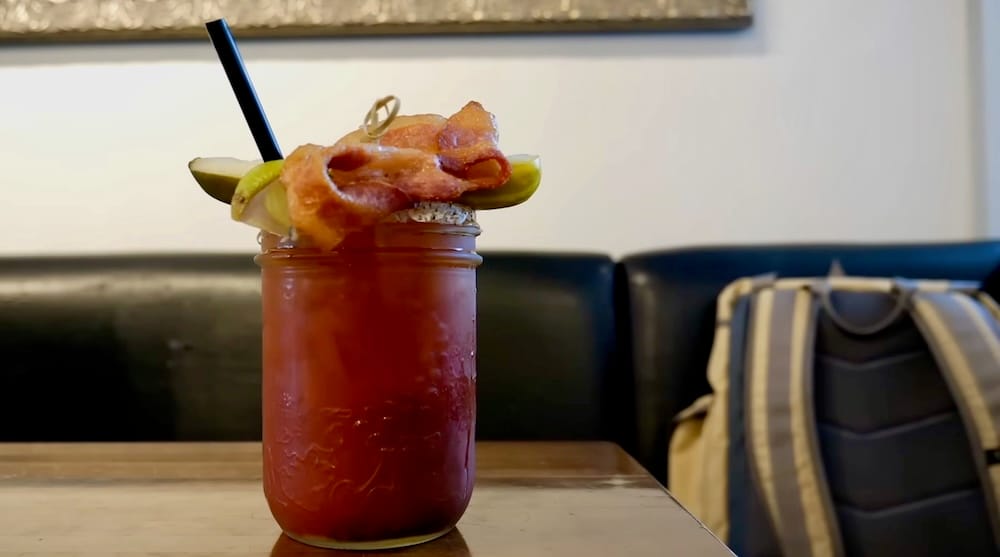
Mine was not exactly shy about arriving. It had a seasoned rim, extra heat, lime and pickle, plus cheese and bacon among the garnishes. Instead of the vodka used in a classic Caesar, this particular version had spicy gin. My first reaction was that it had plenty of tang and zest, followed fairly quickly by the realization that the gin had some serious presence.
“It wakes you up” was my assessment at the time.
Not sophisticated cocktail criticism, perhaps, but accurate.
I liked it a lot.
The funny thing is that a Caesar can look so much like a Bloody Mary that the obvious question is completely reasonable: what actually makes the two drinks different?
The answer is much simpler than the garnish would have you believe.
A classic Bloody Mary starts with tomato juice.
A Caesar starts with Clamato.
That clam-and-tomato base is the real dividing line. The booze can change. The hot sauce can change. The rim can change. Somebody can balance enough food over the glass to make structural engineers nervous.
The Clamato is what makes it a Caesar.
Caesar vs Bloody Mary: the quick comparison
If you strip both drinks back to their basic form, they have far more in common than their different names suggest.
| Caesar | Bloody Mary | |
|---|---|---|
| Main base | Clamato, combining tomato with clam broth | Tomato juice |
| Classic spirit | Vodka | Vodka |
| Worcestershire sauce | Common | Common |
| Hot sauce | Common | Common |
| Citrus | Commonly lime | Commonly lemon |
| Seasoned rim | Characteristic, often celery salt | Depends on the recipe |
| Simple garnish | Often celery and lime | Often celery and/or lemon |
| General flavour direction | Brinier and more umami-forward | More directly tomato-led |
The most important row is the first one.
Both classics use vodka. Both commonly contain Worcestershire sauce, hot sauce and seasoning. Both belong firmly in the world of savoury tomato cocktails.
So if somebody tells you a Caesar is basically a Bloody Mary made with gin, that isn’t the distinction.
I happened to drink mine with gin.
That was The Beltliner doing its own thing.
Clamato is what changes the drink
Clamato combines tomato with clam broth and seasoning, and that one change pushes a Caesar into slightly different territory.
A Bloody Mary gives you tomato first, with the Worcestershire, hot sauce, citrus, pepper and other seasonings working around it. A Caesar keeps much of that same framework but adds a briny, more deeply savoury, umami-heavy layer through the clam component.
That doesn’t mean you take a sip and think you’ve accidentally swallowed the Atlantic Ocean.
The seafood character can be much subtler than the word “clam” makes it sound.
But it is there, and it changes the personality of the drink.
This is where I think a lot of quick Caesar-versus-Bloody-Mary explanations stop too early. Saying “one has Clamato and the other has tomato juice” is technically useful, but it doesn’t tell you why you should care.
The practical difference is flavour.
If you already like salty, savoury tomato cocktails, the Caesar gives you more of that direction rather than changing course completely.
My Caesar was spicy. That doesn’t mean every Caesar is.
This is where my Calgary experience could actually confuse the comparison if I treated my glass as the universal recipe.
Mine had spicy gin. There was additional heat. The rim was seasoned. The garnish had become a small supporting cast of its own.
It was punchy enough that I remember describing it as tangy and zesty before announcing that it woke me up.
All true.
None of that proves a Caesar is inherently spicier than a Bloody Mary.
Both drinks commonly use hot sauce. Both can be mild. Both can become aggressive enough that your sinuses start participating in brunch.
The spirit is flexible too.
A classic Caesar uses vodka, but swapping in gin or tequila is an easy variation. In fact, The Beltliner’s current Caesar menu offers vodka, gin or tequila options, which rather neatly demonstrates the point: you can change the spirit without losing the basic identity of the cocktail.
My spicy-gin Caesar was a house riff.
The Clamato was the foundation holding the whole thing together.
The rim and garnish can become a distraction
I understand why people associate Caesars with outrageous garnishes.
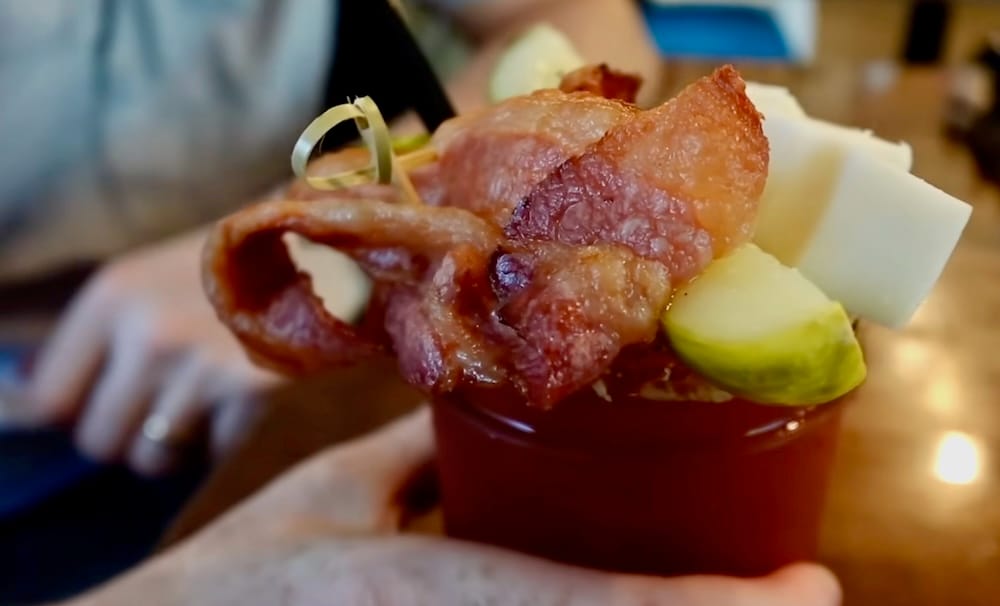
Mine came with pickle, lime, cheese and bacon, and modern versions can go much further than that.
At some point a cocktail stops being garnished and starts carrying cargo.
But the garnish is a terrible way to decide whether you’re looking at a Caesar or a Bloody Mary.
Bloody Marys participate in exactly the same game. Depending on the restaurant, either drink can arrive with celery, pickles, meat, cheese and increasingly ambitious items balanced on top.
A seasoned rim is more closely associated with Caesars, particularly a celery-salt-style rim, but even that isn’t exclusive. Bloody Mary recipes can use seasoned rims too.
The same goes for Worcestershire and hot sauce. Those ingredients overlap.
So if a Caesar arrives looking like somebody mounted lunch above the glass, enjoy the spectacle.
Just don’t confuse it with the definition of the drink.
The important stuff is underneath.
Drinking a Caesar in Calgary made the comparison more interesting
What I like about the Caesar I had at The Beltliner is that it wasn’t some pristine textbook example.
It was clearly a restaurant interpretation.
That actually made the drink more useful to think about afterward because it showed how much you can change without losing the underlying identity.
Gin instead of vodka? Fine.
More heat? Fine.
Pickles, cheese and bacon hanging around the top? Apparently also fine.
The drink still made sense as a Caesar because the savoury Clamato framework remained intact.
And I genuinely enjoyed it.
I’m not somebody who normally looks at breakfast and thinks it needs an alcoholic accompaniment, so there was something slightly ridiculous about drinking this large, savoury, garnished cocktail first thing in the morning.
But Calgary was exactly where I wanted to make the exception.
Why the Caesar belongs to Calgary
The local connection is real.
Walter Chell created the Caesar in 1969 at the Calgary Inn, in the building that is now The Westin Calgary.
That statement does need one bit of restraint.
Similar combinations of clam, tomato and vodka existed before Chell’s drink, so I wouldn’t turn the story into an exaggerated claim that nobody had ever thought of putting those ingredients together until one heroic day in Calgary.
What Chell created was the cocktail that became known as the Caesar and then developed its own identity in Canada.
That is a strong enough story without improving it.
It also explains why ordering one in Calgary felt different to me from ordering another random brunch cocktail. I wasn’t drinking it because I regularly start my mornings this way.
I wanted to try the drink in the city attached to its story.
And once I did, the appeal made sense beyond the novelty.
If you like a Bloody Mary, will you like a Caesar?
While I was drinking mine, I confidently said that if you’ve had a Bloody Mary before, you’re definitely going to like a Caesar.
I was apparently feeling very generous with other people’s taste buds.
I’d add one qualification now.
If the part of a Bloody Mary you enjoy is the savoury tomato, Worcestershire, hot sauce, citrus and seasoning, I think a Caesar is a very logical drink to try.
A lot of the structure is already familiar.
The deciding factor is Clamato.
If a little extra briny, umami-heavy savouriness sounds good, the Caesar may feel like a more interesting extension of something you already enjoy.
If the clam element is precisely what turns you off, then all the similarities in the world aren’t especially helpful.
That is the real decision.
It isn’t whether you like celery.
It isn’t whether you approve of bacon hanging over a cocktail.
And it certainly isn’t whether you prefer gin to vodka, because both drinks can be tinkered with endlessly.
What you’re really choosing is tomato juice versus clam-and-tomato juice.
Everything else can move around.
So is a Caesar basically a Canadian Bloody Mary?
Close cousin?
Absolutely.
Same drink with a Canadian name?
I wouldn’t call it that.
They share too much DNA to pretend they are wildly different cocktails. A classic Caesar and Bloody Mary are both vodka-based, both savoury, both tomato-driven and both comfortable with Worcestershire, hot sauce, citrus and plenty of seasoning.
But Clamato changes enough that the Caesar has its own flavour identity.
That was what stood out once I stopped thinking about the spicy gin, giant garnish and general absurdity of my Beltliner version and considered what was actually in the glass.
For me, it worked.
The Caesar was tangy, savoury, spicy and substantial enough that calling it merely “a drink with brunch” felt slightly dishonest. And drinking one in Calgary gave the experience an extra layer because this is the city where Walter Chell created the Caesar in 1969.
I still can’t tell you whether I prefer Caesars to Bloody Marys because I haven’t done some grand side-by-side showdown between the two.
Nor do I think the comparison really needs one.
If you like Bloody Marys, I’d absolutely try a Caesar.
Just expect something familiar with a distinctly brinier twist.
And depending on where you order it, possibly half your breakfast balanced on top.
Frequently Asked Questions
What is the main difference between a Caesar and a Bloody Mary?
The defining difference is the tomato base. A Caesar uses Clamato, which combines tomato with clam broth, while a classic Bloody Mary uses tomato juice. That gives the Caesar a brinier, more umami-forward flavour.
Do Caesars and Bloody Marys both use vodka?
Yes. Classic versions of both cocktails use vodka. My Caesar in Calgary happened to use spicy gin, but that was a restaurant variation rather than what defines a Caesar.
Is a Caesar always spicier than a Bloody Mary?
No. Both drinks commonly use hot sauce and other savoury seasonings, and either one can be mild or quite spicy depending on the recipe. My Calgary Caesar was particularly punchy because it included spicy gin and extra heat.
Are the big garnishes what make a Caesar different?
No. Bacon, cheese, pickles and other elaborate garnishes can make a Caesar look distinctive, but Bloody Marys can be heavily garnished too. The important difference remains the Clamato base.
Why is the Caesar associated with Calgary?
Walter Chell created the cocktail that became known as the Caesar in 1969 at the Calgary Inn, in the building that is now The Westin Calgary. Similar clam, tomato and vodka combinations existed earlier, so the Calgary connection does not require claiming that Chell invented every aspect from scratch.
If I like Bloody Marys, will I probably like a Caesar?
I think a Caesar is a logical drink to try if you enjoy the savoury tomato, Worcestershire, hot sauce, citrus and seasoning of a Bloody Mary. The main question is whether the Caesar’s extra briny, clam-derived character appeals to you.
This article is also available in Spanish. [Leé la versión en castellano: Caesar vs Bloody Mary: ¿qué hace diferente al cóctel de Calgary?]