
If you’re planning your first trip to Calgary and want me to put a number on it, I’d start with two full sightseeing days.
That is the amount of time I’d choose for most first-time visitors.
One day can absolutely work if Calgary is a stopover and you’re happy concentrating on the central city. Three days is better if Calgary itself is one of the reasons for the trip and you want room for food, parks, museums or a larger attraction without constantly looking at the clock.
Four days or more? I can make a case for it, but by then I’d want to know what you specifically plan to do with the extra time.
The funny thing is that before Audrey and I properly explored Calgary, I probably would have judged the city completely differently.
Calgary had mostly been an airport to me. We’d flown out of the city before, but we hadn’t really stayed and gotten to know it.
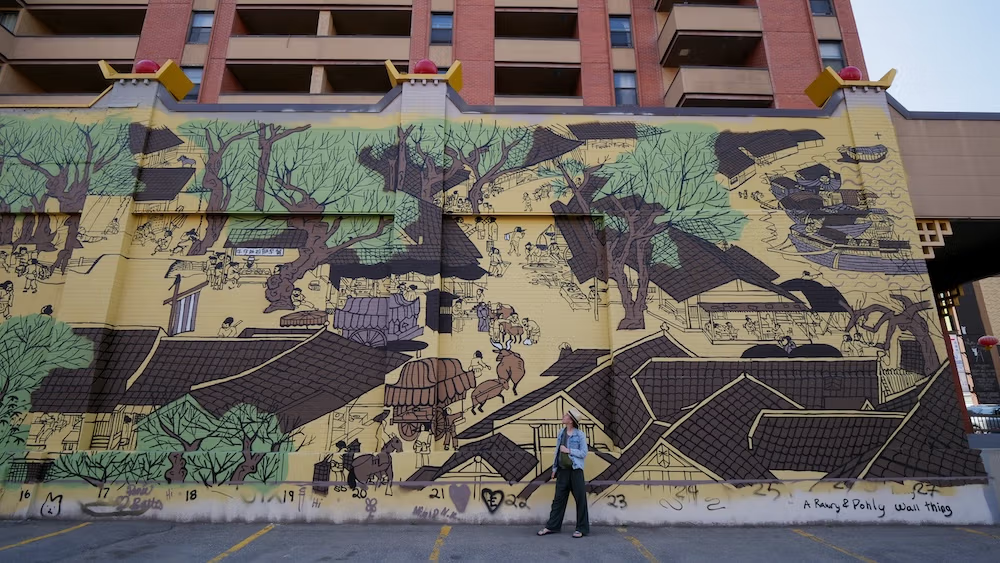
Then we came for a few days and discovered that the Calgary you experience as a first-time visitor is much easier to cover than the Calgary you see sprawled across a map.
We walked almost everywhere at first.
Audrey eventually described Calgary as feeling “kind of like a small city that you can cover on foot.” Her other observation was just as important: we could do all that walking without being exhausted.
That changes the stay-length calculation enormously.
It means one day is more useful than you might expect.
It also creates a trap.
Once you get accustomed to how easy central Calgary is, anything outside that compact bubble starts sounding like a major undertaking. That happened to us with Heritage Park. We nearly talked ourselves out of going because suddenly an LRT-and-bus journey sounded horribly inconvenient after days of simply walking out the door.
We went.
I was very glad we did.
That experience probably explains my answer better than any arbitrary formula about how many nights belong in Calgary.
Calgary is much easier to cover than its physical size suggests
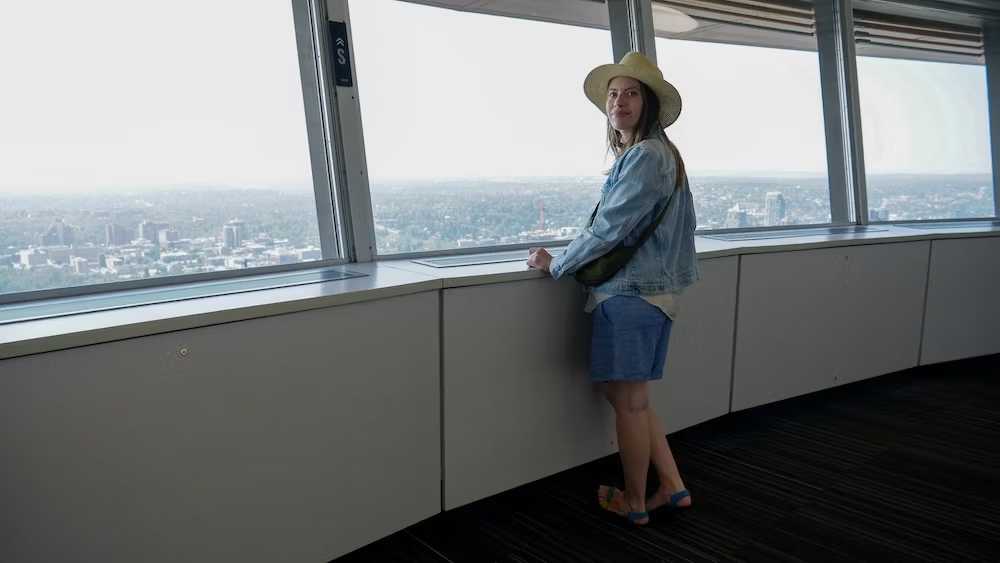
Standing at the top of Calgary Tower helped me understand why the city had felt slightly contradictory.
Downtown is a fairly concentrated cluster of high-rises.
Then Calgary just keeps going.
Residential neighbourhoods, green space and lower-density development spread far beyond that central pocket. From above, Calgary unquestionably looks like the large city it is.
Our trip at street level had not felt like that at all.
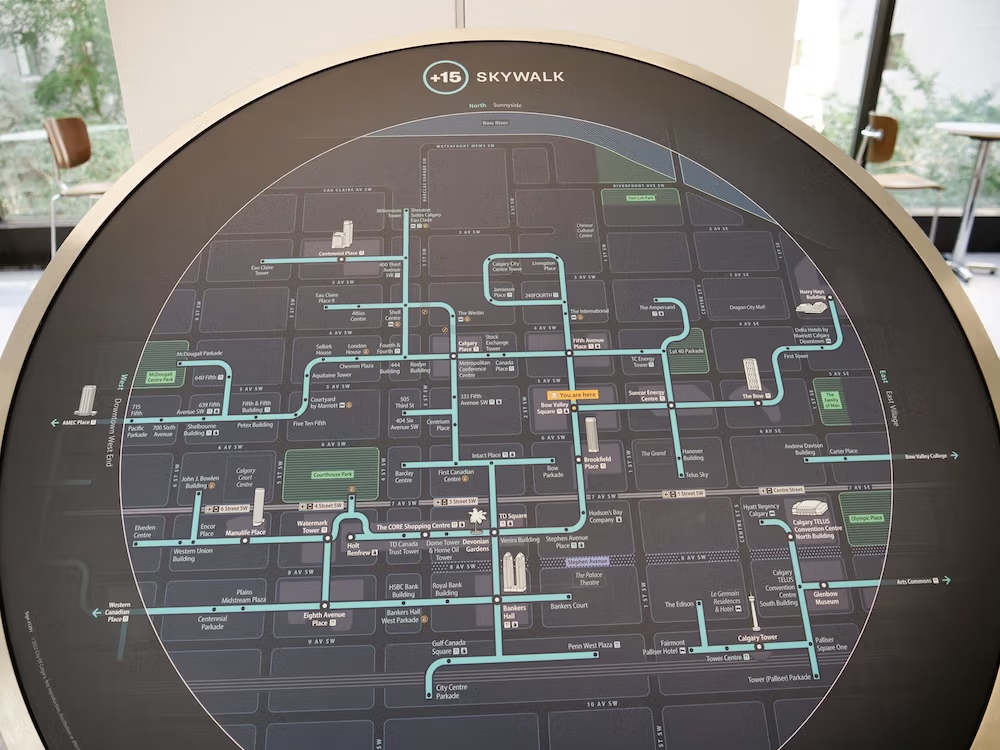
We could walk between Chinatown, Downtown, East Village and the riverfront. We could wander through sections of the +15, visit Devonian Gardens, head toward the Central Library or spend time around the Bow River without organizing every move as a transport problem.
That is the first distinction I’d make when deciding how many days you need:
the size of Calgary and the size of a typical first-time visitor’s Calgary are two very different things.
If most of what interests you lies in and around the central core, your sightseeing time stretches surprisingly far.
The moment you add larger or more distant attractions, it shrinks again.
That is why I don’t think “Calgary is a sprawling city” is a particularly useful answer to this question.
Technically, yes.
As a tourist planning your first couple of days, that isn’t the whole story.
Where you sleep affects this calculation too. If I were trying to make two days work efficiently, I’d put a lot of weight on having a central base rather than saving a little on a room that creates extra transport at the beginning and end of every day. We don’t have a Calgary hotel from this trip that I can personally recommend, but you can compare current hotels in Downtown Calgary if walkable central sightseeing is your priority.
Is one day in Calgary enough?
It can be.
If I only had one full day in Calgary, I would still use it rather than skipping the city entirely.
There is enough concentrated around the centre to make that day feel like an actual visit rather than an airport layover with delusions of grandeur.
What I would not do is approach it with a giant checklist.
Downtown, Chinatown, East Village, Calgary Tower, Central Library, Devonian Gardens, Prince’s Island Park, the Bow River and the +15 are close enough together that you can start convincing yourself you’re going to see everything.
That is where things get silly.
A place being nearby does not mean it takes no time.
Calgary Central Library surprised me more than I expected. I remember describing it as one of the nicest libraries I had visited anywhere.
If I had marched in, taken three photos and left because the next attraction was waiting, I technically could have said I visited it.
I also would have missed much of what made it memorable.
Prince’s Island Park is another good example.
When we went on a summer weekend, there was a ridiculous amount happening: people walking and cycling, wedding photography, live music, dancing. Yet somehow the park still felt peaceful.
That wasn’t a box to tick.
It contributed to how I understood Calgary. I had not expected such a large city to feel so spacious and relaxing.
That kind of impression takes a little time.
So one day forces you to decide which version of Calgary you want.
Maybe you care most about architecture and the central city.
Maybe you want Chinatown and food.
Maybe you’d rather spend part of the day by the river.
Maybe Calgary Tower is essential to you and several other attractions are not.
Any of those can work.
Trying to do all of them properly probably won’t.
One day works best when you stay selective
I would think of one day as a Calgary introduction.
You can see enough to understand the city better. You can walk a substantial chunk of the central visitor area. You can eat something associated with Calgary. You can choose one or two places to explore properly instead of grazing at ten of them.
If you have limited time and would rather spend part of that day getting oriented with a guide, there is currently a 3-hour Calgary City Highlights walking tour that covers roughly 7.5 kilometres through the central city, including Stephen Avenue, the Central Library, sections of the +15, Devonian Gardens and the Calgary Tower area. We didn’t take this tour ourselves, but the route is unusually well matched to the compact-central-Calgary problem I’m describing here.
There are practical limits too.
Indoor spaces such as Devonian Gardens and the +15 have operating hours. Individual +15 connections can also close earlier or be affected by construction. You cannot necessarily treat every indoor stop the way you would treat a public square that is available whenever you wander past it.
Calgary Tower is easier to position later in the day because it currently stays open into the evening, but even that only helps so much.
If you have a single day, I’d much rather finish thinking, “I wish I’d had time for two more places,” than spend ten hours racing around and remember almost none of them.

Two full days is what I’d recommend to most first-time visitors
This is where I think Calgary gets interesting.
The second day changes the trip more than simply doubling the number of attractions you can see.
It gives you a choice.
You can have one day where Calgary’s compact centre works in your favour, then use another day for something that takes a larger chunk of time.
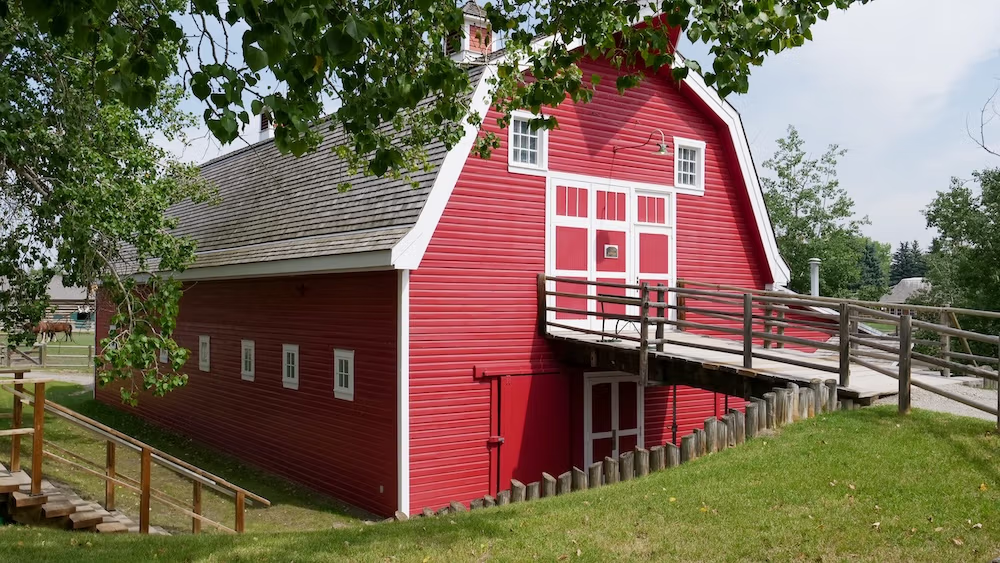
For us, that was Heritage Park.
By the time we went, Audrey and I had done so much Calgary sightseeing on foot that using public transport felt strangely excessive.
I remember us looking at the journey and wondering whether we should just find something else nearby.
That tells you how spoiled we had become.
We had arrived in a large Canadian city and somehow reached the point where an LRT followed by a short bus ride sounded like an unreasonable burden.
We went anyway.
Once we were there, I remember thinking how glad I was that we hadn’t abandoned the idea.
Getting there had not been the great logistical ordeal we had imagined.
More importantly, Heritage Park itself justified the time.
We rode historic transportation, went inside buildings, walked around the site, ate there and still didn’t cover everything. At one point we realized we hadn’t even made it to the amusement area.
We were already talking about how you could spend the whole day there or come back again.
That wasn’t just our impression of its scale. Heritage Park currently recommends allowing at least four hours for a visit.
During the main 2026 Historical Village season, the operating day runs from 10 a.m. to 5 p.m., with daily operation through August 30 and then weekends plus Thanksgiving Monday through October 12.
Those details matter because they turn “maybe we’ll add Heritage Park” into a real time decision.
Four hours inside an attraction is not the same thing as adding one more pin to Google Maps.
You still have to get there, enter, eat, stop when something catches your attention and eventually get back.
Suddenly a big chunk of your day is gone.
And that is perfectly fine if you gave Calgary enough time in the first place.
If Heritage Park appeals to you but the transport is the part you don’t want to organize yourself, there is also a current Heritage Park Historical Village bus tour from central Calgary. It is listed as a seven-hour experience, includes admission to Heritage Park, leaves you to explore the park independently for the afternoon and returns to Downtown afterward. We did not take this tour; our own visit was by public transit.
The second day lets you stop making everything compete
This is why I like two days so much.
You no longer have Downtown, Heritage Park, your long lunch, your museum visit and your river walk all fighting over the same eight hours.
You can let one part of the trip breathe.
Your second day does not have to be Heritage Park either.
You may not care about it at all.
Maybe you want a proper museum visit.
Maybe food is one of your main reasons for being in Calgary.
Maybe you want to spend far longer around the Bow River than we did.
Maybe one architectural stop turns into three.
The point is that you have room to choose.
For most people, I think that is where Calgary moves from “I saw the highlights” to “I actually had a Calgary trip.”

Three days is better if you don’t want Calgary to feel scheduled
I would choose three full days if Calgary itself were an important part of my trip.
Not because I think everyone needs a third day.
Because the third day removes pressure.
There is a huge difference between having enough time to complete an itinerary and having enough time to let an itinerary misbehave.
Our Calgary trip misbehaved in all sorts of good ways.
We spent longer inside the +15 than I would have predicted.
High Park took some effort to find.
Central Library was better than I expected.
Prince’s Island Park gave us a much more leisurely evening than a normal attractions list would suggest.
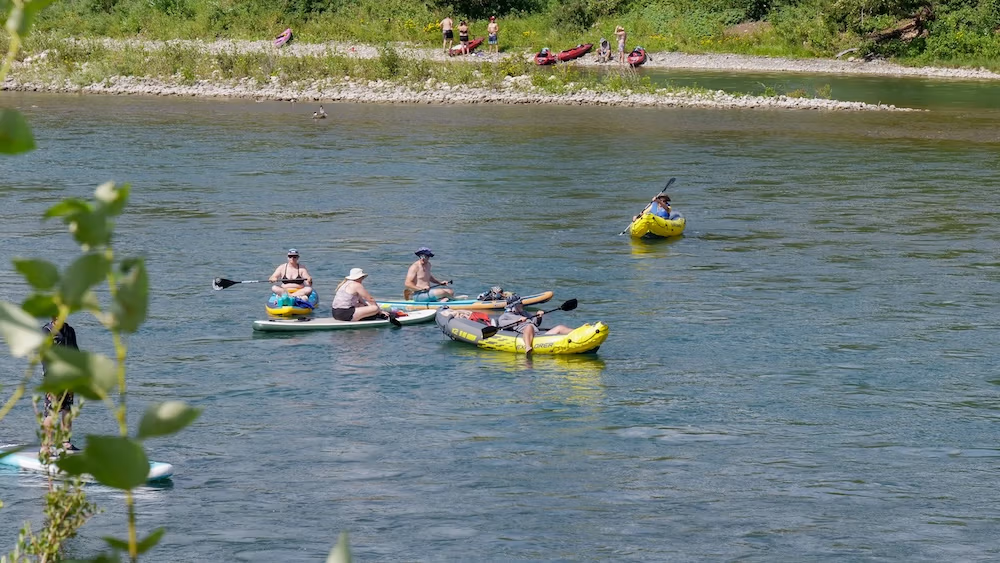
We walked along the Bow River and watched people floating, rafting and paddling past while we continued toward The Confluence.
We didn’t get on the water ourselves, but just seeing the river being used that way changed the feeling of the city.
None of that was particularly efficient.
That was part of the point.
Food can quietly eat half your itinerary
And then there was the actual eating.
Calgary ended up being a much more interesting food city than I had expected.
We had dim sum more than once. We tried ginger beef. We went for brunch. We ate sushi. We tried a Caesar. We ate at Heritage Park.
Those meals were experiences, not refuelling stops.
At one dim sum breakfast, we deliberately ordered less because we had gone a bit too hard at the previous meal and did not want to spend our sightseeing day in a food coma.
That is an extremely ordinary travel problem, which is exactly why it matters.
People build itineraries as though lunch consumes twenty-five minutes and every museum visit ends precisely when the schedule says it should.
Real trips do not work like that.
You sit down.
You order.
You talk.
Someone wants dessert.
You realize the place is better than expected.
Suddenly you are an hour behind the imaginary version of yourself who planned the trip from home.
If food matters to you, give it time.
Calgary rewarded us when we did.
A third day also helps if you want proper museum time
Some Calgary attractions consume a meaningful chunk of the day even if they aren’t as large as Heritage Park.
Studio Bell, for example, currently recommends about two hours to explore all five floors.
We did not visit it on this trip, so I cannot give you a personal verdict on the museum. I use it simply because it illustrates the time equation well.
Two hours here.
A long lunch there.
A park you don’t rush.
A museum that surprises you.
That is how a trip that looked comfortable on paper suddenly becomes packed.
Three days absorbs those overruns much more gracefully.

Who should spend three days in Calgary?
I would lean toward three if you recognize yourself in several of these:
- Calgary is one of the main destinations of the trip rather than simply where your flight lands.
- You want more than one large attraction.
- You actively travel for food.
- Museums and architecture interest you enough that you will actually go inside.
- You want time along the Bow River and in Calgary’s parks.
- You dislike sightseeing from breakfast until dinner with every hour assigned.
- You enjoy wandering through neighbourhoods and following things that catch your attention.
- You know from experience that you are never going to leave the hotel at 8 a.m., no matter how magnificent the spreadsheet looked the night before.
That final traveller may or may not be me.
Three days does not make Calgary dramatically bigger.
It gives you permission to experience it less aggressively.
I left our first proper Calgary visit feeling very satisfied.
I also wanted to come back.
Those feelings can coexist.
Do you need four days or more in Calgary?
Usually, I would say no.
Not for a normal first visit.
By three full days you can already make room for central sightseeing, a substantial attraction, food, parks and some flexibility.
Once I add a fourth day, I want that day to have a clear purpose.
One obvious example is a major event.
The next Calgary Stampede is scheduled for July 9–18, 2027.
We did not attend the Stampede on this trip, so I’m not going to pretend I can tell you from experience how many days you should devote to it.
What I can say is that an event of that scale changes the basic calculation. If you are attending Stampede events and also want a normal Calgary sightseeing trip, those two things now need to share your days.
That may justify four or more.
So might a trip built around several large attractions, particularly deep food exploration or an intentionally slow travel style.
I could happily spend longer than three days in Calgary.
That is not the same thing as saying you need to.
This distinction gets especially messy when wider Alberta travel starts creeping into Calgary itineraries.
A day in Banff is not a fourth day in Calgary.
A day in Drumheller is not another Calgary sightseeing day.
Those places may be part of a fantastic Alberta trip, but I would not use them to inflate the answer to “How long do I need in Calgary?”
Keep the accounting honest.
Count full sightseeing days, not hotel nights
This sounds painfully obvious until you start planning flights.
Three nights in Calgary does not automatically equal three days in Calgary.
You might arrive late on the first evening.
You might leave in the morning.
You might technically be in the city across four calendar dates while having only two genuinely useful sightseeing days.
That is why all of my recommendations here refer to full usable days.
I treat arrival evenings and departure mornings as bonuses.
If they turn out to be useful, wonderful.
I would not rely on them when deciding whether I can fit in something I care about.
This is especially important when flying out of Calgary International Airport.
YYC currently recommends arriving two to three hours before your flight, particularly during busier travel periods.
There is also no direct LRT connection from the airport to Downtown, so your ground transfer consumes additional time.
If you have a 1 p.m. flight, that is not secretly half a sightseeing day because the plane technically leaves after lunch.
Your morning is mostly gone.
On a longer trip, that barely matters.
On a one- or two-day Calgary visit, it matters a lot.

My Calgary stay-length cheat sheet
If I were deciding tonight, this is how I would think about it:
| Time in Calgary | Best fit | What you give up |
|---|---|---|
| 1 full day | A selective introduction to central Calgary | Very little room for a major outlying attraction or slow exploration |
| 2 full days | My default recommendation for a first visit | You still have to prioritize, but you can combine the central city with one substantial extra experience |
| 3 full days | A fuller Calgary trip with food, parks, museums and breathing room | Costs another day of your broader itinerary, but removes much of the pressure |
| 4+ full days | Stampede, multiple large attractions, deeper food/neighbourhood exploration or deliberately slow travel | More than most first-time visitors need unless the extra days have a clear purpose |
The number gets easier to choose once you ask what actually matters to you.
Is Heritage Park high on your list?
If yes, I would hesitate to give Calgary only one day.
Do you want to visit several museums properly?
Three becomes more attractive.
Is food an activity rather than something you squeeze between attractions?
Give yourself more room.
Is your favourite way to travel to move fast and see a lot?
Two days may feel generous.
If you stop for coffee, wander into buildings, photograph murals, spend an hour somewhere you expected to spend fifteen minutes and then discover it is suddenly 4:30 p.m., congratulations: you travel more like we do.
Give Calgary the third day.

The lesson Calgary taught me about planning time
Before we properly explored Calgary, I would have worried that a city this spread out required a lot of transport planning.
The opposite happened at first.
Audrey and I walked.
We wandered through Chinatown.
We explored the +15.
We found an indoor tropical garden sitting inside Downtown Calgary.
We stood above the city at Calgary Tower.
We spent time around the river.
We ate very well.
The whole thing felt easier and more relaxed than I expected.
That ease nearly became its own problem.
By the time Heritage Park came around, we had become so accustomed to convenient central sightseeing that leaving the area sounded annoying.
We almost let that stop us.
I’m glad it didn’t.
That is the distinction I would keep in mind when deciding how many days you need in Calgary.
One day lets you meet the city.
Two days is enough for a strong first visit.
Three days lets you stop worrying so much about whether you are using every hour efficiently.
And after three, I would add time because you already know what you want to do with it.
Audrey’s favourite part of the Calgary experience was how much we could cover on foot without ending the day exhausted.
I loved the variety, the international food and how much open space the city seemed to have despite all those downtown towers.
We had arrived barely knowing Calgary beyond its airport.
I left saying I would come back in a heartbeat.
I still would.
Frequently Asked Questions
How many full days do you need in Calgary?
For most first-time visitors, I recommend two full sightseeing days. One day works for a selective central introduction, while three days is better if you want more room for food, parks, museums or a substantial attraction without rushing.
Is one day in Calgary enough?
Yes, if you stay selective. One full day can give you a worthwhile introduction to central Calgary, but you will have little room for a large outlying attraction or slower exploration.
Why do I recommend two days in Calgary for most first-time visitors?
Two full days let you use Calgary’s compact central core efficiently while keeping another substantial block of time for something like Heritage Park, a museum, food or slower riverfront exploration.
When is three days in Calgary worth it?
Three days makes more sense if Calgary itself is a main destination, you want more than one large attraction, you travel for food, or you prefer museums, parks and neighbourhood wandering without a tightly packed schedule.
How much time should I allow for Heritage Park?
Heritage Park currently recommends allowing at least four hours. That makes it a meaningful part of a sightseeing day rather than a quick add-on, especially once you include the trip there and back.
Do hotel nights count the same as full sightseeing days in Calgary?
No. I count full usable sightseeing days separately from hotel nights. A late arrival or early departure can leave you with far less time in the city than the number of nights suggests.
Do most first-time visitors need four days or more in Calgary?
Usually not. Four or more full days makes the most sense when you have a specific reason, such as a major event, several large attractions, deeper food or neighbourhood exploration, or a deliberately slow pace.
This guide is also available in Spanish. [Leé la versión en castellano: ¿Cuántos días necesitás en Calgary?]
This article contains affiliate links. If you book through one of these links, I may earn a commission at no extra cost to you.