
For years, Calgary occupied a very small box in my head: airport, big Alberta city, Stampede, Banff somewhere west of here. That was about it.
Audrey and I had flown out of Calgary before, but we’d never properly explored the city. We knew it in the way you can technically know a place without knowing it at all: terminals, roads, vague associations and the understanding that most travellers were probably trying to get somewhere else.
Calgary makes that incredibly easy. Banff is only about 130 kilometres from Calgary International Airport, and under normal conditions you’re looking at roughly a 90-minute drive. Direct commercial shuttles also run west, so you can land at YYC, collect your luggage and continue toward the Rockies without ever giving Calgary much thought. I completely understand why people do that.

Then Audrey and I finally stayed for a few days, and by the time we left I was talking about how liveable Calgary felt, how much open space it had, how easy we found the central areas to explore on foot, how much I liked the international food scene and how surprised I was by the sheer variety of things we’d done.
Near the end of the trip, we even acknowledged the obvious: Calgary really is a gateway to the Rocky Mountains. Of course it is. Then I said I’d come back to Calgary in a heartbeat, and those two ideas don’t contradict each other.
Calgary can be an excellent gateway to Banff while still deserving its own stay.
The real question is whether what Calgary adds is worth giving up some of the time you might otherwise spend in the mountains. For quite a few travellers, I think it is; for others, I’d tell you to get on the shuttle and go straight to Banff.
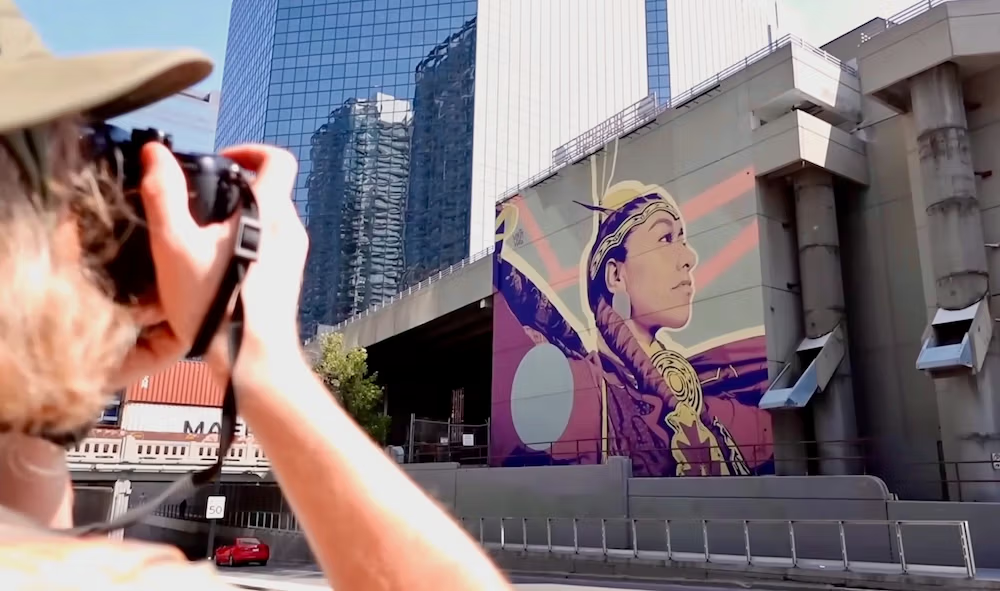
We had treated Calgary like a gateway too
I’m not coming at this as someone who spent years insisting that Calgary was Canada’s great overlooked city. I hadn’t thought deeply enough about Calgary to overlook it, and that was the problem.
Before this trip, we’d basically used Calgary as transportation infrastructure. When we wrapped up our visit, we admitted that we’d arrived not really knowing the city because we’d only flown out of it before. This was our first time actually exploring Calgary, which put us in a pretty good position to understand the mentality behind driving straight through.
If Banff is the destination you’ve been dreaming about, Calgary can look like an administrative step: land, get the bags, pick up the car and drive west. Because Banff is relatively close, there’s no logistical crisis forcing you to spend a night in Calgary first, and direct airport transfers make it perfectly realistic to bypass the city completely.
So Calgary has to earn the stay. Once we started exploring, I thought it did—not because of one mega-attraction, but because of the accumulation.
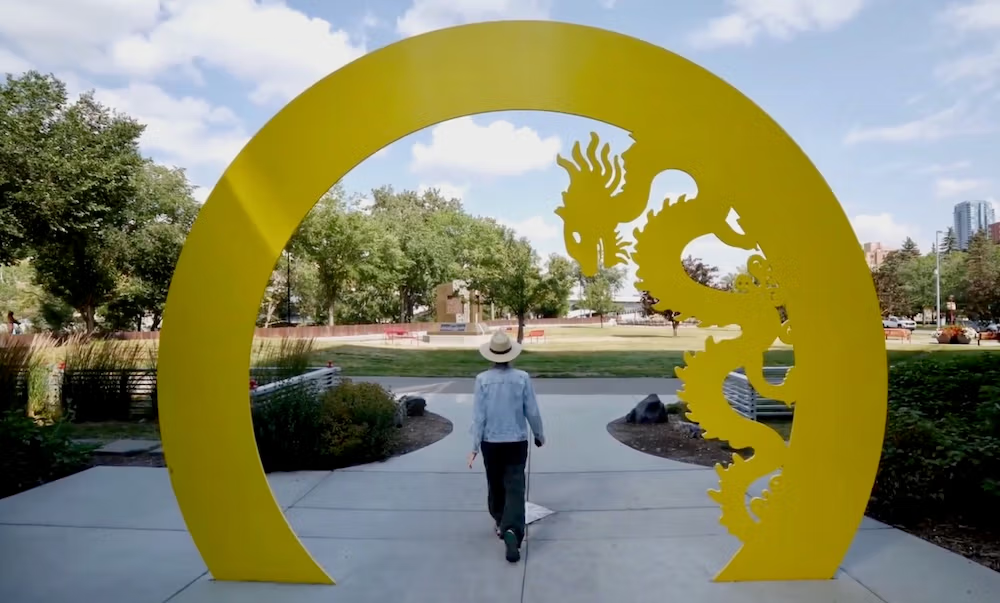
Calgary kept giving us reasons to stay another day
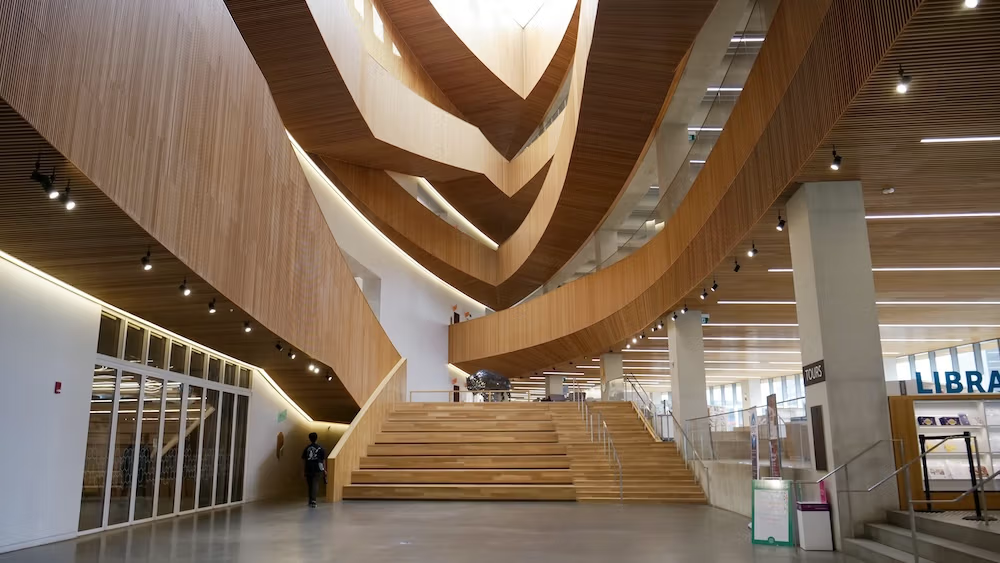
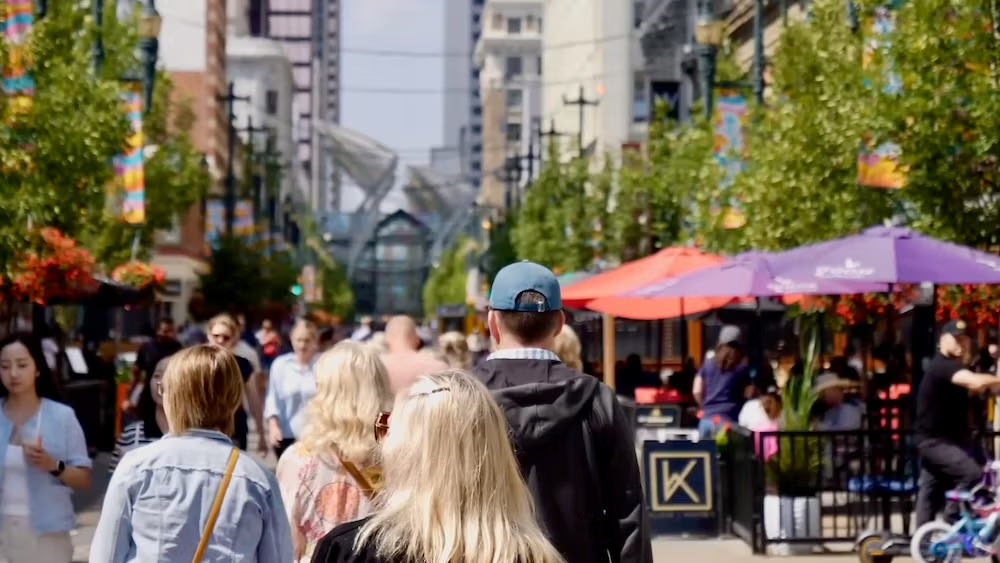
We wandered through Chinatown and visited the Chinese Cultural Centre, walked sections of the +15 network, found ourselves inside Devonian Gardens surrounded by plants and ponds several floors up inside a downtown commercial building, stumbled across murals, went up to High Park on top of a parking garage, visited Calgary Tower and explored Calgary Central Library.
We walked along the Bow River, spent time in Prince’s Island Park, visited The Confluence and then devoted a big chunk of a day to Heritage Park. Somewhere in there we also ate enough food to justify filming an entirely separate Calgary food video. At no point did I feel like we were desperately filling time before the “real” Alberta trip began; we were having the trip.
Calgary gave us a proper urban experience
One of the things I ended up liking most about Calgary was that the city had experiences that felt very specifically urban, and the +15 is a great example.
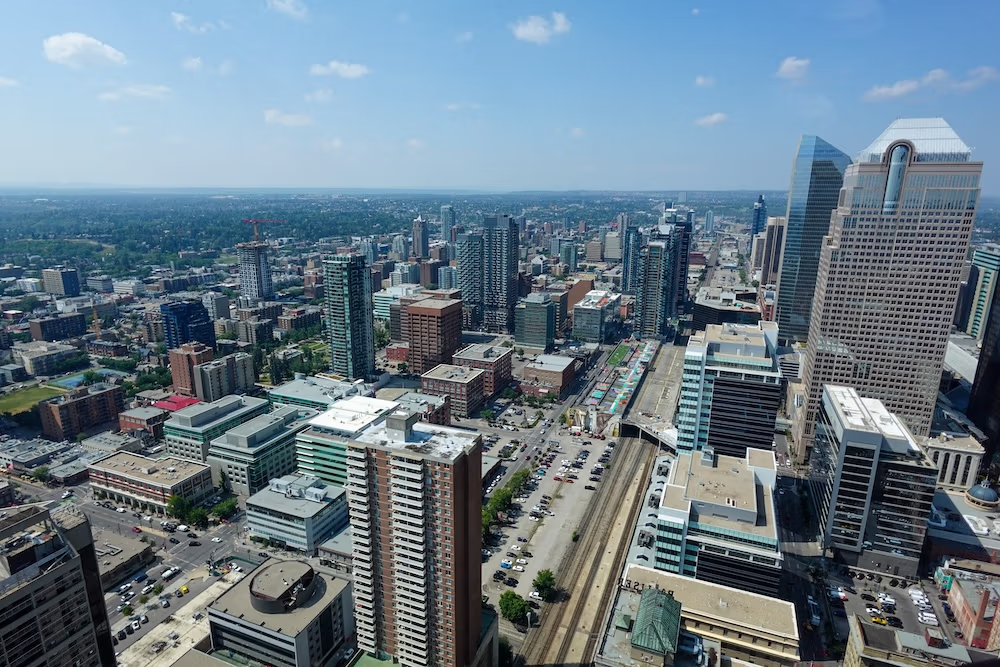
Downtown Calgary has this network of elevated indoor pedestrian connections running between buildings. We walked through office towers and commercial spaces, passing food courts, shops, public art and other little pockets of activity above street level.
We visited in summer, and the funny thing is that the benefit we appreciated most wasn’t escaping a Calgary winter. It was the air conditioning: it was hot outside, and every time we slipped back into the +15 it felt like somebody had turned the difficulty setting down.
The network still operates today, although I wouldn’t build a trip around the assumption that every bridge is permanently accessible. Public hours are generally 6 a.m. to 9 p.m. on weekdays and 9 a.m. to 7 p.m. on weekends and statutory holidays, and individual connections can close or keep shorter hours.
As part of downtown Calgary, the +15 is such a strange and memorable extra layer. Then there was Devonian Gardens. I’m used to cities having parks; I’m not used to finding one several floors up inside a commercial building, with plants, ponds, fish, seating areas, loads of natural light and this weird moment where your brain has to reconcile the fact that you’ve walked through a shopping centre and somehow ended up somewhere tropical.
I remember thinking that Calgary had taken the idea of an urban green space rather literally: you want greenery? Fine. We’ll put it inside the building too.
Calgary Central Library was another surprise. We weren’t there because we desperately needed to borrow a book on vacation; we went because the building itself was worth seeing, and I loved it. By then, that was becoming the pattern.
The attraction wasn’t always some gigantic ticketed sight. Sometimes it was simply the way Calgary had put interesting things into ordinary parts of the city: a rooftop park, a library, a pedestrian bridge, a mural, a tropical garden above a shopping centre. That made walking around feel rewarding.
If you only have one usable day and would rather have someone connect those central pieces for you, there is currently a 3-hour Calgary City Highlights walking tour that passes through central sights including Stephen Avenue, Calgary Central Library, the +15 and Devonian Gardens. We didn’t take this tour—we explored Calgary independently—but its route overlaps closely with the part of the city that changed my mind.
Prince’s Island Park changed how the city felt to me
Prince’s Island Park probably affected my overall impression of Calgary more than I expected. We went on a summer weekend and the park was full of life, with people walking and cycling, weddings and photo shoots, musicians and, at one point, even flamenco dancing. It felt like everybody had independently decided, Yep, this is where we’re spending Saturday.
Somehow it still felt peaceful, and that contradiction really stuck with me. Prince’s Island Park covers about 20 hectares right beside downtown, and having that much greenery woven into the city centre helps explain why Calgary didn’t feel as boxed in as I’d expected from a major Canadian city.
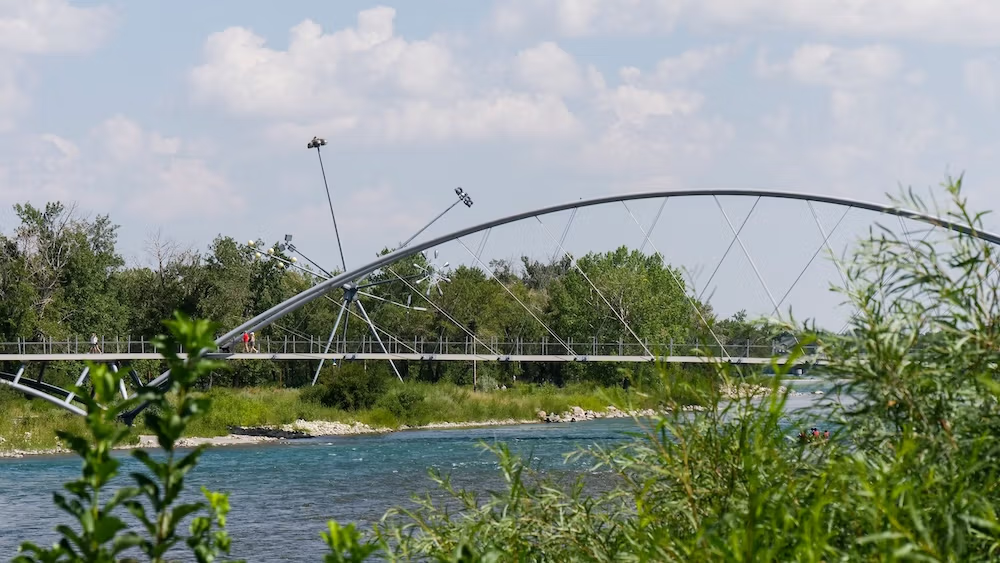
We later walked along the Bow River toward The Confluence on a hot summer day while people paddled and floated past us. We didn’t join them—we were walking—but you could look one way and see Calgary’s skyline, then look the other and watch people drifting down the river.
I remember thinking how relaxing the city felt, which is not a word I automatically associate with a large city. Calgary just seemed to have enough space for everyone.
By the end of the trip, the way we were talking about the city had changed completely. Calgary almost felt like a small city you could cover on foot—not because Calgary is remotely small, but because the part of it we were experiencing as visitors felt surprisingly manageable. We’d walked a lot without feeling destroyed, and that matters to me.
Heritage Park nearly became the thing we stupidly skipped
Heritage Park was the moment Calgary exposed another one of our bad assumptions. We’d been getting around central Calgary so easily that we’d become spoiled, and then we looked at the trip to Heritage Park: LRT, bus, farther away. Suddenly we were behaving as though somebody had asked us to mount an expedition across northern Canada.
We actually started looking for something else we could do nearby, but eventually we went. Afterwards I couldn’t believe we’d almost talked ourselves out of it, because we spent a huge chunk of the day there.
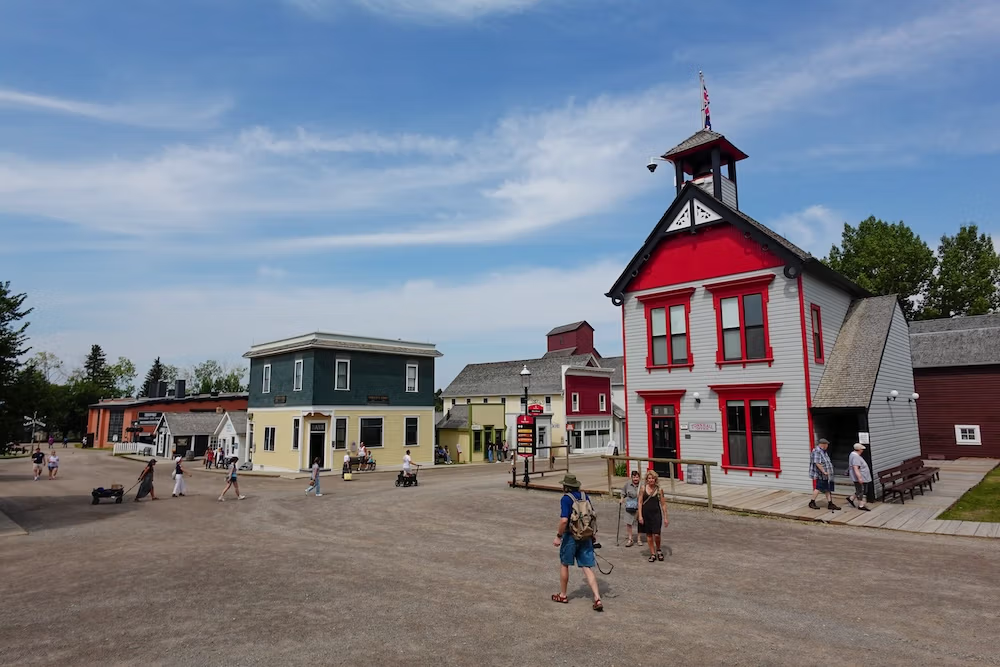
We rode historic transportation, wandered through old buildings and explored Gasoline Alley. There were trains, streetcars, vintage vehicles and enough going on that the whole place brought out our inner kids, while the transportation there turned out to be nowhere near as annoying as we’d imagined.
That day taught me something useful about Calgary: this wasn’t a city where every attraction could be knocked off between breakfast and your airport shuttle. Some experiences genuinely deserved a large block of the day.
Heritage Park still operates today, although the Historical Village follows a seasonal schedule, so I would check the current calendar before planning around it.
If the LRT-and-bus combination is exactly the bit that would make you reconsider the visit, a current Heritage Park Historical Village bus tour from Calgary combines a Calgary city tour with transportation to Heritage Park and full park access. The listed streetcar ride depends on seasonal availability. We didn’t take this tour—we used public transit—and the current listing also says the tour is not suitable for children under five, wheelchair users or people with mobility impairments, so it is an alternative for some travellers rather than a universal solution.
For this article, the bigger point is simpler: when a city makes you start choosing which substantial experience gets the day, you’re no longer talking about airport filler. You’re planning a destination.
Then there was the food
Food pushed Calgary even further out of the gateway category for me. At the end of the trip, one of the things I specifically mentioned liking was the international food scene, and over the course of the visit we ate dim sum, tried ginger beef, had brunch, went for sushi, ate at Heritage Park and, yes, I had a Caesar.
I don’t normally sit around drinking enormous alcoholic brunch beverages, but Calgary felt like the place to make an exception. The Caesar was created in Calgary in 1969, so having one there felt obligatory.
Ginger beef also has a particularly strong Calgary connection through the city’s Chinese-Canadian food history. Those little origin stories matter because they stop food from feeling interchangeable: you can eat dim sum and drink cocktails all over Canada, but when something connects directly back to the city you’re visiting, I become far more interested in trying it there.
By the end of Calgary, food wasn’t just something we’d done between attractions. It had become part of why I’d want to return.

Calgary and Banff are not trying to give you the same trip
I don’t find “Calgary or Banff?” especially useful as a travel question. Better for what?
Banff National Park is one of Canada’s great mountain destinations.
There are more than 1,600 kilometres of maintained trails in the park. You’re dealing with peaks, glacial lakes, wildlife, hiking, biking and the kind of Rocky Mountain scenery that causes people to fly halfway around the world.
Calgary is a city, so of course Banff wins if the competition is Which place should I choose for dramatic Rocky Mountain scenery? That’s like asking whether I’d rather eat dim sum in Chinatown or hike beside a glacial lake. I want to know why I have to choose.
Calgary gave us neighbourhoods, food, architecture, museums, public spaces, river walks and living history, while Banff gives you a national park. Those aren’t duplicate experiences fighting for the same slot; they’re different chapters, which is exactly what makes combining them interesting.
You can spend part of an Alberta trip walking through a major Canadian city, eating ginger beef and exploring Chinese-Canadian culture, then head west and be surrounded by the Rockies. If that contrast sounds appealing, Calgary becomes much easier to justify. If it doesn’t, don’t force it.
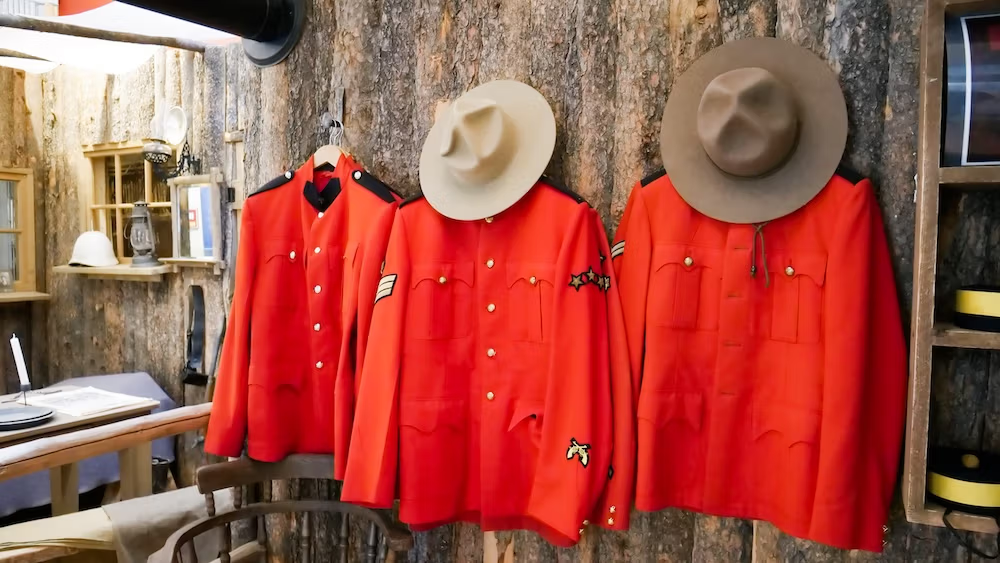
When I’d give Calgary its own stay
I’d make Calgary a deliberate part of the trip if cities are something you actually enjoy. That sounds obvious, but travel advice has a habit of pretending everybody wants the same holiday. If you like:
- neighbourhood wandering,
- food,
- architecture,
- cultural attractions,
- urban parks,
- history,
- and having places you can explore without every hour becoming a major excursion,
then Calgary adds something real. I’d also stay if I wanted contrast. I love landscapes and mountains, but I also reach a point on certain trips where I want to sit down somewhere, eat something interesting, wander around a neighbourhood and spend a few hours doing things that don’t require hiking boots. Calgary can give you that.
The logistics can also work surprisingly neatly. Some current Banff shuttle services pick up passengers from downtown Calgary hotels as well as YYC, meaning you don’t necessarily have to stay in the city and then drag yourself back to the airport to continue west. Calgary can simply become the first chapter—flight, city, mountains—which makes far more sense to me than treating it as some awkward detour from the Rockies.
And there is one difference I would keep very clear: sleeping in Calgary is not the same as visiting Calgary.
If you land at 10 p.m., stay near the airport and leave at 7 the next morning, that was a Calgary hotel night. It wasn’t a Calgary stay, and there’s nothing wrong with that; just don’t confuse the two.
I don’t have a Calgary hotel from this trip that I can recommend from firsthand experience, so I wouldn’t pretend one particular property is the answer. If you’re deliberately giving the city its own time, you can compare current hotels in Downtown Calgary and choose based on how close you want to be to the central walking areas, CTrain and the places you actually plan to visit.
When I’d go straight to Banff
If I had a short trip and the entire reason I’d flown to Alberta was the mountains, I’d probably leave Calgary immediately, with no guilt.
If I had four days and a list of Banff hikes I’d been dreaming about for years, I would not sacrifice 25% of the trip because somebody told me Calgary deserved more respect. That would be absurd.
Current airport-to-Banff shuttles make going straight west very realistic, even without renting a car.
I’d also skip Calgary if I’d already explored it before, or if cities simply don’t excite me.
If somebody hears Chinatown, architecture, museums, brunch and river parks and thinks, Okay. Where are the mountains?, I respect the clarity. Go to Banff.
Calgary doesn’t need to be mandatory to be worthwhile. That’s the distinction I care about: skipping Calgary because your priorities lie somewhere else is a decision, while skipping Calgary because you’ve automatically assumed there’s nothing worth staying for is an assumption. I had basically made the second one myself.
How much time turns Calgary into an actual stay?
I wouldn’t measure this by hotel nights. I’d measure it by usable Calgary time.
A few hours
You’re mostly still using Calgary as the gateway. Maybe you grab dinner, take a short walk or squeeze in one attraction; useful, absolutely, but Calgary hasn’t really become part of the trip yet.
One proper sightseeing day
This is where I think the city gets a fair shot. With one usable day, you can spend time in the central neighbourhoods, eat something interesting, explore along the river or parks and see several attractions without constantly checking the clock because your airport shuttle leaves in 47 minutes.
You’re not going to “complete Calgary,” and that’s fine. Cities aren’t Xbox games; you don’t need 100%. One day is enough to understand that Calgary has its own personality.
Two usable days
Now you can relax. One day can stay fairly central, while the second gives you room for something larger like Heritage Park or simply lets you spread out the food, neighbourhoods and riverfront without cramming everything together.
I wouldn’t turn this into a rigid formula. One day can be enough for someone who wants a taste, while two days can be frustratingly short for someone who loves cities. The important distinction is between time in Calgary and time spent sleeping before leaving Calgary.
My Calgary-before-Banff decision rule
If I were deciding today, I’d ask myself a handful of questions.
Do I have at least one genuinely usable Calgary day?
I mean actual time—not a midnight arrival or breakfast before a noon flight.
Would spending that day in Calgary damage the mountain trip I really want?
This is the big one. If you’re going to spend your entire Calgary day wishing you were already at Lake Louise, I think we’ve solved the mystery.
Do Calgary’s strengths appeal to me?
If food, culture, architecture, parks, neighbourhoods, history and walking sound fun, stay. If that list sounds like a school assignment, go west.
Does Calgary fit naturally around my flights?
Sometimes the arrival or departure timing makes a Calgary day incredibly easy to include without sacrificing much at all; sometimes it doesn’t.
How am I travelling onward?
Rental car and commercial shuttle options can both make Calgary work as part of the sequence rather than a separate detour.
If the Rockies portion of your trip is a self-drive itinerary and having your own vehicle genuinely gives you the flexibility you want, you can compare current car rentals at Calgary International Airport. For the Calgary sightseeing Audrey and I did, walking and public transit were enough; I wouldn’t rent a car purely because Calgary looks enormous on a map.
Have I already been here?
If this is your fifth Calgary visit and your first Banff trip, obviously the equation changes.
That’s the question that kills most bad itineraries. If you’re planning a Canadian Rockies trip, protect the Rockies. If you’re planning an Alberta trip that combines a city with the mountains, Calgary suddenly becomes very useful.
My rough answer would be:
Stay in Calgary if you’ve got at least one usable day, you genuinely like what cities offer and adding Calgary doesn’t butcher the mountain portion of your trip.
Maybe stay if you’ve only got a partial day or convenient overnight but would enjoy getting some sense of the city.
Continue to Banff if the trip is short, the mountains are overwhelmingly the priority and your onward connection works.
You do not need to collect Calgary like a badge; you just need to make the decision deliberately.
Calgary is a gateway to Banff. That’s not the problem.
After our trip, I stopped thinking Calgary’s gateway reputation needed to be disproved. It doesn’t. Being one of the easiest ways into the Canadian Rockies is a strength.
The airport gets you here, the road west is easy to understand and shuttles can carry you onward. If your only objective is reaching Banff, Calgary can perform that job beautifully.
What changed for me was realizing how incomplete that description had been. Before this trip, we’d flown through Calgary without really knowing it; then we finally stayed.
We wandered Chinatown, explored the +15, stood inside a tropical garden several floors above downtown, found murals, went up Calgary Tower and visited a library that I’d happily recommend to somebody who had no intention of borrowing a book. We walked beside the Bow River, watched Prince’s Island Park fill with people while somehow remaining peaceful, nearly talked ourselves out of Heritage Park and then wondered why we’d made such a fuss about going, and ate our way around the city.
By the end of it, I wasn’t thinking about Calgary as somewhere I needed to pass through before the trip began. I was thinking about coming back.
So yes: Calgary is a gateway to Banff. Just don’t mistake the doorway for the whole room.
Frequently Asked Questions
Is Calgary worth staying in before going to Banff?
For me, yes—if you have at least one usable day and genuinely enjoy cities. Calgary gave us food, architecture, parks, history and central sightseeing that felt worthwhile on their own, but I would go straight to Banff if the mountain portion of a short trip would suffer.
How much time should I give Calgary before Banff?
A few hours still feels more like a gateway stop. I think one proper sightseeing day gives Calgary a fair shot, while two usable days give you room to stay central one day and add something larger like Heritage Park on the second.
Can I go straight from Calgary International Airport to Banff?
Yes. Banff is about 130 kilometres from YYC, roughly a 90-minute drive under normal conditions, and direct commercial shuttles also run west, so an overnight in Calgary is not required.
Do I need a car to sightsee in Calgary?
Not for the Calgary sightseeing Audrey and I did. Walking and public transit were enough for our central itinerary, although a rental car may make sense if the Rockies part of your trip is a self-drive itinerary.
When should I skip Calgary and go straight to Banff?
I’d skip Calgary if the trip is short, the mountains are overwhelmingly the priority, you’ve already explored Calgary, or city experiences such as food, architecture, parks and neighbourhoods simply don’t interest you.
Is an overnight in Calgary the same as visiting the city?
No. If you arrive late, sleep near the airport and leave early, that is a Calgary hotel night rather than a Calgary stay. I would judge the decision by usable Calgary time, not by the number of nights on the booking.
This article is also available in Spanish. [Leé la versión en castellano: ¿Es Calgary solo una puerta de entrada a Banff? Por qué la ciudad merece una estadía propia]
This article contains affiliate links. If you book through one of these links, I may earn a commission at no extra cost to you.