
People ask me this one expecting a simple answer, and I get why — it feels like it should have one. But I’ve done Banff both ways, properly both ways, not as a thought experiment.
Two Trips, One Honest Answer
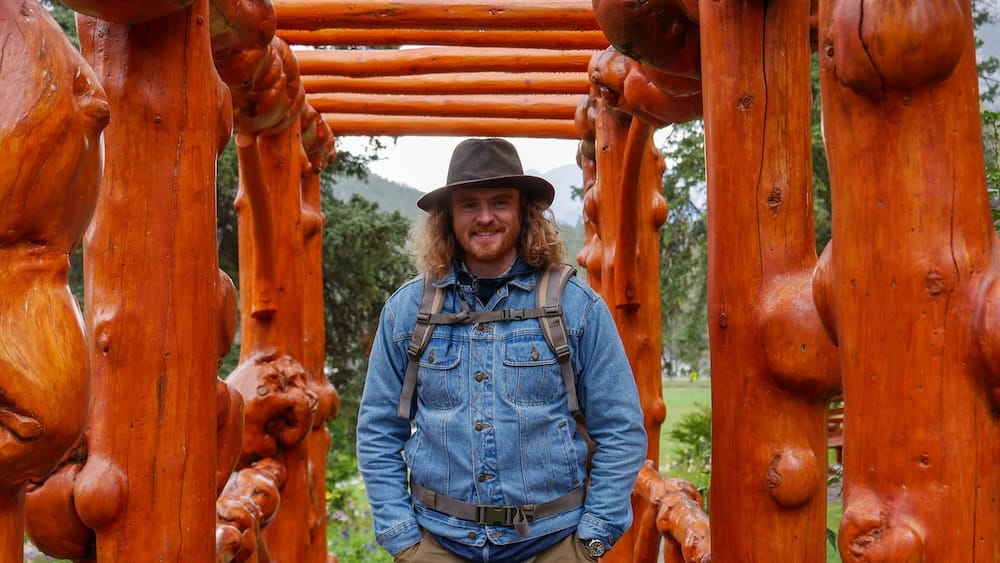
One trip was built entirely around not having a car: walking through town, booking tours for anything bigger, letting someone else handle the driving. Another was a week-long family road trip where a car did essentially all of the work, reaching places the car-free version of Banff never touched. Comparing those two honestly, rather than guessing at pros and cons from a spreadsheet, is the only way I know to actually answer this.
The short version is that this was never really “should I have a car in Banff.” It’s what your specific trip needs to reach. Those two framings lead to completely different answers.
What Having a Car in Banff Actually Costs
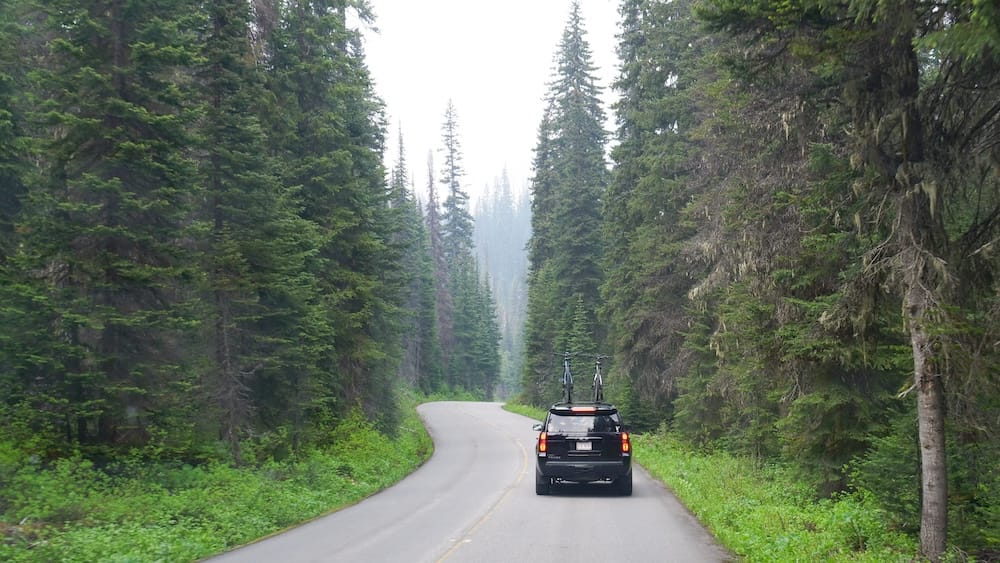
Before weighing whether a car is worth it, it helps to know what it costs, because the number in most people’s heads is usually just the rental rate, and that’s only the first line of the bill. A rental out of Calgary International Airport runs somewhere between $50 and $120 a day depending on the vehicle and the season, with a compact or midsize typically landing in the $60-to-$90 range — you can compare current rental rates at Calgary International Airport before deciding whether the math works for your trip. Add gas, roughly $20 to $30 each way to Banff, and a park pass, and you’re already well past the rental number before you’ve parked anywhere.
That last part matters more in 2026 than it used to. Downtown Banff’s paid parking climbed to $12 an hour for the peak season, up from a flat $7, and the town has been explicit about why: it’s meant to fund transit and nudge people out of their cars. Parks Canada is doing the same thing at the Gondola. Starting mid-May, parking in the Sulphur Mountain area, which covers both the Gondola and the Upper Hot Springs, costs $17.50 a day — a brand-new fee aimed squarely at reducing the crush of traffic across Banff’s one vehicle bridge into that area. Free parking still exists if you’re willing to walk for it: the Train Station lot has 500 free stalls and a seven-or-eight-minute walk into town, Bow Avenue has a smaller stash of free spaces, and the upper levels of the Bear Street Parkade are free too. But the paid spots closest to where you want to be are, by design, getting more expensive every year, not less.
None of this makes a car a bad idea. It just means the real starting number for having a car in Banff is rental plus gas plus parking plus a park pass, and it’s worth doing that math before assuming it’s the obviously convenient option.
Where a Car Earns Its Keep: Beyond Banff
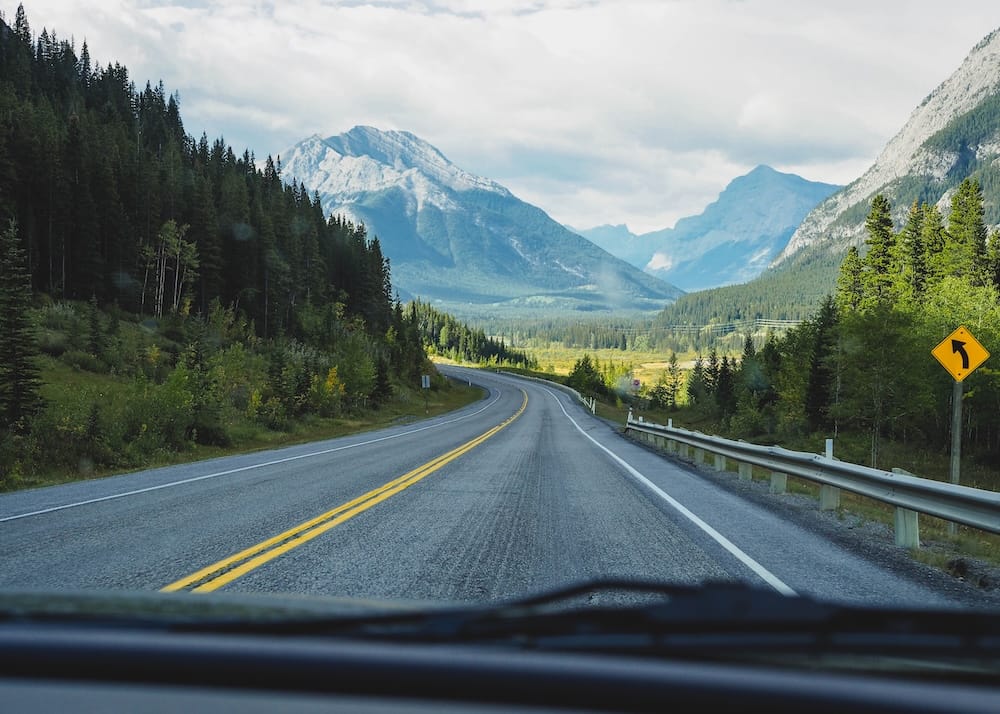
Here’s where the math flips, and it flips hard. Everything above is about having a car inside Banff, where transit and walking already cover most of what a visitor wants to do. Step outside the park boundary, and the calculation changes completely.
Kananaskis Country sits about 45 minutes to an hour from Banff by car, close enough to feel like an afterthought if you’re already driving. Without one, it isn’t an afterthought at all — a taxi-and-bus combination to get there runs somewhere in the neighborhood of $75 to $130, which turns a casual detour into a small production. If you’d rather skip the driving and the taxi math both, a guided day tour is the more realistic middle ground — you can browse current Kananaskis tour options that include transport from Banff or Canmore. Even having a car doesn’t fully close the loop, either: Kananaskis requires its own separate Conservation Pass, $15 for the day or $90 for the year, on top of whatever you’re already carrying for Banff National Park. Kootenay National Park makes the same point from a different angle. The scenic drive through it along the Banff-Windermere Highway runs about ninety minutes end to end, on a road that’s been carrying cars across that stretch of the Rockies since 1923, and there’s no shuttle system quietly filling the gap for it the way there is for Lake Louise. String Kootenay, Kananaskis, or anywhere else within reach into your trip, and a car isn’t the flexible option among several reasonable ones. It’s the only one.
That’s also where an annual Discovery Pass starts to make sense in a way it doesn’t for a Banff-only visitor. It currently runs $83.50 for an adult and $167.50 for a family of up to seven traveling in one vehicle, and it covers every national park in the country for a full year, not just Banff — you can order the current Discovery Pass directly through Parks Canada if the multi-park math works out for your trip. For someone spending a few days in town, that math never quite works out. For someone stringing Banff together with Kootenay, or Yoho, or anywhere else within reach, it starts paying for itself surprisingly fast — a genuine reward for exactly the kind of trip a car makes possible and a shuttle network was never built to support.
A Week That Only Worked Because We Had a Car
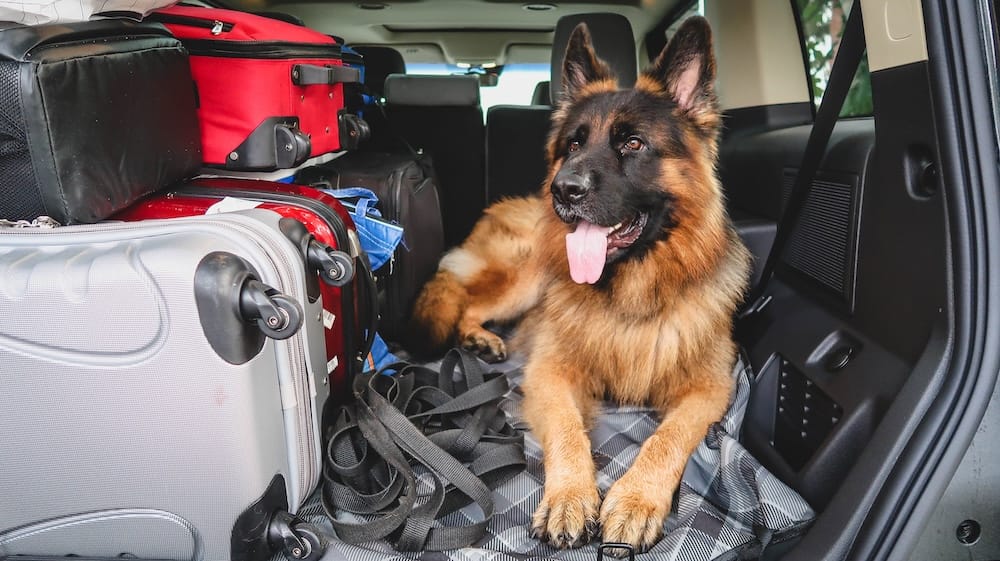
I’ve done a version of this trip myself, and it leaned entirely on having a car. Audrey and I took an older road trip with her parents and our dog Togo, driving our own vehicle all the way from Ontario to Alberta and British Columbia. On our first morning in the region, before we’d even reached Banff, we bought a Discovery Pass at the counter — good for a year, and specifically because it would get us into a whole run of parks rather than just the one. That single purchase told us something about the week before it had even started: we weren’t planning to stay in one place.
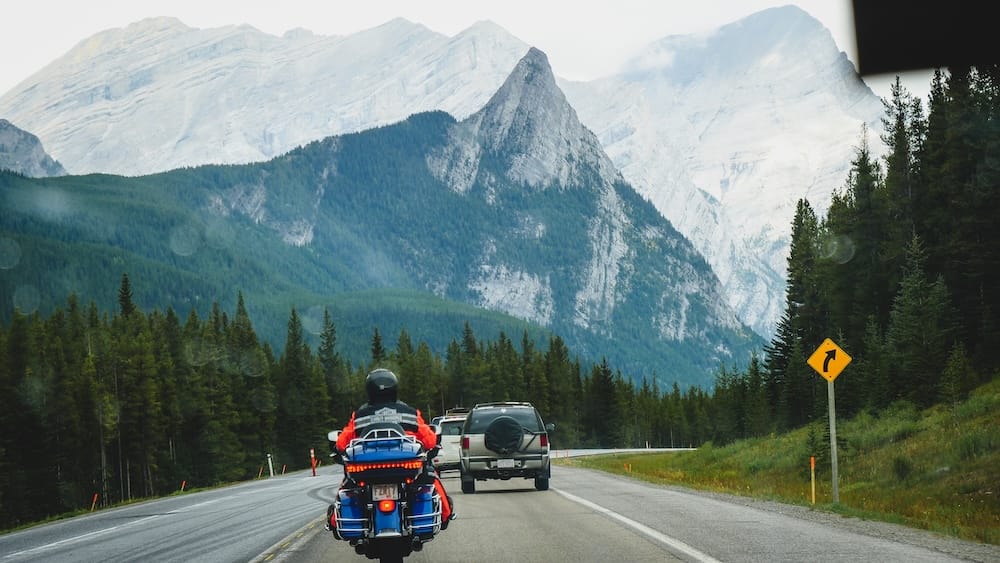
We didn’t. Over the days that followed, the car took us through Banff town and out to Cascade Ponds and Lake Minnewanka, then south into Kootenay National Park and the Paint Pots, then to Moraine Lake and Lake Louise, then further into East Kootenay and Windermere, past the Continental Divide, and eventually into Kananaskis Country. None of that is a trip a bus route or a booked tour would have strung together for us. It’s the clearest, most honest example I have of what a car buys you in this part of the world: not convenience inside Banff, but a whole region opened up at once.
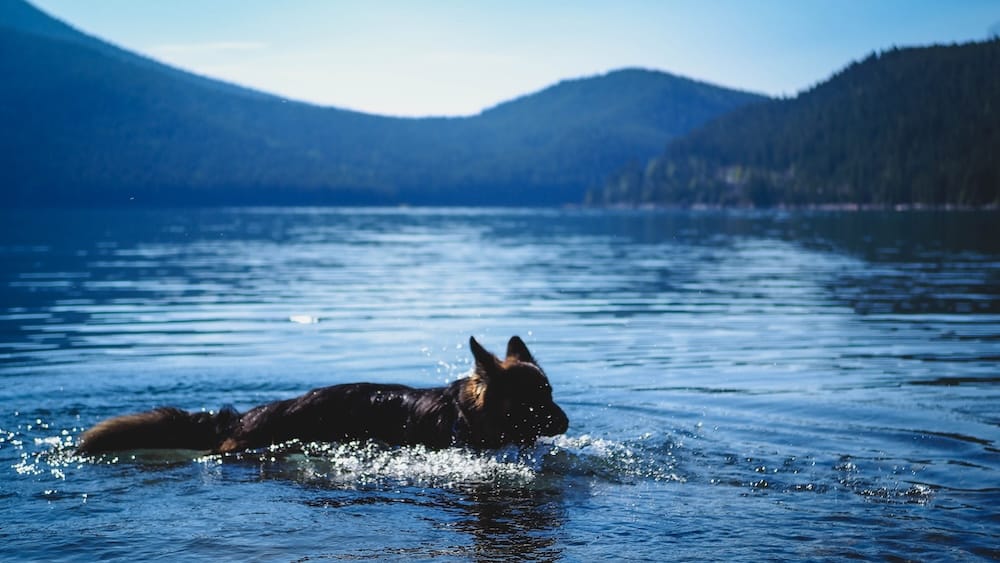
Togo was along for every mile of it, and that mattered more than I expected going in. He got to splash in the water at nearly every stop, walked at Cascade Ponds and Canmore’s Policeman’s Creek and half a dozen other places along the way, and by the time we reached Canmore on that first day he was clearly loving the freedom and fresh air after days cooped up in the car. We forgot his collar at some point, and my in-laws spent an afternoon managing a large, collarless German Shepherd, which is its own small chapter of the trip. None of that is available to a version of this trip built around shuttles and booked tours. A dog simply isn’t part of that equation.
Traveling with a Dog (or Just a Lot of Gear)
It’s worth being precise here, because the real answer is narrower than “bring a car if you have a pet.” Roam Transit, Banff’s local bus network, does allow pets, provided they stay in a carrier for the whole ride, which is genuinely workable for a small dog or a cat. It’s not workable for something Togo’s size, a full-grown German Shepherd who was never going anywhere near a carrier, and the Calgary shuttle operators that get most visitors into Banff in the first place don’t allow pets at all beyond certified service animals.
So the real dividing line isn’t pets in general — it’s medium-to-large pets specifically, and the arrival leg from Calgary most of all. Bring a small animal that’s genuinely happy in a carrier, and the car-free version of this trip still works fine. Bring a dog built more like Togo, or enough gear that a carrier-and-transfer approach stops being realistic, and a car goes from nice-to-have to essential.
What a Car Doesn’t Change: Inside Banff Town
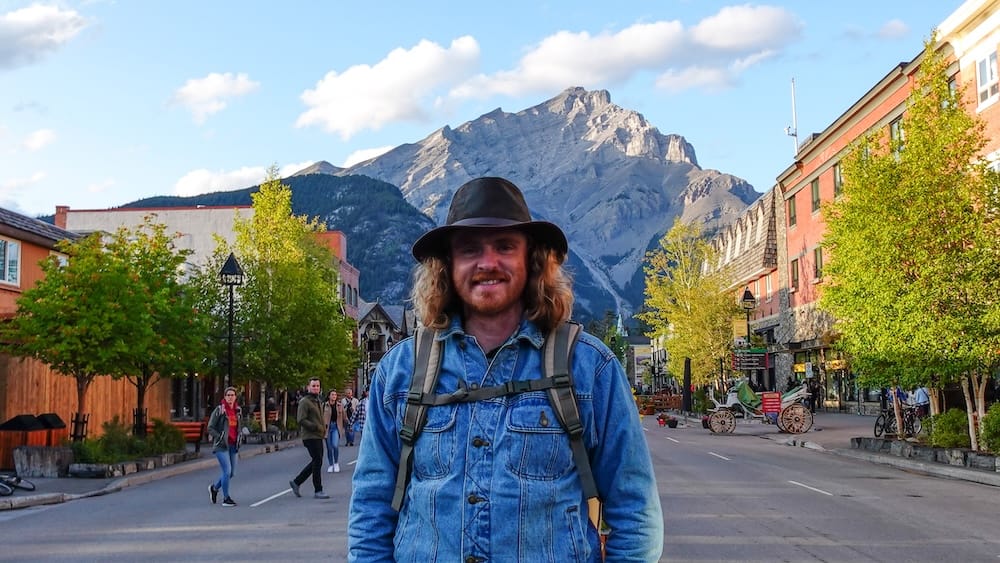
Here’s the part that surprised me most once I set these two trips side by side. On our first morning in Banff during the road trip, after buying the Discovery Pass, we drove into town, parked the car, and spent the rest of the day walking the Bow River Trail on foot. That’s the entire in-town strategy for a family with a fully loaded vehicle sitting in a parking lot the whole time.
Set that next to a completely different trip Audrey and I took years later, one built without a car at all, where a whole day disappeared into walking between museums, a canoe club, and the base of the Gondola without either of us mentioning a car once. Two trips, one with a vehicle parked nearby and one without a vehicle anywhere in the picture, and the in-town behavior looks nearly identical. Park it or don’t have it — either way, you’re walking through Banff on foot once you’re actually there.
That’s not a coincidence, and it’s not really about either trip. It’s about the town itself. Banff’s core is small enough, and its downtown parking expensive enough by design, that a car parked nearby doesn’t meaningfully change how the day unfolds. The car earns its cost getting you somewhere else. Inside Banff proper, it mostly just sits there.
What a Car Can’t Get You Anymore: Moraine Lake
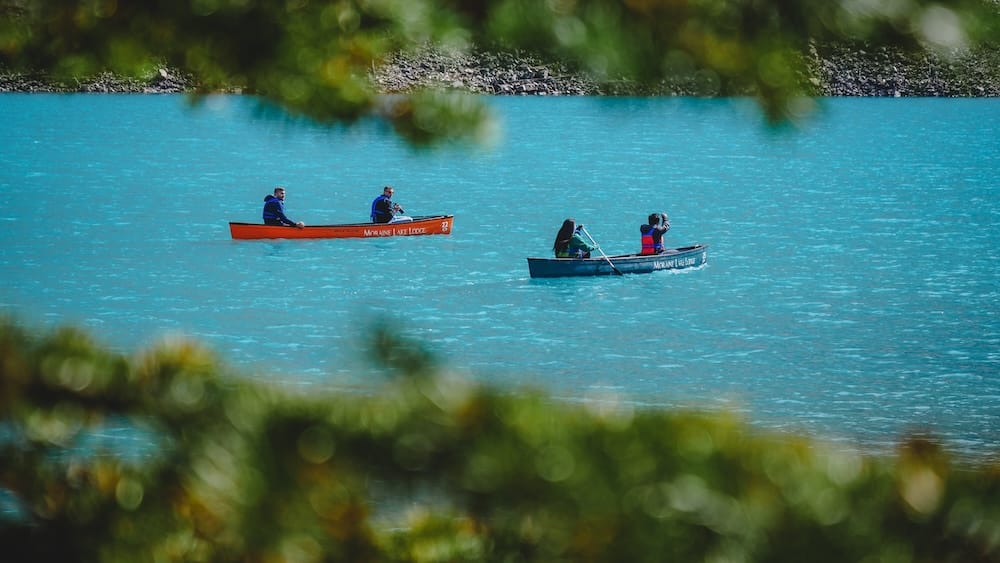
On that same road trip, we drove ourselves straight to Moraine Lake as part of the same day that took us through Kootenay National Park and the Paint Pots. At the time, that was simply how you got there — you drove up, you parked, you walked down to the water. This was 2018, and I want to be clear that it isn’t how it works anymore, for anyone.
Moraine Lake Road has been closed to private vehicles since 2023, with a narrow exception for vehicles carrying a valid accessibility permit. Whether you’re driving a rental car or flew in with nothing but a backpack, the road to Moraine Lake looks exactly the same to both of you now: closed, unless you’ve booked a seat on the shuttle system, or a licensed tour that holds its own permit for the road — you can compare current Moraine Lake tour options that handle that access for you either way. It’s the cleanest example in this whole comparison of a car simply not mattering, at a destination where it used to matter enormously. I got to see it the old way once. Nobody gets to see it that way now.
Matching the Choice to the Trip
Put all of this together and the decision stops being about Banff in general and starts being about what your specific trip needs.
| With a car | Without a car | |
|---|---|---|
| Reach beyond Banff | Real advantage — Kootenay, Kananaskis, and anywhere else within driving range become possible | Limited to what shuttles, buses, and booked tours can reach |
| Pets and gear | Handles a medium-to-large dog or a car’s worth of equipment without friction | Fine for a small pet in a carrier; genuinely difficult beyond that |
| Inside Banff townsite | Little to no advantage — you’ll likely park and walk regardless | Walking and Roam Transit already cover the town core well |
| Cost | Rental, gas, parking, and passes add up quickly, especially in peak season | Shuttle and transit fares are lower, though not free |
| Moraine Lake and similar closures | No advantage — the road is closed to everyone without a permit | Identical access via the shuttle system |
If your trip stays inside Banff and Lake Louise, walking and transit already do the job, and a car mostly buys you a parking bill. If your plans reach into Kootenay, Kananaskis, or anywhere the shuttle network was never built to serve, or if you’re traveling with a dog too big for a carrier, a car stops being optional and starts being most of the trip. I’ve done both, and I wouldn’t trade either one for the other — I’d just pick the one that actually matches where I’m planning to go.
Frequently Asked Questions
Do you need a car to visit Banff?
Not for the town itself. Walking and Roam Transit already cover Banff’s core well. Where a car actually earns its cost is reach beyond Banff’s boundary, into places like Kootenay National Park or Kananaskis Country that no shuttle system serves.
How much does it cost to have a car in Banff?
A rental out of Calgary International Airport typically runs $50 to $120 a day, plus gas and a park pass. Parking adds to that: downtown Banff charges $12 an hour in peak season, and a new $17.50 daily fee now applies at the Gondola and Upper Hot Springs area, both specifically meant to reduce driving in town.
Is it worth renting a car for Kootenay National Park or Kananaskis Country?
For those two destinations specifically, yes. Kananaskis is about 45 minutes to an hour from Banff by car but requires its own separate Conservation Pass, and reaching it without a car costs roughly $75 to $130 in taxi and bus fares. Kootenay’s scenic drive runs about ninety minutes with no shuttle equivalent at all. Neither destination has a realistic car-free path.
Can you visit Moraine Lake by car?
Not anymore. Moraine Lake Road has been closed to private vehicles since 2023, with a narrow exception for accessibility permit holders. I drove there myself back in 2018, but that access no longer exists for anyone, car or not — everyone now needs the shuttle system.
Is it easier to travel with a dog if you have a car?
For a small pet in a carrier, not necessarily — Roam Transit allows carried pets at no charge. For a larger dog, a car becomes close to essential. The Calgary shuttle operators only allow certified service animals, and a full-grown dog isn’t realistically going to manage a carrier for the whole ride.
Does having a car make it easier to get around inside Banff town?
Surprisingly, not much. On a road trip where we had a car the entire time, our first move in Banff was to park it and walk the Bow River Trail on foot, which looks nearly identical to how a separate, fully car-free trip moved through town. The car’s advantage shows up leaving Banff, not inside it.
This article is also available in Spanish. [Leé la versión en castellano: Banff con auto vs sin auto]
This article contains affiliate links. If you book through one of these links, I may earn a commission at no extra cost to you.