
Banff has a funny way of making a full trip feel unfinished.
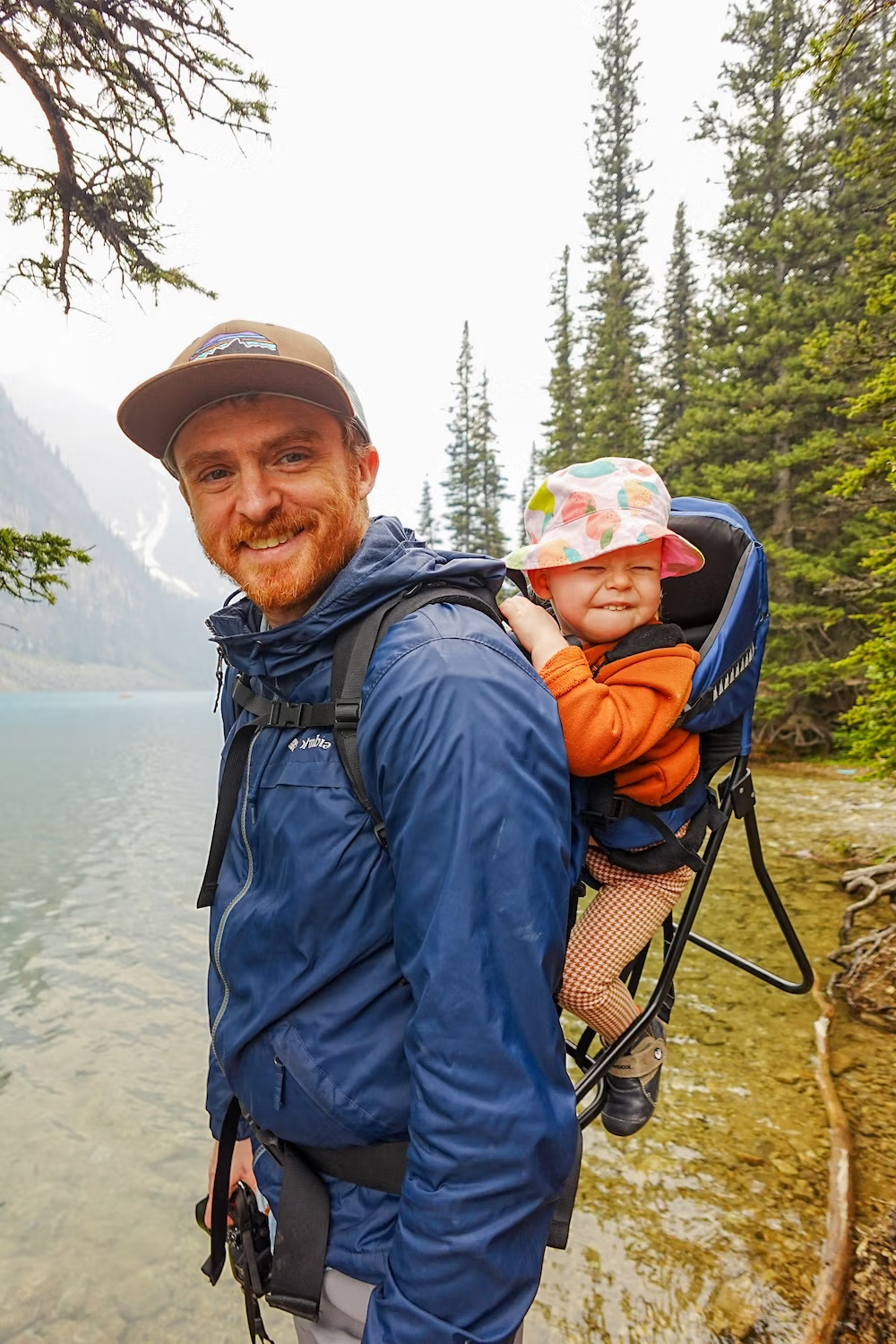
Audrey and I have visited the area in several very different ways now. We’ve explored Banff town on foot, walked along the Bow River, visited museums, eaten our way around town, ridden the Gondola, paddled in a giant canoe, gone on a Western wagon-and-cookout experience, visited Lake Louise and Moraine Lake, driven through the Rockies and spent a long day travelling the Icefields Parkway to the Columbia Icefield. More recently, we returned with our daughter Aurelia and Audrey’s father, which gave us a completely different perspective on pacing, rest stops and what happens when not everybody in the group moves at the same speed.
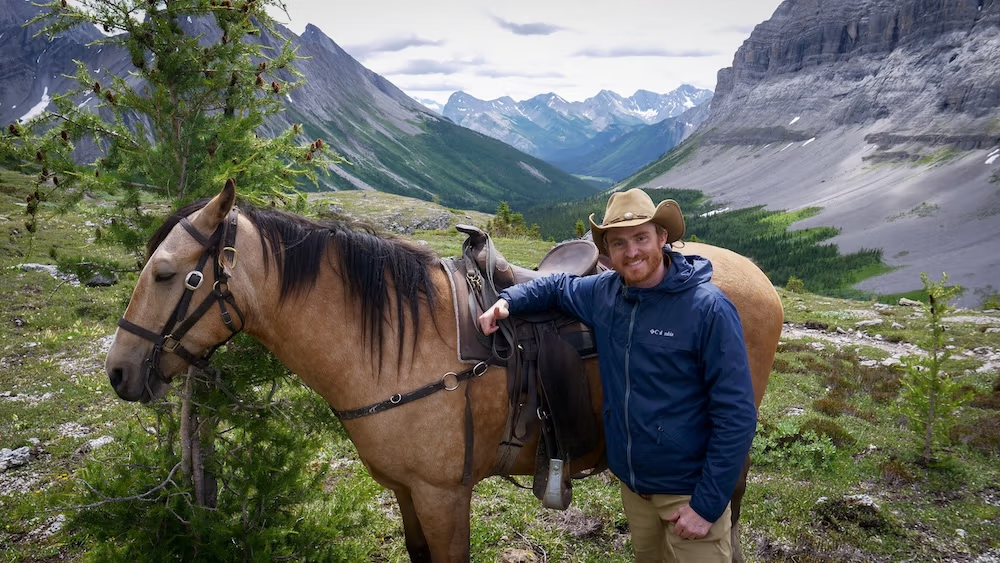
Then I went in the opposite direction and disappeared into the Banff backcountry for six days on horseback.
That range has changed the way I think about planning Banff. The big mistake is treating the national park like one enormous list of famous places you are supposed to complete. Banff is too spread out for that, some of its headline attractions now have very specific access systems, mountain weather can blow up the neatest itinerary, and the difference between a great day and an exhausting one is often how much you tried to cram into it.
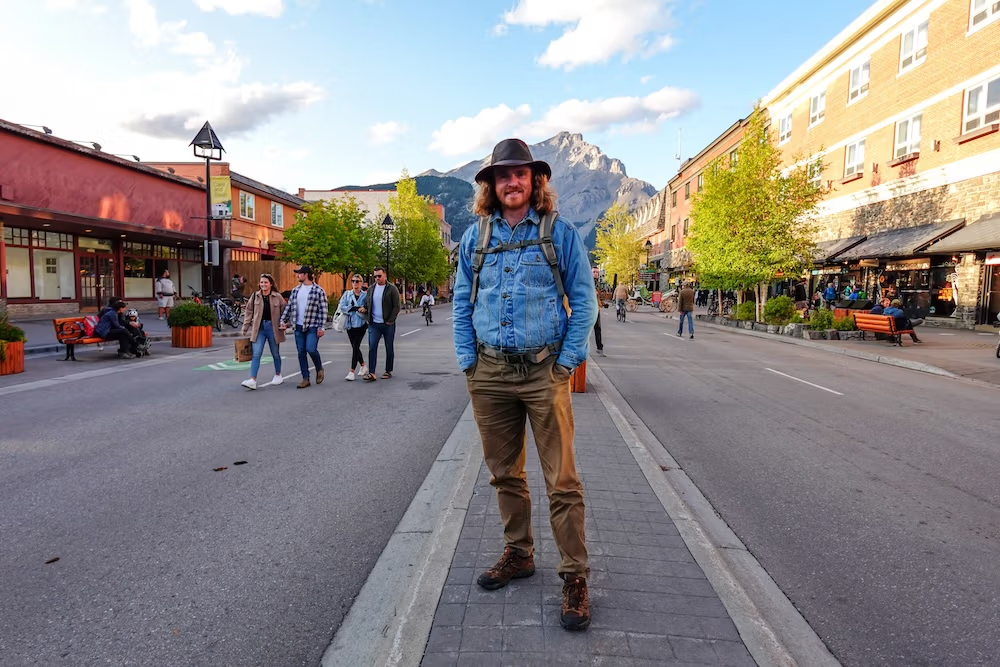
This guide is designed to help you sort through all of that. I’ll cover the Banff experiences I would actually think about first, where paying for an activity can make a meaningful difference, which places require more logistical effort, where to stay, how many days you need, whether a car helps and what deserves advance planning.
The goal is not to “finish” Banff. We have tried fairly hard, and Banff keeps winning.
Banff at a Glance: Understand the Destination Before You Plan It
The first thing to understand is that Banff is not one compact collection of attractions surrounding Banff Avenue.
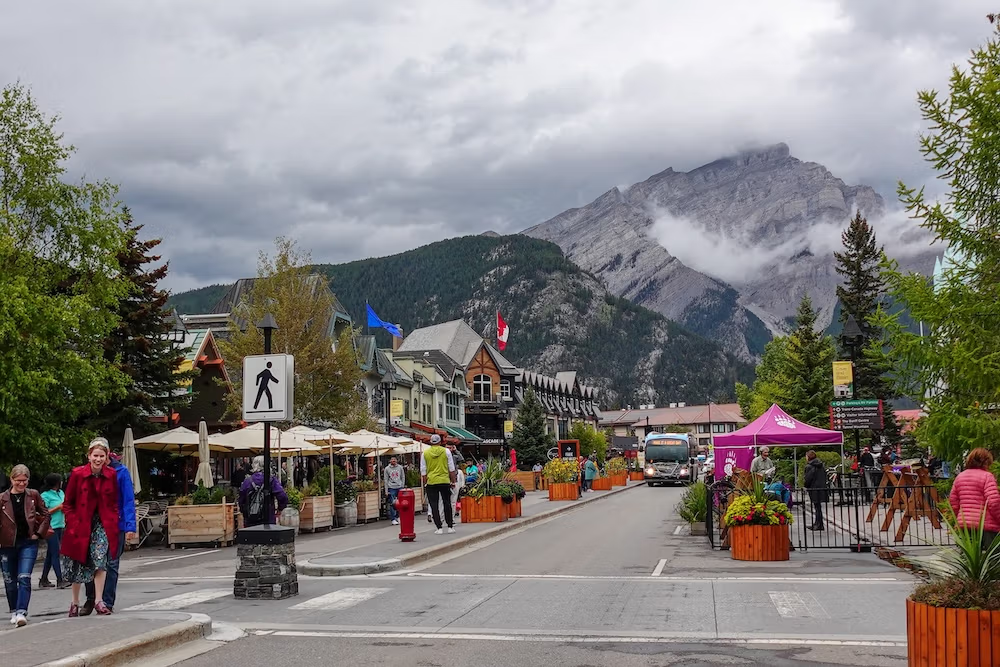
Banff town itself is compact. Once you are there, a surprising amount can be done on foot. You have restaurants, shops, museums, the Bow River, nearby trails and local transit, and it is entirely possible to spend a satisfying chunk of a day without getting back into a vehicle.
The wider national park is another story. Lake Louise is roughly 55 kilometres west of Banff town. Moraine Lake has its own access system. Lake Minnewanka sits in another direction. The Icefields Parkway pulls you north into a completely different kind of mountain day, while Columbia Icefield is not something you casually tack onto the end of an afternoon. Once you start looking at neighbouring places such as Canmore, Yoho National Park or Kootenay National Park, you are extending into separate destinations even though they can fit naturally into a Banff-based trip.
This sounds obvious when you look at a map, but it is where a lot of overambitious itineraries begin. A traveller sees Lake Louise, Moraine Lake, Banff Gondola, Lake Minnewanka, Bow Lake and Columbia Icefield on a list and thinks: mountains, lakes, all fairly close together. Let’s go.
The Rockies have other ideas.
You also need a valid Parks Canada pass when you are spending time in Banff National Park, whether you are sightseeing around town, stopping at viewpoints or heading deeper into the park. Current fees and pass types can change, so I would check the official Parks Canada information before your trip rather than memorizing a number from an old travel article.
More important than any individual fee is the basic planning principle: Banff rewards geographic thinking. Decide what part of the park you are tackling, understand how you will reach it, and then add experiences that fit naturally around that decision. That is a much better starting point than trying to win Banff by volume.
For a First Banff Trip, Choose Experiences Rather Than Trying to Complete a Checklist
After one of our activity-heavy Banff trips, Audrey and I reached the end of four days and felt like we had barely scratched the surface. Those had not been lazy days either. We had explored town, walked by the river, visited museums, ridden the Gondola, eaten around Banff, gone canoeing, done a Western cookout and spent a full day travelling to the Columbia Icefield.
My reaction at the end was basically that four days wasn’t enough. I wasn’t even convinced a week would be enough once you started digging into everything you could do here.
I still feel that way, but I interpret it differently now. The goal should not be to stay until you have “finished” Banff, because you won’t. The better approach is to decide which versions of Banff matter most to you.
| Banff experience | What it gives you | Time commitment | Effort | Planning friction | Cost |
|---|---|---|---|---|---|
| Lake Louise or Moraine Lake | Iconic Rockies scenery | Half day or more | Low to high depending on hiking | High | Free to premium depending on transport/tour |
| Banff town + Bow River | Easy sightseeing, food and atmosphere | A few hours to a day | Low | Low | Mostly free |
| Banff Gondola | Big mountain views without a major climb | A few hours | Low to moderate | Moderate | Premium |
| Lake Minnewanka / Cascade Ponds | Slower waterside scenery | A few hours | Low | Low to moderate | Mostly free |
| Icefields Parkway / Columbia Icefield | Major scenic-road excursion | Most of a day | Low to moderate | Moderate to high | Free to premium |
| Canoe / Western activity | Participatory Banff experience | A few hours | Low to moderate | Moderate | Paid |
| Backcountry horseback trip | Deep wilderness immersion | Hours to multiple days | Moderate to high | High | Premium |
You do not need one item from every row. A non-hiker might build a superb trip around the lakes, town, Gondola and scenic drives. A strong hiker could spend much less time in town and disappear onto trails. A family with a toddler may value activities that can bend around meals, naps and short walks. Someone returning for a second or third visit may deliberately skip the marquee sights and head deeper into the backcountry.
That is the first big Banff planning decision: what sort of trip are you actually trying to have? Once you answer that, the giant list becomes much easier to ignore.
Best Things to Do in Banff
There are far more things to do in Banff than belong in one travel guide, especially now that we have explored so many of them separately. These are the experiences I think define the destination particularly well or help show just how different one Banff trip can be from another.
Lake Louise: Give It More Than an Arrival Photo
Lake Louise is famous for a reason, but my opinion of it actually improved when we stopped treating the lakefront as the entire experience.
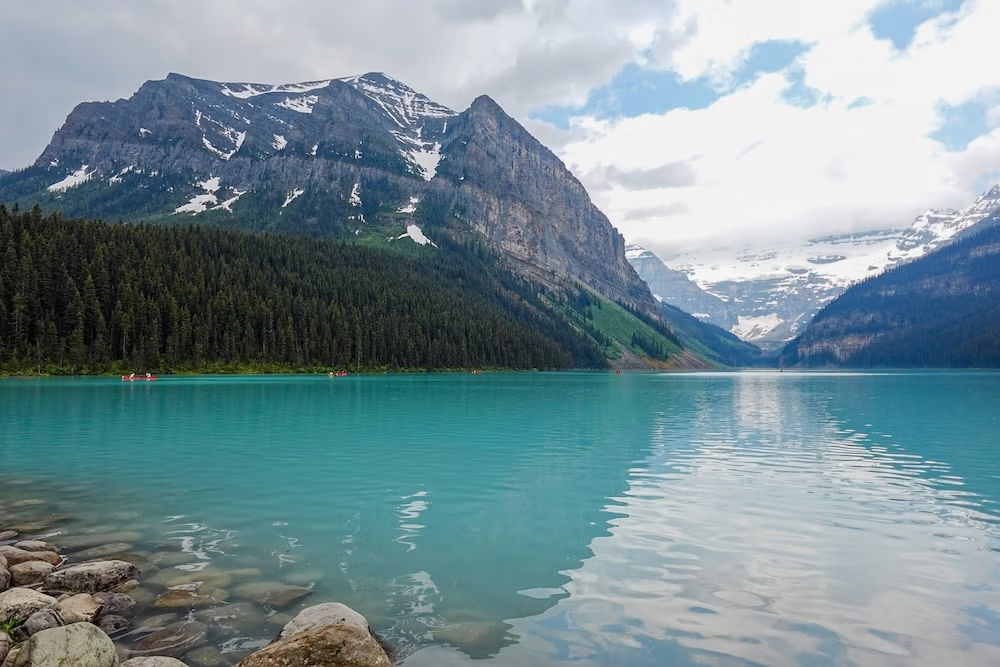
Our first impression was dominated by the obvious stuff: astonishing turquoise water, huge mountain scenery and a frankly enormous concentration of people around the shoreline. It can feel like everybody has arrived at the exact same piece of Banff to take the exact same photograph.
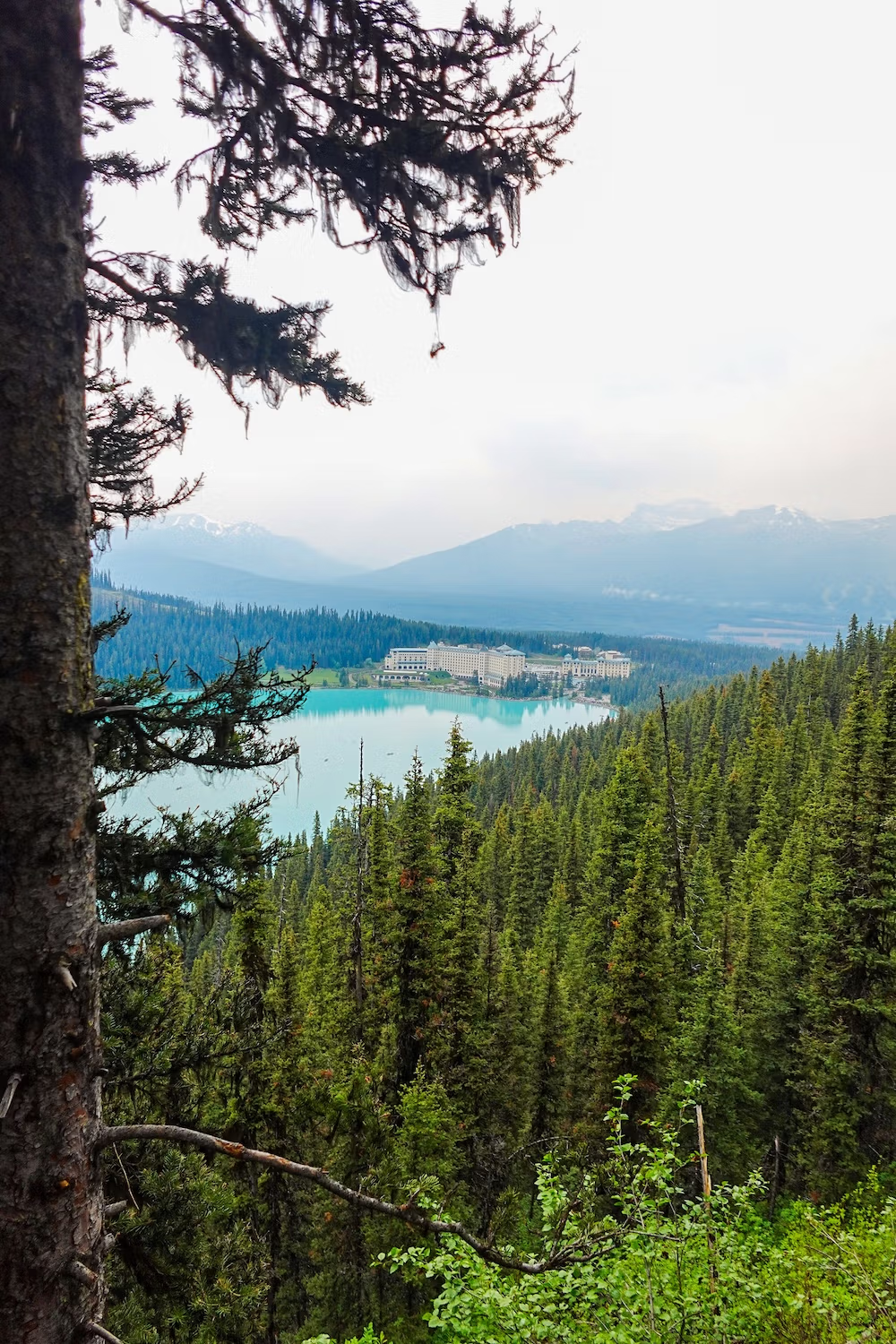
On a later visit, we hiked up to Fairview Lookout, and that changed things for me. Once we started gaining elevation and putting some distance between ourselves and the busiest section of shoreline, Lake Louise became much more interesting. The crowd thinned, we had a physical objective beyond photographing the lake, and the viewpoint gave us a completely different perspective.
That is probably my biggest Lake Louise lesson now: do not assume the first five minutes at the lake represent the whole place.
Access also requires more planning than it once did. Personal vehicles can still drive to the Lake Louise lakeshore, but relying on finding a parking space is a bad strategy. Parks Canada has reported that roughly three-quarters of vehicles attempting to reach Upper Lake Louise during the previous summer were turned away once parking filled, which is the kind of statistic that quickly cures me of any “we’ll just wing it” optimism.
There are shuttle and transit options, and those systems are now an important part of planning Lake Louise. If the lake is one of your trip priorities, treat it like one: solve the transport first, then decide whether you want a quick lakeshore experience or enough time to walk, hike or otherwise get beyond the arrival zone.
Moraine Lake: The Logistics Are Part of the Visit
Moraine Lake may be even more spectacular in person than you expect. It is also one of those Banff experiences where the logistics are no longer a side note.
Moraine Lake Road is closed to personal vehicles year-round. Ordinary visitors need an approved form of transport such as a Parks Canada shuttle, a licensed commercial operator or an eligible lodge arrangement.
That makes Moraine Lake fundamentally different from pulling over at a roadside viewpoint. For the 2026 shuttle season, Parks Canada released some seats when reservations initially opened and held the majority back until two days before departure. Systems like this can change, so I would always check the current Parks Canada Lake Louise and Moraine Lake transportation information rather than trusting an old screenshot or a blog post from several summers ago.
There is a useful upside to the shuttle system: the Lake Connector can allow shuttle users to combine Lake Louise and Moraine Lake without independently solving transportation to each one. Travellers who want a commercial alternative rather than the Parks Canada system can also check current Moraine Lake shuttle availability with Lake Louise access.
When we visited Moraine Lake on our more recent family trip, we were travelling with Aurelia and her grandfather. That made me appreciate another side of organized transport. Somebody else dealing with the movement between stops can be worth quite a lot when your group already has different walking speeds, food needs and energy levels.
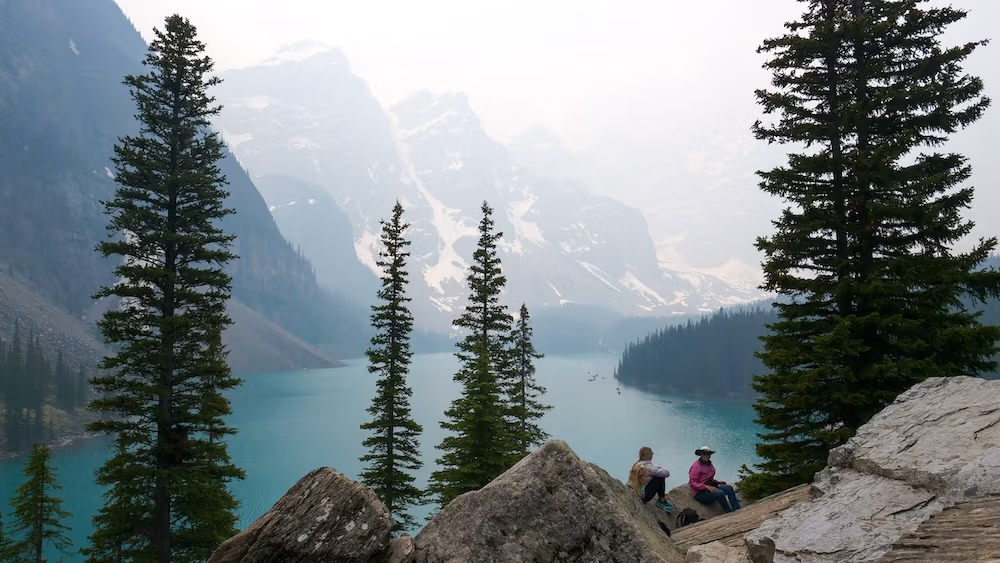
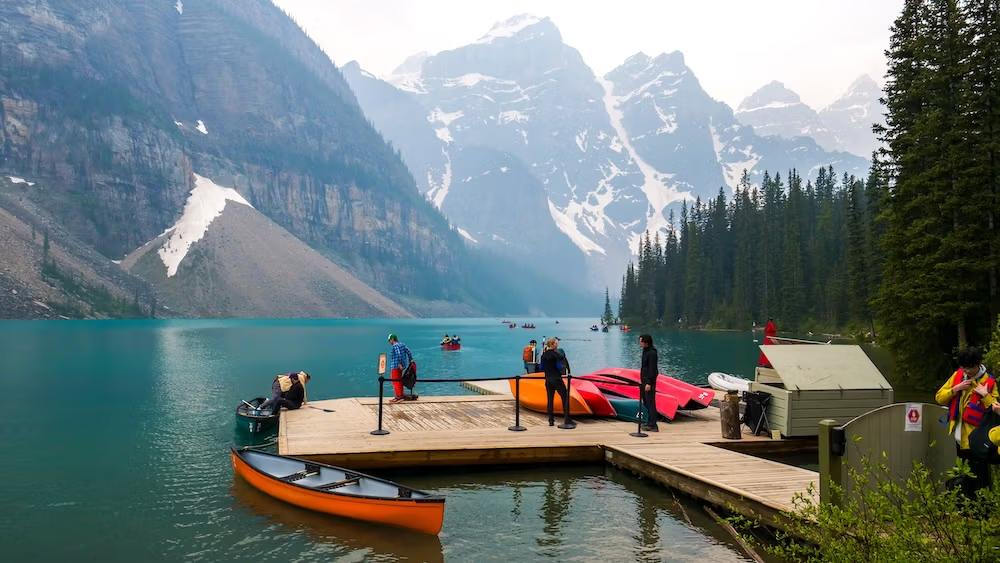
Once you are actually at Moraine Lake, the Rockpile viewpoint is the obvious classic. It gives you that elevated perspective over the water and surrounding peaks that has become one of the most recognizable Canadian Rockies views.
Just don’t approach Moraine Lake as something you will spontaneously “swing by.” The scenery feels effortless; getting there isn’t.
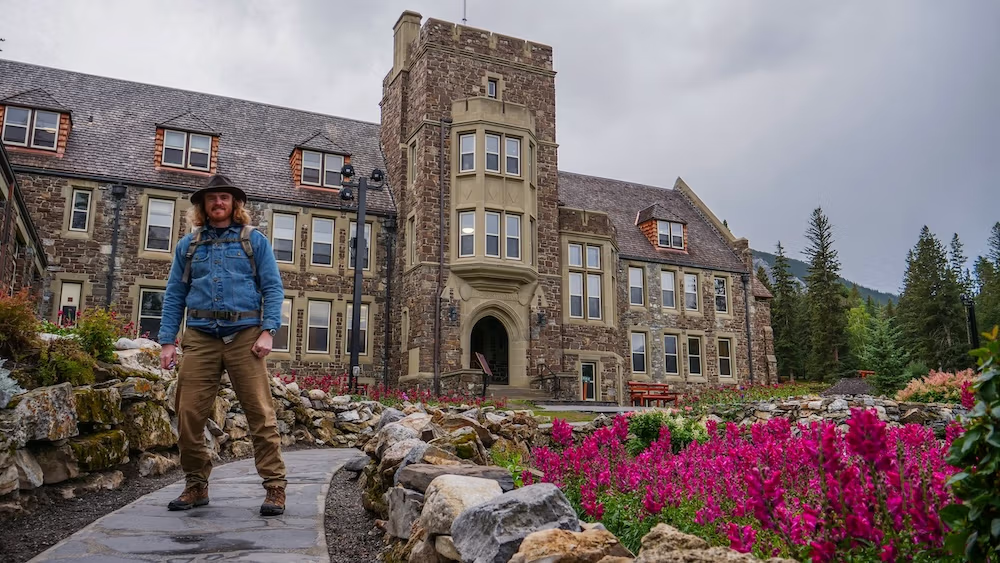
Spend Real Time in Banff Town
Banff town gets shortchanged in a lot of Rockies itineraries. People arrive, see Banff Avenue, buy something, eat dinner and mentally classify the town as infrastructure between the real mountain attractions.
We have always enjoyed it more than that.
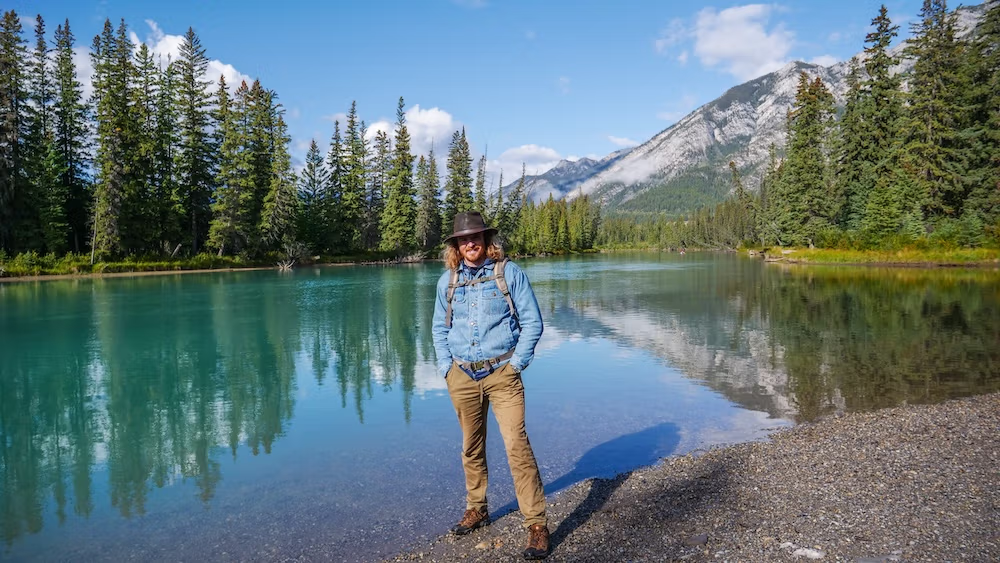
One of our favourite simple things to do is walk along the Bow River. You can wander from the centre of town toward quieter stretches of river, get mountain scenery without committing to a big hike and occasionally spot wildlife without actively hunting for it.
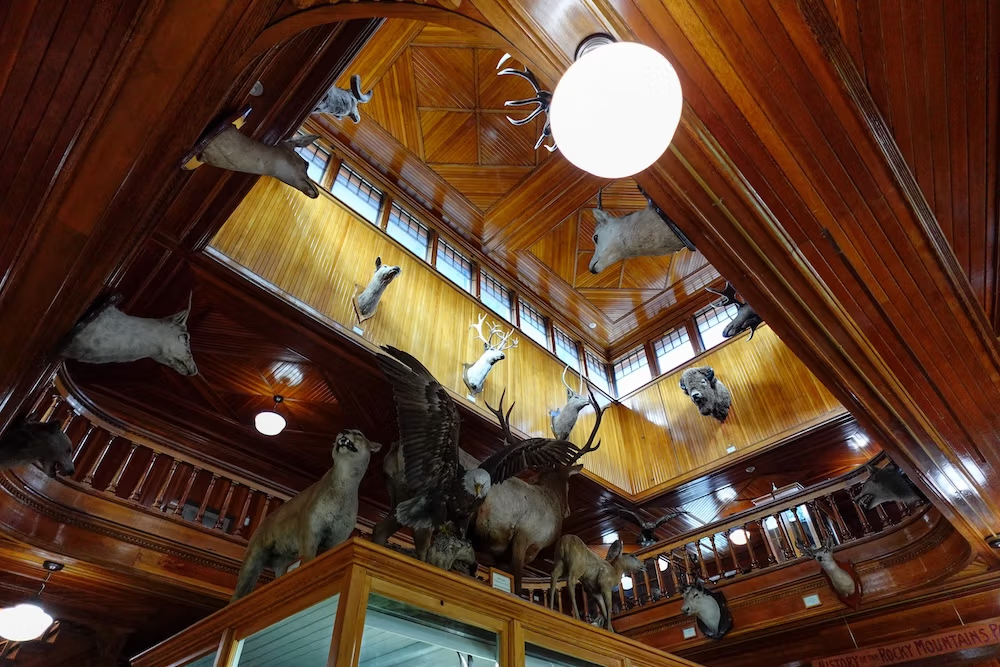
We’ve also spent time in the Cascades of Time Garden and visited several of Banff’s museums. The Banff Park Museum has the wonderful old-school natural-history feel of a collection from another era, while the Whyte Museum approaches the Rockies through regional history, art and culture. There are enough indoor options that town becomes especially useful when mountain weather decides your original plan was adorable.
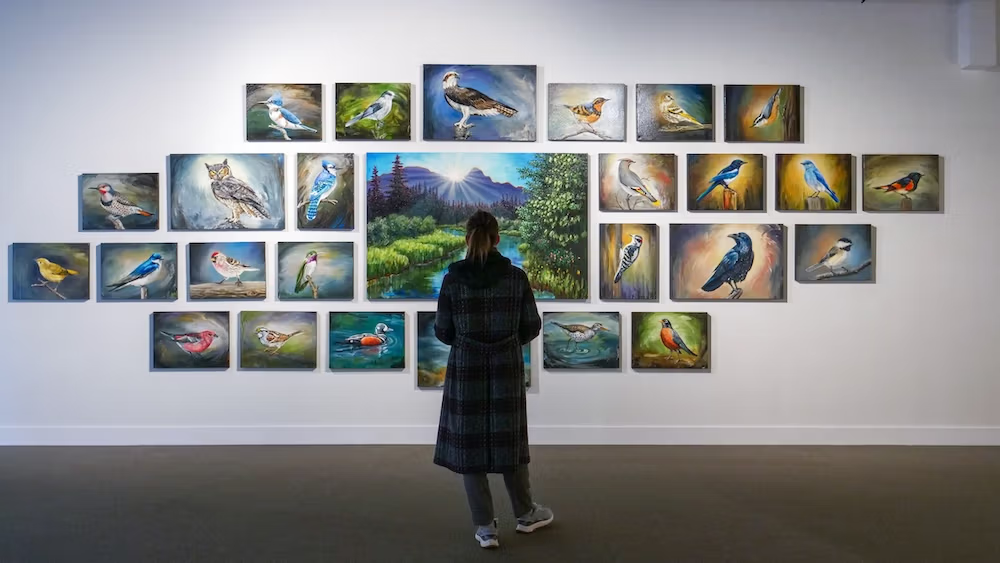
Banff itself is compact—roughly four square kilometres—and that changes how I would use it. Rather than constantly moving your car from attraction to attraction, town is a good place to park once, walk, eat, stop for coffee, visit a museum and let the day unfold.
That can sound almost too ordinary next to Lake Louise or Moraine Lake, but after several Banff trips I think that is exactly why it works. Not every hour needs to be the most epic hour of your life.
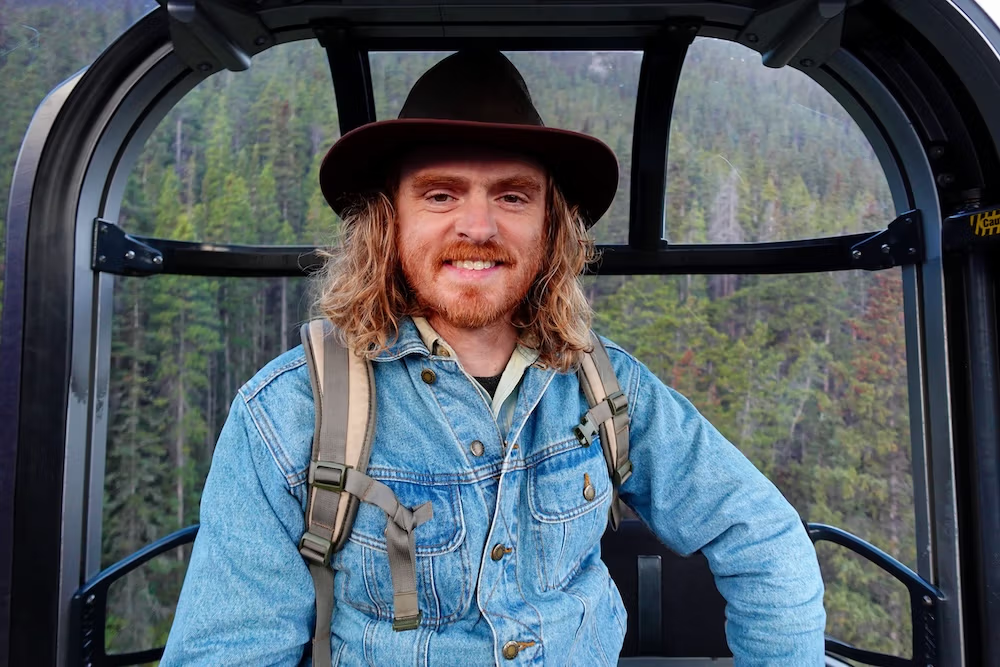
Ride the Banff Gondola for Big Views Without a Big Hike
The Banff Gondola is one of the easiest ways to get a huge mountain panorama without earning it through several hours of uphill hiking. I realize “earning it” is exactly why some people would rather hike, but I am perfectly comfortable occasionally outsourcing gravity.
The Gondola takes you up Sulphur Mountain, where the summit experience is much larger than simply stepping out of a cable car, taking a photograph and heading back down. There are viewing areas, indoor facilities and a long boardwalk leading toward Sanson’s Peak and the historic Cosmic Ray Station.
That boardwalk matters when judging the physical effort. The summit may be reached by Gondola, but the complete walk is not step-free. There are 368 shallow stairs each way along the boardwalk, and that portion is not wheelchair accessible. Strollers are also not recommended.
So I would describe the Gondola as a low-climbing mountain experience, rather than a zero-effort one.
Parking at the base is limited, and using transit from town can remove unnecessary friction. Advance ticket purchase is also sensible, particularly during busy periods, and travellers who already know the Gondola is one of their priorities can check current Banff Gondola ticket availability.
Our visit was memorable because the views kept expanding as we went higher. Banff town suddenly looked tiny below us, the Bow Valley stretched out in both directions and the surrounding mountain landscape started to make much more geographic sense.
That is where I think the Gondola earns its place in a first-trip guide. It is not just another viewpoint; it gives you the elevated overview of the destination that you cannot get while standing between buildings on Banff Avenue.
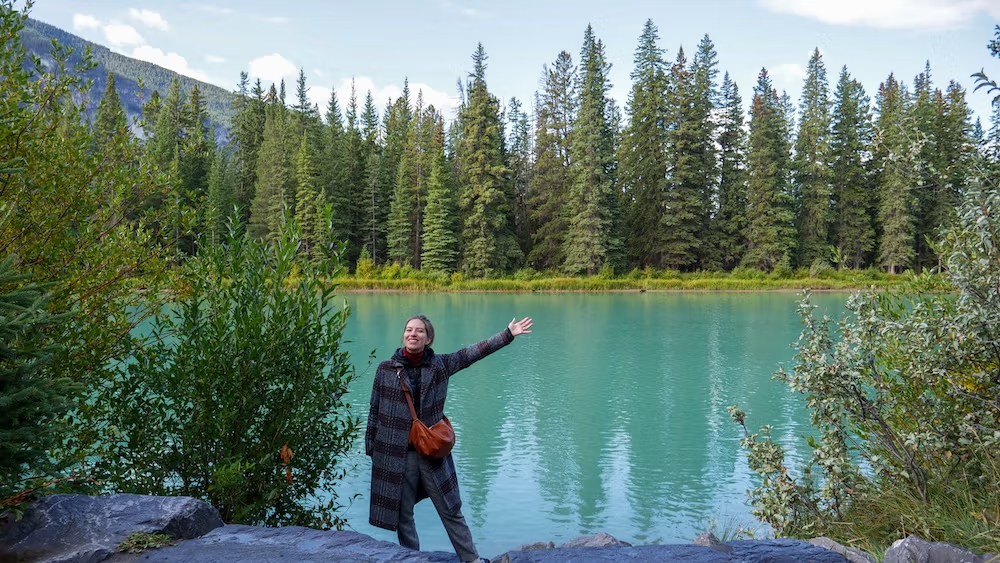
Walk Along the Bow River and Visit Bow Falls Without Spending Much
One reason Banff can become expensive is that there are so many tempting paid activities. One reason it doesn’t have to become expensive is that the mountains stubbornly refuse to charge admission every time you look at them.
The Bow River is one of the easiest places to slow the trip down. We’ve walked along the river from town, crossed bridges, followed easy stretches of trail and watched the landscape change without having to organize transportation, join a tour or stare at a reservation screen.
Bow Falls is another straightforward addition to town sightseeing. It isn’t the sort of waterfall I would build an entire Banff trip around, but it fits naturally with the river, Banff Springs area and a lower-key sightseeing day.
These places also provide something I increasingly value on mountain trips: slack. If your previous day involved a very early lake shuttle or ten hours on the Icefields Parkway, a river walk can be exactly what you need. If the clouds are swallowing every mountain summit, you haven’t burned a premium ticket. If everyone in the family is moving slowly, you can move slowly.
Simple experiences are not necessarily filler. Sometimes they are what stops a trip from becoming work.
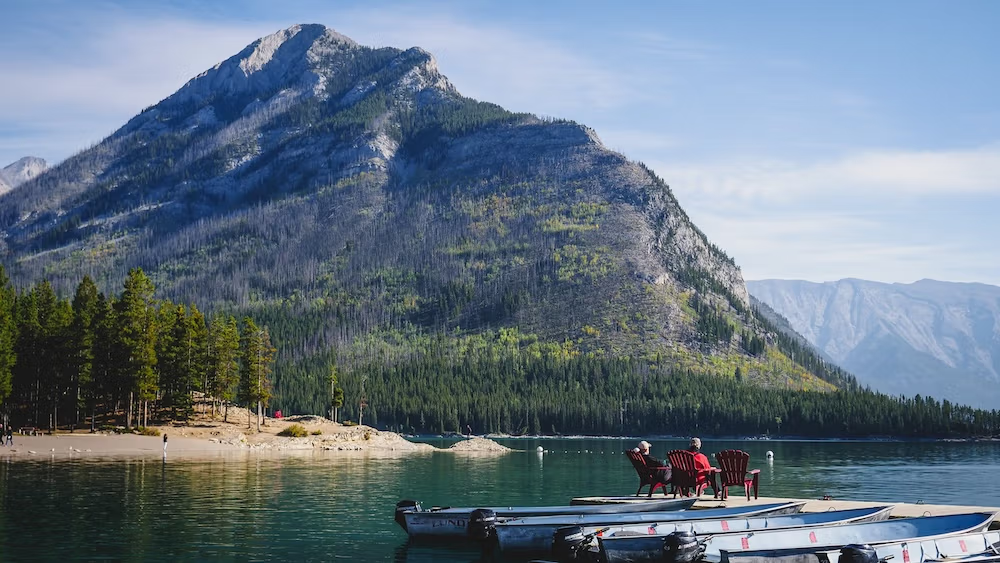
Lake Minnewanka and Cascade Ponds Offer a Slower Side of Banff
Our older family road trip through the Canadian Rockies included both Cascade Ponds and Lake Minnewanka, and they felt very different from the headline lake experiences.
Cascade Ponds was smaller and gentler. During our visit, the water was calm, ducks were swimming around and relatively few people were there. I would never promise those crowd conditions today—that was simply what we experienced—but the character of the stop was much quieter than the immediate intensity of Lake Louise.
Lake Minnewanka felt much larger. We visited with family and our German Shepherd, Togo, who was far more interested in splashing around than contemplating the grandeur of the Canadian Rockies. Fair enough.
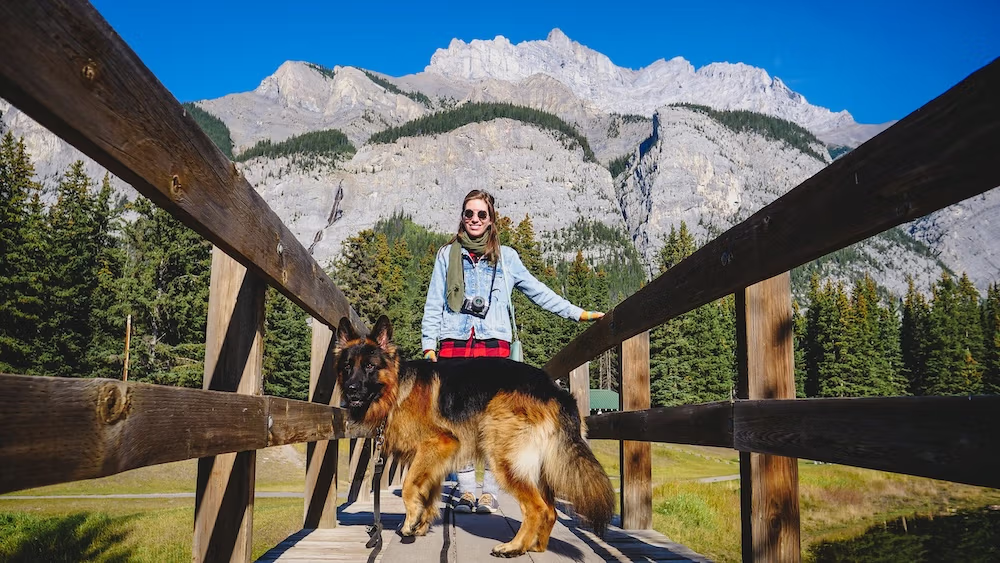
Today there are more ways to structure this area without automatically driving yourself everywhere. Seasonal Roam transit connects downtown Banff with Lake Minnewanka and other stops in the loop, including Cascade Ponds, and the ride from Banff to Lake Minnewanka is roughly 25 minutes.
That makes this area useful when you want a scenic Banff outing without building the entire day around one highly controlled reservation.
Lake Minnewanka also has considerably more potential depth than we personally used on that particular trip. Current boat and paddling options exist, as do walking possibilities, but our own experience was much simpler: family, water, mountain scenery and a road-trip stop that did not feel like an operation.
There is real value in that.
Make the Icefields Parkway and Columbia Icefield One of Your Big Days
The Icefields Parkway is where a Banff trip can suddenly expand in scale.
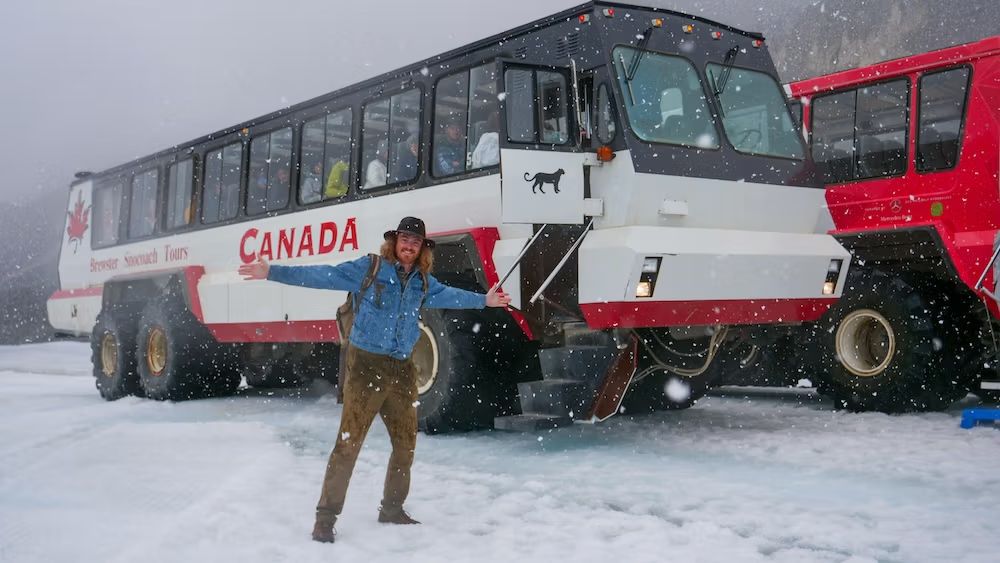
Audrey and I travelled north from Banff toward the Columbia Icefield on a full-day excursion, stopping at places including Bow Lake and other viewpoints before eventually reaching Athabasca Glacier. The road itself is part of the experience. Lakes, glaciers, mountains and vast stretches of scenery keep interrupting the journey, which is exactly why the day becomes so long—you keep wanting to stop.
At Columbia Icefield, we did the Ice Explorer experience and went onto Athabasca Glacier. The current Columbia Icefield Adventure takes roughly 2.5 to three hours from the Glacier Discovery Centre once you combine the Ice Explorer, time on the glacier and the Skywalk.
That is before accounting for the journey from Banff, so this is not something I would wedge between Lake Louise and a dinner reservation. Give it the day.
If stepping onto the glacier and doing the Skywalk are important parts of that day, you can check current Ice Explorer and Columbia Icefield Skywalk ticket availability before building the rest of the drive around it.
Our weather also provided a useful lesson in how quickly mountain conditions can turn. We had snow, ice pellets, fog, rain, sunshine and painfully cold hands all enter the conversation. I wouldn’t claim that your trip will resemble ours, but I would absolutely plan as though mountain weather can behave badly. Because it can.
Geographically, it is worth keeping the terminology clean as well. Columbia Icefield belongs to the broader Icefields Parkway and Banff–Jasper corridor. It makes complete sense as a Banff-based excursion, but that does not mean everything you see during the day is “in Banff.”
If you have enough time for one substantial scenic-road day, this is one of the obvious candidates. Just respect the scale.
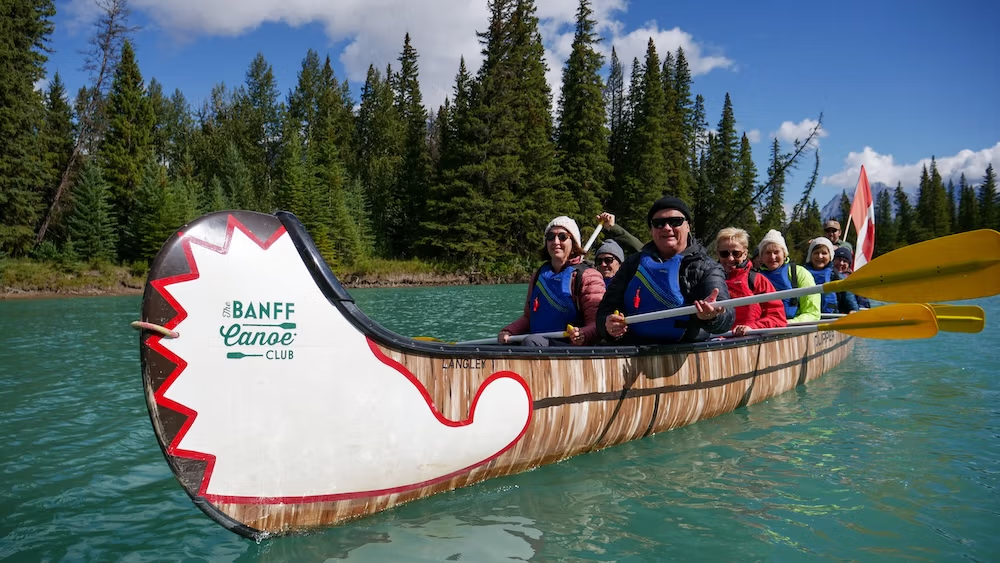
Try a Water or Western Experience if You Want to Do More Than Look at Scenery
There comes a point on a Rockies trip when you realize you have spent a remarkable amount of time standing beside water saying, “Wow.” To be clear, I enjoy this, but Banff becomes more memorable when you occasionally participate in the landscape rather than merely observe it.
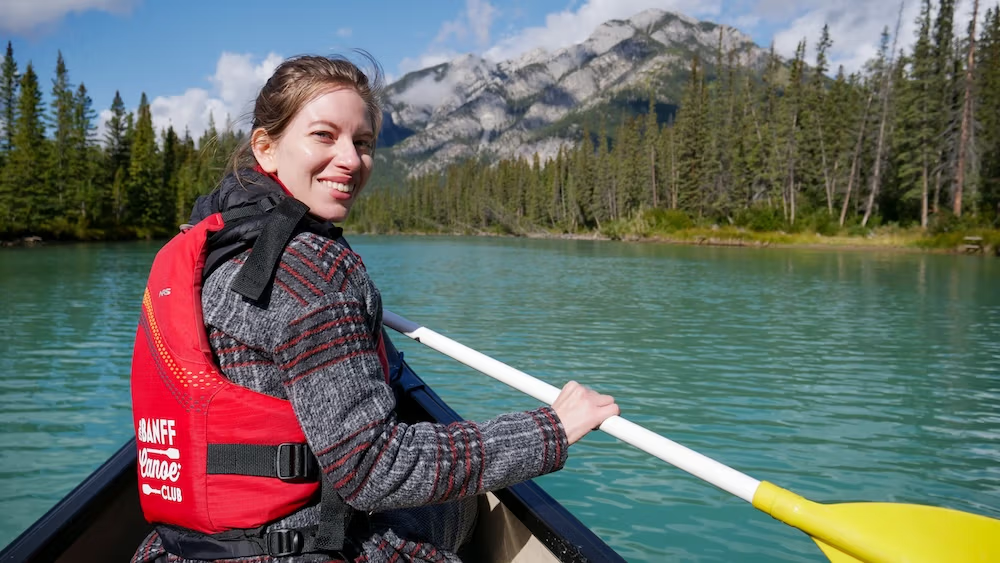
Audrey and I joined a Big Canoe trip on the Bow River. It was a guided shared-canoe experience rather than the two of us heading off independently, which made it accessible without requiring us to pretend we had suddenly become expert paddlers.
A current version of the guided Bow River experience is still bookable, so if paddling appeals more than another viewpoint stop, you can check current Big Canoe River Explorer departures. Our own trip was sponsored when we experienced it, and current details should be judged from the live listing rather than assumed to be identical to what we did.
We’ve also done a covered-wagon ride paired with a Western cookout. The wagon travelled through the Bow River area before reaching the cookout setting, where we tried roping and had a proper Western-style meal.
That experience was sponsored too, so I would not pretend it was an anonymous purchase we stumbled across and independently paid for. But we genuinely experienced it, and both activities showed us a side of Banff that was less passive than another viewpoint stop.
Current activity products can change, so I would choose based on what is actually being offered for your dates rather than trying to reproduce our historical bookings exactly.
The bigger planning question is whether you want one activity in the trip where doing something is the point. If your itinerary already has several lakes, a Gondola and a scenic-road day, paddling, horseback riding or another participatory experience can add more variety than simply adding lake number seven.
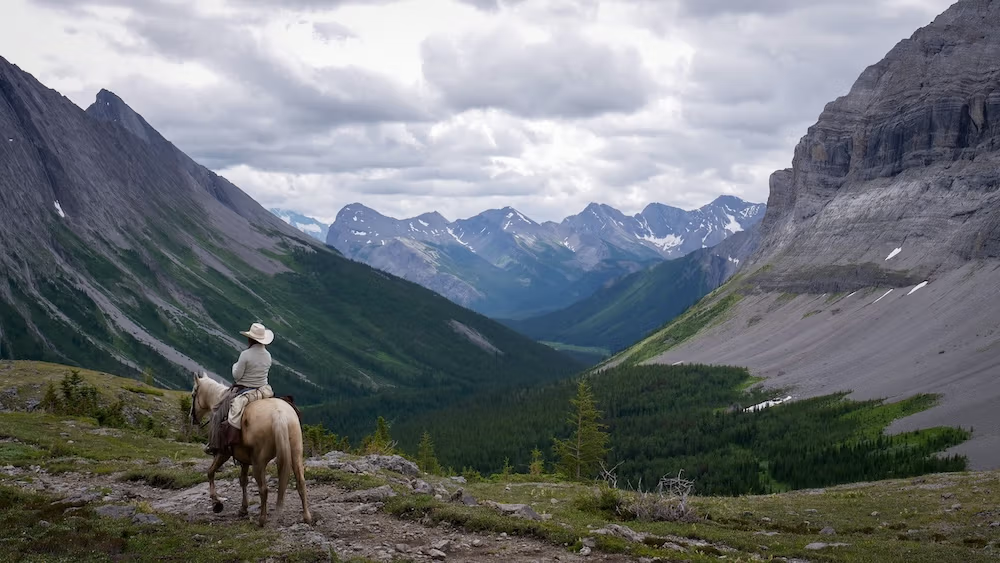
Horseback Riding Can Take Banff From an Activity to a Full Wilderness Trip
This was the Banff experience that changed my sense of the park’s depth the most.
I spent six days and five nights travelling through the Banff backcountry on horseback. Audrey did not come on this trip; this one was mine.
My horse was Hollywood, who had enough personality to ensure that riding never felt like sitting on a scenic conveyor belt. We rode through forests, creeks, valleys and mountain terrain, stayed at Sundance Lodge and Halfway Lodge, climbed into high alpine landscapes around Allenby Pass and spent another day hiking toward Lake Matthias while the horses rested.
By the end, I was sore, tired and much more comfortable around my horse than I had been at the beginning. I also felt remarkably disconnected from ordinary life, which was probably the biggest surprise.
The longer I stayed out there, the less the experience felt like “horseback riding in Banff” and the more it felt like temporarily living inside another rhythm: ride, eat, dry wet clothes, talk around the lodge, sleep, get up and do it again.
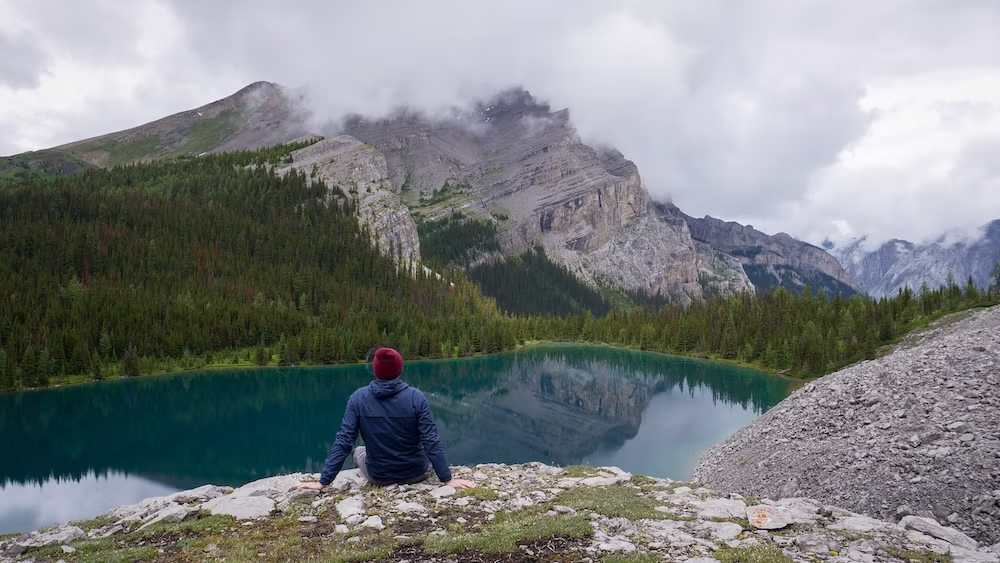
You absolutely do not need to spend six days on a horse to have a legitimate Banff trip. Most people won’t. I still think the experience belongs in this guide because it proves an important point: the version of Banff visible from the famous viewpoints is only the easiest layer to reach.
If you are intrigued by riding but six days sounds completely unhinged for your trip, shorter current options exist. One simple starting point is to check the current one-hour Bow River horseback ride rather than jumping straight into a multi-day commitment.
You can come here for an hour-long activity or disappear into the mountains for days. That range is part of what makes Banff so difficult to “finish.”
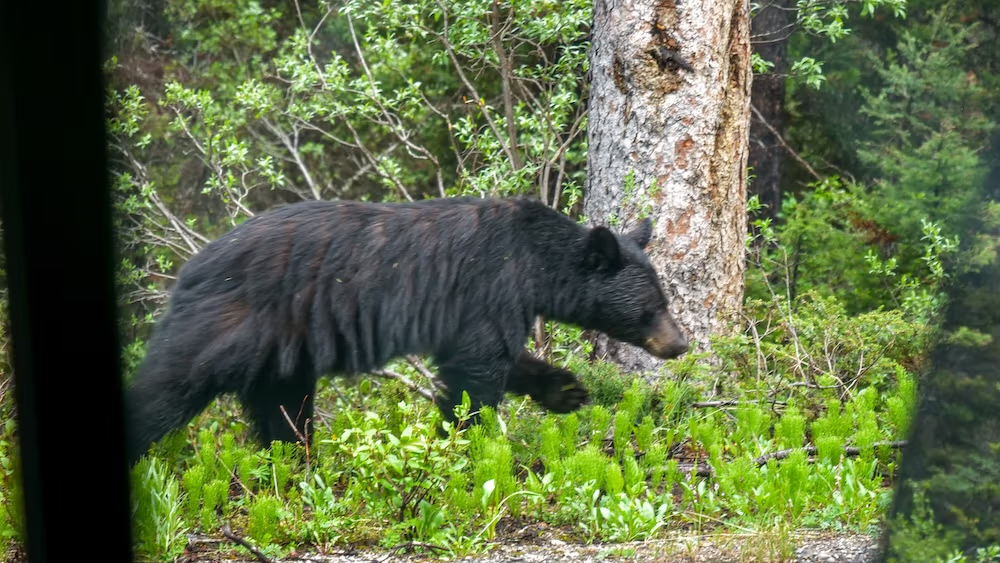
Look for Wildlife, but Don’t Build Your Day Around Chasing It
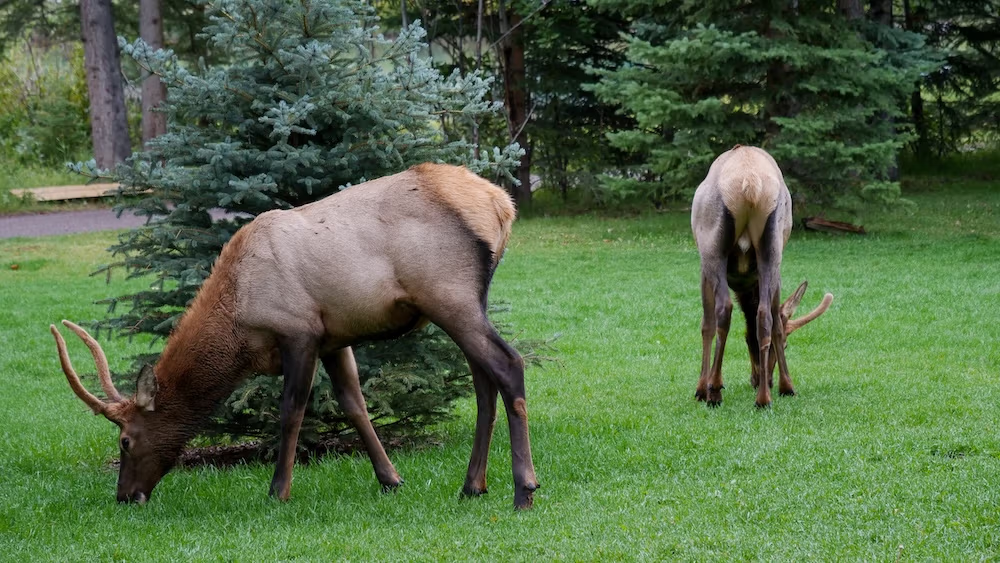
We’ve seen wildlife around Banff on several trips, including a black bear during our more recent family outing. Those encounters are exciting precisely because you cannot schedule them.
I would be wary of itineraries built around promises like “go to this road at this hour to see bears.” Wild animals are not cast members waiting for their cue.
If you do encounter wildlife, distance matters. Parks Canada requires visitors to give animals appropriate space and makes it very clear that feeding wildlife is prohibited.
The responsible approach is also the more enjoyable one: see what you see, enjoy the moment and then let the animal continue being an animal rather than turning the roadside into a small-scale press conference.
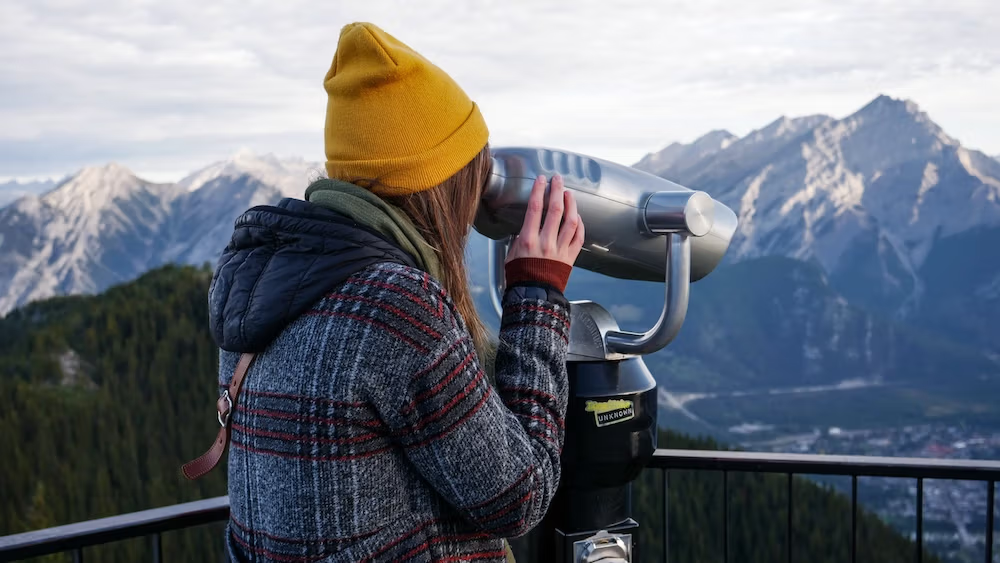
Free Banff vs Paid Banff: Where Spending Actually Changes the Trip
Banff can become extremely expensive if you allow every appealing activity to become a purchase. Accommodation can be expensive. The Gondola costs money. Major guided excursions cost money. Canoeing costs money. Horseback riding can range from a shorter activity to a major travel expense, and private touring is a premium choice.
Then you walk beside the Bow River for free and remember why you came.
That is how I would think about spending in Banff. The question isn’t whether paid activities are “worth it” as one giant category. Some are, while others won’t be for you. The more useful question is: what does paying actually change?
Sometimes you are buying a fundamentally different experience. A Gondola ticket gets you quickly onto Sulphur Mountain. An Ice Explorer experience allows you to participate in a structured glacier outing rather than only viewing ice from a distance. A multi-day horse trip gives you access to an immersive backcountry experience that bears almost no resemblance to stopping at a lake beside the road.
Sometimes you are paying to solve logistics. A tour to a high-demand destination may remove transport and parking problems. On our multigenerational trip, private touring gave us control over pace, stops, meals and the fact that a toddler and a grandparent do not necessarily have identical ideas about when everybody should keep walking.
Other times you are mostly paying for convenience, interpretation or somebody else to organize the day. That can still have value; it is simply a different kind of value.
Meanwhile, Banff has plenty that does not require another attraction ticket: walking around town, following the Bow River, enjoying viewpoints, spending time by lakes and ponds, visiting waterfalls and simply pulling yourself away from the compulsion to turn every mountain into an appointment.
There is already the cost of entering the national park, of course. Beyond that baseline, I wouldn’t build a Banff budget around the idea that paid automatically means better. I would spend selectively where the money changes the experience in a way I actually care about.
If you hate hiking but desperately want a huge mountain panorama, the Gondola can solve a real problem. If Lake Louise and Moraine Lake are your priorities and the transport system makes you anxious, paying for a well-structured tour may be worth more to you than it is to somebody perfectly happy organizing the shuttles independently. If your dream is to spend several days deep in the backcountry, that is a completely different category of purchase.
But if what you really want is mountains, water and time outdoors, Banff still provides an extraordinary amount of that without attaching a ticket booth to every view.
Where to Stay in Banff: Choose the Base That Solves Your Biggest Problem
Where you stay changes a Banff trip more than I appreciated on our earlier visits.
It is tempting to choose accommodation based on the nicest mountain photograph or the famous hotel name, but I would work backwards from the trip instead. Do you want to walk to restaurants every evening? Are you travelling without a car? Are Lake Louise and the surrounding hikes your main interest? Do you need two bedrooms because a toddler going to sleep at 7:30 p.m. cannot reasonably end everybody else’s evening? Are you prepared to commute into the national park from outside it?
Those questions are more useful than asking for the single “best hotel in Banff.”
Stay in Banff Town for Walkability and Convenience
For a conventional first trip, Banff town is the easiest base to understand.
You can walk to restaurants, shops, museums and sections of the Bow River. Local and regional transit opens up more of the park without requiring you to use your car for every outing, and when you return tired after Lake Louise or a long excursion, you are already somewhere with plenty of dinner options.
That evening convenience matters more than it sounds. A mountain itinerary can become quite transport-heavy, and if every morning starts with driving while every evening ends with another drive to eat, the trip accumulates friction in small doses.
Staying in town reduces some of that.
The trade-off is obvious: Banff is highly desirable, accommodation can be expensive and choosing a central base does not magically put Lake Louise or Moraine Lake outside your bedroom window.
For a first-time visitor who wants a flexible mix of town, lakes, tours and day trips, though, Banff town is probably the most straightforward all-purpose base. If that sounds like your trip, you can compare current accommodation in Banff town for your actual dates.
Stay Around Lake Louise if That Part of the Park Is the Point
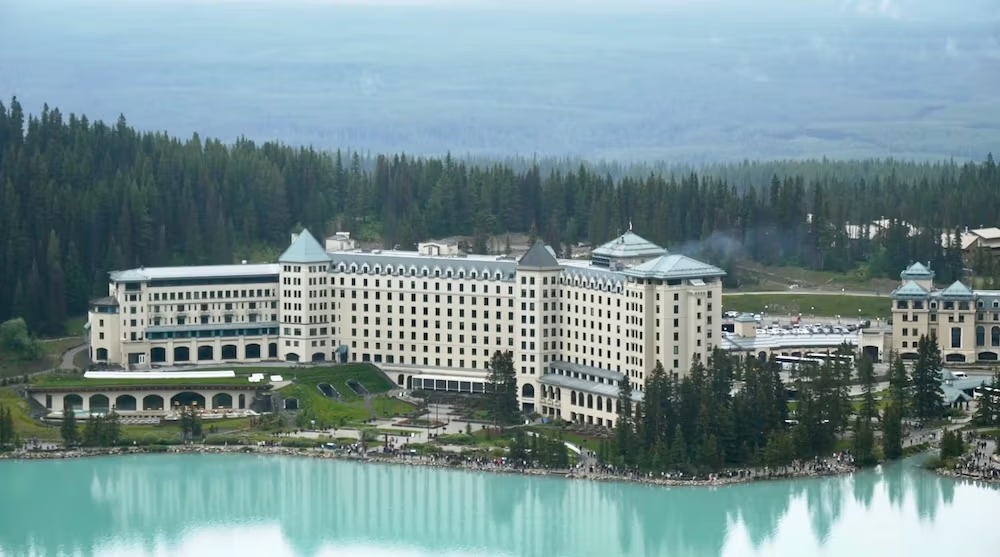
Lake Louise makes more sense as a base when your priorities are concentrated around the lake and nearby hiking.
The village is much smaller than Banff town, and your restaurant and evening choices are correspondingly narrower. What you gain is proximity, which can make a major difference if your trip is built around spending meaningful time in the Lake Louise area rather than arriving for a photograph and leaving.
This is especially relevant for hiking-focused travellers. A long trail day feels very different when you wake up nearby instead of first travelling from Banff town.
We have visited Fairmont Chateau Lake Louise but have not stayed there, so I would not pretend to give you a firsthand room review. The same applies to other Lake Louise properties we have not personally slept in.
The useful decision is the base itself: Lake Louise trades Banff-town flexibility for immediate access to one of the park’s major hiking and scenery systems. Travellers building their trip around that area can compare current Lake Louise accommodation rather than forcing a daily commute from Banff.
Canmore Gives You Another Full Town Outside the Park
Canmore is not a Banff neighbourhood. It is a separate town outside Banff National Park, and that distinction is worth keeping clear because people often talk about staying “in Banff” when they really mean staying somewhere in the wider area.
Canmore has a substantial accommodation supply of its own, with hotels, apartments, lodges and vacation-rental formats. It also has restaurants, shops and the infrastructure of a real town rather than functioning purely as overflow accommodation.
There is regular public transit between downtown Canmore and downtown Banff, so choosing Canmore does not automatically mean you must personally drive into the park every day.
What I would not tell you is that Canmore is always cheaper. Accommodation prices move around too much for that kind of evergreen promise to be useful. Sometimes the price difference is compelling; sometimes it isn’t. Compare your actual dates.
Canmore makes most sense when you like the idea of a separate town base, find accommodation that suits your group better or want access to Banff while also leaving yourself open to more of the surrounding Canadian Rockies. You can compare current Canmore hotels and other stays against Banff before deciding whether the commute is worth the trade-off.
Harvie Heights Worked Well for Our Family Because We Needed Space
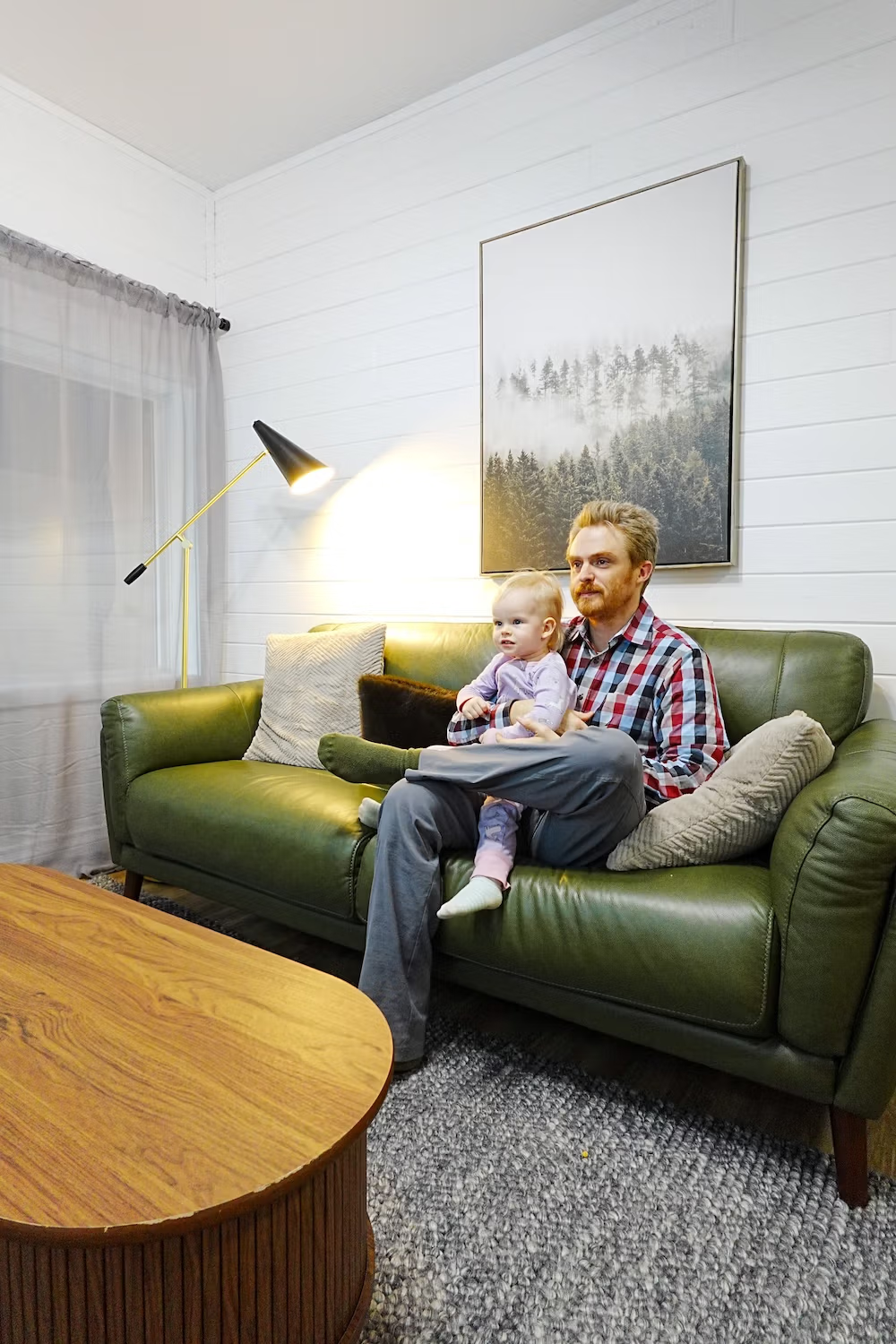
On our recent multigenerational trip, we stayed at The Gem Stays in Harvie Heights.
Harvie Heights sits outside Banff National Park, between Canmore and Banff, so I would describe it as a Banff-area base, not a Banff hotel.
The biggest advantage for us was not glamour. It was the layout.
We had a two-bedroom suite, which was enormously practical when travelling with Aurelia and her grandfather. Different people could sleep at different times, we had more separation than a conventional hotel room and the accommodation functioned as somewhere we could actually live for a few days instead of everybody quietly staring at each other after the toddler went to bed.
That experience reinforced something I think about much more now when travelling as a family: room configuration can be more valuable than hotel prestige. A mountain view is nice. A door you can close while a toddler sleeps is also extremely nice.
I would not pretend that our stay means every Harvie Heights property works the same way, but the area does have a range of condo, townhouse and multi-bedroom options. If that setup appeals more than a standard hotel room, you can compare current Harvie Heights accommodation.
Choose Your Base by the Friction You Most Want to Remove
This is the simplest way I would compare the main options:
| Base | Strongest reason to stay | Main trade-off |
|---|---|---|
| Banff town | Walkability, restaurants, transit, easiest all-round first-trip base | High demand and you still travel to major lake systems |
| Lake Louise | Proximity to lake/hiking area | Smaller evening/service environment |
| Canmore | Larger outside-park town with broad accommodation formats | Commute into Banff National Park |
| Harvie Heights | Small Banff-area base, useful condo/suite formats | Limited town infrastructure of its own |
I would not choose between them on scenery alone. You can find mountain scenery all over this region.
Choose the place that removes the most annoying recurring problem from your particular trip.
How Many Days Do You Need in Banff?
This is one of the hardest Banff questions because the honest answer depends on what you want from the park.
You can see Banff in one day, but you cannot experience Banff particularly deeply in one day. Those are different claims.
With a very short visit, prioritization becomes ruthless. You might combine Banff town with one marquee mountain experience or devote the day almost entirely to Lake Louise and Moraine Lake. Either can work. Trying to make one day perform like four usually does not.
Two or three days gives you enough room to begin combining the major systems rather than simply sampling one. Four days was enough for Audrey and me to have a packed, varied Banff trip involving town, tours and a major Icefields Parkway excursion, and it still felt short.
At five days, something important begins to happen: you can leave breathing room. A bad-weather day does not automatically destroy half your trip. You can spend longer somewhere you unexpectedly like. You can follow a major outing with something easier instead of turning every morning into another campaign.
A week opens the park up further. That is enough time for deeper hikes, a substantial excursion, town time and more flexibility, or for carefully adding surrounding Canadian Rockies destinations without pretending everything is Banff.
Then there are specialist trips like my six-day horseback adventure, where one experience can consume almost an entire week by itself.
So how many days do you need? For a first visit, I think the more useful question is what you expect those days to accomplish.
A short trip can deliver the iconic highlights. A longer trip buys you something better than a longer checklist: margin for weather, fatigue, longer-than-expected walks and the place you thought would take 45 minutes somehow turning into half a day.
That is what I would pay for with extra nights.
Do You Need a Car in Banff?
Banff is one of those destinations where “Do I need a car?” produces two confident answers: absolutely, or absolutely not.
Both are too simple.
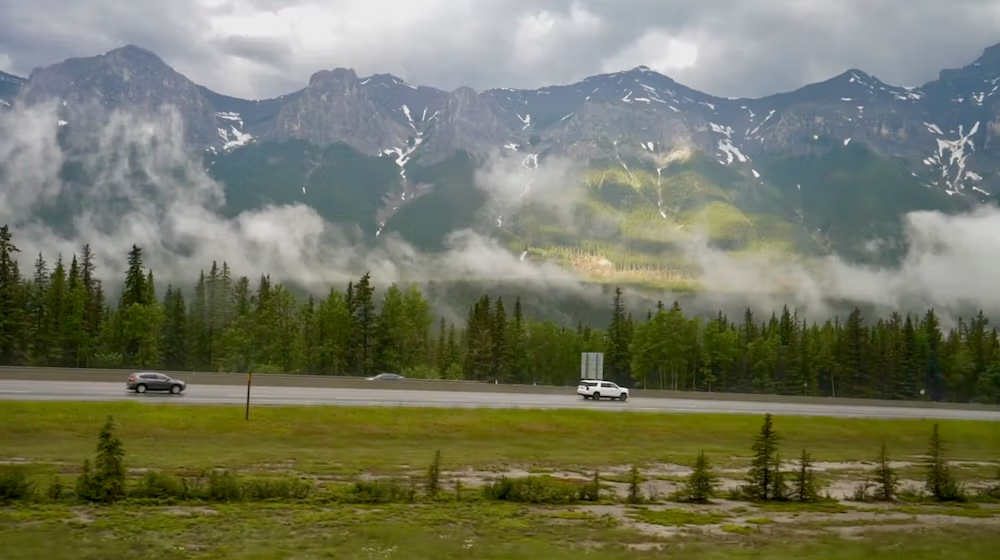
A car can be immensely useful. On our older Canadian Rockies road trip, having our own vehicle allowed us to move widely through the region, stop at quieter places and change plans without being tied to a timetable. If your Banff trip includes dispersed trailheads, lots of scenic-road exploration or substantial travel beyond the most connected visitor areas, that freedom still matters.
Banff has also become much easier to experience without one. The town itself is compact, and local policy actively encourages visitors to park and use other forms of transport because parking can fill early on busy summer days. Roam Transit connects Banff with places including Canmore, Lake Louise, the Gondola and seasonal Lake Minnewanka service.
A private car does not solve every famous Banff access problem anyway. It cannot take an ordinary visitor up Moraine Lake Road, and at Lake Louise it may simply deliver you to a parking problem.
So I would make the decision based on your actual trip. If you plan to stay centrally, use transit for the major lakes, book one or two tours and spend plenty of time around Banff town, you can build a very convincing car-free visit. If your plans revolve around independent scenic drives, widely scattered hiking trailheads, photography stops and exploring surrounding regions on your own schedule, a rental car becomes much more attractive.
For travellers flying into Calgary who decide that driving freedom matters more than going car-free, one practical place to start is to compare current rental cars at Calgary International Airport. I would still make that decision from the itinerary rather than renting automatically because “Rockies trip equals car.”
There is also no requirement to make one decision for the entire trip. Depending on your itinerary, a few car-free days plus a shorter rental period can sometimes make more sense than paying for a vehicle that spends half the trip sitting in a parking lot.
A car gives you freedom. It can also give you something else to park.
Banff is a destination where both facts matter.
What Should You Book Before You Arrive?
Banff rewards spontaneity right up until you apply it to the wrong thing.
There are parts of the trip I would absolutely leave flexible. Bow River walks do not need a military operation. You do not need to reserve a slot to admire Banff Avenue. If the weather looks miserable, it is useful to have experiences that can move around.
Other parts can break your itinerary if you leave them too late.
Accommodation
If your dates are fixed, especially during high-demand periods, I would sort out accommodation early.
Where you sleep affects every other part of the trip, and the most useful combinations of location, room configuration and price do not become more plentiful because you waited.
Moraine Lake and Lake Louise Transportation
This is one area where current rules matter enormously.
Moraine Lake requires organized transport. Parks Canada shuttle seats are reservation-based, and current inventory is released in stages rather than all seats simply remaining available indefinitely.
Lake Louise has more access options, but treating the small parking supply as your entire plan is a gamble. Check the current Parks Canada system before the trip and understand exactly how you are reaching each lake.
Banff Gondola
If the Gondola is a priority, especially on a specific day or around a particular time, advance booking makes sense.
Weather still matters. A summit ticket is considerably more satisfying when there is actually a mountain to look at.
Major Excursions and Activities
A Columbia Icefield excursion, popular guided day tour, private tour or specialist activity such as horseback riding deserves more planning than an easy town walk.
These are the kinds of reservations that can define the structure of an entire day, so I prefer putting them on the calendar first and allowing easier experiences to fill the gaps around them.
Restaurants
I would not reserve every meal months in advance and turn dinner into another logistical obligation.
But if there is one restaurant you particularly care about, or you are travelling at a busy time with a larger group, securing an important dinner can remove unnecessary end-of-day stress.
The broader rule is simple: book the things whose absence would materially damage the trip, then leave some of the rest alone.
Mountain weather already controls enough of your schedule. There is no prize for making the remaining 15 percent equally inflexible.
Tours or Independent Travel: Banff Works Well With Both
We have done Banff both ways, and I would resist turning this into a philosophical debate about “authentic” independent travel versus organized tours.
Sometimes a tour is useful. Sometimes it is unnecessary.
On our older road trip, having our own vehicle gave us tremendous freedom to roam. We could stop where we wanted and string together places according to our own interests. Banff town is also easy to explore independently; you do not need a guide to walk beside the Bow River or decide whether you want another coffee.
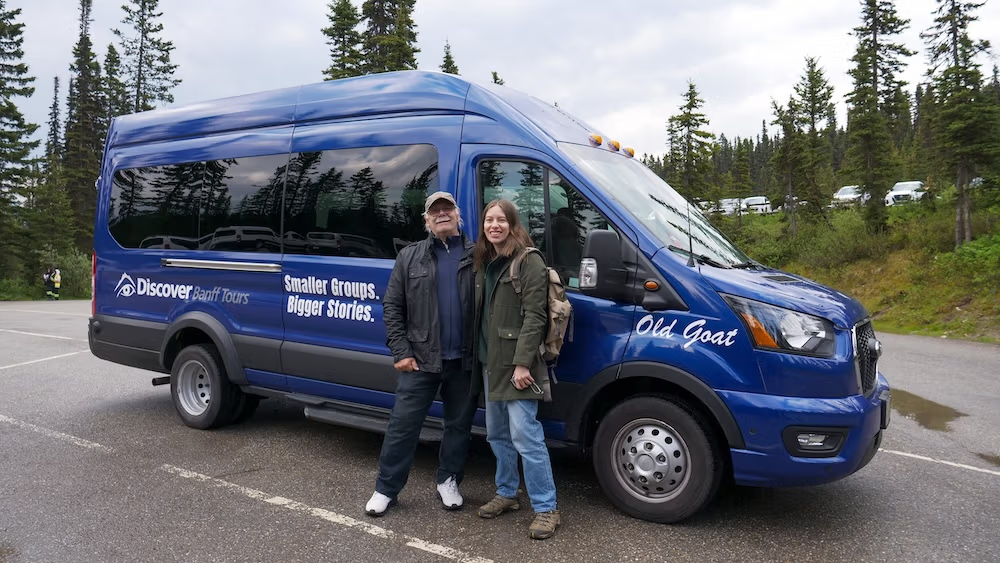
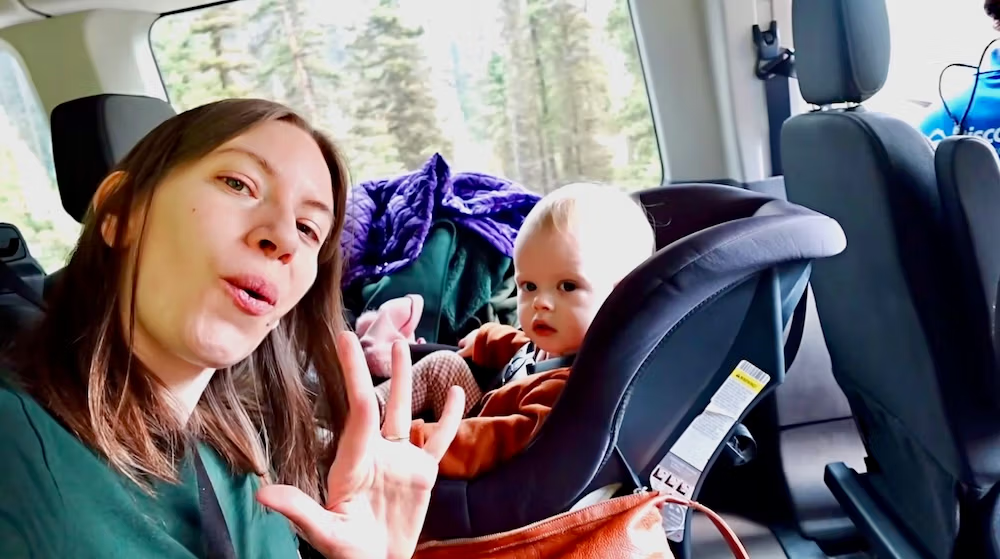
At the other end of the spectrum, our recent private Banff–Yoho outing worked extremely well specifically because our group was complicated. We had a toddler and a grandparent, different walking speeds, meal timing, carrying, rest stops and the possibility that somebody might simply be done before the itinerary said they were supposed to be done.
In that situation, flexibility itself was a product.
That distinction is more useful to me than “tour versus no tour.” A tour can earn its price when it solves transportation, access, parking, interpretation or pacing problems that you actually have.
Private touring is especially interesting when a group has competing needs. You pay more, but you also stop worrying that your two-year-old’s nap or your father’s rest break is slowing down 18 strangers.
A group tour may make more sense when you want organized transport and guiding without paying for exclusivity. For readers whose main problem is simply getting meaningful time at both marquee lakes without handling the access themselves, a current option is to compare availability for a Lake Louise and Moraine Lake combo tour. That is a different purchase from private touring, but it solves a very real transport-and-access problem.
Independent travel works when you are comfortable handling the logistics and want maximum control over your own time, while transit can sometimes give you a fourth option by solving the transportation problem without requiring a guide at all.
The important thing is to know what problem you are paying somebody else to solve.
If there isn’t one, keep the money.
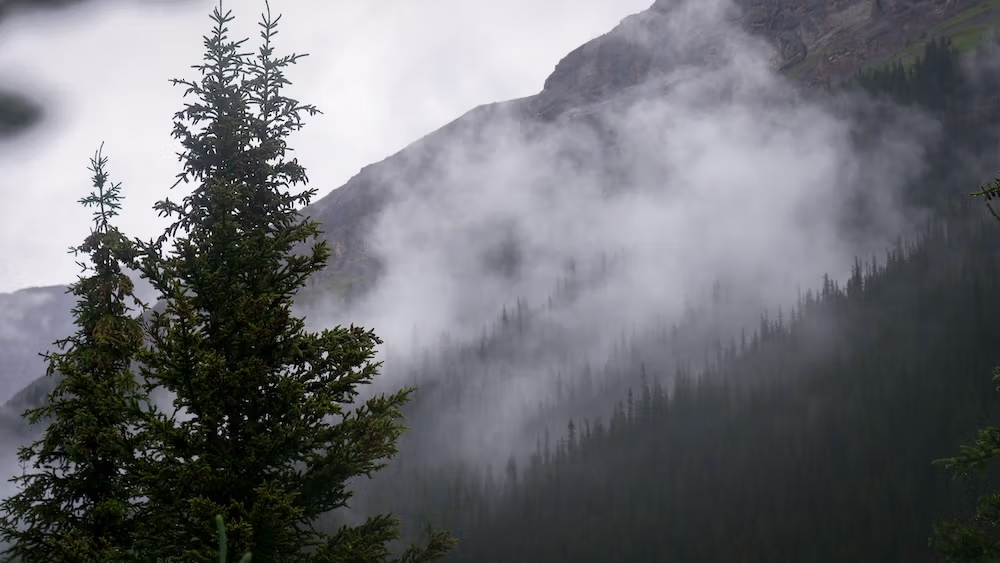
Banff Weather Can Rearrange Your Trip
I have learned not to negotiate with mountain weather. It does not care about your reservation spreadsheet.
During our Columbia Icefield trip, conditions moved through snow, ice pellets, fog, rain, sunshine and cold that had us thinking much more seriously about our hands than our photographs.
On my horse trek, weather mattered differently because there was no quick retreat to a hotel room after an hour outside. Rain and cold become much more personal when the day still involves hours in the saddle and your wet clothing somehow has to become tomorrow’s dry clothing.
The useful planning lesson is not that Banff has “bad weather.” Conditions can change quickly and can differ significantly between parts of the park. Banff town may be experiencing one thing while higher elevations are dealing with something else. Lake Louise is generally cooler than Banff town, summer nights can still become cold, and by September major swings in temperature should not come as a shock.
That affects how I build an itinerary. If you have one premium outdoor experience whose value depends heavily on clear visibility, I would avoid surrounding it with five other immovable reservations if you can help it. Give yourself something that can shift.
Town museums, food, easier walks and lower-stakes sightseeing are useful partly because they can absorb the days when the mountains decide not to perform.
And pack layers. It is one of the least glamorous pieces of Canadian Rockies advice, right up until you are holding a camera in freezing precipitation wondering why you thought a light sweater demonstrated optimism rather than poor judgment.
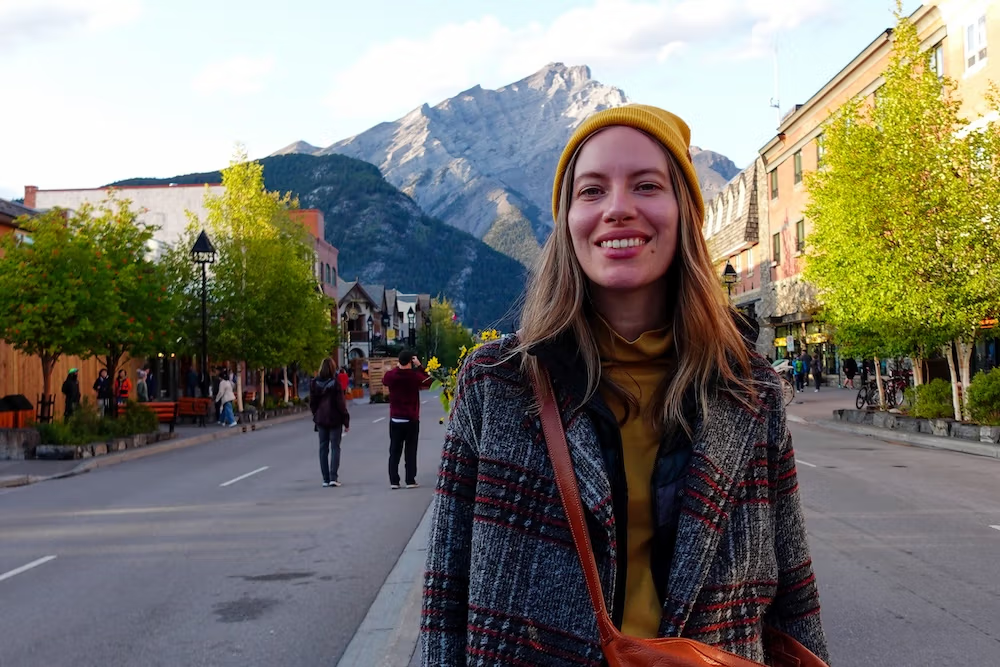
When Is the Best Time to Visit Banff?
There is no single best season for Banff because the destination changes too much over the year. What matters is whether the Banff you want is actually available during the dates you choose.
Summer
Summer gives you the broadest access to the classic warm-weather Banff experience. This is when most visitors are thinking about Lake Louise, Moraine Lake, hiking, scenic drives, canoeing and the full range of mountain sightseeing.
It also brings the highest level of planning pressure. Popular accommodation, lake transportation and bookable attractions can require early decisions. Roads and town can be busy, and the famous places will not be your private alpine secret.
The advantage is range. If your dream Banff trip looks like the postcards, summer is the easiest season to build around it.
Fall
Fall can offer cooler weather and a different atmosphere, but it is also a transition.
Our own shoulder-season experiences taught us how quickly colder conditions can arrive, particularly at elevation. Moraine Lake access is seasonal and weather dependent, hiking conditions can shift and daylight starts becoming less generous.
This is where flexibility becomes especially valuable.
Winter
We have not personally done a winter Banff trip, so I would treat winter as a genuinely different version of the destination rather than pretending our summer and fall experiences simply transfer over with snow added.
Skiing, snow-covered landscapes, winter walks, skating and cold-weather activities replace many of the priorities of a warm-season trip. Moraine Lake is not approached as a conventional winter sightseeing drive, and seasonal roads and trails behave differently.
If winter Banff is your goal, plan specifically for winter Banff.
Do not take a July itinerary and put a toque on it.
Spring
Spring is similarly transitional.
Conditions at lower elevations can look surprisingly mild while high trails remain snowy. Mountain passes may hold snow well into the period when somebody arriving from a warmer climate thinks hiking season should surely have started.
Spring can work beautifully for a flexible traveller. It is less ideal for somebody whose entire trip depends on a very specific collection of high-elevation trails being snow-free.
In every season, I would check current Parks Canada conditions shortly before setting out. Banff is too dynamic a mountain environment for a six-month-old article to know what your trail looks like this morning.
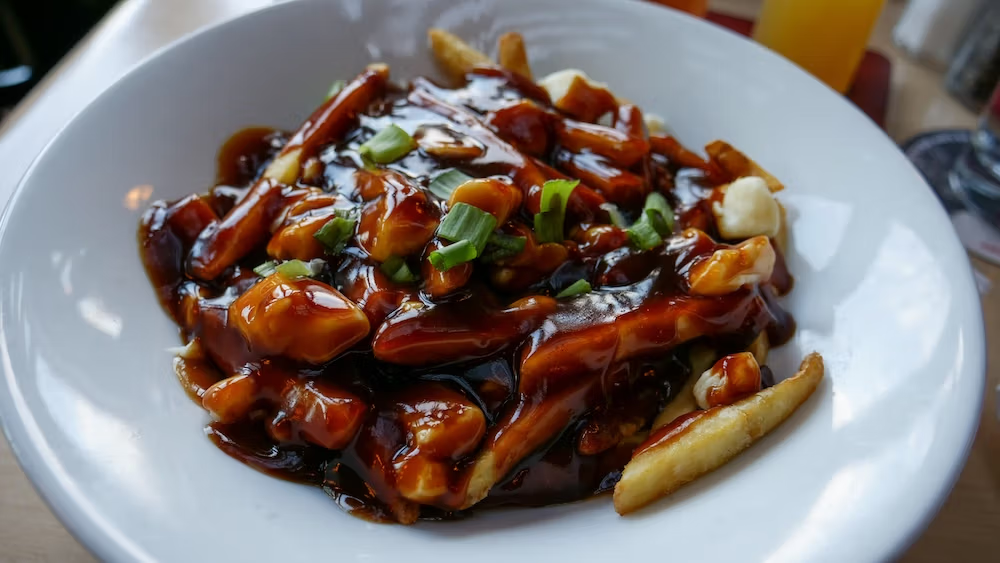
Food in Banff: Leave Space for It
One thing our Banff itineraries have never suffered from is lack of appetite. Mountain days tend to take care of that.
We’ve eaten at pubs, cafés and restaurants around town, and I think food belongs naturally in the Banff experience rather than functioning purely as refuelling between attractions.
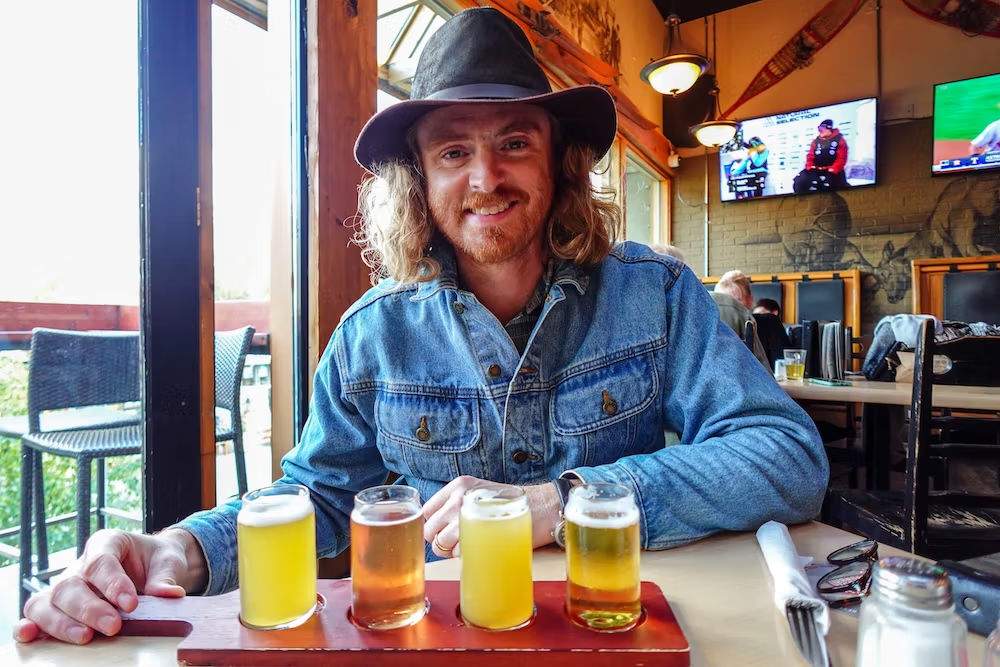
On one trip, we stopped at Elk & Oarsman and worked our way through beer and comfort food. We’ve eaten Japanese food, Mexican food and casual café meals on other visits.
Banff’s dining scene also makes a strong argument for staying centrally if evenings matter to you. After a long day, being able to walk to dinner is underrated.
I would not design the entire trip around restaurant reservations unless food is one of your major interests. There is too much daylight, mountain scenery and weather uncertainty for me to want every evening locked to a specific minute.
But I would leave some space for good meals. There is something deeply satisfying about spending a day in cold mountain air and then sitting down somewhere warm with food that would have seemed excessive at lunchtime.
In Banff, it suddenly feels medically necessary.
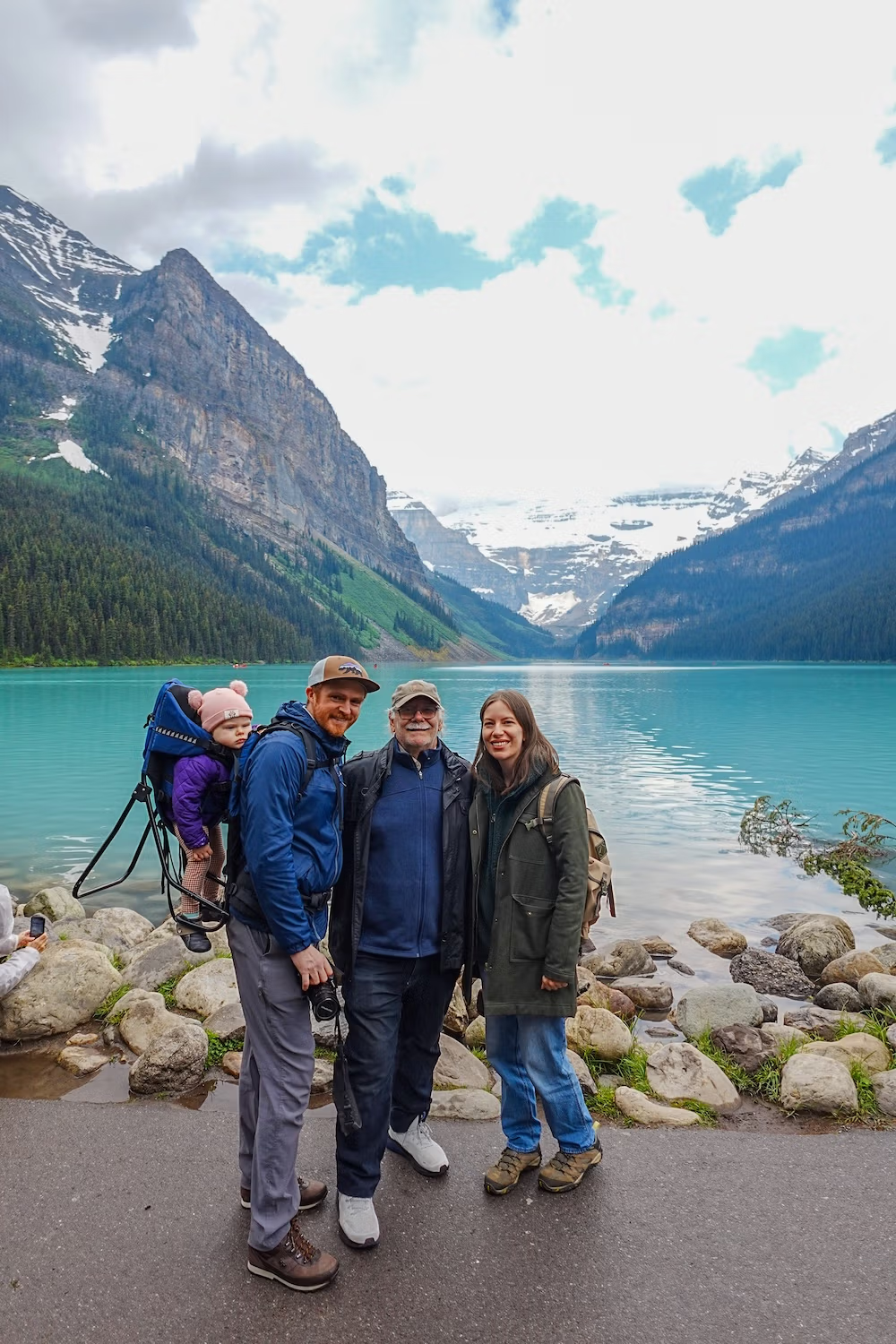
Banff With Kids, Grandparents or Non-Hikers
Our more recent Banff trip reminded me how differently the same attraction can function depending on who is travelling.
Aurelia could not simply be expected to walk whenever the itinerary required it. Sometimes she needed carrying, sometimes she slept, and sometimes the adult plan had to bend around toddler realities because toddlers remain surprisingly resistant to optimizing themselves for sightseeing efficiency.
Audrey’s father had his own pace too. Put those things together and the value of flexibility becomes obvious.
Banff can actually work very well for mixed-ability groups because many of its best-known views do not require major hikes. The Gondola gets you high into the mountains. Lake Louise can be experienced from the shoreline. Moraine Lake’s famous views do not require an all-day trek. Banff town provides easy walking and indoor breaks, while scenic drives and organized excursions can deliver enormous landscapes with relatively modest physical effort.
But “non-hiker friendly” and “fully accessible” are not the same thing.
The Banff Gondola is a good example. Cabins and major facilities can accommodate many wheelchair users, but the summit boardwalk toward Sanson’s Peak involves hundreds of shallow stairs each way. A traveller can absolutely enjoy the attraction without completing every component, but that distinction matters.
The same principle applies throughout Banff. Do not ask only, “Can my family do this?” Ask which version of the experience works for your family.
Lake Louise shoreline versus Fairview Lookout. Gondola summit complex versus the complete boardwalk. Short town walk versus a half-day trail. Group tour versus private tour. One big excursion versus three consecutive big excursions.
That is how you make a mixed group work: not by forcing everybody through the exact same itinerary at the exact same pace.
The Simplest Way to Plan Banff Without Overloading Your Trip
After all of our Banff trips, I would plan another one in roughly this order.
First, I would choose the base according to the biggest recurring friction in the trip. If I wanted restaurants, transit and walkability, Banff town would be hard to beat. If hiking around Lake Louise dominated the trip, I would consider staying closer to that area. If I needed more space or found a better accommodation setup outside the park, I would compare Canmore or Harvie Heights seriously.
Then I would choose the two or three experiences that mattered most.
Not 14.
Maybe that is Lake Louise, Moraine Lake and the Gondola. Maybe it is several serious hikes. Maybe it is the Icefields Parkway and a quieter town day. Maybe you are coming specifically to ride horses. The answer changes from traveller to traveller, which is exactly why one universal Banff itinerary is never going to be perfect.
Next, I would solve the high-friction logistics. How am I reaching Moraine Lake? Do I need a Parks Canada shuttle reservation? Am I relying on Lake Louise parking? Do I need to book the Gondola? Is there one major tour or activity that would be difficult to replace if it sells out?
Once those pieces are secure, I would resist the urge to reserve every remaining hour. Leave some room for weather and fatigue, but also leave room for a lake that looks better than expected, a museum you didn’t know you would like, a toddler who decides today’s schedule is nonsense or a morning where everybody would rather walk beside the Bow River than get back into a vehicle.
That last part is what has changed most in the way I see Banff.
On our earlier trips, I wanted to cover ground. Now I would rather give the right places enough time. Lake Louise became better for me when I got away from the immediate shoreline. The Icefields Parkway deserved its whole day. Banff town became more valuable when I stopped treating it as a gap between “real” attractions. Our private family tour worked because the schedule could bend, and six days on horseback showed me a Banff so far removed from the normal highlight circuit that it almost felt like a separate destination.
Banff absolutely has its crowds, costs and logistical headaches, but it also has enough depth that those famous turquoise-lake photographs barely explain why I keep finding reasons to return.
You don’t need to do everything. Choose the version of Banff you want, solve the logistics that actually matter, and give yourself enough room to experience it properly.
Frequently Asked Questions
How many days do you need in Banff?
You can see highlights in one day, but Banff becomes much easier to enjoy with more time. Two or three days let you combine major areas, while five days or more gives you useful breathing room for weather, longer stops and easier days between big outings.
Do you need a car in Banff?
Not necessarily. Banff town is compact, transit serves several major visitor areas, and some famous places such as Moraine Lake require organized transport anyway. A car becomes more useful for independent scenic drives, dispersed trailheads and wider Canadian Rockies exploration.
Can you drive a personal vehicle to Moraine Lake?
No. Moraine Lake Road is closed to personal vehicles year-round, so ordinary visitors need an approved option such as a Parks Canada shuttle, licensed commercial transport or an eligible lodge arrangement.
Where should first-time visitors stay in Banff?
For an all-round first trip, Banff town is the easiest base because of its walkability, restaurants and transit. Lake Louise suits trips centred on that hiking area, while Canmore or Harvie Heights can work when accommodation format, space or a separate town base matters more.
What should you book before a Banff trip?
I would sort out fixed-date accommodation early, then secure any high-friction transport or activities that would materially affect the trip, including Moraine Lake access, a priority Gondola visit or a major excursion. Easier walks, town time and lower-stakes sightseeing can stay flexible.
Is Banff a good destination for non-hikers or mixed-age families?
Yes, because many major views can be experienced without a long hike. Our multigenerational trip also showed me how much pacing matters: shoreline visits, the Gondola, town walks, scenic drives and flexible tours can work well when a toddler, grandparent or non-hiker is part of the group.
When is the best time to visit Banff?
There is no single best season. Summer offers the broadest warm-weather access but more planning pressure, fall and spring are transitional, and winter is a genuinely different version of Banff that I have not personally experienced. Choose dates around the version of Banff you actually want.
This guide is also available in Spanish. [Leé la versión en castellano: Guía de Banff: qué hacer, dónde alojarse y cómo planificar tu viaje]
This article contains affiliate links. If you book through one of these links, I may earn a commission at no extra cost to you.