
Horseback riding in Banff covers a much wider spectrum than I initially realized. You can spend an hour finding out whether you even enjoy being in the saddle, turn it into a three-hour Cowboy Cookout with a meal and some Western fun, or disappear into the backcountry for several days until horses, lodges and trail life become the rhythm of your trip.
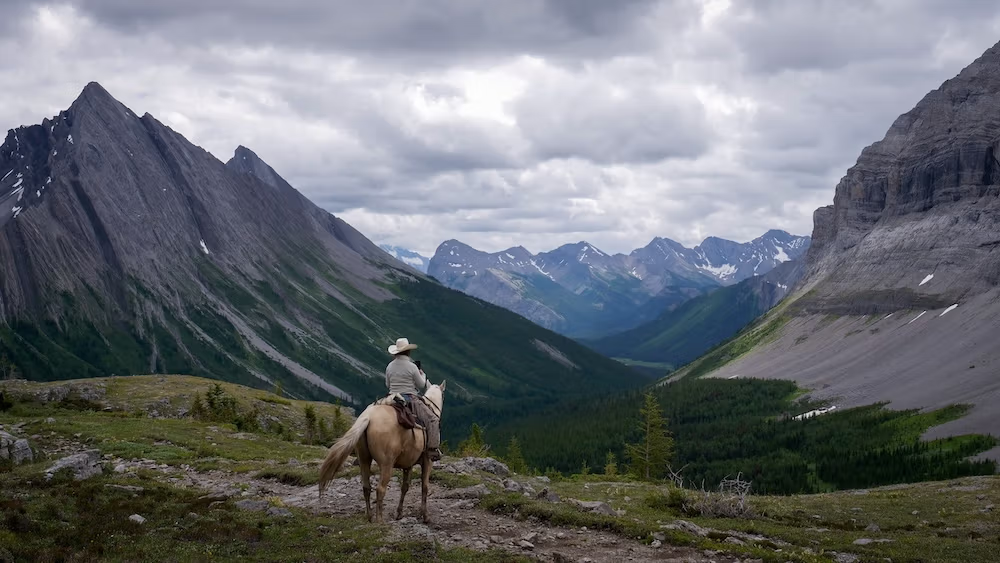
I’ve experienced the far end of that spectrum. I spent six days and five nights travelling through Banff National Park with Banff Trail Riders on a horse named Hollywood, despite not arriving as anything close to an expert rider. It had been a long time since I had ridden regularly, there were nerves during those first hours, and by the end I had learned far more about horse personality, saddle fatigue and my own ability to adapt than I expected.
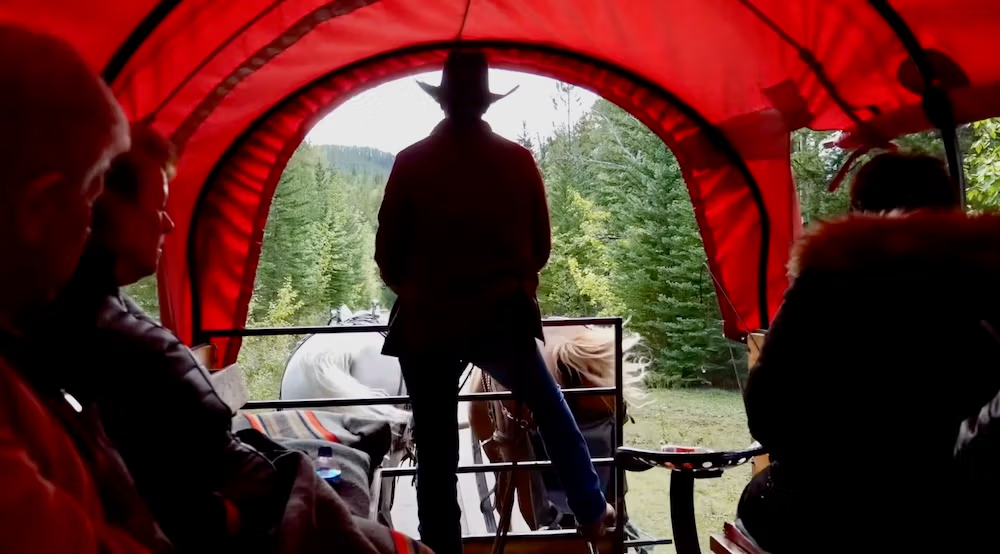
Audrey and I have also experienced a very different horse-powered afternoon in Banff: the covered-wagon version of the Cowboy Cookout. We still had the horses, Bow River scenery and Western atmosphere, but somebody else held the reins while we sat back and enjoyed the journey.
What I haven’t done is every current one-, two-, three- and four-hour trail ride, nor have I personally taken the horseback version of the Cowboy Cookout. Those options deserve to be judged by what they currently offer rather than by pretending my six-day trip somehow counts as firsthand experience of all of them.
That leaves one useful question at the centre of this guide: how much horseback riding do you actually want to build into your Banff trip?
For one traveller, an hour may be enough to scratch the itch. Somebody else may want an afternoon built around horses and a Western meal. And then there are people who look at the Canadian Rockies and think, “Yes, but what if I crossed those mountains on a horse for several days?” Banff has an answer for all three.
Why horseback riding feels so different from most ways of seeing Banff
A lot of Banff travel happens in bursts. You drive somewhere, park, walk to a viewpoint, take in the scenery, return to the vehicle and move on. Even a hike often has a clear destination pulling you forward.
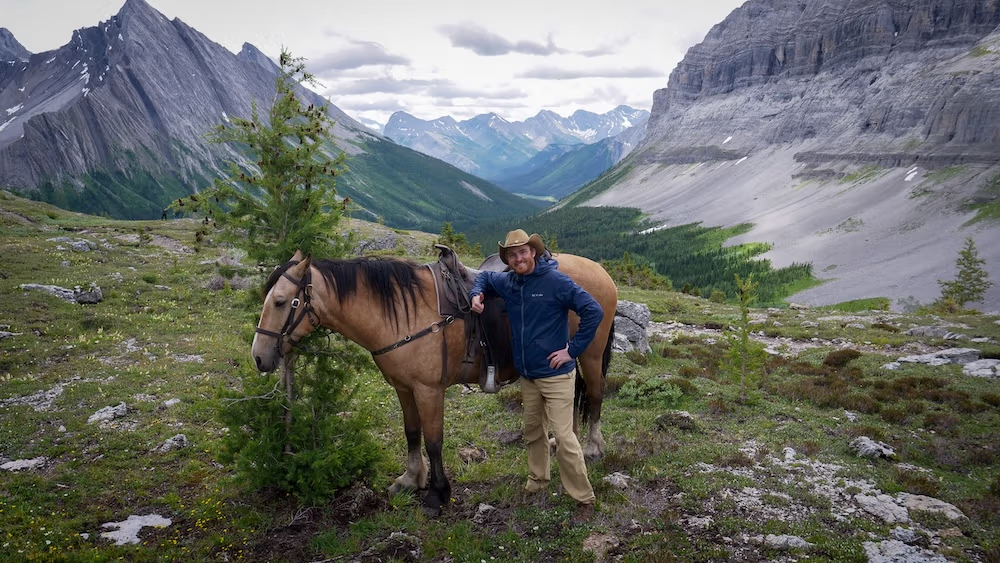
Horseback travel changed that rhythm for me because Hollywood wasn’t just transportation. He was an experienced, dependable horse, but he also liked doing things his own way. I couldn’t simply sit there staring at the mountains for five hours while assuming whatever was happening underneath me would sort itself out.
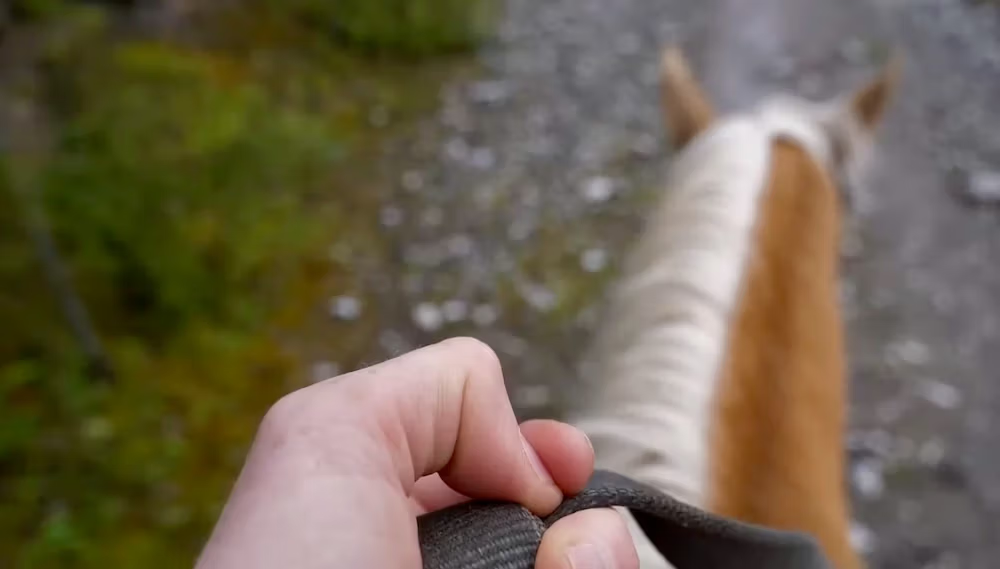
There was always some degree of participation: listening to the guides, noticing what Hollywood was doing and gradually figuring out his personality. He could be quirky, occasionally stubborn and very much himself, which made travelling through Banff with him far more interesting than sitting in a vehicle and being delivered to another scenic stop.
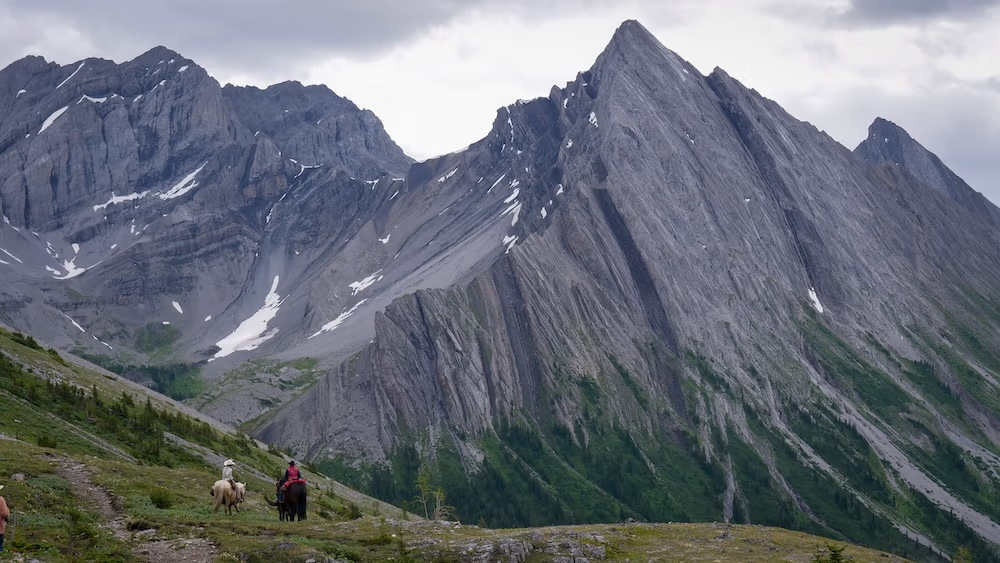
That slower pace is one of the reasons I now consider horseback riding one of the most distinctive ways to experience Banff. You are moving gently enough to absorb your surroundings, but you are also involved in the movement itself. The forest, creek crossings and mountain valleys don’t feel like separate attractions you tick off one after another.
On my six-day trip, they slowly became one continuous landscape.
You certainly don’t need six days to get something out of riding here. If anything, experiencing the deepest end of the spectrum made the shorter options easier for me to understand. The real difference between them isn’t that one is automatically better; it is how much responsibility, saddle time and immersion you want.
Trail ride, Cowboy Cookout or backcountry trip?
Banff’s current horse experiences make the most sense when you think of them as three different levels of commitment.
Regular trail rides are the easiest entry point. Around Banff town, the current Banff Trail Riders lineup runs from one to four hours, so you can experience the Rockies from horseback without reorganizing an entire vacation around it.
The Cowboy Cookout sits somewhere in the middle. The outing lasts about three hours, but the point is broader than simply adding more saddle time. There is a journey, a Western cookout and activities at 3 Mile Cabin, with both horseback and covered-wagon versions currently available.
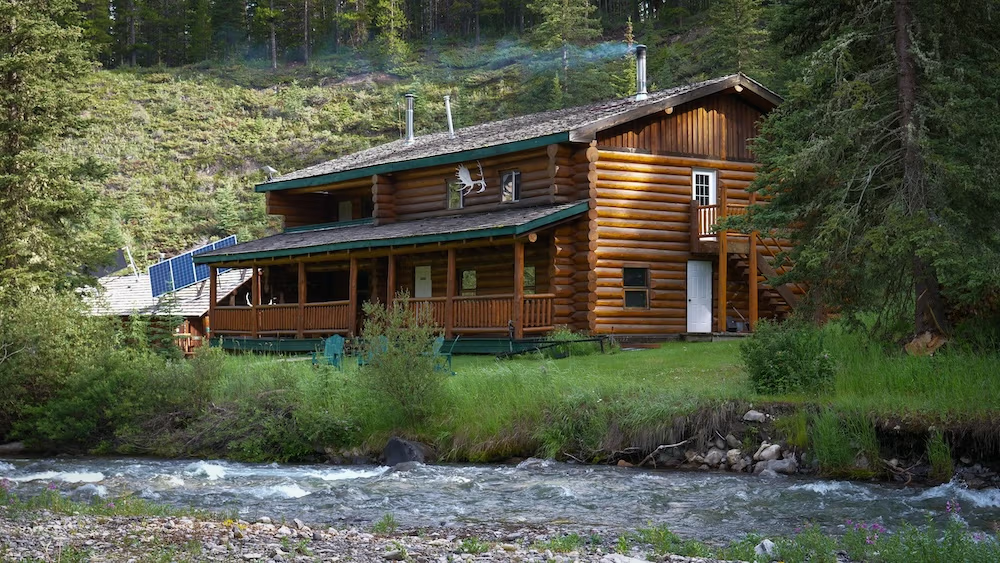
Backcountry lodge trips are where the nature of the trip changes completely. Current options extend from two days and one night to six days and five nights. By then, horseback riding is no longer an activity squeezed between other Banff plans. It becomes one of the main reasons you are there.
| Short trail ride | Cowboy Cookout | Backcountry trip | |
|---|---|---|---|
| Current time commitment | About 1–4 hours | About 3 hours | 2–6 days |
| Main reason to choose it | Try or extend horseback riding | Combine horses with a Western meal and outing | Make horseback travel a major part of the trip |
| Do you personally ride? | Yes | Horseback version yes; wagon version no | Yes |
| Meal included? | Generally no | Yes | Meals are part of the lodge-trip format |
| Overnight stay? | No | No | Yes |
| Physical commitment | Low to moderate as duration rises | Moderate on horseback; lower in the wagon | Much higher overall |
| Best question to ask | How much saddle time do I want? | Do I want the Cookout as much as the ride? | Do I want horseback travel to become part of the vacation itself? |
I find this much more useful than treating the lineup as a ladder where the longest ride automatically sits at the top.
A four-hour trail ride isn’t four times better than a one-hour ride, and my six-day trip isn’t the obvious upgrade simply because it was the biggest thing on the menu. I loved it, but six days on horseback would be ridiculous for plenty of otherwise adventurous Banff visitors.
Short Banff trail rides: the easiest place to start
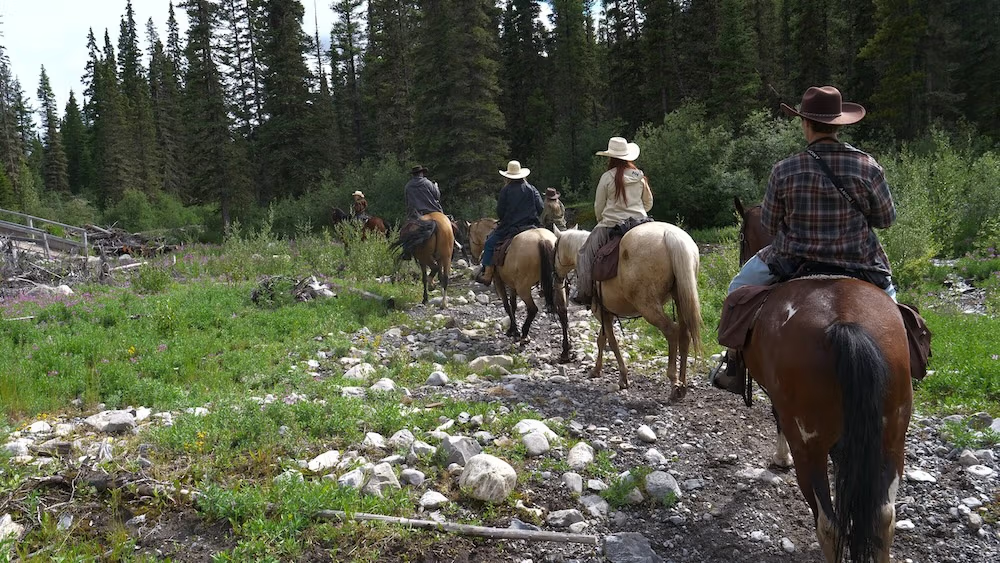
Banff Trail Riders currently offers five main trail rides around Banff town: the one-hour Bow River Ride, one-hour Spray River Ride, two-hour Sundance Loop, three-hour Bow Valley Loop and four-hour Sulphur Mountain Ride.
I haven’t personally completed those five rides, so I would choose among them first by looking at commitment rather than trying to manufacture a ranking. If you want to see the current bookable lineup together before narrowing things down, you can compare current Banff horseback rides and availability on GetYourGuide.
A one-hour ride is the cleanest way to sample the experience. The current one-hour Bow River Ride requires no previous riding experience, which makes it particularly straightforward for somebody who is curious about horses but not yet ready to dedicate half a day to them.
Moving to two hours gives the outing more room to develop. The two-hour Sundance Loop takes the ride through the Bow River and Sulphur Mountain area, while the current three-hour Bow Valley Loop and four-hour Sulphur Mountain Ride ask you to commit a much larger chunk of the day to being in the saddle.
That extra time matters physically as well as logistically.
During my backcountry trip, some riding days ran for four or five hours, and after one long stretch I got off Hollywood with legs that felt like Jell-O. I remember wobbling around and being extremely happy with the idea of stretching out near the lodge rather than immediately charging off toward another activity.
That experience came after sustained riding on a multi-day trip, so I would not use it to scare somebody away from a current four-hour Banff trail ride. It did teach me something useful, though: being on a horse for several hours isn’t the physical equivalent of sitting in a chair for the same amount of time. Your body is doing more than you realize.
There are some practical differences between the short rides that are easy to miss while browsing.
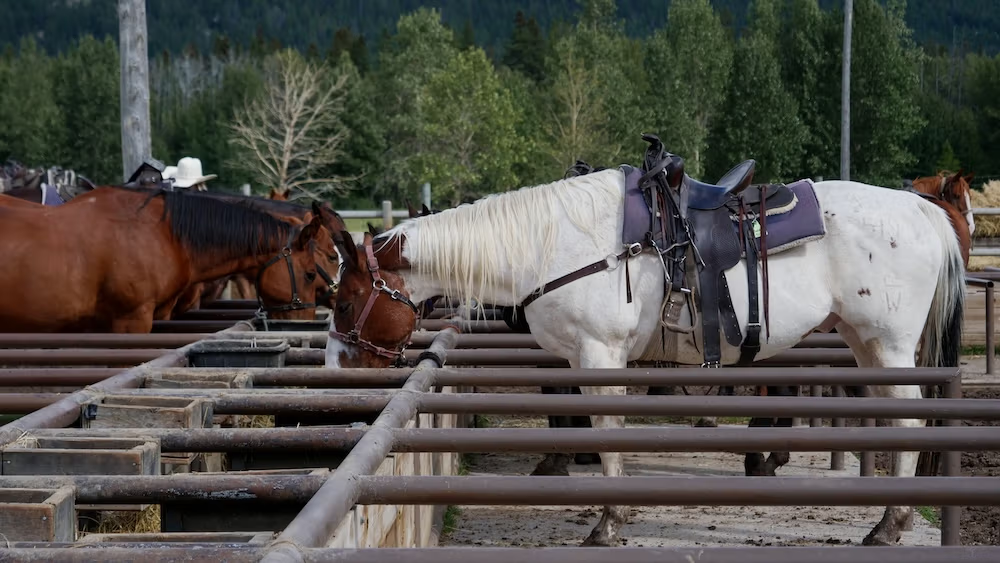
Not all of them currently depart from the same stable. Several use the Banff Trail Riders stables on Sundance Road, while the one-hour Spray River Ride and Sulphur Mountain ride depart from Banff Springs Corrals. If you book one, check the exact meeting location instead of assuming that “Banff Trail Riders” points to a single place.
A one-hour ride also takes more than one hour out of your itinerary. Current trail rides ask guests to check in about 30 minutes beforehand, which turns a one-hour product into at least a 90-minute commitment before you count travel to the stables and whatever you are doing afterward.
The operating windows vary too. Some rides begin earlier in spring, while others are concentrated more tightly from late spring or summer into early fall. I would think of horseback riding around Banff as broadly a spring-through-fall activity, but I wouldn’t assume every route is running on the same dates.
If this is your first ride, I’d start by choosing the amount of saddle time that genuinely sounds fun. There is no prize for booking four hours when what you really want is an introduction.
Cowboy Cookouts: when the outing matters as much as the saddle
The Cowboy Cookout makes more sense once you stop comparing it directly with a normal trail ride.
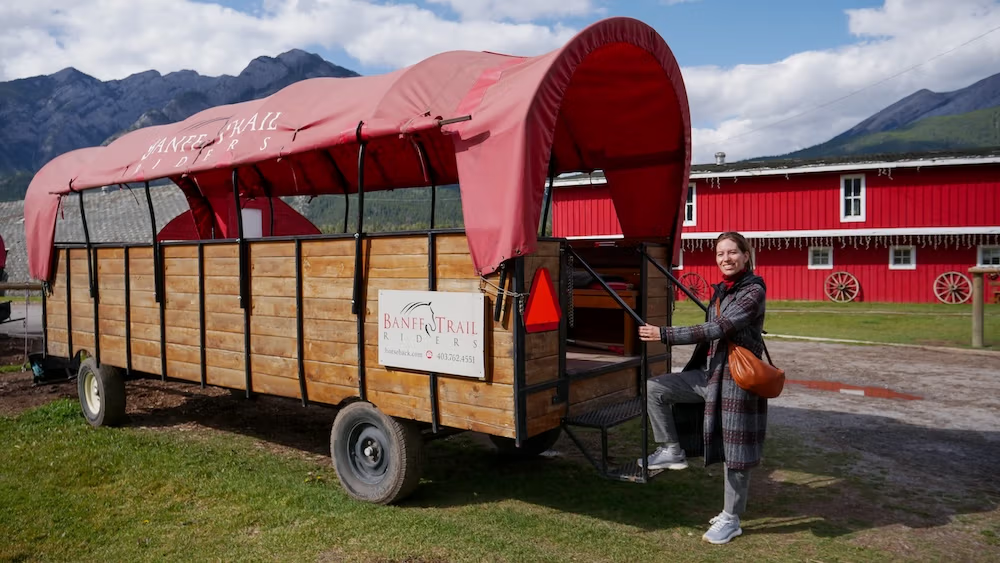
Audrey and I did the covered-wagon version, and what I enjoyed most was that the afternoon had a wider personality than simply travelling a route. We met the horses beforehand, climbed into the wagon, followed the Bow River for part of the journey and eventually arrived at the cookout for food and Western-style activities.
The wagon itself was wonderfully low-maintenance from our perspective. We could talk, look around and let somebody else handle the horses, which made it a completely different experience from spending hours managing your own animal.
The current Cowboy Cookout is still offered both on horseback and by covered wagon. Both versions run for roughly three hours and meet at 3 Mile Cabin, so a couple or family does not necessarily have to agree on whether everybody wants to ride. One person can choose horseback while somebody else takes the wagon, with everyone meeting for the Cookout.
That flexibility is one of the cleverest parts of the format.
The horseback version includes basic instruction and roughly two hours of riding around the Cookout portion of the experience. The wagon provides roughly the same amount of horse-powered travel but turns you into a passenger instead. Current wagon departures also include lunch and dinner options, whereas the horseback Cookout is presently concentrated later in the day.
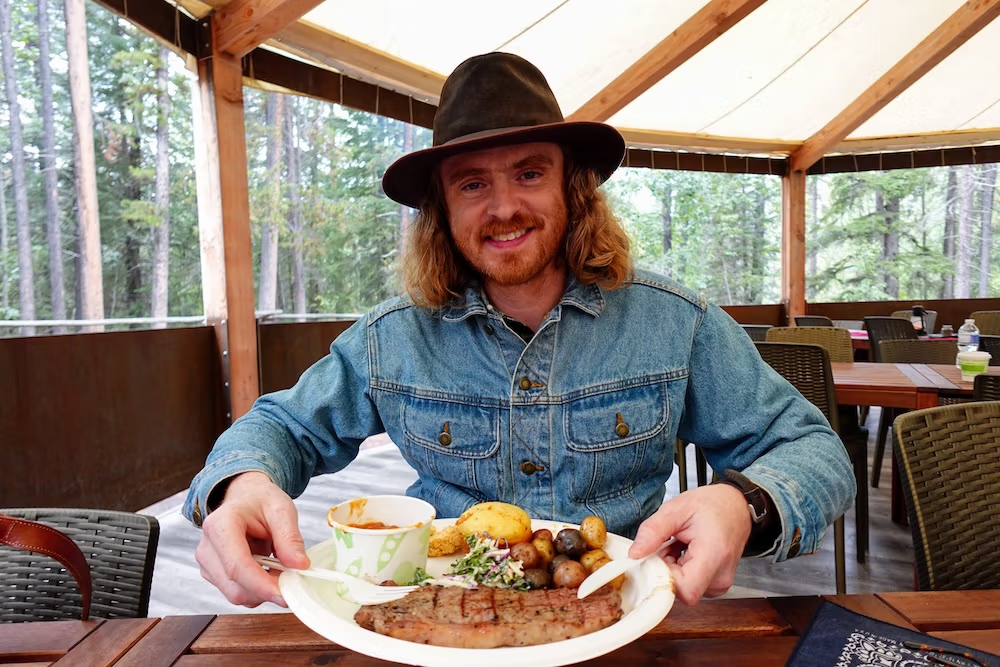
Our own meal included steak, potatoes, coleslaw, cornbread, baked beans and the kind of rustic setting where eating outdoors felt like an actual part of the outing rather than a meal bolted onto the end of a tour. We also tried our hand at roping, where Audrey immediately demonstrated considerably more natural cowgirl ability than I was expecting.
Still, I wouldn’t choose the Cowboy Cookout because steak happens to appear at the end. I’d choose it when I wanted the whole Western afternoon: horses, scenery, a slower journey and a meal that gives the excursion somewhere to arrive.
If your priority is purely saddle time, one of the regular trail rides may fit better. If you want the Cookout and social side to matter almost as much as the horse, this format starts making a lot more sense.
And if you like everything about that sentence except the part where you personally sit on a horse, take the wagon. There is nothing noble about spending two hours quietly wishing you had chosen the seat with four wheels. You can check current wagon Cowboy Cookout availability and departure times if that sounds more like your side of the decision.
Backcountry trips: when horseback riding becomes the vacation
The leap between an hourly ride and a multi-day horse trip is far larger than the numbers initially suggest.
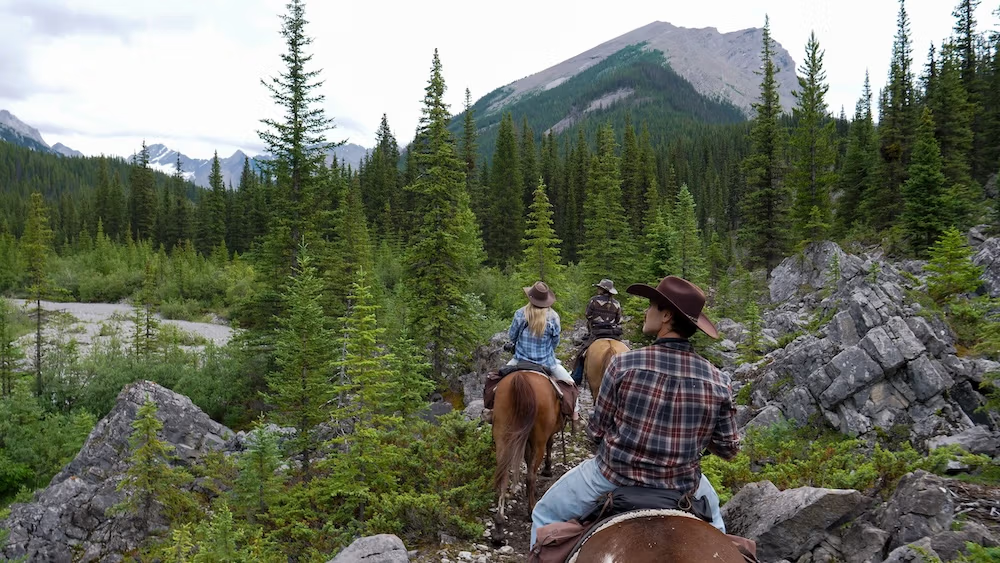
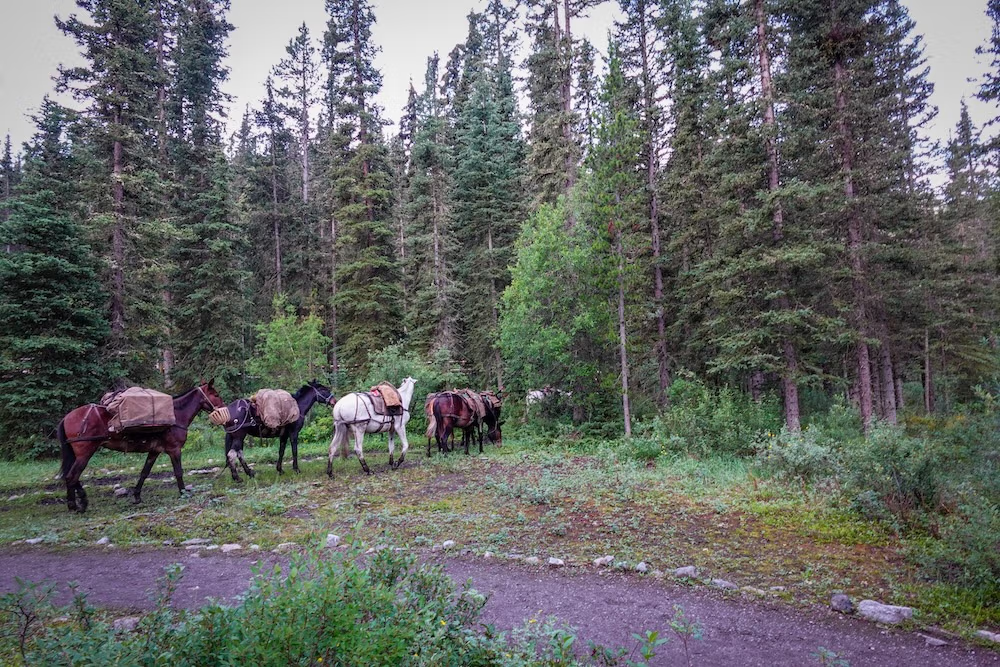
Banff Trail Riders currently has backcountry lodge trips lasting two, three, four and six days. Once you cross into that territory, you aren’t simply getting a longer version of the afternoon ride. Horses begin dictating the rhythm of the trip.
Even the current two-day Sundance Lodge experience involves roughly five to six hours of riding per day including breaks. The six-day Halfway Lodge trip that I completed goes further, with five riding days of roughly that length plus a rest day, while accommodation and meals become part of the package.
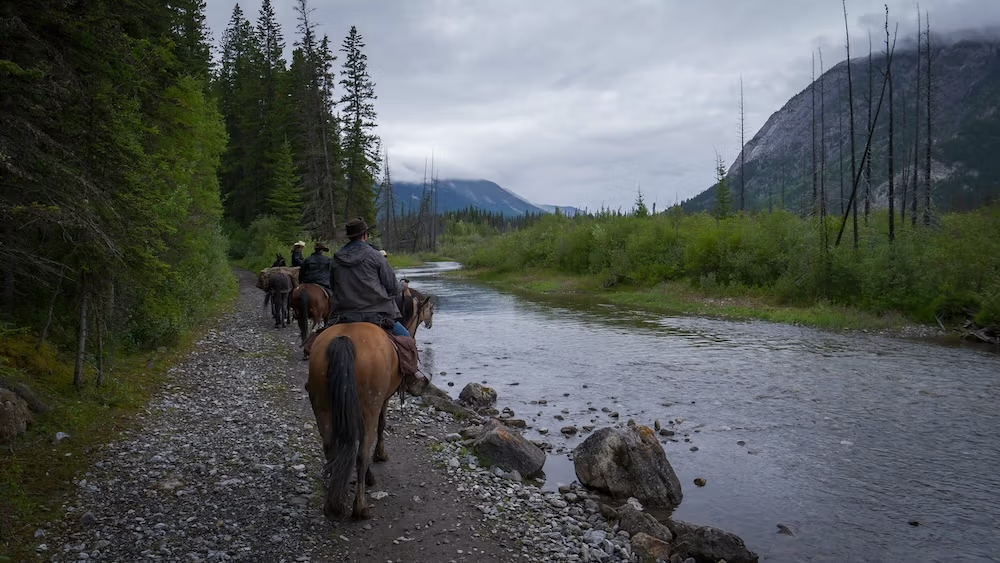
That accumulated time changed my relationship with Hollywood surprisingly quickly. After the first day he was no longer simply “the horse I had been assigned.” I started understanding some of his habits, when he was content to follow along and when he had other ideas.
It also changed my body’s relationship with horseback riding. One long day can leave you tired; several in succession make eating, sleeping and recovery feel much more important than they do during a typical afternoon activity. Getting back to a lodge, stretching out near the fireplace, having a substantial dinner and going to bed early all started feeling extremely attractive.
That physical wear was part of the experience rather than something separate from it, but the deeper change took a few days to arrive. Eventually, I stopped feeling as though I was visiting the backcountry between scheduled activities. Horses, trails, meals, lodges, mountains and the same small group of people simply became daily life.
By the latter part of the trip, I described it as almost pressing a hard reset button on my life.
That was my reaction after six days; I wouldn’t promise the same psychological epiphany to somebody booking an overnight trip. What it illustrates is the basic difference between hourly and multi-day horseback riding. Once you commit several days, you aren’t purchasing a larger quantity of the same activity.
You are buying into immersion.
The practical stakes rise alongside it. Current lodge trips run on fixed departure days, which gives you far less itinerary flexibility than an hourly ride. Cancellation and change terms are also substantially stricter than they are for ordinary short rides, and the price naturally jumps into a completely different category once multiple days of riding, lodging, meals and backcountry staffing are involved.
That is why I don’t consider six days the automatic upgrade from one hour. If you have three days in Banff and want to see the lakes, explore town, ride the Gondola and fit in some horseback riding, disappearing into the backcountry would make absolutely no sense.
If travelling through the Canadian Rockies on horseback is one of the reasons you are planning the trip, the calculation changes dramatically.
Can beginners go horseback riding in Banff?
They can, but I think the word “beginner” causes unnecessary confusion.
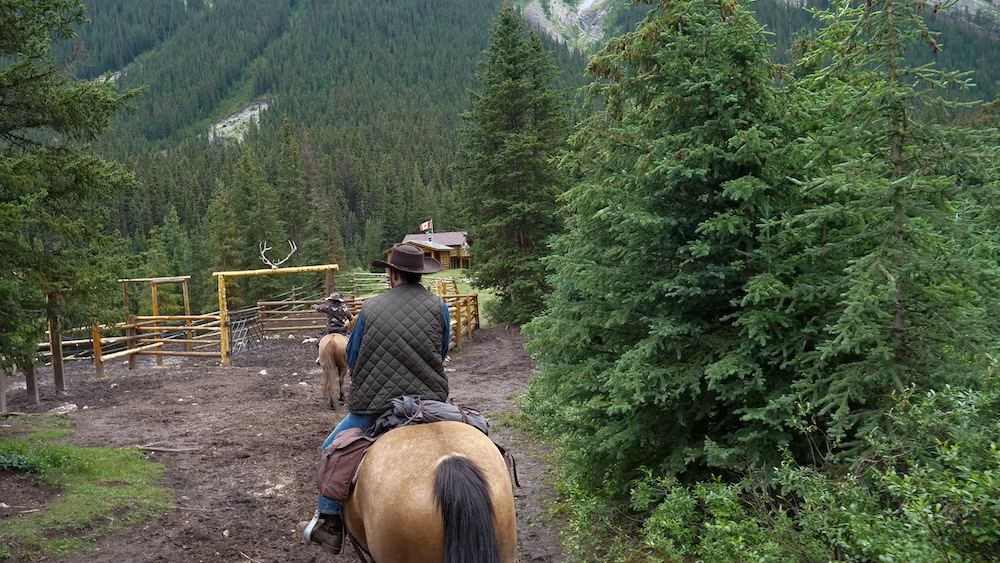
Current Banff Trail Riders products include options where previous riding experience isn’t required. The one-hour Bow River Ride is an obvious example, but even the six-day Halfway Lodge trip currently accepts riders without previous experience.
That sounds surprising until I compare it with what happened to me. I certainly didn’t begin my six-day trip as a seasoned horseman. I had ridden before, but not regularly for a long time, and I felt nervous as I got back into it. Over the following days I became much more comfortable, largely because I listened to the guides and gradually learned how to work with Hollywood rather than imagining I needed advanced riding skills from the outset.
Hollywood also taught me why “no experience required” should never be translated into “nothing required.”
Horses have personalities and reactions. On one day, several in our group were stung by hornets, including Hollywood. He understandably became agitated and started swinging his head, which was a pretty effective reminder that I was travelling with a living animal rather than riding something with an on/off switch.
The guides handled the situation extremely well, but I still had to listen and respond.
That same distinction appears in the current requirements for longer trips. You may not need years of riding experience, but you do need reasonable physical condition, the ability to follow instructions and enough independence to handle mounting, dismounting and the basic responsibilities of riding.
So if you are a beginner, I would separate two questions that tend to get bundled together:
Have I ridden much before?
How much riding am I actually prepared to commit to?
A first-time rider who is excited, physically capable and comfortable taking instruction may be quite happy going beyond the shortest product. Somebody with more riding history who dislikes the thought of spending hours managing a horse may prefer a brief trail ride.
Previous experience matters. Enthusiasm and readiness matter too.
The practical rules can eliminate options before the scenery does
Horseback riding sounds wonderfully romantic until you turn up at the wrong corral in sandals.
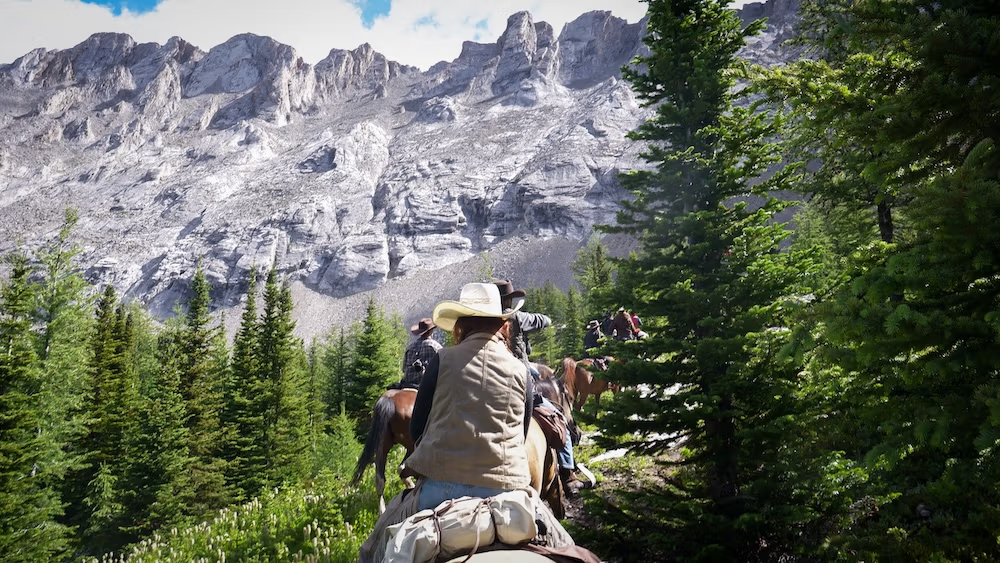
The current standard Banff Trail Riders trail rides generally begin at age 8 and require riders to weigh under 230 pounds, or 104 kilograms. Current backcountry lodge trips generally begin at age 9 with the same rider-weight ceiling. Younger children have a separate pony option starting at age 3, while the covered-wagon Cowboy Cookout currently accepts all ages.
Those numbers are useful for sorting the broad categories, but I would still check the exact product before booking, particularly if somebody in your group is close to a limit or has mobility concerns.
Closed footwear is required for horseback riding, helmets are supplied and backpacks cannot be worn while riding. Riders also need to be physically capable of mounting and dismounting independently and following the guide’s instructions.
That last point is why I’m cautious with words such as “easy” and “accessible.” A ride can accept a beginner without being appropriate for every body or every comfort level.
Weather is another part of the deal. Banff’s conditions can change quickly, and these are outdoor activities. The operating season differs by product, with some rides starting earlier in spring while higher or longer routes have tighter summer and fall windows.
And then there is the meeting point. Several current rides start from the Sundance Road stable system, while Spray River and Sulphur Mountain use Banff Springs Corrals. Combine that with the required 30-minute advance check-in and you have a compelling reason not to discover your mistake at departure time.
These details are less exciting than horses and mountains, but they are the details that determine whether you get on the horse at all.
Banff town and Lake Louise have different horseback-riding systems
Banff Trail Riders naturally forms the backbone of this guide because that is where my own experience comes from and because it currently operates such a broad range of rides around Banff town.
It isn’t the only horseback riding within Banff National Park.
Lake Louise has its own riding system, and I would think of it as a separate base rather than another Banff-town departure. It sits roughly 57 kilometres from Banff, which is far enough that the location of your ride should be part of the itinerary decision.
Brewster Adventures currently operates rides around Lake Louise ranging from shorter outings to full-day routes associated with places such as Lake Agnes, Plain of Six Glaciers, Highline and Paradise Valley. Timberline Tours also operates from Lake Louise with short, half-day, full-day and multi-day horseback options.
I haven’t ridden with either company, so I can’t give you a personal comparison between their horses, guides or service.
The useful distinction here is geography. If you are staying around Banff town and want horseback riding that slots easily into a town-based itinerary, I would investigate the Banff Trail Riders system first. If you are based around Lake Louise or specifically want riding tied to that trail network, it makes much more sense to start with the outfitters operating there.
Their rider rules also differ by company, which is another reason not to treat “horseback riding in Banff National Park” as one universal product with one age or weight policy.
I’d stop the geographic expansion there. There are horseback operators in places such as Kananaskis and elsewhere in the Alberta Rockies, but those are different destinations. At some point, calling every horse within driving distance a “Banff horseback ride” stops being useful.
How I would choose your Banff horseback experience
I’d begin with the least glamorous question: do you actually want to ride a horse?
If the answer is no, there is no reason to talk yourself into it simply because you are surrounded by mountains and somebody nearby owns a cowboy hat. The covered-wagon Cowboy Cookout lets you experience the horses, Western setting and shared meal without taking responsibility for one yourself.
If the answer is yes, decide whether you want horseback riding to occupy hours or days. For hours, stay within the trail rides or horseback Cowboy Cookout. For days, move into the backcountry lodge category and accept that horses are about to take over a considerable part of your vacation.
Within the shorter category, ask what you actually want from the outing. If saddle time is the main attraction, choose a conventional trail ride and then decide how much riding sounds enjoyable. If the cookout, social setting and Western atmosphere are part of what interests you, the Cowboy Cookout earns its place.
The final question is where I think people can get carried away: how much time are you genuinely excited to spend on a horse?
One hour can be a perfectly worthwhile introduction. Two or three hours gives you much more time to settle into the experience. Four hours is already a substantial horseback activity for a normal sightseeing day, while several days crosses into a different style of travel altogether.
I would rather finish a shorter ride wishing I had booked more than spend the last half of an ambitious one wondering when Hollywood’s cousin is finally taking me home.
My verdict on horseback riding in Banff
Horseback riding has become one of my favourite ways of thinking about Banff because it does almost the opposite of what the destination encourages most visitors to do.
Banff gives you an absurd number of reasons to keep moving: another lake, another viewpoint, another trailhead, another mountain experience. On horseback, the pace slows down. You start noticing the horse, listening to the guides and feeling the passage of a few hours differently.
Spend long enough doing it and something else happens. The horse stops feeling like a tour component and starts feeling like your travelling companion. That is what happened with Hollywood, and it is a huge part of why those six days remain so memorable for me.
But I would not use my love of that trip to tell everybody they need the deepest version. One of Banff’s strengths is that you can enter this world almost as lightly or as seriously as you want: an hour-long introduction, an afternoon Cowboy Cookout, several hours deeper in the saddle or a lodge trip where horseback travel becomes one of the defining experiences of your vacation.
The right choice is the one that matches the amount of Banff you genuinely want to experience from the back of a horse.
Frequently Asked Questions
Can beginners go horseback riding in Banff?
Yes. Some current Banff Trail Riders products do not require previous riding experience, including the one-hour Bow River Ride and the six-day Halfway Lodge trip. I would still separate riding experience from readiness: you need to be comfortable taking instruction and handling the basic responsibilities of riding.
How long do horseback riding experiences in Banff last?
Current Banff Trail Riders options range from roughly one to four hours for regular trail rides, about three hours for the Cowboy Cookout, and two to six days for backcountry lodge trips. The right choice depends on how much of your Banff trip you genuinely want to spend around horses.
Do you have to ride a horse to do the Banff Cowboy Cookout?
No. The Cowboy Cookout is currently offered in both horseback and covered-wagon formats. Audrey and I did the wagon version, which let us enjoy the horses, Bow River scenery, Western atmosphere and shared meal without personally riding.
How much time should I allow for a one-hour Banff horseback ride?
Allow more than the advertised riding time. Current trail rides ask guests to check in about 30 minutes beforehand, so a one-hour ride becomes at least a 90-minute commitment before you add travel to the stable and whatever you are doing afterward.
What are the current age and weight limits for Banff Trail Riders?
Standard trail rides generally begin at age 8 and require riders to weigh under 230 pounds, or 104 kilograms. Backcountry lodge trips generally begin at age 9 with the same weight ceiling. Younger children have a separate pony option starting at age 3, while the covered-wagon Cowboy Cookout currently accepts all ages.
What should I wear for horseback riding in Banff?
Closed footwear is required for horseback riding, helmets are supplied and backpacks cannot be worn while riding. Banff conditions can also change quickly, so weather is part of the practical planning for these outdoor activities.
Is horseback riding around Banff town the same as riding at Lake Louise?
No. Banff town and Lake Louise have separate horseback-riding systems. If you are based around Banff town, the Banff Trail Riders lineup is the most natural place to start; if you are staying around Lake Louise, it makes more sense to investigate the outfitters operating there.
This guide is also available in Spanish. [Leé la versión en castellano: Guía de cabalgatas en Banff: paseos, Cowboy Cookouts y viajes por el backcountry]
Disclosure: Our Banff Cowboy Cookout wagon ride was hosted as part of a collaboration with Viator. All experiences and opinions described here are our own.
This article contains affiliate links. If you book through one of these links, I may earn a commission at no extra cost to you.