
Yes. That’s the short answer, and if that’s all you needed, you have it. But I’ve been visiting Banff since I was a kid on a family day trip, long before Audrey and I ever started returning as adults, and I’ve been back four more times since — a self-drive road trip with her parents before we had kids, a four-day trip through Banff town with just the two of us, a solo six-day horseback trek into the backcountry, and a private guided day with her father and our toddler daughter. Four structurally different ways of doing the same national park, spread across more than a decade. The park I first saw as a kid isn’t the park you’d walk into today, and I think that’s the more useful thing to tell you before you book anything.
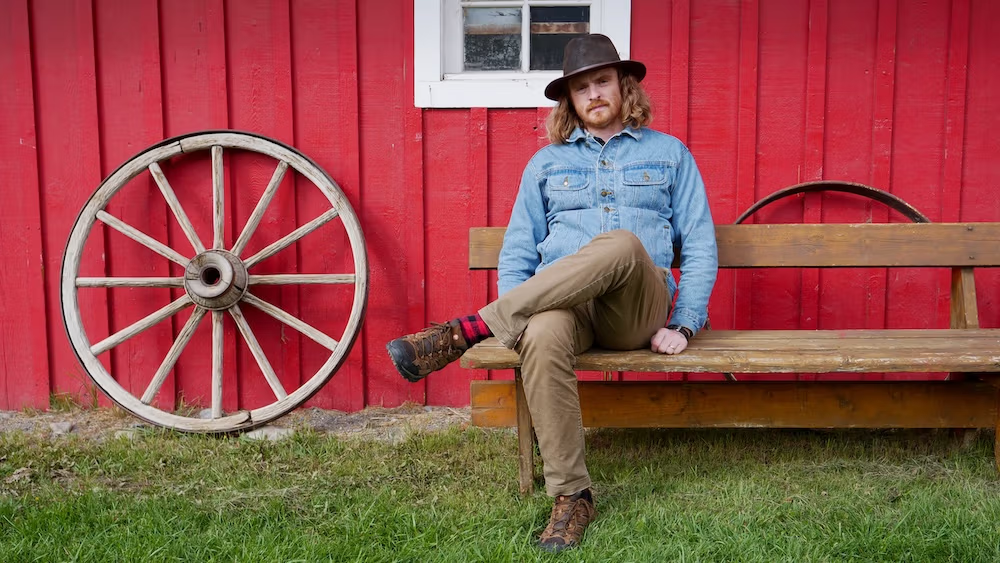
What Actually Changed: More Crowds, More Rules, Less Room to Wing It
I used to be able to wing it here. Show up at Lake Louise, find parking without much fuss, decide on the day whether Moraine Lake sounded good, and just drive over. I’m not dressing that memory up either — it’s on record now, in the park’s own current planning documents for the area, that visitors in the early 2010s could generally find parking at Lake Louise except on the busiest summer long weekends. Vehicle traffic on that road rose more than 70 percent between 2010 and 2019, and the Lake Louise and Moraine Lake area now sees something like 2.6 million visits a year, roughly 70 percent more than it did back then. A mandatory reservation system for both lakes arrived in 2018. Moraine Lake Road has been closed to personal vehicles entirely since 2023, and that’s a permanent policy, not a pandemic-era holdover. Banff National Park as a whole just posted another visitation record, with current counts running somewhere north of five million a year depending on exactly how you’re counting.
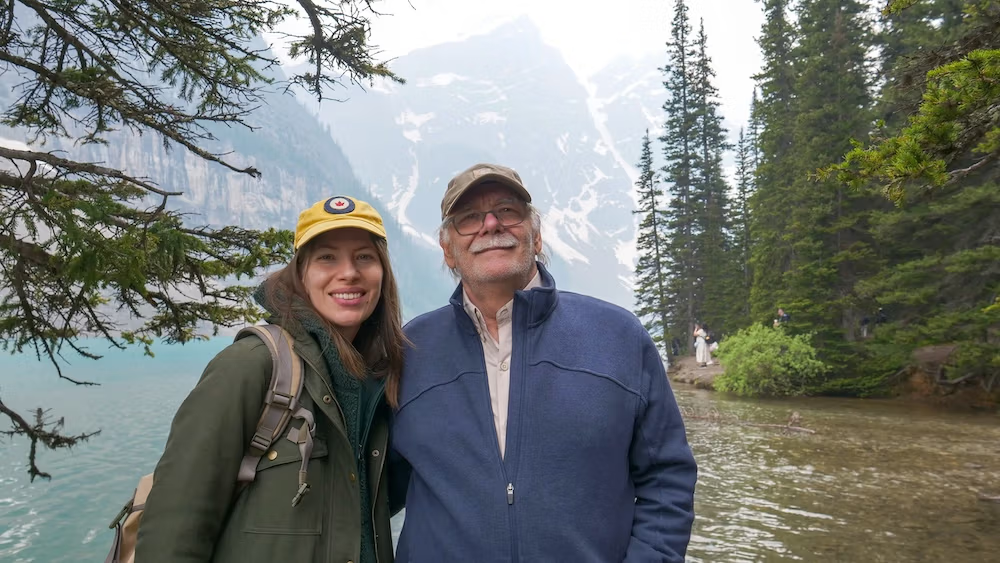
I don’t read any of that as the place having stopped delivering. What it means is the terms changed. The Banff I first wandered into as a kid, and the one I later drove into with Audrey’s parents, let you show up and figure it out as you went. The Banff you’d visit now expects you to already have a plan for the big two lakes before you leave home, because showing up and hoping for a parking spot simply isn’t how it works anymore.
Four Very Different Ways We’ve Done This Place
The road trip came first among the ones that actually made it onto camera — a week-long drive from Ontario with Audrey’s mother and father, before kids, everyone managing their own pace and their own logistics the whole way. It proved something simple: independent, self-drive Banff still works, provided everyone in the car can handle the driving and the planning themselves. Nobody in that group needed anything accommodated, so nobody ran into the friction the newer rules would have caused.
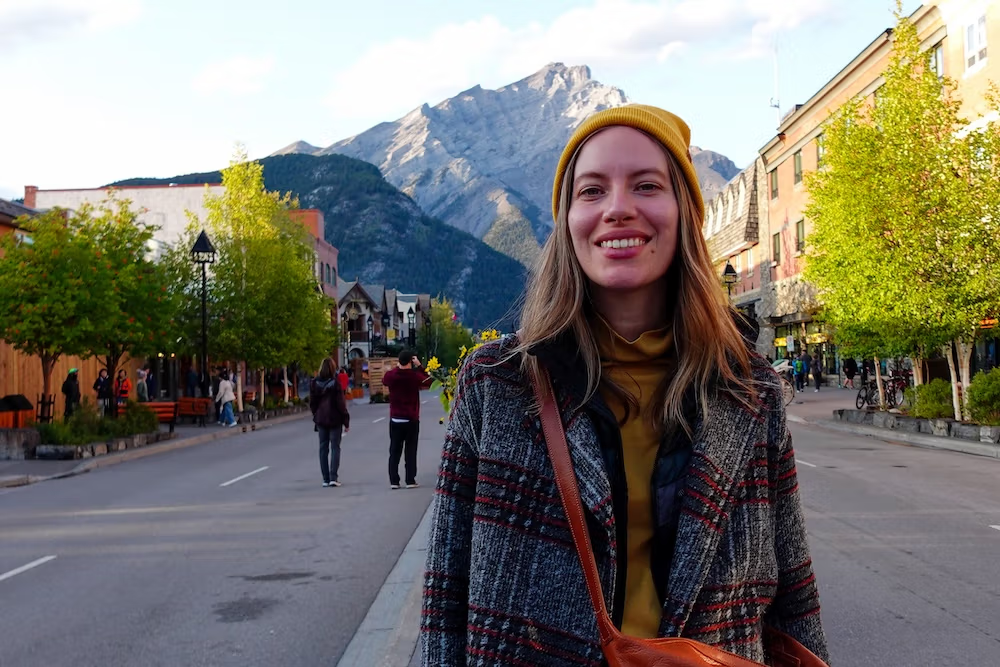
The town-based trip, just Audrey and me, was the one where the park won us over on its own terms rather than through any single spectacular moment. We spent four days doing what a first-timer does — walking the Bow River, wandering the Whyte Museum, eating well, seeing the obvious sights — and came away saying the place was anything but overrated, that we hadn’t even scratched the surface, already talking about coming back in winter. Four days wasn’t enough. I’m not convinced a week would have been either.
The private guided day with Daniel and our toddler daughter, and the six-day solo horseback trek into the backcountry, I’ve written about at length elsewhere, so I won’t retread either one here. What matters for this verdict is what each one proved, not how it felt in the moment. The guided day showed that the marquee sites remain genuinely reachable even with a toddler and a grandparent along, as long as the format bends around the group instead of the other way around. The horseback trek, which happened just last summer, showed that Banff’s back half is still exactly as remote as it ever was, if you’re willing to go looking for it — the frontcountry everyone photographs is only a sliver of the park; the rest of it is declared wilderness, and almost nobody who visits ever sees it.
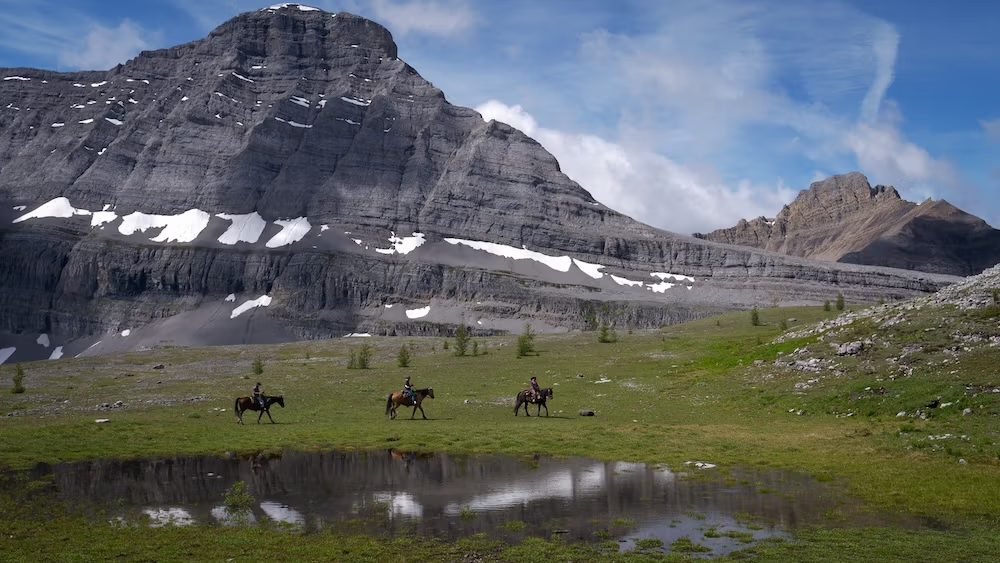
Still Possible to Hit the Icons, Dodge the Crowds, and Disappear Completely
Here’s what I actually want you to take from all four of these trips stacked together. The marquee sites are still reachable. Lake Louise and Moraine Lake haven’t closed, they’ve just changed how you get to them, and a bit of planning around the shuttle reservation system gets you there the same as it always did, just with a booking screen involved now instead of a parking-lot gamble. Avoiding the worst of the crowds even at those same sites is still genuinely possible, it just takes some intention about timing rather than dumb luck. And if what you actually want is to disappear completely — no cell service, no crowds, nobody else’s itinerary anywhere near yours — that’s still sitting there waiting too, and I know that firsthand from last summer, not from something I remember fondly from years ago. Banff Trail Riders is running the same style of multi-day backcountry lodge trips they were running when I rode with them, and if a few days off the grid sounds like your kind of proof that Banff still delivers, you can check current availability for a backcountry lodge trip by horseback and go from there.
So Who Is This Actually Worth It For?
| Trip style | Planning effort | Cost tier | Who it suits |
|---|---|---|---|
| Self-drive / independent | Moderate — book the reservation system ahead, otherwise flexible | Lower to moderate | A capable group that can share logistics and doesn’t mind driving |
| Town-based first visit | Low to moderate | Moderate | First-timers who want the classic Banff experience without a rigid itinerary |
| Guided / private family day | Low, once booked | Higher | Mixed-ability groups — toddlers, grandparents, anyone who needs the day to bend around them |
| Solo backcountry trek | Book well ahead | Higher | Anyone who actually wants to disappear for several days, not just see a lake |
If you’re weighing whether Banff is worth it for you specifically, the honest answer depends less on the park and more on which of those four rows describes your own trip. If the guided row sounds closest to your situation, you can see current availability for a private Lake Louise and Moraine Lake day and decide from there whether the format is worth the premium for your own group. What hasn’t changed across a decade and four completely different visits is that the place delivers, provided you match your approach to what it now actually asks of you. What has changed is that showing up without a plan and hoping for the best stopped being a viable strategy somewhere around 2018, and it isn’t coming back. Plan for the Banff that exists now, not the one I stumbled into as a kid, and it’s still very much worth the trip.
Frequently Asked Questions
Is Banff still worth visiting despite how crowded it’s become?
Yes. The crowds and rules have changed how you plan a visit, but they haven’t taken away what makes Banff worth the trip. I still think it delivers, provided you match your approach to what the park now actually asks of you.
How has Banff changed since Samuel first started visiting?
Quite a bit. A mandatory reservation system for Lake Louise and Moraine Lake arrived in 2018, and Moraine Lake Road has been closed to personal vehicles since 2023, a permanent policy rather than a temporary one. Vehicle traffic on Lake Louise Drive rose more than 70 percent between 2010 and 2019, and the park recently posted another visitation record. The early 2010s, when I could generally find parking at Lake Louise without much trouble, are long gone.
Can you still visit Lake Louise and Moraine Lake without driving yourself?
Yes. Both lakes remain reachable through the shuttle reservation system or a private guided tour, even though personal vehicle access to Moraine Lake Road is no longer allowed.
Is it still possible to avoid the crowds at Banff’s main sites?
Genuinely, yes, though it now takes some intention about timing rather than the good luck it used to take. The marquee spots haven’t disappeared, they’ve just stopped rewarding a completely unplanned visit.
Can you still experience Banff completely off the grid?
Yes. My six-day backcountry horseback trek last summer proved that firsthand, not from memory of something that used to be possible. Banff’s backcountry makes up the vast majority of the park, and very few visitors ever see it.
Is a self-drive Banff trip still a good option?
It can be, as long as everyone in your group can share the driving and the planning. That’s exactly what worked on our own self-drive road trip, before the newer reservation rules would have added any real friction.
Is Banff worth visiting without doing the big lakes?
Absolutely. Our four-day, town-based trip never touched Lake Louise or Moraine Lake and we still came away calling the place anything but overrated, without feeling like we’d even scratched the surface.
This article is also available in Spanish. [Leé la versión en castellano: ¿Vale la pena visitar Banff? Nuestro veredicto honesto después de varios viajes muy diferentes]
This article contains affiliate links. If you book through one of these links, I may earn a commission at no extra cost to you.