
Choosing where to stay in Banff sounds simple until you actually start looking at a map.
Do you pay more to stay right in Banff town so you can walk to dinner and leave the car alone? Do you sleep in Canmore, where there is a much bigger accommodation scene but you are technically outside Banff National Park? Do you split the difference somewhere like Harvie Heights? Or do you go all-in on Lake Louise because your trip is really about lakes and hiking rather than nights on Banff Avenue?
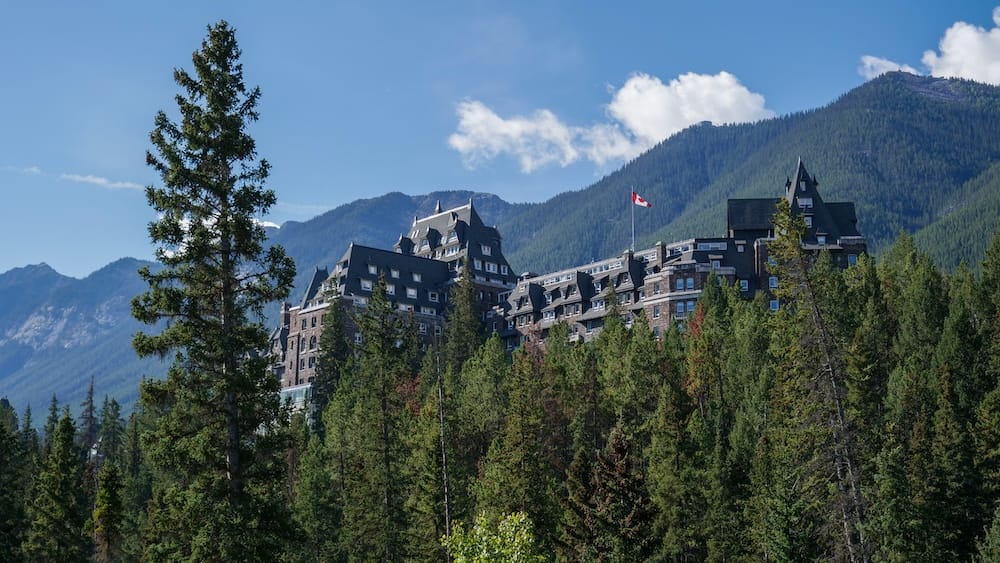
We’ve approached Banff accommodation in several different ways over the years. Audrey and I have stayed in a hostel in Canmore, we’ve used an Airbnb farther out in Cochrane, and on our most recent multigenerational trip with Aurelia and Audrey’s dad we stayed in a two-bedroom suite in Harvie Heights. I’ve also slept inside Banff National Park at Sundance Lodge and Halfway Lodge, although those were reached on horseback and belong in a rather different accommodation category.
What we have not done is sleep in a Banff town hotel or overnight at Lake Louise. We know both places well from repeated visits, but I’m not going to pretend that walking through a hotel lobby counts as spending the night there.
That distinction matters because this guide is not really about finding the hotel with the fanciest lobby. It is about choosing the right base first, the right area second, and then the right hotel or accommodation style within it. Get the first decision wrong and you may spend several days compensating for it.
Where Should You Stay for a Banff Trip? Choose the Base Before the Hotel
There is no single best place to stay for every Banff trip. For some travellers, paying for a Banff town location makes complete sense because it removes a lot of transportation friction. For others, a larger condo-style unit in Canmore or Harvie Heights may improve the trip far more than being able to walk five minutes to Banff Avenue.
Lake Louise is another proposition entirely. It can put you much closer to the lake, hiking and northern parts of Banff National Park, but you give up much of the dining and evening flexibility of Banff town.
This is the basic decision I would make before getting emotionally attached to any particular hotel:
| Base | Best suited to | Car dependence | Main advantage | Main compromise |
|---|---|---|---|---|
| Banff town | First visits, car-free trips, short stays, travellers who like walking to meals | Low to moderate | Convenience and walkability | Often less space for your money |
| Canmore | Longer stays, travellers wanting more accommodation formats, condo-style stays | Moderate | Large accommodation selection and a full town of its own | Extra travel into Banff National Park |
| Harvie Heights | Families, groups and travellers prioritizing space with a car | High | Spacious accommodation close to the park side of Canmore | Very little you can walk to |
| Lake Louise | Lake-focused trips, hikers and travellers prioritizing northern park access | Moderate | Strategic position near Lake Louise and major hiking | Limited evening and dining choice compared with Banff or Canmore |
I would not treat those as rankings. They solve different problems. Banff town removes friction, Canmore gives you more ways to sleep, Harvie Heights can give you breathing room, and Lake Louise puts you closer to a specific part of the park. The important question is which problem you are actually trying to solve.
If you already know that convenience is your priority, you can compare current Banff hotel availability. If you are still weighing the bases, I would keep going before booking anything.
Staying in Banff Town: The Most Convenient All-Round Base
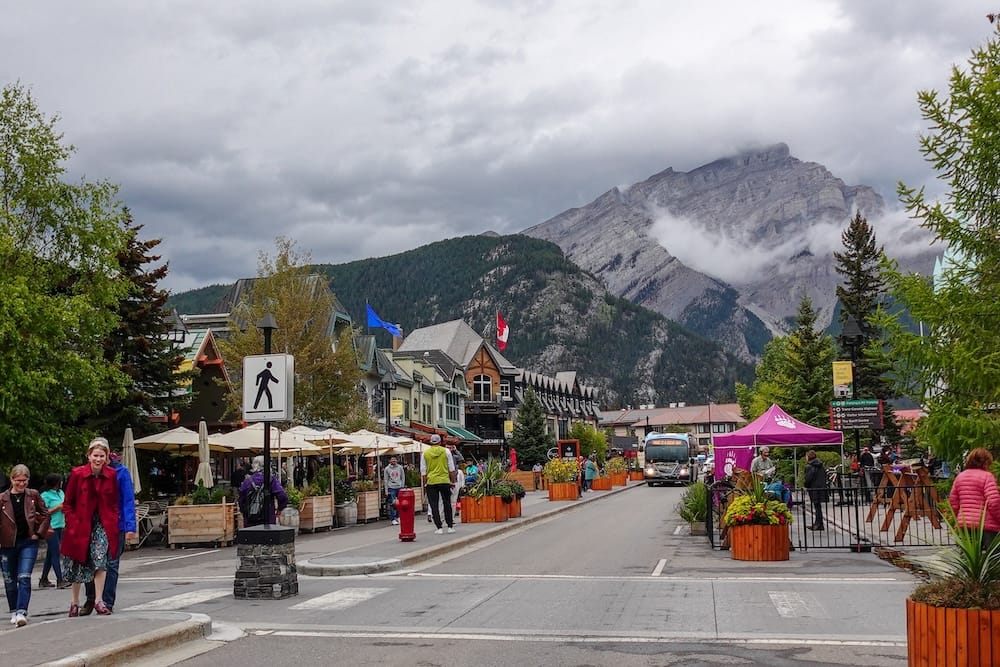
If somebody told me they were visiting Banff for the first time, did not know exactly how their days would unfold and wanted the least complicated base possible, Banff town would be the easiest place to explain. It is compact, you can walk to restaurants, cafés, museums, shops and the Bow River, and a lot of what makes Banff town enjoyable happens within a fairly small footprint.
We’ve spent full days there without needing to drive between every stop. We’ve walked the river, wandered around downtown, visited museums, eaten our way through restaurants and used the town as the jumping-off point for activities farther afield. That convenience becomes even more valuable after a long sightseeing day.
It is one thing to say, “We can save some money by staying farther away.” It is another thing to return exhausted after ten hours around Lake Louise, Moraine Lake or the Icefields Parkway and realize you still have another drive before dinner. Staying in Banff town gives you the option of parking the car and being done with it for the evening.
Central Banff Avenue and downtown
If walkability is the whole reason you are paying to stay in Banff, this is where that advantage is strongest. The centre of Banff is small enough that a well-positioned hotel can put restaurants, coffee, shopping, the Bow River and much of the town sightseeing within walking distance.
That does not mean a car becomes useless. Banff National Park is enormous compared with the townsite, and most visitors still want to reach places far beyond downtown. Accommodation in the centre can, however, change how often you need that vehicle.
That matters because parking in Banff is not something I would build an entire holiday around. Visitor parking in the central area is paid, although there are longer-stay options farther from the busiest streets, including parking around the train station. If your hotel lets you leave the vehicle there while you explore town on foot, that is a meaningful benefit rather than a decorative hotel amenity.
The same applies to public transport. Banff has a local Roam Transit network, and a number of participating hotels currently provide guests with local transit passes. That makes it possible to stay slightly outside the core without automatically turning every outing into a driving exercise. For a short first visit, I would put a surprisingly high value on that.
Upper Banff Avenue
As you move farther up Banff Avenue, the equation starts changing. You are still very much in Banff town, but you trade a little of the step-out-the-door downtown convenience for a broader hotel zone. This can be a good compromise for travellers who want to stay in Banff proper without necessarily paying for the most central position available.
The key is not to look at the hotel name and assume that “Banff” means “right beside everything.” Check where the property actually sits. How far are you willing to walk for dinner? Does the property participate in local transit? Are you likely to drive into the centre anyway? Does the hotel charge for parking, include it or have limited spaces?
Those details sound boring when you are booking a mountain holiday. They become considerably more interesting when you are standing beside your rental car at 8:30 at night wondering where to leave it.
Tunnel Mountain
Tunnel Mountain is where Banff accommodation begins to feel different. You are still close to town, but this area lends itself more naturally to resort-style and condo-style accommodation. Some properties offer kitchens, multi-bedroom units and more residential-feeling layouts than the classic downtown hotel room.
For a couple on a short trip who plans to spend every evening wandering downtown, the position may feel like a sacrifice. For a family staying several nights who would happily exchange a five-minute restaurant walk for separate bedrooms and a proper kitchen, it could be the smarter choice. Local transit helps narrow that gap, particularly at properties participating in Banff’s guest-pass program.
This is why I would resist saying that one Banff “area” is universally better than another. A central location is not automatically superior if the room itself makes the rest of your trip harder.
South of the Bow River
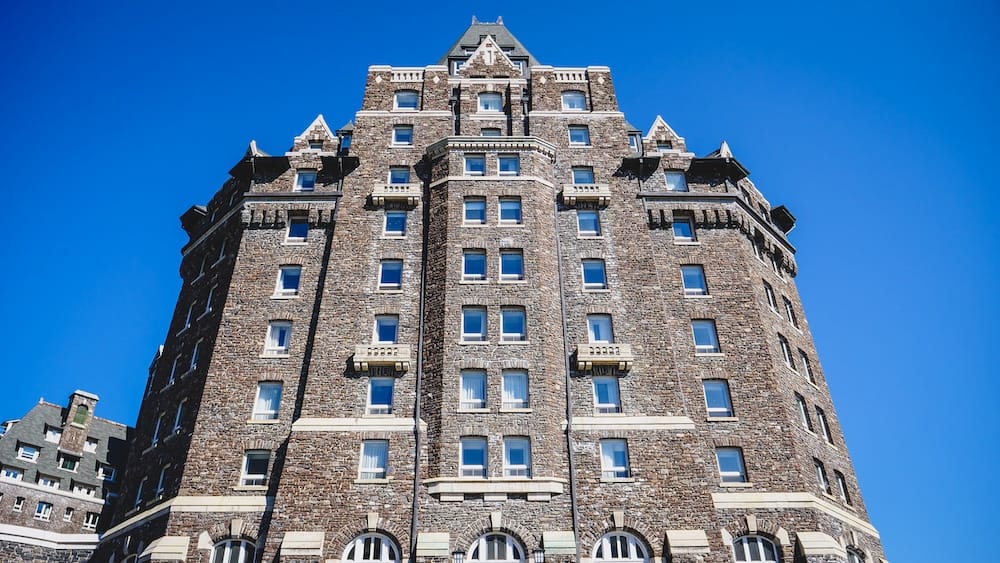
There is also a different style of Banff stay south of the river, where resort-style properties such as Fairmont Banff Springs sit apart from the core Banff Avenue accommodation strip. We’ve visited the Banff Springs Hotel while sightseeing, but we have never stayed there, so I would not turn that visit into a hotel review.
What I can say is that this part of town serves a different traveller. You are choosing a destination property and setting rather than maximum downtown convenience. You can still get into central Banff easily enough, but that is not the same as walking out of your hotel and immediately being surrounded by Banff Avenue restaurants and shops. That may be exactly what you want.
Staying in Canmore: A Real Alternative, Not a Banff Neighbourhood
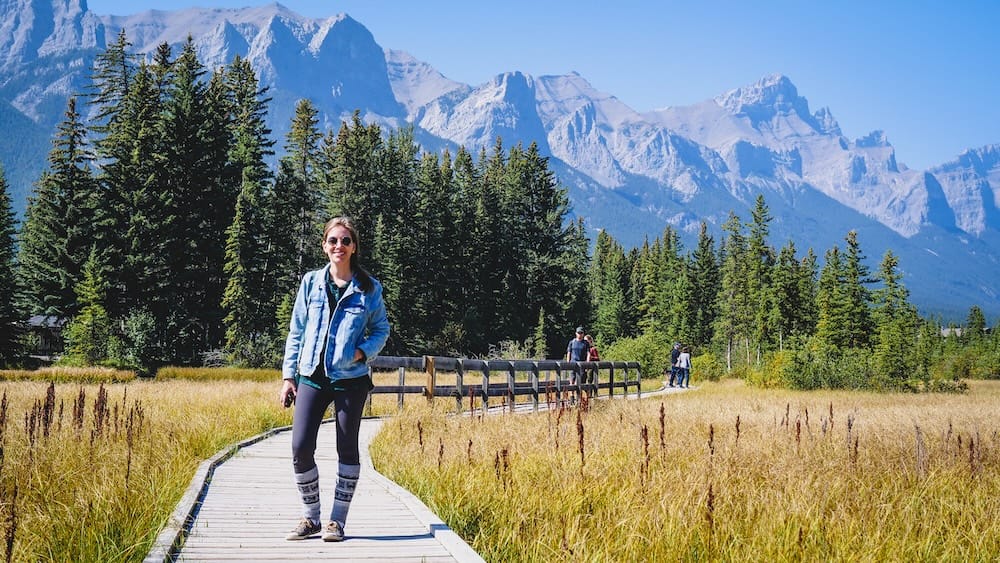
Canmore is probably the most obvious alternative to staying in Banff, but I think it is important to frame it correctly. Canmore is not an outer Banff neighbourhood; it is its own mountain town with restaurants, cafés, trails, grocery stores, accommodation and a completely separate identity.
Audrey and I have stayed in a hostel there, and we’ve visited Canmore on other trips as well. It works perfectly well as a base for exploring Banff National Park, but you should choose it because you like what that arrangement gives you—not because somebody on the internet told you it is automatically the cheap version of Banff.
Sometimes it will cost less, and sometimes the property type may give you far more space for your money, but hotel prices move around far too much for me to promise that Canmore will always be cheaper on your dates. The more reliable difference is inventory and accommodation style.
Canmore has a very deep accommodation market, including regular hotels, hostels and a large number of suite- and condo-style properties. That can be especially appealing for longer trips, families or anyone who wants bedrooms, a kitchen and laundry rather than one conventional hotel room. If that sounds more like your trip, compare current places to stay in Canmore before assuming Banff town is automatically the better base.
Downtown Canmore and walkable evenings
If you want Canmore to function as more than a place where you sleep beside your rental car, staying near downtown makes a lot of sense. You can walk out for meals, coffee or an evening wander instead of driving into town every time you need something.
For me, that is one of the most important distinctions when evaluating Canmore accommodation. A spacious condo ten minutes from restaurants and shops can be fantastic if you have a vehicle and want space; it is less appealing if your mental picture was that you would park once and spend the evening wandering around town.
The same principle applies in Banff, but the accommodation footprint in Canmore is much broader, which makes looking at the actual location even more important.
Canmore without a car is possible—but not identical to Banff
One outdated simplification I would avoid is saying that you absolutely need a car if you stay in Canmore. Roam currently operates its regional Route 3 between downtown Canmore and downtown Banff every day, while Canmore also has fare-free local transit routes within town.
That makes a car-free Canmore stay genuinely possible. The catch appears when your itinerary moves beyond Banff town. For example, the regional Lake Louise express originates in Banff, so if you are staying in Canmore and relying entirely on public transit, reaching Lake Louise can involve connecting through Banff rather than beginning that part of your day directly from your accommodation base.
That is not a dealbreaker; it is simply friction. If most of your days involve Banff town and you enjoy staying in Canmore, that may be perfectly acceptable. If your trip is built around repeated early starts deeper inside the national park, those extra connections begin to matter more.
This is where the accommodation decision stops being about whether Canmore has nice hotels. Of course it does. The more useful question is whether its location helps or complicates your particular Banff itinerary.
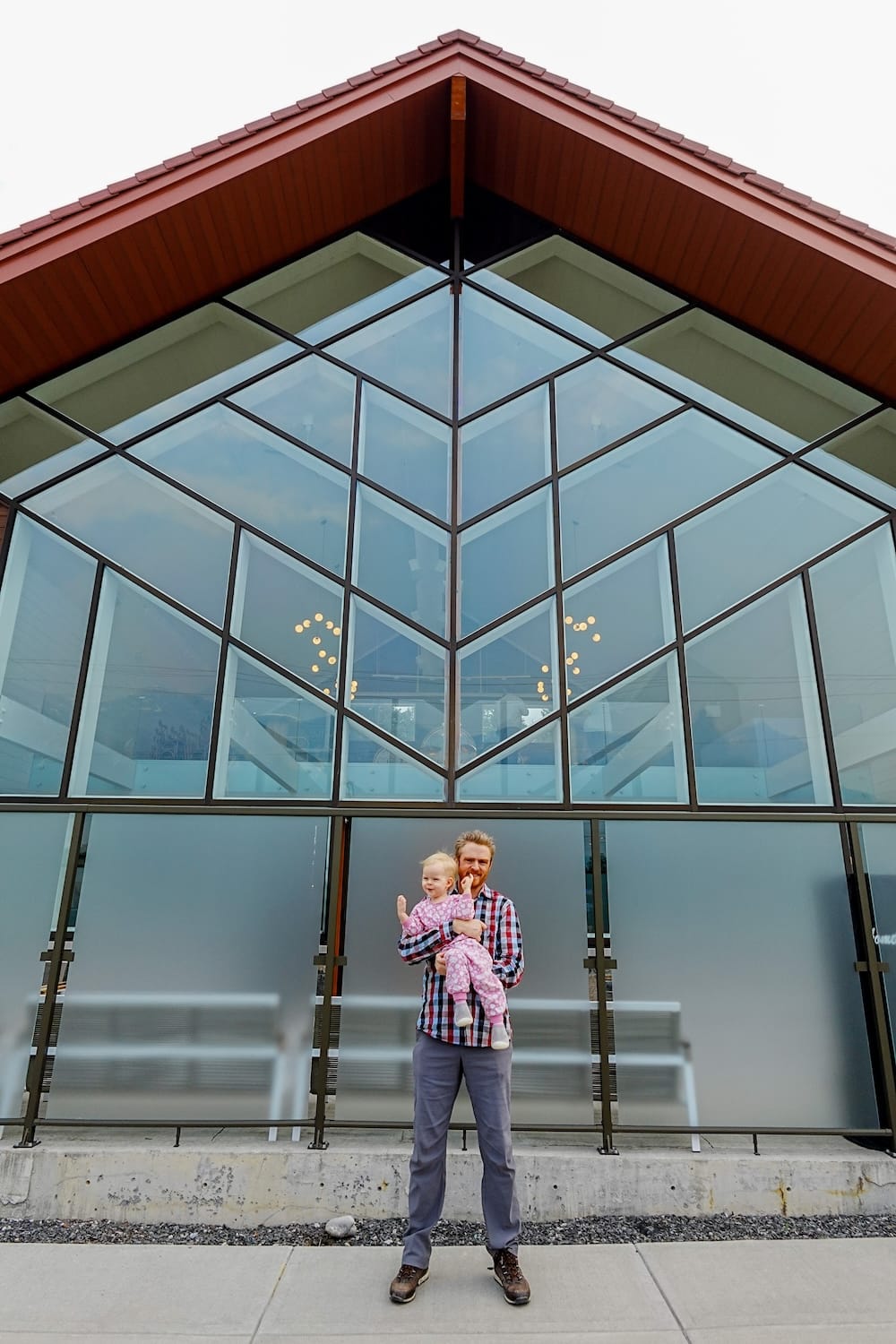
Staying in Harvie Heights: Space Near the Park, With a Trade-Off
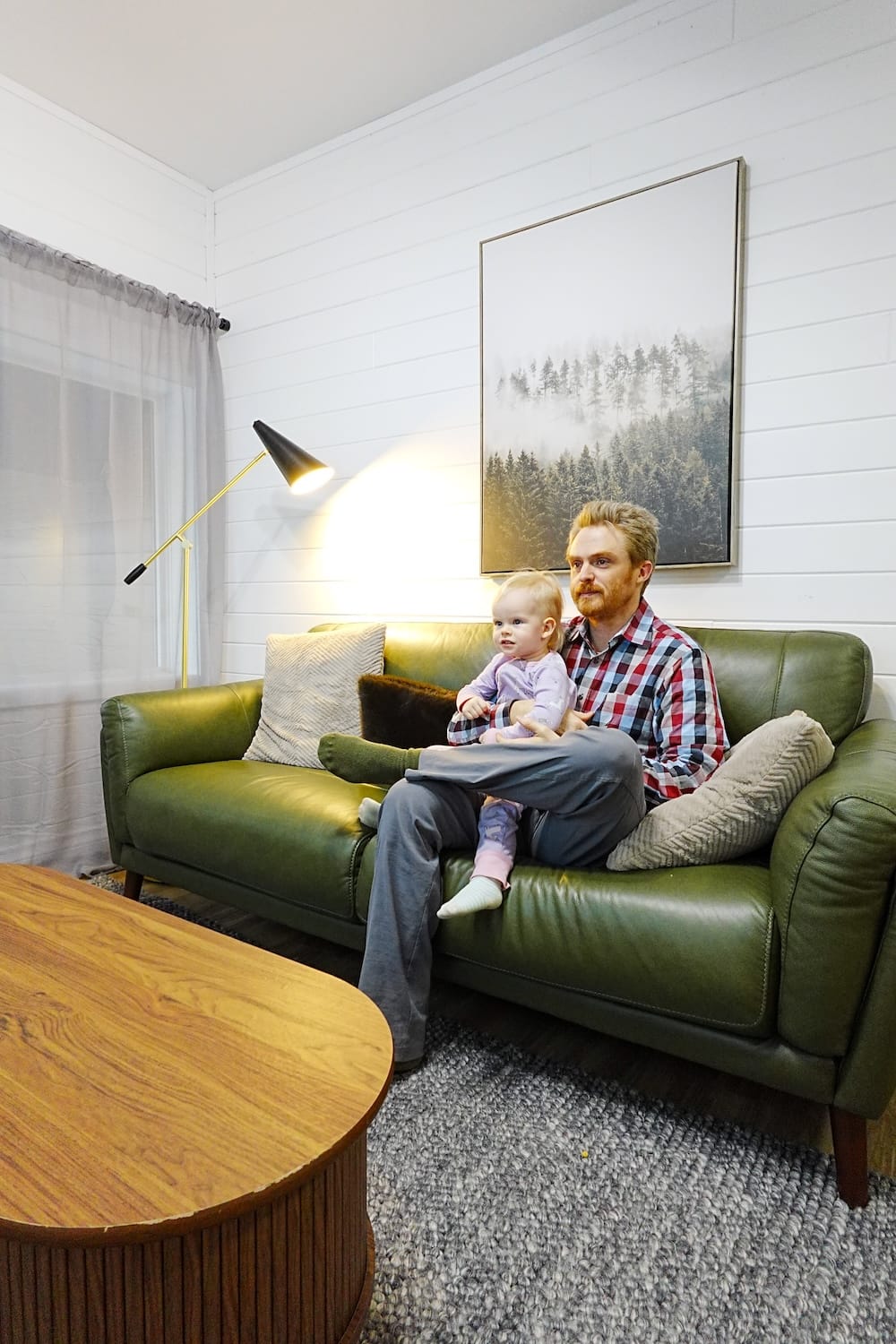
Harvie Heights is the accommodation choice I can speak about most directly because this is where we stayed on our recent multigenerational Banff trip. We were travelling with Audrey’s dad and our toddler, Aurelia, so a single traditional hotel room would have been a pretty miserable experiment in family togetherness.
Instead, we stayed at The Gem in Harvie Heights in the Jade Suite. It had two floors, two bedrooms, shared living and dining space, a small kitchenette and two bathrooms. The second bedroom had twin beds, while Audrey, Aurelia and I used the main bedroom.
We were very comfortable there, and after doing this trip with three generations, I came away thinking that accommodation layout deserves far more attention than it usually gets in Banff hotel guides.
A hotel can have an infinity pool, three kinds of artisanal soap and a decorative moose in the lobby. Wonderful. But if one person wants to sleep, another wants to eat and a toddler wants to continue her campaign of climbing every staircase she can find, having actual separate spaces starts looking pretty luxurious.
Our suite gave us somewhere to come back to after long days and actually decompress. That mattered.
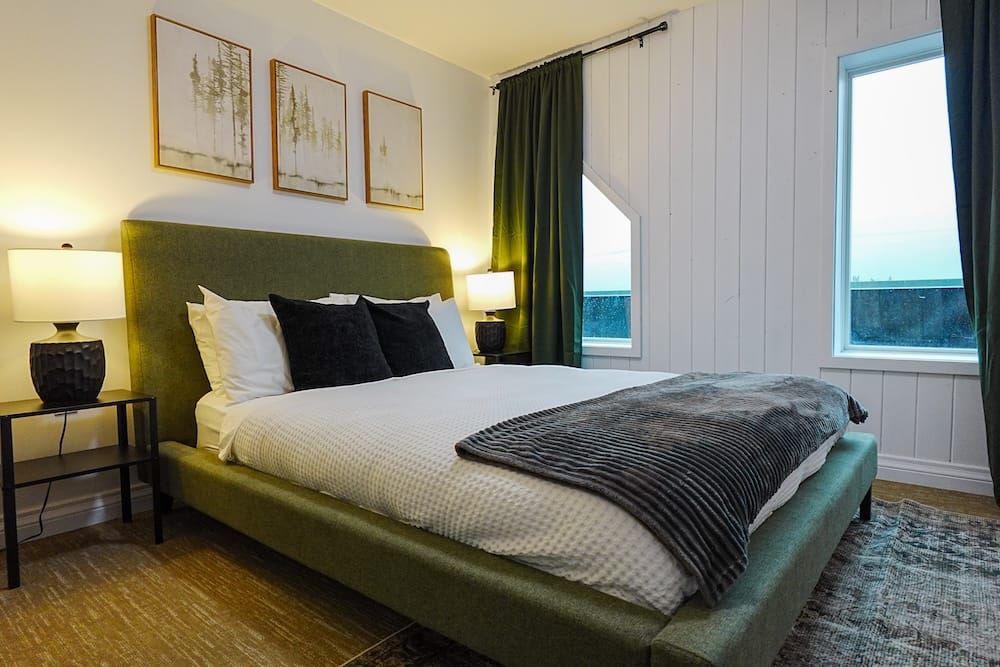
Why Harvie Heights worked for us
Harvie Heights sits immediately outside Canmore on the Banff side of town, which made it useful for the type of trip we were doing. We had a vehicle, we were not looking for nightlife, and we were not planning to walk downstairs and spend the evening restaurant hopping. What we wanted was space and comfort.
That is the key to Harvie Heights. I would not choose it because I wanted the most walkable base; I would choose it precisely because I was willing to give up walkability for a different kind of accommodation.
The current Roam network does not list Harvie Heights as one of its scheduled communities or stops, so I would treat this as a car-oriented base unless your individual accommodation provides some other transport arrangement. For us, that was fine. We had our own transportation, and the setup worked beautifully. Someone planning a completely car-free Banff trip would look at the same location and probably reach a very different conclusion.
Do not simply call Harvie Heights “Canmore”
This sounds picky until you start comparing accommodation. Harvie Heights is its own small hamlet, outside Banff National Park and separate from Canmore, which means you should not book a property there expecting to walk out into downtown Canmore.
The Gem still operates in Harvie Heights and currently advertises ten two-bedroom suites. I would check the exact current unit layout before booking rather than assuming every detail is identical to the Jade Suite we stayed in. There are also simpler accommodation options in Harvie Heights, including chalet-style units.
It is a small accommodation system, not a full town, and that distinction is exactly why it works for some travellers and not for others. If you like the idea of this park-edge compromise, you can compare current Harvie Heights accommodation rather than assuming every nearby listing is actually in Canmore.
Staying at Lake Louise: When Proximity Changes the Trip
Lake Louise is the base where I think people are most likely to let the name make the decision for them, and I understand why. You are staying at Lake Louise. That sounds pretty spectacular.
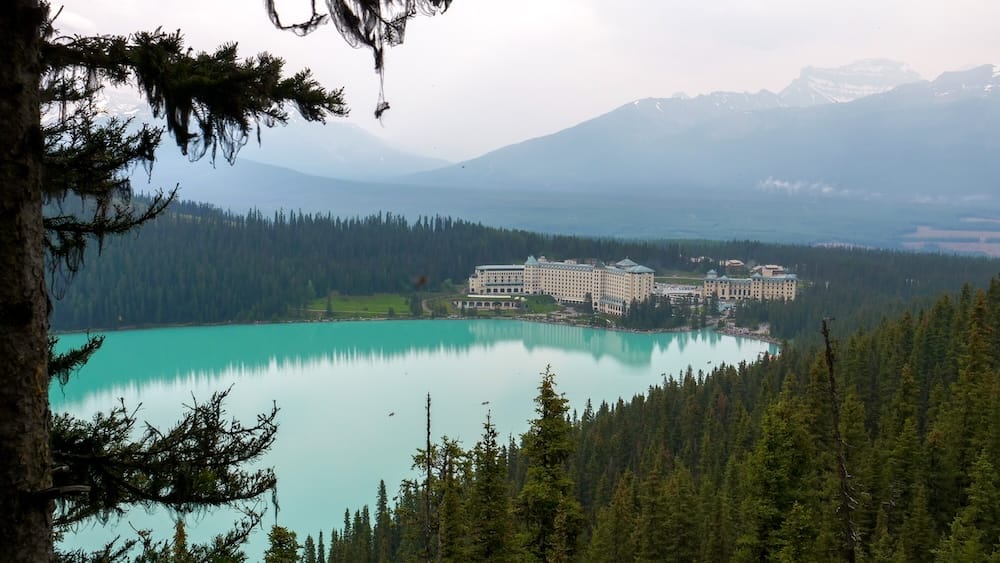
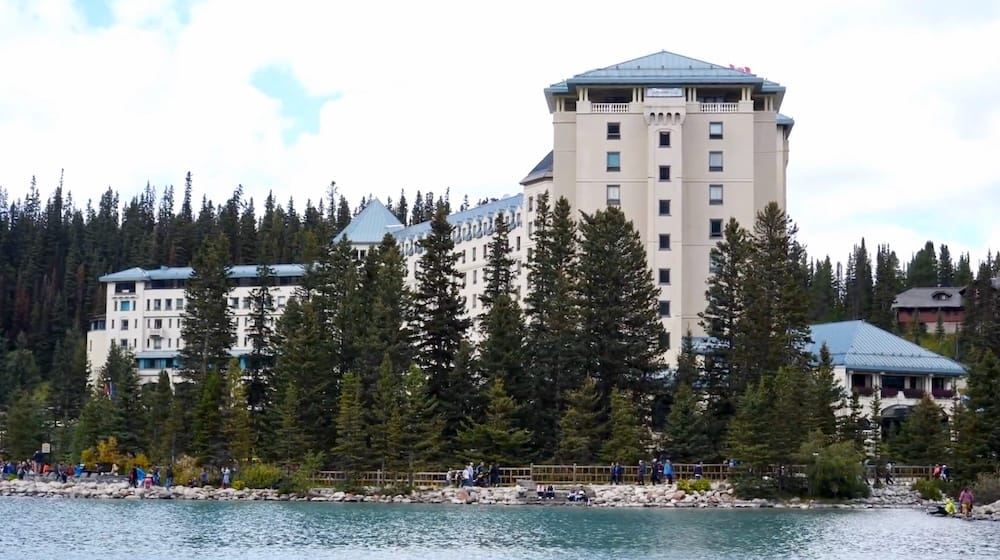
We’ve visited the lake multiple times and spent considerably more time there on our recent trip than on our first visit. We have also seen Fairmont Chateau Lake Louise from just about every angle except the one that involves waking up in a room there, so I can speak confidently about the area without pretending to review the overnight experience.
What makes Lake Louise interesting as a base is not simply that it is beautiful. It is that sleeping there can alter the geography of your trip.
Lake Louise Village versus the lakeshore
These are two very different accommodation positions. Lake Louise Village is the practical service centre, with accommodation that can work as a functional base for the lake, nearby hiking and trips farther north or west. The lakeshore is something else.
A property such as Fairmont Chateau Lake Louise puts you directly beside one of Banff National Park’s most famous landscapes. You are paying for that position as much as the room itself, and that can be a meaningful advantage if Lake Louise is central to your plans.
Maybe you want an early hike, want to spend substantially more time around the lake rather than treating it as a quick sightseeing stop, or have an itinerary pointing toward the Icefields Parkway or Yoho National Park rather than repeatedly returning to Banff town. In those cases, the location can make sense. If your plan is mostly Banff town, restaurants, the Gondola and attractions farther south, Lake Louise becomes much less obviously convenient.
Staying nearby does not erase the access rules
There is also a trap here. Sleeping at Lake Louise does not mean the national park’s lake-access system disappears.
For summer travel, Parks Canada continues to manage Lake Louise and Moraine Lake through a combination of parking restrictions and shuttle systems. General personal-vehicle access to Moraine Lake Road remains prohibited, so I would not book accommodation at Lake Louise thinking, “Great, now I can just drive wherever I want.” That is not how it works.
There are highly specific exceptions—for example, registered guests of Moraine Lake Lodge can currently access Moraine Lake Road under the lodge-guest rules—but those exceptions belong to that accommodation and should not be generalized to every Lake Louise hotel.
Roam also operates year-round service between Banff and Lake Louise, with stops serving both the village and lakeshore. Lake Louise is therefore not automatically a car-only base; it is simply a more specialized one.
Who should actually stay at Lake Louise?
I would put Lake Louise highest on the list for travellers whose itinerary is disproportionately focused on this part of the park. Hikers are the obvious example. If several of your most important days begin around Lake Louise, positioning yourself nearby can remove repeated travel from Banff or Canmore.
The same logic can work for a trip leaning heavily toward Moraine Lake, Yoho or the northern section of Banff National Park. If you want maximum restaurant choice, easy evening wandering and a broader town experience, however, I would lean toward Banff or Canmore instead.
Lake Louise is not where I would stay merely to say I stayed at Lake Louise. The location should earn its place in the itinerary. If it does, you can compare current Lake Louise accommodation across the village and surrounding area.
How Far Outside Banff Is Too Far?
This is where accommodation searches can get dangerous. Banff can be expensive, so you zoom the map out, prices start dropping, and you zoom out a bit farther. Suddenly you have saved money on a room and quietly purchased yourself a part-time commuting job.
We have stayed as far out as Cochrane in connection with our Alberta and Rockies travels, so I am certainly not saying you cannot sleep farther from Banff. You can. The better question is whether you want to repeat that distance every morning and evening.
For a one-night positioning stay, arrival day or departure day, somewhere farther out can make complete sense. As a base for several consecutive days inside Banff National Park, I would think much more carefully. The nightly rate is only one cost; there is also fuel, driving time, fatigue and the opportunity cost of spending the first and last chunk of every sightseeing day in transit.
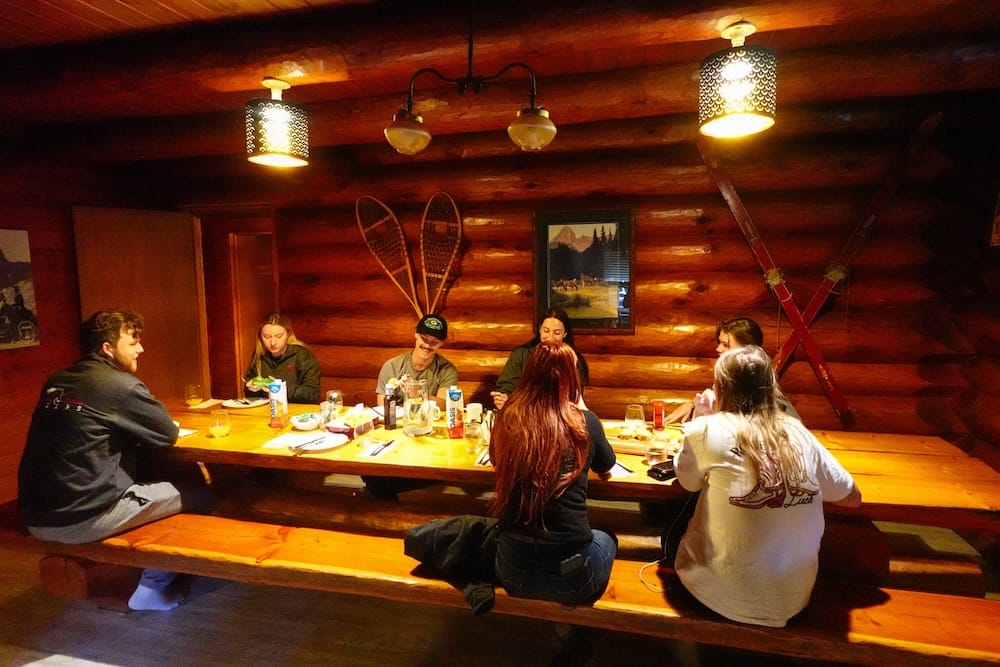
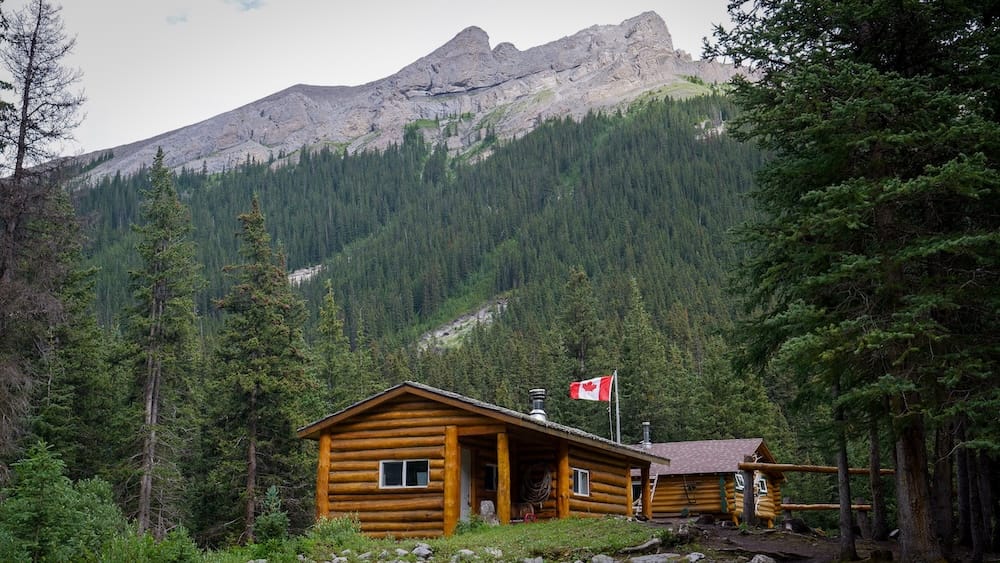
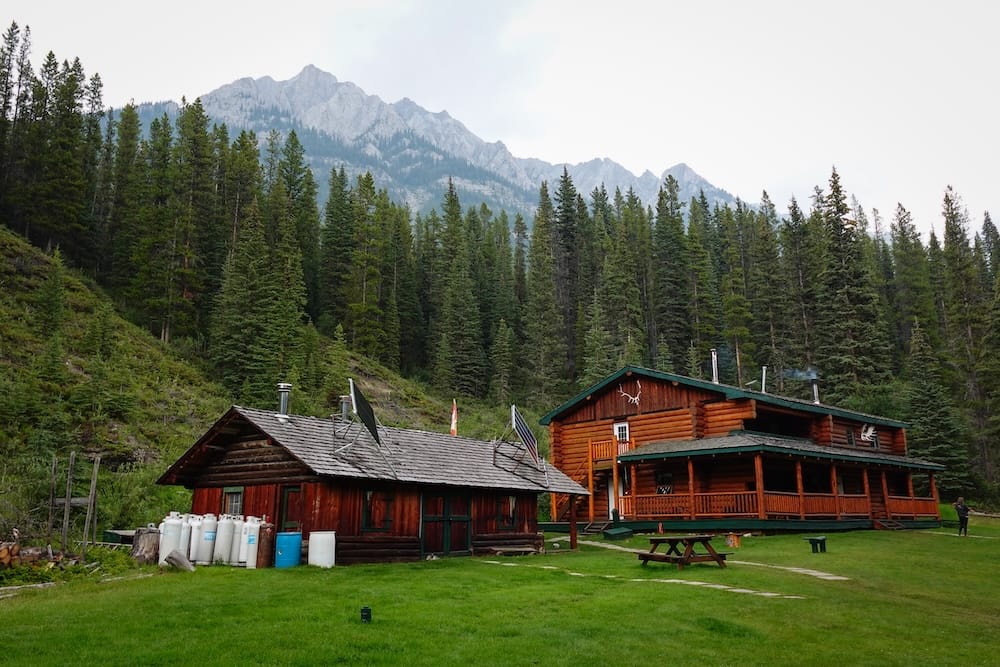
The same principle applies in the opposite direction. I have also slept deep inside Banff National Park at Sundance Lodge and Halfway Lodge during my six-day horseback trek. Those were some of the most memorable accommodations I have experienced in Banff, particularly Halfway Lodge with its remote, rustic setting, but they are not substitutes for a Banff town hotel. You reach them as part of a backcountry experience, and the accommodation is part of the adventure itself.
For a normal sightseeing trip, I would keep the main accommodation decision focused on Banff town, Canmore, Harvie Heights and Lake Louise. Anything farther out should have a specific reason for being there. Saving money is a reason—just make sure you calculate what you are giving back.
Best Banff-Area Hotels and Stays by the Kind of Trip You’re Taking
Once you know which base works, choosing a property becomes much easier. I would not start by trying to determine whether Hotel A is objectively better than Hotel B because Banff accommodation is too varied for that to be particularly useful. A central hotel room, a two-bedroom condo, a hostel bed and a lakeshore luxury resort are barely competing for the same traveller.
Instead, I would match the property to the problem you are trying to solve.
For a first Banff trip where convenience matters most
A central Banff hotel makes the most sense when you want the town itself to be part of the experience and do not want every meal or evening activity to involve transportation.
Moose Hotel & Suites is a useful example of that combination. It is on Banff Avenue and offers standard hotel rooms as well as one- and two-bedroom suites with kitchenettes, which makes it interesting for travellers who want a central Banff location without automatically squeezing everybody into one traditional room. If that balance appeals to you, check current rooms and availability at Moose Hotel & Suites.
Elk + Avenue Hotel is another very central option. Its location is the main appeal: you are right in the middle of town, which can be particularly useful on a short first trip. The trade-off is worth noticing because parking there is currently paid and space-limited, a good reminder that “central Banff hotel” does not automatically mean “free and effortless parking.” You can compare current Elk + Avenue room options if location is the priority.
If your main concern is being able to walk out for breakfast, come back to the room during the day and go to dinner without moving the car again, this is the accommodation category I would look at first.
For a Banff stay with more family or group space
Centrality is not always the winning variable. Once you have children, grandparents, friends or several nights together, the difference between “room” and “living space” becomes much more significant.
Hidden Ridge Resort on Tunnel Mountain is a good example. Its condo-style units include full kitchens and larger configurations, which makes it fundamentally different from booking two beds in a conventional downtown room. It is not as immediately walkable as Banff Avenue, but local transit helps compensate for that, and travellers who value space can check current Hidden Ridge Resort accommodation.
This is exactly the kind of situation where I would ask what I value more: being able to walk to dinner in a few minutes or being able to close an actual bedroom door. After our Harvie Heights stay, I have more sympathy for the second option than I used to.
For hostel and budget-oriented travellers
Banff has not magically become a budget destination, but hostel accommodation can at least change the numbers and give solo travellers another way to approach the park.
HI Banff Alpine Centre offers both shared and private accommodation along with a communal kitchen. Its location is outside the central downtown core, but the current local-transit arrangement helps make that less awkward. Travellers looking at the hostel route can check current availability at HI Banff Alpine Centre.
If you prefer Canmore, Canmore Downtown Hostel is another current option with dorms, private rooms, a communal kitchen and a much more central Canmore position. You can compare current rooms and dorm availability at Canmore Downtown Hostel.
Audrey and I have stayed in a Canmore hostel ourselves, though I am not using that old stay to review either of these current properties. What I can say from experience is that a hostel base can make sense when most of your waking hours are going to be spent outside anyway.
I have done some very unglamorous sleeping in the Rockies and still had spectacular trips. The mountain does not check your thread count before letting you look at it.
For Canmore with more apartment-style functionality
This is where Canmore becomes particularly strong. There are a lot of properties designed around longer stays, kitchens and multiple bedrooms rather than simply sleeping two people in one room.
Blackstone Mountain Lodge is a useful example because its larger units include full kitchens, with one- and two-bedroom apartment-style configurations among the current room options. For families who need more than a standard hotel room, you can compare current Blackstone Mountain Lodge room types.
For a family staying several nights, practical features stop being boring surprisingly quickly. So does a kitchen. If you are travelling with a toddler, somebody with dietary restrictions or simply people who cannot face another restaurant meal, being able to make breakfast or throw together something basic can become part of the reason the accommodation works.
The Malcolm Hotel represents another side of Canmore: a more traditional full-service hotel experience in the Spring Creek area, close enough to downtown that you can still enjoy the town itself. If you want Canmore without committing to a condo-style stay, check current availability at The Malcolm Hotel.
That distinction is important. Choosing Canmore does not necessarily mean choosing a condo complex on the outskirts.
For Harvie Heights and multigenerational space
This is where I can make the clearest distinction between something I have actually experienced and something I have researched.
We stayed at The Gem.
For our family setup, it worked extremely well. Having two bedrooms, multiple bathrooms and common space gave four people across three generations room to coexist without turning bedtime, snacks and getting ready in the morning into a logistical exercise.
The current property still focuses heavily on two-bedroom accommodation, but I would check the exact suite configuration you are booking rather than assuming it matches our Jade Suite detail for detail. That is especially true if bedroom arrangement or bathrooms are the reason you are choosing it.
Rundle Chalets is another Harvie Heights option at the simpler end of the spectrum, with chalet-style accommodation and kitchenette facilities.
The broader Harvie Heights trade-off remains the same regardless of property. You are not booking it for a lively pedestrian neighbourhood; you are choosing a small base where the accommodation itself may give you more of what you need. For us, that was a good exchange.
Because the individual inventory is smaller and can change, I would compare current Harvie Heights stays for your dates rather than forcing one researched property to fit every family or group.
For Lake Louise when location is the whole point
If you are going to pay to stay at Lake Louise, I would make sure you are actually using the location.
Fairmont Chateau Lake Louise is the obvious lakeshore example. You are directly beside Lake Louise rather than commuting to it from Banff or Canmore. I have visited the property and walked around it, but I have never stayed there, so this is not a personal hotel review. Its appeal is still easy to understand: the setting itself is part of what you are buying.
It is also a property where I would read the live booking terms carefully. Parking and additional hotel fees apply, and those costs can change. I would rather check the current total when booking than publish a number here that ages badly. If the lakeshore location is what you are paying for, check current Fairmont Chateau Lake Louise rates and room availability.
For Lake Louise Village, Post Hotel & Spa offers a completely different experience. It is not sitting directly on the lakeshore, but it currently provides guest parking and a shuttle option, making it more of a village-based Lake Louise stay. You can compare current rooms at Post Hotel & Spa.
Lake Louise Inn is more practical again, particularly for travellers wanting a broader range of room styles, including larger suite and apartment-style options. If function matters as much as the destination name, check current Lake Louise Inn availability.
Those three properties illustrate why “stay at Lake Louise” is not one accommodation category. Lakeshore luxury, village hotel and functional family-style lodging solve different problems even though they share the same destination name.
What to Check Before Booking Accommodation Around Banff
Once I had narrowed down the base and a few possible properties, I would stop looking at pretty hotel photography for a moment. The small print can matter more.
Is parking actually included?
Do not assume that because a hotel has parking, the parking is free. Policies differ significantly even among properties in the same base. Some include guest parking, some charge for it, some have limited spaces and some combine several conditions.
That matters most when you are comparing a slightly more expensive central hotel against a cheaper property where you will be driving in and out every day. The room rate alone may not tell you which one is really the better fit, so I would check the live parking terms before booking, especially in Banff town and at Lake Louise properties.
Will the accommodation actually reduce how much you drive?
This is different from asking whether a hotel advertises a “great location.” Look at what you will actually do. Can you walk to dinner? Can you reach Banff Avenue without moving the car? Is there useful local transit outside the property? If you stay in Canmore, are most of your days centred on Banff town or are you repeatedly travelling deeper into the park?
A hotel can be perfectly located in relation to the town it sits in and still be inconvenient for your itinerary. That is why I keep returning to the base decision.
Kitchenette and full kitchen are not the same thing
I would read this carefully if cooking matters. A kitchenette may mean little more than a mini-fridge, microwave and sink. That is enough for storing snacks, preparing simple breakfasts and dealing with toddler food, but it is not the same thing as having a stove, oven and proper cooking equipment.
Some of the suite-style accommodation in Canmore, Tunnel Mountain and Harvie Heights offers much more complete kitchens. Whether that matters depends entirely on your trip. For two nights, I would probably not care; for a week with a family, I might care a lot.
Count actual bedrooms, not beds
This became much more obvious to me travelling with Audrey’s dad and Aurelia. A suite that technically sleeps six people is not necessarily a comfortable place for six people. A sofa bed in the living room counts toward occupancy; it does not create privacy.
If people have different bedtimes, a toddler naps, grandparents need quiet or somebody wakes up early, actual bedroom separation becomes much more useful than the maximum number beside the little person icon on the booking page. I would look at the floor plan where available, not just the occupancy number.
The same goes for bathrooms. Two bathrooms on a multigenerational trip is not extravagant. It is conflict prevention.
Think about your hardest morning, not your easiest evening
This is probably the accommodation test I find most useful. Picture the day with the earliest start or the farthest destination. Where are you sleeping the night before?
If you are planning several Lake Louise hikes, repeatedly starting in Canmore may bother you more than it would on a town-focused trip. If your schedule is built around Banff restaurants and easy evenings, staying at Lake Louise may create the opposite problem. If you have a private vehicle and want family space, Harvie Heights might fit beautifully, while a car-free traveller connecting to multiple regional routes may find Banff town much easier to justify.
Your hardest day often reveals more about the right base than your nicest hotel photo.
So, Where Would I Stay for a Banff Trip?
If it were my first short Banff trip and I wanted the simplest logistics, I would lean toward Banff town. The ability to walk to meals, spend time around town without continually parking and connect more easily with local and regional transport is valuable when every day is full. If that describes your trip, compare current Banff hotels by location and room type.
If I were staying longer and wanted more space, a kitchen or a broader range of accommodation, I would look hard at Canmore. I would just factor the extra movement into the park into the decision rather than pretending it does not exist. You can see current Canmore accommodation for your dates and compare that extra space against the transport trade-off.
For a family or multigenerational trip with a vehicle, I would happily consider Harvie Heights again. Our stay there changed the way I think about accommodation because the extra space was not merely nice to have; it made the trip easier.
If my itinerary revolved around Lake Louise, hiking and the northern side of Banff National Park, Lake Louise becomes much more compelling. I would pay for that location only if I was going to use it, and I would compare current Lake Louise stays before deciding whether the location premium makes sense.
And I would stay farther away only when there was a deliberate reason to do so.
The biggest mistake, in my opinion, is starting with “What is the best hotel in Banff?” There are too many different trips hiding inside that question.
Start with where you want to wake up, how you plan to move around and what you actually need from the room. Once those three things are clear, the hotel decision gets a lot easier.
Frequently Asked Questions
Where is the best place to stay in Banff for a first visit?
If I wanted the simplest logistics on a short first trip, I would lean toward Banff town. It gives you strong walkability for meals and sightseeing, plus easier access to local and regional transit without needing to move the car constantly.
Can you stay in Canmore without a car?
Yes. Canmore has local transit and a regional connection to Banff, so a car-free stay is possible. The trade-off is that trips deeper into Banff National Park, including Lake Louise, can involve extra connections compared with starting in Banff town.
Is Harvie Heights a good base for families?
It worked extremely well for our multigenerational trip because we had a vehicle and valued space more than walkability. Our two-bedroom suite at The Gem gave Audrey, Aurelia, Audrey’s dad and me separate sleeping areas, multiple bathrooms and shared living space.
Is it worth staying at Lake Louise instead of Banff town?
It can be when Lake Louise, hiking and the northern side of Banff National Park are central to your itinerary. You gain proximity to that part of the park, but Banff town offers more flexibility for restaurants, evening walks and a broader town experience.
Does staying at Lake Louise let you drive to Moraine Lake?
No. General personal-vehicle access to Moraine Lake Road remains prohibited, so staying at Lake Louise does not remove the access rules. Specific accommodation exceptions should not be assumed to apply to every Lake Louise hotel.
What should I check before booking accommodation around Banff?
I would check parking terms, how much driving the location actually saves, whether a kitchenette is a real kitchen, the number of separate bedrooms and bathrooms, and where you will be sleeping before your earliest or longest sightseeing day.
This guide is also available in Spanish. [Leé la versión en castellano: Dónde alojarse en Banff: mejores bases, zonas y hoteles para tu viaje]
This article contains affiliate links. If you book through one of these links, I may earn a commission at no extra cost to you.