
Once you have a full week in Banff, the planning problem changes. You are no longer staring at a map wondering what has to be cut. Now the map starts whispering increasingly ambitious ideas into your ear.
Columbia Icefield? Absolutely. Yoho National Park? There is finally room. Kananaskis? Well, technically yes. Keep following that logic and it is remarkably easy to turn seven days in the Canadian Rockies into seven consecutive endurance events, with everybody spending more time entering and exiting vehicles than actually enjoying the mountains.
I would use the extra time differently.
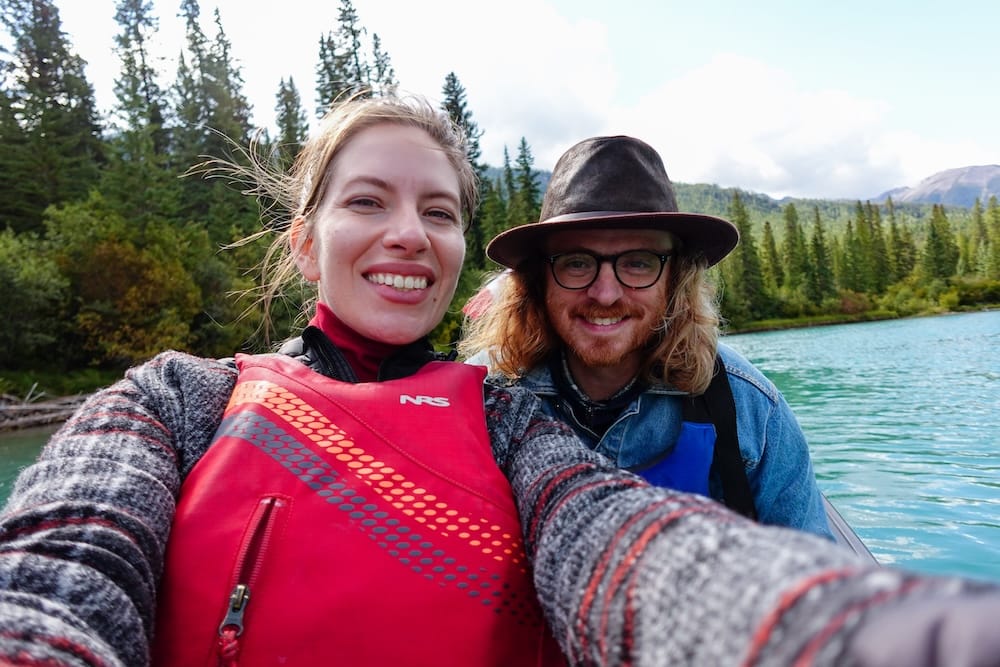
Audrey and I have explored Banff and the surrounding Rockies across several very different trips. We have spent time in Banff town, returned to Lake Louise and Moraine Lake, explored Lake Minnewanka and Cascade Ponds, travelled the Icefields Parkway to Columbia Icefield, crossed into British Columbia for Yoho National Park and visited Kananaskis on a wider Rockies road trip. I have also spent six days travelling through Banff’s backcountry on horseback, which was a useful reminder that the version of Banff most visitors see is only one layer of an enormous mountain region.
We did not follow the exact itinerary below as one continuous seven-day trip, so I am not going to manufacture a chronology that never happened. This is how I would put those experiences together now.
The crucial difference from my shorter Banff itineraries is that Columbia Icefield and Yoho National Park both belong in the week. You no longer need to choose one major regional excursion and sacrifice the other. But I would separate those big days with something closer to Banff, because having enough time to visit more of the Rockies is not the same thing as needing to drive huge distances every morning.
The rhythm I like is Banff first, then the headline lakes, a more local park day, Columbia Icefield, a lighter Johnston Canyon day, Yoho National Park and finally a choice between expanding into Kananaskis or staying closer and going deeper. That is what makes seven days feel different: the geography gets bigger, but the pace does not have to become worse.
This exact seven-day itinerary is a warm-season plan
I would treat this as roughly a mid-June through early October itinerary, rather than pretending the same sequence works unchanged throughout the year.
Moraine Lake creates one boundary. For the 2026 season, regular Parks Canada shuttle service operates from June 1 through October 12, weather permitting, while Moraine Lake Road remains closed to ordinary personal vehicles year-round.
Takakkaw Falls creates another. Yoho Valley Road normally opens around mid-June and remains open into mid-October when conditions cooperate. Since Takakkaw Falls is one of the places I would build the Yoho day around, that seasonal road matters to the itinerary rather than being a minor technical detail.
Outside that window, Banff can still fill a week very easily. I would simply rebuild the route rather than swapping Moraine Lake and Takakkaw Falls for two random attractions and calling it the same trip.
I would also keep one base in or around Banff for the full week rather than introducing unnecessary hotel changes. Some of these days already involve substantial driving, and packing bags, checking out and relocating every few nights adds logistics without improving the actual trip. We have not stayed in a Banff town hotel on the experiences behind this article, so I do not have a personal property recommendation to insert here; if you are still choosing a base, you can compare current Banff accommodation options by dates, location and budget.
A car is not essential for every day in this itinerary, but it becomes much more useful once Columbia Icefield, Yoho and especially the optional Kananaskis day enter the picture. If you are flying into Calgary and intend to self-drive those regional days, you can compare current Calgary car-rental options before deciding which parts of the week you want to handle independently and which you would rather book as tours.
How I would divide one week in Banff
My default sequence would be:
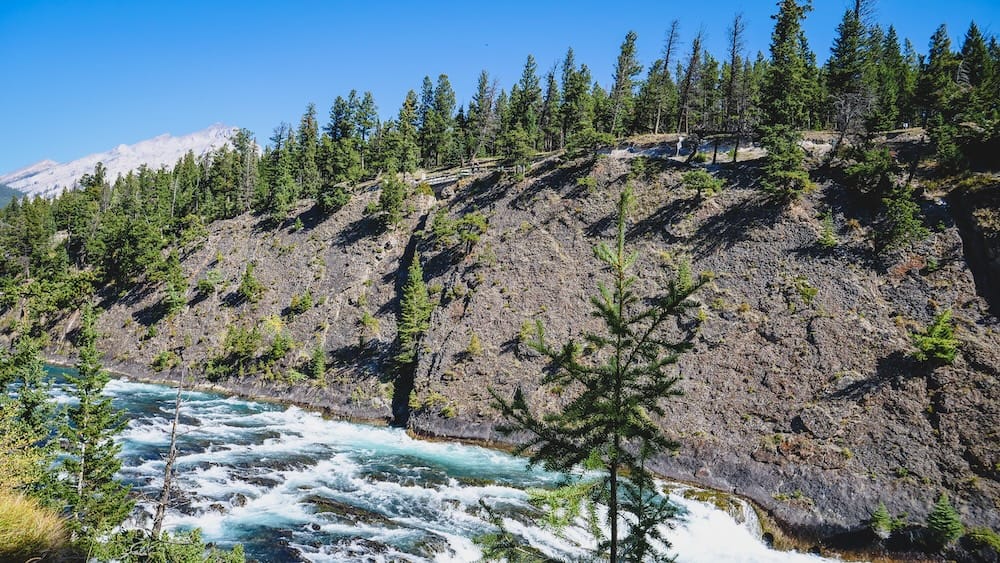
- Day 1: Banff town, Bow River and Bow Falls
- Day 2: Lake Louise and Moraine Lake
- Day 3: Lake Minnewanka, Cascade Ponds and optional Banff Gondola
- Day 4: Icefields Parkway and Columbia Icefield
- Day 5: Johnston Canyon and flexible Banff depth
- Day 6: Yoho National Park
- Day 7: Kananaskis or a deeper, slower Banff day
The placement of Day 5 is more important than it may first appear. Columbia Icefield is roughly 180 kilometres from Banff, with around two and a half hours of direct driving before you start adding scenic stops, meals or a glacier experience. Yoho is another genuine regional excursion.
Could you do those on consecutive days? Of course. You could also eat an entire birthday cake for breakfast. The more useful question is whether it improves the week.
I do not think it does. Putting Johnston Canyon and some flexible Banff time between the two long regional days gives the itinerary a much better pulse: big day, smaller day, big day. That is the kind of distinction that becomes possible when you stop treating seven days as permission to schedule seven maximum-effort days.
Day 1: Banff town, Bow River and Bow Falls
I would start the week close to base rather than immediately firing the rental car toward the biggest name on the map.
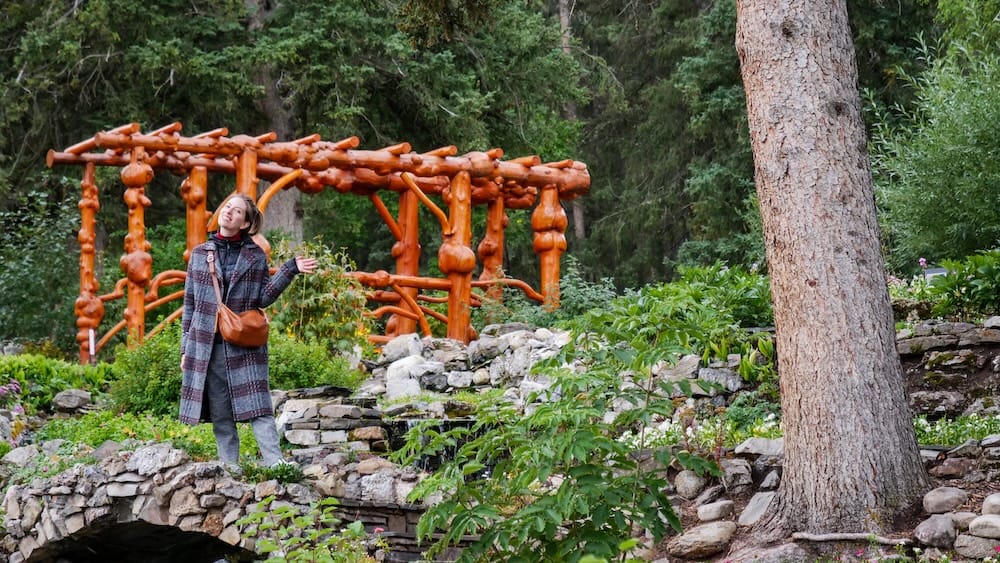
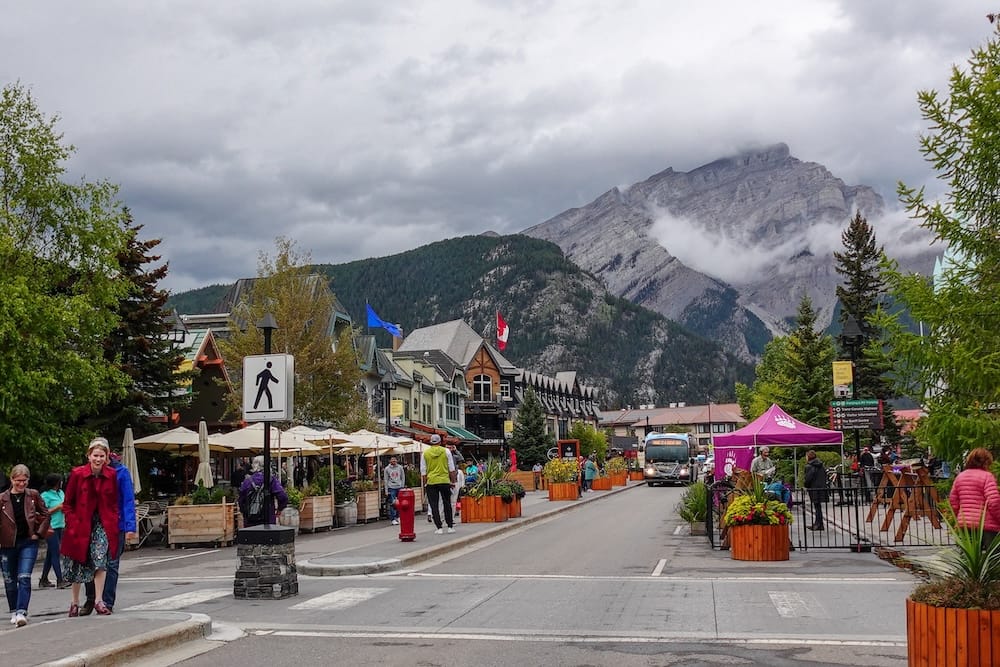
Banff town works particularly well on Day 1 because it can expand or contract around your arrival, energy and weather without creating a logistical disaster. Audrey and I have had some of our most enjoyable Banff mornings simply wandering beside the Bow River without trying to turn every hour into an attraction.
Start around Banff Avenue and Central Park, cross toward the river and walk for as long as the morning remains enjoyable. If everybody still feels good, continue toward Bow Falls. If breakfast somehow turns into an early lunch, accept your fate. There are worse problems to have in the Rockies.
What I have come to appreciate about Banff town is that it rewards time you do not completely optimize. On our trips, we have wandered through the Cascades of Time Garden, followed river paths, stumbled across public art, visited museums and simply sat beside the water with the mountains around us. None of those experiences requires you to build a military campaign around parking, shuttles and departure windows.
If you want a larger activity, you can add one. Audrey and I enjoyed our earlier Big Canoe outing on the Bow River, but I would not make a paid activity compulsory simply because Day 1 looks suspiciously empty on paper. A museum, longer river walk or meal that takes twice as long as expected fits this day just as well.
The important thing is to arrive in Banff before you start using it as a launching pad for everywhere else.
Day 2: Lake Louise and Moraine Lake
This is the day I would organize most carefully before arriving.
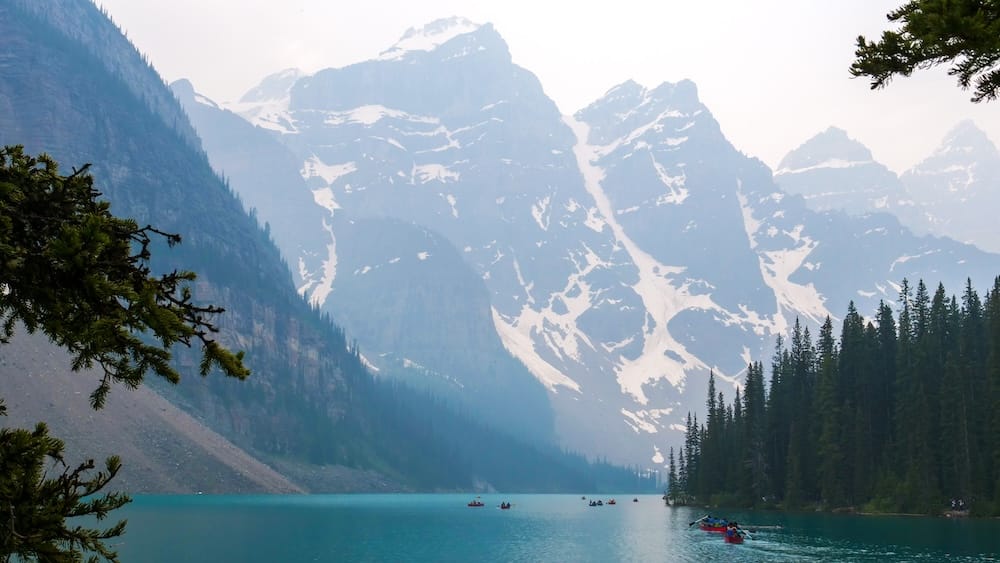
Lake Louise and Moraine Lake sit relatively close together geographically, which makes them look deceptively simple on a map. The current transportation system adds the real complexity. Ordinary personal vehicles cannot drive Moraine Lake Road, so you need confirmed eligible transportation rather than showing up and improvising.
For 2026, Parks Canada released 40 percent of its seasonal shuttle inventory on April 15, with the remaining 60 percent released at 8:00 a.m. Mountain Time two days before departure. A Parks Canada reservation can connect Lake Louise and Moraine Lake through the Lake Connector, which is exactly why I would treat the two lakes as one travel system.
The distance between them is not the problem. The invisible time is. Parks Canada advises allowing at least around 30 minutes for shuttle waiting, and waits can approach an hour when ridership is high. Once you add transfers, walking, bathrooms, food and people moving at different speeds, a supposedly straightforward two-lake day starts consuming the hours rather quickly.
If the Parks Canada system does not fit your dates or you would rather solve both lakes with one booking from Banff, a current commercial shuttle runs as a roughly six-hour round trip and allocates about 75 minutes at each lake. Audrey and I have not used this exact shuttle, and I would consider 75 minutes at Lake Louise fairly tight if Fairview Lookout is important to you, but it is a practical alternative for travellers whose main problem is securing access. You can check current Lake Louise and Moraine Lake shuttle availability from Banff.
With seven days available, I would not fight the reality that this is a full sightseeing day.
Spend enough time at Lake Louise for the experience to change
Our most recent Lake Louise visit reminded me why I do not like treating the lake as a quick photograph.
The main shoreline was extremely crowded. I jokingly called it the selfie capital of Canada, and the description felt fairly accurate while everybody competed for the same few metres beside the water.
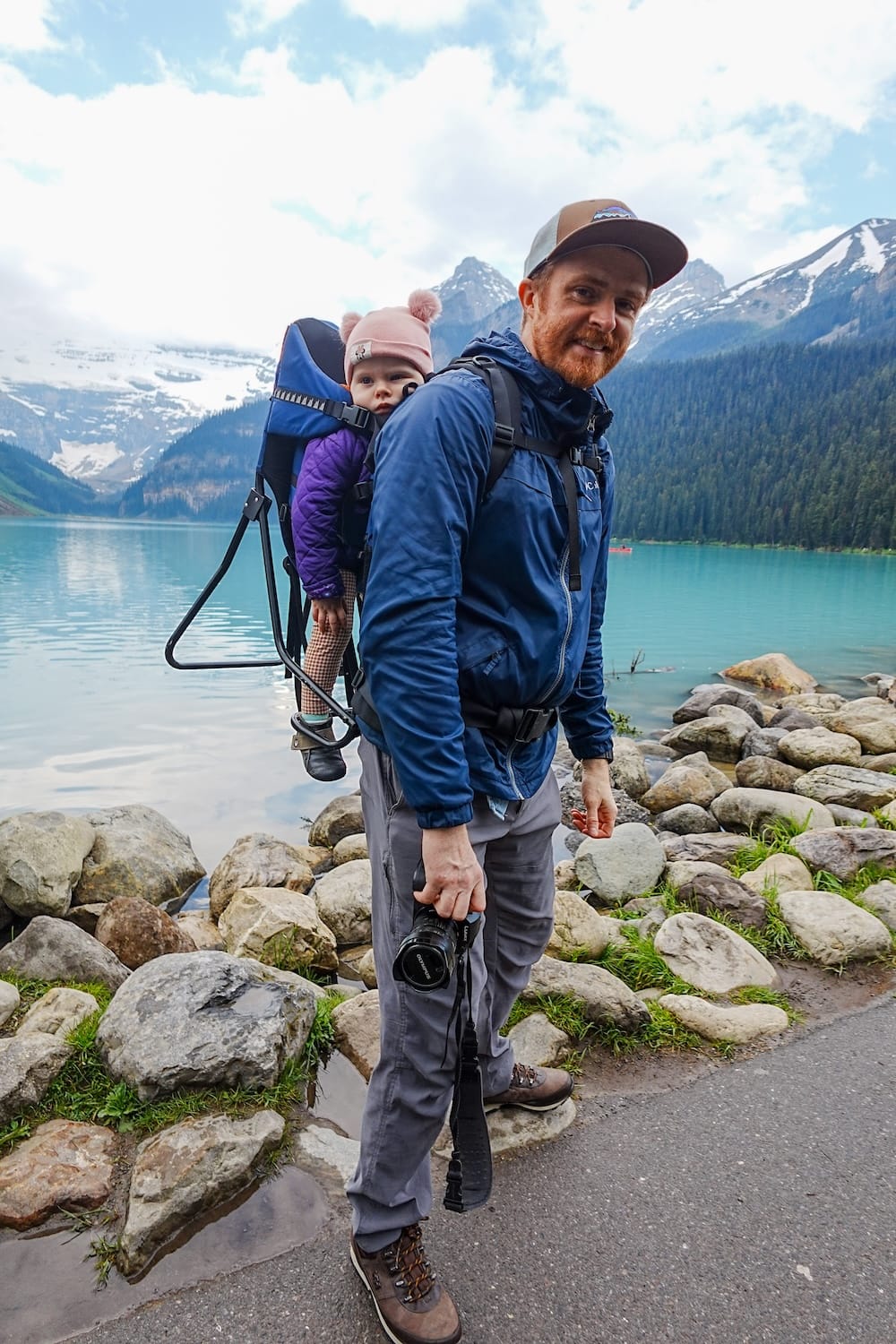
Then I carried Aurelia up to Fairview Lookout. The climb changed the whole experience for me. Once we reached the lookout, the shoreline crowds were far below us and the lake finally regained its scale against the surrounding mountains. I came away much more impressed than I had been while standing in the busiest part of the waterfront.
That does not mean everybody needs to hike Fairview Lookout. The point is that Lake Louise deserves enough time for you to choose what kind of visit you want. Walk farther along the shore, climb to a viewpoint or simply linger if the conditions are good instead of mentally preparing for the next attraction before you have properly seen this one.
Moraine Lake deserves more than a shuttle turnaround
Continue to Moraine Lake using the transportation system you arranged and prioritize the Rockpile if you are comfortable with the short climb.
Our Rockpile experience could hardly have felt more different from Fairview Lookout. Fairview had become surprisingly quiet; the Rockpile was packed. I joked that it was ten times busier, then immediately revised my highly scientific estimate to one hundred.
I still thought the view was worth it. That distinction comes up repeatedly in Banff. Crowds change the experience, but they do not automatically invalidate it. Moraine Lake is famous for a reason, and I would rather acknowledge the congestion honestly than pretend you need solitude for the scenery to work.
Afterward, spend some time beside the lake instead of treating the Rockpile as a box to tick before racing back to transportation. Bring the food and water you need because services are limited.
By the time you return to Banff, you have done enough. With five more days sitting in front of you, there is absolutely no reason to start tomorrow early.
Day 3: Lake Minnewanka, Cascade Ponds and possibly the Banff Gondola
After the structured lake day, I would deliberately keep Day 3 closer to Banff.
Lake Minnewanka and Cascade Ponds still give you proper Rocky Mountain scenery, but neither needs to become another all-day logistical operation. We visited both on an earlier family road trip and I like the contrast they provide after Lake Louise and Moraine Lake.
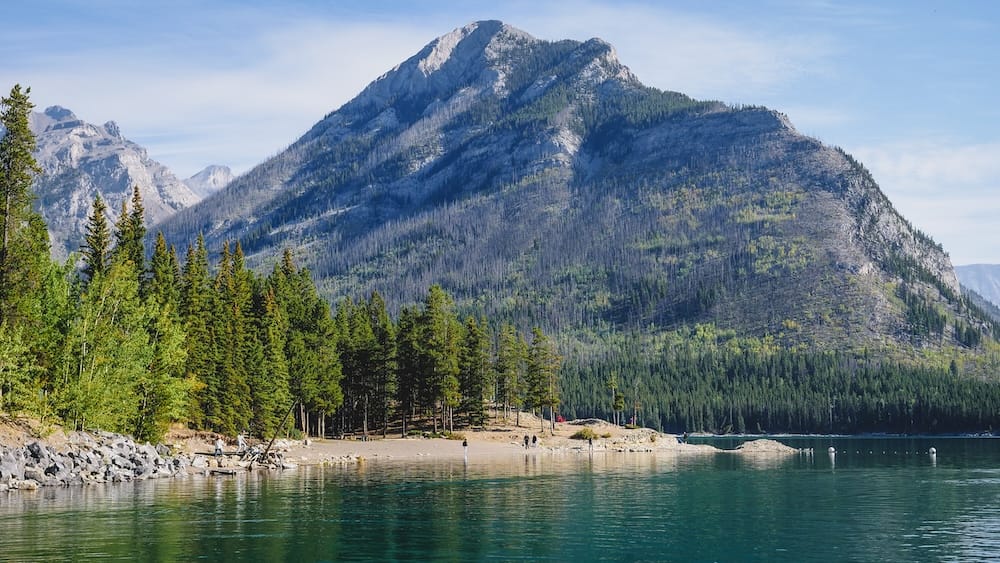
Lake Minnewanka can carry as much or as little of the day as you want. Walk beside the water, spend time around the shoreline or build the visit around a current activity if something appeals to you. The important thing is that the lake does not force one particular experience.
If you want to make Lake Minnewanka the centrepiece rather than a shoreline stop, there is a current one-hour guided cruise on the lake. We did not take this particular cruise, so I would treat it as an optional researched add-on rather than part of our own experience. Its current ticket also includes round-trip transportation on the Lake Minnewanka Shuttle and Roam Route 6, which can remove some of the parking friction. You can check current Lake Minnewanka cruise times and availability.
Cascade Ponds can be even looser. Our visit happened to be ridiculously peaceful, with almost nobody around and mountains reflected in still water. I would not promise anyone that same emptiness today. Popular Banff day-use areas can get busy and parking can become annoying, but the basic role still makes sense: picnic, walk, slow down and move on when you feel like it.
During the 2026 warm season, Roam Route 6 connects Banff with Cascade Ponds and Lake Minnewanka, with the trip between Banff and Minnewanka taking roughly 25 minutes. That gives you the option of leaving the car behind instead of spending the day moving between parking areas.
Add the Banff Gondola if it genuinely belongs
I would make the Gondola optional rather than deciding a seven-day Banff itinerary is somehow incomplete without it.
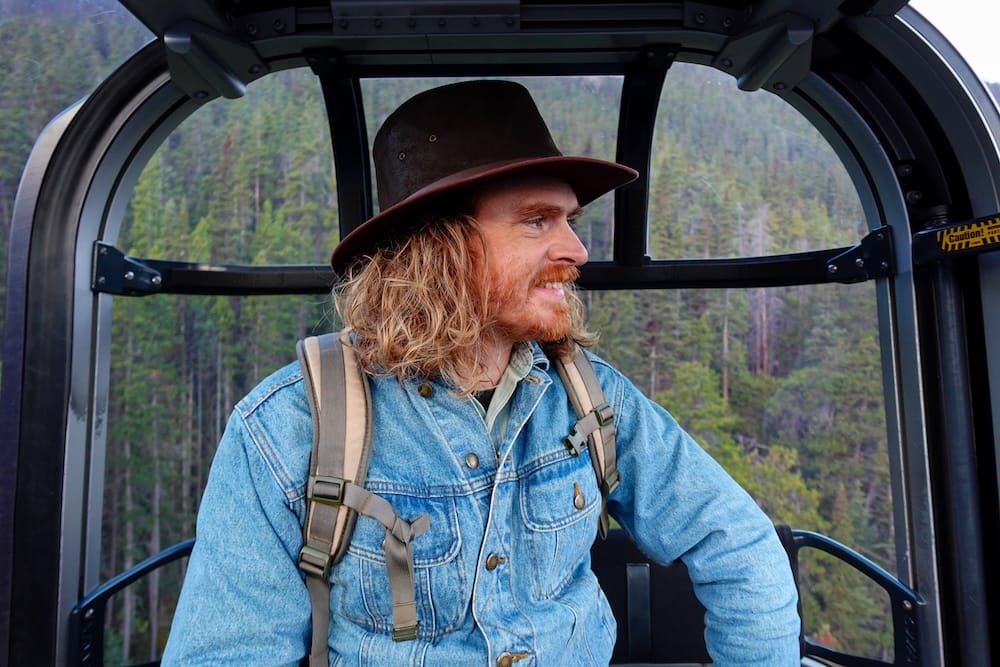
Audrey and I enjoyed the ride and especially the changing perspective from Sulphur Mountain. After spending so much time beside rivers and lakes, seeing the surrounding valleys and ranges from above adds a completely different scale.
The problem is not the attraction. It is what a timed reservation does to an otherwise loose day. A core Gondola visit takes roughly an hour and a half, although the summit can easily keep you longer. If it is one of your priorities, book it and build around that; if you value flexibility more and Lake Minnewanka turns into an unexpectedly great afternoon, I would rather preserve the freedom to stay.
If the Gondola is firmly on your list, you can check current Banff Gondola ticket availability before deciding how tightly to anchor it into Day 3.
The week is long enough that every good experience does not need to be scheduled simultaneously.
Day 4: Icefields Parkway and Columbia Icefield
Day 4 is where the itinerary stretches properly north.
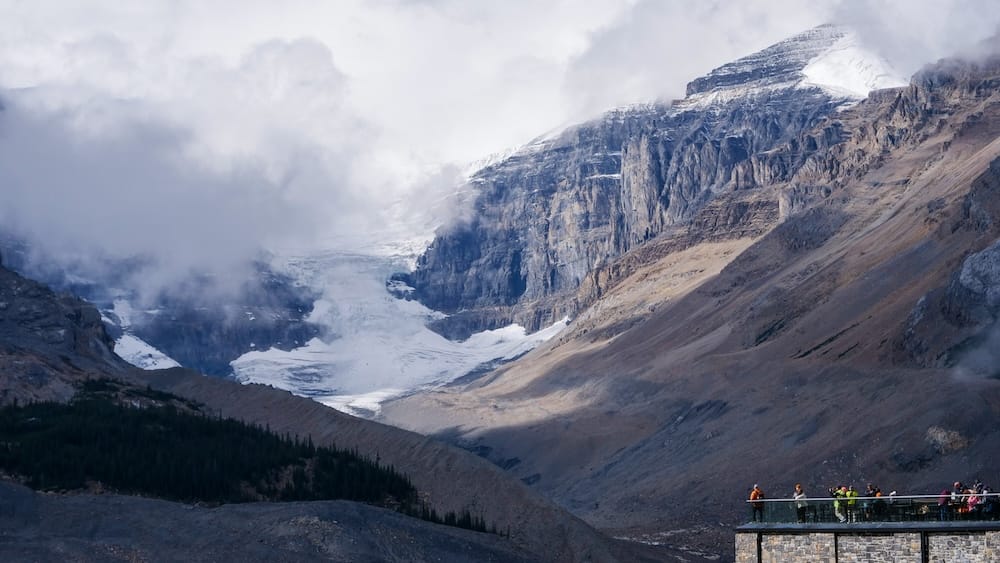
The Columbia Icefield is roughly 180 kilometres from Banff and around two and a half hours away on a direct drive, before you stop for any of the scenery that makes the Icefields Parkway worth travelling in the first place. I would therefore think of the road and the Icefield as one complete excursion rather than treating the glacier as the destination and everything before it as commuting.
Audrey and I travelled this route on an earlier sponsored Columbia Icefield trip, and I remember how the scale kept increasing as we moved north. The mountains felt bigger, the road became more remote and the weather changed dramatically over the course of the day.
Services are limited along the Icefields Parkway and reliable cell coverage should not be assumed. Fill up beforehand and carry food and water instead of planning the day as though every forgotten snack can be corrected at the next exit.
The glacier experience can turn this into a very long day
You can visit the Columbia Icefield area without building the entire day around a paid experience, but if the Ice Explorer and glacier experience are important to you, budget the time properly.
The current Columbia Icefield Adventure operates on roughly a two- to three-hour scale. Add that to approximately five hours of basic return driving from Banff and you are already dealing with most of a day before scenic stops, meals and all the other ordinary interruptions travel produces.
Our own trip included the Ice Explorer and time on Athabasca Glacier. The weather was memorably unpleasant for early September: fog, snow, ice pellets and cold intense enough that Audrey eventually climbed back into the vehicle saying she could barely move her hands.
She still thought it was amazing.
That does not mean bad weather is irrelevant. Road conditions, closures and official safety information always override an itinerary. What our experience taught me is that weather changing the experience is not the same thing as weather ruining it. Columbia Icefield can feel enormous and dramatic in ugly conditions in a way that a sunny photograph does not necessarily communicate.
If you are self-driving and want the classic Ice Explorer and Skywalk experience rather than only viewing the Icefield from the road, you can check current Columbia Icefield Adventure ticket availability. Our own sponsored visit was an earlier experience, so I am not claiming this exact current listing is the product we used.
By the time I got back to Banff, I would consider the day finished. There is no need to celebrate completing a long excursion by finding another attraction for the evening.
Day 5: Johnston Canyon and a deliberately looser day
This is where I would reduce the intensity again.
Audrey and I have not personally visited Johnston Canyon on the Banff trips behind this article, so I cannot give you a firsthand verdict on the trail. I like it in this itinerary because its scale is adjustable and it does not require another massive driving commitment after Columbia Icefield.
The Lower Falls are about 1.1 kilometres one way with roughly 85 metres of elevation gain, and the outing takes around an hour return. Continue to the Upper Falls and the route becomes roughly 2.4 kilometres one way with around 215 metres of elevation gain and approximately two hours return.
That gives you a useful decision halfway through the week. If everybody is feeling good, continue. If yesterday’s Icefields Parkway marathon is still sitting in your legs, the Lower Falls can be enough.
Parts of the route are narrow and uneven, and Parks Canada does not recommend strollers. Parking can also fill quickly, while seasonal transit from Banff offers another way to reach the trailhead.
There is one routing wrinkle worth checking if your trip falls during the seasonal Bow Valley Parkway vehicle restrictions. In 2026, the eastern section has personal-vehicle restrictions during parts of spring and fall, although Johnston Canyon remains reachable via other approaches. I would verify the current route for your dates rather than assuming every road works exactly the way your map initially suggests.
Leave the second half of the day unresolved
This is one place where I would resist the urge to finish the itinerary before the trip begins.
Return to Banff after Johnston Canyon and see what everybody needs. Maybe that means a longer meal, another Bow River walk, a museum you skipped, the Gondola if you did not use it earlier or simply a couple of hours doing very little.
You could also make Johnston Canyon the beginning of a larger hiking day if your energy is good. The important part is that Day 5 can respond to the first half of the week instead of arriving with another fixed list of demands.
A full week becomes much more enjoyable once you stop treating open space as an editorial error.
Day 6: Yoho National Park
After the lighter Day 5, I would expand the geography again and cross into British Columbia for Yoho National Park.
Yoho deserves to be treated as a separate destination rather than a collection of “Banff-area” attractions. Audrey, Aurelia, Audrey’s dad and I visited several of its major sights during our recent private family day, but our actual route also included Lake Louise and Moraine Lake first.
I would not repeat that chronology here. You already gave those lakes Day 2. With a full week, Yoho can finally have its own day.
Build the day around Takakkaw Falls and Emerald Lake
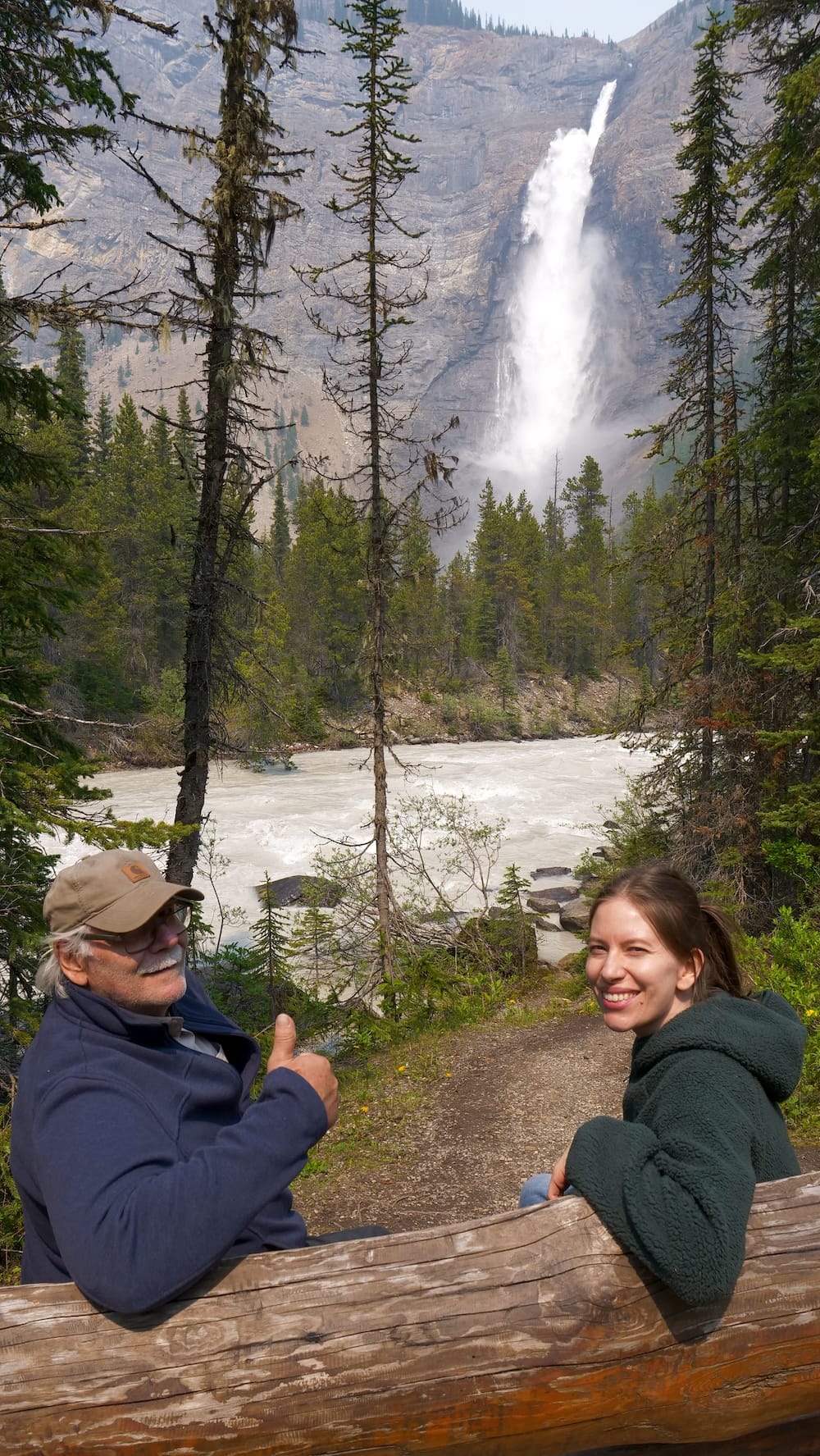
Takakkaw Falls would be one of my priorities whenever Yoho Valley Road is open. The walk from the parking area is about 0.9 kilometres one way and roughly 30 minutes return, which is a relatively small physical commitment compared with the scale of the waterfall.
Our visit became progressively wetter and windier as we approached. By the time we got close, spray was covering my glasses and we were getting thoroughly blasted by the falls. It was one of those experiences where the physical reality does a much better job than a viewpoint photograph of explaining the place.
The road to Takakkaw Falls is seasonal, generally operating from around mid-June into mid-October when conditions allow. Larger vehicles also face restrictions because of the tight switchbacks.
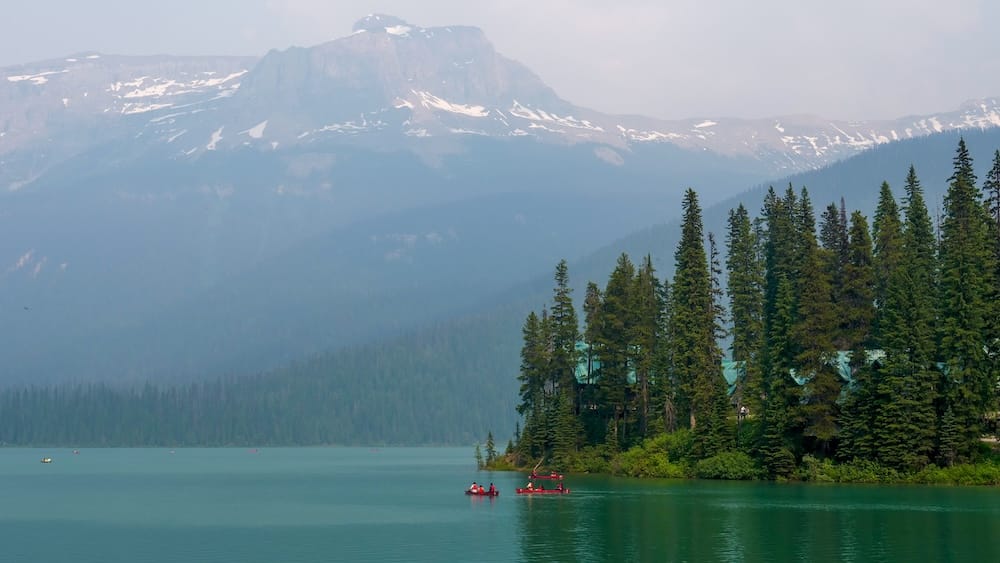
From there I would give Emerald Lake meaningful time. It was one of the places Audrey and I had never reached on our earlier Canadian Rockies trips, and the green water, surrounding forest and lakeside atmosphere gave our Yoho day a distinct identity after so much turquoise around Banff.
Natural Bridge is an easy addition, but I would keep the Spiral Tunnels viewpoint conditional. We happened to arrive when a train was approaching, which made the stop much more interesting. Without that timing, I would not sacrifice time at Emerald Lake or Takakkaw Falls merely because the viewpoint appears on a checklist.
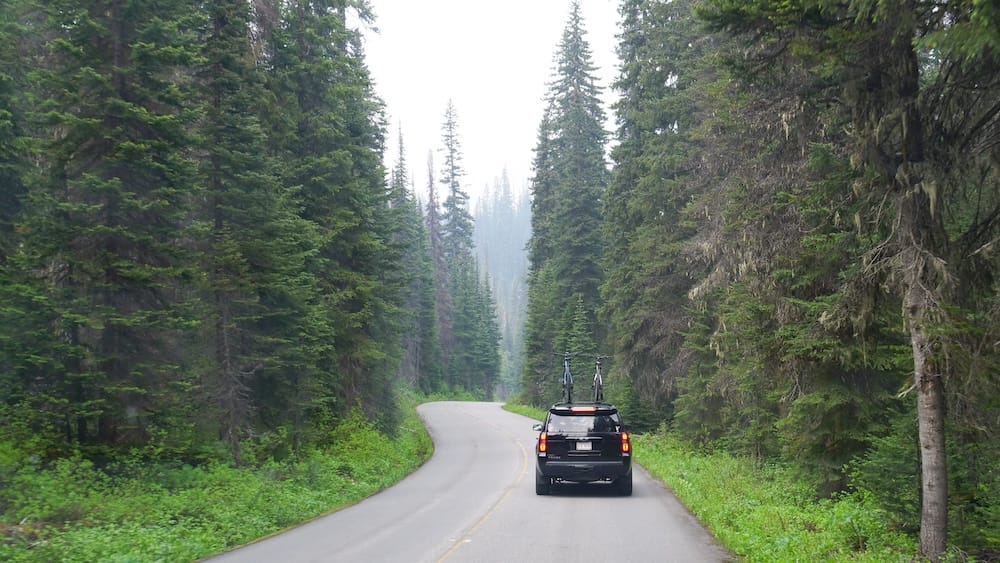
Yoho also does not have a public transportation network inside the park comparable with Banff’s local options. Most independent visitors need their own vehicle, and parking at Emerald Lake and Takakkaw Falls can fill during busy periods.
If you prefer not to self-drive this day, there is also a current small-group option built around Emerald Lake and Takakkaw Falls. We did not take this particular tour—our own Yoho experience was private and followed a different route—but it solves the practical problem of reaching the main sights without managing the driving and parking yourself. You can check current Emerald Lake and Takakkaw Falls tour availability.
This is another substantial day, but it is substantial in a completely different way from Columbia Icefield. Columbia is a long scenic corridor leading toward the glacier system. Yoho is a sequence of distinct landscapes: waterfalls, lakes, rivers and mountain valleys.
That variety is precisely why I would make room for both once the trip reaches seven days.
Day 7: More geography or more depth?
By Day 7, I would stop asking what else technically fits and start asking what the week is missing.
If you still want another regional day, this is where Kananaskis makes sense. If the thought of another long drive produces a small involuntary groan, stay closer to Banff and use the final day for depth. Both are legitimate endings to the week.
Choose Kananaskis if you still want to expand
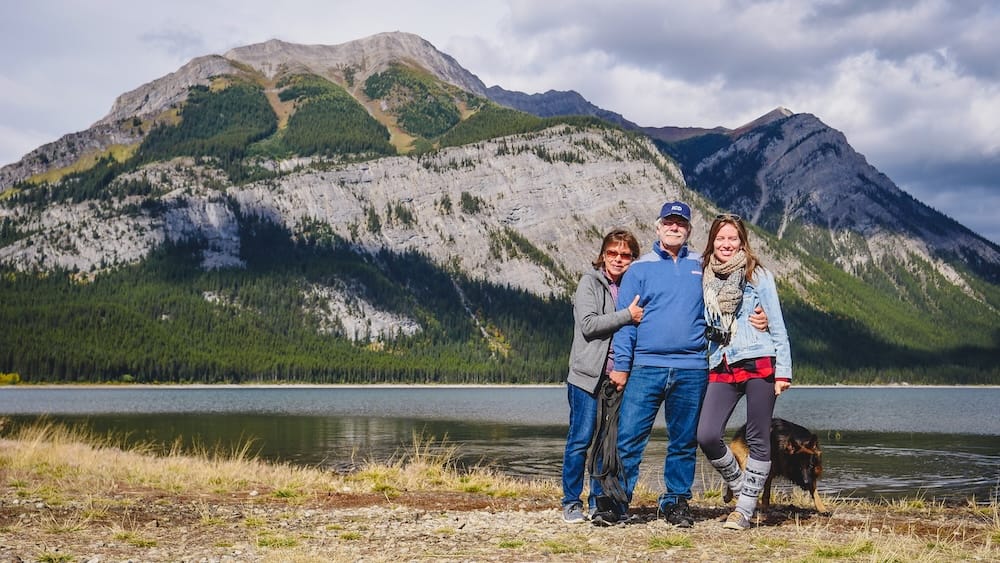
We visited Upper and Lower Kananaskis Lakes on an older family Rockies trip, and I like this option because it genuinely adds another piece of Alberta’s mountain geography rather than revisiting something you have already done.
The catch is distance. Upper Kananaskis Lake is roughly 100 kilometres from Banff, with a current route estimate around an hour and forty-five minutes one way. Vehicles parked in Kananaskis Country also currently require a Conservation Pass, which is $15 per day for a personal vehicle.
In other words, this is not a cute little side trip you squeeze in before lunch.
If you go, I would keep the day centred on the lakes instead of attempting to write yourself a complete Kananaskis guide. One particularly useful reality check is the full Upper Kananaskis Lake circuit, which is roughly 15.7 kilometres. “Walk around the lake” can sound remarkably innocent until somebody attaches a number to it.
Choose a shorter shoreline outing if that suits the energy you have left. Weather shortened our own Upper Kananaskis visit, so I especially like keeping this as an optional final day rather than making the entire seven-day structure depend on it.
Stay near Banff if the week needs one more layer
For plenty of travellers, I think this is the stronger version of Day 7.
Maybe Lake Louise left you wanting a longer hike. Maybe poor visibility interfered with the Gondola. Maybe you discovered that you genuinely enjoy Banff town and want another slow morning along the river. Perhaps your legs are finished and a civilized breakfast has suddenly become more attractive than another trailhead.
That is not wasted time.
Our recent multigenerational trip was a useful reminder of how quickly normal human beings dismantle perfectly optimized itineraries. Aurelia needed food, breaks and diaper changes. Audrey’s dad moved at a different pace on steeper sections. I carried Aurelia up Fairview Lookout while she slept through a large portion of my effort. Meals took time and nobody teleported between attractions simply because the itinerary looked clean on a screen.
Even without a toddler or grandparent, seven consecutive days outside can be tiring. A place turns out to deserve longer. Lunch becomes an actual meal instead of a refuelling operation. The weather moves. Somebody’s legs complain.
Day 7 gives you permission to respond to the trip you actually had.
Which days can you realistically move around?
I would use the day numbers as a strong starting sequence, not as commandments. The complication is that the different parts of the week are not equally flexible.
| Trip system | Booking rigidity | Visibility sensitivity | Driving load | Physical load | Swap value |
|---|---|---|---|---|---|
| Banff town | Low | Low to moderate | Low | Adjustable | Very high |
| Lake Louise + Moraine Lake | High | High | Moderate | Adjustable to moderate | Limited by transport availability |
| Minnewanka + Cascade + Gondola | Mixed | Gondola high; lakes moderate | Low | Adjustable | High if Gondola is not firmly booked |
| Columbia Icefield | High if booked | Weather can strongly change the experience | Very high | Moderate | Low once committed |
| Johnston Canyon + local depth | Low | Relatively low | Low to moderate | Adjustable | Very high |
| Yoho National Park | Lower if self-driving | Moderate to high | High | Adjustable | Moderate |
| Kananaskis or local Day 7 | Low | Moderate | High for Kananaskis, low near Banff | Adjustable | Very high |
Lake Louise and Moraine Lake are the first day I would anchor because transportation availability can dictate the calendar. Columbia Icefield becomes another relatively firm commitment if you have booked a specific experience, while the Gondola introduces its own rigidity once you choose a timed ticket.
Banff town and Johnston Canyon give the week its easiest movable pieces. Yoho sits somewhere in the middle: self-driving keeps the schedule relatively open, but Takakkaw Falls is still seasonal and summer parking can affect how smoothly the day works.
This is why I do not like vague advice to “stay flexible.” Flexibility only exists where logistics allow it.
A seven-day trip gives you more room to respond to weather and energy, but that does not mean you can freely drag every reservation onto another date because the forecast improved. Use the movable days intelligently, keep the booked days realistic and resist reorganizing the entire vacation whenever one extra cloud appears in the weather app.
The mountains remain stubbornly unwilling to sign a service-level agreement.
Is one week too long for Banff?
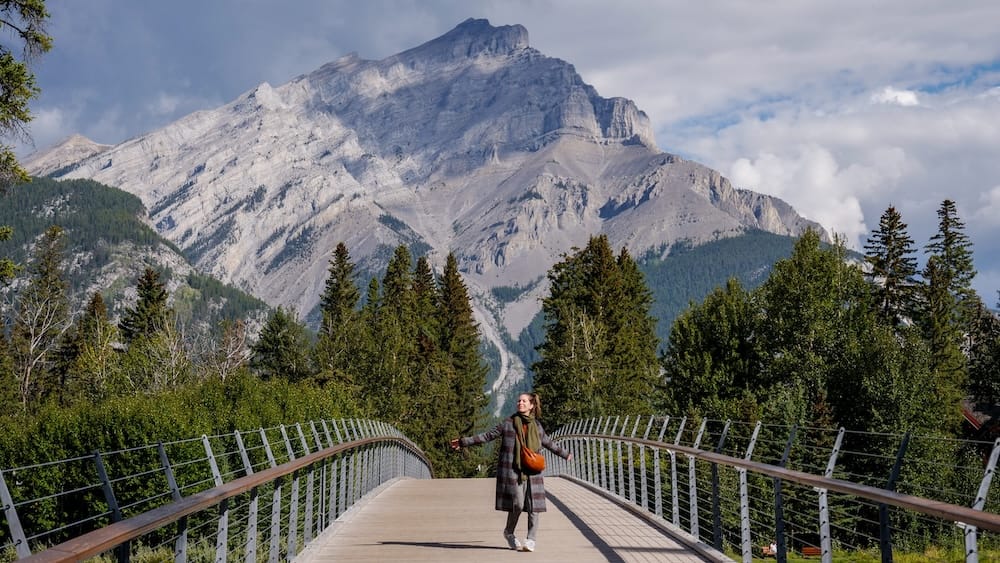
No. If anything, seven days is where the trip finally becomes broad enough to show how much more there is beyond the standard first-visit highlights.
You can spend real time in Banff town, give Lake Louise and Moraine Lake the day they require, explore locally around Lake Minnewanka, travel the Icefields Parkway to Columbia Icefield, ease off around Johnston Canyon, cross into British Columbia for Yoho and still reach the final day with a genuine choice between Kananaskis and more time around Banff.
That is a substantial trip without pretending it is complete.
One of the conclusions Audrey and I reached after an earlier four-day visit was that we had barely scratched the surface. Returning on completely different trips has only reinforced that feeling. We found new viewpoints at places we already knew, reached Emerald Lake and Takakkaw Falls for the first time, experienced the Columbia Icefield in miserable early-September weather and, in my case, eventually disappeared into Banff’s backcountry on horseback for nearly a week.
The longer I spend around Banff, the less useful the idea of “finishing” it becomes.
What a full week gives you is something better: enough time for the geography to expand without forcing the pace to expand with it. Columbia Icefield and Yoho can both have proper days. Big excursions can be separated by something easier. A place can unexpectedly deserve another hour without creating a scheduling emergency, and the final day can react to what actually happened rather than what looked efficient months earlier.
If you still want more mountains on Day 7, go to Kananaskis. If you want more Banff, stay in Banff. Either way, I would resist the urge to celebrate having seven days by filling every last one to the edge. The real luxury of a full week in the Canadian Rockies is finally having enough time that you do not have to.
Frequently Asked Questions
Is one week too long for Banff?
No. Seven days gives you enough time to explore Banff town, Lake Louise and Moraine Lake, Lake Minnewanka, Columbia Icefield and Yoho National Park without forcing every day into a maximum-effort schedule.
How would I split seven days in Banff?
I would use Day 1 for Banff town, Day 2 for Lake Louise and Moraine Lake, Day 3 for Lake Minnewanka and an optional Gondola, Day 4 for Columbia Icefield, Day 5 for Johnston Canyon, Day 6 for Yoho and Day 7 for Kananaskis or more time around Banff.
What time of year works best for this one-week Banff itinerary?
This exact version works best from roughly mid-June through early October, when regular Moraine Lake transportation is operating and Yoho Valley Road is normally open toward Takakkaw Falls, weather permitting.
Can I drive my own car to Moraine Lake?
No. Ordinary personal vehicles cannot use Moraine Lake Road, so the Lake Louise and Moraine Lake day needs confirmed eligible transportation such as the Parks Canada shuttle or another suitable option.
Should I visit both Columbia Icefield and Yoho National Park during a one-week Banff trip?
Yes, that is one of the main advantages of having a full week. I would give each its own day and place the lighter Johnston Canyon day between them rather than doing two major regional excursions back to back.
How much time should I allow for Johnston Canyon?
The Lower Falls outing is about 1.1 kilometres one way and roughly an hour return. Continuing to the Upper Falls extends the route to about 2.4 kilometres one way and approximately two hours return.
Do I need a car for this seven-day Banff itinerary?
Not for every day, but a car becomes much more useful once Columbia Icefield, Yoho and the optional Kananaskis day enter the plan. Banff town, the lakes and some local areas also have transit or booked transport options.
This guide is also available in Spanish. [Leé la versión en castellano: Itinerario de una semana en Banff: 7 días en Banff y las Canadian Rockies]
This article contains affiliate links. If you book through one of these links, I may earn a commission at no extra cost to you.