
One of the easiest mistakes to make in Banff is treating the national park boundary like an invisible fence around your itinerary. There is already enough inside Banff National Park to occupy several trips, so I understand why first-time visitors do it. But once you start looking west toward British Columbia, the sightseeing radius gets much bigger very quickly.
That was one of the biggest lessons from our own family day in the Rockies. We were travelling with Audrey’s dad and our toddler, Aurelia, and our private tour managed to include Lake Louise, the Fairview Lookout hike and Moraine Lake before we even got into the heart of our Yoho sightseeing. After crossing from Alberta into British Columbia, we still stopped at the Spiral Tunnels, walked up to Takakkaw Falls, spent time beside Emerald Lake and finished at Natural Bridge.
It was a busy day, absolutely. It was not a day for sleeping until 10:30, wandering downstairs for pancakes and seeing where the wind took us. But what surprised me was how much of it still felt like an actual visit rather than a frantic collection of parking lots.
The key is that these four Yoho stops are not equal, and they shouldn’t be treated that way. Spiral Tunnels can be a quick roadside stop, especially if your timing happens to coincide with a train. Natural Bridge is also compact. Takakkaw Falls deserves more breathing room because getting close to the waterfall is part of the experience, while Emerald Lake is the wild card: you can admire it relatively quickly or let it consume a much larger chunk of the afternoon.
That uneven rhythm is exactly why the day works.
There is one major seasonal catch. Yoho National Park itself is open year-round, and Emerald Lake Road remains accessible year-round, but the road to Takakkaw Falls normally operates only from around mid-June to mid-October, weather permitting. The Spiral Tunnels Viewpoint is seasonal as well. If you want to reproduce all four stops in this guide, think of this primarily as a summer into early-autumn itinerary rather than a year-round formula.
Why Yoho Works Better as a Banff Day Trip Than You Might Expect
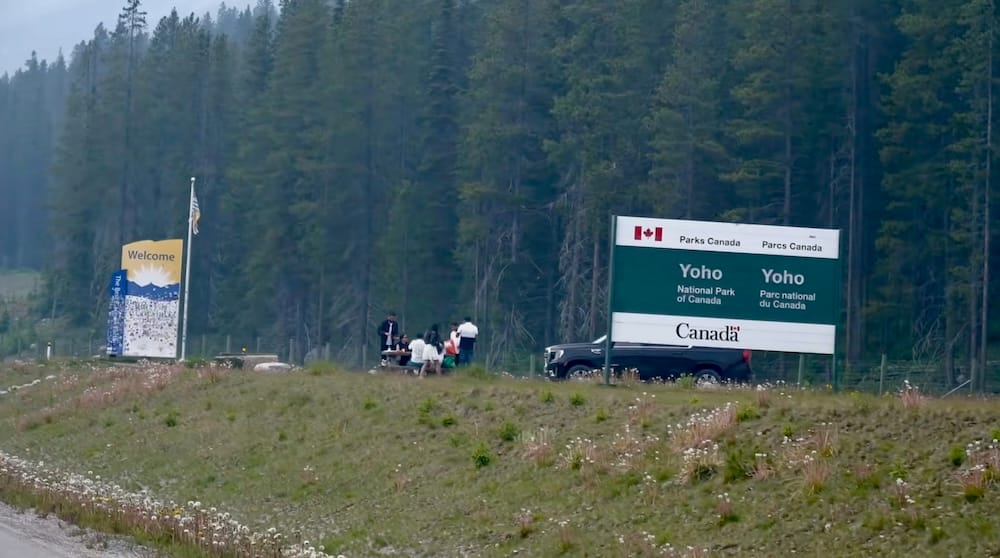
Field, the small community inside Yoho National Park, is about 85 kilometres from Banff. That is far enough to cross into another province and another national park, but not so far that the day immediately turns into a highway endurance contest.
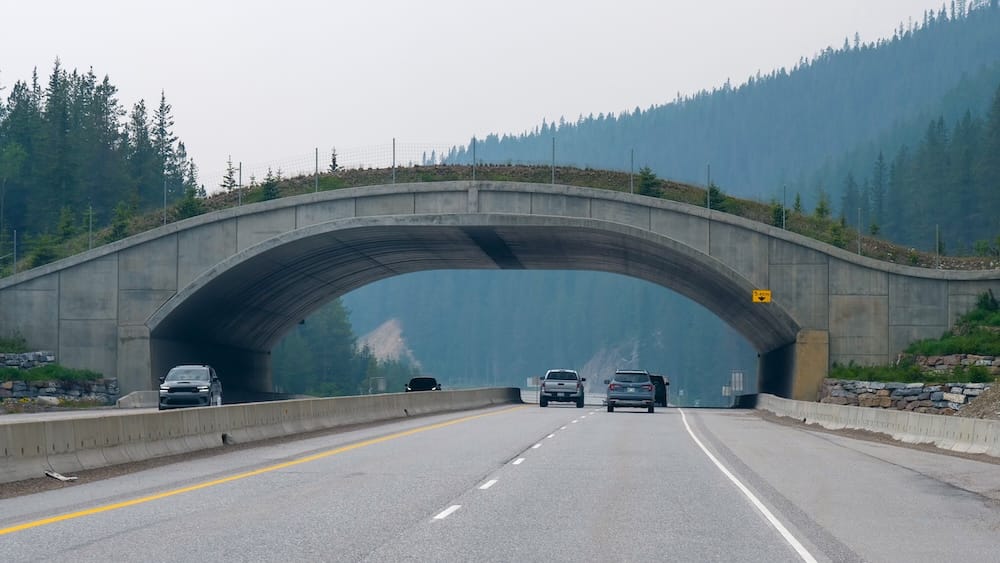
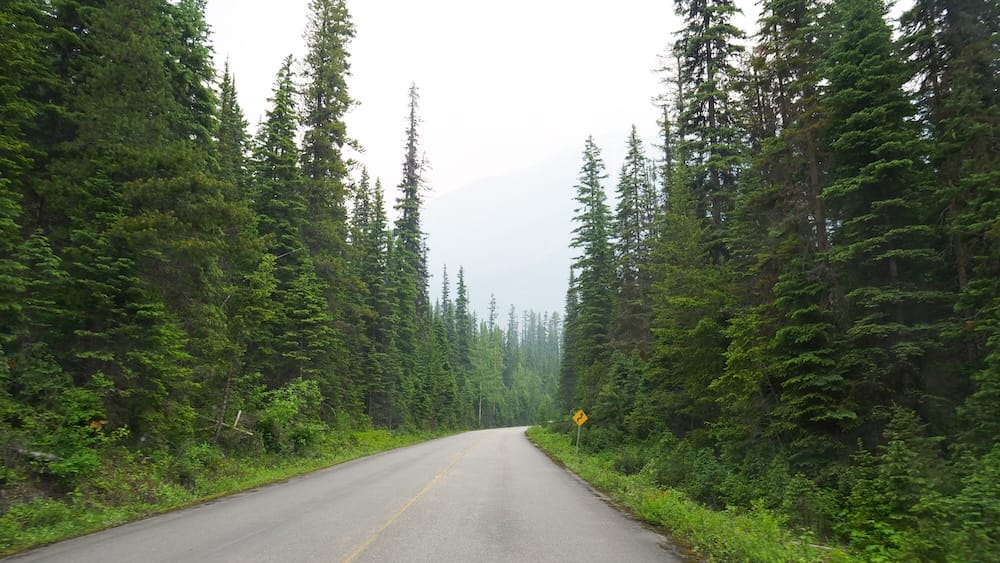
There is no public transportation system carrying you around Yoho once you arrive, so practically speaking you need your own vehicle or an organized tour. That transport question becomes increasingly important as the itinerary gets more ambitious, but geographically the basic premise is simple: Highway 1 connects Banff with Yoho, and the major sightseeing stops branch off that corridor.
If you already know you would rather leave the driving and parking to somebody else, there is currently a guided Yoho day trip from Banff that includes the same four core stops in this article — Takakkaw Falls, Emerald Lake, Natural Bridge and Spiral Tunnels — along with Marble Canyon. We did not take this exact tour, but it is one of the closest current matches I found to the route itself, and you can check the current Yoho National Park tour on Expedia.
Our own excursion actually started from our accommodation in Harvie Heights rather than Banff town, which is worth clarifying because I don’t want to retrofit our day into a neater story than the one we actually lived. But for somebody staying in Banff, the same broad idea applies. Yoho is close enough to work as a full-day excursion without changing hotels or sacrificing the following morning to a long relocation.
What surprised me more was how much we managed before reaching Yoho.
What our day actually managed
We began with Lake Louise, walked up to Fairview Lookout and then continued to Moraine Lake. Those three alone could easily fill a respectable sightseeing day for most visitors, especially if you slow down at either lake.
Then we crossed from Alberta into British Columbia.
Instead of the day tapering off after the Banff classics, it almost felt like we had started a second chapter. Spiral Tunnels introduced a completely different railway-history element, Takakkaw Falls became the loudest and most physical stop of the day, Emerald Lake slowed everything down again, and Natural Bridge gave us one final burst of rushing water before we called it.
That contrast mattered. We’d been to Banff several times before, but Takakkaw Falls, Emerald Lake and Natural Bridge were all new to us. Audrey later mentioned how much fun it was to have so many firsts packed into the same day, and I felt the same way. We weren’t simply revisiting a slightly different shade of mountain lake for the seventh time.
It showed me that Banff works exceptionally well as a base precisely because you don’t have to remain inside Banff National Park every day.
The Best Way to Sequence the Four Stops
Our order was Spiral Tunnels, Takakkaw Falls, Emerald Lake and then Natural Bridge. It worked very well for us, but I would not turn that into some sacred sequence that has to be followed like IKEA assembly instructions.
Current parking pressure makes flexibility more useful than perfection. Both Emerald Lake and Takakkaw Falls have limited parking, and those lots can become difficult during busy periods. If you’re self-driving, it makes more sense to decide which of those two major stops you care about most and protect that one first. The smaller attractions can then bend around it.
Natural Bridge pairs naturally with Emerald Lake because both sit along the same branch from Highway 1. Spiral Tunnels is even more flexible because the stop becomes dramatically more interesting if you happen to see a train approaching.
That is essentially what happened to us. We were driving through Yoho when we noticed a train making its way toward the Spiral Tunnels. Instead of saying, “That’s lovely, perhaps another time,” we stopped.
Sometimes the best itinerary planning is simply recognizing when the travel gods have handed you a train.
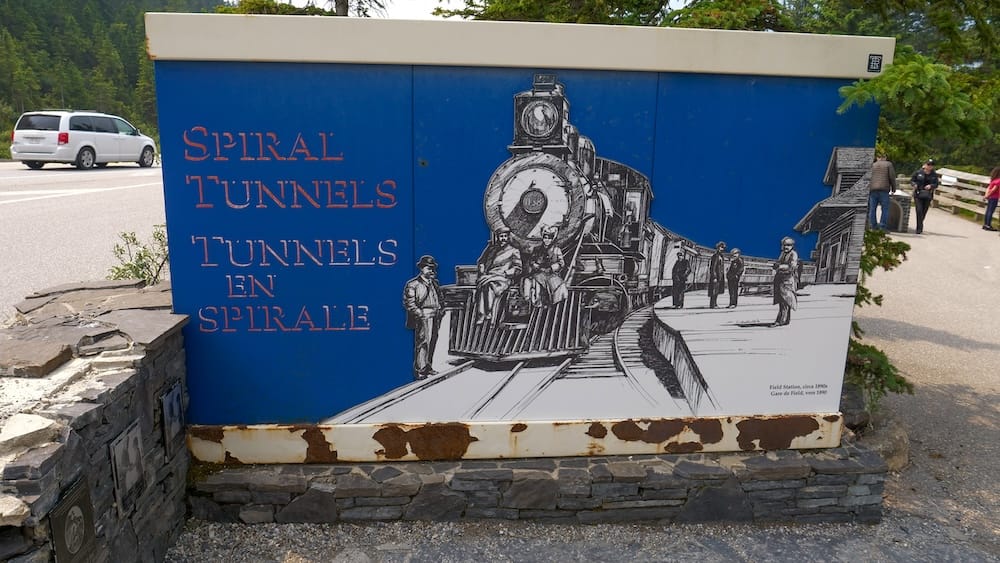
Spiral Tunnels: A Short Stop That Gets Much Better if a Train Appears
The Spiral Tunnels are not the kind of attraction I would budget an enormous block of the day around. They are a piece of Canadian railway engineering built into the mountains, and the viewpoint makes much more sense once you understand what the trains are doing.
The tunnels were completed in 1909 to deal with the brutally steep railway grade through this part of the Rockies. Trains now loop through tunnels inside the mountain to gain or lose elevation more gradually rather than attacking the old Big Hill route directly.
Roughly 25 to 30 trains pass through the system on an average day, but they do not operate on a tourist-friendly sightseeing timetable. You can’t book the 1:17 p.m. “cute locomotive appears exactly when I need B-roll” departure.
We got lucky.
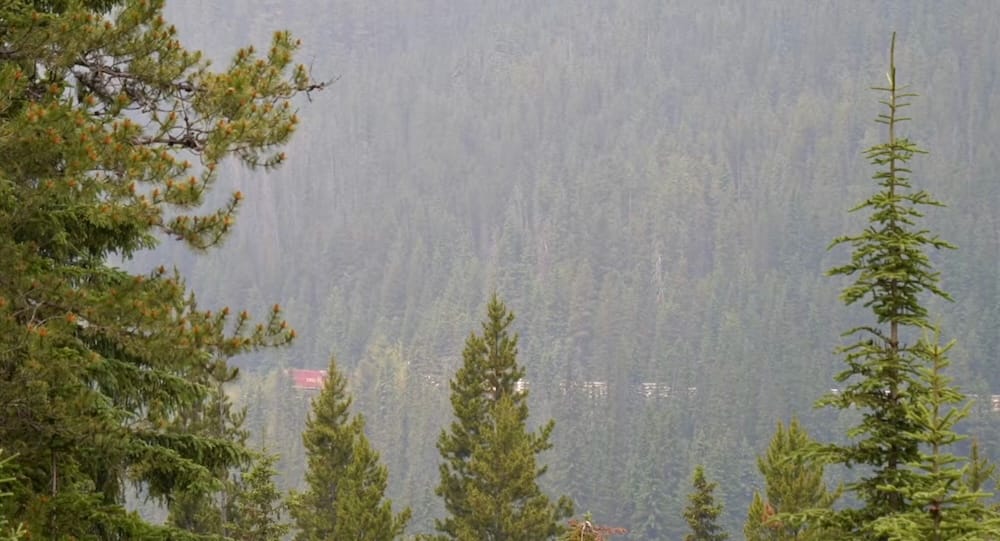
As we were driving, we spotted a train chugging toward the area and made a quick stop. Audrey stayed with Aurelia, who was hungry and ready for a nap, while I went down with Audrey’s dad and our guide to watch.
That little split in the group actually illustrates something important about a day like this. Not every person needs to participate equally in every twenty-minute stop. Audrey could feed Aurelia without the whole itinerary grinding to a halt, while the rest of us went to see the train.
When it appeared, the tunnel system suddenly made much more intuitive sense. Seeing railway tracks cut across a mountain is interesting enough; watching an absurdly long Canadian freight train begin disappearing and reappearing through this engineering solution gives the stop a proper payoff.
If no train is anywhere in sight, I would keep this visit relatively short. Read the interpretation, look across the pass and understand the engineering. If you happen to see a train approaching, that’s when I’d stop and give the place a little more time.
I would not sit there sacrificing an hour of Emerald Lake in the hope that a train decides to provide entertainment on demand.
Takakkaw Falls: The Stop Where I’d Give the Day More Breathing Room
Takakkaw Falls was a completely different experience.
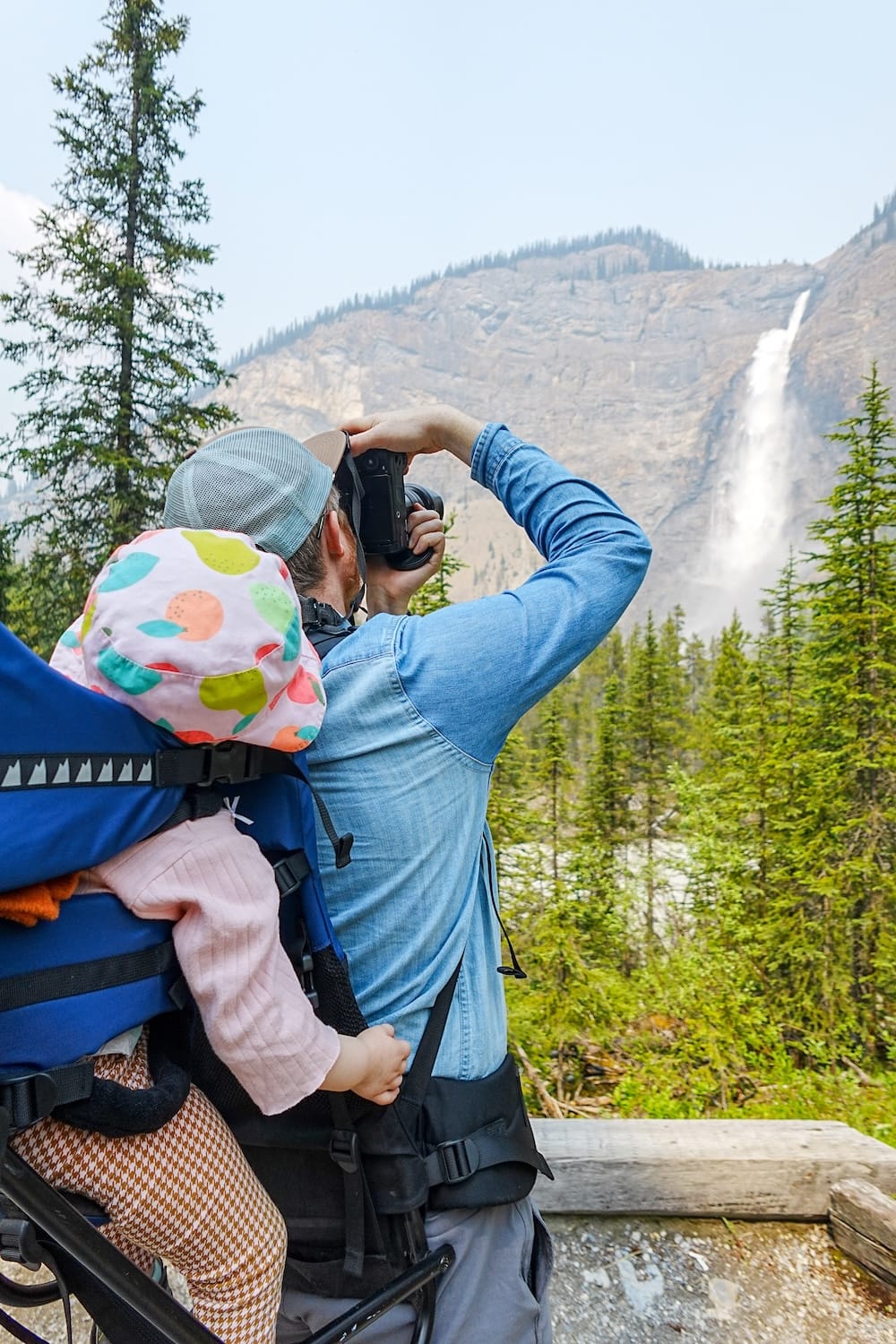
At 373 metres high, the waterfall has enough scale that you can already appreciate it before getting anywhere near the base. We started seeing it on the approach, which made the drive feel like part of the attraction rather than dead time between stops.
Getting there also involves one of the more unusual roads of the day. Yoho Valley Road climbs through tight switchbacks, and we encountered traffic during our visit. The geometry is tight enough that vehicles longer than seven metres have to negotiate one section by reversing through the switchback, and trailers are prohibited entirely.
Our vehicle made it through without drama, although we did celebrate reaching the top like we had personally engineered the road.
The bigger planning issue is seasonality. Yoho Valley Road normally opens around mid-June and remains open until roughly mid-October, with the exact timing dependent on weather and conditions. If Takakkaw Falls is the reason you’re planning the day, this is the road status I would check before doing anything else.
Once you’re parked, however, the attraction becomes remarkably easy for the amount of scenery you get in return.
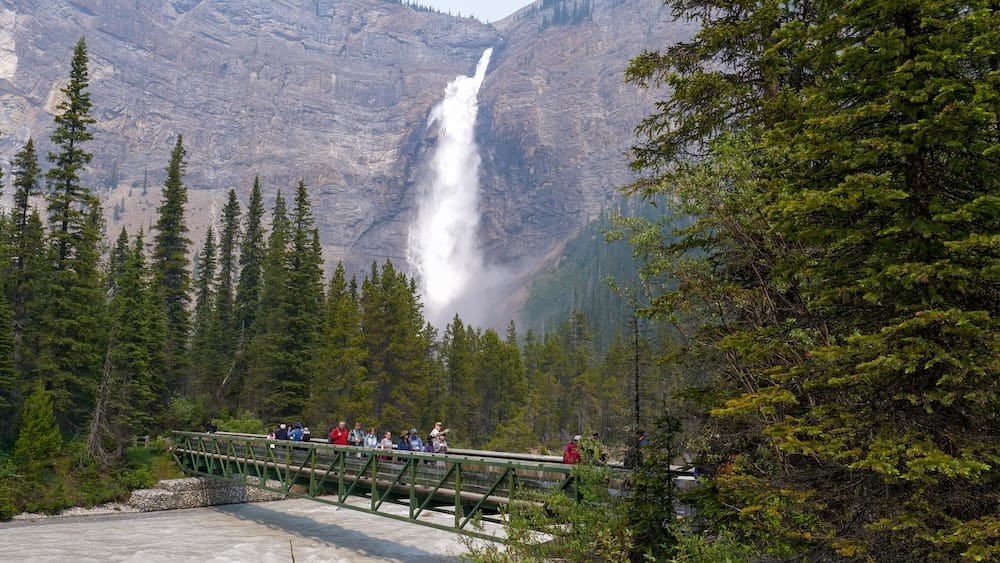
Seeing Takakkaw from the road is not the same as walking toward it
The main walk toward the waterfall is flat, paved and short, with roughly half an hour suggested for the basic return walk. That doesn’t mean I would allocate only thirty minutes to the whole stop, because the best part is allowing yourself to keep approaching the water.
The first thing I remember is how cool and fresh the air felt in the forest. Then the mist started. At first it was refreshing. We were having a warm day, and the spray felt fantastic as we walked closer. Then “refreshing” gradually became “why did I bother showering this morning?”
By the time Audrey and I were close to the falls, the wind and spray were hammering us. We joked that we were getting our second shower of the day, and I reached a point where my glasses were so covered in water that I could barely see anything, which admittedly is not the ideal state for appreciating a 373-metre waterfall.
But that physical experience is exactly why I would not treat Takakkaw as a distant viewpoint. Seeing the falls on the approach tells you how big they are; walking closer lets you feel what that scale means. The noise increases, the air gets colder and the mist turns into spray while your nice dry sightseeing outfit gradually loses the battle.
For a normal sightseeing visit, I would think in terms of roughly 45 minutes to an hour rather than racing in and out based purely on the walking time. If you want to photograph the falls, linger closer to the water or simply enjoy the setting, giving it a little more time is easy to justify.
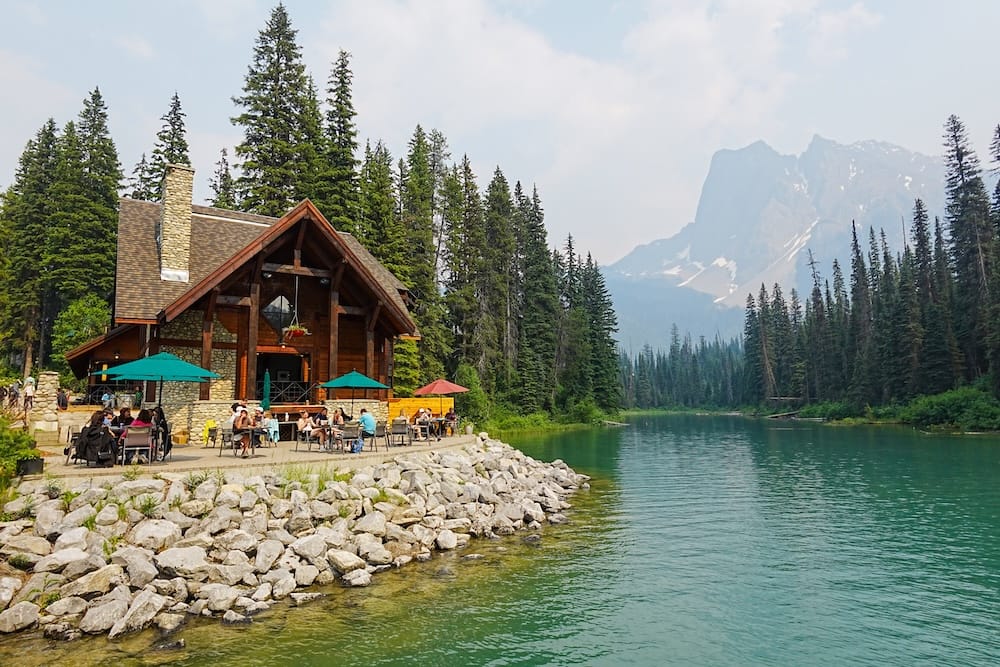
Emerald Lake: The Stop That Can Expand With the Time You Have Left
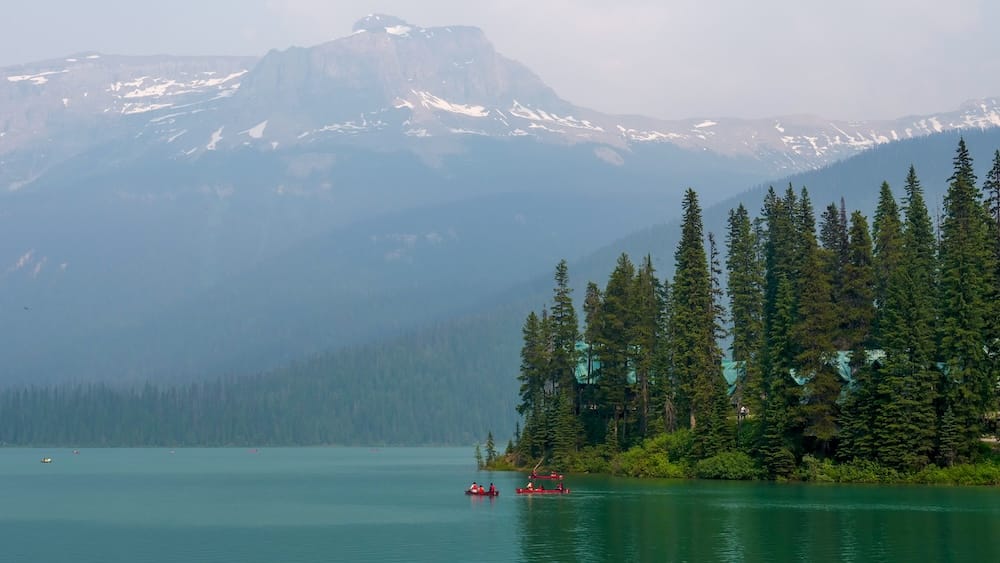
Emerald Lake came at exactly the right point in our day because the atmosphere was almost the opposite of Takakkaw Falls. The waterfall had been loud, wet and windy. Emerald Lake felt calm.
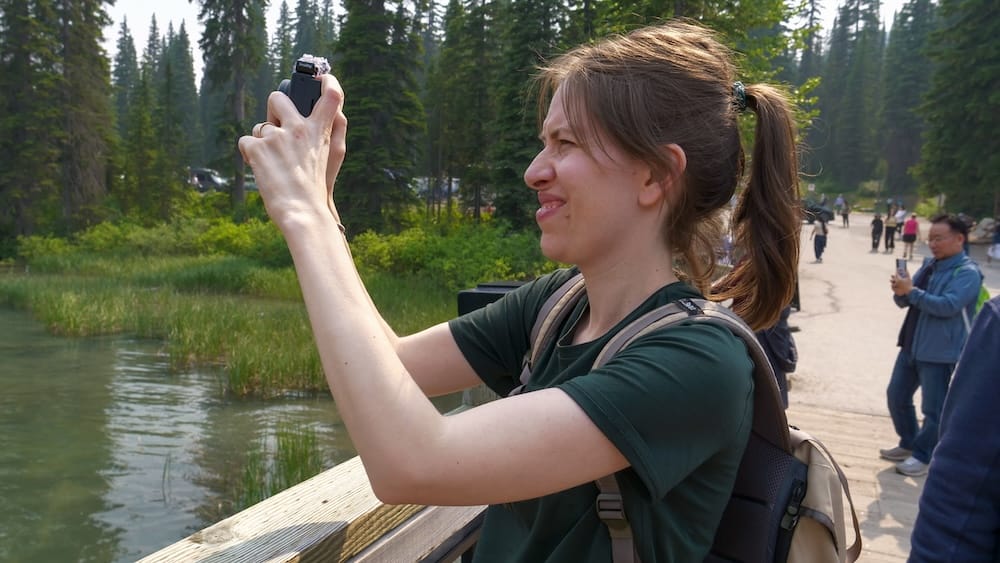
We reached the lake later in the afternoon and took a lakeside stroll. The light had softened, the temperature was noticeably cooler, and there was still snow sitting on the ground despite it being July. I spent part of the visit photographing the scenery while we figured out whether Aurelia wanted to walk or be carried.
That slower pace suited the lake.
Emerald Lake also gives you the widest range of possible visit lengths in this entire itinerary. If you’re running behind, you can still walk down to the water, enjoy the immediate views, take some photos and leave feeling like you actually saw the place. If your day is running smoothly, this is where extra time starts buying you substantially more experience.
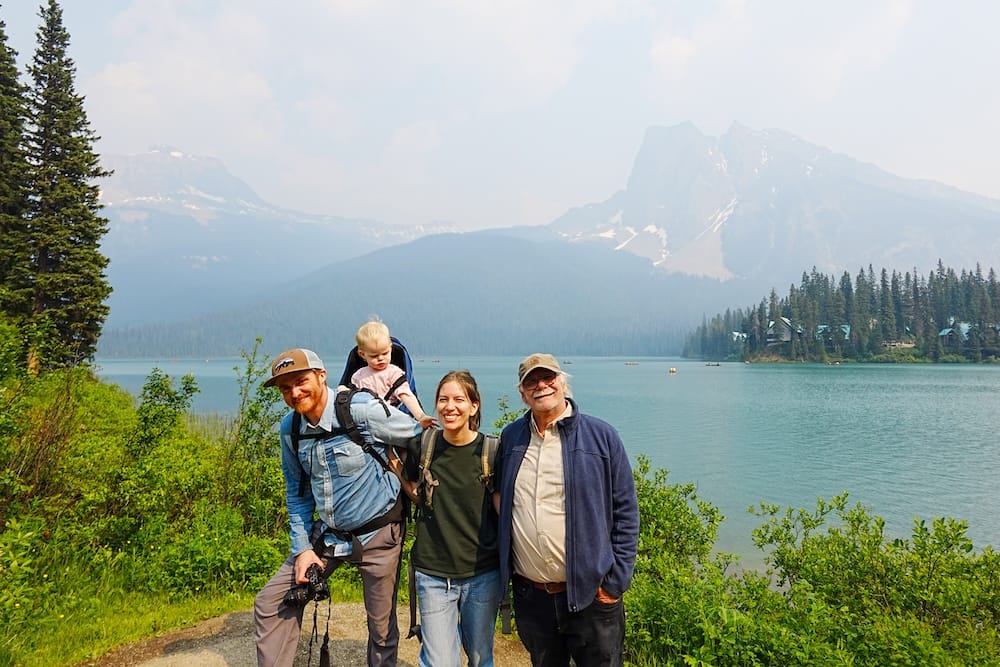
A short Emerald Lake visit
For a quick sightseeing stop, I would allow roughly 30 to 45 minutes. That gives you enough time to get away from the parking area, walk beside the lake and absorb the mountain setting without pretending you’ve explored the whole place. This is essentially the style of visit we had: relaxed lakeside time rather than an attempt to complete every activity available.
The important practical issue is parking. The lot at Emerald Lake is extremely limited, and during busy periods the parking situation can become more consequential than the physical difficulty of the visit itself.
That is another reason I would avoid building the whole day around rigid clock times. You may arrive and walk straight to the lake. You may arrive and discover that half of Western Canada had exactly the same idea.
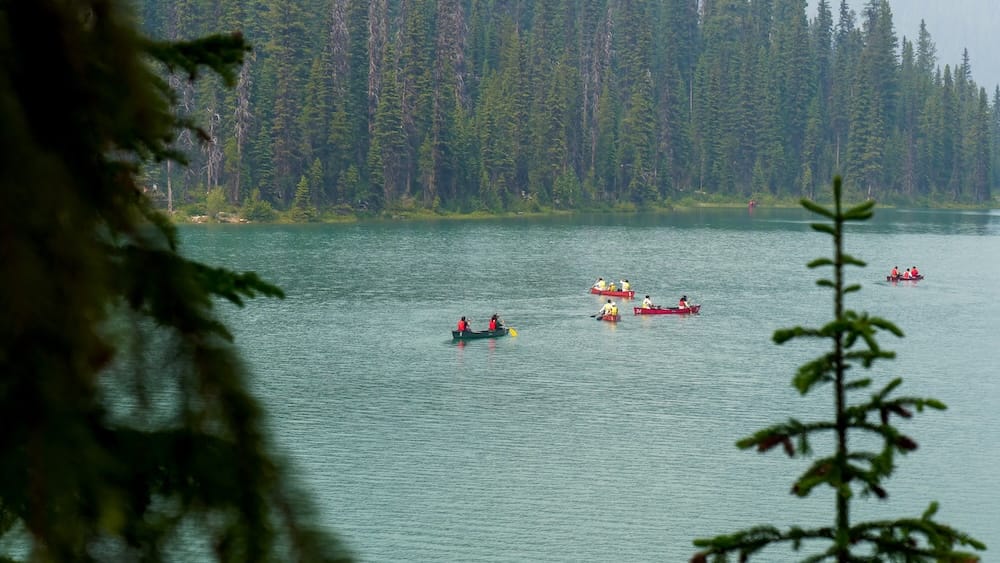
When Emerald Lake is worth giving more time
If you have around two hours, the equation changes. The full Emerald Lakeshore Trail is 5.2 kilometres and takes roughly two hours. The route has very little elevation gain, although sections on the eastern side can be muddy and rooty, so “flat” does not mean the entire circuit is a manicured promenade.
We did not complete the loop, so I can’t give you a firsthand verdict on the full walk. But from an itinerary perspective, those two hours matter because completing it changes Emerald Lake from a sightseeing stop into one of the central activities of the day.
Canoeing can extend the visit again. Rental canoes currently operate on Emerald Lake in one-hour blocks, though we did not canoe here ourselves. There is also an unusual current rule worth knowing: personal watercraft such as your own canoe, kayak or paddleboard are prohibited in Yoho under the present aquatic restrictions, while authorized Emerald Lake rental canoes are specifically exempt.
So if you arrive thinking you’ll casually unload your own SUP from the roof rack, that is not currently an option.
This is why I see Emerald Lake as the itinerary’s pressure-release valve. Running late? Give it a beautiful short visit. Ahead of schedule? Walk farther. Have several extra hours? Make the lakeshore loop or canoeing a bigger part of the day.
Few of the other stops have that same elasticity.
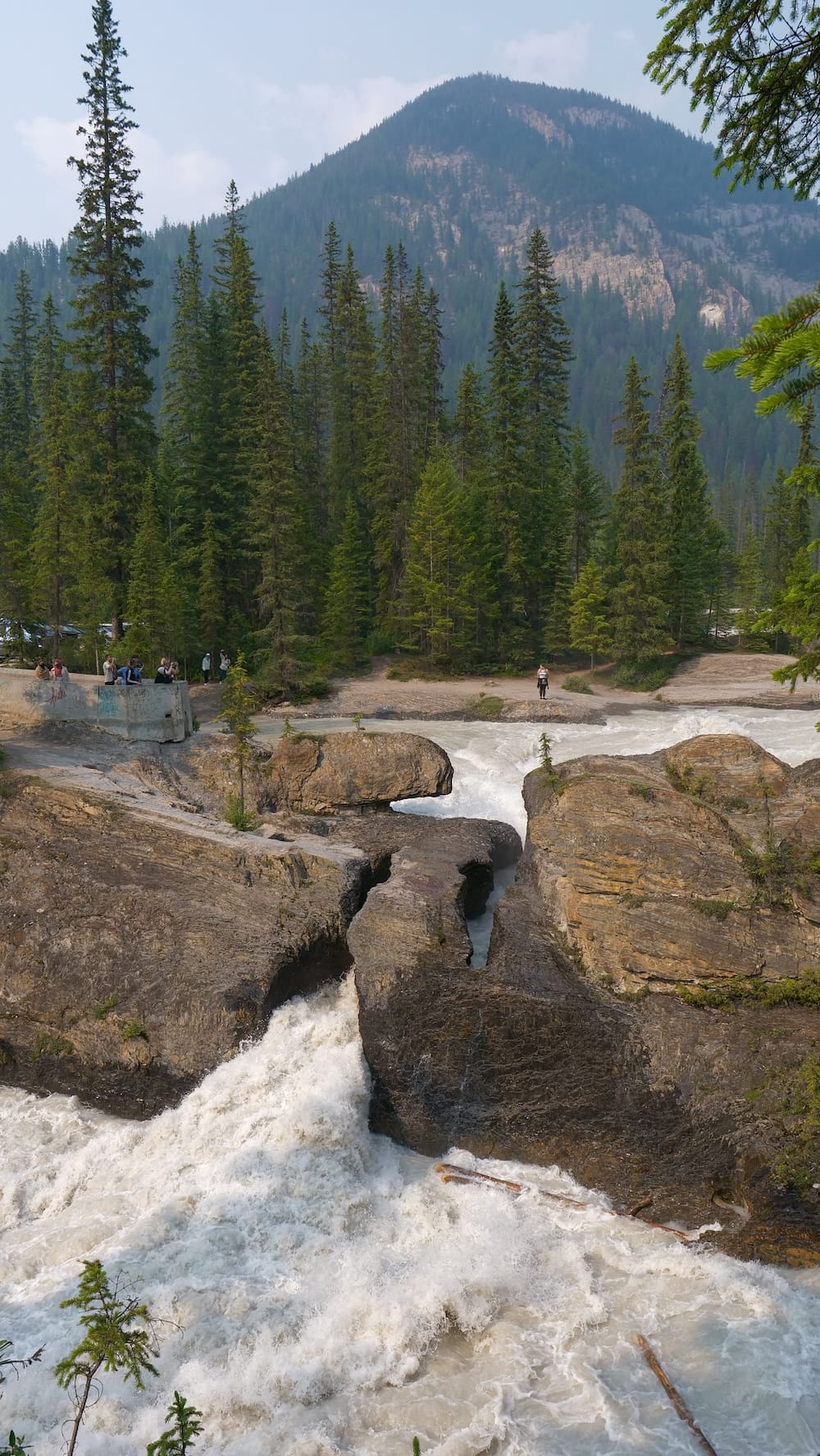
Natural Bridge: A Short Final Stop That Doesn’t Need to Be Bigger Than It Is
Natural Bridge was our final sightseeing stop, and by then we’d already had a ridiculous amount of scenery thrown at us.
That could have worked against it. After Lake Louise, Moraine Lake, Spiral Tunnels, Takakkaw Falls and Emerald Lake, a small roadside geological formation could easily have felt like the travel equivalent of somebody bringing out celery after dessert.
Instead, the water saved it.
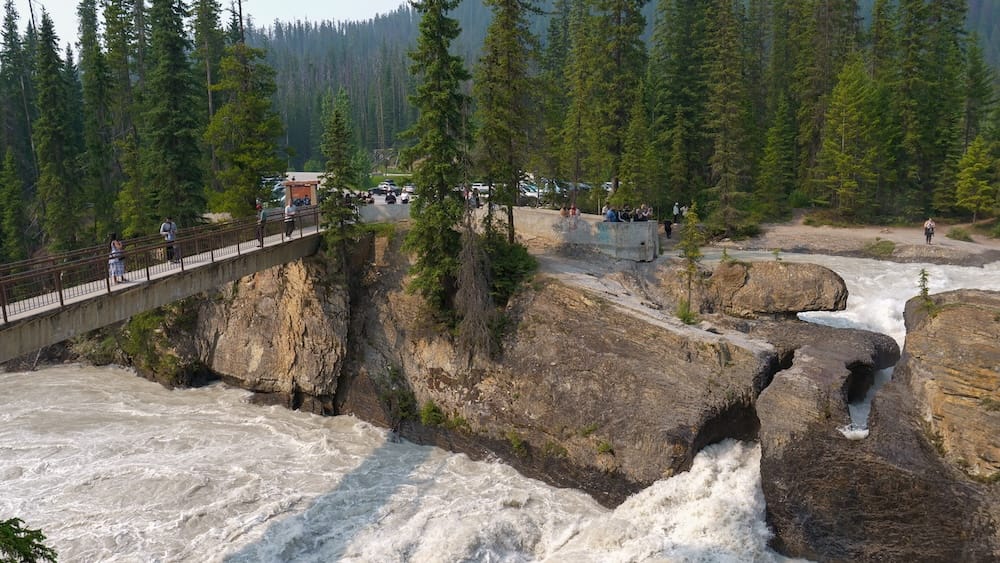
The Kicking Horse River rushes underneath a naturally formed stone bridge here, and during our visit the flow was incredibly strong. The river was absolutely hammering its way through the formation.
My immediate reaction was basically, “This is the force of nature for you.”
Natural Bridge doesn’t require a major hike or much itinerary gymnastics. The parking area is along Emerald Lake Road, making it easy to combine with Emerald Lake, and the normal visit is compact. I would think in terms of roughly 15 to 30 minutes for most sightseeing days rather than inventing reasons to spend an hour because somebody on the internet decided every attraction deserves an equal-sized section.
It doesn’t.
That is part of what makes the overall Yoho itinerary practical. Natural Bridge earns its place because the detour and time commitment are small, while the experience itself is distinctive enough to justify stopping.
By this point in our day, that was exactly what we needed.
14:54 – Takakkaw Falls
16:58 – Emerald Lake
18:51 – Natural Bridge
How Much Time Do You Really Need for These Four Yoho Stops?
If you’re trying to work out whether four attractions sounds reasonable or ridiculous, this is roughly how I would think about the time.
| Stop | Quick useful visit | More comfortable | When extra time matters |
|---|---|---|---|
| Spiral Tunnels | 10–20 minutes | Depends on train timing | Mainly if a train is approaching or railway history interests you |
| Takakkaw Falls | About 45 minutes | 45–75 minutes | Photography, lingering and getting closer to the falls |
| Emerald Lake | 30–45 minutes | 1–1.5 hours | Full 5.2 km lakeshore loop takes around 2 hours; canoeing adds another activity |
| Natural Bridge | 15–20 minutes | 20–30 minutes | Mostly photography or simply lingering |
Those are planning ranges rather than sacred appointment times. Parking alone can rearrange them, and they do not include the driving between stops, bathroom breaks, food or the inevitable moment when somebody realizes the snack bag is buried beneath every other bag in the vehicle.
The broader point is more useful than the exact numbers: Emerald Lake and Takakkaw Falls are where I would protect time. Spiral Tunnels and Natural Bridge are where I would compress the day if necessary.
Our own experience was even more ambitious because the whole excursion ran from roughly 9 a.m. until 7 p.m. and included Lake Louise, Fairview Lookout and Moraine Lake before these four Yoho stops. I wouldn’t suggest everybody copy that exact day, but it permanently changed my sense of what is geographically possible from a Banff-area base.
Can You Combine Yoho With Lake Louise and Moraine Lake in the Same Day?
We did.
That answer needs an enormous current-day asterisk attached to it.
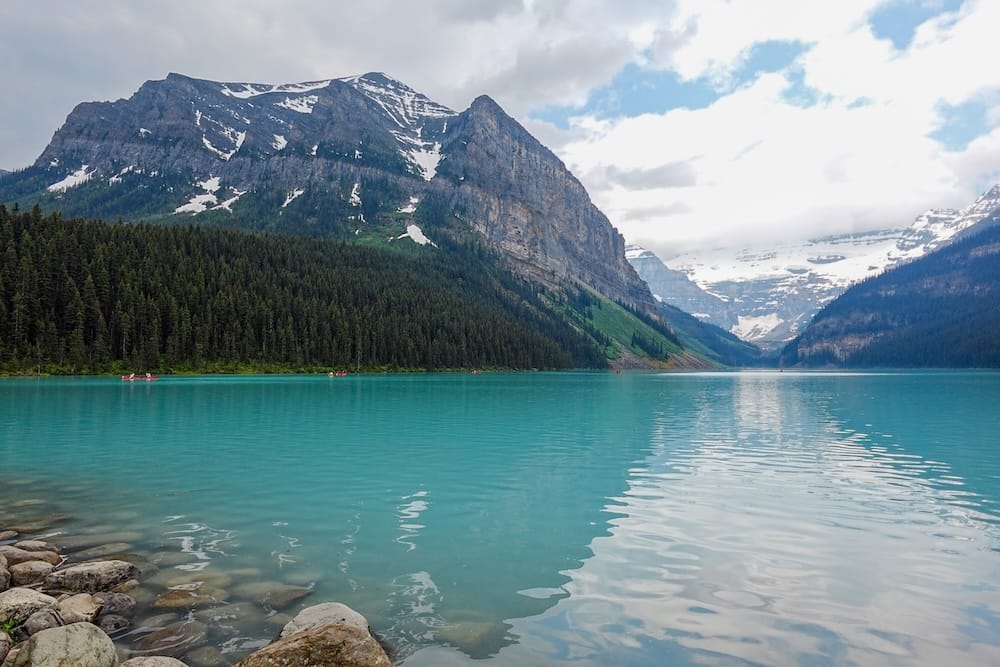
Our private excursion included Lake Louise and Moraine Lake before Yoho, but Moraine Lake Road is now closed to personal vehicles year-round. You need an approved shuttle or licensed commercial transport during the operating season. Lake Louise also has enough access and parking pressure that simply adding both lakes to a self-drive Yoho itinerary is no longer as straightforward as drawing a line between them on Google Maps.
So the useful lesson from our day isn’t, “Copy these exact logistics.” It’s that the geography itself allows a remarkably broad sightseeing day when the transportation pieces have been solved.
There are currently organized trips that still test the outer limits of that sightseeing radius. One small-group option combines Lake Louise and Moraine Lake with Emerald Lake and Takakkaw Falls in an approximately 11-hour day from Banff and other regional pickup points. It leaves out Natural Bridge and Spiral Tunnels, so it is not the same itinerary as this article, but it closely resembles the ambitious Alberta-plus-British-Columbia structure we experienced. You can see the current Lake Louise, Moraine Lake, Emerald Lake and Takakkaw Falls tour.
The more Banff icons you add, the more transport starts controlling the trip. If I were self-driving, I would keep the core Yoho day simpler unless I had already solved the Lake Louise access component separately. If I specifically wanted Moraine Lake, Lake Louise and Yoho together, that is one of the clearest situations where I’d investigate a tour instead of trying to force everything independently.
Self-Drive or Book a Yoho Tour From Banff?
This is one of those routes where both approaches make sense, but they solve different problems.
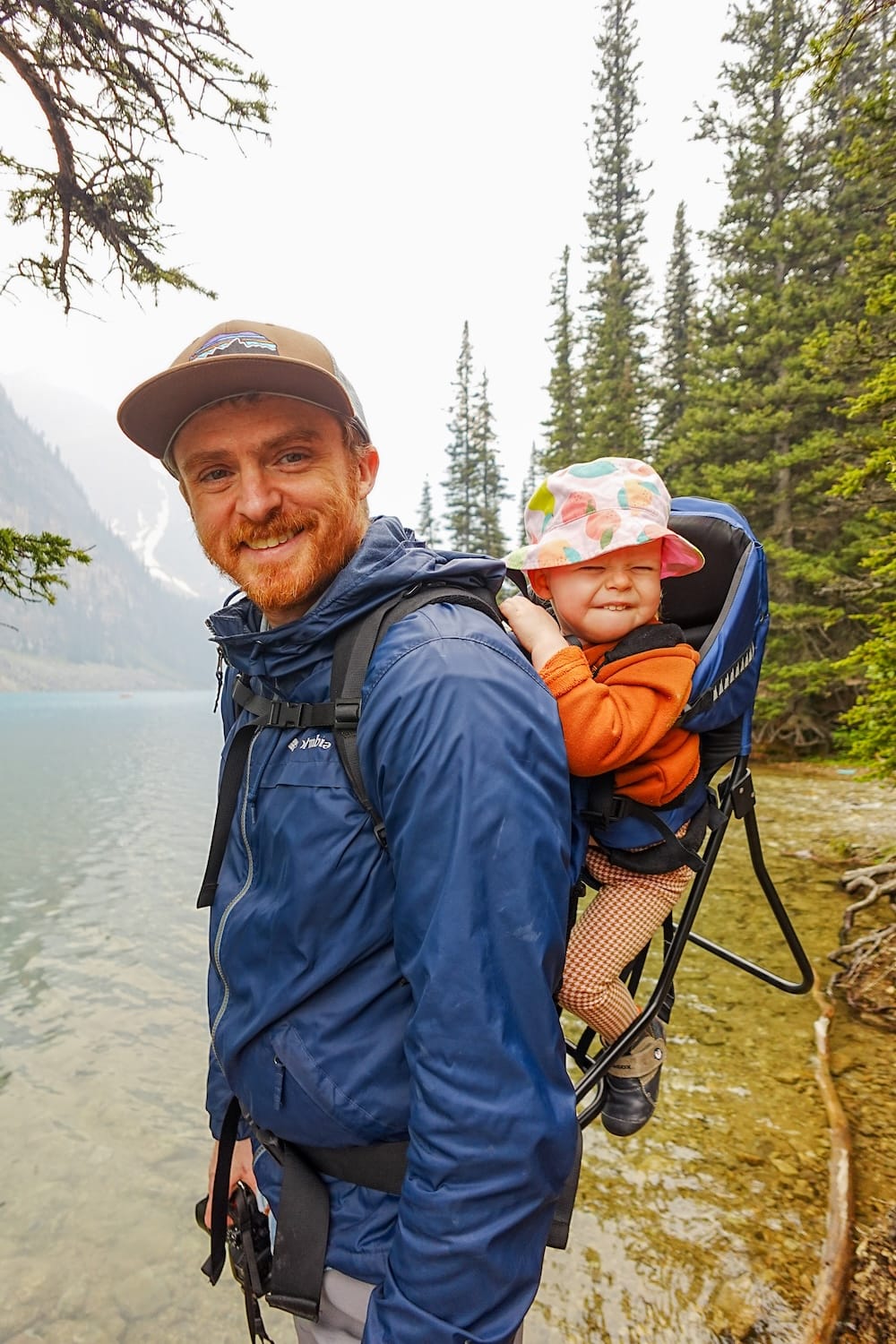
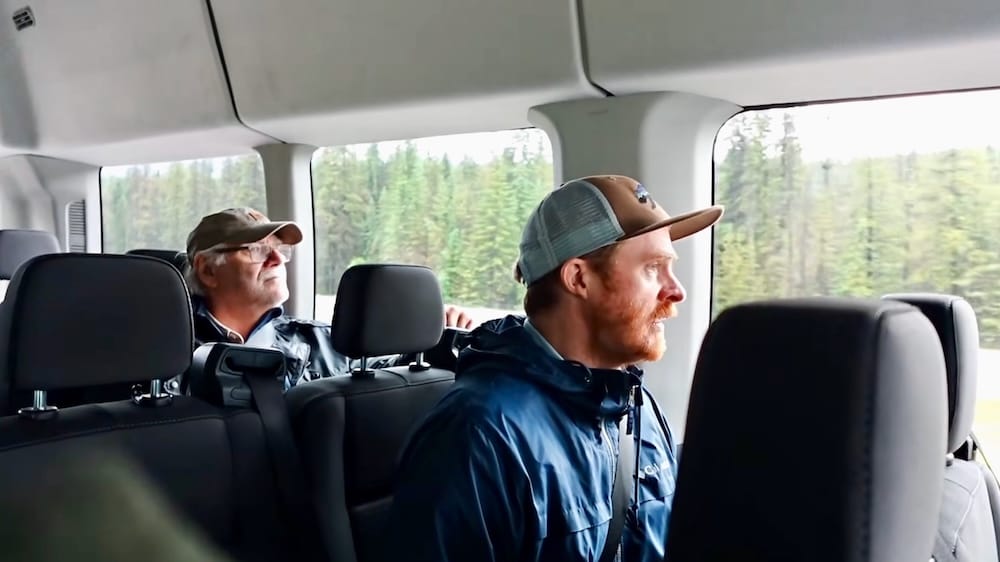
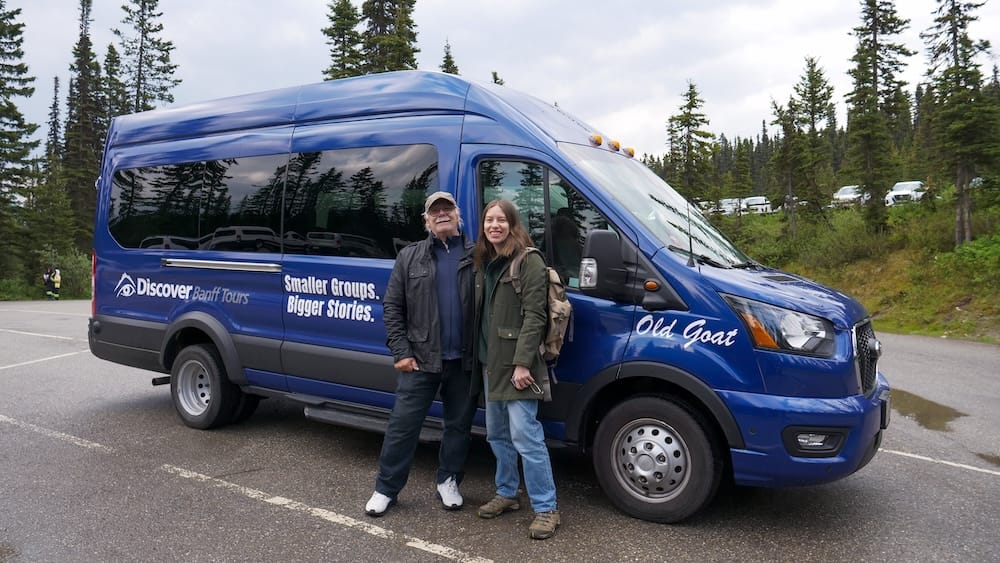
We personally went the private-tour route, and for our group it worked extremely well. We had Audrey’s dad with us, plus Aurelia, who was a toddler with all the predictable toddler requirements: hunger arriving whenever hunger feels like arriving, diaper changes, energy bursts, naps and occasional decisions about whether her legs worked anymore.
Being able to stop for snacks, take little breaks and adjust activities without worrying about holding up a larger group mattered enormously. Our guide kept the day moving while still letting us go at our own pace, which is a difficult balance on an itinerary this busy.
That doesn’t automatically mean a private tour is the best choice for everybody.
Self-driving makes sense if you want maximum control
With your own vehicle, you can decide whether Emerald Lake gets forty minutes or three hours. You can skip Spiral Tunnels if no train is around, spend longer at Takakkaw if the waterfall has you hypnotized and abandon Natural Bridge if everyone has reached the “please take me back to the hotel” phase of the day.
The trade-off is that every logistical problem becomes yours too. Yoho has no public transportation system within the park. Parking at Emerald Lake and Takakkaw can be tight, and the Takakkaw switchbacks require extra consideration if you’re driving a long vehicle. If you also want Moraine Lake in the itinerary, your personal vehicle can’t take you there at all.
For confident road-trippers who value freedom, I still think self-driving is an excellent way to see Yoho. If you are staying in Banff but do not already have a vehicle, you can compare current car-rental options in Banff on Booking.com before deciding whether driving or touring makes more sense for the rest of your trip as well.
A small-group tour trades flexibility for simplicity
Current small-group day trips from Banff and the surrounding area commonly combine some mix of Emerald Lake, Natural Bridge, Takakkaw Falls and Lake Louise. The exact combinations vary, as do pickup locations, group sizes and how much time you receive at each stop.
One current Yoho-focused option is much closer to the relaxed version of this day: it includes Emerald Lake, Natural Bridge and Takakkaw Falls, with a relatively generous block of time at Emerald Lake rather than trying to bolt Moraine Lake onto the same itinerary. We did not take this particular tour, but travellers who want the three major natural stops without driving themselves can check the current Emerald Lake, Natural Bridge and Takakkaw Falls tour.
The obvious advantage is that you’re not dealing with the driving, route planning or parking yourself. You get in, somebody else worries about where you’re going next, and you concentrate on the scenery.
The disadvantage is the schedule. Forty-five minutes at Emerald Lake means forty-five minutes at Emerald Lake even if the weather is perfect and you’d happily stay another two hours. A group tour necessarily trades some spontaneity for predictability.
For a first visit without a rental car, that may be an excellent trade.
Private touring becomes more interesting when the group itself is complicated
This is where I can speak more confidently from experience.
Our group had three generations, different walking speeds and a toddler. That made flexibility more than a luxury. It was practical.
At Spiral Tunnels, Audrey could stay with Aurelia while I went to watch the train. We could stop when somebody needed food. We weren’t staring anxiously at fifteen strangers while changing a diaper, wondering whether we had become the villains of their Canadian vacation.
If you’re travelling with young children, grandparents, mixed mobility, serious photographers or people who simply don’t move at identical speeds, I would at least compare the price of a private tour with the frustration it might remove. That is especially true if you’re trying to build an aggressive Banff-and-Yoho combination rather than a relaxed four-stop Yoho day.
A current private full-day option on GetYourGuide includes Banff or Canmore pickup and can combine Lake Louise, Moraine Lake, Emerald Lake, Natural Bridge and Takakkaw Falls. We did not use this operator, so I can’t give the product itself a personal verdict, but the format is much closer to the kind of flexibility that worked for our family. You can see the current private Banff and Yoho tour details.
Current tour options for different versions of the day
If you’re choosing a tour rather than simply deciding whether tours exist, the important question is what problem you want the booking to solve. These current options are not interchangeable.
| Tour style | Best fit | Main trade-off | Current option |
|---|---|---|---|
| Closest match to this four-stop Yoho article | Travellers who specifically want Takakkaw Falls, Emerald Lake, Natural Bridge and Spiral Tunnels | Also includes additional stops, so it is not a minimalist four-stop itinerary | Compare the current four-stop Yoho tour on Expedia |
| Yoho-focused small group | Travellers who want Emerald Lake, Natural Bridge and Takakkaw without cramming in the major Banff lakes | Does not include Spiral Tunnels as a scheduled stop | Check the current Yoho-focused small-group tour |
| Banff + Yoho big day | Travellers prioritizing Lake Louise, Moraine Lake, Emerald Lake and Takakkaw in one long outing | Leaves out Natural Bridge and Spiral Tunnels and gives Emerald Lake less time | See the current Lake Louise, Moraine Lake and Yoho tour |
| Private Banff + Yoho | Families, mixed-speed groups and travellers who value flexibility over the lowest per-person cost | Private touring usually makes the most sense when the flexibility itself solves a real problem | Compare the current private Banff and Yoho option |
I would choose between these by itinerary first and provider second. If Spiral Tunnels matters to you, make sure the product actually names it. If Moraine Lake is the priority, choose a tour that solves Moraine Lake access. If Emerald Lake is where you want to linger, look for a route that gives it meaningful time rather than treating it as a thirty-minute photo stop. And if your family needs to move at its own pace, private touring starts to make a lot more sense.
What to Check Before Leaving Banff
This is not an itinerary where I would blindly save an article six months in advance and assume every road will behave itself when you arrive.
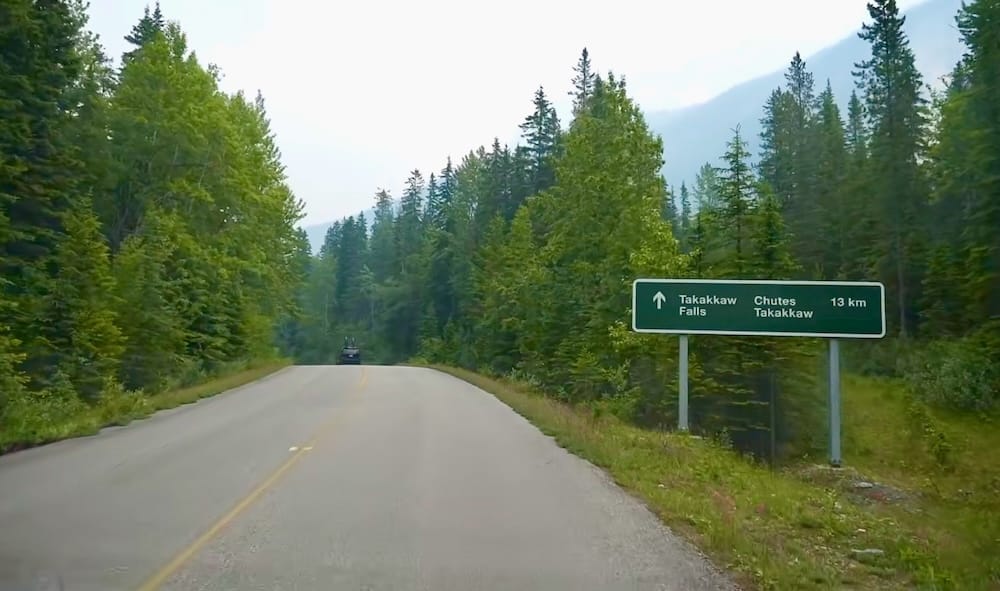
The most important check is Yoho Valley Road to Takakkaw Falls. Its operating season is limited and weather can change the exact opening and closing dates. If the road isn’t open, the four-stop itinerary in this guide immediately becomes a three-stop itinerary.
I would also check current road conditions before heading west, particularly if the weather has been unsettled. Highway 1 is the backbone of the entire day, so a major delay there matters considerably more than whether you spend fifteen versus twenty-five minutes at Natural Bridge.
Parking conditions are worth checking too. Emerald Lake and Takakkaw Falls are popular enough that limited parking can determine the rhythm of your day. If one lot is under heavy pressure, don’t be too emotionally attached to the order you planned over coffee.
Facilities are fairly basic once you’re moving around Yoho. Field has useful services, including food and fuel, but many sightseeing areas rely on simple day-use facilities rather than the kind of infrastructure you find in Banff town. Cell reception is also limited outside Field, so I would have maps and important information available offline rather than discovering that your entire navigation strategy lived in the cloud.
Your Banff national park pass also covers Yoho, so you do not need a separate national park admission for crossing into British Columbia.
For information that can change quickly, I’d check the current Yoho operating and seasonal status shortly before your trip rather than relying on any travel article indefinitely.
Who This Yoho Day Trip Works Best For
I think this route is especially strong for travellers who want variety without committing the entire day to serious hiking.
Takakkaw Falls gives you a huge scenic payoff from a relatively easy walk. Spiral Tunnels is mostly a roadside historical stop. Natural Bridge is compact. Emerald Lake lets you choose your own level of ambition, from a short shoreline wander to the full 5.2-kilometre loop.
That makes the itinerary unusually adaptable.
It also worked surprisingly well for our multigenerational group, but I would be careful about turning our experience into a universal family-suitability stamp. A toddler who happily gets carried is different from somebody with significant mobility limitations, and a grandparent who enjoys a full sightseeing day is different from one who needs frequent recovery periods.
What I can say is that the structure itself is forgiving. You don’t have to hike for four hours to justify visiting any of these four places.
This itinerary is less suitable if your real priority is hiking deeply into Yoho. If you want to complete the Emerald Lake circuit, add longer trails around Takakkaw Falls and spend substantial time walking, then trying to retain all four sightseeing stops starts working against you.
At that point I’d do less.
There is nothing heroic about visiting eight places badly.
Is a Yoho National Park Day Trip From Banff Worth It?
For me, yes — emphatically — assuming the Takakkaw road is open and you have a full day available.
What changed my perspective wasn’t simply that Yoho is beautiful. I expected it to be beautiful. We were in the Canadian Rockies; the mountains had already spent several days showing off.
What surprised me was how naturally Yoho fitted into a Banff-based trip and how different the individual stops felt from one another.
We watched a freight train work its way through a century-old mountain engineering solution. Audrey and I got blasted with spray at the base of Takakkaw Falls. We slowed down beside Emerald Lake in the soft late-afternoon light. Then we watched the Kicking Horse River hammer beneath Natural Bridge.
And we’d already been to Lake Louise and Moraine Lake earlier that day.
I wouldn’t recommend using that as a challenge to see how many famous nouns you can cram into ten hours. The better lesson is that Banff gives you an enormous launch pad. Once you expand the radius into neighbouring British Columbia, you suddenly have another national park full of genuinely different experiences close enough to work as a day trip.
If I were planning the four-stop Yoho day again, I’d protect meaningful time for Takakkaw Falls and Emerald Lake, let Spiral Tunnels depend partly on train luck, treat Natural Bridge as the compact bonus it is and stay flexible about the order.
Banff may be where you’re sleeping. It doesn’t have to be where you spend every day.
Frequently Asked Questions
Can you visit Yoho National Park from Banff in one day?
Yes. Yoho is close enough to work as a full-day trip from Banff, and our own family day included Spiral Tunnels, Takakkaw Falls, Emerald Lake and Natural Bridge after earlier stops at Lake Louise and Moraine Lake.
When can you visit all four stops in this Yoho itinerary?
The full four-stop version is mainly a summer into early-autumn itinerary. Yoho Valley Road to Takakkaw Falls normally operates from around mid-June to mid-October, weather permitting, and the Spiral Tunnels Viewpoint is seasonal as well.
How much time should you allow at Takakkaw Falls and Emerald Lake?
I would protect the most time for those two stops. Roughly 45–75 minutes works well for Takakkaw Falls, while Emerald Lake can be a 30–45 minute scenic stop or expand to around two hours for the full 5.2-kilometre lakeshore loop.
Can you combine Yoho with Lake Louise and Moraine Lake in the same day?
We did, but reproducing that combination now requires more planning. Moraine Lake Road is closed to personal vehicles year-round, so adding Moraine Lake means using an approved shuttle or licensed commercial transport during the operating season.
Is it better to self-drive or book a Yoho tour from Banff?
Self-driving gives you the most control over timing and how long you spend at Emerald Lake or Takakkaw Falls. A tour removes the driving and parking work, while a private tour can be especially useful for families or mixed-speed groups that need more flexibility.
Is this Yoho day trip suitable if you do not want a long hike?
Yes. The four headline stops can all be enjoyed without making a long hike the centre of the day. Emerald Lake is the main place where you can choose to extend the visit with the full lakeshore loop if you want more walking.
This guide is also available in Spanish. [Leé la versión en castellano: Excursión de un día al Parque Nacional Yoho desde Banff: Takakkaw Falls, Emerald Lake, Natural Bridge y Spiral Tunnels]
This article contains affiliate links. If you book through one of these links, I may earn a commission at no extra cost to you.