
Eating in Banff turned out to be more interesting than I expected. Before our trip, I probably pictured the food scene the same way a lot of people do: burgers, steaks, beer, maybe some poutine, and enough elk and bison on menus to remind you that you’re in the Canadian Rockies.
You can absolutely eat that way, and I’m not going to argue against poutine after spending half the day outside. But over several meals, Audrey and I ended up eating Vietnamese food, Japanese and Korean dishes, Mexican food, ginger beef, an elk burger, poutine and enough other things that our Banff diet became considerably more international than the scenery around us suggested.
We didn’t eat everywhere in town, though, and that’s an important distinction for this guide. The four restaurants I can talk about most confidently are Elk & Oarsman, Peak Cafe, Shoku Izakaya and Añejo because we actually ate at all four. Those meals get the deepest coverage here.
I’ve also included a smaller number of restaurants we didn’t personally try where they fill obvious gaps in our experience: breakfast, baked goods and coffee, vegetarian food, pizza and a more polished Alberta-focused dinner. I don’t see much value in pretending we personally reviewed twenty restaurants just because the title says “best.”
The more useful question is: what do you actually want to eat, and what kind of meal fits the Banff day you’re having?
How I’d Choose a Restaurant in Banff
Banff isn’t a huge town, but the number of dining choices can make it feel larger once everyone is hungry and nobody wants to make another decision. After spending the day thinking about shuttles, parking, weather, trails, tours or whether you brought enough layers, dinner can become one logistical problem too many.
I’d narrow things down by the kind of meal you want rather than trying to identify an overall winner.
| Restaurant | What it’s best for | Food focus | Price level | Did we eat there? |
|---|---|---|---|---|
| Elk & Oarsman | Casual meal after an active day | Elk, poutine, pub food, beer | $$ | Yes |
| Peak Cafe | Warming casual lunch | Vietnamese food, noodle soups, bubble tea | $–$$ | Yes |
| Shoku Izakaya | Sharing dishes and international flavours | Japanese and Korean-inspired food | $$ | Yes |
| Añejo | Tacos, salsa and a lively casual meal | Mexican | $$ | Yes |
| The Bison | Nicer regional dinner | Alberta beef, bison, Canadian food | $$$ | No |
| Wild Flour Bakery | Coffee, pastries and an early breakfast | Bakery/café | $ | No |
| Tooloulou’s | Long sit-down breakfast | Breakfast with Cajun/Creole influences | $$ | No |
| Nourish Bistro | Vegetarian and vegan dining | Plant-based | $$ | No |
| Bear Street Tavern | Pizza and an easy group meal | Pizza and tavern food | $$ | No |
I wouldn’t use that table to rank one against another. Tooloulou’s isn’t competing with Shoku, and a bakery breakfast isn’t supposed to defeat a bison dinner. The point is to figure out which restaurant solves the meal you need.
The Banff Restaurants We Actually Ate At
Elk & Oarsman: Elk, Poutine and the Pub Meal We Wanted
Elk & Oarsman came at the right moment in our trip. We’d had an action-packed day, we were hungry, and nobody was interested in examining twelve delicate courses with tweezers. We wanted pub food.
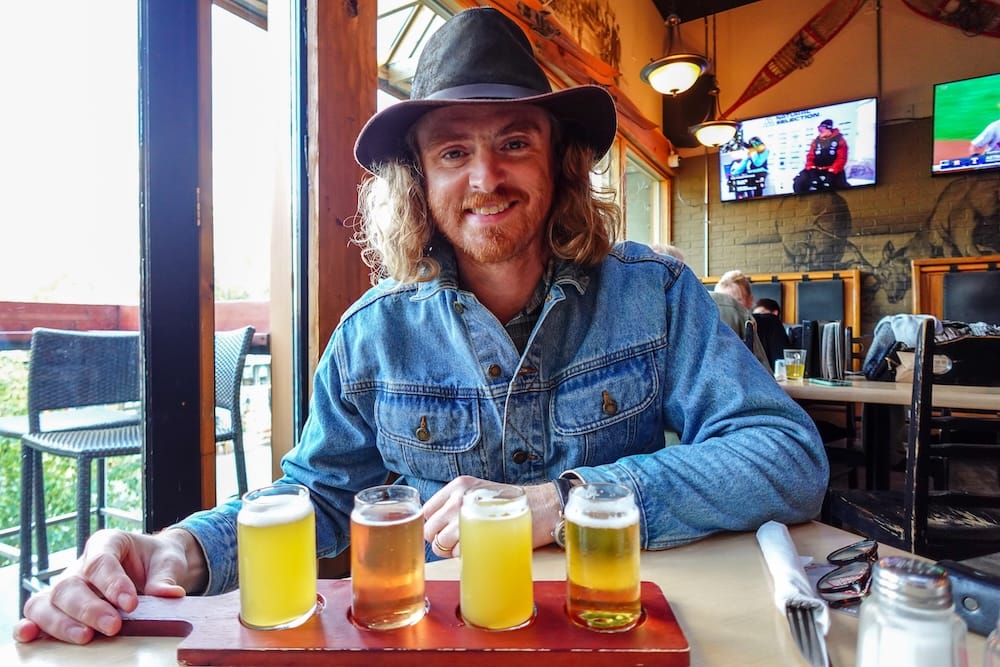
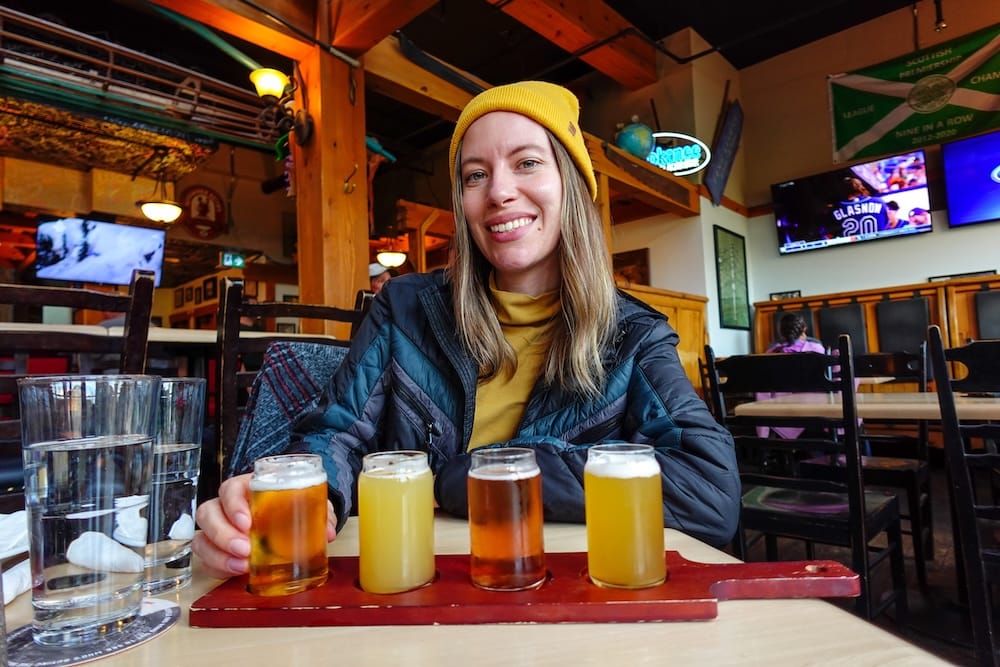
The restaurant has the sort of lodge-meets-sports-bar atmosphere that fits Banff naturally, and we leaned straight into it with a beer flight, an elk burger and poutine. I had apparently reached a point where choosing one beer was beyond my decision-making abilities, so the flight solved that nicely. Of the different styles we tried, the ale was my favourite.
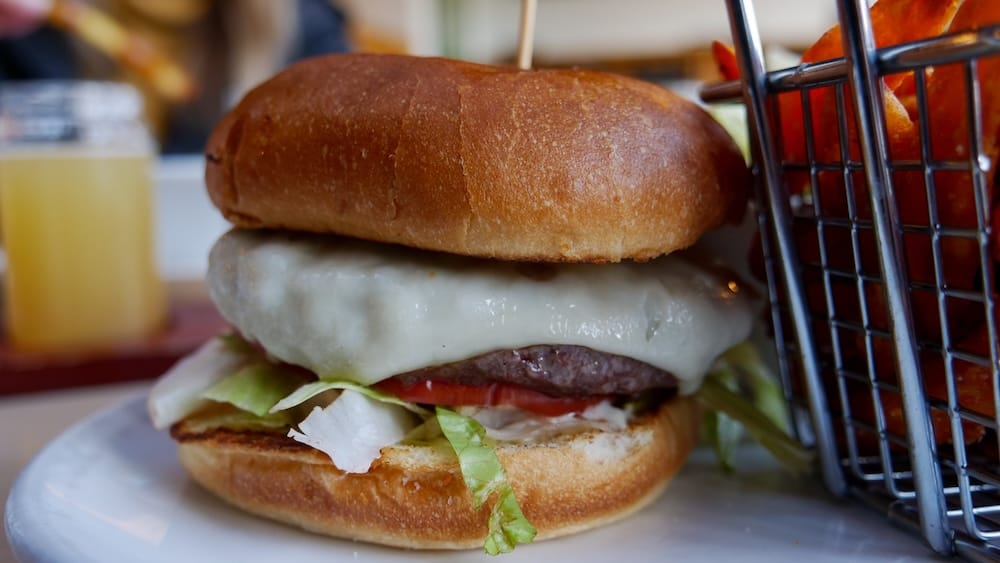
The bigger experiment was the elk burger because I’d never had one before. I expected the meat to taste much stronger and gamier than beef, but that wasn’t what happened at all. It was juicy, tender and flavourful without becoming overwhelmingly “wild” tasting, and the bacon worked really well with it.
Mine came with sweet potato fries and Caesar salad, which provided at least some evidence that vegetables were involved in dinner.
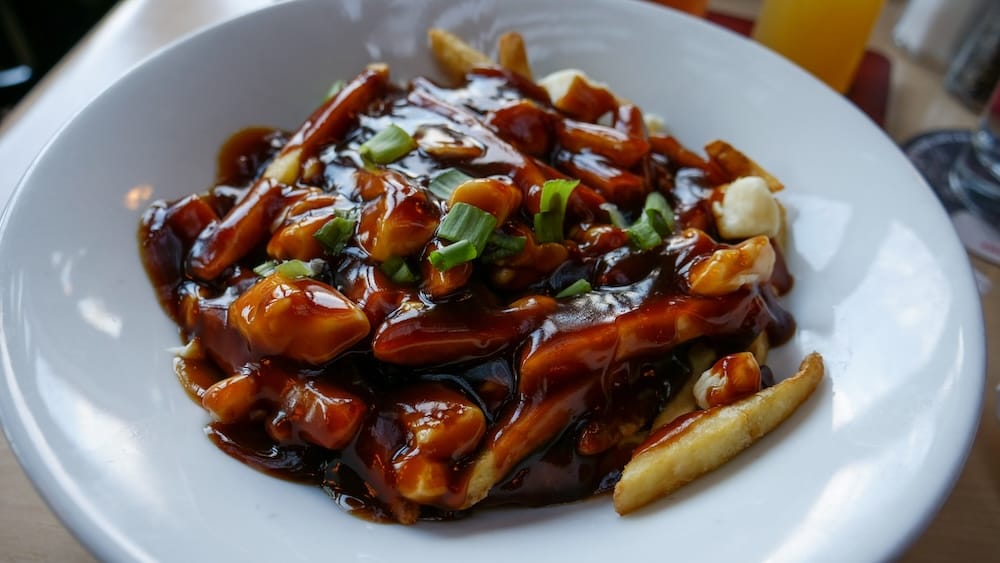
Then there was the poutine. What had been ordered as an appetizer arrived looking much closer to a complete meal, with fries, gravy and cheese curds piled together in the wonderfully sensible Canadian manner of making potatoes as heavy as possible.
It ended up being one of the standout dishes of the trip. We’d eaten poutine elsewhere too, and this one was declared the best of that particular bunch. I wouldn’t stretch that into “the best poutine in Banff” because we didn’t spend the rest of the trip conducting a forensic investigation into every gravy-covered fry in town. For our meal, though, it absolutely worked.
The current menu has evolved since our visit, but elk is still very much part of the restaurant’s identity, with current elk dishes keeping that regional angle alive. That continuity matters because it means I can still point someone toward Elk & Oarsman for essentially the same reason we went there ourselves: a casual Banff meal involving beer, substantial pub food and something a little more Rockies-specific than another ordinary burger.
If you’ve been hiking, sightseeing or out on a tour all day and want a restaurant where being extremely hungry feels like an advantage, this is one I’d consider first.
Peak Cafe: Pho, Ginger Beef and Food That Matched the Weather
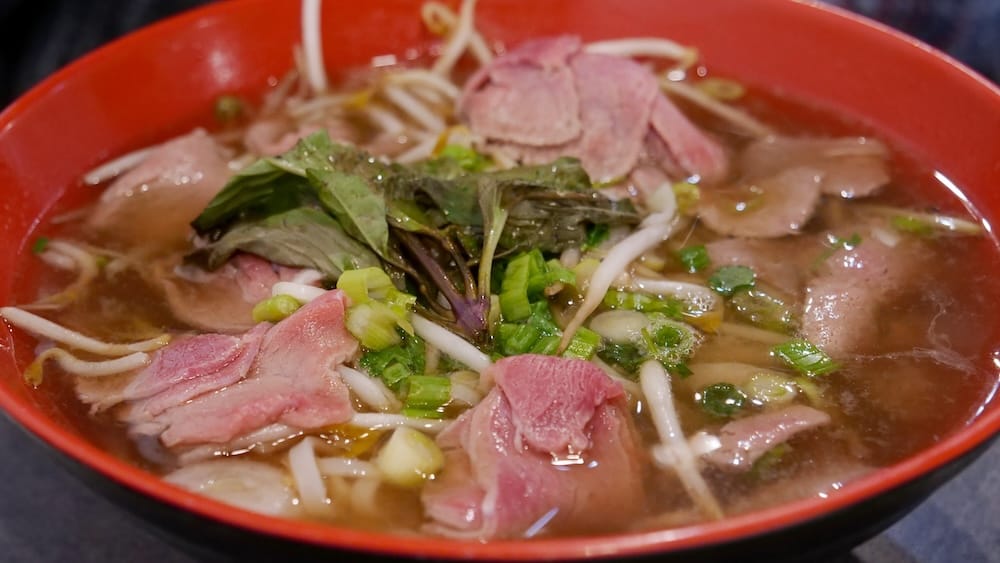
Peak Cafe was a very different meal, and I remember it partly because the weather made the decision for us. It was cold outside, Audrey wanted pho, and that was basically the entire argument.
Her bowl arrived steaming, with noodles and thin slices of beef cooking in the hot broth, and she added some extra spice. On another day it would still have been good soup, but after being outside in the cold it felt particularly satisfying. That’s something restaurant lists often lose when they rank food in isolation: sometimes the “best” meal is the one that matches exactly how you feel when you walk through the door.
We also had coconut milk bubble tea, which took us back to our travels in Taiwan, Macau and Hong Kong, when bubble tea appeared far more regularly in our lives. We had trouble deciding which flavour to order and eventually settled on coconut, which was a reminder that apparently even beverage selection can become a diplomatic negotiation when Audrey and I are both hungry.
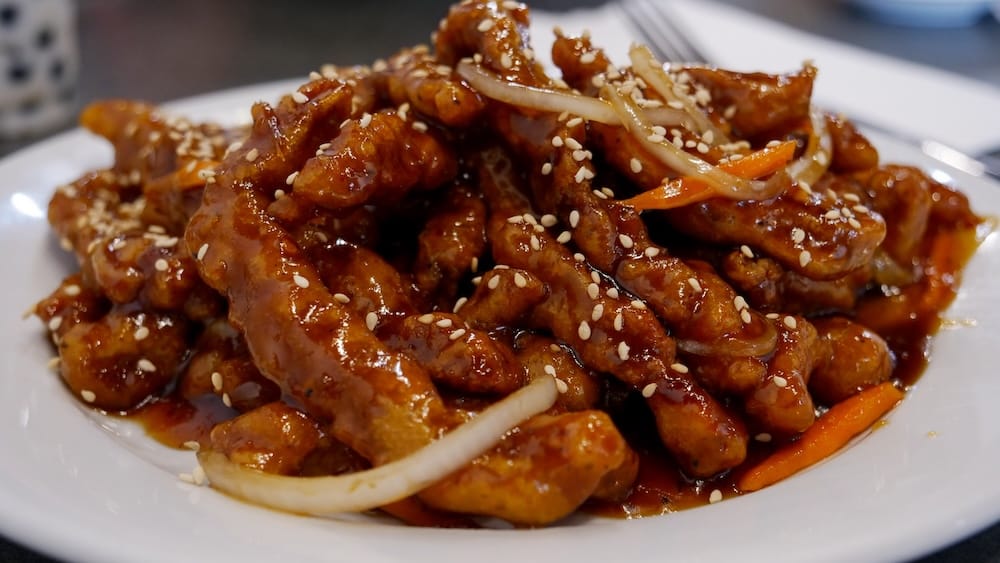
My meal was ginger beef, a dish with a longer history for me because I first became attached to it when I lived in Edmonton. During my university years I’d sometimes jog toward Chinatown and then eat ginger beef, which Audrey immediately pointed out was a very me kind of exercise plan. She wasn’t wrong: run there, eat battered beef in a sweet sauce, and presumably declare the cardiovascular ledger balanced.
Ginger beef is especially fun to eat in Alberta because the Canadian-Chinese dish originated in Calgary. So while Vietnamese food might not be what most people picture when they imagine “local Banff cuisine,” my meal still had a little Alberta connection buried inside it.
Peak Cafe remains a casual Vietnamese option in Banff, with noodle soups, rice dishes and bubble tea fitting the same general role that made the restaurant work for us. I wouldn’t promise that every exact dish we ate years ago is permanently available, because restaurant menus change. What hasn’t really changed is the reason I’d put Peak on this list: when you’re cold, tired or simply don’t want another heavy pub meal, Vietnamese comfort food can be a very good idea.
Shoku Izakaya: Japanese and Korean Food When We’d Had Enough of Mountain-Town Eating
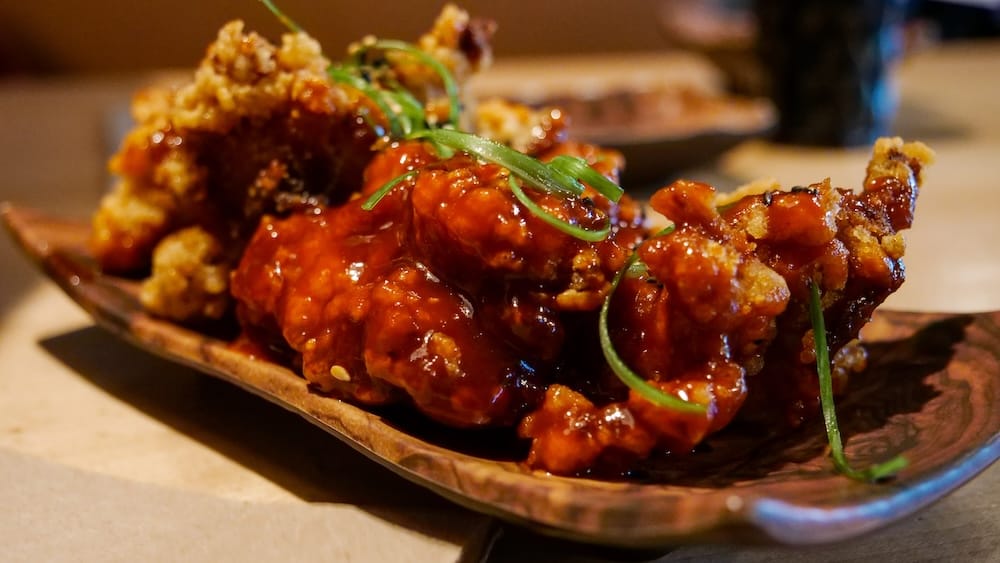
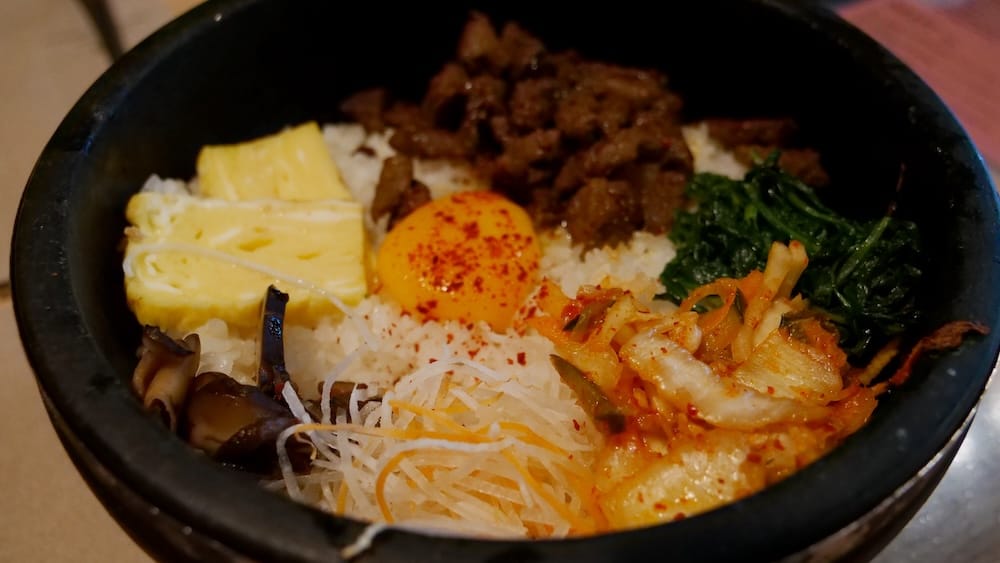
Shoku was probably the meal that most clearly broke the stereotype I had in my head about Banff food. Audrey and I both love Japanese and Korean cuisine, so we decided to build dinner around a mixture of the two rather than sticking to one side of the menu. We ordered a spicy shrimp roll, dolsot bibimbap and Korean fried chicken.
The bibimbap was one of our favourites. With dolsot bibimbap, the hot stone bowl keeps cooking the rice pressed against the bottom, creating crispy bits underneath everything else. You mix the ingredients together, add the sauce and then eventually get to the crunchy rice that has been quietly becoming the best part of the bowl.
The fried chicken might have produced the strongest reaction at the table. It was crispy outside, tender inside and coated in a sauce with that sweet, spicy and slightly sour combination that makes you take one bite and immediately start negotiating who gets the remaining pieces.
This was also the point in the trip where I appreciated that Banff didn’t force us into eating the same style of food night after night. There is only so much “mountain cuisine” I need before my brain starts asking where the rice is.
Shoku still operates on Caribou Street with a Japanese izakaya-style identity and broader Asian influences. Its online reservation information has been inconsistent enough that I wouldn’t build a complicated evening around assumptions about walk-ins versus bookings without checking again before going.
Food-wise, though, the role is clear. If you’ve already had burgers, steak or pub food and the idea of bibimbap, sushi and fried chicken sounds considerably more appealing, Shoku gives you a proper change of direction.
Añejo: Tacos, Salsa and the Least Tidy Meal of the Trip
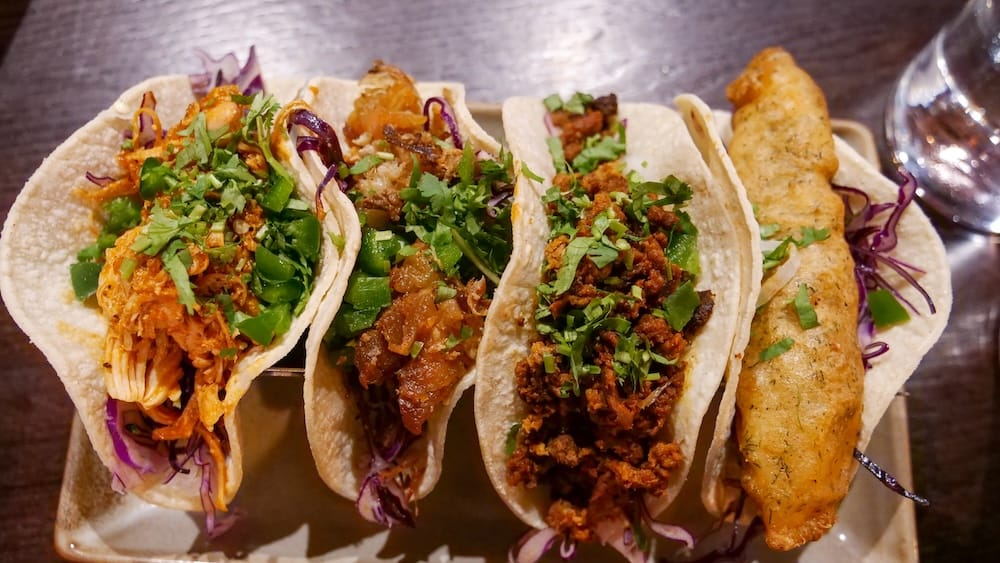
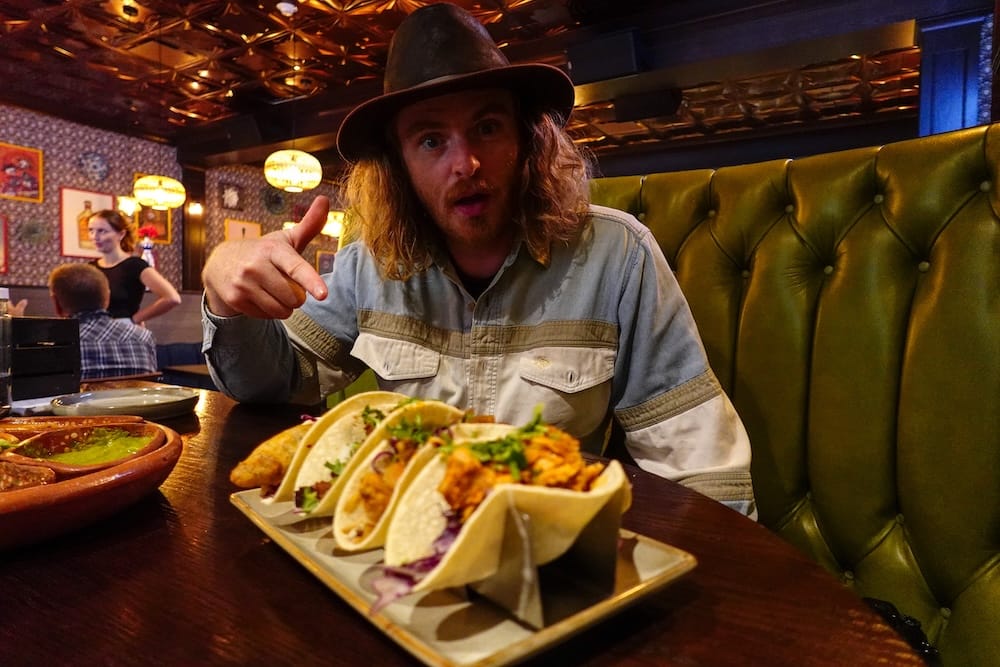
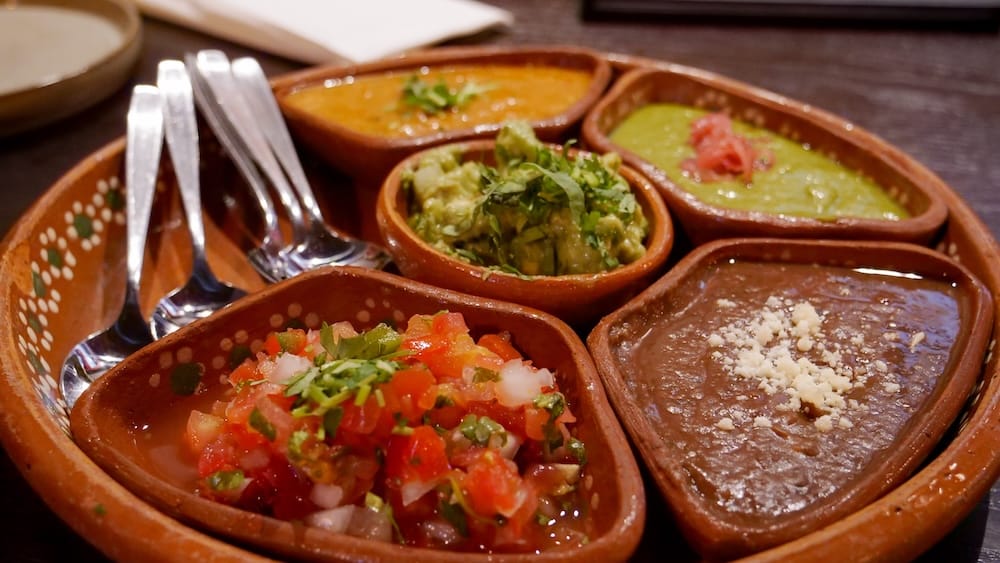
Our lunch at Añejo began with chips and a spread of dips and salsas that included pico de gallo, guacamole, refried beans, green salsa and red salsa. The table looked good before we’d even started eating, which is usually a positive sign when Mexican food is involved.
Then Audrey picked up her chicken tinga taco and any remaining sense of neatness disappeared. It was juicy enough that she had liquid running down her chin while telling me how good it was, which I would argue is much more persuasive than a carefully composed restaurant review.
I had chorizo and fish tacos and was equally happy with the situation. This was colourful, messy, casual food, and that was part of the appeal. Nobody was trying to maintain dignity in the presence of an overloaded taco.
Añejo is one of the easier firsthand restaurants in this guide to connect with the current menu because several of the taco styles we ate—including chicken tinga, chorizo and fish—are still represented, along with guacamole and salsa options. It also runs happy-hour periods, which can make it useful when your Banff day leaves you eating at an odd time.
I wouldn’t call it the best Mexican restaurant in Banff because we didn’t perform a comprehensive taco audit. But if you’re asking which Mexican restaurant we actually tried and enjoyed, Añejo is the answer. It also represents something I liked about eating in Banff more generally: one day you’re trying elk for the first time, another day you’re eating tacos and wiping salsa off your hands. The food scene is better when you let it move around.
The Banff Meals We Didn’t Try but Would Consider
Our four firsthand restaurants gave us a decent spread, but they didn’t answer every food question somebody planning a trip is likely to have. We didn’t do a substantial sit-down breakfast, seek out a vegetarian restaurant, make pizza night part of the itinerary or book a more expensive regional dinner.
Rather than pretending otherwise, these are the current options I’d consider for those gaps.
The Bison for a More Serious Alberta-Focused Dinner
If I wanted one dinner where Alberta ingredients were part of the point, The Bison would be high on my list.
We didn’t eat there, so I’m not offering a personal verdict on the cooking. What interests me is that its current menu leans deliberately into regional Canadian food, including bison and Alberta beef, which makes it different from simply ordering an elk burger in a pub.
I’d think about the two experiences differently. Elk & Oarsman worked for us because we were hungry after a big day and wanted casual food; The Bison makes more sense when the restaurant itself is part of the evening and you’re willing to spend more on dinner. That is the sort of distinction I find more useful than asking which restaurant is “better.”
If you want a relaxed pub meal, go one direction. If you want a more polished regional dinner, go another.
Wild Flour Bakery for Coffee, Pastries and Getting Out the Door
Breakfast in Banff can either be a meal or an obstacle standing between you and the day’s plans. Wild Flour Bakery makes sense for the second situation.
It opens early and serves bread, pastries, coffee and breakfast food alongside sandwiches, soups and salads later in the day. There are also vegan and gluten-free choices, which gives it a bit more flexibility than simply grabbing the first pastry you see.
The appeal here is logistical as much as culinary. If you’ve got an early start and don’t want to spend a large part of the morning sitting at a restaurant, coffee and something baked can be exactly what the day requires. That may not sound glamorous, but neither does missing your morning plans because breakfast took an hour longer than expected.
Tooloulou’s When Breakfast Is Part of the Plan
Tooloulou’s makes more sense on the opposite kind of morning. Instead of trying to eat quickly and disappear into the mountains, this is somewhere I’d look when we actually had time for breakfast. It serves breakfast well into the day and mixes familiar breakfast food with Cajun and Creole influences.
That makes the choice between Wild Flour and Tooloulou’s fairly easy for me: early start, bakery; slower morning with time to sit down, Tooloulou’s. I don’t need one to defeat the other. They’re useful precisely because they solve different versions of the same problem.
Nourish Bistro for Vegetarian and Vegan Food
Our own Banff meals weren’t strong enough from a vegetarian or vegan perspective for me to pretend I can personally guide somebody through that side of the food scene. Nourish Bistro is the researched option that fills that gap most clearly.
It is built around vegetarian food rather than simply having one token meat-free entrée hiding on a menu of steaks and burgers. Vegan preparation is also available across dishes, and there are gluten-free options. That specialization matters because there is a difference between a restaurant that can accommodate somebody who doesn’t eat meat and a restaurant where plant-based food is the entire idea.
If vegetarian or vegan dining is central to your decision, this is where I’d start looking.
Bear Street Tavern for Pizza When Everyone Is Done Making Decisions
There comes a point on some trips when nobody wants another elaborate discussion about dinner. Pizza is very useful at that moment.
Bear Street Tavern gives Banff a straightforward casual option built heavily around pizza, with other tavern food and choices for different dietary needs. It also currently accepts reservations, which is worth checking because older Banff restaurant information sometimes still describes it as walk-in only.
I like having this sort of restaurant in a guide because not every dinner needs to become part of the cultural program. Maybe you’ve been travelling for ten hours, maybe the toddler is finished with your itinerary, maybe everybody has a different opinion, or maybe you simply want pizza. That is enough of a reason.
What Should You Actually Eat in Banff?
If this is your first trip to Alberta, I think it’s worth making at least one meal feel connected to where you are.
For us, elk was the obvious introduction. I went into the burger expecting a strong gamey flavour and came away surprised by how tender and approachable it was, so it remains one of the easiest firsthand recommendations I can make if you’re curious about game meat.
Bison is another regional ingredient you’ll see, while Alberta beef is the simpler option if the idea of eating elk or bison isn’t appealing. A restaurant such as The Bison lets you explore those flavours in a more deliberate dinner setting.
Poutine is worth fitting in somewhere too, particularly if you haven’t had it before. It’s Canadian rather than specifically Banff cuisine, but cold weather, mountain activity and fries covered in gravy and cheese curds are not exactly enemies.
Ginger beef is the less obvious Alberta choice. It originated in Calgary, and I already had a personal connection with it from my years in Edmonton, so eating it in Banff felt more regionally appropriate than somebody encountering the dish for the first time might assume.
But I wouldn’t turn this into a checklist where every meal has to prove you’ve visited Alberta. That gets old quickly.
One of the things I enjoyed most was alternating between completely different foods. We could have elk and poutine at one meal, then pho and ginger beef, followed by bibimbap and Korean fried chicken, then tacos with salsa and guacamole. For a multi-day trip, that’s more appealing to me than spending every evening working through another interpretation of steak and potatoes simply because there are mountains outside.
Try something regional because you’re genuinely curious about it. Then eat what sounds good.
15:00 – Peak Cafe
24:03 – Shoku Izakaya
30:53 – Añejo Restaurant
Prefer to Explore Banff’s Food Scene on a Tour?
If you’d rather sample several places without choosing every restaurant yourself, there are a couple of bookable food experiences that fit this article unusually well. We didn’t take either of these tours, so I can’t review them personally, but they offer two quite different ways to turn food into part of the sightseeing.
The more casual option is a three-hour small-group walking experience around Banff Avenue built around Canadian food samples and local context. It is limited to a small group and makes the most sense if you want to taste several things while also walking around town rather than committing one meal to a single restaurant. You can check current dates and availability for the Banff foodie walking tour.
The other option is much more specific: a food experience inside Fairmont Banff Springs. Instead of walking between independent restaurants around town, this one uses the hotel itself as the setting and combines several food-and-drink tastings with the property’s dining spaces and history. I’d see it as the more elaborate choice for somebody who is interested in both regional food and the Banff Springs experience rather than simply looking for lunch. You can see current availability for the Banff Springs Castle Food Experience.
Neither is necessary to eat well in Banff. They simply solve a different problem: instead of researching restaurants one by one, you’re paying to have the tasting sequence and context organized for you.
Where I’d Eat Based on the Kind of Banff Day I Was Having
This is probably the simplest way to reduce the choices.
After a long active day, Elk & Oarsman would be one of my first thoughts because that’s exactly when it worked for us. Beer, poutine and an elk burger require very little explanation when you’ve built up an appetite.
If I were cold and wanted something warming, I’d think about Peak Cafe. The pho was memorable partly because of the weather, and noodle soup makes a lot more sense after being chilled outside than it does while you’re sitting somewhere comfortably reading a menu online.
If I wanted a break from Canadian pub food, I’d split the decision by craving: Shoku for Japanese and Korean-inspired food, or Añejo for tacos and Mexican flavours.
If I wanted one more expensive dinner with regional ingredients as part of the experience, I’d investigate The Bison.
Breakfast depends on the clock. Wild Flour makes sense when the day needs to get moving; Tooloulou’s when breakfast deserves some time.
If vegetarian or vegan food is the priority, Nourish Bistro is the specialist option in this group. If the group is exhausted and pizza would end an unnecessary argument, Bear Street Tavern suddenly looks very wise.
That is basically my Banff restaurant philosophy: start with the day you’ve actually had rather than somebody else’s ranking.
Restaurant Reservations and How Much Planning You Really Need
I wouldn’t schedule every Banff meal like a medical appointment, but I also wouldn’t arrive expecting complete flexibility at every restaurant.
Different places operate differently. Añejo and The Bison accept reservations, while other restaurants have their own walk-in or meal-specific systems. Tooloulou’s, for example, treats breakfast differently from dinner, and Nourish adjusts how reservations work depending on timing and circumstances. Shoku’s current online information has been inconsistent enough that I’d simply check directly if eating there at a particular hour mattered to me.
My basic rule would be to book the meals you would genuinely be disappointed to miss. If you’ve picked one special dinner, reserve it. If you absolutely want tacos at a specific time during a busy visit, make the plan. But breakfast, lunch and dinner don’t all need to become fixed points on an itinerary because Banff already has enough logistics competing for your attention.
Price is worth approaching in a similar way. A bakery breakfast, casual pizza and pub food sit in a different spending category from a more elaborate regional dinner. I’d rather deliberately choose one or two meals where spending more adds something to the trip and keep other meals straightforward.
This matters in Banff because food is rarely your only major expense. Accommodation can be expensive, and many visitors are also paying for tours, activities or attraction tickets. There is nothing wrong with having an expensive dinner after an expensive day if that’s what you wanted. Discovering that combination accidentally is less charming.
Breakfast timing deserves more thought than it usually gets too. Wild Flour’s early start can be useful when you’re trying to get moving, whereas a long sit-down breakfast makes more sense on a slower morning. The same restaurant isn’t automatically right just because somebody labelled it “best breakfast in Banff.”
The itinerary still gets a vote.
How I’d Eat in Banff Next Time
If Audrey and I went back tomorrow, I wouldn’t try to make every meal uniquely Canadian or aggressively Rockies-themed. I’d deliberately choose one or two meals where regional food was part of the fun. I’d happily eat elk again, and I’d be curious to try a more elaborate dinner built around Alberta beef or bison.
After that, I’d follow appetite and weather. Cold afternoon? Give me soup. Too many burgers? I’m looking for bibimbap. Want something casual and messy? Tacos. Everybody is tired and negotiations have broken down? Pizza has resolved more difficult diplomatic situations than this.
Our four restaurant meals worked because they weren’t interchangeable. Elk & Oarsman gave us the big mountain-town pub meal. Peak Cafe gave us warm comfort food when we were cold. Shoku gave us Japanese and Korean flavours we already loved. Añejo gave us tacos, salsa and a lunch where maintaining clean hands was never realistically on the table.
I don’t have a single overall winner, and I don’t think the article needs one. Banff has enough variety that the better question isn’t “What’s the number-one restaurant?” It’s “What do I want to eat tonight?”
Once you know that, choosing where to go gets a lot easier.
Frequently Asked Questions
Which Banff restaurants did you personally eat at?
Audrey and I ate at Elk & Oarsman, Peak Cafe, Shoku Izakaya and Añejo. Those four restaurants get the deepest treatment in this guide because I can discuss the dishes, atmosphere and meal context from firsthand experience.
What food should I try in Banff?
I would make room for at least one meal with an Alberta or Canadian connection, such as elk, bison, Alberta beef, poutine or ginger beef. After that, Banff has enough variety that I would simply follow your appetite rather than forcing every meal to feel regional.
Do I need restaurant reservations in Banff?
Not for every meal. I would reserve the restaurants you would genuinely be disappointed to miss, especially a planned special dinner or a meal you need at a specific time, while leaving some breakfasts, lunches and casual dinners flexible.
Where should I eat breakfast in Banff?
Wild Flour Bakery makes sense when you want coffee, baked goods and an early start, while Tooloulou’s is the better fit when breakfast itself is part of the morning and you have time for a longer sit-down meal.
Where can vegetarians or vegans eat in Banff?
Nourish Bistro is the specialist option covered in this guide. Its focus is vegetarian food, with vegan preparation available across dishes, making it more useful for plant-based travellers than relying on a single meat-free item at a broader restaurant.
Are there food tours in Banff?
Yes. The article includes a small-group Banff foodie walking tour around Banff Avenue and a separate food experience inside Fairmont Banff Springs. We did not take either tour, so I present them as bookable options rather than firsthand reviews.
This guide is also available in Spanish. [Leé la versión en castellano: Mejores restaurantes en Banff: qué y dónde comer en Banff]
This article contains affiliate links. If you book through one of these links, I may earn a commission at no extra cost to you.