
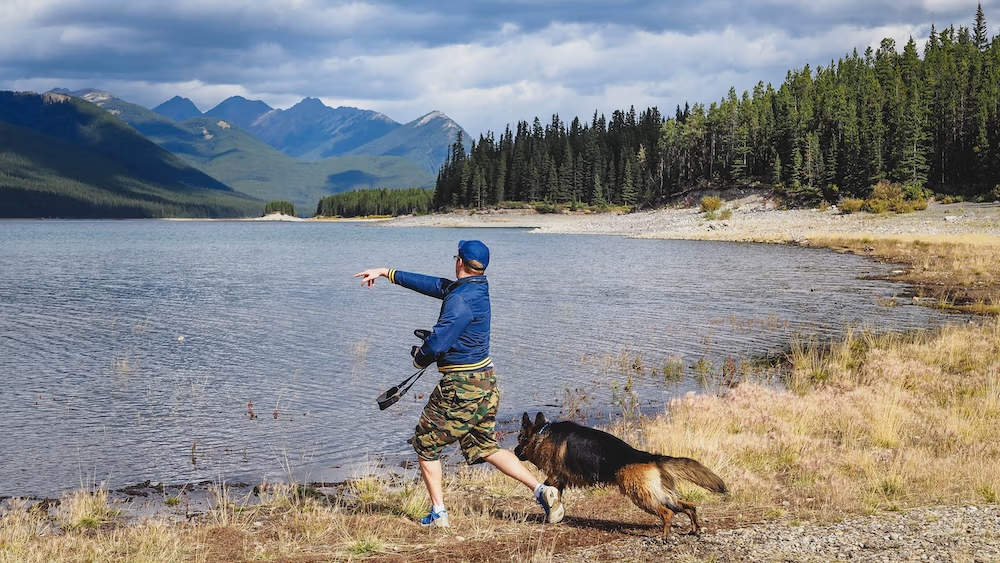
By the time we reached Kananaskis Country, we’d already spent days working through busier stops in Banff and Kootenay. This felt different from the moment we got out of the car. We remarked on it out loud almost immediately: no tourists here at all, just us, the dog, a bear-corridor warning sign, and a big lake waiting to be explored. This was the last stop on our Rockies road trip, and it turned out to be one of the most memorable, even though the two lakes we came to see didn’t give us equal time.
If you’re planning a day around Upper and Lower Kananaskis Lake and wondering whether visiting both makes sense, or how to split your time between them, the honest answer is that it depends less on distance than you’d think, and more on what each lake is actually built for.
Arriving in Kananaskis Country
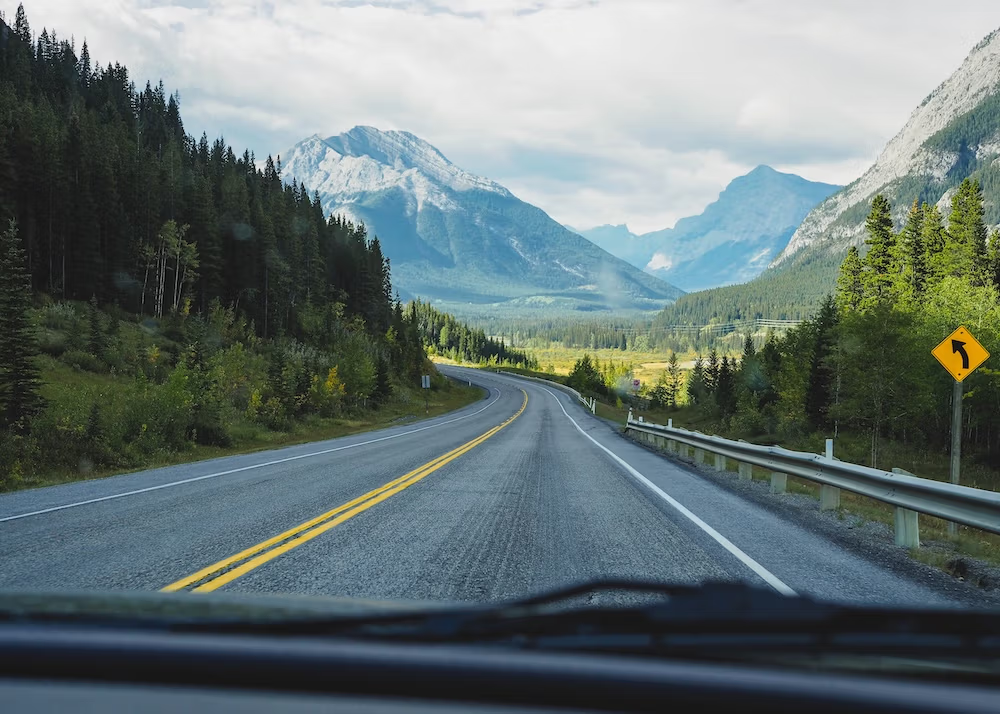
Kananaskis Country isn’t part of Banff National Park, even though the mountains look similar and the drive from Calgary feels like an extension of the same range. It’s an Alberta provincial park system, and Upper and Lower Kananaskis Lake both sit within Peter Lougheed Provincial Park, roughly 90 to 110 kilometres west of Calgary, about an hour and fifteen minutes to an hour and a half of driving depending on where you start.
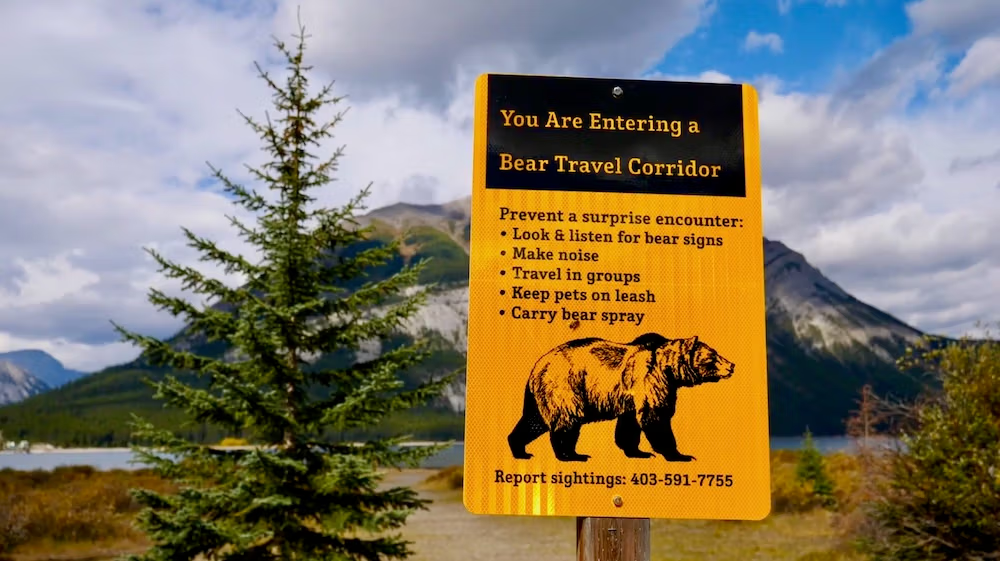
Before we got anywhere near the water, a roadside sign stopped us cold: we were entering a bear travel corridor. It spelled out the basics, look and listen for bear signs, make noise, travel in groups, keep pets on a leash, carry bear spray, and we read the whole thing out loud in the car. Then came the honest part. We hadn’t brought bear spray, which we admitted to each other right there, half-joking, half not, hoping we wouldn’t need it. We didn’t end up needing it that day, but I wouldn’t call that a plan.
Lower Kananaskis Lake: Worth Slowing Down For
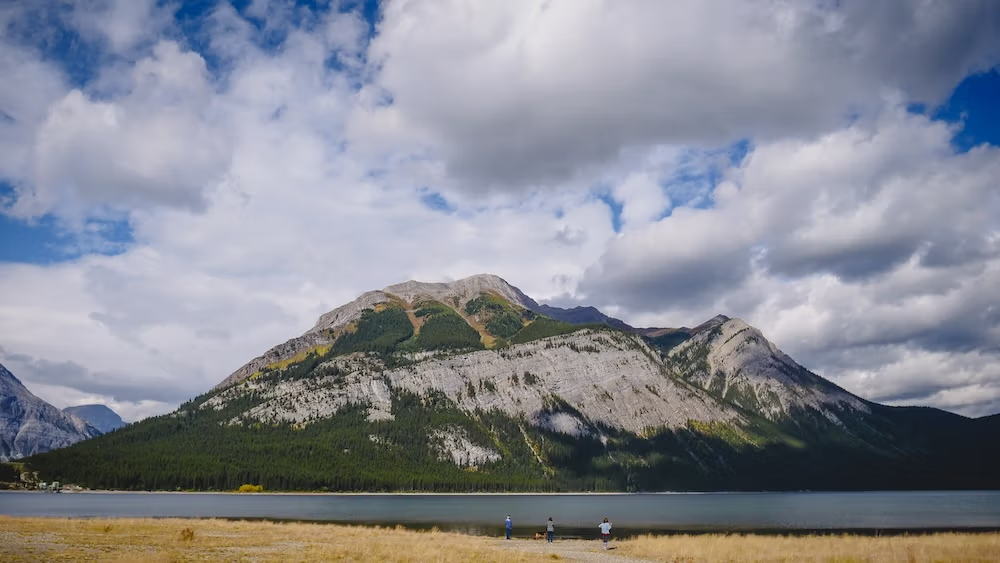
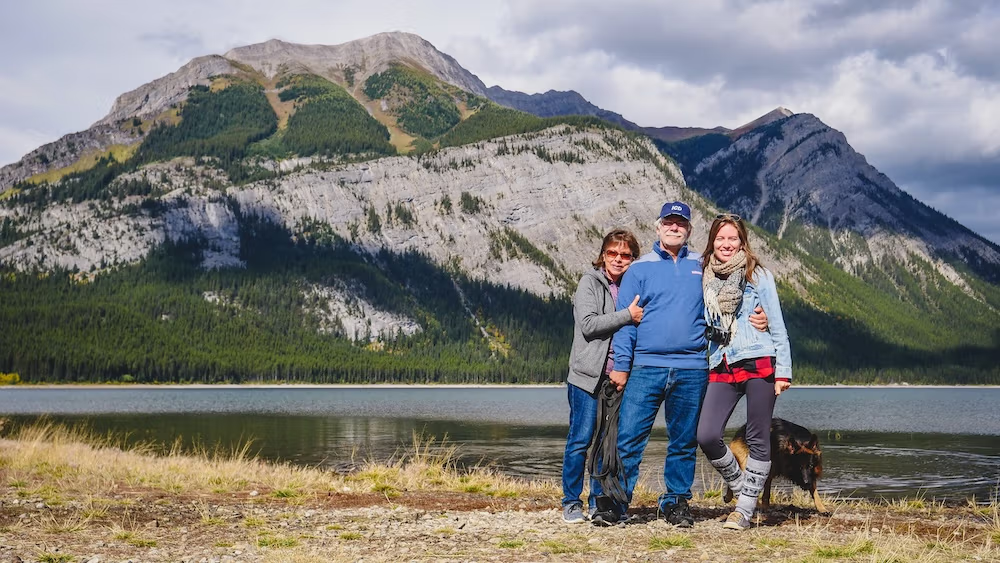
Lower Kananaskis Lake was our first stop, and it earned every minute we gave it. It’s long and narrow, about 8 kilometres end to end but only 1.3 kilometres across, which gives it a completely different feel from what came next. The trails along its shore don’t loop the lake the way Upper Kananaskis Lake’s does; they run alongside it instead, which suited what we actually wanted to do there. We hiked a stretch of shoreline, found a spot to picnic, and let Togo loose near the water. He waded straight into it without a second thought. Icy mountain lake water, and he genuinely didn’t seem to mind at all.
There’s a proper picnic area here, and a group camping zone nearby if you’re staying longer than a day, which gives Lower Kananaskis Lake a settled, unhurried quality that made it easy to just be there for a while. If your day allows for one lake to get the bulk of your attention, this is the one that rewards it.
Upper Kananaskis Lake: A Shorter Stop That Still Delivers
We didn’t stay nearly as long at Upper Kananaskis Lake, and that had nothing to do with the lake itself. The weather turned on us, clouds moving in fast enough that we cut the visit short and started heading back toward the car sooner than planned. It would be easy to assume that means Upper Kananaskis Lake is the lesser of the two stops. It isn’t.
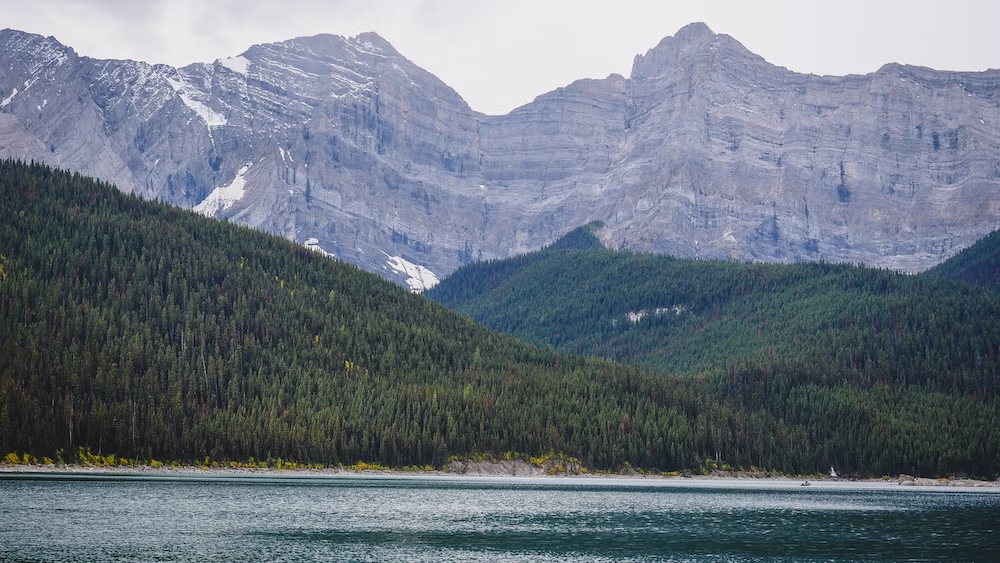
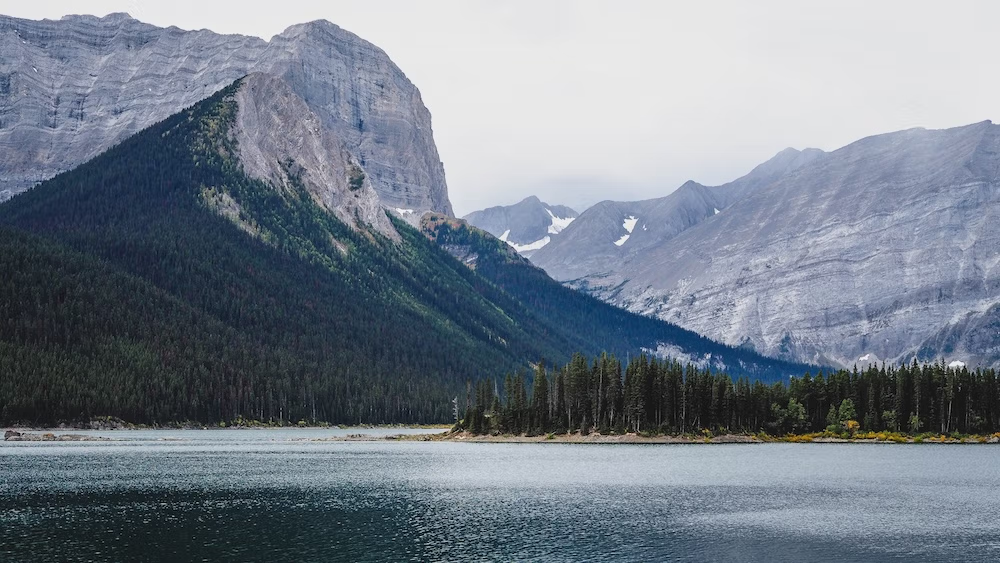
Where Lower Kananaskis Lake is long and narrow, Upper Kananaskis Lake is wide and dramatic, sitting at the base of Mount Sarrail and Mount Lyautey with mountains rising almost directly out of the water. A full loop trail circles the entire lake, close to 16 kilometres of flat, easy walking that passes both Kananaskis Falls and Sarrail Falls, but you don’t need to commit to that loop to get something real out of a visit. The main day-use area here is one of the most popular spots in the whole park for exactly this reason: a rocky shoreline, a wide-open view, and a picnic spot that doesn’t require an hours-long hike to reach.
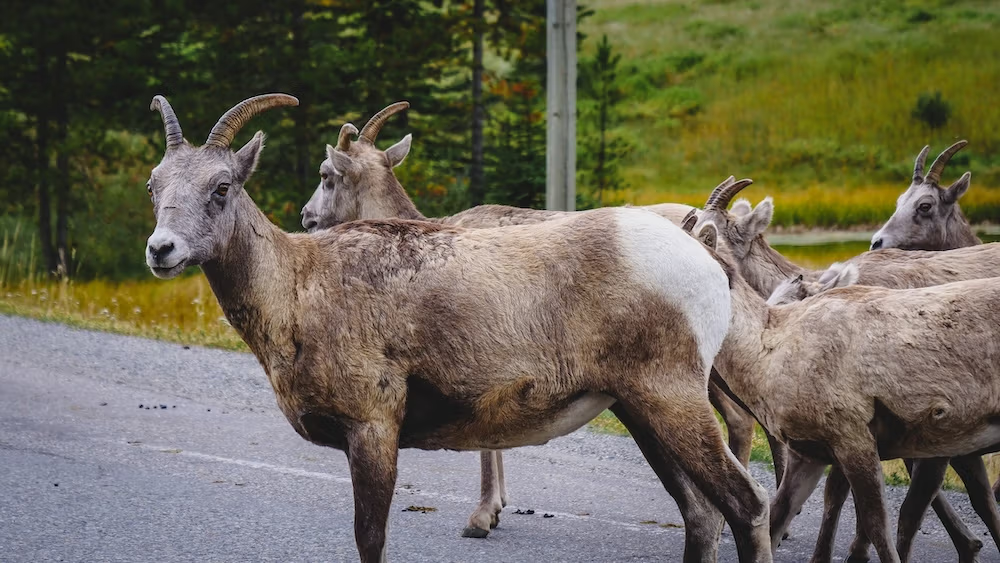
We didn’t do the loop. We barely covered a fraction of it before the weather pushed us out. But right as we were leaving for the day, we finally spotted wildlife: a small group of bighorn sheep, close enough that it remains the most intimate wildlife encounter we’ve had anywhere in this region. It happened at the worst possible moment for lingering and the best possible moment for a story. We’ve since learned to recognize bighorn sheep easily, since they turn up fairly often near where we live by the Crowsnest Pass, but nothing since has quite matched how it felt seeing them here for the first time, right as we were about to leave.
If a real shot at wildlife is part of why you want to come here, a self-driven visit leaves that entirely to luck, ours included. A guide who spends every week in this exact area knows where animals actually tend to show up, which is the whole premise behind a private option like the Kananaskis private safari drive and nature walk from Canmore, built around scenic viewpoints and known wildlife spots rather than whatever you happen to catch on your way out the door.
Visiting Both: How to Split Your Time
Doing both lakes in one day turns out to be the easy part. They’re connected by the same short spur road off Highway 40, so the drive between them takes minutes, not a meaningful chunk of your day. The real question isn’t whether you can visit both. It’s how you want to divide your time once you’re there.
A short stop at either lake, enough for photos, a bit of a walk, maybe a picnic, can realistically take thirty minutes to an hour. Committing to Upper Kananaskis Lake’s full loop trail is a different kind of day entirely, several hours at minimum, given the distance involved. Our own split ended up looking like this: more time at Lower, where we had the weather and the inclination to properly settle in, and a shorter, weather-shortened visit at Upper that still delivered its own payoff. I’d plan for something similar rather than assuming you’ll spend equal time at each. Mountain weather changes fast at this elevation, and being willing to adjust on the fly serves you better than a rigid fifty-fifty split.
| Lower Kananaskis Lake | Upper Kananaskis Lake | |
|---|---|---|
| Shape | Long and narrow | Wide and expansive |
| Best for | Hiking, picnicking, unhurried time by the water | A scenic stop, or a full lake-loop hike if you have hours to spare |
| Typical time | An hour or more, easy to extend | 30–60 minutes for the day-use area; several hours for the full loop |
Getting There: Passes, Access and What to Know
One thing has changed since our own visit that’s worth knowing before you go: Alberta Parks now requires a Kananaskis Conservation Pass for any vehicle parked in Kananaskis Country, including at both lakes. It’s fifteen dollars a day or ninety dollars a year per vehicle, bought online and registered to your license plate, no physical tag or receipt required. This is separate from anything you’d need for Banff, so don’t assume a national park pass covers you here. Rates can change, so it’s worth confirming the current cost before you head out.
The Highway 40 stretch south of the park toward Highwood Pass closes seasonally, generally from December 1 through mid-June, but that closure is about continuing further south, not about reaching the lakes themselves, which stay accessible via the spur road year-round conditions permitting.
As for the bear situation: current guidance from Alberta Parks is the same as what that sign told us years ago, carry bear spray, know how to use it, make noise, travel in groups, and keep dogs leashed at all times, no more than two metres, everywhere in the park. This isn’t boilerplate caution for the sake of it. The road and trails connecting these two lakes have a real, documented history of bear activity, occasionally serious enough that Alberta Parks issues temporary advisories or closures in the area. Check current conditions before you go, and don’t do what we did. Bring the spray.
If you’d rather base yourself nearby instead of day-tripping in from Calgary, Kananaskis Village sits about 30 to 45 minutes from the lakes and works well as a launch point. You can compare current places to stay in Kananaskis Village if an overnight or two makes more sense than rushing both lakes into a single day trip from the city.
Frequently Asked Questions
Is it worth visiting both Upper and Lower Kananaskis Lake in one trip?
Yes. The two lakes are connected by the same short spur road off Highway 40, so the drive between them takes minutes. Lower Kananaskis Lake rewards a longer, unhurried visit with hiking and picnicking, while Upper Kananaskis Lake delivers a real payoff even on a short stop.
How do Upper and Lower Kananaskis Lake differ?
Lower Kananaskis Lake is long and narrow, about 8 kilometres end to end but only 1.3 kilometres across, with trails that run alongside the shore rather than looping it. Upper Kananaskis Lake is wide and expansive, sitting at the base of Mount Sarrail and Mount Lyautey, with a full loop trail circling the entire lake.
How much time should I plan for each lake?
A short stop at either lake, enough for photos, a walk, or a picnic, can realistically take thirty minutes to an hour. Completing Upper Kananaskis Lake’s full loop trail is a much bigger commitment, several hours at minimum given its length.
Do I need a pass to visit Kananaskis Country?
Yes. Alberta Parks requires a Kananaskis Conservation Pass for any vehicle parked in Kananaskis Country, including at both lakes. It’s separate from a national park pass and doesn’t cover Banff.
Are dogs allowed at Upper and Lower Kananaskis Lake?
Yes, but Alberta Parks requires dogs to be leashed at all times, no more than two metres, throughout the park. This area also has a documented history of bear activity, so leash rules exist alongside general bear-safety guidance.
Is bear spray necessary at the Kananaskis Lakes?
Current Alberta Parks guidance recommends carrying bear spray, making noise, and traveling in groups throughout Kananaskis Country, including the road and trails connecting these two lakes. It’s genuinely useful advice, not boilerplate caution.
What wildlife might I see at the Kananaskis Lakes?
We spotted a small group of bighorn sheep near Upper Kananaskis Lake, which remains the most intimate wildlife encounter we’ve had anywhere in the region. Sightings aren’t guaranteed, but this area does have real wildlife activity.
This guide is also available in Spanish. [Leé la versión en castellano: Guía de los lagos Upper y Lower Kananaskis: cómo visitar los dos en un viaje]
This article contains affiliate links. If you book through one of these links, I may earn a commission at no extra cost to you.