
By the time we turned onto the Icefields Parkway, we’d already spent days chasing lakes with names everyone knows before they ever visit Banff. Bow Lake wasn’t one of those names for us. It was simply the first stop on a road we’d been told was one of the most scenic drives in the world, and neither of us had any real expectation attached to it going in.
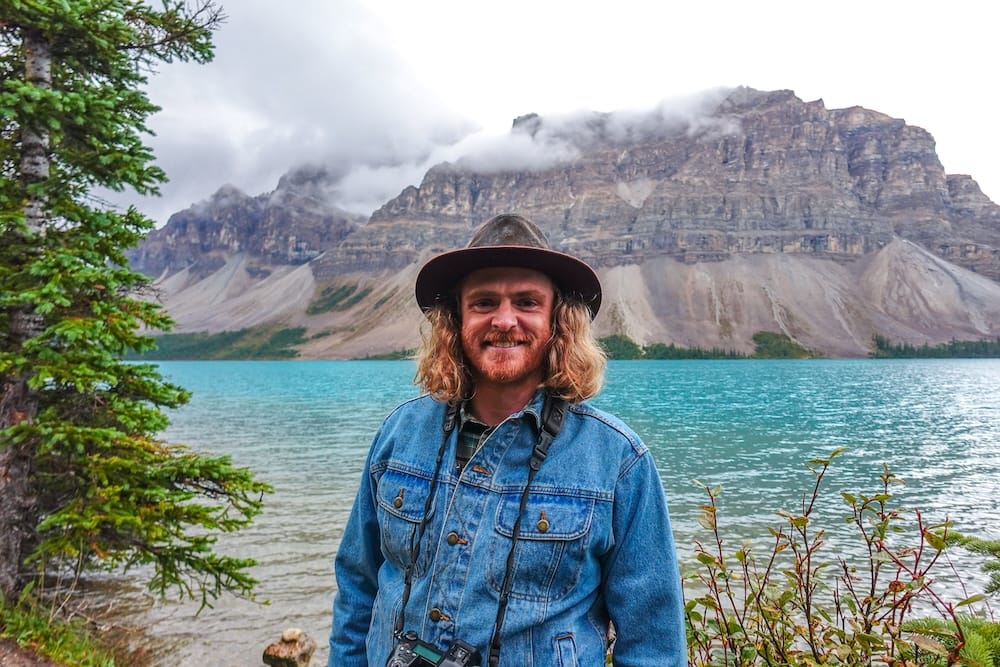
That turned out to be the right way to arrive at it. If you’re planning a drive up the parkway and wondering whether Bow Lake deserves an actual stop or just a glance out the window, the honest answer is that it’s worth pulling over for — not for a half-day of exploring, necessarily, but for a genuinely striking few minutes that cost you almost nothing in time.
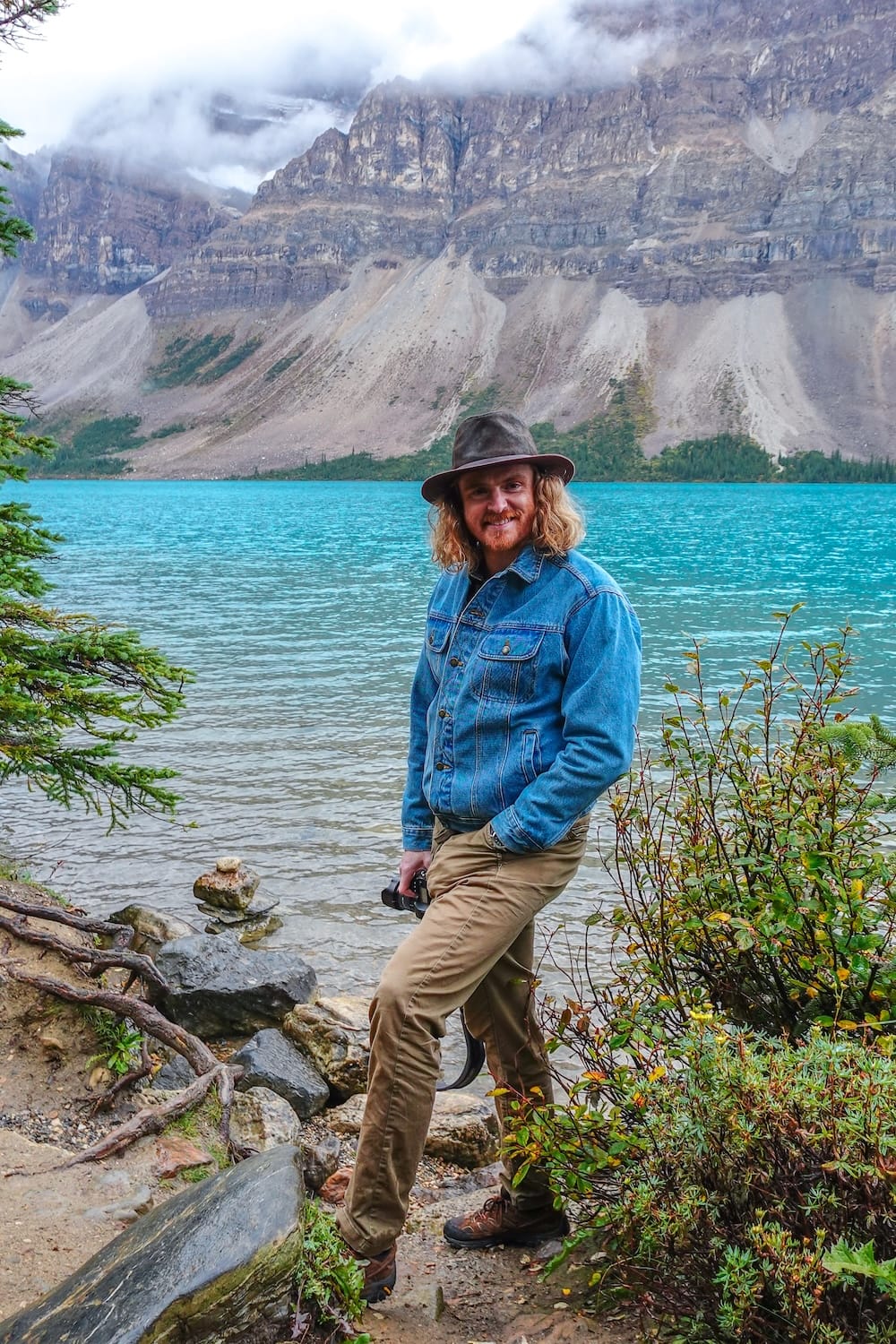
What Bow Lake Is and Why It’s a Parkway Highlight
Bow Lake sits in Banff National Park along Highway 93N, about 30 minutes north of the Lake Louise junction, which puts it early enough on the drive that it works as a natural first pause whether you’re heading toward the Columbia Icefield or continuing on to Jasper. It sits near the headwaters of the Bow River, fed by meltwater running down from the Bow Glacier and the Wapta Icefield above it, and that outflow becomes the same Bow River that eventually winds its way through Banff, Canmore, and Calgary. There’s something satisfying about standing at a lake this close to the beginning of a river you’ll cross a dozen more times before the trip is over.
The Color, and Why the Water Looks Like That
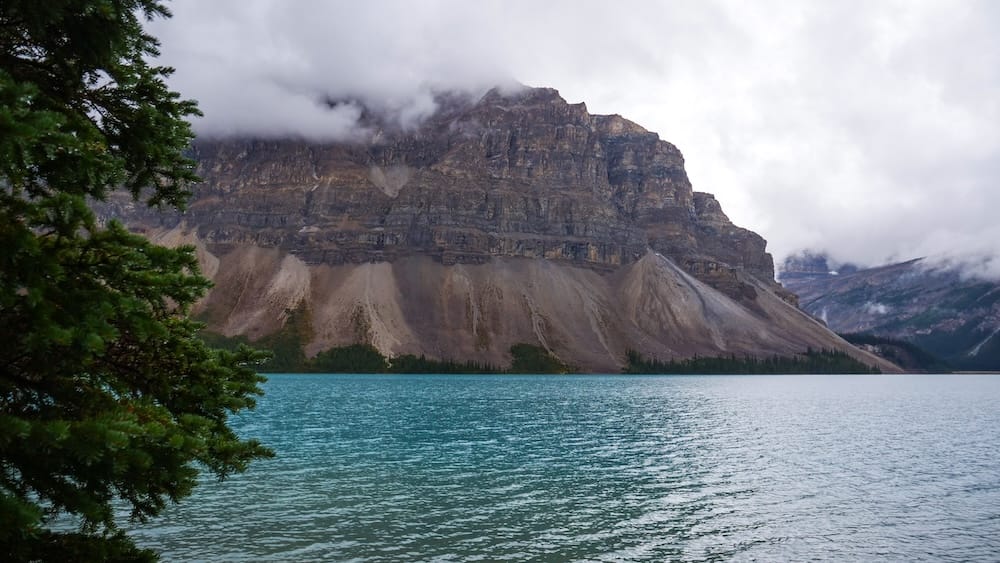
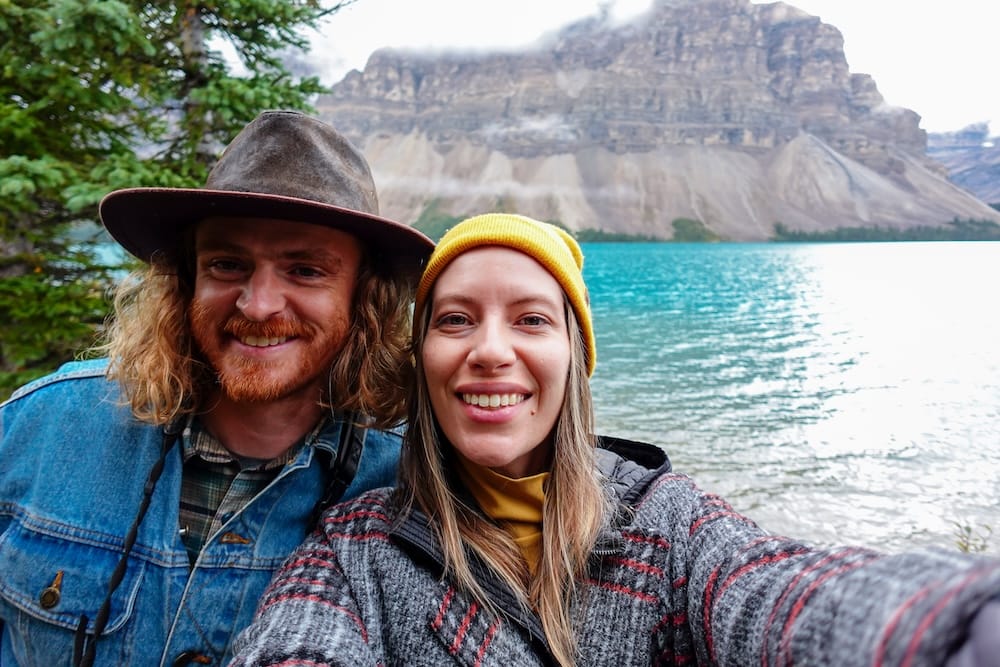
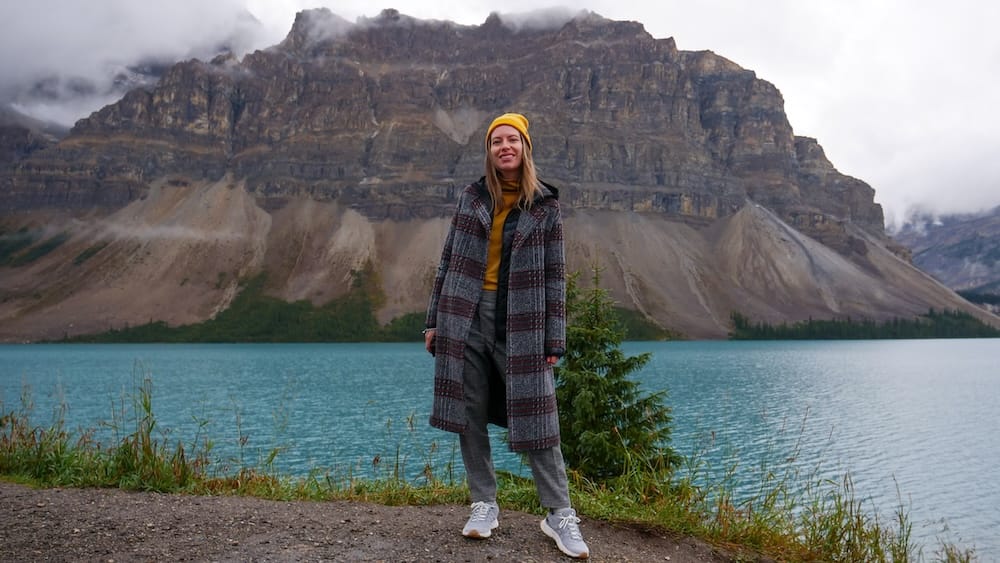
We hadn’t driven far into the parkway before the color of the water stopped the conversation. It’s the kind of turquoise-green that looks almost artificial from a distance, and up close it had a milky quality, like the color itself was suspended in the water rather than just reflected off it. It does look inviting. We agreed out loud that it also looked like it would be shockingly cold, which turns out to be the correct instinct: this is glacial meltwater, and that milky quality isn’t an illusion.
The color comes from something called rock flour — extremely fine rock particles ground down by the glacier above and carried into the lake by the meltwater. Those particles stay suspended and scatter light in a way that produces that vivid blue-green instead of the clear look you’d get from an ordinary alpine lake. It’s a small piece of geology, but it’s the kind of thing that makes the color feel less like a postcard trick and more like something the mountain is actively doing in front of you.
What There Is to Do (and Not Do) at Bow Lake
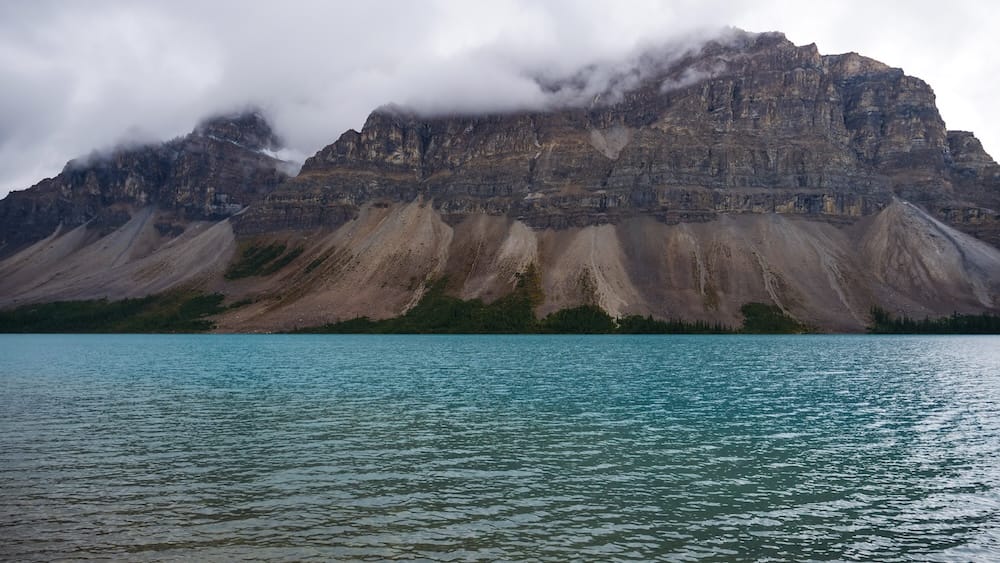
Here’s the part that actually matters for planning: you don’t need to hike anywhere to see the best of Bow Lake. The lakeshore is right there from the parking area, and the view that stopped us in our tracks is available within a couple of minutes of getting out of the car. We didn’t walk any trail that day, and honestly, we didn’t need to. If your parkway day already has Peyto Lake and the Columbia Icefield ahead of you, Bow Lake can be a five-to-fifteen-minute stop without you missing anything essential.
If you have more time and want more than a look from the shore, there’s a real option: the Bow Glacier Falls trail starts near the historic lodge on the lake’s north shore and runs about 4.4 kilometres out to the falls, with a return trip estimated around three hours and a gentle 190 metres of elevation gain along the way. It’s mostly an easy walk along the lakeshore that gets rockier and steeper as you approach the falls, and depending on the season you may hit a stream crossing that won’t guarantee dry feet. It’s not a casual add-on to a quick photo stop, but it’s not an all-day commitment either — three hours is a real, plannable chunk of a parkway day if you’ve left room for it.
On the shore sits the Lodge at Bow Lake, a historic property built in the late 1930s by mountain guide Jimmy Simpson. It’s worth knowing it’s there even if you’re not staying the night — a coffee or a quick bite at the café is a reasonable way to stretch a stop without committing to the full hike, and if an overnight in this exact spot appeals to you, you can check current rates and availability at the Lodge at Bow Lake.
Getting There: Access, Parking and How Long to Stay
The main parking area sits just off Highway 93N via the access road toward the lodge, with a second, smaller pull-off and picnic area about 1.3 kilometres south if the main lot looks full. Both can fill during peak summer hours, so arriving earlier or later in the day makes for an easier stop in July or August. Washrooms and picnic tables are available in the parking area, which isn’t something you can say for every stop along this stretch of road.
One thing to keep in mind before committing to a full parkway day: there’s no cell coverage along most of the route, and full services — food, fuel, facilities — generally only run from June through September. None of that changes what Bow Lake itself offers, but it matters once you’re planning the whole drive rather than just this one stop.
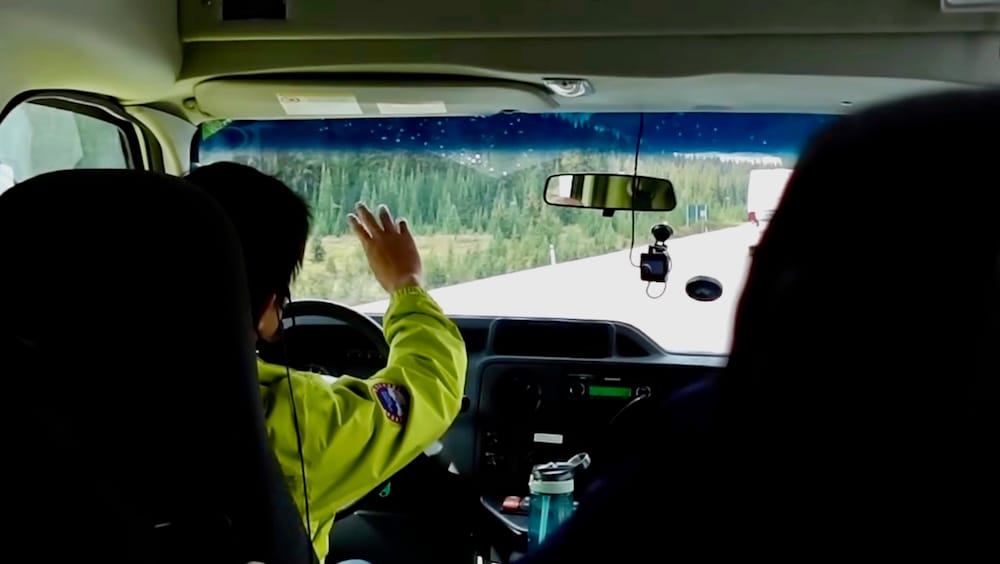
If you don’t have a car, the Icefields Parkway isn’t a realistic drive to piece together on your own — there’s no public transit running its length, and this isn’t a road you want to attempt without knowing it. A small-group day tour departing from Banff that stops at Bow Lake, Peyto Lake, and the Columbia Icefield covers the same ground without the logistics, and you can check current availability for a Banff-departure Icefields Parkway tour that includes this stop.
For most people, fifteen to thirty minutes covers a proper look at Bow Lake — enough time to get out, take in the color, snap some photos, and maybe grab a coffee at the lodge. Add roughly three hours if the Bow Glacier Falls trail is calling to you.
Is Bow Lake Worth the Stop?
Yes, without much hesitation. It’s one of the easiest wins on the entire parkway: a striking, well-explained view that costs almost no detour and no real physical effort to enjoy. We didn’t linger, and we still walked away glad we’d stopped.
If I’m honest about where it sits in the bigger picture of that day, Bow Lake wasn’t the most dramatic water we saw on the parkway — the next stop up the road raised the bar considerably, and that’s a story for its own page. But judged on its own terms, as a quick, unplanned pause on a long and busy drive, Bow Lake earns the few minutes it asks for.
Frequently Asked Questions
Is Bow Lake worth stopping for on the Icefields Parkway?
Yes. It’s one of the easiest wins on the whole drive: a striking, well-explained turquoise lake that costs almost no detour and no real physical effort to enjoy, right from the parking area.
Why is the water at Bow Lake that turquoise color?
The color comes from rock flour, extremely fine rock particles ground down by the Bow Glacier above and carried into the lake by glacial meltwater. Those particles stay suspended in the water and scatter light, producing the vivid blue-green color instead of the clear look of an ordinary alpine lake.
Do I need to hike to see Bow Lake?
No. The lakeshore is right there from the parking area, and the main view is available within a couple of minutes of getting out of the car. A longer option exists if you want it: the Bow Glacier Falls trail runs about 4.4 kilometres out to the falls, with a return trip of roughly three hours.
How long should I plan to spend at Bow Lake?
Fifteen to thirty minutes covers a proper look for most people. Add roughly three hours if you want to add the Bow Glacier Falls trail to your stop.
Where is the parking at Bow Lake, and does it get busy?
The main parking area sits just off Highway 93N via the access road toward the Lodge at Bow Lake, with a smaller pull-off and picnic area about 1.3 kilometres south. Both can fill during peak summer hours, so arriving earlier or later in the day makes for an easier stop.
Are there washrooms at Bow Lake?
Yes, washrooms and picnic tables are available in the parking area.
Can I visit Bow Lake without a car?
Yes. A small-group day tour departing from Banff that stops at Bow Lake, Peyto Lake, and the Columbia Icefield covers the same ground without needing to drive the Icefields Parkway yourself.
This guide is also available in Spanish. [Leé la versión en castellano: Guía de Bow Lake: una parada escénica en la Icefields Parkway]
This article contains affiliate links. If you book through one of these links, I may earn a commission at no extra cost to you.