
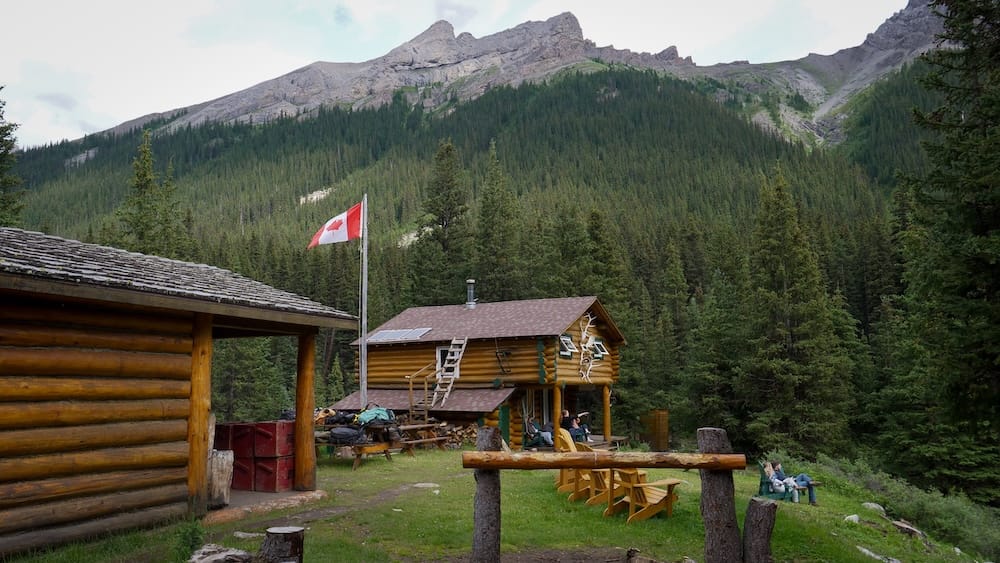
I had been at Halfway Lodge for about twenty minutes when I said out loud what was already obvious to me: I liked it more than Sundance Lodge. It was more remote, the surrounding mountain scenery felt bigger and more dramatic, and the building itself was rougher and more rustic. More than anything, Halfway felt like the adventure I thought I had signed up for when I committed to six days on horseback in the Banff backcountry.
Three nights later, I hadn’t changed my mind. Halfway was still my favourite.
The funny part is that I was also ridiculously happy to see Sundance Lodge again when we rode back there for our final night. I took a nap, had a hot shower, got reunited with my bag and suddenly appreciated all that extra space and comfort in a way I hadn’t on our first stay. At the time, I called Sundance a “little slice of luxury,” which says more about how far my definition of luxury had shifted than it does about Sundance being some kind of five-star resort.
Both reactions were genuine. Halfway gave me the more immersive backcountry experience, while Sundance was easier, roomier and far better when I wanted to recover. Having stayed at both on the same horseback trip, I think their differences were actually part of what made the route work so well.
My quick Sundance Lodge vs Halfway Lodge verdict
Here’s how I would compare the two after staying at both.
| Sundance Lodge | Halfway Lodge | |
|---|---|---|
| My overall preference | Second choice | My favourite |
| Approximate distance from Banff | 16 km | 32 km |
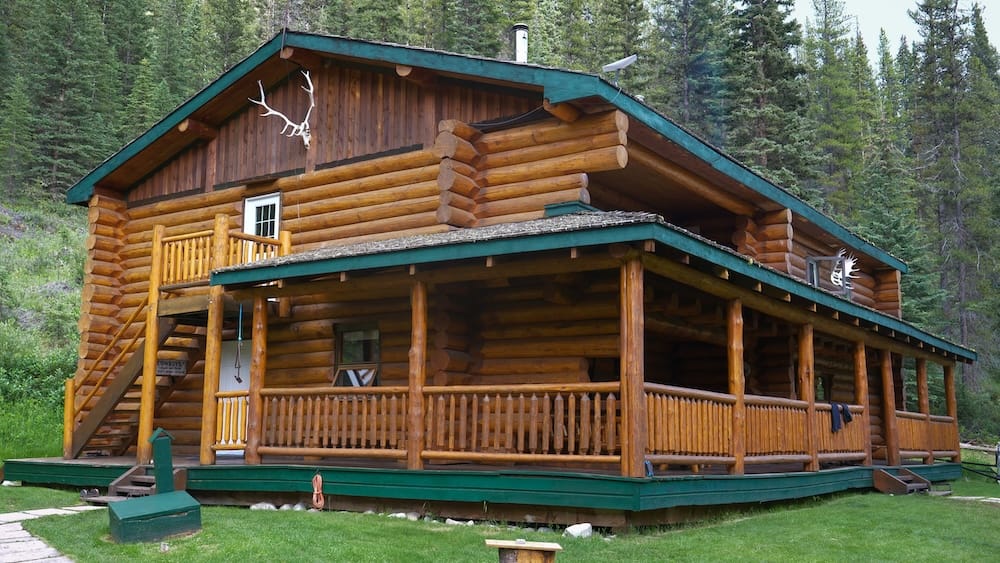
| Current lodge building dates to | 1991 | 1928 |
| Historical character | Modern lodge beside the 1923 Ten-Mile Cabin | Historic Erling Strom-era backcountry lodge |
| Washrooms | Indoor | Shared outhouses |
| Shower | Heated indoor showers | Outdoor shower |
| General feel | More comfortable and spacious | More remote and rustic |
| Social atmosphere on my trip | More freedom to socialize or take time alone | Smaller space encouraged more group bonding |
| What I liked most | Comfort, space and feeling pampered | Remoteness, frontier feel and immersion |
| Best fit | Comfort-first traveller | Immersion-first traveller |
If you only looked at the facilities, Sundance might appear to win fairly easily. Indoor washrooms, hot showers and more room are not small advantages after spending hours in the saddle. Yet Halfway still won for me because some of the things it gives up in comfort are the same things that gave it so much character.
Why Halfway Lodge felt like the adventure I had come for
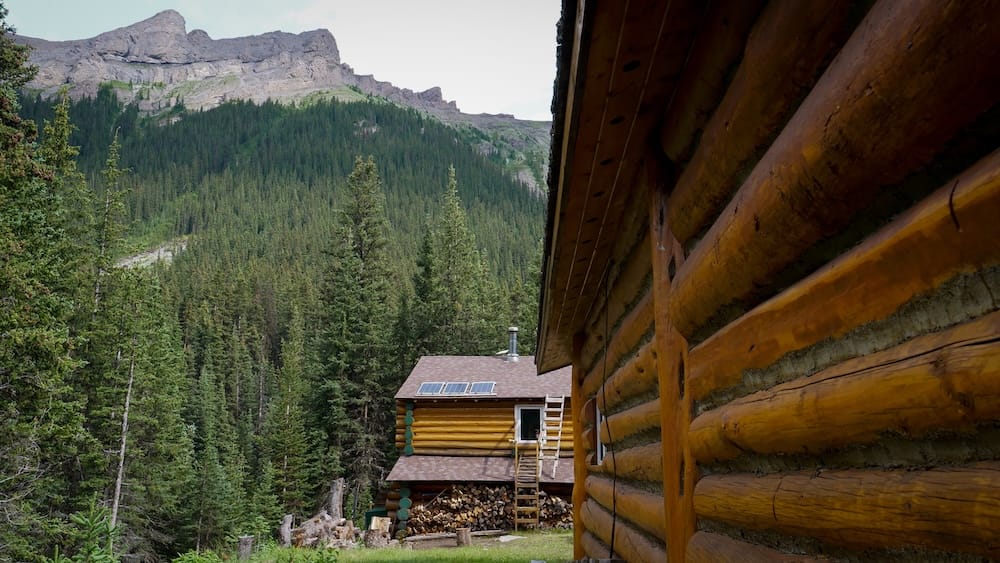
The difference begins with remoteness. Sundance sits roughly 16 kilometres from Banff, while Halfway is about 32 kilometres out, and that extra distance feels much more significant when you are covering it on horseback rather than glancing at it on Google Maps.
By the time we reached Halfway, we had spent another long day riding through forest, crossing creeks, gaining elevation and moving deeper into the mountains. Banff no longer felt like it was just somewhere behind us. We had properly left it behind, and that changed the mood of the trip.
When Halfway finally appeared, I didn’t feel as though we had simply reached our next accommodation. I felt like we had ridden somewhere. The mountains were closer, the setting was wilder and the lodge matched that environment perfectly.
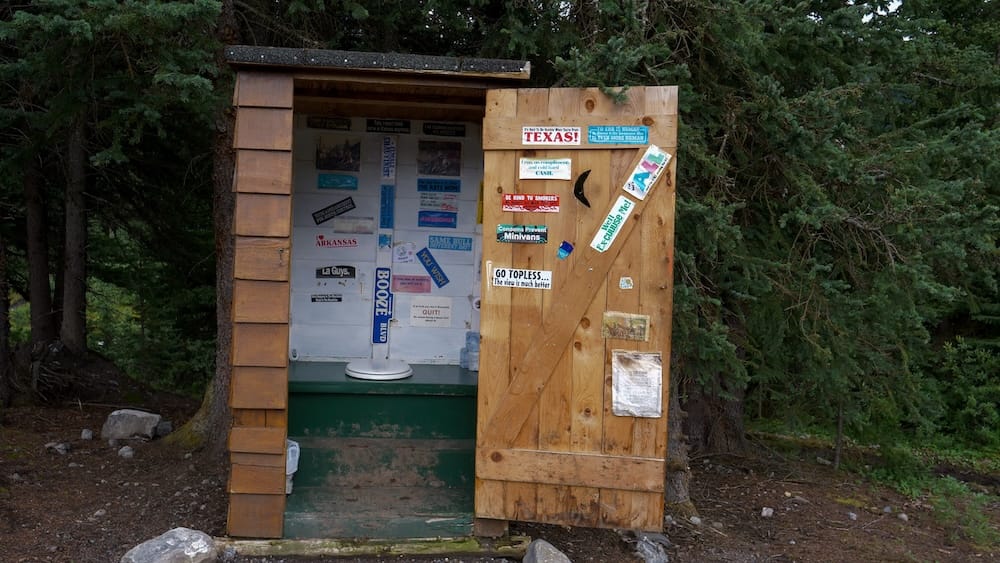
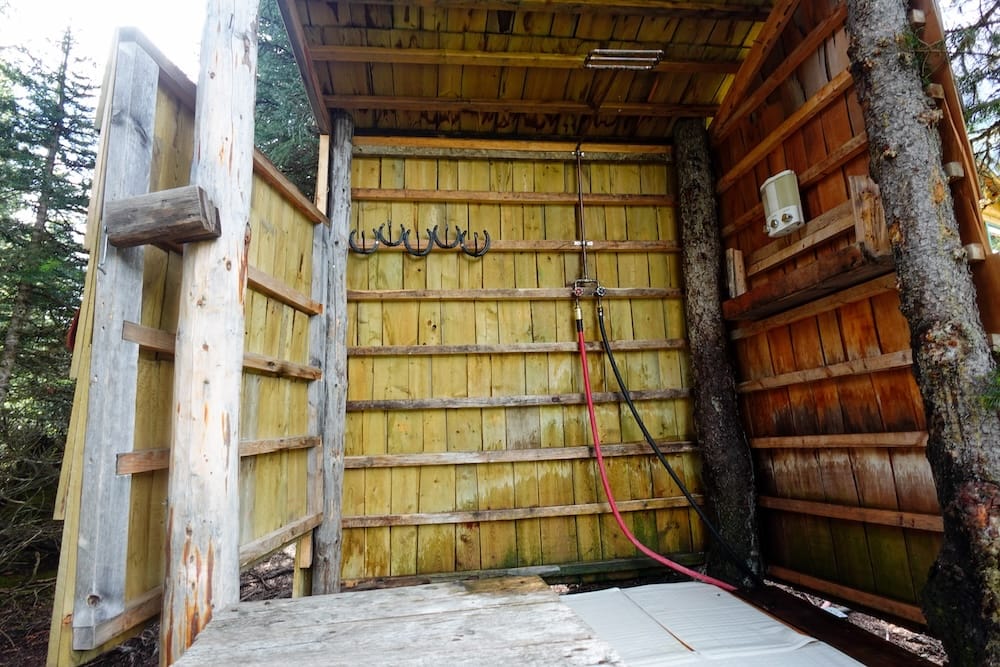
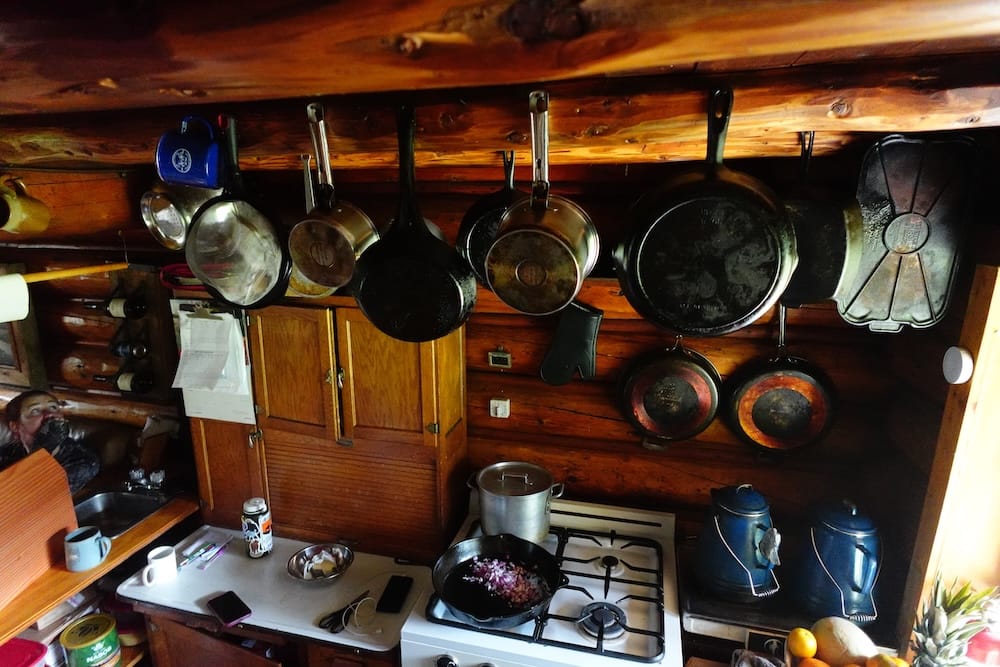
Halfway is rustic in a very practical sense. The rooms are shared, there are outhouses instead of indoor toilets, and the shower is outside. The kitchen, dining area, common space and wood-burning stove are packed into a much smaller footprint than at Sundance.
For me, none of this felt like a downgrade. I had signed up for a long backcountry horse trip partly because I wanted some rough edges around the experience. If I had wanted predictable comfort every night, there were much easier ways to spend six days in Banff.
Even the outdoor shower ended up being more fun than inconvenient. During my stay, we were asked to keep our showers short because we were off-grid, but the water pressure was excellent, there was plenty of hot water and I was looking out at the Canadian Rockies while washing off several hours of horse, dust and trail grime. I have stayed in considerably fancier places with considerably worse showers.
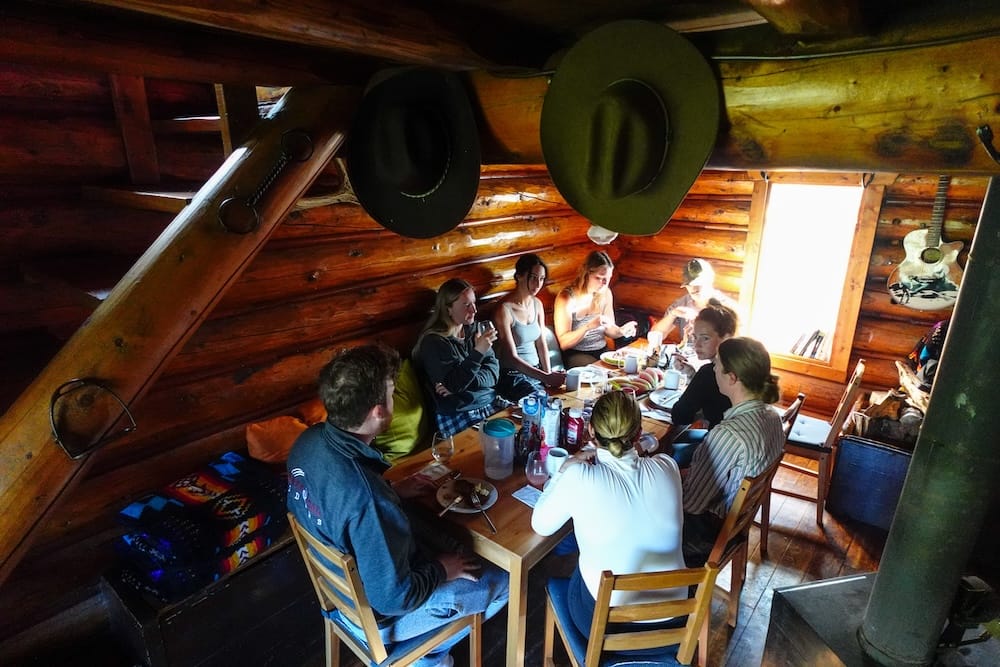
Halfway’s smaller space changed the social side of the trip
One of my favourite differences had almost nothing to do with beds, toilets or showers. Halfway was where our group really started to click.
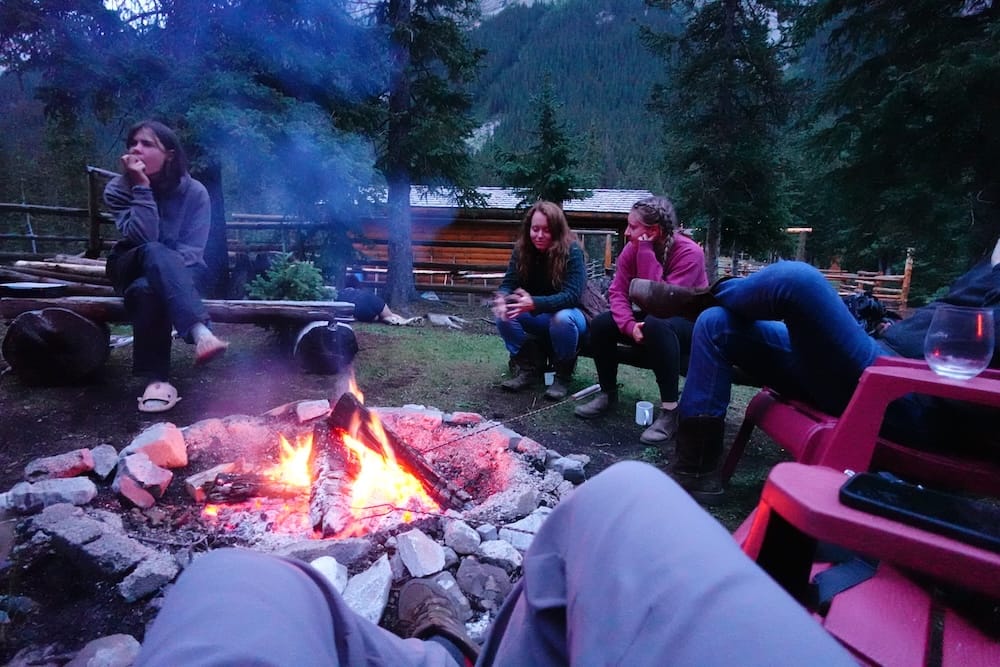
The main floor revolves around one cozy communal area, with the rustic kitchen, dining table, wood stove and hangout space all feeding into each other. In the evenings we would sit around staying warm, sharing food and drinks, talking about the day and swapping stories. There wasn’t much physical distance between one activity and the next, which also meant there wasn’t much distance between people.
Of course, the building can’t take all the credit. By that point we had already spent several days riding together, eating together and getting accustomed to the same routines. I was even sharing a room with the same Australian guy I’d bunked with at Sundance, so it wasn’t as though Halfway suddenly threw me into a completely different group.
Still, the smaller space helped. We knew each other better by then, and Halfway gave us fewer reasons to scatter once the riding was finished. The combination created more bonding and more fun, and that social side became a major part of why I remember the lodge so fondly.
There is an obvious flip side. If you’re somebody who needs a healthy amount of personal space after spending all day with a group, the same cozy atmosphere that worked for me could start feeling a little too cozy. That’s where Sundance has the edge.
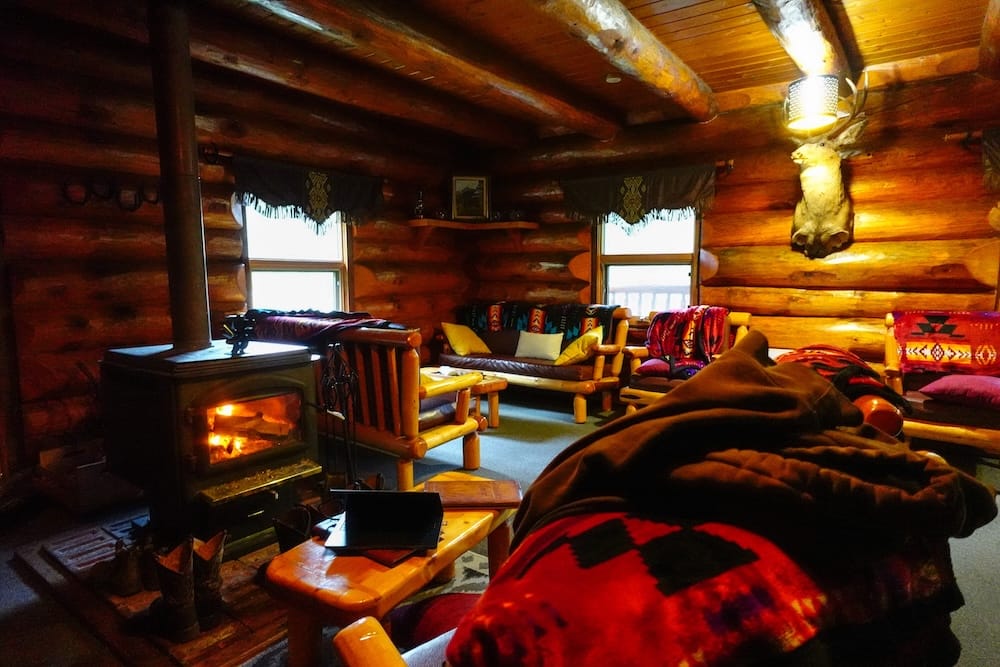
Where Sundance Lodge was genuinely better
Sundance is still a backcountry lodge. When I describe it as a “little slice of luxury,” please don’t picture marble bathrooms, white bathrobes and somebody handing me a cucumber-infused towel while I dismounted my horse. I meant luxury compared with Halfway.
Sundance has indoor washrooms and heated showers, but the bigger difference for me was simply having more space. There is a fireplace where people gather for drinks, board games and post-riding conversations, plus a big communal dining table, but you don’t have to spend your entire evening in one compact common room.
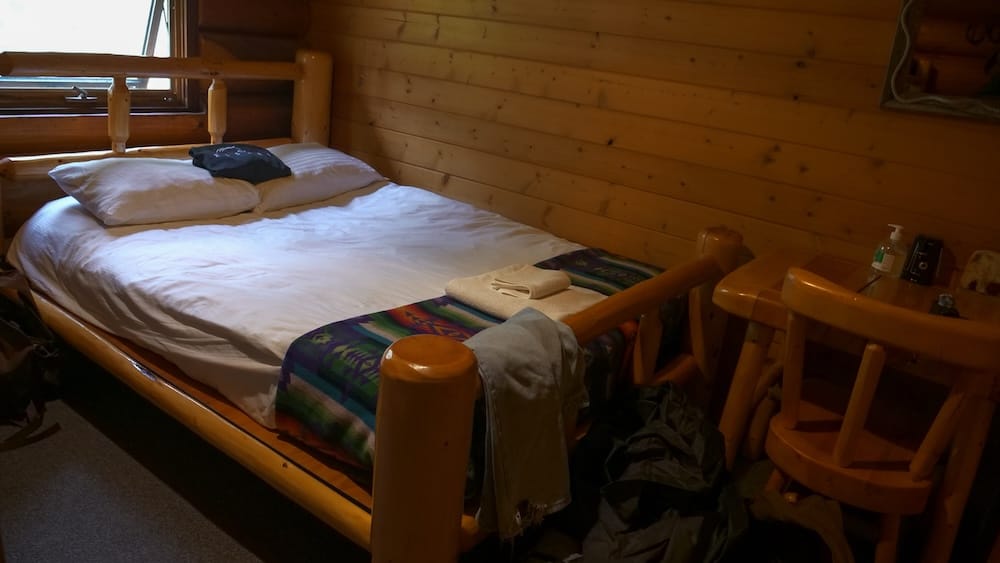
I could socialize for a while, wander around the lodge area, head back to my room, sit by the fire or simply take some downtime. On our first night I noticed those options, but I didn’t appreciate them nearly as much as I did when we returned from Halfway.
That’s probably the fairest way to describe the two lodges. Halfway pulled the group together, while Sundance gave us more freedom to decide how social we wanted to be. Neither approach is automatically better. On this particular trip, I loved the intimacy of Halfway, but after several days of it I was quite happy to stretch out again.
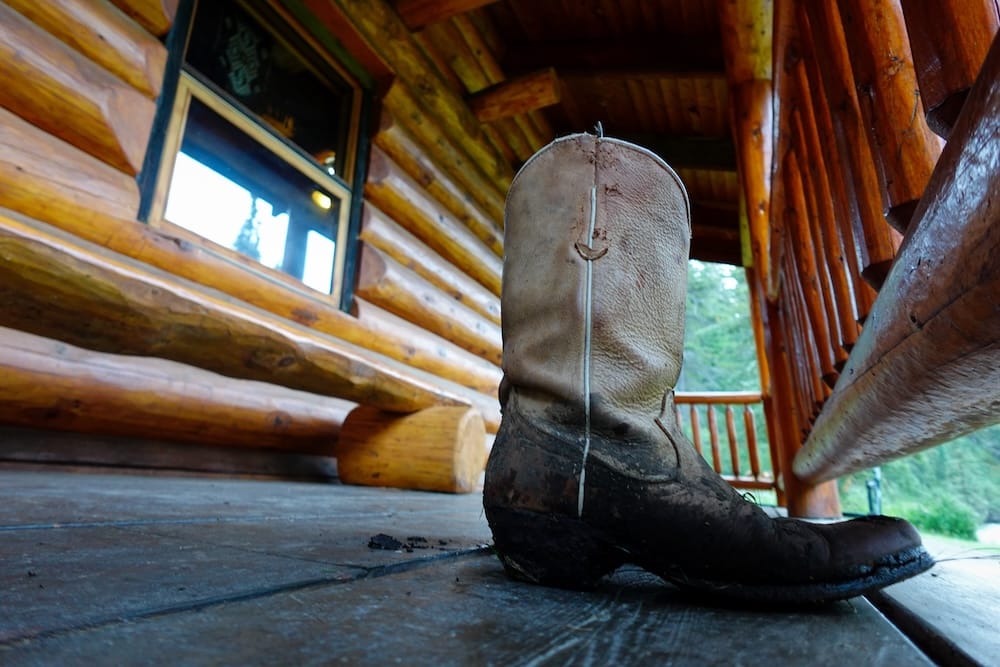
Their histories help explain why the lodges feel so different
The more I learned about the two properties, the more their contrasting personalities made sense.
The current Sundance Lodge is comparatively modern, having been built in 1991. Its location, however, has much older backcountry roots. Sitting nearby is the Ten-Mile Cabin, which dates to 1923 and comes from an earlier period of trail travel through this part of Banff.
I remember seeing that old cabin during my stay because the contrast was impossible to miss. You essentially have two generations of Banff backcountry accommodation sitting beside one another: the historic cabin from the early trail era and the much larger modern lodge where guests stay today.
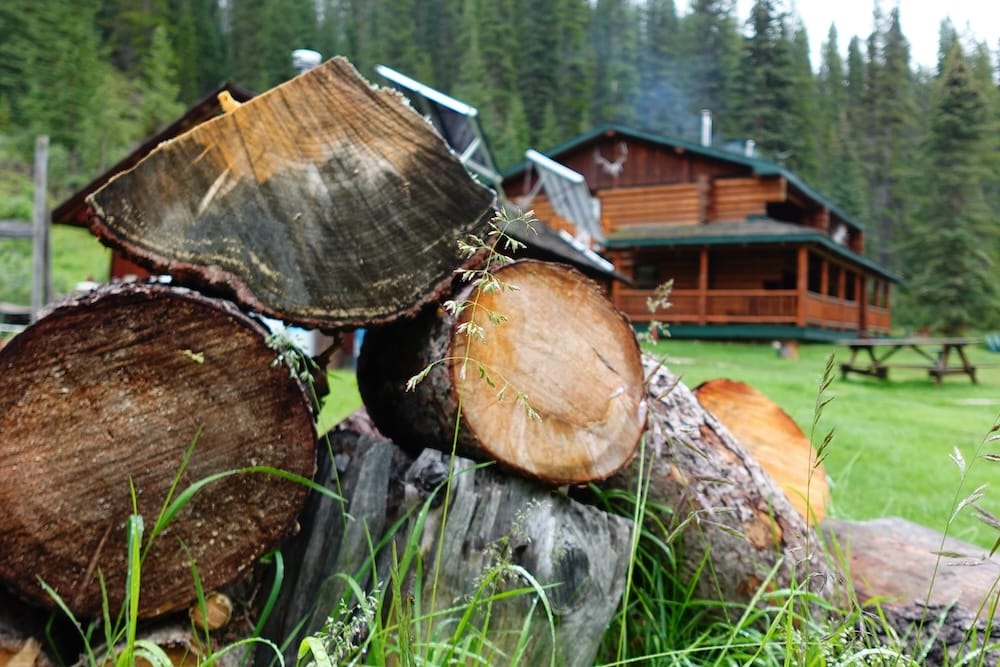
Halfway is different because the lodge itself is the historic building. It dates to 1928 and is connected to Erling Strom, the Norwegian-born mountain guide associated with early journeys between Banff and the Mount Assiniboine area. Halfway served as a stopover for travellers moving through that remote mountain country, which means its old-fashioned character isn’t something somebody recently designed into the place to make it look “authentic.”
You are actually staying in a lodge that belongs to that earlier backcountry travel tradition. That distinction helped me understand my own reaction after the trip: at Sundance, the history is sitting beside you; at Halfway, you’re sleeping in it.
And then there’s the bear story
Halfway also comes with one piece of lodge lore that is too good not to mention, although I would keep it firmly in the category of operator history rather than something I personally witnessed.
Banff Trail Riders‘ history of the lodge says a bear once got onto or into the building through the roof, causing enough damage that the subsequent repairs led to a second storey being added in 1967.
I was not there in 1967 defending the roof. Still, if you’re going to stay in a remote 1928 backcountry lodge in Banff, “a bear helped determine the architecture” feels suspiciously on brand.
Did knowing the history make me prefer Halfway?
No. My preference came first.
When I walked into Halfway, I wasn’t standing there stroking my chin and thinking, “Ah yes, the architectural legacy of 1928. This explains everything.” I liked it because it was more remote, more rustic and surrounded by scenery that felt more dramatic to me. It had the frontier atmosphere I wanted, and over the following days the smaller lodge also became tied to good meals, long conversations, drinks, tired legs and the group getting increasingly comfortable with one another.
The history simply explains part of why those impressions weren’t superficial. A lodge built in 1991 with indoor washrooms, heated showers and more generous communal space is going to feel different from a 1928 backcountry building still organized around outhouses, an outdoor shower and a compact wood-stove-centred common area.
That doesn’t make Halfway objectively better. It makes the trade-off real. If you prefer Sundance because you enjoy a hot shower without stepping outside and like having somewhere to disappear for an hour, I have absolutely no argument with you. You probably just value a different part of the experience than I did.
Why Sundance felt so good on the final night
The six-day trip gave me an unusual chance to experience Sundance twice: once before I knew what Halfway was like, and once after three nights deeper in the backcountry. Those stays felt completely different.
On the way out, Sundance was our introduction to lodge life. We were already well away from Banff, everyone was settling into the group and my legs were discovering what several hours on horseback actually felt like. The fireplace was especially appealing after getting off the horse feeling like my legs had turned to Jell-O.
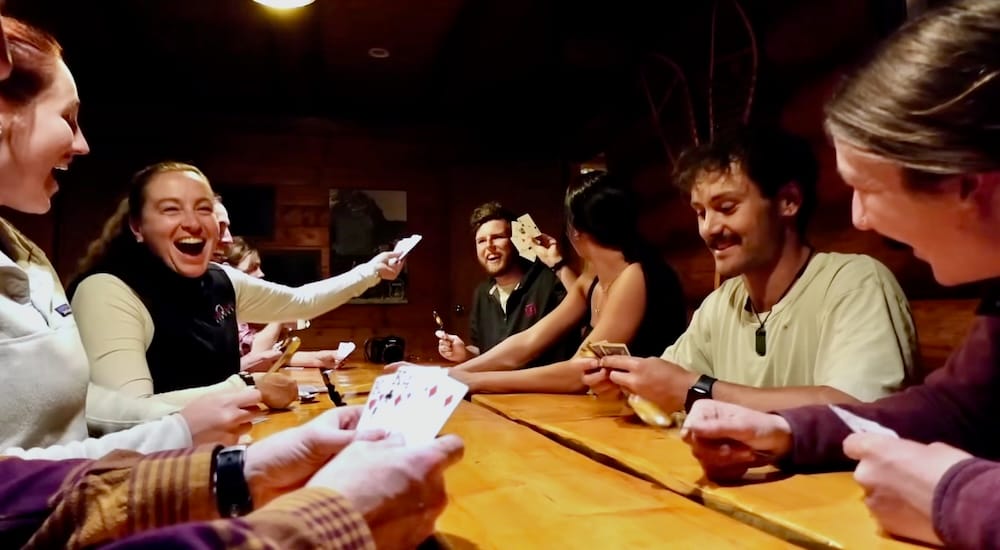
Then we rode another day to Halfway, stayed there while exploring deeper into the backcountry, and eventually retraced the route to Sundance. By the time I walked back through the door, I had a much greater appreciation for what Sundance offered. I took a thirty-minute nap, had a hot shower, got my bag back and settled in for dinner, wine and one final evening of card games with the group. Calling the place a “little slice of luxury” suddenly made perfect sense.
I still preferred Halfway, but Sundance was exactly where I wanted to spend that final night. The current six-day itinerary continues to follow the same basic lodge progression—Sundance, then Halfway, then Sundance again—which means this contrast isn’t merely a quirk of my old route. If that exact progression is what appeals to you, you can check the 6-Day Halfway Lodge Backcountry Trip by Horseback on Viator.
Whether that sequence was specifically designed to make a hot shower feel like a life achievement by Day 5, I couldn’t tell you. It worked on me.
You’re really choosing a trip, not simply choosing a lodge
There is one important practical point if you’re reading this because you’re considering booking a Banff backcountry horse trip: you generally don’t choose between Sundance and Halfway the way you would choose between two hotels. The lodge is tied to the itinerary.
Sundance is the shorter two- and three-day lodge trip as well as the longer backcountry routes. Reaching Halfway requires a deeper commitment, with current four- and six-day itineraries taking riders farther into the backcountry. That makes the real decision much bigger than “Which lodge looks nicer?”
If Sundance sounds like your kind of place, you can get the backcountry horse-and-lodge experience without necessarily committing to the deepest version of the trip. If Halfway is the part that has you getting excited, understand that the rustic lodge comes packaged with more time, more distance and a much bigger horseback commitment. You earn the extra remoteness by riding there.
If even an overnight lodge trip sounds like more horse than you want, there is also a much shorter commercial option. GetYourGuide currently lists a 2-Hour Sundance Loop Horseback Ride. Despite the similar name, this is a day ride rather than a stay at Sundance Lodge, and I did not personally take it. It makes more sense for someone who wants a taste of horseback riding in Banff without committing to multiple days or sleeping in the backcountry.
Which lodge would I choose again?
For somebody accustomed to a higher accommodation standard, or anyone who has never really roughed it before, I think Sundance is the easier introduction. Indoor washrooms and heated showers remove some obvious friction, and the extra space gives you more control over how much time you spend with the group once the riding stops.
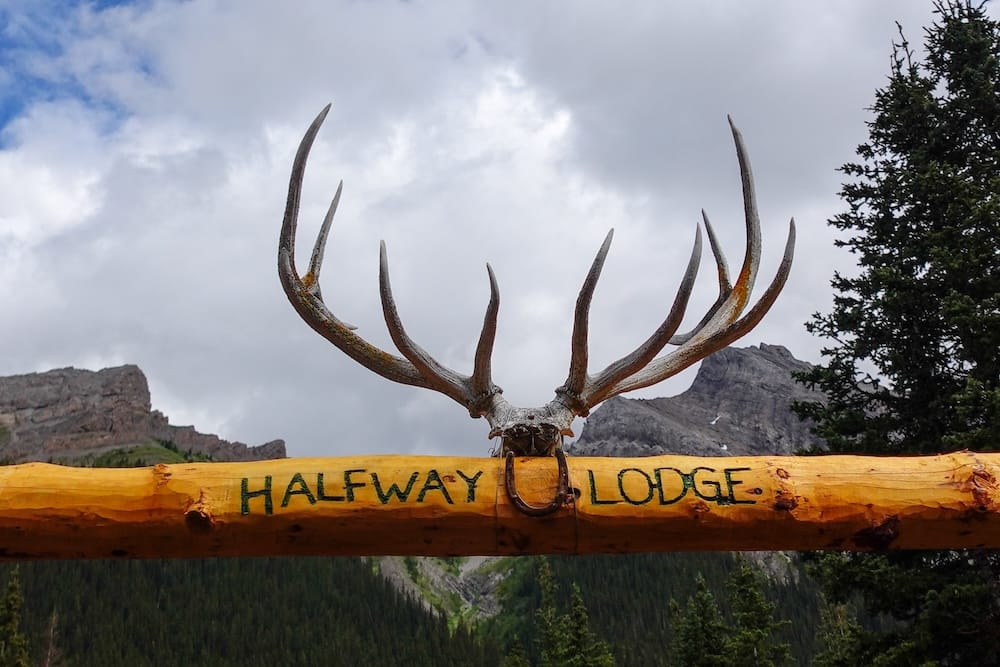
Halfway is for the traveller who hears “shared outhouses, outdoor shower, 1928 lodge and 32 kilometres from Banff” and thinks that sounds better rather than worse.
That’s me.
I liked being farther away, I liked the older building, and I liked the tighter social atmosphere that developed while we were there. Most of all, Halfway felt like we had properly disappeared into the mountains for a few days, which was exactly what I had hoped this trip would become.
If I could stay at only one again, I’d choose Halfway. And if that is also the part of this comparison that has sold you on going deeper rather than stopping at Sundance, you can see availability for the 6-Day Halfway Lodge Backcountry Trip by Horseback.
If I were repeating the six-day trip, though, I wouldn’t change the lodge sequence at all. Halfway gave me the remote and rustic adventure I wanted, while Sundance gave me just enough comfort on either side of it to enjoy going deeper without needing to prove that I wanted to live beside an outhouse forever.
Frequently Asked Questions
Which Banff backcountry lodge did I prefer, Sundance or Halfway?
I preferred Halfway Lodge. Its greater remoteness, rustic character, mountain setting and tighter communal atmosphere felt closer to the backcountry adventure I had hoped for.
Which lodge is more comfortable, Sundance Lodge or Halfway Lodge?
Sundance Lodge was more comfortable for me. It has indoor washrooms, heated showers and more space, which I especially appreciated when we returned there for the final night.
How far are Sundance Lodge and Halfway Lodge from Banff?
Sundance Lodge is roughly 16 kilometres from Banff, while Halfway Lodge is about 32 kilometres out. That extra distance helped Halfway feel much deeper in the backcountry to me.
Can you choose between Sundance Lodge and Halfway Lodge when booking?
Not in the same way you would choose between two hotels. The lodge is tied to the horseback itinerary, with Sundance used on shorter lodge trips and Halfway requiring a deeper multi-day commitment.
What are the washroom and shower facilities like at Halfway Lodge?
Halfway Lodge has shared outhouses and an outdoor shower. During my stay, the shower was rustic but had good hot water and water pressure, so I saw it as part of the experience rather than a major drawback.
Why did Sundance Lodge work so well on the final night?
After three nights at Halfway, Sundance gave me more room to spread out, a hot shower and an easier place to decompress. I still preferred Halfway overall, but Sundance was exactly where I wanted to finish the trip.
This article is also available in Spanish. [Leé la versión en castellano: Sundance Lodge vs Halfway Lodge: qué lodge del backcountry de Banff preferí]
This article contains affiliate links. If you book through one of these links, I may earn a commission at no extra cost to you.