
I didn’t go to Banff looking for scenery. I mean, I wanted the scenery too, obviously, but that’s not what I was carrying into this trip. What I was carrying was a stretch of feeling creatively burnt out, and a nagging sense that I hadn’t done a real trip in a while — something with actual stakes to it, not just movement from one place to another. I felt like I was on autopilot. Six days on a horse in the middle of nowhere was not the obvious cure for that. It turned out to be exactly what I needed anyway.
That’s the part I want to be honest about before anything else. This wasn’t a spontaneous adventure I stumbled into while already feeling great. I went in a little worn down, and I think that detail matters more than any of the scenery, because it’s the reason the trip did what it did.
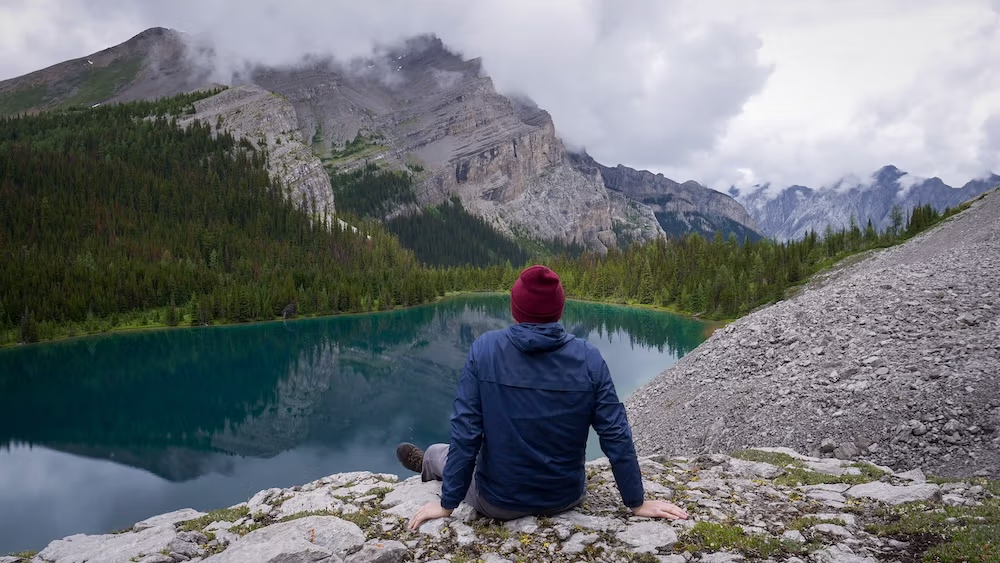
Day One: My Body Arrived. My Head Didn’t.
The first day didn’t fix anything, for what it’s worth. I remember being out there on the trail, surrounded by everything I’d supposedly come for, and still catching myself thinking about home. Nothing specific — just the ordinary weight everybody carries around. Aging parents. The general accumulation of things that don’t go away just because you got on a horse. It’s a strange thing to notice about yourself in the middle of the Canadian Rockies: that your body has clearly left, but your head is still sitting at your kitchen table.
I mention it because I think people expect immersion to work like a light switch — arrive somewhere remote enough and, boom, you’re present. It didn’t go that way for me. It took real time, longer than I would have guessed going in.
The Shift I Can’t Pin to a Day
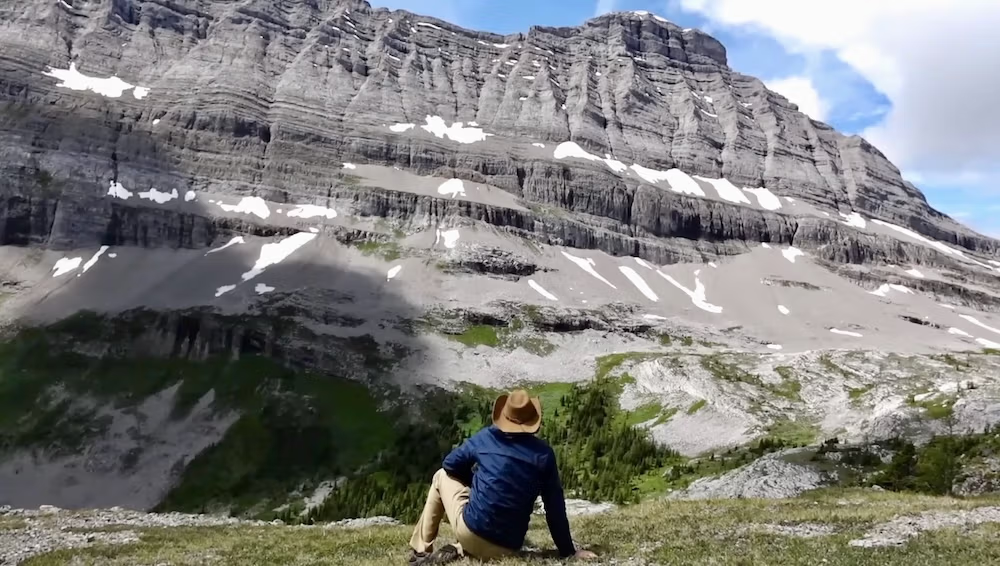
Somewhere around the middle of the trip — I couldn’t tell you the exact moment it happened, only that it had clearly happened by then — I noticed I’d stopped thinking about any of it. Not because I’d resolved anything back home, but because I was finally, genuinely where my body already was. I remember the feeling distinctly: like I’d left my problems behind and settled into a completely different reality, one that only had room for the horse underneath me, the terrain ahead, and whoever I was talking to that evening.
What Filled the Quiet
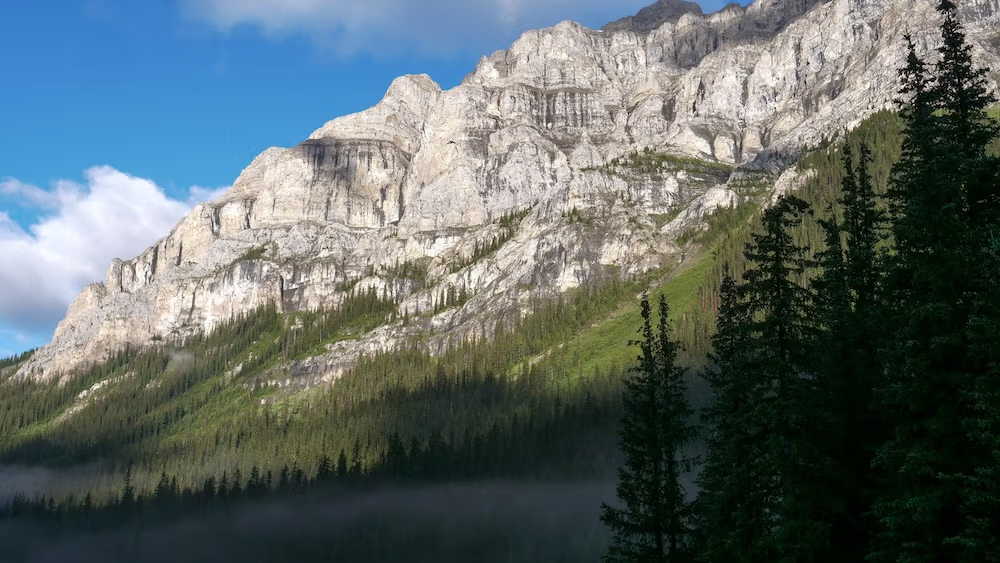
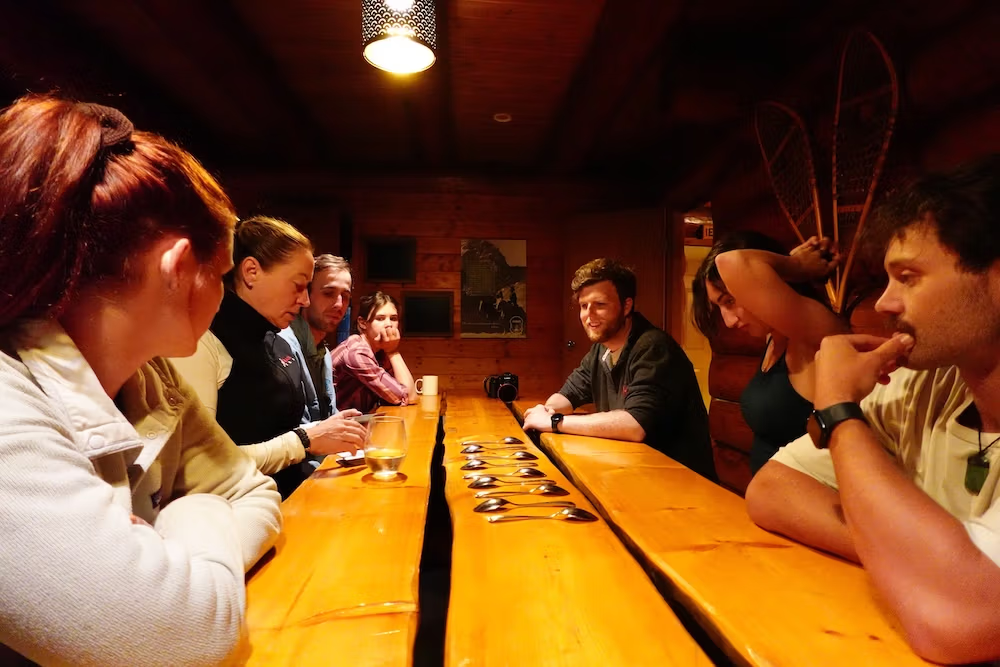
What filled that space wasn’t dramatic. There was no single epiphany, no moment where the mountains delivered a message. Mostly it was small, repeatable things. I found myself meditating a little in the gaps between meals at night, which isn’t something I’d planned or packed for — it just felt like the natural use of that kind of quiet. Beyond that, it was conversation. Real conversation, the kind that doesn’t happen easily at home, sitting around a fireplace with people I’d met three days earlier, playing cards badly, talking about nothing important in a way that somehow felt important anyway. None of it was engineered to be therapeutic. It just happened to be, because there was nothing competing with it.
Why It Took Someone Like Me
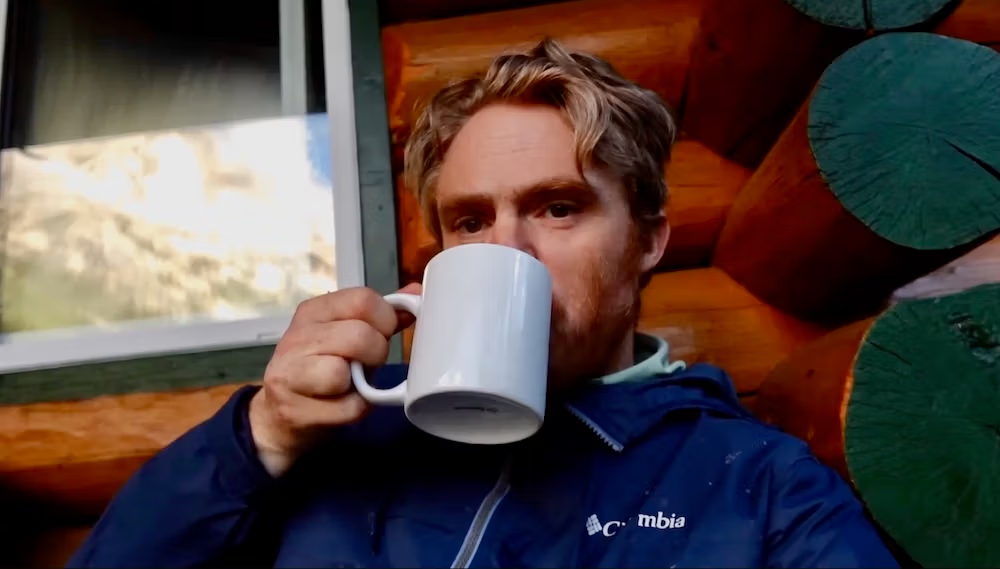
I should say plainly that I’m not the kind of person this sort of story usually gets told about. I am, at best, a reluctant adventurer. I’m not the type who goes skydiving. You won’t find me dangling off a cliff on a string for fun. What I like is being outside, and I like pushing against my own edges a little, but only in a way that still leaves me feeling reasonably comfortable while I’m doing it. Six days on a horse, sleeping in shared rooms at backcountry lodges, going without a phone signal for most of a week — that was already near the outer limit of what I’d sign myself up for. I think that’s actually why it worked as well as it did. It wasn’t an extreme test of nerve. It was just far enough outside my normal life to force a real reset, without needing to be terrifying to get there.
What I Came Home With
Here’s the part I want to get right, though, because it would be easy to oversell this. I didn’t come home a different person. I don’t think six days on a horse rewires anything permanent about how a person operates. What I got was smaller than that, and more honest: real progress toward being more present-minded, a genuine loosening of whatever autopilot I’d slipped into before the trip. That’s not nothing. It’s just not a transformation story, and I’d rather tell you the true, modest version than the inflated one.
If you’re waiting for the right moment to disappear somewhere for six days instead of two, I’d say this: the reset doesn’t happen on arrival, and it isn’t guaranteed to hold once you’re home. But somewhere in the middle of that kind of stretch — long enough that you stop performing “vacation” and start just living wherever you are — something does shift. For me, it happened on the back of a horse in Banff’s backcountry, with no plan to make it happen and no particular right to expect it. I’ll take it.
This article is also available in Spanish. [Leé la versión en castellano: Por qué seis días en las áreas remotas de Banff me dieron un reinicio mental]