
Allenby Pass was the hardest day of my six-day horseback trip through the Banff backcountry, and it was also the best. Those two things belong together because the steep climb, the effort from the horses, the narrow weather window and the increasingly wild terrain were exactly what made the day feel so enormous.
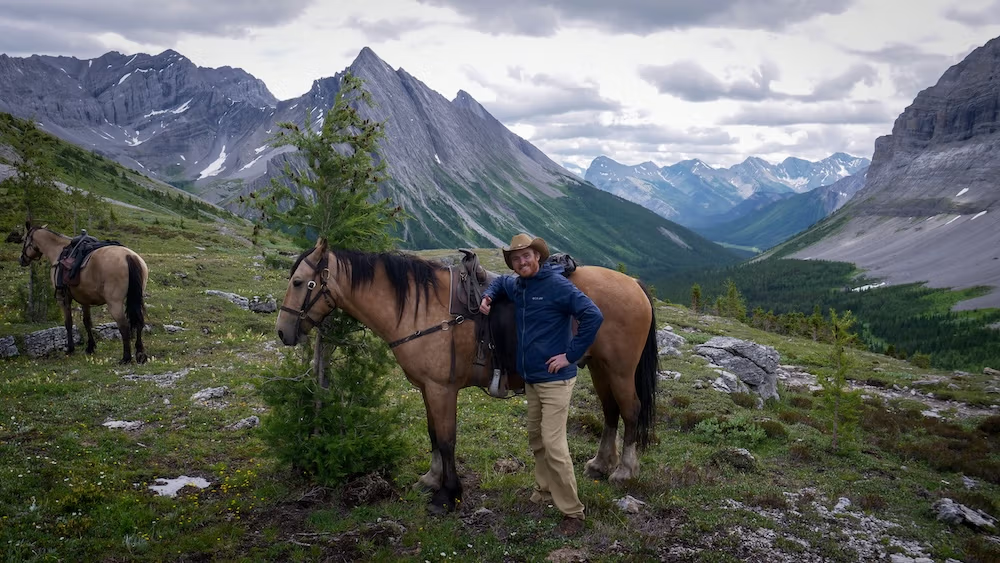
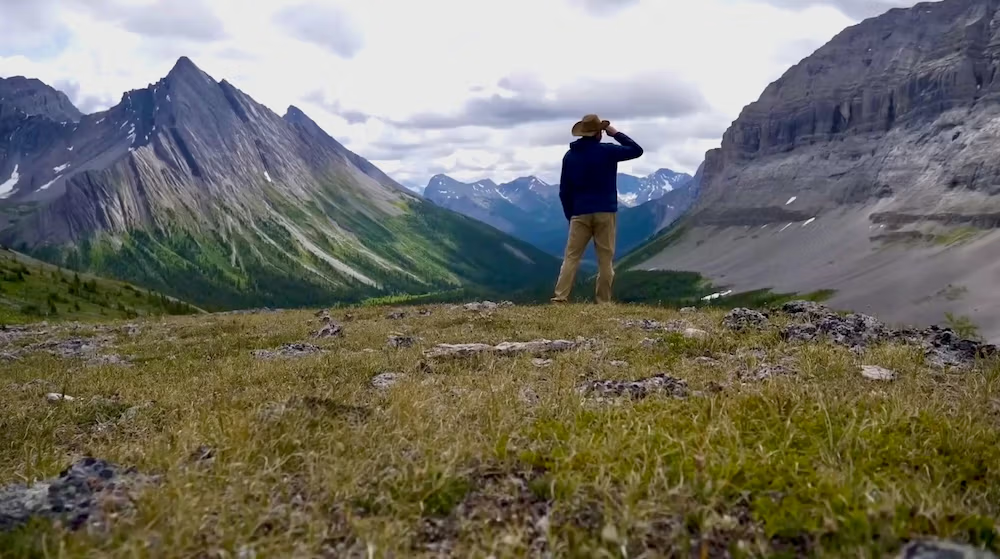
By the time I reached the high country, Halfway Lodge had been reduced to a speck somewhere below me, the vegetation had largely disappeared and I was surrounded by this strange world of exposed rock and mountains. There were no sightseeing buses pulling in behind us and no parking lot waiting around the corner. I was several days into Banff Trail Riders’ backcountry trip, travelling by horse and returning that evening to a remote lodge rather than back to town.
That changed how Banff felt to me. I wasn’t simply bouncing between attractions anymore. I felt like I was genuinely travelling through the national park.
For a few hours, I wasn’t a tourist. I was an explorer.
There is a practical reality behind all of that romance, though: Allenby Pass was an extremely weather-dependent day on my trip. The ride is steep, it takes hours, and getting up there is only half the equation because you still need suitable conditions for the return. I was fortunate enough to get Allenby on a day when the weather was cooperating beautifully, and that good fortune became part of what made the experience so memorable.
Why Allenby Pass Felt Like the Big Day
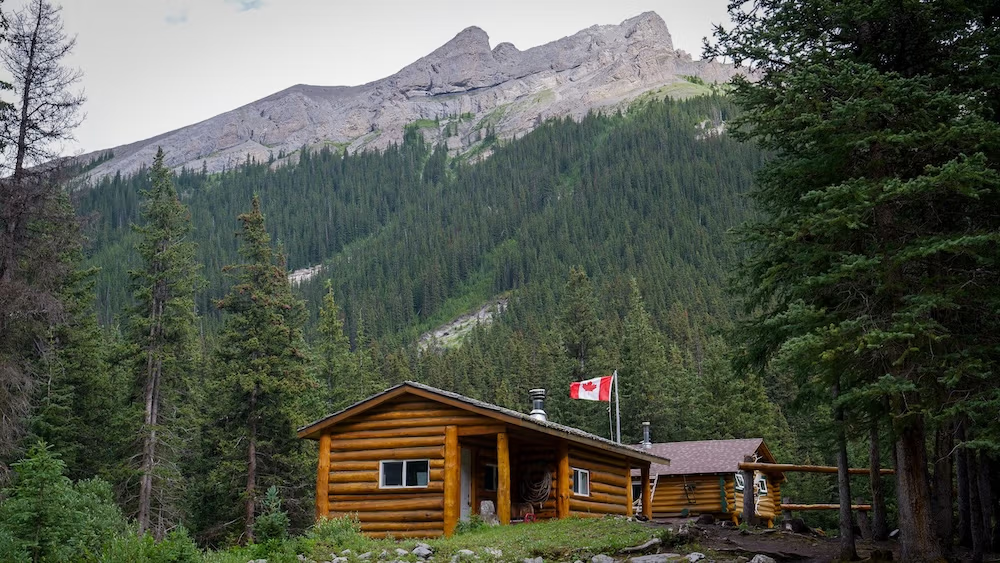
Allenby Pass came on Day 3 of my six-day, five-night horseback trip. I was based at Halfway Lodge by then, deep enough into the backcountry that the normal routines of Banff already felt rather distant. I had slept incredibly well the night before and woke to a morning when the day’s plan was still being decided. Hiking was an option. Horseback riding was an option. Most importantly, the weather looked promising.
After three cups of coffee and a breakfast substantial enough to include chocolate-chip banana pancakes, scrambled eggs and a pork chop, I was certainly not suffering from a lack of fuel. Allenby Pass got the green light, and I knew immediately that this was supposed to be the serious riding day.
I had already ridden through forests, valleys and creeks to get that far into the trip, but Allenby was described to me as the most challenging and potentially most rewarding horseback day of the journey. The route still forms the Day 3 objective on the six-day Halfway Lodge itinerary, so the basic structure of the trip I experienced remains recognizable today. If you’re considering doing the same journey, you can check the current Viator listing for the 6-Day Halfway Lodge backcountry horseback trip to see the latest booking status and trip details.
What I didn’t fully appreciate over breakfast was just how quickly the day was going to change character. Allenby wasn’t simply another long ride with a prettier viewpoint at the end. The climb itself became part of the experience.
The Weather Window Was Part of the Challenge
The weather that morning was gorgeous, but there was apparently a storm expected later in the afternoon. That changed the schedule. Instead of leaving closer to 10:00, which had been more typical, our riding group headed out shortly after 9:00.
An hour doesn’t sound like much when you’re sitting comfortably at a lodge drinking coffee. It starts to sound considerably more useful when you’re several hours into a steep mountain ride and still need to get back down.
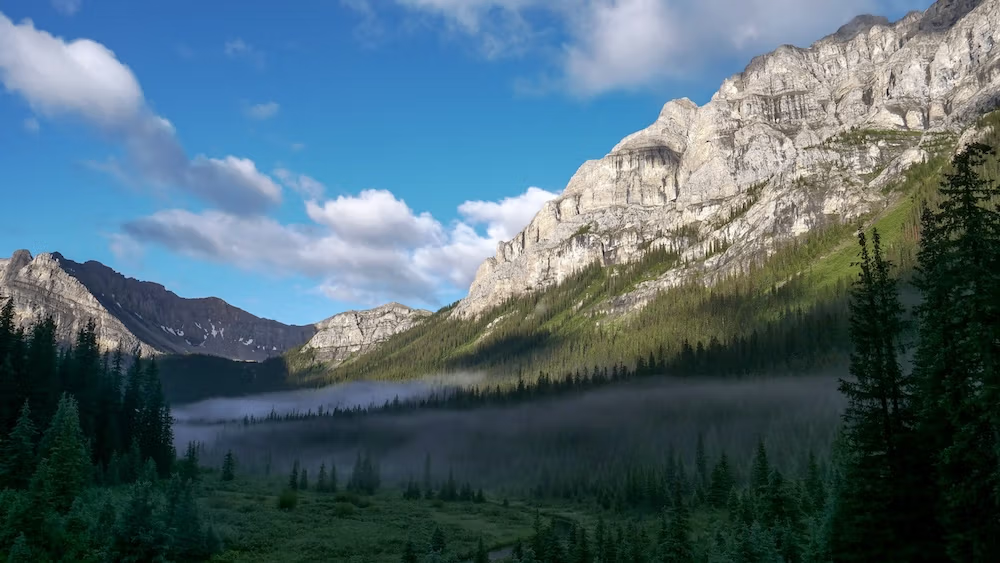
Banff’s mountain weather can change dramatically over the course of a day, and summer thunderstorms are particularly consequential once you’re travelling through exposed terrain. Parks Canada advises people to descend from exposed mountain areas when thunderstorms approach, which gives some context to why an early start mattered so much on this particular objective.
I don’t know what exact forecast threshold the guides currently use to decide whether Allenby Pass goes ahead, gets altered or gets abandoned. I wouldn’t turn my experience into some invented rule that says a certain percentage chance of rain automatically cancels the ride. What I remember clearly is the practical logic: it wasn’t enough for the weather to look decent when we left Halfway Lodge. We needed enough of a window to climb, spend time up high and get back.
That is one of the biggest things I would want somebody considering this trip to understand. On my Allenby day, beautiful weather wasn’t a pleasant bonus sprinkled on top of the scenery. It materially changed what kind of day we could have.
The multi-day format also gives mountain weather more room to be mountain weather. On another day of the trip I hiked in cold rain while the horses rested. Allenby wasn’t postponed because of that rainy day—the chronology was the other way around—but spending nearly a week in the backcountry meant every day did not need to produce the same activity under the same conditions.
When Allenby came up, though, I wanted the weather gods behaving themselves.
They did.
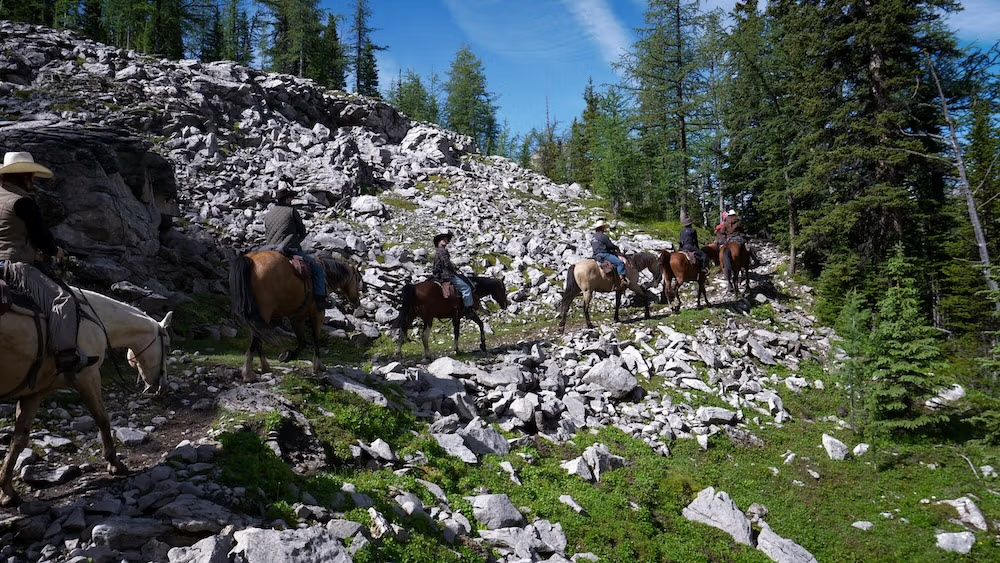
The Climb From Halfway Lodge Got Serious Fast
Before leaving, I had been told to expect roughly three hours of riding on the way up and around an hour and a half coming back down. The current Allenby itinerary gives a broader estimate of around four to six hours of riding for the day, plus lunch, which is probably a more useful number for somebody planning the trip now.
Either way, this is not a little horseback loop where you lose track of whether you’ve been riding for forty-five minutes or an hour.
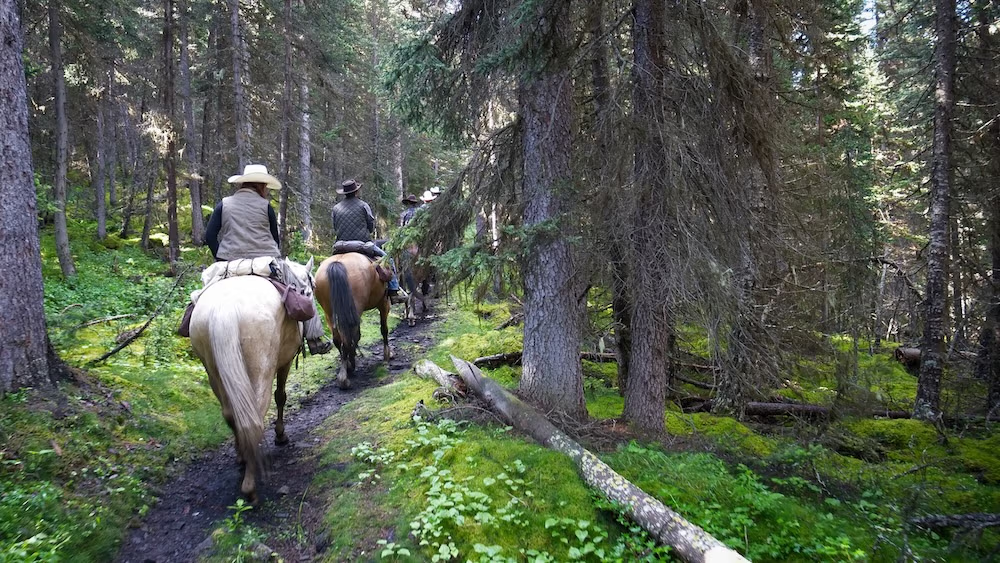
The elevation gain started quickly. Around twenty minutes into the climb, I remember looking back toward Halfway Lodge and seeing it already reduced to this tiny speck below us. That was the moment the steepness really registered with me. I didn’t need an elevation profile or a fitness app telling me how much ground we’d gained. I could see it with my own eyes.
The horses were doing an incredible amount of work.
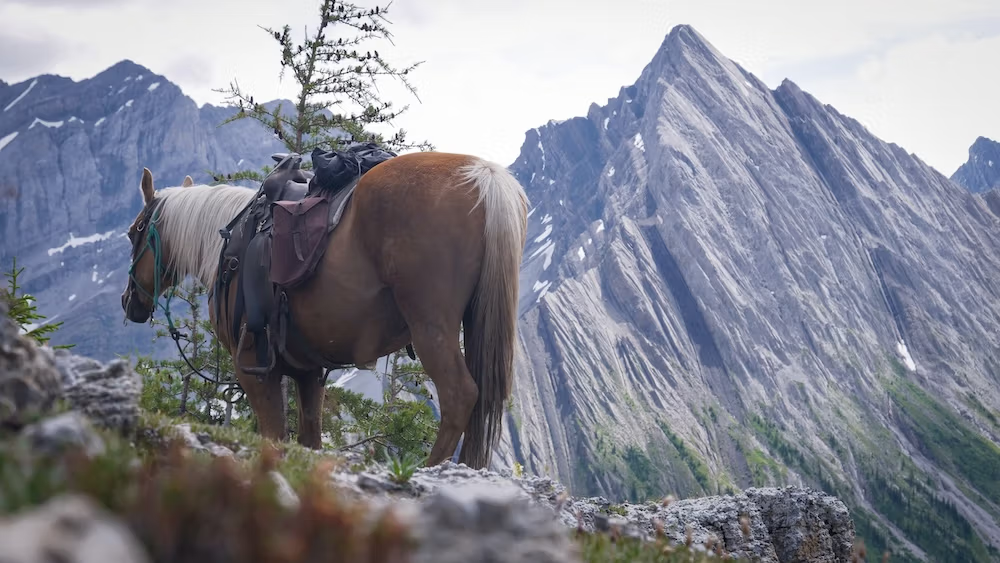
That became more obvious to me on Allenby than on any previous day. They were climbing through difficult terrain and gaining elevation relentlessly, and there is something slightly humbling about sitting in a saddle looking at a massive mountain panorama while realizing the animal underneath you is responsible for the whole operation.
I certainly wasn’t powering myself up there.
I also paid attention to how the day was being managed. The horses received plenty of breaks and water, and I watched the guides give them time to recover along the way. My appreciation for the horses increased enormously during this ride because I could see exactly what was being asked of them.
It is very easy to reduce horseback travel to the scenery you see from the saddle. Allenby made the horse itself impossible for me to ignore.
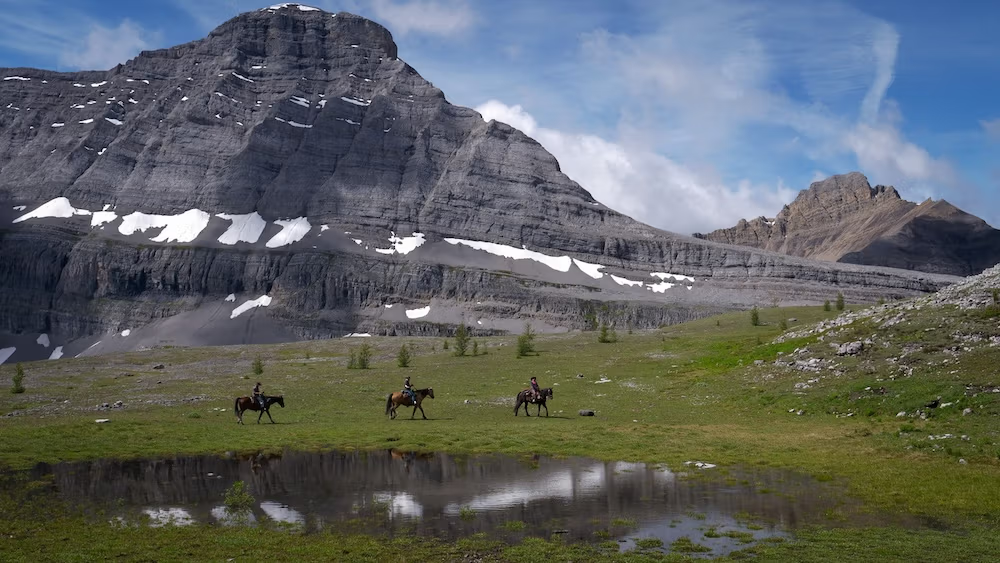
The hardest day doesn’t mean expert riders only
Calling Allenby the hardest horseback day of my trip could make it sound like this is some technical equestrian challenge reserved for people who grew up in a saddle.
That isn’t how the current trip is structured.
Previous riding experience is not presently required for the six-day Halfway Lodge itinerary. Riders receive instruction and are paired with horses, but there are still meaningful physical requirements. You need to be in good physical condition, be able to mount and dismount independently and follow the guides’ instructions promptly. Current requirements also set the minimum age at nine and the maximum rider weight at 230 pounds fully dressed.
If you’re seriously considering the trip, I would review the current Halfway Lodge trip details on Viator before committing, particularly the rider requirements and what the six-day itinerary involves. Beginner-friendly does not mean unrestricted suitability, and this is a very different proposition from booking a one-hour horseback ride around Banff.
I can say Allenby was the hardest day of my trip without pretending I suddenly became some expert horseman. The difficulty I remember came from the length of the day, the sustained ascent, the terrain and the sheer scale of what the horses were doing. You may not need advanced riding technique, but several hours in the saddle on a mountain day is still several hours in the saddle on a mountain day.
My body was aware of the difference.
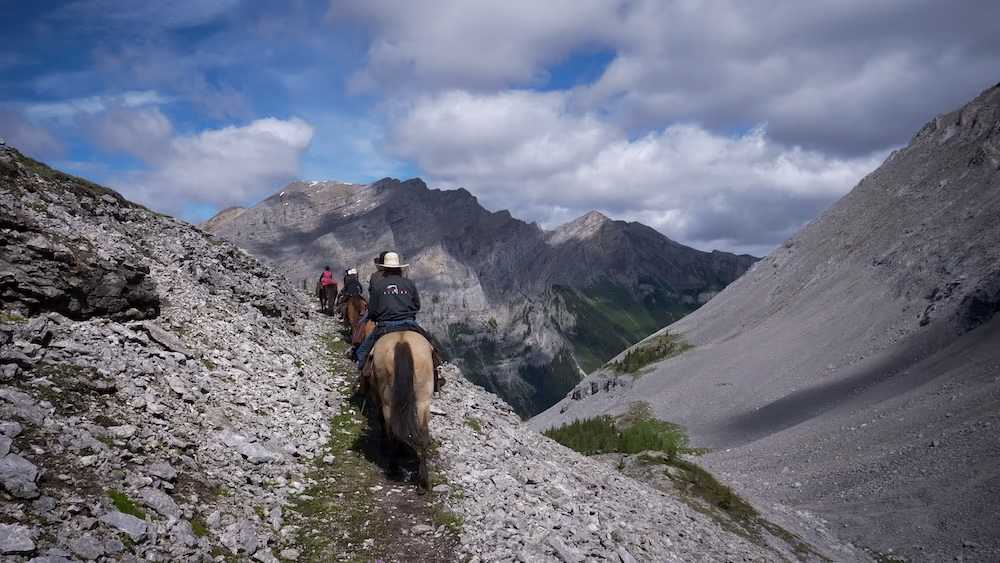
Then the Vegetation Started Disappearing
The climb eventually reached a point where the surroundings changed quite dramatically.
The vegetation began disappearing and the landscape opened into this huge world of exposed rock. After spending so much of the trip travelling through forests, valleys and greener terrain, the transition felt almost abrupt. Massive formations appeared around us and the scenery suddenly looked much harsher, stranger and more ancient.
My immediate reaction was that it felt like a land before time.
That’s not me attempting to teach geology. It’s simply the best description I have for how the place hit me in the moment.
The current operator describes the Allenby ride as climbing to around 8,100 feet, and while I wouldn’t build the whole experience around a precise elevation number, it helps explain why the surroundings felt so different by then. You gain enough height for the visual character of the ride to change in front of you.
That transformation was one of my favourite parts of the day because it made the climb feel like a journey rather than merely an obstacle standing between me and a viewpoint. Halfway Lodge kept getting farther away, the forest gradually surrendered and the mountains began to dominate almost everything.
It felt increasingly remote with every stage.
By the time I was riding through that exposed terrain, the Banff of hotels, cafés, gondolas and busy lakes might as well have been on another planet.
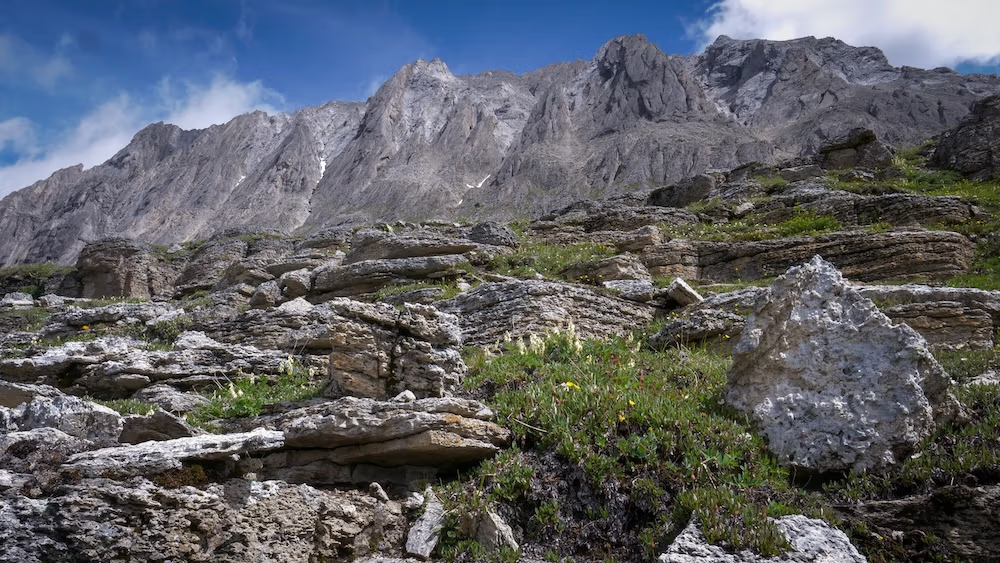
Allenby Pass Made Me Feel Like an Explorer
Reaching the high country gave me something I value enormously on a trip like this: time.
Lunch was wonderfully uncomplicated. I had made a sandwich before saddling up, and there was jerky, a granola bar and a Snapple to go with it. After the climb, I was not demanding a tasting menu.
More importantly, I had well over an hour during my visit to wander around, eat and absorb where I was. That mattered because Allenby would have felt completely different if the whole experience had been three hours of climbing followed by ten minutes of frantic photographs before turning straight around.
I wanted some time to sit with the place.
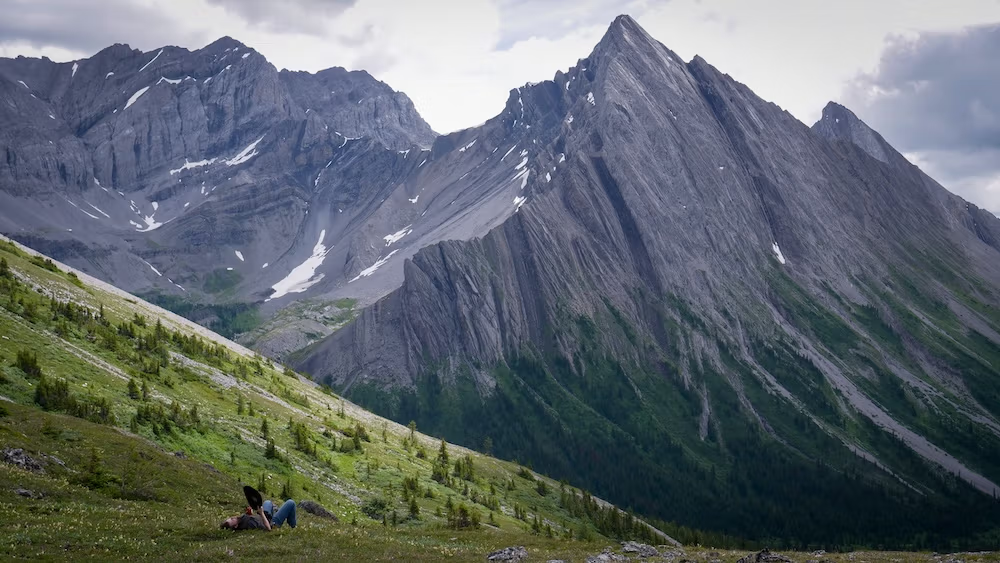
The solitude was a major part of it. During my Allenby day, it felt like nobody else was out there, and that sense of isolation changed the entire emotional texture of the ride.
I don’t mean that as a promise that Allenby Pass is permanently empty. Other horseback groups and backcountry users obviously exist, and I wouldn’t plan a trip around the expectation that the Canadian government has somehow reserved a mountain pass exclusively for you.
But my experience felt astonishingly remote.
That was when the whole tourist-versus-explorer distinction really clicked for me. On a normal sightseeing day in Banff, I might drive somewhere, walk to a viewpoint, take photographs and then move on to the next attraction. There is nothing wrong with that—I do it all the time—but this felt fundamentally different because I had spent days travelling farther into the park before reaching this point.
There was no road beside me. There wasn’t a vehicle waiting fifty metres away. I had arrived by horse after hours of climbing from a lodge that was itself deep in the backcountry.
I felt like I had actually gone somewhere.
That feeling connected me with Banff National Park far more strongly than simply looking at another beautiful mountain view. The scenery was spectacular, obviously, but the route and the remoteness gave it context. I understood where I was partly because of what it had taken to get there.
Remote doesn’t mean rule-free
The solitude is also worth keeping in perspective. Allenby Pass sits within managed national-park backcountry, and feeling like an explorer does not mean behaving as though you’ve discovered some lawless wilderness.
One current example is the seasonal restriction in the Bryant Creek and Allenby area. From August 1 through September 30, Parks Canada currently requires horseback travellers in the affected area to ride in groups of at least two, and dogs are prohibited. The restriction exists because of important grizzly bear habitat.
That doesn’t need to dominate an Allenby story, but it is useful context. The emptiness I felt was real; it wasn’t evidence that nobody manages the landscape or that visitors can simply do whatever they want.
You can have the explorer fantasy without losing your mind completely.
Getting Up Was Only Half the Day
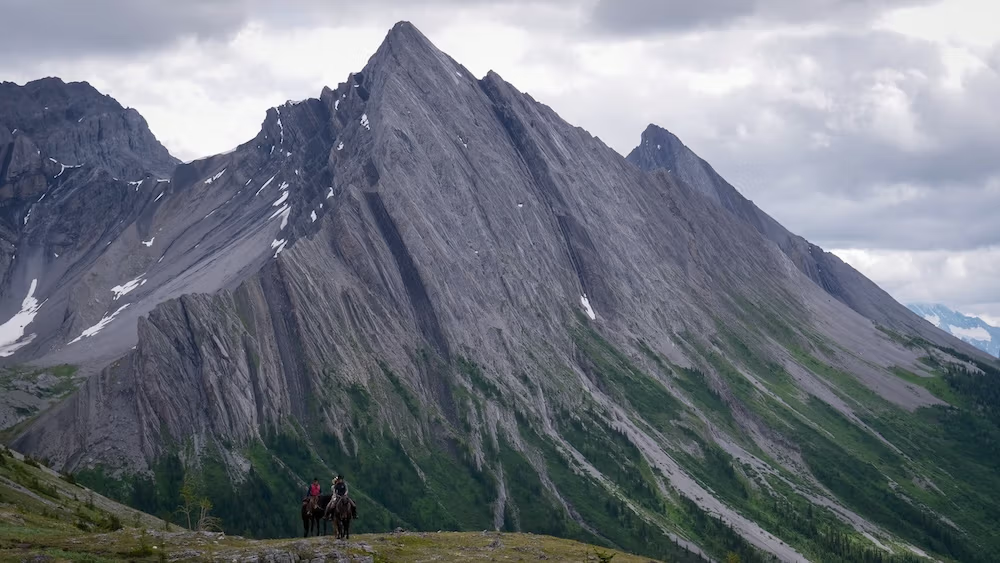
The thing about reaching Allenby Pass is that nobody teleports you back to Halfway Lodge afterward.
I had been told the descent would take roughly an hour and a half on my trip, considerably quicker than the climb, but that still left a meaningful return journey after lunch and time spent exploring. This is why I keep coming back to the weather when I think about the day.
A mountain objective is easy to romanticize when you imagine yourself standing at the high point in perfect sunshine. The less glamorous planning question is what conditions will look like when you’re still out there later.
On my day, the anticipated afternoon storm was part of the reason for leaving early, and fortunately I don’t have some heroic story about getting hammered by miserable weather on the descent. Nothing needed to go catastrophically wrong for Allenby to feel adventurous enough.
I preferred it that way.
Travel stories sometimes make it sound as though an experience only becomes meaningful when something goes horribly sideways. I was perfectly happy to let the steep terrain, massive mountains and hours on horseback provide the drama while the weather continued cooperating.
When I think back on Allenby, the good conditions are part of the story rather than a lucky detail I can separate from everything else. I got to concentrate on the landscape, the horses and the sheer ridiculousness of where I was instead of spending the descent wondering whether I’d made a terrible decision.
Returning to Halfway Lodge Kept the Adventure Going
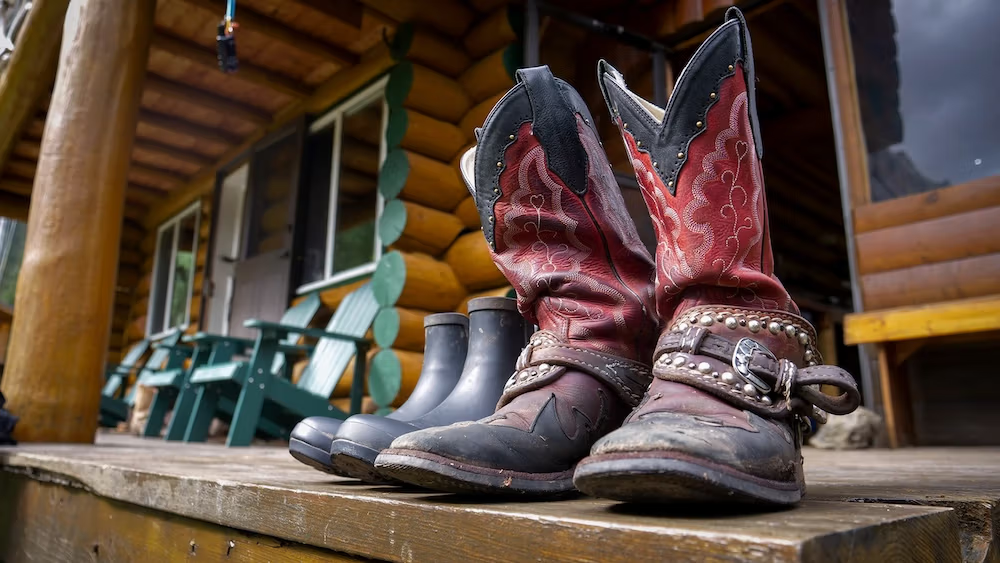
Coming back to Halfway Lodge at the end of the ride turned out to be one of the things that made Allenby feel so complete.
If this had been a conventional day tour, the descent might have ended beside a road where I climbed into a vehicle and drove back to Banff. Instead, I returned to the same remote lodge I’d watched shrinking beneath me earlier that morning.
The current itinerary still works that way: Allenby is an out-and-back riding day from Halfway Lodge.
That structure matters more than it may sound.
I had spent hours riding away from the lodge until it virtually disappeared below me, crossed into exposed alpine terrain, eaten lunch in an environment that felt wonderfully removed from normal tourism and then travelled all the way back. Yet reaching Halfway Lodge didn’t mean stepping out of the backcountry experience.
I was still there.
That’s what made the lodge feel less like accommodation and more like a base. I don’t need to get into the rooms, showers, meals and other lodge details here because those deserve their own story. For Allenby Pass, what mattered was where Halfway Lodge sat in the rhythm of the day.
It was home for the night, but it was a backcountry home.
The distinction reinforced the thing I loved most about this trip: Banff no longer felt like a series of places I was arriving at from somewhere else. For several days, I was living and travelling inside the landscape.
Allenby Pass was the day when that feeling peaked.
Why Allenby Pass Was the Hardest and Best Day of My Trip
By the time the six-day journey was over, Allenby Pass was still the day I kept coming back to.
It was the hardest because the climb started biting almost immediately. Halfway Lodge became a speck below me, the horses worked tremendously hard, the terrain became more demanding and the ride consumed a substantial chunk of the day.
It was the best because all of that effort changed what the payoff meant.
The vegetation disappeared, the mountains opened up around me and the scenery became almost otherworldly. I had enough time at the top to eat, explore and appreciate the place rather than merely touch it and leave. The route felt incredibly quiet during my visit, the weather cooperated beautifully and I returned not to a parking lot but to a remote lodge still buried in Banff’s backcountry.
I wouldn’t want to force Allenby Pass into bad conditions simply because it happened to appear on an itinerary. A huge part of my experience was getting a day when the weather allowed the ride to unfold properly, and I think the smarter attitude in this kind of terrain is accepting that the mountains ultimately get a vote.
If this sounds like the kind of Banff experience you’re after, rather than a short front-country horseback ride, you can check the current booking status for the 6-Day Halfway Lodge horseback trip on Viator. I would pay particular attention to the full itinerary, rider requirements and available dates rather than choosing this trip solely because Allenby Pass looks spectacular in photographs.
When the mountains gave me the green light, though, Allenby was truly epic.
It was the hardest day of my trip, and I would take that hard day again in a heartbeat.
Frequently Asked Questions
Is the Allenby Pass horseback ride suitable for beginners?
Previous riding experience is not currently required for the six-day Halfway Lodge itinerary, but beginner-friendly does not mean effortless. Riders need to be in good physical condition, mount and dismount independently, follow guide instructions promptly, and meet the current age and weight requirements.
How long does the Allenby Pass riding day take?
The current Allenby itinerary gives a broad estimate of around four to six hours of riding for the day, plus lunch. On my trip, I had been told to expect roughly three hours going up and about an hour and a half coming back down.
How important is weather for riding to Allenby Pass?
Weather was crucial on my Allenby Pass day. We left earlier than usual because a storm was expected later, and the useful weather window had to cover the climb, time in the high country and the return. I do not know the exact forecast threshold guides currently use.
How high does the Allenby Pass horseback ride climb?
The current operator describes the Allenby ride as climbing to around 8,100 feet. I would treat that as an approximate route figure rather than the whole story, because what stood out to me was how quickly the landscape changed as we gained elevation.
Are there seasonal restrictions around Allenby Pass?
Yes. From August 1 through September 30, Parks Canada currently requires horseback travellers in the affected Bryant Creek and Allenby area to ride in groups of at least two, and dogs are prohibited because of important grizzly bear habitat.
Why was Allenby Pass the best day of my Banff backcountry trip?
It combined everything I wanted from the trip: a steep and demanding ride, huge alpine scenery, remarkable solitude, time to explore in the high country and a return to remote Halfway Lodge. The difficulty made the payoff feel earned rather than diminishing it.
This article is also available in Spanish. [Leé la versión en castellano: Allenby Pass a caballo: el día más duro y el mejor de mi travesía por el interior de Banff]
This article contains affiliate links. If you book through one of these links, I may earn a commission at no extra cost to you.